Preparation is the key to success in any interview. In this post, we’ll explore crucial Passion for structural engineering interview questions and equip you with strategies to craft impactful answers. Whether you’re a beginner or a pro, these tips will elevate your preparation.
Questions Asked in Passion for structural engineering Interview
Q 1. Explain the different types of structural analysis methods.
Structural analysis methods determine how a structure responds to loads. They range from simple hand calculations to sophisticated computer simulations. The choice depends on the complexity of the structure and the required accuracy.
- Statical Determinacy/Indeterminacy: This method uses equilibrium equations to solve for reactions and internal forces. It’s suitable for simple structures with easily identifiable support conditions. For example, a simply supported beam is statically determinate, while a continuous beam is statically indeterminate.
- Force Methods (e.g., Method of Consistent Deformations): These methods use the principle of superposition to analyze statically indeterminate structures. They’re more complex than statical methods but handle complex support conditions. Imagine analyzing a multi-story frame—the force method offers a systematic way to address the redundancies.
- Displacement Methods (e.g., Slope-Deflection, Moment Distribution): These methods analyze structures by calculating the displacements at various points and then determining the internal forces. They’re also suitable for statically indeterminate structures but differ from force methods in their approach. Consider a complex bridge structure; the displacement method is often preferred.
- Finite Element Analysis (FEA): This numerical method breaks down a structure into smaller elements and solves for the behavior of each element using computer software. It can handle complex geometries, material properties, and loading conditions. FEA is the industry standard for detailed analysis, used widely in everything from skyscrapers to aircraft design. Think of it as a powerful microscope for your structural model.
Q 2. Describe your experience with finite element analysis (FEA) software.
I have extensive experience with FEA software, including ANSYS, ABAQUS, and SAP2000. My proficiency encompasses model creation, mesh generation, material property definition, load application, boundary condition specification, solution execution, and post-processing of results. I’ve used these tools on various projects, from analyzing the stress distribution in a complex steel frame to simulating the seismic response of a high-rise building. For example, on a recent project involving a large-span roof, we used ANSYS to optimize the structural design, reducing material costs without compromising structural integrity. The ability to visualize stress concentrations and deflections was invaluable in fine-tuning the design.
Q 3. How do you ensure the stability of a structure under various load conditions?
Ensuring structural stability under various load conditions is paramount. This involves a multi-faceted approach:
- Proper Load Determination: Accurately estimating all potential loads—dead loads (weight of the structure), live loads (occupancy, furniture), snow loads, wind loads, seismic loads—is crucial. Building codes provide guidance, but often site-specific analysis is necessary.
- Appropriate Structural System Selection: Choosing a structural system (e.g., frame, truss, shell) that efficiently resists the anticipated loads is vital. The system should be designed with adequate strength and stiffness.
- Redundancy: Incorporating redundancy into the design enhances stability. Redundancy means having multiple load paths, so if one element fails, others can still carry the load. This significantly reduces the risk of collapse. Consider multiple load bearing columns versus just one – redundancy is key.
- Stability Analysis: Performing buckling and instability checks ensures the structure doesn’t collapse under compressive loads. This is especially crucial for slender columns and beams.
- Verification through Analysis: Using analytical methods, such as FEA, to verify the structural response to various load scenarios, including extreme events, provides confidence in the design’s stability. For example, performing a dynamic analysis for seismic loads.
Q 4. What are the common failure modes of different structural elements?
Common failure modes depend heavily on the structural element and the applied loads.
- Beams: Bending failure (excessive stresses leading to cracking and yielding), shear failure (excessive shear stresses), and deflection failure (excessive bending causing unacceptable movement).
- Columns: Buckling (sudden lateral instability under compressive load), crushing (failure under high compressive stress), and shear failure (though less common than in beams).
- Foundations: Settlement (differential or excessive settlement causing distress), bearing capacity failure (foundation unable to support applied load), and sliding (foundation moves horizontally).
- Connections: Fracture, yielding, bolt failure, and weld failure—all dependent on connection type and design.
Understanding these failure modes allows engineers to design structures with appropriate safety factors and prevent premature failure.
Q 5. Explain your understanding of building codes and regulations.
I possess a thorough understanding of building codes and regulations, including IBC (International Building Code), ASCE 7 (Minimum Design Loads and Associated Criteria for Buildings and Other Structures), and AISC (American Institute of Steel Construction) specifications. I know how to interpret these codes, apply them to specific projects, and ensure compliance with all relevant regulations. This includes understanding load combinations, material specifications, design requirements, and documentation procedures. Compliance is not just about ticking boxes; it’s about ensuring public safety and meeting industry best practices.
Q 6. How do you handle design changes and unforeseen challenges during a project?
Handling design changes and unforeseen challenges is an integral part of structural engineering. My approach involves:
- Open Communication: Maintaining clear communication with clients, architects, and other stakeholders to proactively address any issues and ensure everyone is informed.
- Adaptability: Flexibility is key; I’m comfortable revising designs to accommodate changes in scope, budget, or site conditions. This might involve re-analyzing the structure using updated parameters.
- Problem-Solving: Employing systematic problem-solving techniques to identify root causes and develop effective solutions. This may involve brainstorming sessions or consulting with other experts.
- Documentation: Thoroughly documenting all design changes, analyses, and justifications to maintain a complete and auditable record. This ensures transparency and facilitates future modifications.
For instance, during a recent project where unexpected soil conditions were encountered, we worked collaboratively to redesign the foundation system, ensuring stability while minimizing project delays and cost overruns.
Q 7. Describe your experience with material selection for structural applications.
Material selection is critical for structural design, impacting cost, durability, and performance. My experience encompasses selecting materials based on strength, stiffness, ductility, weight, cost, availability, and sustainability considerations. I’m familiar with the properties of various materials including steel, concrete, timber, and composite materials. Factors like fire resistance, corrosion resistance, and environmental impact are carefully considered. For example, in a high-rise building, the selection of high-strength steel allows for lighter and more efficient structural members, reducing material cost and enhancing the building’s overall performance. A deep understanding of material behavior under various load conditions is fundamental in making informed decisions.
Q 8. Explain your knowledge of seismic design principles.
Seismic design is all about ensuring structures can withstand earthquakes. It involves understanding the potential ground shaking in a particular location and designing the structure to resist those forces without collapsing or suffering unacceptable damage. This involves several key principles:
Site-Specific Analysis: We start by assessing the seismic hazard at the project location. This involves considering factors like the proximity to active faults, soil conditions, and historical earthquake data. This helps determine the design earthquake parameters.
Structural System Selection: Choosing the right structural system is crucial. For instance, a moment-resisting frame is a common choice, where the building’s frame is designed to absorb earthquake energy through bending. Other options include shear walls and base isolation systems, which work by disconnecting the building from ground movement to a degree.
Ductility: We strive for ductility in our designs. A ductile structure can deform significantly under earthquake loading without fracturing, absorbing energy and preventing catastrophic failure. Think of it like a flexible tree bending in the wind—it’s far less likely to snap than a rigid branch.
Strength and Stiffness: The structure must have sufficient strength to resist the earthquake forces and stiffness to prevent excessive deformation. We use sophisticated computer modelling and analysis to calculate these parameters and verify that design criteria are met.
Regularity and Symmetry: Symmetrical and regular building shapes generally perform better during earthquakes, minimizing torsional effects (twisting). Irregular shapes are often challenging and may require more complex detailing and analysis.
For example, in designing a high-rise building in a seismically active zone, we would use sophisticated computer software like ETABS or SAP2000 to model the building’s response to earthquake ground motions, ensuring that its design meets or exceeds the relevant building codes and standards.
Q 9. How do you incorporate sustainability principles into your structural designs?
Sustainability is paramount in modern structural engineering. We aim to minimize the environmental impact of our designs throughout their entire lifecycle, from material selection to demolition. This involves several strategies:
Material Selection: Using recycled or sustainably sourced materials like reclaimed timber, low-embodied carbon concrete, or recycled steel significantly reduces the carbon footprint. Embodied carbon refers to the greenhouse gas emissions associated with the manufacturing, transportation, and installation of materials.
Energy Efficiency: Designing energy-efficient buildings reduces operational carbon emissions. This could involve strategies such as optimizing building orientation for natural daylighting, implementing high-performance insulation, and using renewable energy sources.
Lifecycle Assessment: We conduct lifecycle assessments to evaluate the environmental impact of a design over its entire lifespan, from construction to demolition and disposal. This allows us to make informed decisions about material choices and construction methods.
Waste Reduction: Minimizing construction waste through careful planning and efficient material use is crucial. Prefabrication methods can reduce on-site waste and increase speed of construction.
Durability and Longevity: Designing durable structures that require minimal maintenance and have a long lifespan reduces the need for frequent replacements, thus lessening material consumption over time.
For instance, in a recent project, we opted for cross-laminated timber (CLT) for the building’s structure due to its excellent strength-to-weight ratio, low embodied carbon, and renewable nature. This choice significantly reduced the project’s environmental impact compared to a conventional steel or concrete solution.
Q 10. What is your experience with detailing and drafting structural plans?
Detailing and drafting are fundamental aspects of structural engineering. I’m proficient in using industry-standard software like AutoCAD and Revit to create detailed structural drawings. These drawings communicate the design intent precisely to the contractors and construction crews. My experience includes:
Creating detailed shop drawings: These drawings provide precise dimensions and specifications for fabrication of structural elements (steel beams, columns, concrete forms, etc.).
Developing reinforcement detailing for concrete structures: This involves meticulously placing reinforcing bars (rebar) in concrete elements to achieve the required strength and ductility. This is crucial for the safety and longevity of the structure.
Preparing fabrication and erection drawings for steel structures: These drawings specify connection details, bolt sizes, and welding procedures for the steel components.
I’m adept at coordinating the drawings with architectural and other engineering disciplines’ drawings to ensure a consistent and integrated design. I also have experience with BIM (Building Information Modeling) which allows for enhanced collaboration and coordination throughout the project lifecycle.
Q 11. Describe your experience working with different structural materials (e.g., steel, concrete, timber).
I have extensive experience working with a variety of structural materials, each with its own unique properties and challenges:
Steel: Steel is renowned for its high strength and ductility, making it ideal for high-rise buildings and long-span structures. My experience includes designing steel frames, moment-resisting frames, and composite steel-concrete structures. The design process involves selecting appropriate steel sections, detailing connections, and ensuring compliance with relevant building codes.
Concrete: Concrete is a versatile and economical material. My experience includes designing reinforced concrete structures such as foundations, columns, beams, slabs, and shear walls. This involves designing appropriate reinforcement, specifying concrete mix designs, and ensuring adequate durability and protection against corrosion.
Timber: Timber is a sustainable and renewable material with excellent aesthetic qualities. I’ve worked on projects utilizing timber framing and cross-laminated timber (CLT). Designing timber structures requires careful consideration of the timber’s strength and stiffness properties, connection design, and protection against fire and decay.
Understanding the strengths and limitations of each material is crucial for selecting the most appropriate option for a given project. Often, hybrid designs that combine different materials are used to optimize performance, cost, and sustainability.
Q 12. How do you collaborate effectively with other engineering disciplines?
Effective collaboration is essential in structural engineering. I regularly work with various engineering disciplines, including:
Architectural Engineers: Close collaboration is needed to integrate structural systems with the building’s architectural design. This involves coordinating structural elements with architectural features, addressing aesthetic considerations, and resolving conflicts between structural and architectural requirements.
Geotechnical Engineers: Understanding soil conditions is crucial for foundation design. I collaborate closely with geotechnical engineers to obtain soil data, determine appropriate foundation types, and ensure the stability of the structure.
MEP (Mechanical, Electrical, and Plumbing) Engineers: Coordination with MEP engineers is vital to ensure adequate space is provided for pipes, ducts, and other services within the building. We also coordinate on the integration of building services with structural elements to avoid conflicts and ensure efficient building design.
Effective communication and the use of collaborative tools like BIM software are essential for successful teamwork. My approach involves regular meetings, clear communication of design concepts, and proactive resolution of any conflicts or challenges.
Q 13. What are the key considerations for designing structures in different geographical locations?
Designing structures for different geographical locations requires careful consideration of several factors:
Climate: Temperature variations, humidity, rainfall, snow load, and wind speed significantly impact structural design. For instance, buildings in cold climates require more robust snow load provisions, while those in coastal areas require special considerations for wind and corrosion.
Seismic Activity: Areas prone to earthquakes necessitate seismic design considerations, as discussed earlier. This involves ground motion analysis, structural system selection, and design to meet relevant seismic codes.
Soil Conditions: Foundation design is heavily influenced by soil characteristics. Stable soil allows for simpler foundations, whereas poor soil requires deeper and more complex foundation systems. This information comes from geotechnical investigations.
Local Building Codes and Regulations: Building codes vary significantly between jurisdictions, stipulating minimum structural requirements, material specifications, and construction methods.
Accessibility to Resources: The availability and cost of construction materials and labor can impact design choices. In some regions, specific materials might be readily available and cost-effective, influencing the preferred structural system.
For instance, a building in a hurricane-prone area would require significant wind load provisions, potentially including reinforced concrete shear walls and impact-resistant glazing. In contrast, a building in a remote area with limited access to materials might favor a simpler design using locally sourced materials.
Q 14. Explain your experience with structural inspections and assessments.
I have experience in conducting structural inspections and assessments to evaluate the condition of existing structures. This involves:
Visual Inspections: Thoroughly examining the structure for visible signs of distress, such as cracks, corrosion, or settlement.
Non-Destructive Testing (NDT): Utilizing techniques such as ultrasonic testing or ground penetrating radar to assess the internal condition of structural members without causing damage.
Load Testing: In some cases, load testing might be needed to determine the structure’s actual load-carrying capacity.
Review of Existing Drawings and Documentation: Examining the original design drawings and construction records to understand the structure’s initial design intent and construction details.
Report Writing: Preparing comprehensive reports that detail the condition of the structure, identify any deficiencies, and recommend appropriate repair or strengthening measures.
For example, I recently assessed an old warehouse for structural integrity prior to its repurposing. My inspection revealed some minor cracking in the masonry walls and corrosion in some steel columns. Based on my assessment, I recommended a minor strengthening scheme to ensure that the building was suitable for its new purpose.
Q 15. Describe your understanding of foundation design and analysis.
Foundation design and analysis is the cornerstone of any successful structural project. It involves determining the appropriate type, size, and depth of the foundation to safely support the building’s loads. This process considers various factors like soil properties (bearing capacity, shear strength, settlement characteristics), structural loads (dead load, live load, seismic load), and groundwater conditions.
The analysis typically involves geotechnical investigations to characterize the soil, followed by detailed calculations using appropriate engineering methods. For example, we might use the Terzaghi bearing capacity equation to determine the allowable soil pressure. For complex scenarios, sophisticated finite element analysis (FEA) software can simulate soil-structure interaction and provide accurate predictions of settlements and stresses. The choice of foundation type—shallow foundations like spread footings or rafts, or deep foundations like piles or caissons—depends on the load requirements and soil conditions. I have extensive experience designing foundations for various structures, including high-rise buildings, bridges, and retaining walls, employing both simplified hand calculations and advanced FEA techniques to ensure safety and efficiency.
For instance, on a recent project involving a high-rise building in an area with soft clay, we utilized advanced FEA modeling to predict the settlement pattern and optimize the foundation design to minimize differential settlement – an uneven settling that can cause significant structural issues. This involved meticulous soil parameter determination, extensive modeling of soil strata, and iterative design optimization.
Career Expert Tips:
- Ace those interviews! Prepare effectively by reviewing the Top 50 Most Common Interview Questions on ResumeGemini.
- Navigate your job search with confidence! Explore a wide range of Career Tips on ResumeGemini. Learn about common challenges and recommendations to overcome them.
- Craft the perfect resume! Master the Art of Resume Writing with ResumeGemini’s guide. Showcase your unique qualifications and achievements effectively.
- Don’t miss out on holiday savings! Build your dream resume with ResumeGemini’s ATS optimized templates.
Q 16. How do you ensure the accuracy and efficiency of your structural designs?
Accuracy and efficiency in structural design are paramount. I achieve this through a rigorous, multi-step process. First, thorough investigation and understanding of project requirements—architectural drawings, geotechnical reports, client specifications—forms the base. Next, I utilize advanced software like ETABS and SAP2000 for detailed analysis. These programs allow for sophisticated modeling of structural behavior under various loading conditions, including static and dynamic analysis.
Regular checks and balances, including peer reviews and independent verification of calculations, are crucial. We use robust quality control procedures, which involve methodical checking of calculations, compliance with building codes, and adherence to industry best practices. Furthermore, I continually refine my skills and knowledge by staying up-to-date with the latest software and design techniques. For example, I recently completed a course on advanced finite element analysis, enhancing my ability to tackle complex structural challenges with greater accuracy and efficiency.
Efficient design also incorporates the optimization of material usage, minimizing costs without compromising safety. This often involves exploring different structural systems and comparing their performance based on cost, weight, and material consumption. The ultimate goal is to deliver safe, efficient, and cost-effective solutions.
Q 17. Explain your experience with structural optimization techniques.
Structural optimization is a key aspect of modern structural engineering, aiming to find the most efficient design that meets performance criteria. I’m experienced in various techniques, including topology optimization, size optimization, and shape optimization.
Topology optimization uses algorithms to determine the optimal material layout within a given design space. This can lead to innovative designs with reduced material usage and improved performance. Size optimization involves adjusting the dimensions of structural elements (beams, columns, etc.) to minimize weight or cost while satisfying strength and serviceability requirements. Shape optimization focuses on modifying the shape of elements for improved efficiency. I’ve used these methods in numerous projects, using specialized software such as OptiStruct. For example, in a recent bridge project, topology optimization allowed us to reduce the overall weight of the bridge deck by 15%, resulting in significant cost savings and reduced environmental impact.
I also incorporate optimization strategies within my overall design process, continuously evaluating different design options and selecting the one that best balances performance, cost, and constructability. This iterative approach, supported by computational tools, ensures that the final design is truly optimized.
Q 18. Describe your experience using BIM software for structural engineering.
Building Information Modeling (BIM) software, such as Revit and Tekla Structures, is an integral part of my workflow. I’m proficient in using BIM for creating 3D models of structures, performing analysis, and coordinating with other disciplines involved in the project. BIM enables better collaboration between architects, engineers, and contractors, leading to improved design accuracy and reduced errors during construction.
For example, in a recent high-rise project, the use of Revit allowed us to detect clashes between structural elements and MEP systems early in the design phase. This prevented costly rework during construction and ensured a smoother project execution. The 3D models created in BIM also serve as excellent tools for visualization and communication, facilitating better understanding of the design by clients and stakeholders. BIM facilitates efficient quantity takeoff, cost estimation, and scheduling, which enhances project management and efficiency. Furthermore, I have experience utilizing BIM for virtual construction simulations, assisting in construction planning and risk mitigation.
Q 19. What are the ethical considerations involved in structural engineering?
Ethical considerations are paramount in structural engineering, as our designs directly impact public safety and well-being. My commitment to ethics encompasses several key aspects:
- Honesty and Transparency: I always provide accurate and transparent information to clients and stakeholders, clearly communicating any potential risks or limitations of the design.
- Competence: I only undertake projects within my area of expertise, and I continuously update my knowledge and skills to maintain professional competence. I would never hesitate to consult with experts or seek additional resources when needed.
- Safety: The safety of the public is my utmost priority. I design structures with a large safety margin to account for uncertainties and potential hazards. I strictly adhere to all applicable building codes and standards.
- Objectivity: I maintain objectivity in my designs, avoiding conflicts of interest and making decisions based solely on engineering principles and best practices.
- Sustainability: I strive to incorporate sustainable practices into my designs, minimizing environmental impact through efficient material usage and environmentally friendly construction methods.
Maintaining high ethical standards ensures the integrity of the profession and protects the public from potential harm. It’s a commitment I take very seriously.
Q 20. How do you manage risk and uncertainty in structural design?
Risk and uncertainty are inherent in structural engineering. I manage these through a comprehensive approach that involves:
- Probabilistic Analysis: Instead of relying solely on deterministic analysis, I often incorporate probabilistic methods to account for the variability of material properties, loads, and environmental conditions. This provides a more realistic assessment of potential risks.
- Load Factors and Safety Factors: I utilize load factors and safety factors as stipulated by building codes to account for uncertainties in loading and material strength. These factors ensure that the design has a sufficient margin of safety.
- Risk Assessment: I conduct thorough risk assessments to identify potential hazards and develop mitigation strategies. This involves systematically identifying potential failure modes, their likelihood, and consequences. This might include considering things like seismic events, extreme weather, or potential construction errors.
- Detailed Quality Control: Rigorous quality control measures throughout the design process are essential to minimize the likelihood of errors. This includes independent checks of calculations and adherence to strict quality control protocols.
- Regular Monitoring: For critical structures, I advocate for regular monitoring and inspections during and after construction to ensure that the structure performs as intended. This allows early detection of any issues and proactive intervention.
Managing risk isn’t just about preventing failure, it’s about ensuring the structure performs reliably and safely throughout its intended lifespan.
Q 21. Describe your approach to problem-solving in a structural engineering context.
My approach to problem-solving in structural engineering is systematic and analytical. I typically follow these steps:
- Problem Definition: Clearly define the problem, including all relevant constraints and objectives. This involves understanding the client’s needs, the structural requirements, and any potential limitations.
- Data Gathering and Analysis: Gather all necessary data, including architectural drawings, geotechnical reports, and relevant codes. Analyze this data to identify key parameters and potential challenges.
- Conceptual Design: Develop multiple conceptual design solutions, considering different structural systems and materials. This stage often involves brainstorming and exploring diverse approaches.
- Analysis and Evaluation: Perform detailed structural analysis of the conceptual designs using appropriate software and methods. Evaluate the designs based on strength, stability, serviceability, and cost.
- Optimization and Refinement: Refine the chosen design based on the analysis results, optimizing its performance while adhering to all relevant constraints. This iterative process may involve several cycles of analysis and refinement.
- Detailed Design: Develop detailed construction drawings and specifications, ensuring clarity and completeness. This stage includes coordination with other disciplines and careful attention to detail.
- Documentation and Review: Thoroughly document the design process and calculations. Subject the design to a comprehensive review process before submission.
This structured approach ensures that the solution is not only technically sound but also efficient, cost-effective, and meets the client’s needs. I regularly use this framework, adapting it to the unique aspects of each project.
Q 22. Explain your experience with structural retrofitting and rehabilitation.
Structural retrofitting and rehabilitation involves strengthening or modifying existing structures to meet current design codes, improve performance, or extend their lifespan. It’s often necessary due to unforeseen loading conditions, material degradation, or changes in intended use. My experience encompasses a wide range of projects, from seismic upgrades of older buildings to the strengthening of bridges to accommodate increased traffic loads. For instance, I worked on a project where we utilized carbon fiber reinforced polymers (CFRP) to strengthen the columns of a historic building that had suffered significant deterioration. This non-destructive method allowed us to preserve the building’s historical integrity while significantly enhancing its seismic resilience. Another project involved the rehabilitation of a corroded steel bridge deck, requiring detailed assessment of the damage, selective repair of the deteriorated sections, and protective coating to prevent further corrosion.
- Assessment: This crucial first step involves thorough inspections, material testing, and detailed analysis to understand the existing structure’s condition and identify weaknesses.
- Design: The design phase involves developing strategies to address the identified deficiencies, often incorporating innovative materials and techniques to minimize disruption.
- Implementation: The implementation phase involves meticulous execution of the design, with stringent quality control measures to ensure the safety and efficacy of the work.
Q 23. What are your strengths and weaknesses as a structural engineer?
My greatest strength lies in my ability to synthesize complex information and translate it into practical, efficient solutions. I’m adept at problem-solving, a skill honed through years of experience dealing with unforeseen challenges in diverse projects. I also excel in collaboration, effectively communicating technical information to both technical and non-technical audiences. My weakness is occasionally getting overly engrossed in detail; however, I am actively working on improving my time management skills to mitigate this. I am learning to prioritize tasks and delegate effectively when appropriate.
Q 24. Describe a challenging structural engineering project you’ve worked on and how you overcame the challenges.
One particularly challenging project involved the design of a new pedestrian bridge across a busy urban waterway. The major challenge was the constrained site, limited access for heavy equipment, and the need to minimize disruption to traffic and pedestrians. We overcame these challenges through a phased construction plan involving prefabricated components. These components were assembled off-site and then carefully lifted into place using specialized cranes, minimizing on-site work and associated disruptions. Detailed simulations were performed to validate our design and ensure the structural integrity of the temporary support system. Through careful planning, efficient coordination, and constant communication with the various stakeholders, we successfully completed the project on time and within budget. The project highlighted the importance of creative problem-solving and the value of collaboration in complex structural engineering projects.
Q 25. How do you stay up-to-date with the latest advancements in structural engineering?
Staying up-to-date in structural engineering is crucial. I achieve this through several methods: I actively participate in professional organizations like the American Society of Civil Engineers (ASCE), attending conferences and webinars to learn about the latest research and advancements. I subscribe to relevant journals and technical publications, regularly reading articles on new materials, techniques, and software. I also actively engage in online communities and forums to discuss challenges and share knowledge with other engineers. Continuous learning is essential for keeping my skillset sharp and ensuring I can leverage the most effective techniques in my work.
Q 26. Explain your experience with dynamic analysis of structures.
Dynamic analysis of structures examines how structures respond to time-varying loads, such as earthquakes, wind gusts, or moving vehicles. This involves using sophisticated software and techniques to model the structure’s behavior under these dynamic conditions. My experience includes using software like SAP2000 and ETABS to perform modal analysis (determining natural frequencies and mode shapes), time-history analysis (simulating response to recorded ground motions), and response spectrum analysis (determining maximum responses based on design response spectra). For example, I conducted a dynamic analysis of a tall building to ensure its resilience against seismic activity. This involved creating a detailed finite element model, defining material properties, and simulating different earthquake scenarios to assess potential damage and ensure the building meets safety standards. The results guided design modifications to ensure adequate safety.
Q 27. Describe your understanding of buckling and stability analysis.
Buckling and stability analysis are critical aspects of structural engineering, focusing on the structure’s ability to resist failure due to compressive loads. Buckling occurs when a slender structural member under compression suddenly deforms laterally. Stability analysis involves determining the critical load at which buckling occurs. This involves understanding concepts like Euler buckling for simple columns and more complex approaches for frames and shells. I regularly utilize software tools to analyze buckling and ensure that my designs avoid unstable configurations. For example, in the design of a long span bridge, we employed advanced stability analysis techniques to optimize the cross-sectional shape of the bridge girders, ensuring they would resist buckling under traffic loads and environmental stresses. This is particularly important in structures with slender elements where buckling can be a critical failure mode.
Q 28. How do you ensure the quality and safety of structural designs?
Ensuring the quality and safety of structural designs requires a multi-faceted approach. This starts with a thorough understanding of the applicable design codes and standards. Throughout the design process, I adhere to these codes and employ rigorous quality control measures. This includes peer review of designs by experienced colleagues, independent checking of calculations, and meticulous documentation. Furthermore, I incorporate factors of safety to account for uncertainties in material properties and loads. Regular site visits during construction are crucial for verifying that the construction is proceeding according to the approved design and specifications. Detailed quality assurance testing of materials and completed work is also essential to ensure that the final structure conforms to the intended design and performance requirements. Ultimately, my commitment to safety is paramount, guiding my every decision in the design and oversight of structural projects.
Key Topics to Learn for a Structural Engineering Interview
- Structural Analysis Fundamentals: Understanding static and dynamic loads, stress and strain, and the behavior of various structural elements (beams, columns, slabs).
- Practical Application: Discussing your experience (or academic projects) applying these principles to design or analyze real-world structures like buildings, bridges, or retaining walls. Be prepared to explain your approach to problem-solving.
- Material Properties and Selection: Knowledge of different construction materials (steel, concrete, timber) and their strengths, weaknesses, and suitability for various applications.
- Design Codes and Standards: Familiarity with relevant building codes and standards (e.g., ASCE, ACI) and how they influence structural design decisions.
- Structural Software Proficiency: Demonstrate understanding of software used in structural analysis and design (e.g., SAP2000, ETABS, RISA). Be ready to discuss your experience with specific software packages.
- Sustainability and Green Building Practices: Understanding of sustainable design principles and their application in structural engineering.
- Failure Analysis and Case Studies: Ability to analyze structural failures and learn from past experiences. Prepare to discuss relevant case studies.
- Construction Methods and Sequencing: Understanding of different construction methods and how they impact structural design and construction sequencing.
Next Steps
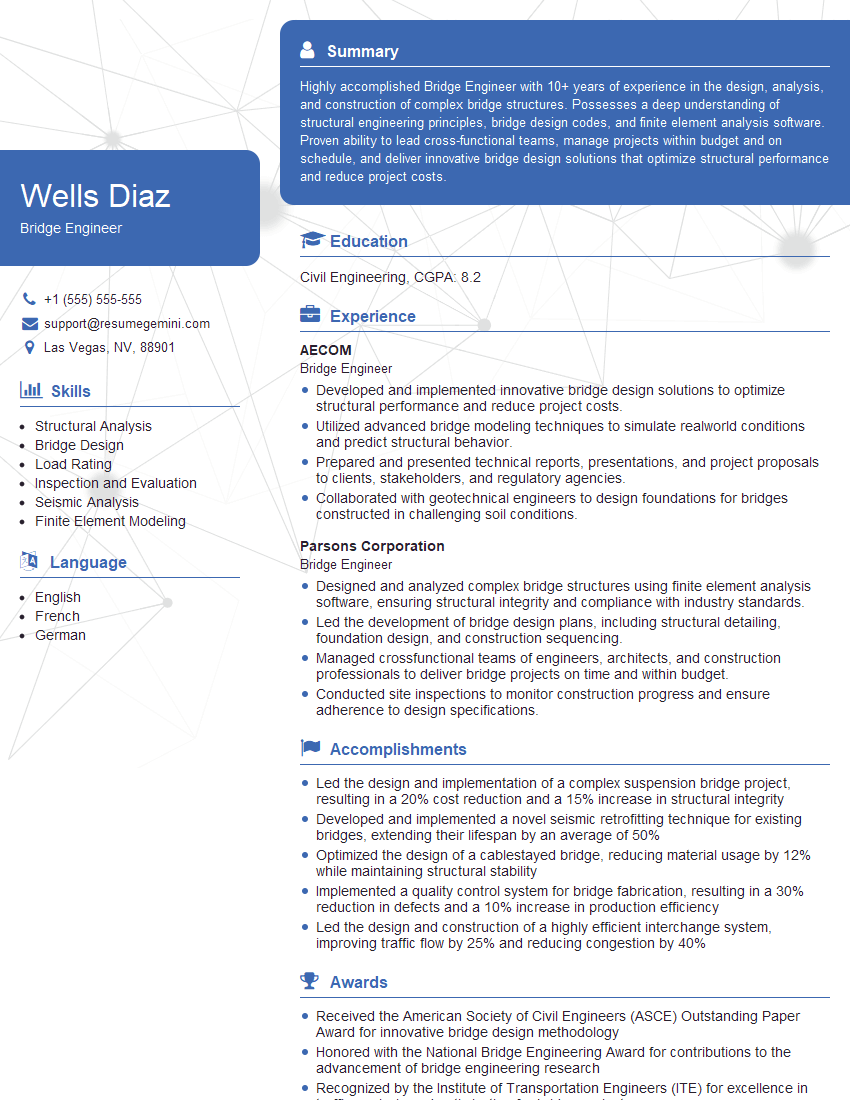
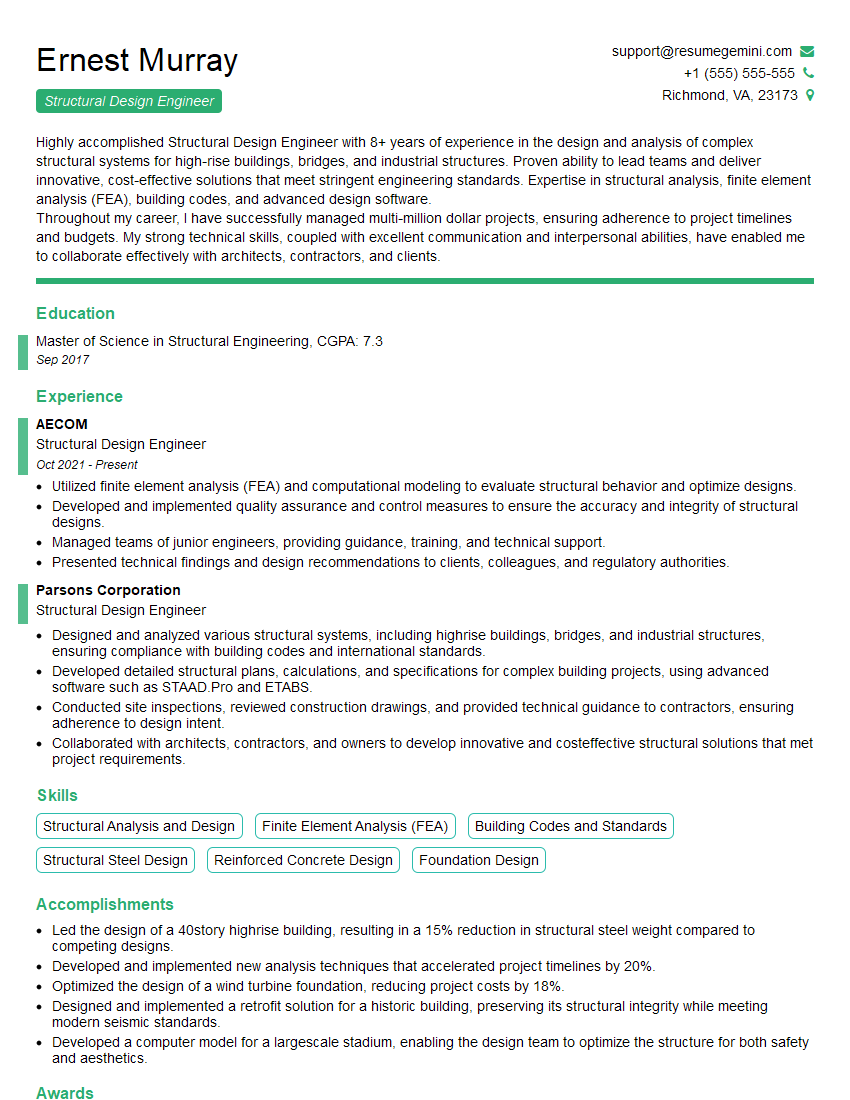
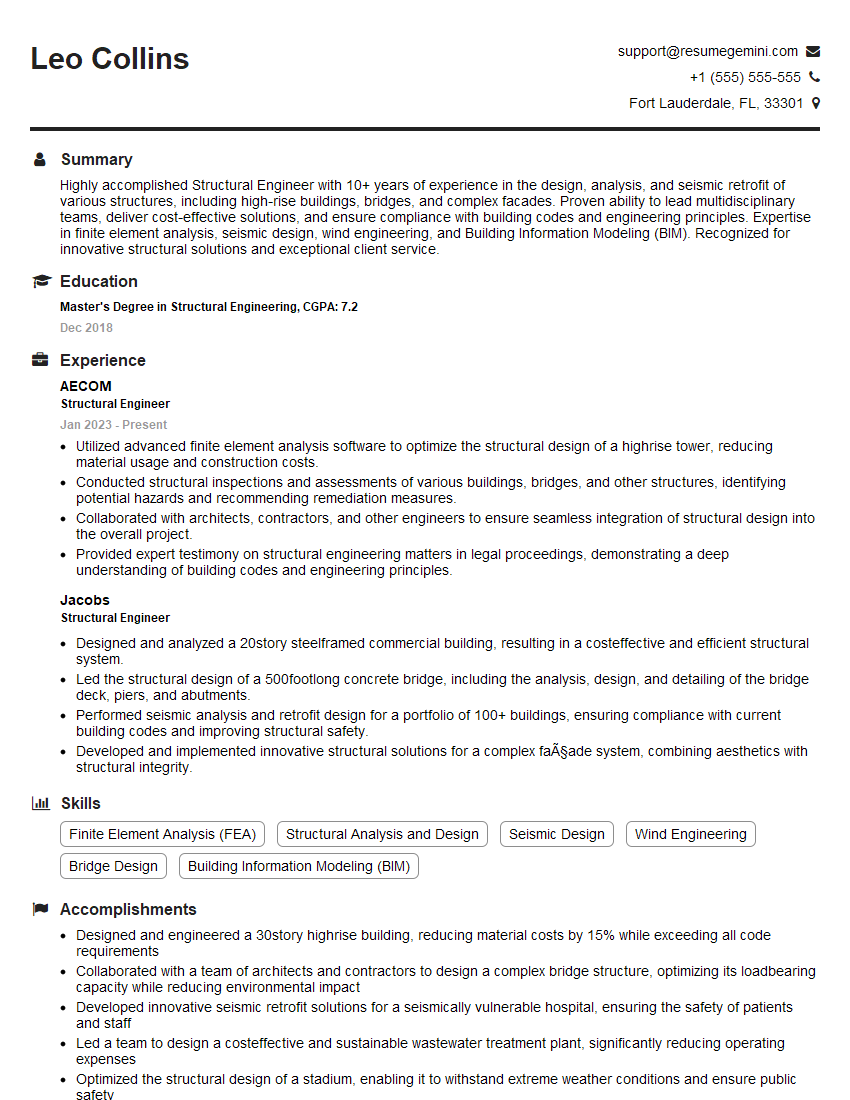
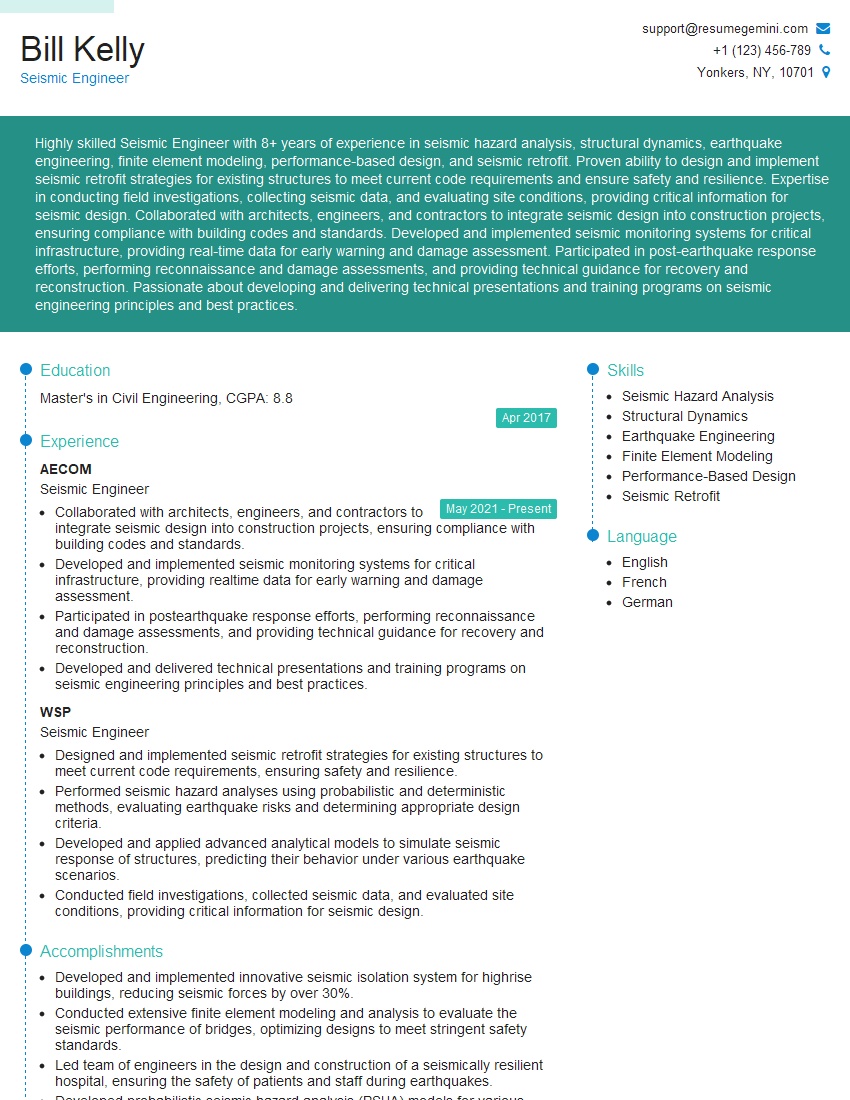
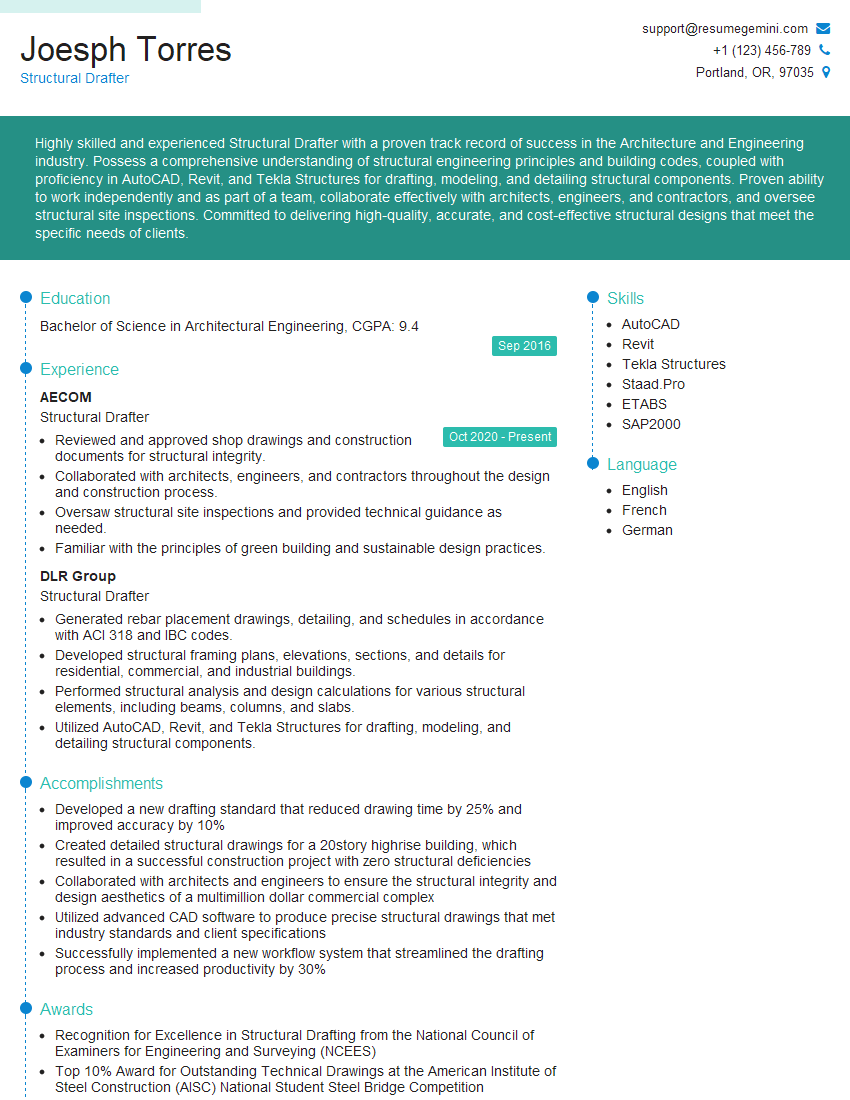
Mastering structural engineering principles is crucial for a successful and rewarding career in this exciting field. It opens doors to diverse projects and opportunities for professional growth. To maximize your job prospects, crafting an ATS-friendly resume is paramount. ResumeGemini is a trusted resource to help you build a professional and impactful resume that highlights your skills and experience effectively. Examples of resumes tailored to structural engineering positions are available to guide you through the process.
Explore more articles
Users Rating of Our Blogs
Share Your Experience
We value your feedback! Please rate our content and share your thoughts (optional).
What Readers Say About Our Blog
Very informative content, great job.
good