Unlock your full potential by mastering the most common Pasture-Based Production interview questions. This blog offers a deep dive into the critical topics, ensuring you’re not only prepared to answer but to excel. With these insights, you’ll approach your interview with clarity and confidence.
Questions Asked in Pasture-Based Production Interview
Q 1. Describe the benefits of rotational grazing compared to continuous grazing.
Rotational grazing significantly improves pasture health and livestock productivity compared to continuous grazing. In continuous grazing, livestock continuously graze the same area, leading to overgrazing, soil compaction, and reduced forage quality. Rotational grazing, on the other hand, involves dividing the pasture into smaller paddocks and moving the livestock from one paddock to another at regular intervals, allowing each paddock to rest and recover.
- Improved Pasture Health: Rest allows plants to recover, increasing their root mass and resilience. This leads to denser, more vigorous pasture with greater biodiversity.
- Increased Forage Quality: Plants are grazed at their most nutritious stage, resulting in higher-quality feed for livestock.
- Reduced Soil Erosion: Reduced soil compaction from continuous grazing minimizes erosion and improves water infiltration.
- Higher Livestock Productivity: Access to high-quality forage leads to better animal health, weight gain, and reproductive performance. For example, I worked with a dairy farm that shifted from continuous to rotational grazing, resulting in a 15% increase in milk production.
- Improved Weed and Pest Control: Strategic grazing can help suppress weed growth and reduce pest infestations.
Imagine a lawn – if you continuously mow it too short, it becomes weak and patchy. Rotational grazing is like giving your pasture a chance to ‘rest and recharge’ between mowing sessions.
Q 2. Explain the principles of holistic grazing management.
Holistic grazing management is a whole-farm approach that integrates livestock grazing with land management to create a resilient and productive ecosystem. It focuses on mimicking natural grazing patterns and optimizing the interaction between animals, plants, and the environment. The core principles revolve around:
- Planning: Carefully planning grazing strategies based on pasture condition, livestock needs, and environmental factors. This often involves creating detailed grazing plans and maps.
- Observation: Regularly monitoring pasture health, livestock behavior, and environmental conditions to adapt grazing strategies as needed. For instance, observing plant height and composition helps determine grazing time.
- Rest and Recovery: Providing sufficient rest periods for pastures to allow for plant recovery and soil regeneration. Rest periods are crucial for healthy soil microbiology.
- Animal Impact: Using livestock strategically to manage vegetation, including grazing pressure, grazing intensity, and grazing distribution. This might involve using different livestock types or rotating them across different pastures.
- Integration: Integrating livestock grazing with other land management practices such as prescribed burning, water management, and erosion control. It’s about seeing the farm as an integrated system.
Instead of focusing solely on maximizing livestock production, holistic grazing aims to create a thriving ecosystem where both livestock and the land flourish. For example, I assisted a rancher who implemented holistic grazing, improving soil health, reducing water erosion, and achieving higher overall farm profitability despite a slight reduction in stocking density.
Q 3. How do you assess pasture health and identify areas for improvement?
Assessing pasture health involves a multi-faceted approach combining visual observation, measurement, and potentially laboratory analysis. Here’s a breakdown of how I approach this:
- Visual Assessment: This includes evaluating pasture species composition, plant height and density, signs of grazing damage (bare patches, overgrazing), weed infestation, and soil erosion. I look for indicators of plant vigor, such as leaf color and leaf area.
- Measurement: Using techniques like a pasture stick or plate meter to determine plant height, ground cover, and percentage of bare ground. These measurements provide quantitative data to track changes over time.
- Soil Sampling: Collecting soil samples to analyze soil nutrient levels (nitrogen, phosphorus, potassium), organic matter content, and pH. Soil health is fundamental to pasture health.
- Forage Testing: Sending forage samples to a lab to analyze nutrient content (crude protein, digestible dry matter, etc.). This informs livestock feeding strategies.
Identifying areas for improvement involves comparing the data to ideal pasture conditions and then identifying areas that need attention. For example, low nutrient levels will require fertilization, while compacted soil might necessitate aeration techniques. It’s an iterative process of observation, measurement, analysis, and adjustment.
Q 4. What are the key factors influencing forage quality and quantity?
Forage quality and quantity are influenced by several interacting factors:
- Climate: Rainfall, temperature, and sunlight significantly influence plant growth. Drought reduces both quality and quantity, whereas adequate rainfall promotes vigorous growth.
- Soil Fertility: Nutrient-rich soils support better plant growth and higher forage quality. Essential nutrients like nitrogen, phosphorus, and potassium are key.
- Pasture Species: Different species have varying nutritional values and growth habits. Choosing species adapted to the climate and soil conditions is crucial.
- Grazing Management: Overgrazing reduces both quality and quantity, while rotational grazing enhances both. Resting periods allow for plant recovery and regrowth.
- Pest and Disease: Infestations by insects, weeds, or diseases can significantly impact forage quality and yield. Integrated pest management is essential.
For example, a farm experiencing low forage quality might benefit from soil testing to identify nutrient deficiencies, while implementing rotational grazing could improve both quality and quantity.
Q 5. Describe different types of pasture species and their suitability for specific climates and livestock.
Many pasture species are suited to different climates and livestock. Here are a few examples:
- Cool-Season Grasses: (e.g., Orchardgrass, Tall Fescue, Ryegrass) thrive in cooler, humid climates. They are highly productive in spring and fall and are well-suited for cattle, sheep, and horses. Tall fescue is very common in the Southeastern US, while ryegrass is often used in temporary pastures in the Northeast.
- Warm-Season Grasses: (e.g., Bermuda grass, Bahia grass, Switchgrass) prefer warmer temperatures and are drought-tolerant. They perform well in summer and are ideal for cattle and some other livestock. Bermuda grass is very prevalent in the Southern US.
- Legumes: (e.g., Clover, Alfalfa) fix nitrogen in the soil, improving soil fertility. They are rich in protein and are excellent for livestock, but require specific soil conditions. Alfalfa is a high-protein forage but requires well-drained soil.
- Mixed Species Pastures: Combining cool-season and warm-season grasses or adding legumes to grass pastures creates a more resilient and productive system that provides forage throughout the year.
Choosing appropriate pasture species for a particular climate and livestock type is crucial for maximizing forage production and livestock performance. It requires careful consideration of factors like rainfall, temperature, soil type, and livestock needs. I’ve seen significant improvements in livestock health and productivity by designing pasture mixes tailored to specific regional conditions.
Q 6. How do you manage weeds and pests in pasture systems?
Weed and pest management in pasture systems should prioritize integrated approaches that minimize reliance on chemical controls. Here are some key strategies:
- Competitive Grasses: Planting dense, vigorous pasture species can outcompete many weeds.
- Rotational Grazing: Strategic grazing can suppress weeds and reduce pest populations.
- Cultural Practices: Proper fertilization, liming, and soil management improve pasture health and reduce weed susceptibility.
- Biological Control: Introducing natural enemies of specific pests or weeds can be effective in certain situations.
- Targeted Herbicide Use: In some cases, herbicides may be necessary to manage particularly aggressive weeds, but it’s essential to use them selectively and responsibly, minimizing environmental impact.
For example, a farm dealing with a significant weed problem might start by improving soil fertility, then select more competitive pasture species, implement rotational grazing to weaken the weeds, and only resort to herbicides as a last resort after carefully choosing a selective product and following its label instructions precisely.
Q 7. Explain your experience with pasture renovation and establishment techniques.
Pasture renovation and establishment involve improving or creating new pastures. My experience covers various techniques:
- Renovation: This usually involves overseeding existing pastures with improved species or using herbicides to control undesirable weeds before overseeding. I often employ interseeding, where new species are sown into the existing pasture without plowing. It is less disruptive and conserves soil moisture.
- Establishment: This involves preparing a seedbed (plowing, disking), sowing seeds, and managing the young pasture until establishment. Techniques include no-till drilling for soil conservation.
- Soil Testing and Amendments: Before either renovation or establishment, thorough soil testing to determine nutrient levels, pH, and other critical factors is essential. Amendments such as fertilizers, lime, and organic matter are then applied as needed.
- Species Selection: Choosing appropriate species adapted to the climate, soil type, and intended livestock is vital. I often use a mix of species for resilience and diversity.
- Weed Control: Implementing weed management strategies during establishment is crucial for preventing competition with young seedlings. This often includes pre-emergent and post-emergent herbicides. This must be done cautiously.
For example, I recently helped a client renovate a degraded pasture by overseeding with a mix of orchardgrass and clover, improving soil fertility, and implementing a rotational grazing system. The result was a significant increase in forage production and improved livestock performance.
Q 8. How do you monitor livestock performance in a pasture-based system?
Monitoring livestock performance in pasture-based systems requires a holistic approach, going beyond simple weight gain. We utilize a combination of methods to get a complete picture of animal health and productivity.
Regular Weighing: We weigh animals at regular intervals (e.g., monthly) to track weight gain or loss. This data, when combined with other metrics, gives us insights into pasture quality and animal health.
Body Condition Scoring (BCS): Visual assessment of fat cover and muscle development provides a quick indication of an animal’s nutritional status. A trained eye can detect early signs of under or over-nutrition.
Visual Observation: Daily observation of animal behavior – looking for signs of lameness, illness, or parasite infestation – is crucial. A healthy, thriving herd is a productive herd.
Fecal Egg Counts (FEC): Regular FEC tests help us monitor internal parasite burdens. This allows for timely intervention with appropriate parasite control strategies, minimizing productivity losses.
Data Recording & Analysis: We meticulously record all data – weight, BCS, observations, FEC results – in a centralized system. This allows for detailed analysis, identifying trends and areas for improvement. For example, if we see consistent low weight gain in a specific paddock, we might investigate soil health or pasture species composition.
Q 9. What are the challenges of pasture-based production and how have you overcome them?
Pasture-based production presents unique challenges, but with careful planning and management, they can be overcome. Some key challenges include:
Variable Forage Production: Weather conditions greatly impact pasture growth. We mitigate this risk through pasture diversification, planting species with varying drought tolerances, and utilizing supplemental feeding during periods of low forage availability.
Weed Control: Weeds compete with desirable pasture species for nutrients and space. Our strategy combines strategic grazing management (like rotational grazing) to suppress weeds and targeted weed control measures when necessary.
Pest and Disease Management: Parasites and diseases can significantly impact animal health and productivity. We implement a holistic approach combining strategic grazing management, parasite monitoring (FECs), and targeted treatments only when needed to minimize the development of resistance.
Labor Requirements: Pasture-based systems often require more labor than intensive systems. Efficient management practices, like strategic paddock layout and the use of appropriate grazing infrastructure, help optimize labor use.
Overcoming these challenges requires a proactive approach, careful planning, and continuous monitoring and adaptation to changing conditions. For example, implementing a rotational grazing system not only helps manage forage but also improves soil health and reduces weed pressure.
Q 10. Describe your experience with soil testing and its application in pasture management.
Soil testing is fundamental to effective pasture management. It provides a snapshot of the soil’s nutrient levels, pH, and other properties which directly impact pasture growth and quality.
We regularly conduct soil tests, typically once every 2-3 years, or more frequently if needed. The samples are analyzed for macronutrients (nitrogen, phosphorus, potassium), micronutrients, and pH. Based on the results, we develop a tailored fertilization plan to address nutrient deficiencies and optimize soil conditions. For example, if a test reveals low phosphorus levels, we’ll adjust our fertilizer application to correct this deficiency. This helps to ensure that the pasture provides the optimal nutrition for livestock.
Beyond nutrient levels, soil testing helps us identify potential problems like soil compaction or salinity, allowing us to implement appropriate management strategies to improve soil health and pasture productivity. We use this data to make informed decisions about pasture species selection and management, maximizing pasture quality and livestock performance.
Q 11. How do you manage water resources for efficient pasture irrigation?
Efficient water resource management in pasture irrigation is crucial for optimizing pasture productivity and minimizing environmental impact.
Irrigation Scheduling: We use soil moisture sensors and weather data to schedule irrigation efficiently. This ensures that water is applied only when needed, preventing water waste and runoff.
Irrigation System Selection: We select irrigation systems based on topography, soil type, and water availability. Drip irrigation, for example, is highly efficient for delivering water directly to plant roots, minimizing evaporation losses.
Water Quality Monitoring: We regularly monitor the quality of irrigation water to ensure it’s free of contaminants that could harm pastures or livestock. Regular maintenance of irrigation systems is also important to reduce water loss and ensure effective functioning.
Water Harvesting: Where feasible, we implement water harvesting techniques to collect rainwater for irrigation. This reduces reliance on external water sources and conserves water resources.
By combining these strategies, we aim to maximize irrigation efficiency, minimizing water waste and ensuring the optimal water supply to our pastures.
Q 12. What are your strategies for controlling grazing intensity and preventing overgrazing?
Controlling grazing intensity and preventing overgrazing is paramount in pasture-based production. Overgrazing leads to soil erosion, reduced pasture productivity, and decreased livestock performance.
Rotational Grazing: This is our primary strategy, dividing pastures into smaller paddocks and rotating livestock among them. This allows each paddock to rest and recover, preventing overgrazing and promoting forage growth. We typically rotate livestock every 2-3 days depending on pasture growth rates and herd size.
Rest and Recovery Periods: We ensure adequate rest periods for each paddock, allowing vegetation to fully recover. The length of the rest period is adjusted based on the pasture’s growth rate and environmental conditions.
Monitoring Pasture Height: We regularly measure pasture height to assess grazing intensity. Maintaining an optimal pasture height ensures adequate forage availability and promotes healthy pasture growth. This allows us to adjust the grazing schedule as needed.
Strategic Grazing Management: We might use specific grazing strategies depending on the pasture condition. For instance, we might utilize targeted grazing (using specific animals for weed control) or adjust grazing times to take advantage of optimal growth periods.
By combining these strategies, we ensure sustainable pasture utilization, promoting both pasture health and livestock productivity.
Q 13. How do you integrate pasture-based production with other farming systems?
Integrating pasture-based production with other farming systems offers numerous benefits, fostering a more resilient and sustainable agricultural operation.
Crop-Livestock Integration: We integrate crops into our pasture system using various methods, such as intercropping legumes with pasture grasses to improve soil fertility and provide additional forage for livestock. The livestock in turn provide manure to fertilize the crops.
Agroforestry: Incorporating trees into our pasture system provides shade for livestock, improves soil health, and potentially produces additional income from timber or other products. This diversified approach contributes to a more robust and stable agricultural system.
Silvopastoral Systems: This involves integrating trees, pastures, and livestock together. This system creates a diverse and robust ecosystem that offers significant environmental and economic benefits.
Careful planning is essential for successful integration, considering factors such as pasture species selection, livestock management, and land use. This holistic approach maximizes resource utilization, reduces environmental impact, and fosters a more sustainable and profitable farm operation.
Q 14. Describe your understanding of nutrient cycling in pasture ecosystems.
Nutrient cycling is a fundamental process in pasture ecosystems, involving the continuous movement of nutrients between living organisms (plants, animals, microbes) and the soil.
Understanding this process is critical for sustainable pasture management. Plants absorb nutrients from the soil, using them for growth. Animals consume the plants, incorporating the nutrients into their bodies. When animals defecate and urinate, or when plants decompose, nutrients are returned to the soil, making them available for uptake by plants. Soil microbes play a crucial role in this process, decomposing organic matter and releasing nutrients back into the soil. For instance, legumes play a vital role through their symbiotic relationship with nitrogen-fixing bacteria, enriching the soil with nitrogen.
We actively manage our pastures to optimize nutrient cycling. This involves strategies like rotational grazing, which encourages even distribution of manure, and the use of cover crops to improve soil health and increase organic matter content, which in turn enhances the nutrient cycling process. We strive to minimize nutrient losses through runoff or leaching, focusing on sustainable fertilization practices and soil management techniques. Understanding nutrient cycling allows us to make informed decisions about pasture management and fertilization, enhancing both productivity and environmental sustainability.
Q 15. What are the economic considerations in establishing and maintaining pastureland?
Establishing and maintaining pastureland involves significant upfront and ongoing economic considerations. The initial costs include land acquisition or lease, soil testing and amendment (like lime or fertilizer), pasture establishment (seed, planting, or sodding), and fencing. Ongoing costs encompass regular maintenance such as mowing, fertilization, weed control, and pest management. The type of pasture (e.g., perennial ryegrass vs. alfalfa) significantly impacts these costs; alfalfa, for instance, may require more expensive establishment but offers longer lifespan.
A crucial aspect is calculating the carrying capacity – the number of animals a pasture can sustainably support. Underestimating this leads to overgrazing, soil degradation, and reduced profitability. Conversely, overestimating it means lost potential income from underutilized land. Another critical factor is the market price of livestock products (meat, milk, wool) which directly impacts the return on investment. For example, a period of low milk prices might make maintaining a dairy herd less economically viable, even with efficient pasture management.
Finally, effective financial planning and record-keeping are essential. Tracking expenses, income, and pasture productivity allows for informed decision-making, enabling adjustments to grazing practices, livestock numbers, and supplemental feeding based on economic realities. This might involve integrating budget analysis with data from yield monitoring and livestock performance to make optimized resource allocation decisions.
Career Expert Tips:
- Ace those interviews! Prepare effectively by reviewing the Top 50 Most Common Interview Questions on ResumeGemini.
- Navigate your job search with confidence! Explore a wide range of Career Tips on ResumeGemini. Learn about common challenges and recommendations to overcome them.
- Craft the perfect resume! Master the Art of Resume Writing with ResumeGemini’s guide. Showcase your unique qualifications and achievements effectively.
- Don’t miss out on holiday savings! Build your dream resume with ResumeGemini’s ATS optimized templates.
Q 16. Explain the role of cover crops in improving pasture health.
Cover crops play a vital role in improving pasture health by enhancing soil fertility, suppressing weeds, preventing erosion, and improving overall pasture resilience. They are typically planted during fallow periods or in rotation with cash crops or forage grasses. Examples include legumes (like clover or vetch) which fix nitrogen in the soil, improving its nutrient content and reducing the need for synthetic fertilizers, and grasses such as rye or oats which improve soil structure, preventing compaction and erosion.
Consider a pasture suffering from low fertility and weed pressure. Planting a cover crop mixture of clover and rye in the autumn can dramatically improve the situation. The clover will fix nitrogen during the off-season, leaving the soil richer in nutrients for the next grazing season. The rye will help protect against soil erosion and suppress weeds. In spring, the cover crop can be incorporated into the soil using a roller crimper or other methods, providing valuable organic matter, enhancing soil structure and creating a more suitable environment for the forage crop. Careful selection of cover crops tailored to the specific conditions of your pasture and your grazing goals is crucial for optimal results.
Q 17. How do you plan and implement a grazing schedule for different livestock types?
Developing a grazing schedule requires considering several factors, including livestock type, pasture condition, forage availability, and desired animal performance. Different livestock have distinct grazing requirements; cattle are generally more tolerant of longer grazing periods compared to sheep or goats, which prefer shorter, more frequent grazing. A well-structured grazing schedule aims to maximize forage utilization while preventing overgrazing and minimizing environmental impact.
For example, managing a pasture for beef cattle might involve a rotational grazing system, dividing the pasture into multiple paddocks and moving the cattle to a fresh paddock every 2-4 days. This allows the plants to recover in each paddock, preventing overgrazing and promoting plant diversity. In contrast, a sheep flock might require more frequent moves, possibly daily, to ensure they don’t overgraze a small area. Key strategies include monitoring pasture growth, adjusting paddock size as needed, and implementing rest periods for pasture recovery. Data logging tools, including smartphone apps and farm management software, can greatly assist in scheduling and tracking grazing movements.
For dairy cows, a more intensive system might be employed, potentially involving strip grazing, where the cattle have access to a narrow strip of pasture each day. This offers the benefits of maximizing forage consumption and encouraging even grazing patterns. Continuous grazing may be used for some livestock types but often requires careful management to prevent overgrazing and ensure adequate pasture recovery.
Q 18. What are your strategies for minimizing environmental impact in pasture-based production?
Minimizing environmental impact in pasture-based production requires a multi-faceted approach focusing on soil health, water management, and biodiversity. Adopting rotational or cell grazing systems significantly reduces soil compaction and erosion, as the animals are moved regularly, preventing overgrazing in any one area. Planting diverse pasture mixes ensures resilience against pests and diseases, reducing the need for chemical interventions. Careful management of fertilizer application minimizes nutrient runoff into waterways, protecting water quality.
Integrating cover crops not only improves soil health but also helps manage nutrient levels, preventing excess nitrogen leaching into groundwater. Managing livestock manure properly is crucial, as uncontrolled runoff can pollute nearby water sources. This might involve strategic grazing management to distribute manure evenly across the pasture, or implementing systems for manure collection and composting. Furthermore, creating buffer strips along waterways using native vegetation prevents erosion and filters pollutants before they reach water bodies. Protecting riparian areas and implementing biodiversity measures such as maintaining hedgerows or other habitat elements contributes to ecological balance, enhances carbon sequestration and fosters greater resilience in the system.
Q 19. Describe your knowledge of different grazing infrastructure (e.g., fencing, water troughs).
Appropriate grazing infrastructure is vital for efficient and sustainable pasture management. Fencing is crucial for controlling grazing, dividing pastures into paddocks, and preventing livestock from escaping or straying into undesirable areas. Different fencing materials exist, each with its own advantages and disadvantages; electric fencing is often preferred for its flexibility and ease of installation, while permanent fencing provides long-term solutions. High tensile wire and appropriate post spacing are key for durability and safety. Proper fence maintenance is crucial, ensuring prompt repair of any damage to prevent animals escaping and ensure consistent effectiveness.
Adequate water access is another crucial aspect. Water troughs need to be strategically located within the pastures and regularly cleaned and maintained to prevent disease. The type of water trough used should be suitable for the climate and livestock type. Depending on water availability, systems like pipelines or tanks may be required to ensure sufficient water supply, especially in dry climates. Efficient water sources also need to be considered, such as collecting rainwater or using solar pumps to avoid excessive energy consumption. All infrastructure must also conform with local regulations and ensure animal welfare, preventing injury or stress.
Q 20. How do you assess the carrying capacity of a pasture?
Assessing pasture carrying capacity is crucial for sustainable grazing management. It involves determining the number of livestock a pasture can support without causing degradation. Several methods exist, including the ‘animal unit’ (AU) system, where one AU represents the average daily feed requirements of a mature cow. To determine carrying capacity, one must estimate forage production in terms of dry matter per unit area (e.g., kg/ha or lbs/acre) and the average daily feed requirements of the intended livestock. Detailed forage inventories, involving measuring the height, biomass and composition of the pasture are a critical part of determining available forage.
For example, if a pasture produces 5000 kg of dry matter per hectare annually, and the average daily feed requirement for a mature cow is 10 kg of dry matter, then the carrying capacity would be approximately 500 cows per hectare per year (5000 kg/10 kg/cow). However, this is a simplified calculation and should be adjusted based on factors like pasture quality, soil type, animal type, and stocking rate. More sophisticated methods incorporate data on forage quality, growth rates, and animal utilization to provide a more nuanced estimate. Regular monitoring of pasture condition, including plant health and grazing pressure, is needed to adjust the stocking rate accordingly, ensuring sustainable management.
Q 21. How do you handle livestock health challenges in a pasture-based system?
Managing livestock health in a pasture-based system requires proactive measures focusing on prevention and early detection. Regular health checks, vaccination programs, and parasite control are essential components of a robust health management plan. The type of pasture system (e.g., rotational grazing) can influence parasite burdens, with continuous grazing often leading to increased parasite infestations. In contrast, rotational grazing, which involves moving livestock frequently, can significantly reduce parasite loads.
Early detection of disease through regular observation is crucial. This includes monitoring animal behavior (e.g., appetite, activity levels), examining manure consistency, and noting any unusual signs. A proactive approach includes working with a veterinarian to develop a comprehensive health plan tailored to the specific needs of the livestock and the environment. This might include parasite control programs that integrate multiple strategies (e.g., rotational grazing combined with targeted deworming), vaccinations, and biosecurity measures to prevent the introduction of new diseases. Careful record-keeping is important for tracking animal health, managing treatments and identifying potential outbreaks.
In case of disease outbreaks, prompt and decisive action is essential. This might involve isolating affected animals, contacting a veterinarian for diagnosis and treatment, and implementing biosecurity measures to prevent the spread of disease. Ensuring access to clean water and appropriate nutrition are crucial for maintaining animal health and resilience against diseases. It is important to understand potential local diseases and plan accordingly, including implementing appropriate biosecurity measures to mitigate risks.
Q 22. Describe your experience with pasture-based organic farming practices.
My experience with pasture-based organic farming spans over 15 years, encompassing diverse aspects from pasture establishment and species selection to livestock management and organic certification. I’ve worked with a variety of grazing systems, including rotational grazing, mob grazing, and silvopasture, constantly adapting techniques to optimize forage production and animal welfare while adhering to strict organic principles. For example, in one project, we successfully transitioned a conventional dairy farm to organic pasture-based production. This involved a three-year transition period focused on soil health improvement through cover cropping and composting, and careful selection of pasture species that thrive in the local climate and soil conditions. We meticulously tracked soil nutrient levels, monitored forage quality, and implemented a comprehensive livestock management plan to ensure animal health and productivity. The outcome was a significant reduction in reliance on external inputs, improved animal welfare, and enhanced soil fertility, all while maintaining profitability.
- Soil Health Improvement: Implementing cover crops and compost to build soil organic matter.
- Pasture Species Selection: Choosing species adapted to local conditions and livestock needs.
- Grazing Management: Utilizing rotational grazing to optimize forage utilization and minimize overgrazing.
- Livestock Management: Employing practices to ensure animal health and welfare, such as proper parasite control and access to water and shade.
Q 23. What are the implications of climate change on pasture-based production?
Climate change presents significant challenges to pasture-based production. Increased frequency and intensity of droughts, heat waves, and extreme weather events directly impact forage availability and quality. Shifting rainfall patterns can lead to unpredictable grazing seasons, while rising temperatures can stress livestock and reduce productivity. For example, prolonged droughts can severely deplete pasture reserves, forcing farmers to resort to expensive supplementary feeds. Changes in precipitation can also affect the prevalence of pests and diseases. To mitigate these impacts, we need to adapt our strategies. This includes selecting drought-tolerant pasture species, implementing water harvesting techniques, improving soil health to enhance water retention, and diversifying livestock breeds to enhance resilience to heat stress. Furthermore, utilizing precision livestock farming technologies allows for early detection of stress in animals, enabling timely interventions.
- Drought Tolerance: Selecting pasture species resilient to water scarcity.
- Water Management: Implementing water harvesting and efficient irrigation systems.
- Soil Health: Enhancing soil organic matter to improve water retention.
- Livestock Selection: Choosing breeds better adapted to changing climatic conditions.
Q 24. How do you measure the success of pasture management strategies?
Measuring the success of pasture management relies on a multi-faceted approach, combining quantitative and qualitative data. We assess forage production through methods like biomass measurements (using techniques like cutting and weighing representative plots) and forage quality analysis (determining protein, fiber, and energy content). Animal performance indicators, such as weight gain, milk yield, and reproductive rates, directly reflect the quality of pasture. Soil health indicators, including organic matter content, nutrient levels, and water infiltration rates, are critical for long-term pasture sustainability. We also monitor indicators of biodiversity, such as plant species diversity and pollinator activity. Qualitative assessments, such as visual inspections for pasture health and observations of livestock behavior, offer valuable insights. For instance, improved animal weight gain combined with increased soil organic matter and a diverse plant community signifies successful pasture management. Conversely, reduced forage production, poor animal performance, and soil erosion highlight areas needing improvement.
- Forage Production: Measuring biomass and analyzing forage quality.
- Animal Performance: Monitoring weight gain, milk yield, and reproductive rates.
- Soil Health: Assessing organic matter, nutrient levels, and water infiltration.
- Biodiversity: Monitoring plant and pollinator diversity.
Q 25. What are your strategies for dealing with drought conditions in pasture-based production?
Dealing with drought effectively requires proactive planning and adaptive management. Preemptive measures, such as improving soil health to enhance water retention capacity, are crucial. This can be achieved through practices like cover cropping and no-till farming. Selecting drought-resistant pasture species is another key strategy. During drought periods, we implement controlled grazing, reducing grazing pressure and allowing pastures to recover. Supplementary feeding, where necessary, should be done strategically to minimize costs and impact on soil. Water harvesting techniques, such as collecting rainwater, can supplement limited water resources. Monitoring pasture conditions closely and making informed decisions about grazing management and supplementary feeding is essential. For instance, we might shift to a more intensive rotational grazing system during a drought, allowing a portion of the pasture to fully recover while others are grazed.
- Soil Health Improvement: Enhancing water retention through soil management practices.
- Drought-Tolerant Species: Selecting pasture species adapted to dry conditions.
- Controlled Grazing: Reducing grazing pressure to allow pasture recovery.
- Supplementary Feeding: Strategically supplementing livestock feed.
- Water Harvesting: Collecting and storing rainwater.
Q 26. How do you integrate technology into your pasture management practices?
Technology plays a vital role in modern pasture management, enhancing efficiency and decision-making. GPS-guided machinery enables precise fertilizer application and controlled grazing management. Remote sensing technologies, such as drones equipped with multispectral cameras, provide valuable information on pasture biomass, identifying areas needing attention. Precision livestock farming (PLF) technologies, including wearable sensors on animals, monitor their health, location, and behavior, providing early warnings of potential problems. Data analytics tools help us to interpret this information and make informed management decisions. For instance, using drone imagery, we can map pasture conditions and identify areas with low biomass, guiding targeted fertilizer application or grazing adjustments. Similarly, PLF data can help us optimize grazing management to minimize animal stress and maximize productivity.
- GPS-guided machinery: Precise application of fertilizers and controlled grazing.
- Remote Sensing (drones): Monitoring pasture biomass and identifying problem areas.
- Precision Livestock Farming (PLF): Monitoring animal health, location, and behavior.
- Data Analytics: Interpreting data for informed management decisions.
Q 27. Explain your experience with different pasture monitoring tools and techniques.
My experience encompasses a range of pasture monitoring tools and techniques. Visual assessments remain fundamental, providing a quick overview of pasture health and growth. We use various instruments for quantitative measurements. These include: sward height measurements with rulers or specialized instruments, biomass estimations using cutting and weighing techniques, and forage quality analysis through laboratory testing. Remote sensing with drones offers a powerful tool for large-scale monitoring, providing detailed maps of pasture conditions. We also utilize soil testing to monitor nutrient levels and organic matter content. Integrating data from various sources is crucial. For example, combining visual assessments with drone imagery and soil test results provides a comprehensive understanding of pasture health and informs strategic management decisions. Additionally, using plant identification apps and online resources helps me accurately identify and understand pasture species composition.
- Visual Assessments: Visual inspection of pasture health and growth.
- Sward Height Measurement: Using rulers or specialized instruments.
- Biomass Estimation: Cutting and weighing representative plots.
- Forage Quality Analysis: Laboratory testing of forage samples.
- Remote Sensing (drones): Large-scale monitoring using drones.
- Soil Testing: Assessing soil nutrient levels and organic matter.
Q 28. Describe your understanding of the legal and regulatory framework related to pasture-based production.
The legal and regulatory framework governing pasture-based production varies depending on location and specific practices. Organic certification, for example, involves adhering to strict standards regarding livestock management, pasture management, and the use of inputs. Regulations concerning animal welfare, environmental protection, and water quality also apply. Specific rules might govern grazing practices in protected areas or near water bodies. Understanding these regulations is crucial to ensure compliance. For example, organic certification requires maintaining detailed records of all farm activities, including pasture management practices, livestock health, and input usage. Understanding and adhering to these regulations are essential for maintaining legal compliance and market access. Furthermore, staying informed about evolving regulations and participating in relevant industry associations are beneficial for responsible and sustainable pasture-based farming.
- Organic Certification: Adhering to specific standards for organic livestock and pasture management.
- Animal Welfare Regulations: Meeting requirements related to animal health and treatment.
- Environmental Regulations: Compliance with regulations on environmental protection and water quality.
- Record Keeping: Maintaining detailed records of farm activities.
Key Topics to Learn for Pasture-Based Production Interview
- Pasture Management & Grazing Strategies: Understanding rotational grazing, continuous grazing, and other grazing systems; calculating stocking rates and grazing periods; implementing strategies for optimal forage utilization and animal health.
- Forage Selection & Management: Knowledge of various pasture species suitable for different climates and soil types; techniques for establishing and maintaining healthy pastures; understanding forage nutrient content and its impact on animal nutrition.
- Animal Health & Welfare in Pasture-Based Systems: Recognizing and preventing common pasture-related diseases and parasites; implementing strategies for animal welfare and stress reduction; understanding the role of pasture quality in animal health.
- Soil Health & Nutrient Management: Importance of soil testing and its interpretation; implementing sustainable soil management practices; understanding nutrient cycling in pasture systems and the role of fertilizers and manure management.
- Economic Considerations: Analyzing the cost-effectiveness of different pasture-based production systems; understanding market trends and pricing strategies; evaluating profitability and return on investment.
- Environmental Sustainability: Understanding the environmental impact of pasture-based systems; implementing strategies to minimize environmental footprint; knowledge of carbon sequestration and its role in climate change mitigation.
- Water Management: Efficient irrigation techniques; water quality considerations; managing water resources in pasture-based systems.
- Farm Technology & Data Management: Using technology to optimize pasture management; implementation of data collection and analysis for informed decision-making; familiarity with relevant software and tools.
Next Steps
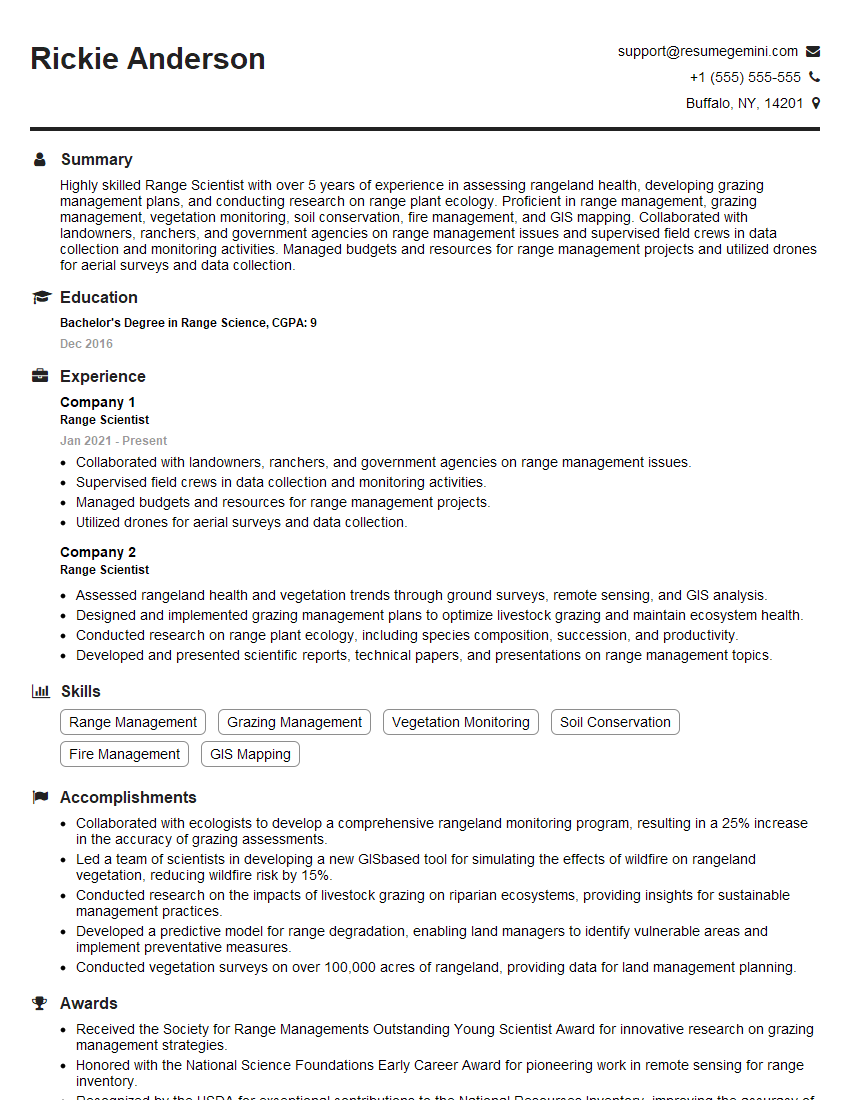
Mastering Pasture-Based Production opens doors to rewarding careers in a growing sector focused on sustainable and ethical food production. To maximize your job prospects, creating a strong, ATS-friendly resume is crucial. ResumeGemini is a trusted resource that can help you build a professional and impactful resume tailored to showcase your skills and experience in this field. Examples of resumes specifically designed for Pasture-Based Production roles are available to guide you. Invest the time to craft a compelling resume – it’s your first impression on potential employers.
Explore more articles
Users Rating of Our Blogs
Share Your Experience
We value your feedback! Please rate our content and share your thoughts (optional).
What Readers Say About Our Blog
Very informative content, great job.
good