The thought of an interview can be nerve-wracking, but the right preparation can make all the difference. Explore this comprehensive guide to PdM Technologies (Vibration Analysis, Thermography) interview questions and gain the confidence you need to showcase your abilities and secure the role.
Questions Asked in PdM Technologies (Vibration Analysis, Thermography) Interview
Q 1. Explain the principles of vibration analysis in PdM.
Vibration analysis in Predictive Maintenance (PdM) relies on the principle that faulty or deteriorating machinery components generate characteristic vibrations. These vibrations, often imperceptible to the human ear, contain valuable information about the machine’s health. By measuring and analyzing these vibrations, we can identify potential problems before they lead to catastrophic failures. Think of it like listening to a car engine – a smooth purr suggests good health, while rattling or knocking indicates problems.
The process involves using sensors to capture vibrations, converting them into measurable data, and then analyzing this data using various techniques (like Fast Fourier Transforms) to identify specific frequency components indicative of different faults. Higher levels of vibration often suggest increased wear, looseness, imbalance, or misalignment within the machine.
Q 2. Describe different types of vibration sensors and their applications.
Several types of vibration sensors are used, each with specific strengths and weaknesses:
- Accelerometers: These are the most common, measuring acceleration. They’re excellent for detecting high-frequency vibrations associated with bearing faults. Think of them as highly sensitive ‘shaking detectors’.
- Velocity sensors (Velocity transducers): These measure the speed of vibration. They’re good at capturing overall vibration levels and are less sensitive to high-frequency noise than accelerometers. They provide a more balanced view of the machine’s overall health.
- Displacement sensors: These measure the amplitude of vibration. They are best suited for low-frequency vibrations, particularly useful in detecting shaft misalignment or resonance problems. They’re like highly sensitive rulers, measuring the extent of back-and-forth movement.
The choice of sensor depends on the application. For instance, accelerometers are ideal for detecting bearing faults due to their sensitivity to high frequencies, while displacement sensors are better for detecting slow, low-frequency problems like looseness.
Q 3. How do you interpret a vibration spectrum?
Interpreting a vibration spectrum involves understanding the relationship between frequency and amplitude. The spectrum displays the amplitude (severity) of vibrations at different frequencies. Think of it like a musical score; each note represents a frequency, and its loudness represents the amplitude. Key aspects to examine include:
- Amplitude: A high amplitude at a specific frequency suggests a potential problem. The higher the amplitude, the more severe the fault likely is.
- Frequency: The frequency indicates the source of the vibration. Different machine components vibrate at specific frequencies. For example, a bearing defect usually shows up at characteristic frequencies related to its geometry and speed.
- Harmonics and Sidebands: The presence of harmonics (multiples of a fundamental frequency) and sidebands (frequencies close to the fundamental frequency) can further pinpoint specific faults. Harmonics are like overtones in music, providing clues about the type of problem.
By comparing the spectrum to known fault signatures (discussed in the next question), experienced analysts can diagnose the problem.
Q 4. What are common vibration fault signatures for bearings, unbalance, and misalignment?
Common vibration fault signatures:
- Bearings: Bearing defects typically show up as high-frequency vibrations at characteristic frequencies related to the bearing’s geometry and speed. These can often be seen as distinct peaks or a broad band of energy in the high-frequency range of the spectrum. Think of the ‘roughness’ you feel when a bearing is worn.
- Unbalance: Rotating unbalance manifests as a strong peak at the rotating speed (1X) of the machine. Imagine an imbalanced washing machine – it vibrates strongly at its rotational speed.
- Misalignment: Misalignment produces vibrations at 2X (twice the rotating speed) and sometimes also at 1X. These vibrations are often broader in frequency range than those caused by unbalance. Think of a wobbly wheel on a car – the vibration is more pronounced and at a slightly different frequency than just an unbalanced wheel.
It’s important to note that these are general guidelines. Actual signatures can vary based on the specific machine, operating conditions, and severity of the fault. Software tools help in analyzing these complex vibration patterns.
Q 5. Explain the use of FFT analysis in vibration data interpretation.
The Fast Fourier Transform (FFT) is a mathematical algorithm that decomposes a complex vibration signal into its individual frequency components. It essentially translates the raw vibration data (which is a function of time) into a frequency spectrum (amplitude versus frequency). This transformation is crucial because it allows us to see the contributions of different frequencies to the overall vibration. Instead of looking at a messy waveform in the time domain, we can see distinct peaks in the frequency domain, which make identifying potential problems much easier.
Imagine trying to understand a complex sound – the FFT is like separating that sound into its constituent frequencies, revealing the individual instruments or voices that make up the whole.
Q 6. What are the limitations of vibration analysis?
While vibration analysis is a powerful PdM tool, it has limitations:
- Early fault detection: It might not detect very early-stage faults that produce only subtle vibrations.
- Sensitivity to operating conditions: Changes in operating conditions (load, speed) can affect the vibration signature, potentially masking or confusing fault indications.
- Interpretation complexity: Accurate interpretation requires expertise and experience. Misinterpretation can lead to incorrect diagnoses and unnecessary repairs.
- Accessibility challenges: Installing sensors and collecting data can be difficult in certain locations or on specific machinery.
- Cost: Implementing a comprehensive vibration analysis program involves the cost of sensors, analyzers, software, and training.
Despite these limitations, vibration analysis remains a valuable technique, particularly when integrated with other PdM technologies.
Q 7. Describe the principles of infrared thermography.
Infrared thermography, or thermal imaging, is a non-contact method for measuring the surface temperature of objects. It works by detecting infrared radiation emitted by objects and converting it into a visual image, where different colors represent different temperatures. Hotter areas appear in brighter colors (often red or white), while cooler areas appear in darker colors (often blue or black). In PdM, it’s used to detect overheating components, which is often an early indicator of problems like loose connections, insulation failures, or impending mechanical failures.
Imagine using a special camera that can ‘see’ heat – thermography uses this principle to identify areas in equipment that are unusually hot, which can often point to impending issues before they lead to a major failure. It is a versatile technique effective in detecting problems not easily identified by other means.
Q 8. What are the different types of infrared cameras and their advantages/disadvantages?
Infrared cameras, or thermal cameras, come in various types, primarily categorized by their detector technology and application. The most common types are:
- Microbolometer cameras: These use micro-fabricated sensors that measure the temperature change caused by infrared radiation. They’re robust, relatively inexpensive, and widely used for general-purpose thermography. A disadvantage is their slightly lower thermal resolution compared to other types.
- Cooled infrared cameras: These cameras employ detectors that need to be cooled (often with liquid nitrogen or a thermoelectric cooler) to reduce noise and achieve higher sensitivity. They offer superior image quality and thermal resolution, making them ideal for demanding applications like scientific research or high-precision industrial inspections. However, they are significantly more expensive and require more maintenance.
- InSb (Indium Antimonide) and HgCdTe (Mercury Cadmium Telluride) cameras: These are high-performance cooled detectors used in specialized applications requiring extremely high sensitivity and speed, like military or aerospace imaging. They are very costly and require expert handling.
The choice of camera depends heavily on the application. For routine predictive maintenance in a factory setting, a microbolometer camera offers a good balance of cost, performance, and ease of use. For highly sensitive research or critical infrastructure inspection, a cooled camera might be necessary.
Q 9. How do you interpret a thermogram?
Interpreting a thermogram requires a systematic approach. It’s not just about looking at hot and cold spots; it’s about understanding the context. Here’s a breakdown:
- Visual Inspection: Initially, look for areas of significantly different temperatures compared to the surrounding areas. These temperature differences are often represented by a color scale (typically with hotter areas shown in red and cooler areas in blue).
- Temperature Measurement: Quantify the temperature differences using the camera’s software. Note the actual temperature values of hotspots, and compare them to the baseline temperatures of similar components.
- Contextual Analysis: This is the crucial step. Consider the operating conditions of the equipment. Is the equipment under heavy load? Is there ambient temperature influence? Knowing the operating parameters helps you determine whether a temperature anomaly is within the acceptable range or indicative of a problem.
- Historical Data Comparison: Comparing current thermograms with previous images from the same equipment over time is extremely valuable. This allows you to identify trends and potentially predict future failures. For instance, if you’ve consistently monitored a particular motor, and its temperature is gradually increasing over several inspections, it signals an impending issue.
- Expert Knowledge: Knowledge of the specific equipment, its normal operating temperature ranges, and potential failure modes is essential. A seasoned thermographer can usually link thermal patterns to specific underlying issues.
For example, a consistently hot motor bearing might indicate excessive friction and impending failure, necessitating maintenance.
Q 10. What are common thermal fault signatures for electrical connections, mechanical friction, and insulation problems?
Common thermal fault signatures in thermography vary depending on the type of fault:
- Electrical Connections: High resistance in connections causes Joule heating, manifested as localized hotspots. Loose connections, corroded terminals, or insufficient contact pressure are common culprits. You’ll see small, intensely hot spots at the connection point.
- Mechanical Friction: Moving parts with excessive friction will generate heat. Worn bearings, misaligned shafts, or inadequate lubrication are typical reasons. Hotspots will often appear along the surface of rotating or sliding parts.
- Insulation Problems: Faulty insulation leads to heat leakage or energy loss. This usually manifests as a more diffuse hot spot or a region of elevated temperature along the insulated surface, possibly along a cable or in a motor housing.
Think of it this way: a loose electrical connection might look like a small, intensely glowing ember, while faulty insulation might be like a mildly warmer patch of skin.
Q 11. Explain the concept of emissivity and its importance in thermography.
Emissivity is a crucial property in thermography. It represents the ability of a surface to emit infrared radiation. A perfect emitter (blackbody) has an emissivity of 1.0, while a perfect reflector has an emissivity of 0.0. Most materials have emissivities between 0.1 and 0.99.
Importance: The camera measures the infrared radiation emitted by a surface, but it cannot directly measure the actual temperature of the surface itself. This is where emissivity comes into play. If the emissivity of a material is unknown or incorrect, the measured temperature will be inaccurate. To get a correct temperature reading, you must adjust the emissivity setting on the thermal camera to match the material being inspected. For example, a highly polished metal surface has a very low emissivity; incorrectly assuming high emissivity would lead to significant underestimation of its true temperature.
Imagine trying to measure the temperature of a shiny metal pan on a stove. The camera would see mostly reflections, not the actual heat emitted by the pan, leading to an incorrect measurement. Setting the correct emissivity value helps the camera ‘see through’ the reflections and give a more accurate temperature reading.
Q 12. What safety precautions should be taken when performing thermographic inspections?
Safety is paramount when conducting thermographic inspections. Precautions include:
- Personal Protective Equipment (PPE): Always wear appropriate PPE, including safety glasses or goggles, gloves (especially when dealing with high voltage equipment), and hearing protection (in noisy environments).
- Lockout/Tagout (LOTO): Implement LOTO procedures before inspecting energized equipment to prevent accidental activation. Never work on live electrical equipment without proper safety measures.
- Awareness of surroundings: Be mindful of your environment. Avoid tripping hazards, moving machinery, and other potential dangers.
- High-voltage awareness: Exercise extreme caution when inspecting high-voltage equipment. Maintaining a safe distance and employing qualified personnel are crucial.
- Arc flash safety: In electrical installations, be knowledgeable about arc flash hazards and take appropriate preventive measures.
- Heat sources: Be aware of nearby heat sources that might interfere with the inspection. These could include ovens, furnaces or other hot equipment.
Safety is not just a checklist; it’s an ongoing process. Before, during, and after any thermographic inspection, a safety-first approach is essential.
Q 13. How do you differentiate between a real defect and a false indication in thermography?
Differentiating between real defects and false indications in thermography is crucial for accurate diagnosis. False indications can arise from several factors:
- Surface Reflection: Reflections from highly reflective surfaces can create false hot or cold spots. Proper emissivity settings can mitigate this.
- Ambient Temperature Variations: Temperature gradients due to drafts or sunlight can produce misleading results. Insulating the equipment or performing the inspection in stable ambient conditions can help.
- Material Properties: Different materials have different thermal properties. Understanding these properties and their influence on temperature readings is essential.
- View Angle: The angle at which the camera is pointed can influence the measured temperature. Maintaining a consistent view angle minimizes this effect.
Identifying real defects: To distinguish a real defect, consider the following: consistency of the indication over time, consistency across different view angles, temperature gradients (how sharply the temperature changes), and contextual information regarding equipment operation. A real defect usually persists, even after addressing external factors like surface reflections and ambient temperature variations.
For instance, a consistently hot spot on a motor bearing, even after accounting for ambient temperature and emissivity, strongly indicates a real defect, likely wear and tear.
Q 14. What software do you use for vibration analysis and thermography data processing?
The software used for vibration analysis and thermography data processing depends on the specific needs and preferences of the user. However, some popular and widely used options include:
- FLIR Tools: A comprehensive suite of software provided by FLIR Systems for analyzing and reporting thermographic data. It offers a variety of features for image processing, temperature measurement, and report generation.
- IRBIS: Another popular software suite for thermographic data analysis.
- Vibration analysis software: Many vendors offer software packages for vibration analysis. Examples include (but are not limited to) products from Bently Nevada, Siemens, and SPM Instrument. These packages often offer capabilities for data acquisition, spectral analysis, order tracking, and diagnostic expert systems.
Many of these software packages offer features like automated reporting, integration with other PdM systems, and advanced analysis tools like trend analysis, image processing for defect recognition, and predictive modeling. The selection of software ultimately depends on the specific requirements of the inspection and analysis processes.
Q 15. How do you prioritize maintenance tasks based on PdM data?
Prioritizing maintenance tasks based on PdM data involves a risk-based approach. We don’t just look at what needs fixing, but also how urgently. This is done by assessing the severity and likelihood of failure predicted by the PdM data. For example, a high-vibration reading from a critical component (like a motor driving a production line) with a rapidly increasing trend would be prioritized higher than a minor temperature anomaly in a less critical system.
I typically use a risk matrix that considers both the severity of a failure (e.g., production downtime, safety risk, environmental impact) and the probability of that failure occurring within a specified timeframe, based on analysis of vibration trends, thermal imaging patterns and other data. A weighted scoring system assigns a risk score to each asset. We then prioritize maintenance tasks according to their risk score, ensuring that the highest-risk assets receive the most urgent attention.
For instance, if a vibration analysis shows a bearing nearing failure on a critical pump, it would receive an immediate action, while a minor imbalance in a less critical fan might be scheduled for a later maintenance window.
Career Expert Tips:
- Ace those interviews! Prepare effectively by reviewing the Top 50 Most Common Interview Questions on ResumeGemini.
- Navigate your job search with confidence! Explore a wide range of Career Tips on ResumeGemini. Learn about common challenges and recommendations to overcome them.
- Craft the perfect resume! Master the Art of Resume Writing with ResumeGemini’s guide. Showcase your unique qualifications and achievements effectively.
- Don’t miss out on holiday savings! Build your dream resume with ResumeGemini’s ATS optimized templates.
Q 16. Explain the role of data analytics in PdM.
Data analytics is the backbone of effective PdM. It’s not just about collecting data; it’s about extracting meaningful insights to make informed decisions. We use statistical analysis, machine learning, and data visualization techniques to identify patterns, predict failures, and optimize maintenance strategies.
For example, using vibration data, we can identify characteristic frequencies associated with specific faults (e.g., unbalance, misalignment, bearing defects). By tracking these frequencies over time, we can build predictive models to anticipate failures before they occur. Similarly, in thermography, analyzing thermal patterns can reveal overheating components, insulation issues, or electrical faults before they escalate into major problems.
Sophisticated algorithms can analyze vast amounts of sensor data to detect anomalies and identify patterns that might not be apparent through simple visual inspection. This allows us to move from reactive maintenance to a predictive approach, significantly reducing downtime and maintenance costs.
Q 17. Describe your experience with different PdM software packages.
Throughout my career, I’ve had extensive experience with a variety of PdM software packages. This includes industry-leading solutions like IBM Maximo, SAP EAM, AspenTech, and specialized software for vibration analysis (e.g., Bently Nevada System 1, ADAMS) and thermography analysis (FLIR Reporter). Each package has its strengths and weaknesses, particularly in data handling, analysis capabilities, and reporting features.
My expertise extends beyond simply operating the software; I understand the underlying algorithms and data models. This enables me to effectively interpret the results, identify limitations, and adapt the software to meet specific organizational needs. For example, I’ve customized several reporting dashboards to provide real-time visibility of critical asset health and maintenance KPIs to management. I’m proficient in integrating data from different sources and customizing reports to present the insights in the clearest, most actionable way.
Q 18. How do you manage large amounts of PdM data effectively?
Managing large amounts of PdM data effectively requires a multi-faceted approach. It’s crucial to have robust data management systems and efficient data processing strategies in place.
Firstly, a well-structured database is essential. This involves proper data organization, using consistent naming conventions, and utilizing appropriate data types. We need to ensure data integrity, accuracy, and accessibility. Secondly, employing data compression and archiving techniques can reduce storage requirements and improve data retrieval speed. Cloud-based solutions can be particularly effective for managing and storing large datasets.
Furthermore, automated data processing techniques, like scripting and data mining, are crucial for efficiently processing large volumes of sensor data. We can leverage machine learning algorithms to automatically identify anomalies and trends. Regular data cleanup and validation ensure that the data remains reliable for analysis and decision-making. Finally, visualization techniques are indispensable in summarizing and interpreting complex datasets, making the information accessible and understandable to various stakeholders.
Q 19. Explain the difference between predictive, preventive, and reactive maintenance.
The three maintenance strategies – reactive, preventive, and predictive – represent a progression in sophistication and efficiency.
- Reactive Maintenance: This is a ‘fix-it-when-it-breaks’ approach. It’s the least efficient, as failures cause unplanned downtime and often lead to expensive repairs. Think of a car that breaks down on the side of the road – you only fix it after it’s stopped working.
- Preventive Maintenance: This involves scheduled maintenance based on time intervals or operating hours. It aims to prevent failures before they occur, but it can lead to unnecessary maintenance on equipment that might not require it immediately. Imagine changing your car’s oil every 3,000 miles, even if it’s still in good condition.
- Predictive Maintenance (PdM): This uses sensor data and analytical techniques to predict when maintenance is actually needed. It minimizes unnecessary maintenance and prevents catastrophic failures by targeting maintenance actions to components that are most likely to fail. This is like using your car’s onboard computer to monitor oil levels and pressure, and only changing the oil when the system indicates it’s necessary.
PdM, therefore, represents a significant improvement over reactive and preventive maintenance by optimizing maintenance schedules and reducing both downtime and costs.
Q 20. How do you integrate PdM data with CMMS (Computerized Maintenance Management System)?
Integrating PdM data with a CMMS (Computerized Maintenance Management System) is critical for a truly effective maintenance program. It creates a seamless flow of information, connecting the predictive insights from PdM with the operational and logistical aspects managed by the CMMS.
This integration typically involves data exchange through APIs or direct database connections. The PdM system might send alerts or recommendations to the CMMS, triggering work orders based on predicted failures or anomalies. The CMMS then manages scheduling, assigning personnel, tracking parts, and recording maintenance activities. This closed-loop system ensures that the insights from PdM translate into timely and efficient maintenance actions.
For example, if the PdM system detects a high vibration level in a motor, it can automatically generate a work order in the CMMS, specifying the required maintenance task, parts, and technician. The CMMS then schedules the work, tracks its completion, and updates the asset’s maintenance history, creating a complete record of all maintenance activities.
Q 21. What are the key performance indicators (KPIs) for a successful PdM program?
Key Performance Indicators (KPIs) for a successful PdM program focus on demonstrating its value in terms of cost savings, increased reliability, and improved operational efficiency.
- Mean Time Between Failures (MTBF): Indicates the average time between equipment failures. A higher MTBF shows improved reliability.
- Mean Time To Repair (MTTR): Measures the average time taken to repair a piece of equipment after failure. A lower MTTR reflects efficient maintenance practices.
- Reduced Maintenance Costs: Comparing maintenance costs before and after implementing PdM highlights the financial benefits.
- Downtime Reduction: Measuring the reduction in unplanned downtime demonstrates the impact of PdM on production efficiency.
- Predictive Accuracy: Evaluating the accuracy of failure predictions demonstrates the effectiveness of the PdM models.
- Return on Investment (ROI): Quantifies the overall financial return on the investment in the PdM system.
By tracking these KPIs, we can continuously monitor and improve the effectiveness of our PdM program, ensuring it delivers a positive impact on the organization’s bottom line and operational performance.
Q 22. Describe a challenging PdM problem you solved and how you approached it.
One challenging PdM problem I solved involved a critical piece of equipment in a manufacturing plant experiencing unexpected and increasingly frequent shutdowns. Initial vibration analysis showed high levels of vibration across multiple frequency bands, but pinpointing the root cause was difficult. The thermography scans revealed inconsistent heat signatures, suggesting a potential electrical issue, but the vibration data pointed towards a mechanical problem. My approach involved a multi-faceted strategy:
- Data Triangulation: I carefully correlated the vibration data with the thermography results, along with operational logs and maintenance records. This helped eliminate some possibilities and narrow down the potential root causes.
- Advanced Signal Processing: Using advanced signal processing techniques on the vibration data, including order tracking and spectral analysis, I was able to isolate specific frequencies linked to the machine’s rotational speed. This highlighted a bearing defect, which was initially masked by other vibration sources.
- On-Site Inspection: Armed with this refined understanding, I conducted a thorough on-site inspection, focusing specifically on the bearings identified in the data analysis. This confirmed significant wear and tear on one particular bearing.
Replacing that bearing completely resolved the issue, eliminating the unexpected shutdowns and preventing further costly downtime. This case underscored the importance of combining different PdM techniques and rigorously analyzing the data for a holistic understanding.
Q 23. How do you ensure the accuracy and reliability of PdM data?
Ensuring the accuracy and reliability of PdM data is paramount. It involves a multi-layered approach:
- Calibration and Verification: All sensors (vibration accelerometers, infrared cameras) need regular calibration against traceable standards to guarantee the accuracy of their measurements. This ensures that the data collected is consistent and reliable.
- Data Acquisition Techniques: Proper data acquisition is crucial. This includes using appropriate sensor types and mounting techniques, choosing suitable sampling rates and durations, and minimizing environmental noise interference. For example, ensuring that a vibration sensor is securely mounted to the machine to prevent extraneous vibrations from affecting the readings.
- Data Cleaning and Pre-processing: Raw PdM data often contains noise and outliers. Effective data cleaning techniques, like filtering and smoothing, are necessary to remove spurious data points and highlight the relevant trends. This ensures that the subsequent analysis isn’t skewed by erroneous readings.
- Validation and Verification: Analyzing data from multiple sensors and comparing it with other operational data, like temperature readings from separate sensors, allows for verification of the findings. This increases confidence in the accuracy and reliability of the results.
Imagine diagnosing a patient; you wouldn’t trust a single, potentially faulty measurement. Similarly, using multiple data sources and applying robust validation techniques build confidence in PdM insights.
Q 24. What are the limitations of PdM technologies?
While PdM technologies offer incredible benefits, they do have limitations:
- Accessibility: Some PdM technologies require specialized equipment and trained personnel, making them expensive and potentially inaccessible to smaller organizations.
- Data Interpretation: Proper interpretation of PdM data requires significant expertise. Misinterpretation can lead to incorrect diagnoses and potentially costly mistakes. For instance, misinterpreting a high vibration reading as bearing failure when it’s actually due to misalignment.
- Environmental Conditions: Environmental factors like extreme temperatures, high humidity, or electromagnetic interference can impact the accuracy and reliability of PdM data.
- Hidden Failures: PdM technologies may not detect all types of failures. Some faults might not manifest as detectable changes in vibration or thermal patterns until they’re critical. For instance, a crack developing internally in a component might not show up on the surface.
- Cost: The initial investment in PdM equipment and software can be substantial, and ongoing maintenance costs need to be factored into the budget.
It’s crucial to understand these limitations and incorporate them into the overall PdM strategy.
Q 25. How do you communicate PdM findings to non-technical stakeholders?
Communicating PdM findings effectively to non-technical stakeholders requires a clear and concise approach, avoiding technical jargon:
- Visual Aids: Use charts, graphs, and images to present complex data in an easily understandable format. For example, a simple bar chart comparing vibration levels over time is more impactful than a detailed frequency spectrum.
- Plain Language: Explain findings in simple terms, avoiding technical terms unless absolutely necessary. If you must use a technical term, always provide a clear explanation.
- Focus on Impact: Highlight the practical implications of the findings. Instead of saying “High vibration levels detected at 1500 Hz,” focus on “This equipment needs attention to avoid a potential shutdown that could cost $X in lost production.”
- Recommendations: Clearly outline the recommended actions, including timelines and responsible parties. This provides a clear path forward for decision-making.
- Storytelling: Frame the findings within a narrative that is easy to understand. This makes the information relatable and more memorable.
By focusing on the ‘what,’ ‘so what,’ and ‘now what’ aspects of the findings, you ensure that the message resonates with the audience.
Q 26. What are your professional development goals related to PdM?
My professional development goals related to PdM include:
- Deepening my expertise in advanced signal processing techniques: I’m particularly interested in exploring machine learning algorithms for predictive modeling and anomaly detection to enhance the accuracy of our predictive maintenance strategies.
- Expanding my knowledge of condition-based maintenance (CBM) optimization: I want to improve my understanding of how to effectively leverage PdM data to optimize maintenance schedules and reduce unnecessary downtime.
- Exploring the integration of different PdM modalities: I am keen to learn more about integrating vibration analysis, thermography, and other data sources to obtain a more holistic and accurate view of the overall equipment health.
- Improving my communication and presentation skills: I strive to become even more effective in communicating complex technical information to both technical and non-technical audiences.
Continuous learning is essential in this rapidly evolving field. I aim to keep at the forefront of advancements in PdM technologies and their applications.
Q 27. Describe your experience with root cause failure analysis using PdM data.
My experience with root cause failure analysis using PdM data is extensive. Typically, the process involves:
- Data Collection and Review: This involves gathering all relevant PdM data, such as vibration spectra, thermography images, and operational data, leading up to the failure event.
- Trend Analysis: Identifying patterns and trends in the data helps determine if the failure was sudden or gradual. For instance, a gradual increase in vibration levels over time might indicate bearing wear.
- Correlation with Operational Data: Comparing the PdM data with operational logs and maintenance records helps pinpoint any contributing factors or unusual operating conditions.
- Fault Isolation: Using advanced signal processing and data analysis techniques, the specific component or system responsible for the failure is isolated. This often involves identifying characteristic frequencies or specific thermal patterns associated with known failure modes.
- Verification: The identified root cause is verified through physical inspection, and the findings are documented to prevent similar failures in the future.
One example involved a pump failure. By analyzing the vibration data, we identified a resonance condition causing excessive vibration, which was later confirmed by a physical inspection that revealed a loose mounting bolt. This prevented future failures by addressing the root cause rather than just replacing the failed pump.
Q 28. How do you stay up-to-date with the latest advancements in PdM technologies?
Staying up-to-date with the latest advancements in PdM technologies is crucial. My approach includes:
- Industry Publications and Journals: I regularly read industry publications and journals specializing in PdM and related fields. This keeps me informed about new technologies, techniques, and best practices.
- Conferences and Workshops: Attending conferences and workshops provides opportunities to network with other professionals and learn about the latest developments firsthand.
- Online Resources and Webinars: I leverage online resources, such as industry websites, online courses, and webinars, to enhance my knowledge and skills.
- Professional Networks: I am an active member of professional organizations related to PdM, which allows me to stay connected with the community and learn from others’ experiences.
- Hands-on Experience: I actively seek opportunities to implement new technologies and techniques in real-world projects to reinforce my learning and refine my skills.
Continuous learning is not just a goal but a necessity in the ever-evolving field of PdM.
Key Topics to Learn for PdM Technologies (Vibration Analysis, Thermography) Interview
- Fundamentals of Vibration Analysis: Understanding basic vibration theory, including frequency, amplitude, and phase; different types of vibration (e.g., resonance, random, harmonic); and the use of signal processing techniques.
- Practical Application of Vibration Analysis in PdM: Diagnosing machine faults (unbalance, misalignment, looseness, bearing defects) through vibration signature analysis; interpreting spectral data and identifying characteristic frequencies; using vibration data to predict potential failures.
- Thermography Principles: Understanding infrared radiation, emissivity, and temperature measurement; interpreting thermal images to identify overheating components and potential problems.
- Practical Application of Thermography in PdM: Locating electrical faults (loose connections, overheating components), mechanical issues (friction, bearing wear), and insulation defects; using thermal imaging for predictive maintenance and troubleshooting.
- Data Acquisition and Analysis Techniques: Proficiency with data acquisition hardware and software; understanding different signal processing methods; experience with vibration and thermal data analysis software.
- Reporting and Communication: Effectively communicating technical findings to both technical and non-technical audiences; creating clear and concise reports that summarize findings and recommendations.
- PdM Strategies and Best Practices: Understanding the role of vibration analysis and thermography within a broader PdM strategy; familiarizing yourself with industry standards and best practices for data collection, analysis, and reporting.
- Troubleshooting and Problem-Solving: Demonstrating the ability to analyze complex data sets, identify root causes of problems, and propose effective solutions.
Next Steps
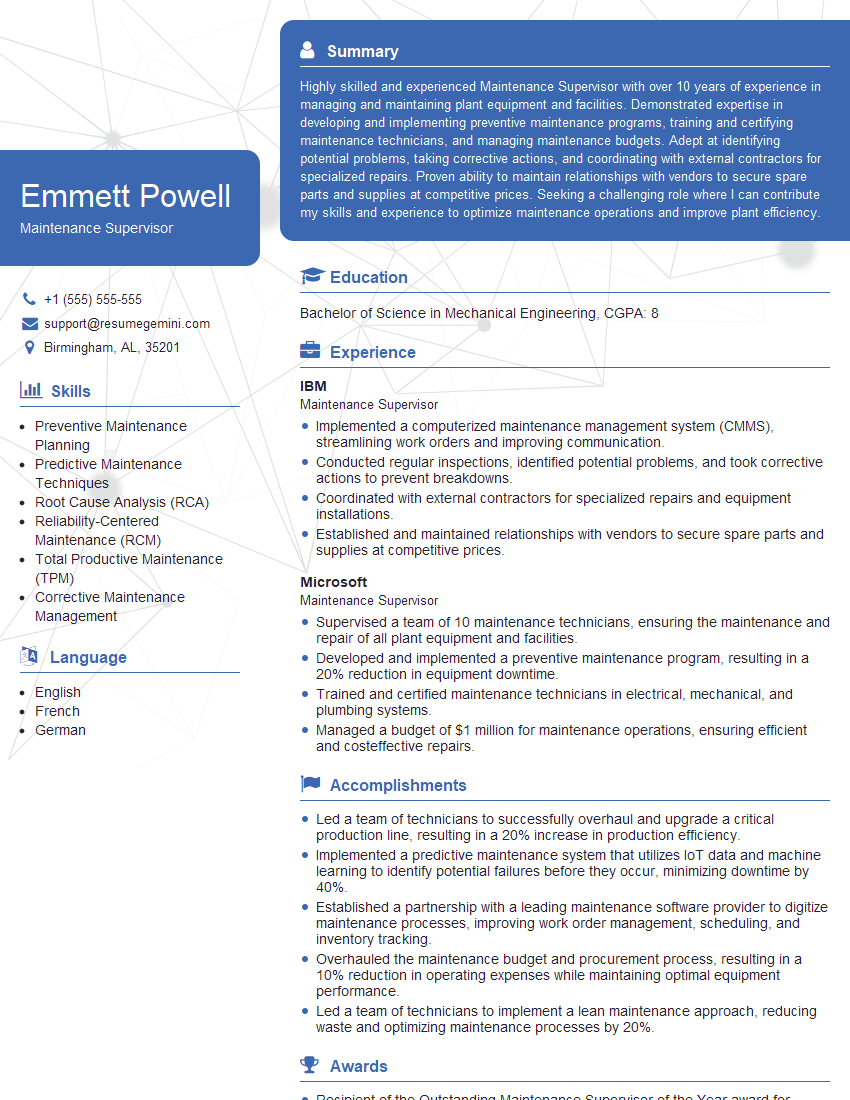
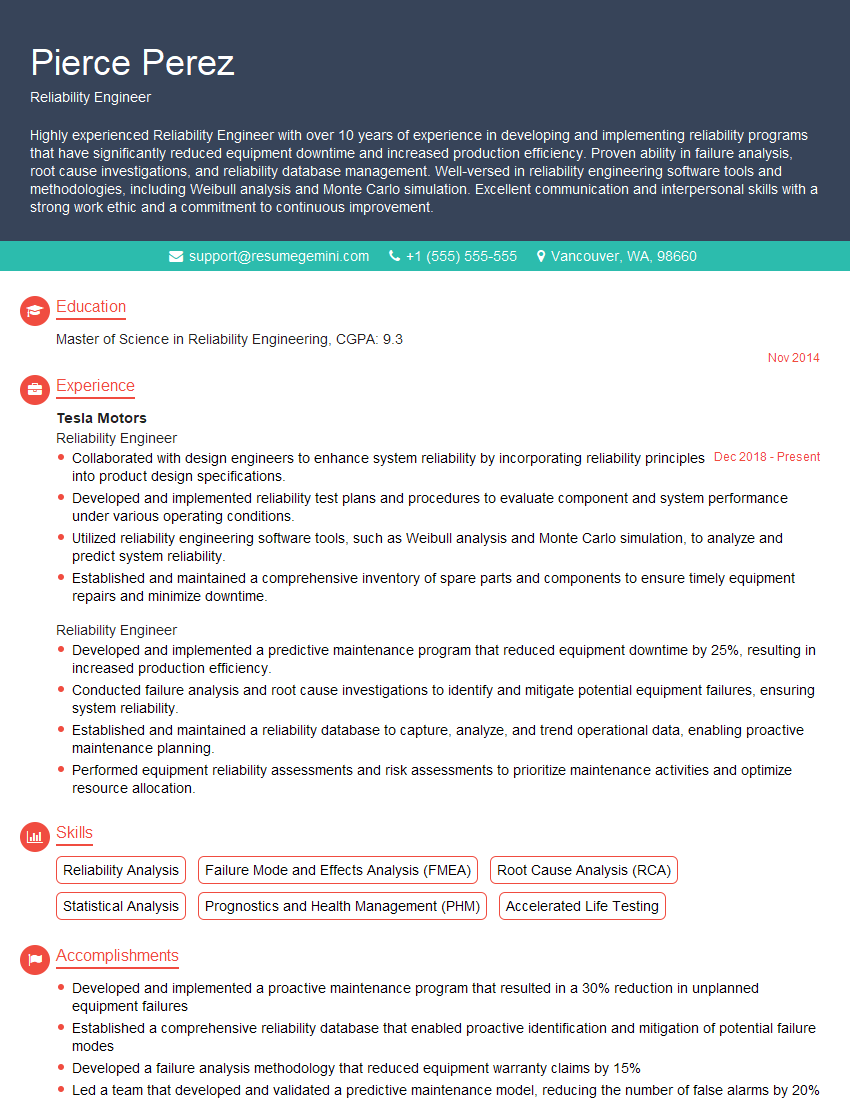
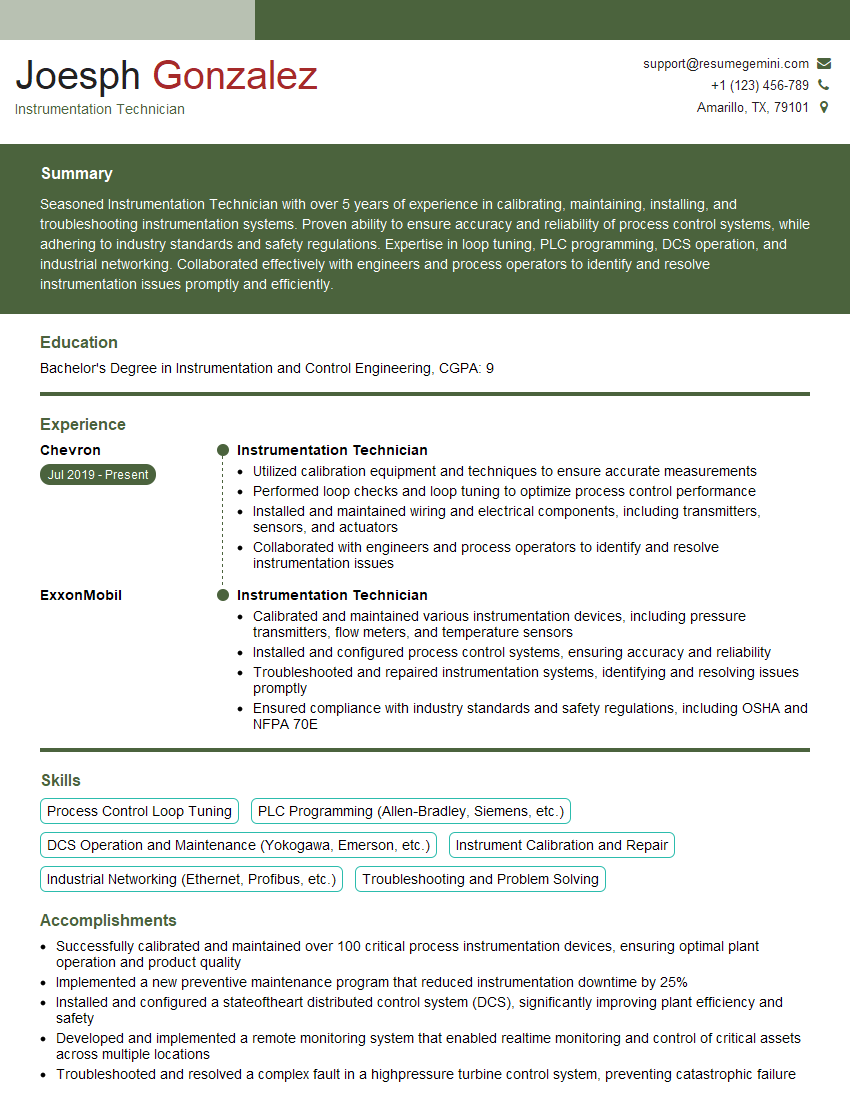
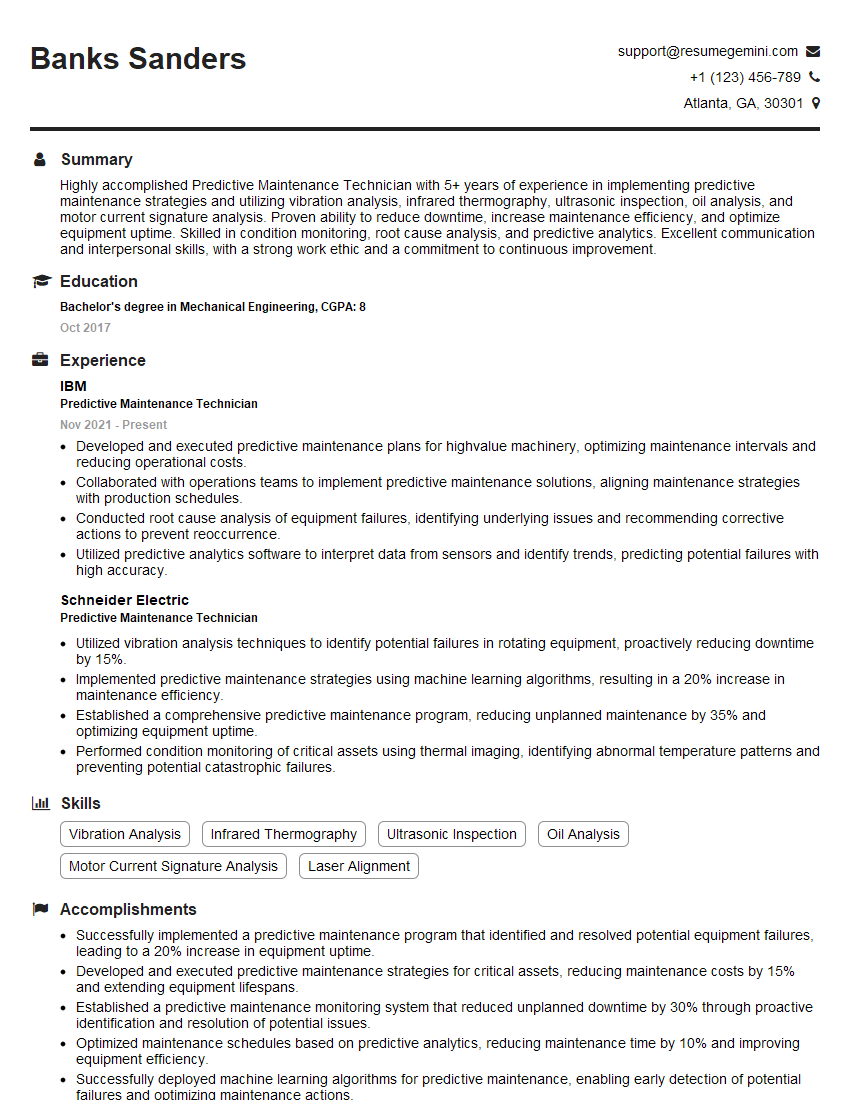
Mastering PdM Technologies, specifically vibration analysis and thermography, is crucial for a successful career in predictive maintenance. These skills are highly sought after and will significantly enhance your employability and career progression opportunities. To maximize your chances of landing your dream job, it’s essential to create a compelling and ATS-friendly resume that highlights your expertise. We strongly recommend using ResumeGemini, a trusted resource for building professional resumes, to craft a document that effectively showcases your qualifications. ResumeGemini provides examples of resumes tailored to PdM Technologies (Vibration Analysis, Thermography) to help guide you through the process.


Explore more articles
Users Rating of Our Blogs
Share Your Experience
We value your feedback! Please rate our content and share your thoughts (optional).
What Readers Say About Our Blog
Very informative content, great job.
good