Interviews are opportunities to demonstrate your expertise, and this guide is here to help you shine. Explore the essential Pen and Paper Pattern Making interview questions that employers frequently ask, paired with strategies for crafting responses that set you apart from the competition.
Questions Asked in Pen and Paper Pattern Making Interview
Q 1. Explain the difference between a sloper and a block.
Both slopers and blocks are foundational patterns, but they serve different purposes. Think of them as the building blocks of garment construction, similar to how bricks are the foundation of a house.
A sloper is a basic, close-fitting pattern that represents the body’s shape. It’s a highly personalized, foundational pattern drafted from individual measurements, acting as a blank canvas for all future designs. It’s typically created for a specific body type and size and only includes the most basic seam lines, like the shoulder, armhole, and side seams. It’s the starting point from which all other patterns are derived.
A block is a more stylized version of a sloper. It incorporates some design elements like ease (extra fabric for comfort and fit) and may already feature basic design details like a neckline or sleeve cap. While still a foundation pattern, it offers more shaping than a sloper and might be used as a starting point for many garments of the same basic style. It’s less personalized than a sloper as it includes design choices, often relying on standard sizing charts.
In essence, a sloper is the raw, body-specific base, while a block is a more developed, style-oriented starting point.
Q 2. Describe your experience with various pattern drafting methods (e.g., flat pattern, draping).
My experience encompasses both flat pattern drafting and draping. Flat pattern making uses measurements and calculations to create patterns on paper, while draping involves manipulating fabric directly on a dress form to create a three-dimensional pattern.
Flat pattern drafting is my go-to method for precision and repeatability. I’m proficient in various techniques, including the use of commercial drafting systems and developing unique methods tailored to specific styles or body types. For example, I’ve developed a highly successful flat pattern for a structured blazer using advanced techniques to ensure a crisp and tailored fit.
Draping is incredibly valuable for creating unique and innovative designs, especially for flowing or asymmetrical styles. I’ve used draping extensively to design avant-garde evening wear, allowing the fabric’s drape and fluidity to inspire the garment’s shape. The challenge with draping lies in translating the three-dimensional form back into a two-dimensional pattern for consistent production. This often requires careful observation and meticulous pattern manipulation. I use a variety of techniques like muslin draping, marking techniques, and various pattern manipulation methods to ensure consistency and accurate final patterns.
Q 3. How do you handle fit issues during the pattern making process?
Addressing fit issues is an iterative process that involves careful observation, analysis, and pattern adjustment. Imagine it like sculpting – you gradually refine the form until it’s perfect.
- Testing and Evaluation: I always make a muslin (a test garment) to evaluate the fit. This allows me to identify any areas of looseness, tightness, or pulling before using the final fabric.
- Pinning and Marking: I meticulously mark areas of necessary alteration directly onto the muslin using pins or tailor’s chalk. This helps visualize the adjustments needed on the pattern.
- Pattern Adjustments: Based on the muslin fitting, I carefully make the corresponding adjustments to the pattern pieces. This might involve taking in or letting out seams, adjusting the neckline, altering the sleeve cap height, or modifying the dart placement. I understand the impact of specific pattern alterations and consistently follow specific techniques to avoid unwanted effects.
- Re-testing: After making the adjustments, I often make a second muslin to refine the fit and ensure the alterations corrected the initial issues.
I’ve learned that patience is key in this stage, as multiple iterations are often necessary to achieve the desired fit.
Q 4. What are the key considerations when grading a pattern?
Grading a pattern, which involves scaling the pattern to different sizes, requires careful consideration of several key factors. It’s like expanding or shrinking a blueprint while preserving its integrity.
- Body Proportions: Understanding how body proportions change with size is crucial. The rate of increase or decrease for different body areas varies depending on the body part. For example, hip increases are usually greater than bust increases.
- Grading Method: Different methods exist, including manual grading using rulers and curves and computerized grading using specialized software. The choice depends on the complexity and scale of the production.
- Seam Allowances: Seam allowances must be carefully considered, as they can affect the final size and fit of the garment. They should remain consistent across all sizes.
- Design Details: Grading must also take into account design details like darts, pockets, and other features. These may require specific adjustments to maintain their correct placement and proportions in each size.
- Fabric properties: Fabric stretch and drape may also influence grading patterns for garments like swimwear or stretch knitwear.
I often utilize a combination of manual and computerized grading methods, opting for computer-aided grading for larger-scale projects to maintain accuracy and efficiency.
Q 5. Explain the importance of accurate measurements in pattern making.
Accurate measurements are the bedrock of successful pattern making. They are like the foundation of a building; without a strong foundation, the entire structure is unstable.
Inaccurate measurements lead to ill-fitting garments. A half-inch error can create a noticeable difference in fit, resulting in discomfort or an unflattering silhouette. The process starts with taking precise body measurements, using the appropriate measuring tools, and employing proper measuring techniques. This includes considering the ease (extra fabric allowance for comfort) required for different garment styles and fabrics.
Furthermore, measurements are also crucial when assessing patterns to adjust fit, ensuring consistent sizing across productions and adapting for different body types or sizing charts.
Q 6. Describe your experience with different types of fabrics and how they affect pattern design.
Different fabrics possess unique properties—drape, weight, stretch, and texture—that significantly influence pattern design. Think of it like choosing the right paint for a canvas; the paint’s properties will affect how the artwork turns out.
Lightweight fabrics like silk or chiffon require more ease to avoid a flimsy or clingy appearance. Their drape will also influence the pattern design, often necessitating more shaping or design elements to create a structured look. Conversely, heavy fabrics like wool or denim may require adjustments to seam allowances and ease to prevent a bulky or stiff garment.
Stretch fabrics present a unique challenge, needing patterns with reduced seam allowances and perhaps even grading changes to compensate for the fabric’s expansion. Non-stretch fabrics require the pattern to include sufficient ease for comfort and movement.
My experience with various fabrics – from delicate laces to sturdy denim – has honed my ability to select the right techniques for each design, ensuring that the final garment flatters the body and displays the fabric’s unique qualities.
Q 7. How do you create a pattern for a garment with darts?
Creating a pattern with darts involves strategically shaping the flat pattern to conform to the curves of the body. Darts act as controlled shaping and are commonly used in areas like the bust, waist, and back.
The process generally begins with a basic block or sloper. The dart’s placement and shape depend on the desired fit and garment style. For example, bust darts are usually placed under the bust to provide shape and support. Waist darts help shape the waistline, while back darts often provide a better fit across the shoulder blades.
Here’s a simplified example for a bust dart:
- Determine dart location: Mark the dart points on the pattern piece based on the measurements and desired shaping.
- Draw dart lines: Draw two lines from the dart point to where you want the dart to end (usually the seamline).
- Cut and pivot: Cut along the dart lines from the point to the seam. Pivot the cut pieces to create the dart, overlapping the fabric to create the desired curve and shaping.
- Secure darts: Close the darts by taping or stitching the cut pieces together. Check that the overlap of the fabric creates a smooth, well-shaped area.
The exact techniques may differ based on the type of dart and garment, but the core principle is always about intelligently shaping the flat pattern to fit the three-dimensional body shape.
Q 8. How do you adjust a pattern for ease?
Ease is the amount of extra fabric added to a pattern to allow for comfortable movement and a flattering fit. It’s crucial because garments made without ease will feel restrictive and look poorly fitting. The amount of ease varies depending on the garment type, fabric, and personal preference. For example, a close-fitting bodice requires less ease than a flowing skirt.
To adjust a pattern for ease, you add the ease to the pattern pieces. This usually involves adding to the body measurements *before* you create the initial pattern. For instance, if your body measurement is 36 inches at the bust and you want 1 inch of ease, you would initially use a 37-inch measurement as your base for constructing the bust dart and overall shape of the bodice.
The ease can be added in various ways: Across the grain (adding equal amounts to the side seams), On the grain (adding to the length, often on a skirt), or Divided ease (adding a portion to both front and back pattern pieces to achieve a more even fit). The best method depends on the garment and desired fit.
- Full Ease: Added entirely to the body measurement before drafting.
- Draft Ease: Added during pattern drafting to account for design, fabric drape, and ease.
- Design Ease: Added to the final pattern based on stylistic needs.
Careful consideration of the garment’s function and fabric’s properties will inform how the ease is distributed.
Q 9. How do you account for seam allowances when creating a pattern?
Seam allowances are the extra fabric added to each pattern piece before sewing. They’re essential for creating clean, professional-looking seams and allowing for adjustments during construction. The standard seam allowance is typically 5/8 inch (1.5cm), but it can vary depending on the garment, fabric, and desired look. For instance, a tailored jacket might use a smaller seam allowance, while a very loose-fitting garment might use a slightly larger one.
Account for seam allowances by adding them to your pattern pieces *after* you’ve added ease and completed the basic pattern shape. This is usually done by adding the seam allowance amount to each edge (e.g., add 5/8 inch to the edge of each pattern piece to create a 5/8 inch seam allowance). You don’t add seam allowances to those edges that will not be sewn, such as the hemline that is left unfinished.
Imagine your pattern piece is a puzzle piece. The seam allowances are the extra border you need to connect it properly to the next piece. You can visually add this by drawing a new line parallel to each edge on the outside. The distance between the two lines is your seam allowance.
Q 10. Explain the process of creating a pattern from a sketch.
Creating a pattern from a sketch requires a combination of artistic skill, technical knowledge, and attention to detail. It’s a multi-step process that starts with accurate measurements and ends with a testable pattern.
- Measurements: Take accurate body measurements of the intended wearer or a sloper to develop the design.
- Sketch: Create detailed sketches, including front, back, and side views, showing all design details (e.g., darts, seams, necklines).
- Basic Block/Sloper: Start with a basic block or sloper (a fundamental pattern representing the body shape) as a foundation. You can adapt the block or create a new base if the design needs it.
- Design Adaptations: Adjust the basic block to match your sketch by adding, removing, or shaping sections as needed. This includes altering dart placement, neckline curves, and sleeve cap shapes.
- Pattern Pieces: Draft the individual pattern pieces (e.g., front, back, sleeves, collars) based on design requirements. Use rulers, curves, and other tools for accuracy.
- Grading: Grade (size) the pattern to make multiple sizes.
- Test and Adjust: Create a muslin (a trial garment) to check the fit before cutting the final fabric. This step is crucial for identifying and correcting fit issues.
For example, to make a simple A-line skirt from a sketch, you would start with a basic rectangular skirt pattern, then adjust the side seams to create the A-line shape indicated in your sketch. The accurate measurements for the waist and desired skirt length are critical to the success of this process.
Q 11. How do you use a muslin to check the fit of a pattern?
A muslin is a test garment made from inexpensive fabric (like muslin or cotton) to check the fit of your pattern before cutting into your expensive or delicate fabric. It’s an invaluable step in the process of achieving a perfect fit.
To use a muslin:
- Cut the Pattern: Cut out your pattern pieces from the muslin, adding seam allowances.
- Sew the Muslin: Sew the muslin pieces together, following the seam lines and stitching instructions.
- Try it On: Try on the muslin and carefully assess the fit. Pay close attention to areas such as bust, waist, hips, shoulders, neckline, sleeves, and length. Mark any areas that need adjustment.
- Adjust the Pattern: Remove the muslin, and mark any necessary adjustments directly on the muslin. Then transfer those markings to your original paper pattern pieces.
- Refine: Once you’ve made the adjustments, create a second muslin if necessary to ensure the fit is correct.
Muslins are particularly helpful for identifying issues such as gaping seams, tight areas, or incorrect dart placement which would be disappointing to find out only after cutting your expensive fabric.
Q 12. Describe your experience with pattern making software (if applicable).
While I primarily work with traditional pen and paper methods, I am familiar with several digital pattern-making software programs, such as [mention specific software like Adobe Illustrator, Pattern Design, etc. If you have no experience, say so honestly]. Software offers advantages such as grading multiple sizes easily, precise adjustments, and storage of digital patterns. However, understanding the underlying principles of pattern making, especially grading and fitting, remains crucial, regardless of the tools used.
My experience with these programs has allowed me to improve my workflow through automation and precision, but I believe that a strong understanding of the fundamentals of flat pattern making remains the core of the process. A deep understanding of fit and drape and garment construction techniques remain crucial for interpreting software outputs. Digital tools are useful aids but should not replace fundamental skills.
Q 13. How do you ensure pattern accuracy and consistency?
Accuracy and consistency in pattern making are paramount for achieving a well-fitting garment. Several strategies help maintain this:
- Precise Measurements: Using accurate body measurements is critical as it forms the foundation of your patterns. Consistent measuring techniques, employing the correct tools, and recording measurements carefully are essential.
- Sharp Tools: Using sharp, precise tools such as cutting blades, rulers, and curves is necessary to ensure clean lines and accurate cuts. Dull tools lead to inaccurate cutting and can result in fitting issues.
- Organized Workspace: Maintain a clean and organized workspace. This helps to avoid errors due to misplaced pattern pieces or confusion of markings.
- Pattern Notches: Using notches, which are small markings indicating matching points for seams, aids consistency during construction. Properly utilizing notches ensures accuracy in assembling the garment.
- Checking & Double-Checking: Before cutting fabric, carefully review and double-check all measurements, seam allowances, ease, and other details. This is essential to ensure accurate transfer of the pattern markings and avoid costly errors.
- Testing: Creating and using muslins to test the fit is a must to catch and correct any errors before cutting into the final fabric.
Q 14. What are the common challenges you face in pattern making, and how do you overcome them?
Common challenges in pattern making include:
- Fit Issues: Achieving a perfect fit is always a challenge, especially with complex designs or unusual body shapes. This often requires multiple muslin fittings and adjustments.
- Pattern Drafting Errors: Mistakes in calculations, measurements, or pattern drafting can lead to poor fit. Meticulous attention to detail and double-checking are essential to avoid this.
- Fabric Drape: Different fabrics drape differently, requiring adjustments to the pattern to account for the fabric’s unique characteristics. Understanding the properties of the fabric is crucial.
- Grading Challenges: Grading patterns to multiple sizes can be challenging and require careful calculations to maintain proportions across different sizes.
Overcoming these challenges requires a combination of patience, experience, and a willingness to learn from mistakes. I employ a systematic approach, detailed record-keeping, and continuous refinement through iterative testing using muslins. I also actively seek to develop my skills by studying advanced pattern making techniques and exploring innovative solutions to tackle difficult fitting problems. Each challenge encountered becomes a learning experience that sharpens my skills.
Q 15. Describe your experience working with different pattern materials.
My experience with pattern materials is extensive, encompassing a wide range from the traditional to the modern. I’ve worked extensively with paper patterns, which provide a great balance of cost-effectiveness and ease of alteration. I am also proficient with tissue paper, which is excellent for creating delicate, intricate patterns and making multiple copies. For more durable and archival patterns, I utilize cardstock, often laminated for longer life and repeated usage. More recently, I have incorporated digital pattern making software which allows for the creation of vector-based patterns that can be easily scaled and modified. Each material has its advantages and limitations, and selecting the right one often depends on the project’s complexity and my personal preference.
For instance, I’d use tissue paper for a delicate silk blouse pattern, where precision and ease of tracing are paramount. Conversely, I’d use cardstock for a complex jacket pattern requiring multiple revisions and durability.
Career Expert Tips:
- Ace those interviews! Prepare effectively by reviewing the Top 50 Most Common Interview Questions on ResumeGemini.
- Navigate your job search with confidence! Explore a wide range of Career Tips on ResumeGemini. Learn about common challenges and recommendations to overcome them.
- Craft the perfect resume! Master the Art of Resume Writing with ResumeGemini’s guide. Showcase your unique qualifications and achievements effectively.
- Don’t miss out on holiday savings! Build your dream resume with ResumeGemini’s ATS optimized templates.
Q 16. How do you create a pattern for a specific body type or size?
Creating patterns for specific body types and sizes involves understanding the nuances of body measurements and using those measurements to accurately adjust a basic block pattern (a foundational pattern that represents a standard body shape). This isn’t simply about adding or subtracting inches; it requires a keen understanding of how different body shapes and proportions affect the garment’s fit. I start by taking precise body measurements, comparing them to standard size charts, and identifying any significant deviations. These deviations inform the adjustments I’ll make to the basic block.
For example, if someone has broad shoulders, I would widen the shoulder seams and adjust the armhole depth. If they have a fuller bust, I would make adjustments to the bust dart placement and the overall chest width. These adjustments ensure a comfortable and well-fitting garment. I also take into account factors like posture and preferred style, tailoring the pattern to the individual’s needs and preferences. Often, this involves creating several muslins (test garments) to fine-tune the fit before creating the final pattern.
Q 17. Explain the process of creating a sleeve pattern.
Sleeve pattern creation is a multi-step process that demands precision and attention to detail. It begins with creating a basic sleeve block, which is a foundation sleeve pattern based on standard measurements. This block is then manipulated and adjusted to create different sleeve styles (set-in, raglan, kimono, etc.). The process typically involves:
- Creating the Sleeve Cap: This curved area at the top of the sleeve is crucial for a smooth fit at the shoulder. Its shape and size directly influence the sleeve’s drape and comfort.
- Setting the Sleeve Length: Accurately measuring and adjusting for desired sleeve length is a critical step.
- Adding Ease: Ease is the extra fabric added to allow for movement and comfort. It is carefully added to the sleeve cap and other areas to avoid restriction.
- Adjusting for Fit: This often involves creating and fitting multiple muslins to ensure the sleeve sits correctly at the armhole and hangs appropriately.
- Adding Design Details: Once the basic sleeve is perfected, design elements such as gathers, pleats, or cuffs can be added.
The process is iterative; I frequently make adjustments based on the muslin fitting to achieve the desired fit and aesthetic.
Q 18. How do you create a collar pattern?
Collar creation is a delicate process requiring a strong understanding of collar types and their construction. I start by defining the collar type – stand collar, shirt collar, shawl collar, etc. – and sketching its basic shape. The design is then transferred to paper using accurate measurements. The crucial elements to consider are:
- Collar Stand Height: This is the height of the upright portion of the collar.
- Collar Roll Line: This curved line defines the collar’s lay and its interaction with the neckline.
- Collar Point/Shape: The shape of the collar’s point or overall shape is integral to the garment’s aesthetics.
Accurate measurements and precise drafting are key to ensuring the collar fits smoothly and lies correctly on the garment. I always create a test collar before attaching it to the garment to check the fit and make any necessary adjustments.
For example, a stand collar requires a precise calculation of the neckline curve and the collar’s height to ensure a clean, crisp finish, while a shawl collar demands more shaping and manipulation to achieve a graceful drape.
Q 19. Describe your experience working with different types of closures (zippers, buttons, hooks).
My experience encompasses various closure types, each presenting unique challenges and solutions. Zippers require precise placement and seam allowance considerations, with different types (invisible, center-front, etc.) demanding unique techniques. I account for zipper tape width and the seam allowances when creating the pattern, often adding seam allowances specifically for zipper insertion. Buttons require buttonholes, whose placement is carefully planned and marked on the pattern for accurate and aesthetically pleasing results. The buttonhole size and placement need to consider both functionality and the overall garment design. Hooks and eyes necessitate specific markings on the pattern for their exact positioning to ensure secure fastening.
For example, when working with an invisible zipper, precise cutting and placement are critical to ensure the zipper is completely hidden. Conversely, when placing buttons, consideration must be given to the fabric’s weight and drape to ensure consistent spacing and a professional finish.
Q 20. How do you handle pattern alterations and revisions?
Pattern alterations and revisions are an integral part of the pattern-making process. I use a systematic approach: I start by analyzing the fit issues of a muslin, meticulously noting areas needing improvement. This may involve adjusting the dart placement, altering seam allowances, or making more substantial changes to the pattern pieces themselves. The approach varies depending on the nature of the issue. A simple alteration might only require a small adjustment to a seam allowance, while a significant fit issue might require redrawing a section of the pattern.
I always document every alteration made, including the precise measurements and changes. This detailed record serves as a valuable reference for future projects and allows for reproducibility. I typically trace a new pattern based on the changes made to the muslin, rather than directly altering the original pattern to preserve the integrity of the original design. This method ensures that I can always revert to the original pattern if needed.
Q 21. How do you work effectively in a team environment (as it relates to pattern making)?
Effective teamwork in pattern making involves clear communication, collaboration, and mutual respect. In a team setting, the process often involves dividing tasks based on individual expertise. One team member might focus on the initial pattern drafting while another specializes in muslin fitting and alteration. Open communication is crucial in conveying design ideas, addressing challenges encountered, and ensuring everyone is on the same page. This often involves regular meetings and discussions, with shared digital files used to track progress and ensure everyone has access to the latest pattern versions.
For example, in a recent project, my team worked collaboratively on a complex wedding dress design. One team member specialized in creating the intricate lace pattern, while another focused on the fit of the bodice. The effective communication and close collaboration ensured a perfect fit and a beautiful final product.
Q 22. How do you stay up-to-date with industry trends and techniques?
Staying current in the ever-evolving world of pen and paper pattern making requires a multi-faceted approach. I actively engage with industry publications like Threads Magazine and Burda Style, not only for the latest design trends, but also for insights into innovative drafting techniques and material advancements. I also participate in online forums and attend workshops whenever possible, allowing me to network with other professionals and learn from their experiences. Regularly reviewing classic pattern making texts alongside contemporary resources helps maintain a balanced understanding of both foundational principles and modern adaptations. Experimentation is key; I regularly challenge myself to draft patterns for unconventional garments, pushing my skills and knowledge to their limits, always seeking to refine my methodology.
Q 23. What is your experience with different types of pockets?
My experience with pockets is extensive, encompassing a wide range of styles and construction techniques. I’m proficient in creating patch pockets (simple, welt, flap), inset pockets (slanted, horizontal, vertical), and more complex designs like kangaroo pockets and welt pockets with double welt. I understand how different pocket styles affect the garment’s drape and overall silhouette. For instance, a large patch pocket can add visual weight to a design, while a cleverly placed inset pocket maintains a clean aesthetic. I carefully consider fabric choice when designing pockets, ensuring that the chosen method compliments the textile’s weight and drape. I’ve also worked with various pocket linings and interfacings, optimizing the durability and functionality of each pocket type. In my work, I always prioritize structural integrity; a well-constructed pocket is not only functional but also prevents distortion of the surrounding garment.
Q 24. Explain your understanding of grainlines and their importance.
Grainlines are crucial in pattern making. They refer to the lengthwise (warp) and crosswise (weft) directions of the fabric. Understanding grainlines is essential because the fabric’s drape and stability depend on them. Cutting a garment piece on the bias (at a 45-degree angle to the warp and weft) can create a softer drape, often used for flowing fabrics like silk. Cutting with the grain ensures the garment hangs correctly and maintains its shape. Using the cross-grain can create interesting effects, but it’s crucial to be mindful of potential distortions. For instance, if a skirt is cut on the cross-grain, it might stretch more easily. I always carefully check the pattern instructions and the fabric’s own grain to ensure accurate cutting and a well-fitting garment. A slight error in grain alignment can significantly alter the final appearance and fit of a garment.
Q 25. How do you approach pattern making for complex garments?
Approaching complex garments necessitates a systematic approach. I begin by thoroughly analyzing the design, breaking it down into manageable sections. This often involves creating separate slopers (basic patterns) for individual components such as sleeves, collars, and yokes. I then create a muslin (a test garment) from the drafted patterns to check fit and make adjustments. This iterative process, involving multiple muslins if needed, ensures accuracy. Detailed draping techniques are sometimes incorporated, especially for garments requiring precise shaping around curves. Understanding three-dimensional form is key. I leverage my knowledge of different fitting techniques (e.g., ease, dart manipulation) to accommodate unique body shapes and achieve a comfortable, well-fitting garment. Once satisfied with the fit, I meticulously refine the patterns for clean lines and efficient cutting layouts.
Q 26. How would you create a pattern for a garment with princess seams?
Creating a pattern with princess seams involves adapting a basic bodice block. The princess seam runs from the shoulder to the waist, shaping the bodice more closely to the body. I would start with a well-fitting bodice block, then add shaping curves to create the princess seams. This might involve redrawing the side seams and creating curved lines that subtly follow the body’s contours. I’d use both vertical and horizontal measurements to ensure accurate shaping and consider bust point location for proper fit. The curves of the princess seams would be carefully graded to accommodate ease and ensure comfortable wear. I would create a muslin to check the fit and make any needed adjustments before finalizing the pattern. Princess seams, if well-executed, create a beautifully fitted garment with clean, elegant lines.
Q 27. Explain your understanding of different seam finishes.
Seam finishes are essential for durability and a professional finish. My experience encompasses a range of techniques, including serging (overlocking), zigzag stitching, pinking, and French seams. The choice of finish depends heavily on the fabric type and garment style. For example, serging is a quick and efficient choice for woven fabrics, while a French seam offers a clean, professional finish and prevents raveling for delicate fabrics. Pinked seams are suitable for less-demanding applications and are especially useful for fast-turnaround production. I consider the visibility of the seam allowance when choosing a finish; some techniques are suitable for seams that will be exposed, while others are better for concealed areas. A clean seam finish is a hallmark of quality garment construction, contributing significantly to the overall longevity and aesthetic appeal of the final product.
Q 28. Describe your experience with marking and cutting patterns.
Marking and cutting patterns requires precision and attention to detail. I use various marking tools such as tailor’s chalk, tracing paper, and marking pens, choosing the appropriate tool for the fabric type. I always ensure clear and accurate markings on the pattern pieces before cutting. I employ a combination of techniques, including cutting on a cutting mat and using different types of shears to achieve clean, precise cuts. For delicate fabrics, I use sharp fabric shears designed for minimal stress. Proper fabric handling is critical – I avoid stretching or distorting the fabric while cutting, maintaining its original dimensions and shape. Efficient cutting methods, often dictated by the pattern layout, can minimize fabric waste and enhance productivity.
Key Topics to Learn for Pen and Paper Pattern Making Interview
- Basic Pattern Shapes & Construction: Understanding the foundation of drafting rectangles, circles, and other basic shapes, and how they are manipulated to create garments.
- Drafting Basic Bodice Blocks: Mastering the creation of accurate and well-fitting bodice blocks, including adjustments for different body types and styles.
- Sleeve Drafting Techniques: Developing proficiency in various sleeve styles, from set-in sleeves to raglan and kimono sleeves, understanding their construction and fitting.
- Pants & Skirt Drafting: Learning to draft accurate patterns for various pants and skirt styles, considering different waistlines, lengths, and fits.
- Pattern Alterations & Adjustments: Developing the skills to modify existing patterns to create custom designs and accommodate different body measurements and fit preferences. This includes understanding grading, slopers, and fitting techniques.
- Understanding Fabric Properties: Knowing how different fabric types affect pattern design and construction, and how to choose suitable patterns for various materials.
- Application of Design Principles: Applying design concepts such as balance, proportion, and silhouette to the pattern making process for creating aesthetically pleasing and functional garments.
- Problem-Solving & Troubleshooting: Developing skills in identifying and resolving common pattern-making issues such as ill-fitting garments, inaccurate measurements, and pattern inconsistencies.
- Advanced Techniques (Optional): Exploring advanced pattern making techniques such as draping, pattern grading, and specialized design elements, depending on the job’s requirements.
Next Steps
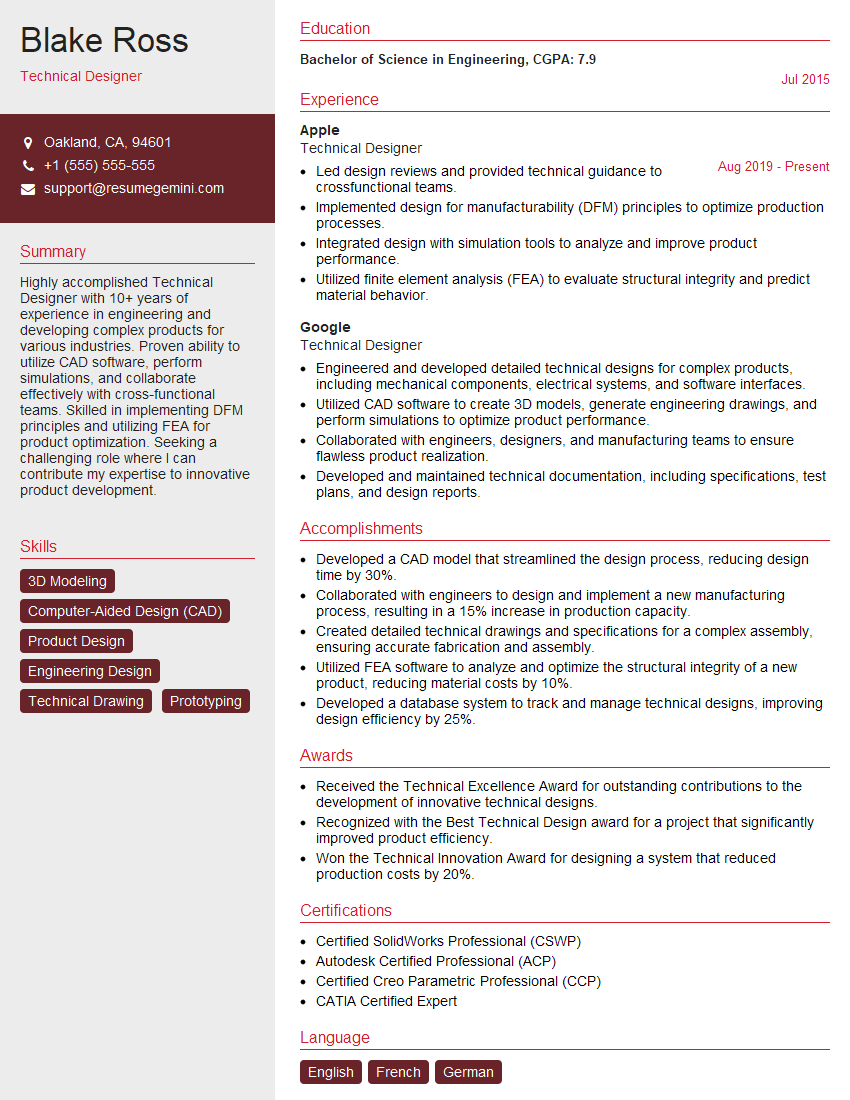
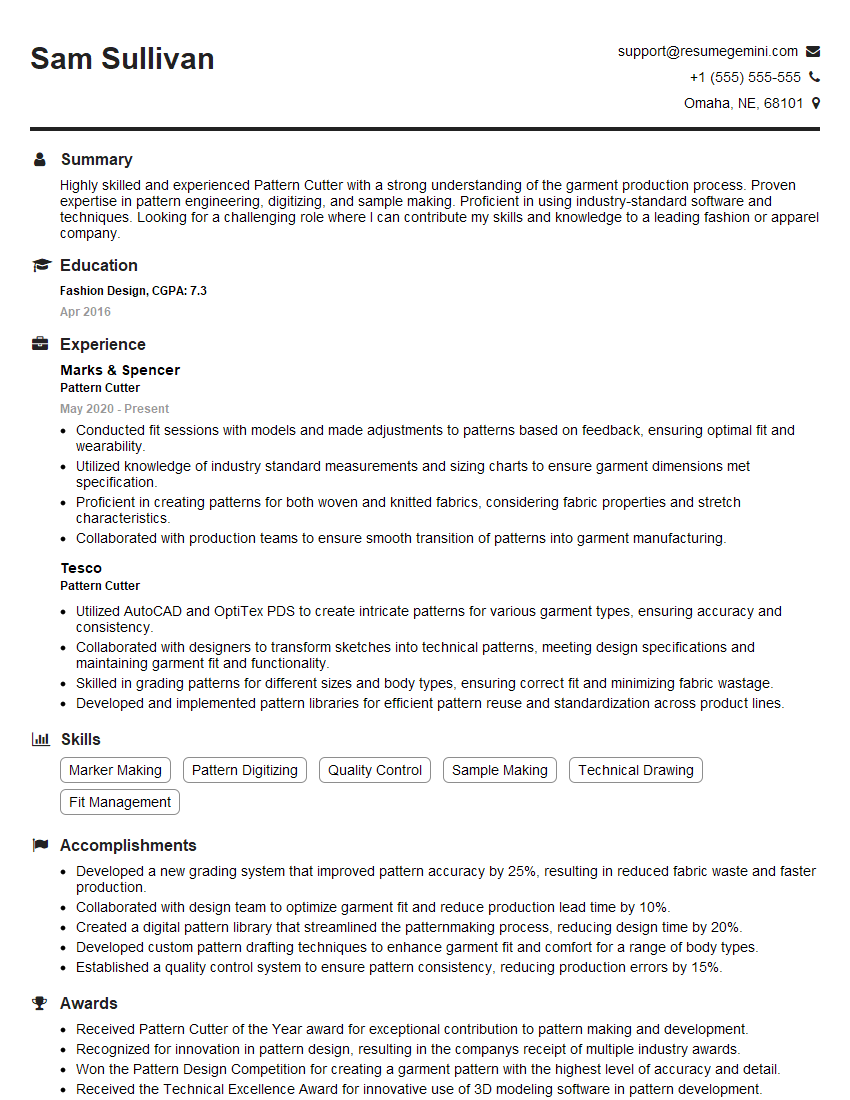
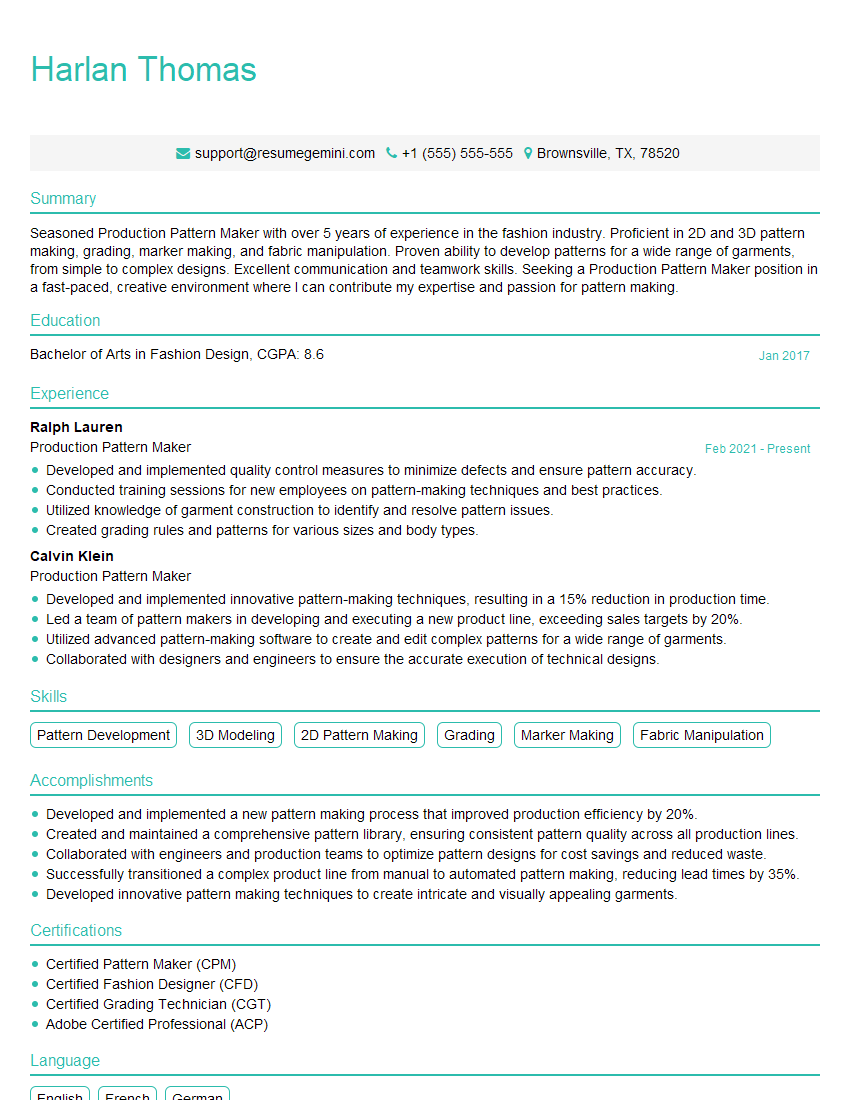
Mastering pen and paper pattern making is crucial for a successful career in the fashion industry. It demonstrates a strong understanding of garment construction, design principles, and problem-solving abilities. To significantly enhance your job prospects, create an ATS-friendly resume that showcases your skills effectively. We highly recommend using ResumeGemini to build a professional and impactful resume. ResumeGemini offers a user-friendly interface and provides examples of resumes tailored specifically to Pen and Paper Pattern Making, helping you stand out from the competition.

Explore more articles
Users Rating of Our Blogs
Share Your Experience
We value your feedback! Please rate our content and share your thoughts (optional).
What Readers Say About Our Blog
Very informative content, great job.
good