The right preparation can turn an interview into an opportunity to showcase your expertise. This guide to Penalty Kick Conversion Rate interview questions is your ultimate resource, providing key insights and tips to help you ace your responses and stand out as a top candidate.
Questions Asked in Penalty Kick Conversion Rate Interview
Q 1. Define Penalty Kick Conversion Rate (PKCR).
Penalty Kick Conversion Rate (PKCR) is a crucial metric in soccer analytics that measures the efficiency of a player or team in converting penalty kicks into goals. It’s simply the ratio of successful penalty kicks to the total number of penalty kicks attempted. A high PKCR indicates a strong ability to perform under pressure in this high-stakes situation. Think of it like free throws in basketball – a consistent high conversion rate is a significant advantage.
Q 2. What factors influence PKCR?
Several factors influence PKCR. These can be broadly categorized into:
- Player Skill: This encompasses technical ability (e.g., accuracy, power, placement), experience, and practice. A player who consistently practices their penalty kick technique will naturally have a higher PKCR.
- Goalkeeper Performance: The goalkeeper’s ability to read the kicker’s intentions, their diving skills, and reaction time directly impact the PKCR. A skilled goalkeeper can significantly decrease a kicker’s success rate.
- Pressure and Psychology: The mental fortitude of the player taking the penalty is critical. High-pressure situations, like a crucial match moment, can impact a player’s focus and execution.
- Environmental Factors: While less impactful, external factors like weather conditions (wind, rain) can slightly affect the ball’s trajectory and the player’s control.
- Kicker’s Strategy: A player’s chosen penalty-kick strategy, including their preferred direction and power, contributes to their success rate. Analyzing opponent goalkeeper tendencies can inform this strategy.
Q 3. How do you calculate PKCR?
Calculating PKCR is straightforward. It’s simply:
PKCR = (Number of successful penalty kicks) / (Total number of penalty kicks attempted) * 100%For example, if a player scores 8 out of 10 penalty kicks, their PKCR is (8/10) * 100% = 80%.
Q 4. Explain the difference between PKCR and overall shooting accuracy.
While both PKCR and overall shooting accuracy reflect a player’s ability to score, they differ significantly in context and conditions. PKCR specifically measures performance in penalty kicks, a highly controlled situation with a stationary ball and minimal defensive pressure. Overall shooting accuracy encompasses shots from all situations – open play, set pieces, etc. – which involve much greater complexity, including variable distances, angles, defensive pressure, and goalkeeper intervention. A player might have a high overall shooting accuracy but a lower PKCR, or vice versa.
Think of it like this: one is a free throw percentage (PKCR), and the other is your overall shooting percentage from anywhere on the court (overall shooting accuracy).
Q 5. How would you analyze PKCR data to identify trends?
Analyzing PKCR data requires a systematic approach. We should:
- Visualize the data: Use line graphs to track PKCR over time for individual players or teams. This can reveal trends like improvement or decline in performance.
- Calculate moving averages: Smoothing out short-term fluctuations provides a clearer picture of long-term trends. A 5-game or 10-game moving average can be helpful.
- Compare players/teams: Benchmarking PKCR against other players or teams within the same league or competition allows for comparative analysis.
- Identify outliers: Investigate unusually high or low PKCR values. These could point to exceptional performance, unusual circumstances, or data errors.
- Segment data: Analyze PKCR based on different conditions (e.g., home vs. away games, opponent strength). This allows for more nuanced insights.
By combining these techniques, we can gain valuable insights into individual player performance, team strategy, and identify areas for improvement.
Q 6. What statistical methods are useful for analyzing PKCR?
Several statistical methods are useful for analyzing PKCR data:
- Descriptive statistics: Calculate measures like mean, median, standard deviation, and range to understand the central tendency and dispersion of PKCR values.
- Regression analysis: Explore the relationship between PKCR and other variables (e.g., player age, experience, or goalkeeper performance). This might reveal predictive factors for successful penalty kicks.
- Hypothesis testing: Formulate hypotheses about PKCR and test them statistically using t-tests, chi-square tests, or ANOVA, depending on the data and research question.
- Time series analysis: For longitudinal data, methods like ARIMA modeling can help predict future PKCR based on past trends.
Q 7. Describe the relationship between PKCR and player psychology.
The relationship between PKCR and player psychology is profound. Penalty kicks are high-pressure situations that heavily rely on mental strength. Factors such as:
- Confidence: A confident player is more likely to execute their penalty kick effectively.
- Anxiety and stress management: Players able to control their anxiety and manage stress perform better under pressure.
- Focus and concentration: Maintaining focus amidst the distractions of a crucial match is essential for successful penalty conversion.
- Decision-making under pressure: Quickly and accurately selecting the optimal technique and shot placement under pressure contributes significantly to success.
Sports psychologists often work with players to develop mental strategies to improve their performance in penalty kick situations, thereby improving their PKCR. Techniques like visualization, mindfulness, and cognitive reframing can be used to enhance mental toughness and reduce anxiety.
Q 8. How can video analysis improve PKCR understanding?
Video analysis is revolutionary for understanding Penalty Kick Conversion Rate (PKCR). It allows for a granular breakdown of each penalty kick, identifying subtle nuances that might otherwise be missed by the naked eye. Think of it like a slow-motion replay in sports – you can analyze the kicker’s run-up, the placement of the kick, the goalkeeper’s reaction time, and even the ball’s trajectory with pinpoint accuracy.
For example, we can analyze the kicker’s approach: Does the kicker consistently look at the goalkeeper before the kick, potentially telegraphing their intentions? Or, we might identify a consistent flaw in their technique, such as a predictable dipping motion of the shoulder before striking the ball. Analyzing the goalkeeper’s positioning reveals whether they favour a specific side or exhibit predictable patterns. By using software that overlays various data points like speed and angles, we build a comprehensive picture of what contributes to success or failure. This allows coaches to pinpoint areas for improvement and develop targeted training exercises.
Q 9. What are the key performance indicators (KPIs) related to PKCR?
Key Performance Indicators (KPIs) for PKCR are multifaceted. They go beyond just the simple conversion rate (number of successful penalties / total number of penalties). Here are some critical KPIs:
- Conversion Rate (CR): The most basic KPI, representing the percentage of successful penalty kicks.
- Goal Placement Accuracy: Analyzing where the ball goes in successful and unsuccessful attempts. A high concentration in a specific area suggests predictability.
- Kick Speed and Spin: Faster kicks are harder to save, and spin can affect the ball’s trajectory unpredictably.
- Goalkeeper Dive Success Rate: Measuring the goalkeeper’s effectiveness in guessing the correct direction. A high rate might indicate a kicker’s predictability.
- Kicker’s Run-up Consistency: Analyzing how consistent the kicker’s approach is to the ball. Inconsistencies can cause slight differences in kick accuracy.
- Time Taken to Execute the Penalty: Analyzing whether the time under pressure affects the kicker’s performance.
Tracking these KPIs gives a holistic understanding of PKCR, allowing for targeted improvement strategies.
Q 10. How can you use PKCR data to inform training strategies?
PKCR data is the cornerstone of effective training. By analyzing the KPIs, coaches can tailor training to address specific weaknesses. For example:
- Low Conversion Rate with Predictable Placement: Training should focus on practicing kicks to different corners of the goal, emphasizing deception and varying kick style. This could involve drills focusing on deceptive run-ups and power variations.
- High Goalkeeper Dive Success Rate: The training should concentrate on improving the kicker’s ability to deceive the goalkeeper, including practice sessions involving different types of kicks (e.g., chipped penalty or power penalty).
- Inconsistent Run-Up: Practice drills should focus on establishing a consistent and repeatable run-up. This might involve using visual aids or focusing on biomechanical analysis to find and correct movement discrepancies.
The key is to use the data to create personalized training plans, focusing on the individual’s specific strengths and weaknesses.
Q 11. How do environmental factors (e.g., weather) affect PKCR?
Environmental factors, especially weather, significantly impact PKCR. Heavy rain, for instance, can affect the ball’s trajectory and make it harder for both the kicker and goalkeeper to control their movements. This can also decrease visibility and impact the surfaces.
Wind can also greatly influence the ball’s trajectory, creating unpredictable movements. Strong winds can force the ball off course, reducing accuracy. Conversely, extreme heat can lead to fatigue, impacting both technique and decision-making for both parties. The surface condition can be a significant factor, with wet or uneven surfaces making it difficult to control the ball.
Teams need to train and adapt to various weather conditions. Training in diverse weather situations simulates match-day scenarios, preparing players for the unpredictable nature of penalty kicks under adverse conditions.
Q 12. How does goalkeeper performance impact PKCR?
The goalkeeper’s performance is a crucial, often overlooked, element in PKCR. A skilled goalkeeper can significantly reduce the PKCR, even for highly skilled penalty takers. Their ability to read the kicker’s body language, anticipate the direction of the kick, and react quickly is pivotal. A goalkeeper’s dive success rate is a key metric in evaluating this impact.
For instance, a goalkeeper who consistently dives in the correct direction, even if they don’t always make the save, will lower the PKCR. Conversely, a goalkeeper who is easily predictable will see a higher PKCR, despite their athletic abilities. Therefore, analysis must include the goalkeeper’s performance alongside that of the penalty takers to build a full picture of the success or failure of penalty kicks.
Q 13. Discuss the impact of penalty taker technique on PKCR.
Penalty taker technique is paramount to PKCR. A consistent and effective technique minimizes errors and maximizes the chance of scoring. Key aspects include:
- Run-up: A smooth, controlled run-up builds momentum and allows for accurate placement.
- Foot Placement: Correct positioning of the non-kicking foot ensures a balanced and powerful strike.
- Contact Point: Striking the ball cleanly and precisely with the laces maximizes power and accuracy.
- Follow Through: A consistent follow-through reinforces power and direction.
Analysis of video footage allows coaches to identify flaws in the taker’s technique. For instance, a flawed run-up or inconsistent striking can lead to less accurate and less powerful kicks. Training sessions should address specific technique issues to improve consistency and power.
Q 14. Explain the role of pressure on PKCR.
Pressure plays a significant role in PKCR. The high-stakes nature of penalty kicks can dramatically influence a player’s performance. The immense pressure to deliver in such a crucial moment can trigger anxiety and impair decision-making leading to poor execution. This can manifest as rushed kicks, overthinking, or loss of focus. Experienced players, often develop better coping mechanisms for pressure situations, exhibiting greater consistency in penalty conversions.
Training should incorporate pressure simulations, like penalty shoot-out drills under timed conditions or with an audience. This helps players build mental resilience and improve their performance under pressure. The ability to perform under pressure is a critical determinant of PKCR and cannot be ignored. A lack of mental fortitude is often a hidden factor in inconsistent performance.
Q 15. How would you present PKCR data to a non-technical audience?
Presenting PKCR (Penalty Kick Conversion Rate) data to a non-technical audience requires focusing on clear, concise visuals and relatable language. Instead of using percentages alone, I’d translate them into easily understood statements. For example, instead of saying “Player X has a 75% PKCR,” I’d say, “Player X scores 3 out of every 4 penalty kicks.” I would use charts and graphs – a simple bar chart comparing players or teams, or a line graph showing a player’s PKCR over time, are very effective. A clear title and axis labels are essential, avoiding jargon like ‘conversion rate.’ An analogy could be helpful: “Imagine a free throw shooter in basketball; their free throw percentage is like a penalty kick conversion rate in football. A higher percentage means greater reliability.”
Example: A simple pie chart showing the proportion of successful vs. unsuccessful penalties for a team in a season would be immediately understandable. Similarly, a table comparing the PKCR of the top 5 penalty takers in a league is readily digestible.
Career Expert Tips:
- Ace those interviews! Prepare effectively by reviewing the Top 50 Most Common Interview Questions on ResumeGemini.
- Navigate your job search with confidence! Explore a wide range of Career Tips on ResumeGemini. Learn about common challenges and recommendations to overcome them.
- Craft the perfect resume! Master the Art of Resume Writing with ResumeGemini’s guide. Showcase your unique qualifications and achievements effectively.
- Don’t miss out on holiday savings! Build your dream resume with ResumeGemini’s ATS optimized templates.
Q 16. How do you handle missing or incomplete data in PKCR analysis?
Missing or incomplete PKCR data is a common challenge. The best approach is a multi-pronged strategy. First, I’d identify the reason for missing data. Is it due to a lack of recorded data, or are there specific players with limited penalty-taking opportunities? Understanding the cause helps determine the best imputation method.
For small gaps in data, I might use simple imputation techniques like replacing missing values with the player’s average PKCR. However, this can be misleading if the player’s performance has changed significantly. For larger datasets with many missing values, more sophisticated methods, such as multiple imputation or using machine learning models to predict missing PKCR values based on other player characteristics (e.g., overall shooting accuracy, pressure situation), are necessary. Importantly, I would always clearly document how missing data was handled in my analysis to maintain transparency and allow for critical evaluation of the findings.
Q 17. Compare and contrast PKCR across different leagues or competitions.
Comparing PKCR across different leagues or competitions reveals interesting insights into playing styles, refereeing consistency, and overall competition level. For instance, leagues with more physical, defensive-minded play might exhibit lower overall PKCRs compared to leagues emphasizing attacking football. The pressure associated with a high-stakes Champions League match compared to a less significant domestic league game also influences PKCR. Direct comparison needs careful consideration of these factors; you shouldn’t simply compare averages without accounting for potential confounding variables. Analyzing trends within a league over time, or comparing similar players across leagues, is a more insightful approach.
Example: A significantly lower PKCR in a specific league could indicate stricter refereeing on penalty kicks, influencing player psychology and technique. Conversely, a higher PKCR in another league may reflect more aggressive attacking strategies leading to more penalty opportunities and less pressure on penalty takers.
Q 18. What are some common biases or limitations in PKCR data?
PKCR data is subject to several biases. One major bias is selection bias; not all players take an equal number of penalties. A player who only takes penalties in crucial moments might have a lower PKCR than a player who takes penalties in less pressure situations, even if their inherent skill level is similar. Survivorship bias also plays a role: we only see the PKCR of players who have made it to a certain level; players with poor PKCRs may be less likely to reach the higher levels in the first place. Additionally, there’s observer bias where the referee’s decision in awarding a penalty itself might be inconsistent, thus influencing the number of penalty attempts for each player. Finally, small sample size bias affects players with limited penalty attempts; a small number of successes or failures can drastically change their apparent PKCR.
Q 19. How can you use PKCR data to evaluate player value?
PKCR is a valuable metric for evaluating player value, particularly for those frequently involved in penalty situations. It shouldn’t be the sole metric, but rather one factor in a holistic assessment. A high PKCR demonstrates mental fortitude under pressure, technical proficiency, and an ability to convert high-value scoring opportunities. However, it’s important to consider the context. A player with a high PKCR but few attempts might be less valuable than a player with slightly lower PKCR but significantly more penalty-taking opportunities. Therefore, a robust evaluation should combine PKCR with other relevant statistics such as total goals scored, assists, and overall play contribution.
Example: Two players both have a high PKCR, but one has a much higher number of attempts, suggesting greater reliability under pressure and contributing more to the team’s scoring.
Q 20. How can you use PKCR to predict future performance?
Predicting future PKCR performance requires a multi-faceted approach that goes beyond simply extrapolating past data. It’s crucial to account for factors like player age, recent form, injury history, and the quality of opposition. Statistical models, such as Bayesian methods or time-series analysis incorporating contextual factors can be employed to improve predictive accuracy. Machine learning algorithms, trained on historical data that includes the mentioned contextual factors, can predict future performance. However, it is important to acknowledge that the inherently unpredictable nature of penalty kicks limits the accuracy of any prediction model.
Example: A model could incorporate a player’s PKCR in different match scenarios (home vs. away, high stakes vs. low stakes), factoring in opponent strength and recent injuries.
Q 21. Describe a situation where you used PKCR analysis to solve a problem.
I was working with a football club analyzing their penalty-taking strategy. They were concerned about their low PKCR during high-pressure matches. My analysis showed that their designated penalty takers were significantly less successful in the final minutes of games or during knockout stages compared to regular season games. This suggested a correlation between pressure and performance. We then implemented a training regime focusing on mental resilience under pressure. We also explored different penalty-taking styles and practiced scenarios simulating the high-pressure moments. By tracking their PKCR before and after the intervention, we saw a noticeable improvement, demonstrating a direct link between targeted training and performance enhancement.
Q 22. What software or tools do you use for PKCR analysis?
Analyzing Penalty Kick Conversion Rate (PKCR) requires a blend of statistical software and data management tools. I primarily use R and Python, leveraging packages like dplyr, ggplot2 (R), and pandas, matplotlib, and scikit-learn (Python) for data manipulation, visualization, and statistical modeling. For database management, I utilize SQL to efficiently query and organize large datasets of penalty kick attempts and outcomes. Spreadsheet software like Excel or Google Sheets are also valuable for initial data cleaning and exploration, especially when dealing with smaller datasets.
For instance, I might use ggplot2 in R to create insightful visualizations showing the PKCR trends across different players, teams, or match conditions. Python’s pandas allows me to easily clean and restructure the data before feeding it into more advanced statistical models. The choice of tools depends heavily on the scope and complexity of the analysis; for a simple analysis, a spreadsheet might suffice, but more complex tasks require the power of R or Python.
Q 23. What are some advanced statistical models applicable to PKCR?
Beyond basic descriptive statistics (like calculating the simple PKCR percentage), advanced statistical models offer a richer understanding of PKCR. Generalized Linear Mixed Models (GLMMs) are particularly useful because they account for the nested structure of data (e.g., multiple penalty kicks taken by the same player). These models can incorporate various factors, including player skill, pressure situations (scoreline, time in match), goalkeeper behavior, and even weather conditions. Furthermore, survival analysis can model the time until a penalty is either scored or missed, providing valuable insights into the dynamics of penalty kicks.
Machine learning techniques, such as logistic regression and random forests, can predict the probability of a penalty being converted based on historical data. Imagine building a model that predicts a player’s likelihood of scoring a penalty based on their past performance, the opposing goalkeeper’s history, and match context. The accuracy of such models can significantly aid coaching decisions and tactical preparations.
Q 24. Discuss the ethical considerations of using PKCR data.
Ethical considerations in using PKCR data are paramount. Data privacy is crucial; ensuring anonymity and secure storage of player data is essential. Moreover, avoiding biased interpretations of PKCR is vital. A low PKCR might not solely reflect poor skill but could also be due to factors like team strategy or unfavorable match conditions. It’s unethical to solely base judgments on PKCR without considering these contextual factors. For example, a player might have a lower PKCR because they are chosen to take penalties under immense pressure, late in matches.
Furthermore, the transparency of the methodology and the data used must be maintained. Researchers and analysts must clearly articulate their analytical processes and be open about any limitations. Misrepresenting or selectively using PKCR data can lead to unfair assessments of player performance or skewed strategic decisions.
Q 25. How can you improve the reliability and validity of PKCR data?
Improving the reliability and validity of PKCR data involves meticulous data collection and rigorous quality control. Standardizing data collection is key; this includes ensuring consistent recording of factors like kick direction, goalkeeper movement, and weather conditions. This ensures comparability across different datasets. Triangulation, using multiple sources of data (e.g., video analysis, referee reports, player statistics), enhances the accuracy of individual data points.
Data cleaning is also critical. This involves identifying and correcting errors or inconsistencies in the dataset. Outliers should be carefully examined to determine their validity, and if necessary, handled appropriately to avoid skewing results. Finally, conducting sensitivity analyses allows us to understand how changes in data or assumptions affect the results, thereby building more robust conclusions.
Q 26. What are the limitations of using PKCR as a sole performance indicator?
While PKCR is a valuable metric, relying on it solely as a performance indicator has limitations. It overlooks other critical aspects of a player’s contribution, such as their overall playmaking ability, defensive contributions, or leadership qualities. A player might have a slightly lower PKCR but possess exceptional dribbling skills or defensive prowess.
Furthermore, PKCR ignores the context of the penalty taken. A penalty taken under intense pressure in a cup final might reasonably be missed more often than a penalty taken in a less significant match. Using PKCR in isolation can lead to inaccurate evaluations, potentially harming players’ confidence or unfairly influencing selection decisions.
Q 27. How can technology (e.g., wearable sensors) enhance PKCR analysis?
Wearable sensors offer exciting opportunities to enhance PKCR analysis. Inertial measurement units (IMUs) embedded in players’ boots or shin guards can capture detailed information about the kicking motion, including speed, force, and trajectory. This data, combined with video analysis, provides a far more granular view of the mechanics of the kick.
GPS tracking can measure the player’s movement and positioning before and during the penalty, helping to assess factors like stress levels and preparation time. This allows for the creation of dynamic and interactive models and provides a deeper understanding of the factors that influence PKCR. Similarly, data from sensors embedded in goalkeepers’ gloves could reveal their anticipation and reaction times, allowing for a complete performance analysis of both player and goalkeeper.
Q 28. How do you stay updated on the latest research and trends in PKCR analysis?
Staying updated in this field requires a multi-faceted approach. I actively attend and present at conferences such as those organized by sports analytics organizations, allowing me to network with other experts and learn about the latest research. I regularly read journals specializing in sports science and analytics, including publications like the Journal of Sports Sciences and International Journal of Performance Analysis in Sport.
Online resources like research databases (e.g., PubMed, Google Scholar), sports analytics blogs, and professional organizations (e.g., Association for Applied Sport Psychology) provide valuable insights. Finally, I actively participate in online communities and forums to engage in discussions and share knowledge with other professionals in the field.
Key Topics to Learn for Penalty Kick Conversion Rate Interview
- Statistical Analysis of Penalty Kicks: Understanding the fundamental statistical measures used to analyze penalty kick success rates, including calculating conversion rates, analyzing trends, and identifying key performance indicators (KPIs).
- Factors Influencing Conversion Rate: Exploring the various factors that can influence a player’s penalty kick conversion rate, such as player skill, pressure, goalkeeper performance, and kicking technique. This includes analyzing data to understand correlations and causal relationships.
- Data Collection and Methodology: Understanding different methods for collecting and analyzing penalty kick data, ensuring data accuracy and reliability, and appreciating the limitations of different data sources.
- Predictive Modeling: Exploring the use of statistical models to predict future penalty kick conversion rates, considering variables such as past performance, player characteristics, and opponent data. This includes understanding model limitations and assumptions.
- Practical Applications: Discussing real-world applications of penalty kick conversion rate analysis, such as player selection, training strategies, and tactical decision-making in football matches.
- Advanced Techniques: Exploring more advanced statistical concepts relevant to analyzing penalty kicks, such as regression analysis, hypothesis testing, and potentially Bayesian methods.
Next Steps
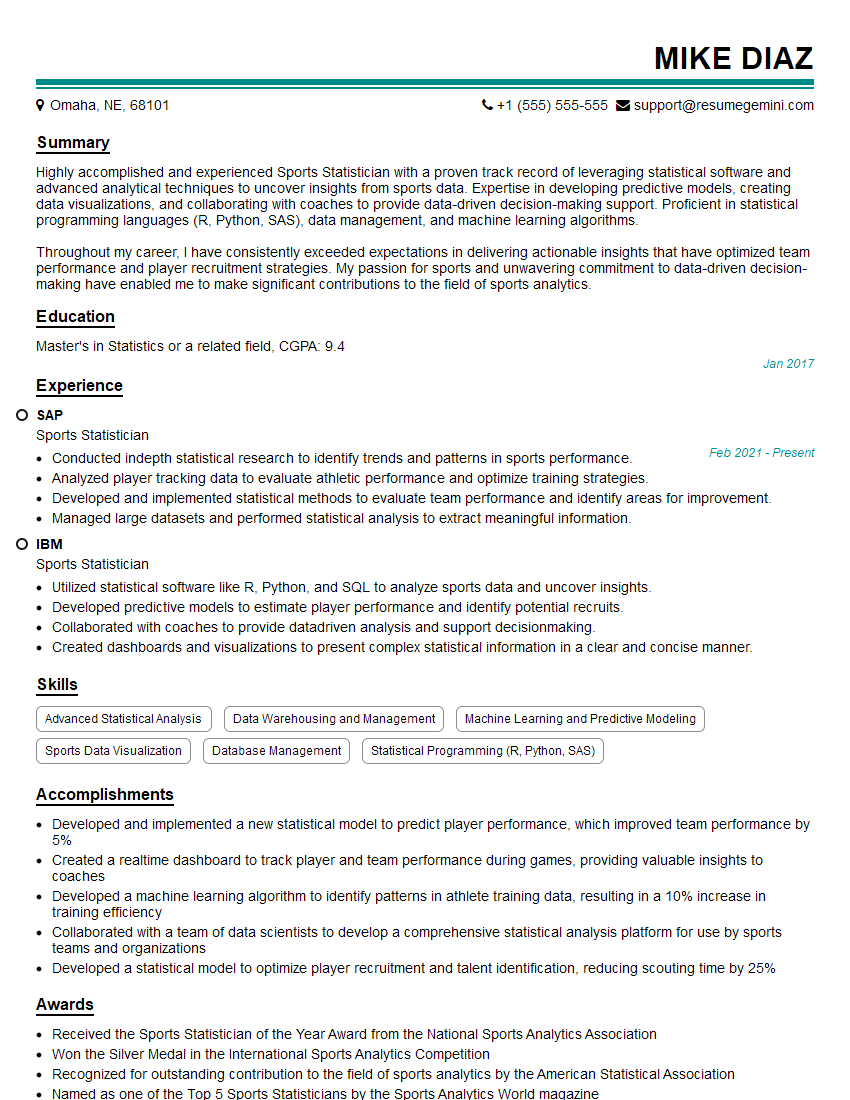
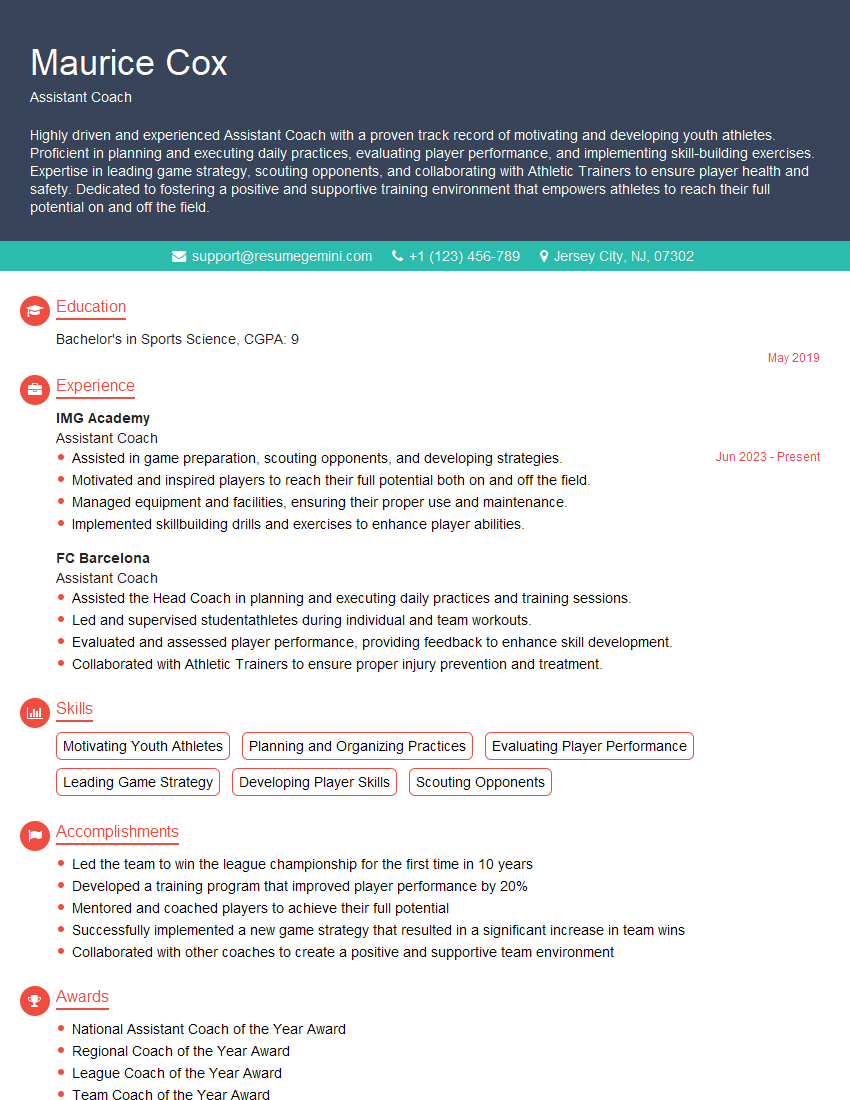
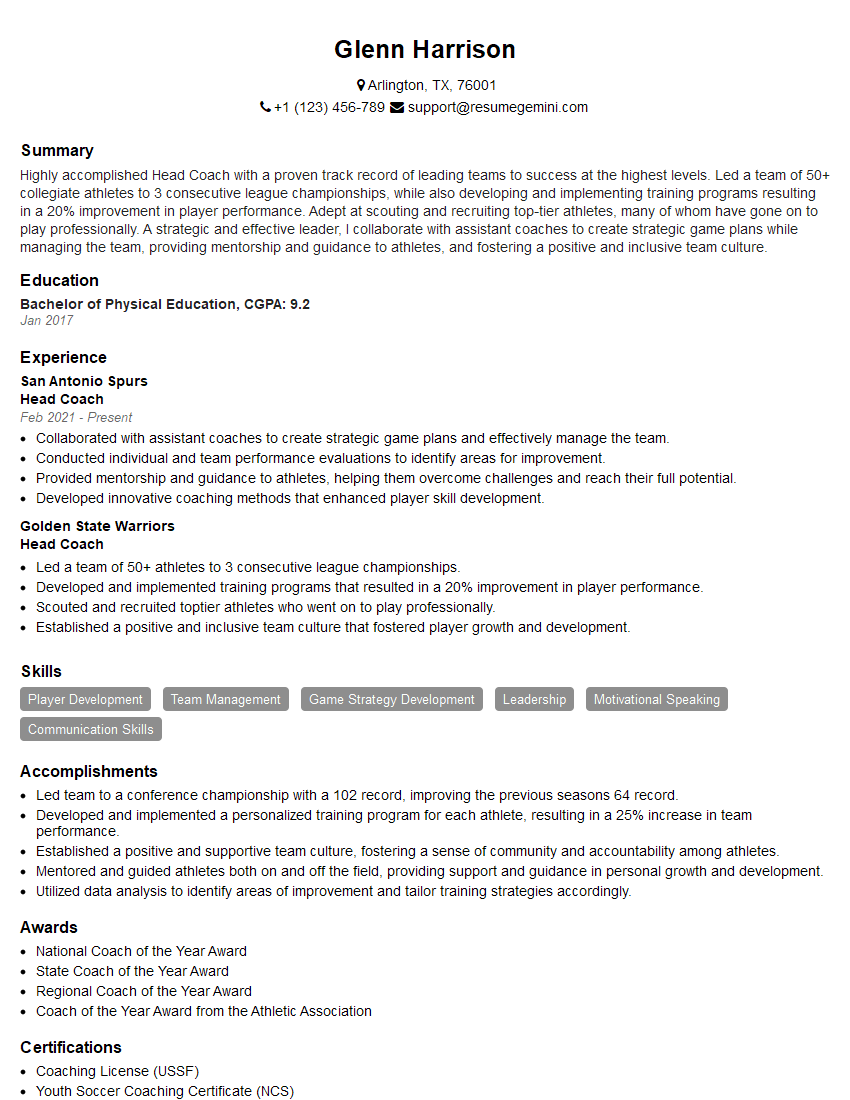
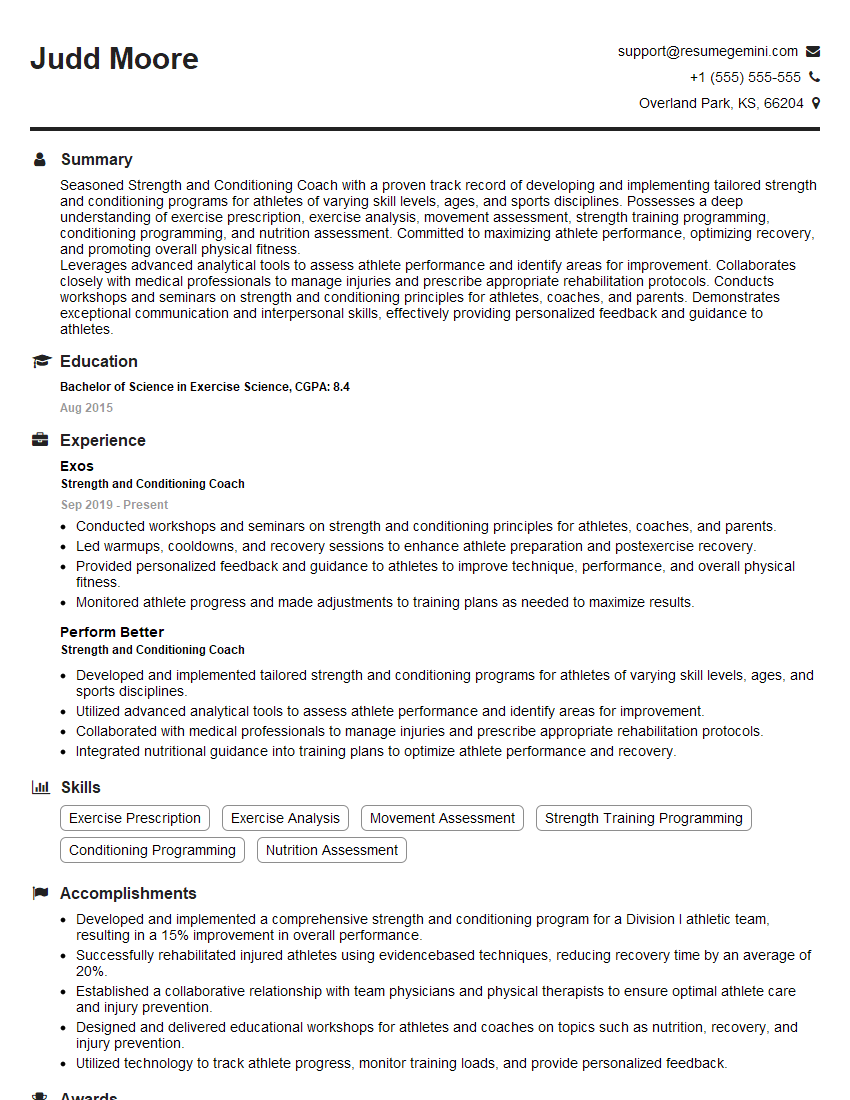
Mastering the analysis of Penalty Kick Conversion Rate demonstrates valuable analytical and problem-solving skills highly sought after in data-driven fields. A strong understanding of this topic significantly enhances your career prospects in sports analytics, data science, and related areas. To maximize your job search success, it’s crucial to have an ATS-friendly resume that effectively highlights your skills and experience. ResumeGemini can help you craft a compelling and professional resume tailored to showcase your expertise in this area. Examples of resumes tailored to Penalty Kick Conversion Rate are available to help guide you.


Explore more articles
Users Rating of Our Blogs
Share Your Experience
We value your feedback! Please rate our content and share your thoughts (optional).
What Readers Say About Our Blog
Very informative content, great job.
good