The thought of an interview can be nerve-wracking, but the right preparation can make all the difference. Explore this comprehensive guide to Performance Conducting interview questions and gain the confidence you need to showcase your abilities and secure the role.
Questions Asked in Performance Conducting Interview
Q 1. Explain your approach to interpreting a musical score.
My approach to interpreting a musical score begins with a deep dive into the composer’s historical context, exploring their life, influences, and the socio-political climate during the composition period. This provides crucial insight into their intentions. Next, I meticulously analyze the score itself, identifying thematic material, harmonic progressions, and formal structures. I look beyond the notes to understand the composer’s expressive markings, dynamics, articulation, and phrasing, seeking to understand the emotional arc and narrative of the piece. Finally, I engage in a process of imaginative exploration, visualizing the soundscape and working to translate the composer’s intentions into a compelling musical experience for the audience. For instance, when interpreting a Beethoven symphony, understanding the Napoleonic era’s impact on his worldview deeply informs the interpretation of the powerful and often turbulent emotional landscape expressed in the music. This careful analysis and imaginative engagement ensure that my interpretation is both faithful to the composer’s intentions and expressive of its inherent power.
Q 2. Describe your rehearsal techniques for achieving musical cohesion.
Achieving musical cohesion requires a multi-faceted rehearsal approach. I begin with individual section work, focusing on intonation, articulation, and balance within each instrumental group. This establishes a strong foundation for ensemble playing. Then, I progressively bring sections together, carefully addressing balances and blending. This involves detailed work on entrances and transitions, ensuring seamless flow. Regular sectional balances and full ensemble readings allow for immediate feedback, leading to collaborative problem-solving. Furthermore, I utilize techniques such as conducting phrase-by-phrase, highlighting crucial musical points, and demonstrating subtle nuances through body language and expressive gestures. For example, in a passage requiring delicate dynamic control, I might use smaller, more precise gestures to guide the orchestra towards a refined and nuanced performance. Finally, I encourage communication and collaboration amongst the musicians, creating a supportive and creative atmosphere where everyone feels comfortable contributing to the overall artistic vision.
Q 3. How do you manage challenging personalities within an orchestra?
Managing challenging personalities within an orchestra requires a diplomatic yet firm approach. I believe in fostering an environment of mutual respect and understanding. Open communication is key – I encourage musicians to express their concerns and opinions in a constructive manner. I address individual issues privately and with empathy, while also ensuring that the collective artistic goals are prioritized. Clear expectations are set from the outset regarding professionalism and collaboration. Building personal relationships with each musician, understanding their strengths and weaknesses, helps to navigate individual sensitivities effectively. Sometimes, a humorous anecdote or a relatable story can diffuse tension and build rapport. In cases of persistent conflict, I might engage in mediation, encouraging collaborative problem-solving. Remember, a strong team dynamic is essential for a successful performance. If all else fails, I may consult with the orchestra manager for support.
Q 4. How do you address technical issues during a performance?
Addressing technical issues during a performance requires quick thinking and decisive action. Having a pre-performance checklist helps identify potential problems beforehand. During the performance, I rely on nonverbal cues, such as a subtle gesture to indicate a tempo change or a brief pause to allow a musician to correct a mistake. If a larger issue arises, such as a missed cue or a significant technical malfunction, I strive to maintain composure and make immediate adjustments without disrupting the flow of the music. This might involve improvising a transition or subtly altering the phrasing to compensate for the problem. Post-performance, a constructive debriefing allows us to address the technical issue and prevent similar problems in future performances. For instance, if a wind player is struggling with a difficult passage, I can use subtle cues and adjust the tempo slightly to facilitate their execution.
Q 5. Discuss your experience working with diverse musical styles.
My experience encompasses a wide range of musical styles, from Baroque masterpieces to contemporary compositions. I’ve conducted works by Bach, Mozart, Beethoven, Stravinsky, and many contemporary composers. The approach to each style differs, requiring a deep understanding of the period, stylistic conventions, and specific performance practices. For Baroque music, I might prioritize historical performance practices such as period instruments and articulation techniques. In contrast, conducting a contemporary piece necessitates a thorough understanding of the composer’s compositional language and their specific instructions. Adaptability and flexibility are crucial, and I always prioritize conveying the essence and emotional core of each work, regardless of its stylistic origins. A recent example involved conducting a world premiere of a piece using extended techniques, requiring meticulous collaboration with the composers and an acute awareness of the nuances inherent in the score.
Q 6. How do you balance artistic vision with the practical demands of a performance?
Balancing artistic vision with the practical demands of a performance is a constant negotiation. My artistic vision informs every aspect of the rehearsal process, from tempo and dynamics to phrasing and articulation. However, I’m also aware of the practical limitations, such as the orchestra’s capabilities, the venue’s acoustics, and the time constraints. This means making pragmatic decisions while maintaining the integrity of the artistic vision. For example, a particularly challenging passage might require simplification or modification to ensure its successful execution, without sacrificing the overall effect. Open communication with the orchestra is crucial – I need their feedback to assess the feasibility of my artistic ideas. Ultimately, the goal is to create a compelling performance that is both artistically satisfying and technically achievable. Sometimes compromises are necessary, but the guiding principle is always to achieve the best possible artistic outcome within the available parameters.
Q 7. Explain your methods for communicating effectively with musicians.
Effective communication with musicians involves a combination of verbal and nonverbal cues. I utilize clear and concise verbal instructions during rehearsals, providing constructive feedback and explanations. I avoid jargon and use relatable analogies to explain complex musical concepts. Nonverbal communication, such as clear conducting gestures and expressive facial cues, is equally important. Maintaining eye contact with individual musicians allows me to gauge their understanding and provide personalized feedback. Regular informal discussions, outside of formal rehearsals, help build rapport and foster a more collaborative environment. I believe in creating a safe space where musicians feel comfortable sharing their concerns and offering suggestions. I always listen attentively to their feedback, valuing their expertise and insights. Building trust and mutual respect is paramount for fostering effective and productive communication.
Q 8. How do you handle unexpected situations during a performance?
Handling unexpected situations during a performance requires a blend of preparedness, adaptability, and a calm demeanor. My approach is threefold: anticipation, reaction, and recovery.
- Anticipation: Before the performance, I meticulously rehearse, addressing potential problem areas. This includes contingency plans for instrument malfunctions (a missing musician, for instance) or technical issues. I encourage open communication with musicians, creating a safe space for them to raise concerns.
- Reaction: If the unexpected occurs—a wrong note, a missed cue—my focus shifts to maintaining momentum and composure. I might use subtle cues, like a slight gesture or a change in my facial expression, to guide the ensemble back on track. I avoid reacting visibly to mistakes; instead, I aim to project confidence and maintain musical continuity.
- Recovery: After the event, I usually have a brief, constructive conversation with the musicians involved to address the issue and prevent future occurrences. This is a learning opportunity for everyone, emphasizing the importance of adaptability and mutual support.
For example, during a performance of Mahler’s 5th Symphony, a soloist’s bow snapped. Instead of halting, I subtly signaled the other string players to slightly increase their volume while the soloist quickly replaced the bow. The audience was unaware of the incident, showcasing effective reaction and recovery.
Q 9. Describe your approach to score study and preparation.
My score study is a multi-stage process, moving from a broad understanding to intricate detail. It begins with a holistic grasp of the composition’s structure, historical context, and composer’s style. I then analyze individual sections, identifying harmonic progressions, melodic lines, rhythmic intricacies, and dynamic contrasts.
This deep dive helps me understand the composer’s intentions. I consider the overall arc of the piece, identifying climaxes, resolutions, and moments of quiet reflection. I also create detailed analytical notes, often including sketches of important passages, articulation markings, phrasing suggestions, and even potential tempi variations to be explored during rehearsal.
Preparation includes listening to different interpretations to understand varied approaches. However, I always aim to find my own unique perspective, respecting the composer’s vision while infusing my own artistry. This personal approach ensures that the performance remains authentic and engaging.
Q 10. How do you build rapport and trust with your musicians?
Building rapport and trust with musicians is crucial for successful collaboration. It’s a process built on respect, clear communication, and shared musical goals.
- Respect: I treat each musician as an individual artist, valuing their expertise and insights. I foster an environment where everyone feels comfortable expressing their opinions and concerns.
- Clear Communication: I ensure rehearsals are well-structured and efficient. I offer clear, concise instructions, providing constructive feedback that is both supportive and specific. I actively listen to the musicians’ concerns and ideas.
- Shared Goals: From the start, I articulate the artistic vision for the piece, creating a collective understanding of the musical objectives. I actively engage in discussions about interpretation, ensuring a unified approach that everyone embraces.
For instance, I often hold informal chats with individual musicians before rehearsals to discuss their experiences and any personal challenges they are facing. This demonstrates care, building trust and a stronger collaborative bond.
Q 11. Describe your experience conducting different sized ensembles.
My experience spans a wide range of ensemble sizes, from intimate chamber groups to large symphony orchestras. Adapting my conducting technique to suit the specific ensemble is paramount.
- Chamber Ensembles: With smaller groups, I can focus on individual nuances, fostering a more intimate dialogue between conductor and musicians. My gestures become more subtle and nuanced, encouraging a finer degree of expression and sensitivity.
- Larger Ensembles: With larger orchestras, my technique emphasizes clarity and precision. Larger, more expansive gestures are necessary to ensure that every section receives clear cues and direction. Effective communication becomes crucial to unify such a diverse group.
The transition between these sizes isn’t just about scale; it’s also about adjusting the balance between individual expression and overall ensemble cohesion. The smaller the group, the more personalized the feedback, while the larger group requires more general cues that shape the overall sound.
Q 12. Explain your conducting technique and its rationale.
My conducting technique is based on the principles of clarity, precision, and expressiveness. I use a combination of baton technique and physical cues to communicate effectively. My style prioritizes clear beat patterns to maintain rhythmic stability. I avoid unnecessary flamboyance, focusing instead on the conveyance of musical meaning.
The rationale behind my technique is rooted in the belief that the conductor’s primary role is to serve the music and the musicians. My gestures should be an extension of the music itself, helping the players to achieve a unified and expressive interpretation. I adapt my technique based on the style of music and the specific needs of the orchestra, constantly refining my approach to facilitate the most powerful musical expression.
Q 13. How do you select repertoire for a concert season?
Selecting repertoire for a concert season is a complex process that involves many considerations. It’s a balance of artistic vision, audience appeal, and practical factors. I typically begin by outlining a central theme or concept for the season. This theme might be stylistic (e.g., a focus on Romantic composers), thematic (exploring a particular aspect of human experience), or even geographical (featuring works from a specific region).
Once the overall theme is established, I delve into specific works, considering factors like the technical capabilities of the ensemble, the available resources, and the audience demographics. I aim to provide a balanced program, including pieces that are both familiar and challenging, and offering a variety of textures, moods, and styles. Ultimately, I aim to create a program that is both artistically coherent and engaging for the audience, leaving them with a lasting impression.
Q 14. Discuss your approach to tempo and phrasing.
My approach to tempo and phrasing is driven by a deep understanding of the musical context. Tempo is not just about speed; it’s about shaping the emotional arc of the piece. I avoid rigid adherence to metronome markings, instead using tempo flexibility to enhance the narrative and expressiveness of the music.
Similarly, phrasing is about creating musical breaths and shaping the melodic lines. I consider the interplay between melody, harmony, and rhythm, seeking to create a natural and expressive flow. I work with the musicians to explore various phrasings, ensuring that the interpretation is both organic and compelling. It’s about understanding the composer’s intentions while allowing room for individual expression within the collective musical narrative.
For example, in a slow movement, I might subtly increase or decrease the tempo at key moments, enhancing the emotional impact. Or, in a fast movement, I might carefully shape the phrasing to emphasize the rhythmic vitality and driving force of the music.
Q 15. How do you use non-verbal communication effectively during rehearsal?
Effective non-verbal communication is paramount in conducting. It’s about more than just the baton; it’s a holistic language of body posture, facial expressions, and subtle cues that convey musical intent and emotion to the orchestra.
- Eye contact: I use eye contact strategically, connecting with individual sections or instrumentalists to emphasize specific phrasing or dynamics. A glance can offer encouragement or prompt a subtle correction without interrupting the flow. For example, a sustained gaze at a solo violinist during a delicate passage can inspire focused expression.
- Body language: My body movements mirror the music’s shape and energy. A broad, expansive gesture might indicate a powerful crescendo, while a smaller, more precise movement could guide a delicate pianissimo. Imagine the difference between a sweeping arc for a dramatic orchestral swell versus a subtle nod for a quiet string passage.
- Facial expressions: My face reflects the emotional arc of the music. Joy, sorrow, anticipation – these are all communicated through subtle changes in expression, guiding the orchestra to interpret the piece’s nuanced emotional landscape. Think of the subtle smile during a joyous passage versus a thoughtful frown during a melancholic one.
- Baton technique: The baton is a powerful tool, but its effectiveness lies in its precision and clarity. Overly flamboyant gestures can be distracting; precise, clear movements are crucial for conveying rhythmic accuracy and phrasing.
I constantly refine my non-verbal communication through self-reflection and feedback from musicians, ensuring my gestures are clear, consistent, and effectively communicate the musical vision.
Career Expert Tips:
- Ace those interviews! Prepare effectively by reviewing the Top 50 Most Common Interview Questions on ResumeGemini.
- Navigate your job search with confidence! Explore a wide range of Career Tips on ResumeGemini. Learn about common challenges and recommendations to overcome them.
- Craft the perfect resume! Master the Art of Resume Writing with ResumeGemini’s guide. Showcase your unique qualifications and achievements effectively.
- Don’t miss out on holiday savings! Build your dream resume with ResumeGemini’s ATS optimized templates.
Q 16. How do you incorporate audience engagement into your performances?
Audience engagement is crucial for a truly impactful performance. It’s about creating a shared experience, not just a technical display.
- Connecting with the audience before the performance: A brief, engaging pre-concert talk can set the stage, providing context and inviting the audience into the musical journey.
- Musical storytelling: I strive to make the music ‘speak’ through expressive conducting and clear communication with the orchestra. This translates to greater emotional connection with the listeners. For instance, clearly articulating the narrative arc in a programmatic work enhances audience understanding and immersion.
- Eye contact and acknowledgement: I engage with the audience through eye contact during pauses and bows, creating a sense of shared experience. A simple smile or nod can communicate appreciation and connection.
- Program notes and introductions: Well-written program notes and engaging introductions can contextualize the pieces, deepening the audience’s appreciation and understanding.
- Post-performance interactions: Opportunities for Q&A sessions or informal meet-and-greets can foster a deeper connection with the audience, enhancing their appreciation for the performance and the music.
Ultimately, audience engagement is about creating an atmosphere of shared emotional experience, where the music transcends the stage and resonates deeply with the hearts and minds of the listeners.
Q 17. How do you provide constructive feedback to musicians?
Providing constructive feedback is a delicate balance between honesty and encouragement. I approach it as a collaborative process, focusing on solutions rather than criticism.
- Specificity: Instead of general statements like ‘that wasn’t quite right,’ I offer specific observations. For example, ‘The intonation in the second bar of the oboe solo was slightly sharp; perhaps we could focus on the tuning there.’ This allows the musician to pinpoint the issue and work towards a solution.
- Positive framing: I emphasize the positive aspects of the performance before addressing areas for improvement. This creates a receptive environment for constructive criticism.
- Model and demonstrate: Sometimes, the most effective feedback is through demonstration. I might play the problematic passage on a piano or conduct the section again, showing the desired interpretation.
- Active listening: I value the musician’s perspective and engage in open dialogue, inviting their thoughts and addressing their concerns.
- Focus on the musical goals: Feedback is always linked back to the overall musical goals of the piece. For example, ‘If we slightly soften the dynamic here, it would better highlight the lyrical quality of the melody.’
This approach fosters a supportive environment where musicians feel valued and encouraged to strive for excellence. It’s about nurturing growth and achieving a cohesive, expressive performance.
Q 18. Describe your experience working with composers or arrangers.
Collaborating with composers and arrangers is a rewarding experience, requiring a shared artistic vision and clear communication.
I’ve had the privilege of working with several composers, both established and emerging. The process usually involves detailed score study, discussions about interpretive nuances, and rehearsals designed to refine the work’s expression. For example, in a recent collaboration, the composer and I spent several sessions discussing his intentions for particular passages, leading to adjustments in phrasing and dynamics to better convey the intended emotional impact. During rehearsals, I would often offer suggestions based on my experience in performing the work. This collaborative process led to a performance that I believe was far more powerful and effective than if either of us had worked in isolation. This iterative process of dialogue and refinement is vital to the successful execution of a newly-composed piece.
Often, the composer’s input is invaluable, particularly in understanding their stylistic intentions and the rationale behind specific musical choices. This collaboration, based on mutual respect and a shared passion for the music, enriches the entire creative process and leads to a more profound and meaningful performance.
Q 19. How do you adapt your conducting style to different musical genres?
Adapting my conducting style to different genres requires flexibility and sensitivity to the unique characteristics of each musical style.
- Tempo and rhythm: The rhythmic precision demanded by Baroque music is vastly different from the more flexible feel of Romantic music. My conducting style adapts accordingly – precise and unwavering for Baroque, more expressive and rubato-informed for Romantic works.
- Dynamics and phrasing: The dramatic contrasts of Romantic music necessitate a wider range of dynamic gestures than the more subtle nuances often found in Classical music. My baton technique and body language reflect these stylistic differences.
- Articulation and texture: The clarity of articulation required for a string quartet is different from the broad strokes used to shape a symphonic texture. My gestures change accordingly, from precise finger movements for chamber works to sweeping, encompassing movements for larger ensembles.
- Emotional expression: The emotional weight and expressive range vary across genres. My facial expressions, body language, and overall approach reflect this. For example, a fiery passion might be appropriate for a tango but not for a Bach prelude.
Ultimately, versatility is key. My aim is not to impose a singular style but to become a chameleon, adapting my technique to serve the music’s unique demands, ensuring its authentic expression within its specific stylistic context.
Q 20. Discuss your experience in program planning and curation.
Program planning and curation are crucial aspects of my role. It’s about crafting a compelling narrative arc that engages both the musicians and the audience.
- Thematic unity: I often curate programs around a specific theme or composer, creating a cohesive narrative flow that enhances the listener’s experience. This might be a thematic exploration, like ‘Love and Loss in the Romantic Era,’ or a focus on a specific composer’s oeuvre.
- Variety and balance: A well-curated program offers a balance of styles and moods, keeping the audience engaged without overwhelming them. The order of pieces is crucial, considering dynamic contrasts, tempo variations, and overall emotional trajectory.
- Audience consideration: I carefully select pieces considering the audience’s preferences and expectations, while also seeking to expand their horizons with new or lesser-known works. For example, I might pair a well-loved classical masterpiece with a contemporary piece to introduce the audience to a new composer.
- Musical storytelling: The program’s narrative isn’t limited to the thematic unity but extends to the arrangement of pieces. I consider the juxtaposition of pieces, aiming to create a seamless and emotionally resonant journey.
- Collaboration with other professionals: Program curation often involves collaboration with venue managers, marketing teams, and other artistic personnel, ensuring a successful and well-promoted event.
A well-crafted program is more than just a list of pieces; it’s a carefully conceived and executed artistic statement that engages both performers and listeners alike.
Q 21. How do you manage time effectively during rehearsals and performances?
Effective time management is essential for efficient and productive rehearsals and performances.
- Detailed rehearsal plans: I create detailed rehearsal plans outlining specific goals for each session, prioritizing crucial sections and allowing for flexibility. This ensures we maximize our time and achieve our objectives.
- Efficient use of rehearsal time: I work with musicians to establish a clear working rhythm, avoiding unnecessary downtime and focusing on immediate solutions to challenges. This often involves breaking down complex sections into manageable parts for focused work.
- Prioritization: I identify the most challenging sections or passages that need the most attention and allocate sufficient time for them. This prioritization process is key to ensuring successful preparation.
- Clear communication: Open communication with musicians about the rehearsal schedule and expectations ensures smooth workflow and efficient time use. This involves clear instructions and responsive feedback.
- Pre-performance checks: A pre-performance checklist ensures all logistical aspects, from tuning instruments to stage setup, are completed well in advance, avoiding last-minute delays. This includes managing the orchestra’s warm-up periods and addressing any potential technical issues.
Through careful planning and clear communication, I strive to create a structured and efficient environment, making optimal use of our rehearsal time to prepare for a flawless performance. The goal is to work diligently and effectively while still fostering a creative and collaborative space for the musicians.
Q 22. Explain your approach to working with singers (if applicable).
My approach to working with singers prioritizes open communication and a collaborative spirit. I believe in fostering a safe and supportive environment where singers feel comfortable expressing their ideas and concerns. This begins with individual coaching sessions, focusing on vocal technique, interpretation, and phrasing specific to the piece. I use a combination of demonstration, clear and concise verbal instruction, and visual cues to convey musical intentions. I listen attentively to individual vocal timbres and adapt my approach to each singer’s strengths and needs, avoiding a ‘one-size-fits-all’ mentality. For example, with a singer struggling with a particularly challenging passage, I might suggest alternative phrasing, breathing techniques, or vocal exercises to help them overcome the technical hurdles. Beyond the technical aspects, I emphasize creating a unified artistic vision. I work to instill a shared understanding of the emotional arc and dramatic intention of the music, promoting ensemble cohesion and a powerful collective expression.
Furthermore, I regularly solicit feedback from the singers, encouraging them to share their insights and challenges. This creates a two-way dialogue and helps to build trust and mutual respect. Regular sectional rehearsals, dedicated to specific vocal parts, provide opportunities for intensive work and the refinement of individual lines before merging them into full ensemble rehearsals.
Q 23. How do you resolve conflicts among musicians?
Resolving conflicts among musicians requires a delicate balance of diplomacy, firm leadership, and understanding. My approach focuses on active listening, identifying the root cause of the conflict, and facilitating a constructive dialogue. I begin by creating a safe space where everyone feels comfortable expressing their perspectives without judgment. Often, conflicts stem from misunderstandings about musical interpretations, technical issues, or even personality clashes. For example, if a disagreement arises about tempo, I might lead a discussion exploring different interpretations of the score, referencing historical performances or scholarly writings to support various viewpoints. If the conflict involves a technical issue, I might enlist the expertise of a section leader or a trusted musician to offer technical advice. If personalities are clashing, I strive to de-escalate tensions, focusing on the common goal of delivering a compelling musical performance. I never allow personal attacks to overshadow the artistic discussion. Ultimately, my goal is to find a solution that is mutually acceptable and conducive to a strong ensemble performance, emphasizing the importance of team work and compromise.
Q 24. Describe your experience with technology in performance (e.g., score software).
Technology has become an indispensable tool in modern performance practice, and I’ve incorporated it extensively into my work. I am proficient in using various score software packages such as Sibelius and Dorico, leveraging their features for score preparation, annotation, and sharing materials with musicians. For instance, I utilize the annotation tools to clearly indicate articulations, dynamics, and phrasing suggestions directly within the score, facilitating efficient communication and reducing ambiguity. The ability to easily create customized parts and scores is invaluable for preparing varied orchestral configurations or adapting repertoire for specific ensemble needs. Furthermore, I’ve used digital audio workstations (DAWs) to create reference recordings for tempos, phrasing, and orchestral balances, using them both for my own preparation and to share these examples with the ensemble to aid in collaborative interpretation. The use of tablets or iPads on the podium provides a practical means to easily access scores, cue sheets, and other relevant material, enhancing the fluidity of conducting and reducing the clutter of traditional paper scores.
Q 25. How do you prepare for auditions?
Preparation for auditions is a meticulous process requiring thorough musical understanding, technical proficiency, and a compelling performance presentation. I begin by meticulously analyzing the audition repertoire, identifying stylistic characteristics, technical challenges, and expressive nuances. This includes studying scores for phrasing, articulation, dynamics, and form. I then engage in intensive rehearsal, focusing on technical accuracy and musical interpretation. I pay close attention to details such as balance, intonation, and articulation, using recordings to monitor progress and refine my performance. I also consider the context of the audition—who is the panel? What is their style? – to tailor my interpretation and presentation effectively. Part of my preparation also involves creating a polished and presentable appearance, ensuring confidence and professionalism throughout the process. My attention is focused not just on delivering a technically perfect performance, but showcasing my musical vision and personality. A video recording of a mock audition serves as a valuable tool for self-assessment and refining details before the actual audition.
Q 26. What are your long-term goals as a conductor?
My long-term goals as a conductor are multifaceted. Primarily, I aim to build a distinguished career encompassing a wide range of repertoire, from the Baroque to contemporary compositions. I want to collaborate with leading orchestras and ensembles worldwide, fostering both artistic growth and community engagement. I aspire to champion underrepresented composers and expand the orchestral repertoire, nurturing talent and pushing boundaries. Beyond performance, I am committed to mentoring young conductors and musicians, sharing my expertise and passion for music with the next generation. Ultimately, my vision extends to fostering deeper appreciation and understanding of music within broader society through educational initiatives, community outreach programs, and insightful commentary. I want to leave a lasting legacy not only through my performances but also through my commitment to education and the overall advancement of the musical landscape.
Q 27. Describe a time you had to make a difficult decision during a performance.
During a performance of Mahler’s Symphony No. 5, a crucial section in the third movement featured a significant tempo rubato issue within the string section. The tempo fluctuated wildly, threatening to derail the intended emotional arc. I had to make a split-second decision: to either abruptly correct the tempo, potentially disrupting the flow and creating an undesirable jolt, or to subtly guide the ensemble back to the desired tempo through nuanced conducting gestures. I opted for the latter, gradually re-establishing the proper tempo using subtle cues while maintaining the emotional continuity. The adjustment was imperceptible to the audience, preserving the overall performance’s integrity. The experience highlighted the importance of quick thinking, adaptability, and the ability to maintain a composed demeanor under pressure. It taught me the importance of proactive rehearsal to address potential issues but also, importantly, the skill of reacting appropriately in the moment to resolve problems gracefully and subtly during a performance.
Q 28. What is your preferred method for learning new scores?
My preferred method for learning new scores involves a multi-stage approach. I begin with a thorough reading of the score, gaining an understanding of its overall structure, form, and harmonic language. This initial phase also involves identifying potential technical challenges and expressive nuances. The next step is careful listening to recordings of reputable performances, paying close attention to interpretive choices and orchestral balances. Simultaneously, I create detailed annotations, marking important melodic lines, harmonic shifts, and dynamic changes. I then engage in slow, deliberate practice at the piano, focusing on mastering the harmonic and melodic structure. After this phase, I begin to work with a baton, gradually building up speed and refinement. Working with a score, coupled with auditory and kinesthetic learning, develops a comprehensive understanding of the music. I further enrich this process by exploring the composer’s life and context, which often provides crucial insights into their creative intentions. This methodical approach ensures a thorough grasp of the musical material before conducting rehearsals, which in turn promotes effective communication with musicians during the rehearsal process.
Key Topics to Learn for Performance Conducting Interview
- Score Interpretation and Analysis: Understanding the nuances of a musical score, including phrasing, dynamics, articulation, and form, and translating them into effective conducting gestures.
- Gesture Technique and Communication: Mastering clear, precise, and expressive conducting techniques to effectively communicate musical intentions to the ensemble. This includes body mechanics, baton technique, and visual clarity.
- Rehearsal Techniques and Strategies: Developing effective strategies for efficient and productive rehearsals, including problem-solving techniques for addressing technical and interpretive challenges.
- Ensemble Management and Leadership: Cultivating strong leadership skills to motivate and inspire musicians, fostering a collaborative and positive rehearsal environment.
- Historical Context and Stylistic Approaches: Demonstrating a deep understanding of historical performance practices and stylistic nuances relevant to the repertoire you intend to conduct.
- Auditory Skills and Active Listening: Developing keen listening skills to assess the ensemble’s performance, identify areas for improvement, and provide constructive feedback.
- Program Building and Curatorial Skills: Demonstrating the ability to thoughtfully select and sequence musical works for concerts, showcasing artistic vision and programmatically coherent choices.
- Problem-Solving and Adaptability: Addressing unexpected challenges during rehearsals and performances with creative solutions and adapting to diverse musical situations and ensemble needs.
Next Steps
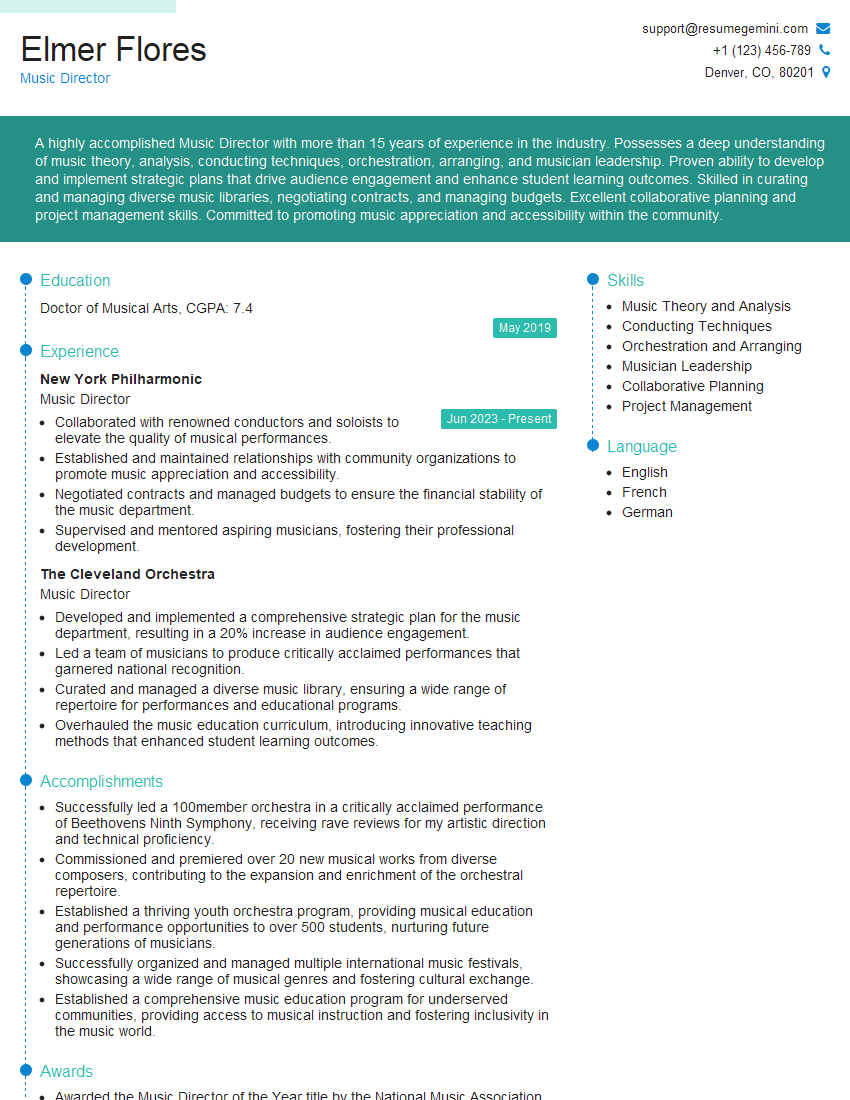
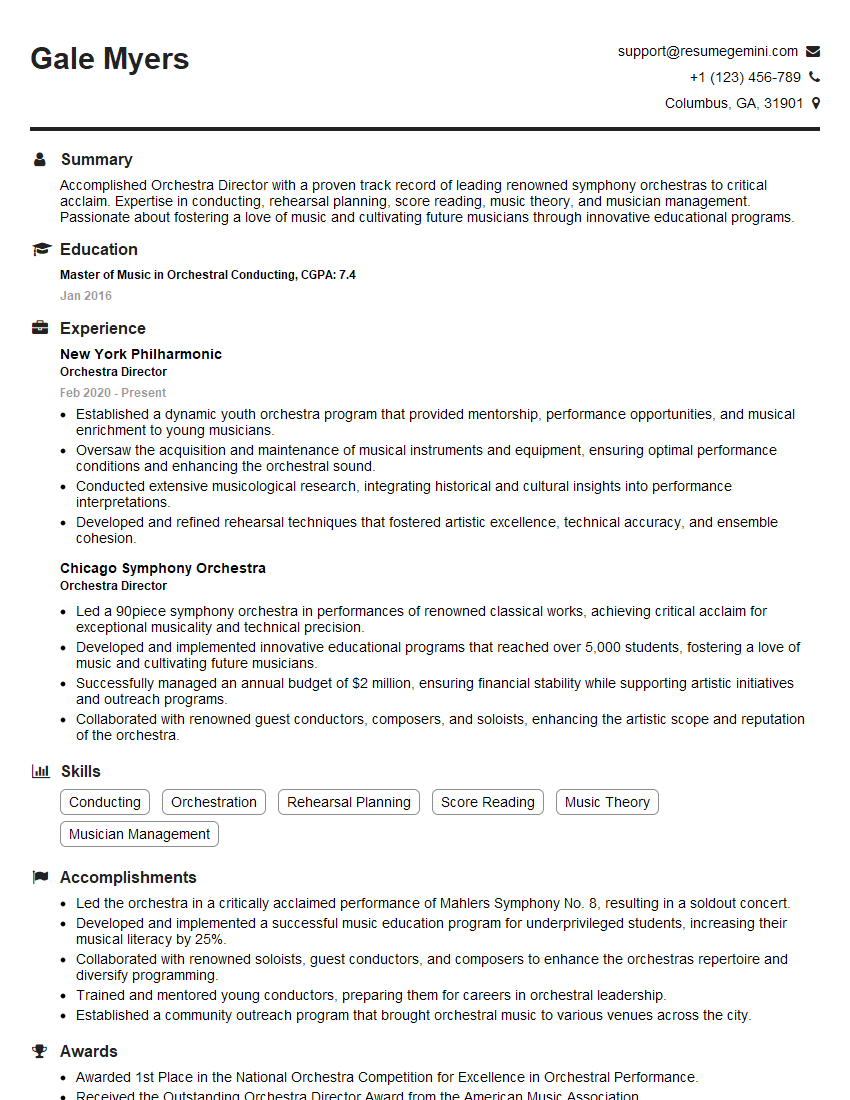
Mastering Performance Conducting opens doors to exciting career opportunities in orchestras, opera houses, and educational institutions. A strong resume is crucial for showcasing your skills and experience effectively to potential employers. To maximize your chances, create an ATS-friendly resume that highlights your achievements and abilities in a clear and concise manner. ResumeGemini is a trusted resource that can help you build a professional and impactful resume tailored to the demands of the Performance Conducting field. Examples of resumes tailored to Performance Conducting are available to help you get started.
Explore more articles
Users Rating of Our Blogs
Share Your Experience
We value your feedback! Please rate our content and share your thoughts (optional).
What Readers Say About Our Blog
Very informative content, great job.
good