Interviews are opportunities to demonstrate your expertise, and this guide is here to help you shine. Explore the essential Performance Monitoring Tools (e.g. New Relic, AppDynamics) interview questions that employers frequently ask, paired with strategies for crafting responses that set you apart from the competition.
Questions Asked in Performance Monitoring Tools (e.g. New Relic, AppDynamics) Interview
Q 1. Explain the difference between application performance monitoring (APM) and infrastructure monitoring.
Application Performance Monitoring (APM) and infrastructure monitoring are both crucial for maintaining system health, but they focus on different aspects. Think of it like this: infrastructure monitoring is checking the health of the *roads* and *bridges* that support your application, while APM focuses on the health of the *vehicles* traveling on those roads.
Infrastructure monitoring tracks the performance of the underlying hardware and software components like servers, networks, databases, and operating systems. It measures metrics such as CPU utilization, memory usage, disk I/O, network latency, and overall system uptime. It tells you if your servers are overloaded or your network is congested.
APM, on the other hand, focuses specifically on the performance of your applications themselves. It monitors the application’s code, transactions, and requests to identify bottlenecks and performance issues within the application’s logic. It provides insights into database queries, API calls, and code execution times, allowing you to pinpoint exactly where the slowdowns are occurring. It can even trace a single request through your entire application stack.
While independent, they are complementary. A slow application might be due to under-resourced servers (infrastructure issue) or inefficient code (APM issue). Effective monitoring requires both.
Q 2. Describe your experience using New Relic or AppDynamics. What metrics did you focus on?
I have extensive experience with both New Relic and AppDynamics, deploying and managing them in diverse environments. My focus has always been on holistic performance analysis, integrating metrics from both application and infrastructure layers. In New Relic, I heavily relied on its distributed tracing capabilities to pinpoint slow transactions across microservices. For example, I used the transaction trace feature to identify a specific database query that was the bottleneck in an e-commerce checkout process. This resulted in a 30% improvement in checkout time.
In AppDynamics, I utilized its business transaction performance monitoring to correlate application performance with user experience. Key metrics I consistently tracked included:
- Response Time: Average and 95th percentile response times for critical transactions.
- Throughput: Requests per second/minute, to identify capacity limits.
- Error Rates: Number and types of errors occurring in the application.
- Database Performance: Query execution times, number of database connections, and connection pooling efficiency.
- CPU and Memory Usage: Identifying resource constraints impacting application performance at the application server level.
I found AppDynamics’ powerful application mapping particularly useful for visualizing the dependencies between different application components and identifying potential points of failure.
Q 3. How would you troubleshoot a slow-performing application using APM tools?
Troubleshooting a slow application with APM involves a systematic approach:
- Identify the impacted area: Start by examining dashboards for high response times or error rates. APM tools often highlight the slowest transactions.
- Isolate the bottleneck: Use APM’s distributed tracing functionality to trace requests through the entire application stack. This will show you exactly which component is causing the slowdown – perhaps a slow database query, a network latency issue, or inefficient code within a particular function.
- Analyze performance metrics: Once the bottleneck is identified, analyze the detailed metrics provided by the APM tool. This might involve examining the CPU usage of specific application servers, the number of database connections, or the time taken by specific API calls.
- Check logs and traces: Correlate APM data with application logs to identify any error messages or exceptions that may be contributing to the slow performance. Using the trace IDs from the APM tool helps locate specific log entries.
- Implement fixes and monitor: Based on the analysis, implement appropriate fixes – optimizing database queries, improving code efficiency, increasing server resources, etc. Continuously monitor the application’s performance after implementing the fixes to confirm that they are effective.
For example, if I find a slow database query identified using New Relic’s database performance metrics, I would analyze the query, add indexes, or rewrite it for better performance.
Q 4. What are some key performance indicators (KPIs) you would monitor for a web application?
For a web application, key KPIs I’d monitor include:
- Page Load Time: Overall time taken to load a page, critical for user experience.
- Application Response Time: Time taken for the application to respond to a user request.
- Error Rate: Percentage of requests resulting in errors (5xx and 4xx HTTP status codes).
- Throughput/Requests per Second (RPS): Number of requests the application can handle per second. This is vital for capacity planning.
- Database Query Time: Average and maximum execution time of database queries.
- API Call Time: Time spent making calls to external APIs.
- Session Duration: Average length of user sessions, showing user engagement.
- Bounce Rate: Percentage of users leaving the site after viewing only one page.
These KPIs give a comprehensive overview of both technical performance and user experience, allowing for proactive performance optimization and issue resolution.
Q 5. Explain the concept of baselining in performance monitoring.
Baselining in performance monitoring is the process of establishing a known, stable performance level for your application. Think of it like creating a performance ‘fingerprint’ of your application under normal operating conditions. This baseline serves as a reference point for future performance comparisons.
By establishing a baseline, you can easily identify deviations from normal behavior. Any significant increase in response times, error rates, or resource consumption compared to the baseline suggests a performance issue. This makes it much easier to detect anomalies and troubleshoot problems, as you have a clear picture of what ‘normal’ looks like.
Baselining is usually done over a period of time (e.g., a week or a month) to account for normal fluctuations. Factors like time of day and day of week influence application performance, and a longer observation period produces a more robust baseline.
Q 6. How do you identify bottlenecks in an application using APM tools?
APM tools provide various ways to identify application bottlenecks:
- Transaction Traces: Distributed tracing reveals the flow of requests through the entire application, highlighting the slowest segments of code or external calls.
- Code-Level Profiling: Some tools allow for code-level profiling, showing the time spent in individual functions, helping pinpoint specific lines of code causing slowdowns.
- Resource Consumption Metrics: Monitoring CPU, memory, and disk I/O helps identify resource constraints.
- Database Performance Monitoring: Identifying slow queries and analyzing database connection statistics.
- External Service Monitoring: Monitoring external services called by the application to identify delays.
By examining these metrics together, you can build a holistic picture of where the bottlenecks are located within your application. For instance, if a database query consistently accounts for a large portion of the overall response time, that is a clear sign of a bottleneck.
Q 7. Describe your experience with setting up alerts and dashboards in APM tools.
I have significant experience setting up alerts and dashboards in both New Relic and AppDynamics. I typically follow a structured approach:
- Define Key Metrics: Identify the most critical KPIs to monitor (e.g., response times, error rates, resource utilization). These metrics are directly tied to business objectives.
- Set Alert Thresholds: Establish clear thresholds for each metric that trigger alerts. For example, an alert could be generated if the average response time exceeds 500ms or the error rate surpasses 1%. These thresholds need to account for normal variations and ensure the alerts aren’t constantly triggered by minor fluctuations.
- Configure Alert Channels: Specify the appropriate notification channels such as email, Slack, PagerDuty, or SMS. The urgency of the alert determines the appropriate channel. Critical issues require immediate notification, typically via SMS or phone.
- Design Dashboards: Create dashboards providing a clear and concise overview of application health. Visualizations like graphs and charts are essential to quickly identify potential problems. Dashboards should be customized to the specific needs of different stakeholders.
- Test Alerts and Dashboards: Thoroughly test the alerts and dashboards to ensure they work as expected, and that the thresholds and visualizations are meaningful and easy to interpret.
Effective alerts and dashboards prevent performance issues from becoming critical outages. They empower teams to react quickly and proactively, minimizing disruption to users.
Q 8. How would you use APM tools to diagnose a database performance issue?
Diagnosing database performance issues using APM tools involves a multi-step process. First, we’d identify slow database queries as the root cause within the application’s performance profile. APM tools like New Relic or AppDynamics provide detailed transaction traces, allowing us to pinpoint specific database calls that are consuming excessive time. Then, we drill down into the database performance metrics themselves, often accessed via integrations within the APM platform or directly from the database monitoring system.
For example, if a specific SQL query shows up consistently as a bottleneck in our transaction traces, we would examine the query’s execution plan within the database (using tools like pgAdmin for PostgreSQL or SQL Server Management Studio). A poorly optimized query could be the culprit. The APM tool will usually show the database call’s execution time, which correlates with the overall transaction slowdown. If the issue isn’t the query itself, we look at factors like database server CPU utilization, memory usage, disk I/O, and connection pool sizes. High CPU usage could indicate an overloaded server, insufficient memory might lead to swapping, slow disk I/O could point to hardware limitations, and a depleted connection pool could result in application waits. By correlating application-level slowdowns with specific database metrics, we get a clear picture of the problem’s root cause, guiding us towards solutions like query optimization, database hardware upgrades, or schema changes.
Q 9. What are some common causes of application slowdowns?
Application slowdowns stem from various sources, often intertwined. Think of it like a car sputtering; the problem could be the engine (server), the fuel (database), or even a flat tire (network). Some common culprits include:
- Database Performance Bottlenecks: Slow queries, poorly designed indexes, or insufficient database server resources lead to applications waiting for database responses.
- Inefficient Code: Poorly written algorithms, excessive loops, or inefficient data structures can significantly impact application performance. This often manifests as high CPU usage on the application server.
- Network Issues: High latency, packet loss, or network congestion can increase response times. This is especially noticeable in distributed applications.
- Resource Contention: High CPU or memory utilization on the application server prevents the application from responding quickly. This can also include contention on shared resources like file handles or database connections.
- External API Issues: Delays or failures in external services that your application depends on (third-party APIs) can ripple through your system.
- Third-party Libraries: Inefficient or buggy third-party libraries can introduce performance bottlenecks. A good APM tool often helps pinpoint these.
- Memory Leaks: Memory leaks steadily consume available RAM, eventually leading to performance degradation, slow responses, and potential crashes.
Q 10. How do you differentiate between synthetic and real-user monitoring?
Synthetic and real-user monitoring (RUM) offer complementary perspectives on application performance. Think of it as testing your car’s engine (synthetic) versus observing its performance during a road trip (real-user).
Synthetic Monitoring: This involves automated scripts that simulate user actions and measure application performance from various locations. It’s proactive, allowing you to detect issues before real users experience them. It focuses on availability and response times under controlled conditions. Tools will typically simulate interactions using pre-defined scripts and may include performance tests.
Real-User Monitoring (RUM): This tracks the actual performance experienced by real users interacting with the application in their real environments. It’s reactive; it tells you what happened after something went wrong. It provides insights into user behavior and experience, including page load times, error rates, and other user-centric metrics.
In essence, synthetic monitoring tests the *ability* of your application to perform, while RUM tells you how well it performs in the *reality* of user interactions. Both are critical for a holistic view of performance.
Q 11. What is the importance of distributed tracing in modern applications?
Distributed tracing is vital in modern, microservices-based applications because it provides end-to-end visibility into complex transactions spanning multiple services. Imagine tracing a package; each service represents a stage in the delivery process. Without distributed tracing, if something goes wrong, you’d struggle to isolate the point of failure within the many components.
Distributed tracing allows you to track requests as they travel across your entire application architecture. Each request is assigned a unique ID, and that ID is propagated throughout all involved services. APM tools use this ID to link together the different segments of a transaction, showing you the timing of each request, and helping you identify which services contributed to slowdowns or errors. It’s like a detailed map of your request’s journey through various microservices, providing insights into dependencies and bottlenecks across the entire system. This makes debugging, performance tuning, and identifying root causes of issues significantly easier and faster, particularly in highly distributed and complex applications.
Q 12. Explain how to interpret CPU utilization metrics in APM tools.
CPU utilization metrics in APM tools show the percentage of processing power a server or application component is actively using. A high CPU utilization might indicate a bottleneck, but you need context.
Interpretation requires understanding the context: Is this consistently high (a problem) or spiky (potentially just a brief surge)? High and sustained CPU means the system is working hard; a significant portion of its processing power is busy, potentially leading to slowdowns. A consistently high percentage suggests that you might need more resources (adding a server or upgrading to a more powerful machine). However, sporadic, short bursts of high utilization are often normal and expected as the system handles large requests or peak loads. You should also consider which specific processes or threads are consuming most of the CPU time. The APM tool will generally allow you to drill into this level of detail. Tools often provide flame graphs or similar visualizations to identify functions consuming large amounts of CPU time, helping identify problematic code that needs optimization.
Q 13. How would you identify and address memory leaks using APM tools?
Identifying and addressing memory leaks with APM tools involves monitoring memory usage over time and pinpointing the source of the leak. Think of a leaky bucket; if you don’t stop the leak, it eventually overflows.
First, the APM tool’s memory metrics reveal a steady increase in memory consumption over time, even when the application isn’t actively doing much processing. This points to a leak. Then, you investigate the application’s heap dumps (memory snapshots) – many APM tools facilitate this – to identify which objects are retaining excessive memory. Profiling tools integrated into or interoperable with APM solutions can provide detailed information about memory allocations and object lifetimes. This detailed profiling helps determine which parts of the code are responsible for the leak. By analyzing the call stacks and object references within these heap dumps, we can pinpoint the root cause of the leak and make code changes to rectify it. This may involve properly closing database connections, releasing unused resources, or correcting issues in object lifecycle management.
Q 14. Describe your experience with using APM tools in a cloud environment (AWS, Azure, GCP).
My experience with APM tools in cloud environments (AWS, Azure, GCP) is extensive. I’ve used these tools to monitor applications deployed across various services, such as EC2 instances, Kubernetes clusters, and serverless functions. Key aspects include:
- Integration with Cloud Providers: APM tools usually integrate directly with cloud monitoring tools, enabling correlation of application metrics with underlying infrastructure metrics. This is crucial for understanding the impact of infrastructure on application performance. For instance, in AWS, APM tools can seamlessly integrate with CloudWatch for infrastructure monitoring, while in Azure, it could be with Azure Monitor.
- Auto-Scaling and Resource Management: APM insights are invaluable for optimizing auto-scaling strategies, ensuring appropriate resource allocation based on application load. We can proactively adjust auto-scaling policies to prevent performance degradation under high load.
- Cost Optimization: By identifying performance bottlenecks, APM tools contribute to cost optimization. Improved performance may reduce the need for excessive compute resources, lowering overall cloud infrastructure costs.
- Distributed Tracing across Multiple Regions: In geographically distributed applications across cloud regions, APM provides end-to-end tracing capabilities, critical for understanding latency and identifying the source of delays spanning multiple data centers or availability zones.
In summary, deploying APM tools correctly is crucial in cloud environments for optimizing performance, scalability, and cost. They’re not just monitoring tools; they’re active participants in the management and optimization of cloud-based applications.
Q 15. How do you handle noisy metrics in APM tools?
Noisy metrics, or high-frequency fluctuations in your APM data, can mask real performance problems. Imagine trying to spot a leak in a pipe when water is constantly spraying all over – it’s difficult! Handling noisy metrics involves a combination of techniques. First, we need to identify the source of the noise. This often involves understanding the nature of the metric itself. Is it a counter that increments rapidly (e.g., request counts)? Or is it an average with inherent variability (e.g., response times)?
Once the source is identified, we can apply several strategies:
- Smoothing: Techniques like moving averages can help to reduce short-term fluctuations, revealing underlying trends. Many APM tools offer built-in smoothing functionalities.
- Aggregation: Instead of looking at individual data points, aggregating the data over longer time intervals can significantly reduce noise. For example, instead of viewing requests per second, consider requests per minute or even per hour.
- Filtering: Setting thresholds or filters can help to eliminate outliers or irrelevant data points. For instance, you might ignore response times below a certain threshold if you know they represent normal background activity.
- Statistical analysis: Using statistical methods such as standard deviation or percentiles can help to focus on significant deviations from the norm, rather than minor fluctuations.
- Root Cause Analysis: Sometimes, apparent noise is actually a symptom of a deeper problem. Proper RCA can help to determine if the ‘noise’ is masking a more significant issue.
For example, I once worked on a project where high CPU spikes were initially attributed to noisy metrics. After careful analysis using aggregation and correlation with other metrics, we discovered a memory leak in a background process, which was the actual root cause.
Career Expert Tips:
- Ace those interviews! Prepare effectively by reviewing the Top 50 Most Common Interview Questions on ResumeGemini.
- Navigate your job search with confidence! Explore a wide range of Career Tips on ResumeGemini. Learn about common challenges and recommendations to overcome them.
- Craft the perfect resume! Master the Art of Resume Writing with ResumeGemini’s guide. Showcase your unique qualifications and achievements effectively.
- Don’t miss out on holiday savings! Build your dream resume with ResumeGemini’s ATS optimized templates.
Q 16. Explain the concept of root cause analysis in performance monitoring.
Root cause analysis (RCA) in performance monitoring is the process of identifying the underlying cause of a performance issue. It’s more than just identifying the symptom; it’s like being a detective to uncover the culprit. Instead of just knowing that your website is slow, you want to know why it’s slow. This often involves a multi-step approach.
A common framework is the 5 Whys. You repeatedly ask ‘why’ to drill down to the root cause. For example: Why is the website slow? Because the database is slow. Why is the database slow? Because it’s overloaded with queries. Why is it overloaded? Because of a poorly optimized SQL query. Why was the query poorly optimized? Because of insufficient testing during development.
APM tools are essential for RCA. They provide detailed metrics and traces that can help you pinpoint bottlenecks. Features like call graphs, distributed tracing, and error tracking are crucial. They allow you to follow the flow of a request through your application and identify precisely where performance degrades. I often use these features combined with log analysis to effectively conduct RCA. For instance, if a slow database query is identified, log files could be further explored to see if it is a particular user interaction which has increased the load on the database.
Q 17. What are some best practices for instrumenting an application for APM?
Instrumenting your application for APM is like installing sensors in a car to monitor its performance. Proper instrumentation ensures you collect relevant data to diagnose and prevent performance problems. Best practices include:
- Strategic instrumentation: Focus on critical areas of your application, such as database calls, API calls, and external services. Don’t overdo it; too much instrumentation can negatively impact performance.
- Consistent naming conventions: Use meaningful and consistent names for custom metrics and traces to improve data readability and analysis.
- Automated instrumentation: Leverage auto-instrumentation features offered by many APM tools to minimize manual effort. While it’s not a replacement for strategic manual instrumentation, it significantly reduces the work for commonly used frameworks.
- Contextual information: Include relevant contextual data in your metrics, such as user IDs, request IDs, and environment variables, to aid in debugging and correlation.
- Regular review and refinement: Continuously review your instrumentation strategy to ensure it remains effective and relevant. You might adjust metrics based on evolving insights, removing unnecessary sensors or adding new ones to target potential bottlenecks.
For instance, if I’m instrumenting a microservices architecture, I’ll pay particular attention to the communication between services, adding tracing to each interaction to identify latency issues effectively. Using appropriate libraries from the respective APM tool, for manual instrumentation, allows for better granularity and easier future maintenance.
Q 18. How do you correlate metrics from different APM tools?
Correlating metrics from different APM tools is a challenge but often necessary, especially in complex environments with multiple technologies or vendors. It’s like trying to assemble a jigsaw puzzle where the pieces came from different boxes. The key lies in finding common identifiers.
Here are some strategies:
- Common identifiers: Rely on request IDs or transaction IDs that are consistently generated and propagated across your systems. This allows you to track a single request across multiple tools. Imagine each request having a unique tracking number that travels across all systems.
- Timestamp correlation: If no common identifiers exist, you can try correlating data based on timestamps. This requires precise synchronization and can be less reliable due to potential clock discrepancies.
- External logging and monitoring: Use a centralized logging and monitoring system to collect data from different tools. This system acts as a common repository, easing correlation efforts. I’ve often used ELK stack or Splunk for this purpose.
- Third-party integration tools: Some tools offer integrations or connectors that facilitate data correlation with other APM solutions. They might provide specialized features for such purpose.
- Custom scripting or ETL processes: In cases where tools don’t offer native integration, you may have to write custom scripts or use ETL (Extract, Transform, Load) processes to extract data from different sources and consolidate them for analysis.
A practical example is correlating data from an APM tool monitoring application servers with another tool monitoring the database. By using request IDs, we can trace a slow web request’s journey, identify the database query responsible, and analyze database metrics concurrently to pinpoint the actual bottleneck.
Q 19. What is your experience with performance testing tools (e.g., JMeter, Gatling)?
I have extensive experience with performance testing tools like JMeter and Gatling. They’re essential for simulating real-world user loads to identify performance bottlenecks before they impact production. JMeter excels in its simplicity and broad support across multiple protocols, making it a great choice for quick load tests. I’ve used it often for testing REST APIs and web applications, simulating various scenarios such as high concurrent users or heavy data loading.
Gatling, on the other hand, provides a more powerful and scalable solution, especially for complex scenarios. Its Scala-based scripting allows for fine-grained control and greater flexibility. I prefer it for more advanced performance tests that require sophisticated simulations and analysis. For example, Gatling is ideal for creating complex user behavior scenarios, like simulating shopping cart checkout flows and user authentication process, which helps better anticipate production load and identify unexpected bottlenecks.
I use the results from these tests to inform capacity planning, identify performance bottlenecks in the application or infrastructure, and validate the effectiveness of performance optimization efforts. The results generated by these tools are also crucial in conjunction with APM data to provide a more holistic picture of application performance, allowing me to validate the performance impact of optimization efforts in real scenarios.
Q 20. Describe your experience with log management tools and their integration with APM.
Log management tools are crucial for gaining deeper insights into application performance, especially when coupled with APM data. APM tools provide high-level performance metrics, but logs often contain the fine-grained details necessary for effective troubleshooting. It’s like having a bird’s-eye view from the APM and ground-level detail from the logs. Tools such as ELK stack, Splunk, or Graylog are commonly used.
The integration typically involves correlating log entries with APM traces using common identifiers like request IDs. This allows you to examine detailed logs for a specific transaction that is showing performance degradation according to the APM data. For example, I’ve used log analysis to discover specific error messages that are correlated with slow response times or high error rates shown in New Relic. This approach can be very helpful in determining the exact nature of a problem. A well-integrated log management solution will help in effectively searching and visualizing those correlated log entries, allowing for quicker and easier root cause analysis.
Moreover, log analysis can help understand issues not directly addressed by APM. For example, configuration changes or external system dependencies that might not be entirely visible in APM metrics.
Q 21. How do you use APM tools to support incident response?
APM tools are invaluable during incident response. They provide the real-time visibility needed to quickly understand the impact of an incident and identify the root cause. Imagine it as your emergency response system for your application.
During an incident, I use APM tools to:
- Identify impacted areas: Quickly pinpoint which parts of the application are affected by the incident by monitoring metrics like error rates, response times, and resource utilization.
- Determine the root cause: Use features like call graphs and distributed tracing to identify the exact location of the problem. This will aid in quickly identifying if the issue is due to a faulty piece of code, infrastructure limitations, or external service failure.
- Monitor remediation efforts: Track the effectiveness of the implemented solutions in real-time to ensure that they’re effectively resolving the problem. This allows me to adjust troubleshooting steps as needed.
- Gather evidence for post-mortem analysis: Collect detailed data on the incident to facilitate a post-mortem analysis to prevent similar incidents in the future.
For example, during a recent incident where our website became unresponsive, AppDynamics quickly highlighted a surge in database errors. By following the distributed trace, we identified a poorly-written query that was causing excessive contention, and a temporary fix (while the query was fixed) was to limit the number of simultaneous queries to the database, which alleviated the problem quickly. The APM tool’s dashboards provided the immediate context needed to make decisions, and the detailed data enabled quick problem resolution.
Q 22. What strategies do you employ to optimize application performance?
Optimizing application performance is a multifaceted process that involves identifying bottlenecks, understanding the root causes of slowdowns, and implementing targeted solutions. My strategy typically follows these steps:
- Profiling and Monitoring: I begin by leveraging APM tools like New Relic or AppDynamics to gain a comprehensive understanding of application behavior. This includes analyzing metrics like CPU utilization, memory consumption, database query times, and network latency. Tools like these provide detailed traces and visualizations, highlighting performance hotspots.
- Bottleneck Identification: Once the monitoring phase identifies performance bottlenecks, the next step is to pinpoint the root cause. This could be anything from inefficient database queries or slow external API calls to poorly written code or insufficient server resources.
- Code Optimization: Inefficient code is a major performance killer. I focus on optimizing algorithms, reducing database queries, and employing caching mechanisms to improve response times. This frequently involves profiling code to identify specific areas for improvement.
- Infrastructure Optimization: This involves scaling resources appropriately – adding more servers, upgrading hardware, or optimizing database configurations. Load balancing and caching strategies are also crucial here. Cloud platforms allow for flexible scaling to adapt to changing demand.
- Database Optimization: Database performance is often a significant bottleneck. I focus on query optimization, indexing, and schema design improvements. This sometimes involves using database performance monitoring tools specific to the database type (e.g., pgAdmin for PostgreSQL).
- Testing and Iteration: After making changes, I thoroughly test the application to ensure performance improvements and to avoid introducing new issues. This is an iterative process, where we continuously monitor, analyze, and refine our optimization strategies.
For example, in a recent project, we discovered that a specific API call was causing significant delays. By caching frequently accessed data and optimizing the database query associated with that API, we reduced response times by over 70%.
Q 23. Explain the difference between throughput and latency.
Throughput and latency are two key metrics used to assess application performance, but they measure different aspects:
- Throughput measures the *rate* at which an application can process requests or transactions. It’s essentially how much work the application can handle in a given time period (e.g., requests per second, transactions per minute). Higher throughput is generally better.
- Latency measures the *time* it takes for a single request or transaction to be processed and completed. It represents the delay experienced by a user or system waiting for a response. Lower latency is better, indicating faster response times.
Think of it like this: throughput is the speed of a conveyor belt (how many items it can move per hour), while latency is the time it takes for a single item to travel from one end to the other. You can have a high-throughput system with high latency (a slow conveyor belt that’s very wide), or a low-throughput system with low latency (a fast, narrow conveyor belt).
Q 24. How would you explain complex performance issues to non-technical stakeholders?
Explaining complex performance issues to non-technical stakeholders requires simplifying technical jargon and focusing on the impact on the business. My approach involves:
- Using Analogies: Instead of talking about CPU utilization, I might say, “Imagine a highway. If the highway is congested (high CPU), cars (requests) take longer to reach their destination (slow response times).”
- Focusing on Business Impact: I explain how performance issues translate to real-world consequences, such as decreased sales, lost customers, or increased operational costs. Quantify the impact whenever possible (e.g., “Slow load times are costing us X dollars per day”).
- Visualizations: Charts and graphs are invaluable. APM tools provide many ready-to-use visualizations that effectively illustrate performance problems. I present these in a clear, concise manner, focusing on the key takeaways.
- Plain Language: Avoid technical terms as much as possible. If necessary, explain them simply, using everyday language.
- Actionable Recommendations: Instead of just describing the problem, I propose concrete solutions and timelines for addressing them. This shows that I not only understand the issue but also have a plan to resolve it.
For example, instead of saying “Database query latency is causing a significant bottleneck in the order processing workflow,” I would say “Our system is slow to process orders, causing delays for our customers and potentially impacting sales. We’ve identified the root cause and have a plan to fix it within the next week.”
Q 25. What is your approach to capacity planning using performance data?
Capacity planning using performance data is crucial to ensuring applications can handle expected and unexpected traffic loads. My approach involves:
- Historical Data Analysis: I start by analyzing historical performance data from APM tools, looking for trends in resource utilization (CPU, memory, network, database) over time. This helps establish a baseline and identify peak usage periods.
- Load Testing: I conduct load tests to simulate realistic traffic scenarios and determine the application’s performance under stress. This helps identify breaking points and areas for improvement.
- Forecasting: Based on historical data and load tests, I forecast future resource requirements. This involves considering factors like seasonal variations, marketing campaigns, and anticipated growth.
- Resource Provisioning: Based on the forecasts, I determine the appropriate level of infrastructure resources (servers, databases, network bandwidth) needed to meet future demands while maintaining acceptable performance levels. Cloud-based solutions offer flexibility in scaling resources up or down as needed.
- Monitoring and Adjustment: After implementing capacity changes, I continue to monitor the application’s performance closely. This allows for timely adjustments to resource allocation if needed.
For instance, by analyzing past Black Friday traffic, I can predict the resource needs for the following year’s sale and proactively scale our infrastructure to avoid performance degradation during the peak shopping period.
Q 26. Describe a situation where you had to use APM tools to solve a critical performance problem.
During the launch of a new e-commerce feature, we experienced a significant spike in error rates and slow response times. Using AppDynamics, we quickly identified that a specific database query was taking an excessively long time to execute, causing a backlog of requests. The query involved a poorly optimized join operation on two large tables.
Here’s how we used the APM tools to solve the problem:
- Identifying the Bottleneck: AppDynamics’ transaction tracing showed a clear bottleneck in the database layer, specifically highlighting the problematic SQL query.
- Root Cause Analysis: By analyzing the query execution plan, we found the inefficient join operation. The lack of appropriate indexes further exacerbated the issue.
- Solution Implementation: We added the necessary indexes to the database tables and optimized the join operation, significantly reducing the query execution time.
- Verification: We re-ran load tests and monitored the application’s performance using AppDynamics to ensure the problem was resolved. We also implemented improved logging and monitoring to detect similar issues in the future.
This experience highlighted the critical role of APM tools in quickly identifying, diagnosing, and resolving critical performance issues. The rapid resolution prevented significant business disruption and customer dissatisfaction.
Q 27. What is your familiarity with different APM tool integrations (e.g., with CI/CD pipelines)?
I’m familiar with integrating various APM tools with CI/CD pipelines. This integration allows for automated performance testing and monitoring throughout the software development lifecycle. This typically involves:
- Automated Performance Testing: Integrating APM tools into CI/CD pipelines enables automatic execution of performance tests as part of the build and deployment process. This ensures that performance issues are identified early in the development cycle.
- Continuous Monitoring: Continuous performance monitoring helps identify performance problems in production environments immediately, facilitating faster resolution and reduced downtime.
- Alerting and Notification: Integration with alerting and notification systems provides real-time alerts when performance thresholds are breached. This allows for rapid response to critical issues.
- Specific Tool Integrations: I have experience integrating tools like New Relic and AppDynamics with various CI/CD platforms (e.g., Jenkins, GitLab CI, Azure DevOps). This often involves using APIs and plugins provided by the APM vendors.
For example, we set up a Jenkins job that automatically runs performance tests after each code commit. If the tests fail to meet pre-defined performance thresholds, the pipeline is stopped, preventing the deployment of subpar code.
Q 28. How do you stay up-to-date with the latest trends and technologies in performance monitoring?
Staying current with the latest trends in performance monitoring is crucial in this rapidly evolving field. My approach involves:
- Industry Publications and Blogs: I regularly read industry publications and blogs that focus on DevOps, performance engineering, and cloud technologies. This helps me keep abreast of new tools, techniques, and best practices.
- Conferences and Webinars: Attending industry conferences and webinars allows me to learn from leading experts, network with peers, and gain practical insights into real-world challenges.
- Online Courses and Certifications: Engaging in online courses and pursuing relevant certifications keeps my skills sharp and ensures I stay ahead of the curve. This is especially important for new technologies and APM tool updates.
- Hands-on Experience: I actively seek out opportunities to experiment with new tools and technologies. This hands-on approach allows for a deeper understanding of the practical implications of these advancements.
- Community Engagement: Participating in online forums and communities related to performance engineering helps me learn from others’ experiences, share my knowledge, and stay updated on the latest discussions and developments.
This multi-faceted approach ensures that I possess up-to-date knowledge and skills, allowing me to contribute effectively to our organization’s performance monitoring efforts.
Key Topics to Learn for Performance Monitoring Tools (e.g., New Relic, AppDynamics) Interview
- Metrics and Dashboards: Understanding key performance indicators (KPIs), creating effective dashboards for monitoring application health, and interpreting data visualizations.
- Application Performance Management (APM): Deep dive into tracing transactions, identifying bottlenecks, and analyzing code-level performance issues using APM features. Practical application: Troubleshooting a slow database query using APM tools.
- Alerting and Notifications: Configuring alerts based on predefined thresholds, setting up notification channels (email, SMS), and creating effective alert management strategies to avoid alert fatigue.
- Troubleshooting and Problem Solving: Applying your understanding of system architecture and performance monitoring tools to diagnose and resolve production issues. Practical application: Analyzing error logs and correlating them with performance metrics to pinpoint the root cause of a performance dip.
- Data Analysis and Reporting: Extracting insights from performance data to identify trends, predict future issues, and support data-driven decision-making. Practical application: Presenting performance reports to stakeholders and recommending optimization strategies.
- Integration and Deployment: Understanding how to integrate performance monitoring tools with existing infrastructure and CI/CD pipelines. Practical application: Setting up automated monitoring for new deployments.
- Specific Tool Features (New Relic/AppDynamics): Familiarize yourself with the unique features and functionalities of each tool. Focus on common functionalities and how they address performance challenges.
Next Steps
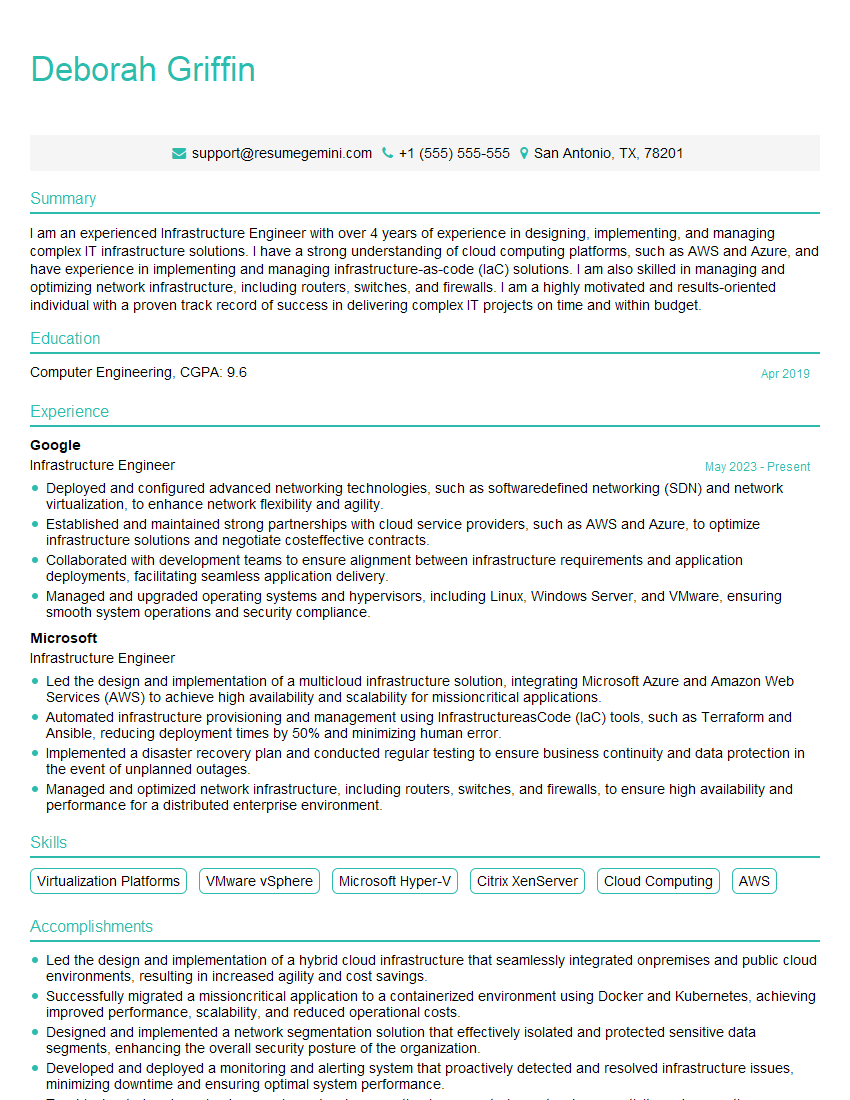
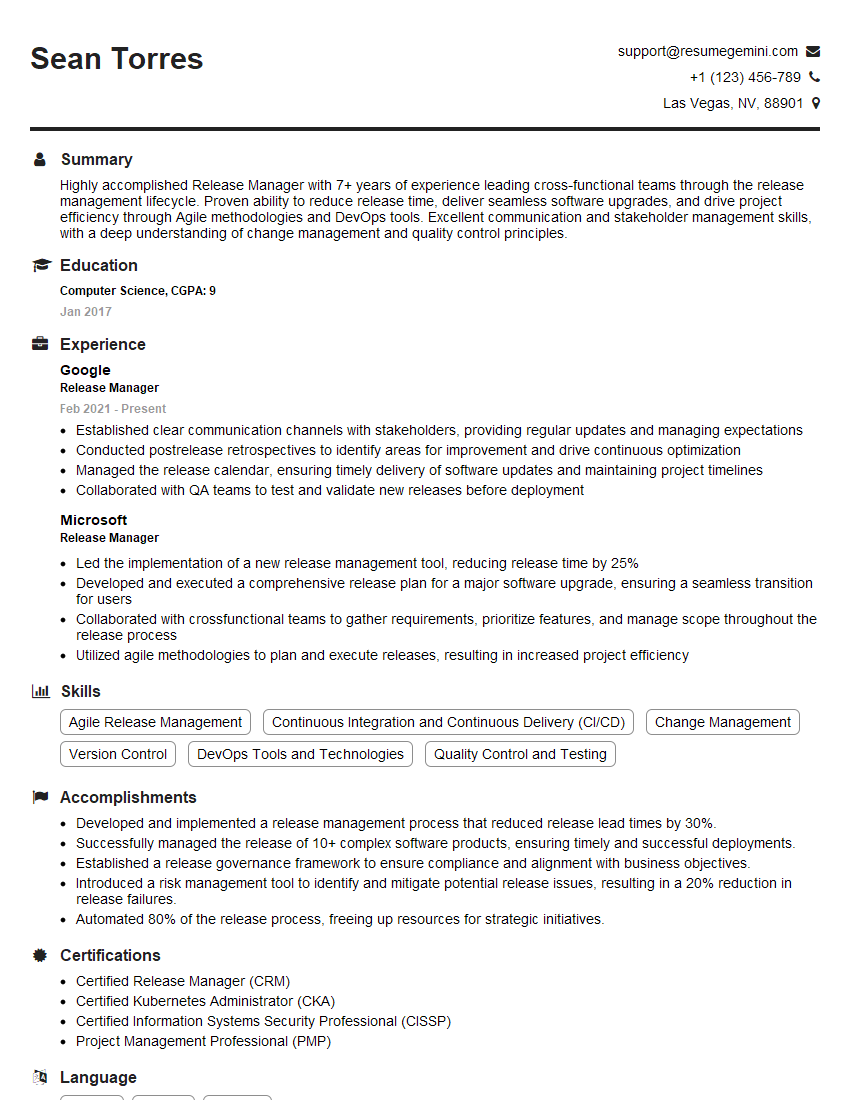
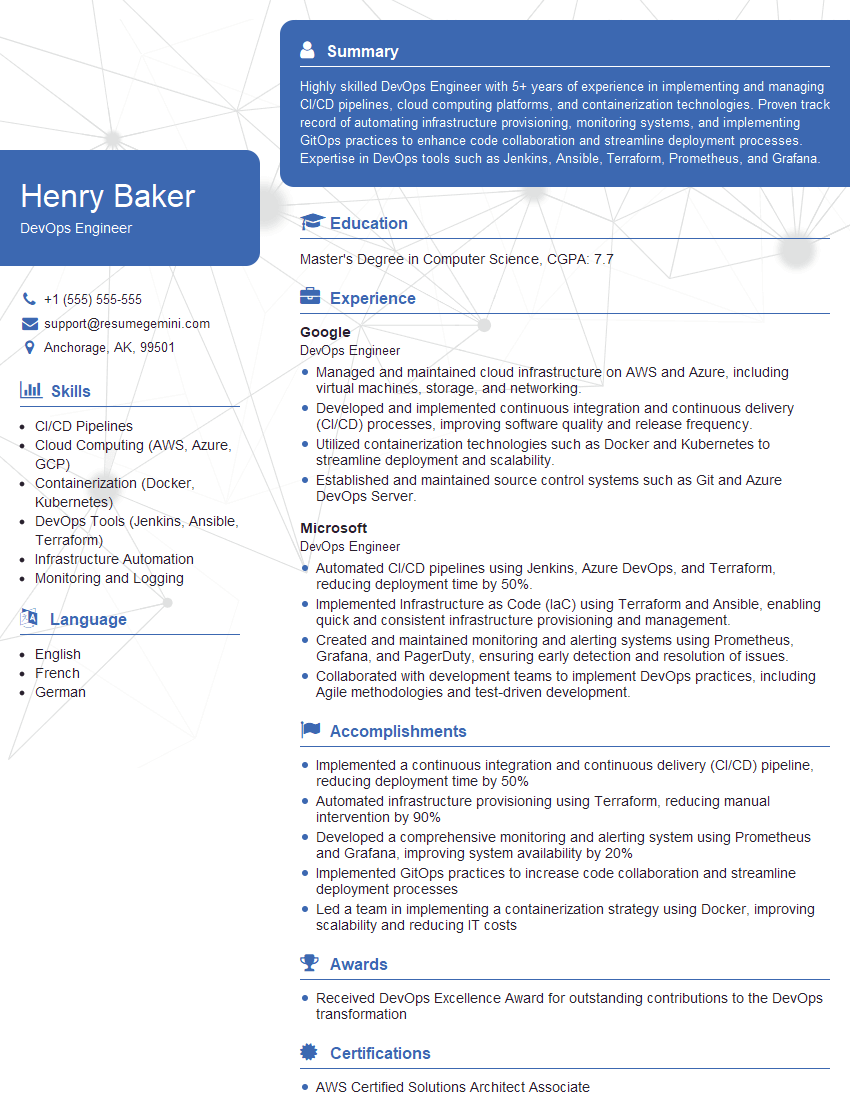
Mastering performance monitoring tools like New Relic and AppDynamics is crucial for career advancement in today’s demanding tech landscape. These skills demonstrate your ability to proactively identify and resolve performance issues, ensuring the smooth operation of critical applications. To maximize your job prospects, it’s vital to create an ATS-friendly resume that highlights your expertise effectively. Use ResumeGemini to build a professional and impactful resume that showcases your skills in a way that recruiters can easily understand and appreciate. Examples of resumes tailored to roles involving New Relic and AppDynamics are available to help guide you.
Explore more articles
Users Rating of Our Blogs
Share Your Experience
We value your feedback! Please rate our content and share your thoughts (optional).
What Readers Say About Our Blog
Very informative content, great job.
good