The thought of an interview can be nerve-wracking, but the right preparation can make all the difference. Explore this comprehensive guide to Performing for Special Occasions interview questions and gain the confidence you need to showcase your abilities and secure the role.
Questions Asked in Performing for Special Occasions Interview
Q 1. Describe your experience adapting performances to different audiences.
Adapting performances to different audiences is crucial for success. It’s about understanding the nuances of each group and tailoring the content, style, and delivery to resonate effectively. This involves considering factors such as age, cultural background, the event’s purpose, and the overall atmosphere.
For example, a performance at a children’s birthday party would differ significantly from a corporate event. For children, I’d focus on interactive games, bright colours, and familiar songs, keeping the duration short and engaging. At a corporate event, I might incorporate more sophisticated material, perhaps incorporating elements relevant to the company’s mission or industry. I would also maintain a more formal and professional demeanor.
I analyze the audience beforehand, gathering information from event planners or clients about the expected demographics and preferences. This helps me select appropriate songs, jokes, and storytelling approaches. I also practice adjusting my energy levels and communication style to fit the occasion. I’ve even had instances where I’ve learned a few key phrases in a different language to connect with an international audience, demonstrating respect and creating a more inclusive experience.
Q 2. What technical skills do you possess relevant to event performance (sound, lighting, etc.)?
My technical skills encompass a wide range of event performance aspects. I’m proficient in operating sound systems, including mixers, microphones, and speakers. I can troubleshoot common audio issues, ensuring optimal sound quality throughout the performance. My lighting skills include experience with various types of lighting equipment, from spotlights to LED panels. I’m capable of setting up and programming lighting cues to create the desired mood and ambiance for each segment of the performance.
Beyond that, I understand basic video projection techniques, including setting up projectors and screens and syncing audio-visual elements for a seamless experience. I’m also familiar with using basic stage management equipment such as microphones stands and backdrop systems. This self-sufficiency minimizes the reliance on external technical staff, making me more adaptable and efficient.
Q 3. How do you handle unexpected technical difficulties during a performance?
Unexpected technical difficulties are an inevitable part of live performance. My approach is proactive and solution-oriented. Firstly, I always have backup plans. For example, I carry spare batteries for microphones and instruments, and I have digital copies of all my music readily available. If a microphone malfunctions, I smoothly switch to a backup mic, ensuring the performance continues without a noticeable disruption. If there’s a power outage, I am ready to adapt by shifting to acoustically-driven performances or interactive games until power is restored.
Secondly, I possess a calm and problem-solving attitude. Panic is detrimental; a clear head is key to identifying the problem and finding a quick solution. I communicate calmly with the event staff and the audience, managing expectations and keeping the atmosphere positive. My experience in troubleshooting has taught me to think on my feet, improvising and using my wit to maintain the flow and energy of the performance despite setbacks. Once, during a particularly significant corporate event, the sound system failed completely. Instead of panicking, I immediately switched to a purely acoustic performance, engaging the audience through storytelling and humor. The audience response was incredibly positive; it highlighted the adaptability of my performance style.
Q 4. What is your process for creating a setlist or performance plan?
Creating a setlist or performance plan is a meticulous process, blending artistic vision with logistical practicality. I start by considering the event’s theme, the audience demographics, and the overall atmosphere. This informs the selection of appropriate material – music, jokes, stories, or interactive elements. The order of the elements is crucial. I aim for a dynamic flow, building momentum, maintaining audience engagement, and creating satisfying transitions between different parts of the performance.
I utilize a structured approach, often outlining the entire performance using a spreadsheet or presentation software. This allows for clear visualization of the sequencing and timing of various elements. It also allows for easy adjustments based on feedback or new ideas. For instance, I might include a high-energy piece early on to grab the audience’s attention, followed by more contemplative moments, and conclude with an uplifting and memorable finale. Timing is meticulously considered. I allocate specific time slots for each segment to ensure that the performance stays within the allotted timeframe.
Q 5. Describe your experience working with event planners or clients.
Collaboration with event planners and clients is paramount for a successful performance. I actively seek to understand their vision and expectations for the event, ensuring a collaborative effort. I take detailed briefs, asking clarifying questions to avoid misunderstandings. I value open communication throughout the planning process, providing updates regularly and addressing any concerns promptly.
I’ve worked with diverse clients, ranging from wedding planners organizing intimate ceremonies to corporate event managers orchestrating large-scale conferences. My approach remains consistent: proactive communication, careful listening, and a willingness to adapt my performance to meet their specific needs. This collaborative approach results in a seamless and memorable experience for all involved. For example, for a recent corporate gala, I closely collaborated with the event planner to select music that aligned with the company’s brand identity and mood. The result was a truly personalized and successful performance.
Q 6. How do you ensure your performance is engaging and appropriate for the event?
Ensuring appropriateness and engagement requires careful consideration of the event’s context. I begin by thoroughly researching the event type, audience profile, and overall atmosphere. The performance’s content, style, and tone must resonate with the occasion. For a formal corporate event, my attire, language, and choice of material would differ significantly from a casual birthday party. I strive to be sensitive to cultural norms and avoid any material that might be offensive or inappropriate for the particular audience.
Engagement is maintained through a dynamic performance style, incorporating varied elements such as music, humor, storytelling, and interactive segments where appropriate. The pacing should be well-balanced, avoiding monotony and incorporating surprises to keep the audience captivated. I strive to create a connection with the audience through genuine enthusiasm, clear communication, and genuine interaction.
Q 7. What is your approach to audience interaction?
Audience interaction is key to creating a memorable and engaging performance. My approach varies depending on the event and audience, but it always involves a balance of planned interaction and spontaneous engagement. Planned interactions might involve incorporating audience participation games or Q&A segments. Spontaneous engagement involves responding to audience reactions and incorporating their energy into the performance. I gauge audience response through nonverbal cues, such as laughter, applause, and body language, and I adapt accordingly.
I aim to create a sense of connection and community. I address the audience directly, using inclusive language and making eye contact. I might share personal anecdotes or invite audience members to participate in lighthearted ways. The key is to be genuine and respectful, creating a welcoming atmosphere where the audience feels comfortable and involved. I’ve found that even a simple gesture, like acknowledging a specific comment or reaction from someone in the audience, can strengthen the bond and make the performance more personal and memorable.
Q 8. How do you manage stage fright or performance anxiety?
Stage fright is a common experience, even for seasoned performers. My approach is multifaceted, focusing on preparation, mindfulness, and positive self-talk. Preparation is key; thorough rehearsal reduces uncertainty and builds confidence. I utilize mindfulness techniques like deep breathing exercises and meditation to center myself before a performance. This helps manage the physical symptoms of anxiety, like a racing heart or trembling hands. Finally, I use positive affirmations to counter negative thoughts. Instead of focusing on potential mistakes, I remind myself of my skills and past successes. Think of it like an athlete visualizing a successful performance – it’s mental rehearsal for optimal results. For example, before a particularly large corporate event, I spent 30 minutes practicing my breathing exercises and visualizing a successful, engaging presentation.
Q 9. Describe a time you had to improvise during a performance. What was the outcome?
During a children’s birthday party, the planned magic trick went awry – a crucial prop malfunctioned. Instead of panicking, I immediately improvised a comedic narrative around the mishap, turning it into a humorous anecdote involving the birthday child. I incorporated audience participation, asking them to help ‘fix’ the problem, which energized the children and kept them engaged. The outcome was positive; the unexpected twist became the highlight of the show, proving the flexibility and quick thinking crucial for special occasion performers. This taught me the value of adaptability and how turning a potential setback into an opportunity for audience interaction can actually enhance a performance.
Q 10. How do you maintain professionalism in various event settings?
Maintaining professionalism involves several key elements. First, punctuality is paramount; I always arrive early to allow for setup and unforeseen circumstances. I dress appropriately for the event’s setting, ensuring my appearance reflects respect for the occasion and the audience. Professional communication is vital, from initial consultations to post-event follow-ups. I maintain a polite and courteous demeanor throughout, handling any challenges or requests with grace and efficiency. I always strive to be adaptable to the specific needs of each event. For instance, at a formal wedding, my attire and demeanor are markedly different from what they would be at a lively kids’ birthday party. The key is to read the room and adapt my performance and presentation style accordingly.
Q 11. What are your preferred methods for marketing your performance services?
My marketing strategy is multi-pronged. I maintain a professional website showcasing my skills and previous performances. Social media platforms like Instagram and Facebook are crucial for visual content, highlighting successful events and client testimonials. I actively network within my community, attending relevant events and building relationships with event planners and potential clients. Word-of-mouth referrals are invaluable, so I always strive to exceed expectations and foster strong client relationships. I also utilize online directories and platforms specifically designed for event performers. This diverse approach ensures broad reach and diverse client acquisition strategies.
Q 12. What is your rate for performing at events, and what factors influence that?
My rates are based on several factors, including the event’s duration, location, the complexity of the performance, and the number of attendees. A smaller, intimate gathering will have a different rate than a large-scale corporate event. Travel expenses, if applicable, are also factored into the final cost. I offer various packages to accommodate diverse budgets and needs. Transparent and upfront pricing ensures a smooth booking process and client satisfaction. For example, a 30-minute performance at a small private party might cost less than a two-hour performance at a large-scale corporate event requiring extensive setup and specialized equipment.
Q 13. How do you handle requests for modifications to your standard performance?
I welcome requests for modifications, viewing them as opportunities for collaboration and personalization. I discuss the feasibility and potential implications of the changes, ensuring they align with my capabilities and the overall event’s vision. If modifications require significant adjustments, additional costs may be involved, which I clearly communicate upfront. Open communication is key to avoiding misunderstandings and ensuring a successful outcome. For example, if a client requests a specific song not normally in my repertoire, I’ll discuss the extra time needed for learning and practicing that piece, and adjust the cost accordingly.
Q 14. Describe your experience with different performance venues (size, setting, etc.)
My experience spans a wide range of venues, from intimate private residences to large convention halls, outdoor festivals, and even corporate boardrooms. Adapting to different venue sizes and settings is a crucial aspect of my profession. Larger venues require different sound and lighting setups, demanding a modified approach to audience engagement. Intimate settings call for a more personal, conversational style. The ambiance of each venue – formal, casual, playful, etc. – influences my costume choices and performance style. My adaptability ensures I deliver a captivating performance regardless of the setting.
Q 15. What is your process for selecting appropriate music or material for a given event?
Selecting appropriate music or material for an event is crucial for its success. My process begins with a detailed understanding of the event itself. This involves understanding the client’s vision, the target audience, the overall atmosphere they want to create (formal, informal, celebratory, somber, etc.), and the event’s theme, if any.
- Client Consultation: I always start with a thorough discussion with the client, asking detailed questions about their preferences, expectations, and any specific requests they may have. For example, I might ask about preferred genres, artists, or even specific songs they envision.
- Audience Analysis: Knowing the audience’s age range, musical tastes, and cultural background is vital. A performance for a corporate event will differ significantly from a children’s party or a wedding reception.
- Venue Assessment: The venue’s size and acoustics also play a significant role. A large hall needs different music than a small intimate setting. I also consider the available equipment and any limitations.
- Program Development: Once I have all this information, I carefully curate a program that balances variety, tempo, and overall flow. I aim for a cohesive performance that complements the event and keeps the audience engaged.
- Legal Considerations: Finally, I always make sure that I have the legal rights to perform the selected music, obtaining necessary licenses and permissions where required.
For instance, for a corporate holiday party, I might select a mix of upbeat classic holiday songs and some popular contemporary tracks that appeal to a broad age range, ensuring a festive yet professional atmosphere. For a wedding, I might create a program that includes romantic ballads for the ceremony, upbeat dance music for the reception, and perhaps some quieter background music during dinner.
Career Expert Tips:
- Ace those interviews! Prepare effectively by reviewing the Top 50 Most Common Interview Questions on ResumeGemini.
- Navigate your job search with confidence! Explore a wide range of Career Tips on ResumeGemini. Learn about common challenges and recommendations to overcome them.
- Craft the perfect resume! Master the Art of Resume Writing with ResumeGemini’s guide. Showcase your unique qualifications and achievements effectively.
- Don’t miss out on holiday savings! Build your dream resume with ResumeGemini’s ATS optimized templates.
Q 16. How do you ensure your performance adheres to the event’s time constraints?
Adhering to time constraints is paramount. It’s a sign of professionalism and respect for the client’s schedule. My approach involves meticulous planning and rehearsal.
- Detailed Setlist: I create a detailed setlist with precise timings for each piece. This allows me to accurately estimate the total performance duration.
- Rehearsals: I rehearse extensively, not only to perfect the performance but also to refine the timing of each piece, ensuring that the entire performance fits within the allotted time.
- Contingency Planning: I always have a contingency plan—a selection of shorter pieces or variations of existing ones—in case the performance needs to be adjusted slightly on the day.
- Communication: Clear communication with the event organizer is crucial. If any adjustments are needed, I proactively discuss them and find mutually agreeable solutions.
For example, if I’m contracted for a 30-minute performance, I will carefully select pieces that fit within that timeframe, allowing for a brief intermission or transition. I also anticipate potential delays and always aim to finish slightly ahead of schedule.
Q 17. Describe your experience using sound equipment and microphones.
I have extensive experience working with various sound equipment and microphones, ranging from simple PA systems to sophisticated professional setups. My proficiency covers setup, operation, and troubleshooting.
- Setup and Configuration: I’m comfortable setting up and configuring microphones (dynamic, condenser, lavalier), mixers, amplifiers, speakers, and other audio equipment. I understand microphone techniques and placement for optimal sound quality.
- Sound Check: Before every performance, I conduct a thorough sound check to ensure proper levels, clarity, and balance. This involves testing the microphones, speakers, and overall sound system.
- Troubleshooting: I’m adept at identifying and resolving technical issues that may arise during a performance, ensuring minimal disruption to the event.
- Equipment Familiarity: My experience includes working with various brands and models of audio equipment, adapting my approach to different settings and technologies.
For instance, during a recent outdoor concert, we encountered unexpected feedback issues. Through careful microphone placement and adjustments to the equalizer settings on the mixing console, I was able to quickly resolve the problem and ensure a seamless performance.
Q 18. What are your methods for obtaining feedback and improving your performances?
Obtaining feedback and improving my performances is an ongoing process. My methods are multifaceted and prioritize constructive criticism.
- Client Feedback: After every event, I request feedback from the client, focusing on aspects of the performance that I can control. This might include things like the song selection, the pacing, or the overall atmosphere.
- Audience Observation: I actively observe the audience during my performances to gauge their engagement level and reactions. Nonverbal cues, like applause and facial expressions, provide valuable insight.
- Video Recordings: I often record my performances to review my technique, stage presence, and overall delivery. This allows me to identify areas for improvement objectively.
- Peer Reviews: I also seek feedback from other performers or professionals in the field. Their perspective can offer fresh insights and valuable criticism.
For example, after a recent corporate event, a client suggested incorporating more interactive elements. I used this feedback to develop new performance strategies, adding call-and-response segments and audience participation elements to future shows.
Q 19. What software or tools are you familiar with for creating or managing performances?
I utilize several software and tools to manage and enhance my performances.
- Digital Audio Workstations (DAWs): I’m proficient with DAWs like Ableton Live and Logic Pro X for creating backing tracks, sound design, and audio editing.
- Setlist Management Software: I use setlist software to create, organize, and manage my setlists, ensuring efficient transitions and accurate timing.
- Presentation Software: For visual elements, I utilize PowerPoint or Keynote to create engaging presentations or slideshows to complement my performances.
- Cloud Storage: I rely on cloud storage services to back up my audio files, video recordings, and performance materials, ensuring easy access and data security.
For example, I might use Ableton Live to create a custom backing track with specific sound effects or instrumentation to match the atmosphere of a particular event. Setlist software helps in scheduling these elements and ensuring a fluid performance.
Q 20. How do you handle requests or feedback that is critical or negative?
Handling critical or negative feedback requires professionalism, understanding, and a willingness to learn. My approach focuses on active listening and constructive dialogue.
- Active Listening: I actively listen to the criticism without interrupting or becoming defensive. I try to understand the perspective of the person giving the feedback.
- Seeking Clarification: I ask clarifying questions to ensure I fully understand the nature and context of the criticism.
- Constructive Response: I respond constructively, acknowledging the validity of the criticism and outlining the steps I’ll take to address it. This could involve further practice, refining certain aspects of my performance, or adjusting my approach.
- Professionalism: I maintain a professional and respectful demeanor throughout the interaction, even if the feedback is harsh.
Even negative feedback can be valuable. For example, a client once criticized the volume levels during a performance. This feedback led me to refine my sound check procedures and improve my monitoring of audio levels throughout the performance.
Q 21. Describe your experience with event insurance and liability.
Event insurance and liability are crucial aspects of my professional practice. I have a comprehensive insurance policy that protects me against potential risks.
- Liability Insurance: My liability insurance covers potential damage to equipment, injuries to patrons, and other unforeseen circumstances that could lead to legal action.
- Contractual Agreements: I always have detailed contractual agreements with clients, clearly outlining the scope of work, payment terms, and liability responsibilities.
- Risk Assessment: Before every event, I conduct a risk assessment to identify potential hazards and take necessary precautions to mitigate those risks.
- Professional Conduct: I maintain professional conduct at all times, adhering to safety regulations and industry best practices.
Having adequate insurance provides peace of mind and protects both myself and my clients. It is essential for any professional working in the events industry.
Q 22. What is your approach to maintaining a professional online presence?
Maintaining a professional online presence is crucial for any performer. It’s about showcasing your skills, building trust, and attracting clients. My approach involves several key strategies:
- A polished website: My website features high-quality photos and videos of my performances, testimonials from satisfied clients, and a clear description of my services and pricing. It’s easy to navigate and mobile-friendly.
- Active social media presence: I regularly update my social media profiles (Facebook, Instagram, etc.) with engaging content – behind-the-scenes glimpses, performance highlights, and client interactions. I also actively engage with followers and respond to comments promptly.
- Professional branding: My online presence consistently uses a unified brand identity – logo, color scheme, and tone of voice – across all platforms to create a cohesive and professional image.
- Online reviews and testimonials: I actively encourage clients to leave reviews on platforms like Google My Business and Yelp. Positive reviews build credibility and trust.
- Networking: I connect with other professionals in the industry online, participate in relevant online groups, and engage in respectful discussions to expand my network and learn from others.
For example, recently I secured a high-profile corporate event booking after a potential client found my showreel on YouTube and was impressed by the consistent quality and professionalism reflected across all my online platforms.
Q 23. How familiar are you with various event styles (corporate, wedding, birthday, etc.)?
I’m highly familiar with a wide range of event styles. My experience spans corporate events, weddings, birthday parties, holiday gatherings, and more. I adapt my performances to fit the specific atmosphere and expectations of each event type.
- Corporate Events: I understand the need for professionalism, polished presentations, and engaging content that aligns with the company’s branding and objectives. I often incorporate interactive elements or tailored messaging.
- Weddings: I’m adept at creating a romantic and celebratory atmosphere, selecting music and performance styles appropriate for the couple’s tastes and the overall tone of the event. I’m skilled in coordinating with other wedding professionals like photographers and DJs.
- Birthday Parties: For birthday parties, the focus is usually on fun, energy, and audience participation. My repertoire includes a variety of music and performance styles to appeal to a diverse age range.
- Holiday Gatherings: My performances for holiday events often incorporate festive music and themes, bringing joy and cheer to the audience. I can easily adapt my performances to suit various cultural traditions and holiday celebrations.
I find that careful planning and communication with the client are essential to understanding their expectations and tailoring my performance accordingly. Flexibility is key to success in this diverse field.
Q 24. How do you maintain your performance energy throughout a long event?
Maintaining performance energy throughout a long event requires meticulous preparation and self-care. It’s not just about physical stamina; it’s also about mental focus and audience engagement.
- Proper hydration and nutrition: I ensure I’m well-hydrated and have eaten a balanced meal before the event. I also bring healthy snacks and drinks to keep my energy levels up throughout.
- Strategic pacing: I plan my setlist carefully, alternating high-energy numbers with slower, more intimate performances to avoid fatigue. I also incorporate breaks strategically to rest and recharge.
- Audience interaction: Engaging with the audience keeps me energized. I incorporate interactive elements into my performances to maintain a lively atmosphere.
- Vocal and physical warm-ups: Regular warm-ups before and during breaks help prevent vocal strain and maintain physical agility.
- Mental preparation: I practice mindfulness techniques and visualization to stay focused and maintain a positive mental attitude.
Think of it like pacing yourself in a marathon – you need to conserve energy for the entire performance, not just the first few songs. A well-planned setlist and mindful self-care are vital for success.
Q 25. Describe your experience coordinating with other performers or event staff.
Coordinating with other performers and event staff is a critical aspect of successful events. Clear communication, respect, and professionalism are paramount.
- Pre-event meetings: I always attend pre-event meetings with other performers and staff to discuss logistics, timelines, and potential challenges. This allows us to coordinate our efforts seamlessly.
- Open communication: I maintain open communication with everyone involved throughout the event, addressing any issues or concerns promptly.
- Respectful collaboration: I treat all performers and staff with respect, valuing their contributions and expertise. Collaboration fosters a positive and productive work environment.
- Technical coordination: I ensure that my equipment is compatible with the venue’s sound system and lighting setup, and work with the technical crew to ensure a smooth performance.
- Professionalism: I always maintain a professional demeanor, even under pressure, ensuring a smooth and positive experience for everyone involved.
For instance, in one wedding I worked with a DJ who seamlessly integrated my musical performance into his set, creating a fluid and engaging experience for the guests. This successful collaboration resulted from clear communication and mutual respect from the start.
Q 26. What is your backup plan in case of equipment malfunction or unexpected issues?
Having a backup plan for equipment malfunctions or unexpected issues is crucial for maintaining professionalism. My approach involves several layers of preparedness:
- Redundant equipment: I carry backup equipment for all essential components of my performance – microphones, speakers, instruments, etc. This ensures that a single point of failure won’t derail the entire performance.
- Technical expertise: I possess a solid understanding of my equipment and troubleshooting techniques. I’m capable of addressing minor technical issues independently.
- Contingency plan: I develop a contingency plan for various scenarios, such as power outages or unexpected delays. This plan includes alternative performance options or strategies to adapt to unforeseen circumstances.
- Communication with the client and venue: I communicate my backup plan to the client and venue staff beforehand, ensuring they are aware of my preparedness and can assist if needed.
- Emergency contact information: I carry emergency contact information for technicians or equipment suppliers who can provide assistance in case of serious malfunctions.
Once, during a corporate event, the main power supply failed. Because I had a backup generator and communicated this to the venue beforehand, we were able to seamlessly transition, preventing any significant disruption to the event.
Q 27. How do you handle last-minute changes or requests from clients?
Handling last-minute changes or requests requires flexibility and clear communication. My approach is focused on adaptability and client satisfaction:
- Prompt communication: I respond promptly to all client requests, acknowledging their concerns and addressing them as quickly as possible.
- Assessing feasibility: I assess the feasibility of the request within the context of the event and my capabilities. If the request is unreasonable or impossible, I explain this clearly and professionally.
- Finding solutions: If the request is feasible, I work collaboratively with the client to find a solution that meets their needs and maintains the quality of my performance.
- Professionalism: I handle all requests with a calm and professional demeanor, regardless of the circumstances.
- Documentation: I document all changes and agreements in writing to avoid misunderstandings.
For example, I once received a request to change the entire setlist an hour before a corporate event due to a spontaneous client suggestion. By calmly discussing the possibilities and making a few carefully considered adjustments, I delivered a performance that exceeded their revised expectations.
Q 28. What is your understanding of copyright and licensing related to performance materials?
Understanding copyright and licensing is crucial for ethical and legal compliance in performing for special occasions. I approach this matter with meticulous care:
- Obtaining necessary licenses: I always obtain the necessary licenses or permissions for any copyrighted material I use in my performances, such as music or choreography. This includes both musical compositions and accompanying lyrics.
- Proper attribution: I ensure proper attribution to songwriters and composers when performing copyrighted works, adhering to the terms of any licenses obtained.
- Original compositions: I often incorporate original compositions into my performances, protecting my creative work through appropriate copyright registration.
- Public domain works: I’m familiar with public domain works and utilize them legally in my performances when applicable.
- Staying updated: I stay up-to-date on copyright laws and best practices to ensure my ongoing compliance.
Ignoring copyright laws can lead to legal action and damage my professional reputation. My commitment to legal compliance protects both my clients and myself. I always ensure I have the necessary legal rights to use any material in my performances.
Key Topics to Learn for Performing for Special Occasions Interview
- Understanding Your Audience: Analyzing the specific needs and expectations of different event types (weddings, corporate events, private parties) and tailoring your performance accordingly.
- Program Planning & Development: Creating engaging and appropriate sets, selecting music or material, and structuring performances for optimal impact.
- Technical Proficiency: Demonstrating expertise in your chosen performance area (e.g., musical instrument, vocal performance, magic, etc.), including setup, sound/lighting operation (where applicable), and troubleshooting.
- Professionalism & Etiquette: Understanding and adhering to professional standards, including punctuality, communication with clients, appropriate attire, and handling unforeseen circumstances with grace.
- Marketing & Self-Promotion: Developing a strong personal brand, creating marketing materials (website, portfolio), and networking to secure bookings.
- Legal & Contractual Aspects: Familiarizing yourself with performance contracts, licensing agreements, and insurance requirements.
- Adaptability & Improvisation: Demonstrating the ability to adjust your performance based on audience response and unexpected challenges (e.g., technical difficulties, changes in venue).
- Risk Assessment & Safety: Identifying and mitigating potential risks associated with your performances, including safety protocols for equipment and audience interaction.
Next Steps
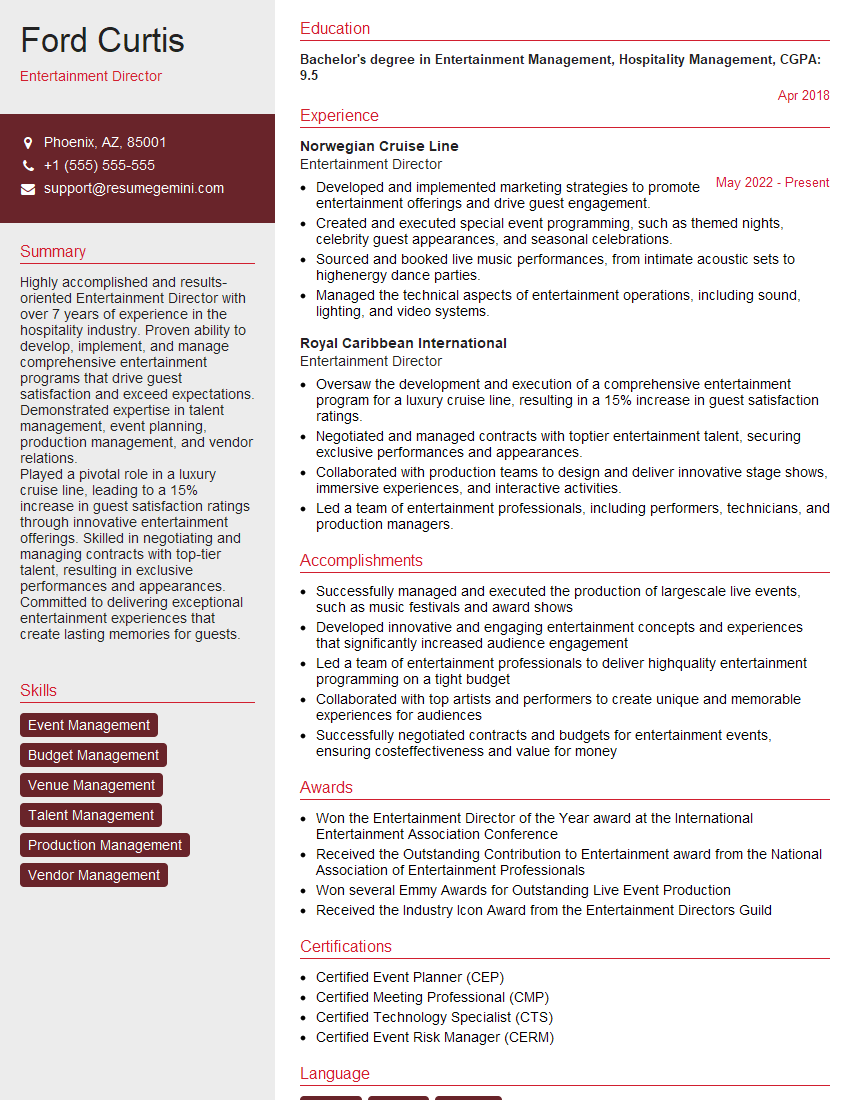
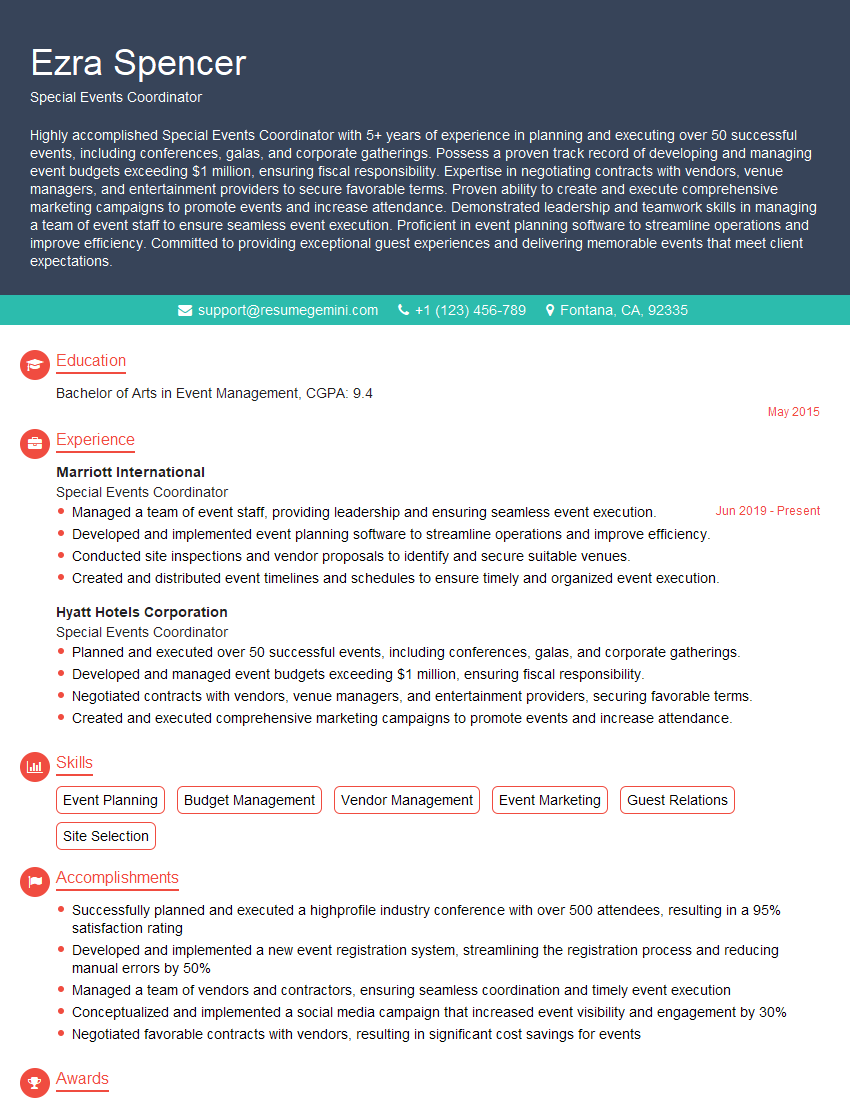
Mastering the art of performing for special occasions opens doors to a fulfilling and potentially lucrative career. Whether you’re seeking full-time employment or building a freelance business, a strong professional presence is crucial. Creating an ATS-friendly resume is essential to maximizing your job prospects. ResumeGemini is a trusted resource that can help you build a compelling resume that showcases your skills and experience effectively. Examples of resumes tailored specifically to the Performing for Special Occasions field are available to help guide your process.
Explore more articles
Users Rating of Our Blogs
Share Your Experience
We value your feedback! Please rate our content and share your thoughts (optional).
What Readers Say About Our Blog
Very informative content, great job.
good