Feeling uncertain about what to expect in your upcoming interview? We’ve got you covered! This blog highlights the most important Periodization Training interview questions and provides actionable advice to help you stand out as the ideal candidate. Let’s pave the way for your success.
Questions Asked in Periodization Training Interview
Q 1. Define periodization training and its core principles.
Periodization training is a systematic approach to athletic training that involves varying the training load and intensity over time to optimize performance and minimize the risk of injury and overtraining. It’s like planning a long journey – you wouldn’t sprint the entire distance; you’d strategically incorporate periods of rest and varied effort to reach your final destination efficiently and effectively. The core principles revolve around manipulating training variables (volume, intensity, frequency, and type) in a planned manner across different time periods to achieve specific training goals. These principles include progressive overload (gradually increasing training demands), variation (preventing adaptation plateaus), specificity (training relevant to the sport), and periodization (cyclical structuring of training phases).
Q 2. Explain the different models of periodization (linear, non-linear, etc.).
Several periodization models exist, each with its own advantages and disadvantages.
- Linear Periodization: This is the classic model, characterized by a gradual and consistent increase in training intensity over time. For example, an athlete might start with a high-volume, low-intensity phase focusing on building a base, then gradually increase intensity while decreasing volume as they approach competition. It’s straightforward but can be less adaptable to unexpected setbacks.
- Non-linear Periodization (or undulating periodization): This model involves variations in intensity and volume within a microcycle (typically a week). It might involve high-intensity days followed by low-intensity days, providing flexibility and potentially minimizing the risk of overtraining. Think of it as strategically incorporating ‘recovery weeks’ even within a short training block.
- Block Periodization: This model focuses on specific training blocks, each aimed at developing particular athletic qualities. For instance, one block might focus on strength, the next on speed, and the final one on endurance. This approach allows for concentrated efforts on specific needs.
The choice of model depends on the athlete’s characteristics, the sport’s demands, and the time frame available.
Q 3. Describe the phases within a typical periodization cycle.
A typical periodization cycle can be divided into several phases, though the exact names and durations can vary:
- Preparation Phase (Off-Season): This phase focuses on building a base level of fitness. It generally involves high volume, low intensity training, emphasizing general conditioning and skill development. Think of it as laying the foundation for a house.
- First Transition Phase (Pre-Season): This phase bridges the preparation and competition phases. Training volume gradually decreases, while intensity increases. This is the time to refine technique and implement sport-specific drills.
- Competition Phase (In-Season): This phase is focused on peak performance. Training volume is low, and intensity is high, with a focus on maintaining fitness and preventing overtraining.
- Second Transition Phase (Post-Season): This is an active recovery phase, allowing for rest and regeneration. It’s a time for athletes to de-load physically and mentally, promoting long-term health and preventing burnout. Activities might be low-intensity and enjoyable, preventing complete cessation of exercise.
The length of each phase depends on the sport and the individual athlete’s needs.
Q 4. How do you assess an athlete’s current fitness level to design a periodized program?
Assessing an athlete’s current fitness level is crucial for designing an effective periodized program. This involves a multi-faceted approach:
- Fitness Testing: This includes assessments of cardiovascular fitness (e.g., VO2 max testing), muscular strength and endurance (e.g., 1RM testing, repeated sprint tests), flexibility, and agility. These tests provide a baseline to track progress.
- Movement Screening: Analyzing movement patterns helps to identify any biomechanical limitations that might increase injury risk. This helps to adjust the program and ensure proper technique.
- Medical History and Physical Examination: Understanding any pre-existing conditions or injuries is vital for tailoring the program safely and effectively. A thorough medical checkup should always precede the commencement of a training regimen.
- Athlete Input: Gathering information on the athlete’s training history, current lifestyle, nutritional habits, and recovery strategies allows a holistic view of their overall readiness and capacity. This is where the personal connection and understanding of the athlete as an individual is paramount.
The combination of these methods offers a comprehensive picture of the athlete’s fitness status, informing the design of the program to address their strengths and weaknesses.
Q 5. What are the key considerations for designing a periodized program for a specific sport?
Designing a periodized program for a specific sport requires careful consideration of several factors:
- Sport-Specific Demands: The program must reflect the physical and technical demands of the sport. A marathon runner will require a different program than a weightlifter.
- Competition Schedule: The program should be structured to ensure peak performance during important competitions. This might involve tapering down training volume and intensity in the weeks leading up to the event.
- Injury Risk: The program should incorporate strategies to minimize injury risk, such as proper warm-up and cool-down routines and adequate rest. Understanding the injury-prone areas of a given sport is crucial.
- Athlete’s Individual Characteristics: Factors such as age, experience level, training history, and genetics must be taken into account. A highly trained athlete will require a different program than a beginner.
- Training Resources: Accessibility to equipment, facilities, and coaching support affects the design of the program. You can’t plan a program that requires access to a specialized training center if the athlete doesn’t have that access.
A successful program integrates these factors to create a safe and effective training plan that maximizes performance.
Q 6. How do you monitor and adjust a periodized training program based on athlete response?
Monitoring and adjusting a periodized program based on athlete response is essential for optimizing results. This involves regular tracking of:
- Training Load: Monitoring the volume and intensity of training through metrics such as training volume, training stress balance (TSB), and rate of perceived exertion (RPE). These metrics can help detect early signs of overtraining or undertraining.
- Performance Data: Tracking performance in training sessions and competitions provides feedback on the effectiveness of the program. Analyzing performance trends can highlight areas needing adjustments.
- Recovery Indicators: Assessing sleep quality, mood, appetite, and heart rate variability can provide insights into the athlete’s recovery status. These metrics offer an insight into the body’s ability to respond to the stress of training.
- Injury Surveillance: Closely monitoring for any signs of injury allows for early intervention and adjustments to prevent prolonged downtime.
Based on this data, the program can be adjusted by modifying training volume, intensity, or frequency, or by incorporating additional rest days or alternative training methods.
Q 7. Explain the concept of overreaching and overtraining in periodization.
Overreaching and overtraining are related but distinct concepts in periodization.
- Overreaching: This is a short-term state of planned excessive training load, pushing the athlete beyond their usual capacity. It is a planned and temporary state, which eventually leads to adaptation and improved performance. It’s like pushing yourself to complete a challenging workout. It’s temporary and will result in improved performance after sufficient recovery.
- Overtraining: This is a more severe and prolonged state of excessive training that leads to a significant decrease in performance and increased risk of injury, illness, and burnout. It results from a lack of sufficient recovery and often manifests as physical symptoms, including decreased performance, increased resting heart rate, fatigue, and mood disturbances. It’s the house collapsing because the foundation wasn’t strong enough or wasn’t built to handle such stress.
The key difference lies in the duration and severity of the excessive load, and the presence of effective recovery strategies. While overreaching is often a planned part of periodization, overtraining is something to be strictly avoided.
Q 8. How do you incorporate recovery strategies into a periodized training program?
Recovery is not just an afterthought in periodization; it’s a crucial component integrated throughout the entire training process. Think of it as the foundation upon which performance is built. Without adequate recovery, the training stimulus won’t translate into gains, and you risk overtraining and injury.
Incorporating recovery involves several strategies, strategically implemented across different phases. During high-intensity periods (like hypertrophy or strength phases), we prioritize active recovery methods like light cardio, foam rolling, and mobility work, combined with ample sleep. The volume and intensity of active recovery will be adjusted based on the athlete’s response. In less intense periods (like the transition or active recovery phase), we’ll incorporate more passive recovery strategies such as complete rest days, massage, cold water immersion, and sleep optimization.
- Example: A powerlifter might have heavier lifting days followed by active recovery days with light cardio and mobility, then a complete rest day before the next heavy lifting session.
- Example: A marathon runner might incorporate easy runs and cross-training, alongside strategies like compression garments and nutritional supplements to enhance muscle recovery after high-mileage weeks.
The key is to monitor the athlete closely and adapt the recovery strategies based on their individual needs and responses. This might involve adjustments to sleep duration, nutrition, hydration, or the type and volume of active recovery.
Q 9. How do you handle injuries or setbacks within a periodized training plan?
Injuries and setbacks are inevitable in any training program. The beauty of periodization is that it’s designed to be flexible and adaptable. It’s not a rigid framework but rather a roadmap that needs to be adjusted based on unforeseen circumstances.
Handling injuries involves a multi-step approach:
- Immediate action: First, we prioritize the immediate management of the injury, typically involving rest, ice, compression, and elevation (RICE protocol) and consulting with medical professionals.
- Reassessment of the plan: Once the initial acute phase is managed, we reassess the periodized plan. We need to determine the severity and location of the injury, its impact on the training program, and the likely recovery timeframe.
- Modified training: We don’t immediately stop all training. Instead, we often modify the plan to focus on maintaining general fitness and conditioning while allowing the injured area to heal. This might involve substituting exercises, reducing volume or intensity, or temporarily shifting focus to other areas of fitness.
- Gradual return to training: The return to the original plan is a gradual process. We progressively increase volume and intensity, closely monitoring the athlete’s response to ensure they don’t re-injure themselves. This could involve using a deload week or starting with easier variations of the exercises before progressing to the original plan.
The aim is to minimize the disruption caused by the injury and ensure a safe and effective return to full training. This often involves close collaboration between the athlete, coach, and medical personnel.
Q 10. What are the potential downsides or limitations of periodization?
While periodization is a highly effective training methodology, it’s not without potential downsides:
- Complexity: Designing and implementing a well-structured periodized plan requires significant expertise and attention to detail. It’s not a one-size-fits-all approach.
- Time commitment: Periodization is a long-term strategy; results aren’t immediate. Athletes need to commit to the plan over an extended period.
- Risk of burnout: If not carefully managed, high-intensity phases could lead to burnout, both physically and mentally. Regular monitoring and adjustments are necessary.
- Inflexibility: While adaptable, sudden changes or unexpected disruptions (like injuries) can significantly derail a meticulously planned periodization cycle. This requires contingency planning.
- Individual differences: What works well for one athlete might not work for another. Ignoring individual variations can limit the effectiveness of a periodized approach.
Understanding these limitations allows coaches to mitigate the risks. Careful planning, meticulous monitoring, and open communication are key to maximizing the benefits of periodization while minimizing its drawbacks.
Q 11. How do nutritional needs change across different phases of periodization?
Nutritional needs fluctuate considerably across the phases of periodization. The demands placed on the body change, necessitating adjustments to caloric intake, macronutrient ratios (carbohydrates, proteins, and fats), and micronutrient supplementation.
- High-intensity phases (strength, power, hypertrophy): Caloric intake generally increases to support the higher energy demands of training. Protein intake is particularly crucial for muscle growth and repair (around 1.6-2.2g/kg body weight is often recommended). Carbohydrate intake is elevated to replenish glycogen stores and fuel intense training sessions. Healthy fats are essential for hormone production and overall health.
- Low-intensity phases (active recovery, transition): Caloric needs may decrease slightly, reflecting the reduced training volume and intensity. Protein intake remains important for recovery and muscle maintenance, but the overall amount might be slightly lower. The focus shifts towards ensuring adequate hydration and micronutrient intake.
- Competition phase: Nutrition becomes even more strategic. It’s about optimizing energy levels, hydration, and glycogen stores while minimizing digestive distress during competition. Carb-loading techniques may be utilized before major competitions.
It’s important to remember that these are general guidelines. Precise nutritional requirements vary depending on factors such as the athlete’s body composition, training volume, individual metabolism, and sport-specific demands. Working with a registered dietician or sports nutritionist is crucial for personalized guidance.
Q 12. Discuss the importance of individualization in periodization programs.
Individualization is paramount in periodization. Athletes are not clones; they have different strengths, weaknesses, training histories, genetic predispositions, and recovery capacities. A cookie-cutter approach will invariably fail to deliver optimal results.
Individualization involves tailoring the plan to the specific needs and characteristics of each athlete. This involves considering factors such as:
- Training history: Beginners require different programming than seasoned athletes.
- Current fitness level: The starting point influences the initial training volume and intensity.
- Specific goals: Are they training for strength, endurance, hypertrophy, or a combination thereof?
- Injury history: Past injuries influence exercise selection and training volume.
- Personal preferences: Incorporating exercises the athlete enjoys can enhance adherence to the plan.
- Lifestyle factors: Sleep, stress levels, and nutritional habits play a significant role.
Example: A seasoned runner might require a more intense plan with higher mileage compared to a beginner. A strength athlete with a history of back pain might need to avoid certain exercises or reduce the training load.
Individualization makes the periodization plan truly effective and enhances the athlete’s likelihood of achieving their goals safely and efficiently.
Q 13. Explain the role of testing and assessment in monitoring periodization progress.
Testing and assessment are indispensable for monitoring progress and making informed adjustments within a periodization program. It allows us to track progress, identify areas for improvement, and ensure the plan is effective and safe.
Here are some key assessments:
- Strength testing: 1RM (one-rep max) tests for strength gains, assessing strength changes across different phases.
- Power testing: Vertical jump or medicine ball throws to measure power output.
- Endurance testing: VO2 max tests, time trials, or lactate threshold testing to track aerobic capacity.
- Body composition analysis: Tracking body fat percentage, muscle mass, and weight to monitor the effectiveness of training for hypertrophy.
- Movement assessments: Analyzing movement quality to detect potential imbalances or weaknesses that could lead to injury. This could include range of motion assessments and postural analysis.
- Performance tests: Sport-specific tests that measure the athlete’s performance in their chosen activity (e.g., speed tests for sprinters, agility drills for basketball players).
- Subjective measures: Gathering information such as athlete feedback on fatigue levels, perceived exertion, and sleep quality is crucial to consider alongside objective metrics.
Regular testing, spaced strategically throughout the periodized plan, allows for data-driven adjustments. For instance, if strength gains plateau, the training plan might be modified to incorporate different rep ranges or exercises. If an athlete shows signs of fatigue or overtraining, the plan can be adjusted to incorporate more rest or reduced intensity.
Q 14. How do you integrate strength training, conditioning, and skill work into a periodized plan?
Integrating strength training, conditioning, and skill work within a periodized plan requires a systematic approach, prioritizing the specific needs of each phase. It’s not just about adding elements randomly; it’s about optimizing the training load and prioritizing specific adaptations.
- Strength phase: The focus is on developing maximal strength. This involves heavier weights, lower reps, and longer rest periods. Conditioning might involve lower-intensity work to support recovery. Skill work is often de-emphasized but can be maintained at a low volume to avoid skill deterioration.
- Hypertrophy phase: This phase prioritizes muscle growth, using moderate weights, higher reps, and shorter rest periods. Conditioning might include circuit training or metabolic conditioning. Skill work can be integrated, but the emphasis remains on muscle growth.
- Power phase: This phase focuses on developing explosive power using plyometrics, Olympic lifts, and ballistic exercises. Conditioning should be high-intensity, and skill work might be integrated to develop power-related skills (e.g., speed drills for sprinters).
- Endurance phase: The focus shifts to improving aerobic capacity. Training includes higher volume and longer-duration sessions at a lower intensity. Skill work may be highly sport-specific, involving repeated practice of technical elements.
- Active recovery phase: Training volume and intensity are significantly reduced. This is about active recovery and maintenance of fitness levels. Skill work might be included at a low intensity, focusing on technique refinement.
The precise integration of these components depends on the specific sport and individual needs. A well-designed plan ensures that each element contributes to the overall training goals. Effective sequencing and strategic manipulation of volume and intensity across phases are key to success.
Q 15. Describe your experience with different types of periodization programs (e.g., strength/power, endurance).
My experience spans various periodization models, tailoring them to specific athletic goals. For strength/power athletes, I’ve extensively used linear periodization, gradually increasing training intensity and volume over time. This approach works well for building a strong base before peaking for a competition. For example, a weightlifter might start with high volume, low intensity training, progressively reducing volume and increasing intensity as they approach their competition. I’ve also incorporated undulating periodization, varying the training intensity and volume within a week or microcycle, providing stimulus variety and preventing overtraining. For endurance athletes, I favor block periodization, focusing on specific aspects of endurance training (e.g., base building, speed work, race-pace training) in distinct blocks. This allows for targeted improvements in aerobic capacity, lactate threshold, and running economy. I’ve found that non-linear periodization, with its varied intensity and volume distribution across a week or month, is ideal for managing endurance training while mitigating injury risk and maintaining athlete motivation.
Career Expert Tips:
- Ace those interviews! Prepare effectively by reviewing the Top 50 Most Common Interview Questions on ResumeGemini.
- Navigate your job search with confidence! Explore a wide range of Career Tips on ResumeGemini. Learn about common challenges and recommendations to overcome them.
- Craft the perfect resume! Master the Art of Resume Writing with ResumeGemini’s guide. Showcase your unique qualifications and achievements effectively.
- Don’t miss out on holiday savings! Build your dream resume with ResumeGemini’s ATS optimized templates.
Q 16. How do you adapt a periodized plan for athletes at different competition levels?
Adapting periodization for different competition levels hinges on understanding the athlete’s current training status, experience, and competitive goals. Elite athletes typically require more sophisticated programs incorporating advanced periodization models with higher training volumes and intensities. They benefit from detailed analysis of training load and recovery, employing advanced methods such as daily monitoring of heart rate variability and perceived exertion. Recreational athletes, on the other hand, might benefit from simpler linear or undulating models with less intense training. The focus should be on long-term progress and avoiding burnout. For example, an elite marathon runner would have a far more complex training plan with multiple phases, including high-mileage base building, intense speed work, and race-specific training, compared to a recreational runner who may follow a simpler program with less stringent mileage requirements.
Q 17. What are the key indicators that a periodized program is successful?
Success in periodization is not solely measured by competition results but also by multiple indicators throughout the training process. Key indicators include consistent improvements in strength, power, or endurance metrics (e.g., 1RM, VO2 max, lactate threshold) as measured through regular testing. The athlete should show a steady progression in performance across training cycles, along with consistent improvements in their technical skills. Moreover, monitoring for signs of overtraining, such as decreased performance, persistent fatigue, or mood disturbances, is crucial. Absence of significant injuries and the athlete’s consistent adherence to the program also signal success. A positive trend across these parameters suggests the periodization plan is effective. Finally, the athlete’s subjective feedback on their energy levels and motivation is a very useful indicator.
Q 18. How do you handle athlete compliance and adherence to a periodized plan?
Athlete compliance is paramount. I establish open communication with athletes, explaining the rationale behind each phase of the plan and addressing any concerns. This involves clear goal setting, joint development of the training plan, and regular check-ins to monitor progress and discuss adjustments. I employ various strategies like personalized feedback, regular progress reports that visually demonstrate their development, and incorporating athlete preferences into the plan whenever feasible. For example, if an athlete strongly prefers morning workouts, I’ll prioritize scheduling workouts during that time. Building a strong coach-athlete relationship fosters trust and commitment, which significantly enhances adherence. Sometimes, it’s about creatively adjusting the plan without compromising the overarching periodization framework.
Q 19. Explain the role of technology (e.g., wearables, analytics) in periodized training.
Technology plays a vital role in optimizing periodization. Wearables such as GPS watches and heart rate monitors provide objective data on training load, sleep patterns, and recovery. This data allows for individualized adjustments to the training plan based on real-time feedback. Analytics software can analyze large datasets to identify trends and patterns, helping predict potential injuries or periods of overtraining. For instance, if an athlete consistently shows elevated heart rate variability and poor sleep quality, we might adjust their training volume and intensity to allow for better recovery. Moreover, GPS data can provide information about pace, distance, and training intensity, allowing me to fine-tune the plan based on how the athlete responds to different training stimuli.
Q 20. Describe your experience with specific software used to program periodized training.
I have experience with various software programs for periodized training, including TrainingPeaks, FinalSurge, and WKO5. These platforms offer features like automated workout generation, personalized training plans, and data analysis tools. TrainingPeaks excels in its ease of use and extensive community features. FinalSurge provides more advanced customization options for creating highly tailored plans. WKO5 offers deep power analysis metrics, especially beneficial for cycling and running coaches. My choice of software depends on the specific needs of the athlete and the sport. Each offers unique strengths, and familiarity with a particular program often develops based on the specific requirements of the athlete’s sport and training goals.
Q 21. How do you adjust periodization for athletes in different age groups or experience levels?
Periodization adjustments for different age groups and experience levels are crucial. Younger athletes are generally more resilient and have greater recovery capacity, allowing for higher training volumes and intensities. However, it is critical to prioritize their long-term development, and to avoid overtraining, safeguarding their physical and mental health. Older athletes or those with less experience require more emphasis on injury prevention and gradual progression. They need more recovery time between training sessions and may need adaptations to their workouts to address any existing physical limitations. Program design should consider the unique physiological and psychological characteristics of each age group and experience level, carefully progressing the training intensity and volume over time.
Q 22. Explain the difference between macrocycles, mesocycles, and microcycles.
Periodization is essentially a strategic, systematic approach to training, breaking down a long-term plan into smaller, manageable units. Think of it like building a house – you wouldn’t just throw up all the materials at once; you’d have phases for laying the foundation, framing, roofing, etc. These phases in training are called macrocycles, mesocycles, and microcycles.
- Macrocycle: This is the longest phase, often spanning an entire year and aligned with the overarching goal, such as qualifying for the Olympics or winning a national championship. It’s the big picture, encompassing all the preparatory, competitive, and transition phases.
- Mesocycle: This is a shorter phase, typically lasting several weeks to a few months, and represents a distinct training block within the macrocycle. For example, a mesocycle might focus on strength development or speed endurance. Several mesocycles make up a macrocycle.
- Microcycle: This is the shortest phase, usually a week or less. It details the daily or weekly training schedule within a mesocycle. It provides the specific workouts, intensities, and volumes for each day.
Example: A marathon runner’s macrocycle might be a year leading up to the race. Within that, a mesocycle could be a 12-week block focused on increasing mileage. Finally, a microcycle might be a week with specific workouts including easy runs, interval training, and rest days.
Q 23. How do you communicate your periodization plan effectively to an athlete?
Effective communication is vital. I start by involving the athlete in the process. It’s not just *my* plan; it’s *our* plan. I use clear, concise language, avoiding jargon. I explain the rationale behind each phase, highlighting the ‘why’ behind the training demands. I use visual aids like charts or calendars to show the overall structure and progression of the program. This allows the athlete to visualize the bigger picture and understand their role in achieving the overall goals. Regular check-ins, monitoring progress, and making adjustments based on feedback are crucial. Open communication channels ensure any concerns or challenges are addressed promptly.
For example, I might use a simple calendar showing the weekly workout schedule, highlighting key training sessions and recovery periods. I would also include clear explanations of the training stimuli to manage expectations – for example, the week focusing on high-intensity interval training leading into a taper week. Crucially, I explain how each training block contributes to the overall goal.
Q 24. What are the ethical considerations in periodization training?
Ethical considerations in periodization training are paramount. The athlete’s well-being always comes first. This includes:
- Avoiding overtraining: Pushing an athlete beyond their physical and psychological limits can lead to injuries, burnout, and long-term health problems. Careful monitoring of training load, recovery, and psychological state is crucial.
- Respecting individual needs: Periodization plans must be individualized. What works for one athlete might not work for another. This necessitates a thorough assessment of the athlete’s physical capabilities, training history, and personal circumstances.
- Transparency and informed consent: The athlete should understand the plan, its risks and benefits, and have the right to withdraw or modify it at any time. Honesty and open communication are key.
- Using safe and appropriate training methods: The plan should only incorporate evidence-based methods, avoiding potentially harmful practices. Staying updated on current research is vital.
- Avoiding doping and performance-enhancing substances: Ethical training promotes natural athletic development, rejecting shortcuts that compromise the athlete’s integrity and health.
Q 25. How do you stay updated on current research and best practices in periodization?
Staying current is crucial. I regularly read peer-reviewed journals like the Journal of Strength and Conditioning Research and Medicine & Science in Sports & Exercise. I attend conferences and workshops related to sports science and strength and conditioning. Networking with other professionals in the field, participating in online forums and communities, and following key researchers on social media are also valuable strategies. Furthermore, I continually evaluate the effectiveness of my programs and adapt my approach based on the latest evidence. This ensures that I’m always implementing the safest and most effective periodization techniques for my athletes.
Q 26. Describe a time you had to modify a periodization plan due to unforeseen circumstances.
I once worked with a cyclist preparing for a major national race. Three weeks before the event, he suffered a minor knee injury during a training session. The original plan included a high-intensity block. I had to immediately modify the plan, reducing the intensity and volume of training to allow for proper healing. We incorporated more cross-training activities like swimming and cycling on an indoor trainer to maintain fitness without stressing the knee. We also adjusted his nutrition and sleep strategies to promote recovery. Thankfully, the modified plan worked well. He competed in the race and performed admirably despite the setback, showcasing the importance of flexibility and adaptability in periodized training.
Q 27. What are your strengths and weaknesses when it comes to designing and implementing periodized training programs?
Strengths: I possess a strong foundation in exercise physiology, biomechanics, and sports psychology. I excel at designing individualized periodization plans based on thorough athlete assessments and goal-setting discussions. I’m adept at adapting programs to unexpected circumstances, such as injuries or illness. My communication skills enable me to clearly convey training plans and build strong rapport with athletes.
Weaknesses: Like any professional, I’m always striving for improvement. One area I’m continuously working on is further enhancing my expertise in using advanced technology for monitoring athlete performance. Analyzing large datasets to further personalize training plans and make even finer adjustments is a skill I’m actively developing. Additionally, managing multiple athletes with diverse needs simultaneously presents a challenge, requiring effective time management and organizational skills.
Key Topics to Learn for Periodization Training Interview
- Fundamentals of Periodization: Understanding the core principles of periodization, including the macrocycle, mesocycle, and microcycle structures. Be prepared to discuss the rationale behind planned variations in training volume, intensity, and specificity.
- Linear vs. Non-Linear Periodization: Compare and contrast these approaches, highlighting their strengths and weaknesses in different training contexts. Discuss practical application examples for various athlete populations or fitness goals.
- Program Design and Implementation: Demonstrate your ability to design periodization plans, considering factors like athlete assessment, training goals, recovery strategies, and potential injury prevention. Be ready to discuss the process of monitoring and adjusting training programs based on athlete response.
- Specific Periodization Models: Explore different models like block periodization, undulating periodization, and conjugate periodization. Explain how the selection of a specific model depends on the athlete’s characteristics and training objectives.
- Overtraining and Recovery Strategies: Discuss the signs and symptoms of overtraining and how periodization plays a crucial role in preventing it. Be prepared to describe effective recovery methods and their integration into a periodization plan.
- Adaptation and Individualization: Explain the importance of tailoring periodization plans to individual athletes based on their needs, strengths, weaknesses, and responses to training. Highlight the principles of individualization and the process of monitoring progress.
- Advanced Periodization Concepts: Explore more nuanced aspects such as periodization for specific sports or populations (e.g., youth athletes, masters athletes), the integration of strength training and conditioning, and the role of technology in monitoring training progress.
Next Steps
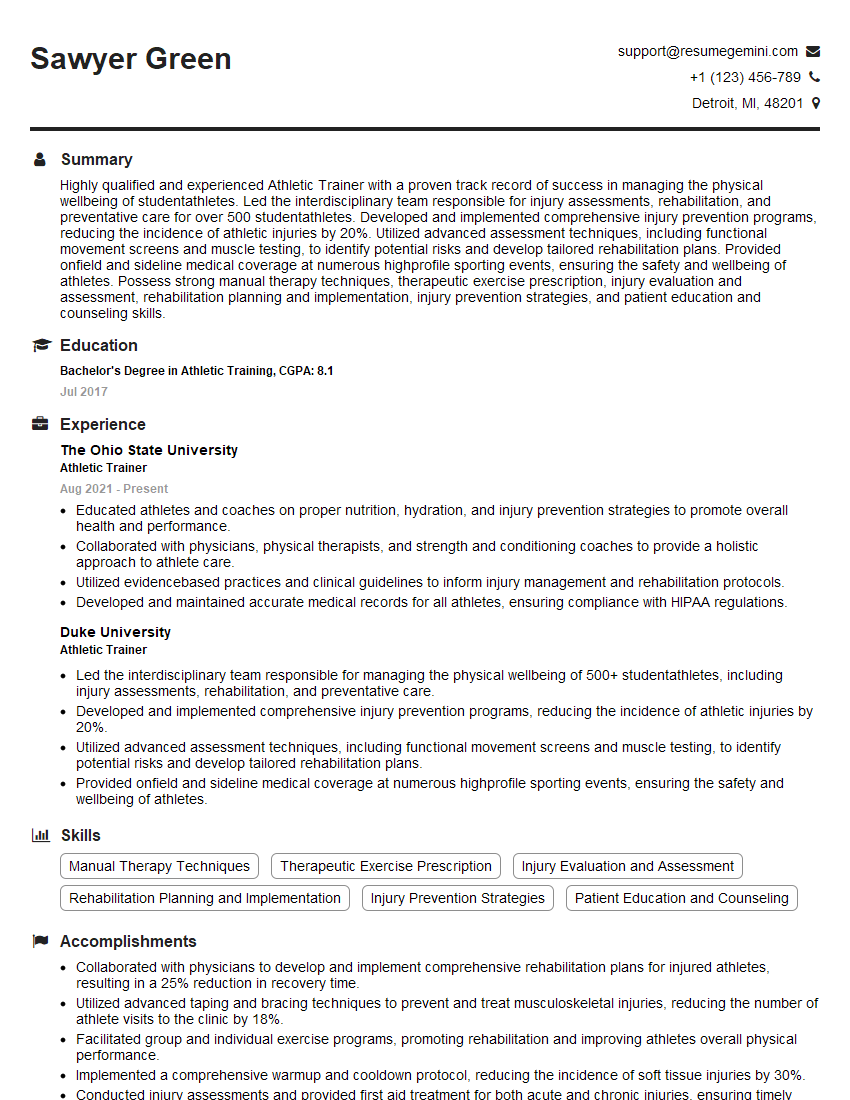
Mastering Periodization Training significantly enhances your value as a strength and conditioning professional or coach, opening doors to more challenging and rewarding roles. To maximize your job prospects, creating an ATS-friendly resume is crucial. ResumeGemini is a trusted resource that can help you build a professional and impactful resume, designed to get noticed. Examples of resumes tailored specifically to Periodization Training are available to guide you through the process. Invest the time to craft a compelling resume that showcases your expertise – it’s a key step in securing your dream role.




Explore more articles
Users Rating of Our Blogs
Share Your Experience
We value your feedback! Please rate our content and share your thoughts (optional).
What Readers Say About Our Blog
Very informative content, great job.
good