Every successful interview starts with knowing what to expect. In this blog, we’ll take you through the top Personal Assistant interview questions, breaking them down with expert tips to help you deliver impactful answers. Step into your next interview fully prepared and ready to succeed.
Questions Asked in Personal Assistant Interview
Q 1. Describe your experience managing complex calendars and scheduling meetings.
Managing complex calendars and scheduling meetings requires a meticulous approach and a deep understanding of time management principles. My experience involves not just booking meetings but strategically optimizing schedules to maximize efficiency and minimize conflicts. This includes considering time zones, individual preferences, and the urgency of appointments.
For instance, I’ve managed executives’ calendars involving multiple time zones, coordinating international conferences with attendees spread across continents. I leverage calendar software like Google Calendar and Outlook Calendar to their fullest extent, utilizing features such as recurring events, reminders, and shared calendars. I’m adept at identifying potential scheduling conflicts and proactively suggesting alternative times to ensure smooth operations. I also prioritize urgent meetings and incorporate buffer time between appointments to account for unexpected delays or travel time.
Furthermore, I’m skilled in utilizing various meeting scheduling tools and integrating them with communication platforms to ensure seamless invitations and reminders are sent to all participants. This ensures smooth meeting preparation for the executive and all attendees.
Q 2. How do you prioritize tasks and manage competing deadlines?
Prioritizing tasks and managing competing deadlines involves a structured approach, combining strategic planning with adaptable execution. I typically utilize a prioritization matrix (like the Eisenhower Matrix – Urgent/Important) to categorize tasks. This allows me to focus on high-impact, urgent items first, while strategically scheduling less urgent but important tasks.
For example, if a critical presentation is due tomorrow and a less urgent report is due next week, the presentation preparation takes precedence. I use project management tools, such as Asana or Trello, to visually track progress, deadlines, and dependencies between tasks. Regular reviews of the task list ensure deadlines are met and adjustments can be made proactively if unexpected delays occur. Clear and open communication with the executive is vital to manage expectations and keep them informed of any potential roadblocks or adjustments to the schedule.
Q 3. What software and technologies are you proficient in (e.g., Microsoft Office Suite, CRM software)?
My proficiency spans a wide range of software and technologies crucial for effective personal assistant duties. I am highly proficient in the Microsoft Office Suite (Word, Excel, PowerPoint, Outlook), leveraging advanced features like VBA scripting for automation in Excel where appropriate. I’m also experienced with various CRM software (Salesforce, HubSpot), project management tools (Asana, Trello, Monday.com), and communication platforms (Slack, Microsoft Teams). Furthermore, I’m comfortable working with calendar applications like Google Calendar and Outlook Calendar, and proficient in using various travel booking platforms.
In addition to these software packages, I have experience using document management systems and database tools to efficiently manage and retrieve information. My technical skills extend to basic web development, enabling me to quickly troubleshoot or create simple solutions to streamline processes.
Q 4. Explain your experience with travel arrangements (flights, hotels, visas).
My experience with travel arrangements is comprehensive, covering the entire process from initial planning to post-trip expense reports. This includes booking flights and hotels using various online travel agencies (OTAs) and corporate travel management systems, ensuring the best value and adhering to company travel policies. I’m also proficient in researching visa requirements, preparing necessary documentation, and coordinating with embassies or consulates as needed.
For instance, I’ve organized international trips for executives, securing optimal flight itineraries considering connecting times and preferred airlines, and booking accommodations matching their comfort level and budget. I meticulously track itinerary details, confirming bookings and providing the executive with a comprehensive travel schedule in advance. I’m equally comfortable working with premium and budget options, adapting to the needs and preferences of the executive.
Q 5. How do you handle confidential information?
Handling confidential information is paramount in my role. I adhere strictly to established confidentiality protocols and company policies. This includes understanding and applying data privacy regulations, such as GDPR and CCPA. Access to sensitive information is limited to a need-to-know basis, and I use secure password management practices and encryption tools when appropriate. All electronic devices and files containing confidential information are secured using strong passwords and regularly updated anti-virus software.
Furthermore, I maintain a high level of discretion in both verbal and written communication, never disclosing confidential information to unauthorized individuals. I document all actions relating to sensitive data in accordance with company policies and I am fully aware of potential security risks and take appropriate measures to mitigate them.
Q 6. Describe your experience with expense reports and budgeting.
My experience with expense reports and budgeting involves meticulous record-keeping and adherence to company policies. I maintain detailed records of all expenses, ensuring accurate documentation, including receipts and invoices. I utilize expense management software to streamline the process and ensure compliance with company guidelines. I’m proficient in generating accurate and timely expense reports, and I can also assist in budget tracking and forecasting.
For example, I’ve managed large expense reports for international trips, ensuring all entries are correctly categorized and supported by necessary documentation. I understand the nuances of different expense reimbursement systems and can adapt to various company policies efficiently and accurately.
Q 7. How do you proactively anticipate the needs of your executive?
Proactively anticipating the needs of my executive involves a combination of observation, effective communication, and thorough understanding of their priorities. I pay close attention to their daily routines, upcoming meetings, and ongoing projects to identify potential needs before they arise. I actively listen to conversations, noting recurring tasks or challenges that may require my assistance.
For example, if I notice the executive frequently travels to a particular city, I might proactively research suitable hotels and transportation options, or prepare a travel checklist to streamline the next trip. By staying informed about their schedule and priorities, I can anticipate potential obstacles and suggest solutions proactively, improving efficiency and reducing stress. Regular communication channels allow me to check in with my executive and anticipate any potential needs or changes in priority.
Q 8. How do you handle difficult or demanding clients/bosses?
Handling demanding clients or bosses requires a blend of professionalism, empathy, and assertive communication. It’s not about being a pushover, but rather about understanding their needs and finding solutions while maintaining boundaries. My approach involves active listening to understand the source of their frustration, clarifying expectations, and offering realistic solutions.
For instance, if a boss is stressed due to a tight deadline, I wouldn’t simply say ‘it’s impossible’. Instead, I’d offer alternatives such as prioritizing tasks, delegating responsibilities (if appropriate), or suggesting a revised timeline after carefully evaluating the workload. I’d also proactively anticipate potential issues and suggest preventative measures. Ultimately, maintaining a calm and professional demeanor, even under pressure, is crucial. I find that a collaborative approach, where I actively involve them in finding solutions, often leads to better outcomes and a stronger working relationship.
Q 9. What is your experience with minute-taking and record-keeping?
Minute-taking and record-keeping are essential for efficient workflow and accountability. My experience encompasses various formats, from traditional note-taking to utilizing digital tools for better organization and searchability. I’m proficient in using software like OneNote, Google Docs, and even specialized transcription software depending on the context.
In my previous role, I was responsible for recording detailed minutes of board meetings, ensuring accurate capture of key decisions, action items, and deadlines. I created a standardized template to ensure consistency and easy retrieval of information. I also maintained a central repository for all meeting records, making it easily accessible to participants. I am meticulous in ensuring accuracy, employing proofreading techniques and verifying information with attendees when necessary. I also understand the importance of confidentiality and ensure that sensitive information is handled appropriately.
Q 10. How do you manage email correspondence efficiently?
Efficient email management is critical for productivity. My approach involves a combination of proactive filtering, organization, and prompt responses. I utilize filters and folders to categorize emails based on priority, sender, and subject matter. This allows for quick identification and processing of urgent emails.
I prioritize responding to emails promptly, aiming for same-day responses whenever possible. For complex queries that require extensive research, I acknowledge receipt and provide an estimated timeframe for a detailed response. I also utilize email templates for frequently recurring queries, saving time and ensuring consistency. Regularly clearing my inbox and archiving completed correspondence maintains a clean and organized system. I also leverage email automation tools where applicable to streamline routine tasks.
Q 11. Describe your experience with event planning and coordination.
Event planning and coordination are areas where my organizational skills and attention to detail truly shine. My experience ranges from small team meetings to large-scale conferences. My approach is project-based, involving meticulous planning, budget management, and vendor coordination.
In one instance, I planned a company-wide offsite retreat for over 100 employees. This involved booking venues, managing catering, coordinating travel arrangements, and creating detailed agendas. I developed a comprehensive project timeline with clear milestones and deadlines. Regular progress updates kept everyone informed, and proactive problem-solving prevented unexpected issues. The event was successfully executed within budget and received overwhelmingly positive feedback.
Q 12. How do you handle last-minute changes or unexpected requests?
Handling last-minute changes or unexpected requests requires flexibility, adaptability, and excellent problem-solving skills. My first step is to assess the impact of the change on existing plans. I then prioritize tasks and adjust my schedule accordingly. Communication is key: I promptly inform relevant stakeholders about the change and any potential implications.
For example, if a meeting is unexpectedly canceled, I would immediately reschedule any related tasks, notify participants, and update the calendar. If a speaker cancels at a last minute for an event, I’d immediately explore backup options, contact alternative speakers, or adjust the program to minimize disruption.
Q 13. How do you maintain professional relationships with internal and external stakeholders?
Maintaining professional relationships is paramount to success. I achieve this through clear and consistent communication, respect, and a proactive approach. With internal stakeholders, I maintain open lines of communication, providing regular updates and promptly addressing concerns. With external stakeholders, professionalism and courtesy are key. I am diligent in responding to queries, following up on commitments, and building rapport.
For example, I regularly check in with colleagues to ensure alignment and address potential roadblocks. With clients, I maintain a professional tone and ensure all communications are clear and concise, providing regular updates and proactive solutions to issues. I also strive to understand their perspective and build trust through reliable service.
Q 14. Describe your experience with database management.
My database management experience spans several platforms including Microsoft Access, Excel, and various CRM systems. I am comfortable with data entry, data cleaning, data analysis, and reporting. I understand the importance of data integrity and accuracy.
In a previous role, I managed a client database with over 5000 entries. I implemented a system of data validation to ensure accuracy, developed custom reports for tracking key performance indicators, and automated data entry processes to improve efficiency. I am proficient in using SQL queries for extracting and analyzing data, allowing for the generation of insightful reports.
Q 15. How do you ensure accurate and timely information dissemination?
Ensuring accurate and timely information dissemination is paramount in a Personal Assistant role. It involves a multi-pronged approach focusing on reliable sources, verification processes, and efficient delivery methods.
- Source Verification: I prioritize reputable sources like official websites, established news agencies, and verified experts. I cross-reference information from multiple sources to confirm accuracy before disseminating it. For example, if I need to book travel, I’ll verify flight details on the airline’s website and compare it to information from a reputable travel aggregator.
- Data Validation: I employ fact-checking techniques and utilize tools like Google Scholar or dedicated fact-checking websites to verify claims before sharing them with my principal. This might involve reviewing research papers for a presentation or confirming the accuracy of a statistical claim in a news report.
- Timely Delivery: I use a system of alerts and reminders to ensure information reaches my principal promptly. I’m proficient in using various communication tools—email, instant messaging, and scheduling software—to deliver updates at the most appropriate time. For instance, I might schedule a digest of relevant news articles for my principal to review during their lunch break.
Ultimately, my goal is not just to disseminate information, but to provide my principal with well-vetted, actionable insights, enhancing their decision-making process.
Career Expert Tips:
- Ace those interviews! Prepare effectively by reviewing the Top 50 Most Common Interview Questions on ResumeGemini.
- Navigate your job search with confidence! Explore a wide range of Career Tips on ResumeGemini. Learn about common challenges and recommendations to overcome them.
- Craft the perfect resume! Master the Art of Resume Writing with ResumeGemini’s guide. Showcase your unique qualifications and achievements effectively.
- Don’t miss out on holiday savings! Build your dream resume with ResumeGemini’s ATS optimized templates.
Q 16. What is your approach to problem-solving in a fast-paced environment?
Problem-solving in a fast-paced environment requires a structured approach combined with adaptability. My strategy typically involves:
- Rapid Assessment: I quickly analyze the situation to identify the core problem and its potential impact. For instance, if a critical meeting is about to start and a crucial document is missing, I immediately prioritize locating the document, even exploring alternative solutions like a summary sheet if necessary.
- Prioritization: I assess the urgency and impact of different issues and prioritize tasks accordingly using methods like the Eisenhower Matrix (urgent/important). This helps avoid being overwhelmed and focuses my efforts where they are most impactful.
- Resource Allocation: I effectively utilize available resources—technology, colleagues, or external services—to find the best solution. If I’m struggling to book a difficult flight, I might use a travel agent or a specialized booking tool.
- Flexibility: I am prepared to adapt to unexpected changes and challenges, making use of contingency plans where appropriate. If a meeting is delayed, I will quickly adjust my schedule and tasks to accommodate the change without interrupting workflow.
Ultimately, my approach is proactive and pragmatic. I prioritize quick decision-making while maintaining a calm demeanor, ensuring the best outcome in a high-pressure scenario.
Q 17. How do you maintain confidentiality and discretion?
Confidentiality and discretion are cornerstones of my professional conduct. I treat all sensitive information with the utmost respect and adhere to strict privacy protocols. This includes:
- Secure Information Handling: I use secure communication channels and password-protected files to store and transmit confidential data. I am careful about where I leave documents and always lock my workstation when leaving my desk.
- Need-to-Know Basis: I only share information with individuals who have a legitimate need to know, avoiding casual conversations about sensitive topics.
- Data Protection Policies: I am thoroughly familiar with, and strictly adhere to, my organization’s data protection policies and relevant regulations, such as GDPR or HIPAA (where applicable).
- Professional Demeanor: I maintain a professional and discreet demeanor in all my interactions, both verbal and written, to ensure that private information remains secure and never accidentally disclosed. I avoid gossiping or sharing information with anyone outside of those needing it to do their job.
My commitment to confidentiality is unwavering; it’s an integral part of building and maintaining trust.
Q 18. Describe your experience with preparing presentations and reports.
I have extensive experience in preparing presentations and reports, adapting my approach based on the audience and the objective. My process involves:
- Research and Data Gathering: I thoroughly research the topic, collecting relevant data from reliable sources and organizing it logically. This includes creating outlines and drafting initial content. Example: For a financial report, I collect data from various financial databases and internal systems.
- Content Structuring: I structure the content clearly and concisely, using visual aids like charts and graphs where appropriate. I tailor the style and tone to suit the audience. For instance, a report for a board of directors would require different wording than a progress update for a team meeting.
- Design and Presentation: I am proficient in using presentation software like PowerPoint or Google Slides to create visually appealing presentations. I always practice before delivery to ensure a smooth and confident presentation.
- Feedback and Revision: I always welcome feedback and iterate on drafts to ensure clarity and accuracy. I revise the document based on feedback and ensure it perfectly meets the objectives.
My aim is to deliver clear, engaging, and impactful presentations and reports that effectively communicate the key messages.
Q 19. How do you manage multiple projects simultaneously?
Managing multiple projects simultaneously requires organization and prioritization. My approach combines strategic planning with flexible execution:
- Prioritization Matrix: I use a prioritization matrix, such as the Eisenhower Matrix, to rank tasks based on urgency and importance. This ensures I focus on the most critical tasks first.
- Time Blocking: I allocate specific time blocks for each project, ensuring dedicated time for each task without being constantly interrupted. Using a digital calendar helps with this greatly.
- Project Management Tools: I leverage project management tools such as Asana or Trello to track progress, deadlines, and dependencies across different projects. These tools provide visual representations and accountability features.
- Regular Review and Adjustment: I regularly review my schedule and adjust it as needed. Unexpected delays or urgent tasks may require me to re-prioritize tasks. Flexible scheduling is key.
Proactive planning and continuous monitoring are key to successfully managing multiple projects without compromising quality or deadlines.
Q 20. How do you handle interruptions effectively?
Handling interruptions effectively is crucial for maintaining productivity. My strategy focuses on minimizing disruptions while ensuring responsiveness:
- Designated Focus Time: I set aside dedicated periods for focused work, minimizing distractions during these times. I let others know this time is for concentration unless an emergency arises.
- Prioritized Response: I prioritize responses based on the urgency and importance of the interruption. Trivial matters can wait until my focused work is complete.
- Time Management Techniques: Techniques like the Pomodoro Technique (working in focused bursts with short breaks) help maintain concentration and manage interruptions more effectively.
- Clear Communication: I clearly communicate my availability and preferred methods of contact. This helps manage expectations and minimizes unnecessary interruptions.
The key is to balance responsiveness with dedicated work time to achieve optimal productivity.
Q 21. What are your strategies for staying organized and efficient?
Staying organized and efficient is essential for success. My strategies involve a combination of digital and analog techniques:
- Digital Calendar and Task Management: I rely heavily on digital tools such as calendars (Google Calendar, Outlook Calendar), task management apps (Todoist, Any.do), and note-taking apps (Evernote, OneNote) to schedule tasks, track progress, and manage deadlines.
- Filing System: I maintain a well-organized digital and (when necessary) physical filing system, ensuring easy access to documents and information. This might include dedicated folders for each project or client.
- Regular Decluttering: I regularly declutter my workspace, both physical and digital, to reduce distractions and improve focus. Regularly deleting old emails and unneeded files is crucial.
- Batching Similar Tasks: I group similar tasks together to improve efficiency. For example, I might answer all emails at once instead of responding to them throughout the day.
Combining technology with practical organizational habits helps maintain focus, reduce stress, and ultimately optimize efficiency.
Q 22. Describe your experience with document preparation and formatting.
My experience with document preparation and formatting is extensive. I’m proficient in various software applications, including Microsoft Word, Google Docs, Adobe Acrobat, and LaTeX. I’ve handled a wide range of document types, from simple letters and emails to complex reports, presentations, and legal documents. My approach focuses on ensuring accuracy, consistency, and professional presentation.
For instance, I’ve prepared grant proposals involving meticulous formatting and citation management (using tools like Zotero) to adhere to strict submission guidelines. I also have experience creating visually appealing presentations for client meetings using PowerPoint or Google Slides, incorporating charts, graphs, and multimedia elements to enhance clarity and engagement. My workflow typically involves careful review for grammatical errors and typos, ensuring a polished final product.
I’m adept at using styles and templates to maintain consistency across large documents, and I’m comfortable adapting to various style guides (e.g., APA, MLA, Chicago). My goal is always to produce documents that are not only error-free but also effective in conveying their intended message.
Q 23. What is your experience with customer service and client communication?
Customer service and client communication are paramount in my role. I believe in building strong, positive relationships based on trust and clear communication. I’ve consistently received positive feedback for my responsiveness, empathy, and ability to effectively address client needs. My communication style is adaptable; I can tailor my approach based on the client’s personality and communication preferences.
For example, I’ve successfully managed high-pressure situations by remaining calm, actively listening to the client’s concerns, and offering prompt and effective solutions. This often involves proactive communication, anticipating potential issues and addressing them before they escalate. I’m experienced in using various communication channels, including email, phone, video conferencing, and instant messaging, ensuring efficient and timely communication.
I strive to exceed client expectations by providing personalized service and going the extra mile to ensure satisfaction. Proactive communication and problem-solving are essential components of my approach to fostering positive client relationships.
Q 24. How do you use technology to improve efficiency and productivity?
Technology is integral to improving my efficiency and productivity. I leverage a suite of tools to streamline my workflow and maximize output. For instance, I utilize project management software like Asana or Trello to organize tasks, track deadlines, and collaborate effectively with colleagues. I use calendar applications like Google Calendar to manage my schedule and appointments efficiently, minimizing scheduling conflicts and maximizing available time. Automation tools are also essential. I use automated email responders and scheduling tools to ensure timely responses and efficient appointment scheduling.
Furthermore, I’m proficient in using cloud-based storage and collaboration platforms (e.g., Google Drive, Dropbox) to access and share documents seamlessly across devices. I regularly seek opportunities to learn and incorporate new technologies that can improve my productivity, such as utilizing AI-powered tools for tasks like summarizing documents or generating meeting minutes. My approach to technology is practical and focused on maximizing efficiency while maintaining high-quality output.
Q 25. Describe a time you had to handle a difficult situation with a client or colleague. What was the outcome?
In a previous role, a client experienced significant delays due to unforeseen technical issues impacting a crucial project deadline. The client was understandably frustrated and voiced their concerns aggressively. Instead of reacting defensively, I actively listened to their concerns, acknowledging their frustration and validating their feelings. I then outlined the steps I was taking to resolve the problem, providing realistic timelines and regular updates. I also proactively offered solutions to mitigate any further potential delays, such as offering alternative options to minimize disruption.
The outcome was positive. By demonstrating empathy, transparency, and proactive problem-solving, I managed to de-escalate the situation and maintain a strong relationship with the client. They appreciated my honesty and responsiveness, ultimately understanding the unforeseen circumstances. The experience reinforced the importance of proactive communication, transparency, and empathy in handling challenging client interactions.
Q 26. How do you handle disagreements or conflicts in the workplace?
I approach disagreements and conflicts constructively, prioritizing collaborative problem-solving. My strategy is based on respectful communication, active listening, and a focus on finding mutually beneficial solutions. I believe in understanding the perspectives of all parties involved before offering solutions. This often involves open dialogue and clarifying misunderstandings.
I use a collaborative approach, working with colleagues to identify the root causes of the conflict and exploring various solutions together. If necessary, I’m comfortable seeking mediation from a neutral third party to facilitate the resolution process. My goal is always to maintain positive working relationships while ensuring that issues are addressed fairly and effectively. The focus is always on finding common ground and achieving a positive outcome for everyone involved.
Q 27. Describe your experience with onboarding new employees or clients.
I have significant experience onboarding both new employees and clients. My approach is structured and focuses on providing a smooth and effective transition. For new employees, I develop and deliver comprehensive training materials, covering company policies, procedures, and the use of essential software and tools. This typically includes interactive sessions, hands-on training, and ongoing support. My goal is to empower new employees to become quickly productive and confident in their roles.
With new clients, I focus on establishing clear expectations, outlining the scope of services, and ensuring that they are comfortable with the process. This often involves providing customized training on how to use our systems and services, followed by ongoing support and communication. My goal is to create a positive first impression and foster a long-term successful relationship based on trust and transparency. The success of my onboarding strategies is measured by the efficiency and satisfaction levels of both new employees and clients.
Q 28. What is your salary expectation for this role?
My salary expectation for this role is commensurate with my experience and skills, and aligns with the industry standard for similar positions. I am open to discussing a specific salary range based on the full details of the job description and company compensation structure. I am confident that my skills and experience make me a valuable asset to your team, and I am eager to learn more about this opportunity.
Key Topics to Learn for Personal Assistant Interview
- Executive Support: Understanding the nuances of supporting high-level executives, including anticipating needs and managing complex schedules.
- Communication & Interpersonal Skills: Demonstrating effective verbal and written communication, active listening, and professional etiquette in diverse interactions.
- Organization & Time Management: Mastering calendar management, prioritization techniques, and efficient task delegation to optimize workflow.
- Confidentiality & Discretion: Understanding and upholding the importance of confidentiality in handling sensitive information and maintaining professional boundaries.
- Project Management & Coordination: Experience in planning, organizing, and executing projects, including coordinating meetings, travel arrangements, and other logistical details.
- Technology Proficiency: Demonstrating competency in using relevant software and applications such as Microsoft Office Suite, email management tools, and scheduling software.
- Problem-Solving & Decision-Making: Highlighting your ability to identify and resolve issues proactively, make sound judgments under pressure, and demonstrate resourcefulness.
- Adaptability & Flexibility: Showcasing your ability to adjust to changing priorities, handle multiple tasks simultaneously, and work effectively in a dynamic environment.
- Professional Development: Continuously seeking opportunities to enhance your skills and knowledge through training, workshops, or self-learning initiatives.
Next Steps
Mastering the skills of a Personal Assistant opens doors to rewarding careers with significant growth potential, offering opportunities for advancement and increased responsibility within organizations. An impactful resume is crucial for showcasing your capabilities and securing interviews. Building an ATS-friendly resume is key to getting your application noticed by recruiters. To significantly enhance your resume and increase your chances of landing your dream job, leverage ResumeGemini. ResumeGemini offers a powerful toolset and provides examples of resumes tailored to the Personal Assistant role, enabling you to create a compelling document that highlights your unique strengths and experience.
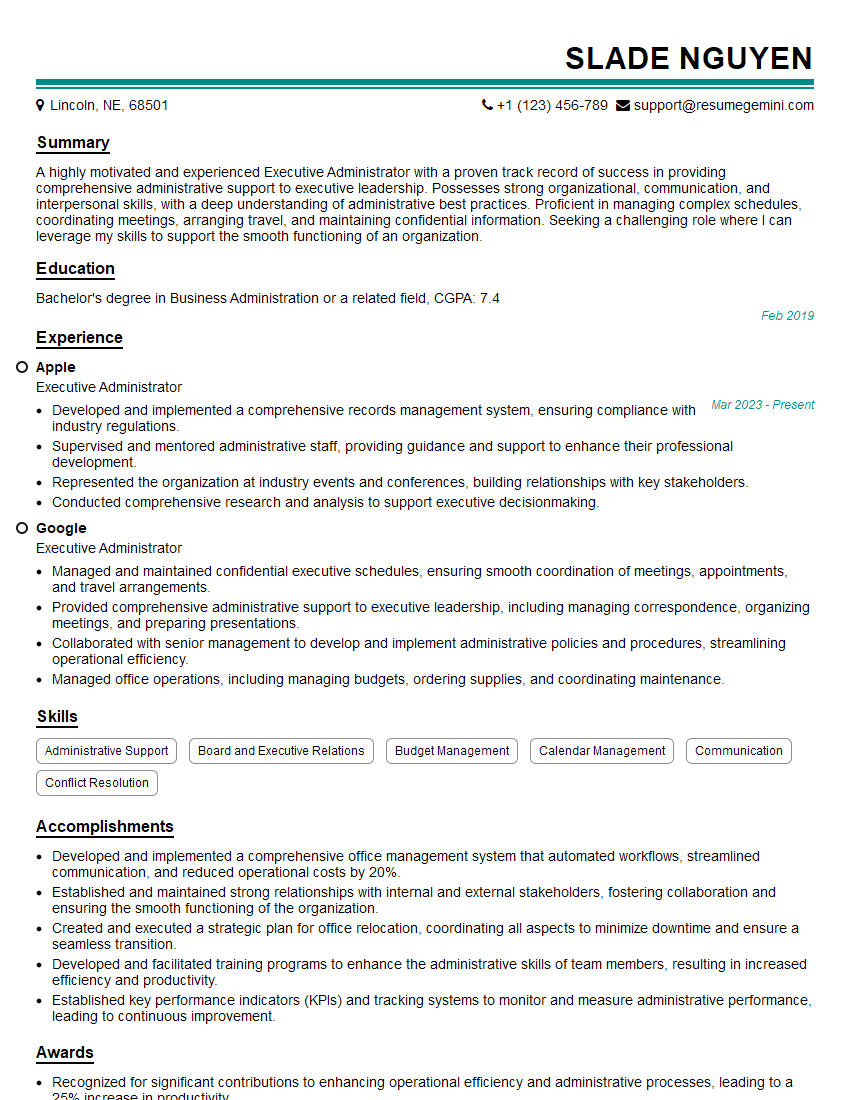
Executive Administrator Resume Sample
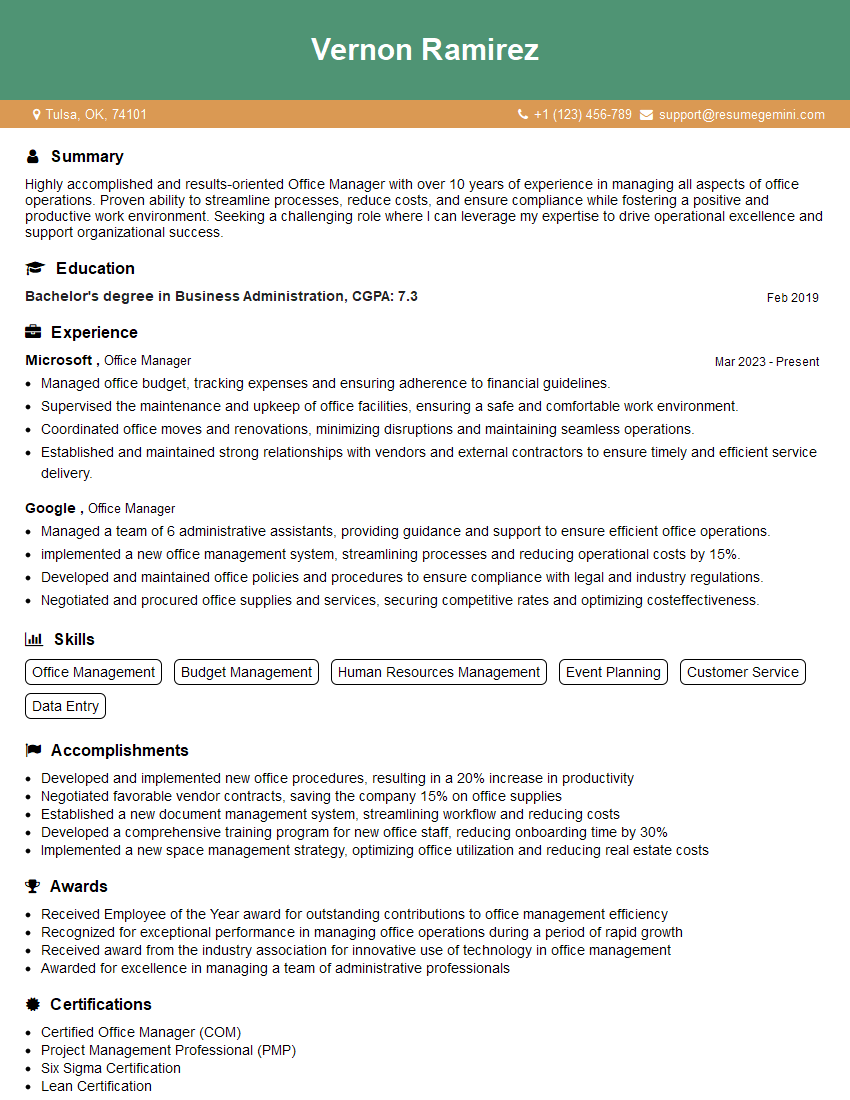
Office Manager Resume Sample
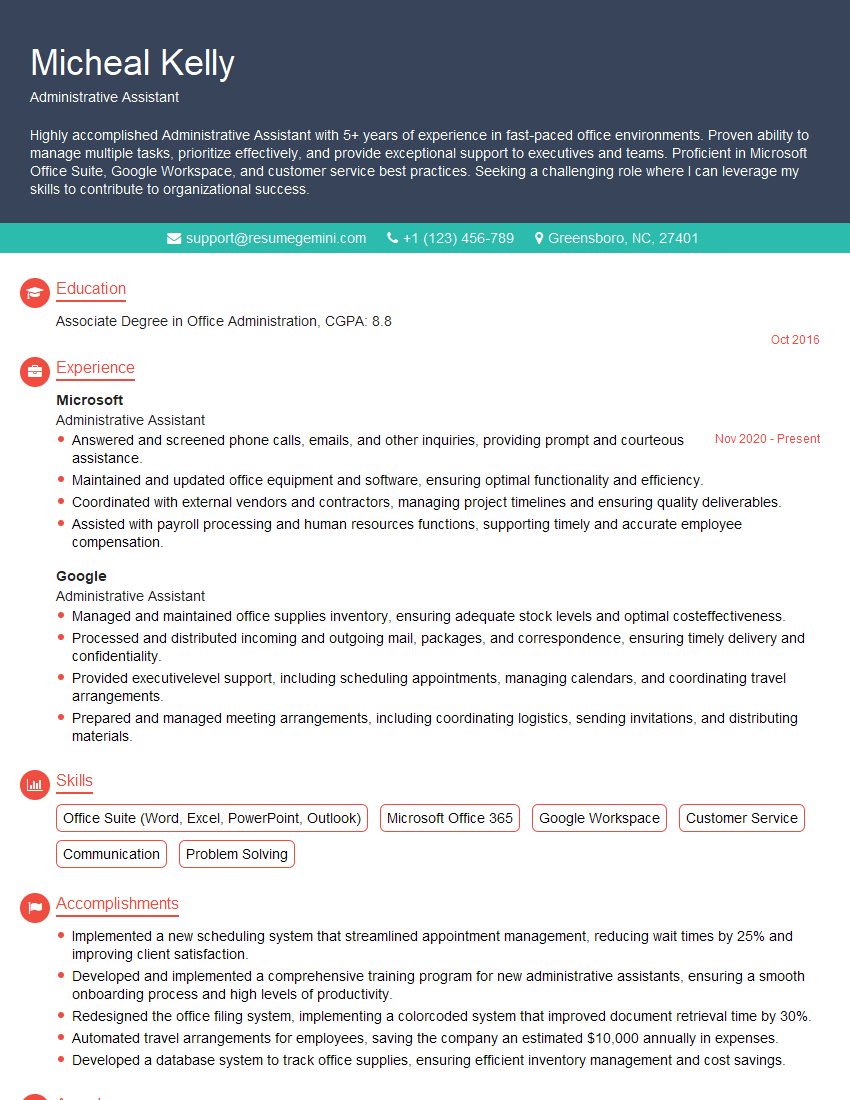
Administrative Assistant Resume Sample
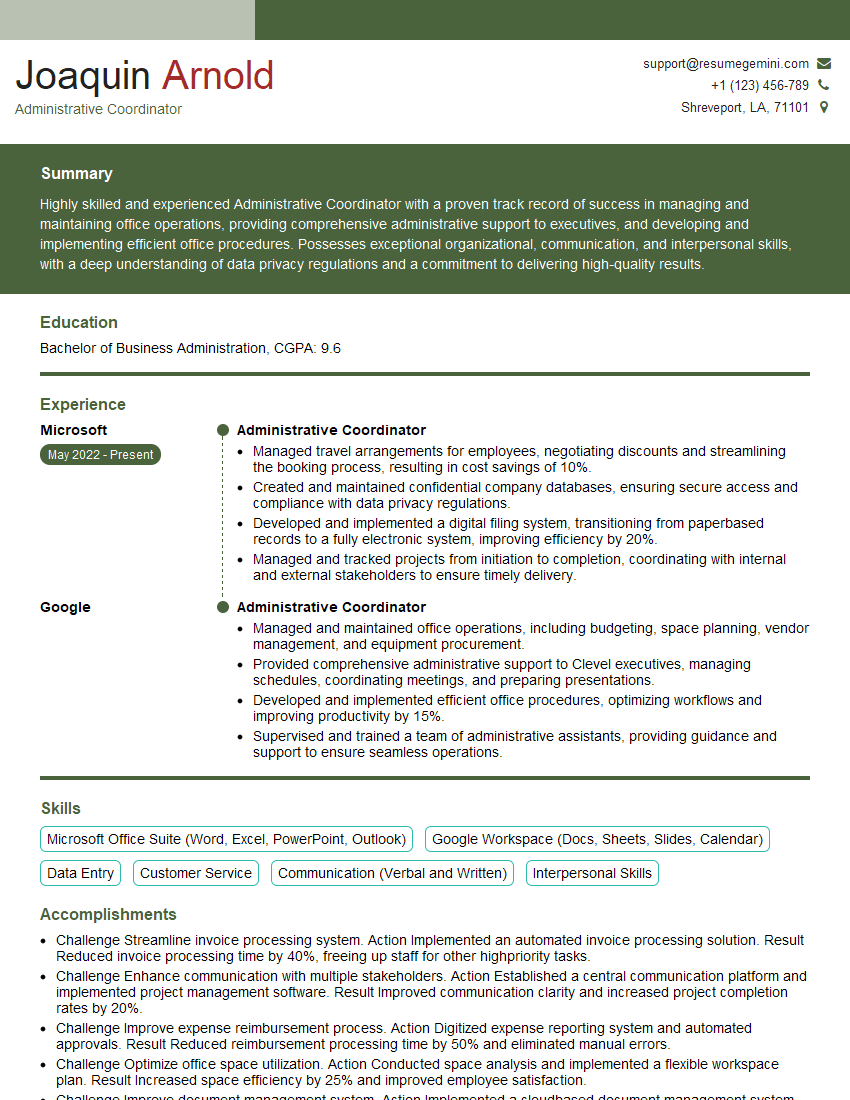
Administrative Coordinator Resume Sample
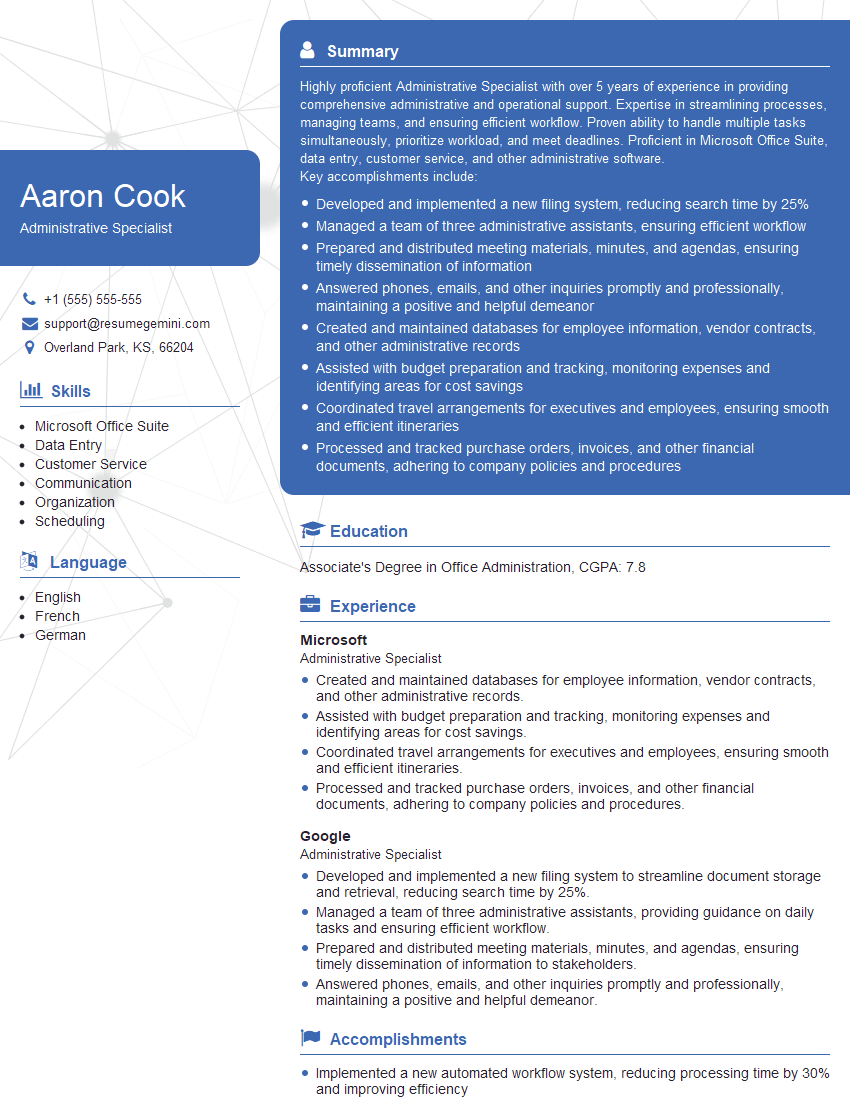
Administrative Specialist Resume Sample
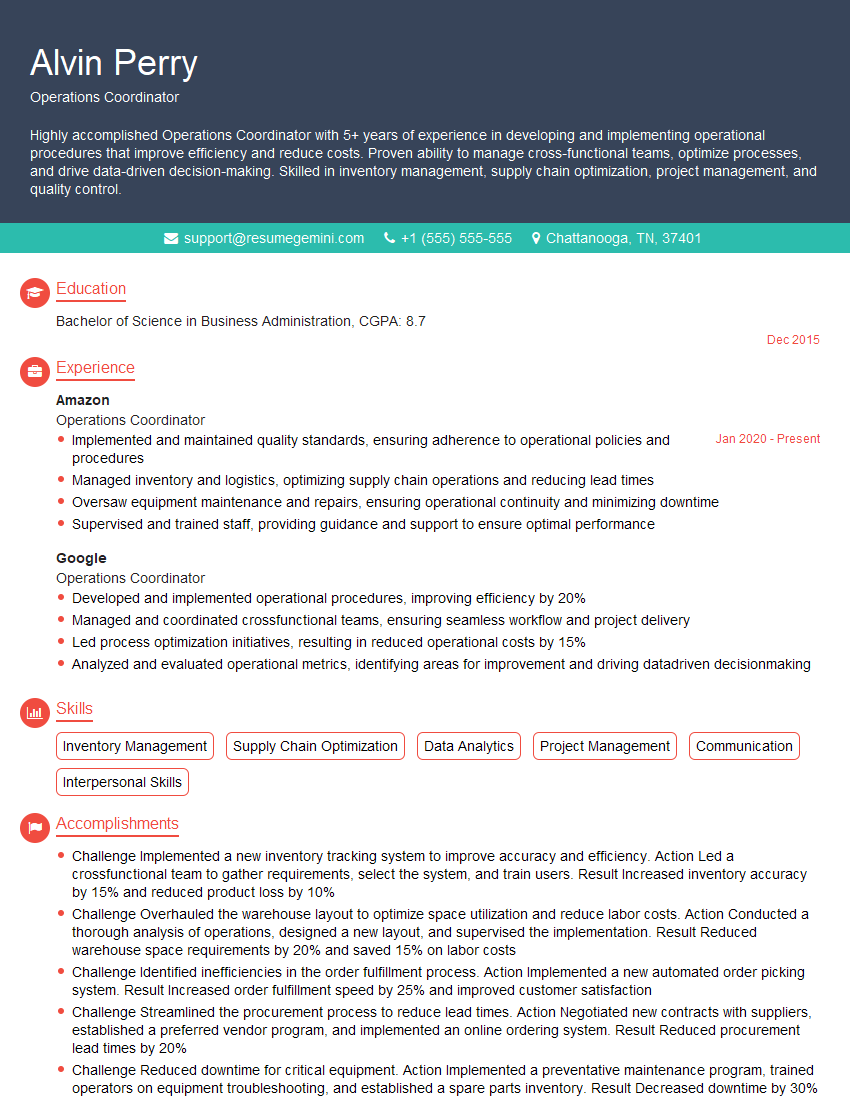
Operations Coordinator Resume Sample
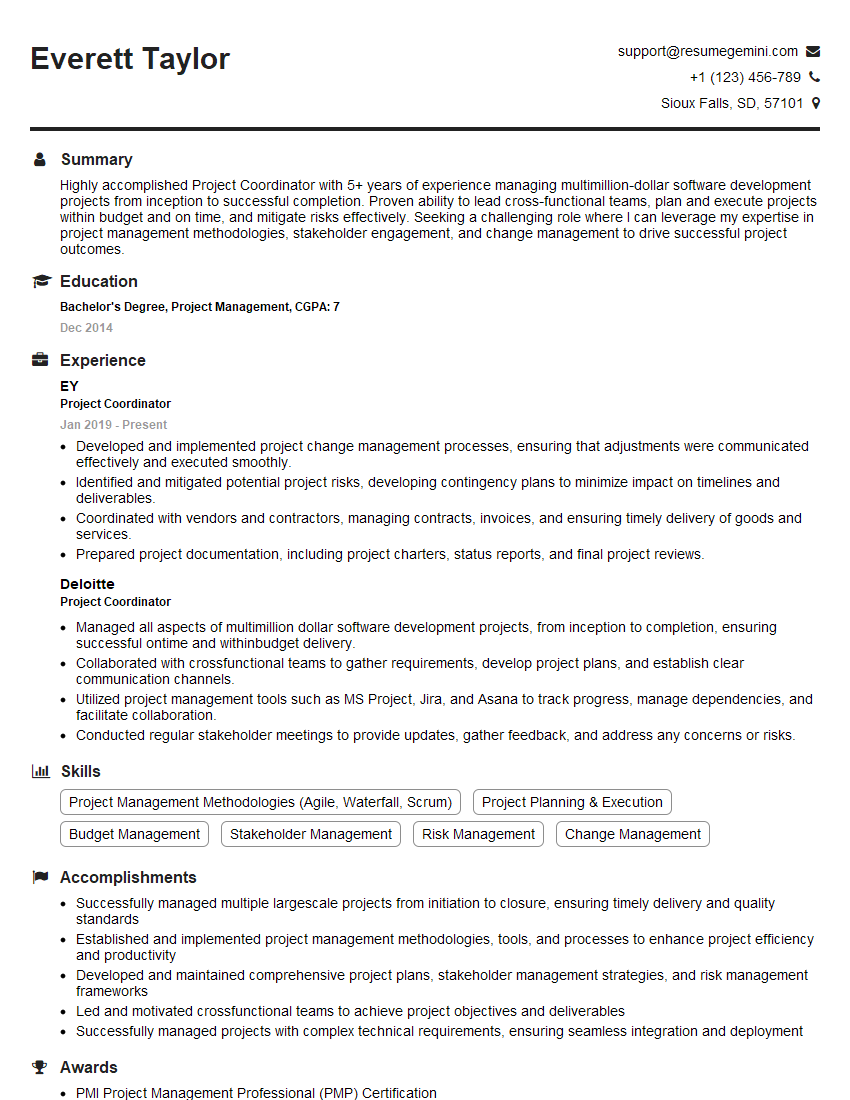
Project Coordinator Resume Sample

Chief of Staff Resume Sample

Scheduling Coordinator Resume Sample

Personal Assistant Resume Sample
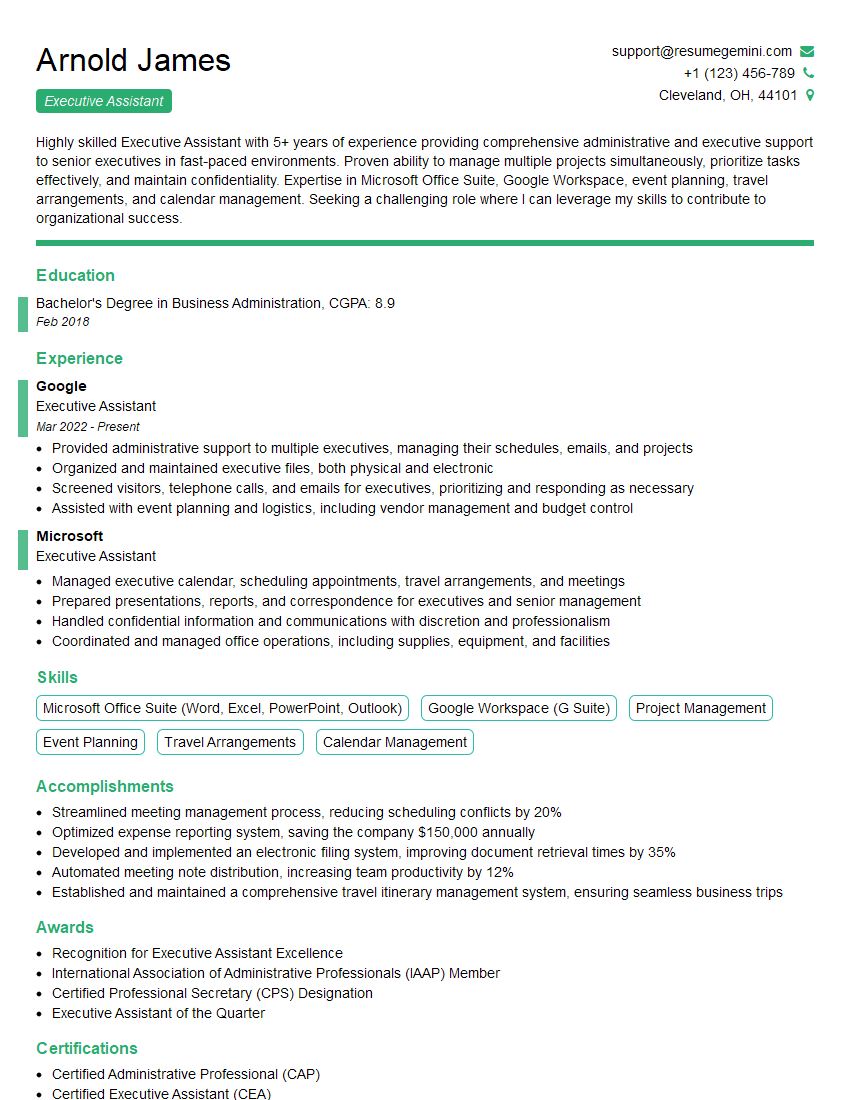
Executive Assistant Resume Sample
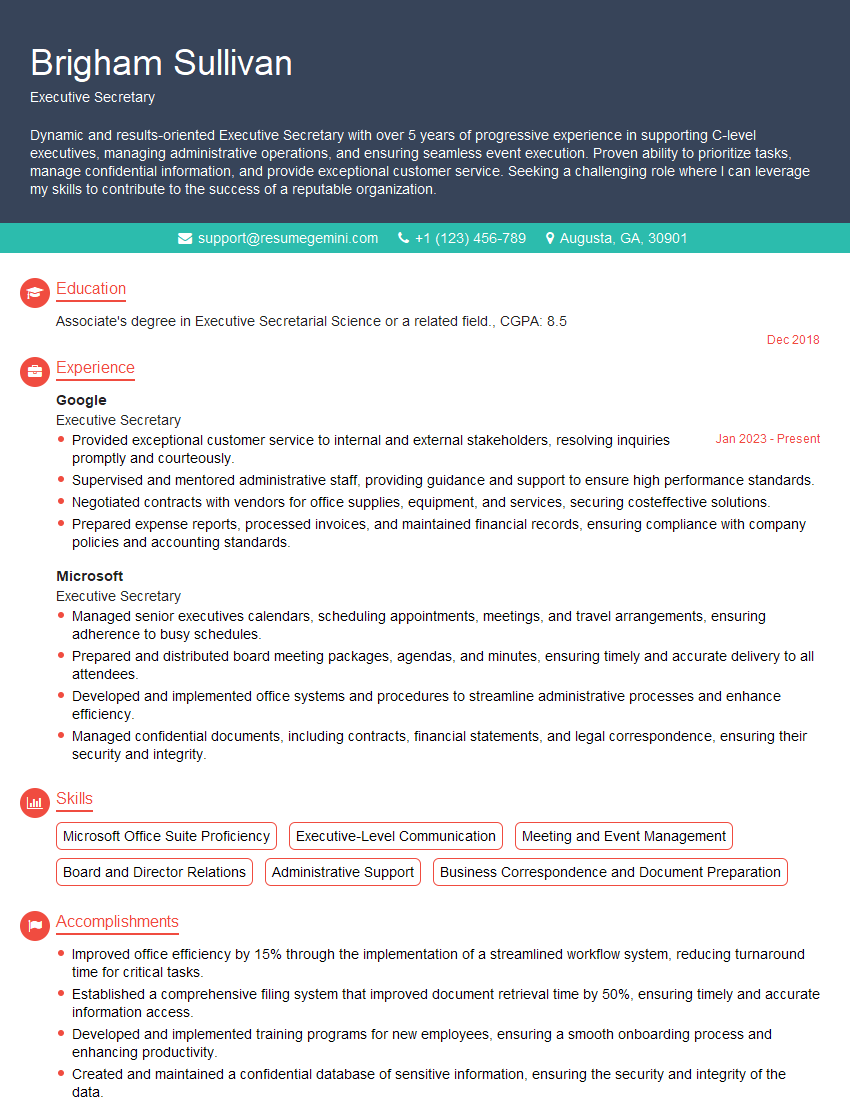
Executive Secretary Resume Sample
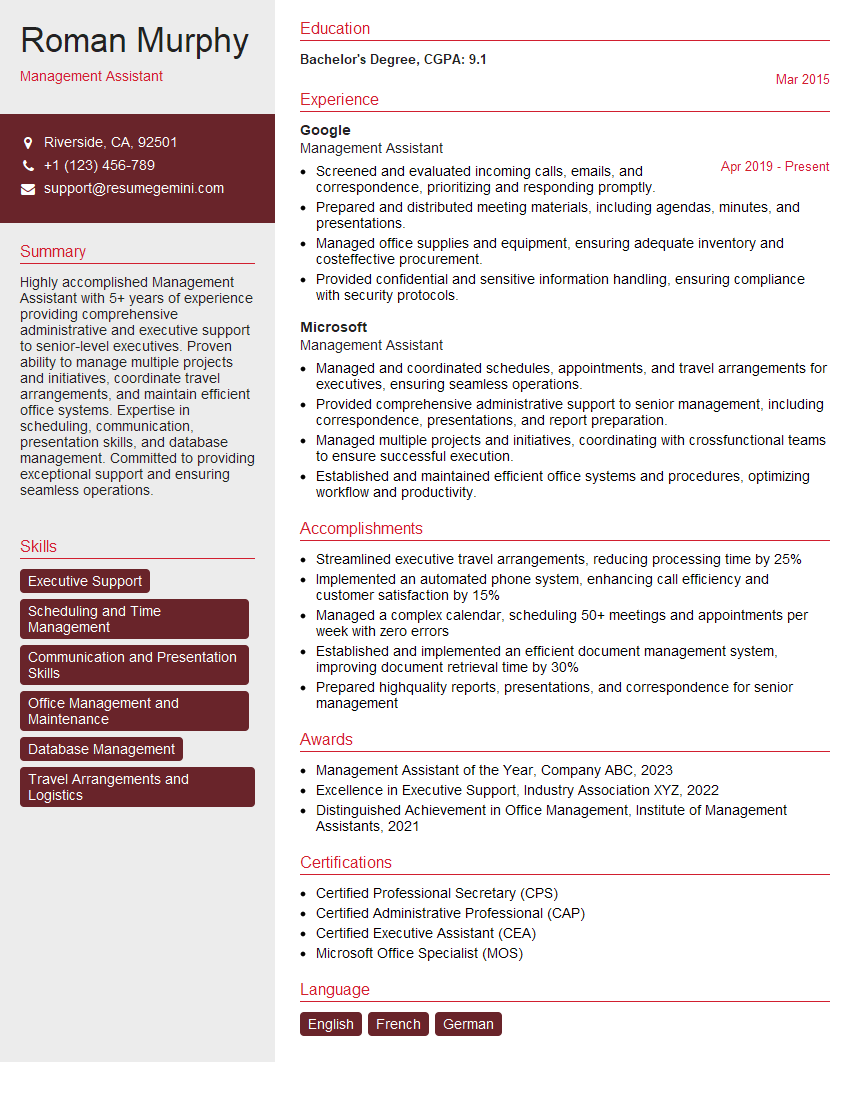
Management Assistant Resume Sample
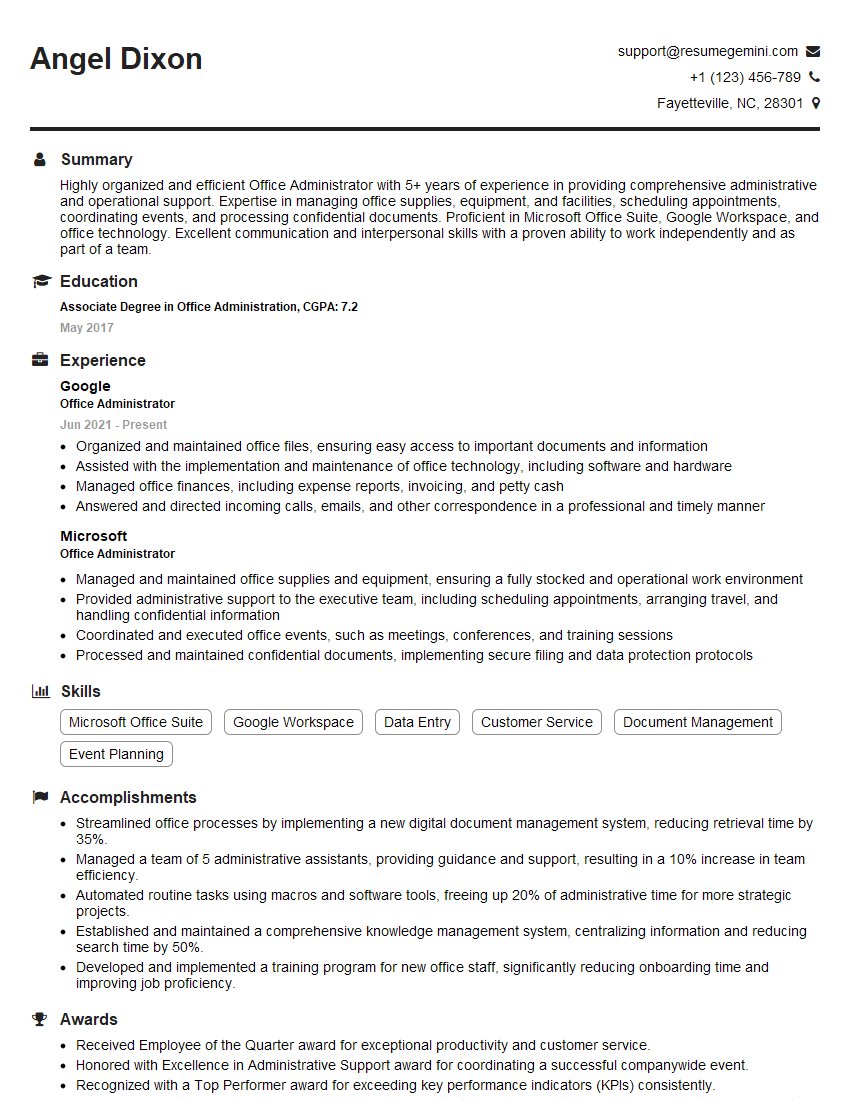
Office Administrator Resume Sample
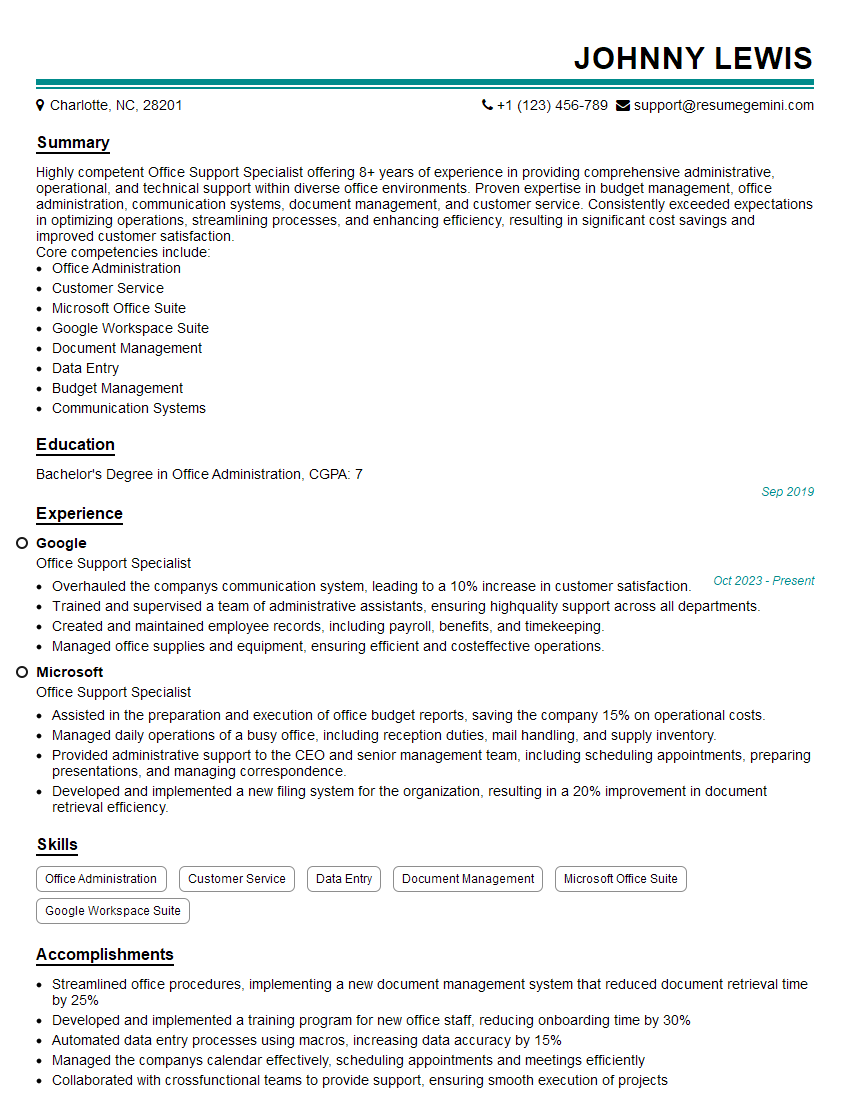
Office Support Specialist Resume Sample
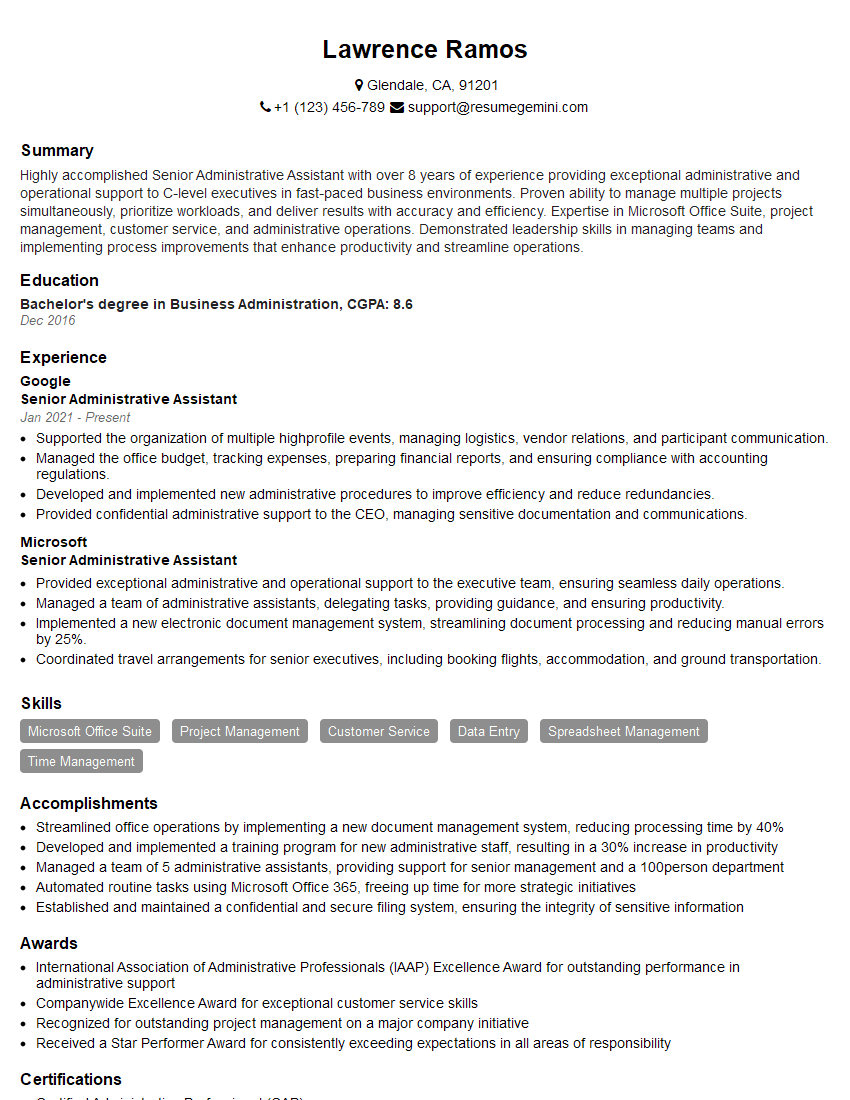
Senior Administrative Assistant Resume Sample
- Executive Administrator
- Office Manager
- Administrative Assistant
- Administrative Coordinator
- Administrative Specialist
- Operations Coordinator
- Project Coordinator
- Chief of Staff
- Scheduling Coordinator
- Personal Assistant
- Executive Assistant
- Executive Secretary
- Management Assistant
- Office Administrator
- Office Support Specialist
- Senior Administrative Assistant
Explore more articles
Users Rating of Our Blogs
Share Your Experience
We value your feedback! Please rate our content and share your thoughts (optional).
What Readers Say About Our Blog
Very informative content, great job.
good