Unlock your full potential by mastering the most common Photovoltaic System Design and Analysis interview questions. This blog offers a deep dive into the critical topics, ensuring you’re not only prepared to answer but to excel. With these insights, you’ll approach your interview with clarity and confidence.
Questions Asked in Photovoltaic System Design and Analysis Interview
Q 1. Explain the difference between monocrystalline, polycrystalline, and thin-film solar cells.
The main difference between monocrystalline, polycrystalline, and thin-film solar cells lies in their silicon crystal structure and manufacturing process, which directly impacts their efficiency and cost.
- Monocrystalline silicon cells: These are made from a single, large silicon crystal, resulting in a uniform structure. This uniformity allows for higher efficiency (typically 18-22%) because electrons can move more freely. They are characterized by their dark, almost black color and are generally more expensive due to the energy-intensive production process. Think of it like a perfectly organized army—all soldiers are uniform and highly efficient.
- Polycrystalline silicon cells: These cells are made from multiple silicon crystals melted together. This results in a less uniform structure with grain boundaries that hinder electron flow, leading to slightly lower efficiency (typically 15-17%) compared to monocrystalline cells. They are usually blue in color and are less expensive to produce. Imagine a less organized army—soldiers are still effective, but their differences cause slight inefficiencies.
- Thin-film solar cells: These cells are made by depositing a thin layer of photovoltaic material onto a substrate, such as glass or plastic. They are known for their flexibility, lightweight nature, and lower manufacturing cost. However, their efficiency is generally lower (typically 8-13%) than crystalline silicon cells. Think of this as a smaller, more flexible fighting squad—they are lightweight and versatile but may not have the raw power of a larger army.
The choice between these cell types depends on the specific project requirements, budget, and aesthetic considerations. For example, a high-efficiency system requiring maximum energy production might choose monocrystalline cells, while a large-scale project with a focus on cost-effectiveness might opt for polycrystalline or thin-film cells.
Q 2. Describe the process of sizing a PV array for a specific energy demand.
Sizing a PV array involves calculating the required number of solar panels to meet a specific energy demand. This is a crucial step in PV system design and requires careful consideration of several factors.
- Determine energy demand: Calculate the total energy consumption (in kWh) of the load to be powered by the PV system. This includes appliances, lighting, and other electrical equipment.
- Consider solar irradiance: Research the average daily solar irradiance (in kWh/m²/day) for the specific location. This data is readily available from various sources, including meteorological databases and online solar calculators.
- Account for system losses: PV systems experience energy losses due to factors like shading, temperature effects, inverter efficiency, and wiring losses. Typically, a system loss factor of 10-15% is added to the energy demand.
- Select solar panels: Choose solar panels based on their wattage (in watts) and efficiency. The number of panels needed is then calculated by dividing the adjusted energy demand by the total power output of the chosen panels and adjusted for the losses mentioned in point 3.
- Calculate array size: Determine the physical size of the array based on the number and dimensions of the selected panels. Ensure sufficient space is available and that the array is properly oriented towards the sun.
Example: If the energy demand is 5 kWh/day, the average daily solar irradiance is 5 kWh/m²/day, the system losses are 15%, and you choose panels with 300W power output, the calculations are as follows:
Adjusted Energy Demand = 5 kWh/day * 1.15 = 5.75 kWh/day
Panel output in kWh/day = 300W * (peak sun hours/day)
Number of panels ≈ 5.75 kWh/day / (300W * peak sun hours/day)
Remember that ‘peak sun hours’ will be specific to your location and time of year.
Q 3. How do you calculate the energy yield of a PV system?
Calculating the energy yield of a PV system involves estimating the total energy the system will produce over a specific period (e.g., annually).
The most common method utilizes performance ratio (PR) and involves these steps:
- Determine the rated power (Pnom): This is the total DC power output of the PV array under standard test conditions (STC).
- Calculate the available solar energy: This is the total solar radiation incident on the PV array, considering the specific location’s solar irradiance, the array’s tilt angle, and the panel’s surface area. Often this is estimated by multiplying the rated panel power by the number of peak sun hours per year.
- Estimate the performance ratio (PR): PR accounts for various losses in the system, such as those from temperature, soiling, shading, and inverter efficiency. A typical PR value ranges from 0.7 to 0.8.
- Calculate the annual energy yield: The annual energy yield (in kWh) is calculated using the formula:
Annual Energy Yield = Pnom × Available Solar Energy × PR
For instance, a 5kW PV system (Pnom) located in an area with 1800 peak sun hours/year, and a PR of 0.75, would have an estimated annual energy yield of 5 kW × 1800 hours × 0.75 = 6750 kWh/year.
Q 4. What are the different types of inverters used in PV systems and their advantages/disadvantages?
Several inverter types are employed in PV systems, each with its own advantages and disadvantages.
- String Inverters: These are the most common and cost-effective inverters. They connect to a series of solar panels (a string) and convert the DC electricity into AC. Advantages: simple design, relatively low cost. Disadvantages: If one panel in the string fails, it can affect the entire string’s performance; they are less efficient in partially shaded conditions.
- Microinverters: These are small inverters that connect to individual solar panels. Advantages: Maximize energy harvesting, even with shading or panel failures; higher efficiency, better monitoring capabilities. Disadvantages: More expensive per unit than string inverters, higher overall system cost.
- Power Optimizers: These devices are placed between the solar panels and the string inverter. They maximize the energy production of each panel individually, regardless of shading or panel issues. Advantages: Improved energy harvesting in partially shaded conditions. Disadvantages: Added system cost compared to string inverters, require specialized monitoring.
- Central Inverters: Used primarily in large-scale PV systems, they convert the DC power from multiple strings into AC power. Advantages: Can be suitable for very large installations. Disadvantages: Single point of failure; less efficient than microinverters or power optimizers in case of partial shading.
The selection of an inverter type depends heavily on the system size, budget, and desired performance levels.
Q 5. Explain the concept of Maximum Power Point Tracking (MPPT).
Maximum Power Point Tracking (MPPT) is a technique used in PV systems to extract the maximum possible power from solar panels under varying conditions of sunlight and temperature.
Solar panels don’t always operate at their maximum power point. Their voltage-current curve changes depending on environmental conditions. MPPT algorithms constantly monitor the voltage and current of the panels and adjust the operating point to maximize power extraction. Think of it like a skilled surfer constantly adjusting their position to catch the biggest wave (maximum power). If the surfer is out of position, they’re missing out on maximum energy (power).
MPPT algorithms use various methods, such as Perturb and Observe, Incremental Conductance, and Hill Climbing, to find the maximum power point and maintain operation at that point. The integration of MPPT is essential for maximizing the efficiency and overall energy yield of a PV system.
Q 6. How do you design a PV system for optimal performance in a specific climate?
Designing a PV system for optimal performance in a specific climate requires careful consideration of several factors:
- Solar irradiance: The amount of solar radiation received in a specific location significantly impacts the energy yield of the PV system. Higher solar irradiance results in higher energy production.
- Temperature: High temperatures can reduce the efficiency of solar panels. The design should account for typical ambient temperatures, using appropriate panel specifications and possibly including cooling strategies for extreme climates.
- Climate conditions: Factors such as wind speed, precipitation, and snow accumulation can affect the system’s durability and performance. Choosing robust and weather-resistant components is crucial.
- Orientation and tilt angle: Optimizing the PV array’s orientation (usually south-facing in the northern hemisphere) and tilt angle maximizes sunlight exposure throughout the year. Specialized software can help determine the optimal angles.
- Shading: Shading from trees, buildings, or other structures can drastically reduce the energy production. Careful site assessment and shading analysis are necessary.
By considering these factors and utilizing specialized software for PV system design, engineers can tailor the system’s specifications to maximize its performance and longevity in any specific climate.
Q 7. What are the key considerations for integrating a PV system into an existing electrical grid?
Integrating a PV system into an existing electrical grid requires careful planning and adherence to safety regulations and grid codes.
- Grid interconnection requirements: Compliance with local grid codes and regulations is paramount. These codes often specify requirements for inverters, protective devices, and overall system design to ensure grid stability and safety.
- Permitting and inspections: Obtain necessary permits and undergo inspections to ensure the system’s compliance with safety standards and building codes.
- System grounding and protection: Proper grounding and the installation of overcurrent protection devices are critical to ensure the safety of personnel and equipment.
- Metering and monitoring: Installation of appropriate metering equipment allows for accurate measurement of energy generated and consumed, enabling efficient system monitoring and billing.
- Coordination with utility companies: Coordination with the utility company is essential to ensure seamless integration of the PV system into the existing grid infrastructure and to understand any potential grid connection limitations or fees.
Failure to adhere to these considerations can lead to grid instability, safety hazards, and legal issues. Collaboration with experienced electricians and utility companies is vital for successful grid integration.
Q 8. Explain the impact of shading on PV system performance.
Shading has a significant negative impact on photovoltaic (PV) system performance. Even a small amount of shading on a single cell within a module can drastically reduce the power output of the entire module. This is due to the series connection of cells within a module and the bypass diodes’ limited effectiveness in mitigating the effects of shading. Imagine a string of Christmas lights – if one bulb goes out, the whole string can go dark. Similarly, a shaded cell acts like a high resistance, severely limiting the current flow through the entire string of cells. This effect is known as the ‘bypass diode effect’ and usually does not completely stop current flow but significantly reduces it. The power loss depends on the degree and location of the shading. Partial shading will usually affect the maximum power point of the PV array and not be as severe as full shading.
For example, a single partially shaded cell can decrease the overall module power output by 20-30% or more, even if only a small portion of the cell is shaded. This is far more significant than the percentage of the cell which is shaded. This highlights the importance of careful site assessment and shading analysis during the design phase of a PV system.
Q 9. Describe different methods for mitigating the effects of shading on PV arrays.
Several methods can mitigate the effects of shading on PV arrays. The most effective methods are preventative, minimizing shading during system design. However, several solutions can be used to ameliorate the effects of shading that cannot be prevented.
- Optimizers: These devices are installed at the module level and maximize energy production from each individual module, regardless of shading on other modules in the string. They dynamically adjust the voltage and current of each module to prevent the shaded modules from dragging down the whole string’s output.
- Microinverters: Similar to optimizers, microinverters convert DC power from individual modules to AC power, isolating each module and preventing shading from affecting other modules. They’re more expensive than optimizers but offer greater efficiency gains.
- String Design: Carefully orienting PV arrays to minimize shading from nearby structures or trees. Using multiple strings with bypass diodes can also help by localizing the impact of shading. Using an east-west orientation rather than a north-south orientation is sometimes used to reduce the impact of shading.
- Pruning/Tree Removal: Trimming trees or removing vegetation that casts shadows on the array. This is a more permanent solution, depending on the growth rate of the vegetation.
- Shading Analysis Software: Software solutions can simulate the effects of shading throughout the year and determine the optimal array layout to minimize these losses.
The choice of mitigation technique depends on factors such as budget, system size, and the extent of shading. For small systems with minimal shading, careful string design might suffice. For larger systems with significant shading, optimizers or microinverters are often the most cost-effective solutions.
Q 10. How do you calculate the losses in a PV system?
Calculating PV system losses involves identifying and quantifying various factors that reduce the system’s overall energy output. Losses are typically categorized into several areas.
- Module Losses: These include manufacturing tolerances, temperature effects (higher temperatures decrease efficiency), soiling (dust and dirt accumulation), and shading.
- Mismatch Losses: Differences in the performance characteristics of individual modules within a string cause losses. These differences can be the result of manufacturing variations or partial shading.
- Wiring and Connection Losses: Resistance in wires and connectors cause voltage drops, resulting in energy loss. This is generally small but can increase with distance and poor quality cabling.
- Inverter Losses: Inverters are not perfectly efficient; they have losses associated with their conversion process. Efficiency can be over 95% for some modern inverters but not 100%.
- System Losses: Losses due to the energy used in the power conditioning unit and other miscellaneous components.
- Climate Losses: Ambient temperature and solar irradiance vary significantly, affecting system performance and efficiency.
Calculating total system losses requires considering each of these factors individually and summing their impact. Specialized software tools are often used for accurate calculations, considering the specific system components and location. This is an iterative process that must be performed for each specific installation.
Q 11. What are the different types of racking systems and their applications?
Racking systems provide structural support for PV modules, ensuring proper orientation and tilt for optimal energy generation. Several types exist, each with its own applications:
- Ground-Mounted Racking: Used for large-scale ground-based systems. They can be fixed-tilt or use trackers to follow the sun’s movement throughout the day, maximizing energy production. These systems often have a complex and robust design to withstand weather conditions and maintain safety. Often, the foundation is more complex and requires soil analysis.
- Roof-Mounted Racking: Designed for residential and commercial rooftops. They are either attached directly to the roof structure or use ballast systems for weight distribution. The type of roof (tile, shingle, flat) significantly influences the racking system design.
- Pole-Mounted Racking: Used in open areas, typically for smaller systems, often used for systems off the ground, which could be for security or for wildlife management.
- Wall-Mounted Racking: Used to mount PV modules on building walls. The design is influenced by the wall structure (brick, concrete) and available mounting points. The aesthetic impact is also often considered.
Choosing the right racking system depends on factors such as roof type, ground conditions, budget constraints, and local building codes. Proper design is crucial to ensure structural integrity, safety, and optimal performance. Careful engineering considerations are important for the long-term performance and durability of the system.
Q 12. Describe the process of designing the grounding system for a PV array.
Designing a grounding system for a PV array is crucial for safety and protecting the system from lightning strikes and other electrical surges. A proper grounding system creates a low-impedance path for fault currents to flow to the ground, preventing electrical shocks and fire hazards. The NEC (National Electrical Code) provides guidelines for PV system grounding.
The process typically involves:
- Grounding Electrode: Installing a grounding electrode, such as a ground rod, to provide a connection to earth. The type of grounding electrode is based on the soil conductivity. Often multiple rods are used for large systems.
- Grounding Wire: Connecting the grounding electrode to the PV array’s grounding point using a suitable grounding wire (typically copper). The wire size is selected based on the system’s size and current-carrying capacity.
- Grounding Connections: Connecting the grounding wire to the metal parts of the system, such as the racking system, the inverter, and the combiner box, ensuring a continuous path to ground.
- Ground Fault Protection: Implementing ground fault circuit interrupters (GFCIs) to quickly disconnect the system in case of a ground fault.
- Bonding: Connecting all metallic components of the system to maintain an equipotential plane, preventing voltage differences between them. The goal is to ensure that the entire system has the same voltage.
Regular inspection and maintenance of the grounding system are essential to maintain its effectiveness. Corrosion or loose connections can significantly reduce the system’s protection.
Q 13. What safety precautions should be followed while working on a PV system?
Safety is paramount when working on PV systems. These systems operate at high voltages (DC), even when not directly connected to the grid. The high-voltage DC current poses significant risks for injury or death. Always follow proper safety procedures:
- Lockout/Tagout Procedures: Before working on any part of the system, always follow proper lockout/tagout procedures to prevent accidental energization.
- Personal Protective Equipment (PPE): Always wear appropriate PPE, including insulated gloves, safety glasses, and arc flash protective clothing. This is essential to prevent burns, electrical shock, and other injuries.
- Grounding: Ensure the system is properly grounded before working on it, to prevent potential electrical hazards. Always check for proper grounding before beginning work. Verify all connections are secure and undamaged.
- Voltage Testing: Use a suitable voltage tester to verify that the system is de-energized before touching any components. Never assume the system is off; always verify.
- Training: All personnel working on PV systems must receive proper training on safety procedures and hazard recognition. This is required to meet safety standards and to protect the workers from injury.
- Awareness: Be aware of your surroundings and potential hazards, including overhead power lines, sharp objects, and unstable surfaces. It is necessary to take precautions to prevent injuries not only from electricity but also from other potential hazards associated with working outdoors.
Failing to follow safety procedures can result in serious injuries or fatalities. Safety should always be the top priority when working with PV systems.
Q 14. Explain the importance of system monitoring in PV systems.
System monitoring in PV systems is crucial for ensuring optimal performance, identifying potential problems, and maximizing energy production. Monitoring allows for early detection of faults, reducing downtime and maintenance costs.
Key aspects of system monitoring include:
- Performance Monitoring: Tracking key metrics such as voltage, current, power output, and energy yield. This data is used to assess the overall system efficiency and identify areas for improvement. This information can be used to optimize the system performance.
- Fault Detection: Early detection of faults, such as shading, module failures, or inverter malfunctions. This allows for prompt repairs, preventing more significant problems and ensuring system availability.
- Predictive Maintenance: Using data analysis techniques to predict potential failures and schedule preventative maintenance. This helps minimize downtime and extend the system’s lifespan.
- Data Logging: Recording system performance data over time. This is important for long-term analysis, performance evaluation, and warranty claims.
- Remote Monitoring: Using remote access capabilities to monitor the system’s performance from anywhere, which helps in quick identification and resolution of problems.
Monitoring can be done using simple data loggers to sophisticated systems with cloud-based platforms and advanced data analytics. The choice of monitoring technology depends on the system size, budget, and desired level of detail. However, some form of monitoring is strongly recommended for all PV systems to ensure their efficiency and long-term viability.
Q 15. What are the common faults encountered in PV systems and their troubleshooting methods?
Troubleshooting photovoltaic (PV) systems requires a systematic approach. Common faults range from simple issues like disconnected wires to more complex problems like inverter malfunctions or shading effects.
- Faulty Wiring and Connections: Loose or corroded connections are frequent culprits. Troubleshooting involves visually inspecting all wiring, connectors, and terminals, tightening loose connections, and replacing corroded components. A multimeter is crucial for checking voltage and continuity.
- Shading Effects: Even a small amount of shade on a single panel can significantly reduce the system’s overall output. Identifying shaded panels through visual inspection or using thermal imaging cameras is the first step. Solutions include optimizing panel placement or using microinverters which allow individual panel monitoring and bypass shaded panels.
- Inverter Problems: Inverters convert DC power from panels to AC power for use. Faults include overheating, AC output issues, or communication failures. Checking inverter error codes, assessing ventilation, and verifying AC output with a multimeter are essential steps. Replacement might be necessary if internal faults are identified.
- Panel Faults: Damaged panels exhibit reduced or zero power output. Checking individual panel voltages helps to pinpoint the affected panel. A visual inspection for cracks, hotspots, or bypass diode failures is essential. Replacing faulty panels is the typical solution.
- Battery Issues (for off-grid and hybrid systems): Low battery voltage, undercharging, or overcharging are common problems. Monitoring battery voltage, checking the charge controller settings, and testing for cell imbalances are important. Replacing faulty batteries might be necessary.
For all issues, safety is paramount. Always disconnect the system from the power source before performing any maintenance or troubleshooting.
Career Expert Tips:
- Ace those interviews! Prepare effectively by reviewing the Top 50 Most Common Interview Questions on ResumeGemini.
- Navigate your job search with confidence! Explore a wide range of Career Tips on ResumeGemini. Learn about common challenges and recommendations to overcome them.
- Craft the perfect resume! Master the Art of Resume Writing with ResumeGemini’s guide. Showcase your unique qualifications and achievements effectively.
- Don’t miss out on holiday savings! Build your dream resume with ResumeGemini’s ATS optimized templates.
Q 16. How do you perform a performance analysis of a PV system?
Performance analysis of a PV system aims to identify its efficiency and pinpoint areas for improvement. This involves comparing the actual energy produced against the expected energy output, often expressed as a performance ratio. Several key metrics are used:
- Performance Ratio (PR): This is a key indicator of system efficiency, calculated as the ratio of actual energy output to the maximum possible energy output under standard test conditions. A lower PR indicates potential problems.
- Energy Yield: This represents the total energy produced by the system over a specific period (daily, monthly, or annually). It’s crucial for assessing the system’s overall productivity.
- Capacity Factor: This metric indicates how well the system utilizes its maximum power capacity over time. A higher capacity factor signifies better performance.
- Specific Yield: This expresses the energy produced per kilowatt peak (kWp) of installed capacity. It helps in comparing the performance of different systems.
Tools like data loggers, monitoring software, and specialized PV system analysis software are used to collect and analyze data. Analyzing the data helps identify potential issues such as shading, soiling, or equipment malfunctions. This analysis helps optimize system operation and increase energy production. For instance, a low PR might indicate inefficient panel orientation or a faulty inverter.
Q 17. Explain the different types of PV system configurations (e.g., grid-tied, off-grid, hybrid).
PV systems are categorized into different configurations depending on their connection to the grid and energy storage capabilities.
- Grid-Tied Systems: These systems are directly connected to the utility grid and supply excess energy to the grid while drawing power from it when necessary. They are cost-effective but lack power during grid outages.
- Off-Grid Systems: These systems operate independently of the utility grid. They include battery banks for energy storage and are essential in remote areas or locations with unreliable grid infrastructure. They are more expensive but offer energy independence.
- Hybrid Systems: These systems combine aspects of both grid-tied and off-grid systems. They connect to the grid for backup power but also use batteries to store energy generated from the PV array, optimizing self-consumption and reducing reliance on the grid.
The choice of configuration depends on factors like location, energy needs, budget, and grid reliability. For example, a homeowner in a sunny location with reliable grid power might choose a grid-tied system, whereas someone living in a remote area with frequent power outages might opt for an off-grid system.
Q 18. What software or tools do you use for PV system design and analysis?
Various software and tools are used for PV system design and analysis. My experience encompasses several industry-standard programs:
- PVsyst: A comprehensive software package for detailed PV system simulation and design. It allows for accurate estimations of energy yield, system sizing, and performance analysis under various climatic conditions. It’s useful for both grid-tied and off-grid scenarios.
- Helioscope: A cloud-based software platform that simplifies the design process with intuitive 3D modeling and shading analysis tools. It’s particularly helpful for visualizing system placement and optimizing shading avoidance.
- HOMER Pro: A powerful tool for microgrid design and optimization. It is especially useful for analyzing off-grid and hybrid systems, performing detailed economic analysis and considering various energy sources.
- SAM (System Advisor Model): Developed by the National Renewable Energy Laboratory (NREL), this software is another powerful tool for PV system design and simulation across a wide range of applications.
In addition to these specialized software tools, I frequently utilize spreadsheet programs like Excel for data analysis, calculations, and report generation.
Q 19. Describe your experience with PV system design software (e.g., PVsyst, Helioscope).
I have extensive experience with both PVsyst and Helioscope. PVsyst is my preferred software for detailed system modeling, particularly for complex off-grid designs. Its comprehensive modeling capabilities allow accurate prediction of system performance under diverse weather conditions and detailed component selection. I’ve used it to optimize system design for projects ranging from small residential installations to large-scale commercial projects.
Helioscope’s strength lies in its intuitive interface and efficient shading analysis. I often use it for initial site assessments and preliminary design, quickly generating 3D models to visualize the array placement and shading impact. Its ability to import Google Earth imagery simplifies site surveying and enhances accuracy. I find it incredibly efficient for quickly evaluating different design options.
Q 20. How do you determine the appropriate battery bank size for an off-grid PV system?
Determining the appropriate battery bank size for an off-grid PV system is crucial. It’s a balance between providing sufficient energy for load demand and keeping costs manageable. Several factors must be considered:
- Daily energy consumption: Calculate the total energy consumed by all appliances daily (kWh).
- Days of autonomy: Determine the number of days the system should operate without solar input (e.g., cloudy days). This is crucial for ensuring energy independence.
- Battery capacity (Ah): Choose batteries with a suitable depth of discharge (DoD) – the percentage of battery capacity that can be used without harming the battery. A typical DoD is around 50%.
- Battery voltage (V): Batteries are often connected in series to achieve the system’s operating voltage.
Calculation Example: Let’s say daily energy consumption is 5 kWh, desired autonomy is 3 days, battery voltage is 48V (12V batteries connected in series), and DoD is 50%.
Total energy storage needed: 5 kWh/day * 3 days = 15 kWh
Battery capacity (in Amp-hours): 15 kWh / 48V = 312.5 Ah
Considering a 50% DoD: Required Ah capacity = 312.5 Ah / 0.5 = 625 Ah. Therefore, a battery bank with a minimum of 625 Ah at 48V would be needed. Always select batteries with adequate safety margins to account for real-world variations. Proper battery sizing requires careful load analysis and consideration of battery discharge curves and temperature impact.
Q 21. Explain the concept of energy storage in PV systems.
Energy storage in PV systems is crucial for several reasons, particularly in off-grid and hybrid systems. It allows for reliable power supply during periods of low or no solar generation (e.g., nighttime or cloudy days) and improves energy management.
Common energy storage solutions include:
- Batteries: The most widely used method, offering reliable and scalable energy storage. Different battery chemistries (lead-acid, lithium-ion, etc.) offer varying performance, lifespan, and cost.
- Pumped hydro storage: Utilizes excess energy to pump water to a higher elevation, then releases it to generate electricity when needed. This is suitable for large-scale systems.
- Thermal energy storage: Stores energy as heat, typically using molten salts or other materials with high thermal capacity. This is suitable for concentrated solar power systems.
Proper energy storage selection depends on the system’s scale, application, and budget. For example, a small residential off-grid system may use lead-acid batteries due to their lower cost, while a large-scale commercial system might use lithium-ion batteries for higher efficiency and longer lifespan. The integration of energy storage enhances the reliability and efficiency of the PV system, enabling greater self-consumption of solar energy.
Q 22. What are the different types of batteries used in PV systems?
Several battery types are used in photovoltaic (PV) systems, each with its strengths and weaknesses. The choice depends on factors like cost, lifespan, performance in various temperatures, and required energy capacity. Here are some common types:
- Lead-acid batteries: These are the most mature and cost-effective technology, readily available and relatively simple to maintain. However, they have a shorter lifespan compared to other options and require regular watering (for flooded types). They are often found in smaller off-grid systems.
- Nickel-Cadmium (NiCd) batteries: Known for their long lifespan and ability to withstand deep discharge cycles, they are also robust and reliable. However, they are more expensive and contain toxic cadmium, raising environmental concerns. Their use is declining.
- Nickel-Metal Hydride (NiMH) batteries: These offer a better environmental profile than NiCd, with a longer lifespan and higher energy density. They are a good middle ground between lead-acid and lithium-ion, but are still comparatively expensive.
- Lithium-ion batteries: These are the current leading technology in the PV storage market. They offer significantly higher energy density, longer lifespans, faster charging rates, and better overall efficiency than other battery chemistries. Different lithium-ion chemistries exist (e.g., LiFePO4, NMC, LCO) each with distinct performance characteristics and cost profiles. They are commonly used in both grid-tied and off-grid systems, particularly for larger-scale applications.
For instance, a small residential off-grid system might use lead-acid batteries due to their low cost, while a large commercial system with high energy storage needs would likely opt for lithium-ion batteries despite their higher initial investment.
Q 23. How do you assess the financial viability of a PV project?
Assessing the financial viability of a PV project requires a comprehensive analysis, considering both the initial investment and long-term operational costs and returns. This typically involves:
- Calculating the initial capital costs: This includes the cost of PV panels, inverters, batteries (if applicable), installation labor, permitting fees, and other related expenses.
- Estimating operating and maintenance costs: These costs can vary depending on the system’s size, location, and maintenance schedule. Regular cleaning, inverter repairs, and potential battery replacements contribute to this.
- Projecting energy production: This involves using solar irradiance data and system performance models to estimate the amount of energy the PV system will generate over its lifetime.
- Determining the value of energy produced: This depends on the electricity tariff, net metering policies (if applicable), and potential feed-in tariffs for excess energy sold back to the grid.
- Accounting for incentives and tax benefits: Governments often offer incentives like tax credits, rebates, and feed-in tariffs to encourage renewable energy adoption. These incentives significantly impact the financial viability.
- Performing a discounted cash flow (DCF) analysis: This financial modeling technique considers the time value of money, discounting future cash flows to determine the Net Present Value (NPV) and Internal Rate of Return (IRR) of the project. A positive NPV and IRR above the hurdle rate indicate financial feasibility.
For example, a DCF analysis might show a project with an NPV of $50,000 and an IRR of 15%, indicating a strong return on investment. However, the same project in a region with limited incentives might yield a lower NPV and IRR, making it less financially attractive. Sensitivity analyses are crucial to assess how changes in key variables like electricity prices and incentive levels affect the project’s financial performance.
Q 24. Explain the concept of Net Metering.
Net metering is a billing mechanism that allows PV system owners to sell excess electricity generated by their system back to the utility grid, offsetting their energy consumption. Essentially, the utility meter spins backward when your PV system produces more energy than you consume. At the end of the billing period, you only pay for the net energy consumption (the difference between what you consumed and what you produced).
Think of it like a two-way street. During the day, your solar panels produce power, and excess energy flows back to the grid. At night, or when your solar production is low, you draw power from the grid. Net metering simplifies the accounting by just calculating the net difference.
For example, if your system generated 1500 kWh in a month but you only consumed 1000 kWh, 500 kWh would be credited to your bill under a net metering arrangement. This reduces your electricity bill significantly, promoting the adoption of PV systems.
However, net metering policies vary widely across regions, influencing project feasibility and profitability. Some regions might have limited net metering or time-of-use metering policies that affect how excess energy is credited.
Q 25. Discuss the environmental impact of PV systems.
PV systems have a significantly positive environmental impact, primarily by reducing greenhouse gas emissions compared to fossil fuel-based electricity generation. They contribute to cleaner air and water, mitigating climate change.
- Reduced carbon emissions: PV systems drastically reduce reliance on fossil fuels (coal, natural gas) for electricity generation, resulting in lower CO2 emissions and contributing to a reduction in air pollution.
- Improved air quality: Less reliance on fossil fuels translates to a reduction in air pollutants, improving public health.
- Reduced water consumption: Unlike conventional power plants, PV systems require minimal water for operation, conserving valuable water resources.
- Land use considerations: The environmental impact related to land use depends on the scale of the PV system. Large-scale solar farms can impact ecosystems and habitats if not properly planned, requiring careful site selection and mitigation strategies. Rooftop installations, however, minimize land-use impact.
- Manufacturing and disposal: The manufacturing process of PV panels involves energy consumption and the use of materials that require responsible end-of-life management. Recycling initiatives are crucial to minimizing the environmental footprint associated with panel disposal.
It is important to consider the entire lifecycle of a PV system, from material extraction and manufacturing to operation and disposal, to fully assess its environmental impact. However, the overall effect is a substantial reduction in greenhouse gas emissions and environmental pollution compared to traditional power generation methods.
Q 26. What are the current trends and advancements in PV technology?
The PV technology landscape is constantly evolving, with several key trends and advancements shaping the future:
- Higher efficiency solar cells: Research and development focus on increasing the efficiency of solar cells to maximize energy harvesting from available sunlight. Perovskite solar cells, for example, show great promise in achieving higher efficiencies than conventional silicon cells.
- Advances in bifacial technology: Bifacial solar panels capture light from both sides, increasing energy production by up to 30% compared to conventional monocrystalline panels. This is particularly beneficial in areas with high albedo (reflectivity).
- Improved energy storage solutions: The development of more efficient, cost-effective, and longer-lasting battery technologies (like advanced lithium-ion chemistries and flow batteries) is vital for supporting the wider adoption of renewable energy sources.
- Integration of smart technologies: The use of smart inverters, sensors, and data analytics improves system performance, optimizes energy production, and allows for better grid integration and management.
- Building-integrated photovoltaics (BIPV): The integration of solar cells into building materials (roof tiles, windows, facades) is gaining popularity, combining energy production with aesthetic functionality.
- Floating solar farms: These systems utilize water bodies (lakes, reservoirs) to install PV arrays, reducing land use conflicts and offering a unique advantage in certain climates.
These advancements are crucial for increasing the affordability, efficiency, and overall sustainability of PV systems, making them a more attractive and impactful solution for meeting global energy demands.
Q 27. Describe your experience with permitting and regulatory compliance for PV systems.
Permitting and regulatory compliance for PV systems are critical aspects of project development and successful implementation. My experience involves navigating the complexities of local, state, and sometimes federal regulations. This includes:
- Understanding local codes and ordinances: Each jurisdiction has specific regulations concerning building codes, electrical codes, and zoning regulations that impact PV system installations. I meticulously review these documents to ensure compliance.
- Preparing and submitting permit applications: This involves gathering all necessary documentation, including detailed system design plans, electrical schematics, and site assessments. I’m adept at preparing complete and accurate applications to streamline the approval process.
- Interacting with building inspectors and regulatory authorities: This necessitates clear communication, addressing any concerns or queries promptly and professionally. I maintain transparent and cooperative relationships to ensure efficient inspections and avoid delays.
- Ensuring compliance with interconnection requirements: Connecting a PV system to the utility grid involves adhering to specific technical requirements established by the utility company. I have expertise in coordinating with the utility to ensure seamless and safe interconnection.
- Staying updated on regulatory changes: Building codes and regulations evolve. I actively monitor regulatory changes to ensure projects remain compliant throughout the entire process.
For instance, in one project, we encountered a situation where a recent code update required additional safety measures for rooftop installations. We promptly adjusted the design and resubmitted the permit application, avoiding potential delays and ensuring compliance.
Q 28. How do you handle communication and collaboration with stakeholders in a PV project?
Effective communication and collaboration are crucial for the success of any PV project. My approach involves:
- Establishing clear communication channels: I initiate regular meetings and utilize project management tools to ensure seamless information flow among stakeholders (clients, engineers, contractors, utility companies, etc.).
- Active listening and understanding stakeholder needs: I prioritize understanding the specific needs and concerns of each stakeholder, including their expectations regarding timelines, budgets, and project outcomes.
- Transparent and proactive communication: I keep stakeholders informed about project progress, challenges, and potential risks. This includes providing regular updates, answering questions promptly, and addressing concerns proactively.
- Conflict resolution and mediation: Disagreements can arise among stakeholders. I’m adept at mediating such conflicts, facilitating open dialogue, and seeking mutually agreeable solutions.
- Documenting all communication and agreements: Maintaining meticulous records of all communication, decisions, and agreements is essential for avoiding misunderstandings and ensuring accountability.
For example, in a recent large-scale project, we encountered a disagreement between the contractor and the client regarding the installation schedule. By facilitating open communication, clearly outlining the challenges, and collaboratively finding a revised schedule that satisfied both parties, we successfully avoided a potentially costly delay.
Key Topics to Learn for Photovoltaic System Design and Analysis Interview
- Solar Resource Assessment: Understanding solar irradiance, climatic conditions, and their impact on system performance. Practical application: Analyzing solar maps and weather data to optimize system placement and sizing.
- System Sizing and Component Selection: Calculating energy requirements, selecting appropriate PV modules, inverters, and balance-of-system (BOS) components. Practical application: Designing a system to meet specific energy demands while optimizing cost-effectiveness.
- Electrical Design and Wiring: Understanding circuit design principles, wiring diagrams, safety regulations, and grounding techniques. Practical application: Creating detailed electrical schematics and ensuring code compliance.
- Energy Storage Systems (ESS): Evaluating the benefits and drawbacks of battery storage, sizing batteries, and integrating them into PV systems. Practical application: Designing a hybrid system combining solar power and battery storage for improved reliability and grid independence.
- Performance Modeling and Simulation: Using software tools to model system performance, predict energy production, and assess the impact of various design parameters. Practical application: Optimizing system design for maximum efficiency and minimizing energy losses.
- Economic Analysis: Performing cost-benefit analyses, calculating levelized cost of energy (LCOE), and evaluating the financial viability of PV projects. Practical application: Justifying project investments and demonstrating return on investment (ROI).
- Grid Integration and Compliance: Understanding grid codes, interconnection procedures, and safety standards related to PV system integration. Practical application: Ensuring seamless integration of the PV system with the existing electrical grid.
- Troubleshooting and Maintenance: Identifying common PV system problems, performing diagnostic tests, and implementing preventive maintenance strategies. Practical application: Ensuring system longevity and optimal performance.
Next Steps
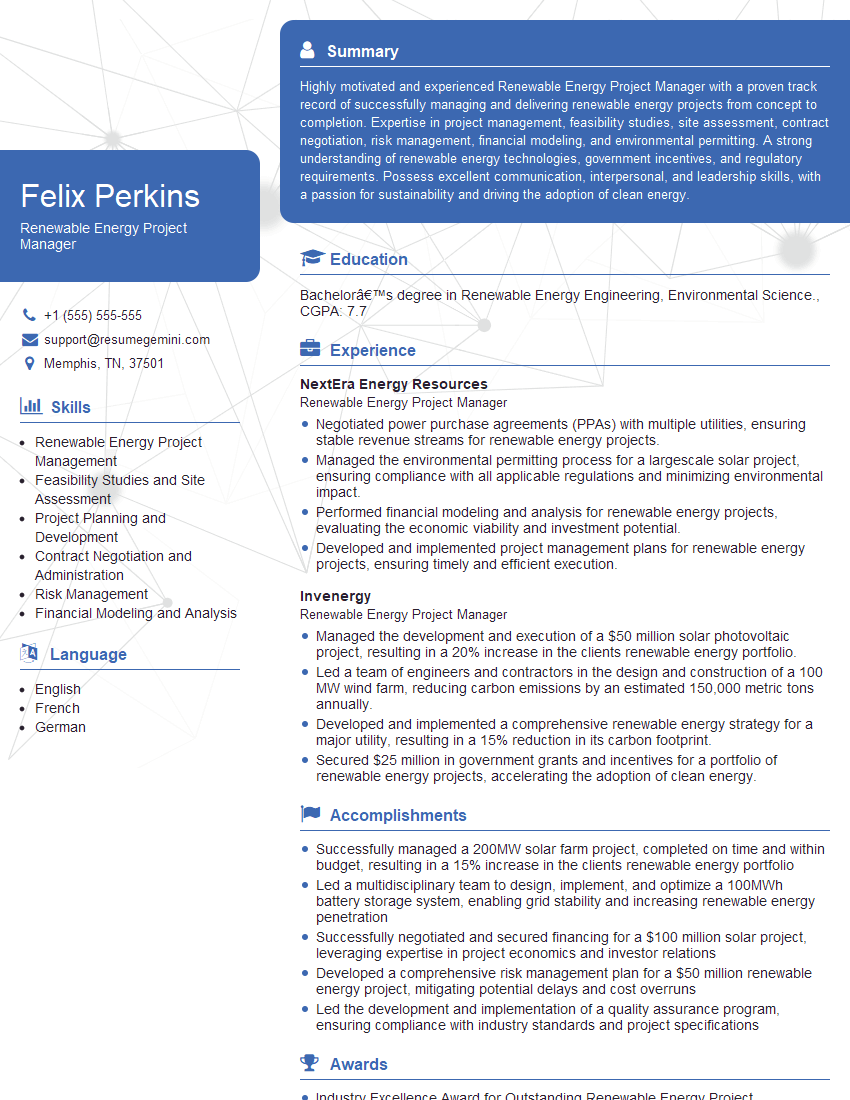
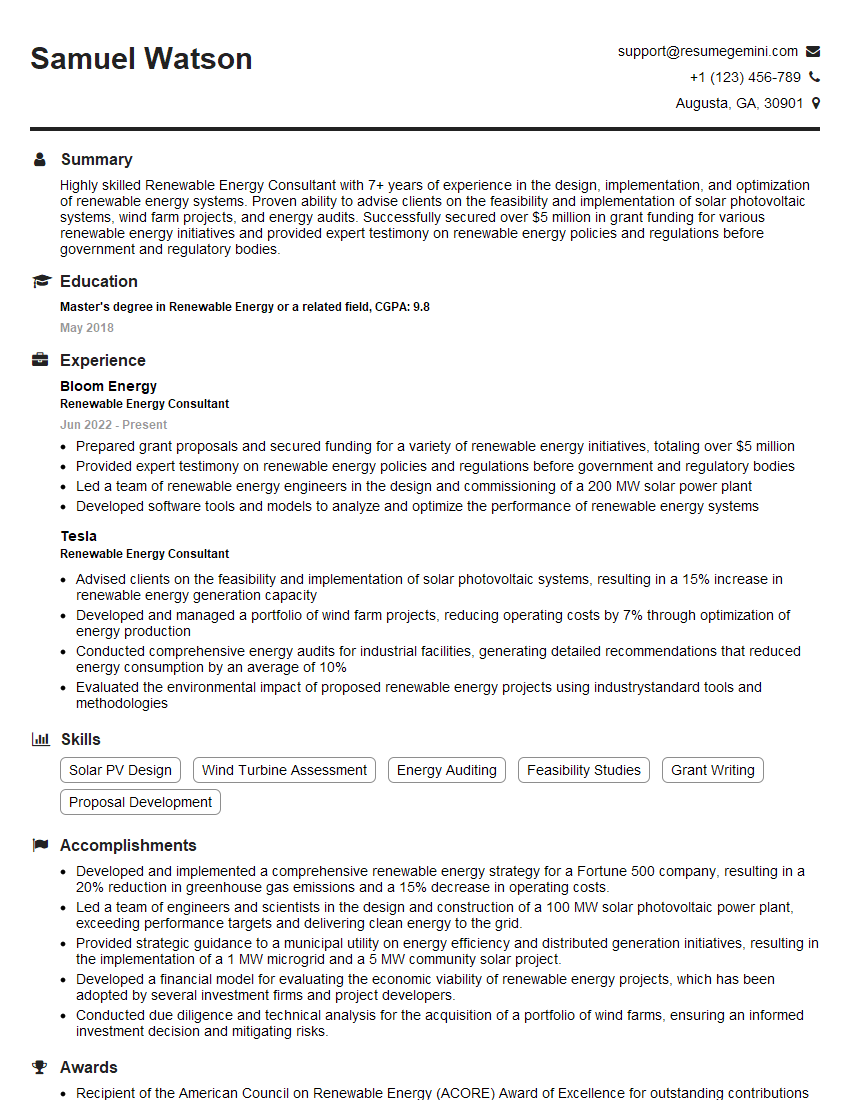
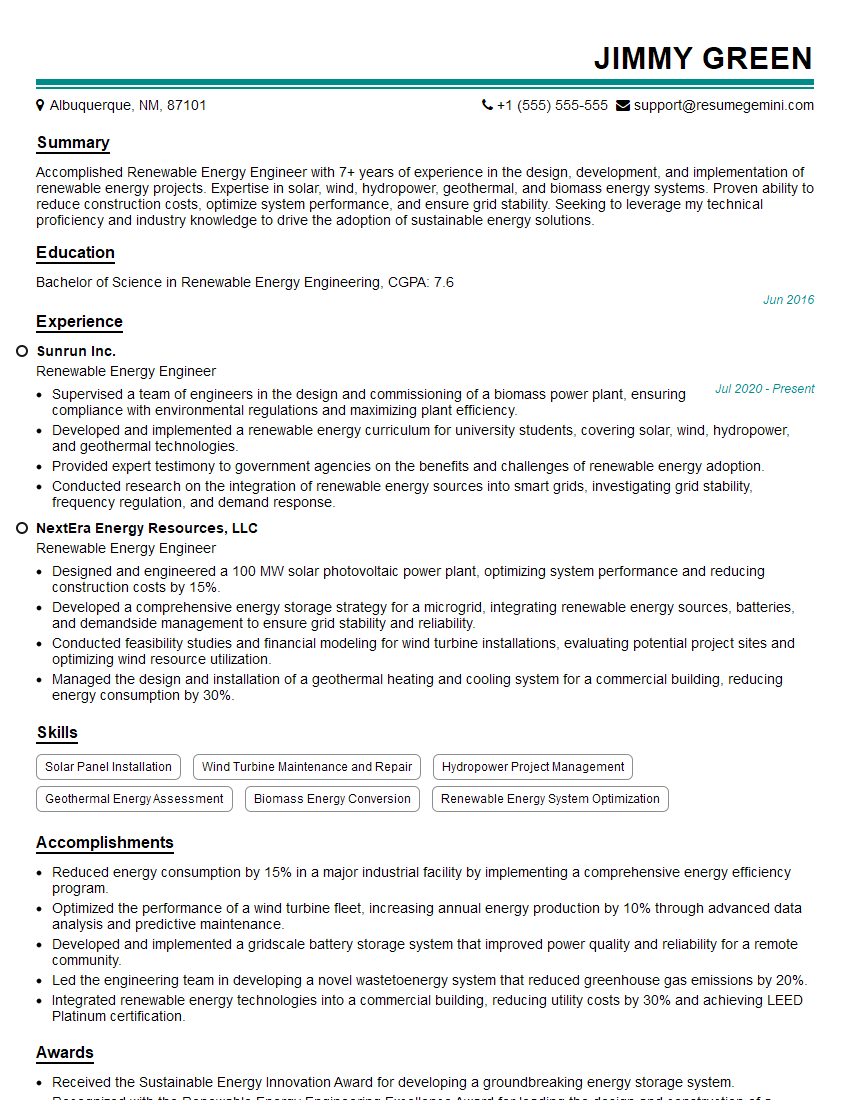
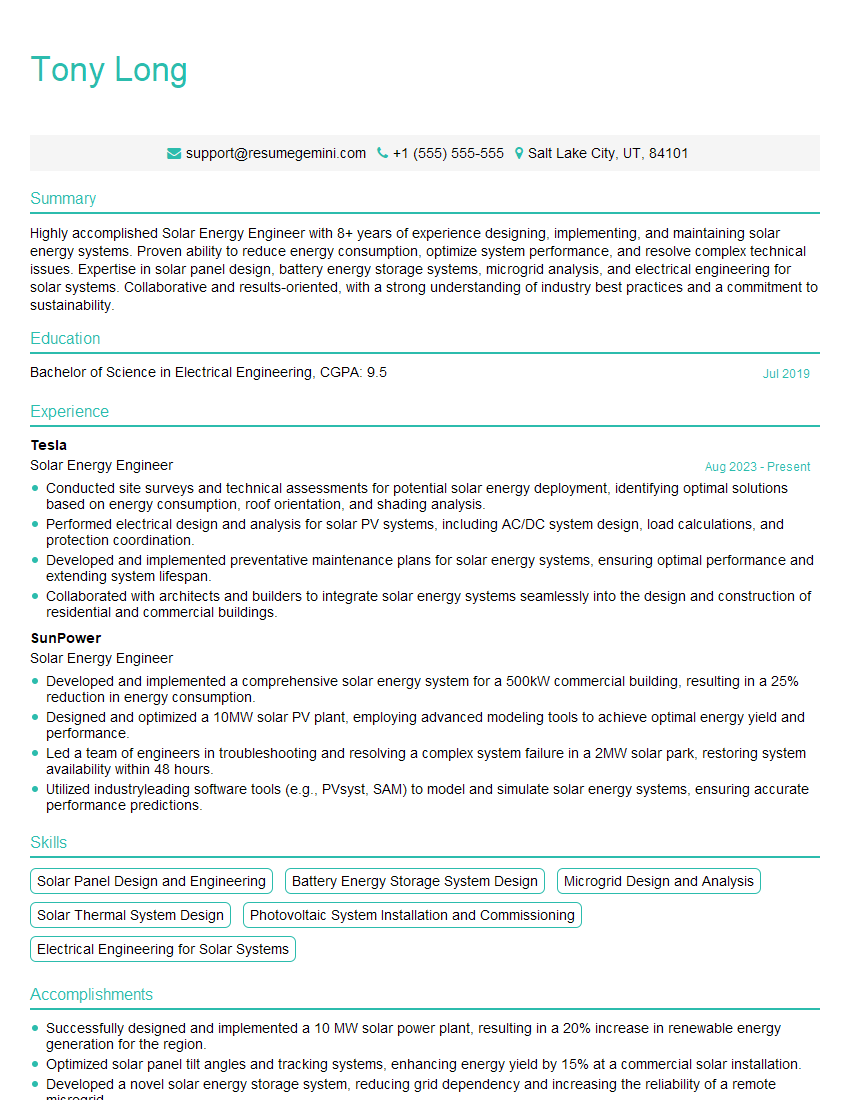
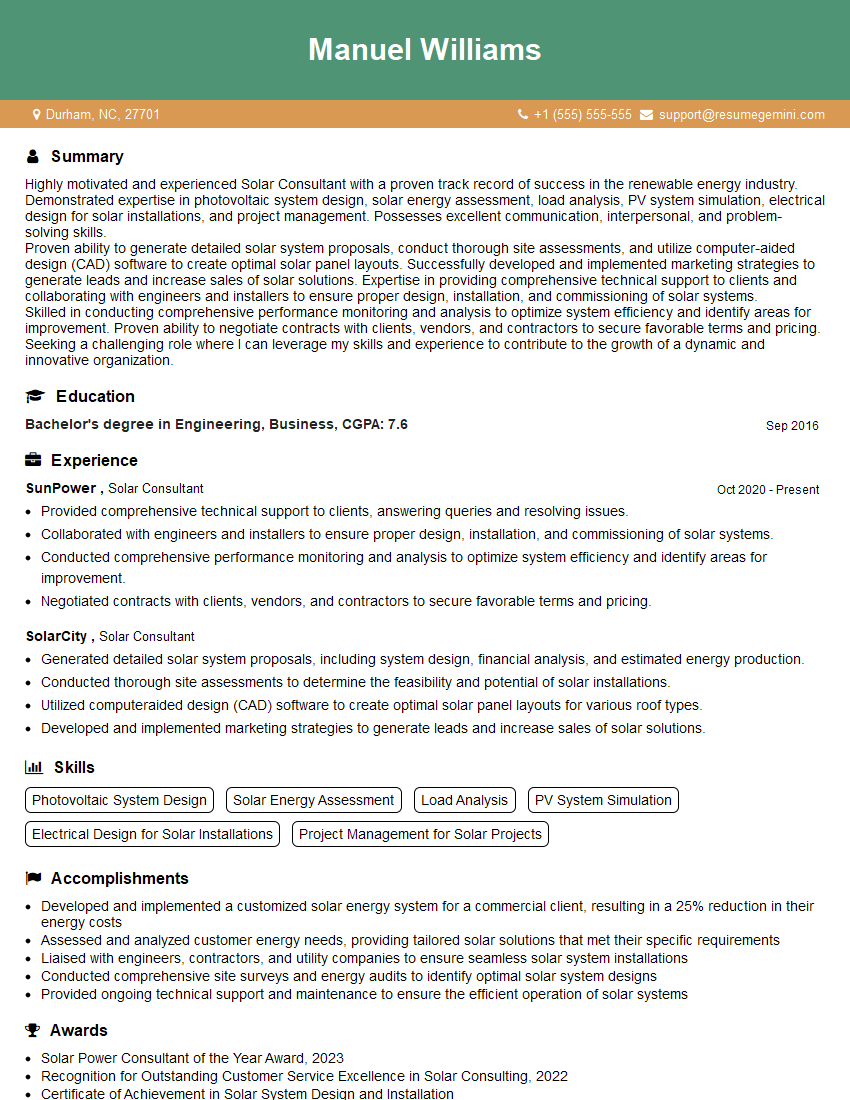
Mastering Photovoltaic System Design and Analysis is crucial for a successful and rewarding career in the renewable energy sector. This expertise opens doors to exciting opportunities in design, engineering, project management, and consulting. To significantly enhance your job prospects, focus on crafting an ATS-friendly resume that highlights your skills and experience effectively. ResumeGemini is a trusted resource that can help you build a professional and impactful resume, tailored to the specific requirements of the photovoltaic industry. Examples of resumes tailored to Photovoltaic System Design and Analysis are available to guide you.
Explore more articles
Users Rating of Our Blogs
Share Your Experience
We value your feedback! Please rate our content and share your thoughts (optional).
What Readers Say About Our Blog
Very informative content, great job.
good