Every successful interview starts with knowing what to expect. In this blog, we’ll take you through the top Photovoltaic System Installation and Commissioning interview questions, breaking them down with expert tips to help you deliver impactful answers. Step into your next interview fully prepared and ready to succeed.
Questions Asked in Photovoltaic System Installation and Commissioning Interview
Q 1. Explain the different types of photovoltaic cells.
Photovoltaic (PV) cells are the heart of solar panels, converting sunlight directly into electricity. There are several types, each with its own strengths and weaknesses. The most common are:
- Crystalline Silicon: This is the most prevalent type, further divided into monocrystalline and polycrystalline. Monocrystalline cells are made from a single silicon crystal, resulting in higher efficiency (around 18-22%) but higher cost. Think of it like a perfectly cut diamond – efficient but expensive. Polycrystalline cells, on the other hand, are made from multiple silicon crystals, resulting in slightly lower efficiency (around 14-17%) but lower cost. Imagine it as a collection of smaller, less perfectly formed diamonds – still sparkly, but less expensive.
- Thin-Film: These cells are made by depositing a thin layer of photovoltaic material onto a substrate, such as glass or plastic. They are generally less efficient than crystalline silicon cells (around 8-12%) but are flexible, lighter, and can be produced at lower cost. They’re like a thin, flexible solar film that can conform to various surfaces.
- Amorphous Silicon: A type of thin-film cell, amorphous silicon is less efficient but can be produced at a lower cost and is suitable for applications requiring low-light performance. This is like a less efficient but more affordable thin solar film.
- Perovskite: This emerging technology holds immense potential. Perovskite cells are known for their high efficiency potential (25%+) and low manufacturing costs, making them a promising future alternative. They are the new kid on the block, showing promising results in efficiency and cost-effectiveness.
The choice of PV cell type depends on factors like budget, efficiency requirements, and the application. For example, a high-efficiency rooftop system might use monocrystalline cells, while a large-scale ground-mounted system might utilize polycrystalline or thin-film cells for cost-effectiveness.
Q 2. Describe the process of installing a ground-mounted PV system.
Installing a ground-mounted PV system involves several crucial steps. First, a thorough site assessment is required to determine the optimal location, considering factors like sunlight exposure, shading, soil conditions, and accessibility. Next, the groundwork is prepared, which may involve clearing the land, leveling the ground, and potentially installing ground screws or driven piles for the mounting structure. The mounting structure is then assembled and secured, ensuring stability and structural integrity. This structure acts as the foundation to support the solar panels and withstand extreme weather conditions. The PV modules are carefully mounted onto the structure, ensuring proper orientation and spacing for optimal energy generation. Wiring is then connected between the modules, the combiner box, and finally, the inverter. Once the system is physically complete, thorough grounding is implemented to ensure electrical safety. Finally, a final inspection is undertaken before commissioning.
For example, in a large-scale solar farm, the use of heavy machinery like excavators and cranes becomes essential for ground preparation and installation of the mounting structure. Careful planning and attention to detail are vital to ensuring the longevity and efficiency of the entire system. The specific installation techniques may vary depending on the type of mounting structure (e.g., ground mounts, ballasted mounts, or fixed-tilt mounts) and the surrounding environment.
Q 3. How do you ensure the safety of workers during PV system installation?
Safety is paramount during PV system installation. Several measures are implemented to protect workers. These include:
- Lockout/Tagout Procedures: Before any work begins on electrical components, lockout/tagout procedures must be rigorously followed to prevent accidental energization. This involves physically locking out and tagging circuits to prevent accidental power restoration.
- Personal Protective Equipment (PPE): Workers must wear appropriate PPE, including safety helmets, safety glasses, gloves, and high-visibility clothing. Appropriate footwear is crucial, and harnesses may be required for working at heights.
- Fall Protection: When working at heights, fall protection systems, including harnesses, anchor points, and safety nets, must be in place. This is particularly important when installing panels on elevated structures or rooftops.
- Electrical Safety Training: All workers involved in PV system installation should receive comprehensive electrical safety training to understand the hazards associated with working with high-voltage DC systems and take necessary precautions. This includes understanding the proper handling of tools and equipment around electrical components.
- Site Safety Plan: A detailed site safety plan should be developed and implemented before the commencement of any work, considering the specific site hazards and appropriate safety measures.
Regular safety briefings and toolbox talks are crucial to reinforce safety procedures and address any concerns. Failing to implement these measures can lead to serious accidents and injuries.
Q 4. What are the key components of a PV system and their functions?
A PV system comprises several key components working together to generate and utilize electricity from sunlight. These include:
- PV Modules (Solar Panels): These are the panels that contain the PV cells and convert sunlight into direct current (DC) electricity.
- Combiner Box: This box connects multiple PV modules in series or parallel strings, protecting them from short circuits and overcurrents.
- Inverter: This crucial component converts the DC electricity from the PV modules into alternating current (AC) electricity, which is compatible with the household grid or appliances. This is essential because most homes and businesses operate on AC power.
- Mounting System: This system secures the PV modules to the roof, ground, or other structures, ensuring optimal sun exposure.
- Wiring and Conduits: These connect all the components of the PV system, transmitting the electricity safely and efficiently.
- Disconnects: These switches allow safe isolation of the system for maintenance and repairs.
- Monitoring System (Optional): This system tracks the performance of the PV system, providing data on energy production and potential issues.
- Energy Storage System (Optional): Batteries or other energy storage systems can be added to store excess energy generated during the day for use at night or during periods of low sunlight.
Each component plays a vital role in the overall system’s functionality. For instance, a faulty inverter can lead to a complete system failure, highlighting the importance of selecting high-quality components and regular maintenance.
Q 5. Explain the process of commissioning a PV system.
Commissioning a PV system is a critical process to ensure its safe and efficient operation. It involves a series of tests and inspections to verify that the system meets the design specifications and safety standards. The process typically includes:
- Visual Inspection: A thorough visual inspection of all components and connections to identify any visible defects or damage.
- Electrical Tests: Testing includes voltage and current measurements at various points in the system to ensure proper functionality and safety. This includes checking for ground faults and insulation resistance.
- Insulation Resistance Test (Megger Test): This important test measures the insulation resistance between the PV system’s components and the ground, ensuring the safety of the system and preventing electric shock.
- Performance Testing: This involves measuring the system’s energy output under various conditions to verify that it meets or exceeds the expected performance levels. This data will be invaluable for future troubleshooting and maintenance.
- Safety Checks: Checking safety features such as grounding, overcurrent protection, and arc flash mitigation systems.
- Documentation: Thorough documentation of all tests, inspections, and results is essential for compliance and future reference.
After successful commissioning, an operational certificate or report is issued, demonstrating that the system is safe and performing as designed. This is important for insurance purposes and future maintenance.
Q 6. How do you troubleshoot a PV system with low energy output?
Troubleshooting a PV system with low energy output requires a systematic approach. Start with a visual inspection, checking for:
- Shading: Even slight shading on a single panel can significantly reduce overall system output. Check for tree branches, buildings, or other obstructions casting shadows on the panels.
- Wiring Issues: Loose connections, damaged cables, or corroded connectors can significantly reduce energy output. Careful inspection of all wiring and connections is crucial.
- Faulty Modules: A single faulty module can impact the entire string’s performance. Individual modules can be checked using a multimeter to detect voltage and current irregularities.
- Inverter Problems: An inverter malfunction is a common cause of low energy output. Check the inverter’s status indicators and any error messages. You can often identify problems with the inverter using the built-in display or monitoring software.
- Environmental Factors: Cloudy weather, dust accumulation on the panels, or high temperatures can affect energy output. While you can’t control weather, you can clean the panels regularly to ensure optimal performance.
After the visual inspection, use a multimeter to measure voltages and currents at different points in the system, comparing them to expected values. If the problem persists, you may need specialized equipment like an IR camera to detect hot spots on the panels, indicating potential cell damage. Detailed data from the monitoring system, if available, can greatly aid in pinpointing the issue. Remember to always follow safety procedures when working with electrical equipment.
Q 7. Describe different types of inverters and their applications.
Inverters are essential components in a PV system, converting DC electricity from the panels into usable AC electricity. Several types exist, each with specific applications:
- String Inverters: These are the most common type, connecting multiple PV modules in a string and converting their combined DC output to AC. They are cost-effective and simple to install but may suffer from performance reduction if one module in the string malfunctions (like a single lightbulb going out affecting the whole string).
- Microinverters: These are small inverters attached to each individual PV module, converting the DC output of each module separately to AC. This improves the overall system’s performance and resilience to shading because each panel operates independently. They are more expensive than string inverters, though.
- Power Optimizers: These devices are installed at the module level and maximize power generation by optimizing the current from each module, addressing issues like partial shading. They work in conjunction with a central inverter and offer a balance between cost and performance.
- Central Inverters: Often used in large-scale solar farms, these inverters convert the DC electricity from multiple strings of modules to AC electricity. They are very powerful and efficient but more expensive than string inverters. They work in conjunction with other equipment like transformers and switchgear.
The choice of inverter depends on factors such as system size, budget, shading conditions, and the desired level of performance. For instance, a small rooftop system might use a string inverter, while a large commercial system with potential shading issues might benefit from microinverters or power optimizers.
Q 8. What are the safety regulations and standards for PV system installation?
Safety is paramount in PV system installation. We adhere to a strict set of regulations and standards, varying slightly by location but generally encompassing aspects like:
- National Electrical Code (NEC): This provides the foundation for safe electrical installations, including requirements for grounding, overcurrent protection, and wire sizing. For example, NEC Article 690 specifically addresses photovoltaic systems.
- Occupational Safety and Health Administration (OSHA): OSHA regulations dictate safe work practices, including fall protection (crucial when working on rooftops), lockout/tagout procedures (to prevent accidental energization), and personal protective equipment (PPE) use like hard hats and safety glasses.
- Manufacturer’s Instructions: Always following the manufacturer’s instructions for each component (panels, inverters, racking) is critical. This ensures proper installation and optimal performance while mitigating risks.
- Local Permits and Inspections: Obtaining necessary permits and undergoing inspections ensures compliance with local building codes and regulations. This is a crucial step, preventing legal issues and confirming safety.
A real-world example: I once worked on a project where a contractor overlooked proper grounding. This resulted in a significant safety hazard, and we had to completely redo that aspect of the installation to meet code. It highlighted the importance of meticulous attention to detail in every stage.
Q 9. How do you perform a site assessment for a PV system?
A thorough site assessment is crucial for a successful PV system. It involves several key steps:
- Roof Inspection: Assessing the roof’s structural integrity, orientation (south-facing is ideal in the Northern Hemisphere), shading (from trees, buildings, or chimneys), and available space. We use specialized software to model shading effects.
- Sun Exposure Analysis: Determining the amount of sunlight the site receives throughout the year using satellite imagery or on-site measurements. This helps predict energy yield.
- Electrical System Evaluation: Checking the existing electrical panel’s capacity, the location of the service panel, and the available wiring to determine if upgrades are needed. We need to ensure the panel can handle the additional load from the PV system.
- Grid Connection Assessment: Determining the feasibility of grid connection and any necessary upgrades. This includes checking voltage and current requirements at the point of connection.
- Environmental Considerations: Assessing factors like wind load, snow load (for snowy regions), and potential wildlife impacts. We might need to factor in stronger mounting systems based on the wind speeds.
For instance, I had a project where an initial assessment revealed significant shading during the afternoon. We adapted the system design, optimizing panel placement to maximize energy generation despite the limitations.
Q 10. Explain the importance of grounding in a PV system.
Grounding is essential for safety and system performance in a PV system. It provides a low-resistance path to the earth for fault currents, protecting against electrical shocks and preventing equipment damage. Without proper grounding:
- Electrical Shocks: A faulty component could become energized, posing a severe risk to anyone touching it.
- Equipment Damage: A ground fault can cause significant damage to inverters, panels, and other components.
- Fire Hazards: Ground faults can lead to overheating and potential fires.
Grounding involves connecting all metal parts of the system, including the array’s mounting structure, the inverter’s enclosure, and the electrical panel, to a ground rod driven into the earth. We use specialized grounding wires and connectors, ensuring low resistance connections. Think of grounding as a safety valve, releasing excess energy harmlessly to the earth.
Q 11. How do you calculate the required system size for a specific energy demand?
Calculating the required system size involves considering several factors:
- Energy Demand: This is the total amount of energy the customer needs annually (kWh/year). This data is obtained from their energy bills.
- Panel Efficiency: The efficiency of the solar panels determines the energy output per panel (kWp).
- System Losses: We must account for various losses like shading, wiring losses, inverter efficiency, and temperature effects. This usually amounts to around 10-15% reduction.
- Sunlight Hours: The number of peak sunlight hours annually in the specific location.
The calculation involves estimating the total kWp needed based on energy demand, dividing by the panel efficiency, adjusting for losses and sunlight hours. For example: If a customer needs 10,000 kWh/year and we estimate 15% losses with an average of 5 sunlight hours per day, and our panels have 300Wp each, we can determine the approximate number of panels needed. A simplified (and not entirely accurate without specific location data) calculation might look like:
(10000 kWh/year) / (5 hours/day * 365 days/year) = ~5.48 kWpThis represents the peak power needed. Then you would divide that by the panel’s power (300Wp) to get the number of panels required, factoring in the efficiency losses to adjust this result upwards.
Q 12. What are the different types of mounting systems for PV panels?
Several mounting systems exist, each suited for different roof types and conditions:
- Roof-Mounted Systems: These include:
- Racking Systems: These are the most common, using rails and clamps to attach panels to the roof. They’re adjustable and relatively easy to install.
- Integrated Systems: The panels are integrated directly into the roof structure during construction, offering a sleek appearance.
- Ground-Mounted Systems: These systems use ground-mounted racks or poles to support the panels. They’re often used for large-scale installations or where roof mounting isn’t feasible.
- Carport-Mounted Systems: Panels are mounted on a carport structure, providing both shade and renewable energy.
The choice depends on factors like roof type (tile, shingle, flat), structural integrity, and aesthetic preferences. I recently worked on a project utilizing a ballasted racking system on a flat roof, as it didn’t require penetration of the roof membrane.
Q 13. Describe the process of wiring a PV array.
Wiring a PV array involves connecting individual panels in series and parallel strings to optimize voltage and current for the inverter. The process generally involves:
- Series Connections: Connecting panels in series increases voltage while keeping current constant. Too high a voltage would require special safety measures.
- Parallel Connections: Connecting strings in parallel increases the current while maintaining voltage. The number of strings depends on the inverter’s input current capacity.
- Combiner Boxes: These consolidate the output from multiple strings, providing a single point of connection to the inverter. They usually incorporate overcurrent protection (fuses or circuit breakers).
- Wiring Methods: Using appropriately sized and rated PV wire, typically MC4 connectors or similar, ensures safe and efficient power transmission. Strict adherence to polarity is crucial to prevent shorts and damage.
- Grounding: All metal components in the array and wiring must be properly grounded.
Careful planning is crucial. Incorrect wiring can reduce system efficiency and compromise safety. We use detailed schematics to meticulously plan our wiring arrangement, ensuring optimal performance and safety compliance.
Q 14. Explain the importance of proper cable sizing and management.
Proper cable sizing and management is critical for safety, efficiency, and longevity. Undersized cables lead to excessive voltage drop, reduced power output, and overheating, potentially causing fires. Oversized cables are unnecessarily expensive.
- Voltage Drop: Cables have resistance; longer cables have more resistance, leading to voltage drop. This reduces the amount of power reaching the inverter.
- Overheating: Undersized cables can overheat from carrying excessive current, posing a fire risk. This is why we use tables to check the amperage and voltage ratings.
- Cable Management: Proper cable routing, protection against UV exposure and mechanical damage, and secure connections prevent faults and ensure system integrity.
We use cable sizing calculators to determine the appropriate wire gauge based on the current and voltage of the system. Furthermore, we secure cables with appropriate clips and conduits, preventing damage and ensuring a tidy installation. A poorly managed cable can easily be damaged, leading to system failure.
Q 15. How do you test the performance of a PV system?
Testing a PV system’s performance involves several stages, ensuring its efficiency and identifying potential issues. We begin with visual inspections, checking for any obvious damage to panels, wiring, or mounting structures. This is like a doctor’s initial examination – identifying any immediately visible problems. Next, we use specialized equipment. A multimeter measures voltage and current at various points in the system, verifying proper operation. I often use a clamp meter to measure the current flowing through the main conductors, providing a comprehensive view of system power output. Finally, data loggers are invaluable; they record performance data over time, revealing trends and identifying intermittent problems that might be missed during a single inspection. This long-term monitoring allows us to identify subtle performance degradation, often due to environmental factors like shading or gradual panel degradation. Analyzing this data with specialized software, we can determine if the system is performing as expected based on its design specifications and environmental conditions.
For example, if a string of panels consistently shows lower voltage than others, it might indicate shading on those specific panels or a faulty panel within that string. The data logger’s records would help us pinpoint the precise time and duration of the performance dip.
Career Expert Tips:
- Ace those interviews! Prepare effectively by reviewing the Top 50 Most Common Interview Questions on ResumeGemini.
- Navigate your job search with confidence! Explore a wide range of Career Tips on ResumeGemini. Learn about common challenges and recommendations to overcome them.
- Craft the perfect resume! Master the Art of Resume Writing with ResumeGemini’s guide. Showcase your unique qualifications and achievements effectively.
- Don’t miss out on holiday savings! Build your dream resume with ResumeGemini’s ATS optimized templates.
Q 16. What are the common causes of PV system failures and how to resolve them?
Common PV system failures stem from various sources. One frequent culprit is faulty wiring, often due to improper installation or weather damage. This can manifest as shorts, open circuits, or loose connections, leading to reduced power output or complete system failure. Another common issue is shading, which significantly impacts panel performance. Even partial shading can reduce the output of the entire string. Similarly, panel degradation over time (caused by UV exposure or environmental stress) is inevitable, leading to gradually reduced efficiency. Finally, inverter malfunctions are a major source of problems. These inverters convert DC power from the panels to AC power usable in our homes. They can fail due to overheating, age, or power surges.
Resolving these issues requires systematic troubleshooting. For faulty wiring, a thorough visual inspection and continuity testing with a multimeter are crucial. Shading issues necessitate careful evaluation of panel placement and may involve adding bypass diodes or re-orienting panels. Panel degradation often requires replacement of individual panels or strings. Inverter problems sometimes require only a firmware update or minor repair but often necessitate a complete replacement, depending on the severity of the fault.
Q 17. Explain the concept of Maximum Power Point Tracking (MPPT).
Maximum Power Point Tracking (MPPT) is a crucial control mechanism in PV systems designed to maximize energy harvest. Think of a solar panel as having a unique sweet spot – its maximum power point – where it generates the highest possible power output for given sunlight conditions. However, these conditions constantly change: cloud cover, the angle of the sun throughout the day, etc. MPPT algorithms continuously monitor the panel’s voltage and current, dynamically adjusting the load to keep the system operating at this optimal point. It’s like a skilled driver constantly adjusting the gas pedal and gears to maintain the best engine performance, regardless of terrain.
Without MPPT, the system would operate at a lower power output throughout the day, significantly reducing energy generation. Different MPPT algorithms exist, each with its own advantages and disadvantages. Perturb and Observe is a common method, constantly adjusting voltage and current to find the maximum power point. Incremental Conductance is another approach that calculates the rate of change of power to locate the maximum power point. The choice of algorithm often depends on factors such as cost, efficiency requirements, and the specific characteristics of the PV array.
Q 18. What are the environmental considerations for PV system installation?
Environmental considerations are paramount in PV system installation. The most significant factor is sunlight availability. We need to carefully assess the site’s solar irradiance – the amount of sunlight it receives – to determine optimal panel placement and system sizing. This is about getting the most bang for your buck. We also need to account for shading from trees, buildings, or other obstructions. These can drastically reduce system efficiency. Moreover, weather conditions such as wind speed and snow load play a crucial role in selecting appropriate mounting structures and ensuring the system’s longevity and safety. Local building codes and environmental regulations also influence system design. For example, certain regions may have strict requirements regarding bird protection or impact on wildlife habitats. Furthermore, we must consider potential impacts on the surrounding environment, such as visual impact and land use.
For example, in a coastal area, we might need to use corrosion-resistant materials to protect the system from saltwater. In a high-snow area, a robust mounting structure capable of withstanding significant weight is essential.
Q 19. How do you deal with shading issues in a PV system?
Shading significantly reduces a PV system’s output. Even partial shading of a single panel in a string can dramatically decrease the power output of the entire string. Several strategies mitigate this. Optimizers placed individually on each panel can help alleviate the effects of shading by maximizing the output of individual panels, regardless of the shading on others within the string. Microinverters, which convert DC to AC power at the individual panel level, provide a similar solution, offering more resilience to shading compared to a single central inverter. Careful site planning and panel placement are crucial – ideally we aim for unshaded panels throughout the day. However, if shading is unavoidable, we may need to compromise on system design or implement mitigating technologies.
For instance, if a tree partially shades panels in the afternoon, we may rotate the panels slightly to minimize that effect during peak hours. If that isn’t possible, deploying optimizers or microinverters is a strong alternative.
Q 20. Explain the difference between grid-tied and off-grid systems.
Grid-tied and off-grid systems differ fundamentally in their connection to the electricity grid. Grid-tied systems are connected to the utility grid, drawing power from the grid when solar production is insufficient and feeding excess power back to the grid. They are simpler, less expensive and generally more efficient. Think of it like having a backup generator – the grid is your backup. Off-grid systems, on the other hand, operate independently of the grid. They rely entirely on solar power, often incorporating battery storage to provide power during periods of low sunlight or at night. They provide complete energy independence but demand a more complex design, including larger battery banks and charge controllers.
The choice depends on individual needs and circumstances. Grid-tied systems are suitable for most homeowners seeking to reduce their electricity bills, while off-grid systems are necessary for remote locations lacking grid access or for those seeking complete energy independence, even at a greater cost.
Q 21. Describe the process of obtaining necessary permits and approvals.
Obtaining permits and approvals for PV system installation varies depending on location, but the process generally involves several steps. First, we need to determine the required permits from the local authorities, such as building permits, electrical permits, and potentially zoning permits. This often involves submitting detailed plans of the proposed system, including specifications, panel placement, and electrical diagrams. Second, we submit these plans for review and approval. The review process can vary in duration, depending on the complexity of the system and the efficiency of the permitting authorities. Third, once approved, we can proceed with the installation, ensuring strict adherence to the approved plans. Regular inspections are often required by inspectors at various stages of the installation. Fourth, after completion, a final inspection verifies compliance with regulations. Finally, we obtain the necessary certificates of completion, enabling the system’s activation and operation. Throughout this process, we must ensure all safety regulations and requirements are met and documentation is complete and precise to avoid delays or issues.
Failing to obtain the necessary permits can lead to significant delays, fines, and even the forced removal of the system. Meticulous planning and a thorough understanding of local regulations are crucial for a smooth permitting process.
Q 22. What are the different types of batteries used in PV systems?
Several battery types are used in photovoltaic (PV) systems, each with its strengths and weaknesses. The choice depends on factors like cost, lifespan, energy density, and application.
- Lead-acid batteries: These are the most common and cost-effective, particularly flooded lead-acid (FLA) batteries. However, they have a shorter lifespan and require more maintenance than other options. Think of them as the ‘workhorses’ of the battery world, reliable but needing regular attention.
- Lithium-ion batteries: These offer higher energy density, longer lifespan, and faster charging rates compared to lead-acid. They’re the more sophisticated, ‘high-performance’ option, but come with a higher price tag. Different chemistries exist within lithium-ion (e.g., LFP, NMC), each with its specific advantages and disadvantages concerning safety, performance and cost.
- Flow batteries: These are particularly suited for large-scale energy storage, offering long lifespans and high discharge rates. Think of them as the ‘heavy lifters’ – ideal for grid-scale applications or large commercial installations needing consistent power output.
- Nickel-cadmium (NiCd) and Nickel-metal hydride (NiMH) batteries: While less common now, these are still found in some older systems. They tend to be more expensive and have environmental concerns compared to lithium-ion or advanced lead-acid batteries.
The selection process involves careful consideration of the specific system requirements, budget constraints, and environmental impact.
Q 23. How do you ensure the system complies with local building codes?
Ensuring compliance with local building codes is paramount for a safe and legally sound PV system installation. This requires a multi-step process:
- Thorough Code Research: The first step is to carefully review all relevant local, state, and national codes. This might include building codes, electrical codes (like the NEC in the US), fire codes, and any specific regulations for renewable energy systems. This is often a complex task that requires expertise and deep understanding of local building department regulations.
- Permitting: Submitting complete and accurate permit applications to the relevant authorities is crucial. These applications typically include detailed system designs, electrical schematics, and calculations to demonstrate compliance.
- Inspections: System inspections by building inspectors are a critical part of ensuring adherence to codes. These inspections cover various aspects, from the structural integrity of the mounting system to the proper grounding and wiring of the electrical components. Proper documentation and attention to detail during installation will greatly simplify inspections.
- Record Keeping: Maintaining meticulous records of all aspects of the installation process, including permits, inspections, and any modifications, is essential for future reference and to demonstrate compliance if needed.
Failing to comply with building codes can result in costly fines, system shutdowns, and even legal action. A thorough understanding and meticulous adherence to codes are key to a successful project.
Q 24. What are the best practices for PV system maintenance?
PV system maintenance is crucial for maximizing efficiency and lifespan. Regular inspections and cleaning can significantly impact performance and avoid costly repairs. Here are some best practices:
- Visual Inspection: Regularly inspect the entire system for any visible damage to panels, wiring, connectors, or mounting hardware. Look for cracks, loose connections, or signs of rodent activity.
- Panel Cleaning: Clean the solar panels regularly, especially in dusty or dirty environments. Use soft water and a non-abrasive cleaner to avoid scratching the panels’ surface. Pressure washers should be avoided, unless operated at a safe distance to prevent damage.
- Connection Inspection: Check all electrical connections for tightness and corrosion. Tightening loose connections ensures proper current flow and minimizes energy loss. Any corrosion needs appropriate treatment.
- Inverter Monitoring: Regularly monitor the inverter’s performance parameters, including voltage, current, power output, and fault codes. This helps detect any anomalies early on.
- Grounding and Bonding Checks: Ensure that the grounding and bonding systems remain intact to maintain safety and prevent electrical hazards.
- Documentation: Keep detailed records of all maintenance activities, including dates, observations, and any corrective actions taken.
A well-maintained PV system not only extends its operational life but also ensures optimal energy production and minimizes downtime.
Q 25. How do you interpret PV system performance data?
Interpreting PV system performance data requires understanding various parameters and using appropriate tools. Data is typically gathered through monitoring systems installed at the inverter and sometimes using dedicated sensors on the array.
- Power Output: This is the most fundamental parameter, showing the amount of electricity generated at any given time. A drop in power output can indicate shading, soiling, or a fault.
- Voltage and Current: Monitoring voltage and current helps identify issues with wiring, connections, or individual panel performance. Inconsistencies might point to faulty panels or shading.
- Energy Yield: This shows the total energy produced over a specific period, often daily or monthly. It provides a comprehensive measure of system performance.
- Inverter Efficiency: This measures how efficiently the inverter converts DC power from the panels to AC power for use. Low efficiency may indicate a problem with the inverter itself.
- Performance Ratios (PR): PRs compare the actual energy output to the expected energy output under ideal conditions. It indicates system efficiency and potential losses.
Modern monitoring systems often provide dashboards and reports that visualize this data, making it easy to spot trends and identify potential problems. Sophisticated systems might even provide predictive maintenance capabilities.
Q 26. Explain the concept of energy yield and its importance.
Energy yield refers to the total amount of electricity generated by a PV system over a given period (e.g., daily, monthly, annually). It’s a crucial metric for evaluating system performance and return on investment. Think of it as the ‘harvest’ from your solar farm.
Importance:
- Performance Assessment: Comparing actual yield to predicted yield helps assess the system’s performance and identify potential areas for improvement.
- Financial Analysis: Energy yield is crucial for calculating the financial returns of a PV system. It directly influences the payback period and overall profitability.
- System Optimization: Analyzing energy yield data can help identify potential problems and optimize system design or operation to increase energy production.
- Sizing and Design: Accurate yield estimations are critical during the design phase to ensure the system meets the energy needs of the building or facility.
Factors affecting energy yield include solar irradiance (sunlight intensity), ambient temperature, panel efficiency, shading, and system losses. Accurate yield predictions require sophisticated modeling tools and local meteorological data.
Q 27. How familiar are you with NEC standards for solar installations?
I am very familiar with the National Electrical Code (NEC) standards for solar installations, specifically articles 690 and related sections. These codes provide comprehensive guidelines for the safe design, installation, and inspection of photovoltaic systems. My understanding encompasses:
- Wiring methods and protection: Proper sizing of conductors, overcurrent protection devices, grounding, and bonding requirements.
- System grounding and bonding: Ensuring proper grounding to prevent electrical shocks and fires.
- Rapid shutdown requirements: Implementing safe shutdown systems to facilitate emergency response.
- Arc fault circuit interrupters (AFCIs): Understanding the application and requirements for AFCIs in PV systems.
- Module interconnection and racking: Adherence to standards concerning module mounting, wiring, and structural integrity.
- Inverter installation and grounding: Proper installation and grounding of inverters to ensure safe operation.
Adhering to the NEC is not just about legal compliance; it’s about ensuring the safety and reliability of the system. My experience ensures all installations meet the highest safety standards.
Q 28. Describe your experience with different types of PV system monitoring systems.
I have extensive experience with various PV system monitoring systems, ranging from simple data loggers to sophisticated cloud-based platforms. The choice of monitoring system depends on factors like system size, budget, and the level of detail required.
- Basic Data Loggers: These record basic parameters like voltage, current, and power output. They are cost-effective but offer limited data analysis capabilities.
- Inverter-Based Monitoring: Most modern inverters have built-in monitoring capabilities, providing real-time data and often web-based interfaces for remote access. This provides a good balance of cost and functionality for many residential and smaller commercial systems.
- Advanced Cloud-Based Platforms: These offer comprehensive monitoring and analysis tools, including performance dashboards, historical data visualization, and sophisticated algorithms for fault detection and predictive maintenance. Data is often accessible from anywhere with an internet connection. This is best suited for larger commercial and utility-scale projects needing a detailed overview and remote management capabilities.
- Third-Party Monitoring Systems: Specialized monitoring systems from third-party vendors offer features like advanced analytics, integration with other building management systems, and customized reporting. This is useful for optimizing system performance and demonstrating compliance.
My experience allows me to select and deploy the most appropriate monitoring solution based on the specific needs of each project, ensuring that clients have the data they need to optimize system performance and make informed decisions.
Key Topics to Learn for Photovoltaic System Installation and Commissioning Interview
- System Design & Engineering: Understanding system sizing, component selection (panels, inverters, racking), and design considerations based on site specifics (roof type, shading, etc.). Practical application: Calculating energy production based on panel specifications and location data.
- Installation Techniques: Safe and efficient installation procedures, including grounding, wiring, mounting, and connection of PV arrays and inverters. Practical application: Troubleshooting common installation problems like faulty connections or grounding issues.
- Commissioning Procedures: Performing safety checks, testing equipment functionality, monitoring system performance, and generating necessary documentation. Practical application: Interpreting data from monitoring systems and identifying areas for optimization.
- Safety Regulations & Codes: Adherence to relevant safety standards (e.g., NEC, OSHA) and best practices for working with high-voltage DC and AC systems. Practical application: Explaining the importance of lockout/tagout procedures and personal protective equipment (PPE).
- Troubleshooting & Diagnostics: Identifying and resolving common PV system malfunctions, using diagnostic tools and techniques. Practical application: Diagnosing problems like low energy production, inverter faults, or panel failures.
- Grid Integration & Interconnection: Understanding the process of connecting a PV system to the utility grid, including permitting requirements and compliance testing. Practical application: Explaining the difference between various grid interconnection schemes.
- O&M (Operations & Maintenance): Best practices for ongoing system maintenance, performance monitoring, and preventative maintenance strategies. Practical application: Developing a preventative maintenance schedule and identifying potential future issues.
Next Steps
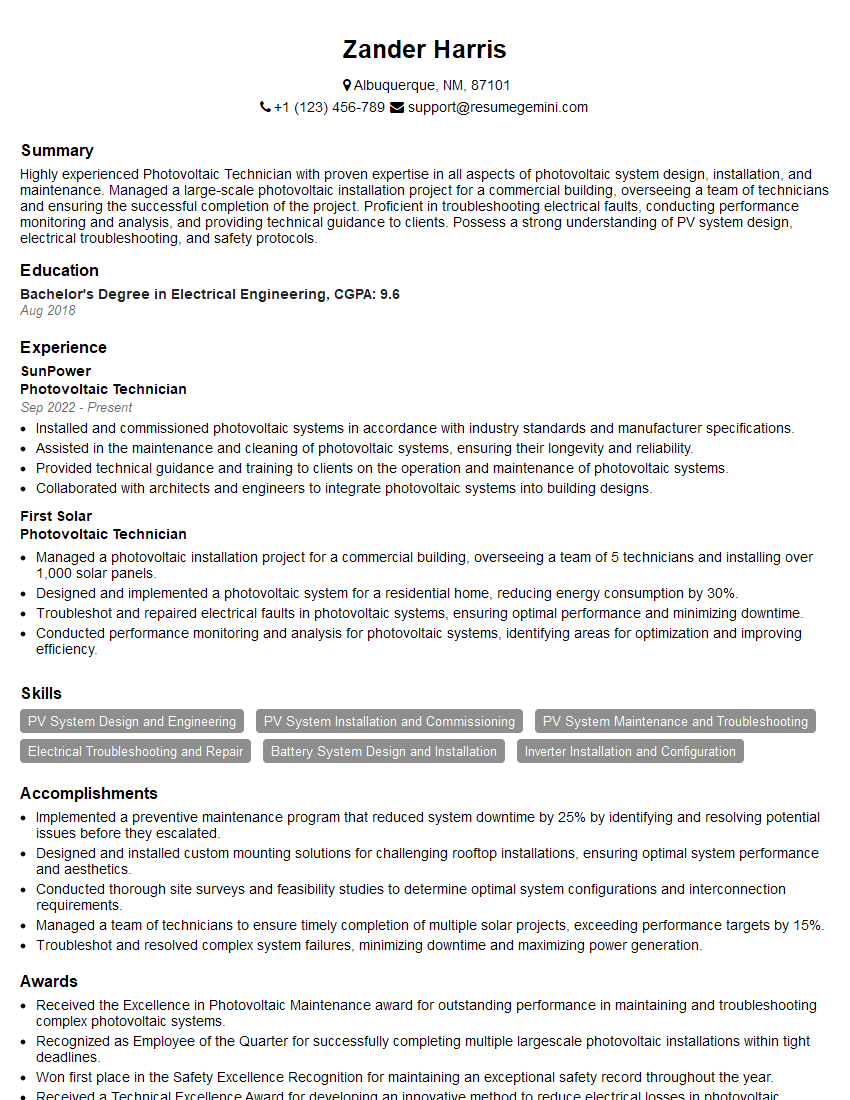
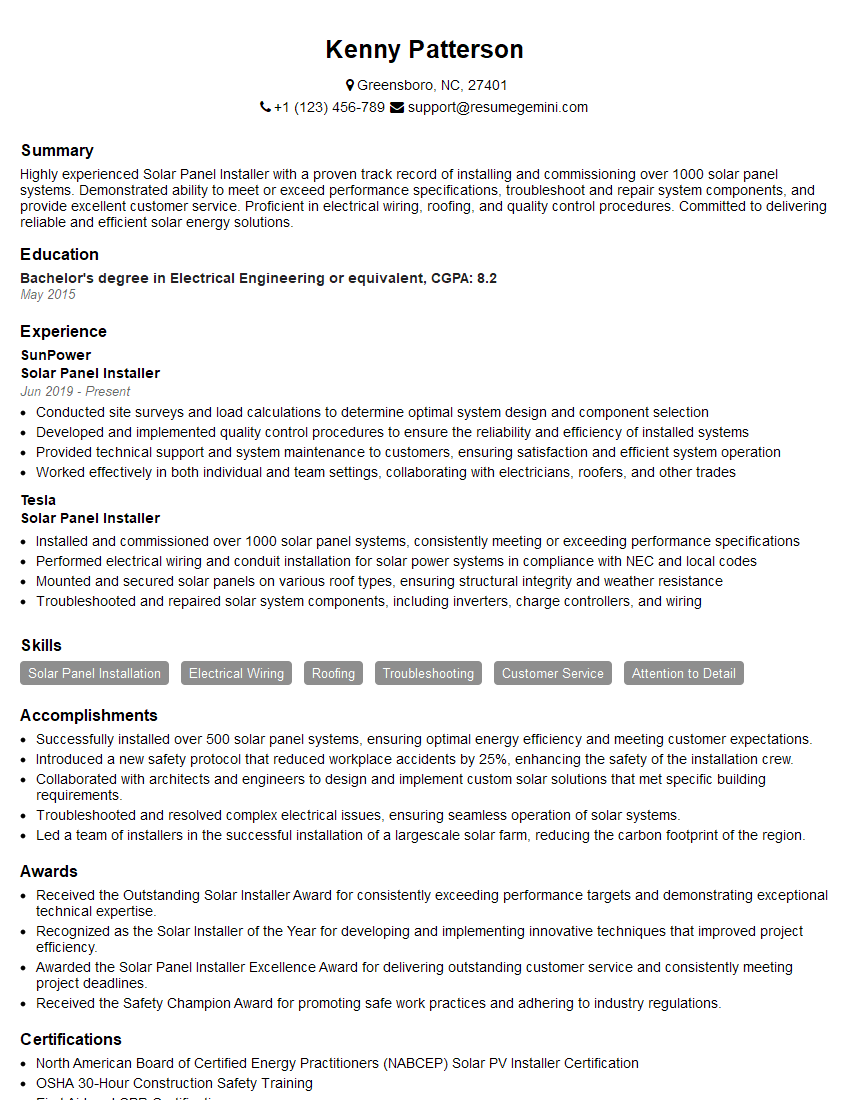
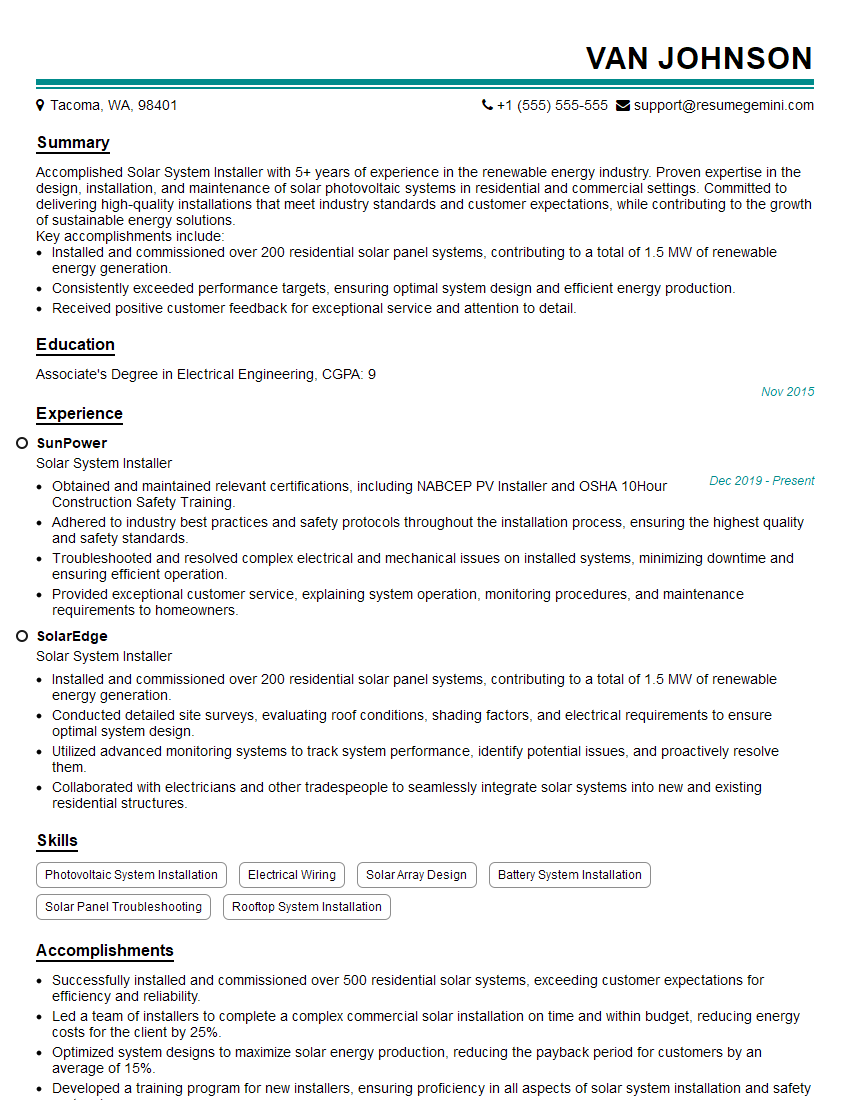
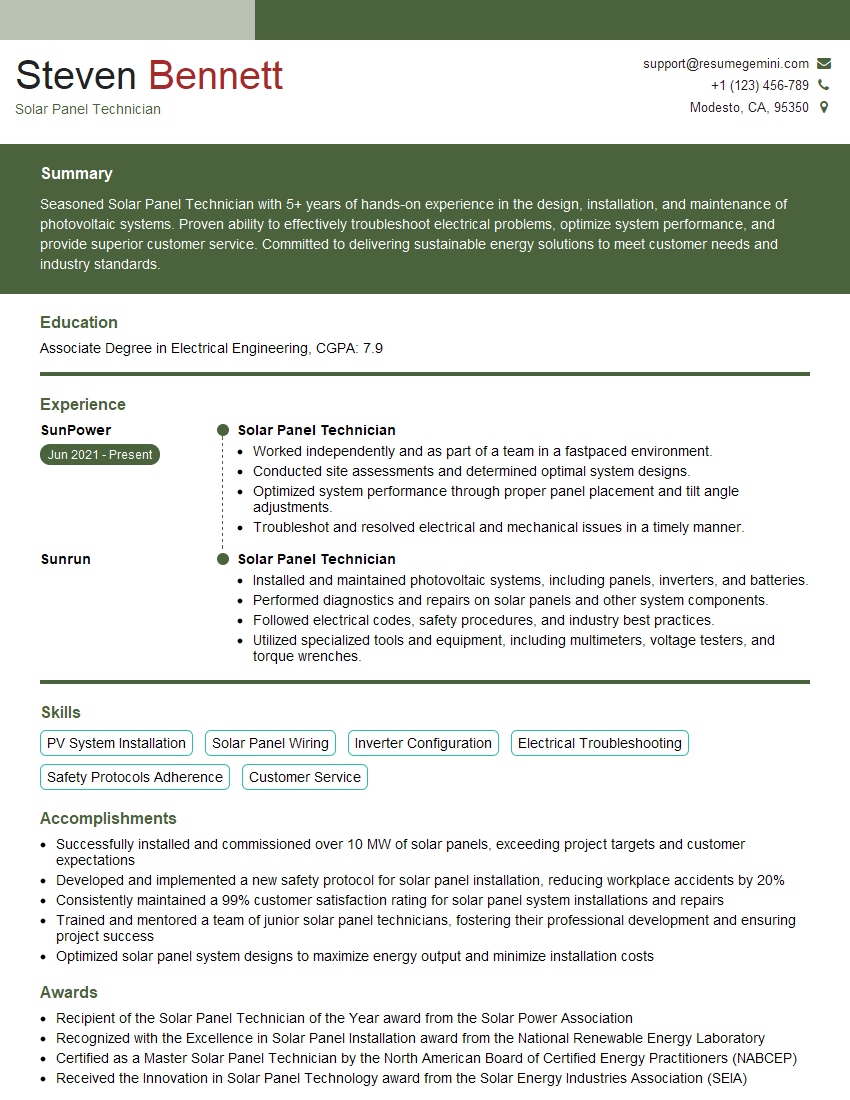
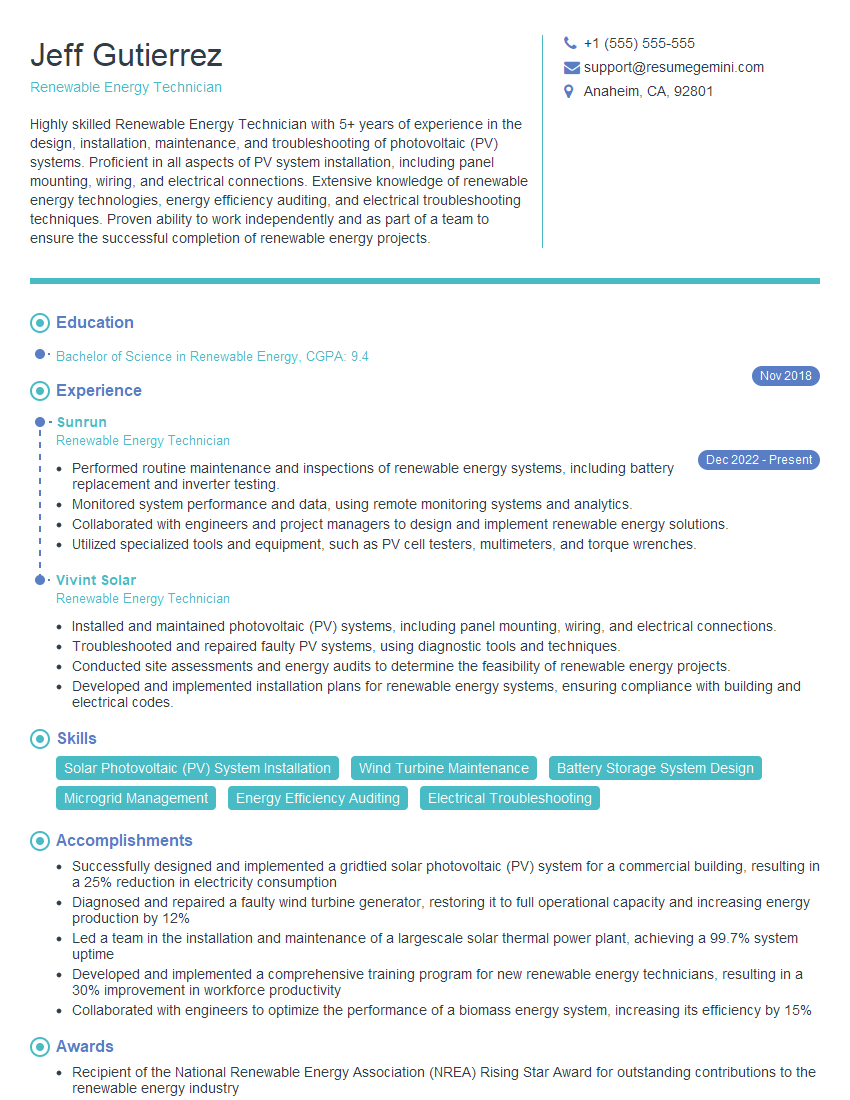
Mastering Photovoltaic System Installation and Commissioning opens doors to a rewarding and growing career in renewable energy. This expertise is highly sought after, offering excellent job security and the opportunity to contribute to a sustainable future. To maximize your job prospects, creating a strong, ATS-friendly resume is crucial. ResumeGemini is a trusted resource that can help you build a professional and impactful resume designed to get noticed. They offer examples of resumes tailored specifically to Photovoltaic System Installation and Commissioning roles, giving you a head start in your job search.

Explore more articles
Users Rating of Our Blogs
Share Your Experience
We value your feedback! Please rate our content and share your thoughts (optional).
What Readers Say About Our Blog
Very informative content, great job.
good