Interviews are opportunities to demonstrate your expertise, and this guide is here to help you shine. Explore the essential Plant Disease Identification interview questions that employers frequently ask, paired with strategies for crafting responses that set you apart from the competition.
Questions Asked in Plant Disease Identification Interview
Q 1. Describe the disease cycle of a common plant pathogen.
A plant disease cycle describes the stages a pathogen goes through to infect a plant. Think of it like a lifecycle, but for a disease. It typically involves several key phases:
- Inoculation: The pathogen comes into contact with the host plant. This could be through wind, water, insects, or contaminated tools.
- Penetration: The pathogen enters the plant tissue. Some pathogens directly penetrate the plant’s cuticle or epidermis, while others enter through natural openings like stomata or wounds.
- Infection: The pathogen establishes itself within the plant tissue and begins to colonize, causing cellular damage and disease symptoms.
- Incubation: This is the period between infection and the appearance of visible symptoms. The pathogen is actively growing and multiplying, but the disease isn’t yet noticeable.
- Symptom Development: Visible signs of the disease appear, such as spots, wilting, or discoloration. This is when the disease is typically diagnosed.
- Dissemination: The pathogen spreads to other plants, either through spores, bacterial cells, or viruses, continuing the cycle.
- Survival: The pathogen survives in the environment between infection cycles, often in plant debris, soil, or alternative hosts.
For example, the late blight pathogen of potatoes (Phytophthora infestans) survives in infected tubers over winter, then produces spores that are spread by wind and rain to new potato plants in the spring, starting the cycle anew.
Q 2. Explain the difference between biotic and abiotic plant diseases.
Biotic and abiotic diseases are fundamentally different in their causes. Biotic diseases are caused by living organisms, while abiotic diseases result from non-living factors.
- Biotic Diseases: These are caused by pathogens such as fungi, bacteria, viruses, nematodes, and parasitic plants. They often exhibit specific symptoms, spread from plant to plant, and can be managed using biological or chemical controls. Think of a fungal infection causing leaf spots—that’s a biotic disease.
- Abiotic Diseases: These are caused by environmental stresses like nutrient deficiencies, extremes of temperature or moisture, soil salinity, air pollution, or herbicide damage. These diseases don’t spread from plant to plant and usually affect groups of plants in a similar environment. For example, yellowing leaves due to lack of nitrogen is an abiotic disease.
Differentiating between them is crucial for effective management. Addressing a biotic disease with a fertilizer is useless, just as treating herbicide damage with a fungicide won’t help. Proper diagnosis is key.
Q 3. What are the key symptoms of early blight in tomatoes?
Early blight, caused by the fungus Alternaria solani, displays characteristic symptoms on tomato plants. The first noticeable signs are often:
- Small, brown spots: These lesions appear on older leaves first, typically starting at the bottom of the plant. They are often concentric (in circles), resembling a bullseye.
- Leaf blight: As the disease progresses, the spots enlarge, coalesce (merge together), and lead to extensive leaf blight and defoliation. The leaves may become brittle and dry out.
- Stem lesions: Similar lesions can develop on stems, which can girdle the stem and cause wilting.
- Fruit lesions: Dark, leathery spots may appear on the fruit, often starting at the stem end.
Early detection is critical for effective management, as early blight can reduce yield and fruit quality significantly. Regular monitoring of tomato plants for these symptoms is essential.
Q 4. How do you differentiate between fungal, bacterial, and viral plant diseases?
Differentiating fungal, bacterial, and viral diseases relies on observing symptoms, performing laboratory tests, and understanding the nature of the pathogens. Here’s a simplified comparison:
- Fungal diseases: Often produce visible fungal structures like mycelia (thread-like filaments), spores, or fruiting bodies. Symptoms may include spots, blights, wilts, and rots. Examples: powdery mildew, late blight.
- Bacterial diseases: May cause water-soaked lesions, wilts, soft rots, or bacterial ooze (a slimy fluid). Often spread through water or insects. Examples: bacterial leaf spot, fire blight.
- Viral diseases: Typically cause systemic infections, resulting in mottling (irregular discoloration), leaf distortion, stunted growth, and sometimes yellowing. They often spread via vectors like aphids or infected plant material. Examples: Tobacco mosaic virus, cucumber mosaic virus.
Microscopic examination and molecular techniques (like PCR) are often necessary for definitive identification, particularly with viruses and some bacteria.
Q 5. What are the common methods used for plant disease diagnosis?
Plant disease diagnosis uses various methods, combining visual observation with laboratory techniques. The methods commonly used are:
- Visual inspection: Carefully observing symptoms on the plant, including leaf spots, wilts, discoloration, or abnormal growth.
- Laboratory tests: This is crucial for confirming the diagnosis. It often involves microscopic examination to identify pathogens or the use of molecular techniques like PCR (Polymerase Chain Reaction) to detect specific pathogens’ DNA or RNA.
- Isolation and culturing: Isolating the suspected pathogen from infected plant tissue and growing it in a pure culture in the lab allows for further study and identification.
- Serological tests: These employ antibodies to detect specific plant pathogens (especially viruses). ELISA (Enzyme-Linked Immunosorbent Assay) is a common serological test.
- Histopathology: Examining thin sections of plant tissue under a microscope to see the pathogen’s interaction with host cells.
In many instances, combining visual inspection with laboratory confirmation provides the most reliable diagnosis.
Q 6. Explain the principle of Koch’s postulates in plant pathology.
Koch’s postulates are a set of criteria used to establish a causal relationship between a microorganism and a disease. While originally formulated for animal diseases, they are adapted for plant pathology. They provide a structured approach to confirming if a particular pathogen causes a specific disease. The postulates are:
- Postulate 1: The suspected pathogen must be consistently associated with the disease in all affected plants.
- Postulate 2: The pathogen must be isolated from the diseased plant and grown in pure culture (free from other microorganisms).
- Postulate 3: The pure culture of the pathogen must cause the same disease when inoculated into a healthy plant.
- Postulate 4: The pathogen must be reisolated from the inoculated plant and identified as identical to the original pathogen.
Following these steps helps to avoid misdiagnosis and ensures that the identified pathogen is indeed the cause of the disease, not just a coincidental presence. However, some pathogens are difficult to culture, making modifications or alternative approaches necessary in some cases.
Q 7. Describe different sampling techniques for plant disease diagnosis.
Appropriate sampling techniques are vital for accurate plant disease diagnosis. The method used depends on the disease, the plant, and the purpose of the sampling. Some common techniques include:
- Random sampling: Selecting plants at random throughout the field, providing a general overview of disease incidence.
- Systematic sampling: Taking samples at regular intervals (e.g., every 10th plant in a row), ensuring better representation of the field.
- Stratified sampling: Dividing the area into sections based on disease severity or other characteristics and sampling each section separately.
- Composite sampling: Combining samples from several plants or locations, suitable when only a small number of samples can be processed.
- Targeted sampling: Focusing on plants showing symptoms, used when investigating specific diseases.
The number of samples needed depends on factors such as the size of the field, the level of disease expected, and the desired accuracy of the results. Proper sample handling and preservation (e.g., using appropriate bags and refrigeration) are also critical for maintaining the integrity of the samples.
Q 8. What are some effective strategies for preventing plant diseases?
Preventing plant diseases is crucial for ensuring healthy crops and maximizing yield. It’s like taking preventative medicine for your plants! A multi-pronged approach is most effective, focusing on sanitation, cultural practices, and proactive monitoring.
Sanitation: This is fundamental. Clean tools and equipment between uses to prevent the spread of pathogens. Remove and destroy infected plant debris promptly to eliminate disease sources. Think of it like cleaning your kitchen after preparing a meal – you wouldn’t want to leave leftover food to spoil and contaminate everything else!
Cultural Practices: Proper planting density avoids overcrowding, which promotes good air circulation and reduces humidity – conditions that many fungal diseases thrive in. Crop rotation helps break disease cycles by preventing the build-up of pathogens in the soil. Rotating crops is like changing the sheets on your bed regularly – prevents the build-up of allergens and keeps things fresh.
Proactive Monitoring: Regularly inspect plants for signs of disease. Early detection allows for swift intervention, preventing widespread outbreaks. Think of it as a regular health check-up – catching problems early prevents bigger issues later.
Seed Health: Using disease-free seeds or seedlings is a critical first step. Just as you wouldn’t want to build a house on a weak foundation, you can’t expect a healthy plant from diseased seeds.
Q 9. How would you manage a disease outbreak in a field crop?
Managing a disease outbreak in a field crop requires a rapid and decisive response. Speed is of the essence, as diseases can spread quickly, causing significant losses. The approach should be integrated and tailored to the specific disease and crop.
Identify the pathogen: Accurate identification is paramount. This might involve laboratory testing, consulting with plant pathologists, or using diagnostic tools. Knowing your enemy is the first step to defeating it.
Assess the extent of the damage: Determine the severity and spread of the infection to prioritize treatment areas.
Implement control measures: This could involve chemical controls (fungicides, bactericides), biological controls (introducing beneficial microorganisms), or cultural practices like removing infected plants or adjusting irrigation. The choice depends on factors such as the disease, the crop, and environmental regulations.
Monitor and evaluate: Track the effectiveness of the control measures and adjust the strategy as needed. Regular monitoring ensures the disease is contained and prevents resurgence.
Post-harvest management: Preventing disease spread from infected plant material to healthy areas is vital after harvest, through appropriate sanitation and disposal procedures.
Q 10. What are integrated pest management (IPM) strategies for plant diseases?
Integrated Pest Management (IPM) for plant diseases emphasizes a holistic, preventive approach that minimizes reliance on chemical controls. It’s about finding a balance, like a well-orchestrated symphony – using various methods to work together rather than one overwhelming approach.
Monitoring: Regularly scout fields for disease symptoms. Early detection is key.
Cultural practices: Crop rotation, proper planting density, and good sanitation reduce disease pressure.
Biological control: Employing beneficial microorganisms that antagonize plant pathogens. This is like using beneficial bacteria to fight off harmful bacteria.
Resistant cultivars: Selecting plant varieties with inherent resistance to specific diseases. This is like choosing a strong, disease-resistant building material.
Chemical control: Use chemical treatments only when necessary and as a last resort, following label instructions precisely. This should be a carefully chosen and considered tool in your IPM arsenal.
Q 11. Discuss the use of molecular diagnostics in plant disease identification.
Molecular diagnostics revolutionized plant disease identification, offering speed, accuracy, and sensitivity unmatched by traditional methods. Think of it as moving from a basic magnifying glass to a powerful electron microscope.
Polymerase Chain Reaction (PCR): This technique amplifies specific DNA or RNA sequences of the pathogen, allowing for detection even at low concentrations. It’s highly sensitive and specific.
Enzyme-Linked Immunosorbent Assay (ELISA): This is a serological method that detects pathogen-specific antigens or antibodies. It is relatively rapid and can be used in the field.
Next-Generation Sequencing (NGS): This powerful technique allows for simultaneous identification of multiple pathogens in a sample, providing a comprehensive picture of the disease complex. It’s akin to having a complete medical profile of the plant’s condition.
These techniques help in early detection, accurate identification, and monitoring disease spread, enabling timely and targeted management strategies.
Q 12. Explain the importance of quarantine measures in plant disease management.
Quarantine measures are critical in preventing the introduction and spread of plant diseases, especially those that are new or highly destructive. It’s like airport security for plants – preventing the spread of potentially harmful organisms.
Import regulations: Strict inspections of imported plant materials to prevent the entry of pathogens.
Movement restrictions: Limiting the transport of potentially infected plants or plant products within and between regions.
Eradication programs: Removing and destroying infected plants to prevent further spread. This is a drastic but sometimes necessary step, like surgically removing a cancerous tumor to prevent its spread.
Surveillance: Monitoring for the presence of specific diseases to detect outbreaks early and implement quick response strategies.
Effective quarantine measures are essential for protecting domestic agriculture and preventing devastating economic losses.
Q 13. What are the economic impacts of significant plant diseases?
Significant plant diseases can have devastating economic impacts, affecting food security, trade, and livelihoods. The costs are immense and far-reaching.
Reduced yields: Disease outbreaks can drastically reduce crop yields, leading to food shortages and price increases.
Increased production costs: Managing diseases requires investments in control measures, impacting profitability.
Trade restrictions: Diseased plants and plant products may be banned from export, causing significant losses for farmers and exporters.
Environmental damage: The use of chemical controls can have negative impacts on the environment.
Social impacts: Food shortages and economic hardship can lead to social unrest and displacement.
For example, the Irish Potato Famine was a direct consequence of a devastating potato blight, highlighting the catastrophic societal implications of plant diseases.
Q 14. Describe the role of resistant cultivars in disease management.
Resistant cultivars are plant varieties bred or selected for their inherent resistance to specific diseases. It’s like developing an immune system for plants – making them naturally resistant to diseases.
Reduced reliance on chemical controls: This contributes to environmentally friendly agriculture, minimizing pesticide use.
Cost savings: Reduced need for disease management reduces production costs.
Improved yield and quality: Healthy, disease-resistant plants typically produce higher yields and better-quality produce.
Enhanced sustainability: Resistant cultivars contribute to more sustainable and resilient agricultural systems.
However, it’s important to note that resistance can be overcome by pathogen evolution, necessitating a diversified disease management approach.
Q 15. How can climate change affect the incidence of plant diseases?
Climate change significantly impacts plant disease incidence through several intertwined mechanisms. Warmer temperatures can expand the geographic range of pathogens, allowing them to thrive in previously unsuitable areas. For instance, the devastating potato late blight, caused by Phytophthora infestans, is now spreading to higher altitudes due to rising temperatures. Increased rainfall and humidity create more favorable conditions for fungal and bacterial diseases to develop and spread. Think of a humid greenhouse – the perfect breeding ground for many pathogens. Conversely, more frequent and intense droughts can weaken plants, making them more susceptible to diseases. A stressed plant is much like a person with a weakened immune system; it’s easier for diseases to take hold. Changes in precipitation patterns also affect the survival and dispersal of pathogens in soil and plant debris. Finally, extreme weather events, like hurricanes and floods, can physically damage plants, creating entry points for pathogens.
In summary, climate change alters the delicate balance between plant and pathogen, often favoring the latter, resulting in increased disease outbreaks and significant agricultural losses.
Career Expert Tips:
- Ace those interviews! Prepare effectively by reviewing the Top 50 Most Common Interview Questions on ResumeGemini.
- Navigate your job search with confidence! Explore a wide range of Career Tips on ResumeGemini. Learn about common challenges and recommendations to overcome them.
- Craft the perfect resume! Master the Art of Resume Writing with ResumeGemini’s guide. Showcase your unique qualifications and achievements effectively.
- Don’t miss out on holiday savings! Build your dream resume with ResumeGemini’s ATS optimized templates.
Q 16. Explain the use of pesticides in plant disease control.
Pesticides are chemical substances used to control plant diseases, primarily by killing or inhibiting the growth of pathogens. They are broadly categorized into fungicides (targeting fungi), bactericides (targeting bacteria), and nematicides (targeting nematodes). Pesticides can be applied as sprays, dusts, or soil treatments. Their effectiveness depends on factors like the specific pathogen, application timing, and environmental conditions. For example, a copper-based fungicide is commonly used against fungal leaf spots, while specific systemic fungicides can penetrate plant tissues to control internal diseases. However, the selection and application of pesticides require careful consideration of their toxicity to non-target organisms and the potential for environmental contamination.
Q 17. What are the limitations of chemical control of plant diseases?
While pesticides can be effective in controlling plant diseases, their use is fraught with limitations. The most significant concern is the development of pesticide resistance in pathogens. Over time, repeated exposure to the same pesticide can select for resistant strains, rendering the pesticide ineffective. This necessitates the development of new, more potent pesticides, often leading to a cycle of resistance. Furthermore, pesticides can harm beneficial insects, such as pollinators and natural enemies of pests, disrupting ecological balance. Some pesticides can also contaminate soil and water, posing risks to human health and the environment. The indiscriminate killing of beneficial soil microbes also can affect the fertility and resilience of the soil. Finally, pesticide residues can persist in harvested crops, posing a risk to consumers.
Integrated Pest Management (IPM) strategies minimize these limitations by combining various control methods to reduce reliance on chemical pesticides.
Q 18. Discuss the role of biological control agents in plant disease management.
Biological control involves using living organisms to suppress plant diseases. This approach leverages the natural enemies of plant pathogens, such as bacteria, fungi, viruses, or other organisms. For example, certain strains of Bacillus subtilis produce antibiotics that inhibit the growth of various plant pathogens. These beneficial microbes can be applied to plants or soil as biopesticides. Other biological control agents include predatory fungi or nematodes that attack plant-parasitic nematodes or other fungal pathogens. The advantage of biological control is its reduced environmental impact compared to chemical pesticides. It promotes a more sustainable and ecologically friendly approach to disease management. However, the effectiveness of biological control agents can be affected by environmental factors, and their impact may not be as immediate or dramatic as chemical pesticides.
Q 19. What is the importance of proper sanitation in preventing plant diseases?
Proper sanitation plays a crucial role in preventing plant diseases by reducing the inoculum—the initial amount of pathogen present—and thus reducing the opportunities for infection. This involves removing infected plant debris, weeds, and alternative hosts that harbor pathogens. Think of it like cleaning up a mess to prevent further contamination. Regular cleaning of tools and equipment prevents the spread of pathogens from one plant to another. Soil solarization, a technique that involves covering the soil with clear plastic to trap solar heat, can effectively kill soilborne pathogens. Good sanitation practices, combined with other disease management strategies, are vital for reducing disease incidence and improving plant health. It’s a cost-effective and environmentally friendly approach to disease prevention.
Q 20. Describe the process of isolating and identifying a plant pathogen.
Isolating and identifying a plant pathogen is a crucial step in diagnosing and managing plant diseases. The process typically begins with collecting symptomatic plant tissue. Samples should be representative of the disease symptoms and collected carefully to avoid contamination. Once collected, the sample is processed in a sterile environment. This may involve surface sterilization using a dilute bleach solution, followed by plating the sample on a suitable growth medium. Different media are used depending on the suspected pathogen, encouraging the growth of the pathogen while inhibiting the growth of other organisms. After incubation, the pathogen colonies are isolated, purified, and then identified using various techniques such as morphological observation (microscopy), biochemical tests, and molecular methods (e.g., PCR). Molecular methods are increasingly used for accurate and rapid identification, especially for pathogens that are difficult to identify using traditional methods. This detailed process ensures accurate diagnosis and aids in determining effective disease management strategies.
Q 21. Explain different types of plant disease resistance.
Plants exhibit different types of resistance to diseases. Horizontal resistance, also known as non-specific or general resistance, is a low-level resistance present in most plants against a wide range of pathogens. It’s like having a general immunity that offers some protection but doesn’t fully eliminate infection. Vertical resistance, or specific resistance, on the other hand, provides a high level of resistance to a specific pathogen or race. It’s like having a highly specific immunity that targets a particular pathogen effectively. Vertical resistance is often overcome by the pathogen’s ability to evolve new races that can break down the resistance. Partial resistance is an intermediate form of resistance that reduces the severity of the disease but does not fully prevent it. It’s like having a partial level of immunity that reduces the infection severity but doesn’t completely stop it. Understanding these different types of resistance is essential in breeding disease-resistant plant varieties and developing sustainable disease management practices.
Q 22. How do you interpret plant tissue assay results?
Interpreting plant tissue assay results involves a multi-step process that begins with understanding the specific test performed. Different assays target different aspects of plant health, such as the presence of pathogens, nutrient deficiencies, or the expression of specific genes. For example, ELISA (Enzyme-Linked Immunosorbent Assay) tests for the presence of specific pathogen proteins, while PCR (Polymerase Chain Reaction) detects the pathogen’s DNA.
Once the results are obtained, they need to be interpreted within the context of the plant’s overall symptoms and the environmental conditions. A positive result doesn’t automatically equate to disease; a low titer in ELISA or a weak band in PCR might indicate a low level of infection or simply contamination. It’s crucial to compare the results with negative controls to ensure accuracy. The results must also be evaluated in light of visual observations of the plant. For instance, a positive ELISA for a particular virus might not be significant if the plant displays no visible symptoms of that virus.
Finally, proper record-keeping is vital. Documenting the assay technique, date, sample source, and results ensures the data’s reliability and allows for comparisons over time. It’s also essential to be aware of the limitations of each assay and to potentially consider further analyses if the results are inconclusive.
Q 23. Describe the role of microscopy in plant disease diagnosis.
Microscopy plays a crucial role in plant disease diagnosis by allowing for the direct visualization of pathogens and the effects they have on plant tissues. Different types of microscopy serve different purposes.
- Light microscopy is useful for observing fungal structures like hyphae, spores, and sclerotia in infected plant tissues. We can also view bacterial colonies, and even some viruses, with special staining techniques. Imagine being able to see the tiny threads of a fungus weaving through the cells of a wilting leaf – that’s the power of light microscopy!
- Electron microscopy (both Transmission and Scanning EM) provides even higher resolution, enabling us to see the ultrastructure of pathogens, including the detailed morphology of viruses and bacteria. It helps differentiate between similar-looking pathogens.
For instance, identifying a specific fungal species often requires examining the unique characteristics of its spores under a microscope. Similarly, electron microscopy can help distinguish between different types of bacterial pathogens based on their cell wall structure. The information obtained through microscopy is often crucial for confirming a diagnosis made based on symptoms alone, and this can be particularly useful in cases of complex diseases where multiple pathogens might be involved.
Q 24. What are the challenges in diagnosing plant diseases in the field?
Diagnosing plant diseases in the field presents several challenges. Firstly, there’s the sheer diversity of plant diseases and symptoms. Many diseases show similar symptoms, making visual identification difficult. A leaf spot, for example, could be caused by a fungal, bacterial, or viral pathogen. Second, environmental factors heavily influence disease development. Stress from drought, extreme temperatures, or nutrient deficiencies can mimic or mask disease symptoms.
Another hurdle is the accessibility of samples. Obtaining representative samples from large fields or remote areas can be logistically difficult. Additionally, the proper handling and preservation of samples are crucial for accurate diagnoses and can be difficult in the field. A delay in transporting samples could lead to degradation, hindering analysis. Finally, the lack of readily available diagnostic tools in the field can be a significant limitation. Advanced molecular diagnostics, while highly accurate, often require laboratory facilities unavailable in the field.
Q 25. How do you manage diseases in protected cultivation systems?
Managing diseases in protected cultivation systems, such as greenhouses or high tunnels, relies on a multi-pronged approach focused on prevention and early intervention.
- Sanitation is paramount. Thorough cleaning and disinfection of the growing environment, including structures, equipment, and growing media, eliminates potential pathogens. This includes things like removing infected plant debris and sterilizing tools.
- Crop rotation reduces pathogen build-up in the soil and helps to break pest and disease cycles. This is especially vital for soilborne diseases.
- Resistant cultivars offer a proactive approach. Selecting plant varieties with inherent resistance to common diseases minimizes the need for chemical interventions.
- Integrated pest management (IPM), which includes biological control agents and targeted pesticide use, is crucial. This involves identifying, monitoring, and controlling pests that can cause disease or reduce plant vigor.
- Environmental control is key. Maintaining optimal temperature, humidity, and ventilation levels minimizes conditions favorable to many plant pathogens.
Regular monitoring for disease is essential, along with quick and targeted interventions upon detection. For instance, if a fungal disease is observed, a targeted fungicide application may be necessary. However, prioritizing preventative measures is always the best strategy to minimize disease pressure.
Q 26. Discuss the importance of accurate record-keeping in plant disease management.
Accurate record-keeping is fundamental to effective plant disease management. Think of it as a plant’s medical history. Detailed records provide a valuable baseline for tracking disease trends, evaluating the effectiveness of management strategies, and identifying potential outbreaks early on.
These records should include information such as the date, location, crop affected, disease symptoms observed, diagnostic results (if any), management actions taken, and the effectiveness of those actions. This can be done through simple field notebooks, spreadsheets, or dedicated plant disease management software. For example, a record might note that on July 15th, downy mildew was observed in 20% of a cucumber crop. Subsequent records would detail fungicide application and the reduction in disease severity after that treatment. This information is crucial for informed decision-making and for adapting strategies as needed. Long-term records also enable the identification of disease patterns linked to specific environmental factors or farming practices, which aids in predictive modeling and disease prevention.
Q 27. What are the ethical considerations in using plant disease management strategies?
Ethical considerations in plant disease management are paramount. The use of pesticides, for example, needs careful consideration of their environmental impact. Minimizing pesticide use through integrated pest management strategies reduces the risk of harming beneficial insects, pollinators, and soil organisms. Choosing pesticides with low toxicity to humans and animals is also vital.
Another concern is the potential for the development of pesticide resistance in pathogen populations. Overuse of a particular pesticide can lead to pathogens evolving resistance, rendering that pesticide ineffective. Therefore, careful rotation of pesticides and using multiple control strategies is crucial. Finally, the use of genetically modified crops with disease resistance raises ethical issues surrounding food safety, environmental impacts, and corporate control of agricultural practices. Open communication, transparent labeling, and rigorous risk assessment are essential to address such ethical concerns.
Q 28. How do you stay up-to-date with the latest advancements in plant pathology?
Staying current in plant pathology requires a multifaceted approach.
- Reading scientific literature is essential. Keeping abreast of research published in peer-reviewed journals like ‘Plant Pathology’ and ‘Phytopathology’ provides insights into the latest discoveries in disease mechanisms, diagnostics, and management strategies. Many professional organizations offer online journals and resources.
- Attending conferences and workshops allows for direct interaction with leading experts in the field. These events are excellent opportunities for networking and learning about cutting-edge technologies and research findings.
- Participating in professional organizations, such as the American Phytopathological Society or similar national or international organizations, provides access to newsletters, webinars, and training opportunities.
- Networking with colleagues through online forums, attending field days, or engaging in collaborative research projects facilitates the exchange of information and best practices.
Continuous learning is crucial in this rapidly evolving field. By actively pursuing these methods, plant pathologists can maintain their expertise and stay informed about innovative developments that enhance disease management practices.
Key Topics to Learn for Plant Disease Identification Interview
- Pathogen Identification: Understanding the various types of plant pathogens (fungi, bacteria, viruses, nematodes) and their characteristic symptoms. This includes learning diagnostic techniques for accurate identification.
- Disease Cycles and Epidemiology: Mastering the life cycle of common plant diseases and the factors influencing disease development (environmental conditions, host susceptibility, pathogen virulence). This knowledge is crucial for effective disease management strategies.
- Diagnostic Techniques: Gaining proficiency in various diagnostic methods, from visual inspection and microscopy to molecular techniques like PCR. Practice applying these techniques to different plant species and disease scenarios.
- Disease Management Strategies: Familiarize yourself with integrated pest management (IPM) principles and various disease control methods, including cultural practices, biological control, chemical control, and resistant varieties. Understanding the pros and cons of each approach is key.
- Impact of Environmental Factors: Explore how environmental conditions (temperature, humidity, soil type) influence disease incidence and severity. This includes understanding the role of climate change in disease outbreaks.
- Economic Impact of Plant Diseases: Understand the economic consequences of plant diseases on agriculture and food security. This demonstrates a broader understanding of the field’s significance.
- Problem-Solving and Critical Thinking: Develop your ability to analyze plant symptoms, formulate hypotheses, and design experiments to confirm diagnoses. Practice interpreting data and drawing conclusions.
Next Steps
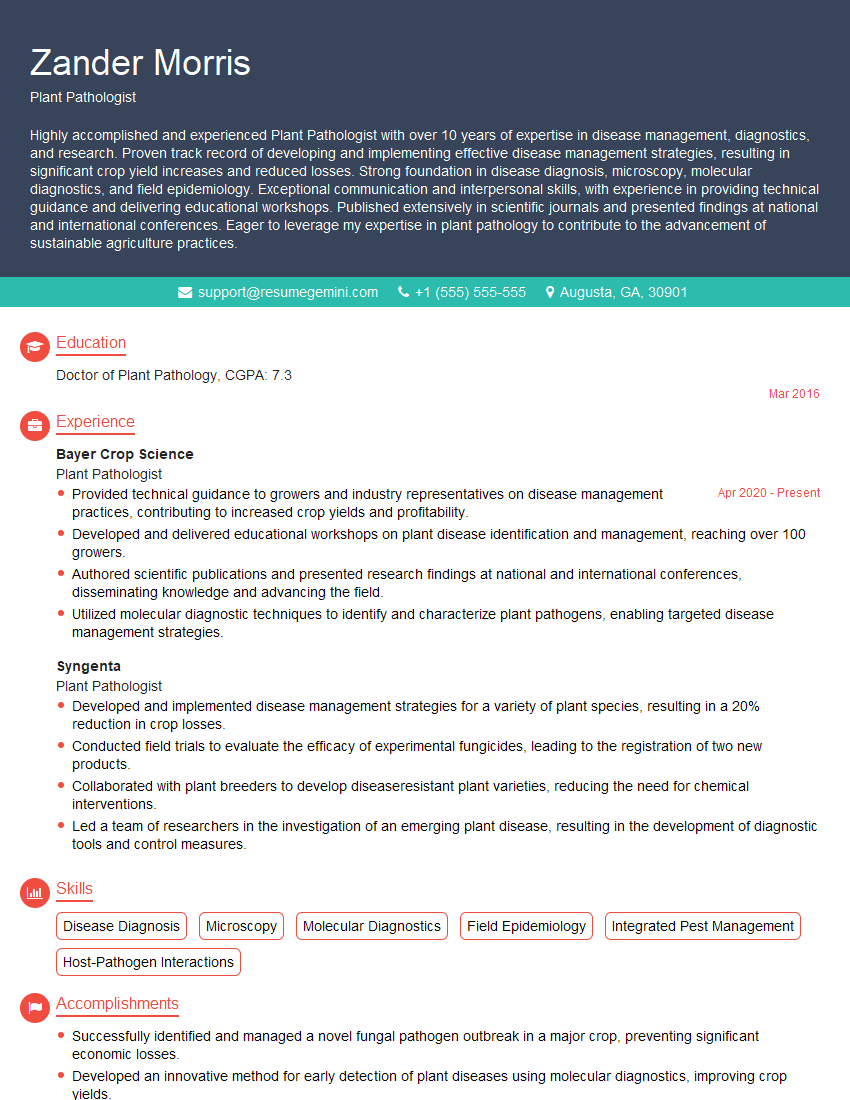
Mastering Plant Disease Identification is crucial for a successful and fulfilling career in agriculture, horticulture, or plant pathology. Strong diagnostic skills are highly sought after, opening doors to diverse opportunities in research, consulting, and regulatory agencies. To maximize your job prospects, crafting a compelling and ATS-friendly resume is essential. ResumeGemini is a trusted resource that can help you build a professional resume tailored to highlight your skills and experience. Examples of resumes specifically tailored for Plant Disease Identification professionals are available, providing valuable templates and guidance to help you present your qualifications effectively.
Explore more articles
Users Rating of Our Blogs
Share Your Experience
We value your feedback! Please rate our content and share your thoughts (optional).
What Readers Say About Our Blog
Very informative content, great job.
good