Cracking a skill-specific interview, like one for Planter Operation, requires understanding the nuances of the role. In this blog, we present the questions you’re most likely to encounter, along with insights into how to answer them effectively. Let’s ensure you’re ready to make a strong impression.
Questions Asked in Planter Operation Interview
Q 1. Describe your experience with different types of planters.
My experience encompasses a wide range of planters, from simple air-seeders ideal for small-scale operations and less demanding crops like wheat, to sophisticated precision planters equipped with advanced technology for high-volume planting of crops like corn and soybeans. I’ve worked with both conventional planters using ground-driven seed meters and more modern electric-driven planters offering greater precision and data acquisition. I’m familiar with various row spacing configurations, ranging from narrow rows for maximizing yield in specific conditions to wider rows better suited to certain soil types and management practices. For example, I’ve extensively used John Deere 1770 planters for large-scale corn planting and Kinze 3600 planters for high-precision soybean planting. My experience also includes working with planters designed for different seed sizes and shapes, adapting techniques for optimal planting based on crop requirements.
Q 2. Explain the process of calibrating a planter for optimal seed spacing and depth.
Calibrating a planter is crucial for achieving the desired seed spacing and planting depth. It’s essentially a process of fine-tuning the planter’s mechanisms to accurately deliver the correct number of seeds at the precise depth for optimal germination. The process usually involves these steps:
- Determine the desired seed population: This is based on factors like soil type, crop variety, and yield goals. Consult seed company recommendations and historical yield data for your specific farm.
- Measure seed size and weight: Use a scale to accurately weigh a sample of seeds to determine the average weight per seed. This is crucial for accurate seed population calculation.
- Calculate the ground speed: Determine the speed the planter will travel at during planting. This information should be fed to the planter’s ground speed input.
- Adjust the planter’s settings: Based on the seed population, seed weight, and ground speed, adjust the planter’s settings. Most planters have adjustments for seed plate selection (for accurate seed singulation) and row unit spacing.
- Conduct a test run: Before planting the whole field, conduct a test run in a small area. Count the number of seeds dropped in a given distance. Compare this to your target population to identify any discrepancies and refine adjustments. This may involve adjusting the seed meter’s speed using the planter’s calibration control.
- Check planting depth: Simultaneously, observe the planting depth. Use a soil probe to check that the seeds are consistently planted at the desired depth. Adjust the down pressure and coulter settings as needed.
Imagine it like baking a cake: you wouldn’t just throw ingredients together, right? You need the right measurements to achieve a perfect result. Planter calibration is like that; the precision ensures a successful harvest.
Q 3. How do you troubleshoot common planter malfunctions, such as seed singulation issues or down pressure problems?
Troubleshooting planter malfunctions requires a systematic approach. For seed singulation issues (seeds not being properly spaced), I’d first inspect the seed plates to ensure they’re appropriate for the seed size and are clean and free of debris. Clogged seed tubes or damaged seed cells are common culprits. I’d also check the seed meter’s drive mechanism for proper function and examine the vacuum system (if applicable) for proper air pressure. Down pressure problems (seeds being planted too shallow or too deep) often point to issues with the down pressure system itself – worn springs, faulty hydraulics, or incorrect calibration. Here’s a breakdown of my troubleshooting strategy:
- Visual Inspection: Start with a thorough visual inspection of all components. Check for any obvious signs of damage, wear, or debris buildup.
- System Checks: Next, systematically check each system: seed metering, down pressure, and row unit components. Are hydraulics working as they should? Are sensors providing accurate readings?
- Test Runs: Conduct short test runs after each potential repair or adjustment to evaluate the effectiveness of your troubleshooting steps.
- Consult Manuals: Consult the planter’s manual for detailed specifications and diagrams.
- Seek Expert Advice: If problems persist, don’t hesitate to contact a qualified mechanic or the planter’s manufacturer.
For example, I once encountered a scenario where inconsistent planting depth was due to worn-out gauge wheels. Replacing them promptly restored consistent planting depth.
Q 4. What are the key factors to consider when selecting the appropriate planter for a specific field and crop?
Selecting the right planter depends on many factors. It’s not just about the brand; it’s a detailed process considering factors like:
- Crop type: Different crops have different seed sizes and planting requirements. Corn planters are significantly different from soybean planters.
- Field size and shape: A large-scale operation necessitates a high-capacity planter with features like auto-swath control and row shutoff to minimize overlap and maximize efficiency. Smaller fields can utilize smaller, more maneuverable planters.
- Soil conditions: Planters with specific components like different coulters and closing wheels are chosen for optimum seed placement depending on soil type (clay soils, sandy soils etc.). For example, no-till planters are critical for minimizing soil disturbance.
- Planting method: No-till, conventional till, or strip-till planting all require different planter configurations. No-till planters use coulters to create small slits for seed placement minimizing soil disturbance.
- Budget and technology: The cost of the planter and its maintenance plays a crucial role. Advanced features like GPS guidance, variable rate technology, and seed monitoring systems increase planting precision but come with a higher cost.
For instance, planting soybeans in a field with heavy clay soil would require a planter with appropriate closing wheels to adequately seal the furrow and improve germination, unlike in a sandy soil where different closing wheels are necessary.
Q 5. Describe your experience with GPS-guided planting systems.
My experience with GPS-guided planting systems is extensive. These systems dramatically improve planting accuracy and efficiency. I’ve worked with various systems that use GPS signals to control planter functions, such as row-by-row shutoff, variable rate planting, and precise row guidance. This technology ensures optimal seed spacing and minimizes overlaps or gaps, resulting in better yields. For example, I’ve used John Deere AutoTrac and Trimble systems to control planting operations. These systems provided real-time data on planting progress, including planting speed, seed population, and row spacing. GPS guidance significantly reduces overlaps and gaps, maximizing the utilization of the planted field. Having this data helps optimize future planting strategies.
Q 6. How do you ensure accurate seed placement and depth control in various soil conditions?
Achieving accurate seed placement and depth control in various soil conditions requires understanding and adapting to the specific challenges of each condition. Heavy clay soils, for instance, require more down pressure to ensure sufficient seed depth, while sandy soils require less pressure to avoid excessively deep planting. Here’s how I address this:
- Adjusting Down Pressure: The planter’s down pressure is critically adjusted based on the soil condition. More pressure is needed for compact soils to achieve the desired depth.
- Coulter Selection: Selecting the appropriate coulters that effectively penetrate the soil depending on the conditions. Different coulter types are selected for different soil conditions.
- Closing Wheel Selection: Using closing wheels that help seal the furrow properly, ensuring sufficient soil contact around the seed and reducing soil moisture loss. Different closing wheels are chosen for different soil conditions.
- Monitoring and Adjustment: Regularly monitoring planting depth and making necessary adjustments to compensate for soil variations. Soil variation across the field calls for on-the-go monitoring and adjustment.
- Technology Integration: Utilizing advanced technology like sensors that measure soil conditions and automatically adjust planting depth in real time. This adds precision to planting, even with soil variations.
Think of it as adjusting your cooking method depending on the type of meat or vegetables – you’d cook a steak differently from a fish. Similarly, planters need adjustments to accommodate different soil conditions to ensure successful planting.
Q 7. Explain the importance of proper planter maintenance and preventative maintenance schedules.
Proper planter maintenance is paramount for ensuring accurate and reliable planting. Neglecting maintenance can lead to costly downtime, reduced planting accuracy, and ultimately, lower yields. Preventative maintenance schedules are crucial.
- Pre-Planting Inspection: A thorough pre-planting inspection involves checking all mechanical components for wear and tear, lubricating moving parts, and ensuring proper functionality of all systems.
- Regular Cleaning: Clean the planter thoroughly after each use to remove soil, debris, and seeds. This prevents build-up and potential malfunctions.
- Component Replacement: Replace worn or damaged parts promptly to avoid further issues. Worn-out gauge wheels, for example, can lead to inconsistent planting depth.
- Calibration Checks: Regularly calibrate the planter to ensure accurate seed spacing and planting depth.
- Scheduled Maintenance: Establish a comprehensive preventative maintenance schedule that includes tasks like lubricating moving parts, inspecting hydraulic systems, and checking electrical connections.
- Record Keeping: Maintaining accurate records of all maintenance activities and noting any issues encountered. This will allow for better planning of future maintenance.
Ignoring preventative maintenance is like ignoring your car’s service schedule. You might save money in the short term, but you’ll pay far more in the long run for costly repairs.
Q 8. How do you manage planter adjustments for varying terrain and field conditions?
Managing planter adjustments for varying terrain and field conditions is crucial for optimal planting. It involves understanding the planter’s capabilities and making real-time adjustments to ensure consistent seed depth, spacing, and firm seed-to-soil contact.
For example, on hilly terrain, I’d adjust the planter’s down pressure to maintain consistent seed depth. On slopes, I might need to reduce the planting speed to prevent skips or doubles. On areas with heavy residue, I’d likely increase the closing wheel pressure to ensure proper seed-to-soil contact. This often involves using the planter’s various control mechanisms, including down pressure adjustments, row unit settings, and possibly altering the speed and depth settings based on real-time feedback from monitoring systems.
I always start by carefully inspecting the field before planting, noting any significant variations in terrain or soil conditions. Then, I use this information to pre-set the planter accordingly. During operation, I closely monitor the planter’s performance using on-board sensors and visual checks of the planted rows. Any necessary fine-tuning is done in response to what I observe.
Q 9. What is your experience with variable rate planting technology?
My experience with variable rate planting (VRP) technology is extensive. VRP allows for precision planting by adjusting planting parameters—seed population, depth, spacing—on-the-go, based on pre-defined prescription maps. These maps are often generated using data from soil sensors, yield maps from previous harvests, or remote sensing technology. This allows for optimized seeding density based on the field’s variable conditions. For instance, in areas with higher soil fertility, we plant at a higher population density to maximize yield potential, while lower-fertility areas would receive a reduced population density to avoid wasting seed.
I’m proficient in using GPS-guided systems, and software interfaces to manage VRP. It’s not just about setting the system up; accurate data management is key to success. I ensure that the prescription maps are accurate, and the planter is properly calibrated and aligned with the GPS system. Regular monitoring and data logging are critical to ensure the VRP system functions as intended and to fine-tune settings during the planting process. Post-planting analysis of the data reveals areas needing adjustments for future planting cycles.
Q 10. Describe your understanding of different planting methods (e.g., no-till, conventional).
I’m familiar with various planting methods, including no-till and conventional tillage. Conventional tillage involves extensive soil preparation, including plowing, disking, and harrowing, before planting. This approach provides a clean seedbed but can lead to soil erosion and compaction. No-till planting, on the other hand, involves planting directly into the residue from the previous crop without significant soil disturbance.
- No-till offers many benefits, including reduced soil erosion, improved water infiltration, and enhanced soil health. However, it often requires specialized planter equipment to handle the residue and ensure proper seed-to-soil contact. This usually involves stronger closing wheels and sometimes coulters to cut through heavy residue. It’s crucial to use precision planting techniques to ensure accurate seed placement.
- Conventional tillage is simpler mechanically, but it can disrupt soil structure and negatively impact soil health over time. The choice of method depends on several factors including soil type, crop rotation, environmental concerns, and available equipment.
I’ve successfully implemented both methods, and my expertise lies in adapting planter settings and techniques to optimize performance based on the chosen method. For example, no-till planting requires a more aggressive closing wheel system to ensure adequate seed-to-soil contact, while conventional planting typically requires less aggressive closing wheels.
Q 11. How do you monitor planter performance and identify areas needing adjustments during operation?
Monitoring planter performance and identifying areas needing adjustments is a continuous process during planting. I use a combination of on-board monitoring systems, visual inspection, and data analysis to assess performance. On-board monitors typically display data on seed spacing, planting depth, down pressure, and skips. These monitors provide real-time feedback, allowing for immediate adjustments to address any problems.
Visual checks of planted rows are equally crucial. I regularly walk behind the planter to inspect the seed placement, spacing, and emergence. This allows me to identify patterns or localized issues that might not be evident from the monitor. Irregular spacing or planting depth variations might suggest issues with the planter’s metering units, row units, or closing wheels. Post-planting, I analyze data from the planter’s monitoring system to identify areas with inconsistent planting. This data analysis aids in determining the cause of any irregularities and makes for effective adjustments and preventive measures in future planting sessions.
Q 12. What are the common causes of seed germination issues related to planter operation?
Seed germination issues linked to planter operation can stem from several factors. Often, incorrect seed depth is a primary culprit. Planting too shallow leaves seeds vulnerable to drying out or being dislodged, while planting too deep hinders emergence. Poor seed-to-soil contact also leads to uneven moisture transfer, impacting germination. This is often linked to inadequate closing wheel pressure or improper seed furrow closure.
Another common problem is planter calibration errors causing inaccurate seed spacing or planting rates. This can result in overcrowding or under-seeding, both affecting germination. In addition, seed damage during planting, from excessive planter pressure or poor seed handling, can also reduce germination rates. Finally, environmental factors such as soil crusting or excessive rainfall after planting can further impact germination regardless of planter operation. Addressing these issues requires preventative measures before and during planting to ensure optimal planting conditions.
Q 13. Explain the safety procedures you follow when operating planting equipment.
Safety is paramount during planter operation. I always begin by performing a thorough pre-operation check of the planter, ensuring all moving parts are functioning correctly and safety devices like shields and guards are in place. This includes checking fluid levels, tire pressure, and the overall mechanical condition. I also wear appropriate personal protective equipment (PPE), including safety glasses, hearing protection, and sturdy work boots.
During operation, I maintain awareness of my surroundings, avoiding distractions, and remaining vigilant for potential hazards. I follow all traffic regulations when operating the planter on public roads, using appropriate safety lights and signaling devices. I also ensure that anyone near the operating planter maintains a safe distance, and I never allow unauthorized personnel to operate or approach the equipment during operation. Regular maintenance and keeping the machine clean are also critical for safe operation.
Q 14. How do you handle unexpected equipment breakdowns in the field?
Unexpected equipment breakdowns are an inevitable part of planting. My response involves a systematic approach to minimize downtime. First, I prioritize safety, securing the planter in a safe location and ensuring the area is clear of hazards. Then, I conduct a preliminary assessment of the problem. I have a detailed understanding of my equipment’s mechanics, and I often have a checklist for troubleshooting.
If the issue is minor and I can resolve it with tools I have readily available, such as simple repairs or adjustments, I complete the repair and resume planting. However, if the problem is complex or requires specialized tools or parts, I contact my support network. This might be a mechanic, parts supplier, or my supervisor. In the meantime, I protect the equipment from further damage. Documentation of breakdowns and repairs is essential for improving preventative maintenance strategies.
Q 15. What is your experience with data logging and analysis related to planter operation?
Data logging and analysis are crucial for optimizing planter operation and maximizing yield. My experience encompasses utilizing various planter-integrated systems and standalone data loggers to record parameters like planting depth, seed spacing, speed, and fertilizer application rates. This data is then analyzed using both proprietary software provided by planter manufacturers and agricultural data analysis platforms. For example, I’ve used John Deere’s Operations Center to identify areas with inconsistent planting depth, allowing me to adjust planter settings and improve precision. I also utilize custom scripts in R and Python to visualize trends and identify potential issues, such as seed-spacing irregularities that could lead to uneven plant growth and reduced yields.
Analyzing this data helps me identify patterns, troubleshoot problems, and make data-driven decisions to enhance planting efficiency and crop performance. For instance, analyzing GPS data alongside yield maps from harvest allows me to pinpoint areas where planter performance directly impacted yield. This iterative process of data collection, analysis, and adjustment leads to continuous improvement in planting practices.
Career Expert Tips:
- Ace those interviews! Prepare effectively by reviewing the Top 50 Most Common Interview Questions on ResumeGemini.
- Navigate your job search with confidence! Explore a wide range of Career Tips on ResumeGemini. Learn about common challenges and recommendations to overcome them.
- Craft the perfect resume! Master the Art of Resume Writing with ResumeGemini’s guide. Showcase your unique qualifications and achievements effectively.
- Don’t miss out on holiday savings! Build your dream resume with ResumeGemini’s ATS optimized templates.
Q 16. How do you manage seed inventory and ensure sufficient supply during planting operations?
Managing seed inventory requires meticulous planning and execution. It starts with accurately estimating seed requirements based on the field area, planting density, and germination rates specific to each seed variety. I utilize seed management software to track inventory levels, order seeds in advance, and coordinate delivery to ensure timely availability. It’s crucial to verify seed quality through germination tests and to store seeds appropriately to maintain viability.
Imagine a scenario where we’re planting a large field of corn. I’d first calculate the required seed quantity using the planned planting rate (e.g., 30,000 seeds per acre) and the field’s acreage. Then, I would compare that figure to my current inventory. If the inventory is insufficient, I’d place an order with a reliable seed supplier, factoring in lead times and potential delays. Proper storage, utilizing suitable containers in a cool, dry location, prevents seed degradation and ensures its quality for optimal planting.
Q 17. Describe your experience working with different types of seeds and their specific planting requirements.
My experience encompasses working with a wide variety of seeds, including corn, soybeans, wheat, and various cover crops. Each seed type has unique planting requirements, such as optimal planting depth, seeding rate, and soil conditions. For example, corn seeds need to be planted deeper than soybeans to reach adequate moisture for germination, while small seeds like alfalfa require more precise placement to avoid overcrowding and improve establishment.
I adapt my planter settings accordingly, adjusting factors such as row spacing, seed metering, and down pressure based on the specific seed type and field conditions. For instance, planting soybeans in heavy clay soil requires less down pressure to avoid soil compaction, while corn in sandy soil might need increased down pressure to ensure consistent planting depth. Furthermore, knowledge of the specific hybrid or variety of the seed helps tailor planting techniques for better germination and yield potential. This may involve understanding any specific requirements for planting depth or seed-to-soil contact.
Q 18. How do you adapt your planting techniques based on weather conditions?
Weather conditions significantly influence planting decisions and techniques. Extreme temperatures, heavy rainfall, or strong winds can all impact planting efficiency and crop establishment. I adapt my planting strategy based on real-time weather forecasts and soil moisture levels.
For instance, during dry conditions, I might adjust planting depth to reach more moist soil layers, and reduce planting speed to allow for better seed-to-soil contact. In case of heavy rainfall, I delay planting to prevent soil compaction and ensure proper drainage. Similarly, strong winds can necessitate changes in planter speed and direction to minimize seed drift or damage. I often rely on soil moisture sensors, weather stations, and remote sensing data to inform these crucial decisions, aiming for optimal conditions to ensure success.
Q 19. What is your understanding of soil compaction and its impact on planting?
Soil compaction is detrimental to plant growth as it restricts root development, reducing access to water and nutrients. This is particularly relevant during planter operation as heavy machinery can compact the soil, creating a barrier that hinders germination and growth.
To mitigate soil compaction, I utilize practices like using planters with reduced-impact tires or tracks, optimizing planter weight distribution, and avoiding planting in excessively wet or dry conditions. No-till farming and cover cropping can also improve soil health and reduce compaction. For example, utilizing a planter equipped with closing wheels specifically designed to minimize soil disturbance improves seed-to-soil contact while reducing compaction. Monitoring soil conditions before, during, and after planting is critical for identifying and addressing compaction issues.
Q 20. Explain the importance of proper fertilizer placement and its relationship to planter operation.
Proper fertilizer placement is essential for optimal crop nutrition and maximizing yield. Planter operation plays a key role in this process, as it allows for precise placement of fertilizer at or near the seed. This method, often referred to as starter fertilizer, provides young seedlings with immediate access to nutrients, improving germination rates and early growth.
Different planter types offer various fertilizer placement options, such as band placement, broadcast application, or in-furrow application. Choosing the right method depends on factors such as the fertilizer type, soil conditions, and crop requirements. For example, placing fertilizer too close to the seed can cause salt injury, while inadequate placement might result in nutrient deficiency. Careful calibration and monitoring of the fertilizer system ensure the right amount of fertilizer is distributed accurately. This precision approach maximizes nutrient uptake and minimizes waste.
Q 21. How do you maintain accurate planting records?
Maintaining accurate planting records is crucial for evaluating performance, optimizing future planting strategies, and complying with regulations. I typically use a combination of in-field data logging from the planter and manual record-keeping to capture essential information.
This information includes field identification, date planted, seed type and variety, planting rate, planting depth, fertilizer type and amount, and any observed issues or adjustments during the planting process. These records are stored both electronically, often in a farm management software, and physically, in a field notebook, for redundancy. This detailed record-keeping allows for a thorough assessment of planting efficiency, identification of areas requiring improvement, and accurate tracking of inputs for cost accounting and yield analysis. Furthermore, this documentation provides a valuable historical record for future planning and decision-making.
Q 22. Describe your experience with different types of planter attachments.
My experience encompasses a wide range of planter attachments, crucial for adapting to diverse field conditions and crop types. I’ve worked extensively with different types of seed meters, from the simple, gravity-fed designs suitable for larger seeds like corn and soybeans, to more precise vacuum and air-assisted meters for smaller seeds like alfalfa or canola. These meters require careful calibration to ensure accurate seed spacing and depth.
Furthermore, I’m proficient with various furrow openers, including double-disc openers for no-till planting, single-disc openers for conventional tillage, and coulters for cutting residue. My experience also includes working with different closing wheels, which are essential for ensuring proper soil-to-seed contact and minimizing seedbed disturbance. The choice of closing wheel greatly influences seed emergence and overall yield. For example, press wheels are ideal for drier conditions, while spiked closing wheels work better in wetter conditions. I’m also familiar with fertilizer attachments, such as row-crop applicators and broadcast spreaders, ensuring that nutrients are delivered efficiently and precisely.
- Example 1: I once optimized a planter’s performance by switching from single-disc openers to double-disc openers in a no-till field, resulting in a 15% increase in emergence rate.
- Example 2: I’ve adjusted vacuum meter settings repeatedly throughout a planting season, responding to changing seed size variations due to environmental impacts during growth.
Q 23. How do you ensure the cleanliness and sanitation of the planter to prevent seed contamination?
Maintaining planter cleanliness and sanitation is paramount to preventing seed contamination and ensuring a successful crop. My approach is multi-faceted and starts before planting even begins. I thoroughly inspect the planter, removing any debris or leftover seed from the previous season. Then, I use high-pressure washers to clean all components, paying special attention to seed hoppers, meters, and tubes. This removes any soil, residue or weed seeds which could contaminate the new seed.
After washing, I disinfect the planter with an approved disinfectant solution to kill any potential pathogens or fungal spores. This is followed by a thorough rinsing to ensure no residue remains. During the planting process, regular checks ensure no blockages occur, which might lead to seed damage and contamination. Finally, after planting, I repeat the cleaning and disinfection process to prepare the planter for storage or the next planting season. Think of it like prepping a kitchen before and after cooking; a clean environment prevents problems.
Q 24. What safety measures do you take to prevent accidents or injuries related to planter operation?
Safety is my top priority during planter operation. I always begin with a pre-operation inspection, checking all moving parts for proper function and ensuring that all safety guards are in place. This includes checking hydraulic lines for leaks, ensuring the PTO (power take-off) shaft is properly engaged, and verifying that the planter is properly calibrated and aligned. Throughout operation, I wear appropriate Personal Protective Equipment (PPE), including safety glasses, hearing protection, and sturdy work boots. I also pay close attention to my surroundings, avoiding hazards such as power lines, ditches, and other obstacles.
I follow all relevant safety regulations and guidelines, including maintaining a safe distance from the planter while it’s in operation. I ensure that only authorized personnel operate the planter and that all workers are aware of the safety procedures. Regular maintenance checks prevent mechanical failures that could cause accidents. For instance, I always check the depth gauge regularly to ensure consistent planting depth and minimize the risk of seed damage or poor germination.
Q 25. Explain your experience with using planter monitoring systems.
My experience with planter monitoring systems is extensive. I’ve worked with various systems, from basic GPS-based systems that track planting progress and create field maps to advanced systems that provide real-time data on seed spacing, depth, and skips. These systems are integrated with displays in the tractor cab, providing detailed visual representations of the planting process. I use this data to identify areas requiring attention, allowing proactive adjustments during the planting process instead of waiting for problems to become apparent.
For example, I’ve used systems that provide real-time feedback on the number of seeds planted per acre, allowing me to make adjustments to the planter’s settings to ensure the desired planting rate is consistently maintained. This has been invaluable in managing seed costs and optimizing yields. Additionally, monitoring systems can identify any planter component issues immediately, preventing larger problems down the line.
Q 26. How do you interpret planting data to make adjustments for improved efficiency?
Interpreting planting data is critical for optimizing efficiency and maximizing yields. I start by reviewing the data collected by the planter’s monitoring system, focusing on key metrics such as seed spacing, planting depth, and skips. Inconsistencies in these metrics can point to potential problems such as planter calibration issues, seed quality problems, or field conditions.
For example, if the data shows inconsistent seed spacing, I might check the seed meter’s settings, the condition of the seed, or the flow of seeds through the planter. If the planting depth is inconsistent, I may need to adjust the planter’s depth gauge or check the condition of the furrow openers. Identifying skips might indicate a blockage or malfunction in the seed delivery system. This data-driven approach allows for targeted adjustments that can significantly improve planting efficiency and yield. The analysis also informs decisions about future planting strategies.
Q 27. Describe a time you had to troubleshoot a complex planter issue.
During a soybean planting operation, we encountered a significant issue where the planter’s vacuum meter was intermittently failing. This resulted in inconsistent seed spacing and numerous skips, threatening the entire planting operation. The initial troubleshooting involved checking all electrical connections, vacuum hoses, and the meter itself, but we couldn’t identify the cause.
After systematically reviewing the planter’s manual and conducting further tests, we discovered that a small debris particle was causing the vacuum valve to stick intermittently. We carefully cleaned the valve and replaced a worn-out o-ring, resolving the issue. This experience highlighted the importance of meticulous troubleshooting, systematic checks and having a solid understanding of the planter’s mechanics. The quick resolution minimized planting delays and ultimately secured a successful planting season.
Q 28. How do you stay up-to-date with the latest advancements in planter technology?
Staying current with advancements in planter technology is crucial for maintaining my expertise. I regularly attend industry conferences, workshops, and training sessions focusing on precision agriculture and planter technology. I actively participate in online forums and subscribe to industry publications and journals. These resources offer insights into the latest innovations, such as advancements in seed metering, precision planting technology, and data analytics capabilities.
I also connect with equipment manufacturers and representatives to stay informed about new product releases and technological updates. Through hands-on experience with different planter models, I gain a deeper understanding of their features and functionalities. Continuous learning ensures that I employ the most efficient and effective planting techniques, always aiming for the best possible yields.
Key Topics to Learn for Planter Operation Interview
- Planter Calibration and Setup: Understanding the process of calibrating a planter for accurate seed spacing, depth, and population. This includes knowledge of different planter types and their specific calibration needs.
- Seed Handling and Metering: Explain the mechanisms involved in ensuring consistent seed delivery. Discuss troubleshooting issues like seed blockage, double planting, or skipping.
- Row Unit Maintenance and Adjustment: Describe routine maintenance procedures, including lubrication, cleaning, and component adjustments to ensure optimal planter performance. Know how to identify and address common mechanical problems.
- Precision Planting Technologies: Familiarity with GPS guidance systems, variable rate technology (VRT), and other precision agriculture tools used in modern planter operation. Discuss how these technologies improve efficiency and accuracy.
- Data Interpretation and Analysis: Explain how data collected during planting operations (e.g., planting maps, yield data) is used to improve future planting strategies and optimize yields. Discuss the importance of record-keeping.
- Safety Procedures and Regulations: Detail the safety protocols associated with operating agricultural machinery, including pre-operational checks, personal protective equipment (PPE), and emergency procedures.
- Soil Conditions and Their Impact: Explain how different soil types and conditions affect planter operation and how to adjust planting techniques accordingly. This includes considerations like soil moisture, compaction, and residue management.
- Troubleshooting and Problem-solving: Describe your approach to diagnosing and resolving mechanical issues that might arise during planting operations. Highlight your analytical skills and ability to identify root causes.
Next Steps
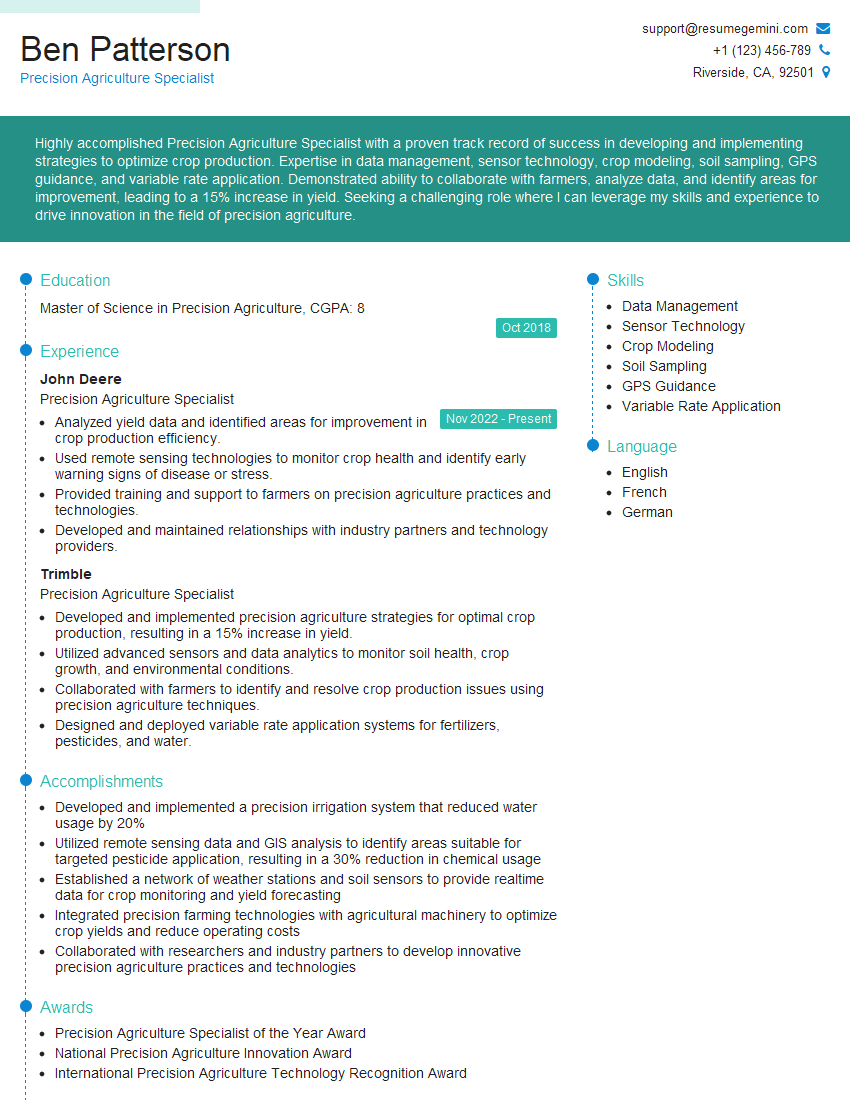
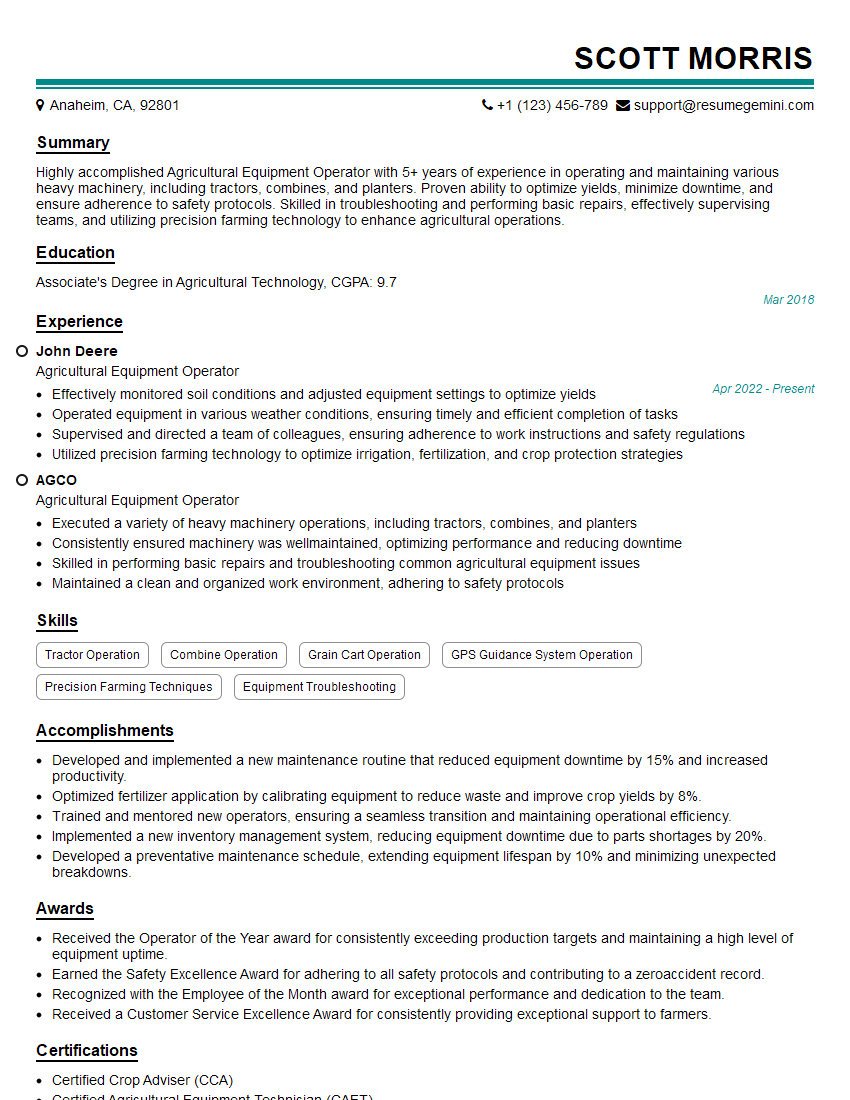
Mastering planter operation is crucial for a successful and rewarding career in agriculture. It demonstrates your technical skills, problem-solving abilities, and commitment to precision and efficiency. To significantly enhance your job prospects, it’s essential to create an ATS-friendly resume that highlights your relevant experience and skills. ResumeGemini is a trusted resource that can help you build a professional and impactful resume designed to get noticed by recruiters. Examples of resumes tailored to Planter Operation are available within ResumeGemini to guide you through the process.
Explore more articles
Users Rating of Our Blogs
Share Your Experience
We value your feedback! Please rate our content and share your thoughts (optional).
What Readers Say About Our Blog
Very informative content, great job.
good