Every successful interview starts with knowing what to expect. In this blog, we’ll take you through the top Plate Bending interview questions, breaking them down with expert tips to help you deliver impactful answers. Step into your next interview fully prepared and ready to succeed.
Questions Asked in Plate Bending Interview
Q 1. Explain the different types of plate bending processes.
Plate bending processes are broadly categorized based on the method used to apply the bending force. Each method offers unique advantages and disadvantages depending on the material, desired bend radius, and production volume.
- Press Brake Bending: This is the most common method, using a press brake machine with a punch and die to bend the plate. It’s highly versatile and suitable for various materials and thicknesses. Think of it like a giant pair of scissors that bends the metal instead of cutting it.
- Roll Bending: This process uses three rollers to gradually bend the plate into a cylindrical or conical shape. It’s ideal for creating large radius bends and long parts, like curved sections of bridges or large pipes. Imagine rolling out dough into a long, thin cylinder – that’s the basic principle.
- Brake Press Bending with Bottoming Die: Similar to press brake bending, but the die completely encloses the material, eliminating air gaps. This offers better accuracy and repeatability, especially for complex bends. It is similar to using a cookie cutter to shape dough, creating a defined form.
- Spinning: A rotary process where a rotating tool shapes a flat plate against a die. This process is better for specific shapes and materials requiring very controlled deformation and often done manually. It’s like sculpting metal into a desired form.
- Hammer Forming: Involves manually using hammers or pneumatic hammers to bend the plate against a die or form. Less precise than the other methods, it is largely used for unique shapes or small productions.
Q 2. Describe the factors influencing the springback in plate bending.
Springback, the elastic recovery of a plate after bending, is influenced by several factors:
- Material Properties: The material’s elastic modulus (Young’s modulus) and yield strength are key. Higher modulus materials have greater springback, while higher yield strength materials exhibit less.
- Bend Radius: Smaller bend radii result in more significant springback because the material is more severely stressed.
- Plate Thickness: Thicker plates generally exhibit less springback than thinner ones.
- Friction between the Plate and the Die: Higher friction reduces springback. Lubricants can influence this significantly.
- Bending Angle: Larger bend angles generally increase springback.
- Die geometry: The angle and radii of the bending die also influence the amount of springback.
To mitigate springback, bending beyond the desired angle (overbending) is often employed to compensate for the elastic recovery. This requires careful calculation and understanding of the material’s behavior.
Q 3. How do you calculate the bending force required for a specific plate?
Calculating the bending force is complex and depends on many factors, but it generally follows this principle:
The required bending force (F) is roughly proportional to the material’s yield strength (σy), the plate thickness (t), and the bend radius (R). It’s also inversely proportional to the bend angle.
Simpler formulas can be used for basic scenarios, often including a factor for material and geometry; however, more sophisticated Finite Element Analysis (FEA) is often used for complex shapes and material behavior.
Simplified Formula (for illustrative purposes ONLY – actual calculations are far more complex):
F ≈ k * σy * t * LWhere:
Fis the bending forcekis a constant that depends on the bending process and material; a rough estimate is between 1 and 2σyis the yield strength of the materialtis the plate thicknessLis the length of the bend
Note: This is a highly simplified representation. Accurate calculation requires considering the specific bending process, material properties, and tooling geometry. Software tools and experienced engineers are necessary for precise force calculations.
Q 4. What are the common defects found in plate bending and how are they prevented?
Common defects in plate bending include:
- Springback: Already discussed, this is the elastic recovery after bending, leading to inaccurate bend angles.
- Wrinkling: Compression stresses during bending can cause wrinkling, particularly in thin plates with small bend radii. This occurs when a small amount of force is causing the plate to collapse within itself.
- Fracture/Cracking: Excessive bending force or sharp bends can lead to fracture, especially in brittle materials.
- Yielding: Beyond the elastic limit, the material undergoes permanent deformation, leading to dimensional inaccuracies.
- Surface defects: Scratches, dents, or marks from tooling can appear on the plate surface.
- Out-of-plane bending: Bending in a direction other than the desired direction
Prevention strategies involve:
- Careful die selection: Proper die radius and geometry.
- Appropriate bending force: Controlled bending process with sensors and feedback.
- Lubrication: Reducing friction to minimize springback.
- Material selection: Choosing a suitable material with appropriate ductility and strength.
- Proper clamping: Secure clamping to prevent slippage and maintain alignment.
- Overbending: To compensate for springback.
- Good machine maintenance: Regular inspection and maintenance of the bending equipment.
Q 5. Explain the role of die selection in plate bending.
Die selection is critical in plate bending. The die’s geometry directly influences the accuracy, quality, and efficiency of the bending process. An improperly chosen die can result in defects like springback, wrinkling, or cracking.
Factors to consider in die selection include:
- Bend radius: The die should have a radius appropriate to the desired bend and the plate thickness.
- Die material: The die material must be sufficiently hard and wear-resistant to withstand the bending forces.
- Die surface finish: A smooth surface finish minimizes surface defects on the bent plate.
- Die life: A longer-lasting die is economically beneficial.
- Material Compatibility: The die material should not react negatively with the plate material.
- Tolerance: The die must have tight tolerances to ensure dimensional accuracy.
For example, bending a thin, brittle material requires a die with a larger radius to avoid cracking, while thicker ductile materials can tolerate smaller radii.
Q 6. Describe the different types of bending dies used in plate bending.
Several types of bending dies are used in plate bending, each designed for specific applications:
- V-dies: Common for simple bends, these dies have a V-shaped groove. They are simple, economical, and easy to use but might not be ideal for tight radii or complex shapes.
- Gooseneck dies: Offer better control over the bend angle and reduce springback compared to V-dies. The curve of the die is gentler than that of a V-die, allowing for more controlled bending of thinner materials.
- Bottoming dies: Completely enclose the material, providing greater control and accuracy. They typically create very sharp, precise bends and are favored when high accuracy and repeatability are essential.
- Multi-radius dies: Used for complex bends with multiple radii in a single operation.
- Air bending dies: These dies use air pressure to support the material and often produce less stress on the material.
- Wiper dies: Used to create a consistent bend along the entire length of the plate, minimizing inconsistencies.
The choice of die type depends on factors such as the desired bend radius, material properties, and required accuracy.
Q 7. How do you determine the appropriate bending radius for a given plate thickness and material?
Determining the appropriate bending radius involves a balance between achieving the desired bend and avoiding defects. There isn’t a single formula; it’s an iterative process involving material properties and engineering judgment. Industry standards and established rules of thumb can guide this decision.
Consider these factors:
- Material: Ductile materials allow for tighter radii, while brittle materials require larger radii to avoid cracking. Consult material datasheets for recommended minimum bend radii.
- Plate thickness: Thicker plates necessitate larger radii to reduce bending stresses.
- Desired bend quality: High-quality bends with minimal springback and wrinkling require more generous radii.
- Tooling capabilities: The available dies and bending equipment influence the feasible bend radii.
Often, a minimum bend radius (MBR) is specified for the material. This MBR is the smallest radius that can be achieved without causing significant issues like cracking or excessive springback. You’ll often find this information in material data sheets, or you can consult with material suppliers or use FEA simulations for a specific material and geometry.
Q 8. What safety precautions should be taken during plate bending operations?
Safety is paramount in plate bending. Think of it like this: you’re working with powerful machinery and heavy metal; a single mistake can have serious consequences. Therefore, a comprehensive safety protocol is crucial.
- Personal Protective Equipment (PPE): Always wear safety glasses, hearing protection, steel-toe boots, and gloves appropriate for the material being handled. For extremely hot materials, consider heat-resistant gloves and clothing.
- Machine Guards: Ensure all machine guards are in place and functioning correctly. Never operate a machine with a faulty guard.
- Proper Training: Only trained and authorized personnel should operate plate bending machines. Knowing the machine’s controls and limitations is vital.
- Clear Workspace: Maintain a clean and organized workspace. Clutter can lead to accidents. Keep tools and materials stored safely away from the bending area.
- Emergency Procedures: Know the location of emergency shut-off switches and be familiar with emergency procedures in case of an accident. Regular safety drills can reinforce this knowledge.
- Material Handling: Use appropriate lifting techniques and equipment to handle heavy plates. Never attempt to lift a plate beyond your physical capabilities.
For example, I once witnessed an accident where an operator failed to use safety glasses, resulting in a metal shard causing a serious eye injury. This highlights the importance of adhering to safety protocols at all times.
Q 9. How do you ensure dimensional accuracy in plate bending?
Achieving dimensional accuracy in plate bending is critical for producing high-quality parts. It’s like baking a cake – precision in the ingredients and process leads to a perfect result. We use a multi-pronged approach:
- Accurate Measurements: Precisely measure the plate’s dimensions before bending. Using calibrated measuring tools is essential.
- Proper Tooling: Employ tooling specifically designed for the desired bend radius and plate thickness. Using the wrong tooling can lead to inaccurate bends.
- Machine Calibration: Regularly calibrate the bending machine to ensure its accuracy. This involves checking the machine’s settings and making any necessary adjustments.
- Controlled Bending Process: Follow the bending process meticulously. Avoid applying excessive force or pressure, as this can cause inaccuracies.
- Post-Bend Inspection: Inspect the bent plate after completion to verify its dimensions. Use precision measuring tools to check the bend radius, angles, and overall dimensions against the specifications. Any deviation should be documented and analyzed.
For instance, in aerospace manufacturing, even minor deviations from the specified dimensions can compromise the structural integrity of the aircraft component. Therefore, meticulous attention to dimensional accuracy is crucial.
Q 10. Explain the use of tooling and fixturing in plate bending.
Tooling and fixturing play a crucial role in plate bending. They’re the guides and supports that ensure consistent, accurate bends. Think of them as the molds and supports in a bakery. They provide:
- Dies: These are the metal forms that shape the plate during bending. Different dies exist for various bend radii and plate thicknesses. The die’s shape directly impacts the final bend.
- Punches: These work in conjunction with dies, applying pressure to bend the plate. Precision-machined punches ensure consistent bend angles.
- Bending Blocks: These support the plate during bending, preventing distortion or buckling. They help distribute the bending force evenly.
- Clamps and Fixtures: These hold the plate securely in place during the bending process. This prevents slippage and ensures accurate placement of the bend.
For example, when bending a complex shape, specialized tooling with multiple dies and bending blocks might be required to achieve the desired outcome. The selection of appropriate tooling is a key decision in the bending process.
Q 11. Describe the process of setting up a plate bending machine.
Setting up a plate bending machine involves a methodical approach. It’s like preparing a complex recipe – each step needs to be followed carefully.
- Machine Inspection: Start with a thorough inspection of the machine, checking for any damage, loose parts, or obstructions.
- Tooling Selection: Choose the correct dies and punches based on the plate material, thickness, and desired bend radius. This is crucial for accurate bending.
- Die and Punch Installation: Securely install the selected dies and punches into the machine, ensuring proper alignment. Incorrect installation can lead to damage or inaccurate bends.
- Plate Placement: Carefully position the plate on the bending blocks, ensuring it is securely clamped and aligned correctly. Improper placement can lead to inconsistent bends or damage to the plate.
- Machine Settings: Set the machine’s controls, such as the bend angle and pressure, according to the project specifications. Incorrect settings can lead to inaccurate or damaged parts.
- Test Bend: Perform a test bend on a scrap piece of material to ensure the machine’s settings and tooling are correct. This step helps avoid costly mistakes on the actual workpiece.
A real-world example is setting up a press brake to bend a series of automotive panels. Each panel might require different tooling and machine settings, underscoring the importance of precise setup.
Q 12. How do you troubleshoot common problems encountered during plate bending?
Troubleshooting plate bending problems requires systematic diagnosis. It’s a bit like detective work, identifying clues to pinpoint the source of the problem.
- Inaccurate Bends: This could be due to incorrect machine settings, faulty tooling, or improper plate placement. Check these factors first.
- Plate Damage: Damage like cracking or buckling can result from excessive force, incorrect tooling, or material defects. Examine the plate and the bending process.
- Machine Malfunctions: Mechanical issues within the machine can cause bending errors. Consult the machine’s manual or call for professional service.
- Tooling Wear: Worn dies and punches can lead to inaccurate bends. Inspect the tooling for wear and tear, and replace if necessary.
For instance, if the bends are consistently off by a few degrees, the issue might lie with the machine’s calibration or a worn punch. A systematic approach allows for efficient problem solving.
Q 13. What are the different types of plate bending machines?
Several types of plate bending machines exist, each suited to different applications and plate sizes. Think of them as specialized tools for different tasks.
- Press Brakes: These are commonly used for bending relatively thin plates. They use a punch and die system to bend the material.
- Roll Bending Machines: These are used for bending longer, heavier plates into curves. They utilize three rolls to gradually bend the material.
- Rotary Draw Bending Machines: These are ideal for bending tubes and pipes, but also can be used for specialized plate bending operations requiring complex curves.
- CNC Press Brakes: These are computer-controlled press brakes offering higher accuracy and repeatability. This is especially helpful for complex shapes and high-volume production.
Choosing the right machine depends on factors such as the plate thickness, length, desired bend radius, and the volume of parts to be produced.
Q 14. Explain the advantages and disadvantages of different plate bending methods.
Different plate bending methods offer advantages and disadvantages. The best choice depends on the specific application.
- Press Brake Bending:
- Advantages: High accuracy, relatively fast for single bends, versatile tooling.
- Disadvantages: Limited to relatively thin plates, not ideal for complex curves.
- Roll Bending:
- Advantages: Suitable for long, heavy plates, can create complex curves.
- Disadvantages: Lower accuracy compared to press brakes, slower process.
- Rotary Draw Bending:
- Advantages: Creates tight, consistent radius bends, suitable for various materials.
- Disadvantages: Can be more expensive than other methods, requires specialized tooling and expertise.
For instance, when producing large quantities of simple parts with tight tolerances, a CNC press brake is an excellent choice. However, for long, curved parts, roll bending would be more suitable. The selection should always be driven by the project’s specific needs.
Q 15. How do you interpret engineering drawings related to plate bending?
Interpreting engineering drawings for plate bending requires a keen eye for detail and a solid understanding of geometric tolerances. I begin by identifying the plate’s dimensions, material specifications (including thickness and grade), and the desired bend angles and radii. Crucially, I look for annotations specifying bend allowances, which are crucial for accurate bending. I also pay close attention to any surface finish requirements or tolerances on the final dimensions. For instance, a drawing might specify a ±0.5mm tolerance on the final length after bending. Any notes on the method of bending (e.g., air bending, press bending) are also carefully noted. I often use CAD software to visualize the 3D model of the bent plate, ensuring the drawing’s specifications are achievable and realistic before proceeding.
For example, I might see a drawing specifying a 90-degree bend on a 6mm thick steel plate with a specified inside bend radius of 12mm. This information guides me in selecting the appropriate bending machine and die set to achieve the required bend accurately and efficiently.
Career Expert Tips:
- Ace those interviews! Prepare effectively by reviewing the Top 50 Most Common Interview Questions on ResumeGemini.
- Navigate your job search with confidence! Explore a wide range of Career Tips on ResumeGemini. Learn about common challenges and recommendations to overcome them.
- Craft the perfect resume! Master the Art of Resume Writing with ResumeGemini’s guide. Showcase your unique qualifications and achievements effectively.
- Don’t miss out on holiday savings! Build your dream resume with ResumeGemini’s ATS optimized templates.
Q 16. Describe your experience with CNC controlled plate bending machines.
My experience with CNC-controlled plate bending machines is extensive. I’m proficient in programming and operating various models, including those from leading manufacturers. I’m familiar with both the manual programming of bend parameters and the use of CAM software to generate optimized bending sequences. This includes setting up the machine, selecting appropriate tooling (dies and punches), and performing pre-bend simulations to fine-tune parameters like bending pressure, speed, and back gauge positioning to minimize springback. I understand the importance of regular maintenance and calibration to maintain accuracy and prevent damage to the machine or the workpiece. My experience extends to troubleshooting common issues, such as die wear, misalignment, and programming errors.
For instance, I recently worked on a project involving the bending of several hundred stainless steel parts with complex geometries. Using a CNC press brake and offline programming software, I developed a highly efficient bending sequence that minimized setup time and produced parts consistently within tight tolerances. This significantly reduced production time and costs.
Q 17. How do you ensure the quality of the finished bent plate?
Ensuring the quality of a finished bent plate involves a multi-stage process starting even before the bending operation itself. This begins with verifying the material’s quality, checking for surface imperfections, and confirming its dimensions against the drawing. After bending, a thorough inspection is carried out, verifying the bend angle, radius, and overall dimensions using precision measuring tools like angle finders, calipers, and height gauges. Visual inspection checks for signs of defects such as cracks, dents, or surface imperfections. I often utilize specialized gauges to check the bend radius within tolerances. In some high-precision applications, 3D scanning or coordinate measuring machines (CMMs) are used for precise dimensional verification.
For example, if a drawing specifies a 90-degree bend with a ±1-degree tolerance, our quality control process ensures every part falls within this range. If any deviation is found, the root cause (machine miscalibration, material defects, etc.) is identified and corrected before continuing production.
Q 18. Explain the concept of material yield strength and its relevance to plate bending.
Yield strength is the stress at which a material begins to deform plastically. It’s a crucial material property in plate bending because it dictates the material’s resistance to permanent deformation. In simpler terms, it tells us how much force is needed to bend the plate without causing it to permanently distort or break. The yield strength dictates the minimum force required to achieve the desired bend angle and the selection of appropriate bending equipment. A material with a higher yield strength will require a greater bending force. If the applied bending force exceeds the material’s yield strength, the plate will undergo plastic deformation resulting in a permanent change in its shape, potentially exceeding acceptable tolerances.
Understanding yield strength allows for accurate calculation of bending force and the selection of suitable bending tools. For example, a higher-strength steel will need a more powerful press brake than a thinner, lower-strength aluminum sheet.
Q 19. How do you handle different materials during plate bending (e.g., stainless steel, aluminum)?
Handling different materials during plate bending requires adapting techniques and parameters based on their specific properties. Stainless steel, for instance, is known for its work hardening (it gets stronger with each deformation), requiring careful control of bending speed and pressure to avoid cracking. Aluminum, on the other hand, is more susceptible to scratching and marring and requires gentler handling and potentially specialized tooling to minimize surface damage. I carefully adjust bending parameters like die radius, press brake tonnage, and bending speed to suit the material. Lubricants or specialized tooling are also employed to reduce friction and minimize material deformation.
For example, when bending stainless steel, I might use a slightly larger die radius and a slower bending speed to minimize work hardening and reduce the risk of cracking. With aluminum, I’d be more cautious about surface protection and would select appropriate tooling to avoid scratching.
Q 20. Describe your experience with different bending techniques (e.g., air bending, bottom bending).
I have experience with various bending techniques, including air bending, bottom bending (also known as coining), and press braking. Air bending uses a punch and die to create a bend without completely forming the material to the die’s radius. Bottom bending involves completely forming the metal to the shape of the lower die, resulting in a more precise and sharper bend but with potential for material stretching. Press braking is the most common industrial method using a hydraulic press to bend plates. The choice of technique depends on factors like material properties, desired bend accuracy, and production volume.
Air bending is often preferred for its versatility and speed, while bottom bending is better suited for high-precision bends requiring tight radii. Press braking provides the necessary force for thick materials. Choosing the right technique is vital for achieving the desired quality and efficiency.
Q 21. How do you calculate the material allowance for bending?
Calculating material allowance for bending accounts for the added length of material needed to compensate for the material’s elongation during bending. This allowance prevents the final part from being shorter than the design specifications due to the plastic deformation during the bending process. The calculation is dependent on the bend angle, material thickness, and bend radius. Several formulas exist, and the most suitable depends on the bending technique employed. The K-factor method is widely used; it takes into consideration the material properties and the bending process.
The formula typically includes variables like bend allowance (BA), material thickness (t), bend deduction (BD), inside bend radius (R), and bend angle (α). For example, a common simplified formula (which doesn’t account for K-factor) for calculating bend allowance is: BA = (α/360) * π * (R + t/2) where α is in degrees. Using accurate formulas and considering the specific machine and material guarantees parts will conform to specified dimensions.
Q 22. What are the limitations of plate bending processes?
Plate bending, while a versatile process, has several limitations. These limitations primarily stem from material properties, equipment capabilities, and the complexity of the desired shape.
- Material limitations: Brittle materials are prone to cracking during bending, while very ductile materials might exhibit excessive springback (the tendency of the material to return to its original shape after bending). The thickness and yield strength of the plate significantly influence the achievable bend radius and the possibility of wrinkling or buckling, especially in thinner plates.
- Equipment limitations: The capacity of the bending machine limits the size and thickness of the plates that can be processed. Die design also plays a crucial role; improperly designed dies can lead to uneven bends, surface damage, or even catastrophic failure. The machine’s precision influences the accuracy of the bend angle and radius.
- Geometric complexity: Producing intricate shapes often requires multiple bending operations or specialized tooling, adding cost and complexity to the process. Sharp corners and very small bend radii are challenging to achieve without compromising material integrity or requiring complex fixturing.
- Springback: This is a major challenge requiring precise calculation and compensation during the bending process. Springback prediction is often based on empirical formulas or simulation software to adjust bending angles accordingly for a desirable final shape.
For example, attempting to bend a thick, high-strength steel plate with a small radius on a machine with insufficient tonnage would likely result in machine overload or material failure. Similarly, bending a thin aluminum sheet with sharp corners could lead to wrinkling or cracking due to the material’s tendency to buckle under compressive stress.
Q 23. How do you maintain and perform basic repairs on plate bending equipment?
Maintaining and repairing plate bending equipment is crucial for safety and operational efficiency. Regular maintenance includes:
- Lubrication: All moving parts, including hydraulic cylinders, bearings, and guide ways, need regular lubrication using the manufacturer-recommended lubricants. Insufficient lubrication can lead to increased friction, wear, and eventual component failure.
- Inspection: Regularly inspect hydraulic hoses for leaks, cracks, or damage. Check for wear on dies, rollers, and other components. Tighten loose bolts and replace worn parts as necessary.
- Cleaning: Remove debris and metal shavings regularly to prevent damage to moving parts and ensure accurate bending.
- Calibration: Periodic calibration of the bending machine ensures accuracy in bend angles and radii. This is typically done using precision measuring tools and following manufacturer guidelines.
Basic repairs often involve replacing worn or damaged parts, such as hydraulic seals, bearings, or rollers. More complex repairs might require specialized tools and expertise, and should be handled by qualified technicians. For example, replacing a worn bending die might involve carefully removing the old die and installing a new one, ensuring proper alignment to maintain bending accuracy. Any repairs involving hydraulics should only be undertaken by individuals with appropriate training to avoid hydraulic fluid leaks or pressure-related injuries.
Q 24. Explain the importance of proper lubrication in plate bending.
Proper lubrication is paramount in plate bending for several reasons:
- Reduced Friction: Lubrication minimizes friction between moving parts, reducing wear and tear on expensive components like rollers, bearings, and hydraulic cylinders. This extends the lifespan of the machine and reduces maintenance costs.
- Improved Efficiency: Less friction leads to smoother operation, allowing for more precise and consistent bending. It also reduces the power required to bend the plate, improving efficiency and reducing energy consumption.
- Enhanced Accuracy: Smoother movement and reduced friction contribute to improved accuracy in bend angles and radii. This is especially important for precision applications.
- Prevents Damage: Insufficient lubrication can cause overheating, which can damage components and even lead to catastrophic failure. It can also result in scuffing or scratching of the plate’s surface.
Think of it like lubricating the hinges of a door – without lubrication, the door would become stiff, difficult to open and close, and eventually break down. Similarly, in plate bending, proper lubrication ensures the smooth and efficient operation of the machine, prolonging its lifespan and maintaining its accuracy.
Q 25. Describe your experience with different types of bending dies and their applications.
My experience encompasses a wide range of bending dies, each suited for specific applications:
- V-dies: These are the most common type, used for simple bends with a consistent radius. They are relatively inexpensive and easy to use but limited in their ability to create complex shapes.
- Gooseneck dies: Used for bending small radii, they are ideal for tight bends. However, they can be more expensive and require careful setup and operation to avoid damaging the plate.
- W-dies: Designed for bending large, heavy plates, they distribute the bending force over a wider area, minimizing the risk of wrinkling or buckling.
- Multi-radius dies: These can produce bends with multiple radii in a single operation, reducing the need for multiple setups and improving efficiency. They are often custom-designed for complex shapes.
- Air bending dies: Air bending uses a punch and die to form the bend, offering more flexibility in terms of the achievable radii and shapes compared to traditional press brake bending. They are particularly useful for applications requiring a wide variety of bend shapes.
The choice of die depends heavily on the material properties, the desired bend radius and angle, the plate thickness, and the overall complexity of the shape. For instance, bending a thin sheet metal part with a tight radius would necessitate the use of a gooseneck die, whereas forming a large, thick steel plate would require a W-die or possibly a combination of dies for complex shapes.
Q 26. How do you handle complex geometries during plate bending?
Handling complex geometries in plate bending often requires a multi-stage approach combining careful planning, specialized tooling, and potentially multiple bending operations. The process typically involves:
- Detailed Design and Simulation: Using CAD software to create a detailed 3D model of the part, allowing for accurate calculation of bend allowances and springback compensation. Simulation software can predict the final shape and identify potential problems before the actual bending operation.
- Custom Tooling: Complex shapes often necessitate custom-designed dies and fixtures to ensure accurate and consistent bending. These might involve using multiple dies or incorporating additional features to support the plate during the bending process.
- Incremental Bending: Breaking down the bending process into a series of smaller, simpler bends can simplify the task and improve accuracy, especially for curved or multi-radius shapes.
- Fixturing: Using appropriate fixtures to support the plate during bending, preventing warping or distortion. Precise clamping and positioning are crucial to achieving the desired accuracy.
- Post-Bending Processes: Operations such as trimming, grinding, or finishing may be required to refine the shape and ensure the final dimensions meet the specifications.
For example, creating a complex curved panel for an aircraft might involve a series of bends using multi-radius dies, carefully planned bending sequences, and specialized fixturing to hold the part in position during each bend. Simulation software is essential to predict and mitigate any potential springback and ensure the final dimensions are within tolerance.
Q 27. What software or programs are you familiar with for designing or simulating plate bending?
I’m proficient in several software packages used for plate bending design and simulation, including:
- Autodesk Inventor: This is a powerful 3D CAD software widely used for designing parts and assemblies, including complex sheet metal components. It includes advanced sheet metal tools for unfolding, bending, and simulating the bending process.
- SolidWorks: Another industry-standard CAD package offering similar sheet metal design and simulation capabilities. Its powerful simulation tools help predict springback and other bending phenomena.
- Siemens NX: A comprehensive CAD/CAM/CAE software suite commonly used in advanced manufacturing. It provides robust capabilities for sheet metal design, simulation, and CNC programming for automated bending processes.
- Dedicated Plate Bending Simulation Software: Several specialized software packages are available for highly accurate prediction of bend shapes, springback, and stress distribution in complex plate bending operations. These often include advanced material models and finite element analysis (FEA) capabilities.
These programs allow for accurate design, simulation, and optimization of the bending process, minimizing material waste and ensuring the final product meets the required specifications.
Q 28. Describe a situation where you had to solve a challenging problem related to plate bending.
I once faced a challenging situation involving the bending of a large, stainless steel plate with a complex, asymmetrical shape. The project required extremely tight tolerances, and the material was susceptible to cracking due to its high strength and relatively thin thickness.
Initially, we attempted to bend the plate using a standard press brake and V-dies. However, this resulted in inconsistent bends and significant springback. Furthermore, several cracks appeared near the sharpest bends during the process, leading to material waste.
To solve this, we implemented the following steps:
- Redesign using CAD: We carefully redesigned the part in a CAD software to incorporate larger bend radii where possible, minimizing the risk of cracking. We also simulated the bending process using FEA to predict springback and identify potential problem areas.
- Custom tooling: We designed and manufactured a custom bending die to accommodate the complex shape and apply the bending force more uniformly. This die incorporated multiple bending stages to gradually form the desired shape, reducing stress concentrations.
- Pre-bending: To compensate for the material’s springback, we employed a pre-bending technique, deliberately bending the plate slightly beyond its final intended shape. The simulation data was crucial in determining this pre-bend angle.
- Controlled bending speed: Slow and controlled bending speeds were used to minimize the risk of cracking and uneven bends.
By implementing this revised approach, we successfully bent the plate to the required specifications without cracks, demonstrating the importance of careful planning, accurate simulation, and the use of appropriate tooling when handling complex geometries and high-strength materials.
Key Topics to Learn for Plate Bending Interview
- Plate Material Properties: Understanding the mechanical properties of different materials (steel, aluminum, etc.) and their impact on bending processes.
- Bending Techniques: Familiarize yourself with various bending techniques like press braking, roll bending, and their applications in different industries.
- Die Selection and Design: Learn about selecting appropriate dies based on plate thickness, material, and desired bend radius. Understanding die design principles is crucial.
- Springback Compensation: Mastering the calculation and compensation for springback—the elastic recovery of the plate after bending—is essential for achieving precise dimensions.
- Bend Allowance Calculation: Understand the formulas and methods for accurately calculating the bend allowance to ensure the final product meets specifications.
- Safety Procedures and Regulations: Demonstrate knowledge of safety protocols and industry regulations related to plate bending machinery and operations.
- Troubleshooting and Problem Solving: Be prepared to discuss common issues encountered during plate bending (e.g., cracking, wrinkling) and your approach to resolving them.
- Quality Control and Inspection: Understand quality control measures, inspection techniques, and how to ensure the final bent plate meets quality standards.
- Machine Operation and Maintenance: Showcase your familiarity with different types of plate bending machines and their maintenance requirements.
- Advanced Bending Techniques (if applicable): Explore more advanced techniques like 3-point bending, V-bending, or specialized bending processes relevant to your target roles.
Next Steps
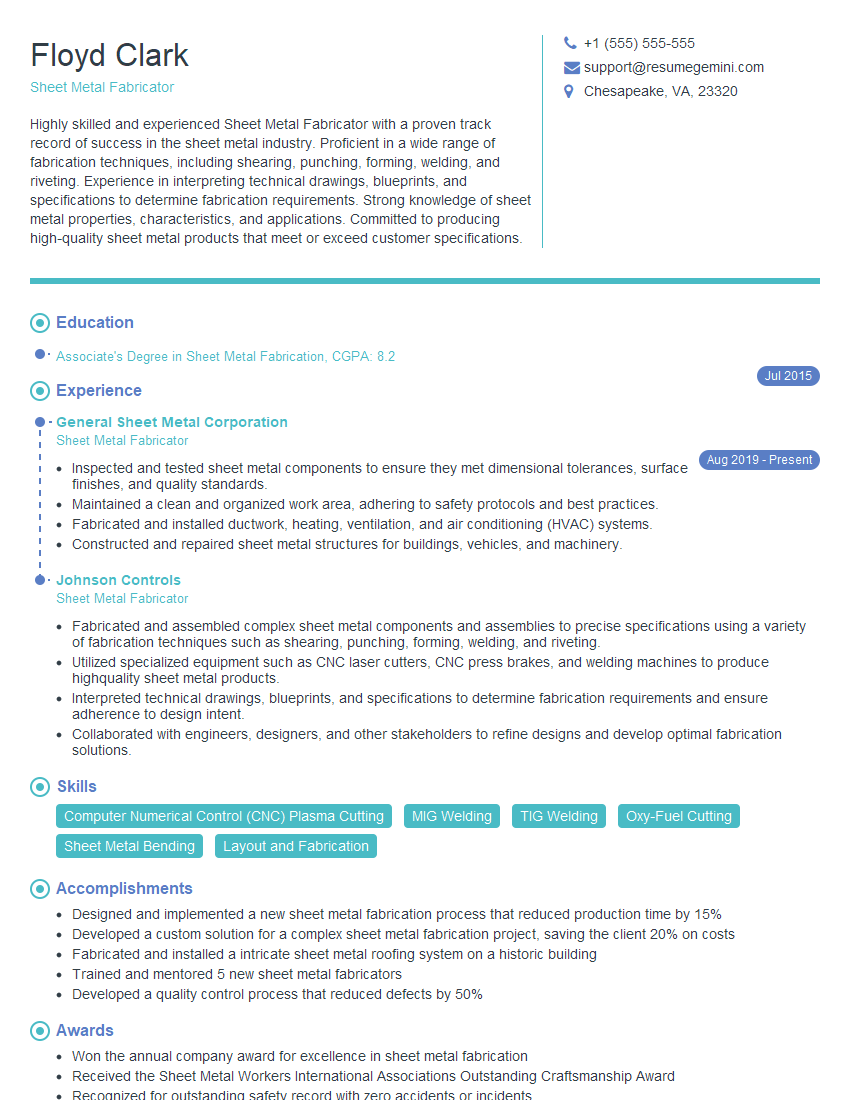
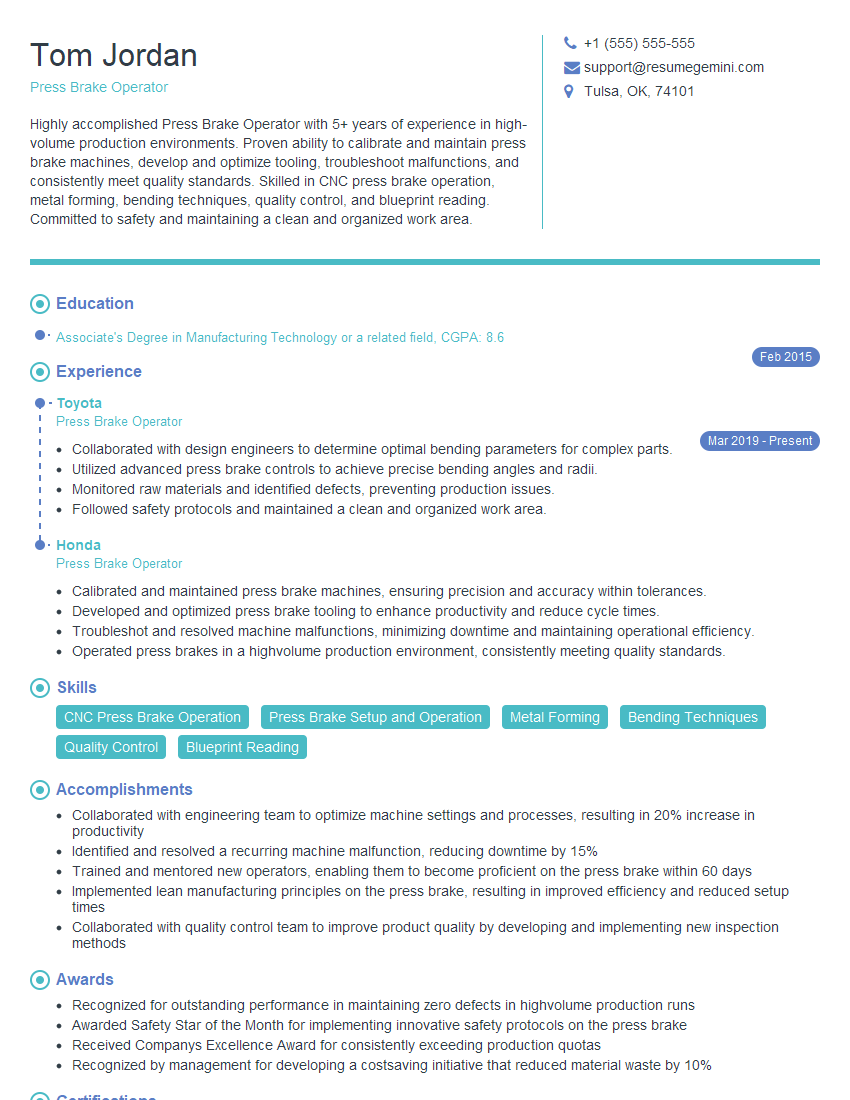
Mastering plate bending opens doors to exciting career opportunities in manufacturing, fabrication, and construction. A strong understanding of these techniques makes you a highly valuable asset to any team. To significantly increase your job prospects, invest time in creating an ATS-friendly resume that highlights your skills and experience effectively. ResumeGemini is a trusted resource that can help you build a professional resume tailored to the specific requirements of plate bending roles. Examples of resumes tailored to Plate Bending are provided to help you get started.
Explore more articles
Users Rating of Our Blogs
Share Your Experience
We value your feedback! Please rate our content and share your thoughts (optional).
What Readers Say About Our Blog
Very informative content, great job.
good