Feeling uncertain about what to expect in your upcoming interview? We’ve got you covered! This blog highlights the most important Plate Welding interview questions and provides actionable advice to help you stand out as the ideal candidate. Let’s pave the way for your success.
Questions Asked in Plate Welding Interview
Q 1. Explain the different types of plate welding processes.
Plate welding employs several processes, each with its strengths and weaknesses. The choice depends on factors like material, thickness, accessibility, and desired weld quality.
- Gas Metal Arc Welding (GMAW), or MIG welding: Uses a continuous consumable electrode wire fed into a molten weld pool, shielded by an inert gas (like argon or CO2). It’s known for its high deposition rates and good penetration, making it suitable for a wide range of plate thicknesses. Think of it like a glue gun for metal, consistently laying down weld material.
- Shielded Metal Arc Welding (SMAW), or Stick welding: Employs a consumable electrode coated with flux that shields the weld from atmospheric contamination. It’s versatile, portable, and works well in outdoor environments, even with some wind. It’s more forgiving for beginners but has a slower deposition rate than GMAW. Imagine it like using a pencil to carefully draw the weld.
- Gas Tungsten Arc Welding (GTAW), or TIG welding: Uses a non-consumable tungsten electrode to create the arc, with shielding provided by an inert gas. It produces highly precise and aesthetically pleasing welds with excellent penetration and control. It’s ideal for critical applications where high quality and precision are paramount, but it’s significantly slower than GMAW and requires more skill.
- Submerged Arc Welding (SAW): This process uses a continuous consumable electrode wire, with the arc submerged under a layer of granular flux. SAW is extremely productive and is used for high-volume applications such as long welds on thick plates. The flux shields the weld and helps create a deep, uniform penetration.
- Flux-Cored Arc Welding (FCAW): Similar to GMAW, but the electrode wire contains its own fluxing material, eliminating the need for a separate shielding gas. This offers increased versatility and productivity but may not always provide the same level of control as GMAW or GTAW.
Q 2. Describe your experience with GMAW (MIG) and SMAW (Stick) welding on plate.
I have extensive experience with both GMAW and SMAW on plates ranging from thin sheet metal to thick structural steel. With GMAW (MIG), I’ve worked on projects involving large-scale fabrication, utilizing different wire diameters and gas mixtures to optimize penetration and weld bead appearance depending on the plate material and thickness. I’ve expertly tackled issues like porosity and spatter by adjusting wire feed speed, voltage, and gas flow, resulting in consistently high-quality welds. In SMAW (Stick) welding, my experience includes working in field settings where portability and adaptability were crucial. I’ve successfully used different electrode types to suit various base materials and welding positions, demonstrating proficiency in maintaining a stable arc and controlling penetration even in challenging environments. For instance, on a recent bridge repair project, the need for precise welds on vertically oriented steel plates required the use of low-hydrogen electrodes in SMAW to prevent cracking. This required careful control of arc length and travel speed.
Q 3. What are the common welding defects found in plate welding and how are they prevented?
Several common defects can occur in plate welding. Understanding their causes is key to prevention.
- Porosity: Small holes in the weld caused by gas entrapment. Prevention involves proper cleaning of the base material, ensuring sufficient shielding gas coverage (for GMAW), and using the right electrode type (SMAW).
- Incomplete Penetration: Weld doesn’t fully fuse with the base material. This can be addressed by increasing amperage, reducing travel speed, or using a pre-weld groove design.
- Undercut: A groove melted into the base metal along the edge of the weld. This often results from excessive current, improper travel speed, or insufficient shielding gas.
- Cracking: Fractures in the weld metal or heat-affected zone, usually caused by rapid cooling, hydrogen embrittlement (especially in high-strength steels), or improper pre-heat/post-weld heat treatment. Proper pre-heat temperature and selecting low-hydrogen electrodes is critical.
- Slag Inclusion: Trapped flux within the weld (SMAW). This requires careful slag removal between passes and using correct welding techniques.
- Lack of Fusion: Weld doesn’t fuse properly with the adjacent weld bead or base metal. This happens due to improper joint preparation, poor electrode angle, or insufficient heat input.
Regular visual inspection, radiographic testing (RT), or ultrasonic testing (UT) are used to detect these defects. Prevention relies on meticulous attention to detail throughout the welding process – starting with proper joint preparation, material selection, and parameter control, and ending with appropriate post-weld procedures.
Q 4. How do you determine the appropriate welding parameters (voltage, amperage, wire feed speed) for different plate thicknesses and materials?
Selecting the right welding parameters is crucial. It’s a balancing act between heat input, penetration, and weld bead quality. There’s no one-size-fits-all answer; it depends on the material, thickness, process, and desired weld properties.
For GMAW, I typically consult manufacturer’s recommendations for specific wire and gas combinations, modifying based on plate thickness and material. Thicker plates require higher amperage and voltage to achieve full penetration. Thinner plates need less, to prevent burn-through. Wire feed speed is adjusted to maintain a consistent weld bead size and shape. For example, welding 1/4 inch mild steel with GMAW might involve 100-120 amps, 20-25 volts, and a wire feed speed of 20-25 inches per minute. However, for 1 inch thick stainless steel, I might use significantly higher settings. SMAW requires a similar approach with different parameters dictated by the electrode type (diameter and coating) and base material. Experimentation and experience are key to optimization, often involving test welds to fine-tune parameters before production.
Welding data sheets or WPS (Welding Procedure Specification) documents provide further guidance based on approved procedures for specific materials and thicknesses.
Q 5. Explain your understanding of weld penetration and how it’s controlled.
Weld penetration refers to how deeply the weld fuses with the base material. Sufficient penetration is vital for strength and integrity. Insufficient penetration leads to weakness, while excessive penetration might cause burn-through.
Control of penetration is achieved through manipulating welding parameters. Higher amperage and voltage increase heat input and lead to deeper penetration. Slower travel speed allows more time for heat transfer, also enhancing penetration. The electrode angle (in GMAW and SMAW) also plays a significant role; a more vertical angle tends to produce a deeper penetration. The joint design itself affects penetration; using a bevel or groove preparation on thicker plates allows for better fusion and penetration compared to a simple butt joint. Joint design and preparation are crucial for achieving consistent and complete penetration across the weld joint. In practice, I often conduct penetration checks, either visually or with destructive testing techniques such as cross-sectioning and measuring the fusion depth. If adjustments are necessary, I iterate on parameters until consistent and sufficient penetration is achieved.
Q 6. Describe the importance of pre-heating and post-weld heat treatment in plate welding.
Pre-heating and post-weld heat treatment (PWHT) are critical for managing the thermal stresses and preventing cracking, particularly in thicker plates and high-strength steels. Pre-heating, done before welding, reduces the temperature gradient during welding, slowing the cooling rate and reducing the risk of cracking. The pre-heat temperature depends on the material and thickness, often specified in the welding procedure specification (WPS). For example, pre-heating might be necessary for high-strength low-alloy steels or certain stainless steels to prevent hydrogen cracking.
PWHT, performed after welding, relieves residual stresses that have accumulated during welding. It’s a controlled heat cycle followed by slow cooling, allowing for stress relaxation. This reduces the risk of cracking and improves weld toughness and overall structural integrity. PWHT parameters are meticulously controlled and depend heavily on the material type and thickness. Both pre-heating and PWHT require precise temperature control and careful monitoring to ensure effectiveness and prevent unwanted effects like warping or oxidation.
Q 7. How do you ensure proper weld joint preparation for plate welding?
Proper weld joint preparation is the foundation of a successful weld. The goal is to ensure complete penetration and fusion. The method chosen depends on the plate thickness and the welding process.
- Butt Joint: For thin plates, a simple butt joint might suffice. However, for thicker plates, beveling or grooving is necessary to allow access for the weld and complete penetration.
- Bevel Preparation: The edges of the plates are beveled to a specific angle (e.g., single bevel, double bevel, or J-groove) to create space for the weld. The bevel angle and root opening are chosen to ensure proper penetration and fusion.
- Groove Preparation: Similar to beveling, this creates a groove in the plate edges to accommodate the weld bead, often needed for thick plates to promote complete penetration.
- Edge Preparation Techniques: Techniques like machining, flame cutting, or plasma cutting are used to create precise joint geometry. Cleaning the edges to remove any scale, rust, or paint is crucial for good weld quality.
The joint preparation method is carefully selected based on factors such as plate thickness, material type, welding process, and weld joint configuration. A well-prepared joint with precise dimensions and clean surfaces is critical for preventing weld defects such as lack of fusion, incomplete penetration, and slag inclusion.
Q 8. What are the different types of weld joints used in plate welding?
Plate welding utilizes several joint types, each chosen based on the application’s specific strength and geometry requirements. Think of it like choosing the right tool for a job – a screwdriver for screws, a hammer for nails. Here are some common ones:
- Butt Joint: The simplest, where two plates are joined edge-to-edge. Imagine two planks of wood butted together. This joint requires careful preparation for a strong weld.
- Lap Joint: One plate overlaps the other. Think of shingles on a roof – they overlap for water protection. This is a good choice for simpler applications.
- T-Joint: One plate is perpendicular to another, forming a ‘T’. This is frequently used in structural framing, where you might connect a beam to a column.
- Corner Joint: Two plates are joined at a 90-degree angle, like the corner of a box. Strength and penetration are key considerations here.
- Edge Joint: Two plates are joined edge-to-edge, similar to a butt joint, but often with a smaller weld preparation to reduce material waste.
The choice of joint depends on factors like the thickness of the plates, the required strength of the weld, and the accessibility of the joint for welding.
Q 9. What safety precautions do you take when performing plate welding?
Safety is paramount in plate welding. It’s not just about following regulations; it’s about protecting yourself and others from serious injury. My safety precautions are meticulous and include:
- Proper PPE (Personal Protective Equipment): This is non-negotiable – welding helmet with appropriate shade lens, flame-resistant clothing, gloves, and sturdy safety boots. I never compromise on this.
- Ventilation: Welding fumes are hazardous. I always ensure adequate ventilation, either through natural airflow or using extraction systems. In confined spaces, respirators are essential.
- Fire Safety: Flammable materials are kept far away from the welding area. I have a fire extinguisher readily available and know how to use it.
- Eye Protection for Bystanders: Anyone nearby must wear appropriate eye protection to prevent injury from sparks or UV radiation.
- Pre-Welding Inspection: Before starting, I always thoroughly check the plates for defects, ensuring they are clean and properly prepared.
- Post-Welding Inspection: After welding, a quick visual inspection is carried out to check for defects and ensure the weld is sound.
I also regularly review safety procedures and am always vigilant to identify and address potential hazards.
Q 10. How do you interpret welding symbols?
Welding symbols are a standardized way of communicating all the necessary information about a weld on a drawing. They’re like a shorthand language for welders. A typical symbol includes:
- Reference Line: A horizontal line indicating the location of the weld.
- Arrowhead: Points to the part to be welded.
- Basic Weld Symbols: Indicate the type of weld (e.g., fillet, groove, etc.).
- Dimensions: Specify weld size, length, and other critical measurements.
- Supplementary Symbols: Indicate weld process, surface finish requirements, etc. For example, a circle might denote a weld requiring 100% radiographic inspection.
Understanding these symbols is crucial for accurate interpretation and execution of the weld. I have extensive experience interpreting complex welding symbols and ensuring the weld is created exactly to specification.
For instance, a symbol with a triangle pointing to the left might indicate that a particular type of weld is required on the left side of a joint.
Q 11. Describe your experience with different types of filler metals and their applications in plate welding.
Filler metals are crucial in plate welding; they’re the material that fills the gap between the base plates, forming the weld. The choice of filler metal depends heavily on the base material, the welding process, and the desired properties of the weld. My experience spans several types:
- Mild Steel Filler Metals (E6010, E7018): These are commonly used for general-purpose welding of mild steel, offering good strength and weldability. E7018 is known for its excellent low-hydrogen properties, reducing the risk of cracking.
- Stainless Steel Filler Metals (308L, 316L): Used for welding stainless steel, preserving the corrosion resistance of the base material. The ‘L’ denotes a low-carbon version, minimizing the risk of sensitization and cracking.
- Aluminum Filler Metals (4043, 5356): Essential for welding aluminum alloys. These filler metals offer good strength and corrosion resistance, but require special techniques due to aluminum’s high thermal conductivity.
I’m experienced in selecting the appropriate filler metal based on the specific requirements of the job, ensuring optimal weld quality and performance. For example, in a high-pressure pipeline application, I’d choose a filler metal with superior mechanical properties and ductility to withstand the stresses.
Q 12. How do you perform a visual inspection of a weld?
A visual inspection is the first and often the most important step in weld assessment. It’s a quick, non-destructive method to check for obvious defects. My visual inspection involves carefully examining the weld for:
- Weld Profile: Checking for proper penetration, reinforcement height, and a smooth, consistent weld bead.
- Undercut or Overlap: Looking for irregularities along the edges of the weld, indicating poor fusion or excessive heat input.
- Cracks: Searching for any cracks or fissures, which significantly compromise weld strength.
- Spatter: Assessing the amount of spatter (metal droplets) around the weld, an indication of the welding technique.
Using a magnifying glass can help in detecting finer defects. I document my findings meticulously with photos and detailed notes, highlighting any areas of concern for further investigation using more sophisticated NDT methods.
Q 13. What are the common non-destructive testing (NDT) methods used for plate welds?
Non-destructive testing (NDT) methods provide a more thorough evaluation of weld quality than visual inspection. Common methods for plate welds include:
- Radiographic Testing (RT): Uses X-rays or gamma rays to detect internal flaws like porosity, cracks, and lack of fusion. Think of it like a medical X-ray for the weld.
- Ultrasonic Testing (UT): Uses high-frequency sound waves to detect internal defects. It’s excellent for finding cracks and other discontinuities. It’s like using sonar to explore the inside of the weld.
- Magnetic Particle Testing (MT): Used for ferromagnetic materials (iron and steel). A magnetic field is applied, and magnetic particles are sprinkled on the surface. These particles accumulate at discontinuities, making them visible.
- Liquid Penetrant Testing (PT): Used to detect surface-breaking flaws. A dye is applied to the surface, and any discontinuities draw the dye into them, making them visible.
The choice of NDT method depends on factors like the type of weld, the base material, and the required sensitivity. I’m proficient in interpreting the results from these tests and using the findings to assess the overall integrity of the weld.
Q 14. How do you handle weld imperfections or defects?
Handling weld imperfections depends on the severity and type of defect. Minor imperfections might be acceptable depending on the application’s requirements, but significant defects necessitate corrective action. My approach is systematic:
- Assessment: Thoroughly assess the nature and extent of the defect based on visual inspection and NDT results.
- Repair Strategy: Develop a repair plan based on the type of defect. This might involve grinding out the defective area and re-welding, or in extreme cases, replacing the entire welded component.
- Re-inspection: After repair, conduct thorough visual and, if necessary, NDT inspection to ensure the weld meets the required standards.
- Documentation: Document the entire process, including the defect identification, repair procedure, and inspection results. This is essential for traceability and quality control.
The ultimate goal is to ensure the weld’s integrity and structural soundness, meeting or exceeding the required standards. This may necessitate discussions with quality control personnel and potentially engineering changes to the overall design in extreme cases.
Q 15. Describe your experience with different types of welding position.
My experience encompasses all the basic welding positions: flat, horizontal, vertical, and overhead. Flat is the easiest, working on a surface, but the others require significantly more skill and control. Horizontal involves welding on a pipe or similar, requiring precise manipulation to avoid sagging. Vertical welds are challenging because gravity constantly affects the weld pool. Overhead welding, the most demanding position, needs exceptional hand-eye coordination and control to prevent molten metal from dripping.
I’ve also worked extensively with various specialized positions and joint types, including fillet welds, groove welds, and lap joints, adapting my techniques to the specific geometry and requirements of the project. For instance, in a recent project constructing a large steel framework, I had to execute both horizontal and vertical welds on I-beams, ensuring consistent penetration and bead appearance across all joints. This experience has honed my ability to adapt to various welding scenarios and maintain high-quality workmanship regardless of the position.
Career Expert Tips:
- Ace those interviews! Prepare effectively by reviewing the Top 50 Most Common Interview Questions on ResumeGemini.
- Navigate your job search with confidence! Explore a wide range of Career Tips on ResumeGemini. Learn about common challenges and recommendations to overcome them.
- Craft the perfect resume! Master the Art of Resume Writing with ResumeGemini’s guide. Showcase your unique qualifications and achievements effectively.
- Don’t miss out on holiday savings! Build your dream resume with ResumeGemini’s ATS optimized templates.
Q 16. What is the importance of using appropriate Personal Protective Equipment (PPE)?
Appropriate Personal Protective Equipment (PPE) is paramount for welder safety. It’s not just about complying with regulations; it’s about preventing serious injuries and long-term health problems. The most crucial pieces of PPE are:
- Welding Helmet: This protects your eyes and face from intense UV radiation, bright flashes, and spatter. Different shades offer varying levels of protection, matched to the welding process.
- Welding Gloves: Thick, heat-resistant gloves protect your hands from burns and electric shock.
- Welding Jacket and Sleeves: These offer protection from sparks and spatter, made of flame-resistant materials.
- Safety Footwear: Steel-toe boots prevent injuries from falling objects and protect against electrical hazards.
- Respiratory Protection: Depending on the welding process and materials, respirators may be necessary to prevent inhalation of harmful fumes or dust.
Neglecting PPE can lead to severe burns, eye damage (including blindness), respiratory illnesses, and electrical shock – all of which can be career-ending. I always prioritize proper PPE, ensuring it’s in good condition and fits correctly before I begin any welding work.
Q 17. How do you maintain your welding equipment?
Regular maintenance of welding equipment is crucial for safety, productivity, and ensuring high-quality welds. My routine involves:
- Daily Inspection: Checking for any damage to cables, torches, and the welding machine itself. Tightening loose connections and cleaning any debris.
- Regular Cleaning: Thorough cleaning of the welding machine, removing any spatter or buildup that could hinder performance. This includes cleaning the contact tips and gas nozzles regularly.
- Gas Cylinder Checks: Inspecting gas cylinders for damage and ensuring they are properly secured.
- Scheduled Maintenance: Following the manufacturer’s recommendations for scheduled maintenance, including replacing worn parts like contact tips and liners.
For example, I recently identified a minor crack in the gas nozzle during a daily inspection. Replacing it prevented a potential gas leak which could have had serious safety consequences and affected the quality of welds.
Q 18. Explain your troubleshooting skills in relation to welding problems.
Troubleshooting welding problems requires a systematic approach. I start by carefully observing the weld itself – is it porous, brittle, cracked, or lacking penetration? Then, I consider the various factors that could contribute to the problem, including:
- Welding Parameters: Incorrect amperage, voltage, travel speed, or arc length can all affect weld quality.
- Material Compatibility: Ensuring the correct filler metal and base metal are being used.
- Joint Preparation: Proper joint design and cleanliness are crucial for a strong weld.
- Shielding Gas: Insufficient shielding gas or the wrong gas mixture can lead to porosity or oxidation.
- Equipment Malfunction: Faulty equipment, such as a clogged nozzle or a malfunctioning power source.
For example, if I encounter excessive porosity, I might first check the shielding gas flow, then the gas purity, and finally the joint preparation to ensure it’s clean and free of contaminants. A methodical approach, coupled with experience, helps pinpoint the root cause quickly and efficiently.
Q 19. Describe your experience with different types of welding power sources.
I’m experienced with various welding power sources, including:
- Constant Current (CC) Power Sources: These maintain a consistent current regardless of arc length, ideal for applications requiring consistent penetration. They are commonly used in SMAW (Shielded Metal Arc Welding) and GTAW (Gas Tungsten Arc Welding).
- Constant Voltage (CV) Power Sources: These maintain a constant voltage, allowing for a wider range of arc lengths. They are frequently used in GMAW (Gas Metal Arc Welding) and FCAW (Flux-Cored Arc Welding).
- Pulse Power Sources: These deliver current in pulses, offering better control over the weld pool and resulting in cleaner welds with reduced spatter. This is beneficial for thin materials.
Understanding the differences between these power sources and their application is key to achieving optimal weld quality and efficiency. The choice of power source depends heavily on the material being welded, the joint design, and the desired weld characteristics. For example, in welding thin sheet metal, a pulse power source is preferred to reduce heat input and the risk of burn-through.
Q 20. What is your experience with different types of shielding gases?
My experience includes working with several shielding gases, each suited to different welding processes and materials:
- Argon (Ar): A common shielding gas used in GTAW and GMAW applications, particularly for aluminum and stainless steel. It provides excellent arc stability and prevents oxidation.
- Helium (He): Used in GTAW and GMAW, often mixed with argon. It increases penetration but reduces arc stability compared to pure argon.
- Carbon Dioxide (CO2): A cost-effective shielding gas often used in GMAW, particularly for mild steel. However, it produces more spatter compared to argon or argon-based mixtures.
- Argon-CO2 Mixtures: These mixtures combine the benefits of argon (stability) and CO2 (penetration) offering a balance of weld quality and cost-effectiveness for mild steel.
The selection of shielding gas depends critically on the material and welding process. Selecting the appropriate shielding gas is essential for obtaining strong, sound welds free from porosity and oxidation. For example, using CO2 with aluminum would result in poor weld quality due to oxidation.
Q 21. How do you manage your time and workload when welding?
Effective time and workload management are crucial in welding. I use a combination of techniques to stay organized and productive:
- Detailed Planning: Before starting a project, I carefully review the blueprints, determine the required welding procedures, and estimate the time needed for each task. This allows for efficient scheduling.
- Prioritization: I prioritize tasks based on their urgency and importance, focusing on critical welds or those with tight deadlines.
- Efficient Work Habits: I maintain a clean and organized workspace, ensuring easy access to tools and materials, minimizing wasted time searching.
- Regular Breaks: Taking regular short breaks throughout the day helps prevent fatigue and maintains focus, ultimately improving both quality and safety.
- Continuous Improvement: I continuously seek ways to streamline my processes, improving efficiency and reducing wasted time. For example, I might optimize the setup for a recurring weld type to reduce the time required for each weld.
This approach ensures I can consistently meet deadlines, maintain high-quality standards, and prevent costly rework. Proactive planning and efficient work habits are key to success in this field.
Q 22. How do you deal with pressure and deadlines in a welding environment?
In plate welding, pressure and deadlines are a constant. I manage them through a combination of meticulous planning and efficient execution. Before starting any project, I thoroughly review the blueprints, material specifications, and the timeline. This allows me to break down the task into manageable steps and allocate sufficient time for each. For example, on a recent project involving the welding of several large steel plates for a bridge component, I created a detailed schedule that included buffer time for potential unforeseen issues, such as equipment malfunction or material defects. This proactive approach minimizes stress and ensures timely completion without compromising quality. I also prioritize tasks based on urgency and importance, focusing on critical welds first. If I encounter unexpected delays, I immediately communicate with the project manager to adjust the schedule accordingly and explore potential solutions.
Q 23. How do you work effectively as part of a team?
Effective teamwork is crucial in a welding environment. I believe in open communication and mutual respect. I actively participate in pre-weld meetings to understand everyone’s roles and responsibilities. On a recent project involving a complex multi-part assembly, we utilized a lean methodology where each team member had a specialized role – one focused on precise setup, another on the welding process, and a third on quality control. I contribute my expertise to solve problems collaboratively and I actively assist fellow welders where needed. This collaborative spirit not only improves productivity but also enhances the quality of the final product. I am also comfortable taking direction and adapting to changing team dynamics. A successful weld often requires seamless coordination and a willingness to learn from others, enhancing the overall team performance.
Q 24. Describe your problem-solving skills in a welding scenario.
My problem-solving skills are honed through years of experience dealing with diverse welding challenges. For example, I once encountered a situation where the welds on a critical component were exhibiting excessive porosity. I systematically investigated the possible causes, starting with the welding parameters (current, voltage, travel speed), then checking the cleanliness of the base material, and finally inspecting the shielding gas flow and purity. I discovered that a faulty gas regulator was delivering insufficient shielding gas, leading to the porosity. By identifying and correcting this issue, I avoided significant rework and delays. My approach to problem-solving involves a systematic investigation, focusing on the key factors affecting the welding process, and testing various solutions until the issue is resolved. I always prioritize safety and adhere to all relevant safety regulations while troubleshooting problems.
Q 25. How do you stay updated on the latest welding techniques and technologies?
Staying updated in the welding industry is essential. I regularly attend industry conferences and workshops to learn about new techniques and technologies. I subscribe to relevant trade publications, such as the Welding Journal, and actively participate in online forums and communities, engaging in discussions and sharing knowledge with other professionals. I also take advantage of online courses and webinars offered by organizations like the American Welding Society (AWS) to broaden my skill set and enhance my understanding of new welding methods. I am particularly interested in the advancements in robotic welding and automation, which allows for higher precision and efficiency in plate welding.
Q 26. What are your salary expectations?
My salary expectations are commensurate with my experience and skills in plate welding, along with the specifics of this position and industry standards. I am open to discussing a competitive compensation package that aligns with the responsibilities and challenges of this role.
Q 27. What are your long-term career goals in welding?
My long-term career goals include becoming a certified welding inspector and eventually transitioning into a supervisory or management role within a major construction or manufacturing company. I am passionate about welding and committed to continuous learning and development within the field. My aim is to become a highly skilled and respected professional, contributing my expertise to complex projects and mentoring the next generation of welders.
Q 28. Why are you interested in this specific Plate Welding position?
I am highly interested in this specific plate welding position because of [Company Name]’s reputation for excellence and its commitment to innovative projects. The opportunity to work on [mention specific projects or aspects of the job] aligns perfectly with my skills and career aspirations. The description of the role highlights the chance to utilize my advanced plate welding techniques in a challenging and rewarding environment. I am confident that my experience and skills would be a valuable asset to your team.
Key Topics to Learn for Plate Welding Interview
- Welding Processes: Understanding different plate welding techniques like GMAW (MIG), SMAW (Stick), FCAW (Flux-cored), and GTAW (TIG) – their applications, advantages, and limitations. Consider the impact of each process on weld quality and speed.
- Weld Joint Design: Familiarity with various weld joint configurations (e.g., butt, lap, tee, corner) and their suitability for different applications. Be prepared to discuss joint preparation techniques and their influence on weld strength and integrity.
- Material Properties and Selection: Knowledge of different steel grades and their welding characteristics. Understanding how material properties (e.g., thickness, tensile strength, yield strength) affect weld parameters and procedures.
- Weld Defects and Inspection: Identifying common weld defects (e.g., porosity, cracks, undercut) and understanding their causes and consequences. Familiarity with non-destructive testing (NDT) methods used for weld inspection.
- Safety Procedures and Regulations: Demonstrate a thorough understanding of relevant safety regulations and procedures for plate welding, including personal protective equipment (PPE) and hazard mitigation.
- Welding Parameters and Control: Understanding the relationship between welding parameters (e.g., voltage, amperage, travel speed, wire feed speed) and weld quality. Ability to adjust parameters to achieve optimal results for different materials and joint designs.
- Practical Experience and Problem-Solving: Be ready to discuss past projects, challenges faced, and how you overcame them. Highlight your problem-solving skills and ability to adapt to different situations.
Next Steps
Mastering plate welding opens doors to exciting career opportunities in various industries, offering excellent earning potential and growth prospects. A strong resume is crucial for showcasing your skills and experience to potential employers. Creating an ATS-friendly resume is essential to ensure your application gets noticed. We recommend using ResumeGemini to build a professional and effective resume that highlights your plate welding expertise. ResumeGemini provides examples of resumes tailored specifically to the plate welding field to help you get started.

Welding Engineer Resume Sample
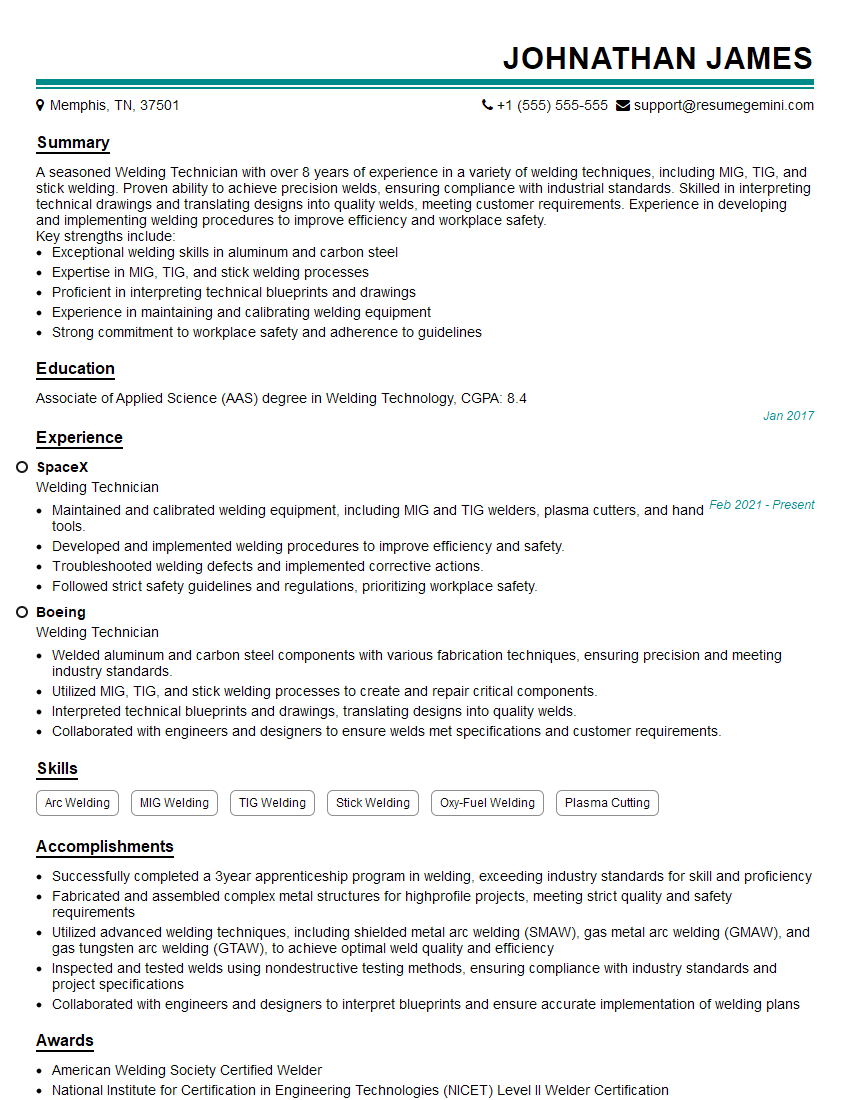
Welding Technician Resume Sample

Welding Instructor Resume Sample
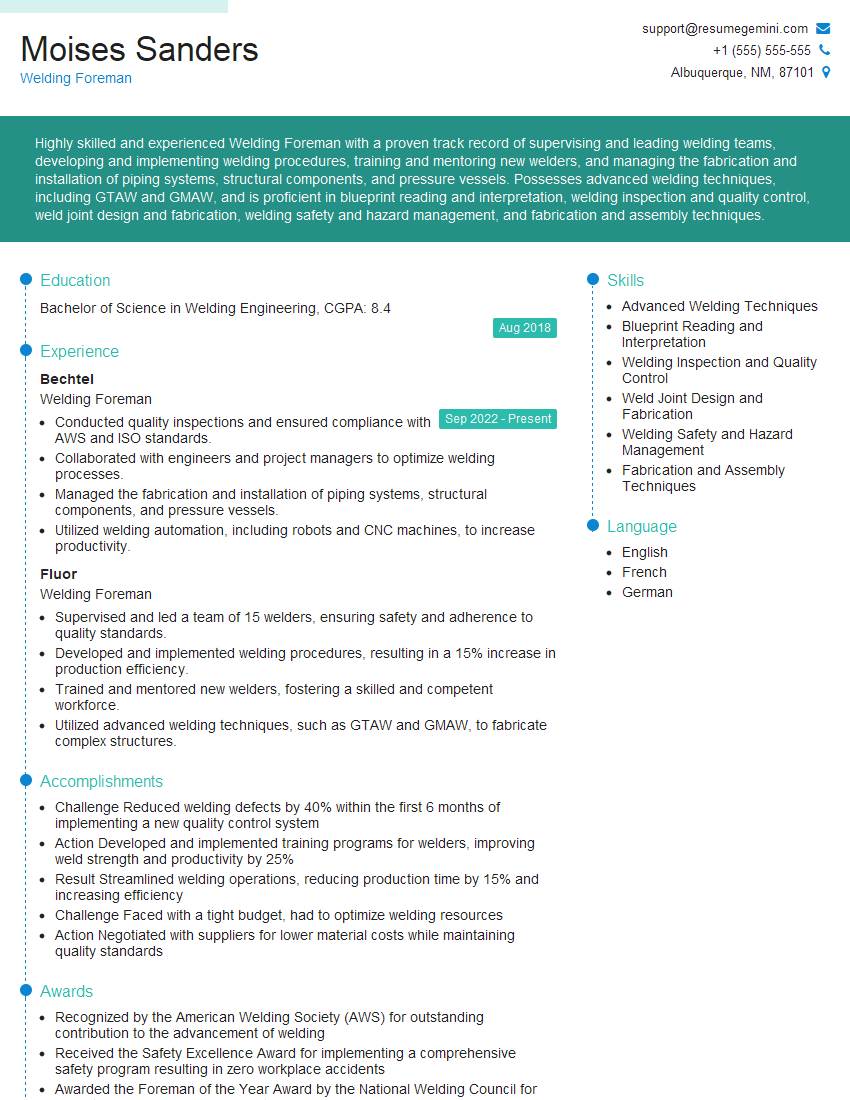
Welding Foreman Resume Sample
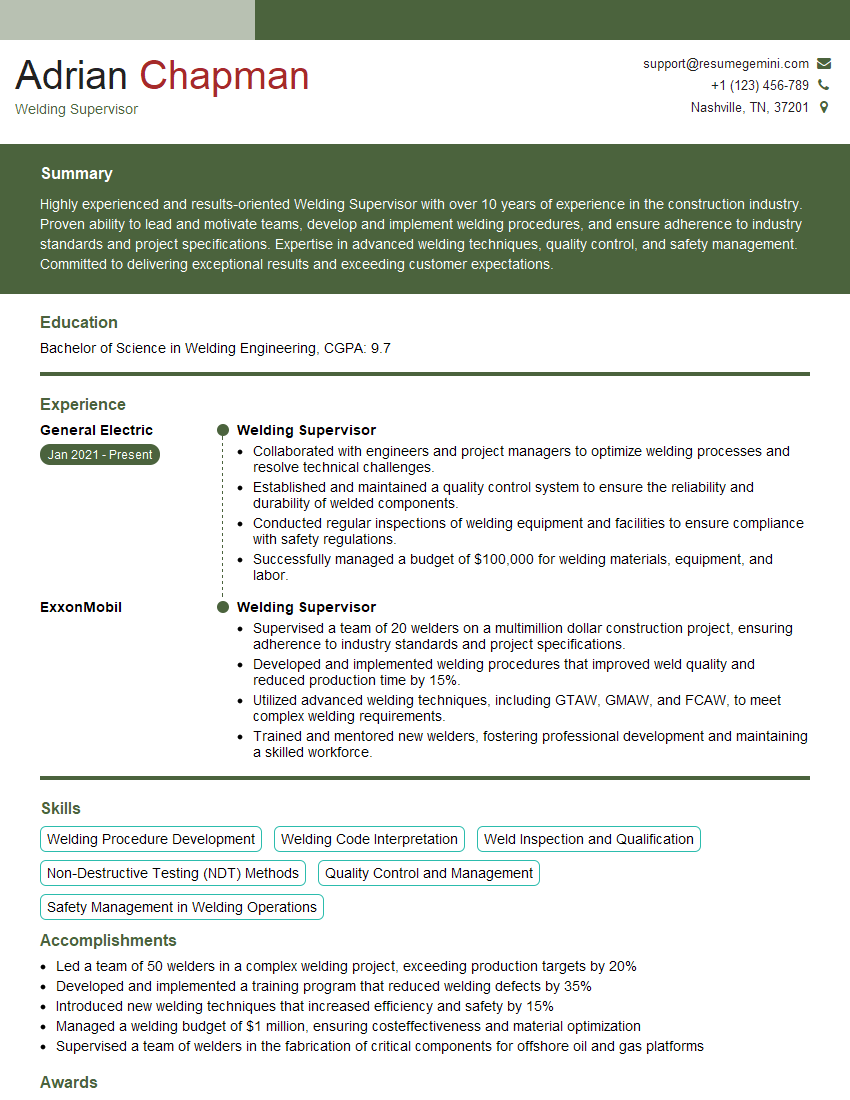
Welding Supervisor Resume Sample
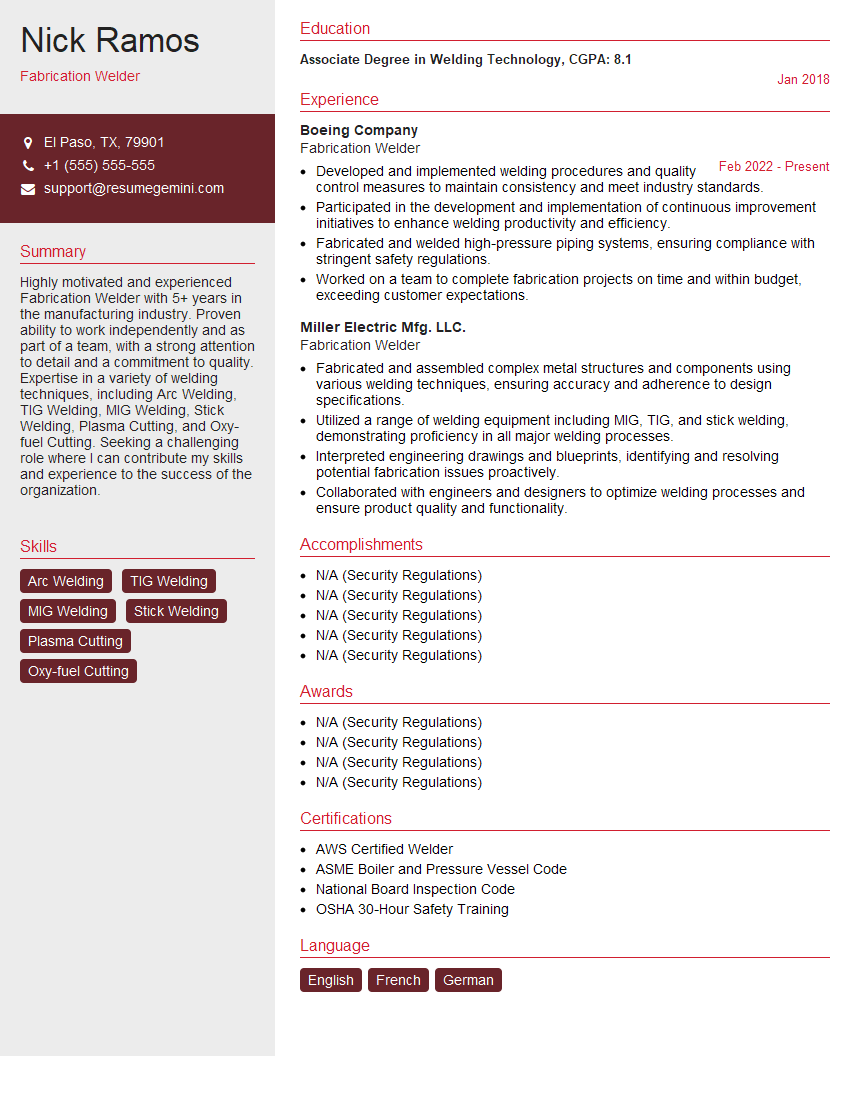
Fabrication Welder Resume Sample
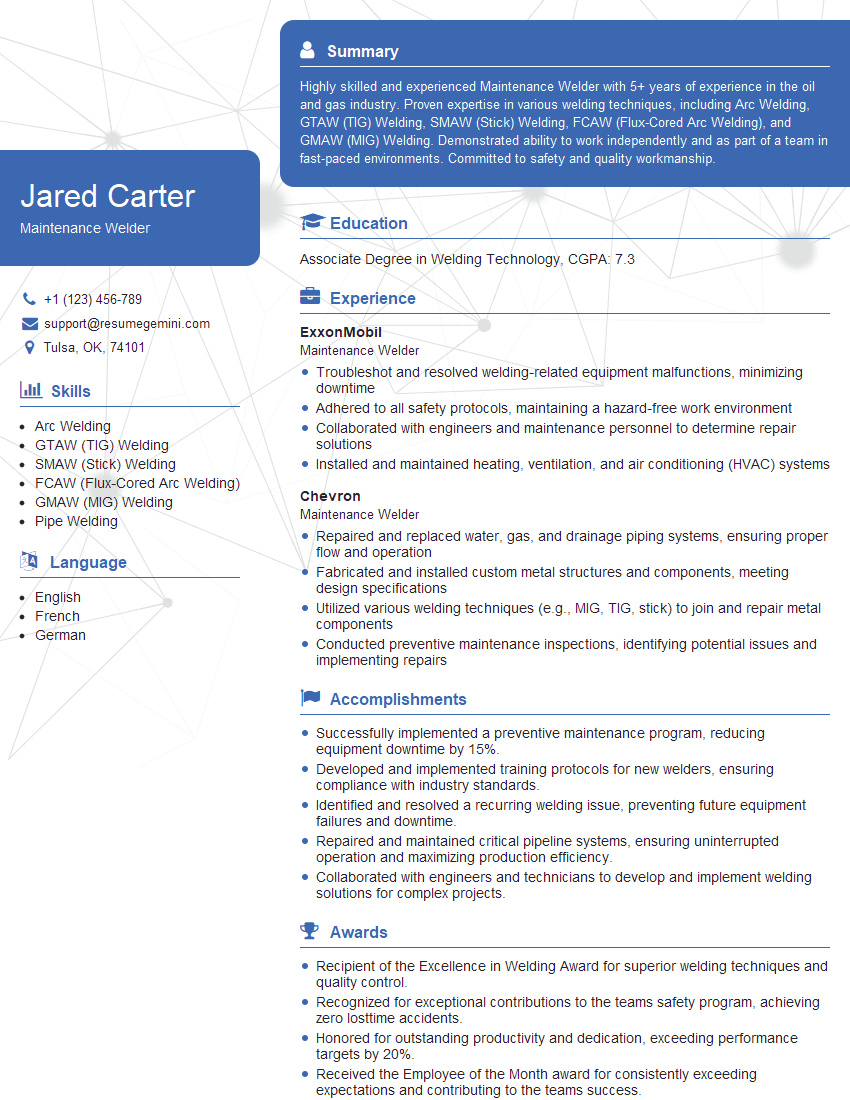
Maintenance Welder Resume Sample
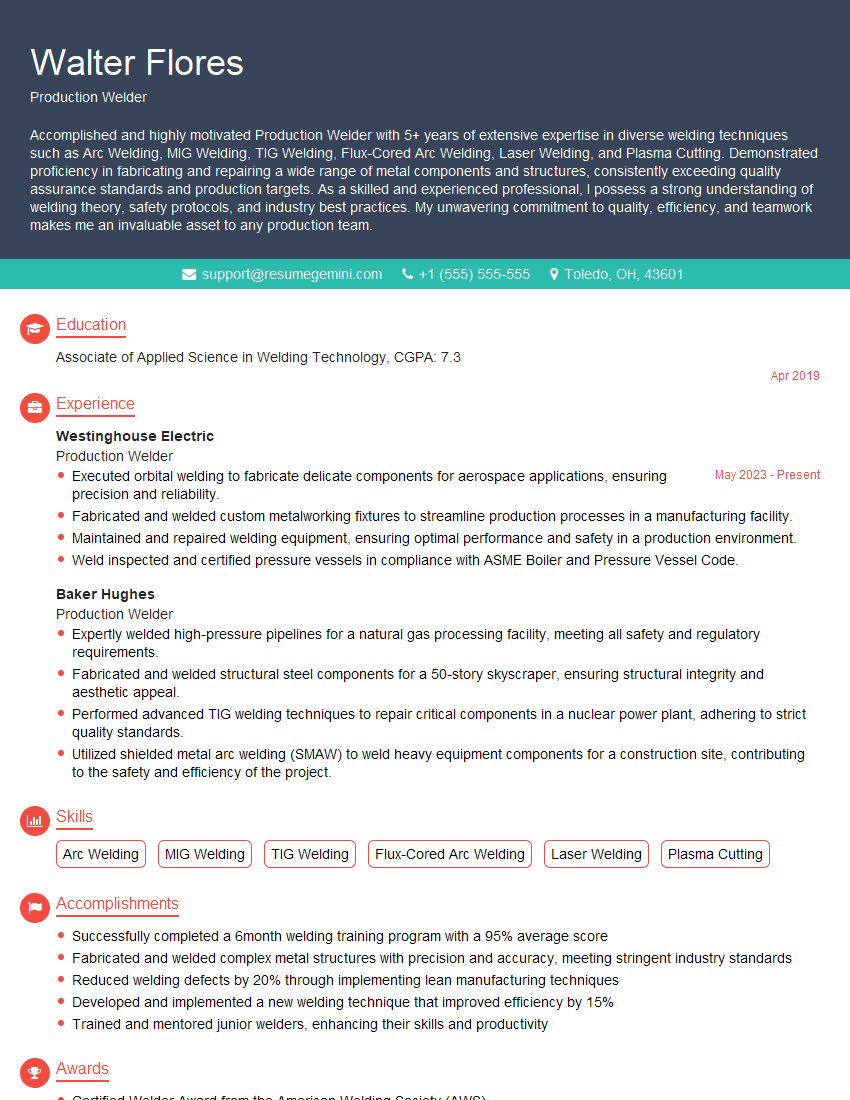
Production Welder Resume Sample
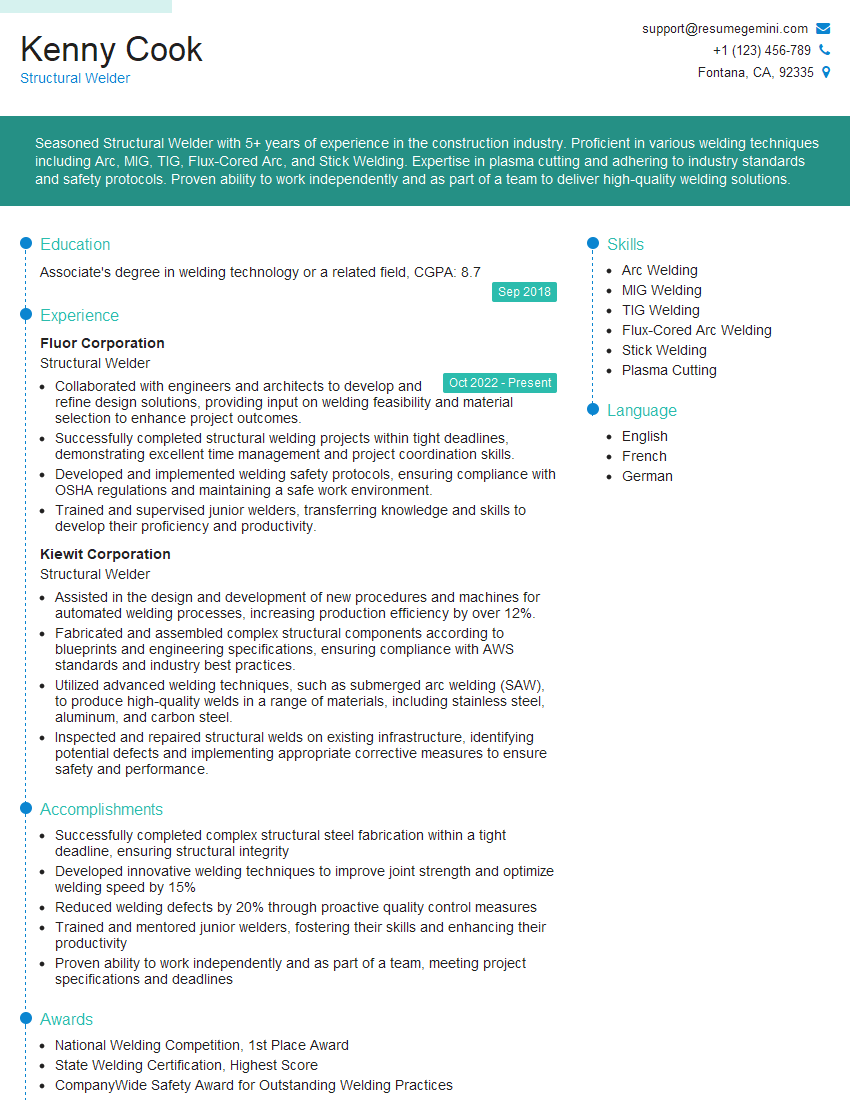
Structural Welder Resume Sample
Explore more articles
Users Rating of Our Blogs
Share Your Experience
We value your feedback! Please rate our content and share your thoughts (optional).
What Readers Say About Our Blog
Very informative content, great job.
good