The thought of an interview can be nerve-wracking, but the right preparation can make all the difference. Explore this comprehensive guide to Plating Operation interview questions and gain the confidence you need to showcase your abilities and secure the role.
Questions Asked in Plating Operation Interview
Q 1. Describe your experience with different plating techniques (e.g., electroplating, electroless plating).
My experience encompasses a wide range of plating techniques, primarily electroplating and electroless plating. Electroplating, the most common method, involves using an electric current to deposit a metal onto a conductive substrate. Think of it like painting with metal ions! I’ve worked extensively with various electroplating processes, including chromium plating for decorative and corrosion-resistant finishes, nickel plating for enhanced durability and solderability, and gold plating for its excellent conductivity and corrosion resistance. Electroless plating, on the other hand, doesn’t require electricity. Instead, it relies on a chemical reduction process to deposit the metal. This is particularly useful for plating non-conductive materials or achieving uniform coatings in complex geometries. I have significant experience in electroless nickel plating, known for its excellent wear resistance and uniform coating thickness.
For example, in a previous role, I was responsible for optimizing the electroplating process for a client’s automotive parts, resulting in a 15% reduction in defects and a 10% increase in throughput. Another project involved developing a new electroless nickel plating process for a medical device component, ensuring biocompatibility and enhanced corrosion resistance.
Q 2. Explain the process of pre-treatment for metal plating.
Pre-treatment is crucial for achieving high-quality plating. It ensures proper adhesion of the plating layer by cleaning and preparing the substrate’s surface. Think of it as prepping a wall before painting – you wouldn’t skip cleaning and sanding, right? The process typically involves several stages:
- Cleaning: Removing oils, grease, and other contaminants using solvents, alkaline cleaners, or ultrasonic cleaning. This ensures a clean surface for optimal adhesion.
- Descaling/De-burring: Removing any scale, oxides, or burrs from the surface through mechanical or chemical methods. This ensures a smooth surface for uniform plating.
- Pickling: Using acidic solutions (like hydrochloric or sulfuric acid) to remove any remaining oxides and surface imperfections. This enhances the substrate’s surface reactivity and improves plating adhesion.
- Activation (Sometimes): This step is particularly important for certain materials like aluminum or stainless steel, and involves treating the surface to make it more receptive to the plating process.
- Rinsing: Thorough rinsing between each stage is critical to remove any residual chemicals, which could negatively impact the plating process or final product.
The specific pre-treatment process is carefully chosen based on the substrate material and the desired plating.
Q 3. What are the common plating solutions used and their applications?
The choice of plating solution depends heavily on the desired properties of the final plated surface. Here are some common examples:
- Nickel sulfate solutions: Used for nickel plating, providing corrosion resistance, hardness, and solderability. Variations exist depending on the desired properties (e.g., bright nickel, dull nickel).
- Chrome plating solutions: Based on chromic acid, used for decorative and functional chromium plating. These offer excellent corrosion resistance and a shiny appearance, but are increasingly being replaced due to environmental concerns.
- Acid copper plating solutions: Used for building up thickness quickly and providing a good base for subsequent plating layers (like nickel or gold). They offer excellent conductivity and are often used in printed circuit board manufacturing.
- Gold cyanide solutions: Used for gold plating, prized for its conductivity, corrosion resistance, and wear resistance. However, cyanide solutions are highly toxic and require stringent safety measures.
- Electroless nickel plating solutions: These are chemical solutions that deposit nickel without the need for an electric current. They typically contain nickel salts, a reducing agent, and a stabilizer.
The selection of the optimal plating solution depends on factors such as the substrate material, desired coating thickness, corrosion resistance requirements, and environmental considerations.
Q 4. How do you ensure quality control in a plating operation?
Quality control is paramount in plating operations. We employ a multi-pronged approach including:
- Visual inspection: Checking for surface defects such as pitting, burning, peeling, or lack of uniformity.
- Thickness measurement: Using methods like magnetic thickness gauges or coulometry to ensure the plating thickness meets specifications. This is crucial for functionality and durability.
- Adhesion testing: Using tape tests or other methods to determine the strength of the bond between the plating and substrate. Poor adhesion can lead to premature failure.
- Corrosion testing: Subjected to salt spray or other accelerated corrosion tests to assess the plating’s ability to protect the substrate from corrosion.
- Regular solution analysis: Monitoring the composition and concentration of plating solutions to maintain consistent results and prevent defects. This is crucial for maintaining consistent quality.
- Statistical process control (SPC): Implementing SPC charts to track key parameters and identify trends that could indicate problems before they affect the quality of the plated parts.
By employing these methods, we can ensure that the final plated product meets the required specifications and quality standards.
Q 5. What are the safety precautions you take while working with plating chemicals?
Safety is the top priority when working with plating chemicals. Many plating solutions contain hazardous materials that can cause serious health problems or environmental damage. Our safety procedures include:
- Personal protective equipment (PPE): Mandatory use of gloves, eye protection, lab coats, and respirators to minimize exposure to chemicals.
- Ventilation: Adequate ventilation in the plating area to minimize inhalation of fumes and toxic gases. Local exhaust ventilation is often necessary near plating tanks.
- Emergency showers and eyewash stations: readily available in case of accidental splashes or spills.
- Proper waste disposal: Plating waste must be handled and disposed of according to local and national regulations. This often involves specialized waste treatment facilities.
- Training and education: All personnel receive thorough training on safe handling procedures, emergency response protocols, and the potential hazards associated with the plating chemicals.
- Regular safety audits: Conducting regular inspections to ensure compliance with safety regulations and to identify and address any potential hazards.
We treat safety not as an afterthought but as an integral part of our daily operations.
Q 6. How do you troubleshoot common plating defects (e.g., pitting, burning, peeling)?
Troubleshooting plating defects requires systematic investigation. Here’s how we approach common problems:
- Pitting: Often caused by impurities in the plating solution, insufficient cleaning of the substrate, or localized variations in current density. Troubleshooting involves analyzing the solution, improving pre-treatment steps, or adjusting the plating parameters.
- Burning: Caused by excessive current density, leading to overheating and uneven deposition. The solution is to reduce the current density or adjust the anode-to-cathode distance.
- Peeling: Indicates poor adhesion between the plating and the substrate. This could be due to inadequate pre-treatment, contamination, or improper rinsing. Re-evaluating the pre-treatment process and ensuring thorough cleaning are usually the solutions.
- Lack of Uniformity: Can result from uneven current distribution, poor agitation, or variations in solution concentration. Adjusting plating parameters, improving agitation, and monitoring solution composition can resolve this issue.
A systematic approach involving careful observation, analysis of the plating process parameters, and systematic adjustments is key to resolving these issues. Often, root cause analysis tools are invaluable in pinpointing the underlying problem.
Q 7. Describe your experience with different types of plating equipment.
My experience includes working with a variety of plating equipment, from small-scale laboratory setups to large-scale industrial systems. This includes:
- Electroplating tanks: Various sizes and materials, including polypropylene, stainless steel, and even specialized materials for specific plating solutions.
- Rectifiers: Used to supply the direct current necessary for electroplating, with varying voltage and current output capabilities.
- Filtering systems: Essential for maintaining the cleanliness and purity of the plating solutions, ensuring consistent plating quality.
- Agitation systems: Used to ensure uniform solution composition and prevent the build-up of concentration gradients, crucial for uniform plating.
- Heating and cooling systems: Maintaining the plating solution at the optimal temperature is critical for consistent plating quality, as many plating processes are temperature-sensitive.
- Automatic plating lines: Experience with automated systems that handle the entire plating process, from pre-treatment to final rinsing and drying.
My understanding of different types of equipment enables me to troubleshoot issues effectively and optimize plating processes for efficiency and quality.
Q 8. Explain the importance of maintaining accurate records in plating operations.
Accurate record-keeping in plating operations is paramount for several reasons. It ensures consistent quality, traceability, and compliance with environmental regulations. Think of it like a recipe for a perfect cake – without precise measurements and a detailed record of each step, you can’t replicate the success.
- Quality Control: Records of bath composition, plating time, current density, and temperature allow for troubleshooting and optimization of the plating process. If a batch has defects, you can trace back the parameters to identify the root cause and prevent future issues.
- Traceability: Detailed records enable you to track the source materials, processes, and final products. This is essential for identifying potential contaminants, responding to customer inquiries regarding the plating’s properties and origin, and recalling products if needed. Imagine a situation where a particular batch is found to have impurities. Detailed records would easily pinpoint when and how that contamination occurred.
- Regulatory Compliance: Environmental agencies require meticulous records of chemical usage, waste generation, and disposal methods. These records demonstrate adherence to regulations, preventing penalties and safeguarding the environment. Failing to maintain accurate records can result in hefty fines and legal repercussions.
- Process Improvement: Analyzing historical data reveals trends and allows for continuous improvement of the plating process. Identifying bottlenecks, optimizing parameters, and streamlining workflows are made possible with comprehensive data.
Q 9. How do you calculate plating thickness?
Plating thickness is calculated using Faraday’s Law of Electrolysis, which states that the amount of metal deposited is directly proportional to the current applied and the time of plating. The formula often used is:
T = (I * t * A * W) / (n * F * ρ * d)Where:
T= thickness of the plating (in micrometers or inches)I= current (in amperes)t= plating time (in seconds)A= atomic weight of the metal (in grams/mole)W= plating efficiency (a decimal, typically less than 1, accounting for losses)n= valency of the metal (number of electrons transferred per metal ion)F= Faraday’s constant (96485 coulombs/mole)ρ= density of the metal (in g/cm³)d= area of the part being plated (in cm²)
In practice, we often use a coulometer which directly measures the total charge passed during the plating process, simplifying the calculation. Additionally, measuring the thickness directly with tools like a micrometer or a profilometer serves as crucial verification of the calculated value. There are always slight variations due to factors like current distribution and surface roughness.
Q 10. What are the environmental regulations related to metal plating?
Environmental regulations concerning metal plating are stringent and vary depending on location (national and local). They primarily focus on minimizing or eliminating the discharge of hazardous waste into waterways and the air. These regulations often cover:
- Wastewater Discharge: Strict limits are placed on the concentration of heavy metals (like chromium, nickel, cadmium, and cyanide) in wastewater before discharge. Pretreatment processes like chemical precipitation, ion exchange, or reverse osmosis are often required.
- Air Emissions: Regulations control emissions of plating-related chemicals like acids, alkalis, and fumes. Scrubbers, filters, and other air pollution control devices are employed to meet emission standards.
- Hazardous Waste Management: Proper handling, storage, and disposal of spent plating solutions, sludge, and other hazardous wastes are mandatory. This includes documentation, labeling, and using licensed hazardous waste disposal facilities.
- Chemical Usage: Regulations might restrict the use of certain chemicals considered particularly toxic or persistent in the environment. This is a major driver of innovation in the industry, promoting research on environmentally friendly alternatives.
Compliance is crucial; non-compliance can lead to severe fines, operational shutdowns, and legal action.
Q 11. How do you manage waste generated in a plating operation?
Waste management in plating operations is a multifaceted process that requires a systematic approach. It’s not just about disposal; it’s about minimizing waste generation in the first place. The key strategies include:
- Waste Minimization: Implementing process optimization techniques like drag-out reduction, improved rinsing procedures, and careful chemical management reduces the volume of waste generated. This approach is both environmentally sound and economically advantageous.
- Waste Segregation: Separating different waste streams (e.g., spent plating solutions, rinse waters, sludge) simplifies treatment and disposal. Careful segregation ensures that materials are handled and treated appropriately based on their hazardous nature.
- Treatment and Recycling: Employing appropriate treatment methods like chemical precipitation, ion exchange, or evaporation to reduce the concentration of pollutants prior to disposal or recycling. Recycling spent solutions or recovering valuable metals can significantly reduce disposal costs and environmental impact.
- Disposal: Using licensed hazardous waste disposal facilities for the safe and environmentally sound disposal of remaining waste. This ensures adherence to all relevant regulations.
- Documentation: Maintaining detailed records of all waste generation, treatment, and disposal activities is crucial for compliance purposes.
A comprehensive waste management plan must be in place, regularly reviewed and updated to reflect improvements in technologies and regulations.
Q 12. Explain your understanding of different plating baths and their maintenance.
Plating baths are carefully formulated solutions containing metal salts, additives, and other chemicals. The choice of bath depends on the metal being plated and the desired properties of the coating. Different baths require different maintenance procedures. For example:
- Nickel Plating Baths: Typically contain nickel sulfamate or nickel chloride salts, along with buffering agents, brighteners, and stress relievers. Maintenance includes regular monitoring and adjustment of pH, metal concentration, and additive levels. Contamination control is critical; even small amounts of impurities can affect the plating quality. Periodic filtration is usually necessary to remove suspended particles.
- Chrome Plating Baths: Are based on chromic acid and sulfuric acid. These are highly corrosive and require careful handling. Maintenance involves monitoring chromic acid and sulfuric acid concentrations, and regular cleaning to remove chromium trioxide build-up on the anodes and the tank walls. Specific attention to temperature control is crucial for consistent plating quality.
- Gold Plating Baths: Often use potassium gold cyanide or other gold complexes. Cyanide solutions are extremely toxic and require stringent safety measures. Maintenance includes careful monitoring and adjustment of pH, gold concentration, and the concentration of other additives. Periodic filtration and replacement of the bath are needed due to the gradual depletion of gold and additives.
Regular analysis of the plating bath is essential. This is usually done through titration, spectrophotometry, or other analytical techniques to ensure the bath remains within specified parameters for optimal plating quality and efficiency.
Q 13. How do you handle and dispose of hazardous plating waste?
Handling and disposal of hazardous plating waste requires strict adherence to local, regional, and national regulations. It begins with proper storage: segregated in clearly labeled containers compatible with the waste’s chemical properties. These containers should be kept in a secure, well-ventilated area away from incompatible materials.
Disposal is usually managed by licensed hazardous waste contractors. They must have the necessary permits, equipment, and expertise to safely transport and treat the waste according to environmental regulations. Waste manifests (documentation detailing the type and quantity of waste) are necessary for tracking and ensuring proper disposal. It’s crucial to select a reputable and certified contractor and maintain all required documentation for regulatory compliance. Improper disposal can lead to serious environmental contamination and substantial legal penalties.
Before disposal, some waste streams can undergo treatment to reduce their hazard level – for example, neutralization of acidic or alkaline solutions, or precipitation of heavy metals. This pre-treatment significantly improves safety and often reduces disposal costs.
Q 14. Describe your experience with plating different metals (e.g., nickel, chrome, gold).
My experience encompasses a wide range of plating metals, including nickel, chrome, and gold. For example, I’ve worked extensively with nickel plating using both Watts and sulfamate baths, tailoring the process to achieve different finishes from matte to bright. I’ve fine-tuned the parameters to address specific applications such as corrosion resistance and wear enhancement. I’ve troubleshooting issues ranging from pitting to poor adhesion, identifying and rectifying underlying causes.
In chrome plating, my experience includes both decorative and hard chrome processes, using trivalent and hexavalent chromium solutions. This included understanding the unique challenges of maintaining stable bath chemistry, ensuring precise layer thickness control to meet specific hardness requirements. I’ve also worked with gold plating, focusing on the specialized techniques needed to achieve high-quality, wear-resistant gold coatings for applications like electronics and jewelry. My approach is always guided by a meticulous process control, ensuring both the quality of the final product and environmental responsibility. The key is understanding the nuances of each bath type, the chemistry involved, and the effects of various process parameters.
Q 15. What is your experience with automated plating systems?
My experience with automated plating systems spans over eight years, encompassing design, implementation, and troubleshooting. I’ve worked extensively with automated systems for both rack and barrel plating, including robotic loading and unloading, automated chemical delivery and monitoring systems, and sophisticated process control software. For example, at my previous role, I oversaw the implementation of a fully automated zinc plating line, resulting in a 25% increase in throughput and a 15% reduction in defects. This involved detailed programming of the PLC controllers, precise calibration of sensors monitoring bath parameters (temperature, pH, current density), and thorough operator training. Another key experience involved troubleshooting a malfunctioning automated rack handling system. Using my knowledge of robotics and PLC programming, I was able to quickly isolate the fault to a faulty encoder on one of the robotic arms, and I effectively minimized downtime. My expertise extends to various automation platforms, including Siemens, Allen-Bradley, and Fanuc systems.
Career Expert Tips:
- Ace those interviews! Prepare effectively by reviewing the Top 50 Most Common Interview Questions on ResumeGemini.
- Navigate your job search with confidence! Explore a wide range of Career Tips on ResumeGemini. Learn about common challenges and recommendations to overcome them.
- Craft the perfect resume! Master the Art of Resume Writing with ResumeGemini’s guide. Showcase your unique qualifications and achievements effectively.
- Don’t miss out on holiday savings! Build your dream resume with ResumeGemini’s ATS optimized templates.
Q 16. Explain the difference between barrel plating and rack plating.
Barrel plating and rack plating are two distinct methods for applying a metallic coating. Think of it like this: barrel plating is like tumbling clothes in a washing machine, while rack plating is like hand-painting a piece.
- Barrel Plating: Small parts, like screws or fasteners, are placed loosely inside a rotating barrel, which is immersed in the plating solution. The tumbling action ensures even coating of all the parts. It’s highly efficient for mass production of small, similarly sized items but can result in some parts being damaged due to the abrasive nature of the process.
- Rack Plating: Parts are individually mounted onto racks, which are then immersed into the plating bath. This offers greater control over the plating process, resulting in a more uniform coating, especially with complex shapes. It’s ideal for larger or intricate parts, and minimizes part-to-part abrasion, but is less efficient for high-volume production of small parts due to the time-consuming racking process.
The choice between barrel and rack plating depends on factors like part geometry, production volume, desired quality, and cost considerations.
Q 17. How do you identify and resolve plating inconsistencies?
Identifying and resolving plating inconsistencies requires a systematic approach. It starts with careful observation and precise documentation. I typically follow these steps:
- Visual Inspection: Examining the plated parts for visible defects like pitting, burning, roughness, or uneven coating thickness. A microscope might be necessary for smaller defects.
- Data Analysis: Reviewing process parameters (current density, plating time, bath temperature, pH, and agitation) logged by the automation system to identify deviations from the established process window. Statistical Process Control (SPC) charts are invaluable tools in this analysis.
- Chemical Analysis: Testing the plating bath composition to ensure the concentrations of the various chemicals are within the specified range. This may involve testing for metal ion concentration, pH, and additives.
- Troubleshooting: Based on the inspection and data analysis, I identify the root cause of the inconsistency. This could range from a problem with the plating bath itself (contamination or depletion of chemicals), equipment malfunction (faulty rectifier or insufficient agitation), improper racking or loading procedures, or even problems with the pretreatment process.
- Corrective Action: Once the root cause is identified, I implement corrective actions, which may involve adjusting bath parameters, cleaning or replenishing the bath, replacing equipment parts, or modifying the pre-treatment process. Rigorous documentation of corrective actions and their effectiveness is critical.
For example, I once solved a problem of uneven plating thickness on a complex part by optimizing the part’s orientation on the rack, ensuring consistent current distribution across its surface. This demonstrates how addressing seemingly minor details can significantly improve plating quality.
Q 18. What is your experience with quality control testing methods in plating?
My experience includes extensive use of various quality control testing methods. These include:
- Thickness Measurement: Using techniques like magnetic methods, coulometric methods, and X-ray fluorescence (XRF) to determine the plating thickness at various points on the plated parts. This ensures that the plating meets specified thickness requirements.
- Adhesion Testing: Employing techniques such as the tape test, scratch test, and pull-off test to assess the bond strength between the plating and the substrate. Poor adhesion can lead to premature failure of the coating.
- Corrosion Testing: Using salt spray testing, humidity testing, and other accelerated corrosion tests to evaluate the corrosion resistance of the plating. This is crucial for parts that need to withstand harsh environmental conditions.
- Appearance Inspection: Subjective evaluation of the surface finish for defects like pitting, roughness, and discoloration. This involves using standardized scales and guidelines for consistent assessment.
- Microscopic Analysis: Using optical or electron microscopy to examine the microstructure of the plating for defects like porosity, cracks, or inclusions. This provides deeper insight into the quality of the deposited layer.
I’m proficient in using statistical tools to analyze quality control data, identify trends, and implement process improvements. This data-driven approach ensures consistent high quality of plated parts.
Q 19. Describe your knowledge of plating chemistry (e.g., Faraday’s law).
My understanding of plating chemistry is comprehensive. Faraday’s Law is fundamental to electroplating, stating that the mass of a substance deposited on an electrode is directly proportional to the quantity of electricity passed through the electrolyte. This is expressed mathematically as:
m = (ItM)/(nF)where:
mis the mass of the substance deposited (in grams)Iis the current (in amperes)tis the time (in seconds)Mis the molar mass of the substance (in grams/mole)nis the number of electrons transferred in the electrochemical reactionFis Faraday’s constant (96,485 Coulombs/mole)
Beyond Faraday’s Law, I’m knowledgeable about various aspects of plating chemistry, including:
- Electrolyte Composition: Understanding the roles of different components in the plating bath (e.g., metal salts, complexing agents, buffers, brighteners, and additives).
- Electrode Kinetics: Knowledge of the electrochemical reactions occurring at the anode and cathode, and how factors like overpotential and polarization influence the plating process.
- Mass Transport: Understanding how the transport of ions in the electrolyte affects the uniformity and quality of the plating.
This detailed understanding allows me to optimize plating solutions for specific applications and troubleshoot issues related to plating efficiency, coating properties, and bath stability.
Q 20. How do you ensure the consistency of plating thickness across parts?
Ensuring consistent plating thickness across parts requires a multi-pronged approach:
- Proper Rack Design: Careful design of plating racks to ensure even current distribution across all parts. This often involves using conductive materials and designing the rack to minimize shadowing effects, where some parts receive less current due to their position relative to others.
- Control of Plating Parameters: Maintaining precise control over parameters such as current density, plating time, temperature, and solution agitation. Automation systems are critical for consistent parameter control.
- Solution Agitation: Using air agitation, mechanical agitation, or both to ensure uniform distribution of metal ions and prevent concentration gradients within the plating bath.
- Pre-Treatment Procedures: Ensuring consistent pre-treatment procedures, such as cleaning, degreasing, and activation, are uniformly applied to all parts. Inconsistent pre-treatment can lead to uneven plating.
- Regular Monitoring and Adjustments: Regular monitoring of plating parameters and bath composition, followed by timely adjustments based on the readings and quality control testing. This proactive approach minimizes the chance of deviations in plating thickness.
- Periodic Calibration: Periodic calibration of equipment such as rectifiers and thickness measurement tools to ensure accuracy and reliability of measurements.
For example, in one project, we improved plating thickness consistency by implementing a system of regular bath analysis and automatic adjustments to maintain optimal solution composition. This significantly reduced variations in plating thickness and improved product quality.
Q 21. Explain your experience in troubleshooting plating equipment malfunctions.
My experience in troubleshooting plating equipment malfunctions is extensive. My approach involves a methodical process:
- Safety First: Always prioritize safety by de-energizing equipment before attempting any repairs. Following lockout/tagout procedures is crucial.
- Gather Information: Collect information about the malfunction, such as error messages, unusual noises, or observations from operators. This helps in narrowing down the possible causes.
- Visual Inspection: Carefully inspect the equipment for any visible signs of damage, corrosion, or loose connections.
- Systematic Testing: Conduct systematic tests on different components of the equipment to isolate the faulty component. This might involve checking power supply, rectifier operation, heating elements, pumps, and other related systems.
- Diagnostics: Use diagnostic tools and software, such as PLC programming software or multimeter, to check signals, voltage levels, and current flow. The automated systems often provide diagnostic logs, which can significantly reduce troubleshooting time.
- Repair or Replacement: Once the faulty component is identified, repair it if possible, or replace it with a new one. Ensure proper documentation of the repair process.
- Verification: After repairs, thoroughly test the equipment to ensure it’s functioning correctly and safely before returning it to production.
I once successfully resolved a prolonged downtime issue caused by a faulty rectifier by systematically checking its components and replacing a failed diode. My quick and effective resolution minimized production disruption and prevented further financial losses.
Q 22. What are your methods for optimizing plating processes?
Optimizing plating processes involves a multifaceted approach focusing on efficiency, quality, and cost reduction. It’s like fine-tuning a complex machine for peak performance. My methods involve several key strategies:
- Process Parameter Optimization: This includes meticulously controlling variables like current density, temperature, bath composition (concentration of metal salts, additives, pH), and agitation. For instance, a slight increase in temperature might significantly improve plating speed but could also lead to inferior coating quality if not counterbalanced by adjusting other parameters. I utilize statistical process control (SPC) charts to monitor these variables and identify trends.
- Regular Bath Analysis: Regular testing of the plating bath is crucial. We monitor metal ion concentration, pH, and the concentration of additives. This ensures the bath remains within the optimal operating range, preventing issues like poor adhesion, pitting, or burning. Imagine it like regularly checking the oil level and other fluids in a car to ensure optimal performance.
- Material Selection: The choice of anode material significantly impacts efficiency and plating quality. Using anodes that are compatible with the plating solution and have high purity leads to less contamination and improved results. The wrong anode material can be like using the wrong type of fuel in a car engine – it will simply not work well.
- Rack Design and Part Placement: Proper rack design ensures uniform current distribution across the parts being plated. Poor rack design often leads to uneven plating thicknesses or “shadowing” areas that don’t get properly coated. A well-designed rack ensures that every part receives the perfect amount of plating.
- Wastewater Management: Efficient wastewater treatment minimizes environmental impact and cost associated with disposal. Implementing methods to recover and recycle plating solutions is essential for both cost savings and environmental responsibility. It’s the equivalent of recycling materials in a manufacturing process.
Q 23. How do you perform routine maintenance on plating equipment?
Routine maintenance is the backbone of reliable plating operations. It’s like regular servicing your car – preventative measures are key to avoiding major breakdowns. My maintenance procedures include:
- Daily Inspections: Visual inspection of all equipment, including tanks, pumps, filters, and heating systems. Checking for leaks, corrosion, and unusual noises. This is like a quick walk-around check for the car’s external conditions.
- Regular Cleaning: Thorough cleaning of tanks and equipment, removing any build-up or sludge. This is important to maintain consistent plating quality and prevents contamination.
- Filter Maintenance: Regularly changing or cleaning filters to remove particles from the plating bath, which can affect the plating quality. Filter cleaning is essential, just like an oil filter change for a car engine.
- Anodes Monitoring and Replacement: Regular monitoring of anode condition to ensure proper functioning and timely replacement. Worn-out anodes lead to poor efficiency and inconsistent plating.
- Pump Maintenance: Regular lubrication and inspection of pumps to ensure efficient circulation of plating solutions within the tank. This is much like keeping the cooling system of the car in order.
- Documentation: Maintaining thorough records of all maintenance activities, including dates, actions taken, and observations. This is crucial for tracking performance and identifying potential problems early on.
Q 24. Describe your experience with different types of anodes used in plating.
I have extensive experience with various anode materials, each with its strengths and weaknesses. The choice depends on the specific plating solution and application.
- Lead Anodes: Commonly used in chromic acid plating (chromium plating). They are relatively inexpensive but generate lead sludge, requiring careful handling and disposal.
- Insoluble Anodes: Materials like platinum, lead alloys (e.g., lead-antimony, lead-silver), and graphite are used when it is necessary to avoid metallic contamination of the plating bath. Their lifespan is usually much longer but can be costly.
- Soluble Anodes: These anodes dissolve during the plating process, replenishing the metal ions in the bath. They are typically made of the same metal being plated (e.g., a copper anode for copper plating). They simplify process control but require precise monitoring of bath concentration.
- High-Purity Anodes: The purity of the anode is paramount. Impurities can contaminate the plating bath and negatively impact coating quality and performance.
Choosing the right anode is a critical decision that impacts cost, efficiency, and the overall quality of the finished product. It’s like choosing the right type of paint for the job, the wrong one could lead to poor results.
Q 25. What is your understanding of current density and its impact on plating quality?
Current density is the rate of current flow per unit area of the cathode (the part being plated). It’s expressed in Amperes per square decimeter (A/dm²). It’s crucial because it significantly impacts the plating quality and efficiency. Think of it as the ‘intensity’ of the plating process.
Impact on Plating Quality:
- Low Current Density: May result in a slow plating rate, rough surface finish, and poor adhesion.
- High Current Density: Can lead to ‘burning’ (formation of dark, irregular deposits) on the surface of the parts, poor adhesion, hydrogen embrittlement (weakening of the base metal) and inefficient metal deposition.
- Optimal Current Density: Provides a balance between plating speed and quality, resulting in a smooth, uniform coating with excellent adhesion. This range often depends on various factors like the type of metal being plated, the plating bath composition, and the temperature.
Precise control of current density is essential for consistent and high-quality plating results.
Q 26. How do you determine the appropriate plating parameters for a specific application?
Determining appropriate plating parameters for a specific application requires a detailed understanding of the desired properties of the final plated product and the properties of the base material. It’s a systematic approach, a bit like choosing the right ingredients and cooking method for a specific dish.
My approach involves:
- Understanding the Application: What are the functional requirements of the plated part? Is it for corrosion resistance, wear resistance, appearance, electrical conductivity, or a combination of factors?
- Base Material Analysis: The properties of the base metal determine suitable plating solutions and processes.
- Plating Thickness Requirements: How thick should the plating be to meet the performance requirements?
- Literature Review and Data Analysis: I consult technical literature and data sheets from plating solution suppliers to identify suitable plating solutions and optimal operating parameters.
- Experimental Testing and Optimization: Trial runs with varying parameters (current density, temperature, bath composition, time) are conducted to determine the optimal combination achieving the desired result. This usually follows a structured experimental design (like Design of Experiments or DOE).
- Quality Control: I use various testing methods (e.g., thickness measurement, adhesion testing, corrosion tests) to ensure the plated parts meet the specified quality standards.
Ultimately, determining these parameters is an iterative process involving careful planning, testing, and refinement to ensure that the final result meets the specific demands of the application.
Q 27. What is your experience with process optimization and yield improvement in plating?
Process optimization and yield improvement in plating are continuous goals. It’s not a one-time effort, but an ongoing process that involves constant monitoring, analysis, and improvement.
My experience includes:
- Reducing Waste: Implementing methods to minimize chemical waste and maximize the recovery and reuse of plating solutions.
- Improving Efficiency: Optimizing parameters such as current density and plating time to achieve faster plating rates without compromising quality.
- Minimizing Defects: Identifying and eliminating sources of defects such as pitting, burning, or poor adhesion through process adjustments and equipment maintenance.
- Statistical Process Control (SPC): Implementing SPC charts to monitor key process parameters and identify trends that may indicate problems before they significantly impact yield.
- Data Analysis: Analyzing historical plating data to identify patterns and areas for improvement. This includes looking at factors like plating efficiency, waste generation, and defect rates.
- Lean Manufacturing Principles: Implementing lean manufacturing principles such as Kaizen (continuous improvement) and 5S to optimize workflows, reduce waste, and improve overall efficiency.
The overall goal is to achieve higher throughput, reduced costs, and improved product quality simultaneously, leading to higher profitability.
Q 28. Explain how you would train a new employee on plating operations.
Training a new employee on plating operations is a structured process that blends theoretical knowledge with hands-on experience. I approach it like teaching someone to ride a bicycle – start with the basics and then gradually increase the complexity.
My training program typically includes:
- Safety Training: Emphasis on safety procedures, handling of hazardous chemicals, and use of personal protective equipment (PPE). This is the utmost priority and sets the foundation for everything else.
- Theoretical Background: Introduction to the principles of electroplating, including electrochemistry, Faraday’s laws, and the factors influencing plating quality.
- Equipment Familiarization: Hands-on training on the operation and maintenance of plating equipment, including tanks, pumps, rectifiers, and other supporting systems.
- Process Procedures: Detailed explanation of the specific plating processes, including preparation, plating, rinsing, and post-treatment steps.
- Quality Control Methods: Training on quality control procedures, such as visual inspection, thickness measurement, and other relevant tests.
- Troubleshooting: Guidance on troubleshooting common plating problems, such as poor adhesion, pitting, or burning, emphasizing systematic problem-solving methods.
- Hands-on Practice: Supervised hands-on practice under my guidance, starting with simple tasks and gradually increasing the complexity until the trainee can perform independently.
- Ongoing mentorship and evaluation: Regular feedback and ongoing support to ensure continuous improvement and address any challenges.
I believe that a combination of formal training and practical experience, coupled with ongoing mentoring, results in well-trained and competent plating operators.
Key Topics to Learn for Your Plating Operation Interview
- Electroplating Fundamentals: Understand the principles of electrochemistry, including Faraday’s laws, current density, and the role of electrolytes in the plating process. Consider how these principles affect plating thickness and uniformity.
- Plating Processes and Techniques: Become familiar with various plating techniques like barrel plating, rack plating, and electroless plating. Know the advantages and disadvantages of each method and when they are most appropriately applied.
- Metal Finishing Processes: Explore pre-treatment processes (cleaning, degreasing, etching) and post-treatment processes (passivation, sealing) and their impact on final plating quality and durability.
- Quality Control and Testing: Understand the importance of quality control in plating. Familiarize yourself with common testing methods for thickness, adhesion, corrosion resistance, and porosity. Be prepared to discuss how you would troubleshoot issues based on test results.
- Health and Safety: Demonstrate your knowledge of safety regulations and procedures related to handling chemicals, operating plating equipment, and waste disposal. This is crucial in the plating operation.
- Troubleshooting and Problem Solving: Practice identifying and solving common problems encountered in plating operations, such as pitting, burning, and poor adhesion. Develop a systematic approach to diagnosis.
- Materials Science: Gain a foundational understanding of the properties of different metals and alloys commonly used in plating and their suitability for various applications.
Next Steps: Unlock Your Plating Career Potential
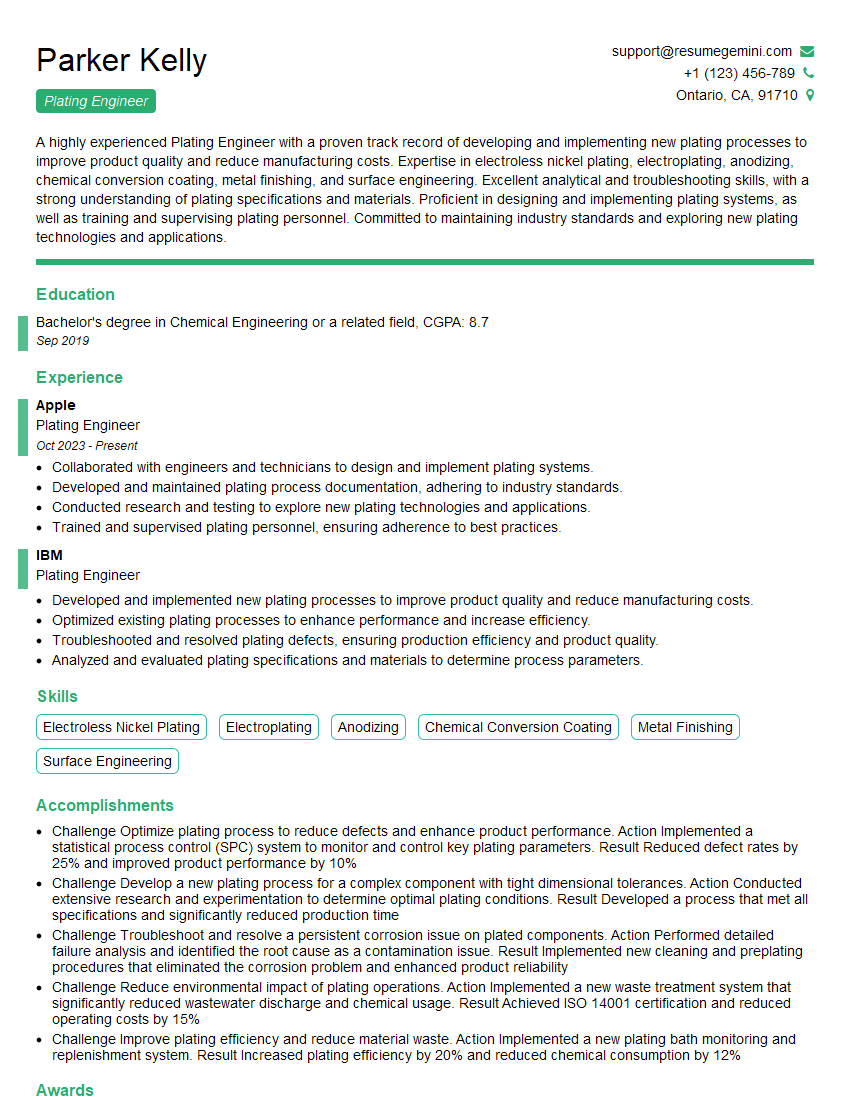
Mastering the intricacies of plating operations opens doors to exciting career opportunities with significant growth potential. To maximize your chances of securing your dream role, invest time in crafting a compelling, ATS-friendly resume that highlights your skills and experience effectively. ResumeGemini is a trusted resource that can help you build a professional and impactful resume tailored to the plating industry. We provide examples of resumes specifically designed for Plating Operation roles to guide you in showcasing your qualifications. Take the next step toward your ideal career – build your best resume today!
Explore more articles
Users Rating of Our Blogs
Share Your Experience
We value your feedback! Please rate our content and share your thoughts (optional).
What Readers Say About Our Blog
Attention music lovers!
Wow, All the best Sax Summer music !!!
Spotify: https://open.spotify.com/artist/6ShcdIT7rPVVaFEpgZQbUk
Apple Music: https://music.apple.com/fr/artist/jimmy-sax-black/1530501936
YouTube: https://music.youtube.com/browse/VLOLAK5uy_noClmC7abM6YpZsnySxRqt3LoalPf88No
Other Platforms and Free Downloads : https://fanlink.tv/jimmysaxblack
on google : https://www.google.com/search?q=22+AND+22+AND+22
on ChatGPT : https://chat.openai.com?q=who20jlJimmy20Black20Sax20Producer
Get back into the groove with Jimmy sax Black
Best regards,
Jimmy sax Black
www.jimmysaxblack.com
Hi I am a troller at The aquatic interview center and I suddenly went so fast in Roblox and it was gone when I reset.
Hi,
Business owners spend hours every week worrying about their website—or avoiding it because it feels overwhelming.
We’d like to take that off your plate:
$69/month. Everything handled.
Our team will:
Design a custom website—or completely overhaul your current one
Take care of hosting as an option
Handle edits and improvements—up to 60 minutes of work included every month
No setup fees, no annual commitments. Just a site that makes a strong first impression.
Find out if it’s right for you:
https://websolutionsgenius.com/awardwinningwebsites
Hello,
we currently offer a complimentary backlink and URL indexing test for search engine optimization professionals.
You can get complimentary indexing credits to test how link discovery works in practice.
No credit card is required and there is no recurring fee.
You can find details here:
https://wikipedia-backlinks.com/indexing/
Regards
NICE RESPONSE TO Q & A
hi
The aim of this message is regarding an unclaimed deposit of a deceased nationale that bears the same name as you. You are not relate to him as there are millions of people answering the names across around the world. But i will use my position to influence the release of the deposit to you for our mutual benefit.
Respond for full details and how to claim the deposit. This is 100% risk free. Send hello to my email id: [email protected]
Luka Chachibaialuka
Hey interviewgemini.com, just wanted to follow up on my last email.
We just launched Call the Monster, an parenting app that lets you summon friendly ‘monsters’ kids actually listen to.
We’re also running a giveaway for everyone who downloads the app. Since it’s brand new, there aren’t many users yet, which means you’ve got a much better chance of winning some great prizes.
You can check it out here: https://bit.ly/callamonsterapp
Or follow us on Instagram: https://www.instagram.com/callamonsterapp
Thanks,
Ryan
CEO – Call the Monster App
Hey interviewgemini.com, I saw your website and love your approach.
I just want this to look like spam email, but want to share something important to you. We just launched Call the Monster, a parenting app that lets you summon friendly ‘monsters’ kids actually listen to.
Parents are loving it for calming chaos before bedtime. Thought you might want to try it: https://bit.ly/callamonsterapp or just follow our fun monster lore on Instagram: https://www.instagram.com/callamonsterapp
Thanks,
Ryan
CEO – Call A Monster APP
To the interviewgemini.com Owner.
Dear interviewgemini.com Webmaster!
Hi interviewgemini.com Webmaster!
Dear interviewgemini.com Webmaster!
excellent
Hello,
We found issues with your domain’s email setup that may be sending your messages to spam or blocking them completely. InboxShield Mini shows you how to fix it in minutes — no tech skills required.
Scan your domain now for details: https://inboxshield-mini.com/
— Adam @ InboxShield Mini
Reply STOP to unsubscribe
Hi, are you owner of interviewgemini.com? What if I told you I could help you find extra time in your schedule, reconnect with leads you didn’t even realize you missed, and bring in more “I want to work with you” conversations, without increasing your ad spend or hiring a full-time employee?
All with a flexible, budget-friendly service that could easily pay for itself. Sounds good?
Would it be nice to jump on a quick 10-minute call so I can show you exactly how we make this work?
Best,
Hapei
Marketing Director
Hey, I know you’re the owner of interviewgemini.com. I’ll be quick.
Fundraising for your business is tough and time-consuming. We make it easier by guaranteeing two private investor meetings each month, for six months. No demos, no pitch events – just direct introductions to active investors matched to your startup.
If youR17;re raising, this could help you build real momentum. Want me to send more info?
Hi, I represent an SEO company that specialises in getting you AI citations and higher rankings on Google. I’d like to offer you a 100% free SEO audit for your website. Would you be interested?
Hi, I represent an SEO company that specialises in getting you AI citations and higher rankings on Google. I’d like to offer you a 100% free SEO audit for your website. Would you be interested?