Interviews are more than just a Q&A session—they’re a chance to prove your worth. This blog dives into essential Player Contract Negotiation interview questions and expert tips to help you align your answers with what hiring managers are looking for. Start preparing to shine!
Questions Asked in Player Contract Negotiation Interview
Q 1. Explain the key elements of a standard player contract.
A standard player contract is a legally binding agreement outlining the terms of employment between a player and a team. It’s much more than just salary; it’s a comprehensive document covering various aspects of the player’s professional life.
- Compensation: This is the most prominent aspect, detailing the player’s salary, bonuses (performance-based, signing bonuses, etc.), and potential incentives.
- Contract Length: This specifies the duration of the agreement, ranging from a single season to multiple years.
- Playing Conditions: This section often includes clauses regarding playing time, position, and any potential changes or limitations.
- Termination Clauses: These outline the conditions under which the contract can be terminated by either party, including reasons for release or breach of contract. They might include performance-based clauses or moral clauses.
- Image Rights and Endorsements: This addresses the player’s rights to their image and likeness and any potential revenue sharing arrangements with the team.
- Dispute Resolution: This section outlines the process for resolving any disputes that may arise between the player and the team, often involving arbitration or mediation.
- Confidentiality Clause: This protects sensitive information shared during the negotiation process.
For example, a contract might specify a base salary of $5 million annually, plus a $1 million signing bonus, and additional incentives for making the playoffs or achieving individual milestones like scoring a certain number of goals.
Q 2. What are the most common negotiation tactics used in player contract negotiations?
Negotiation tactics in player contracts are often strategic and can be quite nuanced. Both players and teams employ various strategies to secure the best possible outcome.
- Good Cop/Bad Cop: One negotiator presents a more agreeable stance while another plays the harder role.
- Anchoring: This involves presenting an initial offer that sets the tone and influences subsequent negotiations. The first offer significantly impacts the final deal.
- Nibbling: Small concessions are made towards the end of the negotiation to ‘sweeten’ the deal.
- Highball/Lowball Offers: Extreme initial offers designed to push the other party to compromise significantly.
- Deadlines and Pressure Tactics: Creating artificial urgency to push the other party to accept an offer.
- Strategic Silence: Using pauses strategically to create tension and encourage compromise.
- Information Gathering and Research: Thorough knowledge of the player’s performance history, market trends, and comparable contracts is crucial.
Imagine a scenario where a player’s agent uses a highball offer to initially anchor the negotiations, then strategically concedes on less critical aspects like image rights to secure a higher base salary.
Q 3. How do you assess a player’s market value?
Assessing a player’s market value is a multi-faceted process that requires a deep understanding of the sport, market dynamics, and the player’s individual attributes. It’s not just about stats.
- Performance Data: Statistical analysis of past performance, including goals scored, assists, win-loss records (for team sports), and individual accolades.
- Potential: Evaluating a player’s future potential based on age, development trajectory, and overall skill set.
- Market Comparison: Analyzing contracts of similar players with comparable skills and performance levels.
- Position and Team Needs: The value of a player is significantly influenced by their position and the specific needs of the team.
- Injury History: A player’s injury history can impact their perceived value, especially in long-term contract negotiations.
- Negotiating Power: Factors like player reputation, agent influence, and the overall demand for the player influence negotiation power.
For instance, a young, highly-rated prospect with limited experience might command a smaller salary than an established star with a proven track record. It’s also vital to consider factors like the team’s salary cap and overall spending budget.
Q 4. Describe your experience in structuring deferred compensation in player contracts.
Structuring deferred compensation is a common practice in player contracts, particularly for high-value players and teams needing to manage their salary cap effectively. It involves delaying a portion of the player’s earnings to future years.
My experience includes negotiating various deferred compensation structures, considering factors like:
- Interest Rates: The contract must specify the interest rate applicable to deferred payments, ensuring the player receives fair compensation for the delayed payment. The rate should reflect prevailing market conditions and risk considerations.
- Payment Schedule: A clear payment schedule must be defined, specifying the exact amount and timing of future payments.
- Security and Guarantees: It’s crucial to have mechanisms in place to protect the player’s deferred payments. This might involve escrow accounts or other forms of security.
- Tax Implications: Careful consideration should be given to the tax implications of deferred compensation both for the player and the team.
- Contractual Contingencies: Defining the conditions under which the deferred payment might be affected (for example, performance-based conditions).
A successful deferred compensation arrangement requires careful planning and legal expertise to ensure a fair and mutually beneficial outcome for both the player and the team. We often use sophisticated financial modeling to evaluate the present value of deferred payments.
Q 5. How do you handle contract disputes?
Handling contract disputes requires a systematic approach prioritizing communication and resolution through mutually agreeable methods.
- Early Intervention: Addressing concerns promptly and proactively to prevent escalation is key. Open communication and clear expectations are crucial.
- Mediation and Arbitration: Involving a neutral third party to facilitate communication and negotiate a mutually acceptable solution is frequently the preferred first step.
- Legal Counsel: If mediation fails, seeking legal counsel is essential to understand legal rights and options.
- Filing a Grievance: Depending on the league’s collective bargaining agreement (CBA), filing a formal grievance might be a necessary step.
- Negotiation and Compromise: Even during disputes, a focus on finding common ground and compromising on mutually acceptable terms is vital.
- Litigation: As a last resort, litigation may be necessary. However, this is often costly and time-consuming.
I’ve successfully resolved numerous contract disputes through mediation, leveraging my understanding of both the legal aspects and the underlying interests of the player and the team. The goal is always a fair and efficient resolution.
Q 6. What are some key legal considerations in player contract negotiations?
Legal considerations in player contract negotiations are paramount and require expertise from experienced sports lawyers.
- Contract Law: Ensuring that the contract adheres to all relevant laws and regulations, including contract formation, offer, acceptance, and consideration.
- Antitrust Law: Understanding the implications of antitrust laws, especially related to salary caps and player restrictions.
- Labor Law: Navigating collective bargaining agreements (CBAs) and their impact on player rights and team obligations.
- Tax Law: Careful consideration of tax implications for both the player and the team, including state and federal taxes.
- Image and Likeness Rights: Defining the ownership and usage rights of a player’s image and likeness and avoiding potential conflicts.
- Dispute Resolution Clauses: Ensuring appropriate mechanisms for dispute resolution, such as arbitration or mediation, are clearly outlined.
Ignoring these legal considerations can lead to costly mistakes and potentially voidable contracts. A thorough legal review by a specialist is always recommended.
Q 7. How do you balance the player’s interests with the team’s financial constraints?
Balancing player interests with team financial constraints is a crucial aspect of successful contract negotiations. It requires careful negotiation and a creative approach.
- Understanding Team Finances: Thorough analysis of the team’s salary cap, revenue streams, and overall financial position.
- Prioritizing Player Needs: Identifying the player’s key priorities, such as salary, contract length, and playing opportunities.
- Creative Contract Structuring: Employing techniques like deferred compensation, performance-based incentives, and bonus structures to align player interests with team financial realities.
- Team Value Assessment: Considering the value that the player will bring to the team both on and off the field.
- Negotiation and Compromise: A willingness to negotiate and compromise from both parties is essential to reach a mutually acceptable outcome.
- Long-Term Perspective: Considering the long-term implications of the contract for both player and team, and building a relationship beyond the current deal.
One example could involve a team offering a slightly lower base salary but significantly higher performance bonuses, thus incentivizing the player to excel while still managing the team’s salary cap.
Q 8. Explain your understanding of the collective bargaining agreement (CBA) and its impact on player contracts.
The Collective Bargaining Agreement (CBA) is a legally binding contract between a league (like the NBA or NFL) and its players’ association. It dictates the rules and regulations governing player salaries, benefits, working conditions, and dispute resolution for a specific period. It’s the foundational document that shapes every player contract. The CBA sets parameters such as salary caps, minimum salaries, rookie-scale contracts, and free agency rules. For example, the NBA’s CBA might stipulate a maximum salary a team can pay a player, or it might define the parameters of a ‘max contract.’ Failing to adhere to the CBA’s stipulations can lead to significant penalties for teams and players.
The CBA’s impact on individual player contracts is immense. It acts as a framework defining the maximum and minimum amounts a player can be paid, the structure of contracts (e.g., length, guaranteed vs. non-guaranteed money), and the permitted types of incentives. Essentially, a player contract cannot violate the terms of the current CBA. A negotiator must deeply understand the CBA to craft a legally sound and strategically advantageous contract.
Q 9. How do you determine the appropriate length of a player contract?
Determining the appropriate length of a player contract involves a complex interplay of factors. We consider the player’s age, projected performance trajectory, team needs, and the prevailing market conditions. A young, promising player might receive a longer contract (e.g., 5-7 years) to lock in their services at a potentially lower cost early in their career. A veteran player nearing the end of their prime might prefer a shorter, higher-value contract (e.g., 2-3 years) to maximize their earnings.
For example, a young, star potential player might get a longer contract to allow the team to control their services for a longer period of time, even at a higher overall cost. Alternatively, a player nearing the end of their career with proven performance might prefer a shorter contract with high annual compensation. We also consider risk; a longer contract carries more risk for both the player (injury) and the team (performance decline). A detailed analysis of player statistics, injury history, and market comparisons is critical for making informed decisions.
Q 10. Describe your approach to negotiating performance-based incentives.
Negotiating performance-based incentives requires a thorough understanding of the player’s capabilities and the team’s goals. We analyze statistical benchmarks (e.g., points per game, rebounds, assists, All-Star appearances, playoff success) that align with both the player’s abilities and team ambitions.
For example, we might include incentives for achieving certain statistical milestones, winning team awards, or reaching the playoffs. These incentives must be achievable yet challenging, motivating the player to exceed expectations. The structure of the incentives is also critical. We’ll often use tiered incentives – reaching a certain level unlocks a higher bonus, creating further motivation. It’s crucial to define these metrics very clearly in the contract to avoid later disputes. For instance, ‘reaching the All-Star Game’ is clearer than ‘having a good season’. We need to establish objective criteria within the contract language to avoid any ambiguity.
Q 11. How do you manage the expectations of players and team management during negotiations?
Managing expectations requires open, honest, and transparent communication throughout the negotiation process. We set realistic expectations early on by presenting a thorough analysis of the player’s market value, team’s salary cap situation, and the current CBA parameters. We regularly update both the player and team management with progress reports and address their concerns proactively.
It’s about building trust and fostering a collaborative approach. We emphasize mutual respect and recognize that a successful negotiation benefits both parties. Sometimes, this means conveying difficult news, such as a less-than-ideal market value or a constrained salary cap. Honesty, even if it’s not what each side wants to hear, is crucial for building the trust needed to reach a final agreement.
Q 12. What are the ethical considerations in negotiating player contracts?
Ethical considerations are paramount in player contract negotiations. We adhere to the highest standards of integrity and transparency in all our dealings. This includes avoiding deceptive practices, ensuring fair and equitable compensation, protecting the player’s interests, and upholding the confidentiality of sensitive information.
For example, we would never mislead a player about their market value or pressure them into accepting an unfair deal. We always operate within the bounds of the law and the CBA. Maintaining long-term relationships built on trust and mutual respect is key to ethical practice. Transparency about fees and commissions is vital, ensuring the player understands the full scope of the agreement. Ethical conduct strengthens our reputation and fosters a positive and lasting relationship with our clients.
Q 13. How do you navigate salary cap implications during negotiations?
Navigating salary cap implications requires a deep understanding of the league’s financial rules and regulations. We meticulously track the team’s existing salary commitments and project future cap space to determine the feasibility of a contract offer. We employ sophisticated financial models and forecasting techniques to project future cap situations and to assess the long-term financial implications of contract structures.
For instance, we might structure a contract with lower initial payments to avoid exceeding the cap in the short term, while incorporating larger payments later when we anticipate greater cap room. We might also explore various contractual mechanisms, such as team options or player options, to manage risk and flexibility given future cap changes. We also work closely with the team’s management to develop creative strategies that comply with the salary cap while maximizing the player’s value.
Q 14. How familiar are you with different contract structures (e.g., guaranteed vs. non-guaranteed)?
I’m very familiar with different contract structures. The most common distinction is between guaranteed and non-guaranteed money. Guaranteed money is payable to the player regardless of performance or injury. Non-guaranteed money is contingent upon the player meeting certain conditions or remaining on the roster.
Example: A player might have a three-year contract with $10 million guaranteed and another $5 million non-guaranteed. The player is guaranteed the $10 million even if they’re injured or cut, but the additional $5 million only comes if they perform well and meet certain conditions or remain on the roster. Other structures include ‘player options’ (giving the player the right to terminate the contract), ‘team options’ (giving the team the right to renew or terminate), and ‘early termination clauses’ (allowing either party to end the contract under specific circumstances). Understanding these options allows us to craft contracts tailored to the specific needs and risk tolerance of both the player and team, optimizing the outcomes for both parties.
Q 15. Explain your process for researching comparable contracts and market data.
Researching comparable contracts and market data is crucial for effective player contract negotiation. My process involves a multi-faceted approach, combining quantitative analysis with qualitative understanding of the player’s unique value.
- Database Research: I leverage specialized sports contract databases like Spotrac and others to gather information on recent contracts for players with similar positions, experience levels, performance statistics (e.g., goals scored, assists, batting average), and overall market value. This provides a baseline for salary expectations.
- Agent Networking: Building strong relationships with other agents provides invaluable insight into ongoing negotiations and market trends. Informal conversations often reveal valuable information not publicly available.
- Performance Metrics Analysis: I go beyond simple statistics. I delve into advanced metrics, analyzing efficiency, impact on the game, and contributions beyond the basic stats sheet. This helps justify higher compensation for players who deliver more than initially apparent.
- Contextual Factors: I consider the team’s financial situation, the overall league salary cap, and any unique circumstances affecting the player (e.g., injuries, pending free agency). A star player on a struggling team might accept a slightly lower salary than a player of equal caliber on a championship contender.
For example, when negotiating for a young, high-potential pitcher, I would compare his statistics and performance with those of other pitchers of similar age and skill drafted in recent years. This would give me a solid foundation for proposing a reasonable contract amount.
Career Expert Tips:
- Ace those interviews! Prepare effectively by reviewing the Top 50 Most Common Interview Questions on ResumeGemini.
- Navigate your job search with confidence! Explore a wide range of Career Tips on ResumeGemini. Learn about common challenges and recommendations to overcome them.
- Craft the perfect resume! Master the Art of Resume Writing with ResumeGemini’s guide. Showcase your unique qualifications and achievements effectively.
- Don’t miss out on holiday savings! Build your dream resume with ResumeGemini’s ATS optimized templates.
Q 16. How do you address potential issues related to image rights and endorsements?
Image rights and endorsements are a significant part of a player’s overall financial package. Addressing these issues requires careful planning and clear contract language.
- Ownership and Control: We clearly define who owns the image rights – the player, the team, or a shared arrangement. This often involves negotiating percentages of endorsement income. For instance, a player might retain 70% of their endorsement income while the team gets 30% for using their image in promotional material.
- Exclusivity Clauses: These clauses stipulate whether the player can endorse competing brands or products. We negotiate these carefully, balancing the team’s interests in protecting their brand with the player’s desire for maximum earning potential. It is crucial to establish whether there’s an exclusive deal, a limited-exclusivity arrangement, or complete freedom for the player.
- Approval Rights: The contract outlines the team’s or agent’s right to approve or disapprove of endorsements to ensure brand alignment. This prevents the player from associating with brands that could negatively impact the team’s reputation.
- Conflict of Interest Provisions: The contract clarifies what constitutes a conflict of interest and how it will be resolved. For example, endorsing a competing product.
Imagine a star basketball player. We might negotiate a clause where the player retains 80% of endorsement revenue but the team has approval rights over any endorsements of competing sportswear brands.
Q 17. Describe your experience negotiating buy-out clauses or early termination options.
Negotiating buy-out clauses and early termination options requires a nuanced understanding of risk and reward. These clauses provide flexibility for both the player and the team but require careful consideration of the financial implications.
- Player Perspective: Buy-out clauses provide the player with an escape route if the team underperforms, or if a better opportunity arises (e.g., a trade to a contender). The buy-out amount should be reasonable yet sufficient to deter frivolous activation.
- Team Perspective: A team might include a clause allowing them to terminate a contract early under specific circumstances (e.g., repeated violations of team rules, serious injury). This protects the team’s investment.
- Financial Considerations: Determining the appropriate buy-out amount involves calculating the remaining salary, potential bonuses, and any other financial obligations. It’s a delicate balance between protecting both parties’ interests.
For example, a buy-out clause might state that the player can terminate the contract after three years by paying the team $5 million. Conversely, the team might have the option to terminate the contract if the player fails a drug test, subject to independent verification.
Q 18. How do you handle contract renegotiations?
Contract renegotiations often arise due to unforeseen circumstances like exceptional player performance, injuries, or changes in team finances. The process requires a collaborative approach.
- Performance Review: We objectively assess the player’s performance against the initial contract terms and their contributions to the team’s success. Did they exceed expectations, meet targets, or fall short?
- Market Analysis: We revisit market data to assess if the player’s current value justifies a change in compensation. Has their market value increased or decreased since the initial contract was signed?
- Team’s Financial Situation: We consider the team’s financial capacity and their willingness to renegotiate. Are they in a position to offer a higher salary, or are there budgetary constraints?
- Negotiation: We engage in constructive dialogue to reach a mutually acceptable agreement. This may involve adjustments to salary, bonuses, contract length, or other contract terms.
For example, if a player significantly outperforms their initial contract and becomes a league MVP, we’d leverage this success to renegotiate a more lucrative contract reflecting their enhanced value.
Q 19. What strategies do you use to build rapport and trust with players and their representatives?
Building rapport and trust with players and their representatives is paramount. It’s about establishing a collaborative relationship built on mutual respect and understanding.
- Open Communication: Maintain open and honest communication throughout the negotiation process. Be transparent about expectations and challenges.
- Active Listening: Listen carefully to the player and their agent’s concerns, needs, and aspirations. Understanding their perspective is crucial.
- Empathy and Understanding: Recognize that contract negotiations are often high-stakes situations involving a player’s career and financial future. Show empathy and respect.
- Relationship Building: Cultivate long-term relationships with players and agents, going beyond the transactional aspect of the deal. This creates a foundation of trust for future collaborations.
I often start by having informal conversations to get to know the player and their representatives on a personal level. This helps build a strong foundation for negotiations.
Q 20. How do you present complex contract terms in a clear and understandable way?
Complex contract terms need to be explained clearly and concisely, avoiding legal jargon. I use a multi-pronged approach to ensure comprehension.
- Plain Language Summaries: Provide a concise summary of the key terms in plain language, devoid of legal terminology. Think of it as a “contract in a nutshell”.
- Visual Aids: Use charts, graphs, and tables to illustrate complex financial structures like deferred payments or bonus incentives. A picture is worth a thousand words.
- Interactive Explanations: Engage in a discussion and answer any questions the player and their representatives have. Encourage them to ask questions until they fully understand every aspect of the contract.
- Scenario Planning: Walk through various scenarios to illustrate how different provisions of the contract would apply in practice. This gives them a practical understanding of the implications.
For instance, I’d explain a complicated bonus structure by creating a chart showing how many points, assists, or other performance metrics need to be achieved to receive the bonus, and the amount they would receive.
Q 21. How do you prepare for a negotiation?
Preparation is critical for successful contract negotiations. My preparation process is detailed and thorough.
- Data Gathering: Thorough research on player performance, market value, and comparable contracts, as previously discussed.
- Contract Strategy: Develop a clear negotiation strategy outlining goals, priorities, and potential compromise points.
- Scenario Planning: Anticipate potential counterarguments and develop responses. Preparing for different scenarios ensures that I can adapt to any situation that might arise during the negotiation.
- Team Coordination: If working with a team, coordinate with other team members (legal counsel, management) to ensure a unified and effective approach.
- Practice: Rehearse the negotiation process, anticipating various discussion points and responses. This confidence is essential for success.
Before any negotiation, I create a detailed briefing document containing all relevant data, my proposed contract terms, and potential counteroffers. This helps maintain focus during the negotiation and ensures I’m thoroughly prepared for every possibility.
Q 22. Describe a time you successfully negotiated a challenging contract.
One of the most challenging contract negotiations I handled involved a young, highly-prospective basketball player entering his first professional contract. His agent was pushing for a significant signing bonus and a high annual salary, exceeding what the team considered market value for a player with his limited experience. The challenge was balancing the player’s potential with the team’s financial constraints and risk assessment.
My strategy was multifaceted. First, I thoroughly researched comparable contracts for similar players, showcasing a range of successful outcomes. This provided a factual basis for negotiation, moving beyond emotional arguments. Second, I presented the team’s financial model transparently, emphasizing their long-term investment plan and how it would benefit the player through potential future contracts and incentives based on performance. Finally, I proposed a structured contract with a lower initial salary but significant performance bonuses tied to team and individual milestones. This addressed the agent’s desire for high earnings while mitigating the team’s risk. The result was a contract mutually beneficial, securing the player’s future while managing the team’s financial stability.
Q 23. How do you adapt your negotiation style to different personalities?
Adapting my negotiation style is crucial. I don’t believe in a one-size-fits-all approach. I assess the individual’s personality and communication style before engaging. For example, with analytical, data-driven individuals, I present well-researched data and comparative market analysis to support my arguments. With more emotionally-driven individuals, I focus on building rapport, actively listening to their concerns, and finding common ground before discussing specific contract terms.
Think of it like this: if you’re dealing with a pragmatic negotiator, they’ll likely respond well to concrete proposals and objective data. But if you’re dealing with someone more collaborative, it’s better to foster a relationship of trust first before delving into the details. I strive to find the balance between assertiveness and collaboration depending on the individual. My goal is always to create a win-win scenario.
Q 24. What resources do you use to stay updated on sports contract laws and regulations?
Staying updated in this field is vital. I rely on a combination of resources. This includes subscribing to legal databases specializing in sports law, like LexisNexis and Westlaw. These databases offer up-to-date case law and legal analysis related to contract disputes and regulations. I also attend relevant seminars and conferences hosted by sports law organizations and leagues (e.g., NBA, NFL, etc.). These events provide valuable insights into current trends and legal developments. Furthermore, I maintain a network of colleagues and professionals in the field to exchange information and insights. Networking is crucial for staying current with the latest trends and interpretations of sports contracts.
Q 25. What are the common pitfalls to avoid in player contract negotiations?
Several common pitfalls can significantly impact contract negotiations. One major pitfall is failing to thoroughly research market comparables. Without this, you can’t confidently justify your proposed terms. Another pitfall is neglecting to clearly define all terms and conditions. Ambiguity can lead to disputes later. Poor communication is also detrimental; miscommunication can lead to misunderstandings and wasted time.
Furthermore, focusing solely on short-term gains can overlook long-term implications. A contract that benefits the player or team immediately might have negative consequences down the line. Finally, overlooking potential legal issues, such as issues related to image rights or endorsements, can create future problems. A thorough review by legal counsel is critical to avoid these issues. A robust contract protects both sides and avoids costly disputes later.
Q 26. How do you deal with conflicting priorities among multiple stakeholders?
Dealing with conflicting priorities among stakeholders – the player, the agent, the team owner, and potentially sponsors – requires strong communication and mediation skills. I begin by actively listening to each stakeholder’s concerns and priorities, ensuring everyone feels heard. Next, I facilitate open dialogue, identifying areas of common ground and potential compromises. I use collaborative problem-solving techniques to find solutions that address the needs of all parties as much as possible, even if it means making some concessions.
Sometimes, prioritization is necessary. This is where a clear understanding of each stakeholder’s leverage and influence becomes crucial. I might use a ‘scoring system’ to prioritize the most critical aspects of the contract for each party, helping to identify the most significant points of compromise or negotiation. The goal isn’t always to satisfy everyone fully, but to achieve a mutually acceptable outcome that minimizes conflict and safeguards the long-term interests of all involved.
Q 27. Describe your experience working with agents and legal counsel.
My experience working with agents and legal counsel has been overwhelmingly collaborative. I view them as essential partners in the process. Early and open communication with agents is crucial. I typically establish a clear understanding of the player’s goals and aspirations, as well as the agent’s strategies, before entering negotiations. This collaborative approach helps in structuring a mutually acceptable contract that aligns with the player’s career aspirations and the team’s financial and competitive goals.
Legal counsel ensures that all contractual terms comply with applicable laws and regulations, mitigating any potential legal risks. I work closely with legal counsel throughout the process, from drafting the initial contract to finalizing and executing the agreement. The collaborative relationship with both agents and legal counsel is key to ensuring a successful and legally sound contract.
Key Topics to Learn for Player Contract Negotiation Interview
- Understanding Player Value: Learn to assess a player’s market value based on performance metrics, potential, and market trends. This includes understanding both tangible and intangible assets a player brings to a team.
- Contract Structure & Clauses: Gain a deep understanding of different contract types (guaranteed, non-guaranteed, incentives), and the implications of various clauses (e.g., trade clauses, opt-out options, performance bonuses). Practice analyzing complex contract structures and their potential risks and rewards.
- Salary Cap Management: Familiarize yourself with salary cap rules and regulations. Practice strategizing within budgetary constraints to maximize team performance while adhering to league rules.
- Negotiation Strategies & Tactics: Develop strong negotiation skills, including active listening, persuasive communication, and compromise strategies. Learn to identify and address conflicting interests to reach mutually beneficial agreements.
- Legal & Ethical Considerations: Understand the legal framework governing player contracts and ensure adherence to ethical standards in all negotiations. This includes understanding agent representation and potential conflicts of interest.
- Long-Term Financial Planning: Learn to analyze the long-term financial implications of contract offers, considering factors like inflation, future earning potential, and investment opportunities.
- Data Analysis & Market Research: Develop skills in analyzing player performance data and conducting thorough market research to inform negotiation strategies and justify contract offers.
Next Steps
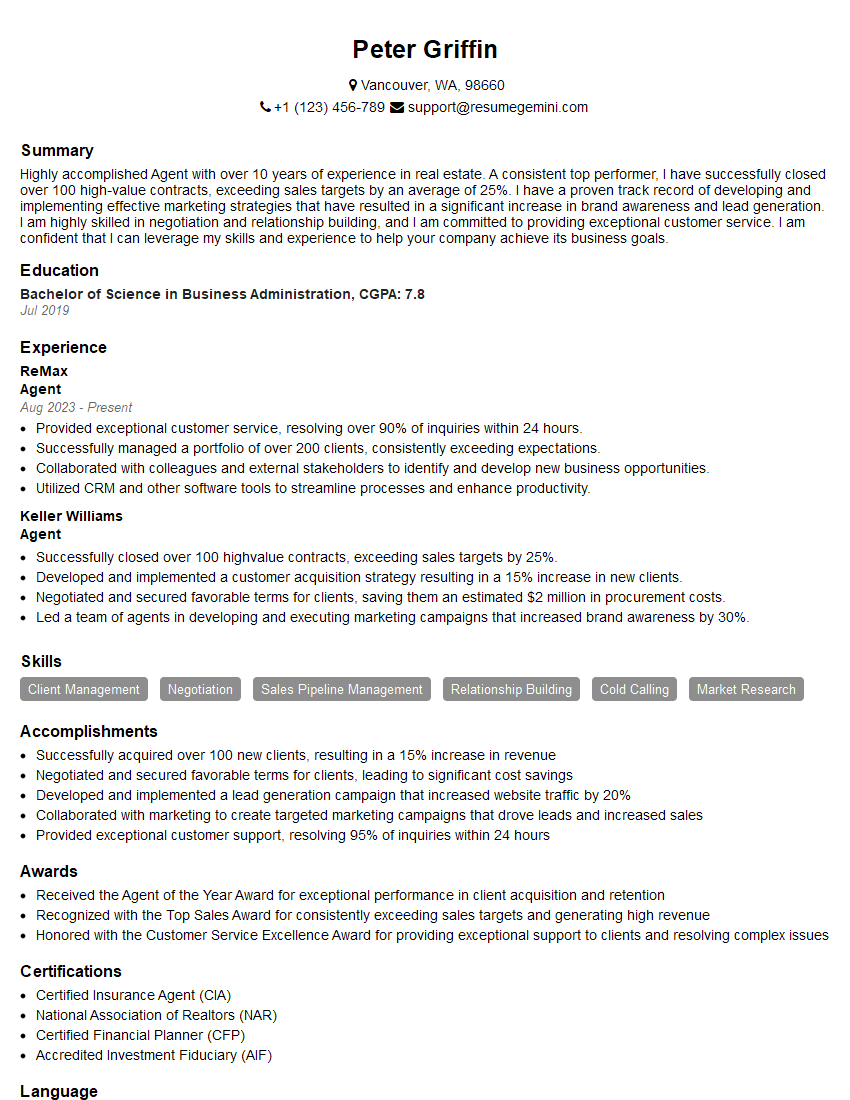
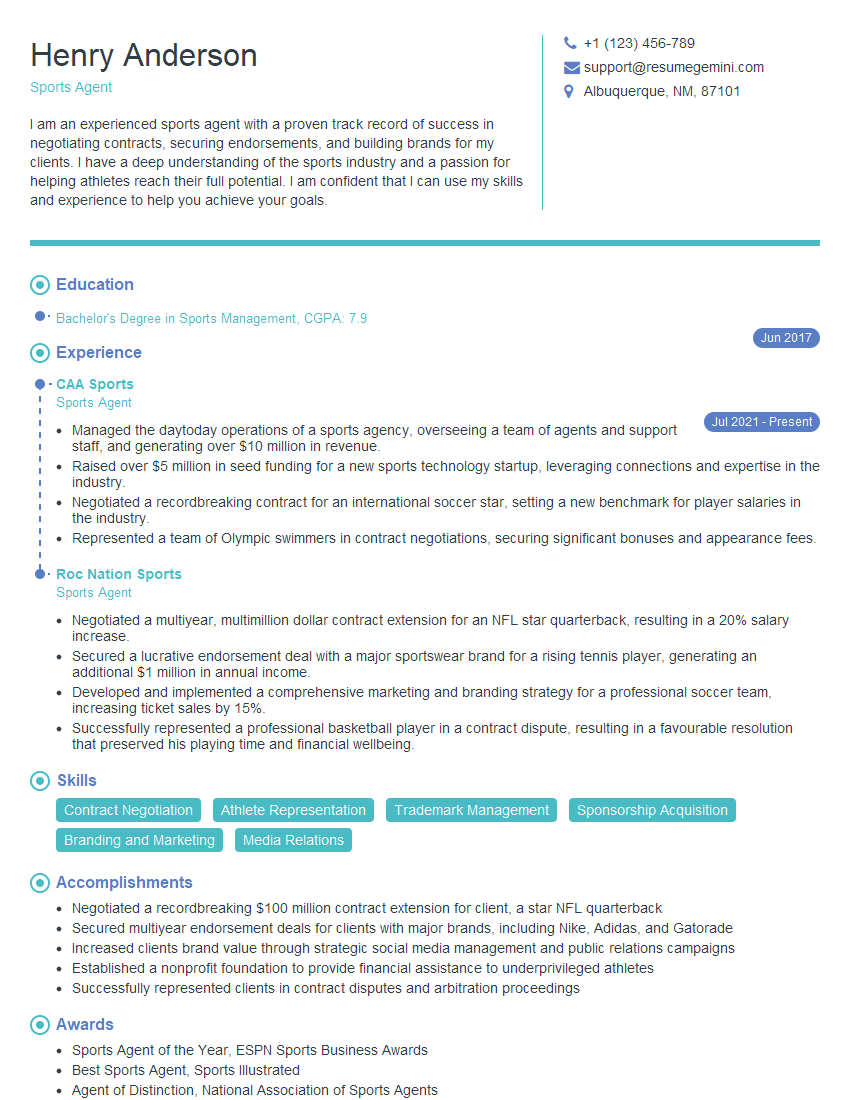
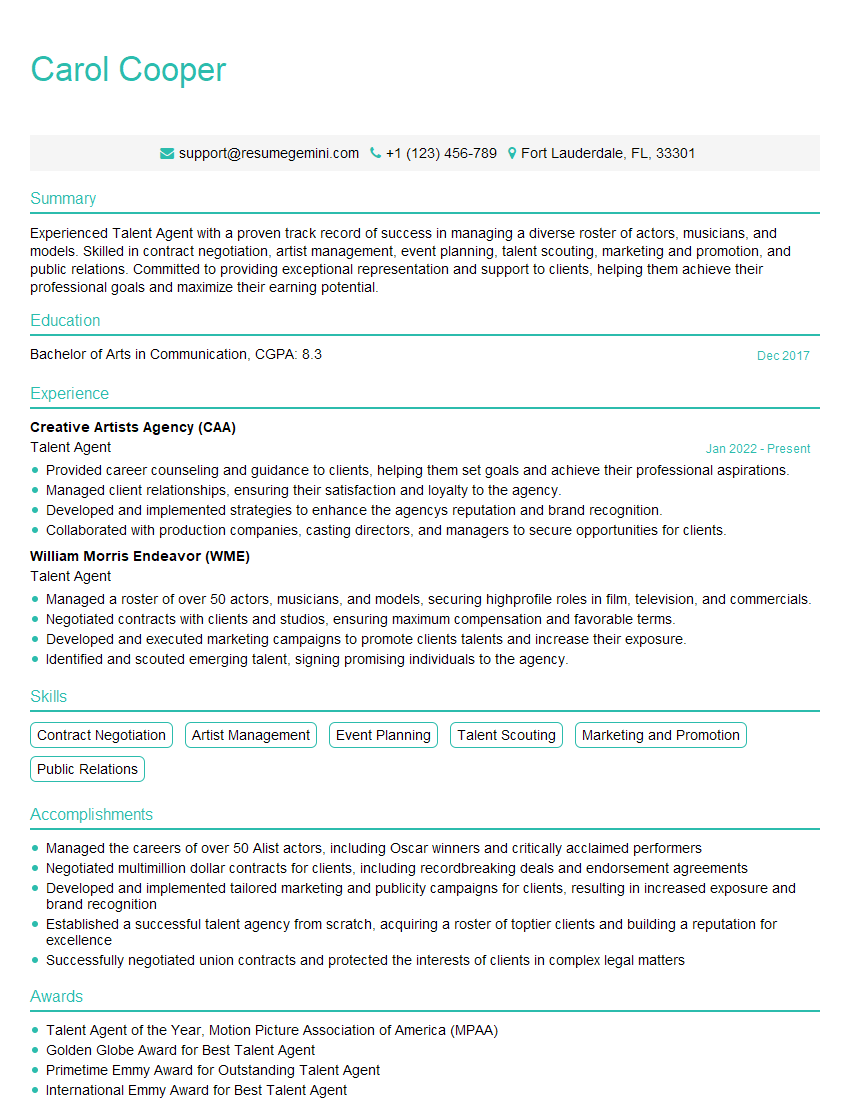
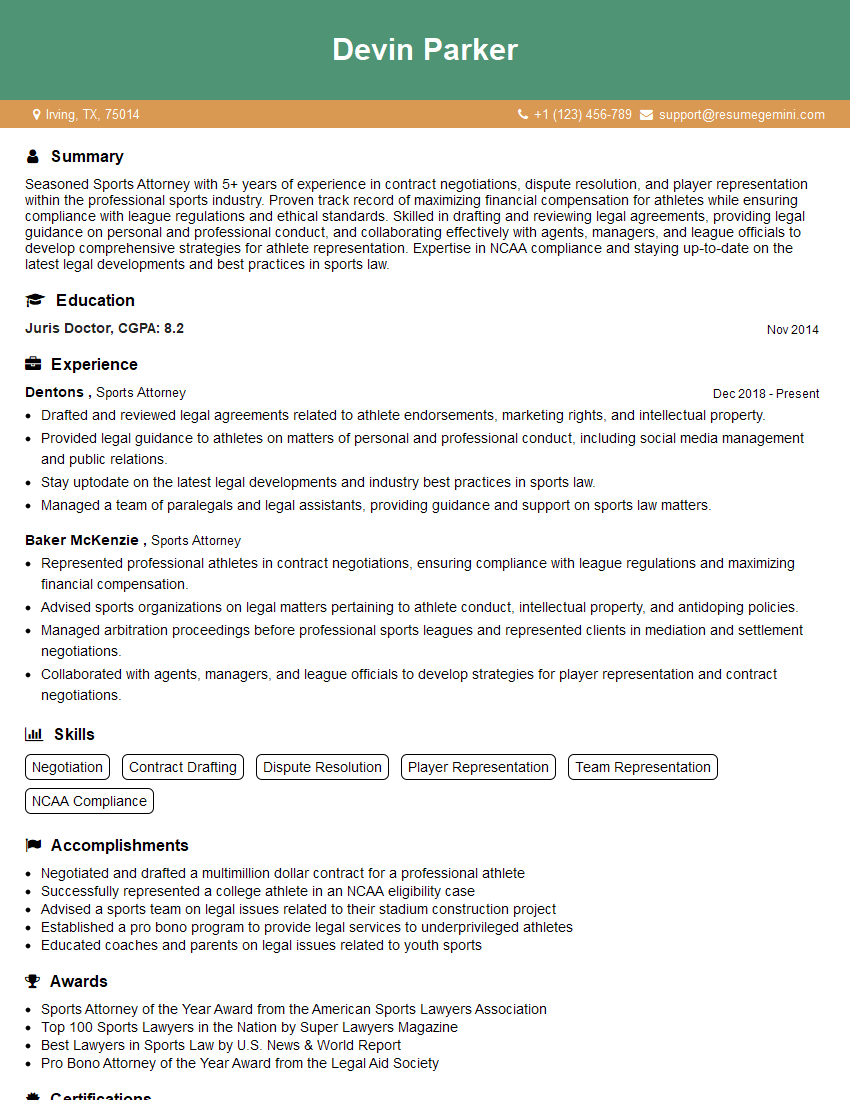
Mastering player contract negotiation is crucial for career advancement in sports management, significantly enhancing your value to any team or organization. A well-crafted resume is your first impression; make it count! Creating an ATS-friendly resume significantly increases your chances of getting your application noticed. We strongly recommend using ResumeGemini to build a professional and impactful resume tailored to the specific requirements of a Player Contract Negotiation role. Examples of resumes optimized for this field are available to help you get started.
Explore more articles
Users Rating of Our Blogs
Share Your Experience
We value your feedback! Please rate our content and share your thoughts (optional).
What Readers Say About Our Blog
Very informative content, great job.
good