Interviews are more than just a Q&A session—they’re a chance to prove your worth. This blog dives into essential Player Personnel Management interview questions and expert tips to help you align your answers with what hiring managers are looking for. Start preparing to shine!
Questions Asked in Player Personnel Management Interview
Q 1. Describe your experience evaluating player skills and potential.
Evaluating player skills and potential is a multifaceted process that goes beyond simply looking at statistics. It requires a keen eye for athleticism, technical ability, and the potential for future growth. My approach involves a combination of film study, live scouting, and data analysis.
For instance, when evaluating a point guard, I don’t just look at assists and turnovers. I analyze their decision-making under pressure, their ability to read defenses, their court vision, their ball-handling skills under duress, and their overall basketball IQ. I also assess their physical attributes – speed, agility, and strength – and how these translate to on-court performance. Furthermore, I consider their potential for improvement. A younger player with raw talent and a strong work ethic might have higher long-term potential than a more polished but less malleable veteran.
I also look at how a player performs in different situations. Does their game adapt when facing tougher competition? Do they thrive under pressure or crumble? These qualitative aspects are crucial in determining a player’s true potential.
Q 2. How do you identify and assess character traits relevant to team success?
Character is paramount in team success. A player’s talent can only take a team so far; their character determines how well they integrate into the team dynamic and contribute to a winning culture. I assess character through multiple avenues. First, I conduct thorough background checks, including speaking with previous coaches, teammates, and even family members. This helps paint a comprehensive picture beyond on-field performance.
Secondly, during live scouting, I observe a player’s interactions with teammates, coaches, and referees. Do they display good sportsmanship? How do they respond to adversity? Do they show leadership qualities? Their body language and communication style are key indicators of character.
Finally, I use psychological assessments where appropriate, especially for high-profile recruits. These tools provide further insight into personality traits such as resilience, teamwork, and emotional intelligence, which are crucial for success in a team environment. For example, a player who consistently demonstrates accountability for their mistakes, even when under pressure, is a valuable addition to any team.
Q 3. Explain your process for compiling and analyzing player data.
My process for compiling and analyzing player data is systematic and technologically driven. I utilize a range of advanced statistical tools, along with traditional scouting reports. I begin by gathering data from multiple sources including game statistics (points, rebounds, assists, etc.), advanced metrics (e.g., PER, True Shooting Percentage), and tracking data (e.g., speed, distance covered).
This data is then inputted into a database and analyzed using statistical software. I use regression models and other analytical techniques to identify correlations between different metrics and overall performance. For example, I might analyze the relationship between a point guard’s assist-to-turnover ratio and their team’s win percentage. Furthermore, I cross-reference this quantitative data with qualitative observations from scouting reports and film analysis to get a holistic view of a player’s performance.
Finally, I present these findings in clear, concise reports that are easy for coaches and management to understand. Visualization tools, such as charts and graphs, are used to highlight key trends and insights.
Q 4. How do you utilize scouting reports to inform player acquisition decisions?
Scouting reports are indispensable in player acquisition decisions. They provide a detailed assessment of a player’s strengths, weaknesses, and overall potential, forming the foundation of my evaluation. I don’t rely on a single report; instead, I compare and contrast findings from multiple sources – both internal and external scouts – to identify consistent patterns and potential biases.
For example, if multiple scouts highlight a player’s exceptional defensive ability but disagree on their offensive potential, I would delve deeper into the specifics. I might watch game film to assess their offensive skills personally, and speak to coaches and players familiar with their game. This helps to refine our understanding and reduce uncertainty. The goal is to create a consensus view which incorporates all available information, mitigating the risk of making decisions based on incomplete or potentially flawed data.
Ultimately, scouting reports inform, but do not dictate, our acquisition decisions. They serve as a critical input, but they must be integrated with other factors such as team needs, budget constraints, and the overall strategic direction of the organization.
Q 5. What metrics do you consider most important in evaluating player performance?
The most important metrics for evaluating player performance vary depending on position and team needs. However, some consistently important metrics include:
- Efficiency Metrics: True Shooting Percentage (TS%), Player Efficiency Rating (PER) – these metrics provide a holistic view of a player’s offensive efficiency, accounting for different scoring methods.
- Advanced Box Score Statistics: Assist-to-Turnover Ratio, Rebound Percentage, Usage Rate – these metrics offer deeper insight into specific aspects of a player’s game that traditional statistics may miss.
- Impact Metrics: Win Shares, Value Over Replacement Player (VORP) – these aim to quantify a player’s overall contribution to winning.
- Position-Specific Metrics: For example, steals and blocks for defensive players, or three-point percentage for perimeter players.
It’s crucial to remember that statistics alone don’t tell the whole story. Qualitative factors like work ethic, leadership skills, and coachability must also be considered in a comprehensive evaluation.
Q 6. How do you handle conflicting scouting reports on a player?
Conflicting scouting reports are inevitable. Instead of dismissing them, I view them as an opportunity to gain a more nuanced understanding of a player. My approach involves several steps:
- Investigate the Discrepancies: I carefully examine the specific points of disagreement. What aspects of the player’s game are the scouts disagreeing on? What methodologies did they use? This helps to pinpoint the source of the conflict.
- Gather Additional Data: I might request additional scouting reports, watch more game film focusing on the areas of contention, or contact other individuals who have worked with the player (e.g., former teammates, coaches).
- Analyze the Context: I consider the context in which the scouts observed the player. Were the games against weak or strong opponents? Were there any unusual circumstances that might have influenced their assessment?
- Seek Consensus: I facilitate discussions among the scouts to understand the rationale behind their respective opinions. The goal is not to force a consensus, but to reach a shared understanding of the player’s strengths and weaknesses.
- Form a Balanced Assessment: Based on all the information gathered, I synthesize a balanced assessment that acknowledges both the points of agreement and disagreement. This comprehensive view forms the basis of our decision-making process.
Q 7. Describe your understanding of different scouting methodologies.
My understanding of scouting methodologies encompasses a wide range of approaches, both traditional and modern.
- Traditional Scouting: This involves live scouting of games and practices, and relies heavily on the scout’s experience and observational skills. This approach is invaluable for assessing intangible qualities like work ethic and team chemistry.
- Advanced Statistical Analysis: This involves utilizing various statistical metrics and analytical tools to evaluate players based on objective data. This approach provides a quantitative perspective that complements the qualitative observations from traditional scouting.
- Film Study: This entails meticulous analysis of game footage to identify patterns in a player’s performance and to assess their technical skills. Film study allows for detailed scrutiny of actions that might be missed during live observation.
- Data-Driven Scouting: This integrates advanced statistical analysis with traditional scouting and film study to provide a comprehensive and data-informed evaluation. This approach enhances the objectivity and precision of the evaluation process.
I am proficient in all of these methodologies and adapt my approach based on the specific needs of the evaluation and the resources available. The optimal approach often involves a combination of these methods, creating a multi-faceted assessment that minimizes biases and maximizes accuracy.
Q 8. How do you prioritize player needs based on team strategy?
Prioritizing player needs aligns directly with the team’s overarching strategy. It’s not just about acquiring talent; it’s about acquiring the right talent. We begin by clearly defining the team’s strategic goals – are we rebuilding, contending for a championship, or focusing on youth development? This dictates the type of players we seek.
For instance, a rebuilding team might prioritize young players with high potential, even if their immediate contribution is limited. A contending team, however, would focus on proven veterans who can immediately impact winning. We then use a weighted scoring system to rank potential acquisitions based on how well they fit our strategic needs. Factors like position, skillset, character, and projected cost are all given scores, ultimately producing a prioritized list of targets.
- Example: A team aiming for a championship might prioritize a veteran point guard with playoff experience over a promising rookie, even if the rookie has higher long-term potential.
Q 9. How do you assess a player’s adaptability to different playing styles?
Assessing a player’s adaptability involves a multifaceted approach that goes beyond just looking at statistics. We analyze their playing style, their basketball IQ, and their overall personality. Does their skillset translate easily to different systems? Are they coachable and open to learning new strategies? Do they exhibit mental fortitude to adapt to pressure situations and varying roles?
We use film study extensively, examining how a player performs against diverse opponents and in different game scenarios. We also interview the player directly, assessing their self-awareness and willingness to adapt. For example, a player comfortable playing both on and off the ball is far more adaptable than someone rigidly accustomed to one role.
- Example: A player known for their individual scoring prowess might be less adaptable to a team-oriented system emphasizing ball movement and defensive intensity.
Q 10. How familiar are you with various player evaluation software and databases?
I’m proficient in several player evaluation software and databases, including Sportradar, Synergy Sports, and InStat. These platforms offer comprehensive data on player performance, including advanced metrics that go beyond traditional statistics. I use these tools to identify trends, quantify player abilities, and compare players across different leagues and levels. My understanding extends beyond simply accessing data; I can interpret that data effectively to make informed decisions about player acquisition and development.
Beyond these commercial tools, I’m also familiar with building and managing internal databases to track player progress, scouting reports, and contract information. Data integration and analysis are critical for strategic player personnel management.
Q 11. Explain your process for building and maintaining relationships with college and professional coaches.
Building strong relationships with college and professional coaches is crucial for effective player evaluation. I believe in transparency and mutual respect. I begin by establishing open communication channels, attending practices and games, and participating in coaching clinics. I actively listen to their insights, acknowledging their expertise and understanding of their players.
I make it a point to maintain consistent contact, not just during recruiting season but year-round. This involves regular phone calls, emails, and informal meetings. This long-term approach builds trust and ensures access to valuable information about a player’s development and character. It’s about building a network of contacts, not just collecting information.
- Example: By building a strong relationship with a college coach, I might gain access to exclusive information about a player’s work ethic or character, information that might not be readily apparent from statistics or game film.
Q 12. Describe your experience in identifying undervalued players.
Identifying undervalued players is a crucial aspect of successful player personnel management. It’s about seeing beyond the surface and identifying players whose potential hasn’t been fully recognized. This often requires a deep dive into film analysis, focusing on specific skills, and assessing their potential for improvement.
I look for players who may have been overlooked due to factors such as injury history, inconsistent performance, or playing in a less prominent league. For example, a player with exceptional defensive skills might be overlooked if their offensive stats are underwhelming. I use advanced statistical analysis to identify players whose performance exceeds expectations based on available data. Ultimately, it’s about finding hidden gems and turning them into valuable assets for the team.
- Example: A player might be undervalued due to a recent injury, but with careful assessment and a tailored rehabilitation plan, they can prove to be a highly valuable asset.
Q 13. How do you project a player’s performance in a new environment?
Projecting a player’s performance in a new environment is complex, requiring a holistic evaluation. It goes beyond simply transferring existing statistics. We need to consider the new team’s playing style, coaching philosophy, and the player’s potential role within the team dynamic. We carefully analyze the player’s strengths and weaknesses in comparison to the requirements of their new role and team scheme.
We use statistical modeling, incorporating factors like team context, minutes played, and opponent strength to adjust past performance. We also factor in qualitative assessments of the player’s adaptability, coachability, and mental resilience. It’s an iterative process, requiring continuous monitoring and adjustment as the player integrates into their new team.
- Example: A player who thrives in a fast-paced, high-scoring system may struggle in a slower, more methodical offense.
Q 14. What is your approach to drafting and developing a player pipeline?
Developing a robust player pipeline is a long-term strategy that involves a multi-pronged approach. It starts with extensive scouting at all levels – high school, college, and international leagues – to identify promising talent. This involves attending games, reviewing film, and building relationships with coaches and scouts across different leagues.
We use a combination of quantitative and qualitative data to evaluate prospects. We then implement a player development program focused on improving skills, physical conditioning, and mental strength. This includes individualized training plans, performance tracking, and mentorship from experienced players and coaches. It’s a systematic approach, prioritizing development across multiple stages from draft to the professional level.
- Example: This might involve assigning younger players to the G-League or similar developmental leagues to gain experience and refine their skills before joining the main roster.
Q 15. How do you evaluate the long-term value of a player versus short-term impact?
Evaluating a player’s long-term value versus their short-term impact requires a multifaceted approach. It’s not simply about immediate production; it’s about projecting future potential and assessing the player’s overall fit within the team’s long-term vision. We use a combination of statistical analysis, scouting reports, and qualitative assessments to make this determination.
Short-term impact: This focuses on immediate contributions – stats, immediate on-field performance, and filling immediate team needs. A player might be a valuable short-term acquisition if they significantly improve a specific weakness, even if their long-term potential is limited.
Long-term value: This considers factors like age, injury history, development potential, character, and overall upside. A young player with high potential, even if their current performance is modest, could represent significant long-term value. Think of a raw prospect with exceptional athleticism who may need time to develop their skills.
Example: A veteran player might have high short-term value due to proven stats and experience, but limited long-term value due to age and potential decline. Conversely, a young player in their early 20s with high athleticism and a strong work ethic might have limited immediate impact but significant long-term potential due to their room for growth.
Career Expert Tips:
- Ace those interviews! Prepare effectively by reviewing the Top 50 Most Common Interview Questions on ResumeGemini.
- Navigate your job search with confidence! Explore a wide range of Career Tips on ResumeGemini. Learn about common challenges and recommendations to overcome them.
- Craft the perfect resume! Master the Art of Resume Writing with ResumeGemini’s guide. Showcase your unique qualifications and achievements effectively.
- Don’t miss out on holiday savings! Build your dream resume with ResumeGemini’s ATS optimized templates.
Q 16. How do you balance talent evaluation with financial considerations?
Balancing talent evaluation with financial considerations is a crucial aspect of player personnel management. It’s a delicate dance, as the most talented player isn’t always the best financial fit. We use a combination of quantitative and qualitative methods to make informed decisions.
Quantitative Analysis: We use advanced statistical models to project player value against their projected salary. We incorporate factors like age, performance metrics, and projected future earnings to create a cost-benefit analysis for each player.
Qualitative Assessment: This involves evaluating intangible aspects such as leadership qualities, work ethic, and team chemistry, which are not always reflected in statistical models. We consider the player’s potential impact on team morale and their overall cultural fit.
Budgetary Constraints: We need to understand the team’s salary cap and available resources to create a responsible spending plan. This includes negotiating contracts and considering the potential impact on future seasons’ spending.
Example: We might identify a highly talented young player but decide against pursuing them if their contract demands exceed our budget, especially if other promising, less expensive alternatives are available.
Q 17. How do you stay up-to-date on the latest trends in player development?
Staying updated on the latest trends in player development is an ongoing process. It’s not enough to rely on outdated methods; we must constantly learn and adapt.
Professional Development Conferences: Attending conferences and workshops focused on sports science, analytics, and player development provides access to the newest research and best practices. These events offer opportunities to network with experts in the field.
Peer Networking: Regular communication with colleagues, including scouts and other personnel managers, provides valuable insights and perspectives from different organizations.
Literature Review: Staying current on academic research and industry publications in sports science, performance analysis, and player development offers crucial data and trends.
Data Analysis: We continuously analyze large datasets of player performance, including advanced metrics, to identify emerging trends and patterns.
Example: By tracking advancements in biomechanics, we can improve training programs, reducing the risk of injury and maximizing athletic performance.
Q 18. Describe your experience working with a diverse team of scouts and analysts.
My experience collaborating with diverse teams of scouts and analysts has been invaluable. Effective communication and shared goals are critical for success. In past roles, I’ve worked with teams comprised of individuals with varying backgrounds, expertise, and perspectives. This diversity enriches our evaluations.
Establishing Clear Communication Protocols: We implement standardized reporting procedures to ensure clarity and consistency in evaluating players.
Leveraging Diverse Skill Sets: Encouraging open dialogue and debate allows us to incorporate different perspectives and strengths, from quantitative analysts to experienced scouts with an eye for talent.
Conflict Resolution: Disagreements are inevitable, but open communication and structured discussions ensure that disagreements are handled professionally and constructively.
Example: In one instance, a disagreement arose over a player’s potential. A quantitative analyst highlighted concerns based on statistical analysis, while a seasoned scout emphasized the player’s intangible qualities. Through open discussion, we reached a consensus by combining both quantitative and qualitative data.
Q 19. How do you handle pressure and tight deadlines during the draft process?
The draft process is inherently high-pressure, characterized by tight deadlines and intense scrutiny. Managing this requires a structured approach and strong teamwork.
Prioritization: We prioritize players based on need and potential impact, ensuring that our efforts are focused on the most critical decisions.
Time Management: Utilizing efficient workflows, leveraging technology, and dividing tasks among team members are crucial for meeting deadlines.
Stress Management: It’s important to maintain a calm and focused attitude under pressure. Regular communication, team meetings, and support systems are essential to reduce stress and maintain effectiveness.
Example: We often use a tiered approach to evaluation. The top-tier players receive the most intensive scrutiny, while less critical decisions can be made more efficiently.
Q 20. How do you deal with the uncertainty inherent in talent evaluation?
Uncertainty is inherent in talent evaluation. Players can underperform or exceed expectations, making accurate predictions challenging. We mitigate this by building robust evaluation frameworks and understanding limitations.
Multiple Data Sources: Utilizing a wide range of data sources, including statistical analysis, scouting reports, and medical evaluations, allows us to build a more comprehensive picture of the player’s potential.
Scenario Planning: Considering potential outcomes (best-case, worst-case, and most-likely scenarios) helps us to prepare for various possibilities and build contingency plans.
Risk Assessment: Understanding the risks associated with each player allows us to make informed decisions about where to allocate resources and manage expectations.
Example: While a player might have impressive statistics, we consider factors like injury history and character to assess the likelihood of sustained success.
Q 21. How do you present your findings and recommendations effectively to management?
Presenting findings and recommendations effectively to management requires clear, concise communication and compelling data visualization.
Structured Reports: We prepare comprehensive reports that clearly articulate our findings, using data-driven insights and supporting evidence.
Data Visualization: Utilizing charts, graphs, and other visual aids helps to communicate complex data in a way that is easily understood by management.
Clear Recommendations: Our reports include specific, actionable recommendations based on our analysis. We also highlight potential risks and opportunities associated with each recommendation.
Interactive Presentations: We often deliver interactive presentations to allow for discussion and Q&A sessions, encouraging engagement and transparency.
Example: Instead of simply stating that a player has high potential, we provide specific statistical projections, scouting reports, and comparative data to support our claims.
Q 22. Explain your experience in negotiating contracts with player agents.
Negotiating player contracts requires a deep understanding of market value, salary cap implications, and the agent’s motivations. It’s not just about numbers; it’s about building relationships based on trust and mutual respect. My approach is collaborative, focusing on finding a win-win solution for the player, the team, and the agent. I begin by thoroughly researching comparable contracts for similar players, considering factors such as performance statistics, experience, and potential future contributions. This allows me to formulate a realistic and competitive offer. I then engage in open communication with the agent, presenting our offer clearly and addressing any concerns or counter-proposals. This process often involves multiple rounds of negotiation, requiring patience, strategic thinking, and the ability to adapt to changing circumstances. For instance, in one negotiation, I successfully secured a long-term deal with a star player by incorporating incentives tied to team performance, thus aligning his interests with the team’s overall success. This approach not only secured the player’s commitment but also provided a financially sound strategy for the team.
Q 23. Describe your experience with player personnel software and databases.
I’m proficient in several player personnel software and databases, including Pro Football Focus, Sportradar, and custom internal systems. These tools are invaluable for aggregating and analyzing player data, scouting reports, and contract information. I utilize these platforms to track player performance metrics, identify potential weaknesses or strengths, and compare players across various leagues and positions. For example, Sportradar allows for detailed statistical analysis, comparing a player’s performance against league averages or historical trends, helping to project future performance. The ability to effectively utilize these databases is crucial for efficient scouting, contract negotiations, and overall player management. The custom systems we use often include features to track medical history, injury reports, and developmental milestones, contributing to a holistic view of each player. I’m also experienced in data mining and visualization, using tools like Tableau to create reports and dashboards that help stakeholders easily understand player evaluations and trends.
Q 24. How do you assess the cultural fit of a player within the team?
Assessing cultural fit is as crucial as evaluating a player’s on-field skills. It involves evaluating a player’s personality, character, and work ethic to determine how well they will integrate into the team’s existing dynamics. I conduct thorough background checks, review interviews with coaches and other team personnel, and often utilize psychological assessments to gain a deeper understanding of each individual. I look for players who demonstrate humility, teamwork, and a commitment to the collective goals. I also consider their communication styles, leadership potential, and how they respond to pressure. For instance, I once passed on a highly skilled player because his history indicated a tendency towards ego-centric behavior which ultimately would have disrupted team cohesion and morale. A strong team culture is essential for sustained success, and player character plays a significant role in fostering it. This is why evaluating character as much as skill is a major component of my player evaluation process.
Q 25. Describe your experience in identifying injury risks in potential draftees.
Identifying injury risks in potential draftees is a critical aspect of player personnel management. My approach is multi-faceted and incorporates several strategies. I start by thoroughly reviewing medical reports, attending medical evaluations whenever possible, and consulting with team physicians. I analyze game film to observe player movement patterns and tendencies that may indicate underlying weaknesses or risk factors. I also research historical injury data for players with similar body types and playing styles. For example, a player with a history of ankle sprains might be considered higher risk, even if their current health appears sound. Finally, I utilize data analytics tools and combine medical information with performance metrics to identify players who are at greater risk of injury. This data-driven approach allows me to make informed decisions about player selection, minimizing the potential impact of injuries on the team’s long-term success.
Q 26. How do you prioritize your scouting efforts based on team needs and budget?
Prioritizing scouting efforts involves a strategic blend of team needs, budget constraints, and player availability. I begin by analyzing the team’s existing roster, identifying areas requiring reinforcement. This analysis considers both immediate needs and long-term strategic goals. I then develop a detailed scouting plan, allocating resources based on the relative importance of each position and the availability of high-potential players. Budget limitations dictate the scale and scope of our scouting activities. In situations with limited resources, we may prioritize specific positions or geographic areas with a higher concentration of promising talent. For instance, if our team needs a starting quarterback, a significant portion of our scouting budget and time will be dedicated to evaluating prospects at that position. This focused approach allows us to maximize our limited resources while maintaining a data-driven approach to player selection.
Q 27. What are your strategies for managing and tracking player development post-draft?
Managing and tracking player development post-draft is crucial for maximizing their potential and achieving long-term success. My strategy involves a combination of regular performance evaluations, individualized training plans, and consistent communication. I closely monitor players’ on-field progress, both through game film analysis and regular discussions with coaches. Based on this assessment, we develop customized development plans tailored to each player’s strengths and weaknesses. This might involve assigning them to specific mentors, providing additional coaching resources, or creating targeted drills. We utilize performance tracking software to monitor progress against these plans, allowing for adjustments as needed. Further, consistent feedback is crucial for guiding the players, maintaining motivation and ensuring they understand their roles within the team. This continuous monitoring and feedback loop is essential for nurturing talent and maximizing each player’s contribution to the team.
Q 28. How do you handle ethical dilemmas related to player evaluation and recruitment?
Ethical dilemmas in player evaluation and recruitment can arise in various situations. Maintaining objectivity and transparency is paramount. My approach is guided by strict adherence to league rules and regulations, as well as a commitment to fair and equitable practices. For example, if conflicting information surfaces about a player’s character or medical history, I investigate thoroughly and evaluate all evidence before making a judgment. I prioritize ethical considerations over short-term gains, avoiding any action that could compromise the integrity of the team or the league. I also ensure that all scouting and recruitment activities are conducted with respect for the players’ rights and privacy. Transparency in the process and open communication with all stakeholders is key to preventing ethical breaches and maintaining a strong ethical foundation in player management.
Key Topics to Learn for Player Personnel Management Interview
- Scouting and Evaluation: Understanding scouting methodologies, player evaluation metrics (both quantitative and qualitative), and the use of advanced analytics to assess player potential.
- Draft Strategy and Player Acquisition: Developing effective draft strategies, negotiating contracts, understanding salary cap implications, and navigating the free agency landscape.
- Player Development and Management: Identifying areas for player improvement, designing individualized training programs, fostering positive team dynamics, and managing player performance.
- Data Analysis and Technology: Utilizing data-driven insights from various sources (e.g., scouting reports, statistical databases) to inform decision-making, and familiarity with relevant software and analytical tools.
- Team Building and Roster Construction: Building a cohesive team with complementary skill sets, understanding positional needs, and managing roster turnover effectively.
- Legal and Contractual Aspects: Understanding the complexities of player contracts, collective bargaining agreements (CBAs), and relevant league regulations.
- Communication and Interpersonal Skills: Effective communication with coaches, players, agents, and management; building strong relationships and demonstrating leadership qualities.
- Problem-solving and Decision-Making: Applying critical thinking to assess player performance, identify potential risks and opportunities, and make informed decisions under pressure.
Next Steps
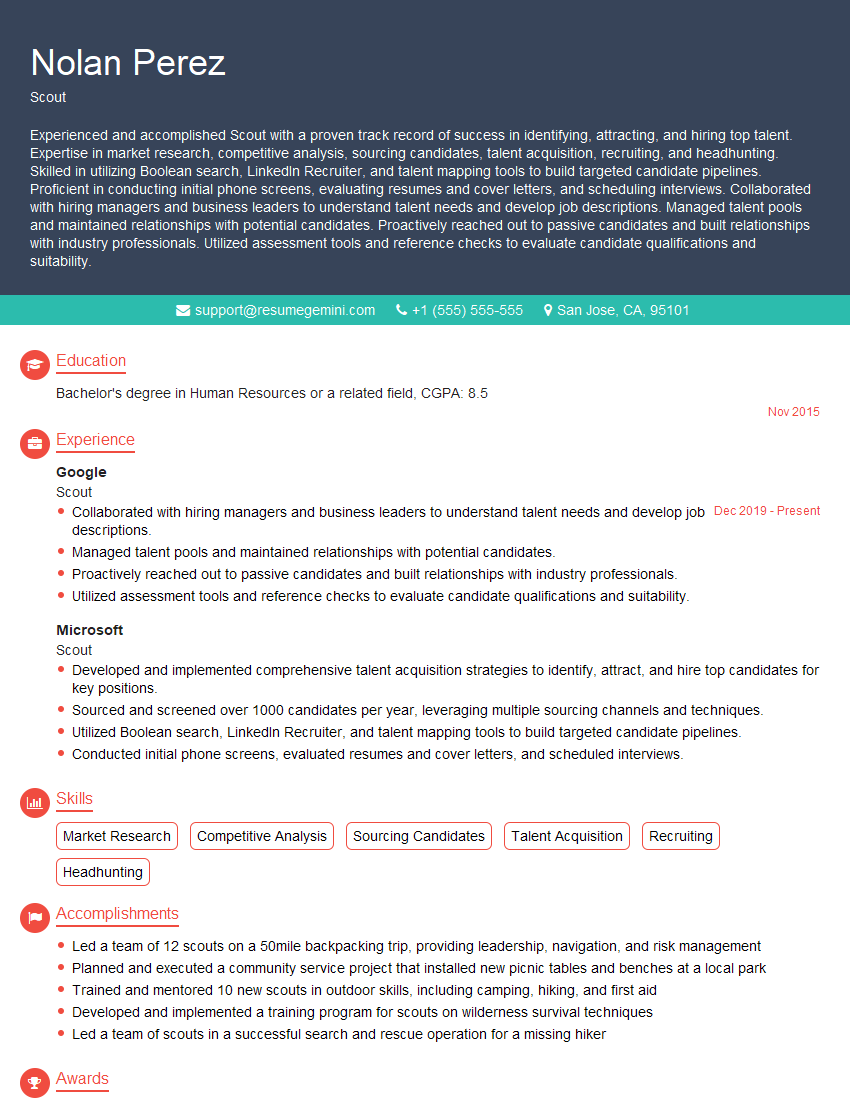
Mastering Player Personnel Management opens doors to exciting career opportunities within professional sports, offering a blend of strategic thinking, data analysis, and people management. A strong resume is crucial for showcasing your skills and experience to potential employers. To significantly increase your chances of landing an interview, creating an ATS-friendly resume is essential. ResumeGemini can help you craft a compelling and effective resume tailored to the demands of a Player Personnel Management role. Examples of resumes specifically designed for this field are available to guide you.
Explore more articles
Users Rating of Our Blogs
Share Your Experience
We value your feedback! Please rate our content and share your thoughts (optional).
What Readers Say About Our Blog
Very informative content, great job.
good