Every successful interview starts with knowing what to expect. In this blog, we’ll take you through the top Plug Load Management interview questions, breaking them down with expert tips to help you deliver impactful answers. Step into your next interview fully prepared and ready to succeed.
Questions Asked in Plug Load Management Interview
Q 1. What are the primary components of a comprehensive plug load management strategy?
A comprehensive plug load management strategy requires a multi-pronged approach. It’s not just about turning things off; it’s about understanding, optimizing, and controlling energy consumption from devices plugged into wall outlets. The primary components include:
- Plug Load Inventory and Characterization: This involves a thorough assessment of all plug loads within a building, identifying their energy consumption patterns (e.g., continuous, intermittent), power ratings, and operational hours. This often includes detailed floor plans and energy audits.
- Data Acquisition and Monitoring: Implementing smart metering and monitoring systems to track real-time energy consumption from plug loads. This provides crucial data for informed decision-making.
- Control Strategies: Implementing techniques to reduce energy consumption, ranging from simple power strips to sophisticated building automation systems (BAS) capable of managing individual devices or groups of devices.
- Behavioral Change Programs: Educating building occupants about energy conservation and promoting responsible plug load usage through awareness campaigns, training, and incentives.
- Policy and Procedures: Establishing clear guidelines for plug load management, including equipment specifications, usage protocols, and maintenance schedules. For example, a policy might mandate the use of energy-efficient equipment or require turning off devices when not in use.
- Technology Integration: Seamless integration of various plug load management technologies with the building’s existing infrastructure (e.g., lighting control systems, HVAC systems) to create a holistic energy management system.
Think of it like managing a household budget. You wouldn’t just blindly spend; you’d track expenses, prioritize needs, and identify areas for savings. Plug load management is the same – it’s about informed control over a significant portion of building energy usage.
Q 2. Explain the difference between active and passive plug load management techniques.
Active and passive plug load management techniques differ in their approach to controlling energy consumption. Passive methods focus on reducing energy use without direct intervention, while active methods involve real-time control and monitoring.
- Passive Techniques: These often involve implementing energy-efficient equipment (e.g., using power supplies with high efficiency ratings), employing timers to limit operational hours, or relying on occupant behavior modifications (e.g., encouraging people to turn off computers at the end of the day). Think of a simple timer on a coffee maker – it automatically turns it off after a certain time.
- Active Techniques: Active methods use sophisticated technology for direct control. This includes smart power strips that can remotely switch off devices, occupancy sensors that automatically turn off equipment when a space is unoccupied, and building automation systems that orchestrate the energy use of various plug loads based on real-time data and pre-programmed schedules. For instance, a smart power strip could monitor individual devices and shut down those exceeding a certain energy threshold or unused for a set period.
The best approach often involves a combination of both active and passive strategies for maximum impact. Think of it like layers of defense – passive techniques lay the groundwork, while active techniques provide fine-grained control and optimization.
Q 3. Describe how you would identify and quantify plug loads in a commercial building.
Identifying and quantifying plug loads in a commercial building is a systematic process. Here’s a step-by-step approach:
- Walkthrough and Data Collection: Begin with a thorough walkthrough of the building to identify all plug-loaded equipment. Document the type of equipment (computers, printers, copiers, etc.), their quantity, and their estimated power consumption. Floor plans are invaluable.
- Energy Audits: Conduct energy audits to measure actual energy consumption. This might involve installing sub-meters to monitor power use for different areas or equipment groups. This provides real-world data that goes beyond manufacturer specifications.
- Power Metering: Employ power meters or energy monitoring systems to collect detailed energy consumption data. These meters can provide precise measurements of electricity usage for individual devices or circuits.
- Data Analysis: Analyze the collected data to determine the total plug load energy consumption, identify the largest energy consumers, and understand their usage patterns (e.g., peak demand periods). Look for trends and outliers.
- Load Profiles: Create load profiles to visualize energy consumption over time. This helps to identify opportunities for energy savings, such as scheduling power-down periods or implementing demand-response strategies.
Imagine a detective investigating a crime scene. They gather evidence (data), analyze it (statistical analysis), and use it to solve the case (implement energy-saving strategies). This is essentially what we do in plug load identification and quantification.
Q 4. What are some common technologies used for monitoring and controlling plug loads?
Many technologies are used for monitoring and controlling plug loads. The choice depends on budget, building complexity, and desired level of control:
- Smart Power Strips: These offer basic remote control and monitoring capabilities for multiple devices. Some can track individual device energy use.
- Building Automation Systems (BAS): Sophisticated systems that integrate various building controls, including plug load management. They provide centralized monitoring and control, allowing for automated scheduling and optimization.
- Sub-meters: These devices measure energy consumption for specific circuits or equipment, providing granular data for analysis and optimization.
- Energy Monitoring Systems (EMS): These provide real-time monitoring of energy use, often with visualization dashboards. They integrate data from various sources, including sub-meters and smart devices.
- Wireless Sensors: Occupancy sensors, light sensors, and other wireless sensors can be integrated into plug load management systems to automate control based on real-time conditions. For example, turning off a computer when a room is unoccupied.
- Demand Response Systems: These systems automatically adjust plug load operation in response to grid conditions, potentially reducing energy costs during peak demand periods.
Selecting the right technology is crucial. A small office might benefit from smart power strips, while a large commercial building requires a comprehensive BAS for effective plug load management.
Q 5. How do you prioritize plug load reduction projects based on cost-effectiveness and energy savings?
Prioritizing plug load reduction projects involves a careful evaluation of cost-effectiveness and energy savings. A common approach is using a cost-benefit analysis:
- Energy Savings Calculation: Estimate the energy savings potential for each project based on data from energy audits and load profiles.
- Cost Estimation: Determine the initial investment costs for each project, including equipment, installation, and maintenance.
- Simple Payback Period Calculation: Divide the initial investment cost by the annual energy savings to determine the simple payback period. Shorter payback periods indicate better cost-effectiveness.
- Return on Investment (ROI): Calculate the ROI for each project to compare their profitability over a longer time horizon. Projects with higher ROI are generally prioritized.
- Prioritization Matrix: Develop a prioritization matrix based on payback period, ROI, and other factors such as environmental impact and strategic alignment with building goals.
Think of it as choosing investments. You wouldn’t invest in a project with a long payback period unless it offered exceptional long-term benefits. The same principles apply to plug load reduction projects. We need a strategy that maximizes returns while optimizing energy efficiency.
Q 6. What are the key performance indicators (KPIs) used to measure the success of plug load management initiatives?
Key Performance Indicators (KPIs) are essential for measuring the success of plug load management initiatives. These metrics provide quantitative evidence of progress and help identify areas for improvement.
- Plug Load Energy Consumption Reduction: Percentage reduction in total plug load energy consumption compared to a baseline period.
- Peak Demand Reduction: Reduction in peak electricity demand due to plug load management strategies.
- Return on Investment (ROI): Financial return from the implemented plug load management measures.
- Payback Period: Time it takes to recover the initial investment in plug load management technologies.
- Occupant Satisfaction: Feedback from building occupants regarding the effectiveness and impact of the plug load management initiatives.
- Compliance with sustainability goals: Extent to which plug load management contributes to meeting the building’s environmental sustainability objectives.
KPIs should be tailored to the specific goals of the plug load management project, and regularly monitored to track progress and inform adjustments to the strategy.
Q 7. Describe your experience with different types of smart power strips and their functionalities.
My experience encompasses various types of smart power strips, each offering different functionalities:
- Basic Smart Power Strips: These typically provide on/off control via a remote or mobile app, offering simple scheduling capabilities. This is ideal for basic energy savings through scheduled shutdowns.
- Advanced Smart Power Strips with Individual Outlet Control: These allow for individual control of each outlet, providing more granular management of multiple devices. This is useful when some devices need to remain on while others can be switched off.
- Energy Monitoring Smart Power Strips: These not only provide control but also track energy consumption for each outlet, providing insights into device-specific energy use. This allows for identifying energy-hungry devices.
- Smart Power Strips with Integrated Sensors: Some incorporate occupancy or ambient light sensors, which can automatically turn off devices when a room is unoccupied or sufficient ambient light is present. This adds an automation layer for optimal energy efficiency.
In practice, I’ve found that the choice of smart power strip depends on the specific application. For instance, a simple smart power strip may suffice for managing a small office, while a more advanced model with individual outlet control and energy monitoring would be beneficial in a larger office or server room. The key is to match the functionality to the needs of the space and occupants.
Q 8. Explain the role of building automation systems (BAS) in plug load management.
Building Automation Systems (BAS) are the backbone of effective plug load management. Think of a BAS as the central nervous system of a building, monitoring and controlling various systems, including lighting, HVAC, and – crucially – power consumption from plug loads. A sophisticated BAS can monitor energy usage from individual outlets or circuits, providing granular data on when and how much power is being drawn by devices like computers, printers, and coffee machines. This data allows for intelligent control strategies.
For example, a BAS can be programmed to automatically power down unoccupied areas’ outlets after hours, reducing energy waste from devices left on overnight. It can also integrate with occupancy sensors to automatically switch off power to outlets when a space is not in use. This targeted approach is far more efficient than blanket shutdowns of entire circuits.
Furthermore, a well-designed BAS can provide real-time feedback on plug load consumption, allowing building managers to identify energy hogs and implement corrective actions. This data-driven approach is key to optimizing energy efficiency.
Q 9. How do you address resistance to implementing plug load management strategies among building occupants?
Addressing resistance to plug load management requires a multifaceted approach focusing on education, engagement, and demonstrating value. Many occupants are hesitant due to concerns about inconvenience or disruption to their workflow.
Communication is key. We start by explaining the benefits clearly: reduced energy bills, environmental responsibility, and potentially even improved comfort (e.g., cooler spaces due to reduced heat from idling devices). We hold workshops and training sessions to demonstrate how simple changes in behavior – like turning off devices at the end of the day – can make a significant difference.
We also involve occupants in the process. We might implement a pilot program in a single department, gathering feedback and adapting the strategy before rolling it out building-wide. This participatory approach fosters buy-in and minimizes resistance. Finally, we highlight success stories and showcase the positive impact of the initiative on the building’s overall energy performance.
Another crucial aspect is ensuring that any implemented strategies do not unduly disrupt workflows. For example, providing easily accessible power strips with individual switches empowers occupants to control their own devices while still benefiting from collective energy savings.
Q 10. What are the common challenges associated with implementing plug load management programs?
Implementing plug load management programs faces several challenges. Data acquisition can be difficult, particularly in older buildings without comprehensive metering infrastructure. This lack of granular data makes it challenging to pinpoint energy-wasting devices.
Occupant behavior is another significant hurdle. Encouraging consistent adherence to energy-saving practices requires ongoing education and engagement. Even with the best technology, if occupants are not on board, the program’s effectiveness will be limited.
Cost is often a concern. Upgrading to a smart BAS or installing advanced power meters can be expensive. However, the long-term energy savings typically outweigh the initial investment, making a strong business case for implementation. Careful planning and phased rollout can mitigate upfront costs.
Finally, technology compatibility can present issues. Integrating various devices and systems into a cohesive plug load management strategy requires careful consideration of compatibility and interoperability.
Q 11. Discuss your experience with data analysis and reporting related to plug load reduction.
My experience with data analysis in plug load reduction involves leveraging BAS data to identify trends and patterns in energy consumption. I use a combination of techniques, including:
- Descriptive Statistics: Calculating average, minimum, and maximum energy consumption for different zones and equipment types.
- Trend Analysis: Identifying patterns of energy usage over time to spot inefficiencies and anomalies.
- Regression Analysis: Modelling the relationship between energy consumption and influencing factors like occupancy and temperature.
This data analysis feeds into comprehensive reports detailing energy savings, return on investment, and areas for improvement. These reports use clear visualizations like charts and graphs to effectively communicate complex information to stakeholders. For example, a report might highlight the significant energy savings achieved by implementing occupancy-based controls in a specific office wing, demonstrating the value of the plug load management program.
Q 12. How do you incorporate plug load management into a broader energy efficiency plan?
Plug load management is a crucial component of a holistic energy efficiency plan. It shouldn’t be treated in isolation but rather integrated with other strategies to maximize impact. This integrated approach considers the synergistic effects of different measures.
For example, optimizing HVAC systems (reducing energy demand for cooling due to equipment heat) and improving building envelope performance (reducing heat gain/loss) complement plug load reduction. Addressing lighting efficiency further minimizes the building’s overall energy footprint. A comprehensive plan would analyze all these elements together to identify the most cost-effective and impactful combinations.
An effective energy efficiency plan also emphasizes continuous monitoring and evaluation of plug load reduction strategies, using data analysis to fine-tune the program and adapt to changing conditions. This iterative approach ensures ongoing improvements in energy efficiency.
Q 13. What are some strategies for reducing phantom loads?
Phantom loads, the energy consumed by devices even when turned off, are a significant contributor to wasted energy. Several strategies can effectively mitigate them:
- Smart Power Strips: These power strips cut off power to devices when not in use, eliminating phantom loads. This is a highly effective solution for desktop computers, printers and other frequently used equipment.
- Unplugging Devices: The simplest approach, though less convenient, is to unplug devices when they are not needed. This directly eliminates any parasitic power consumption.
- Using Energy-Efficient Devices: Opting for devices with energy-efficient certifications, like Energy Star, minimizes the phantom load generated.
- Centralized Power Control Systems: Advanced systems can monitor and control power to circuits remotely, allowing for scheduled shutdowns of non-essential equipment during off-peak hours.
By combining these strategies, we can dramatically reduce phantom loads and realize significant energy savings.
Q 14. Explain your understanding of time-based controls for plug load management.
Time-based controls are a cornerstone of plug load management. These controls automatically switch power on and off based on pre-programmed schedules. This allows for automated energy savings during non-operational hours.
For example, a time-based control system might be programmed to turn off power to all outlets in a conference room after 6 pm, eliminating energy waste from devices left plugged in overnight. Similarly, it could schedule power to office equipment to turn on an hour before employees typically arrive, ensuring that everything is ready to go but preventing unnecessary energy use during off-peak hours. These schedules can be tailored to the specific needs and usage patterns of different areas within a building.
However, inflexible time-based controls can be problematic if usage patterns vary significantly. Therefore, they are often most effective when combined with other strategies like occupancy sensors, which provide a more dynamic approach to power control.
Q 15. Describe your experience with demand-response programs and their impact on plug loads.
Demand-response programs incentivize building owners to reduce energy consumption during peak demand periods. My experience involves working with several clients to implement these programs, focusing on plug loads, which are often a significant, yet often overlooked, energy consumer in buildings. This involves analyzing energy consumption data to identify peak usage patterns related to plug loads – things like computers, printers, and other office equipment. We then develop strategies to shift or reduce this load during peak hours.
For example, one project involved implementing a smart power strip system in an office building. These strips automatically powered down computers and peripherals outside of working hours, significantly reducing peak demand. The impact was a measurable decrease in energy costs for the client, coupled with participation in utility demand response programs which often provide financial incentives. Another project involved educating building occupants about energy-saving practices during peak demand periods, achieving substantial reductions in plug load consumption through behavioral changes. These strategies not only helped reduce costs but also improved the building’s environmental footprint.
Career Expert Tips:
- Ace those interviews! Prepare effectively by reviewing the Top 50 Most Common Interview Questions on ResumeGemini.
- Navigate your job search with confidence! Explore a wide range of Career Tips on ResumeGemini. Learn about common challenges and recommendations to overcome them.
- Craft the perfect resume! Master the Art of Resume Writing with ResumeGemini’s guide. Showcase your unique qualifications and achievements effectively.
- Don’t miss out on holiday savings! Build your dream resume with ResumeGemini’s ATS optimized templates.
Q 16. How do you ensure the ongoing effectiveness of plug load management strategies?
Ensuring the ongoing effectiveness of plug load management strategies requires a multi-faceted approach. It’s not a ‘set-it-and-forget-it’ scenario. Regular monitoring and evaluation are crucial. We use a combination of methods. First, we regularly review energy consumption data to identify any deviations from expected usage patterns. This might reveal issues such as malfunctioning equipment or changes in occupancy that necessitate adjustments to our strategies.
Second, we conduct periodic site visits to assess the condition of plug load management technologies, like smart power strips or occupancy sensors, and ensure their proper functioning. This might include replacing faulty equipment, re-calibrating sensors, or providing additional training to building occupants. Third, we incorporate feedback from building occupants into the process. Their input can be invaluable in refining strategies and identifying areas for improvement. Think of it like a feedback loop – constantly monitoring, adjusting, and optimizing.
Finally, we proactively look for emerging technologies and best practices to upgrade our strategies. The field of plug load management is constantly evolving. Regularly reviewing and updating our techniques is vital to maintain high efficiency and cost savings over time.
Q 17. What is your experience with energy modeling software and its application to plug load analysis?
I have extensive experience using various energy modeling software packages, such as EnergyPlus and eQuest. These tools are essential for conducting detailed plug load analysis. We use them to simulate different plug load management scenarios and predict their impact on overall energy consumption. This allows us to compare the effectiveness of various strategies before implementation, optimizing resource allocation and minimizing risks.
For example, we used EnergyPlus to model the impact of implementing a smart lighting control system combined with occupancy sensors in a large office building. The model allowed us to predict energy savings and identify potential challenges before the project’s implementation. The results provided valuable insights to optimize the design and maximize the effectiveness of the energy-saving measures. The software also helps us validate post-implementation performance against the predicted results, ensuring that the actual energy savings align with our projections. This rigorous approach ensures the successful implementation and cost-effectiveness of our projects.
Q 18. Explain your understanding of lifecycle cost analysis in the context of plug load management.
Lifecycle cost analysis (LCCA) is crucial in evaluating the long-term financial viability of plug load management strategies. It considers the total cost of ownership over the entire lifespan of the implemented technologies, including initial investment costs, installation costs, maintenance costs, energy savings, and potential replacement costs. This holistic approach allows for a comprehensive assessment of the financial return on investment (ROI).
For example, when considering the installation of smart power strips, an LCCA would take into account the upfront purchase and installation costs, the ongoing maintenance costs (such as potential repairs or replacements), and the projected energy savings over the next 10-15 years. By comparing the total costs with the total energy savings, we can determine if the investment is financially sound. This detailed analysis helps us make informed decisions, ensuring that the selected strategies are not only effective in reducing energy consumption but also financially beneficial in the long run.
Q 19. How do you integrate plug load management with other building systems, such as HVAC and lighting?
Integrating plug load management with other building systems, such as HVAC and lighting, is key to maximizing energy efficiency. We achieve this integration using Building Management Systems (BMS). A BMS allows for centralized control and monitoring of various building systems, enabling coordinated operation to reduce energy waste.
For example, a BMS can be programmed to automatically reduce HVAC loads when occupancy sensors detect an unoccupied space, preventing unnecessary heating or cooling. Similarly, it can dim or switch off lighting systems based on occupancy and daylight availability. The integration of plug load management involves using the BMS to control and monitor plug loads, enabling coordinated responses with other systems. This synergistic approach optimizes energy usage by leveraging the data from multiple systems, creating a more efficient and responsive building environment.
Q 20. Describe your experience with different types of occupancy sensors and their applications.
My experience encompasses various occupancy sensor technologies, including ultrasonic, infrared, and microwave sensors. Ultrasonic sensors emit sound waves and detect changes in the reflected signal, indicating occupancy. Infrared sensors detect the heat signatures of occupants, while microwave sensors detect movement through changes in the electromagnetic field. The choice of sensor depends on the specific application and environmental factors.
For example, ultrasonic sensors might be suitable for large spaces where a wide detection range is needed, while infrared sensors are often preferred in smaller rooms due to their precise detection capabilities. Microwave sensors are useful in areas with potential interference from other sources. We carefully select sensors based on factors such as cost, reliability, detection range, accuracy, and susceptibility to false triggers (e.g., pets or movement outside of the occupancy zone). We always prioritize sensors with low false trigger rates to maintain the accuracy and effectiveness of the plug load management strategy. The sensor selection is a crucial aspect of a successful project.
Q 21. What are your thoughts on the use of smart meters for plug load monitoring?
Smart meters offer significant advantages for plug load monitoring, providing granular data on energy consumption at much higher resolutions than traditional meters. This detailed data allows for more accurate identification of energy usage patterns and helps isolate plug load contributions. The data can be used for detailed energy audits and the optimization of plug load management strategies. By pinpointing energy usage at a much finer level, we can identify specific equipment or areas contributing disproportionately to energy waste.
For instance, smart meters provide real-time data allowing us to track the impact of implemented energy-saving measures immediately. This real-time feedback enables quick adjustments to our strategies if necessary and ensures that interventions are working as intended. Smart meters contribute significantly to effective implementation, monitoring, and optimization of plug load management strategies leading to improved energy efficiency and substantial cost savings.
Q 22. Explain how you would develop a cost-benefit analysis for a plug load reduction project.
A cost-benefit analysis for a plug load reduction project meticulously weighs the financial implications of implementing energy-saving measures against the anticipated cost reductions. It’s essentially a business case demonstrating the financial viability of the project.
Here’s a structured approach:
- Identify Potential Savings: Begin by quantifying potential energy savings. This involves assessing current plug load energy consumption through energy audits and metering. We can use software to model various scenarios and predict savings based on different intervention strategies (e.g., replacing equipment with energy-efficient models, implementing smart power strips, occupancy sensors).
- Calculate Project Costs: Enumerate all project expenses, including equipment purchase/installation, labor, software licensing, and any consulting fees. Include both one-time and recurring costs (e.g., maintenance).
- Determine Payback Period: Divide the total project cost by the annual energy cost savings to determine the payback period. A shorter payback period indicates a more financially attractive project. For example, if a project costs $10,000 and saves $2,000 annually, the payback period is five years.
- Evaluate Net Present Value (NPV): NPV considers the time value of money, discounting future savings to their present-day worth. A positive NPV signifies that the project is financially worthwhile.
- Assess Intangible Benefits: Consider non-monetary benefits like improved employee comfort, reduced carbon footprint, and enhanced corporate sustainability image. While difficult to quantify, these factors contribute to the overall project value.
Example: In a recent office building project, our analysis showed that implementing smart power strips and occupancy sensors would reduce plug load energy consumption by 25%, resulting in annual savings of $15,000. The total project cost was $30,000, yielding a two-year payback period and a substantial positive NPV. This strong financial case successfully secured project approval.
Q 23. What are some examples of successful plug load reduction projects you have worked on?
I’ve been involved in several successful plug load reduction projects. One notable example involved a large university campus. We implemented a multi-pronged approach:
- Energy Audits: We conducted detailed energy audits to identify high-energy-consuming areas and specific plug load devices.
- Smart Power Strips: We deployed smart power strips in offices and labs, automatically powering down equipment when not in use.
- Occupancy Sensors: We installed occupancy sensors to control lighting and other plug loads based on room occupancy.
- Employee Engagement: We launched an awareness campaign to educate employees about energy conservation and the importance of unplugging devices when not in use.
The combined effect of these strategies resulted in a 30% reduction in plug load energy consumption and significant cost savings for the university. Another successful project involved upgrading outdated computers and peripherals in a corporate office environment with energy-efficient models, yielding a significant reduction in energy consumption and improved employee productivity.
Q 24. Describe your experience with using data to inform decisions related to plug load management.
Data is fundamental to effective plug load management. I rely heavily on data analytics to inform decision-making throughout the entire process.
- Energy Monitoring: I use advanced metering infrastructure (AMI) to collect real-time energy consumption data from various plug loads. This data helps to identify energy consumption patterns and pinpoint areas for improvement.
- Data Analysis: I leverage data analytics tools and techniques to analyze energy consumption trends, identify anomalies, and quantify energy savings from implemented interventions. For example, we use regression analysis to correlate energy consumption with occupancy levels, informing decisions on smart power strip and occupancy sensor placement.
- Predictive Modeling: Based on historical data and load profiles, I develop predictive models to forecast future energy consumption and evaluate the impact of proposed plug load reduction strategies.
- Reporting and Visualization: I create comprehensive reports and visualizations to communicate findings and project success to stakeholders. This includes graphs, charts, and dashboards showing energy consumption trends, cost savings, and return on investment.
Example: In one project, data analysis revealed that a specific lab experienced unusually high energy consumption during off-peak hours. Further investigation, using data from AMI and security cameras, pinpointed a malfunctioning refrigerator. This was immediately addressed, preventing further energy waste.
Q 25. How familiar are you with relevant energy codes and standards related to plug load reduction?
I’m very familiar with relevant energy codes and standards, including ASHRAE standards (e.g., ASHRAE 90.1) and local building codes that address plug load reduction. These standards often specify minimum efficiency requirements for equipment and provide guidance on lighting and power controls.
Understanding these codes is crucial for ensuring compliance and maximizing energy efficiency. In my work, I routinely integrate code requirements into project designs and ensure that proposed solutions align with all relevant regulations. I’m also familiar with LEED (Leadership in Energy and Environmental Design) certification requirements, which often incentivize the implementation of plug load reduction measures.
Q 26. What are the potential benefits of integrating plug load management with renewable energy sources?
Integrating plug load management with renewable energy sources offers significant synergy. Reducing plug load consumption lowers the overall energy demand, thereby reducing the reliance on the grid and maximizing the utilization of renewable energy resources.
Example: Consider a building powered by solar panels. By reducing plug load energy consumption through smart power strips and occupancy sensors, the building can operate on solar power for a larger portion of the day, minimizing reliance on the grid and reducing carbon emissions. This integration allows for better matching of supply (renewable energy generation) and demand (building energy consumption), enhancing the effectiveness of renewable energy investments.
Q 27. Describe a situation where you had to overcome a technical challenge related to plug load management.
One technical challenge involved integrating a new building management system (BMS) with an existing legacy system to control plug loads. The two systems used different communication protocols and data formats, causing compatibility issues.
To overcome this, we employed a multi-step approach:
- Protocol Conversion: We used a gateway device to translate data between the two systems.
- Data Mapping: We carefully mapped data points from the legacy system to the new BMS to ensure seamless data transfer.
- Testing and Validation: We conducted extensive testing and validation to ensure that the integrated system functioned correctly and reliably.
Through meticulous planning, collaboration with IT and building automation specialists, and rigorous testing, we successfully integrated the systems, achieving efficient and reliable plug load control.
Q 28. How do you stay up-to-date with the latest advancements and best practices in plug load management?
Staying current in this rapidly evolving field requires continuous learning and engagement.
- Professional Organizations: I actively participate in professional organizations like ASHRAE, where I attend conferences and workshops, network with other professionals, and stay abreast of the latest advancements.
- Industry Publications and Journals: I regularly read industry publications and journals to stay informed about new technologies, best practices, and research findings.
- Online Resources and Webinars: I utilize online resources, webinars, and online courses to enhance my knowledge and skills.
- Industry Events: I attend industry trade shows and conferences to explore new technologies and network with peers.
This multifaceted approach ensures I maintain a high level of expertise in plug load management and can effectively apply the latest advancements in my work.
Key Topics to Learn for Plug Load Management Interview
- Understanding Plug Load Basics: Defining plug loads, differentiating them from other energy consumption types, and identifying key contributors in various building types.
- Data Acquisition and Analysis: Methods for collecting and analyzing energy consumption data related to plug loads (e.g., sub-metering, power monitoring, energy audits). Understanding key performance indicators (KPIs) and their interpretation.
- Energy Efficiency Strategies: Exploring various strategies for reducing plug load energy consumption, including power management techniques, smart power strips, occupancy sensors, and behavioral changes.
- Technological Solutions: Familiarity with smart building technologies and their role in plug load management, such as building automation systems (BAS) and IoT devices. Understanding their integration and limitations.
- Regulations and Standards: Awareness of relevant building codes, energy efficiency standards, and industry best practices related to plug load management.
- Cost-Benefit Analysis: Evaluating the economic viability of different plug load reduction strategies, considering implementation costs, energy savings, and return on investment (ROI).
- Case Studies and Real-World Applications: Analyzing successful case studies demonstrating the impact of effective plug load management strategies in diverse settings.
- Problem-Solving and Troubleshooting: Developing approaches to identify and address challenges related to implementing and maintaining plug load management systems.
- Sustainability and Environmental Impact: Understanding the environmental benefits of reducing plug load energy consumption and its contribution to overall building sustainability goals.
Next Steps
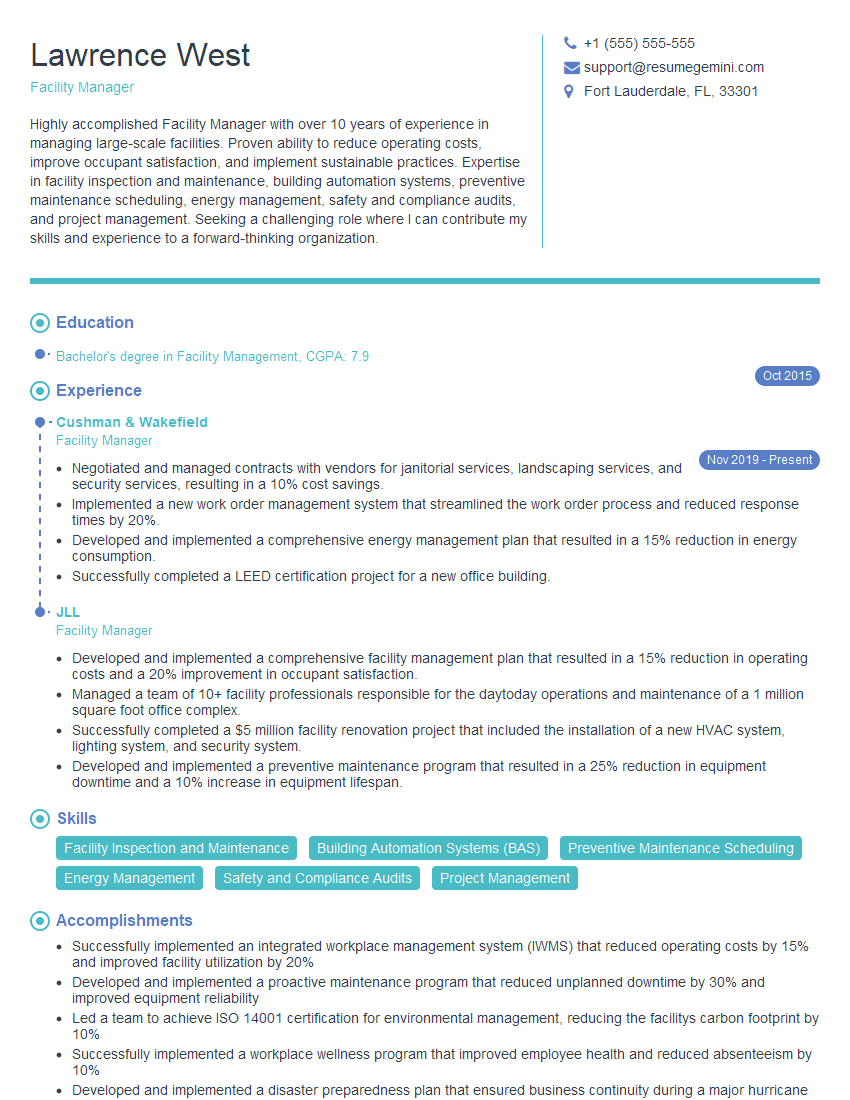
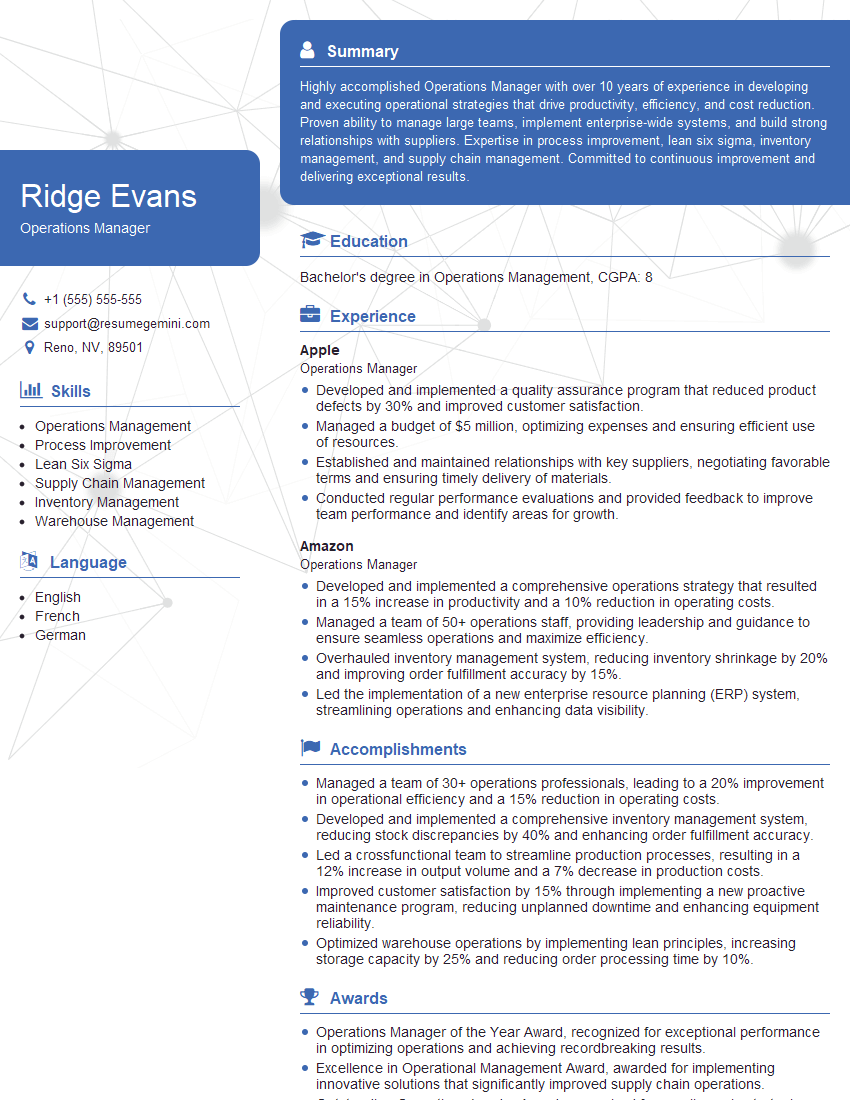
Mastering Plug Load Management opens doors to exciting career opportunities in the rapidly growing field of sustainable building practices. Demonstrating your expertise through a strong resume is crucial for attracting potential employers. To maximize your job prospects, focus on creating an ATS-friendly resume that highlights your skills and experience in a clear and concise manner. ResumeGemini is a trusted resource to help you build a professional and impactful resume tailored to your specific career goals. Examples of resumes tailored to Plug Load Management are available to help you showcase your capabilities effectively.






Explore more articles
Users Rating of Our Blogs
Share Your Experience
We value your feedback! Please rate our content and share your thoughts (optional).
What Readers Say About Our Blog
Very informative content, great job.
good