Unlock your full potential by mastering the most common Polymer Additives interview questions. This blog offers a deep dive into the critical topics, ensuring you’re not only prepared to answer but to excel. With these insights, you’ll approach your interview with clarity and confidence.
Questions Asked in Polymer Additives Interview
Q 1. Explain the role of antioxidants in polymers.
Antioxidants are crucial polymer additives that prevent or delay the degradation of polymers caused by oxidation. Think of it like this: oxidation is like rusting for polymers – it weakens and deteriorates the material. Antioxidants act as scavengers, neutralizing free radicals that initiate and propagate the oxidation chain reaction.
There are two main types: primary and secondary antioxidants. Primary antioxidants, such as hindered phenols (like Irganox 1010) and hindered amines (like Tinuvin 770), directly react with free radicals, effectively stopping the oxidation chain. Secondary antioxidants, such as phosphites (like Irgafos 168), decompose hydroperoxides – unstable molecules that form during oxidation and trigger further radical formation. They work synergistically with primary antioxidants for enhanced protection.
In a real-world application, imagine a plastic outdoor furniture set. Without antioxidants, prolonged exposure to sunlight and air would cause the plastic to become brittle and crack much faster. The addition of antioxidants significantly extends the lifespan of the furniture by protecting it from oxidative degradation.
Q 2. Describe different types of UV stabilizers and their mechanisms of action.
UV stabilizers protect polymers from the harmful effects of ultraviolet (UV) radiation from sunlight. UV radiation causes polymer chain scission (breaking) and crosslinking (unwanted bonding), leading to discoloration, embrittlement, and reduced mechanical strength. Imagine leaving a plastic bottle in direct sunlight for a long time; it’ll become brittle and fade.
Different types of UV stabilizers work through various mechanisms:
- UV absorbers: These molecules absorb UV radiation and release the energy as heat, preventing it from damaging the polymer. Examples include benzophenones and benzotriazoles.
- Hindered amine light stabilizers (HALS): These are highly effective, long-term stabilizers that work by trapping the free radicals formed by UV radiation. They’re like a ‘radical sponge’. They’re often used in conjunction with UV absorbers.
- Nickel-based stabilizers: These are effective at absorbing UV radiation but have some limitations due to their potential toxicity and color impact.
The choice of UV stabilizer depends on factors like the type of polymer, the application, and the level of protection required. For example, a plastic used in outdoor applications will require more robust UV protection than one used indoors.
Q 3. What are flame retardants and how do they function in polymers?
Flame retardants are additives that significantly reduce the flammability of polymers. They increase the time it takes for a material to ignite, slow down the spread of flames, and reduce the amount of smoke and toxic gases produced during a fire. This is critically important for safety in various applications, from electronics to building materials.
Flame retardants work through various mechanisms, including:
- Chemical interference: They interfere with the combustion process by interrupting the chemical reactions required for burning.
- Physical barrier: Some create a physical barrier on the polymer surface, isolating the polymer from the oxygen needed for combustion.
- Intumescence: Certain flame retardants expand during heating, forming a char layer that acts as an insulator, protecting the underlying material.
Examples include halogenated flame retardants (like brominated compounds, increasingly restricted due to environmental concerns), phosphorus-based flame retardants, and metal hydroxides (like aluminum trihydrate). The selection of a flame retardant is driven by the required fire performance level, regulatory compliance, and the polymer type.
Q 4. Discuss the impact of plasticizers on polymer properties.
Plasticizers are additives that increase the flexibility and workability of polymers. They are often referred to as ‘internal lubricants’. They work by lowering the glass transition temperature (Tg) of the polymer, making it softer and more pliable. Imagine trying to bend a rigid plastic versus a flexible one; the plasticizer allows for that flexibility.
The impact on polymer properties includes:
- Increased flexibility and elongation: Plasticizers allow for greater bending and stretching without breaking.
- Lowered Tg: Makes the polymer easier to process and more flexible at lower temperatures.
- Improved processability: Easier to mold and shape.
- Reduced tensile strength and modulus: The polymer becomes less strong and stiff.
- Potential for plasticizer migration: Plasticizers can leach out of the polymer over time, affecting its long-term properties.
Examples include phthalates (though many are restricted due to toxicity concerns), adipates, and citrates. The type of plasticizer used depends on the application, the polymer type, and regulatory restrictions.
Q 5. Explain the use of coupling agents in polymer composites.
Coupling agents are crucial in polymer composites, acting as a bridge between the polymer matrix and the reinforcing filler (e.g., glass fibers, carbon fibers, or minerals). They improve the adhesion between these two phases, leading to a stronger and more durable composite material. Think of it as a strong adhesive between two materials that wouldn’t normally stick well together.
Coupling agents typically possess two distinct functional groups: one that interacts strongly with the filler surface (e.g., silane groups for glass fibers) and another that interacts with the polymer matrix (e.g., epoxy or methacrylate groups). This dual functionality creates a chemical bond, enhancing the interfacial adhesion.
For instance, in a glass fiber-reinforced polymer (GFRP) composite, a silane coupling agent will chemically bond to the glass fiber’s hydroxyl groups and the polymer matrix, resulting in improved stress transfer between the filler and the matrix. This leads to a composite with enhanced mechanical properties, such as increased tensile strength and impact resistance.
Q 6. What are the key properties affected by processing aids?
Processing aids are additives that improve the ease of processing polymers during manufacturing. They essentially make it easier and more efficient to turn raw polymer into a finished product. Think of them as lubricants or flow improvers during the manufacturing process.
Key properties affected by processing aids include:
- Melt flow: They reduce the viscosity of the molten polymer, making it flow more easily through processing equipment.
- Extrusion and molding behavior: Improved processability leads to better shaped and less defective parts.
- Surface finish: Can improve the surface smoothness and gloss of the final product.
- Cycle time reduction: Faster processing reduces manufacturing time and cost.
- Reduced energy consumption: Easier flow requires less energy to process the material.
Examples include waxes, fatty acids, and certain types of lubricants. The appropriate processing aid is chosen based on the specific polymer and the manufacturing process.
Q 7. How do nucleating agents influence polymer crystallinity?
Nucleating agents are additives that promote the formation of numerous small crystals in a polymer, leading to increased crystallinity. They act as seeds that initiate the crystallization process, reducing the size of the crystallites and accelerating the overall crystallization rate. Think of it as creating many tiny crystallization centers instead of a few large ones.
The impact on crystallinity includes:
- Increased crystallinity: This results in improved stiffness, strength, heat resistance, and chemical resistance.
- Reduced cycle time during molding: Faster crystallization speeds up the production process.
- Improved dimensional stability: Less shrinkage and warping during cooling.
- Enhanced clarity: In some cases, smaller crystals can improve the transparency of the polymer.
Common nucleating agents include talc, calcium carbonate, and various organic compounds like sorbitol. The optimal choice of nucleating agent depends on the polymer type and desired properties of the final product.
Q 8. Describe the mechanism of action of anti-blocking agents.
Anti-blocking agents prevent the adhesion of adjacent layers in a polymer film, sheet, or stack. Imagine a stack of freshly printed papers – without anti-blocking agents, they would stick together. These agents work by creating a microscopic roughness on the surface. This reduces the contact area between layers, thus minimizing the Van der Waals forces that cause sticking. The mechanism typically involves the additive forming a slightly raised, irregular surface, either by crystallization or by physically separating the polymer chains at the surface.
For example, finely divided silica or talc particles are commonly used as anti-blocking agents. These particles are dispersed within the polymer matrix, migrating to the surface during processing and creating the necessary surface irregularities. The size and shape of these particles, and their concentration, significantly impact the effectiveness of the anti-blocking agent.
Q 9. Explain the role of lubricants in polymer processing.
Lubricants play a crucial role in polymer processing by reducing friction between the polymer melt and processing equipment (e.g., extruder screws, molds). This reduction in friction facilitates smoother processing, leading to improved productivity and reduced energy consumption. Think of it like oiling a bicycle chain – without lubrication, the chain would bind and movement would be difficult.
Lubricants can also improve the surface finish of the final product and control the melt flow properties. They work by reducing the intermolecular forces between polymer chains, allowing them to move more easily past each other. Common lubricant additives include fatty acids, amides, and metal soaps. The choice of lubricant depends on the specific polymer and processing technique.
- Reduced friction and wear: Extends the lifespan of processing equipment.
- Improved melt flow: Enables faster processing speeds and better product quality.
- Enhanced surface finish: Results in a smoother, more aesthetically pleasing final product.
Q 10. What are the challenges in formulating environmentally friendly polymer additives?
Formulating environmentally friendly polymer additives presents several significant challenges. The ideal additive should be biodegradable, non-toxic, and derived from renewable sources. However, many high-performing additives currently used are petroleum-based and don’t meet these criteria.
Challenges include:
- Finding effective bio-based alternatives: Replacing synthetic additives with equally effective, bio-based alternatives can be difficult and expensive.
- Balancing performance and biodegradability: Biodegradable additives may sometimes compromise the performance characteristics of the polymer.
- Ensuring cost-competitiveness: Bio-based alternatives can be more expensive than their petroleum-based counterparts, making them less attractive to manufacturers.
- Regulatory hurdles: Meeting stringent environmental regulations can add complexity and cost to the development and approval process.
For example, finding a biodegradable antioxidant that provides the same level of protection against oxidative degradation as a traditional synthetic antioxidant is a major challenge.
Q 11. How do you assess the compatibility of a new additive with a specific polymer?
Assessing the compatibility of a new additive with a specific polymer requires a multi-faceted approach. Incompatibility can lead to problems like poor dispersion, phase separation, or degradation of the polymer. The goal is to ensure the additive dissolves or disperses well within the polymer matrix without causing adverse effects.
Methods include:
- Solubility tests: Evaluating the solubility of the additive in the polymer at different temperatures.
- Microscopy (optical, electron): Visual examination of the additive’s dispersion within the polymer matrix.
- Differential Scanning Calorimetry (DSC): Detecting any changes in the melting or glass transition temperatures of the polymer in the presence of the additive.
- Rheological measurements: Analyzing the impact of the additive on the melt viscosity and flow behavior of the polymer.
- Mechanical testing: Evaluating the influence of the additive on the mechanical properties (e.g., tensile strength, elongation) of the polymer.
If incompatibility is observed, adjustments to the additive or polymer formulation may be needed to improve compatibility, such as using compatibilizers.
Q 12. Describe methods for characterizing the effectiveness of a polymer additive.
Characterizing the effectiveness of a polymer additive depends on its intended function. The methods used will vary based on whether the additive is a lubricant, antioxidant, UV stabilizer, flame retardant, etc.
Common characterization methods:
- Mechanical testing (tensile strength, impact resistance): For assessing the impact on mechanical properties.
- Thermal analysis (DSC, TGA): Determining the thermal stability and degradation behavior.
- Rheological measurements: Measuring melt flow index (MFI) and viscosity.
- Color and gloss measurements: Evaluating the visual appearance of the final product.
- UV/Vis spectroscopy: Assessing UV stability and degradation.
- Accelerated weathering tests: Simulating the effects of sunlight and environmental conditions.
- Flammability tests: Measuring the flammability and fire retardant properties.
The specific tests selected should be relevant to the additive’s function and the intended application.
Q 13. Explain the importance of rheological properties in polymer processing and how additives influence them.
Rheological properties, describing a material’s flow and deformation behavior, are critical in polymer processing. These properties directly influence the ability to process the polymer using various techniques like extrusion, injection molding, and film blowing. Additives significantly influence rheological behavior. For example, a lubricant can decrease viscosity, facilitating easier flow, while a filler can increase viscosity.
Understanding the rheology is essential for optimizing processing parameters, such as temperature and pressure, to achieve the desired product quality. The relationship between shear stress and shear rate is crucial. Additives modify this relationship, impacting the processability. For instance, a high viscosity can lead to challenges in filling molds, while low viscosity may lead to sagging.
Rheological measurements (using rheometers) provide critical data for understanding how additives affect viscosity, elasticity, and other flow characteristics, enabling efficient process optimization and predicting final product properties.
Q 14. How do you determine the optimal concentration of an additive for a given application?
Determining the optimal concentration of an additive requires a systematic approach involving experimentation and analysis. It’s a balance between maximizing the desired effect and minimizing any negative impacts on the polymer’s properties or processing.
A common approach involves:
- Preparation of samples: Preparing a series of polymer samples containing varying concentrations of the additive.
- Testing: Evaluating the effect of each concentration on the desired property (e.g., impact strength, UV resistance, melt flow).
- Data analysis: Plotting the results to identify the concentration that provides the optimal balance between performance and other factors.
- Cost-benefit analysis: Considering the cost of the additive and the improvement in performance to determine the most economically viable concentration.
For example, in improving the UV resistance of a polymer, one would test various concentrations of a UV stabilizer. Too low a concentration might offer insufficient protection, while too high a concentration might negatively affect other properties like color or transparency. The optimal concentration would be the one that provides maximum UV protection without compromising other essential properties, while remaining cost-effective.
Q 15. Discuss the regulatory aspects of using polymer additives in specific industries (e.g., food packaging, medical devices).
The regulatory landscape for polymer additives is complex and varies significantly depending on the end-use application. For example, food contact materials are subject to stringent regulations like FDA regulations (in the US) and EU regulations (in Europe), focusing on substances that can migrate into food and pose health risks. These regulations often specify allowable limits for specific additives and require rigorous testing to ensure compliance. Medical devices, on the other hand, face regulations from bodies like the FDA (in the US) and the EMA (in Europe), emphasizing biocompatibility, safety, and performance. These regulations require extensive testing to demonstrate the absence of harmful effects and long-term stability of the device. Specific requirements vary greatly, and manufacturers must carefully consult the relevant regulations and standards to ensure their products comply. For instance, a food-grade additive used in a plastic bottle must meet requirements for migration limits into the contained food, including tests for various substances at different temperatures. Similarly, a polymer additive used in a medical implant needs to undergo biocompatibility testing to verify it won’t cause adverse reactions in the human body. Failure to comply can lead to significant penalties and product recalls.
Career Expert Tips:
- Ace those interviews! Prepare effectively by reviewing the Top 50 Most Common Interview Questions on ResumeGemini.
- Navigate your job search with confidence! Explore a wide range of Career Tips on ResumeGemini. Learn about common challenges and recommendations to overcome them.
- Craft the perfect resume! Master the Art of Resume Writing with ResumeGemini’s guide. Showcase your unique qualifications and achievements effectively.
- Don’t miss out on holiday savings! Build your dream resume with ResumeGemini’s ATS optimized templates.
Q 16. How do you troubleshoot issues related to additive incompatibility or migration?
Troubleshooting additive incompatibility or migration requires a systematic approach. First, identify the problem – is it poor adhesion, discoloration, embrittlement, or unwanted migration into another material? Then, investigate potential causes. Incompatibility might arise from chemical reactions between the additive and the polymer, or the additive and other components of the formulation. Migration could be due to insufficient cross-linking, improper additive dispersion, or excessive temperature exposure. Analytical techniques such as microscopy (SEM, optical), chromatography (GC-MS, HPLC), and spectroscopic methods (FTIR, NMR) are essential for pinpointing the issue. For example, if we observe blooming (additive migration to the surface), we might use microscopy to analyze the surface morphology and chromatography to identify the migrating substances. Addressing the problem may involve modifying the processing parameters (e.g., temperature, mixing time), changing the additive type or concentration, or incorporating a compatibilizer to improve the interaction between the additive and the polymer. Careful record keeping of the formulation and process conditions is key to effective troubleshooting.
Q 17. Explain the difference between internal and external plasticizers.
The key difference between internal and external plasticizers lies in their location within the polymer matrix. Internal plasticizers are incorporated directly into the polymer chain during the polymerization process, becoming an integral part of the molecule. They usually lead to more permanent changes in flexibility. External plasticizers, conversely, are added to the polymer after polymerization and are physically dispersed within the polymer matrix, increasing free volume and improving chain mobility. Think of it like this: internal plasticizers are like building a house with flexible bricks (modified polymer chains), while external plasticizers are like putting cushions (plasticizer molecules) between rigid bricks (polymer chains). External plasticizers are more prone to leaching (migration) over time, especially at elevated temperatures or in the presence of solvents, while the effect of internal plasticizers is more permanent. The choice depends on the desired level of flexibility and the long-term stability required for the application.
Q 18. What are the advantages and disadvantages of using different types of polymer additives?
Different types of polymer additives offer diverse advantages and disadvantages. For example, antioxidants prevent polymer degradation from oxidation, extending the product lifespan, but some might impart color or affect other properties. UV stabilizers protect against sunlight degradation, essential for outdoor applications, but may be expensive and require careful selection for compatibility. Flame retardants enhance fire safety but can sometimes compromise mechanical properties or add toxicity concerns. Plasticizers enhance flexibility but might lead to leaching or reduced tensile strength. The choice of an additive requires a careful consideration of the desired benefits and potential drawbacks, taking into account the specific application and polymer type. A cost-benefit analysis is often critical to selecting the optimal additive package for a given product.
Q 19. Describe the testing methods used to evaluate the thermal stability of polymers with additives.
Several methods evaluate the thermal stability of polymers with additives. Thermogravimetric analysis (TGA) measures weight loss as a function of temperature, revealing the decomposition temperature and thermal stability of the polymer and the additive combination. Differential scanning calorimetry (DSC) measures heat flow during heating and cooling cycles, helping identify glass transition temperatures and any exothermic or endothermic events related to degradation or additive interactions. Other tests, such as accelerated aging studies at elevated temperatures, simulate long-term thermal exposure to assess stability over time. The choice of method depends on the specific information needed. TGA is particularly useful for identifying degradation onset temperatures, while DSC is better suited for analyzing phase transitions and thermal events. Combined use of several techniques provides a comprehensive picture of thermal stability.
Q 20. Discuss the impact of polymer additives on the mechanical properties (tensile strength, elongation, etc.) of polymers.
Polymer additives significantly impact mechanical properties. Plasticizers, for instance, decrease tensile strength but increase elongation, leading to increased flexibility. Fillers, on the other hand, often increase tensile strength and stiffness but can reduce elongation. Antioxidants and UV stabilizers typically have minimal impact on mechanical properties, but improper selection or high concentration might have negative consequences. For example, excessive plasticizer can lead to reduced tensile strength and increased creep, while certain fillers might induce brittleness. Therefore, a balanced selection of additives is essential to achieve the desired mechanical properties for a specific application. Tensile testing, impact testing, and flexural testing are common methods to evaluate these changes.
Q 21. How do you select the appropriate additive for a specific polymer type and application?
Selecting the right additive necessitates careful consideration of several factors. First, understand the polymer type and its inherent properties. Different polymers have varying compatibilities with different additives. Next, define the desired properties for the final product and identify the properties needing improvement. This helps target specific additive functionalities (e.g., improve flexibility, enhance UV resistance, reduce flammability). Then, evaluate the potential additives based on their efficacy, compatibility with the polymer, regulatory compliance, cost, and environmental impact. Often, a synergistic combination of additives is used to achieve optimal performance. For example, using a plasticizer alongside a stabilizer might improve flexibility while mitigating the effects of plasticizer migration. Finally, rigorous testing is crucial to validate the effectiveness and long-term stability of the selected additives in the final product. A trial-and-error approach, guided by sound scientific principles, is often employed to optimize the additive package.
Q 22. Describe the different types of fillers used in polymer composites and their influence on properties.
Fillers are an essential component of polymer composites, significantly impacting their final properties. They are generally inexpensive, inert materials added to enhance mechanical strength, reduce costs, and modify other characteristics. Different fillers offer unique benefits.
Inorganic Fillers: These include materials like calcium carbonate (CaCO3), talc, clay (e.g., kaolin, montmorillonite), silica, and glass fibers. CaCO3 is widely used to reduce cost and improve stiffness, while glass fibers dramatically increase tensile strength and modulus. Clay fillers can enhance barrier properties.
Organic Fillers: These are typically derived from natural sources like wood flour, cellulose fibers, and cork. They often provide lightweighting and can improve certain properties depending on the polymer matrix. Wood flour, for example, is used in some composites to reduce cost and improve dimensional stability.
Influence on Properties: The impact of a filler depends on its type, size, shape, distribution, and the interaction with the polymer matrix. Generally, fillers increase stiffness and strength but may reduce toughness and flexibility. High surface area fillers can also influence viscosity during processing. The proper selection of filler type and loading is crucial for optimizing composite properties.
For example, adding glass fibers to a polypropylene matrix increases its tensile strength, making it suitable for automotive parts. Conversely, using calcium carbonate reduces the cost of polyethylene films, making them more competitive in packaging applications.
Q 23. Explain the process of developing a new polymer additive.
Developing a new polymer additive is a multi-stage process requiring extensive research, testing, and optimization. It starts with identifying a specific need or problem in the polymer industry, such as improved heat resistance, UV stability, or flame retardancy.
Concept and Design: The initial phase involves defining the desired properties of the additive and selecting potential candidate materials. This often involves computational modeling to predict material behavior and performance.
Synthesis and Modification: The chosen material is synthesized or modified to achieve the desired properties. This can involve chemical reactions, blending, or surface modification techniques to optimize compatibility with the target polymer.
Characterization and Testing: The new additive is thoroughly characterized using various analytical techniques like FTIR, DSC, TGA, and rheometry to determine its chemical structure, thermal stability, and melt flow behavior. Extensive mechanical and physical testing is conducted to assess its impact on the polymer properties.
Formulation Optimization: The additive is blended with the polymer matrix to determine the optimal concentration and processing conditions. This involves carefully considering factors such as compatibility, dispersion, and processing temperature.
Scale-up and Production: Once the formulation is optimized, the process is scaled up for commercial production. This requires careful consideration of manufacturing process parameters, quality control, and regulatory compliance.
Think of it like creating a perfect recipe – you start with an idea (the need), experiment with ingredients (the material), refine the recipe (optimization), and finally bake the cake (manufacturing).
Q 24. How do you evaluate the long-term stability of a polymer formulation with additives?
Evaluating long-term stability involves assessing how the polymer formulation with additives performs over extended periods under various environmental conditions. This is critical to ensure the product maintains its intended properties and remains safe and functional.
Accelerated Aging Tests: These tests involve exposing the material to extreme conditions, such as high temperatures, UV radiation, or humidity, to simulate years of real-world exposure in a shorter timeframe. This allows for faster identification of potential degradation issues.
Real-Time Aging Studies: These involve testing samples under real-world conditions over an extended period. This provides a more realistic assessment of long-term stability, but the results are often available only after several months or years.
Analytical Techniques: Regularly assessing the changes in physical and chemical properties is crucial. Techniques like FTIR, DSC, and mechanical testing are employed to monitor changes in chemical structure, thermal stability, and mechanical strength over time. Changes in color, mass, and mechanical properties are also indicators of degradation.
Data Analysis: The data from these tests are then analyzed to model degradation kinetics, predicting the long-term performance of the polymer formulation.
For example, in the automotive industry, the long-term stability of exterior plastics exposed to UV radiation and temperature extremes is crucial to prevent discoloration and degradation of mechanical properties.
Q 25. What are some common challenges in scaling up the production of polymer additives?
Scaling up the production of polymer additives presents several challenges. While laboratory-scale synthesis is often relatively straightforward, increasing production volumes requires careful optimization of the process to maintain quality and consistency.
Maintaining Consistency: Replicating the precise conditions of small-scale synthesis on a larger scale can be difficult. Factors like mixing efficiency, temperature gradients, and reaction kinetics can differ, affecting the final product’s quality.
Cost Optimization: While scalability offers economies of scale, significant costs are involved in upgrading equipment, facility modifications, and raw material procurement. Finding the right balance between production volume and cost efficiency is crucial.
Safety and Environmental Concerns: Scaling up requires careful consideration of safety regulations and environmental impact. Larger production volumes necessitate robust safety protocols and waste management strategies.
Quality Control: Implementing a rigorous quality control system is essential to ensure consistency in product quality across different production batches. Automated in-line analysis may be required for efficient and continuous monitoring.
For instance, maintaining uniform dispersion of a filler in a polymer matrix during large-scale compounding can be challenging, potentially affecting mechanical properties of the final product. Careful optimization of mixing equipment and process parameters is crucial.
Q 26. Describe your experience with different analytical techniques used to characterize polymer additives (e.g., FTIR, DSC, TGA).
I have extensive experience utilizing various analytical techniques to characterize polymer additives. Each technique provides a unique set of information regarding the additive’s properties.
FTIR (Fourier Transform Infrared Spectroscopy): FTIR is used to identify functional groups within the additive’s chemical structure. It helps in determining the molecular composition and identifying potential impurities.
DSC (Differential Scanning Calorimetry): DSC measures the heat flow associated with phase transitions, such as melting and crystallization. It is used to determine the thermal stability, melting point, glass transition temperature (Tg), and crystallization behavior of the additive and its interaction with the polymer matrix.
TGA (Thermogravimetric Analysis): TGA measures the weight change of a material as a function of temperature. This technique is vital in determining the thermal stability and decomposition behavior of the additive, providing crucial information about its suitability for high-temperature applications.
Other techniques: Beyond these, techniques like rheometry (to study melt flow behavior), GPC (gel permeation chromatography, for molecular weight distribution), and various microscopy methods (to investigate morphology and particle size distribution) are frequently employed.
For example, DSC was used to determine the glass transition temperature of a new polymer additive, which in turn helped in optimizing the processing temperature of the final polymer composite to ensure proper dispersion and maintain desired performance.
Q 27. How do you ensure the quality and consistency of polymer additives throughout the manufacturing process?
Ensuring the quality and consistency of polymer additives throughout manufacturing is paramount. It involves implementing a comprehensive quality control system that spans every stage of the production process.
Raw Material Control: Thorough inspection and testing of incoming raw materials are essential to ensure their purity and conformity to specifications. This helps prevent defects originating from the starting materials.
Process Monitoring: Real-time monitoring of key process parameters, such as temperature, pressure, and mixing time, is vital. This ensures consistent processing conditions and prevents deviations that can impact product quality.
In-line Quality Control: Automated in-line analysis using techniques like FTIR or near-infrared spectroscopy (NIR) can provide rapid feedback on product quality, enabling immediate corrective action if necessary.
Finished Product Testing: Rigorous testing of the final product ensures it meets pre-defined specifications. This typically involves evaluating properties like particle size, purity, and performance characteristics.
Statistical Process Control (SPC): SPC helps monitor the process parameters and product characteristics, enabling early detection and correction of variations. This ensures a consistent quality level is maintained.
Implementing such a robust quality control system builds confidence in the final product and meets the expectations of our clients in the polymer industry.
Q 28. Discuss your experience in working with different types of polymers (e.g., thermoplastics, thermosets, elastomers).
My experience encompasses working with various types of polymers, each possessing unique characteristics and requiring specific processing techniques and additive selection.
Thermoplastics: These polymers soften upon heating and can be repeatedly melted and reshaped. Examples include polyethylene (PE), polypropylene (PP), and polyvinyl chloride (PVC). Additives for thermoplastics are selected considering their compatibility with the melt phase and their impact on processability and final product properties.
Thermosets: These polymers undergo irreversible chemical changes upon curing, forming a rigid, cross-linked structure. Examples include epoxy resins and polyester resins. Additives for thermosets are chosen based on their compatibility with the curing process and their influence on the final cured material properties.
Elastomers: These polymers exhibit significant elasticity and flexibility. Examples include natural rubber and synthetic rubbers like styrene-butadiene rubber (SBR). Additives for elastomers often focus on enhancing properties like wear resistance, tear strength, and flexibility.
For example, I’ve worked on improving the UV stability of polypropylene used in outdoor applications by adding UV stabilizers. In another project, I helped optimize the cure cycle of an epoxy resin by carefully selecting appropriate curing agents and modifying the additive formulation. Understanding the specific characteristics of each polymer type is crucial for selecting the appropriate additives and optimizing performance.
Key Topics to Learn for Polymer Additives Interview
- Polymer Chemistry Fundamentals: Understanding polymer structures, molecular weight, and its impact on additive performance.
- Types of Polymer Additives: Explore different additive categories like stabilizers (UV, thermal, oxidative), plasticizers, fillers, flame retardants, and their respective mechanisms of action.
- Additive Package Design: Learn the principles of formulating effective additive packages, considering compatibility, synergistic effects, and regulatory compliance.
- Practical Applications: Analyze how different additives impact the properties of polymers in various applications (e.g., improving flexibility in films, enhancing durability in automotive parts, improving flame resistance in textiles).
- Testing and Characterization: Familiarize yourself with common methods used to evaluate the effectiveness of polymer additives (e.g., rheological measurements, thermal analysis, mechanical testing).
- Problem-Solving in Additive Selection: Develop your ability to troubleshoot polymer processing challenges and identify suitable additives to address specific performance requirements.
- Regulatory Compliance and Safety: Understand relevant regulations and safety considerations associated with handling and using polymer additives.
- Sustainability and Green Additives: Explore the growing importance of environmentally friendly additives and their impact on the polymer industry.
Next Steps
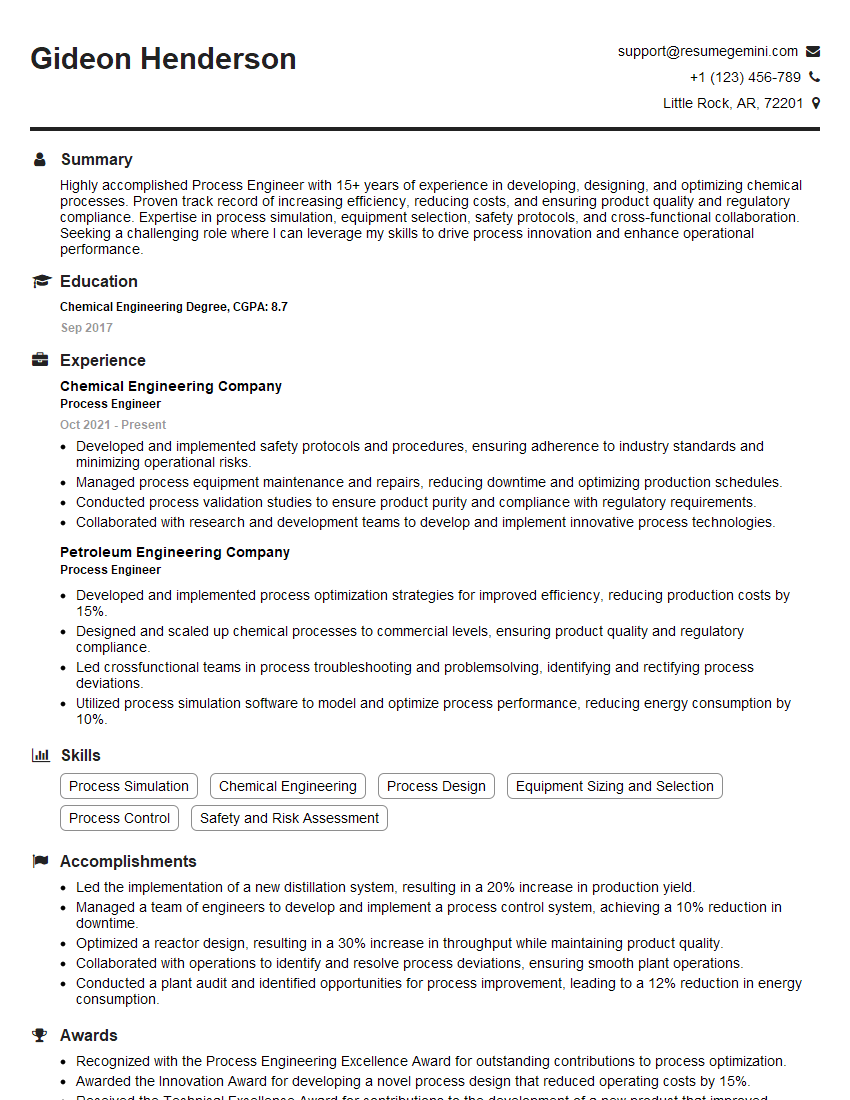
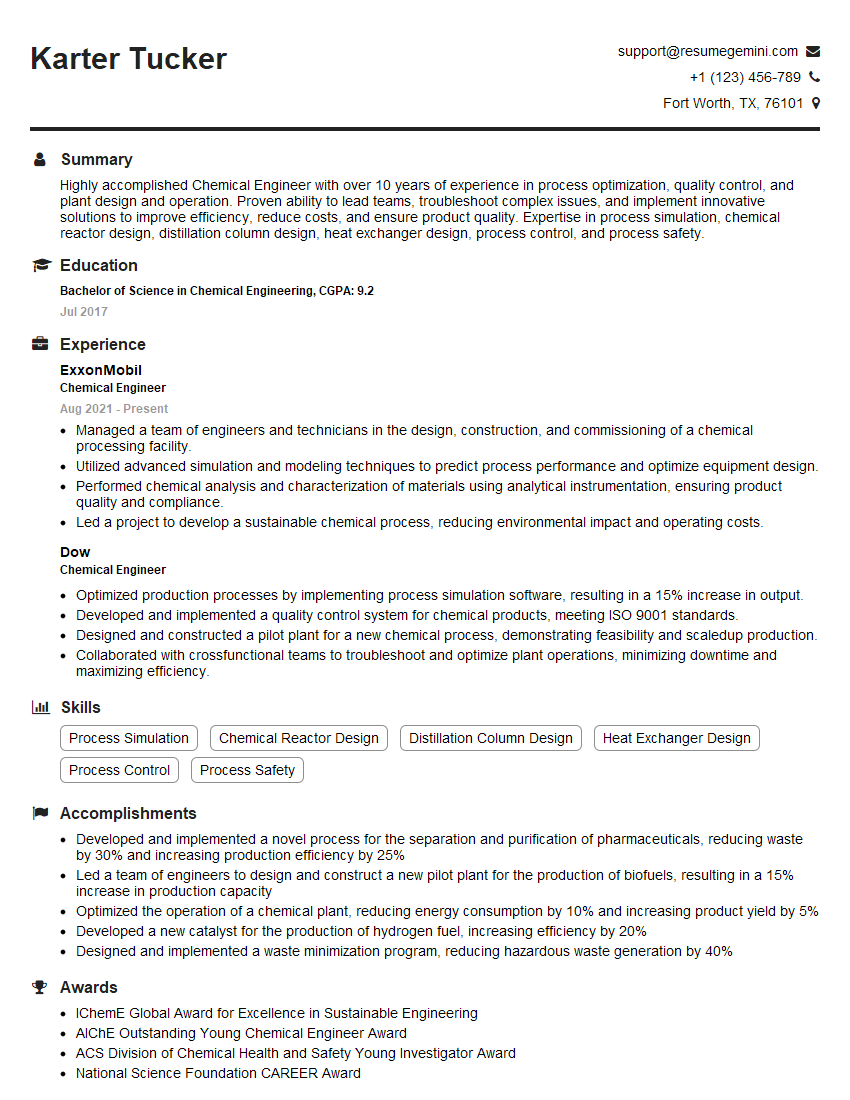
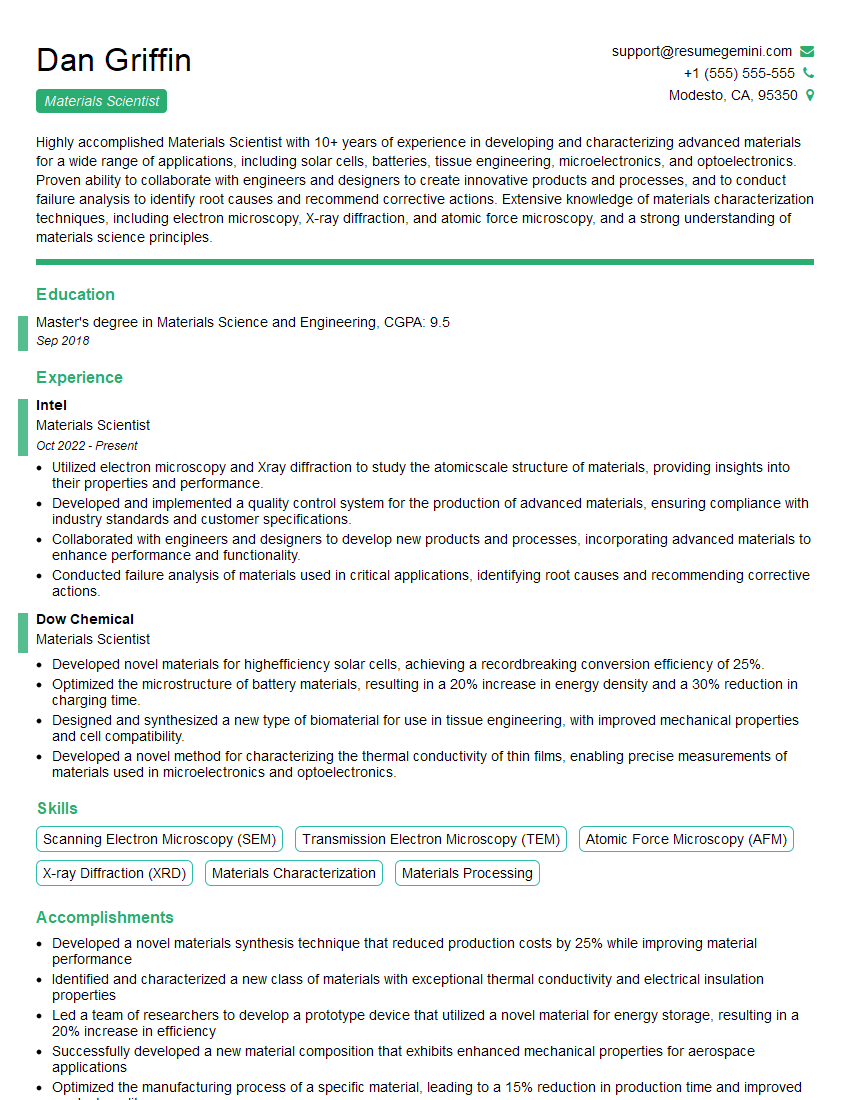
Mastering Polymer Additives opens doors to exciting career opportunities in a dynamic and ever-evolving industry. A strong understanding of these concepts significantly enhances your profile and makes you a highly competitive candidate. To increase your chances of landing your dream job, invest time in creating an ATS-friendly resume that highlights your skills and experience effectively. ResumeGemini is a trusted resource that can help you craft a professional and impactful resume tailored to the specific requirements of Polymer Additives roles. Examples of resumes optimized for this field are available to guide you.
Explore more articles
Users Rating of Our Blogs
Share Your Experience
We value your feedback! Please rate our content and share your thoughts (optional).
What Readers Say About Our Blog
Very informative content, great job.
good