Preparation is the key to success in any interview. In this post, we’ll explore crucial Polymer and Plastic Materials Knowledge interview questions and equip you with strategies to craft impactful answers. Whether you’re a beginner or a pro, these tips will elevate your preparation.
Questions Asked in Polymer and Plastic Materials Knowledge Interview
Q 1. Explain the difference between thermoplastic and thermosetting polymers.
The key difference between thermoplastic and thermosetting polymers lies in their response to heat. Thermoplastics can be repeatedly softened by heating and solidified by cooling. Think of it like melting and re-solidifying wax – you can do it over and over. Their long polymer chains are entangled but not chemically cross-linked. This allows for easy shaping and recycling. Examples include polyethylene (used in plastic bags), polypropylene (used in containers), and polystyrene (used in disposable cups).
Thermosets, on the other hand, undergo irreversible chemical changes upon heating. Once cured, they cannot be melted or reshaped without degrading. Imagine baking a cake – once it’s baked, you can’t unbake it. This is because their polymer chains are extensively cross-linked, forming a rigid three-dimensional network. Examples include epoxy resins (used in adhesives and coatings), vulcanized rubber (used in tires), and phenolic resins (used in electrical insulators).
Q 2. Describe the glass transition temperature (Tg) and its significance.
The glass transition temperature (Tg) is the temperature at which an amorphous (non-crystalline) solid polymer transitions from a hard, glassy state to a more rubbery or viscous state. Think of it like the point at which a hard candy becomes soft and pliable. Below Tg, the polymer chains are relatively immobile; above Tg, they have increased mobility.
The significance of Tg lies in its impact on the polymer’s mechanical properties. For example, a polymer’s use temperature should generally be below its Tg to maintain its stiffness and strength. Knowing the Tg helps us select suitable polymers for specific applications. A window that is made of polymer will likely crack in the cold winter because its Tg is above the temperature.
Q 3. What are the common methods for polymer characterization?
Polymer characterization involves a suite of techniques to determine a polymer’s properties. Common methods include:
- Differential Scanning Calorimetry (DSC): Measures the heat flow associated with phase transitions like Tg and melting point (Tm).
- Thermogravimetric Analysis (TGA): Determines the thermal stability of a polymer by measuring weight loss as a function of temperature.
- Gel Permeation Chromatography (GPC) or Size Exclusion Chromatography (SEC): Determines the molecular weight distribution of a polymer.
- Nuclear Magnetic Resonance (NMR) Spectroscopy: Provides detailed structural information about the polymer chains.
- Fourier Transform Infrared (FTIR) Spectroscopy: Identifies the functional groups present in the polymer.
- Mechanical Testing: Measures properties like tensile strength, elongation, and impact resistance.
The choice of technique depends on the specific information needed about the polymer.
Q 4. Explain the concept of polymer crystallinity and its impact on properties.
Polymer crystallinity refers to the degree of order in a polymer’s structure. Crystalline regions are characterized by highly ordered, repeating arrangements of polymer chains, similar to the structure of a crystal. Amorphous regions, conversely, lack this long-range order, resembling a tangled mass of spaghetti.
The level of crystallinity significantly affects polymer properties. Highly crystalline polymers are generally stronger, stiffer, denser, and have higher melting points compared to their amorphous counterparts. For instance, high-density polyethylene (HDPE), with its high crystallinity, is stronger and more rigid than low-density polyethylene (LDPE), which is more amorphous.
Q 5. Discuss different types of polymer degradation mechanisms.
Polymer degradation involves the breakdown of polymer chains, leading to changes in their properties. Common mechanisms include:
- Hydrolysis: Breakdown of polymer chains by water, often affecting polymers with ester or amide linkages.
- Oxidation: Degradation caused by oxygen, leading to chain scission or crosslinking. UV radiation often accelerates this process.
- Thermal Degradation: Breakdown of polymer chains due to high temperatures, often involving bond breaking and the formation of smaller molecules.
- Photodegradation: Degradation caused by light, particularly UV radiation, which can break chemical bonds and initiate chain reactions.
- Biological Degradation: Breakdown of polymer chains by microorganisms, enzymes, or other biological agents. This is particularly relevant for biodegradable polymers.
Understanding these mechanisms is crucial for predicting the service life of polymeric materials and designing polymers with enhanced durability.
Q 6. What are the main types of polymerization reactions?
The main types of polymerization reactions are:
- Addition Polymerization (Chain-growth Polymerization): Involves the sequential addition of monomers to a growing polymer chain. This usually proceeds via a reactive intermediate such as a free radical, cation, or anion. Examples include the production of polyethylene from ethylene monomers.
- Condensation Polymerization (Step-growth Polymerization): Involves the stepwise reaction between monomers with the elimination of a small molecule, such as water. This often leads to polymers with different functional groups at the chain ends. Examples include the production of nylon from diamines and diacids.
The choice of polymerization method significantly influences the structure and properties of the resulting polymer.
Q 7. How do you determine the molecular weight of a polymer?
Determining the molecular weight of a polymer is crucial because it directly affects its physical and mechanical properties. Several techniques can be employed:
- Gel Permeation Chromatography (GPC) or Size Exclusion Chromatography (SEC): Separates polymers based on size, allowing determination of the molecular weight distribution.
- End-group analysis: For polymers with well-defined end groups, the number of end groups can be determined, enabling calculation of the average molecular weight.
- Viscometry: Measures the viscosity of a polymer solution, which is related to its molecular weight.
- Light scattering: Measures the scattering of light by a polymer solution, providing information about its molecular weight and size.
The choice of method depends on the type of polymer and the desired accuracy.
Q 8. Explain the concept of viscoelasticity in polymers.
Viscoelasticity is a fascinating property of polymers where they exhibit characteristics of both viscous liquids and elastic solids. Imagine silly putty – you can stretch it slowly like a liquid, but if you pull it quickly, it snaps back like a rubber band. That’s viscoelasticity in action!
More formally, it means a polymer’s response to stress depends on both the magnitude of the stress and the time over which it’s applied. A slow, sustained stress might lead to viscous flow (permanent deformation), while a rapid, short-term stress results in elastic deformation (recoverable). This behavior stems from the polymer’s long molecular chains which can entangle and rearrange themselves over time, leading to complex stress-strain relationships.
Understanding viscoelasticity is crucial in designing applications ranging from shock absorbers (requiring energy dissipation) to flexible packaging (needing elasticity). The temperature also plays a significant role; a polymer that’s solid at room temperature might become more fluid at elevated temperatures due to increased chain mobility.
Q 9. Describe different polymer processing techniques (e.g., injection molding, extrusion).
Polymer processing techniques transform raw polymer materials into useful products. Several prominent methods exist, each with its own advantages and disadvantages:
- Injection Molding: Molten polymer is injected into a closed mold cavity, where it cools and solidifies into the desired shape. Think of plastic bottle caps, toys, and many automotive parts. It’s excellent for high-volume production of intricate parts.
- Extrusion: Polymer is melted and continuously pushed through a die to create a long, continuous profile. This process forms pipes, films, fibers (like clothing fibers), and sheets. It’s suited for producing long, uniform products.
- Blow Molding: A heated plastic tube (parison) is clamped in a mold, and air is blown into it to inflate it against the mold walls. This creates hollow shapes like bottles and containers. It’s efficient for producing lightweight hollow objects.
- Compression Molding: Polymer is placed in an open mold cavity and compressed with heat and pressure to conform to the mold’s shape. This is commonly used for producing large, complex parts or when the use of high pressure in the other methods is impossible.
- Thermoforming: A plastic sheet is heated until soft and then formed into a desired shape using vacuum or pressure. This technique is used for making packaging trays, blister packs, and various other products.
The choice of processing technique depends on factors such as the polymer type, desired product geometry, production volume, and cost considerations.
Q 10. What are the key factors affecting the mechanical properties of polymers?
The mechanical properties of polymers—strength, stiffness, toughness, and elasticity—are influenced by several key factors:
- Molecular Weight and Structure: Higher molecular weight generally leads to increased strength and toughness. The polymer’s chemical structure (e.g., branching, crosslinking) significantly impacts its properties. Highly branched polymers are typically less strong than linear ones.
- Crystallinity: Crystalline polymers are stiffer and stronger than amorphous polymers because the ordered arrangement of chains restricts molecular movement. Crystalline regions are more resistant to deformation.
- Temperature: Increasing temperature typically reduces stiffness and strength while increasing ductility. Above the glass transition temperature (Tg), amorphous polymers become rubbery and more easily deformed.
- Crosslinking: Chemical bonds between polymer chains (crosslinking) increase stiffness, strength, and heat resistance. Think of vulcanized rubber, where sulfur crosslinks enhance the rubber’s elasticity and durability.
- Additives and Fillers: The addition of fillers (e.g., carbon black, talc) or additives can significantly alter mechanical properties, often enhancing strength, stiffness, or impact resistance.
Understanding these factors is critical for material selection in engineering design. For example, a high-strength, stiff polymer might be needed for structural applications, while a flexible, impact-resistant polymer is better suited for packaging.
Q 11. How do fillers and additives affect polymer properties?
Fillers and additives modify the properties of polymers, often improving their cost-effectiveness or performance. Fillers are usually inexpensive materials added to reduce cost and sometimes improve specific properties. Additives enhance properties or impart new functionalities.
- Fillers (e.g., talc, calcium carbonate, glass fibers): These reduce the cost, increase stiffness and strength (especially glass fibers), or modify other properties. For example, adding carbon black to polyethylene increases its UV resistance.
- Plasticizers (e.g., phthalates): These increase the polymer’s flexibility and ductility by reducing intermolecular forces. They are commonly used in PVC to make it more flexible. However, concerns exist about the safety of some plasticizers.
- Stabilizers (e.g., antioxidants, UV stabilizers): These protect the polymer from degradation due to oxidation or UV radiation, extending its lifespan. Antioxidants are crucial for polymers exposed to air and heat.
- Flame Retardants (e.g., brominated flame retardants): These increase the polymer’s resistance to fire. However, concerns over environmental and health impacts have led to the phasing out of some flame retardants.
- Colorants (e.g., pigments, dyes): These impart color to the polymer for aesthetic purposes or to enhance UV resistance.
The effects of fillers and additives are highly dependent on their type, concentration, and the polymer matrix they are incorporated into.
Q 12. Explain the concept of polymer blending and its applications.
Polymer blending involves combining two or more polymers to create a new material with properties different from its constituents. It’s a cost-effective way to tailor properties to specific applications.
For instance, blending a stiff, strong polymer with a flexible, impact-resistant one can create a material that is both strong and tough. The properties of the blend depend on the compatibility of the polymers, their relative amounts, and processing conditions.
Applications:
- Improved Impact Resistance: Blending a brittle polymer with a tougher one can significantly increase impact resistance.
- Enhanced Flexibility and Ductility: Blending a rigid polymer with a flexible one improves its flexibility and processability.
- Reduced Cost: Blending a high-performance polymer with a less expensive one lowers the overall cost of the material.
- Improved Processability: Blending polymers can improve the melt flow, making processing easier and more efficient.
Polymer blends are widely used in various applications, including automotive parts, packaging, and consumer products.
Q 13. What are some common polymer additives and their functions?
Polymer additives are substances added in small amounts to modify the properties of polymers. Here are some common examples:
- Antioxidants: Prevent degradation from oxidation, improving the polymer’s long-term stability and preventing discoloration.
- UV Stabilizers: Protect against UV radiation, reducing degradation and color changes caused by sunlight exposure.
- Lubricants: Reduce friction during processing, improving flow and reducing wear on machinery.
- Processing Aids: Facilitate the processing of polymers, improving melt flow and reducing processing temperatures.
- Flame Retardants: Increase the polymer’s resistance to combustion, improving safety in various applications.
- Plasticizers: Increase flexibility and ductility, making polymers softer and more pliable.
- Colorants (Pigments & Dyes): Provide color to the polymer, enhancing aesthetics or specific functionalities (e.g., UV protection).
- Nucleating Agents: Promote the formation of crystal nuclei, improving the polymer’s crystallinity, mechanical strength and stiffness.
The selection of additives depends on the specific application and the desired polymer properties. The correct additive concentration is crucial to achieve the desired effect without compromising other properties.
Q 14. Describe different types of plastic recycling methods.
Plastic recycling methods are categorized into several types:
- Mechanical Recycling: This involves physically processing used plastics into new products. It includes processes like shredding, washing, melting, and re-forming. This is the most common method for many types of plastics.
- Chemical Recycling: This breaks down the polymers into their chemical building blocks through processes like pyrolysis (high-temperature decomposition) or depolymerization. These processes can recover monomers that can then be used to create new polymers, overcoming limitations of mechanical recycling.
- Energy Recovery: This involves using plastics as a fuel source for energy generation. This is done in waste-to-energy facilities, and while it doesn’t recover materials, it does recover some energy value from the waste stream.
The choice of recycling method depends on the type of plastic, its purity, and economic considerations. Each method presents advantages and limitations. Mechanical recycling is widely used but may not be suitable for heavily contaminated or mixed plastics. Chemical recycling offers the potential to recover valuable monomers, while energy recovery provides an alternative for plastics that are difficult or uneconomical to recycle mechanically or chemically. The development of new technologies in plastic recycling is an area of ongoing research and development.
Q 15. Explain the principles of rheology in polymer processing.
Rheology, the study of the flow and deformation of matter, is crucial in polymer processing. It dictates how a polymer melts, flows, and solidifies during manufacturing. Understanding rheological properties allows us to optimize processing parameters for desired product characteristics.
For example, the viscosity of a polymer melt is paramount. High viscosity means the material is resistant to flow, requiring higher processing temperatures or pressures to achieve the desired shape. Conversely, low viscosity can lead to sagging or deformation during processing.
We use rheometers to measure these properties, obtaining data like viscosity curves as a function of shear rate and temperature. This data informs decisions about extruder screw design, injection molding pressures, and die geometry. Imagine trying to extrude toothpaste – a high-viscosity toothpaste needs more force than a low-viscosity one.
Other important rheological considerations include elasticity and viscoelasticity. Elasticity affects the ability of the material to spring back after deformation, impacting things like part dimensions and surface finish. Viscoelasticity, a combination of viscous and elastic behavior, is particularly important in processes involving complex flow patterns, like fiber spinning.
Career Expert Tips:
- Ace those interviews! Prepare effectively by reviewing the Top 50 Most Common Interview Questions on ResumeGemini.
- Navigate your job search with confidence! Explore a wide range of Career Tips on ResumeGemini. Learn about common challenges and recommendations to overcome them.
- Craft the perfect resume! Master the Art of Resume Writing with ResumeGemini’s guide. Showcase your unique qualifications and achievements effectively.
- Don’t miss out on holiday savings! Build your dream resume with ResumeGemini’s ATS optimized templates.
Q 16. How do you select appropriate polymers for a specific application?
Selecting the right polymer for an application is a critical step, requiring consideration of various factors. We begin by understanding the application’s requirements: mechanical strength, temperature resistance, chemical resistance, cost, and regulatory compliance are key.
- Mechanical Properties: Do we need high tensile strength, impact resistance, flexibility, or stiffness? For instance, a high-impact polystyrene would be suitable for a durable toy, while a flexible polyurethane would be better for a shoe sole.
- Thermal Properties: What temperature range will the part endure? Polyethylene terephthalate (PET) is suitable for beverage bottles that need to withstand various temperatures, while polytetrafluoroethylene (PTFE), known for high thermal stability, is used in high-temperature applications.
- Chemical Resistance: Will the polymer come into contact with chemicals? Polypropylene is resistant to many chemicals, while polycarbonate is not. The intended use dictates the chemical resistance needed.
- Cost: The cost of the polymer significantly influences the overall product cost. Polyethylene is relatively inexpensive, whereas specialty polymers can be much more expensive.
- Regulatory Compliance: Food contact applications require polymers meeting specific FDA regulations. Biomedical applications necessitate compliance with biocompatibility standards.
After evaluating these factors, we often narrow down the possibilities to a few candidate polymers and perform material testing to confirm that the selected material meets the specific needs. This systematic approach ensures the final product performs reliably and safely.
Q 17. What are some common challenges in polymer processing?
Polymer processing presents several challenges. Some common issues include:
- Degradation: High processing temperatures or shear stresses can lead to polymer chain scission (breaking down), reducing molecular weight and affecting material properties. For example, prolonged exposure to high heat can weaken and discolor a polymer.
- Additives incompatibility: Incompatible additives (such as fillers, stabilizers, or colorants) can lead to poor dispersion, reduced material performance, or even processing issues such as plugging.
- Moisture content: Excess moisture in polymers can lead to hydrolysis (chemical breakdown), foaming, and uneven processing. Careful drying is essential for moisture-sensitive polymers.
- Processing defects: Defects like voids, sink marks, warping, or flow lines can occur due to improper processing parameters (temperature, pressure, injection speed), mold design flaws, or improper material handling.
- Scale-up challenges: Reproducing processing conditions consistently at larger scales can be tricky due to variations in heat transfer and flow dynamics.
Overcoming these challenges requires careful process optimization, material selection, and quality control throughout the manufacturing process. Detailed process parameters need to be determined through experimentation and simulation in order to minimize problems.
Q 18. How do you troubleshoot defects in polymer products?
Troubleshooting polymer product defects involves a systematic approach. First, we carefully examine the defect: location, size, shape, and frequency are all important. We then use this information to generate hypotheses about the root cause.
Let’s say we observe sink marks in an injection-molded part. This suggests insufficient material flow into the mold cavity. Potential causes include inadequate melt temperature, insufficient injection pressure, or a slow injection speed. We may check our processing parameters: mold temperature, injection time, and pressure profile. We might also look at the mold design for potential issues like venting problems or insufficient flow channels. If the mold is the problem, it will require correction.
Another common defect is warping. This can be caused by uneven cooling in the mold, internal stresses in the part, or improper mold design. Analyzing the part’s orientation, thickness, and cooling conditions help us isolate the cause. Sometimes, simply changing the mold design or cooling strategy can resolve this.
A systematic approach, involving data analysis, visual inspection, and understanding of polymer processing principles, is crucial for effectively troubleshooting defects.
Q 19. Describe your experience with different types of polymer testing equipment.
My experience encompasses a wide range of polymer testing equipment, including:
- Rheometers: Used to characterize the flow and viscoelastic properties of polymer melts, helping in process optimization.
- Tensile testers: Measure the tensile strength, elongation, and modulus of polymers, providing data on their mechanical strength.
- Impact testers: Evaluate the resistance of polymers to impact forces, important for determining their toughness and durability.
- Differential Scanning Calorimetry (DSC): Measures the glass transition temperature (Tg), melting point (Tm), and crystallization behavior of polymers, providing crucial information about their thermal properties.
- Thermogravimetric Analysis (TGA): Determines the thermal stability of polymers, identifying their decomposition temperatures.
- Dynamic Mechanical Analysis (DMA): Measures the viscoelastic properties of polymers over a wide range of temperatures and frequencies, essential for understanding their behavior under different conditions.
I’m also proficient in using various other instruments like Melt Flow Index (MFI) testers, hardness testers, and microscopy techniques for analyzing surface morphology and microstructural characteristics. This combination of techniques enables a comprehensive assessment of polymer properties.
Q 20. Explain the importance of quality control in polymer manufacturing.
Quality control is paramount in polymer manufacturing to ensure consistent product quality and meet customer specifications. It involves rigorous testing and monitoring at every stage, from raw material selection to finished product inspection.
Incoming inspection verifies that the raw materials meet required specifications. This includes chemical composition analysis, viscosity measurements, and assessment of additives. In-process monitoring involves continuous checking of processing parameters (temperature, pressure, flow rate) to maintain consistency throughout the manufacturing process. Finished product testing includes mechanical testing, dimensional analysis, and visual inspection to confirm that the final product meets the specified quality standards.
Statistical Process Control (SPC) techniques are widely used to monitor process variability and detect deviations from target values. This allows for timely intervention and prevents the production of defective products. Implementing a robust quality control system is essential for maintaining customer satisfaction, minimizing waste, and enhancing product reliability.
Q 21. Discuss the environmental impact of plastics and potential solutions.
The environmental impact of plastics is a significant concern, primarily due to their persistence in the environment and contribution to pollution. Landfills are overflowing with plastic waste, and microplastics are increasingly prevalent in our oceans and soil. The manufacturing process itself also contributes to greenhouse gas emissions.
Solutions are being explored on multiple fronts:
- Reducing plastic consumption: This involves promoting reusable alternatives, designing products with less plastic, and reducing unnecessary packaging.
- Improving recycling infrastructure: Investment in efficient recycling technologies and systems is crucial for diverting plastic waste from landfills and enabling the recovery of valuable materials.
- Developing biodegradable and compostable plastics: Research is focused on creating plastics that can break down naturally in the environment, reducing their persistence as waste. However, these often have limitations in terms of mechanical properties.
- Chemical recycling: This process breaks down plastics into their building blocks, allowing for the production of new polymers. This offers a potential route to recycle plastics that are difficult to recycle mechanically.
- Promoting responsible waste management: Education and awareness campaigns can encourage individuals and industries to reduce, reuse, and recycle plastics properly.
Addressing the environmental impact of plastics requires a multi-faceted approach involving innovation in materials science, improved waste management practices, and a shift towards more sustainable consumption patterns.
Q 22. How do you ensure the safety of polymer products?
Ensuring the safety of polymer products involves a multi-faceted approach encompassing material selection, processing, and end-use considerations. It begins with choosing polymers that meet specific safety standards and regulations based on the intended application. For instance, food-contact materials must comply with FDA regulations, ensuring they don’t leach harmful substances.
During processing, rigorous quality control measures are critical. This includes monitoring temperature, pressure, and residence time to prevent degradation or cross-linking that could compromise material properties and potentially introduce safety hazards. For example, improper processing of polycarbonate can lead to the release of bisphenol A (BPA), a known endocrine disruptor.
Finally, post-production testing is vital, often involving mechanical testing, chemical analysis (e.g., to determine migration levels of additives), and flammability assessments. Each of these steps helps ensure the product remains safe throughout its lifespan and is disposed of responsibly to minimize environmental impact. For example, biodegradability testing is increasingly important for eco-friendly products. Ultimately, safety relies on a commitment to comprehensive standards at each stage of the product’s lifecycle.
Q 23. Describe your experience with designing experiments and analyzing data in relation to polymers.
My experience with polymer experimentation and data analysis is extensive. I’ve designed and executed numerous experiments focused on characterizing material properties, investigating the effects of processing parameters, and optimizing material formulations for specific applications. For example, in one project I investigated the influence of different plasticizers on the mechanical properties and thermal stability of PVC, using a Design of Experiments (DOE) approach – specifically, a Box-Behnken design – to efficiently explore the parameter space.
Data analysis involved using statistical software like Minitab or JMP to analyze the experimental results, identify significant factors, and build predictive models. This allowed us to optimize the plasticizer concentration for desired flexibility while maintaining thermal stability, ultimately improving product performance and reducing material costs. I also have experience with various analytical techniques such as Differential Scanning Calorimetry (DSC), Thermogravimetric Analysis (TGA), and tensile testing to gather the necessary data. Visualizing and interpreting results, drawing conclusions, and communicating these findings effectively to stakeholders are vital aspects of my work.
Q 24. What are your strengths and weaknesses in your understanding of polymer science?
My strengths lie in a deep understanding of polymer chemistry, thermodynamics, and rheology. I’m proficient in material characterization techniques and possess strong analytical and problem-solving skills. I also have excellent communication skills, crucial for translating complex scientific concepts to both technical and non-technical audiences.
A weakness, which I’m actively working to improve, is my experience with advanced computational modeling techniques like molecular dynamics simulations. While I understand the principles, I would benefit from more hands-on experience in applying these methods to address complex polymer-related challenges.
Q 25. Explain a time you had to solve a complex problem related to polymers.
In a previous role, we encountered a significant challenge with a high-performance polymer composite intended for aerospace applications. The composite exhibited unexpected brittleness, failing far below the required strength thresholds. Initially, we suspected issues with the manufacturing process. However, after thorough investigation, including microscopic analysis, we discovered microscopic voids within the polymer matrix. These were caused by inadequate degassing of the resin prior to molding.
To solve the problem, we implemented a multi-pronged approach. Firstly, we optimized the degassing procedure by increasing the vacuum time and temperature during resin preparation. Secondly, we analyzed the resin formulation, slightly modifying its viscosity to reduce bubble formation. Finally, we implemented stricter quality control checks to monitor the void content in the final composite. This systematic approach resulted in a significant improvement in the composite’s mechanical properties, meeting the required strength standards. This experience underscored the importance of careful attention to detail in every stage of polymer processing.
Q 26. What are some emerging trends in polymer materials science?
Several exciting trends are shaping the future of polymer materials science. One significant area is the development of sustainable and biodegradable polymers, driven by growing environmental concerns. Bio-based polymers derived from renewable sources like corn starch or algae are gaining prominence. Another trend is the increasing use of additive manufacturing (3D printing) for creating complex polymer parts with customized properties and geometries.
Furthermore, significant research is underway in designing self-healing polymers, capable of repairing damage without external intervention. This could lead to enhanced durability and extended lifespan of polymer products. Smart polymers, capable of responding to external stimuli such as temperature or pH, are also attracting significant attention for applications ranging from drug delivery to sensors. Finally, the quest for high-performance polymers with improved strength, toughness, and thermal stability continues to drive innovation in areas such as aerospace and automotive applications.
Q 27. Discuss your familiarity with various polymer standards and regulations.
I am familiar with a range of polymer standards and regulations, including those related to food contact materials (e.g., FDA regulations in the US, EU regulations in Europe), medical devices (e.g., ISO 10993), and industrial applications (e.g., ASTM standards). My understanding extends to material safety data sheets (MSDS) and their importance in handling and disposal of polymer materials. I am also aware of the ongoing evolution of regulations, especially regarding the restriction of certain hazardous substances (RoHS) and the growing emphasis on sustainability and recyclability. Understanding and adhering to these standards is vital for ensuring product safety and compliance.
For instance, I’m familiar with the specific requirements for polymers used in packaging materials, encompassing migration limits for chemicals into the packaged food and labeling requirements to ensure consumer safety and transparency.
Q 28. Explain your understanding of the relationship between polymer structure and properties.
The relationship between polymer structure and properties is fundamental to polymer science. A polymer’s properties are directly influenced by its chemical composition, molecular weight, and chain architecture. For example, the type of monomer units dictates the chemical resistance, while the molecular weight influences the mechanical strength and toughness.
A linear polymer chain, like polyethylene, typically exhibits different properties compared to a branched or cross-linked polymer. Branching reduces crystallinity and increases flexibility, while cross-linking creates a rigid network, increasing strength and thermal stability. Crystallinity itself plays a significant role; higher crystallinity generally results in higher strength, stiffness, and melting point. Understanding these relationships is critical for tailoring polymer properties to meet specific application requirements. For example, high-density polyethylene (HDPE), with its high crystallinity, is suitable for rigid containers, whereas low-density polyethylene (LDPE), with its branching, is used for flexible films.
Key Topics to Learn for Polymer and Plastic Materials Knowledge Interview
- Polymer Chemistry Fundamentals: Understanding polymerization mechanisms (addition, condensation), polymer structures (linear, branched, cross-linked), and molecular weight distributions.
- Material Properties and Characterization: Exploring key properties like tensile strength, elasticity, thermal stability, and chemical resistance. Familiarize yourself with common characterization techniques (e.g., DSC, TGA, tensile testing).
- Polymer Processing Techniques: Gaining knowledge of injection molding, extrusion, blow molding, and other common manufacturing processes. Understanding the relationship between processing parameters and final product properties is crucial.
- Plastic Material Selection: Learn to select appropriate polymers based on application requirements, considering factors like cost, performance, and environmental impact. This includes understanding different plastic families (e.g., polyethylene, polypropylene, PVC, ABS).
- Polymer Degradation and Recycling: Understanding the mechanisms of polymer degradation and exploring various recycling methods (mechanical, chemical). This is increasingly important in today’s sustainable environment.
- Applications and Case Studies: Explore real-world applications of polymers and plastics in various industries, such as automotive, packaging, construction, and medical devices. Being able to discuss specific case studies demonstrates practical understanding.
- Problem-Solving Approaches: Practice analyzing material failure, identifying root causes, and proposing solutions related to polymer processing and material selection.
Next Steps
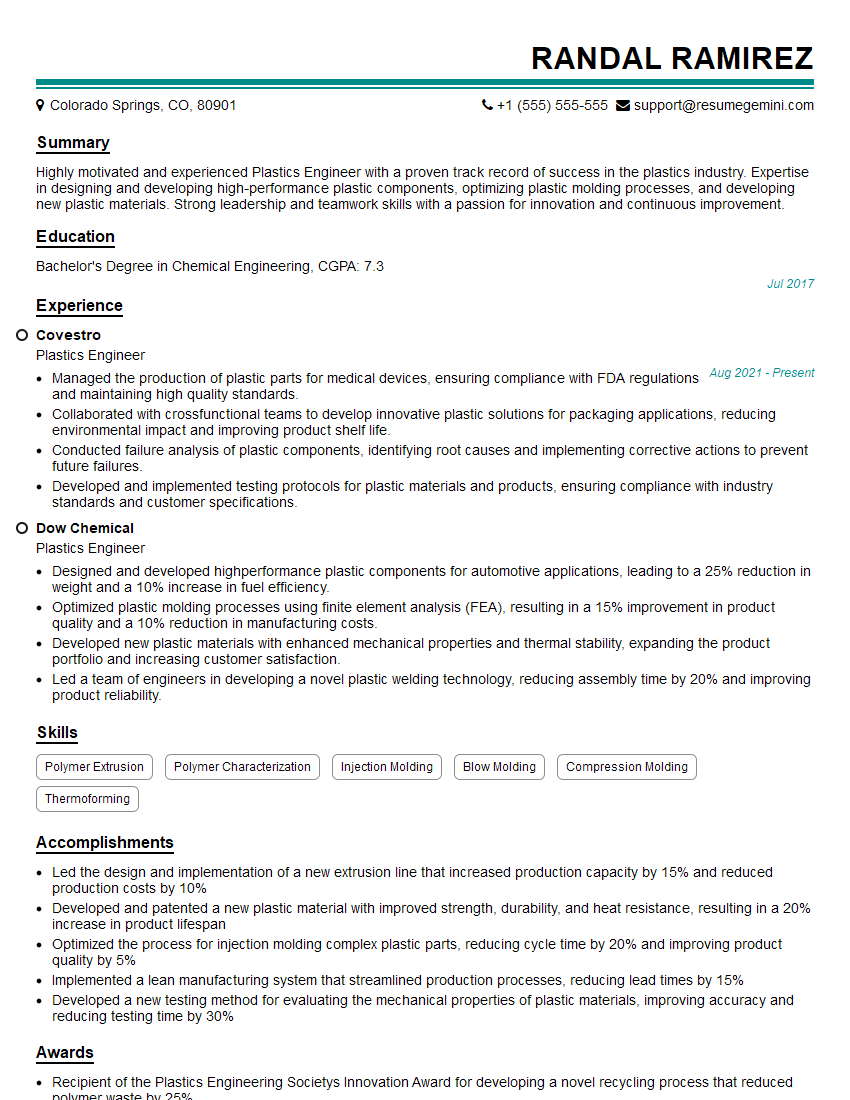
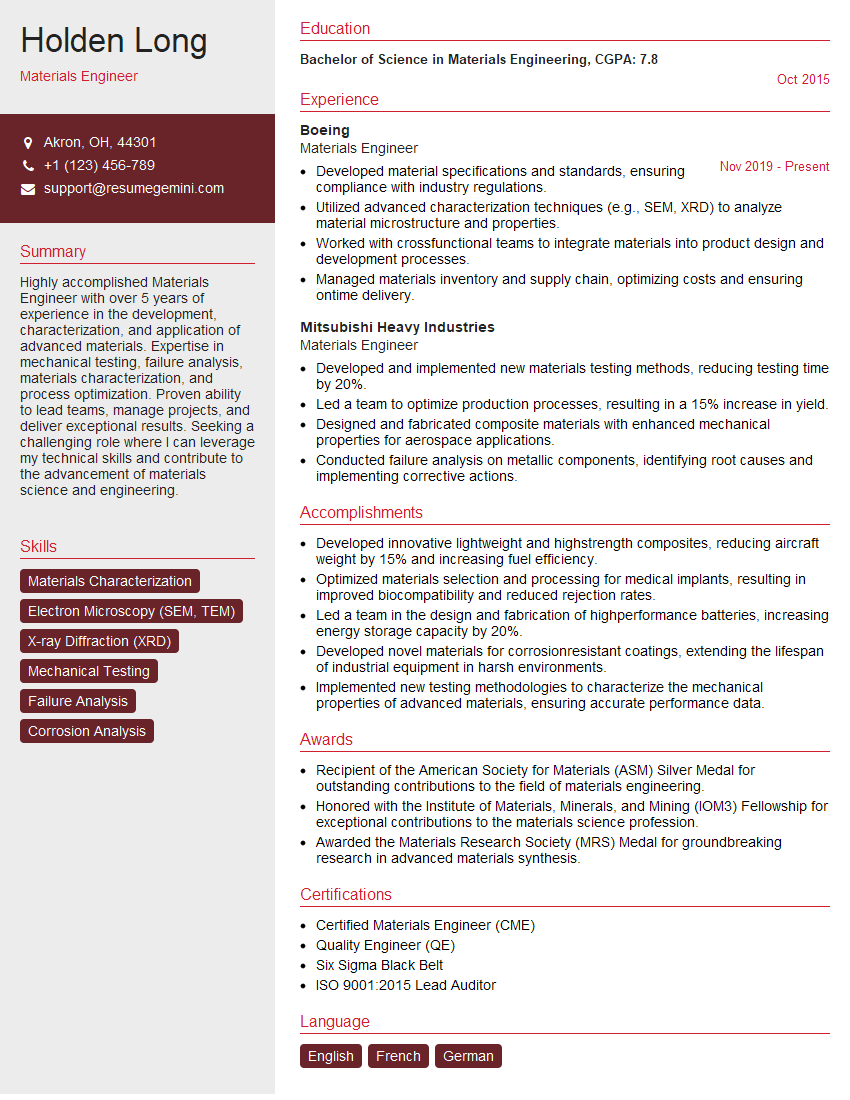
Mastering Polymer and Plastic Materials Knowledge is essential for career advancement in materials science, engineering, and related fields. A strong understanding of these concepts will significantly enhance your job prospects and open doors to exciting opportunities. To further strengthen your application, focus on creating an ATS-friendly resume that effectively highlights your skills and experience. ResumeGemini is a trusted resource that can help you build a professional and impactful resume. We provide examples of resumes tailored to Polymer and Plastic Materials Knowledge to guide you in showcasing your expertise effectively. Invest the time to craft a compelling resume; it’s your first impression on potential employers.
Explore more articles
Users Rating of Our Blogs
Share Your Experience
We value your feedback! Please rate our content and share your thoughts (optional).
What Readers Say About Our Blog
Very informative content, great job.
good