The right preparation can turn an interview into an opportunity to showcase your expertise. This guide to Portfolio Binding interview questions is your ultimate resource, providing key insights and tips to help you ace your responses and stand out as a top candidate.
Questions Asked in Portfolio Binding Interview
Q 1. Explain the difference between perfect binding and saddle stitching.
Perfect binding and saddle stitching are two common methods for binding documents, but they differ significantly in their approach and the resulting product. Think of it like this: perfect binding is like a paperback book, while saddle stitching is more like a magazine.
Perfect Binding: This method involves gluing the edges of the pages together to create a block, then applying a cover to the spine. It’s ideal for documents with a higher page count (typically 40 pages or more) because it creates a durable and relatively flat spine. The pages are typically trimmed after gluing to ensure a neat edge.
Saddle Stitching: This technique involves folding sheets of paper in half and securing them through the fold line with wire staples. It’s best suited for documents with a lower page count (generally under 40 pages), and it results in a thinner, less durable spine than perfect binding. It’s a cost-effective option for smaller projects.
In essence, the choice depends on the page count, budget, and desired look and feel of the final product. A thick novel will require the sturdiness of perfect binding, while a brochure would be perfectly suitable with saddle stitching.
Q 2. Describe the process of case binding.
Case binding is a sophisticated and robust binding method used for high-quality books, reports, and documents that require a durable and professional finish. It’s like giving your document a custom-tailored suit! The process involves several key steps:
- Section Sewing: The individual sheets of paper are gathered and sewn together to form sections or signatures. This is often done using a variety of sewing methods, such as side-stitching or Smyth-sewing, depending on the project requirements.
- Adhesive Binding: The sewn sections are glued together to form a solid text block.
- Cover Preparation: The cover boards (typically made from heavy-duty cardboard) are prepared. This may involve covering them with cloth or other materials.
- Case Making: The cover boards are attached to the spine of the text block. This process involves carefully applying glue and accurately aligning the cover with the text block.
- Trimming and Finishing: Finally, the book is trimmed to create a neat and square appearance. Optional finishing touches, such as embossing or foil stamping, can be added to enhance the final product.
The result is a robust book with a durable spine that can withstand repeated opening and closing. Case binding is a more complex and expensive process than other binding methods, but it delivers superior quality and a professional appearance.
Q 3. What are the common types of binding adhesives used and their applications?
The choice of adhesive in portfolio binding is crucial for ensuring the longevity and quality of the final product. Different adhesives cater to different needs and materials.
- Polyurethane (PUR) Adhesives: These are high-performance, strong, flexible adhesives that are ideal for perfect binding. They offer excellent flexibility, ensuring that the spine of the book remains intact even after many uses. They also have excellent adhesion to a wide range of materials.
- Hot Melt Adhesives (EVA): These are commonly used in perfect binding for smaller books and magazines. They are fast-setting and cost-effective, but may not be as flexible as PUR adhesives. They’re ideal for less demanding projects.
- Case Binding Adhesives: These are specialized adhesives used in case binding, often requiring a higher viscosity and longer setting time to ensure optimal bond strength between the cover boards and the text block.
- Animal Glue/Hide Glue: While less common today, this is still favored in high-end bookbinding for its archival qualities and compatibility with certain materials.
The selection depends on factors such as the binding method, materials involved (paper type, cover stock), desired flexibility, and budget. PUR is considered the top choice for high-quality, long-lasting books.
Q 4. How do you troubleshoot a jammed binding machine?
Troubleshooting a jammed binding machine requires a systematic approach. Safety should always be the top priority – power down the machine before attempting any repair.
- Identify the Jam: Carefully examine the machine to pinpoint the location of the jam. Is it in the feeding mechanism, the glue unit, the cutting unit, or somewhere else?
- Remove the Jam: Once the location is identified, cautiously remove the jammed material. Avoid forcing anything; this could damage the machine.
- Check for Obstructions: Inspect for any foreign objects (paper clips, staples, etc.) that might have caused the jam. Remove them carefully.
- Inspect the Glue Unit (If Applicable): If the machine uses glue, check for clogs or leaks. Clean or replace any clogged components.
- Review the Machine’s Manual: Refer to the machine’s operating manual for specific troubleshooting instructions and diagrams.
- Seek Professional Assistance: If the jam persists or you are unsure how to proceed, contact a qualified technician. Attempting complex repairs without the necessary knowledge could cause further damage.
Prevention is key! Regular maintenance, such as cleaning and lubricating the machine, can significantly reduce the occurrence of jams.
Q 5. What safety precautions are essential when operating binding machinery?
Safety is paramount when operating binding machinery. These machines can pose several hazards if not handled correctly.
- Always Power Down: Turn off and unplug the machine before performing any maintenance, cleaning, or troubleshooting.
- Use Proper Personal Protective Equipment (PPE): Wear safety glasses or goggles to protect your eyes from flying debris. Gloves can protect your hands from glue and sharp components.
- Guard against Moving Parts: Never reach into the machine while it’s running. Keep your hands and fingers clear of moving parts.
- Follow Manufacturer Instructions: Carefully read and understand the manufacturer’s safety instructions and warnings provided with the machine.
- Proper Training: Only operate the machine after receiving proper training and instruction from a qualified professional. Never assume you know how to use a machine without specific guidance.
- Safe Work Environment: Ensure a clean and organized work area to minimize the risk of accidents.
Remember, a moment of carelessness can lead to serious injury. Adhering to safety procedures is not just a guideline; it’s a necessity.
Q 6. Explain the importance of quality control in portfolio binding.
Quality control in portfolio binding is essential for delivering a professional and satisfactory product. It ensures consistency and meets client expectations. Neglecting it can lead to costly rework and dissatisfied customers.
Quality control measures should be implemented at each stage of the process:
- Incoming Materials: Inspect paper stock, cover materials, and adhesives for defects or inconsistencies.
- Pre-Press: Review the print quality of the pages for color accuracy, sharpness, and any flaws.
- Binding Process: Monitor the binding process to ensure consistent glue application, accurate cutting, and proper alignment.
- Post-Binding Inspection: Carefully inspect the finished product for any defects, such as crooked spines, loose pages, or glue smudges.
- Sampling and Testing: Perform random sampling and testing of finished products to ensure that the quality meets specified standards.
A robust quality control system helps identify and correct issues early on, saving time, resources, and reputation. It’s about delivering excellence and ensuring client satisfaction.
Q 7. How do you determine the appropriate binding method for a given project?
Selecting the appropriate binding method is a crucial decision that depends on several factors. It’s like choosing the right tool for the job!
Consider these factors:
- Number of Pages: Saddle stitching is best for fewer pages (under 40), while perfect binding or case binding is better suited for higher page counts.
- Budget: Saddle stitching is the most economical, followed by perfect binding, then case binding.
- Desired Aesthetic: Case binding offers the most professional and durable look, perfect binding provides a good balance, and saddle stitching is best for simpler projects.
- Durability Requirements: Case binding is the most durable, followed by perfect binding; saddle stitching is less durable, particularly for higher page counts.
- Project Requirements: The nature of the document will also influence the choice. A high-end report will require a higher-quality binding method than a simple marketing brochure.
By carefully considering these aspects, you can ensure that you select the binding method that best suits the specific project requirements and delivers the desired result. A professional consultation may be valuable for complex projects.
Q 8. What are the advantages and disadvantages of different binding methods (e.g., spiral, wire-o, perfect)?
Choosing the right binding method is crucial for the longevity and aesthetic appeal of a portfolio. Let’s compare three popular options: spiral, wire-O, and perfect binding.
Spiral Binding:
Advantages: Cost-effective, allows for easy page turning and lay-flat functionality, suitable for smaller projects and documents needing frequent updates.
Disadvantages: Not as aesthetically pleasing as other methods, pages can easily be removed or damaged, not ideal for high-volume or professional-looking projects. Think of those ubiquitous student notebooks.Wire-O Binding:
Advantages: Durable, professional look, allows pages to lay flat, better suited for thicker documents than spiral binding.
Disadvantages: More expensive than spiral binding, requires specialized equipment, not suitable for documents that need to be easily updated or removed.Perfect Binding:
Advantages: Clean, professional finish, ideal for larger documents and books, gives a very polished, high-quality feel.
Disadvantages: More expensive than spiral or wire-O binding, pages can’t lay completely flat, requires a minimum page count for effective binding.
The best choice depends on factors like budget, document thickness, desired aesthetic, and intended use. A high-end design portfolio, for example, might benefit from perfect binding, whereas a quick project proposal might suffice with spiral binding.
Q 9. Describe your experience with different types of binding equipment.
My experience encompasses a wide range of binding equipment, from manual punch and bind machines for smaller projects to fully automated systems for high-volume jobs. I’m proficient with various types of spiral binding machines, including those with automatic feed and punch capabilities. I have extensive experience operating wire-O binding machines, including those that handle different wire sizes and page counts. Furthermore, I’m comfortable using perfect binding machines, understanding the intricacies of adhesive application and cover attachment. My experience extends to both digital and mechanical systems, and I’m adept at maintaining and troubleshooting equipment malfunctions.
For instance, I once had to troubleshoot a malfunctioning perfect binding machine that was causing inconsistent adhesive application. By carefully analyzing the machine’s settings and components, I pinpointed the issue to a faulty adhesive roller and successfully resolved the problem, preventing production delays.
Q 10. How do you handle a project with a tight deadline?
Tight deadlines require a structured and efficient approach. My strategy involves prioritizing tasks, effectively communicating with the client, and leveraging technology to streamline the workflow. I’ll break down the project into smaller, manageable tasks, creating a realistic timeline and allocating sufficient time for each step. Open and proactive communication with the client ensures alignment on expectations and allows for timely adjustments if needed.
For example, on a recent urgent project, I utilized automated pre-press tools to accelerate the preparation process and coordinated closely with the printing team for seamless handover. By maintaining constant communication and using efficient work practices, we successfully delivered the project on time and to the client’s satisfaction.
Q 11. How do you manage different paper stocks and their impact on binding?
Paper stock significantly impacts the binding process. Different weights and textures affect the ease of punching, the performance of adhesives, and the overall look and feel of the finished product. Heavier stocks, for instance, may require more robust equipment and adjustments to the binding settings to prevent damage or misalignment. Certain papers might have a higher absorbency, affecting the drying time of adhesives in perfect binding. I meticulously assess the paper characteristics before choosing a binding method and adjusting the machine settings accordingly.
A recent project required binding a portfolio printed on a textured, heavy cardstock. I opted for wire-O binding due to its strength and ability to handle the thicker paper without compromising the aesthetic quality. I also adjusted the machine’s punch settings to avoid tearing the pages and ensured the wire gauge was strong enough to support the weight of the pages.
Q 12. Explain your experience with pre-press preparation for binding.
Pre-press preparation is crucial for successful binding. This involves meticulously checking the document for errors, ensuring the correct page order, and preparing the files for efficient printing and binding. This includes ensuring proper bleed and margins for accurate cutting and trimming after printing, confirming the alignment of elements across pages, and verifying the consistency of the paper stock. I frequently employ pre-flight checks to identify and rectify potential issues before they reach the printing and binding stages.
A particular instance involved preparing a large-format portfolio. I used digital imposition software to carefully arrange the pages for optimal printing efficiency and to ensure that the final bound document had consistent margins and a professional look. This meticulous pre-press work prevented costly errors later in the production process.
Q 13. How do you ensure the accuracy and consistency of binding?
Accuracy and consistency in binding are ensured through meticulous attention to detail at every stage, from pre-press preparation to post-binding quality checks. This includes precise machine calibration, careful handling of materials, and consistent adherence to established procedures. Regular quality control checks throughout the process identify and address any deviations from the desired standards. Using templates and guides for positioning pages minimizes human error. I carefully monitor the output for any signs of misalignment, improper adhesion, or other defects and make immediate adjustments as necessary.
For example, during a high-volume project, I established a system of regular spot checks throughout the binding process. This early detection of minor misalignments allowed for quick corrections, preventing the accumulation of errors that could have affected the entire batch.
Q 14. Describe your experience with troubleshooting common binding issues (e.g., misalignment, poor adhesion).
Troubleshooting binding issues is a crucial skill. Common problems include misalignment, poor adhesion, and jams. Misalignment often stems from incorrect machine settings or inconsistent paper feeding. Poor adhesion can result from inadequate adhesive, incorrect temperature settings, or improper drying conditions. Jams are frequently caused by paper misfeeds or debris in the machine. I use a systematic approach, carefully examining each step of the process and identifying the root cause before implementing a solution.
For instance, I once encountered a recurring misalignment problem in a wire-O binding machine. By systematically checking each component, I discovered that the punch head was slightly misaligned. A precise adjustment corrected the issue, and the machine produced perfectly aligned documents afterwards.
Q 15. How do you maintain binding equipment to ensure optimal performance?
Maintaining binding equipment is crucial for optimal performance and longevity. It’s like regularly servicing your car – preventative maintenance is far more cost-effective than emergency repairs. My approach involves a multi-faceted strategy:
- Regular Cleaning: Daily cleaning of all equipment, including removing dust and paper scraps, prevents jams and ensures smooth operation. This is particularly important for machines with intricate mechanisms like perfect binders.
- Lubrication: Periodic lubrication of moving parts, following the manufacturer’s recommendations, minimizes friction and extends the lifespan of the equipment. I use high-quality lubricants specifically designed for the type of machinery involved.
- Scheduled Maintenance: I adhere to a strict schedule for preventative maintenance, including checks on belts, rollers, and heating elements. This might involve replacing worn parts before they cause malfunctions. For example, worn stitching needles on a saddle stitcher need replacing to prevent misaligned stitching.
- Calibration Checks: Regular calibration ensures accurate cutting, binding, and folding. Slight misalignments can lead to significant inconsistencies over time, and calibration allows for precision work. We use test runs with gauge blocks and other precision measurement tools to ensure accuracy.
- Operator Training: Proper training for operators is vital. Correct operation minimizes wear and tear and prevents accidental damage. We have a comprehensive training program that covers safe practices and the correct procedures for handling the various machines.
By following these steps, I ensure the equipment consistently delivers high-quality results and minimizes downtime.
Career Expert Tips:
- Ace those interviews! Prepare effectively by reviewing the Top 50 Most Common Interview Questions on ResumeGemini.
- Navigate your job search with confidence! Explore a wide range of Career Tips on ResumeGemini. Learn about common challenges and recommendations to overcome them.
- Craft the perfect resume! Master the Art of Resume Writing with ResumeGemini’s guide. Showcase your unique qualifications and achievements effectively.
- Don’t miss out on holiday savings! Build your dream resume with ResumeGemini’s ATS optimized templates.
Q 16. What are some common challenges you’ve faced in portfolio binding and how did you overcome them?
One common challenge is dealing with unusually thick or unusually thin documents. Thick documents can strain the binding mechanisms, leading to jams or uneven binding. I overcome this by using a heavier-duty binding machine suitable for the volume and carefully pre-folding the document to reduce bulk. With thin documents, the challenge is achieving a professional-looking finish that isn’t flimsy. Here, I might opt for a different binding method, such as wire-o or PUR binding, or suggest using thicker cover stock to provide stability.
Another challenge is managing unexpected material inconsistencies. For example, if the paper stock is not consistently sized or has an unusual texture it can cause problems with feeding, cutting, and binding. To solve this, I ensure that the paper stock meets quality requirements by using appropriate materials and checking the paper weight before the job begins. We carefully inspect all materials before starting a project.
Finally, meeting tight deadlines while maintaining quality is always a challenge. We utilize project management software to track progress, manage resources effectively, and ensure deadlines are met without compromising quality. This helps us to anticipate potential delays and make proactive adjustments to the schedule as needed.
Q 17. Explain your understanding of different cover materials and their suitability for various binding methods.
The choice of cover material significantly impacts the final look and feel of the bound document, as well as its durability. Different materials are suited to different binding methods.
- Card Stock: A versatile option suitable for many binding methods, including saddle stitching, perfect binding, and wire-o. It offers good durability and print quality. The weight of the card stock is important, a heavier card stock is more durable.
- Leather or Leatherette: Provides a luxurious feel and excellent durability, ideal for high-end presentations or portfolios. However, it is more expensive and may not be suitable for all binding methods (e.g., coil binding).
- Plastic or Vinyl: Durable and water-resistant, making them suitable for projects that need protection from the elements. They are often used for documents that require extra protection like manuals or instruction booklets.
- Fabric: Offers a unique texture and feel, often used for creative projects or presentations. However, careful consideration is needed regarding its compatibility with the chosen binding method, as it may require specific adhesives or processes.
For example, a heavy-duty card stock would be appropriate for perfect binding a large report, while a thinner card stock with a unique texture might be better suited to wire-o binding a small notebook. Conversely, a thin, flexible card stock wouldn’t be suitable for a project needing heavy-duty perfect binding.
Q 18. How do you calculate the cost of binding a project?
Calculating binding costs involves several factors. It’s not a simple formula but a careful estimation based on a variety of elements:
- Material Costs: This includes the cost of the cover stock, paper, and any additional materials like adhesives or special finishes.
- Labor Costs: This accounts for the time spent on pre-press preparation, printing, cutting, folding, and binding. Different binding methods require varying amounts of labor.
- Equipment Costs: This includes the cost of using the binding equipment, which varies based on the machine used and the complexity of the project.
- Overhead Costs: These are indirect costs, such as rent, utilities, and administrative expenses, factored into the price.
- Number of units: Price may decrease per unit depending on the number of projects being printed.
A detailed breakdown of these costs, along with a desired profit margin, is added to determine the final price. For instance, I might use a spreadsheet to track all these elements and provide the client with a transparent, itemized cost estimate.
Q 19. What is your experience with different types of finishing processes (e.g., cutting, trimming, folding)?
My experience with finishing processes is extensive, covering a range of techniques that contribute to the quality of the final product. This includes:
- Cutting: Using guillotines and other cutting tools for accurate and efficient trimming of documents to the specified size. Accuracy is crucial here to ensure clean edges and consistent sizing.
- Trimming: Precision trimming is essential for creating a professional-looking bound document, making it look neat and professional. I ensure consistency in trimming across all pages.
- Folding: Folding techniques range from simple single folds to complex multi-panel folds, depending on the project’s requirements. Proper folding ensures that the document lays flat and is easy to handle.
- Creasing: Used to make sharp, clean folds in heavier paper stock, preventing cracks during binding. Creasing is essential in keeping heavy stock looking neat and professional.
- Perforating: Creating perforated lines for easy tear-out sections, often used in forms or calendars. This adds to the functionality and user-friendliness of the finished product.
I’m proficient in operating different types of finishing equipment and selecting the appropriate techniques for each project, based on the paper stock, binding method, and desired aesthetic. For example, I might use a high-speed cutter for large projects and a more precise cutter for small, detailed projects.
Q 20. What software or systems are you familiar with for managing binding projects?
I’m familiar with several software and systems for managing binding projects, each offering specific advantages.
- Project Management Software (e.g., Asana, Trello): These tools are invaluable for tracking project progress, assigning tasks to team members, and managing deadlines. We use them to maintain a clear overview of multiple projects simultaneously.
- Estimating Software: Dedicated software helps calculate material costs, labor costs, and total project costs more accurately.
- Pre-press Software: This aids in the design, layout, and preparation of documents before printing and binding, optimizing the workflow.
- Customer Relationship Management (CRM) Systems (e.g., Salesforce): These systems help manage client information, communication, and project history to provide personalized service and track client needs.
The choice of software depends on the project’s scale and complexity. For example, for a large project involving multiple clients, a project management software integrated with CRM software would be ideal.
Q 21. How do you handle customer requests or special binding requirements?
Handling special binding requirements and customer requests is a crucial part of the job. I approach this with a collaborative and problem-solving mindset.
- Active Listening: I carefully listen to the client’s requirements, clarifying any ambiguities to ensure we’re on the same page. This involves asking clarifying questions.
- Creative Solutions: I brainstorm creative solutions for unique requests, drawing on my experience and technical expertise. This might involve suggesting different binding methods, cover materials, or finishing processes to achieve the desired result.
- Open Communication: I maintain open communication throughout the process, keeping the client informed of progress and addressing any concerns promptly. This builds trust and ensures client satisfaction.
- Realistic Expectations: I manage client expectations, explaining the technical limitations of certain methods or materials, if applicable. This avoids misunderstandings.
For example, a client might request a specific, unusual binding method. I would research the feasibility, discuss potential challenges and alternatives, and work collaboratively to find a solution that meets their needs and adheres to quality standards. If a unique solution is found, I would properly document it to ensure it can be replicated for future jobs.
Q 22. Describe your experience with large-scale binding projects.
My experience with large-scale binding projects spans over a decade, encompassing projects ranging from thousands of annual reports for Fortune 500 companies to high-volume production of academic theses. I’ve managed projects requiring intricate logistical planning, often involving multiple binding methods and finishing techniques. For example, one project involved binding 5,000 high-end portfolios, each with custom embossing and specialized foil stamping, requiring meticulous coordination of the pre-press, printing, and binding stages. This involved managing a team, scheduling equipment, procuring materials, and maintaining tight quality control throughout the entire process. Another large-scale project included the perfect binding of a series of textbooks, where high-speed efficiency was paramount. Successfully completing these projects required strong organizational skills, problem-solving abilities, and a deep understanding of the entire binding workflow.
Q 23. Explain your understanding of industry standards and best practices in portfolio binding.
Industry standards and best practices in portfolio binding are crucial for ensuring quality, consistency, and client satisfaction. These standards cover various aspects, from selecting the right binding method for the project—such as perfect binding, saddle stitching, wire-o binding, or case binding—to using appropriate materials and adhering to strict quality control procedures. Key elements include using high-quality papers and boards suitable for the project’s intended use, employing precise cutting and folding techniques, and ensuring consistent spine alignment and adhesion in the binding process. Best practices also emphasize careful handling to prevent damage during the different stages, implementing efficient workflow processes, and utilizing appropriate finishing techniques like laminating or embossing to enhance the final product’s durability and aesthetic appeal. Adherence to these standards helps guarantee a professional, long-lasting, and visually appealing final product.
Q 24. How do you prioritize tasks when working on multiple binding projects simultaneously?
When juggling multiple binding projects, I utilize a project management approach based on prioritization matrices and agile methodologies. I assess projects based on urgency, complexity, and client importance. Using a Kanban board or similar visual management tool helps track progress and identify potential bottlenecks. Urgent and high-priority projects with tight deadlines take precedence, while others are sequenced logically to optimize resource allocation and avoid conflicts. Regular communication with clients and team members keeps everyone informed about progress and any potential issues. For example, if one project requires specialized equipment unavailable for another, I’d adjust the schedule proactively to avoid delays. This approach ensures efficient workload management and prevents last-minute rushes.
Q 25. Describe your experience working in a team environment within a bindery.
My experience working in team environments within a bindery is extensive. I’ve collaborated with pre-press operators, printers, finishing technicians, and quality control personnel. Effective teamwork is vital in a bindery. I foster a collaborative atmosphere by promoting open communication, clear task assignments, and mutual respect. I’ve often acted as a liaison between clients and the production team, ensuring that everyone is on the same page and that project requirements are met. During a particularly challenging project with a tight deadline, effective communication among the team members allowed us to adapt to unexpected delays, ultimately delivering the project successfully. Problem-solving is a collaborative effort; sharing expertise and brainstorming solutions together has always proven to be the most efficient method.
Q 26. How do you ensure the longevity and durability of the bound products?
Ensuring the longevity and durability of bound products requires attention to detail at every stage. This starts with selecting appropriate materials—acid-free paper and archival-quality boards are essential for long-term preservation. The choice of binding method is also crucial; some methods are inherently more durable than others. For instance, case binding offers superior protection compared to perfect binding. Proper adhesive application and accurate machine settings are paramount to prevent premature binding failure. Finishing touches, such as laminating or applying protective coatings, further enhance durability and protect against moisture and wear. Finally, careful handling and proper storage after binding are important to prevent damage during transport and storage. Think of it like building a house – using high-quality materials and proper construction techniques is key to building a durable and long-lasting structure.
Q 27. What is your experience with different types of finishing materials (e.g., laminates, coatings)?
My experience encompasses a wide range of finishing materials. I’m proficient in using various laminates, from matte and gloss finishes to specialized textures like linen or soft-touch. I understand the properties of different coatings, such as UV coatings for enhanced protection and spot UV for visual accents. I’ve worked with embossing and debossing techniques to add a tactile dimension to the portfolio. The choice of finishing materials depends on the project requirements, budget, and desired aesthetic. For instance, a high-end corporate portfolio might benefit from a luxurious soft-touch laminate, while a simpler project might use a cost-effective matte laminate. I carefully consider the substrate and the desired outcome when making material selections. My expertise includes understanding the compatibility of different materials and methods to prevent issues such as delamination or cracking.
Q 28. How do you stay updated with the latest advancements in portfolio binding technology?
Staying current with advancements in portfolio binding technology is an ongoing process. I regularly attend industry conferences and trade shows, where I can see the latest equipment and techniques firsthand. I subscribe to relevant industry publications and online resources to stay informed about new materials and processes. I actively participate in online forums and communities to discuss best practices and emerging trends with other professionals. I also encourage continuous learning within my team, sharing new knowledge and encouraging experimentation within safe parameters. Continuous learning is critical in this rapidly evolving field; embracing new technologies and methods ensures that we maintain a competitive edge and deliver high-quality, innovative solutions to our clients.
Key Topics to Learn for Portfolio Binding Interview
- Understanding Different Binding Methods: Explore the various binding techniques (e.g., coil binding, perfect binding, saddle stitch) and their suitability for different portfolio types and client needs.
- Material Selection and Cost Optimization: Learn how to choose appropriate paper stock, cover materials, and binding elements while managing budget constraints and meeting client expectations for quality.
- Project Management and Workflow: Understand the stages involved in a portfolio binding project, from initial consultation and design to final delivery, and how to effectively manage time and resources.
- Quality Control and Troubleshooting: Develop skills in identifying and resolving potential issues during the binding process, ensuring the final product meets the highest quality standards.
- Client Communication and Presentation: Practice communicating effectively with clients to understand their needs, manage expectations, and present project proposals and updates.
- Equipment Operation and Maintenance: Gain familiarity with common binding equipment and learn basic maintenance procedures to ensure smooth and efficient workflow.
- Safety Procedures and Regulations: Understand and adhere to relevant safety protocols and industry regulations related to equipment operation and material handling.
- Estimating and Pricing: Learn to accurately estimate project costs based on materials, labor, and overhead, and develop competitive pricing strategies.
Next Steps
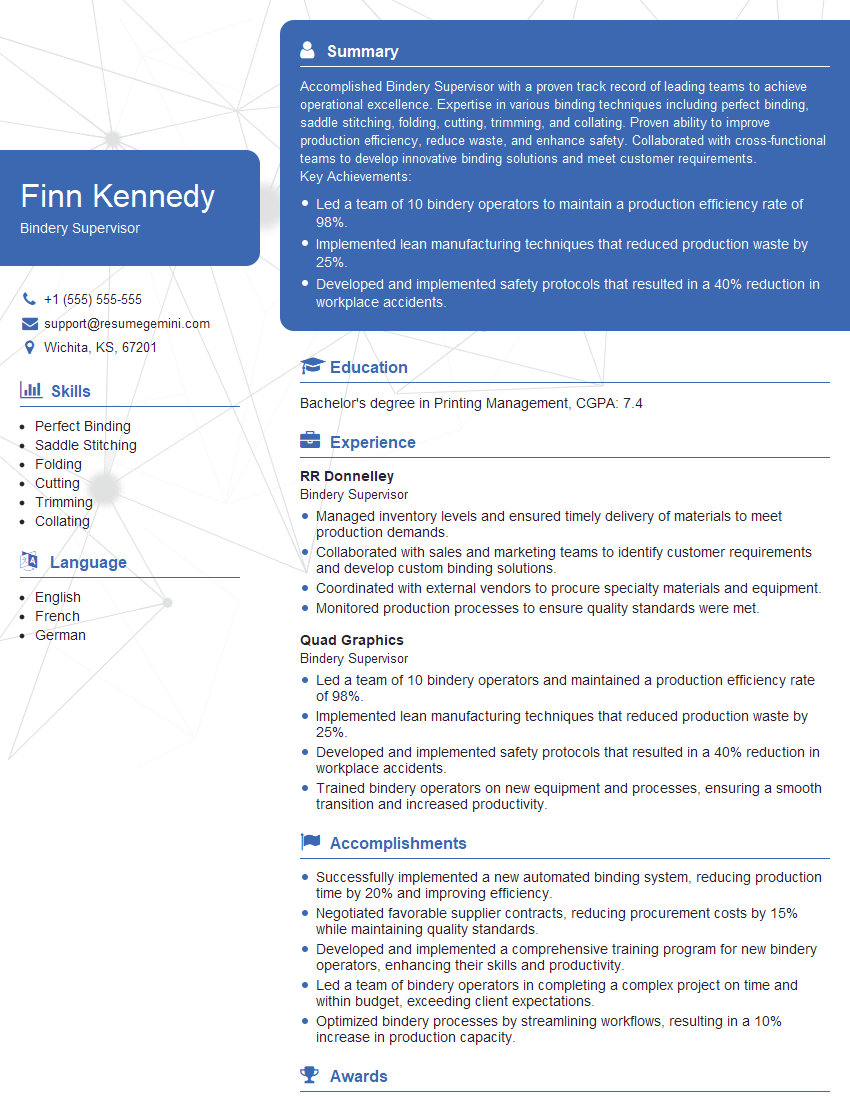
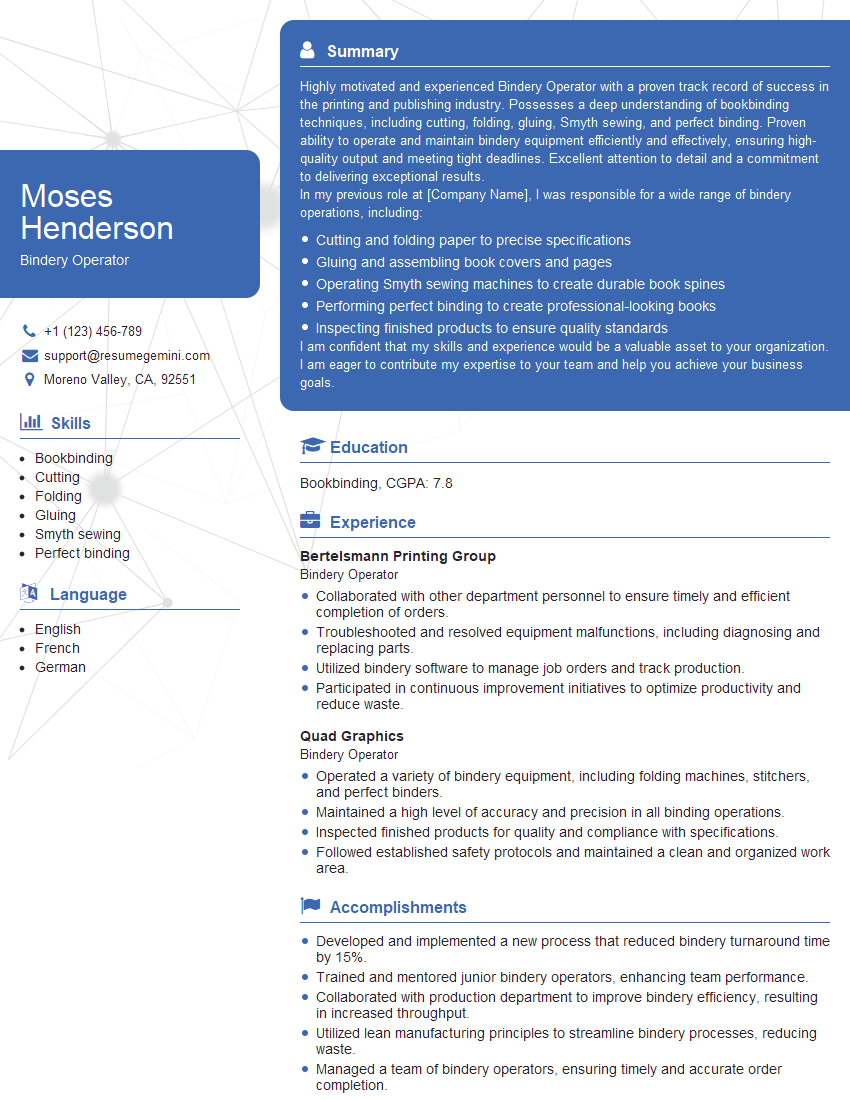
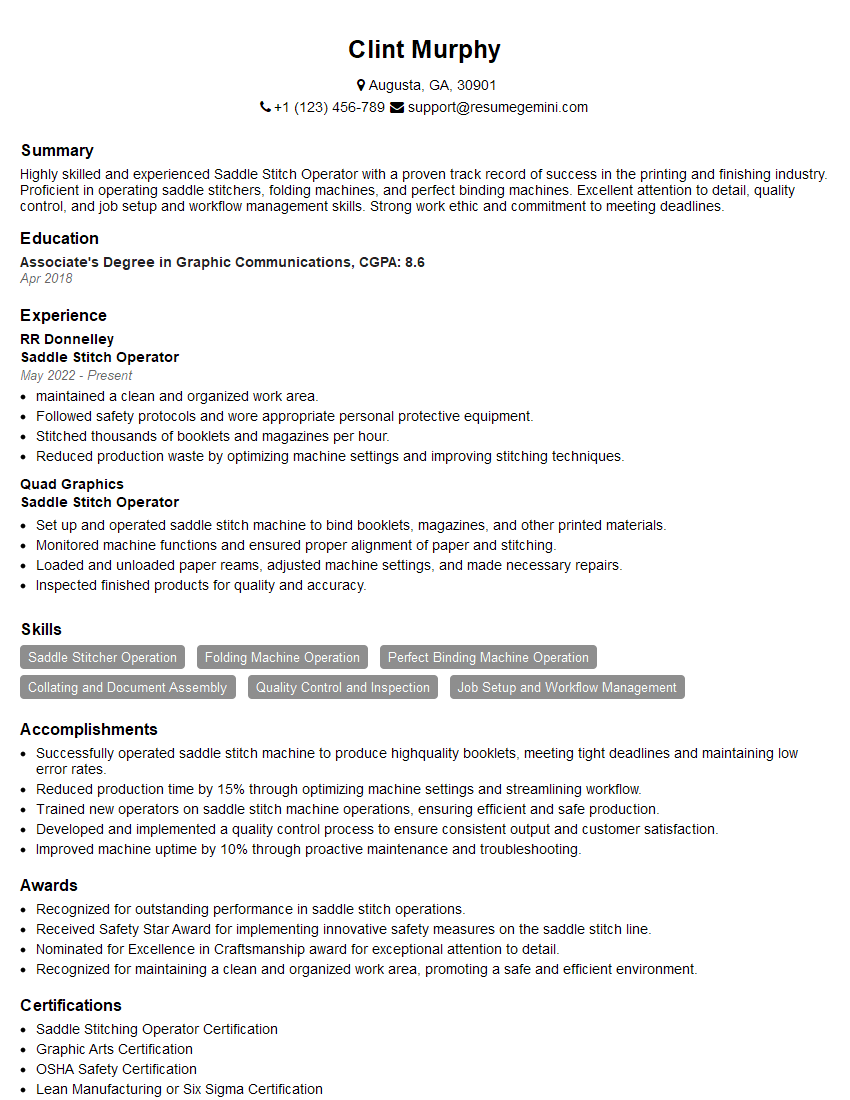
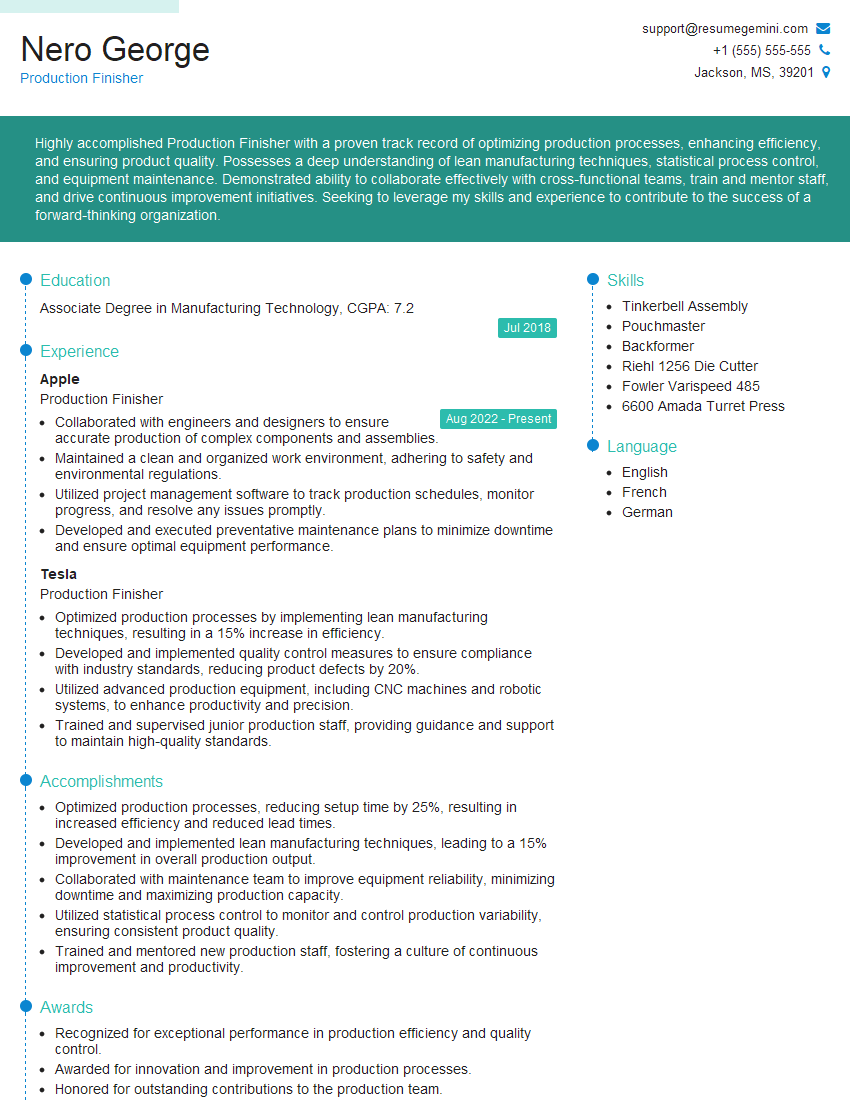
Mastering Portfolio Binding opens doors to exciting career opportunities in design, printing, and publishing. A strong understanding of this specialized skillset significantly enhances your marketability. To maximize your job prospects, crafting a compelling and ATS-friendly resume is crucial. ResumeGemini is a trusted resource to help you build a professional resume that highlights your skills and experience effectively. We provide examples of resumes tailored to the Portfolio Binding industry to help guide you. Take the next step in your career journey – build your winning resume today!

Explore more articles
Users Rating of Our Blogs
Share Your Experience
We value your feedback! Please rate our content and share your thoughts (optional).
What Readers Say About Our Blog
Very informative content, great job.
good