Every successful interview starts with knowing what to expect. In this blog, we’ll take you through the top Potato Grading interview questions, breaking them down with expert tips to help you deliver impactful answers. Step into your next interview fully prepared and ready to succeed.
Questions Asked in Potato Grading Interview
Q 1. Explain the different grades of potatoes and their characteristics.
Potato grading systems vary slightly depending on the country and market, but generally involve categories based on size, shape, and appearance. Think of it like sorting jewels – each gem has its own value depending on its cut and clarity. Similarly, potatoes are categorized into grades reflecting their suitability for different uses. Common grades include:
- Seed Potatoes: These are top-quality potatoes, disease-free and meeting strict size and shape requirements, destined for planting. They are meticulously inspected and often treated.
- Grade A (or Premium/Extra Fancy): These are the highest commercial grade. Potatoes are clean, uniform in size, free from defects, and possess excellent shape. These command the highest price and are suitable for retail sale and processing where appearance is crucial (e.g., pre-packaged salads).
- Grade B (or Fancy/US No. 1): These potatoes are still good quality but may have minor cosmetic defects like slight blemishes or shallow cuts that don’t affect the edible portion. They might be slightly less uniform in size. Suitable for restaurants, food service, or processing where appearance is less critical.
- Grade C (or Processing Grade/US No. 2): These potatoes have more significant defects, but are still suitable for processing (e.g., french fries, potato chips) where the exterior isn’t essential. They may be smaller, misshapen, or have more surface damage.
- Culls: These potatoes are unsuitable for sale or processing, often due to extensive damage, disease, or severe defects. They are typically disposed of or used for animal feed.
The specific characteristics for each grade are usually defined by industry standards or government regulations to ensure consistency and fairness in trading.
Q 2. Describe the various methods used for potato grading.
Potato grading employs a combination of manual and automated methods. Imagine a potato sorting factory – a fascinating blend of human expertise and machine precision. Methods include:
- Manual Inspection: Skilled graders visually examine each potato, identifying defects and assigning grades based on established standards. This method is crucial for higher grades where subtle imperfections need detection.
- Size Grading: This typically involves rollers or sieves of varying sizes to separate potatoes into different size categories. It’s like a giant sieve sorting pebbles by size, ensuring uniformity in packaging and processing.
- Optical Sorting: Advanced machines use cameras and sophisticated software to detect surface defects, shape irregularities, and even internal bruising. These systems offer high speed and accuracy, particularly for large-scale operations. Think of it as a high-tech quality control system, analyzing potatoes with incredible precision.
- Weight Sorting: Potatoes are weighed and grouped according to weight ranges, which is essential for packaging and sales. This guarantees a consistent product across each package.
A combination of these methods is often employed to achieve efficient and accurate grading. Smaller operations might rely more on manual inspection, while large processors utilize automated systems for high-throughput grading.
Q 3. What are the key visual indicators used to assess potato quality?
Visual assessment is paramount in potato grading. It’s about observing details that reveal the potato’s overall quality and suitability. Key visual indicators include:
- Size and Shape: Uniformity is highly valued. Ideally, potatoes should be within a specific size range and possess a regular shape (e.g., oval or round), depending on the market demand.
- Skin Condition: The skin should be smooth, firm, and free from damage such as cuts, bruises, and blemishes. Discoloration can indicate disease or poor storage practices.
- Color: The skin and flesh color should be consistent with the variety. Unusual discoloration might signal disease or damage.
- Eyes (Germination Points): Shallow eyes are preferable; deep or excessive eyes detract from quality and affect marketability.
- Presence of Greens: Green discoloration indicates exposure to sunlight, resulting in the production of solanine, a toxic compound. Green potatoes are unacceptable for consumption and should be discarded.
The combined evaluation of these factors allows graders to determine the appropriate grade for each potato. Experienced graders can quickly identify subtle defects that might be missed by automated systems.
Q 4. How do you identify and handle damaged or diseased potatoes?
Identifying and handling damaged or diseased potatoes is vital to prevent spoilage and maintain quality. Think of it like being a doctor for potatoes. Methods include:
- Visual Inspection: Careful examination helps identify bruises, cuts, rot, and signs of disease (e.g., discoloration, scabbing).
- Feel Test: Pressing a potato gently can reveal soft spots indicating internal damage or rot.
- Separation and Disposal: Damaged or diseased potatoes should be immediately separated from healthy ones to prevent contamination. They’re usually disposed of or used for animal feed, depending on the extent of damage and local regulations.
- Disease Management: Preventing diseases through proper crop management and storage practices is crucial. This involves things like crop rotation, soil treatments, and proper ventilation.
Prompt and thorough removal of damaged or diseased potatoes is critical for maintaining the quality of the remaining stock and preventing the spread of pathogens.
Q 5. Explain the importance of proper potato handling to maintain quality.
Proper handling is crucial from harvest to consumption; it’s like caring for precious cargo. Think of a potato as a delicate product that can bruise easily. Factors such as:
- Harvesting Techniques: Gentle handling during harvesting minimizes physical damage. Mechanized harvesting requires careful adjustment to avoid bruising.
- Storage Conditions: Potatoes should be stored in a cool, dark, and well-ventilated environment to prevent sprouting and spoilage. Temperature and humidity are key factors.
- Transportation: Potatoes need to be transported in appropriate containers to prevent bruising and damage during transit.
- Pre-Processing Handling: Careful handling during washing, peeling, and cutting minimizes damage and loss.
Each step impacts the final product’s quality, marketability, and shelf life. Proper handling not only ensures a longer shelf life but also preserves the nutritional value and minimizes waste.
Q 6. What are the common defects found in potatoes and their grading implications?
Several defects can affect potato quality and grading. These imperfections reduce the value and may render potatoes unsuitable for certain markets. Common defects include:
- Bruising: Internal or external damage caused by impact or pressure. Severe bruising can lead to spoilage.
- Cuts and Scratches: Damage to the potato’s skin, increasing susceptibility to disease and spoilage.
- Second Growth: Formation of small potatoes on the main tuber, indicative of poor storage conditions.
- Disease Symptoms: Signs of fungal or bacterial infections (e.g., rot, scabs, blight). Diseased potatoes are typically rejected.
- Mechanical Damage: Damage caused by machinery during harvesting or processing.
- Green Discoloration: Exposure to sunlight results in the production of solanine, making the potato toxic.
The severity of these defects influences the grade assigned. Minor defects may result in a lower grade, while severe defects lead to culling. These defects directly affect marketability and processing suitability.
Q 7. Describe the different types of potato grading equipment.
Potato grading equipment ranges from simple tools to sophisticated automated systems, depending on the scale of operation. Examples include:
- Rollers and Sieves: Used for size grading, separating potatoes based on diameter.
- Optical Sorters: Employ cameras and sensors to detect defects, shape irregularities, and color variations. These systems are highly accurate and efficient, especially for large-scale operations.
- Weighing Machines: Used to determine the weight of potatoes and group them into specific weight classes. This ensures consistent packaging and pricing.
- Conveyor Belts: Used to transport potatoes through different stages of the grading process.
- Brushes and Cleaning Systems: Remove dirt and soil from potatoes before grading.
The choice of equipment depends on factors such as budget, volume of potatoes, desired accuracy, and required throughput. Small-scale operations may use manual methods supplemented by basic machinery, while large-scale operations heavily rely on automated systems for efficiency and quality control.
Q 8. How do you calibrate and maintain potato grading machinery?
Calibrating and maintaining potato grading machinery is crucial for consistent and accurate grading. It’s a multi-step process involving regular checks, adjustments, and preventative maintenance.
Calibration: This involves using standardized potatoes of known sizes and quality characteristics to set the machinery’s parameters. For example, we use a set of precisely measured potatoes to adjust the size sorters, ensuring they accurately separate potatoes into different size categories. We also calibrate color sensors using standard color charts to ensure consistent color grading. Regular calibration, ideally daily or before each grading session, guarantees accurate sorting.
Maintenance: This encompasses both preventative and corrective actions. Preventative maintenance includes regular cleaning of rollers, belts, and sensors to prevent build-up of dirt and debris that can affect accuracy. Lubricating moving parts is essential for smooth operation and longevity. Corrective maintenance involves addressing any malfunctions promptly. This might include replacing worn-out parts or calling in a technician for more complex repairs. A well-maintained machine minimizes downtime and ensures consistent grading quality throughout the season.
Think of it like tuning a musical instrument – regular tuning (calibration) and maintenance (cleaning and lubrication) are critical to getting the best performance (accurate grading).
Q 9. What are the standard size ranges for different potato grades?
Standard size ranges for potato grades vary slightly depending on market demands and the specific variety of potato, but general guidelines exist. These grades are often categorized as ‘large,’ ‘medium,’ ‘small,’ and sometimes ‘extra-large’ or ‘jumbo.’ These categories are usually defined by their weight or diameter.
- Extra Large/Jumbo: Often exceeding 80mm diameter or a weight exceeding 200 grams. These are typically used for processing or bulk sales.
- Large: Usually 55-80mm diameter or 120-200 grams. Ideal for various uses, including retail and foodservice.
- Medium: Typically 45-55mm diameter or 80-120 grams. Widely used in retail and for smaller families.
- Small: Less than 45mm diameter or under 80 grams. Often sold as ‘new potatoes’ or used for processing applications like potato flakes.
Specific size ranges need to be communicated and agreed upon between the buyer and seller beforehand. Some markets might have their own size designations as well, reflecting their specific demands.
Q 10. Explain the role of color in potato grading.
Color plays a significant role in potato grading, influencing the market value and ultimately determining the final destination of the potatoes. Consumers tend to prefer potatoes with a consistent, attractive color, free from blemishes. The ideal color is often determined by the variety; Russet potatoes should show a relatively uniform brown skin, while red-skinned varieties should show rich, consistent red tones.
Color grading is often automated using electronic sensors that assess color based on specific wavelengths of light. This system identifies and rejects potatoes with discolorations like greening (caused by exposure to light), bruising, or significant skin blemishes. Potatoes with significant discoloration are downgraded or rejected entirely, as they may indicate poor storage practices or damage. Color is often considered in conjunction with size and shape for a complete quality assessment.
Q 11. How do you ensure accurate and consistent grading?
Ensuring accurate and consistent grading relies on a combination of technological tools, rigorous procedures, and skilled personnel.
- Regular Calibration: Frequent calibration of grading equipment ensures that the machinery’s settings are aligned with the desired standards. This reduces variability between grading batches.
- Trained Personnel: Well-trained graders play a crucial role in manual checks and adjusting machinery settings. Their experience helps them identify subtle variations in quality and size that automated systems may miss.
- Quality Control Checks: Regular spot-checks of graded potatoes across different grades help identify and correct any inconsistencies. Sample sizes and frequency of checks should be defined based on the scale of the operation.
- Data Recording: Maintaining detailed records of grading parameters, including size distribution, color ranges, and defect rates, enables the identification of trends and areas of improvement. This data aids future adjustments to the grading process.
- Technological Advancements: Advanced optical sorting technologies can analyze numerous parameters simultaneously, such as shape, size, color, and defects, ensuring much more detailed and accurate separation.
A robust quality control system, integrating these elements, is fundamental for consistent and reliable grading.
Q 12. What are the key safety procedures to follow during potato grading?
Safety during potato grading is paramount. Heavy machinery, moving parts, and potentially wet or slippery conditions create risks that necessitate strict safety protocols.
- Personal Protective Equipment (PPE): Safety footwear with steel toes, high-visibility clothing, and gloves should be mandatory. Depending on the specific machinery, eye protection and hearing protection might also be needed.
- Machine Guards: Ensuring all machinery guards are in place and functioning correctly is crucial to prevent accidental contact with moving parts. Regular inspection is necessary to identify and repair any damages.
- Lockout/Tagout Procedures: Before performing maintenance or repairs, proper lockout/tagout procedures should be followed to prevent accidental startup of the machinery. This ensures that the machinery is safely shut down and cannot be inadvertently restarted.
- Housekeeping: Maintaining a clean and organized working environment minimizes the risk of slips, trips, and falls. Spilled potatoes or water should be cleaned immediately.
- Training: All personnel involved in grading should receive thorough training on safe operating procedures, including emergency shutdown procedures and first aid.
Safety should be an integral part of every step involved in potato grading, from the setup to the final cleaning process.
Q 13. How do you handle discrepancies in grading between different graders?
Discrepancies in grading between graders require a systematic approach to resolve. It’s important to identify the root cause of the discrepancies to prevent future inconsistencies.
- Calibration Check: The first step is to verify that all grading machinery is properly calibrated and functioning correctly. Any deviations from the established parameters should be addressed immediately.
- Grader Retraining: If the discrepancy stems from individual graders, additional training on grading standards, using standardized reference materials, and quality control processes might be necessary.
- Review of Grading Standards: Ensure all graders use the same grading standards and definitions. Ambiguous terms or inconsistencies in the grading specifications can lead to differences in interpretation.
- Re-grading a Sample: A random sample of potatoes from the disputed batches should be re-graded by multiple graders to establish a baseline for comparison and potentially recalibrate the machines. This helps identify if any systemic errors exist.
- Documentation: Thorough documentation of the discrepancies, including the details of the potatoes in question, the graders involved, and the resolution process, helps in improving future grading consistency.
A collaborative approach involving careful analysis, retraining if needed, and clear communication can help in addressing grading inconsistencies effectively.
Q 14. Describe your experience with different potato varieties and their specific grading requirements.
My experience encompasses a wide range of potato varieties, each with its unique grading requirements. For example, Russet potatoes, known for their large size and rough skin, require different grading parameters than smaller, smoother varieties like red potatoes.
Russet Burbank: This variety is usually graded primarily on size, with a focus on minimizing defects like cuts, bruises, and second growth. Color uniformity, while important, is less critical than size for this variety as it is commonly used for processing.
Red Pontiac: With its smooth skin and round shape, uniformity of color is a key factor along with size. Defects are also scrutinized closely as appearance is important for the retail market.
Fingerlings: These uniquely shaped potatoes are assessed on shape, size consistency within a batch (even if sizes are small), and surface characteristics, often having more tolerance for minor blemishes. The unique shape means automated graders may need modifications to accommodate them.
The specific grading requirements also vary based on the intended use. Potatoes destined for processing generally have a higher tolerance for size variation and minor defects compared to those sold for retail use where visual appeal is crucial. My experience allows me to adapt grading procedures to suit the specific variety and its market destination.
Q 15. How do you maintain accurate records of potato grading?
Maintaining accurate potato grading records is crucial for traceability, quality control, and meeting industry standards. We employ a multi-faceted approach. First, we utilize sophisticated grading equipment that automatically records the volume and grade of each batch. This data is then logged into a centralized database, often using a specialized agricultural management software. This software provides real-time updates on grading performance and allows for easy data retrieval for analysis and reporting. Second, we maintain physical logs, acting as a backup to the digital records. These logs include details like the date, time, variety of potato, and any unusual observations. Lastly, regular audits of both digital and physical records are conducted to ensure accuracy and consistency. Think of it like a well-organized library – everything has its place, and it’s easy to find what you need when you need it. This helps in identifying trends, pinpointing areas for improvement and ensuring compliance with regulations.
Career Expert Tips:
- Ace those interviews! Prepare effectively by reviewing the Top 50 Most Common Interview Questions on ResumeGemini.
- Navigate your job search with confidence! Explore a wide range of Career Tips on ResumeGemini. Learn about common challenges and recommendations to overcome them.
- Craft the perfect resume! Master the Art of Resume Writing with ResumeGemini’s guide. Showcase your unique qualifications and achievements effectively.
- Don’t miss out on holiday savings! Build your dream resume with ResumeGemini’s ATS optimized templates.
Q 16. What are the industry best practices for potato grading?
Industry best practices for potato grading revolve around standardization, efficiency, and food safety. Key aspects include:
- Standardized grading scales: Adherence to internationally recognized or regionally specific grading standards (e.g., size, shape, defects). This ensures consistent quality across different producers and markets.
- Regular equipment calibration: Grading machines need regular calibration to ensure consistent and accurate measurements. This might involve checking against a set of standard potatoes or utilizing specialized calibration tools.
- Trained personnel: Well-trained graders are essential for accurate visual inspection, identifying subtle defects, and ensuring consistency even when machines are used. Regular training and certification programs keep personnel updated.
- Efficient workflow: Streamlined processes minimize handling, reduce damage, and maintain quality. This includes optimization of equipment layout and minimizing delays.
- Traceability: Detailed records are kept throughout the process to allow tracking of potatoes from the field to the consumer, ensuring accountability and allowing for rapid response in case of issues.
- Hygiene and Food Safety: Implementing stringent hygiene practices to prevent contamination throughout the grading process.
Following these best practices ensures consistent product quality, builds consumer trust, and contributes to smoother operations throughout the entire supply chain.
Q 17. What are the implications of inaccurate potato grading on the supply chain?
Inaccurate potato grading has severe repercussions across the entire supply chain. For example, misgrading can lead to:
- Financial losses: Incorrectly grading potatoes as a higher quality than they are results in financial losses for the producer or processor. Conversely, downgrading perfectly good potatoes leads to lost revenue.
- Reputational damage: Consistent inaccuracies damage the reputation of the producer and may lead to loss of customer trust.
- Supply chain disruptions: Inaccurate grading can lead to unexpected shortages or surpluses, impacting downstream processes such as processing, packaging, and distribution.
- Consumer dissatisfaction: Customers receiving lower-quality potatoes than expected can lead to negative reviews and loss of sales.
- Legal issues: In some cases, severe inaccuracies can lead to legal issues, especially if they result in the sale of unsafe or misrepresented products.
Imagine a restaurant receiving a batch of potatoes marketed as ‘premium’ only to discover many are damaged or unsuitable for their intended use. This would cause significant problems, not only financially but also in terms of meal preparation and customer satisfaction.
Q 18. How do you manage and resolve grading disputes?
Grading disputes are best addressed proactively through clear communication and established protocols. First, we have a well-defined grading system with clear criteria publicly available to all stakeholders. This minimizes ambiguity and establishes a common understanding. Second, independent third-party inspection services are available to resolve disputes should they arise. We have pre-determined criteria for appealing grading decisions. These include documented evidence of discrepancies (e.g., photos, samples) and clear explanations of the dispute. The aim is to resolve the dispute amicably, fairly, and efficiently, possibly through mediation, and maintaining positive business relationships. Our goal is to ensure that the assessment is impartial and beneficial to all parties involved.
Q 19. How do you adapt your grading techniques to different potato sizes and shapes?
Adapting grading techniques to different potato sizes and shapes requires a flexible approach. We use a combination of machine grading and hand sorting. Machine graders can be adjusted to accommodate different size ranges by modifying the sorting rollers and sieves. For irregular shapes, the machine parameters are adjusted to be more lenient but still maintain quality standards. Hand sorting plays a critical role in dealing with potatoes that don’t fit easily into automated systems, ensuring those potatoes are properly assessed for size, shape, and defects. Sophisticated image recognition technology integrated into some grading systems can automatically sort potatoes based on shape, reducing manual labor and increasing accuracy. This is particularly helpful for smaller, irregularly shaped potatoes.
Q 20. Explain your understanding of food safety regulations related to potato grading.
Food safety regulations related to potato grading are stringent and crucial. Regulations vary by region, but common elements include:
- Hygiene standards: Maintaining a clean and sanitary grading environment to prevent contamination from soil, pests, or other sources.
- Defect limits: Regulations often specify acceptable limits for various defects (e.g., bruises, rot), ensuring only safe and wholesome potatoes reach consumers.
- Pest control: Procedures to prevent and control pest infestations in storage and grading areas.
- Traceability requirements: Regulations often mandate clear traceability of potatoes through the grading and supply chain, enabling rapid identification and removal of contaminated batches.
- Labeling requirements: Accurate labeling of potato grades, size, and origin.
Non-compliance can lead to significant penalties, product recalls, and reputational damage. We maintain rigorous documentation and regular inspections to guarantee full compliance with all relevant food safety regulations.
Q 21. How do you identify and prevent cross-contamination during potato grading?
Preventing cross-contamination during potato grading requires a multi-pronged approach focusing on hygiene, segregation, and equipment sanitation. This includes:
- Strict hygiene protocols: Graders wear clean protective clothing, regularly wash and sanitize hands, and avoid cross-contamination between different batches of potatoes.
- Dedicated equipment: Where possible, we use dedicated equipment for different grades or varieties to prevent cross-contamination. Equipment should be thoroughly cleaned and sanitized between batches.
- Segregation of damaged potatoes: Potatoes with signs of rot, disease, or damage are immediately segregated to prevent contamination of healthy potatoes.
- Regular cleaning and disinfection: All surfaces, equipment, and tools involved in the grading process are regularly cleaned and disinfected using appropriate sanitizing agents.
- Pest control: Effective pest control measures are vital to prevent contamination from insects and rodents.
Think of it like a surgeon preparing for an operation – meticulous attention to hygiene and detail is paramount to ensure the safety of the end product.
Q 22. Describe your experience with using grading software or automated systems.
My experience with potato grading software and automated systems is extensive. I’ve worked with several systems, from simple optical sorters that identify potatoes by size and shape to sophisticated machine vision systems capable of detecting defects like bruises, blemishes, and diseases. For example, I’ve used a system that utilizes near-infrared spectroscopy (NIRS) to assess internal potato quality, like sugar content and dry matter, which is crucial for certain processing applications. These systems dramatically improve efficiency and accuracy compared to manual grading, reducing human error and speeding up the process significantly. I am proficient in operating and maintaining this equipment, including calibration and troubleshooting.
One system I’m particularly familiar with uses a combination of high-resolution cameras and advanced algorithms to assess potato size, shape, color, and surface defects. The data is then analyzed, and potatoes are automatically sorted into different grades. This system provided a 20% increase in throughput compared to our previous manual system and reduced waste by 5%. The software interface is user-friendly, enabling easy adjustments to grading parameters based on market demands.
Q 23. How do you manage time constraints and maintain efficiency during peak seasons?
Peak seasons demand meticulous time management and operational efficiency. My approach involves careful planning and proactive strategies. This starts with thorough pre-season equipment maintenance and staff training. During peak season, I implement a highly organized workflow. This includes optimizing the grading line’s speed and configuration, ensuring smooth transitions between different potato varieties, and proactively addressing any potential bottlenecks. I also prioritize effective communication with the team, ensuring everyone is informed about priorities and potential challenges. We might utilize overtime strategically, but always prioritize employee well-being. Data analysis helps me identify areas for improvement. For instance, if a particular stage is consistently causing delays, we may invest in additional equipment or re-allocate personnel. A flexible, adaptable approach is key.
Q 24. How do you ensure the correct labeling and packaging of graded potatoes?
Accurate labeling and packaging are paramount in maintaining quality and meeting customer specifications. We use a standardized labeling system that clearly indicates the potato grade (e.g., US No. 1, US No. 2), variety, weight, and any other relevant information. The labeling process is integrated with the grading system, ensuring that labels accurately reflect the quality of the potatoes in each bag or container. Packaging materials are carefully chosen to protect the potatoes during transport and storage. We use appropriate-sized containers to prevent damage during transit, and we regularly inspect packaging to ensure it meets our quality standards. In addition, we maintain meticulous records of every step in the process, from grading to packaging, to ensure traceability and accountability. We follow all relevant food safety and labeling regulations, both regionally and nationally.
Q 25. How do you troubleshoot common issues encountered during potato grading?
Troubleshooting during potato grading involves a systematic approach. Common issues include equipment malfunctions, variations in potato quality, and inconsistencies in the grading parameters. My first step is to identify the nature of the problem. If it’s an equipment malfunction, I consult the system’s diagnostics or contact technical support. I’m familiar with common causes and repairs for many machines; for instance, I can diagnose and fix problems with sensor alignment or belt tension issues. If the issue is related to potato quality (e.g., an unusually high number of defects), I review the field conditions and harvesting practices to identify the root cause. I might collaborate with the farming team to address issues upstream. Finally, if grading parameters need adjustments, I analyze data from the grading system to determine if changes are required to meet specific customer specifications. I use a process of elimination and detailed observation to find the root of the problem effectively.
Q 26. Explain your problem-solving approach to a significant grading challenge.
One significant challenge involved a sudden increase in the number of potatoes with internal defects, which weren’t detectable by our optical sorting system. This led to a higher rejection rate in the processing plant and substantial financial losses. My approach began with thorough data analysis to characterize the defects. We used destructive sampling to assess the internal quality of the rejected potatoes and correlated this with environmental conditions, growing practices, and harvesting techniques. This revealed a relationship between a recent period of prolonged rainfall and the increased incidence of soft rot. We subsequently implemented several solutions: We adjusted the sorting parameters to minimize false positives, collaborated with the growers to explore alternative harvesting methods and pest management strategies, and invested in a NIRS system to detect internal defects more effectively. This multi-pronged approach successfully mitigated the issue, reducing financial losses and improving overall potato quality.
Q 27. How do you stay updated on the latest advancements in potato grading technology?
Staying updated in this dynamic field requires continuous learning. I regularly attend industry conferences, workshops, and trade shows to learn about new technologies and best practices. I actively subscribe to relevant industry publications and online resources. Participating in professional organizations like the Potato Association of America helps me connect with other experts and stay abreast of emerging trends. I also invest time in researching new technologies – for example, I’ve recently explored the application of artificial intelligence (AI) and machine learning for advanced defect detection and quality assessment. I find that hands-on experience with new equipment and software is invaluable. Continuous learning ensures I maintain a high level of expertise and adapt to the evolving needs of the industry.
Q 28. Describe your experience working within a team environment during potato grading.
Effective teamwork is essential for successful potato grading. I believe in fostering a collaborative environment where everyone feels valued and empowered. I actively communicate with my team, ensuring everyone is aware of their roles and responsibilities. I encourage open communication and actively seek input from team members. This collaborative approach helps us identify and resolve challenges quickly. For instance, during peak season, we establish clear roles and responsibilities within the grading team, with individuals focusing on specific tasks based on their skills and expertise. This division of labor, coupled with regular communication, ensures smooth and efficient operations. Regular team meetings ensure shared problem solving and ongoing improvement.
Key Topics to Learn for Potato Grading Interview
- Potato Varieties and Characteristics: Understanding the diverse range of potato types, their size, shape, color, and skin texture is fundamental. This includes knowledge of common varieties and their typical qualities.
- Grading Standards and Regulations: Familiarize yourself with industry-specific grading standards and regulations. This involves understanding the criteria used to categorize potatoes (e.g., size, defects, blemishes) and the implications of meeting or failing these standards.
- Defect Identification and Classification: Develop a keen eye for identifying various potato defects (e.g., bruises, cuts, disease symptoms). Practice classifying these defects according to severity and understanding their impact on the final grade.
- Quality Control Procedures: Learn about effective quality control practices in potato grading. This includes understanding the role of visual inspection, automated grading systems, and the importance of maintaining consistent grading standards throughout the process.
- Post-Harvest Handling and Storage: Understanding how proper post-harvest handling and storage affect potato quality and grading is crucial. This encompasses knowledge of best practices to minimize damage and maintain freshness.
- Equipment and Technology: Become familiar with different technologies and equipment used in potato grading, both manual and automated systems. Understanding their operation and limitations is beneficial.
- Problem-Solving and Decision-Making: Prepare to discuss your approach to problem-solving in grading scenarios. This might include dealing with inconsistent potato quality, equipment malfunctions, or ambiguous grading situations.
Next Steps
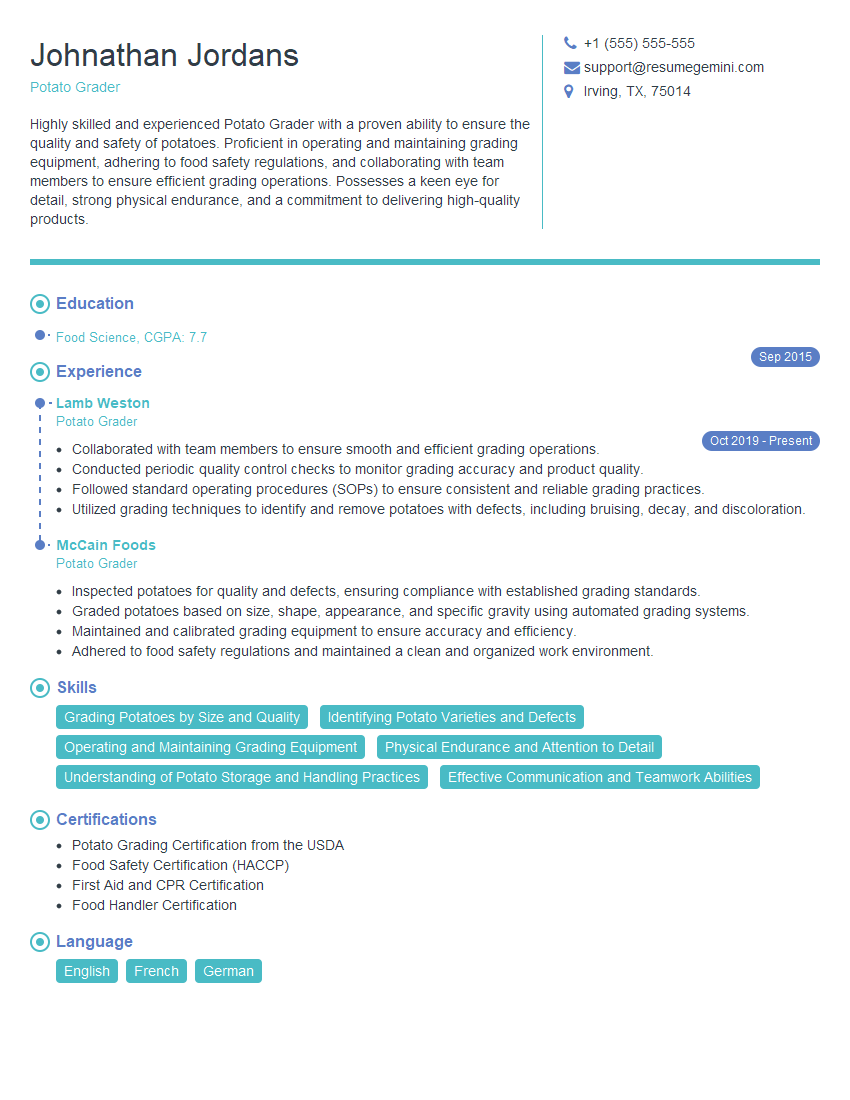
Mastering potato grading opens doors to a rewarding career in the agricultural industry, offering opportunities for advancement and specialization. A strong resume is your key to unlocking these opportunities. Creating an ATS-friendly resume significantly increases your chances of getting your application noticed. We highly recommend using ResumeGemini to build a professional and effective resume tailored to the specific requirements of potato grading jobs. Examples of resumes tailored to this field are available to help you get started.
Explore more articles
Users Rating of Our Blogs
Share Your Experience
We value your feedback! Please rate our content and share your thoughts (optional).
What Readers Say About Our Blog
Very informative content, great job.
good