Interviews are opportunities to demonstrate your expertise, and this guide is here to help you shine. Explore the essential Poultry Carcass Inspection and Grading interview questions that employers frequently ask, paired with strategies for crafting responses that set you apart from the competition.
Questions Asked in Poultry Carcass Inspection and Grading Interview
Q 1. Describe the process of evisceration in poultry processing.
Evisceration is the process of removing the internal organs from a poultry carcass. Think of it like carefully unpacking a delicate package. It’s a crucial step in poultry processing, ensuring the carcass is clean and ready for further processing and consumption. The process typically begins after the bird is scalded and defeathered. It involves a series of precise steps, often done using automated machines but with human oversight.
- Opening the carcass: A longitudinal incision is made along the abdominal cavity, carefully avoiding damage to the internal organs.
- Removal of viscera: The internal organs, including the intestines, gizzard, liver, heart, and lungs, are meticulously removed and often inspected for abnormalities.
- Inspection and trimming: Any residual contents in the abdominal cavity are thoroughly removed. Excess fat is trimmed, and the carcass is cleaned.
- Washing: The eviscerated carcass is washed to remove any residual blood or debris.
Improper evisceration can lead to cross-contamination and compromise the safety and quality of the final product. It requires skilled workers and well-maintained equipment.
Q 2. Explain the different USDA grades for poultry carcasses.
The USDA grades poultry carcasses based on conformation, fleshing, and fat. Think of it as judging the bird’s ‘bodybuilding’ and ‘overall health’ – how well-muscled it is and its fat distribution. The higher the grade, the better the quality. The main grades are:
- A: This is the highest grade, exhibiting excellent conformation, meaty breasts, and minimal fat. The bird is plump and well-developed.
- B: Birds in this grade show acceptable conformation and fleshing, but may have slightly more fat or less desirable shape.
- C: This grade represents birds with poor conformation, lacking in fleshing, or exhibiting excessive fat. These birds usually go towards lower-value products.
While the USDA grades focus primarily on appearance, they indirectly reflect the overall quality and meat yield. A Grade A bird will typically offer a better eating experience with more meat and less fat. A processing plant’s efficiency and profitability will rely heavily on achieving higher grading percentages.
Q 3. How do you identify and handle condemnations during inspection?
Condemnation means that a poultry carcass, or part of it, is deemed unfit for human consumption. This determination is made by an official inspector based on visual and tactile examination and sometimes laboratory tests. Identifying condemnations involves looking for a variety of indicators, from gross abnormalities to subtle signs of contamination.
- Visual Inspection: This includes checking for signs of disease, injury, contamination (e.g., fecal matter), and discoloration.
- Palpation: Feeling the carcass for abnormalities in the muscles or organs.
- Organ Examination: A thorough check of internal organs for signs of disease or infection.
Handling condemnations involves immediate separation of the affected carcass or parts from the acceptable product to prevent cross-contamination. These condemned parts are typically disposed of according to regulatory guidelines, often through rendering or incineration, preventing the potential spread of disease or harmful substances.
For example, a carcass with lesions indicative of disease like avian influenza or showing signs of extensive bruising would be immediately condemned.
Q 4. What are the key indicators of poultry contamination?
Indicators of poultry contamination are diverse and range from visible signs to subtle microbial presence. It’s critical to remember contamination can occur anywhere from the farm to processing. Therefore, a multi-pronged approach is crucial.
- Visible Contamination: This includes fecal matter, blood, foreign material (e.g., feathers, dirt), or visible signs of spoilage (e.g., discoloration, odor).
- Microbial Contamination: This is more challenging to detect visually. Bacteria like Salmonella and Campylobacter are common contaminants that require laboratory testing for confirmation.
- Chemical Contamination: This involves the presence of residues from pesticides, antibiotics, or cleaning chemicals above permissible limits.
The presence of any of these indicators necessitates appropriate action, such as discarding the contaminated carcass or implementing corrective actions to prevent further contamination.
Q 5. What are the critical control points (CCPs) in poultry processing relevant to food safety?
Critical Control Points (CCPs) in poultry processing are steps where control can prevent, eliminate, or reduce a food safety hazard. Think of them as the ‘choke points’ where things can go wrong if not carefully managed.
- Scalding and defeathering: Maintaining appropriate temperature and time to effectively remove feathers without damaging the skin, preventing bacterial contamination.
- Evisceration: Careful removal of organs and cleaning to prevent contamination from intestinal contents.
- Chilling: Rapid and efficient chilling to minimize bacterial growth.
- Hygiene and Sanitation: Maintaining sanitary conditions throughout the processing line (equipment, environment, personnel).
- Metal Detection: Ensuring the removal of any metallic contaminants.
Proper control of these CCPs is essential for producing safe and wholesome poultry products. Each CCP requires established limits, monitoring procedures, and corrective actions in case of deviation from these limits.
Q 6. Explain the importance of HACCP in poultry carcass inspection.
Hazard Analysis and Critical Control Points (HACCP) is a preventative food safety system. In poultry carcass inspection, it’s the cornerstone of ensuring safe and high-quality products. It provides a systematic approach to identifying and managing potential hazards throughout the entire processing chain.
HACCP’s importance lies in its proactive approach. Instead of just reacting to problems after they occur, it helps to prevent them in the first place. This is achieved through the identification of CCPs, establishment of critical limits, monitoring, corrective actions, verification, and record-keeping. This ensures that the entire process is constantly monitored and improvements are made continuously, minimizing the risk of foodborne illness outbreaks. HACCP compliance is often a legal requirement for poultry processors.
Q 7. How do you identify signs of disease or illness in a poultry carcass?
Identifying signs of disease or illness in a poultry carcass requires a keen eye and thorough understanding of avian pathology. It’s a multi-sensory approach that involves visual inspection, palpation, and sometimes laboratory tests.
- Visual Signs: Lesions, tumors, discoloration of organs, swelling, deformities, and unusual odors can indicate disease. For example, a swollen joint might suggest arthritis.
- Palpation: Feeling for abnormalities in muscle texture, organ consistency, or the presence of fluids or masses within the carcass. An unusually firm liver might indicate liver disease.
- Organ Examination: Careful examination of organs for signs of disease – this is particularly crucial for the detection of systemic infections.
The presence of any suspicious findings necessitates further investigation, often involving laboratory testing to confirm the diagnosis. A poultry carcass showing obvious signs of disease would be condemned to prevent the spread of illness.
Q 8. What are the regulations concerning poultry carcass inspection in your region?
Poultry carcass inspection in my region adheres strictly to national and international food safety regulations. These regulations, often outlined in detailed codes and standards, dictate every stage, from pre-slaughter handling to final product disposition. Key aspects include:
- Pre-slaughter inspection: Ensuring birds are healthy and free from disease before slaughter.
- Post-slaughter inspection: A thorough visual examination of each carcass for any signs of disease, contamination, or abnormalities. This includes checking for lesions, discoloration, and the presence of foreign materials.
- Hygiene standards: Strict adherence to sanitation procedures throughout the processing plant to minimize microbial contamination.
- Temperature control: Maintaining appropriate temperatures during processing and storage to prevent bacterial growth.
- Residue monitoring: Regular testing for veterinary drug residues to ensure consumer safety.
- Documentation and traceability: Maintaining meticulous records throughout the entire process to facilitate traceability in case of issues.
Failure to meet these standards can result in significant penalties, including product recall and facility closure. For example, the detection of Salmonella contamination would trigger a thorough investigation and likely a product recall. The regulations are constantly evolving to adapt to new scientific understanding and technological advancements in food safety.
Q 9. What are the differences between scalding and defeathering methods, and their impact on quality?
Scalding and defeathering are crucial steps in poultry processing that significantly impact the final product quality. Scalding involves immersing the carcass in hot water to loosen the feathers, while defeathering is the mechanical removal of those feathers. Different methods exist for both, each with its advantages and disadvantages.
- Scalding methods: These range from traditional tank scalding to more advanced systems using scalding tunnels and controlled temperature profiles. The temperature and duration of scalding influence feather removal efficiency and skin damage. Too hot, and the skin gets damaged; too cold, and feather removal is difficult.
- Defeathering methods: Include rubber-finger machines, disc-type machines, and even manual defeathering in smaller operations. The choice of method affects feather removal efficiency, skin integrity, and processing speed. For instance, rubber-finger machines are gentler but can be slower, while disc-type machines are faster but can cause more skin damage.
Improper scalding and defeathering can lead to reduced carcass yield due to skin damage, increased microbial contamination from feather follicles, and negatively affect the overall appearance and market value of the final product. Think of it like peeling a potato: you want to remove the skin efficiently without damaging the underlying flesh.
Q 10. Describe your experience with using inspection tools and equipment.
My experience with inspection tools and equipment is extensive. I’m proficient in using a variety of instruments, including:
- Metal detectors: To detect any metallic contaminants in the carcass.
- X-ray machines: To identify bone fragments or other foreign materials.
- Thermometers: To monitor carcass temperature throughout the process.
- Microscopes: For detailed examination of tissues to detect pathogens or abnormalities.
- pH meters: For assessing the pH of the meat, which is an indicator of freshness and potential spoilage.
I’m also familiar with various automated inspection systems that employ computer vision and other advanced technologies to enhance the speed and accuracy of the inspection process. For instance, I’ve worked with systems that automatically flag carcasses with abnormalities, reducing the workload and increasing consistency.
Regular calibration and maintenance of these tools are paramount to ensure accuracy and reliability of the results. Think of it like a chef regularly sharpening their knives; the sharper the tools, the better and more precise the work.
Q 11. How do you ensure accurate and consistent grading of poultry carcasses?
Accurate and consistent poultry carcass grading relies on a standardized grading system that defines specific quality characteristics. Typically, this involves evaluating factors such as:
- Conformation: Shape and form of the carcass.
- Fleshing: Amount of meat on the carcass.
- Fat covering: Amount of fat on the carcass.
- Skin condition: Presence of bruises, cuts, or discoloration.
- Absence of defects: Such as bone breaks or missing parts.
Grading is often performed visually, but some automated systems utilize image analysis to quantify these characteristics objectively. To ensure consistency, graders receive regular training and participate in proficiency testing. Internal audits and inter-grader comparisons help identify and correct discrepancies. We use standardized grading guides and scorecards, ensuring all inspectors use the same criteria. Think of it like a wine tasting; experienced tasters use standardized methods to evaluate and rate wine quality consistently.
Q 12. How do you handle disputes or discrepancies during the inspection process?
Disputes or discrepancies during the inspection process are handled through a defined protocol. This usually involves:
- Re-inspection by a senior inspector: A more experienced inspector reviews the carcass to resolve the disagreement.
- Consultation with other experts: If the discrepancy remains unresolved, consultation with specialists in poultry pathology or microbiology might be necessary.
- Documentation of the dispute: A detailed record of the disagreement and the resolution is maintained.
- Application of established guidelines: Final decisions are based on established guidelines and regulations.
The goal is to reach a fair and accurate decision that complies with all safety and quality standards. Open communication and collaboration among inspectors are crucial in resolving disputes efficiently and maintaining a positive work environment. Think of it like a referee in a sports game; their role is to ensure fair play and resolve any disputes according to the rules.
Q 13. Describe your experience with record-keeping and documentation in poultry inspection.
Record-keeping and documentation are critical for traceability and accountability in poultry inspection. We maintain comprehensive records, including:
- Inspection reports: Detailed reports on each batch of carcasses inspected, noting any defects or non-compliances.
- Temperature logs: Records of temperatures at various stages of processing.
- Sanitation logs: Documentation of cleaning and sanitizing procedures.
- Calibration records: Records of the calibration of inspection equipment.
- Traceability information: Data linking the carcasses to the farm of origin and other relevant information.
These records are maintained electronically and in a secure manner, ensuring data integrity and accessibility. This is essential for audits, traceability investigations, and demonstrating compliance with food safety regulations. A well-maintained record system is the cornerstone of a transparent and accountable operation.
Q 14. How do you maintain a hygienic and safe work environment during poultry processing?
Maintaining a hygienic and safe work environment is paramount in poultry processing. We adhere to strict hygiene protocols, including:
- Personal Protective Equipment (PPE): All personnel wear appropriate PPE, including gloves, aprons, and protective footwear.
- Regular handwashing: Frequent handwashing is mandatory, especially after handling carcasses or equipment.
- Cleaning and sanitization: Regular and thorough cleaning and sanitization of all equipment and surfaces.
- Pest control: Implementing measures to prevent pest infestations.
- Waste disposal: Safe and proper disposal of waste materials.
- Training programs: Regular training programs for personnel on food safety and hygiene practices.
Regular audits and inspections ensure that these measures are implemented effectively. A safe and hygienic work environment is not only crucial for food safety but also contributes to a positive and productive working environment for all personnel. It’s about creating a clean and organized space where everyone can work safely and efficiently.
Q 15. What are the common causes of poultry carcass contamination, and how can they be prevented?
Poultry carcass contamination can stem from various sources throughout the production process, from farm to fork. Common causes include fecal contamination from the bird’s intestines, cross-contamination from equipment or surfaces, and contamination from the environment (airborne bacteria, etc.).
- Fecal Contamination: This is a major concern. Improper evisceration (removal of internal organs) or inadequate cleaning can lead to fecal matter spreading onto the carcass.
- Cross-Contamination: Contamination can occur during processing if knives, scalding tanks, or chilling systems aren’t properly cleaned and sanitized between birds. Workers’ hands can also act as vectors.
- Environmental Contamination: Bacteria can be present in the air, water, or on surfaces within the processing plant. Poor hygiene practices and inadequate sanitation can exacerbate this risk.
Preventing contamination requires a multi-pronged approach focusing on hygiene, sanitation, and process control. This involves implementing rigorous cleaning and sanitizing protocols for all equipment and surfaces, ensuring proper worker hygiene (hand washing, protective clothing), implementing effective pest control, and maintaining a clean processing environment. Regular microbiological testing of carcasses and surfaces is crucial for monitoring effectiveness.
For example, imagine a scenario where a processing plant experiences a sudden spike in Salmonella contamination. Tracing the source might reveal inadequate cleaning of a specific conveyor belt. Implementing a more frequent and thorough cleaning schedule, perhaps incorporating a stronger sanitizer, would be essential to correct the issue.
Career Expert Tips:
- Ace those interviews! Prepare effectively by reviewing the Top 50 Most Common Interview Questions on ResumeGemini.
- Navigate your job search with confidence! Explore a wide range of Career Tips on ResumeGemini. Learn about common challenges and recommendations to overcome them.
- Craft the perfect resume! Master the Art of Resume Writing with ResumeGemini’s guide. Showcase your unique qualifications and achievements effectively.
- Don’t miss out on holiday savings! Build your dream resume with ResumeGemini’s ATS optimized templates.
Q 16. What is your experience with different types of poultry (chicken, turkey, duck)?
My experience encompasses all three poultry types: chicken, turkey, and duck. While the basic principles of carcass inspection and grading remain similar across species, there are key differences. Chickens are the most common, and I’m highly experienced in their processing. Turkeys, due to their larger size, require slightly different handling techniques, particularly during evisceration. Ducks, with their unique anatomy and often higher fat content, present specific challenges related to chilling and preventing spoilage.
For instance, the inspection process for a turkey carcass might involve a more thorough check for airsacculitis (air sac inflammation), a condition more prevalent in turkeys compared to chickens. Similarly, assessing the fat content and skin condition of a duck carcass requires particular attention to prevent issues during processing and storage.
Across all species, I focus on consistent application of industry standards, paying close attention to details like the absence of bruises, cuts, or other defects that would affect the grade and marketability of the carcass.
Q 17. How do you identify and address issues related to foodborne pathogens in poultry?
Identifying and addressing foodborne pathogens like Salmonella, Campylobacter, and E. coli in poultry requires a combination of preventive measures and testing. Prevention starts with good agricultural practices on the farm, continuing through all stages of processing.
- Testing: Regular microbiological testing of raw carcasses and environmental samples (equipment, water) is paramount. This helps monitor contamination levels and identify potential sources of outbreaks. Different methods are used including direct plating and PCR testing.
- Visual Inspection: While not definitive, visual inspection can reveal some indicators of potential contamination. For example, carcasses with visible fecal contamination are immediately rejected.
- Control Measures: If contamination is detected, immediate corrective actions are needed. This might involve enhanced sanitation protocols, equipment replacement or repair, and possibly even a temporary halt in production until the problem is resolved.
Think of a scenario where Campylobacter is found in a sample. Our response would involve tracing the possible points of contamination (e.g., chilling water, processing equipment), implementing more stringent sanitation procedures, retesting, and potentially notifying relevant authorities.
Q 18. Explain the importance of maintaining the cold chain during poultry processing.
Maintaining the cold chain is absolutely crucial for preventing the growth of foodborne pathogens and ensuring the quality and safety of poultry. The cold chain refers to the unbroken chain of refrigeration from slaughter to consumption, aiming to keep the temperature of the carcasses below 4°C (39°F).
Immediately after slaughter, carcasses are rapidly chilled to slow bacterial growth. This involves immersion chilling in refrigerated water or air chilling in controlled environments. Throughout transport, storage, and retail display, temperatures must be continuously monitored and maintained. Breaks in the cold chain can lead to rapid bacterial proliferation, reducing shelf life and increasing the risk of foodborne illness.
Imagine a situation where a delivery truck malfunctions and loses refrigeration. The temperature increase during transport could allow bacteria like Salmonella to multiply rapidly, rendering the poultry unsafe for consumption. Maintaining strict temperature logs and utilizing appropriate transportation equipment are vital for preventing such scenarios.
Q 19. How do you handle and resolve a situation where a significant contamination issue is discovered?
Discovering a significant contamination issue requires a swift and systematic response. The first step involves immediately isolating the affected batch of poultry to prevent further contamination. We then begin a thorough investigation to identify the source of the problem. This could involve reviewing processing records, inspecting equipment, conducting environmental sampling, and interviewing personnel.
Once the source is identified, corrective actions are implemented, which may include enhanced sanitation, equipment repair or replacement, and retraining of staff. Depending on the severity and nature of the contamination, we might need to notify relevant health authorities and recall the affected products. Comprehensive documentation throughout the entire process is critical, both for internal review and for potential regulatory investigations.
A clear communication strategy is vital. This ensures transparency with stakeholders, including management, customers, and regulatory agencies. The goal is to contain the problem, correct the underlying issues, and prevent future occurrences.
Q 20. What are the signs of spoilage in poultry?
Signs of spoilage in poultry can be visual, olfactory, or textural. Visual signs include discoloration (e.g., greenish hue), slimy or sticky surfaces, and the presence of unusual spots or discoloration.
- Off-Odors: A sour or putrid smell is a strong indicator of spoilage.
- Changes in Texture: The texture might become sticky or slimy, or the meat may feel unusually soft or mushy.
- Visible Mold: The presence of any mold is a definitive sign of spoilage.
These changes are often caused by bacterial growth and enzymatic degradation of the meat’s components. It’s important to note that some changes may not be visible initially, emphasizing the importance of adhering to proper storage and handling protocols and following appropriate date markings. A poultry carcass exhibiting any of these signs should be discarded immediately.
Q 21. Describe your experience in following sanitation and hygiene protocols.
My experience in following sanitation and hygiene protocols is extensive. I’m highly familiar with Good Manufacturing Practices (GMPs) and Hazard Analysis and Critical Control Points (HACCP) principles. My routine involves meticulous adherence to handwashing procedures, use of appropriate personal protective equipment (PPE), and rigorous cleaning and sanitization of equipment and surfaces.
In practice, this means regularly cleaning and sanitizing work surfaces, knives, and other tools, and following specific procedures for cleaning and disinfecting equipment like scalding tanks and chillers. I’m also adept at monitoring sanitation practices of fellow workers and reporting any shortcomings to ensure a safe and sanitary environment.
For example, in my experience I regularly perform swab tests and other assessments to make sure sanitizer concentration is correct and effective. This constant vigilance is essential in maintaining a safe product.
Q 22. Explain your understanding of the different methods of chilling poultry carcasses.
Poultry carcass chilling is crucial for food safety and extending shelf life. It rapidly reduces the temperature of the carcass to inhibit bacterial growth. There are two primary methods: air chilling and immersion chilling.
Air chilling: This involves exposing the carcasses to cold air within a controlled environment. It’s a more traditional method, generally considered gentler on the carcass, preserving its texture and minimizing moisture loss. However, it’s slower than immersion chilling and requires a larger facility.
Immersion chilling: This method involves submerging the carcasses in chilled water, often with added ice. It’s a much faster method, reducing carcass temperature significantly quicker. However, it can lead to increased moisture absorption (known as ‘water chilling’) potentially affecting the final product quality, especially the texture and appearance. Chlorinated water is sometimes used to reduce microbial contamination, but overuse can leave a chlorine taste and odor. Careful control of water temperature and chilling time is critical here.
The choice of chilling method depends on factors such as processing capacity, desired quality characteristics, and cost considerations. Many processing plants utilize a combination of both methods for optimized efficiency and quality control.
Q 23. How would you handle a situation where a colleague is not following proper inspection procedures?
Observing a colleague deviating from proper inspection procedures is a serious matter concerning food safety. My approach would be a multi-step process focusing on both immediate correction and long-term prevention:
Immediate Action: I would first politely and privately address the colleague’s actions, highlighting the specific procedure being violated and the potential consequences (e.g., contaminated product, consumer illness). I’d provide a reminder of the correct procedures, using clear examples.
Documentation: If the behavior continues or if the violation is significant, I would document the incident, including date, time, details of the infraction, and any corrective actions taken. This documentation is crucial for the protection of both the colleague and the company.
Escalation: If the issue persists despite my intervention, I would escalate the matter to my supervisor or a designated food safety manager. This ensures consistent application of regulations and protects the company’s reputation.
Training Reinforcement: I believe in proactive measures to prevent such issues. I would suggest refresher training or additional resources to enhance the colleague’s understanding of the procedures and to reinforce the importance of adherence to food safety regulations. It is more about strengthening skills than reprimanding.
My approach emphasizes constructive feedback and a focus on teamwork and improved safety. It prioritizes a collaborative solution rather than a confrontational one.
Q 24. What are your strengths and weaknesses in relation to this role?
My strengths lie in my meticulous attention to detail, crucial for accurate carcass inspection and grading. I possess a deep understanding of poultry anatomy and pathology, allowing me to identify potential defects or health concerns efficiently. My experience working in fast-paced processing environments has developed my ability to work accurately under pressure while maintaining a high level of hygiene and safety standards. I’m also a quick learner and adapt well to new technologies.
A weakness I’m actively working on is delegating tasks. I sometimes tend to take on more responsibility than is necessary, which can impact my efficiency in the long run. However, I’m developing better time-management skills and am consciously delegating more tasks to ensure a balanced workload.
Q 25. What are your salary expectations?
My salary expectations are in line with the industry standard for poultry inspectors with my level of experience and qualifications. I am flexible and willing to discuss a competitive compensation package that reflects my skills and contributions to the company.
Q 26. What are your long-term career goals?
My long-term career goals include becoming a highly respected authority in poultry carcass inspection and grading. I aim to broaden my knowledge and potentially contribute to the development of enhanced inspection techniques or training programs. I’m also interested in exploring management roles, using my expertise to guide and mentor future poultry inspectors and ensuring the highest standards of food safety within the industry.
Q 27. Why are you interested in this specific position?
This specific position appeals to me because of its focus on [mention specific aspects of the job description – e.g., innovative technologies, a commitment to food safety, opportunities for professional development]. The company’s reputation for quality and commitment to food safety aligns perfectly with my values and career aspirations. I am excited about the opportunity to contribute my skills to such a forward-thinking organization.
Key Topics to Learn for Poultry Carcass Inspection and Grading Interview
- Poultry Anatomy and Physiology: Understanding the structure and function of poultry organs is crucial for accurate inspection and grading.
- Hygiene and Sanitation Practices: Mastering safe handling procedures and sanitation protocols to prevent contamination and ensure food safety.
- Defect Identification and Classification: Learn to accurately identify and classify various poultry carcass defects (e.g., bruises, deformities, contamination) according to established standards.
- Grading Standards and Regulations: Familiarize yourself with the specific grading criteria (e.g., USDA standards) used to assess poultry quality, including weight, conformation, and condition.
- Disease Recognition and Reporting: Understand how to identify signs of poultry diseases and report suspected cases according to established procedures.
- Inspection Techniques and Procedures: Learn the practical steps involved in the inspection process, from pre-chill to final grading, including the use of appropriate tools and equipment.
- Record Keeping and Documentation: Understand the importance of maintaining accurate and complete records of inspection findings and grading results.
- Quality Control and Assurance: Understand the role of inspection and grading in maintaining consistent product quality and meeting consumer expectations.
- Problem-Solving and Decision-Making: Develop the ability to analyze complex situations, identify potential problems, and make informed decisions during the inspection process.
- Safe Work Practices and Workplace Safety: Prioritize safety in all aspects of the inspection and grading process, following established safety protocols and procedures.
Next Steps
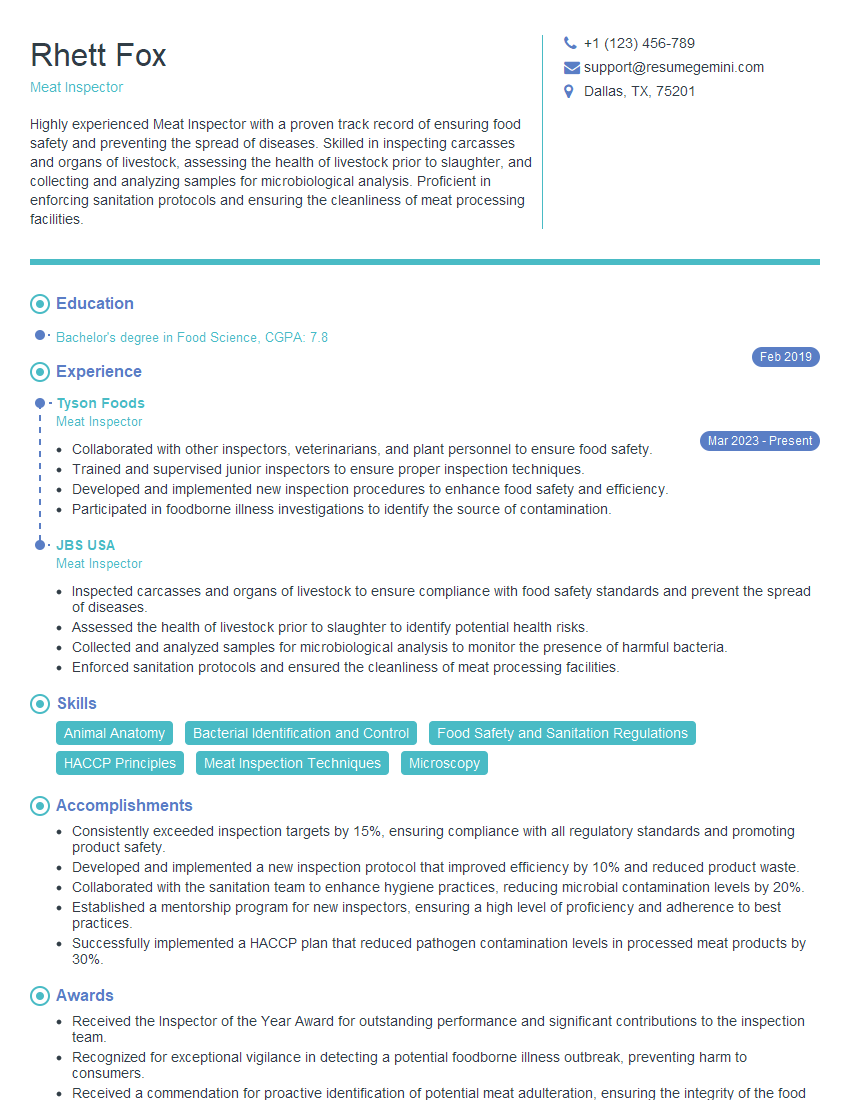
Mastering Poultry Carcass Inspection and Grading opens doors to a rewarding career in the food industry, offering opportunities for advancement and specialization. A strong resume is your key to unlocking these opportunities. Creating an ATS-friendly resume is crucial for getting your application noticed by employers. ResumeGemini is a trusted resource to help you build a professional and effective resume that highlights your skills and experience. ResumeGemini provides examples of resumes tailored to Poultry Carcass Inspection and Grading to help guide you through the process. Invest time in crafting a compelling resume – it’s your first impression!
Explore more articles
Users Rating of Our Blogs
Share Your Experience
We value your feedback! Please rate our content and share your thoughts (optional).
What Readers Say About Our Blog
Very informative content, great job.
good