The thought of an interview can be nerve-wracking, but the right preparation can make all the difference. Explore this comprehensive guide to Poultry Husbandry interview questions and gain the confidence you need to showcase your abilities and secure the role.
Questions Asked in Poultry Husbandry Interview
Q 1. Describe the different poultry housing systems and their advantages/disadvantages.
Poultry housing systems are designed to optimize bird welfare and production efficiency. Different systems cater to various scales and management styles. Key types include:
- Extensive Systems: Birds have free range access to pastures. This promotes natural behaviors but offers less control over feed intake, disease spread, and predator protection. Example: Free-range egg production.
- Semi-intensive Systems: A combination of free range and confinement. Birds have access to an outdoor area but also a sheltered structure. This balances natural behaviors with greater disease control. Example: Backyard poultry flocks.
- Intensive Systems: Birds are completely confined within a controlled environment, such as a poultry house. This allows for precise environmental control, maximizing production efficiency but potentially reducing bird welfare if not managed carefully. Example: Commercial broiler production.
- Cage Systems: Birds are housed in individual or group cages, commonly used for laying hens. This maximizes space utilization and minimizes ground contamination, but can raise concerns about welfare if cage size is inadequate. Example: Battery cages for laying hens.
Advantages & Disadvantages Summary:
| System | Advantages | Disadvantages |
|---|---|---|
| Extensive | Natural behaviors, high welfare potential | Difficult to manage, disease risk, predation |
| Semi-intensive | Balance of welfare and control | Moderate disease risk, requires larger land area |
| Intensive | High production efficiency, disease control | Potential welfare issues if not managed properly, high initial investment |
| Cage | Space efficiency, disease control, easy management | Welfare concerns if cages are too small, high initial investment |
Q 2. Explain the principles of poultry nutrition and how to formulate balanced rations.
Poultry nutrition is crucial for growth, egg production, and overall health. A balanced ration provides all the essential nutrients in the correct proportions. Key principles include:
- Energy: Primarily from carbohydrates and fats. Energy requirements vary based on bird age, breed, and production goals. Corn, soybean meal, and wheat are common energy sources.
- Protein: Essential for growth and egg production. Quality and quantity of protein are critical. Soybean meal, fishmeal, and meat and bone meal are important protein sources.
- Minerals: Calcium (especially for egg production), phosphorus, sodium, potassium, and trace minerals like zinc, copper, and manganese are vital. These are often added as mineral supplements.
- Vitamins: Essential for various metabolic processes. Vitamins A, D, E, and K, as well as B vitamins, are critical. Many are added as premixes.
- Water: Crucial for all bodily functions. Access to fresh, clean water is paramount.
Formulating balanced rations:
This is typically done using specialized software or by experienced nutritionists. Nutrient requirements are determined based on the bird’s age, production stage, and desired outcomes. Different feed ingredients are selected and combined to meet these requirements. Nutrient analysis of ingredients is critical to ensuring accuracy. For example, one might use a ratio of corn to soybean meal to achieve the correct energy-to-protein balance for growing broilers.
Q 3. Discuss common poultry diseases and their prevention and control measures.
Poultry are susceptible to various diseases, both bacterial and viral. Here are some common ones:
- Newcastle Disease (ND): A highly contagious viral disease causing respiratory and nervous system problems. Prevention involves vaccination and biosecurity measures.
- Avian Influenza (AI): Another highly contagious viral disease that can cause significant mortality. Biosecurity, including strict quarantine procedures and rapid response measures, is essential for its control.
- Infectious Bursal Disease (IBD): A viral disease affecting the immune system, often in young birds. Vaccination is the primary method of prevention.
- Coccidiosis: A parasitic disease affecting the intestinal tract, causing diarrhea and reduced growth. Coccidiostats, added to feed, are common preventative measures.
- Salmonella: A bacterial infection that can spread to humans through contaminated eggs and meat. Good hygiene practices and proper sanitation protocols are critical.
Prevention and control measures:
These vary depending on the disease, but generally include:
- Vaccination: Routine vaccination programs are vital for many diseases.
- Biosecurity: Strict measures to prevent pathogen entry into the farm.
- Hygiene: Maintaining a clean and sanitized environment.
- Quarantine: Isolating new birds for a period before integrating them into the flock.
- Early detection and treatment: Rapid detection of sick birds and prompt veterinary intervention.
Q 4. What are the key biosecurity protocols for a poultry farm?
Biosecurity is paramount in poultry farming to prevent disease outbreaks. Key protocols include:
- Farm perimeter control: Restricting access to unauthorized personnel and vehicles.
- Hygiene measures: Regular cleaning and disinfection of the poultry house and equipment.
- Pest control: Managing rodents and insects, as they can carry pathogens.
- Quarantine: Isolating newly introduced birds for a period before integration into the main flock.
- Waste management: Proper disposal of manure and other waste products to minimize disease transmission.
- Vehicle and equipment disinfection: Cleaning and disinfecting all vehicles and equipment entering the farm.
- Personnel hygiene: Enforcing strict hygiene protocols for farm workers, such as changing clothing and showering before entering the poultry house.
- Mortality management: Safe and responsible disposal of dead birds.
- Record keeping: Maintaining accurate records of bird health, movements, and biosecurity practices.
Effective biosecurity requires a comprehensive plan tailored to the specific farm’s needs. A consistent, diligent approach is crucial for disease prevention.
Q 5. How do you manage environmental factors (temperature, humidity, ventilation) in a poultry house?
Environmental management within a poultry house is critical for bird health and production. This involves careful control of:
- Temperature: Maintaining optimal temperatures based on bird age and breed. Overheating or chilling can lead to reduced growth, egg production, or increased mortality. This requires efficient heating and cooling systems.
- Humidity: High humidity can increase the risk of respiratory diseases, while low humidity can lead to stress. Ideal humidity levels vary depending on the bird and season, but generally are between 50-70%. Ventilation and humidification systems are used to regulate humidity.
- Ventilation: Ensuring adequate airflow to remove ammonia, carbon dioxide, and moisture from the air while maintaining the correct temperature. Ventilation systems must be appropriately sized and adjusted based on bird density and weather conditions.
- Lighting: Light intensity and photoperiod (duration of light) influence egg production in laying hens and growth in broilers. Lighting systems are used to control these factors, often employing programmed schedules.
Monitoring systems, like temperature and humidity sensors, along with automated controls, are often used to maintain environmental parameters within desired ranges. Regular maintenance of equipment is crucial for optimal performance. Proper ventilation design is essential in preventing ammonia buildup, which is harmful to birds and people.
Q 6. Explain the reproductive cycle of poultry and factors affecting egg production.
The poultry reproductive cycle involves a complex interplay of hormonal and environmental factors. In laying hens, it begins with the development of follicles in the ovary, leading to egg formation. Key stages include:
- Follicle development: Multiple follicles develop in the ovary, but only one usually matures at a time.
- Ovulation: The mature follicle releases an ovum (yolk).
- Egg formation: The ovum passes through the oviduct, where albumen (egg white), membranes, and shell are added.
- Egg laying: The fully formed egg is laid.
Factors affecting egg production:
- Breed: Different breeds have varying egg-laying capabilities.
- Nutrition: Adequate protein, calcium, and other nutrients are essential.
- Lighting: Light influences hormonal activity, affecting egg production.
- Temperature and humidity: Extreme temperatures or humidity can reduce egg production.
- Health: Disease can significantly impair egg production.
- Age: Egg production peaks in the hen’s prime laying period then gradually declines.
Managing these factors optimally is crucial for achieving high egg production.
Q 7. Describe the different poultry breeding systems and their impact on production.
Poultry breeding systems aim to improve production traits like growth rate, egg production, and meat quality. Common systems include:
- Mass Selection: Selecting birds based on desirable traits without considering their pedigree. It’s simple but less effective than pedigree-based methods.
- Pedigree Selection: Tracking the ancestry of birds and selecting those with superior performance based on their family history. This allows for more accurate selection of superior genetics.
- Crossbreeding: Mating birds of different breeds to combine desirable traits. This often results in hybrid vigor (heterosis), improving overall performance.
- Inbreeding: Mating closely related birds to increase homozygosity (having two identical alleles of a gene). This can fix desirable traits, but can also increase the risk of inbreeding depression (reduced fitness).
- Artificial Insemination (AI): The use of AI facilitates efficient genetic improvement programs, allowing for targeted mating and enhanced genetic selection.
Impact on production:
The choice of breeding system significantly impacts production efficiency. Improved breeding programs lead to:
- Increased growth rate: Faster growth in broilers, leading to earlier marketing.
- Enhanced egg production: Higher egg numbers and improved egg quality in layers.
- Improved feed conversion ratio: Birds require less feed to achieve the same weight gain or egg production.
- Enhanced disease resistance: Selection for disease-resistant traits can reduce mortality and production losses.
Modern poultry breeding relies heavily on sophisticated genetic evaluation techniques to optimize breeding strategies and achieve superior production outcomes.
Q 8. What are the various poultry processing methods and their implications on meat quality?
Poultry processing methods significantly impact meat quality. The key stages – stunning, bleeding, scalding, defeathering, evisceration, and chilling – each have specific parameters that must be carefully controlled. Improper handling at any stage can lead to reduced meat quality, including increased bacterial contamination, discoloration, and undesirable texture.
Scalding: Temperature and duration are critical. Too high a temperature or prolonged scalding leads to skin damage and reduced meat yield. Too low, and feather removal is difficult.
Chilling: Rapid chilling is essential to prevent bacterial growth and maintain meat quality. Slow chilling increases the risk of spoilage and reduces shelf life. Different chilling methods exist, including immersion chilling and air chilling, each with its own pros and cons in terms of speed, water usage, and potential for cross-contamination.
Evisceration: Careful evisceration minimizes contamination from gut contents. Damage to the intestines can lead to fecal contamination of the meat, compromising its safety and quality.
For example, a poorly controlled scalding process might result in uneven feather removal, leaving behind pinfeathers, which affect the aesthetic appeal and potentially lead to increased bacterial contamination in processing.
Q 9. How do you monitor and manage poultry health parameters (mortality, feed conversion ratio)?
Monitoring poultry health parameters is crucial for efficient and profitable production. Mortality rates and feed conversion ratios (FCR) are key indicators of flock health and management efficiency.
Mortality Monitoring: Daily mortality checks are essential. Causes of death need to be investigated – post-mortem examinations might reveal infectious diseases, nutritional deficiencies, or management issues. Accurate record-keeping is paramount. A sudden spike in mortality warrants immediate action, including contacting a veterinarian to rule out infectious diseases.
Feed Conversion Ratio (FCR): FCR is calculated by dividing the total feed consumed by the total weight gain of the birds. Ideally, lower FCR indicates better feed efficiency. Regularly monitoring FCR allows for timely adjustments to the feeding program, including feed formulation, feeding frequency, or addressing potential digestive issues. High FCR suggests problems such as feed quality issues, poor bird health, or inappropriate feeding strategies.
Imagine a flock with unexpectedly high mortality. By meticulously recording daily deaths and performing post-mortems, we might identify an outbreak of Newcastle disease, allowing for swift implementation of biosecurity measures and treatment to prevent further losses.
Q 10. Explain the importance of poultry waste management and disposal methods.
Poultry waste management is crucial for environmental protection and public health. Improper disposal can lead to water and soil contamination, attracting disease vectors, and emitting harmful greenhouse gases.
Manure Management: Poultry litter contains high levels of nitrogen, phosphorus, and potassium, making it a valuable fertilizer. However, improper handling can pollute waterways. Effective strategies include composting, anaerobic digestion, or using the litter directly as a fertilizer with careful consideration of nutrient application rates to avoid environmental damage.
Mortality Disposal: Dead birds must be disposed of hygienically to prevent disease spread. Methods include incineration, rendering (processing into animal feed ingredients), or deep burial, depending on local regulations and resources.
Wastewater Treatment: Poultry farms generate significant wastewater. Treatment systems are needed to remove pollutants before discharge. These systems may involve settling tanks, anaerobic lagoons, or more advanced biological treatment processes.
For example, composting poultry litter reduces its volume and transforms it into a valuable soil amendment, showcasing sustainable waste management practices. Failing to adequately treat wastewater could contaminate groundwater sources and threaten public health.
Q 11. Describe the different types of poultry feed and their nutritional value.
Poultry feed is formulated to meet the birds’ nutritional requirements at different growth stages. Feed composition varies depending on the bird’s age, breed, and production goals (meat or eggs).
Starter Feed: High in protein (20-24%) and energy to support rapid growth in young birds.
Grower Feed: Protein levels are gradually reduced as the birds mature (18-20%).
Finisher Feed: Further reduction in protein (16-18%) to avoid excessive fat deposition.
Nutritional components include:
Protein Sources: Soybean meal, corn gluten meal, fishmeal.
Energy Sources: Corn, sorghum, wheat.
Vitamins and Minerals: Essential for growth, immune function, and overall health.
Amino Acids: Methionine and lysine are often added to ensure balanced protein synthesis.
For example, a deficiency in lysine can lead to retarded growth and feather problems in chickens.
Q 12. What are the signs of stress in poultry and how do you mitigate it?
Stress in poultry can manifest in various ways, impacting productivity and health. Recognizing stress signs is crucial for effective management.
Behavioral Signs: Increased vocalization, feather pecking, cannibalism, decreased activity, huddled posture.
Physiological Signs: Reduced feed intake, weight loss, decreased egg production, increased mortality.
Immunological Signs: Increased susceptibility to diseases.
Stress mitigation strategies include:
Environmental Management: Maintaining optimal temperature, humidity, ventilation, and lighting to create a comfortable environment.
Stocking Density: Avoiding overcrowding, which leads to increased competition and stress.
Biosecurity: Implementing measures to prevent disease outbreaks, minimizing stress associated with illness.
Nutritional Management: Providing a balanced diet to meet the birds’ requirements, supporting their immune system.
For instance, overcrowding can lead to increased aggression and feather pecking, causing significant stress and economic losses. Implementing appropriate stocking densities would significantly improve bird welfare and reduce stress.
Q 13. How do you ensure the quality and safety of poultry products?
Ensuring poultry product quality and safety requires a comprehensive approach throughout the entire production chain.
Biosecurity: Preventing disease outbreaks by implementing strict biosecurity measures, including quarantine protocols for new birds, rodent control, and proper sanitation.
Hygiene: Maintaining high hygiene standards during all stages of production, processing, and handling.
Food Safety Programs: Implementing Hazard Analysis and Critical Control Points (HACCP) plans to identify and control potential hazards throughout the process.
Temperature Control: Maintaining proper refrigeration temperatures throughout the cold chain to prevent bacterial growth.
Regular Testing: Regularly testing for pathogens such as Salmonella and Campylobacter to ensure product safety.
For example, thorough cleaning and disinfection of equipment between batches prevents cross-contamination and ensures food safety. Regular monitoring of refrigeration temperatures minimizes the risk of spoilage.
Q 14. Explain the role of vaccination in poultry health management.
Vaccination plays a critical role in preventing and controlling infectious diseases in poultry. It strengthens the birds’ immune systems, reducing mortality, morbidity, and economic losses.
Disease Prevention: Vaccines protect birds from various diseases like Newcastle disease, infectious bursal disease (Gumboro), avian influenza, and Marek’s disease.
Reduced Mortality and Morbidity: Vaccines significantly reduce the incidence and severity of diseases, improving bird health and welfare.
Improved Productivity: Healthy birds show improved feed conversion ratios, egg production, and growth rates.
Economic Benefits: Vaccination prevents costly treatment measures, minimizes production losses, and safeguards profitability.
For instance, the widespread use of Marek’s disease vaccine has dramatically reduced the impact of this devastating viral disease, significantly improving poultry production efficiency.
Q 15. What are the different methods for controlling parasites in poultry?
Controlling parasites in poultry requires a multi-pronged approach, focusing on prevention and treatment. This involves a combination of biosecurity measures, strategic medication, and good management practices.
Biosecurity: This is the cornerstone of parasite control. Maintaining a clean and sanitary environment is crucial. This includes regular cleaning and disinfection of poultry houses, equipment, and feeding areas. Proper rodent and insect control is also vital as they can act as vectors for parasites. For example, regularly inspecting and repairing any holes or cracks in the building to prevent entry of rodents.
Strategic Medication: This involves using antiparasitic drugs effectively and responsibly. It’s crucial to use the correct medication, at the correct dosage, and for the appropriate duration. Overuse of medications can lead to drug resistance. Regular fecal examinations to identify the specific parasite and its sensitivity to treatment is crucial, avoiding blanket treatments.
Good Management Practices: This encompasses aspects like proper stocking density, adequate ventilation, and access to clean water. Overcrowding stresses birds, increasing susceptibility to parasites. Rotating pastures or implementing all-in/all-out systems also limits parasite build-up.
Natural methods: Some farms utilize natural methods such as introducing beneficial nematodes to the soil which prey on parasitic nematodes. This is more common in free-range systems.
For example, in a situation with a high prevalence of coccidiosis, a strategic approach might involve improving hygiene, using coccidiostats in feed (following veterinary advice and label instructions), and implementing an all-in/all-out system for better biosecurity.
Career Expert Tips:
- Ace those interviews! Prepare effectively by reviewing the Top 50 Most Common Interview Questions on ResumeGemini.
- Navigate your job search with confidence! Explore a wide range of Career Tips on ResumeGemini. Learn about common challenges and recommendations to overcome them.
- Craft the perfect resume! Master the Art of Resume Writing with ResumeGemini’s guide. Showcase your unique qualifications and achievements effectively.
- Don’t miss out on holiday savings! Build your dream resume with ResumeGemini’s ATS optimized templates.
Q 16. Describe your experience in poultry farm record keeping and data analysis.
Poultry farm record-keeping is fundamental for efficient management and profitability. My experience includes meticulous recording of all aspects of farm operations, from flock health and feed consumption to egg production and mortality rates. I utilize both manual and digital record-keeping systems, ensuring data accuracy and accessibility. Data analysis plays a crucial role in identifying trends, anticipating problems, and making informed decisions.
For instance, I’ve used spreadsheets and specialized poultry management software to track daily egg production per hen, feed conversion ratios (FCR), mortality rates, and disease incidence. Analyzing this data allows me to identify fluctuations in egg production that might be related to factors like feed quality, temperature changes or the onset of a disease. By monitoring FCR, I can optimize feed formulations and feeding strategies for improved cost-effectiveness. A sudden spike in mortality, for example, would trigger a deeper investigation into potential causes.
Furthermore, I’m proficient in using statistical software to analyze trends and make predictions. This allows for proactive measures, like adjusting ventilation in response to changing weather conditions or implementing preventative measures to curb potential disease outbreaks. This data-driven approach is critical for optimizing efficiency and minimizing losses.
Q 17. How do you handle emergencies such as disease outbreaks on a poultry farm?
Handling disease outbreaks requires a rapid and coordinated response. My experience involves implementing strict biosecurity measures to prevent further spread and promptly contacting veterinary services for diagnosis and treatment recommendations.
Immediate Isolation: Affected birds are immediately isolated to prevent cross-contamination. This often involves the quick establishment of quarantine areas.
Diagnosis: Samples are collected and sent to a diagnostic laboratory for testing to identify the causative agent. This is essential for selecting the appropriate treatment strategy.
Treatment: Following veterinary guidance, the appropriate medication or treatment is implemented. This might include antimicrobial treatment, supportive care, or other management changes.
Disposal of carcasses: Proper disposal of affected birds adheres to strict biosecurity protocols, often through incineration to avoid environmental contamination.
Notification: Reporting outbreaks to relevant authorities is crucial for disease control and prevention efforts.
Post-Mortem analysis: After the outbreak is managed, a post-mortem analysis is conducted to determine the root cause of the outbreak and to identify strategies for prevention of future occurrences.
For example, during an outbreak of avian influenza, rapid action involving strict biosecurity, immediate isolation, culling of affected birds, disinfection of the premises, and notification of the relevant authorities is vital to control the outbreak and prevent its spread to other farms.
Q 18. Explain the concept of vertical integration in the poultry industry.
Vertical integration in the poultry industry refers to a business model where a single company controls multiple stages of the poultry production process. This can include breeding, feed production, hatching, broiler or layer farming, processing, and distribution.
Instead of relying on separate entities for each stage, vertically integrated companies manage the entire value chain. This offers several advantages, including improved efficiency, better control over quality, and reduced transaction costs. For example, a vertically integrated company might own its breeding facilities, hatcheries, and processing plants, thus streamlining the production and marketing of poultry products.
However, vertical integration can also lead to increased risks. If one stage of the process experiences a problem, it can impact the entire system. Furthermore, it can limit competition and innovation within the industry.
Q 19. What are the ethical considerations in poultry farming?
Ethical considerations in poultry farming are increasingly important. This includes providing birds with a humane and stress-free environment, minimizing suffering, and ensuring responsible disposal of waste. Key areas of focus include:
Animal Welfare: This focuses on providing birds with adequate space, proper nutrition, good environmental conditions, and minimizing stress. Examples include beak trimming which can cause pain if not done correctly and must only be carried out by trained individuals, as well as access to appropriate enrichment to engage natural behaviors.
Responsible Use of Antibiotics: Overuse of antibiotics can contribute to the development of antibiotic-resistant bacteria, both in birds and humans. Responsible use involves reducing reliance on antibiotics through improved biosecurity and hygiene, and using them only when necessary under veterinary guidance.
Sustainable Practices: This includes minimizing environmental impact through efficient waste management, reducing greenhouse gas emissions, and promoting biodiversity. For instance, manure management plays a key role in controlling odor and nutrient runoff to limit negative environmental effects.
Transparency and Traceability: Consumers are increasingly interested in knowing the origin of their food and the conditions under which it was produced. Transparency in farming practices promotes trust and ethical consumption.
Ultimately, ethical poultry farming seeks to balance the economic needs of producers with the well-being of the birds and the protection of the environment.
Q 20. Discuss the impact of poultry farming on the environment.
Poultry farming has a significant environmental impact, both positive and negative. On the negative side, it contributes to greenhouse gas emissions (primarily methane and ammonia), water pollution (through manure runoff), and deforestation (due to land clearing for poultry production). The use of antibiotics can also contribute to antimicrobial resistance. On the positive side, poultry manure can be used as fertilizer, reducing the need for synthetic fertilizers and promoting circular economy strategies.
Several strategies can mitigate the negative impacts of poultry farming. These include improving manure management (reducing ammonia emissions and water pollution), implementing efficient feed formulations (reducing greenhouse gas emissions), utilizing renewable energy sources, adopting sustainable land management practices, and reducing the use of antibiotics.
For example, anaerobic digestion of poultry manure can reduce greenhouse gas emissions and generate biogas, a renewable energy source. Improved feed efficiency reduces the environmental footprint of poultry production. Proper manure management systems are important to avoid run-off issues. The impact must be viewed holistically; we must consider factors like feed production, processing and transportation in the carbon footprint analysis.
Q 21. What are the latest advancements in poultry genetics and breeding technologies?
Advancements in poultry genetics and breeding technologies are constantly improving bird productivity, disease resistance, and overall efficiency. Some key areas include:
Genomic Selection: This involves using DNA markers to predict the genetic merit of birds for traits like egg production, meat yield, feed efficiency, and disease resistance. This allows breeders to select superior birds more accurately and efficiently.
Gene Editing: Technologies like CRISPR-Cas9 are being used to modify specific genes in poultry, aiming to improve traits like disease resistance, feed efficiency, and meat quality. Research in this area focuses on careful considerations of unintended consequences and ethical implications.
Artificial Insemination: This technique allows for controlled breeding and wider dissemination of superior genetics. It also improves biosecurity by preventing the spread of diseases through natural mating.
Improved Breeding Programs: Sophisticated breeding programs combine genomic selection, artificial insemination, and other techniques to accelerate genetic improvement in poultry.
These advancements are leading to more efficient and sustainable poultry production systems. However, ethical considerations and potential risks associated with gene editing technology require ongoing research and discussion.
Q 22. How do you assess the economic viability of a poultry farming project?
Assessing the economic viability of a poultry farming project requires a thorough analysis of various factors. It’s not just about the potential profits; it’s about understanding the entire cost structure and potential risks. Think of it like building a house – you need a solid foundation (financial plan) before you start construction.
Market Analysis: This is crucial. Understanding market demand for your specific poultry products (eggs, broiler meat, etc.) in your region is key. Will your product sell? At what price? Are there existing competitors, and what’s their market share? A thorough market study is essential to avoid overproduction and potential losses.
Production Costs: This includes chick costs, feed costs (which can fluctuate significantly), housing costs (building or renting), veterinary care, labor, utilities (electricity, water), and equipment maintenance. Detailed budgeting is vital here. It’s often helpful to use spreadsheets or specialized farm management software to track these costs meticulously.
Projected Revenue: Based on your market analysis and projected production, calculate your anticipated income. This should consider factors like sales price, production efficiency, and potential losses due to disease or mortality.
Financial Projections: Develop cash flow projections over a period of time (e.g., 3-5 years). This helps determine profitability, return on investment (ROI), and break-even point. Consider potential loan repayments if you’re financing the project.
Risk Assessment: Poultry farming is inherently risky. Disease outbreaks, fluctuating feed prices, and market changes can significantly impact profitability. Identify potential risks and develop mitigation strategies. Insurance coverage is a crucial aspect to consider.
For example, I once consulted for a farmer who wanted to start a free-range egg operation. We conducted a thorough market analysis and discovered high demand for locally sourced, organic eggs. However, we also discovered high land rental costs in the area. This necessitated a careful budget, including a higher price point per egg to account for the increased production costs. By thoroughly analyzing the market and production costs, we were able to develop a viable business plan.
Q 23. Explain the principles of poultry handling and welfare.
Poultry handling and welfare are paramount, impacting both bird health and product quality. Gentle handling minimizes stress, reduces injuries, and improves productivity. Imagine yourself being roughly handled – you wouldn’t be very happy! The same applies to poultry.
Minimizing Stress: Avoid loud noises, sudden movements, and overcrowding. Birds should be handled calmly and efficiently, using appropriate techniques to avoid injury. For example, when catching birds, use both hands to support their body weight, avoiding pinching or squeezing.
Providing Appropriate Housing: Birds need enough space, proper ventilation, and protection from the elements. Housing design should also minimize stress and promote natural behaviors, such as dust-bathing (for layers).
Disease Prevention: Biosecurity is crucial. This involves strict hygiene practices, quarantine procedures for new birds, and rodent control to minimize disease transmission and the spread of pathogens.
Proper Nutrition: Balanced and appropriate feed, water access, and appropriate feeding methods (feeders and waterers) are vital for healthy growth and well-being.
Monitoring for Signs of Illness or Injury: Regular observation for signs of disease, lameness, or stress is essential for timely intervention. Early detection can minimize losses and improve animal welfare.
In my experience, farms practicing good poultry welfare tend to have better productivity and fewer health problems. A farm I worked with implemented a ‘slow-catch’ system, reducing bird stress during harvesting. This led to a reduction in bruises and improved meat quality.
Q 24. Describe your experience with poultry equipment maintenance and repair.
Poultry equipment maintenance is essential for optimal productivity and efficiency, preventing costly breakdowns and potential losses. My experience includes preventative maintenance schedules, troubleshooting malfunctions, and minor repairs of various equipment.
Preventative Maintenance: This includes regular cleaning and lubrication of incubators, brooders, feeders, and drinkers. Scheduling regular checks and performing minor repairs promptly prevents major issues later.
Troubleshooting: Identifying and fixing problems with equipment like broken feeders, malfunctioning incubators, or faulty ventilation systems requires both technical knowledge and problem-solving skills. For example, I once diagnosed a faulty thermostat in an incubator causing inconsistent egg temperatures by systematically checking wiring and components.
Repairs: I am capable of performing minor repairs myself, such as replacing worn parts or fixing simple electrical faults, saving on costs and downtime. However, for major repairs, I know when to call in a specialized technician. This balance of hands-on repair and knowing when to seek professional help is crucial.
Record Keeping: Maintaining detailed records of equipment maintenance, repairs, and replacement costs is vital for tracking expenses, managing inventory, and planning for future investments.
I am proficient with a wide array of poultry equipment, from automatic drinkers and feeders to environmental control systems. Understanding how these systems interact is key to ensuring smooth operations.
Q 25. How do you ensure compliance with poultry farming regulations?
Compliance with poultry farming regulations is not merely a legal obligation; it’s crucial for protecting public health and animal welfare. This includes adhering to standards set by local, state, and national authorities.
Biosecurity Protocols: Implementing and maintaining strict biosecurity measures to prevent the spread of diseases. This includes proper disinfection procedures, pest control, and visitor protocols.
Record Keeping: Maintaining detailed records of poultry movements, vaccinations, medication use, and other relevant information. This is essential for traceability and auditing.
Waste Management: Proper management of poultry litter and waste to comply with environmental regulations. This may include composting, anaerobic digestion, or other methods of disposal.
Animal Welfare Standards: Adhering to standards related to housing, handling, and slaughter practices. Regular inspections are often conducted by authorities.
Food Safety Regulations: Following strict guidelines for food safety, including proper sanitation, handling, and storage procedures to minimize the risk of contamination.
For instance, I’ve worked with farms to implement comprehensive biosecurity plans, including implementing footbaths and changing rooms for personnel entering poultry houses. This helps prevent the introduction of pathogens and protects bird health.
Q 26. What are the key factors affecting the shelf-life of poultry products?
The shelf-life of poultry products is critical, impacting both consumer safety and economic viability. Several factors influence how long poultry products remain safe and palatable.
Temperature Control: Maintaining the cold chain (constant low temperatures) from processing to retail is paramount. Poultry should be stored at temperatures below 4°C (40°F) to inhibit bacterial growth.
Packaging: Proper packaging protects the product from contamination and dehydration. Modified atmosphere packaging (MAP) is often used to extend shelf life.
Processing Techniques: Hygiene practices during slaughter, processing, and packaging significantly affect shelf life. Contamination introduced during these steps dramatically shortens the product’s life.
Microbial Load: The initial microbial contamination of the carcass influences the rate of spoilage. Effective sanitation procedures minimize this contamination.
Storage Conditions: Factors like humidity and storage duration also play a role. Proper airflow is necessary to prevent the growth of bacteria and molds.
For example, I’ve seen instances where improper storage led to rapid spoilage of poultry products, resulting in significant financial losses. A consistent cold chain, coupled with proper packaging, is essential to maintaining quality and safety.
Q 27. Describe your experience in poultry marketing and sales.
Effective poultry marketing and sales are crucial for profitability. It’s about connecting producers with consumers in a way that maximizes value and builds customer loyalty.
Understanding the Market: Knowing your target market (consumers, restaurants, retailers) and their preferences is paramount. This includes understanding their needs and price sensitivity.
Branding and Product Differentiation: Developing a strong brand identity and highlighting the unique aspects of your poultry products (e.g., free-range, organic, specific breeds) can increase consumer appeal and justify higher prices.
Sales Channels: Establishing effective sales channels, such as direct sales to consumers, contracts with retailers or restaurants, or working with wholesalers, is critical to reaching your target market.
Pricing Strategies: Determining a competitive and profitable pricing strategy while considering production costs, market prices, and consumer demand.
Customer Relationship Management: Building strong relationships with customers through effective communication, excellent customer service, and consistent quality.
For instance, I helped a poultry farm establish a community-supported agriculture (CSA) program, which allowed them to directly sell their products to local consumers at a premium price. This direct relationship fostered customer loyalty and improved farm profitability.
Q 28. How do you stay updated on the latest developments in poultry husbandry?
Staying updated on the latest developments in poultry husbandry is essential for maintaining a competitive edge and ensuring the best practices are implemented. It’s a constantly evolving field!
Professional Journals and Publications: Regularly reading journals such as Poultry Science and other relevant industry publications keeps me informed of the latest research and advancements in areas like nutrition, disease management, and breeding.
Industry Conferences and Workshops: Attending conferences and workshops provides valuable networking opportunities and exposure to new technologies and techniques. I am particularly interested in sustainable and ethical poultry practices.
Online Resources: Utilizing reputable online resources, including government websites and academic databases, provides access to research articles, reports, and best practice guidelines.
Networking with Other Professionals: Connecting with other professionals in the field allows me to exchange ideas, learn from others’ experiences, and stay informed about industry trends.
Continuing Education: Participating in continuing education courses and workshops keeps my knowledge current and expands my skills in areas such as disease diagnostics or advanced feeding strategies.
For example, recently, I’ve been focused on learning more about precision poultry farming and the use of technology in monitoring bird health and optimizing productivity. Keeping abreast of these new technologies is essential for future success.
Key Topics to Learn for Poultry Husbandry Interview
- Poultry Breeds and Genetics: Understanding different poultry breeds, their characteristics (egg laying capacity, meat production, disease resistance), and genetic principles for selective breeding and improvement.
- Nutrition and Feed Management: Formulating balanced diets for different poultry stages (chick, grower, layer), understanding nutrient requirements, and implementing efficient feeding strategies to optimize growth and production.
- Poultry Health and Biosecurity: Identifying common poultry diseases, implementing preventative measures (vaccination, sanitation), and understanding biosecurity protocols to minimize disease outbreaks and maintain flock health.
- Housing and Environment: Designing and managing poultry housing systems to ensure optimal environmental conditions (temperature, ventilation, lighting) for poultry welfare and productivity. This includes understanding the impact of environmental factors on bird health and performance.
- Poultry Management Practices: Implementing effective brooding techniques, understanding flock management strategies (e.g., egg collection, culling), and applying best practices for efficient poultry production.
- Reproductive Physiology and Egg Production: Understanding the reproductive cycle of poultry, factors influencing egg production, and techniques for optimizing egg quality and quantity.
- Economics of Poultry Production: Analyzing cost factors (feed, labor, housing), understanding market trends, and developing strategies for profitable poultry farming.
- Sustainable Poultry Production: Exploring environmentally friendly practices, minimizing waste, and implementing sustainable approaches in poultry farming to reduce environmental impact.
- Problem-solving in Poultry Husbandry: Analyzing production challenges (low egg production, high mortality rates, feed conversion issues), identifying root causes, and developing effective solutions based on practical knowledge and scientific principles.
Next Steps
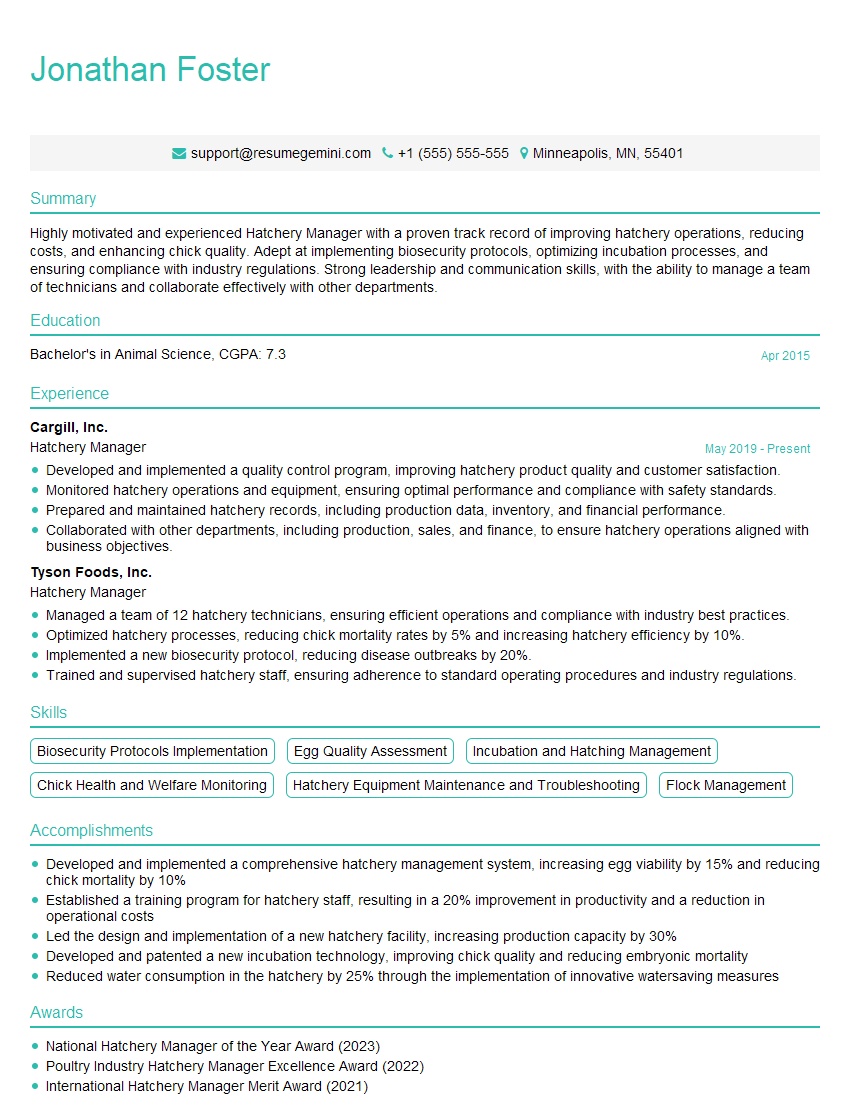
Mastering Poultry Husbandry opens doors to a rewarding career with diverse opportunities in production, research, and management. A strong understanding of these key concepts will significantly improve your interview performance and career prospects. To stand out, create an ATS-friendly resume that highlights your skills and experience effectively. ResumeGemini is a trusted resource to help you build a professional and impactful resume. They provide examples of resumes tailored to Poultry Husbandry to guide you in creating the perfect document. Invest time in crafting a compelling resume – it’s your first impression and a critical step in securing your dream job.
Explore more articles
Users Rating of Our Blogs
Share Your Experience
We value your feedback! Please rate our content and share your thoughts (optional).
What Readers Say About Our Blog
Very informative content, great job.
good