Are you ready to stand out in your next interview? Understanding and preparing for Power System Codes and Standards interview questions is a game-changer. In this blog, we’ve compiled key questions and expert advice to help you showcase your skills with confidence and precision. Let’s get started on your journey to acing the interview.
Questions Asked in Power System Codes and Standards Interview
Q 1. Explain the difference between IEEE and IEC standards.
IEEE (Institute of Electrical and Electronics Engineers) and IEC (International Electrotechnical Commission) are both prominent organizations that develop standards for electrical engineering, including power systems. The key difference lies in their geographic scope and approach. IEEE standards are primarily developed by the United States-based IEEE and tend to focus on North American practices. IEC standards, on the other hand, are international standards, developed through a global collaborative effort, and are widely adopted worldwide. While there’s significant overlap in many areas, differences can exist in terminology, specific requirements, and testing procedures. For example, a specific protection relay might be described slightly differently or have slightly varying testing requirements under IEEE and IEC standards. Choosing between IEEE or IEC standards often depends on the geographical location of the project and the preferences of the involved parties.
Think of it like this: IEEE is like a regional recipe book, while IEC is like a global cookbook. Both have similar recipes (standards), but the ingredients (specifications) might vary slightly.
Q 2. Describe the purpose and application of IEEE C37.11.
IEEE C37.11 is a crucial standard that defines the general requirements and specifications for power circuit breakers. It’s a comprehensive document that covers a wide array of aspects crucial for safe and reliable operation of circuit breakers across diverse power system applications. This standard details various aspects such as rating structures, test procedures, and performance requirements. It’s vital in ensuring interoperability between circuit breakers from different manufacturers, facilitating consistent performance, and upholding safety levels. Design engineers, testing laboratories, and power system operators all rely on IEEE C37.11 for specifying, testing, and verifying circuit breaker performance, ultimately contributing to a safer and more robust grid. For instance, it dictates the specific procedures for testing the interrupting capacity of a circuit breaker under various fault conditions.
Imagine building a house – C37.11 is like the building code for the electrical panel; it specifies what kind of breakers are acceptable, how they must perform under stress, and ensures they won’t fail when they’re needed most.
Q 3. What are the key considerations for grounding in accordance with relevant standards?
Grounding is paramount for ensuring safety and reliable operation of power systems. Relevant standards, such as IEEE 80 and IEC 62305, provide guidelines for effective grounding systems. Key considerations include:
- Safety: Grounding systems must minimize the risk of electric shock to personnel and equipment. This involves maintaining low impedance paths to earth to safely dissipate fault currents.
- Equipment Protection: Proper grounding protects equipment from damage due to lightning strikes, surges, and other transient events. It provides a low-impedance path for fault currents, minimizing voltage rise and preventing damage to sensitive components.
- System Stability: Grounding plays a critical role in maintaining the stability of the power system. Effective grounding helps to prevent voltage imbalances, ground faults, and other disruptive events.
- Coordination with Protection Systems: Grounding must be carefully coordinated with the protection system to ensure that faults are quickly detected and cleared.
Standards typically dictate the required ground impedance, grounding electrode design, and testing procedures. For example, the standard might specify the maximum permissible ground resistance for a substation based on its voltage level and fault current. Non-compliance can lead to significant safety hazards and equipment failures. It’s crucial to consider the specific soil conditions and the anticipated fault currents during the design of a grounding system to ensure compliance with relevant standards.
Q 4. Explain the role of ANSI standards in power system design.
ANSI (American National Standards Institute) standards play a crucial role in establishing consistent practices across various aspects of power system design. While ANSI itself doesn’t directly develop power system standards, it acts as an administrator and coordinator for standards created by organizations like IEEE. Many IEEE power system standards are then adopted as ANSI standards, ensuring their widespread acceptance and use within the United States. This standardized approach ensures interoperability of equipment and systems from various manufacturers, facilitates streamlined design processes, and minimizes potential conflicts. ANSI standards cover a broad range of power system components and practices, including transformers, switchgear, relays, and protection schemes. By adhering to ANSI standards, designers ensure that their systems are built to nationally recognized safety and performance criteria.
Think of ANSI as the quality control agency for power system standards, ensuring consistency and reliability across projects.
Q 5. How do you ensure compliance with NEC standards in a power system project?
Ensuring compliance with the National Electrical Code (NEC) in a power system project requires a multifaceted approach. First, the design must adhere to all applicable NEC articles and sections. This involves carefully reviewing the project requirements and selecting equipment and protection devices that meet the NEC’s specifications. Second, the project documentation should clearly show how the design complies with the NEC; this includes detailed calculations, schematics, and equipment specifications. Third, during construction, regular inspections must be conducted to verify that the installation process is in accordance with NEC standards. Finally, rigorous testing and commissioning procedures are essential to confirm that the completed system complies with the NEC’s requirements. Any deviations from the NEC must be documented, justified, and approved by the relevant authorities. Non-compliance can lead to project delays, increased costs, and safety hazards.
In essence, achieving NEC compliance is a continuous process from design to commissioning and requires meticulous attention to detail.
Q 6. What are the common protection schemes used in power systems, and which standards govern them?
Power systems employ various protection schemes to detect and isolate faults quickly, preventing damage and ensuring safety. Some common schemes include:
- Overcurrent Protection: This is a fundamental protection scheme that uses overcurrent relays to detect excessive current flow due to faults. Standards like IEEE C37.2 and IEC 60255 govern the design and performance of overcurrent relays.
- Differential Protection: This scheme compares the current entering and leaving a protected zone (e.g., a transformer). Any discrepancy indicates a fault within the zone. Standards such as IEEE C37.90 guide differential protection system design and implementation.
- Distance Protection: This scheme measures the impedance to a fault and trips the circuit breaker if the impedance falls within a pre-defined range, indicating a fault within a certain distance. Relevant standards include IEEE C37.102 and IEC 60255-3.
- Pilot Protection: This scheme uses communication channels between two substations to detect faults along a transmission line. Standards for communication protocols are relevant to this scheme’s implementation.
The specific standards governing each protection scheme ensure consistent performance and reliability, contributing to overall power system stability and safety.
Q 7. Describe the importance of fault current calculations and the standards used.
Fault current calculations are crucial in power system design for several reasons: they determine the interrupting capacity required for circuit breakers, the short circuit withstand capability of equipment, and the coordination of protection devices. Accurate fault current calculations ensure that protective devices can interrupt faults safely without causing damage to the system or endangering personnel. Standards like IEEE 141, IEEE 242, and IEC 60909 provide detailed methods and data required for performing these calculations. They specify data sources, calculation methodologies, and levels of accuracy to be achieved. Different standards might have slightly different approaches to fault calculation, particularly for complex systems with multiple sources and parallel paths. Software tools are frequently employed for these calculations, but verifying the input data and the underlying assumptions is vital for accurate results. Failure to accurately calculate fault currents can lead to equipment failures, system instability, and even safety hazards.
Imagine designing a bridge – you need to accurately calculate the load it will bear; likewise, power system design requires precise fault current calculations to ensure the safety and reliability of the entire network.
Q 8. Explain the significance of arc flash hazard analysis and related standards.
Arc flash hazard analysis is critically important for ensuring the safety of personnel working on electrical equipment. An arc flash is a sudden, high-energy release of electrical energy that can cause severe burns, blindness, and even death. Standards like IEEE 1584 and NFPA 70E guide the process of assessing and mitigating these hazards. The analysis involves calculating the incident energy (in cal/cm²) at various distances from energized equipment under fault conditions. This calculation considers factors like system voltage, available fault current, and the equipment’s impedance. The results are used to determine the required personal protective equipment (PPE), such as arc flash suits and face shields, needed to protect workers.
For example, imagine a worker needs to replace a fuse in a 480V panel. An arc flash analysis would determine the incident energy at the worker’s location. If the analysis shows a high incident energy level, the worker would need to wear a high-level arc flash suit with appropriate face protection. Ignoring arc flash hazards can lead to serious injuries and legal ramifications for companies.
Q 9. What are the key requirements for substation design according to relevant standards?
Substation design requires adherence to several standards, including IEEE C37, IEC 61850, and relevant national electrical codes. Key requirements focus on safety, reliability, and operational efficiency. These standards dictate various aspects of the design, including:
- Physical layout and clearances: Standards define minimum spacing between equipment to prevent flashovers and ensure personnel safety. This includes clearances between conductors, equipment grounding, and barriers around energized components.
- Protection and control systems: Substations must have comprehensive protection systems (relays, circuit breakers) to isolate faults quickly and prevent cascading failures. The integration of these systems is often guided by IEC 61850 for improved interoperability and data exchange.
- Grounding: Robust grounding systems are crucial for safety and to reduce the impact of lightning strikes and faults. Standards specify grounding conductor sizes, connection methods, and resistance limits.
- Equipment selection and rating: Transformers, circuit breakers, and other equipment must meet specific voltage, current, and thermal ratings to handle the expected loads and fault currents.
- Environmental considerations: Substation design should account for environmental factors, such as temperature, humidity, and seismic activity, to ensure reliable operation.
Ignoring these requirements can lead to equipment failure, safety hazards, and system instability.
Q 10. How do you apply standards to ensure the reliability of a power system?
Applying standards is fundamental to ensuring power system reliability. Standards like IEEE 738 (power system reliability analysis) provide frameworks and methodologies for assessing and improving system reliability. This involves:
- Component reliability data: Standards guide the collection and application of reliability data for various power system components (transformers, lines, generators). This data is used to model the system’s behavior under various scenarios.
- System modeling and simulation: Sophisticated software tools are used to model the power system, simulating different operating conditions and identifying potential vulnerabilities.
- Reliability indices: Standards define key reliability indices, such as SAIDI (System Average Interruption Duration Index) and SAIFI (System Average Interruption Frequency Index), which quantify the system’s performance. These metrics help track improvements over time.
- Preventive maintenance: Standards recommend regular maintenance schedules and testing procedures to prevent equipment failures. This proactive approach significantly improves reliability.
For example, a utility company might use reliability indices to compare the performance of different substations or transmission lines and target areas needing improvement.
Q 11. What is the role of protective relays in power system security?
Protective relays are the first line of defense in maintaining power system security. They are intelligent devices that continuously monitor the system for abnormal conditions, such as overcurrent, ground faults, and loss of synchronism. When a fault is detected, the relay initiates a trip signal to the associated circuit breaker, isolating the faulted section and preventing damage to equipment and disruptions to service.
For instance, a distance relay protects transmission lines by measuring the impedance to the fault. If the impedance falls within the relay’s protection zone, it will trip the circuit breaker, isolating the faulted line. Without protective relays, even minor faults could cascade, leading to widespread outages. The coordination of multiple relays across the system is critical to ensure that the correct section is isolated while minimizing the impact on the rest of the system. Standards such as IEEE C37.112 guide the application and coordination of protective relays.
Q 12. Explain the application of different types of circuit breakers based on standards.
Circuit breakers are crucial for switching and protecting power systems. The selection of a specific type depends on the application’s requirements and is guided by standards like IEC 62271. Different types include:
- Vacuum circuit breakers: Suitable for medium-voltage applications, they provide high reliability and fast interruption times due to their vacuum arc quenching capability. They are favored where frequent switching is required.
- Air circuit breakers: Common in low-voltage applications, they are relatively simple and cost-effective but have limitations in interrupting high fault currents.
- SF6 circuit breakers: Used in high-voltage applications, they excel in interrupting high currents and offer superior arc quenching capabilities, but require special handling due to the use of sulfur hexafluoride (SF6), a potent greenhouse gas. Alternatives are being explored to mitigate this environmental impact.
- Oil circuit breakers: Although becoming less common due to environmental concerns and maintenance needs, they are still found in older systems and offer robust interruption capabilities in high-voltage systems.
Standards define the rating requirements (voltage, current, breaking capacity) for circuit breakers to ensure they can safely interrupt faults and switch loads under various conditions. Improper circuit breaker selection can lead to equipment damage and safety hazards.
Q 13. Describe the importance of voltage regulation and its compliance with standards.
Voltage regulation is critical for maintaining the quality of power delivered to consumers. Standards like IEEE 1346 address acceptable voltage variations to ensure proper equipment operation and prevent damage. Maintaining voltage within specified limits is crucial, as undervoltage can lead to equipment malfunction or failure, while overvoltage can cause insulation breakdown and fires. Voltage regulation is typically achieved through various methods, such as:
- Tap changers on transformers: These allow adjusting the transformer’s turns ratio to compensate for voltage variations along the distribution network.
- Voltage regulators: These devices automatically adjust the voltage to maintain a constant level at the load point.
- Reactive power compensation: Capacitors and reactors can be used to control the reactive power flow, which directly influences voltage levels.
Standards define acceptable voltage limits (typically +/-5% or +/-10%, depending on the application). Continuous monitoring and control are essential to ensure compliance and provide a stable and reliable power supply. Failure to maintain proper voltage levels can negatively impact the lifespan and reliability of equipment.
Q 14. How do you ensure the safety of personnel working on power systems based on relevant standards?
Ensuring personnel safety when working on power systems is paramount and relies heavily on adherence to standards like NFPA 70E and OSHA regulations. These standards emphasize a multi-layered approach:
- Lockout/Tagout procedures: Strict procedures must be followed to de-energize equipment, lock out the power source, and apply tags to prevent accidental energization. This is a cornerstone of safe work practices.
- Arc flash hazard analysis and PPE: As previously discussed, arc flash analysis is essential for determining appropriate PPE, ensuring workers are adequately protected from arc flash incidents.
- Training and competency: Personnel working on or near energized equipment must receive comprehensive training on safe work practices, hazard recognition, and emergency response procedures.
- Permit-required work: Work on or near energized equipment often requires a permit, ensuring proper risk assessment and supervision before work commences.
- Grounding and bonding: Proper grounding and bonding techniques are vital to minimize the risk of electric shock. Standards specify the procedures and equipment required.
Ignoring these standards can lead to serious injuries or fatalities. Regular safety audits and training programs are essential to reinforce safe work practices and ensure compliance with all relevant regulations.
Q 15. Explain the principles of power system grounding and earthing as per applicable standards.
Power system grounding and earthing are crucial for safety and reliable operation. Grounding connects a system to the earth, providing a low-impedance path for fault currents, while earthing connects exposed conductive parts to earth, protecting against electric shock. Standards like IEEE Std 81 and IEC 62305 guide these practices.
The principles involve minimizing potential differences between various points in the system and the earth, limiting touch and step voltages during faults, and providing a path for lightning surges to dissipate safely. Different grounding methods exist, including solid grounding, resistance grounding, and impedance grounding, chosen based on system voltage, fault current levels, and safety considerations. For instance, high-voltage systems often employ resistance grounding to limit fault currents, while low-voltage systems usually prefer solid grounding for immediate fault clearing.
Proper grounding design requires careful consideration of soil resistivity, grounding electrode layout, and conductor sizing to ensure sufficient fault current dissipation. Regular inspection and testing are vital for maintaining the effectiveness of the grounding system. Failure to maintain proper grounding can lead to equipment damage, safety hazards, and system instability.
Career Expert Tips:
- Ace those interviews! Prepare effectively by reviewing the Top 50 Most Common Interview Questions on ResumeGemini.
- Navigate your job search with confidence! Explore a wide range of Career Tips on ResumeGemini. Learn about common challenges and recommendations to overcome them.
- Craft the perfect resume! Master the Art of Resume Writing with ResumeGemini’s guide. Showcase your unique qualifications and achievements effectively.
- Don’t miss out on holiday savings! Build your dream resume with ResumeGemini’s ATS optimized templates.
Q 16. What are the key differences between various types of power system studies (load flow, short circuit, etc.)?
Power system studies are essential for planning, operation, and analysis of electrical networks. Different studies address various aspects:
- Load Flow Studies: Determine the steady-state operating conditions of the system under a given load profile. They calculate voltage magnitudes and angles at each bus, power flows in lines, and transformer tap settings. These are crucial for planning system expansions and ensuring voltage stability.
- Short Circuit Studies: Analyze the system’s response to fault conditions (e.g., three-phase faults, line-to-ground faults). They determine fault currents, which are vital for selecting protective devices (circuit breakers, relays) with sufficient interrupting capacity. They also assess system stability during faults.
- Transient Stability Studies: Investigate the system’s dynamic behavior after a major disturbance (e.g., a large fault or sudden load change). They analyze the system’s ability to maintain synchronism among generators. These studies are crucial for assessing the impact of large-scale events and designing appropriate control systems.
- Harmonic Studies: Analyze the presence and impact of harmonic currents and voltages in the system, which are generated by nonlinear loads (e.g., rectifiers, variable-speed drives). These studies are essential for preventing equipment damage and ensuring system performance.
In essence, these studies provide a comprehensive understanding of the system’s behavior under normal and abnormal conditions, guiding design and operational decisions.
Q 17. Explain the process of selecting appropriate cables and conductors according to standards.
Cable and conductor selection is governed by factors like current carrying capacity, voltage drop, short circuit withstand, and environmental considerations. Standards like IEEE 1590 and IEC 60502 provide guidelines.
The process begins with determining the required current carrying capacity based on the load and anticipated future growth. Next, we consider the voltage drop, ensuring it stays within acceptable limits to maintain equipment performance and avoid excessive energy losses. Short circuit current calculations are then used to verify the cables’ ability to withstand the thermal and mechanical stresses during a fault. Environmental factors like ambient temperature, installation method (buried, aerial), and soil conditions also influence cable selection. Finally, the cost and availability of different cable types need to be evaluated.
For instance, if a high-current application requires a large conductor size, an aluminum conductor might be preferred over copper due to cost-effectiveness, while for higher voltage applications, specific cable insulation types are mandated to ensure safety and prevent insulation breakdown. Proper derating factors must be applied to account for ambient temperature, grouping effects, and other conditions.
Q 18. How do you ensure the proper documentation and testing of power system equipment?
Proper documentation and testing are vital for ensuring the safe and reliable operation of power system equipment. This involves maintaining comprehensive records of equipment specifications, installation procedures, maintenance logs, and test results.
Documentation includes drawings, schematics, equipment manuals, and operating procedures. Testing covers routine inspections, insulation resistance tests, and more extensive tests, such as high-potential tests and protective relay testing. Regular inspections help identify potential problems before they escalate, while more thorough testing ensures the equipment continues to meet safety and performance requirements. These tests are often performed according to established industry standards and regulations like IEEE and IEC standards.
An example of a practical application is recording the date and results of transformer oil testing, ensuring that the oil’s dielectric strength is within acceptable limits. Without proper documentation, it would be nearly impossible to trace the history of equipment and identify potential safety issues, leading to costly equipment failures and potential safety hazards. This documentation also is essential for compliance audits and insurance purposes.
Q 19. Describe the importance of system protection coordination and the standards involved.
System protection coordination is crucial for ensuring selective fault clearing, minimizing service interruptions, and preventing cascading outages. It involves properly setting and coordinating protective relays to isolate faulted sections without unnecessarily tripping healthy parts of the system. Standards like IEEE C37.2 and IEC 61850 guide this process.
The coordination process involves analyzing fault current paths, determining relay operating times, and ensuring that relays operate in a predetermined sequence to isolate the fault rapidly and selectively. Time-current curves are used to visualize the coordination between different relays. Improper coordination can lead to widespread outages, causing significant economic losses and safety risks.
For example, a poorly coordinated system might result in a fault on a feeder tripping a substation breaker instead of just the feeder breaker, causing a much larger outage. Software tools are often used to simulate fault scenarios and verify coordination. Regular review and updates of protection settings are necessary to reflect changes in the system and maintain proper coordination.
Q 20. What are the main considerations for the integration of renewable energy sources as per relevant standards?
Integrating renewable energy sources (RES) like solar and wind requires careful consideration of their unique characteristics and potential impacts on the power system. Standards like IEEE 1547 and IEC 61400 provide guidance.
Key considerations include:
- Intermittency: RES are intermittent, meaning their output fluctuates depending on weather conditions. Grid operators need forecasting and control strategies to manage these variations.
- Voltage and Frequency Control: RES often need voltage and frequency support to maintain grid stability. This might involve installing reactive power compensation or participating in frequency regulation services.
- Protection and Safety: Specialized protection schemes are required to handle the unique characteristics of RES and ensure safe integration with the existing grid. Islanding prevention is crucial to ensure safety for utility workers.
- Grid Code Compliance: RES must comply with grid codes set by system operators, covering aspects such as voltage regulation, frequency response, and power quality.
Effective integration involves careful planning, advanced control systems, and proactive grid management strategies. Failing to address these aspects can lead to instability, power quality issues, and even grid collapse.
Q 21. Explain your experience with power system simulation software and its application to standards compliance.
I have extensive experience with various power system simulation software packages, including PSS/E, PowerWorld Simulator, and ETAP. These tools are invaluable for performing the power system studies described earlier and verifying compliance with relevant standards.
For example, I’ve used PSS/E to model large power systems, including renewable energy sources, to assess their impact on voltage stability and transient stability. The software allows simulating various fault scenarios and evaluating the performance of protection systems. The results of these simulations are then used to refine the system design and protection settings, ensuring compliance with applicable standards and maximizing reliability and safety.
Similarly, I’ve used PowerWorld Simulator for load flow studies and harmonic analysis, verifying that voltage levels and harmonic distortion are within acceptable limits. The software allows for detailed modeling of various system components, including transmission lines, transformers, and generators. The outputs from these analyses are crucial for design optimization and standards compliance verification.
In my professional experience, the use of these tools has been critical for ensuring efficient, cost-effective, and safe power system design that adheres to the latest industry standards and best practices.
Q 22. Describe the role of SCADA systems in power system monitoring and control and relevant standards.
Supervisory Control and Data Acquisition (SCADA) systems are the nervous system of modern power grids. They act as the central brain, monitoring and controlling the entire network in real-time. Think of them as a sophisticated dashboard displaying voltage levels, current flows, and the status of every component, from generators to transformers to transmission lines. This real-time data allows operators to proactively manage the grid, preventing outages and ensuring reliable power delivery.
SCADA systems achieve this by collecting data from Remote Terminal Units (RTUs) and Intelligent Electronic Devices (IEDs) located throughout the grid. These RTUs and IEDs act as sensors and actuators, measuring various parameters and executing control commands sent by the central SCADA system. The data is then processed, analyzed, and visualized on operator workstations, providing a comprehensive view of the grid’s health.
Relevant standards governing SCADA systems include the IEC 61850 standard, which focuses on communication protocols and interoperability between IEDs and the SCADA system. Other relevant standards address cybersecurity (e.g., NIST Cybersecurity Framework), data security and integrity, and system reliability. Adherence to these standards is crucial for ensuring the security, reliability, and efficiency of the entire power grid.
Q 23. How familiar are you with the latest updates and revisions in power system codes and standards?
I actively track updates to power system codes and standards through various channels. This includes subscribing to industry publications like IEEE Xplore, regularly attending conferences and workshops, and actively participating in relevant professional organizations like the IEEE Power & Energy Society. I specifically focus on revisions related to renewable energy integration (like IEEE 1547 updates), cybersecurity advancements, and smart grid technologies. For example, I’m very familiar with the recent revisions in IEC 61850 addressing improved security protocols and enhanced interoperability features, crucial in the face of evolving cyber threats.
Staying current is not just about reading the documents; it’s about understanding the implications of these changes for system design, operation, and maintenance. I ensure my understanding aligns with practical application and best practices.
Q 24. Describe a situation where you had to resolve a conflict between different standards.
In a recent project involving the integration of a large solar PV farm, a conflict arose between IEEE 1547 (for PV system interconnection) and local utility regulations regarding grid-support capabilities during fault conditions. IEEE 1547 specified certain requirements for fault ride-through, while the local utility had stricter, more conservative limits. This created a challenge because implementing the utility’s requirements would have increased costs and potentially reduced the PV system’s efficiency.
To resolve this, we collaborated with the utility engineers, presenting data and analysis demonstrating the PV system’s compliance with IEEE 1547, and its ability to safely operate within the specified limits. We also proposed a phased approach: initial testing and data collection to build confidence in the system’s performance, followed by gradual increase in the grid-support capability. Through open communication, data-driven arguments, and a collaborative approach, we were able to achieve a mutually acceptable compromise that satisfied both standards and ensured a safe and efficient grid integration.
Q 25. Explain the process of interpreting and applying a specific power system standard (e.g., IEEE 1547 for PV systems).
Interpreting and applying IEEE 1547, the standard for interconnection and interoperability of distributed resources with electric power systems, involves a multi-step process. First, a thorough understanding of the specific requirements related to the type of distributed generation (DG) system involved—in this case, a photovoltaic (PV) system—is necessary. The standard details technical requirements for safety, performance, and interconnection.
Next, a careful review of the applicable clauses is essential. IEEE 1547 covers various aspects, including grid-connected inverter requirements, protection schemes, anti-islanding protection, power quality compliance, and testing procedures. The specific requirements depend on the size and characteristics of the PV system and the characteristics of the point of interconnection with the utility grid.
Then, the design and implementation of the PV system must conform to these requirements. This involves selecting appropriate inverters, protection devices, and other components that meet the specified performance criteria. Finally, testing and verification steps, as outlined in the standard, are conducted to confirm the PV system’s compliance. This is crucial for ensuring safe and reliable operation and for obtaining approval from the utility for interconnection.
Q 26. How do you stay updated with the latest developments and changes in relevant power system codes and standards?
Staying updated requires a multi-pronged approach. I actively participate in professional organizations such as IEEE and participate in their working groups. This provides direct access to the latest developments and discussions within the standards-making bodies. Attending industry conferences and workshops is crucial for understanding practical applications and learning from experts. I also regularly review technical journals, publications, and online resources from reputable sources like IEEE Xplore and other industry publications. Finally, maintaining a strong professional network helps to stay informed about emerging trends and challenges in the field.
Q 27. Describe your experience in applying power system codes and standards in a specific project.
In a recent project involving the upgrade of a substation, we had to adhere strictly to ANSI C37.20 standards for circuit breakers. This involved meticulous verification of the circuit breakers’ interrupting capacity, which needs to meet or exceed the anticipated fault currents at the substation. We used specialized software to perform short-circuit studies to determine the fault currents, ensuring the chosen breakers could reliably clear these faults without posing a safety hazard. We also had to ensure compliance with the standards related to protective relay coordination. We had to ensure that the protective relays would operate correctly in order to isolate the faulty section of the system, preventing widespread outages.
Proper documentation, adhering to the standards, and thorough testing procedures were paramount. This not only ensured the safety and reliability of the system but also helped in complying with regulatory requirements and obtaining permits.
Q 28. What are the potential consequences of non-compliance with power system standards?
Non-compliance with power system standards can have severe consequences, ranging from minor inconveniences to catastrophic failures. Minor infractions could lead to system inefficiencies, increased operating costs, and delays in project completion. More serious violations could lead to equipment malfunctions, safety hazards, and even widespread blackouts. For example, failure to comply with grounding standards could result in electric shock hazards for personnel, while ignoring protection coordination standards could lead to cascading failures, affecting large areas of the power grid.
Beyond safety risks, non-compliance can lead to legal liabilities, fines, and potential lawsuits. Insurance coverage may be jeopardized, resulting in significant financial losses. Ultimately, non-compliance erodes public trust and could damage an organization’s reputation.
Key Topics to Learn for Power System Codes and Standards Interview
- Safety Standards and Regulations: Understand the foundational safety codes (e.g., NEC, IEEE standards) and their practical implications in power system design and operation. This includes understanding lockout/tagout procedures and arc flash hazard mitigation.
- Protection and Relaying: Grasp the principles behind protective relays and their application in preventing faults and ensuring system stability. Be prepared to discuss different types of relays and their settings.
- Power System Analysis: Demonstrate proficiency in analyzing power system behavior under various operating conditions. This involves familiarity with load flow studies, fault calculations, and stability analysis techniques.
- Power Quality: Understand the causes and effects of power quality issues (harmonics, voltage sags, etc.) and the methods used to mitigate them. Knowledge of relevant standards and mitigation techniques is crucial.
- Transmission and Distribution Systems: Be able to discuss the design, operation, and maintenance of transmission and distribution networks, including the application of relevant codes and standards for different voltage levels.
- Renewable Energy Integration: Showcase your understanding of the challenges and solutions related to integrating renewable energy sources (solar, wind) into the power system, and the corresponding standards and regulations.
- Grid Modernization and Smart Grid Technologies: Familiarity with the concepts and technologies driving grid modernization, such as advanced metering infrastructure (AMI) and phasor measurement units (PMUs), and their impact on compliance with existing and emerging standards.
- Problem-Solving and Case Studies: Be ready to discuss practical scenarios and apply your knowledge to solve real-world problems related to power system codes and standards. Prepare examples demonstrating your analytical and problem-solving skills.
Next Steps
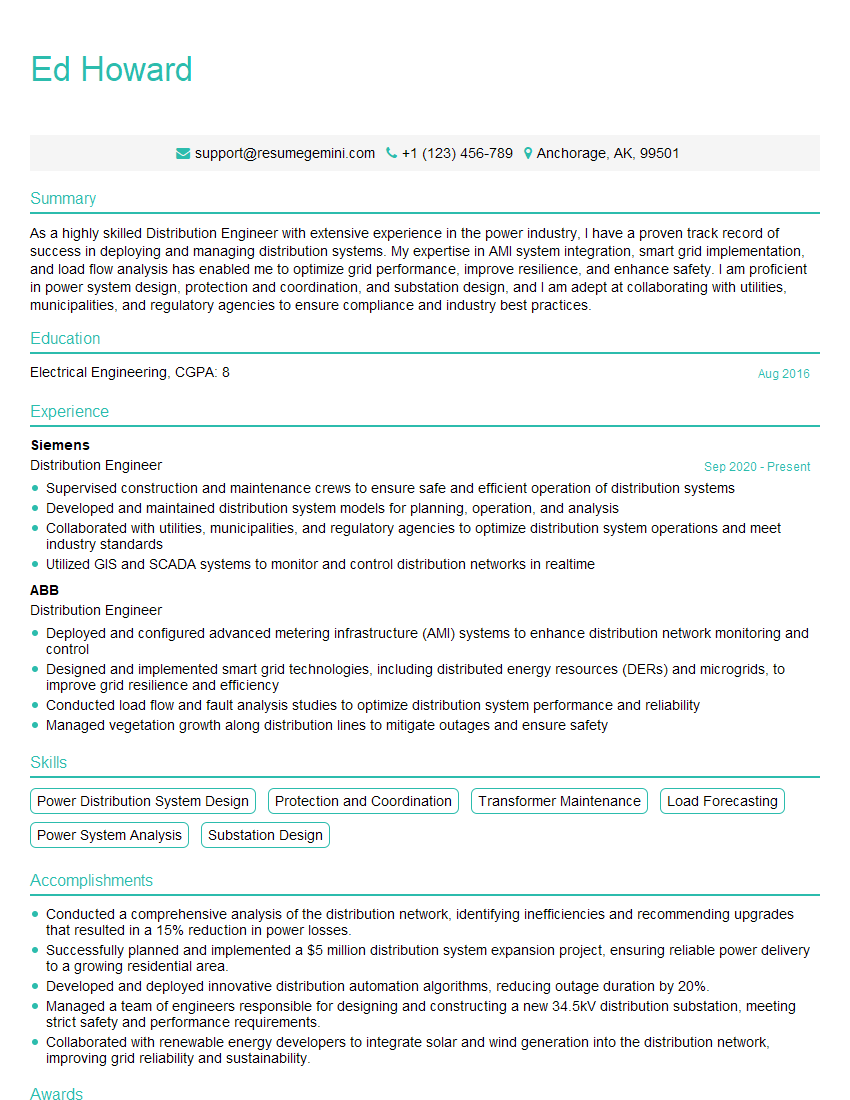
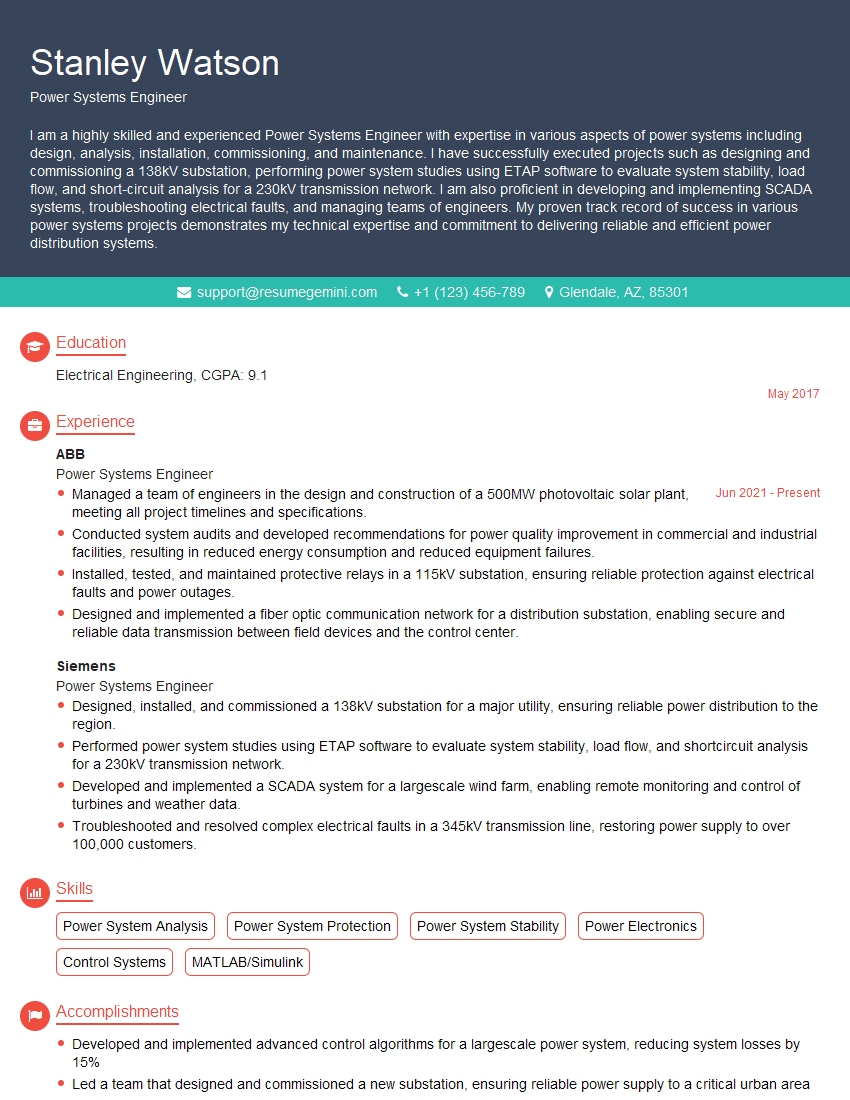
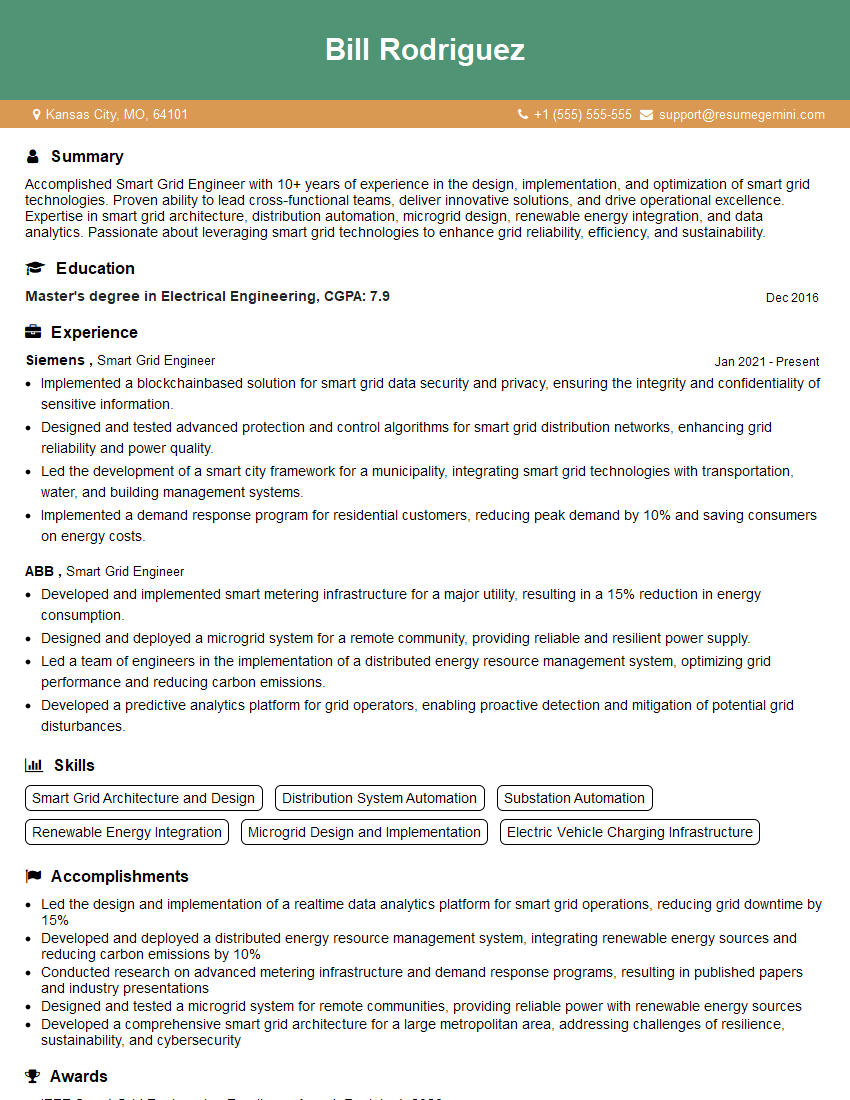
Mastering Power System Codes and Standards is paramount for career advancement in this field. A strong understanding of these critical aspects will significantly enhance your prospects and open doors to more challenging and rewarding roles. To increase your chances of securing your dream job, focus on building an ATS-friendly resume that effectively highlights your skills and experience. We strongly recommend using ResumeGemini, a trusted resource for crafting professional resumes. ResumeGemini provides examples of resumes tailored to the Power System Codes and Standards field to guide you in creating a compelling document that showcases your expertise.
Explore more articles
Users Rating of Our Blogs
Share Your Experience
We value your feedback! Please rate our content and share your thoughts (optional).
What Readers Say About Our Blog
Very informative content, great job.
good