Feeling uncertain about what to expect in your upcoming interview? We’ve got you covered! This blog highlights the most important Power System Measurement interview questions and provides actionable advice to help you stand out as the ideal candidate. Let’s pave the way for your success.
Questions Asked in Power System Measurement Interview
Q 1. Explain the different types of power system measurements and their applications.
Power system measurements are crucial for monitoring, controlling, and optimizing the performance of electrical grids. They fall into several categories:
- Voltage Measurements: These measure the potential difference between two points in the system. They’re essential for ensuring equipment operates within safe voltage limits and for voltage regulation. For example, monitoring the voltage at a substation helps prevent voltage sags that could damage sensitive equipment.
- Current Measurements: These measure the flow of electrical charge. They’re vital for load monitoring, fault detection, and protection. Imagine a sudden surge in current – a current measurement system immediately alerts operators to a potential fault.
- Power Measurements: These quantify the rate of energy transfer. They are categorized as active power (real power), reactive power (used for field establishment in inductive and capacitive elements), and apparent power (vector sum of active and reactive power). Active power measurements are critical for billing purposes and for determining system load.
- Frequency Measurements: Measuring the frequency of the AC power system is essential for maintaining system stability. Deviations from the nominal frequency (e.g., 50 Hz or 60 Hz) can indicate imbalances between generation and consumption.
- Power Factor Measurements: This indicates the efficiency of power utilization. A low power factor means more current is drawn for the same amount of real power, leading to higher losses. Measuring power factor helps optimize system efficiency.
- Energy Measurements: These measure the total energy consumed over a specific period, typically used for billing and consumption monitoring. Smart meters are a prime example of energy measurement devices.
These measurements are used in various applications, including system protection, operation, control, planning, and billing.
Q 2. Describe the principles of power system metering.
Power system metering relies on several fundamental principles:
- Transformation: The high voltage and current levels in power systems are often too high to directly measure. Therefore, transformers are used to step down the voltage and current to safer levels that can be handled by measuring instruments.
- Transduction: Physical quantities like voltage and current need to be converted into measurable electrical signals. This is done using transducers such as current transformers (CTs) and voltage transformers (VTs). These transducers produce signals proportional to the measured quantity.
- Signal Conditioning: The signals from transducers often require conditioning to improve accuracy and compatibility with measuring instruments. This might involve amplification, filtering, or isolation.
- Measurement and Display: The conditioned signals are processed by meters or data acquisition systems (DAS) to display the measured values. Modern systems often incorporate digital processing and communication capabilities.
- Data Acquisition and Analysis: Data from multiple metering points is often acquired and stored for later analysis. This data is used for performance monitoring, fault diagnosis, and system optimization. Advanced systems may leverage AI/ML for predictive maintenance.
Imagine a simple analogy: a weighing scale. The object to be weighed (power) is too heavy to be measured directly, so it’s placed on a platform (transformer), then levers (transducers) convert the weight into a readable number (signal) on the display (meter).
Q 3. What are the common errors in power system measurements and how can they be minimized?
Several errors can affect power system measurements:
- Instrument Errors: These stem from imperfections in the measuring instruments themselves, such as calibration drift, linearity issues, and zero offset errors. Regular calibration is crucial to minimize these errors.
- Transformer Errors: CTs and VTs have inherent errors due to their design and construction. These errors include ratio errors, phase angle errors, and saturation effects.
- Environmental Errors: Temperature, humidity, and magnetic fields can influence the accuracy of measurements. Proper shielding and temperature compensation techniques can mitigate these.
- Connection Errors: Poor wiring, loose connections, and incorrect phasing can lead to inaccurate measurements. Careful attention to detail during installation is vital.
- Noise and Interference: Electrical noise and interference from other sources can corrupt measurement signals. Proper grounding and shielding can reduce these effects. Digital signal processing can also help filter out noise.
Minimizing these errors involves careful instrument selection, regular calibration, proper installation, and the use of error correction techniques.
Q 4. How do you ensure the accuracy and reliability of power system measurements?
Ensuring accurate and reliable power system measurements requires a multi-faceted approach:
- Regular Calibration: Instruments should be regularly calibrated against traceable standards to ensure their accuracy. Calibration intervals depend on the instrument type and application.
- Proper Installation and Maintenance: Instruments should be installed according to manufacturer specifications, and regular maintenance checks should be performed. This includes checking connections, cleaning, and inspecting for damage.
- Redundancy and Backup Systems: Critical measurements should have redundant systems in place to prevent data loss in case of equipment failure. This ensures continuous monitoring.
- Data Validation and Verification: Measured data should be validated against expected values and other measurements to detect inconsistencies and outliers. Cross-checking with other sensors helps confirm data integrity.
- Use of High-Quality Equipment: Choosing high-quality, well-designed instruments is paramount. This includes instruments with low error rates, good stability, and appropriate specifications for the application.
- Advanced Signal Processing Techniques: Employing techniques such as digital filtering, noise reduction, and data fusion can significantly enhance measurement accuracy and reliability.
Imagine a hospital: regular equipment calibration (like checking the accuracy of blood pressure monitors) and redundancy (having backup systems in case of failure) are critical for patient safety. The same logic applies to power systems.
Q 5. Explain the importance of calibration in power system measurements.
Calibration in power system measurements is absolutely crucial. It’s the process of comparing a measuring instrument’s output to a known standard to verify its accuracy and adjust it if necessary. Without regular calibration, measurements become progressively less reliable, potentially leading to incorrect decisions and costly consequences.
- Ensuring Accuracy: Calibration eliminates systematic errors and ensures that measurements are within acceptable tolerance limits. This leads to reliable data for analysis and decision-making.
- Preventing Equipment Damage: Inaccurate measurements can lead to overloaded equipment or incorrect protection settings, potentially causing damage or even system-wide failures.
- Meeting Standards and Regulations: Many regulatory bodies require regular calibration to ensure compliance with safety and performance standards.
- Maintaining Traceability: Calibration provides a chain of traceability to national or international standards, ensuring the reliability of the measurement results.
Think of a car’s speedometer: regular calibration ensures it accurately reflects the car’s speed. Similarly, calibrated power system measurements ensure the accurate monitoring and control of the power grid.
Q 6. What are the various types of transducers used in power system measurements?
Various transducers are employed in power system measurements, each suited to a specific task:
- Current Transformers (CTs): These are used to measure current. They operate on the principle of electromagnetic induction, producing a current in a secondary winding proportional to the primary current. CTs are essential for high-current measurements.
- Voltage Transformers (VTs): These measure voltage. They are essentially step-down transformers that produce a lower voltage proportional to the system voltage. VTs enable safe measurement of high-voltage lines.
- Hall Effect Sensors: These contactless sensors can measure both current and magnetic flux density. They are useful in applications where direct connection to the conductor is difficult or undesirable.
- Optical Current Sensors: These sensors use optical fibers to detect current. They offer high accuracy, isolation, and immunity to electromagnetic interference, making them suitable for demanding environments.
- Rogowski Coils: These air-cored coils are used to measure current. They have a linear response over a wide range, making them suitable for transient current measurements.
The choice of transducer depends on factors such as current level, voltage level, accuracy requirements, and environmental conditions. Each transducer has specific characteristics and limitations that need to be considered.
Q 7. Describe the role of phasor measurement units (PMUs) in modern power systems.
Phasor Measurement Units (PMUs) are revolutionary devices transforming modern power system monitoring and control. They measure voltage and current phasors—the magnitude and phase angle—synchronized to a highly accurate GPS time signal. This synchronized data provides a real-time, system-wide view of the power grid’s state.
- Wide-Area Monitoring and Control (WAMS): PMUs enable WAMS by providing synchronized phasor data from multiple locations across the grid. This improves situational awareness and facilitates faster, more effective control actions.
- Real-time State Estimation: PMU data is used for real-time state estimation, allowing for accurate monitoring of the system’s operating conditions. This is critical for detecting and responding to system disturbances.
- Improved Protection and Control: PMUs enable the development of advanced protection schemes and control algorithms. This leads to faster fault detection, isolation, and restoration of power.
- System Stability Monitoring: Synchronized phasor measurements are used to analyze system oscillations and assess stability margins. This is crucial for preventing cascading outages and maintaining grid stability.
Think of a high-definition video of the power grid’s behavior, providing real-time, synchronized information from various points, unlike the static snapshot offered by traditional measurement systems. This high-resolution view empowers grid operators to proactively maintain the system’s health and reliability.
Q 8. Explain the concept of power system harmonics and their measurement.
Power system harmonics are multiples of the fundamental frequency (typically 50Hz or 60Hz) that arise due to non-linear loads like rectifiers, variable speed drives, and switching power supplies. These non-linear loads draw current in pulses, distorting the sinusoidal waveform. Imagine a perfectly smooth wave becoming jagged and irregular. This distortion introduces harmonics.
Measuring harmonics involves using specialized instruments like power quality analyzers or harmonic analyzers. These devices typically employ fast Fourier transforms (FFT) to decompose the complex waveform into its constituent frequency components. The result is a harmonic spectrum showing the amplitude of each harmonic relative to the fundamental frequency. For instance, the 5th harmonic would be at 250Hz (for a 50Hz system) and the 7th harmonic would be at 350Hz. The magnitude of these harmonics indicates the severity of the distortion.
These measurements are crucial because excessive harmonics can lead to overheating of equipment, malfunctions in sensitive electronic devices, and increased losses in power transformers. The IEEE 519 standard provides guidelines on acceptable harmonic levels in power systems.
Q 9. How do you measure power system transients?
Power system transients are short-duration voltage or current fluctuations. These can be caused by events like lightning strikes, switching operations, or faults. Think of them as sudden, sharp spikes or dips in the electrical system. Measuring these transients requires instruments capable of capturing fast changes in voltage and current.
High-speed data acquisition systems, often combined with oscilloscopes, are essential. These systems sample the waveform at very high rates (e.g., several megasamples per second), allowing for accurate capture of the transient’s shape and duration. Specialized software then analyzes the captured data to determine the transient’s characteristics, such as its magnitude, duration, and frequency content. For instance, a lightning strike might create a very fast transient with a high amplitude, whereas a switching event might produce a slightly slower transient with a lower amplitude.
Accurate measurement of transients is vital for understanding system behavior under stress, improving protection schemes, and designing equipment that can withstand these stresses.
Q 10. What are the different types of power quality disturbances and how are they measured?
Power quality disturbances encompass a wide range of events that deviate from the ideal sinusoidal waveform. They significantly impact the reliability and performance of electrical equipment. Common types include:
- Voltage Sags/Dips: Temporary reduction in voltage magnitude.
- Voltage Swells: Temporary increase in voltage magnitude.
- Interruptions: Complete loss of voltage.
- Harmonics: (Already discussed above)
- Flicker: Perceptible variation in light intensity due to voltage fluctuations.
- Notches: Brief, deep voltage dips.
Measurement involves power quality analyzers or data acquisition systems equipped with appropriate sensors (voltage and current transformers). These devices record voltage and current waveforms over time, identifying and quantifying these disturbances. The analyzers typically provide detailed reports showing the frequency, duration, and magnitude of each event. Specialized software can then analyze this data to determine the root cause and potential mitigation strategies.
For example, a sag caused by a motor starting might be easily identified through its characteristic shape and timing.
Q 11. Describe the use of oscilloscopes in power system troubleshooting.
Oscilloscopes are indispensable tools in power system troubleshooting. They provide a visual representation of voltage and current waveforms, allowing engineers to observe the system’s behavior in real-time or analyze recorded data. Think of it as a highly sensitive voltmeter and ammeter capable of capturing extremely fast changes.
In troubleshooting, oscilloscopes are used to:
- Identify faults: Observing waveform distortions helps pinpoint the location and type of a fault.
- Analyze transients: Capturing high-speed transients reveals their characteristics, helping determine their cause.
- Verify protection system operation: Examining waveforms during fault events verifies whether protective relays operated correctly.
- Analyze harmonic distortion: Determining harmonic levels and their sources.
For instance, a short circuit would show a dramatic change in the voltage waveform, while a broken neutral connection might create an imbalance in the three-phase waveforms. The oscilloscope’s ability to capture these detailed waveform characteristics is crucial in diagnosing these issues.
Q 12. How do you analyze power system measurement data using software tools?
Software tools play a vital role in analyzing power system measurement data. These tools offer various functionalities, from basic waveform visualization to advanced signal processing and statistical analysis. Popular software packages include MATLAB, Python with libraries like SciPy and Pandas, and specialized power system analysis software.
Data analysis steps generally include:
- Data import and cleaning: Importing data from various measurement devices and removing noise or outliers.
- Waveform visualization: Plotting voltage and current waveforms to identify anomalies.
- FFT analysis: Decomposing waveforms into their frequency components to analyze harmonics.
- Statistical analysis: Calculating statistical parameters like average, standard deviation, and percentiles.
- Transient analysis: Identifying and characterizing transients using advanced signal processing techniques.
Example Python code snippet (simplified):import numpy as np
import matplotlib.pyplot as plt
from scipy.fft import fft
# Load data
# Perform FFT
yf = fft(data)
# Plot results
plt.plot(yf)
plt.show()
Sophisticated tools allow for comprehensive analysis and reporting, ultimately leading to improved system design, operation, and maintenance.
Q 13. Explain the significance of power factor and its measurement.
Power factor (PF) represents the ratio of real power (kW) to apparent power (kVA) in an AC circuit. It indicates how effectively the electrical system utilizes power. A power factor of 1.0 indicates perfect efficiency, while lower values signify reactive power consumption, leading to increased energy losses and higher electricity bills. Think of it like this: apparent power is the total power delivered, while real power is the power actually used for useful work. The difference is reactive power, which is needed for things like magnetic fields in motors but doesn’t do actual work.
Measuring power factor involves using power meters or power quality analyzers. These instruments simultaneously measure voltage, current, and phase angle between them. The power factor is then calculated using the formula: PF = cos(θ), where θ is the phase angle between voltage and current. Instruments often directly display the power factor value.
Improving the power factor (e.g., by using power factor correction capacitors) is essential to optimize energy usage and reduce operational costs. Low power factors can lead to penalties from utility companies.
Q 14. What are the different methods for measuring power system impedance?
Measuring power system impedance is critical for understanding system behavior, fault location, and protection coordination. Several methods exist, each with its strengths and limitations:
- Open-circuit and short-circuit tests: This classic method involves measuring the voltage and current at open and short circuit conditions to calculate impedance. It’s simple but requires disconnecting parts of the system.
- Impedance relay measurements: Protection relays often incorporate impedance measurement capabilities, providing real-time impedance values. They are typically used for fault location.
- Frequency response analysis (FRA): This technique uses a swept frequency signal to determine the impedance response of a system over a range of frequencies. It’s excellent for assessing the condition of transformers and cables.
- Three-phase fault analysis using fault current data: By recording the fault currents from protection relay measurements during a fault, it is possible to calculate the system impedance at the fault location.
- Sweep frequency impedance measurement: This technique is similar to FRA, employing a variable frequency source to excite the system and determine its impedance characteristics.
The choice of method depends on the specific application and available resources. For example, FRA is commonly used for transformer diagnostics, while impedance relays are crucial for real-time fault location.
Q 15. Describe the challenges in measuring power in high-voltage systems.
Measuring power in high-voltage systems presents unique challenges due to the inherent dangers and complexities involved. The high voltages themselves pose a significant safety risk, requiring specialized equipment and rigorous safety protocols. Furthermore, the high currents involved can lead to significant measurement errors if the equipment isn’t properly calibrated and designed for the voltage and current levels. Another challenge is the electromagnetic interference (EMI) present in high-voltage environments. This interference can affect the accuracy of the measurements, leading to inaccurate readings. Finally, the physical accessibility to high-voltage equipment can be limited, making the installation and maintenance of measurement devices more complex and expensive. For instance, installing current transformers (CTs) on a 500kV transmission line requires specialized equipment and a highly trained team to ensure safety and accuracy.
To mitigate these challenges, we utilize specialized measurement devices designed to withstand high voltages and currents, including insulation systems designed to prevent arc flash and other hazards. We also employ sophisticated signal processing techniques to filter out noise and EMI, ensuring accurate readings. Safety procedures, such as lockout/tagout procedures and strict adherence to safety guidelines are critical in minimizing risk.
Career Expert Tips:
- Ace those interviews! Prepare effectively by reviewing the Top 50 Most Common Interview Questions on ResumeGemini.
- Navigate your job search with confidence! Explore a wide range of Career Tips on ResumeGemini. Learn about common challenges and recommendations to overcome them.
- Craft the perfect resume! Master the Art of Resume Writing with ResumeGemini’s guide. Showcase your unique qualifications and achievements effectively.
- Don’t miss out on holiday savings! Build your dream resume with ResumeGemini’s ATS optimized templates.
Q 16. Explain the role of protective relays in power system measurement and protection.
Protective relays are the crucial link between power system measurement and protection. They continuously monitor various parameters of the power system, such as voltage, current, frequency, and power flow, utilizing data from measurement devices like current transformers (CTs) and voltage transformers (VTs). Based on these measurements, protective relays analyze the system’s state and operate in response to abnormal conditions. For example, if a fault causes an excessive current, a protective relay detects this via the CT measurements and initiates a circuit breaker trip to isolate the faulty section, preventing wider damage or system instability. This ensures the safety and reliability of the power system.
In essence, protective relays use measurements to make crucial decisions regarding the protection and control of the power system. They act as the ‘brain’ in detecting faults, calculating fault location, and implementing protective actions. The accuracy and speed of the relays directly impact the reliability and safety of the power grid. A malfunctioning relay can lead to extended outages or cascading failures.
Q 17. How do you interpret power system measurement data to identify faults?
Interpreting power system measurement data to identify faults involves a systematic approach. We begin by examining the trends and patterns in the measured parameters. A sudden surge in current, for example, often points to a short circuit. Similarly, a drop in voltage accompanied by an increase in current could indicate a fault near the measurement point. Analyzing the waveforms of voltage and current signals can offer crucial insights into the type and location of the fault.
Advanced techniques like fault location algorithms utilize the measured data to pinpoint the location of faults on transmission lines. These algorithms employ mathematical models of the power system to analyze the impedance and phase angles of the measured quantities. Furthermore, comparing the measured values with pre-fault system conditions provides a clearer picture of the fault’s impact. This data-driven approach is augmented by historical data and experience in identifying specific fault signatures. For instance, a specific harmonic signature might point to a particular type of faulty equipment, such as a failing capacitor bank.
Q 18. What are the safety precautions you would take when performing power system measurements?
Safety is paramount when performing power system measurements, especially in high-voltage environments. Before commencing any measurements, a comprehensive risk assessment is conducted, identifying potential hazards and outlining mitigation strategies. This includes using appropriate personal protective equipment (PPE), such as insulated gloves, arc flash suits, and safety glasses. Lockout/tagout procedures are strictly followed to ensure that the equipment is de-energized before any work is performed. The use of insulated tools and equipment is essential to prevent electrical shocks. Additionally, multiple personnel are usually involved, ensuring that there’s always a spotter or supervisor overseeing the operation.
Regular training and refresher courses on safety procedures are crucial for all personnel involved. Furthermore, a clear communication plan is established to ensure coordination among team members. Documentation is maintained for each measurement task, recording the procedures followed and any deviations from the plan. Post-measurement checks verify the safety of the equipment and the surrounding environment.
Q 19. Describe your experience with different types of metering equipment.
My experience encompasses a wide range of metering equipment, including traditional electromechanical devices and advanced digital metering systems. I’ve worked with current transformers (CTs) and voltage transformers (VTs) of various ratios and designs, from simple bushing-type CTs to more sophisticated wound-type CTs optimized for specific applications. My experience with digital meters includes phasor measurement units (PMUs) capable of high-speed synchronized measurements, advanced power quality meters that capture detailed harmonic and transient events, and intelligent electronic devices (IEDs) with integrated communication capabilities.
I’m familiar with both single-phase and three-phase metering configurations and have practical experience calibrating and maintaining these devices. Understanding the limitations and accuracy specifications of each device is crucial for ensuring reliable measurements. For example, the selection of CT and VT ratios depends on the expected current and voltage levels of the system to ensure that the signals remain within the operating range of the metering equipment.
Q 20. How would you troubleshoot a faulty power system measurement device?
Troubleshooting a faulty power system measurement device begins with a thorough visual inspection, looking for obvious signs of damage such as loose connections, burnt components, or physical damage. If no obvious problems are found, I would proceed to verify the input signals using calibrated test equipment. This ensures that the input signals themselves are not faulty. The next step involves checking the device’s internal circuitry, possibly using diagnostic tools provided by the manufacturer. If necessary, the device might need to be replaced with a functioning unit. For digital meters, checking the communication links and software configuration can be essential.
A systematic approach is crucial. I typically start by checking the simplest aspects first before moving to more complex internal components. For example, I might check the power supply to the device or its communication interface before probing internal circuits. Thorough documentation of each step is essential, especially during troubleshooting in a live environment where safety is critical. Consulting the manufacturer’s documentation and support often helps resolve more complex issues.
Q 21. Explain your understanding of different communication protocols used in power system measurement systems.
Power system measurement systems utilize various communication protocols to exchange data between the metering devices and the supervisory control and data acquisition (SCADA) systems. Common protocols include IEC 61850, a widely adopted standard for substation automation, which provides a robust and interoperable communication framework. Other protocols include Modbus, a simpler and more widely used protocol for industrial automation, and DNP3 (Distributed Network Protocol 3), commonly used in North America for utility applications. Wireless protocols like Wi-Fi and cellular networks are also gaining popularity, although their use in critical infrastructure requires careful consideration of cybersecurity and reliability.
Understanding the capabilities and limitations of each protocol is crucial for designing a reliable and efficient communication network. Factors to consider include data throughput, security features, and compatibility with different equipment. For example, IEC 61850 provides superior data management and security features compared to Modbus but can be more complex to implement. The choice of protocol often depends on the specific application requirements and the existing infrastructure.
Q 22. Describe your experience with data acquisition systems used in power system measurements.
My experience with data acquisition systems (DAS) in power systems spans various technologies and applications. I’ve worked extensively with both traditional SCADA (Supervisory Control and Data Acquisition) systems and modern, more flexible platforms based on industrial Ethernet and open standards like IEC 61850. These systems are crucial for collecting real-time data from various points in the power grid, including voltage, current, power, frequency, and protective relay status.
For example, in one project, we used a DAS incorporating phasor measurement units (PMUs) to monitor a large transmission network. PMUs provide high-resolution synchronized measurements, enabling advanced analysis of dynamic events like system oscillations and fault propagation. In another project, we integrated a DAS with a distributed energy resource (DER) management system, allowing for real-time monitoring and control of solar farms and wind turbines connected to the grid.
My expertise encompasses the entire DAS lifecycle, from initial system design and hardware selection (considering factors like sampling rates, accuracy, and communication protocols) to installation, configuration, testing, and ongoing maintenance. I’m proficient in troubleshooting issues related to data acquisition, communication errors, and sensor calibration.
Q 23. How do you ensure data integrity in power system measurement systems?
Data integrity is paramount in power system measurements. Compromised data can lead to inaccurate analysis, flawed decision-making, and even equipment damage. We ensure data integrity through a multi-layered approach:
- Redundancy: Employing redundant sensors, communication channels, and data recorders ensures data availability even in case of equipment failures. Think of it like having a backup copy of your important files.
- Calibration and Verification: Regular calibration of sensors and instruments against traceable standards is essential. We also perform periodic verification tests to validate the accuracy and reliability of the entire measurement system.
- Data Validation: We implement data validation algorithms to identify and filter out outliers or impossible values. This often involves range checks, plausibility checks, and consistency checks across multiple measurement points.
- Cybersecurity: Robust cybersecurity measures, including firewalls, intrusion detection systems, and access control, protect the DAS from unauthorized access and cyberattacks, preserving data authenticity and integrity.
- Data Logging and Archiving: Data is securely logged and archived for future analysis and auditing. This creates a reliable audit trail for tracking measurements over time.
For instance, we use timestamping and data tagging to meticulously track the origin and quality of each data point. This facilitates tracing back any discrepancies to their source, helping us swiftly identify and resolve potential issues.
Q 24. What are the latest trends and technologies in power system measurements?
The field of power system measurements is rapidly evolving, driven by the increasing integration of renewable energy, smart grid technologies, and the rise of big data analytics. Some key trends include:
- Wide-Area Monitoring Systems (WAMS): WAMS use synchronized PMUs across extensive geographical areas to enhance situational awareness and improve grid stability.
- Artificial Intelligence (AI) and Machine Learning (ML): AI/ML algorithms are being used for anomaly detection, predictive maintenance, and advanced state estimation in power systems.
- Internet of Things (IoT) Devices: Smart sensors and IoT devices are enabling more granular data collection and distributed monitoring of the power grid.
- Digital Twin Technology: Creating digital twins of power systems allows for realistic simulations and testing of various scenarios before implementation in the real world.
- Advanced Metering Infrastructure (AMI): AMI enables two-way communication with smart meters, providing real-time consumption data and enhancing grid management.
For example, the use of AI for predictive maintenance of power transformers can significantly reduce downtime and maintenance costs by identifying potential failures before they occur.
Q 25. Discuss your experience with power system simulation software and its application in measurement analysis.
I have extensive experience with power system simulation software such as PSS/E, PowerWorld Simulator, and DIgSILENT PowerFactory. These tools are invaluable for analyzing measurement data and understanding power system behavior.
We use simulation software to validate measurement data by comparing real-world observations with simulation results under similar operating conditions. Discrepancies can highlight potential issues with sensors, data acquisition, or even the power system model itself. For example, we might simulate a fault scenario and compare the simulated waveforms with the actual measurements recorded during a real-world fault event. This helps validate the accuracy of the protection system and the overall measurement system.
Furthermore, simulation software allows us to conduct ‘what-if’ analyses, exploring the impact of various scenarios (e.g., increased renewable energy penetration, equipment outages) on the power system and its measurements. This proactive approach helps in improving grid reliability and operational efficiency.
Q 26. How do you handle large datasets from power system measurements?
Power system measurements generate massive datasets. Handling these efficiently requires a combination of techniques:
- Database Management Systems (DBMS): We use specialized DBMS like Oracle or SQL Server to store and manage large datasets effectively. These systems provide robust data organization, retrieval, and analysis capabilities.
- Data Compression and Archiving: Compression techniques reduce storage requirements while preserving data integrity. Data archiving strategies ensure long-term storage and retrieval of historical data.
- Big Data Analytics Tools: Tools like Hadoop and Spark enable parallel processing of massive datasets, facilitating faster analysis and pattern recognition.
- Data Mining and Visualization: Techniques for data mining and visualization allow us to extract meaningful insights from the vast amount of data, revealing trends and anomalies that might otherwise be overlooked.
For instance, in analyzing data from a large-scale smart grid deployment, we leverage big data tools to efficiently process terabytes of meter readings, identifying energy consumption patterns and optimizing grid operations.
Q 27. Explain your understanding of the impact of renewable energy sources on power system measurements.
The increasing penetration of renewable energy sources (RES) like solar and wind power significantly impacts power system measurements. The intermittent and unpredictable nature of RES introduces new challenges:
- Increased Variability: The fluctuating power output of RES necessitates higher sampling rates and more frequent measurements to accurately capture system dynamics.
- Frequency Fluctuations: RES can cause variations in system frequency, requiring accurate frequency measurement and control strategies.
- Voltage Variations: The integration of large-scale RES can impact voltage levels, demanding precise voltage monitoring and control.
- Harmonics and other power quality issues: RES inverters can introduce harmonics and other power quality issues, necessitating advanced measurement techniques to detect and mitigate these problems.
- State Estimation Challenges: The intermittent nature of RES makes state estimation more complex, requiring advanced algorithms to accurately estimate the system state.
For example, we need advanced PMUs and sophisticated measurement algorithms to accurately assess the impact of solar farms on grid stability, allowing us to prevent voltage collapse or frequency deviations.
Q 28. Describe your experience with the design and implementation of power system measurement systems.
My experience in designing and implementing power system measurement systems involves a systematic approach:
- Requirements Gathering: The first step involves carefully defining the objectives of the measurement system, identifying the key parameters to be measured, and determining the required accuracy and precision.
- System Architecture Design: We then design the overall system architecture, selecting appropriate sensors, communication protocols, data acquisition hardware, and data processing software.
- Hardware Selection and Integration: This involves choosing suitable sensors, transducers, and communication equipment, considering factors such as cost, accuracy, reliability, and maintainability.
- Software Development and Integration: We develop or integrate the necessary software for data acquisition, processing, analysis, and visualization. This often includes developing custom algorithms for data validation and analysis.
- Testing and Commissioning: Thorough testing and commissioning ensure the accuracy, reliability, and performance of the system before deployment.
- Maintenance and Support: We provide ongoing maintenance and support to ensure the long-term operation of the measurement system.
One project involved designing a comprehensive measurement system for a new substation, integrating various sensors, protective relays, and communication protocols to monitor voltage, current, power, and protective relay operations. We designed the system with future scalability in mind, allowing for easy integration of additional sensors and functionalities as the grid evolves.
Key Topics to Learn for Power System Measurement Interview
- Power System Instrumentation: Understand the principles and applications of various sensors (current transformers, voltage transformers, etc.) and their impact on measurement accuracy. Consider calibration techniques and error analysis.
- Data Acquisition and Processing: Explore different methods of data acquisition (SCADA, PMUs), signal conditioning techniques, and digital signal processing algorithms used for analyzing power system measurements.
- Power Quality Monitoring: Learn about the identification and analysis of power quality disturbances (harmonics, sags, swells, interruptions) and their impact on power system equipment. Familiarize yourself with relevant standards and mitigation techniques.
- Protective Relaying and Measurement: Understand how measurements are used in protective relaying schemes to detect faults and initiate appropriate actions. Explore different types of relays and their operating principles.
- State Estimation and Power Flow Analysis: Grasp the fundamental concepts of power system state estimation and its applications in real-time monitoring and control. Understand how measurements are used to estimate the system state.
- Phasor Measurement Units (PMUs): Learn about the operation and applications of PMUs in wide-area monitoring, protection, and control. Understand their advantages over traditional measurement systems.
- Advanced Measurement Techniques: Explore emerging technologies and techniques in power system measurement, such as machine learning for fault diagnosis or distributed measurement systems.
- Practical Application: Be prepared to discuss real-world examples of how power system measurements are used to improve system reliability, efficiency, and security. Consider examples from your own experience or research.
- Problem-Solving: Practice analyzing scenarios involving inaccurate or missing measurements, and develop strategies for troubleshooting and resolving measurement-related issues.
Next Steps
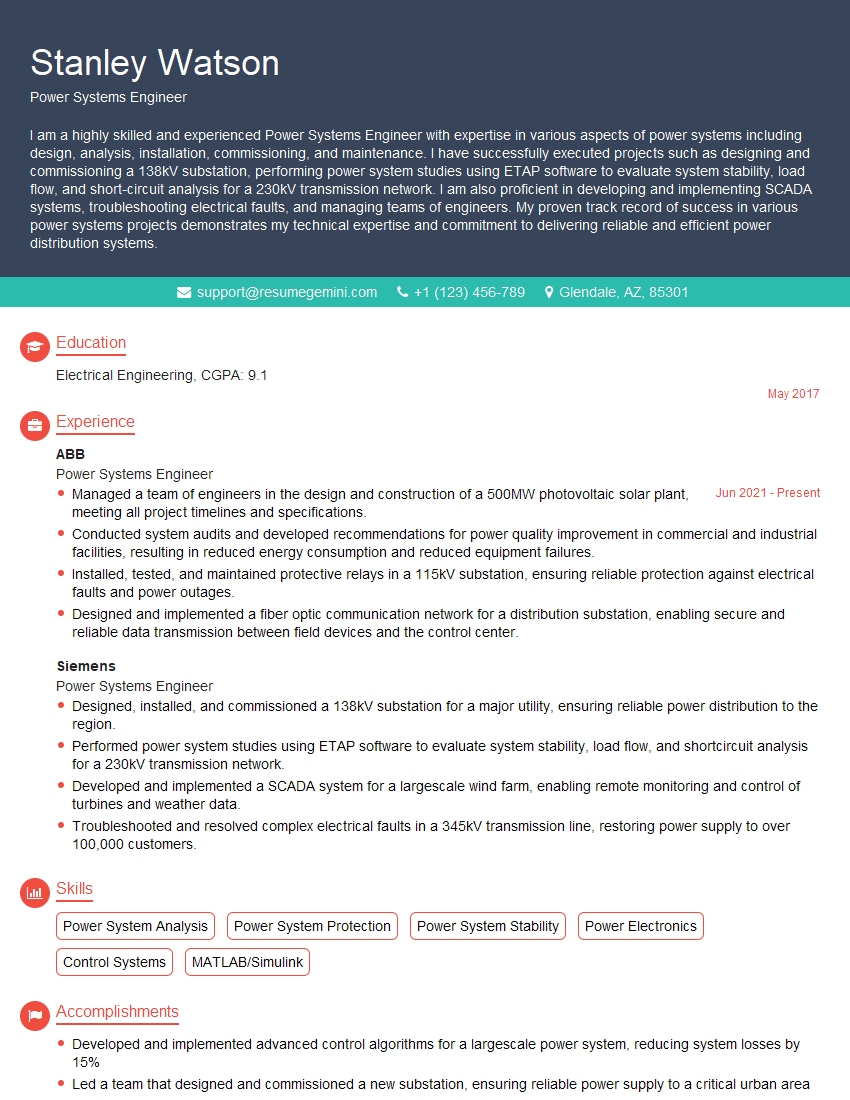
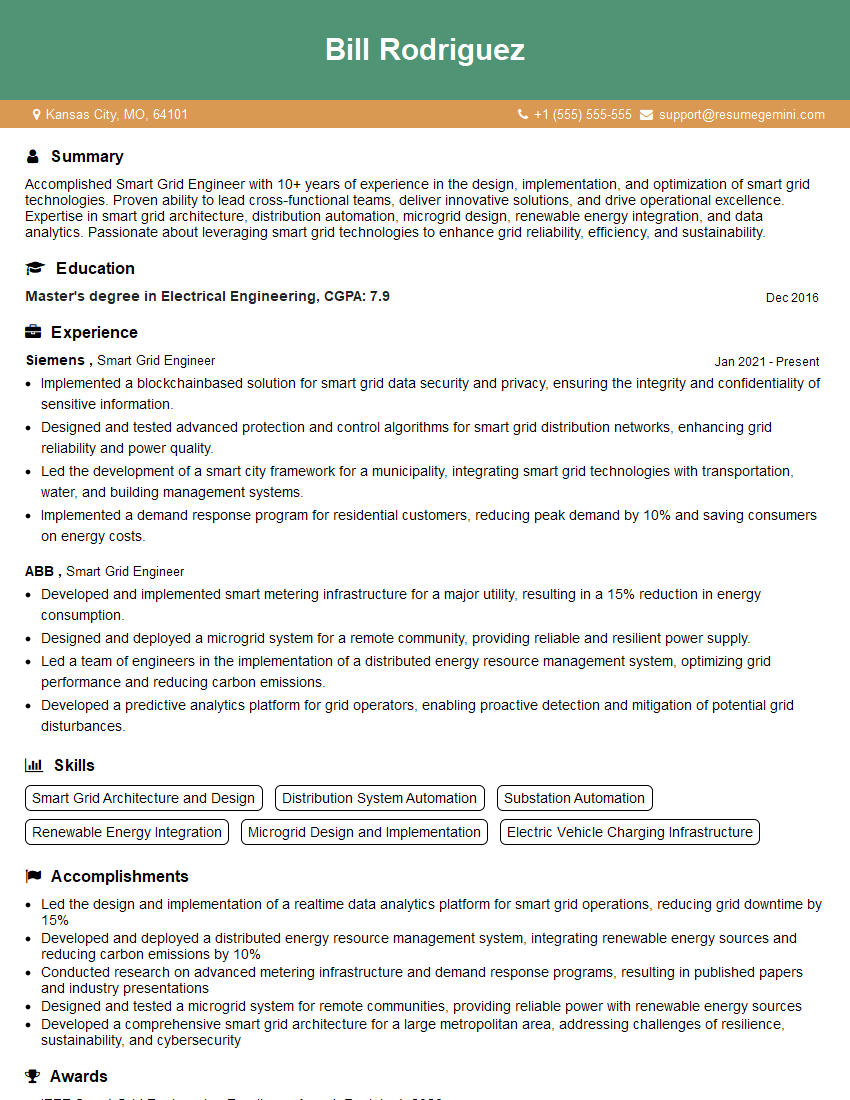
Mastering Power System Measurement is crucial for a successful and rewarding career in the power industry, opening doors to exciting roles in operations, control, protection, and research. To maximize your job prospects, creating a strong, ATS-friendly resume is essential. ResumeGemini is a trusted resource that can help you build a professional resume tailored to highlight your skills and experience effectively. We provide examples of resumes specifically designed for candidates in Power System Measurement to help guide you in crafting your own compelling application.

Explore more articles
Users Rating of Our Blogs
Share Your Experience
We value your feedback! Please rate our content and share your thoughts (optional).
What Readers Say About Our Blog
Very informative content, great job.
good