Are you ready to stand out in your next interview? Understanding and preparing for Power Systems interview questions is a game-changer. In this blog, we’ve compiled key questions and expert advice to help you showcase your skills with confidence and precision. Let’s get started on your journey to acing the interview.
Questions Asked in Power Systems Interview
Q 1. Explain the difference between symmetrical and unsymmetrical faults in a power system.
Faults in a power system are classified as symmetrical or unsymmetrical based on the nature of the fault’s impact on the system’s three phases. Think of it like this: a perfectly balanced three-phase system is like a three-legged stool – stable and equal. A fault disrupts this balance.
Symmetrical Faults: These are faults that affect all three phases equally, such as a three-phase short circuit. Imagine all three legs of the stool breaking simultaneously. Analysis is simplified because the system remains balanced, even in the fault condition. We use simplified symmetrical component analysis techniques to analyze these.
Unsymmetrical Faults: These are faults that affect only one or two phases, such as a single-line-to-ground fault, a line-to-line fault, or a double line-to-ground fault. Picture one or two legs of the stool breaking – the stool is now unstable and unbalanced. These are more common and complex to analyze. We use symmetrical components (positive, negative, and zero sequence) to transform the unsymmetrical fault into three symmetrical components for easier analysis.
In essence: Symmetrical faults are simpler to analyze, while unsymmetrical faults require more sophisticated techniques to calculate fault currents and system response.
Q 2. Describe the per-unit system and its advantages in power system analysis.
The per-unit system is a normalization technique used extensively in power system analysis. It simplifies calculations by expressing all system parameters (voltage, current, impedance, power) as a percentage or fraction of a chosen base value. It’s like using a scale model of a power system.
How it works: You select base values for voltage (Vbase), power (Sbase), and impedance (Zbase) – typically at a particular point in the system, like the generator’s terminal. Then, all other quantities are expressed as a ratio to these base values.
Advantages:
- Simplified Calculations: Per-unit values often result in numbers closer to unity, making calculations less cumbersome and reducing errors. This is particularly advantageous when dealing with large systems.
- System Compatibility: Different components with varying voltage and power ratings can be easily compared and integrated into a single analysis using per unit values.
- Reduced Errors: Because calculations involve numbers closer to 1, manual and software errors are significantly reduced.
Example: If the base voltage is 100 kV and the actual voltage is 95 kV, the per-unit voltage is 0.95 per unit. This simplifies calculations involving transformers and transmission lines significantly, reducing the risk of calculation error.
Q 3. How do you calculate the fault current in a power system?
Calculating fault current requires understanding the system’s impedance and the Thevenin equivalent circuit. The process involves several steps:
- Determine the Thevenin Equivalent Impedance (Zth): This represents the total impedance seen from the fault point looking back into the system. This calculation may involve simplifying network using series and parallel impedance combinations for simpler systems, but usually involves sophisticated software for large and complex networks. Network reduction techniques are paramount here.
- Determine the Pre-fault Voltage (Vpre-fault): This is the voltage at the fault location before the fault occurs. This is typically the nominal system voltage.
- Calculate the Fault Current (Ifault): Using Ohm’s Law, the fault current is calculated as:
- Consider Fault Type: The calculation of Zth will differ depending on the type of fault (single-line-to-ground, line-to-line, double-line-to-ground, or three-phase). This affects the impedance calculation significantly.
Ifault = Vpre-fault / Zth
Software Tools: In practice, power system analysis software (like ETAP, PSS/E, PowerWorld Simulator) are used for accurate calculation of fault currents, especially in large and complex systems.
Q 4. What are the different types of power system stabilizers (PSS) and their functions?
Power System Stabilizers (PSS) are control systems designed to enhance the stability of synchronous generators, particularly during large disturbances. They address issues with generator oscillations that can lead to instability and blackouts. Imagine a pendulum – a PSS helps damp the swing to prevent it from oscillating wildly.
Types of PSS: PSS designs vary, but common types include:
- Lead-Lag PSS: The most basic type, using lead-lag compensators to provide supplementary excitation control to the generator.
- Washout PSS: Includes a washout filter to eliminate low-frequency components and only focus on damping higher frequency oscillations.
- Power System Stabilizers with Adaptive Tuning: These advanced types adjust their parameters based on system conditions, enhancing adaptability and effectiveness.
- PSS based on Wide Area Monitoring Systems (WAMS): These utilize signals from wide areas to improve damping effectiveness.
Functions: The primary function of a PSS is to improve the damping of low-frequency oscillations (typically 0.1-2 Hz) that can arise due to interactions between generators and the power system. This is achieved by providing additional excitation control to the generator, adjusting its output to counteract oscillations and maintain system stability.
Q 5. Explain the principle of operation of a distance protection relay.
A distance protection relay is a crucial component of power system protection. It measures the impedance between the relay location and the fault point along a transmission line. If the impedance falls below a pre-set threshold, the relay initiates tripping of the circuit breaker to isolate the faulted section.
Principle of Operation: The relay uses voltage and current transformers (VTs and CTs) to measure the voltage and current at its location. These are then used to calculate the impedance using various algorithms. Different types of distance protection relays exist, offering different measurement techniques (e.g., impedance measurement, reactance measurement, mho characteristic).
Impedance Measurement: The relay essentially calculates the apparent impedance (Z) using Ohm’s Law: Z = V/I. The angle of the calculated impedance is also considered for improved accuracy and discrimination against other types of faults. Comparison of this calculated impedance with pre-set zones determines if a fault lies within a specific zone. The closer the fault to the relay, the lower the measured impedance.
Zones: Distance relays are typically configured with multiple zones of protection, each covering a different section of the transmission line. This allows for staged protection and coordinated tripping of circuit breakers.
In short: The relay continuously monitors the line impedance and triggers a trip command if it detects a fault within its protection zones. This ensures rapid isolation of the fault to minimize damage and maintain the overall grid stability.
Q 6. Describe different methods for improving power system stability.
Improving power system stability is a critical aspect of grid operation. Several methods can be employed, categorized broadly as:
- Generator Controls:
- Power System Stabilizers (PSS): As discussed earlier, PSSs enhance the damping of generator oscillations.
- Excitation System Improvements: Upgrading the excitation systems of generators to provide faster and more accurate voltage regulation improves stability.
- Governor Control Improvements: Tuning governor control parameters to enhance frequency stability during disturbances.
- Network Enhancements:
- Transmission Line Upgrades: Increasing the capacity and stability of transmission lines through reinforcements and upgrades.
- Flexible AC Transmission Systems (FACTS): Devices like Static Synchronous Compensators (STATCOM) and Static Synchronous Series Compensators (SSSC) can improve stability by dynamically controlling voltage and impedance in the transmission system.
- High-Voltage Direct Current (HVDC) Transmission: HVDC lines can enhance power transfer capability and improve stability across long distances.
- Operational Strategies:
- Load Shedding Schemes: Carefully designed load shedding strategies help prevent cascading outages during major system disturbances.
- Optimal Power Flow (OPF): Advanced optimization techniques to operate the system closer to its stability limits.
Integrated Approach: Effective stability improvement often requires a comprehensive approach involving a combination of these methods tailored to the specific characteristics of the power system.
Q 7. What are the challenges associated with integrating renewable energy sources into the power grid?
Integrating renewable energy sources (RES) like solar and wind power presents significant challenges to the power grid:
- Intermittency and Variability: RES output fluctuates based on weather conditions. This variability makes it difficult to predict and manage power supply reliably.
- Lack of Inertia: Unlike synchronous generators, most RES don’t provide inertia, which is crucial for maintaining grid frequency stability during disturbances. This can lead to more frequent and severe frequency deviations.
- Voltage and Frequency Control: Maintaining voltage and frequency stability becomes more difficult with large amounts of fluctuating RES power. Advanced control systems and energy storage are required.
- Grid Infrastructure Limitations: Existing grids may not be designed to accommodate the large-scale integration of RES, requiring upgrades to transmission and distribution infrastructure.
- Integration Costs: Integrating RES often involves significant investments in new equipment, control systems, and grid infrastructure.
- Location Challenges: RES resources are not always located near load centers, necessitating long-distance transmission lines which can be problematic for stability and power losses.
Addressing Challenges: Strategies to mitigate these challenges include advanced forecasting techniques, energy storage systems (batteries, pumped hydro), demand-side management, and smart grid technologies to enhance grid control and flexibility.
Q 8. Explain the concept of power system load flow analysis.
Power system load flow analysis is a crucial process that determines the steady-state operating conditions of an electrical power system. Imagine a complex network of roads with varying traffic flow – load flow analysis is like calculating the traffic volume on each road segment. It calculates the voltage magnitude and angle at each bus (node in the network) and the real and reactive power flow in each transmission line. This helps engineers understand the system’s behavior under different load conditions, ensuring stability and efficient operation.
The analysis uses a set of equations, typically based on Kirchhoff’s laws, to model the power system. These equations consider the impedance of lines, transformers, and generators. Different methods exist, including Gauss-Seidel, Newton-Raphson, and fast decoupled methods, each with trade-offs in computational speed and accuracy. The results help in planning, operation, and control of power systems. For example, identifying overloaded lines or potential voltage violations allows for proactive measures like upgrading infrastructure or adjusting generator outputs.
Q 9. How do you analyze power system transient stability?
Transient stability analysis determines a power system’s ability to maintain synchronism after a major disturbance, such as a fault or a sudden load change. Think of a tightrope walker – a small disturbance could easily throw them off balance, whereas a well-trained walker can recover. Similarly, a power system’s stability depends on its ability to recover from these disturbances. We use sophisticated computer simulations to model the system’s dynamic behavior, including the response of generators, exciters, and governors.
The analysis involves solving a set of differential and algebraic equations that govern the system’s dynamics. These equations are often non-linear and require numerical techniques to solve. Time-domain simulations are commonly used, numerically integrating the equations step-by-step to track the system’s response over time. The outcome determines if the system remains stable or experiences cascading failures. Tools like PSS/E or PowerWorld Simulator are commonly used for transient stability studies, allowing engineers to assess different fault scenarios and determine the necessary control actions to enhance the system’s resilience.
Q 10. What are the different types of grounding systems used in power systems?
Grounding systems in power systems are essential for safety and proper operation. They provide a low-impedance path for fault currents to flow to the ground, protecting equipment and personnel from high voltages. Different grounding systems are used depending on the specific needs and characteristics of the system.
- Solid Grounding: The neutral point of the transformer is directly connected to the earth, providing a low-impedance path. It’s effective in clearing ground faults quickly but can lead to high fault currents.
- Resistance Grounding: A resistor is inserted between the neutral point and the ground, limiting the fault current to a safer level. It’s a compromise between fast fault clearing and current limitation.
- Reactance Grounding: A reactor is used instead of a resistor, offering better control over the fault current. This is often used in high-voltage systems.
- Peterson Coil Grounding: This method uses a resonant coil to neutralize the capacitive current caused by ground faults, minimizing fault current flow. It’s commonly used in ungrounded distribution systems.
- Ungrounded System: The neutral point is not grounded, offering insulation against earth faults but requiring special protection schemes like differential relays.
The choice of grounding system depends on factors such as voltage level, system impedance, and fault current requirements. Proper grounding is vital for safety and reliable operation of the power system.
Q 11. Describe the operation of a synchronous generator.
A synchronous generator, the powerhouse behind most electrical grids, converts mechanical energy into electrical energy. Imagine a rotating magnet inside a stationary coil of wire – that’s the fundamental principle. The rotor (rotating magnet) is driven by a prime mover (e.g., a steam turbine or a gas turbine), while the stator (stationary coil) generates the electrical power.
The rotor’s rotation creates a rotating magnetic field, inducing an alternating current (AC) in the stator windings. The frequency of the generated AC is directly proportional to the rotor’s speed. The voltage generated is controlled by the field excitation current supplied to the rotor windings. Synchronous generators are crucial for maintaining grid stability and are equipped with automatic voltage regulators (AVRs) and governors to control their output voltage and frequency, ensuring a consistent supply of power. The synchronism with the grid is maintained by the interaction of the generator’s rotating magnetic field and the grid’s magnetic field. Maintaining this synchronism is key to stable operation.
Q 12. Explain the concept of power factor correction.
Power factor correction aims to improve the efficiency of electrical power systems by minimizing the reactive power component. Imagine a water pump – it requires both pressure (real power) and flow (reactive power). Ideally, we want maximum pressure with minimal flow loss. Similarly, in electrical systems, a low power factor indicates inefficient use of real power due to high reactive power.
Reactive power is associated with inductive loads, such as motors and transformers, which consume current but don’t do any real work. A low power factor increases the current drawn from the system, leading to increased transmission and distribution losses and potentially overheating equipment. Power factor correction involves adding capacitive elements to the system, which generates reactive power to offset the inductive component. This leads to a higher power factor, closer to unity (1), reducing current and improving overall efficiency. Capacitors are the commonly used devices for power factor correction, and their size is chosen to counteract the inductive reactance of the load.
Q 13. What are the different types of transformers used in power systems?
Transformers are essential components of power systems, stepping up or down voltage levels efficiently. They are based on the principle of electromagnetic induction. There are various types, each designed for specific applications:
- Power Transformers: Used in substations to transform high voltages for transmission to lower voltages for distribution. These are large, heavy-duty transformers.
- Distribution Transformers: Smaller transformers used to step down voltage for local distribution networks.
- Instrument Transformers: Used for measurement and protection purposes. Current transformers (CTs) measure current, while potential transformers (PTs) measure voltage.
- Autotransformers: Have a single winding with a common tap, offering both step-up and step-down capabilities. They are generally smaller and lighter than two-winding transformers.
- Isolation Transformers: Provide electrical isolation between the input and output circuits, enhancing safety by preventing ground faults.
The choice of transformer type depends on its intended function, voltage levels, and power rating. They are critical components that ensure efficient and safe voltage transformation throughout the power system.
Q 14. Explain the role of surge arresters in power system protection.
Surge arresters, also known as lightning arresters, are protective devices that safeguard electrical equipment from overvoltages caused by lightning strikes or switching surges. Think of them as safety valves in a pressure cooker – they release excess pressure before it causes damage. Similarly, surge arresters divert excess voltage to ground, protecting valuable equipment.
They typically use metal-oxide varistors (MOVs) or silicon carbide (SiC) elements, which have a non-linear voltage-current characteristic. Under normal operating voltages, they have a high impedance and allow minimal current flow. However, when a surge occurs, their impedance drops dramatically, allowing the surge current to flow to ground. Once the surge is over, they revert to their high-impedance state. Surge arresters are strategically placed in power systems, particularly at substations and near sensitive equipment, to protect against potentially damaging overvoltages, ensuring the safety and longevity of the power system.
Q 15. What are the different types of power system control schemes?
Power system control schemes are designed to maintain the stability and reliability of the power grid. They encompass a wide range of techniques, broadly categorized into:
- Load Frequency Control (LFC): This scheme regulates the system frequency and maintains power balance between generation and load. Imagine it like a sophisticated thermostat for the entire power grid, constantly adjusting generation to meet changing demand. It works primarily through Automatic Generation Control (AGC) systems that adjust the output of generators based on frequency deviations.
- Economic Dispatch (ED): This aims to minimize the overall cost of power generation while meeting the demand. Think of it as a smart resource allocation system, distributing the generation burden among power plants based on their operating costs and efficiency. This typically involves algorithms to optimize generation based on factors like fuel cost and generator characteristics.
- Voltage Stability Control: This focuses on maintaining voltage levels within acceptable limits across the system. Low voltage can lead to equipment failure and instability, so this scheme is crucial for reliability. Control methods include reactive power compensation (discussed later) and tap-changing transformers.
- Reactive Power Control: This control scheme governs the reactive power flow to maintain voltage profiles and improve system stability. Reactive power, unlike active power, doesn’t contribute to actual work but is vital for maintaining voltage levels. Control methods include shunt capacitor banks and voltage regulators.
- State Estimation (SE): This involves using measured data from various points in the system to estimate the complete system state (voltage magnitudes and angles at each bus). It provides a real-time snapshot of the grid’s condition, crucial for monitoring and control. This feeds into other control schemes for better decision making.
- Protection Schemes: These are crucial safety mechanisms that detect faults and isolate affected parts of the system to prevent cascading failures and protect equipment. These involve relays and circuit breakers that swiftly disconnect faulted lines or equipment.
These schemes often work in coordination, with advanced control systems employing sophisticated algorithms to ensure optimal operation of the power system.
Career Expert Tips:
- Ace those interviews! Prepare effectively by reviewing the Top 50 Most Common Interview Questions on ResumeGemini.
- Navigate your job search with confidence! Explore a wide range of Career Tips on ResumeGemini. Learn about common challenges and recommendations to overcome them.
- Craft the perfect resume! Master the Art of Resume Writing with ResumeGemini’s guide. Showcase your unique qualifications and achievements effectively.
- Don’t miss out on holiday savings! Build your dream resume with ResumeGemini’s ATS optimized templates.
Q 16. How do you model a transmission line in a power system simulation?
Modeling a transmission line in a power system simulation is crucial for accurate analysis. The most common method is using the π-model, a simplified representation of the line’s physical characteristics. This model represents the line using series impedance (R+jX) and shunt admittance (jB) at each end. The values of R, X, and B depend on the line’s length, conductor type, and configuration.
Here’s a breakdown:
- Resistance (R): Represents the loss of power due to the resistance of the conductors. It is usually smaller for higher voltage transmission lines.
- Reactance (X): Represents the inductive reactance due to the magnetic field created around the conductors. This is a significant component of the transmission line impedance.
- Susceptance (B): Represents the capacitive susceptance due to the capacitance between the conductors. This becomes increasingly important as the line length increases.
In more advanced simulations, detailed models can be employed that incorporate frequency dependence, skin effect, and other factors to provide even more accurate results. Software packages like PowerWorld Simulator, PSS/E, or ETAP use these models to simulate power system behavior under various operating conditions.
// Example representation in a simulation program: // Series impedance Z = R + jX // Shunt admittance Y = jB Accurate line modeling is essential for transient stability studies, load flow analyses, and fault studies, allowing engineers to assess system performance and plan for future expansion or upgrades.
Q 17. What are the common causes of power system harmonics?
Power system harmonics are unwanted sinusoidal waves whose frequencies are integer multiples of the fundamental frequency (typically 50Hz or 60Hz). Their presence distorts the pure sinusoidal waveform, leading to various problems. Common causes include:
- Non-linear loads: Devices like rectifiers, inverters, and switch-mode power supplies draw non-sinusoidal currents, generating harmonic currents. Think about your computer charger; it uses a switching circuit, creating a non-sinusoidal current demand that injects harmonics into the system.
- Arc furnaces: These industrial loads create significant harmonic distortion due to their highly non-linear current draw.
- Variable speed drives (VSDs): Widely used in industrial motors, these drives use pulse-width modulation (PWM) techniques which generate a lot of harmonics.
- High-voltage direct current (HVDC) converters: These converters, used to transmit power over long distances, can also contribute to harmonic distortion.
- Unbalanced loads: Unequal loading on different phases can lead to harmonic generation and system imbalance. This can be caused by faulty equipment or an uneven distribution of loads in a building or industrial setting.
The impact of harmonics can be serious, causing overheating of equipment, malfunction of sensitive electronics, and even resonance leading to system instability. Mitigation techniques include using harmonic filters, active power filters, and proper load balancing.
Q 18. Explain the principles of power system voltage control.
Power system voltage control is crucial for maintaining system stability and ensuring the reliable operation of equipment. The goal is to keep voltage magnitudes within a specified range at all buses in the system. It’s like ensuring every house in a neighborhood receives the correct voltage – neither too high nor too low.
The principles involve:
- Maintaining voltage magnitudes within acceptable limits: This prevents equipment damage and ensures smooth operation. Too high a voltage can lead to insulation breakdown, while too low a voltage can result in motor stalling or reduced equipment lifespan.
- Regulating reactive power: Reactive power plays a vital role in voltage control. By adjusting reactive power generation or consumption, we can control voltage magnitudes. Think of reactive power as adjusting the ‘pressure’ in the system to maintain the desired voltage.
- Using voltage regulating equipment: This includes tap-changing transformers, shunt capacitors, shunt reactors, and static VAR compensators (SVCs). These devices help maintain the voltage at various points in the system.
- Load compensation: Reactive power consumed by loads can be compensated for using reactive power sources to avoid voltage drops. This is particularly important in areas with high load density.
Sophisticated control systems monitor voltage magnitudes and adjust the settings of voltage regulating equipment to maintain the desired voltage profile. Voltage control is a dynamic process that continuously adapts to changing load conditions and disturbances in the system.
Q 19. Describe the various methods for reactive power compensation.
Reactive power compensation is essential for maintaining voltage stability and improving power system efficiency. Methods include:
- Shunt capacitors: These provide reactive power to the system, improving voltage levels, especially during light load conditions. Imagine them as local ‘voltage boosters’ that add reactive power to counteract voltage drops.
- Shunt reactors: These absorb reactive power, helping to regulate voltage levels during heavy load conditions or periods of low generation. They can act as ‘voltage dampeners’ during peak demand.
- Static VAR compensators (SVCs): These are sophisticated devices that can quickly and accurately regulate reactive power flow. They use thyristors or other semiconductor devices to adjust their impedance, providing a flexible and efficient way to control voltage. They’re like intelligent voltage regulators that respond swiftly to changing conditions.
- Synchronous condensers: These are synchronous motors running without a mechanical load, solely to supply or absorb reactive power. They are quite efficient but less common in modern systems.
- STATCOMs (Static Synchronous Compensators): These are voltage source converters that can provide very fast and precise reactive power compensation, effectively controlling voltage fluctuations. They are widely used in modern grids for improved stability.
- Series compensation: This involves adding series capacitors to transmission lines to increase the transmission capacity and improve voltage stability. This technique is primarily used on long transmission lines.
The choice of method depends on factors like system size, load characteristics, and cost considerations. Often, a combination of methods is used for optimal voltage control.
Q 20. What are the key components of a substation?
Substations are critical components of the power system, acting as switching and transforming centers. Key components include:
- Transformers: These step up or step down voltage levels to match the requirements of the transmission and distribution networks. They are crucial for efficient power transmission over long distances.
- Circuit breakers: These are safety devices that disconnect faulty sections of the system to prevent cascading failures. Think of them as the system’s safety switches, instantly cutting the power in case of a fault.
- Buses: These are conducting bars or structures that connect various components within the substation, allowing for the flow of power between transformers, circuit breakers, and other equipment. They are like junctions in a road network, directing the flow of electricity.
- Protection relays: These monitor the system and instantly detect faults, initiating the tripping of circuit breakers to isolate the faulted section. They are the ‘watchdogs’ of the substation.
- Insulators: These prevent the flow of current to ground, keeping the system safe and preventing short circuits. They are crucial for maintaining the integrity of the high-voltage equipment.
- Switchgear: This encompasses the combination of switching devices, circuit breakers, and protection relays that control and protect the flow of power within the substation. It forms the ‘nervous system’ of the substation.
- Measurement devices: These include meters, sensors, and transducers that monitor voltage, current, power, and other critical parameters to provide real-time data for control and monitoring.
- Grounding system: This provides a safe path for fault currents to flow to the earth, preventing dangerous voltages from accumulating on equipment and preventing injury to personnel.
Modern substations often incorporate advanced technologies like digital protection relays, automated control systems, and fiber optic communication networks for enhanced monitoring and control.
Q 21. Explain the concept of power system state estimation.
Power system state estimation (PSE) is a crucial process that uses measured data from various points in the power system to estimate the complete system state. This includes voltage magnitudes and phase angles at each bus, and it provides a real-time snapshot of the system’s operating conditions. Think of it as creating a detailed map of the power system’s electrical state.
The process involves:
- Data acquisition: Measurement data like voltage magnitudes, currents, and power flows are collected from various locations across the power system using phasor measurement units (PMUs) and other metering devices.
- Data pre-processing: The collected data is pre-processed to handle bad data (outliers and errors) and missing data. This is a crucial step to avoid inaccurate estimation.
- State estimation algorithm: A mathematical algorithm, often based on weighted least squares, is used to estimate the state variables (voltage magnitudes and angles) that best fit the available measurement data. This algorithm considers the uncertainties associated with the measurements.
- Bad data detection: The algorithm also identifies and flags any measurements that deviate significantly from the estimated state, indicating potential errors in the data or equipment malfunctions.
- State validation: The estimated state is validated to ensure that it is physically realistic and consistent with the system’s topology and operating limits. This prevents nonsensical results that could lead to wrong decisions.
PSE is essential for various applications, including real-time monitoring, security assessment, control system optimization, and contingency analysis. It helps operators understand the system’s status, respond to disturbances, and make informed decisions to maintain system reliability and stability.
Q 22. Describe the different types of protective relays used in power systems.
Protective relays are the first line of defense in power systems, instantly detecting faults and isolating faulty sections to prevent widespread outages. They’re essentially sophisticated sensors and decision-makers that continuously monitor voltage, current, and other parameters. Different types cater to various fault conditions.
- Overcurrent Relays: These are the most common, tripping when the current exceeds a preset threshold. They come in various types like instantaneous, time-delayed, and directional relays, each with different operating characteristics. For example, a directional overcurrent relay will only trip if the fault current flows in a specific direction, preventing unnecessary tripping during back-feeding situations.
- Differential Relays: These compare the current entering and leaving a protected zone (e.g., a transformer). Any significant difference indicates an internal fault, triggering a trip. They’re highly sensitive and accurate, particularly effective for protecting transformers and generators.
- Distance Relays: These measure the impedance to a fault along a transmission line. By calculating this impedance, they can pinpoint the fault location and isolate the affected section, minimizing the outage scope. They are crucial for protecting long transmission lines.
- Ground Fault Relays: These detect faults involving ground, which are often more dangerous. They can be sensitive to small ground currents, preventing escalation to larger problems.
- Buchholz Relays: These are specifically designed for transformer protection. They detect gas accumulation or excessive pressure within a transformer, indicating internal faults, thus preventing catastrophic failure.
The selection of appropriate relays depends on several factors, including the type of equipment, fault characteristics, system configuration, and protection coordination requirements. Improper relay settings can lead to unnecessary tripping or failure to clear faults, causing significant economic losses and safety hazards.
Q 23. What are the benefits of using FACTS devices in power systems?
FACTS (Flexible AC Transmission Systems) devices are power electronic-based systems that enhance the controllability and efficiency of power transmission networks. They offer several key benefits:
- Improved Power Transfer Capability: FACTS devices can increase the power transfer capacity of existing transmission lines by controlling voltage and impedance, reducing transmission losses and improving stability.
- Enhanced Voltage Stability: They can regulate voltage levels at critical points in the grid, preventing voltage collapses and improving system stability. This is especially crucial during high-load periods or disturbances.
- Improved Power System Stability: FACTS devices can enhance the system’s ability to recover from disturbances by quickly regulating power flow and dampening oscillations.
- Reduced Transmission Losses: By optimizing power flow, FACTS devices can minimize transmission losses, leading to economic savings.
- Increased System Flexibility: They allow for more flexible operation of the power system, adapting to changing load demands and renewable energy integration.
Examples include Static Synchronous Compensators (STATCOMs) for reactive power compensation, and Thyristor-Controlled Series Capacitors (TCSCs) for impedance control. Imagine a highway with limited capacity; FACTS devices are like adding intelligent traffic management systems that improve flow and prevent congestion.
Q 24. How do you assess the reliability of a power system?
Assessing power system reliability involves quantifying the system’s ability to supply power continuously and reliably. This is usually done using a combination of probabilistic and deterministic methods.
- Probabilistic Methods: These methods use statistical data on component failure rates and repair times to estimate the probability of system failures. Techniques like Markov models and Monte Carlo simulation are used to analyze the system’s behavior under various conditions and calculate reliability indices, such as the frequency and duration of outages (SAIDI, SAIFI).
- Deterministic Methods: These methods focus on identifying potential failure points and weaknesses in the system. Load flow studies, fault analysis, and transient stability analysis help pinpoint vulnerable areas and assess their impact on system reliability. N-1 criteria (ability to withstand a single component failure) and N-2 criteria (ability to withstand two simultaneous component failures) are commonly used to assess system robustness.
Data is critical, sourced from historical records, equipment specifications, and maintenance schedules. The reliability assessment informs decisions regarding system design, operation, and maintenance strategies. It’s a continuous process of monitoring, analysis, and improvement, striving to minimize the frequency and duration of outages while optimizing costs.
Q 25. Explain different types of power system studies (e.g., load flow, fault, stability).
Power system studies are crucial for planning, designing, operating, and maintaining power systems. They use specialized software to model the system and analyze its behavior under various conditions.
- Load Flow Studies: These studies determine the steady-state voltage and current at each point in the system under a given load condition. They are fundamental for planning network expansion and ensuring system operation within acceptable voltage limits. They help in identifying potential overloading and voltage issues.
- Fault Studies (Short Circuit Studies): These analyze the system’s response to various types of faults (short circuits). They are essential for selecting protective devices, coordinating protection schemes, and determining the fault current levels. This ensures the system can effectively isolate faults and minimize their impact.
- Stability Studies: These assess the system’s ability to maintain stability following disturbances, such as sudden load changes or faults. Different types of stability studies include transient stability (short-term response), dynamic stability (long-term response), and small-signal stability (oscillatory behavior). These help to determine the system’s resilience and inform design choices to improve its ability to withstand such disturbances.
- Harmonic Studies: These analyze the presence of harmonic currents and voltages in the system, which are caused by non-linear loads (e.g., rectifiers, variable speed drives). Excessive harmonics can damage equipment and disrupt system operation. These studies help in mitigating harmonic issues.
Each study provides valuable insights to optimize system performance and enhance reliability. They are iterative, allowing engineers to refine designs and operating strategies for a robust and efficient power system.
Q 26. What are smart grids and their key features?
Smart grids are modernized electrical grids that utilize advanced technologies like sensors, communication networks, and data analytics to enhance efficiency, reliability, and sustainability.
- Advanced Metering Infrastructure (AMI): Smart meters provide real-time data on energy consumption, enabling better demand-side management and reducing peak loads.
- Two-Way Communication: This allows for remote control of grid assets, real-time monitoring, and automated fault detection and restoration.
- Integration of Renewable Energy Sources: Smart grids are designed to seamlessly integrate renewable energy sources like solar and wind power, which are inherently intermittent.
- Improved Grid Stability and Reliability: Advanced control systems and real-time monitoring enhance the grid’s ability to handle disturbances and reduce outages.
- Demand Response Programs: Smart grids enable utilities to incentivize consumers to shift their energy consumption to off-peak times, balancing supply and demand.
Imagine a traffic system that dynamically adjusts traffic signals based on real-time traffic flow. Smart grids perform a similar function, optimizing energy flow and distribution in response to changing demands and supply conditions. This leads to a more efficient, resilient, and environmentally friendly power system.
Q 27. Describe the role of SCADA in power system management.
Supervisory Control and Data Acquisition (SCADA) systems are the central nervous system of modern power systems. They provide real-time monitoring and control of the entire grid. They collect data from various substations and power plants, process the data, and display it to operators.
- Data Acquisition: SCADA systems collect data from remote terminal units (RTUs) and programmable logic controllers (PLCs) at substations and generation facilities, monitoring voltage, current, power flow, and other key parameters.
- Data Processing and Presentation: The data is processed and displayed on human-machine interfaces (HMIs) that provide operators with a clear view of the system’s status.
- Supervisory Control: SCADA allows operators to remotely control various aspects of the power system, including switching equipment, regulating voltage, and managing power flow.
- Alarm Management: The system monitors for abnormal conditions and generates alarms, alerting operators to potential problems.
- Data Logging and Reporting: SCADA systems record data for analysis, allowing for trend identification and performance evaluation.
SCADA systems are essential for ensuring the reliable and efficient operation of power systems. They are critical for preventing and responding to disturbances, improving system performance, and reducing operational costs. Think of it as a sophisticated dashboard providing a real-time view and control of the entire power grid.
Q 28. Explain your experience with power system simulation software (e.g., PSS/E, ETAP).
Throughout my career, I’ve extensively used power system simulation software, primarily PSS/E and ETAP, for various projects. My experience encompasses both steady-state and transient analysis.
- PSS/E (Power System Simulator for Engineering): I have utilized PSS/E for detailed load flow, fault, and stability studies on large-scale power systems. For example, in one project, I used PSS/E to model a regional transmission network to analyze the impact of renewable energy integration on system stability. I performed time-domain simulations to assess the effectiveness of different control strategies in mitigating oscillations and preventing cascading failures.
//Example PSS/E script snippet (Illustrative): <script> // Define system data... // Run load flow... // Perform stability analysis... </script> - ETAP (Electrical Transient Analyzer Program): I’ve leveraged ETAP for protection coordination studies, short circuit analysis, and arc flash hazard assessments. In another project, I used ETAP to design and analyze the protection system for a new substation, ensuring proper coordination between different relays and breakers. I also used its arc flash calculation capabilities to ensure worker safety.
My proficiency with these tools enables me to accurately model complex power systems, analyze various scenarios, and design robust and reliable solutions. The software’s capabilities are essential for effective planning, operation, and maintenance of power systems.
Key Topics to Learn for Power Systems Interview
- Power System Analysis: Understanding fundamental concepts like load flow studies, fault analysis (symmetrical and unsymmetrical), and power system stability. Practical application includes analyzing system performance and identifying potential vulnerabilities.
- Power System Protection: Relays, circuit breakers, and protection schemes. Practical application involves designing and implementing protection systems to ensure grid reliability and safety. Explore different types of relays and their applications.
- Power System Operation and Control: Economic dispatch, voltage control, and frequency regulation. Practical application includes optimizing power generation and distribution for efficiency and stability. Consider exploring advanced control strategies like FACTS devices.
- Renewable Energy Integration: Understanding the challenges and solutions involved in integrating renewable energy sources (solar, wind) into existing power systems. Practical application includes grid planning and operational strategies for a reliable, sustainable power grid. Explore power quality issues related to renewable integration.
- Power System Planning and Design: Transmission and distribution system planning, including substation design and expansion planning. Practical application includes designing new power systems or upgrading existing infrastructure to meet future demand. Explore different power system models and simulation techniques.
- Power Electronics and Drives: Understanding the role of power electronics in modern power systems, including high-voltage direct current (HVDC) transmission and motor drives. Practical application includes designing and implementing efficient and reliable power electronic systems for various applications.
Next Steps
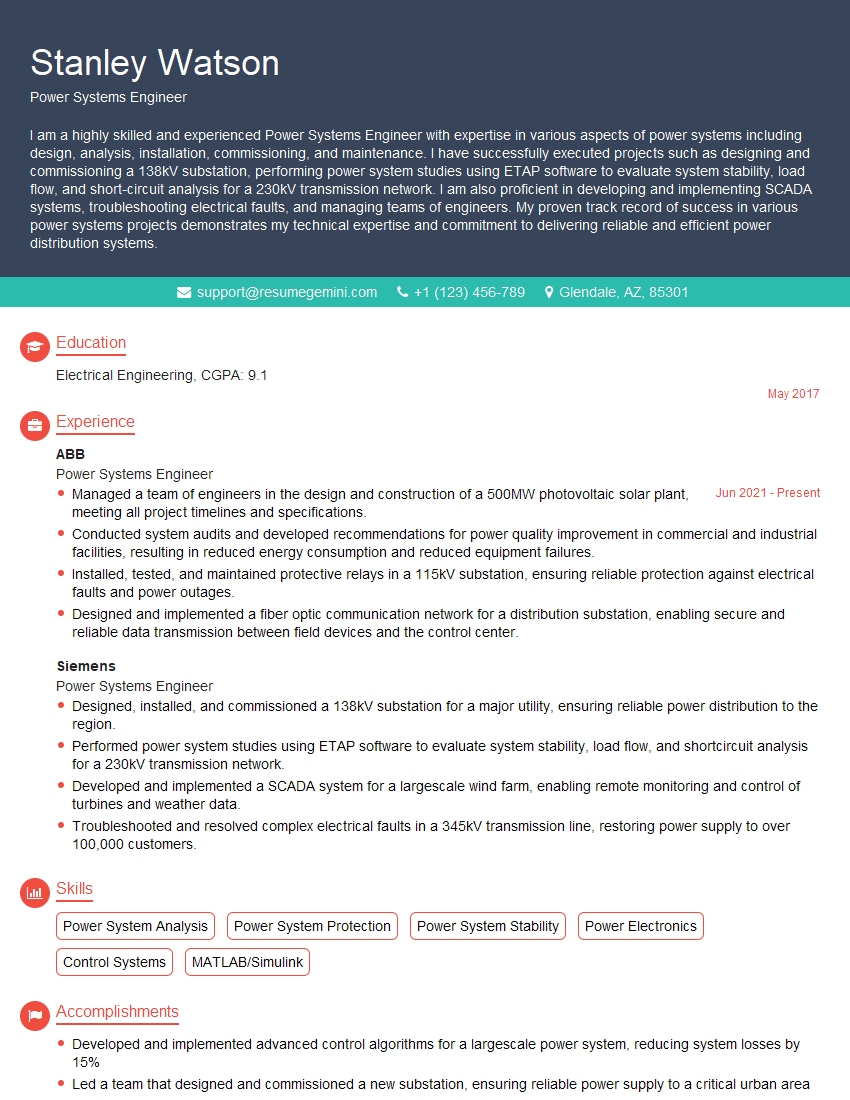
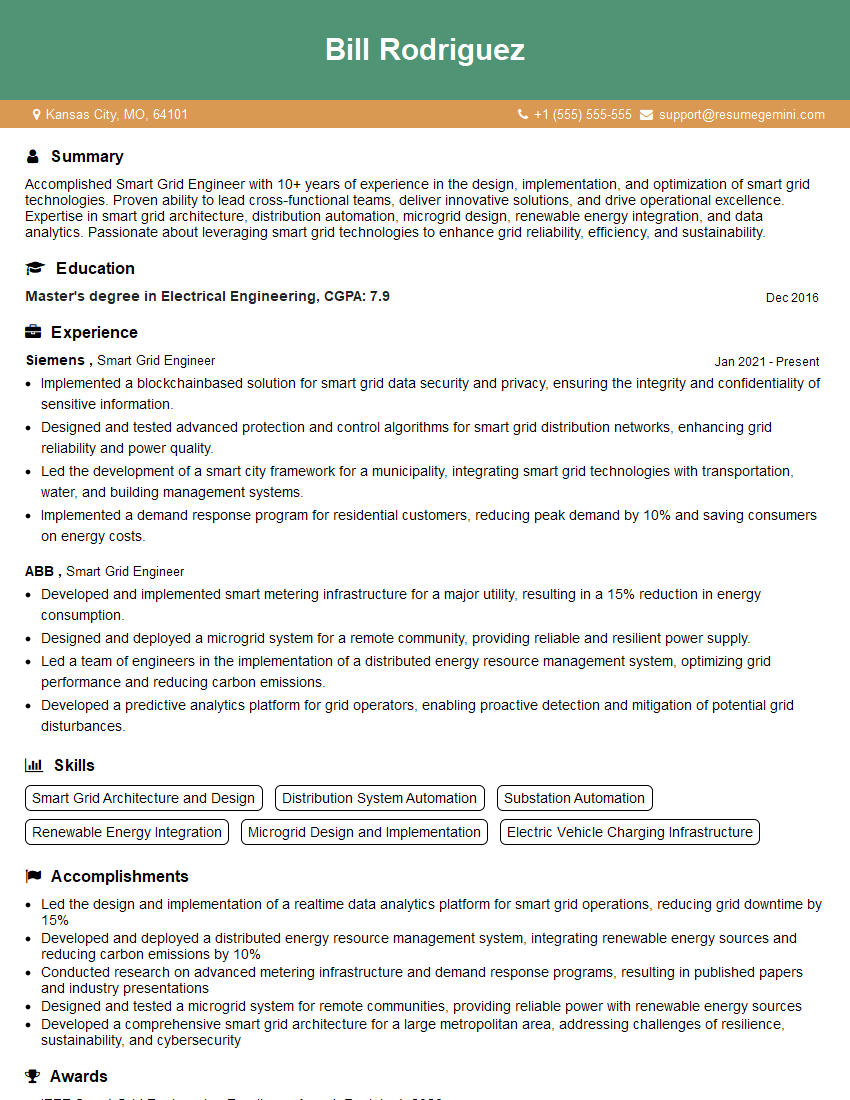
Mastering Power Systems opens doors to exciting and impactful careers in a rapidly evolving industry. A strong foundation in these core concepts will significantly boost your interview performance and career prospects. To maximize your chances of landing your dream job, it’s crucial to present your skills and experience effectively through a well-crafted resume optimized for Applicant Tracking Systems (ATS). ResumeGemini is a trusted resource to help you build a professional and impactful resume that highlights your expertise. We provide examples of resumes tailored specifically to the Power Systems field to guide you through the process. Invest the time to create a compelling resume – it’s your first impression and a key to unlocking your career potential.

Explore more articles
Users Rating of Our Blogs
Share Your Experience
We value your feedback! Please rate our content and share your thoughts (optional).
What Readers Say About Our Blog
Very informative content, great job.
good