Preparation is the key to success in any interview. In this post, we’ll explore crucial Pre-School Education interview questions and equip you with strategies to craft impactful answers. Whether you’re a beginner or a pro, these tips will elevate your preparation.
Questions Asked in Pre-School Education Interview
Q 1. Describe your experience with differentiated instruction in a preschool setting.
Differentiated instruction in preschool means tailoring teaching methods and activities to meet the diverse learning needs and styles of each child. It’s about recognizing that not all children learn at the same pace or in the same way. Instead of a one-size-fits-all approach, I create a learning environment that offers various learning opportunities and support systems.
- Differentiation by Content: I might offer different versions of the same activity, for example, providing simpler puzzles for children who are still developing fine motor skills and more complex ones for those ready for a challenge.
- Differentiation by Process: Children might work independently, in pairs, or in small groups depending on their learning preferences and the task at hand. Some children might benefit from a hands-on approach while others thrive in more structured, teacher-led activities.
- Differentiation by Product: This involves offering various ways for children to demonstrate their understanding. For instance, some children might draw a picture to show they understand a story, while others might retell the story or act it out.
For example, during a lesson on shapes, I would provide various manipulatives like blocks, playdough, and shape-sorters, catering to different learning styles and developmental levels. Some children could trace shapes, others could build shapes using blocks, and still others could create shape collages.
Q 2. How do you manage classroom behavior in a developmentally appropriate manner?
Managing classroom behavior in a developmentally appropriate manner requires understanding that young children are still developing self-regulation skills. My approach focuses on positive reinforcement, proactive strategies, and addressing behaviors with empathy and understanding.
- Positive Reinforcement: I frequently praise positive behaviors, celebrating successes, both big and small. This might involve verbal praise, stickers, or a special privilege.
- Proactive Strategies: A well-structured environment with clear expectations and routines significantly reduces disruptive behaviors. Having designated areas for different activities, providing ample choices, and ensuring children feel a sense of belonging are crucial.
- Redirection and Guidance: If a child is exhibiting challenging behavior, I try to redirect their attention to a more appropriate activity or offer support to help them manage their emotions. I might say something like, “I see you’re feeling frustrated with the blocks. Let’s try building a tower together.”
- Ignoring Minor Behaviors: I avoid giving attention to minor misbehaviors that aren’t harmful, focusing instead on positive actions.
I find that building strong relationships with the children is key. When children feel safe, seen, and understood, they are more likely to cooperate and exhibit positive behaviors. For example, if a child is having a tantrum, I would get down to their level, make eye contact, and speak calmly, acknowledging their feelings before offering solutions.
Q 3. Explain your approach to creating a positive and inclusive classroom environment.
Creating a positive and inclusive classroom environment is crucial for fostering a love of learning and supporting each child’s social and emotional development. My approach is built on three main pillars: respect, empathy, and collaboration.
- Respect: I ensure every child feels valued and respected for who they are, regardless of their background, abilities, or learning style. I actively listen to their ideas and perspectives, incorporating them into our classroom activities whenever possible.
- Empathy: I help children develop their emotional intelligence by modeling empathy and encouraging them to understand and respond to others’ emotions. Circle time is a great opportunity for this, where we talk about feelings and practice perspective-taking.
- Collaboration: I foster a sense of community by encouraging cooperation, teamwork, and peer interaction. Children learn valuable social skills while working together on projects or playing collaboratively.
I make sure the classroom displays diverse representations of children, cultures, and families. This includes using inclusive language, celebrating different cultures, and ensuring that all activities are accessible to all students. For example, I might include books featuring diverse characters and families, or we might have a classroom celebration of different cultural holidays.
Q 4. What strategies do you use to assess a preschooler’s developmental progress?
Assessing a preschooler’s developmental progress requires a holistic approach that goes beyond standardized tests. I utilize a variety of methods to gain a comprehensive understanding of each child’s strengths and areas for growth.
- Observations: I regularly observe children’s play, interactions, and participation in classroom activities, noting their social-emotional skills, cognitive abilities, and physical development.
- Checklists and Rating Scales: I use standardized checklists and rating scales to track children’s progress in specific developmental areas, like language development or fine motor skills. This ensures a systematic approach to monitoring their progress.
- Work Samples: I collect children’s artwork, writing samples, and other creative projects to showcase their learning and development. This helps me to see how they apply concepts and develop creative expression.
- Anecdotal Records: I keep detailed notes on individual children’s behavior, interactions, and learning experiences. These notes provide valuable insights into their unique strengths and challenges.
- Parent-Teacher Communication: Regular communication with parents provides valuable information about a child’s development at home, creating a holistic picture of their progress.
For example, if a child struggles with writing their name, I might observe them during various activities to understand the underlying reasons and tailor my approach accordingly. I’d record observations and plan activities that target the specific skill deficit.
Q 5. How do you incorporate play-based learning into your curriculum?
Play-based learning is the cornerstone of my preschool curriculum. I believe that play is the primary vehicle through which young children learn and develop. I carefully design learning experiences that are engaging, fun, and developmentally appropriate.
- Dramatic Play: Providing props and materials for pretend play allows children to explore various social roles, express their creativity, and practice language skills. For example, a pretend grocery store allows for learning about counting, money, social interaction, and problem solving.
- Constructive Play: Building activities using blocks, LEGOs, or other manipulatives promote problem-solving skills, spatial reasoning, and fine motor development.
- Outdoor Play: Outdoor time provides opportunities for physical activity, exploration, and social interaction. This could include nature walks, sand play, or active games.
- Art and Creative Expression: Providing opportunities for drawing, painting, sculpting, and music encourages creativity, self-expression, and fine motor development.
- Games: Simple board games, card games, and interactive technology can all be used to develop cognitive skills, such as counting, matching, and problem-solving, while having fun.
I believe that incorporating these types of play allows for learning that is naturally engaging. The children are intrinsically motivated, leading to better retention and understanding of concepts. For instance, during a unit on animals, we might set up a farm area for dramatic play, construct animal habitats using blocks, and create animal artwork.
Q 6. Describe your experience with parent-teacher communication.
Open and frequent communication with parents is essential for a child’s successful development. I strive to build strong partnerships with parents, seeing them as collaborators in their child’s education.
- Regular Communication: I communicate with parents regularly through newsletters, emails, parent-teacher conferences, and informal conversations. I share progress updates, highlight achievements, and discuss any concerns.
- Two-way Communication: I create a supportive environment where parents feel comfortable sharing information about their children. I encourage parents to share their observations and any concerns they may have.
- Collaboration on Goals: I work with parents to set individual goals for each child, ensuring that home and school strategies are aligned. This collaboration helps us create a consistent and supportive learning environment.
- Technology: I might utilize platforms for sharing photos and videos of classroom activities or sending messages about daily events and schedules.
For instance, I might regularly send home short progress reports highlighting each child’s achievements in specific learning areas. I also schedule regular conferences to discuss each child’s progress in a more detailed way, building a collaborative approach to support each student.
Q 7. How do you handle challenging behaviors in preschool children?
Handling challenging behaviors requires a calm, consistent, and developmentally appropriate approach. I prioritize understanding the root cause of the behavior rather than simply punishing it.
- Identifying the Trigger: I carefully observe the child’s behavior to identify any patterns or triggers. Is the behavior occurring at a particular time of day? Is it related to a specific activity or interaction?
- Positive Reinforcement: I consistently reinforce positive behaviors and ignore minor misbehaviors that are not harmful. Positive attention helps focus the child on appropriate actions.
- Time-Out or Calm-Down Strategies: For more serious behaviors, I might use a time-out or calm-down strategy. This might involve creating a quiet space where the child can regain composure.
- Collaboration with Parents: I work closely with parents to develop consistent strategies for managing challenging behaviors at home and at school.
- Seeking Professional Support: If challenging behaviors persist or are severe, I work with the school administration to access resources and support, possibly involving specialists or outside professionals.
For example, if a child is consistently hitting, I might observe to see if it’s happening during transitions or when they’re feeling frustrated. I’d then work on improving transition times and teaching the child alternative ways to express their frustration.
Q 8. What is your philosophy on early childhood education?
My philosophy on early childhood education centers around creating a nurturing and stimulating environment where children can learn and grow holistically. I believe in a play-based, child-centered approach that emphasizes exploration, discovery, and social interaction. Learning should be joyful and engaging, fostering a lifelong love of learning. This involves acknowledging the uniqueness of each child and tailoring activities to their individual needs and developmental stages. It also means creating a strong partnership with parents to ensure a cohesive and supportive learning experience. I believe in fostering independence, creativity, and problem-solving skills while building a strong foundation in literacy, numeracy, and social-emotional development.
Q 9. How do you adapt your teaching style to meet the needs of diverse learners?
Adapting my teaching style to meet the needs of diverse learners is paramount. This involves understanding various learning styles, such as visual, auditory, and kinesthetic learners. For example, a visual learner might benefit from colorful charts and diagrams, while a kinesthetic learner might thrive with hands-on activities. I also consider cultural backgrounds, language proficiency, and individual learning abilities. I differentiate instruction by offering varied activities and materials, providing individualized support, and employing diverse teaching strategies. For children with special needs, I collaborate closely with specialists to create individualized education plans (IEPs) and ensure appropriate accommodations and modifications are implemented. I also make sure to celebrate the diversity within the classroom, fostering a sense of belonging and inclusivity for all.
Q 10. Describe your experience with lesson planning and curriculum development.
Lesson planning and curriculum development are crucial aspects of my teaching practice. I begin by identifying the learning objectives aligned with state standards and the children’s developmental levels. Then, I design engaging activities that cater to different learning styles, incorporating hands-on experiences, dramatic play, art, music, and literacy-rich activities. For instance, if the objective is to teach letter recognition, I might incorporate a sensory letter activity using playdough, a song about the alphabet, and a storybook featuring the targeted letter. I always assess the effectiveness of my lessons by observing children’s participation, engagement, and learning outcomes, making adjustments as needed. My curriculum is regularly reviewed and updated to ensure alignment with best practices and the evolving needs of the children.
Q 11. How familiar are you with state preschool standards and regulations?
I am very familiar with state preschool standards and regulations. I understand the requirements for curriculum, teacher qualifications, health and safety protocols, and assessment practices. I regularly review and update my teaching practices to ensure compliance with all relevant regulations. Staying informed about these standards allows me to create a program that is not only high-quality but also legally sound. This includes understanding specific guidelines related to health, safety, child-adult ratios, and reporting requirements. Continuous professional development keeps me abreast of any changes or updates to these standards.
Q 12. Explain your understanding of child development milestones.
My understanding of child development milestones is comprehensive. I’m knowledgeable about the typical developmental progressions in various domains, including physical, cognitive, social-emotional, and language development. For example, I know that a typical three-year-old should be able to speak in simple sentences, ride a tricycle, and demonstrate some self-regulation skills. This understanding allows me to tailor my teaching strategies to meet the individual needs of each child, providing appropriate challenges and support. I also recognize that development is not linear and that children progress at their own pace. Regular observation and assessment help me identify children who may need extra support or more challenging activities.
Q 13. How do you create a safe and stimulating learning environment?
Creating a safe and stimulating learning environment is crucial. Safety is paramount; this includes age-appropriate furniture, secured storage of potentially hazardous materials, and established safety procedures. The learning environment also needs to be engaging and stimulating. I incorporate various learning centers, such as a dramatic play area, a block area, a literacy center, and an art center. These centers offer diverse opportunities for exploration and learning. The classroom is organized to allow for both individual and group activities. The aesthetic appeal of the classroom, with colorful materials, comfortable seating, and age-appropriate displays, contributes to a positive and inviting atmosphere. Open communication with parents helps to ensure a consistent and supportive learning environment at home and at school.
Q 14. What are your strategies for fostering children’s social-emotional development?
Fostering children’s social-emotional development is a key focus. I use various strategies such as circle time discussions about feelings, role-playing scenarios to practice social skills, and modeling appropriate behaviors. I encourage empathy by having children participate in collaborative activities and discuss different perspectives. I create opportunities for children to resolve conflicts peacefully, using problem-solving techniques. I regularly praise positive behaviors and provide positive reinforcement. I also work closely with parents to understand their children’s social-emotional needs and provide consistent support at home and school. Individualized attention and targeted interventions help children build self-esteem, emotional regulation, and strong social skills.
Q 15. How do you build positive relationships with children and their families?
Building strong relationships with children and families is foundational to a successful preschool experience. It’s about creating a sense of trust, respect, and open communication. I start by actively listening to parents’ concerns and sharing my observations about their child’s development. This two-way communication builds a partnership where we work together towards the child’s best interests.
- Regular Communication: I utilize daily communication logs, weekly newsletters, and parent-teacher conferences to keep families informed about their child’s progress and any concerns.
- Personalized Interactions: I make a point of greeting each child and parent by name, showing genuine interest in their day, and remembering important details about their lives (e.g., a recent family trip, a favorite book).
- Building Trust: Consistency in routines, clear expectations, and a warm, nurturing classroom environment foster a sense of security and trust. For example, I always follow through on promises and am transparent about classroom procedures.
- Cultural Sensitivity: I am mindful of the diverse backgrounds of families in my care and adapt my communication styles accordingly, ensuring that all feel respected and valued.
For example, I once had a family struggling with a child’s separation anxiety. By working closely with the parents, offering strategies for a smoother drop-off routine (like a special goodbye ritual), and providing regular updates, we successfully helped the child overcome their anxiety.
Career Expert Tips:
- Ace those interviews! Prepare effectively by reviewing the Top 50 Most Common Interview Questions on ResumeGemini.
- Navigate your job search with confidence! Explore a wide range of Career Tips on ResumeGemini. Learn about common challenges and recommendations to overcome them.
- Craft the perfect resume! Master the Art of Resume Writing with ResumeGemini’s guide. Showcase your unique qualifications and achievements effectively.
- Don’t miss out on holiday savings! Build your dream resume with ResumeGemini’s ATS optimized templates.
Q 16. How do you incorporate technology into your preschool classroom?
Technology can be a powerful tool in a preschool classroom, but it’s crucial to use it thoughtfully and purposefully, prioritizing hands-on learning and social interaction. I integrate technology in ways that support, enhance, and extend the curriculum, not replace it.
- Interactive Learning Apps: I use age-appropriate apps that focus on literacy, numeracy, and problem-solving skills. For instance, apps with interactive stories or puzzle games can be highly engaging.
- Educational Videos and Songs: Short, high-quality educational videos and songs can be incorporated to introduce new concepts or reinforce learning, but always with plenty of hands-on activities to follow.
- Digital Storytelling: Children can create their own digital stories using simple apps, developing their literacy and creative expression skills. This could involve recording their voices, adding images, and even creating simple animations.
- Communication Tools: I use secure platforms to share photos and videos of classroom activities with parents, keeping them involved in their child’s learning journey.
It’s important to remember that screen time should be limited and balanced with plenty of unstructured play time. I always ensure technology is used as a tool to enhance the learning experience, not dominate it.
Q 17. Describe your experience working with children with special needs.
My experience working with children with special needs emphasizes individualized support and collaboration. I believe that all children can learn and thrive, given the right environment and support. My approach is centered around creating inclusive classrooms where every child feels valued and can participate fully.
- Individualized Education Programs (IEPs): I work closely with parents, special education teachers, and other professionals to implement IEPs, ensuring that each child’s unique learning needs are met.
- Adaptive Strategies: I adapt activities and materials to meet the specific needs of each child, using modifications and accommodations as needed. For example, I might use visual aids for a child with auditory processing difficulties or provide extra time for a child with fine motor skill challenges.
- Collaboration with Specialists: I maintain open communication with therapists (occupational, physical, speech) and other professionals involved in the child’s care, ensuring a cohesive and supportive approach.
- Inclusive Practices: I create a classroom environment that is welcoming and inclusive for all children, regardless of their abilities. I model acceptance and respect for individual differences and encourage positive peer interactions.
One child I worked with had autism spectrum disorder. By collaborating with his therapists and parents, and using visual schedules and sensory strategies in the classroom, we were able to help him thrive and participate successfully in all activities.
Q 18. How do you ensure the health and safety of the children in your care?
Ensuring the health and safety of children is my top priority. My approach is multifaceted and proactive, addressing both physical and emotional well-being.
- Safety Procedures: I follow strict safety protocols, including regular cleaning and sanitization of the classroom and playground equipment, and maintaining a safe and organized classroom environment. I also conduct regular safety checks of all materials and equipment.
- Emergency Procedures: I am thoroughly trained in emergency procedures, including first aid and CPR, and I ensure all staff members are equally prepared. We conduct regular drills to practice emergency response procedures.
- Health Policies: I strictly adhere to health policies regarding illnesses, injuries, and medications. I am knowledgeable about contagious illnesses and take appropriate precautions to prevent their spread.
- Supervision: I provide constant and attentive supervision of children, especially during outdoor play and transitions. I maintain appropriate adult-to-child ratios.
- Allergy Management: I have procedures for managing allergies, including careful labeling of food items and clear communication with families.
For instance, I developed a detailed emergency evacuation plan specific to our classroom layout and practiced it regularly with the children, turning a potentially stressful situation into a familiar and manageable routine.
Q 19. What are your methods for promoting literacy and language development?
Promoting literacy and language development in preschool is crucial for future academic success. My approach involves creating a rich language environment and using engaging, age-appropriate strategies.
- Reading Aloud: I read aloud to children daily, selecting books with rich vocabulary and engaging storylines. I use different voices and expressive reading techniques to capture their attention.
- Interactive Storytelling: I encourage children to participate in storytelling, either by retelling familiar stories or creating their own. This helps them develop narrative skills and vocabulary.
- Language-Rich Activities: I incorporate language-rich activities into all aspects of the curriculum, such as singing songs, reciting rhymes, and engaging in dramatic play. For example, during our cooking activity, we discuss the ingredients and steps involved, expanding their vocabulary.
- Writing Activities: I introduce writing through various activities, such as drawing and dictating stories, practicing letter formation, and using letter stamps. This helps build their pre-writing skills.
- Print Awareness: I emphasize print awareness by pointing out environmental print (signs, labels, books) and using print-rich materials in the classroom.
For example, I created a ‘word wall’ with pictures and words, using it during various activities to reinforce vocabulary and develop letter recognition.
Q 20. How do you encourage creativity and imagination in your classroom?
Creativity and imagination are fostered through a variety of methods in my classroom. I aim to create an environment that encourages exploration, experimentation, and self-expression.
- Open-Ended Activities: I provide open-ended materials like blocks, art supplies, and dramatic play props, allowing children to explore their ideas freely and create their own projects.
- Creative Arts: We engage in various art activities, such as painting, drawing, sculpting, and collage, encouraging experimentation with different materials and techniques.
- Dramatic Play: I create opportunities for dramatic play, providing props and costumes to encourage imaginative role-playing. This helps children develop social skills, language skills, and creativity.
- Music and Movement: Music and movement activities are essential for fostering creativity and self-expression. We use songs, dances, and musical instruments in our daily routines.
- Storytelling and Imaginative Games: I encourage children to create their own stories, act out scenes, and engage in pretend play.
For example, using recycled materials like cardboard boxes and tubes, we built a whole town for our dramatic play, sparking hours of imaginative scenarios and collaborative storytelling.
Q 21. Describe your approach to assessing children’s learning outcomes.
Assessing children’s learning outcomes in preschool involves a holistic approach that goes beyond standardized tests. I use a variety of methods to gather information and understand each child’s progress.
- Observations: I conduct regular observations of children’s play, interactions, and participation in classroom activities. These observations are documented in anecdotal records and checklists.
- Work Samples: I collect samples of children’s work, such as drawings, writing, and projects. These offer insights into their developmental progress and creative thinking.
- Developmental Checklists: I use age-appropriate developmental checklists to monitor children’s progress in various areas, such as language, motor skills, and social-emotional development. These offer a snapshot of developmental milestones.
- Portfolios: I create portfolios for each child, which include work samples, observations, and photographs. These provide a comprehensive picture of their learning journey.
- Parent Input: I value parent input and include information gathered through parent-teacher conferences and home-school communication.
Instead of focusing solely on grades or scores, I utilize this information to create tailored learning experiences that build on individual strengths and address developmental needs. This provides a rich picture of the child’s growth and development, and helps me plan future activities accordingly.
Q 22. How do you handle conflicts among children?
Conflict resolution in preschool is crucial for fostering a positive learning environment. My approach is based on a three-step process: understanding, mediation, and teaching. First, I strive to understand each child’s perspective, using active listening and non-judgmental language. I might ask, ‘Can you tell me what happened?’ or ‘How did that make you feel?’ This helps children articulate their feelings and needs. Second, I act as a mediator, helping children find a solution that’s fair to everyone. For example, if two children are fighting over a toy, I’ll guide them to take turns or find alternative activities. Finally, I use the conflict as a teachable moment. I might explain concepts like sharing, empathy, and problem-solving. This helps children develop conflict resolution skills and improve their social-emotional development. I’ve found that consistent application of this approach minimizes future conflicts and creates a classroom culture of respect and cooperation.
For instance, I once had two children arguing over the same blocks. After listening to both their sides of the story (one wanted to build a castle, the other a tower), I helped them collaborate, resulting in a combined structure where they both got to build their desired part. This not only resolved the immediate conflict but also demonstrated the benefits of teamwork and compromise.
Q 23. What resources do you use to enhance your professional development?
Professional development is essential in the ever-evolving field of early childhood education. I utilize several resources to stay updated on best practices and enhance my skills. These include attending professional conferences and workshops, participating in online courses and webinars, joining professional organizations like the National Association for the Education of Young Children (NAEYC), and engaging in collaborative learning with colleagues. I also actively seek out and review peer-reviewed research articles and educational publications to remain informed on current research and developments in the field. Finally, I value reflective practice, regularly journaling about my teaching experiences and identifying areas for improvement. This helps me personalize my approach and adapt to the diverse learning needs of the children in my care.
Q 24. How do you promote independence and self-help skills in preschoolers?
Promoting independence and self-help skills is a cornerstone of preschool education. I integrate these skills into the daily routine using a variety of strategies. For example, I create a visually appealing routine chart with pictures representing each step, from washing hands to tidying up. I use positive reinforcement, such as praise and small rewards, to motivate children and celebrate their accomplishments. I also provide opportunities for practice, such as setting up age-appropriate self-care activities, like buttoning coats, pouring drinks, and cleaning up after meals. I break down complex tasks into smaller, manageable steps, offering encouragement and guidance as needed. It’s important to remember that children develop at their own pace, so patience and positive reinforcement are key. I strive to create an environment where children feel empowered to try new things and celebrate their successes, however small they may seem.
For instance, I had a child who struggled with zipping their jacket. Instead of doing it for them, I broke the process down into steps and provided physical and verbal cues. With consistent practice and encouragement, they were able to zip their jacket independently by the end of the week. This experience reinforced the importance of patience and personalized support.
Q 25. Describe your experience with classroom management strategies.
Effective classroom management is essential for creating a safe and productive learning environment. My approach focuses on proactive strategies that prevent disruptive behaviors before they occur. This includes creating a well-organized and stimulating classroom, establishing clear expectations and routines, and implementing positive behavior support systems. I use visual aids like classroom rules displayed with pictures and charts to reinforce expectations. Positive reinforcement, such as praise, rewards, and privileges, is frequently used to encourage desired behaviors. When dealing with challenging behaviors, I utilize strategies such as redirection, time-outs (only as a last resort and used thoughtfully, for short periods, and with consistent verbal support), and individual attention to address the underlying causes of the behavior. I also work closely with parents to ensure consistency and support at home.
A particularly effective strategy has been incorporating student choice into the daily routine. Allowing children a degree of autonomy and control over their learning has significantly reduced instances of disruptive behaviour. If a child is acting out, I will try to identify the underlying cause (hunger, tiredness, unmet emotional need) and address that specifically.
Q 26. How do you involve families in their children’s learning?
Family involvement is crucial for a child’s success in preschool. I actively involve families through various means of communication, including regular newsletters, parent-teacher conferences, and informal conversations. I utilize platforms like class blogs or messaging apps to share daily updates and activities. I organize events like family game nights, art projects, or volunteer opportunities to create a strong home-school connection. I also provide resources and suggestions for parents to support their child’s learning at home, such as reading lists, craft ideas, and educational websites. Open communication and collaboration with families create a supportive and consistent learning environment that extends beyond the classroom.
For example, we recently held a ‘Family Reading Night’ where parents and children read together and shared their favorite books. This fostered a strong sense of community and highlighted the importance of reading at home.
Q 27. What is your experience with observation and documentation of children’s learning?
Observation and documentation are fundamental to understanding a child’s learning and development. I use various observation methods, including anecdotal notes, checklists, running records, and portfolios. Anecdotal notes are short descriptions of specific behaviors or interactions, while checklists help track developmental milestones. Running records provide a detailed account of a child’s activity over a period, and portfolios are collections of children’s work that demonstrate their progress. I use these observations to inform my teaching practices, adapt to children’s individual needs, and communicate their progress to parents. My documentation is focused on capturing both the process and product of learning, highlighting children’s strengths and areas for growth. Regular review of my observations helps me identify patterns, trends, and areas where I might need to adjust my teaching strategies. It helps me understand the individual learning styles and needs of each child and therefore adjust my curriculum accordingly. This data provides meaningful feedback that guides my instruction and strengthens student growth.
Q 28. How do you ensure that your classroom is developmentally appropriate?
Creating a developmentally appropriate classroom involves understanding the unique needs and capabilities of preschoolers. My classroom is designed to be engaging, stimulating, and supportive of children’s physical, cognitive, social, and emotional development. The learning environment is organized to encourage exploration and discovery, with a variety of learning centers offering diverse experiences. The materials are age-appropriate, challenging yet attainable, and promote creativity and imagination. My curriculum is based on play-based learning, which acknowledges that play is crucial for children’s development. The schedule provides a balance of structured and unstructured activities, allowing for both focused learning and free exploration. I utilize open-ended materials that encourage children to learn through experimentation and creativity, fostering a growth mindset and building resilience. The physical environment is safe, accessible, and inclusive, ensuring that all children can participate in activities regardless of their physical abilities.
For instance, we have a dedicated dramatic play area with various costumes and props, enabling children to explore social roles and narratives. We also incorporate outdoor play time regularly, which is crucial for gross motor skill development and physical well-being.
Key Topics to Learn for Your Pre-School Education Interview
- Child Development Theories: Understand key theories like Piaget’s stages of cognitive development, Erikson’s stages of psychosocial development, and Vygotsky’s sociocultural theory. Consider how these theories inform your teaching practices.
- Curriculum Development & Implementation: Explore different curriculum approaches (e.g., play-based, thematic, project-based) and be prepared to discuss your preferred methods and how you adapt them to meet diverse learners’ needs.
- Classroom Management & Behavior Guidance: Discuss positive behavior support strategies, conflict resolution techniques, and effective communication with young children. Be ready to share examples of how you’ve handled challenging classroom situations.
- Assessment & Evaluation: Familiarize yourself with various assessment methods for preschoolers, including observation, anecdotal records, and portfolio assessment. Explain how you use assessment data to inform your teaching and support individual student growth.
- Health, Safety & Hygiene: Demonstrate a thorough understanding of safety procedures, emergency protocols, and maintaining a clean and healthy learning environment. This includes knowledge of allergies, illnesses, and appropriate first aid responses.
- Parent Communication & Collaboration: Discuss strategies for building strong relationships with parents and communicating effectively about their child’s progress. Explain how you involve parents in their child’s education.
- Diversity & Inclusion: Showcase your understanding of creating an inclusive classroom that celebrates diversity in learning styles, backgrounds, and abilities. Be prepared to discuss strategies for supporting children with diverse needs.
Next Steps
Mastering the intricacies of Pre-School Education is crucial for a fulfilling and successful career. A strong understanding of child development, effective teaching methodologies, and classroom management techniques will significantly enhance your job prospects. To make a strong first impression, a well-crafted, ATS-friendly resume is paramount. This is where ResumeGemini can be invaluable. ResumeGemini provides a user-friendly platform to build a professional resume that highlights your skills and experience effectively. We offer examples of resumes tailored specifically to Pre-School Education to help you get started. Invest the time to create a compelling resume – it’s your first step towards securing your dream role.
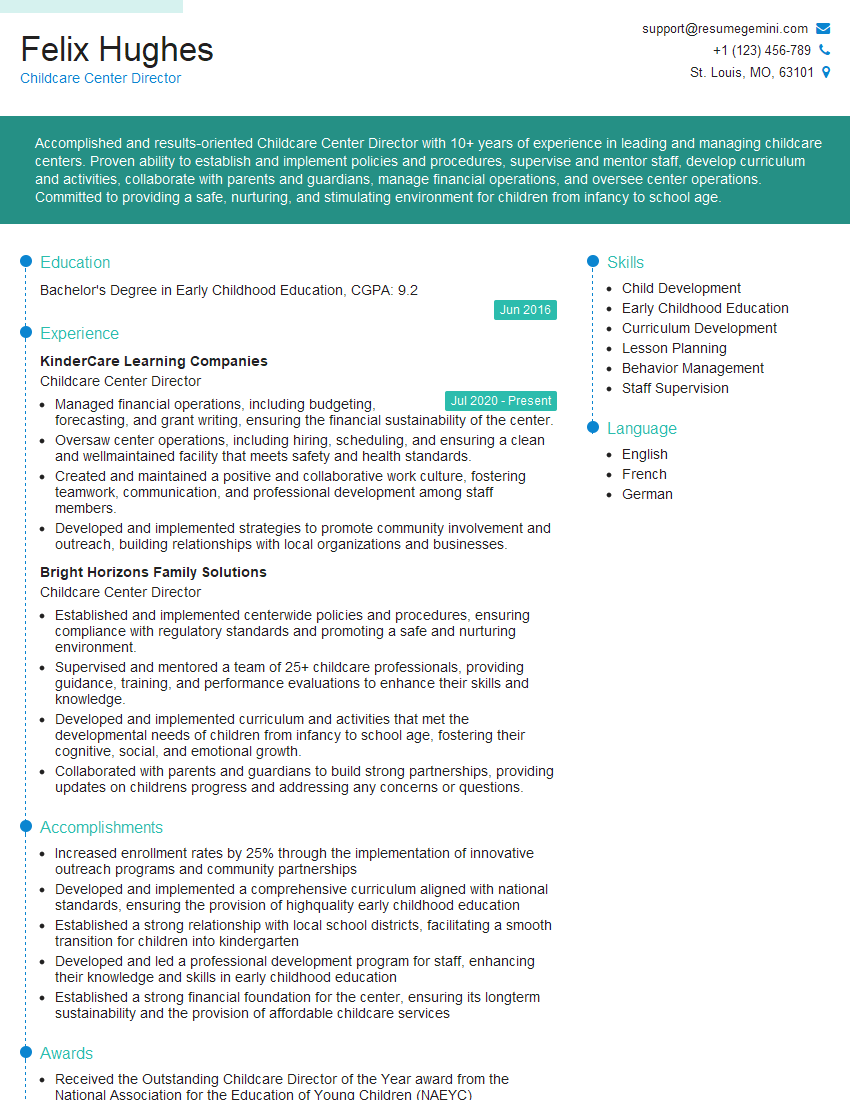
Childcare Center Director Resume Sample
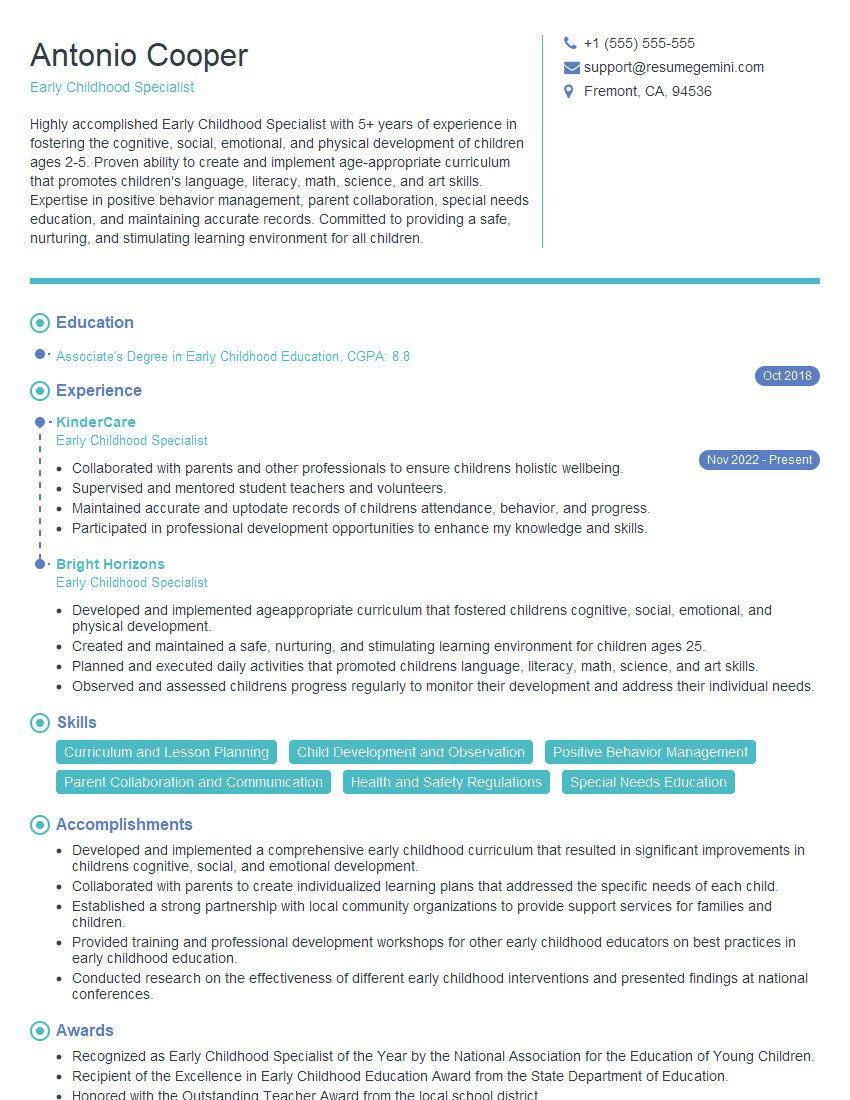
Early Childhood Specialist Resume Sample
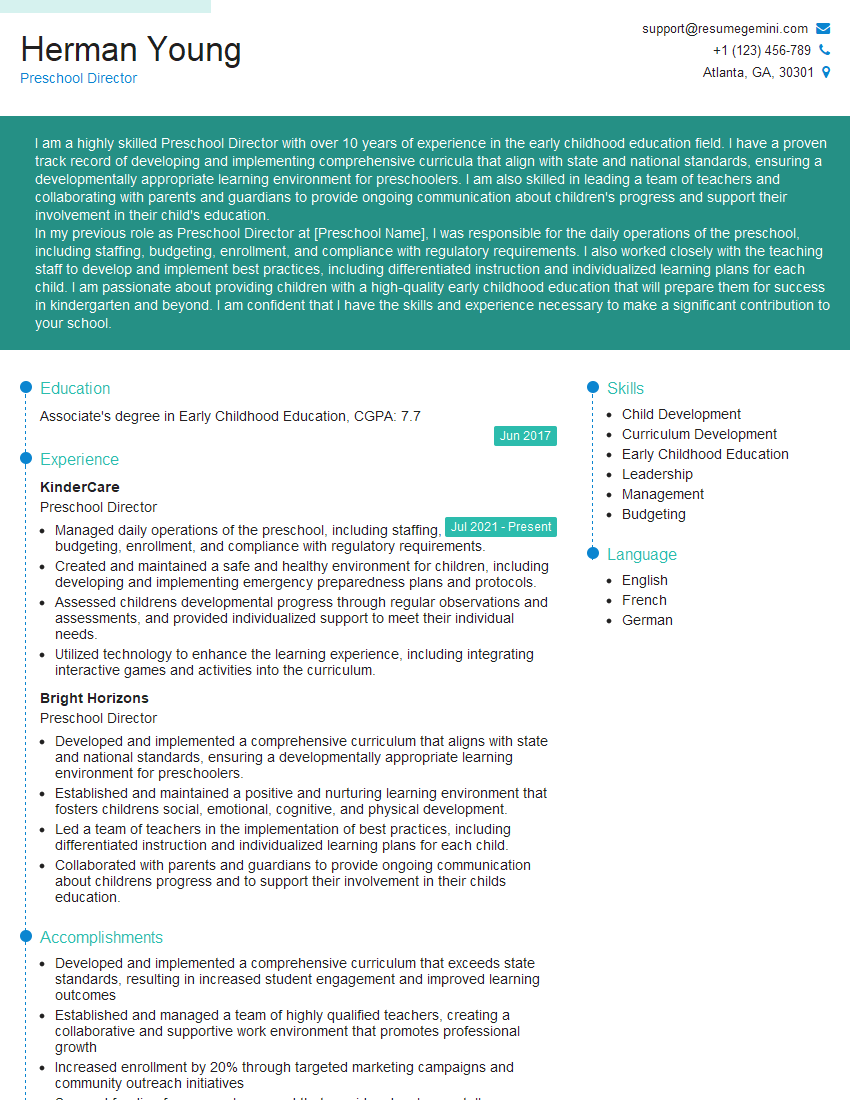
Preschool Director Resume Sample
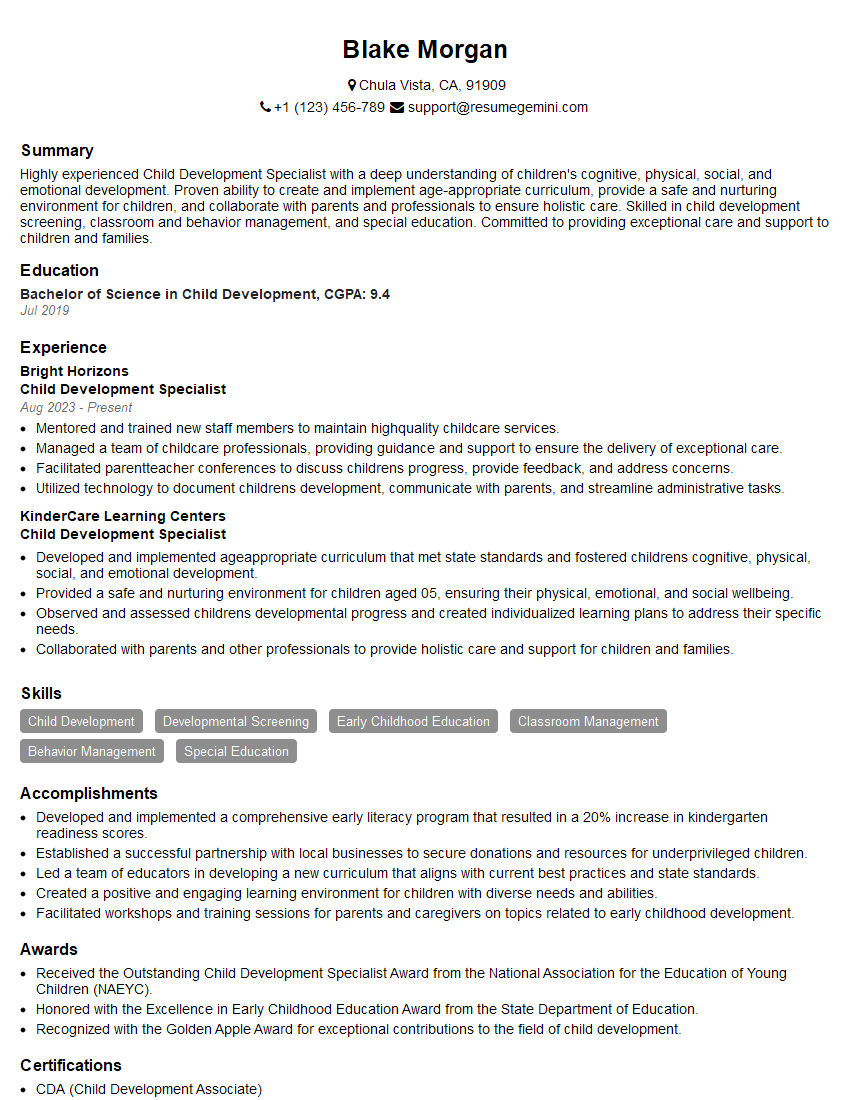
Child Development Specialist Resume Sample
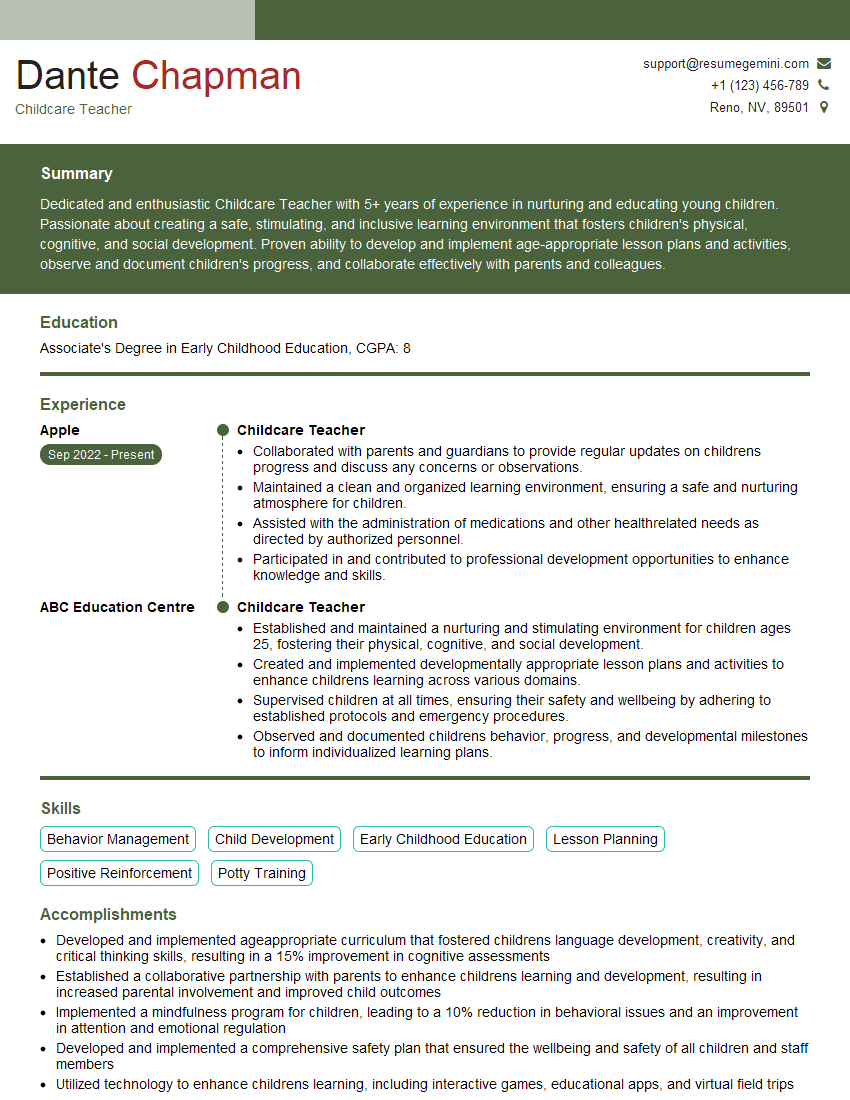
Childcare Teacher Resume Sample
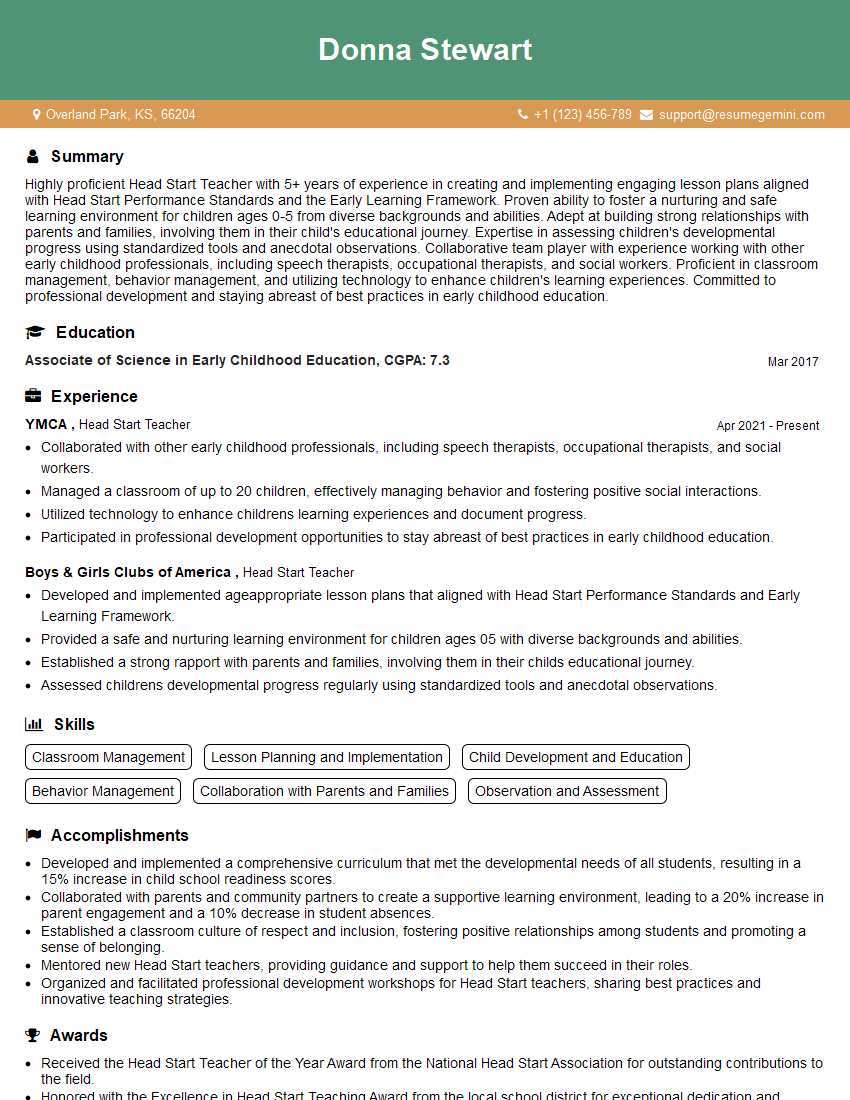
Head Start Teacher Resume Sample
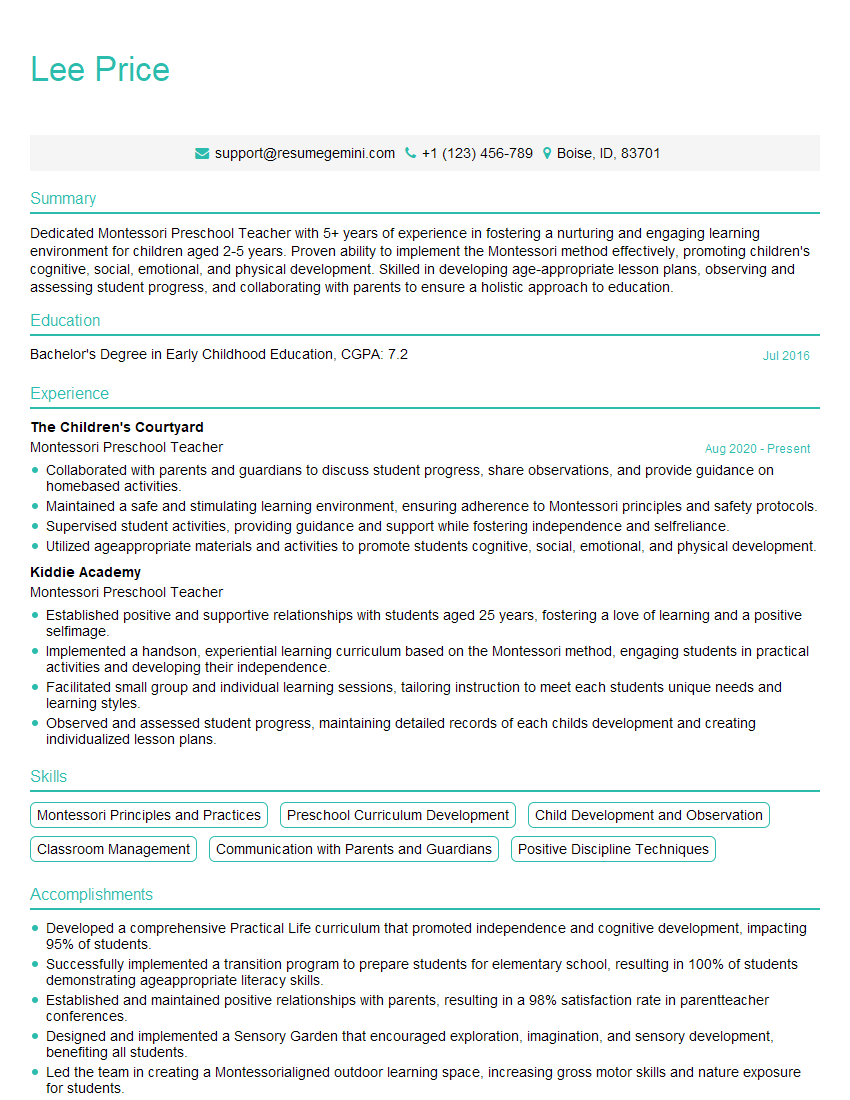
Montessori Preschool Teacher Resume Sample
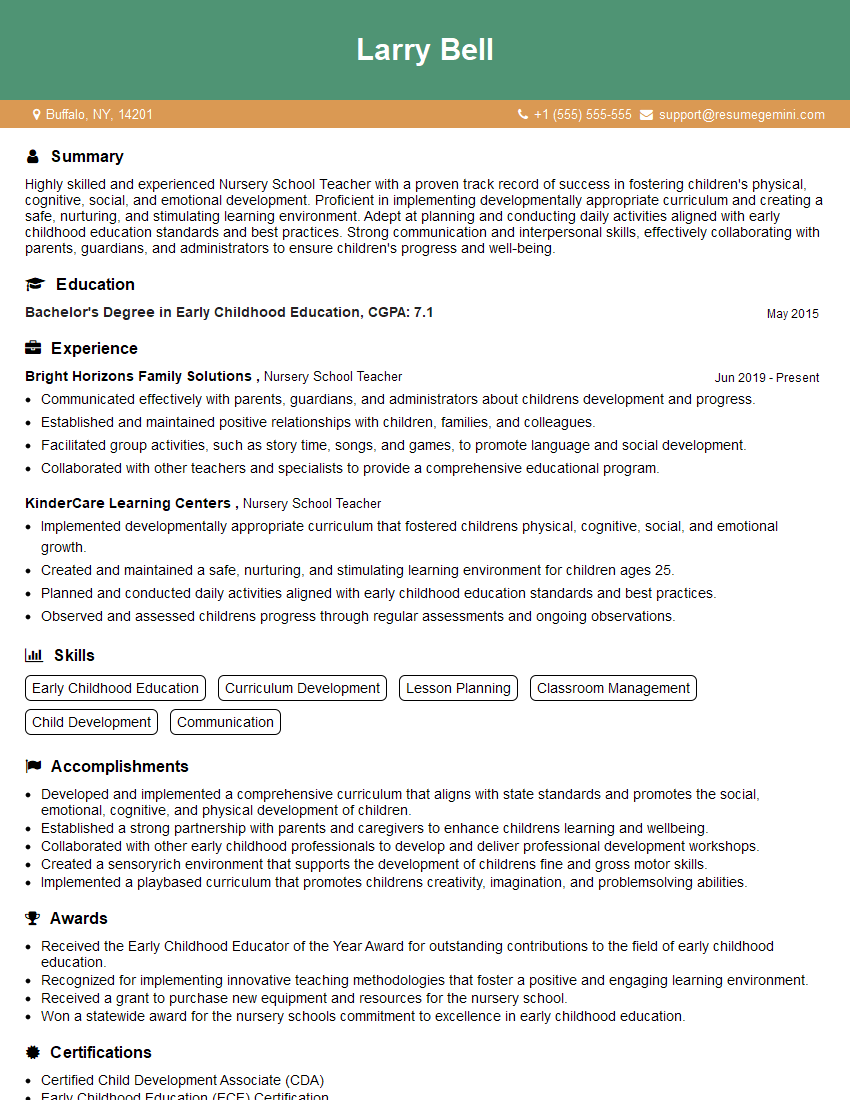
Nursery School Teacher Resume Sample
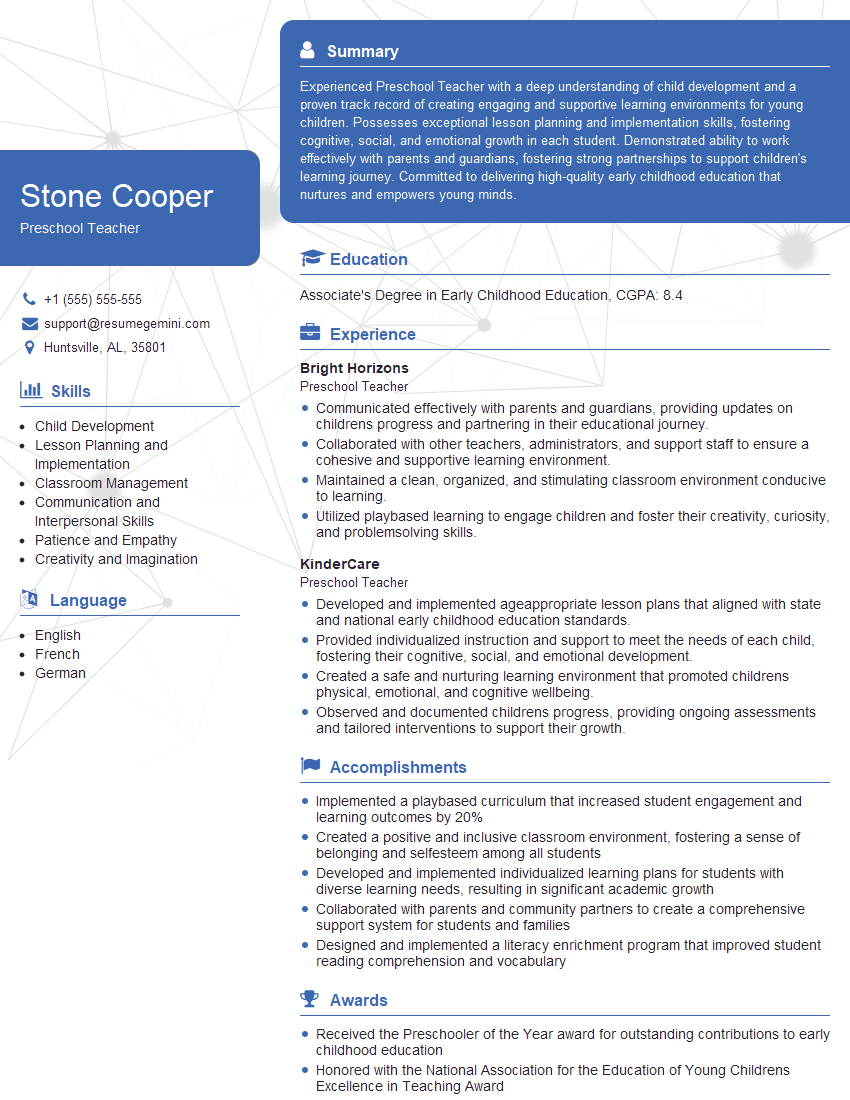
Preschool Teacher Resume Sample
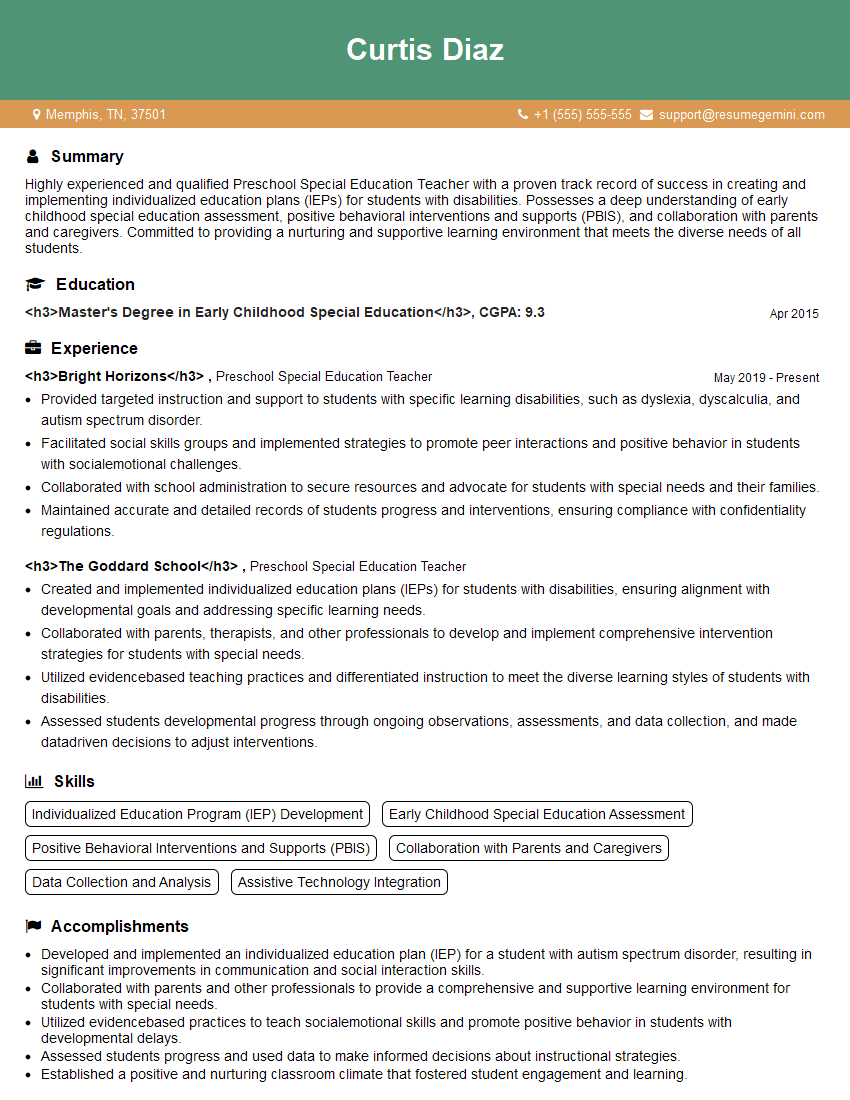
Preschool Special Education Teacher Resume Sample
Explore more articles
Users Rating of Our Blogs
Share Your Experience
We value your feedback! Please rate our content and share your thoughts (optional).
What Readers Say About Our Blog
Very informative content, great job.
good