Interviews are opportunities to demonstrate your expertise, and this guide is here to help you shine. Explore the essential Precision Work interview questions that employers frequently ask, paired with strategies for crafting responses that set you apart from the competition.
Questions Asked in Precision Work Interview
Q 1. Explain the concept of tolerance in precision work.
Tolerance in precision work refers to the permissible variation from a specified dimension or value. Think of it like a recipe: you have a target amount of sugar, but a little extra or a little less won’t ruin the cake, as long as it stays within an acceptable range. That range is the tolerance. It’s defined by upper and lower limits, ensuring the manufactured part meets the required specifications while acknowledging the inherent limitations of manufacturing processes. For example, a shaft designed to be 10mm in diameter might have a tolerance of ±0.01mm, meaning the acceptable range is 9.99mm to 10.01mm. Tolerances are crucial for ensuring parts fit together correctly and function as intended. Incorrect tolerances can lead to parts being too loose, too tight, or even unusable.
In precision engineering, tolerances are specified using various systems, such as ISO standards, and are usually expressed in millimeters or inches. Tight tolerances require more precise manufacturing techniques and higher-quality equipment, consequently increasing the cost.
Q 2. Describe your experience with different types of measuring instruments (e.g., calipers, micrometers).
My experience with measuring instruments is extensive, encompassing both digital and analog tools. I’m proficient with vernier calipers, which I use for measuring external and internal dimensions as well as depths. I understand the intricacies of reading the vernier scale to achieve accurate measurements. Micrometers are another staple in my toolkit, enabling me to measure dimensions with even higher precision than calipers. I’m familiar with various types, including outside, inside, depth, and even thread micrometers, each tailored for specific applications. I also frequently use dial indicators for checking surface flatness and run-out.
Beyond these, I have experience with other instruments such as optical comparators for precise dimensional and geometric checks, and coordinate measuring machines (CMMs) for complex 3D measurements. I understand the importance of instrument calibration and regularly perform these checks to maintain measurement accuracy. For example, I recently used a CMM to ensure the precise alignment of holes drilled in a critical aircraft component, adhering to tolerances of just a few micrometers.
Q 3. What are common causes of errors in precision work, and how do you mitigate them?
Errors in precision work can stem from several sources. Tool wear is a significant factor: worn cutting tools produce inaccurate dimensions and poor surface finishes. Improper machine setup – incorrect spindle speed, feed rate, or workholding – contributes significantly. Environmental factors like temperature fluctuations can affect both the workpiece and the measuring instruments, leading to inconsistencies. Human error, including misreading measurements or making mistakes during programming, is unfortunately common.
Mitigating these errors involves a multi-pronged approach. Regular tool maintenance and timely replacements are crucial. Careful machine setup, following established procedures and using appropriate tooling, is essential. Environment control, ensuring a stable temperature and humidity, is important in high-precision environments. Finally, thorough planning, double-checking measurements, and using quality control techniques like statistical process control (SPC) can minimize human error and maintain consistency.
Q 4. How do you ensure the accuracy and repeatability of your work?
Accuracy and repeatability are paramount in precision work. I ensure these through meticulous attention to detail in every step of the process. This starts with using calibrated measuring instruments and thoroughly checking the machine’s setup before each operation. I employ standardized operating procedures (SOPs) for each task, ensuring consistency. Using CNC machines with feedback loops allows for accurate adjustments and minimizes variation. This is complemented by regular maintenance and calibration to keep the machinery in top condition.
Repeatability is achieved through a combination of robust machine design, proper tooling, and consistent process parameters. I also use statistical process control (SPC) techniques to monitor process variation and identify potential problems before they affect the final product. Documenting all steps and results allows for tracking and continuous improvement. In a recent project involving the manufacture of high-precision gears, adherence to these principles ensured a consistent level of accuracy within ±2 microns, exceeding customer requirements.
Q 5. Describe your experience with CNC machines and programming.
I have extensive experience with CNC machines, including milling, turning, and lathe operations. My CNC programming skills encompass G-code and CAM software such as Mastercam and Fusion 360. I’m comfortable creating and optimizing programs for complex parts, incorporating features like toolpath simulation and optimization to minimize machining time and enhance surface finish. I understand the importance of proper tool selection and fixturing to ensure accurate and efficient machining.
I’m also experienced in interpreting engineering drawings and translating them into executable CNC programs. I’ve worked on projects requiring intricate features, tight tolerances, and multiple machining operations, leveraging my knowledge of CNC programming to achieve optimal results. For example, I recently programmed a complex 5-axis CNC milling operation to produce a mold with exceptionally tight tolerances, achieving a surface finish well beyond standard requirements.
Q 6. What are your preferred methods for troubleshooting precision equipment malfunctions?
My troubleshooting approach is systematic. I start with a thorough visual inspection, checking for obvious issues like loose connections, worn parts, or damaged tooling. I then consult the machine’s documentation and error logs for clues. I utilize diagnostic tools, such as multimeters and pressure gauges, to check electrical and pneumatic systems, as needed. Sometimes, the problem is straightforward, like a clogged coolant line; other times, it’s more complex, requiring detailed analysis and possibly the assistance of a service technician.
I always prioritize safety and follow lockout/tagout procedures when working on potentially hazardous equipment. I document my troubleshooting steps and findings meticulously. This aids in solving recurring problems and provides valuable data for preventive maintenance. For instance, I recently resolved a recurring issue with a CNC lathe by tracing a faulty signal wire using a multimeter, preventing production downtime and potentially more serious damage.
Q 7. Explain your understanding of different machining processes (e.g., milling, turning, grinding).
Milling, turning, and grinding are fundamental machining processes. Milling uses a rotating cutter to remove material from a workpiece, creating various shapes and features. It’s versatile and used for a wide range of applications, from creating complex 3D shapes to producing flat surfaces. Turning removes material from a rotating workpiece using a single-point cutting tool, typically used for creating cylindrical or conical parts.
Grinding uses an abrasive wheel to remove very fine amounts of material, producing extremely precise dimensions and very smooth surface finishes. Each process has its own strengths and limitations. For example, milling is ideal for complex shapes, turning excels for cylindrical components, and grinding is best for achieving high precision and surface quality. The selection of the process depends on the part’s geometry, material properties, required accuracy, and surface finish.
Q 8. How do you interpret technical drawings and blueprints in precision work?
Interpreting technical drawings and blueprints in precision work requires a keen eye for detail and a solid understanding of engineering principles. It’s like reading a detailed recipe for a complex machine or component. I begin by thoroughly reviewing the title block, which provides crucial information such as the drawing number, revision level, scale, and material specifications. Then, I systematically examine each view – orthographic projections (front, top, side), isometric views, and sectional views – to fully grasp the part’s geometry. I pay close attention to dimensions, tolerances (how much deviation from the perfect dimension is acceptable), surface finishes, and annotations. For example, a dimension might be specified as “10.000 ± 0.005 mm,” indicating the acceptable range is between 9.995 mm and 10.005 mm. Any deviation beyond that requires attention. I also look for symbols indicating specific manufacturing processes, like welding or machining. Finally, I check for any notes or references to other drawings or specifications to ensure a complete understanding of the design’s intent.
I often use tools like CAD software to visualize the 3D model from the 2D drawings, helping me to identify any potential conflicts or ambiguities before manufacturing begins. This proactive approach saves time and resources by preventing costly errors later in the process.
Q 9. Describe your experience with quality control procedures and documentation.
My experience with quality control procedures and documentation is extensive. I’ve been involved in every stage, from initial inspection of raw materials to final inspection of the finished product. My work involves meticulously documenting each step using standardized forms and checklists. This includes recording measurements, visual inspections for defects, and any deviations from the specifications. For example, in a recent project involving the machining of precision shafts, I used a calibrated micrometer to measure diameter at multiple points along the shaft’s length, recording each measurement and comparing it to the blueprint tolerances. Any out-of-tolerance readings were flagged and investigated to find the root cause. This data is crucial for identifying trends and making improvements to the manufacturing process.
I’m proficient in using various quality control tools and techniques, including statistical process control (SPC), which I’ll discuss later. Detailed documentation is critical for traceability and compliance with industry standards. A complete and accurate record allows us to quickly identify and address any quality issues, ensuring consistent product quality and meeting customer requirements.
Q 10. What safety precautions do you take when working with precision tools and equipment?
Safety is paramount in precision work. We are dealing with sharp tools, high-speed machinery, and potentially hazardous materials. My safety precautions are multifaceted and include: always wearing appropriate personal protective equipment (PPE) such as safety glasses, gloves, hearing protection, and sometimes respirators depending on the materials involved. I ensure that all machinery is properly guarded and maintained, following lockout/tagout procedures before any maintenance or repairs. I regularly inspect tools for damage before use and immediately replace any worn or damaged tools. I also maintain a clean and organized workspace to prevent accidents caused by tripping or falling. Furthermore, I adhere strictly to all company safety regulations and participate actively in safety training to stay updated on best practices. For instance, before using a lathe, I inspect the chuck to ensure that it is securely tightened, and I carefully monitor the speed and feed rates to prevent the work piece from flying off.
A proactive approach to safety is vital. Thinking ahead about potential hazards and taking preventive measures is far more effective than reacting to accidents.
Q 11. Explain your experience with statistical process control (SPC).
Statistical Process Control (SPC) is a powerful tool for monitoring and controlling variations in a manufacturing process. It uses statistical methods to identify trends, predict potential problems, and continuously improve process efficiency. My experience includes using control charts, such as X-bar and R charts, to monitor key process variables like dimensions, surface finish, or material properties. For instance, in a recent project involving the assembly of miniature components, we used X-bar and R charts to monitor the variation in component placement accuracy. By plotting the data points on the charts, we could readily identify any shifts in the mean or increase in variability, indicating a potential problem needing attention. This allowed for prompt adjustments to the assembly process, preventing defective units and ensuring consistent quality.
SPC helps us to identify assignable causes of variation – specific factors contributing to the problem – as opposed to common cause variation, which is inherent to the process. This enables us to make data-driven decisions to minimize variations and optimize the process for better efficiency and quality.
Q 12. How do you maintain precision instruments and equipment?
Maintaining precision instruments and equipment is critical for accuracy and longevity. This involves a combination of regular cleaning, lubrication, calibration, and proper storage. Cleaning procedures vary depending on the instrument, but generally involve using appropriate solvents and brushes to remove debris. Lubrication, where necessary, uses specialized lubricants recommended by the manufacturer. Calibration is done using certified standards to ensure accuracy. For example, we calibrate our micrometers regularly using gauge blocks with known dimensions. Proper storage is vital to prevent damage from corrosion, dust, or accidental impact; this typically involves storing instruments in protective cases or cabinets. We maintain detailed maintenance logs for each instrument, recording cleaning, lubrication, and calibration dates. This documentation helps us ensure compliance with standards and track the performance of our equipment over time. Preventive maintenance is far more cost-effective than dealing with breakdowns or inaccuracies caused by neglect.
Q 13. Describe a time you had to solve a complex precision-related problem.
In a previous role, we encountered a significant challenge during the manufacturing of a high-precision gear. The gears were consistently exhibiting excessive runout – a deviation from perfect rotational symmetry – exceeding the acceptable tolerances. Initial troubleshooting focused on the machining parameters, but adjustments didn’t resolve the issue. We then used a combination of techniques: we performed detailed analysis of the gear’s geometry using a coordinate measuring machine (CMM) to pinpoint the source of the error. This revealed that the problem stemmed from slight inconsistencies in the heat treatment process, leading to microscopic warping of the gear teeth. We addressed this by optimizing the heat treatment cycle, using a more sophisticated temperature control system. We then implemented a rigorous quality control protocol including 100% inspection. The combination of thorough investigation, data analysis, and process adjustments ultimately solved the problem, ensuring the gears met the strict specifications. This highlighted the importance of systematic troubleshooting, data analysis, and a collaborative approach to problem-solving in precision work.
Q 14. What materials are you most experienced in working with?
My experience encompasses a wide range of materials, but I’m most proficient in working with metals, particularly stainless steel, aluminum alloys, and titanium. I have significant experience with machining these materials using various techniques such as milling, turning, and grinding, achieving high levels of surface finish and dimensional accuracy. I also have experience working with ceramics and polymers, although to a lesser extent than metals. The choice of material is often dictated by the application’s requirements; for instance, titanium is favored for its high strength-to-weight ratio in aerospace applications, while stainless steel is preferred for its corrosion resistance in medical devices. Understanding the material properties – including machinability, strength, and thermal behavior – is crucial for selecting the appropriate machining parameters and achieving the desired results. My experience allows me to choose the right material for the job and to implement the most appropriate manufacturing techniques to ensure successful completion of the project.
Q 15. Explain your experience with surface finish measurement and analysis.
Surface finish measurement and analysis is critical in precision work, determining the quality and functionality of a part. It involves assessing the texture of a surface, considering parameters like roughness (Ra), waviness (Rz), and other characteristics. My experience encompasses utilizing various techniques. I’m proficient with tactile profilometers, which use a stylus to trace the surface profile, generating a 3D representation. I’ve also extensively used optical methods like confocal microscopy, providing high-resolution surface imaging and non-contact measurements. Furthermore, I am experienced in analyzing the data generated by these instruments, identifying potential defects like scratches, pits, or inconsistencies. For instance, in a recent project involving the manufacturing of microfluidic devices, precise surface roughness was paramount to prevent clogging. Using a confocal microscope, we were able to ensure that the channels met the stringent surface finish requirements, guaranteeing optimal fluid flow.
Beyond the technical aspects, data interpretation is crucial. I can identify correlations between surface finish and part performance, informing design modifications and process improvements. I’m also adept at utilizing statistical process control (SPC) charts to monitor surface finish across production runs, ensuring consistent quality.
Career Expert Tips:
- Ace those interviews! Prepare effectively by reviewing the Top 50 Most Common Interview Questions on ResumeGemini.
- Navigate your job search with confidence! Explore a wide range of Career Tips on ResumeGemini. Learn about common challenges and recommendations to overcome them.
- Craft the perfect resume! Master the Art of Resume Writing with ResumeGemini’s guide. Showcase your unique qualifications and achievements effectively.
- Don’t miss out on holiday savings! Build your dream resume with ResumeGemini’s ATS optimized templates.
Q 16. How do you ensure the cleanliness and proper handling of precision parts?
Cleanliness and proper handling are paramount in precision work, as even microscopic contaminants can compromise part functionality and precision. My approach begins with a meticulously clean work environment. We utilize cleanrooms with controlled air filtration, minimizing particulate contamination. Parts are handled with specialized tools, like cleanroom gloves and tweezers, to prevent fingerprints or other blemishes. Before assembly or inspection, parts undergo thorough cleaning processes, often using ultrasonic baths with appropriate solvents and deionized water. After cleaning, parts are dried using clean, compressed air or nitrogen to avoid residue. We also employ stringent protocols for packaging and storage, utilizing ESD (Electrostatic Discharge) safe containers and desiccant packs to prevent damage and contamination during transport and storage.
Imagine working with a tiny precision gear for a medical device. A single speck of dust could cause it to malfunction. Our procedures ensure that every precaution is taken to maintain the highest level of cleanliness and prevent any form of damage or contamination.
Q 17. Describe your experience with different types of cutting tools and their applications.
My experience encompasses a wide range of cutting tools, each with specific applications and characteristics. This includes high-speed steel (HSS) tools for general machining, carbide tools for higher precision and harder materials, and ceramic tools for extremely demanding applications. I’m familiar with various tool geometries, including end mills, drills, reamers, and taps, each designed for specific machining operations. I understand the importance of tool selection based on material properties, desired surface finish, and machining parameters. For example, when machining titanium alloys, which are known for their high strength and reactivity, I would opt for specialized carbide tools with appropriate coatings to prevent premature tool wear and ensure accurate dimensions.
Beyond the tools themselves, tool maintenance is critical. Regular sharpening and inspection are essential to maintain accuracy and efficiency. I have experience optimizing cutting parameters, such as feed rate, spindle speed, and depth of cut, to maximize tool life and achieve the desired part quality. Incorrect parameters can lead to tool breakage, poor surface finish, or inaccurate dimensions.
Q 18. How familiar are you with different types of precision measuring systems (e.g., CMM, optical comparators)?
I am highly familiar with a variety of precision measuring systems. Coordinate Measuring Machines (CMMs) are extensively used for dimensional inspection, providing highly accurate measurements of complex part geometries. I have experience operating both contact and non-contact CMMs, utilizing various probing techniques and software for data analysis and reporting. Optical comparators offer another method for precise measurement, particularly useful for inspecting smaller parts and intricate features. I can use optical comparators to quickly and accurately assess dimensions, angles, and surface features. Beyond these, I’m comfortable using other tools such as dial indicators, micrometers, calipers, and height gauges for specific measurement tasks.
In a project involving the inspection of miniature bearings, the CMM allowed for precise measurements of critical dimensions like ball diameter and raceway roundness, ensuring the bearings met the stringent tolerances required for the application. This ensured the quality of each bearing and avoided potentially costly errors in assembly.
Q 19. Explain your understanding of GD&T (Geometric Dimensioning and Tolerancing).
Geometric Dimensioning and Tolerancing (GD&T) is a standardized system for defining and communicating engineering tolerances. It’s crucial for ensuring parts meet specified requirements and assemble correctly. My understanding encompasses the fundamental concepts of GD&T, including features, datum references, tolerances, and symbols. I can interpret GD&T annotations on engineering drawings, translating them into practical inspection procedures. I understand the different types of tolerances, such as positional, form, and orientation tolerances, and how these apply to different features of a part.
For instance, understanding the concept of ‘position tolerance’ with a datum reference frame is critical in ensuring that a hole is located correctly relative to other features on the part. Without proper understanding of GD&T, the interpretation of tolerance might be ambiguous or incorrect, potentially leading to functional issues during assembly.
Q 20. Describe your experience with automated inspection systems.
I have extensive experience with automated inspection systems, particularly vision systems and robotic inspection cells. These systems offer significant advantages over manual inspection, providing increased speed, accuracy, and consistency. I’m proficient in programming and operating vision systems, using image processing techniques to identify defects and measure dimensions. This includes the use of software for image analysis, feature extraction, and dimensional verification. I understand the importance of integrating automated inspection systems into manufacturing processes for real-time quality control and feedback.
In one project, we implemented a vision system to automatically inspect circuit boards for solder defects. This automated system drastically reduced inspection time compared to manual methods and improved consistency, ensuring higher product quality and reducing the risk of faulty boards reaching the customer.
Q 21. How do you handle situations where tight deadlines are involved?
Handling tight deadlines requires a structured approach and effective prioritization. My strategy begins with a thorough understanding of the project scope and requirements. I then break down the tasks into smaller, manageable units, creating a detailed schedule with clear milestones. I leverage my experience and expertise to identify potential bottlenecks and proactively address them. Effective communication is crucial; I maintain open communication with stakeholders, ensuring everyone is informed of progress and any potential challenges. Furthermore, I am comfortable working extended hours when necessary and will delegate tasks appropriately within a team environment to maximize efficiency.
One instance involved a critical component with an extremely tight deadline. By prioritizing tasks effectively, utilizing efficient machining techniques and continuously monitoring progress, we successfully delivered the parts on time without compromising quality. This required careful planning, proactive problem-solving, and dedication to the task at hand.
Q 22. What are the key differences between manual and automated precision work?
The core difference between manual and automated precision work lies in the level of human intervention and the use of machinery. Manual precision work relies heavily on the skill and dexterity of the human operator, using hand tools and meticulous techniques to achieve high accuracy. Automated precision work, on the other hand, utilizes sophisticated machines like CNC (Computer Numerical Control) machines, robots, and automated assembly lines to perform tasks with consistent precision and speed.
- Manual Precision Work: Think of a watchmaker meticulously assembling a watch by hand, or a jeweler setting a gemstone with precision tweezers. The human element is paramount, and the process is often slower but can offer unique flexibility for complex or one-off tasks.
- Automated Precision Work: Imagine a robotic arm precisely placing components on a circuit board, or a CNC milling machine carving a complex shape from a block of metal. Automation allows for higher throughput, greater consistency, and reduced human error, particularly in repetitive tasks.
While automation offers advantages in speed and consistency, manual precision work retains its value for intricate tasks requiring adaptability and problem-solving skills not yet replicated by machines. Many modern precision operations integrate both approaches for optimal efficiency and quality.
Q 23. Explain your understanding of the importance of maintaining a clean and organized workspace.
Maintaining a clean and organized workspace is absolutely crucial in precision work, impacting both safety and efficiency. A cluttered workspace leads to increased risk of accidents – tripping hazards from misplaced tools, accidental damage to delicate components, and even contamination from dust or debris.
Organization, on the other hand, dramatically improves workflow. Having tools and materials readily accessible reduces search time, prevents delays, and minimizes errors caused by rushing or frustration. Think of it like this: a messy workspace is like trying to solve a complex puzzle with the pieces scattered everywhere; an organized workspace is like having all the puzzle pieces neatly sorted, making the task significantly easier and less prone to mistakes. In a precision environment, where tolerances are incredibly tight, a well-organized workspace is not just a best practice—it’s a necessity.
Specific measures include regular cleaning, designated storage for tools and materials, a clear workflow pathway, and implementing 5S methodology (Sort, Set in Order, Shine, Standardize, Sustain) to create a systematic approach to workspace organization. This creates a safer, more productive, and ultimately more profitable work environment.
Q 24. Describe your experience with different types of adhesives and their applications in precision work.
My experience with adhesives in precision work encompasses a wide range, from cyanoacrylates (super glues) to epoxy resins and specialized UV-curable adhesives. Each has unique properties making them suitable for specific applications.
- Cyanoacrylates: Excellent for rapid bonding of small parts, but can be brittle and sensitive to environmental factors. I’ve used them extensively in assembling miniature electronic components where fast curing time is crucial.
- Epoxy Resins: Offer superior strength and durability compared to cyanoacrylates, and are often preferred for structural bonding applications. I’ve used two-part epoxy for bonding metal components in aerospace applications where high strength and reliability are paramount.
- UV-curable Adhesives: These are ideal for applications requiring precise control of the curing process, allowing for localized bonding and minimizing adhesive spread. I’ve used them in micro-optics assembly where precise alignment is vital.
Choosing the right adhesive is critical and depends on factors like the materials being bonded, the required bond strength, cure time, temperature resistance, and the overall environmental conditions. Incorrect adhesive selection can lead to failed bonds, compromising the integrity and functionality of the final product. I always meticulously research and test the suitability of an adhesive before using it in a precision application.
Q 25. How do you manage multiple tasks and priorities in a fast-paced environment?
In fast-paced precision environments, effective task management is essential. I utilize a combination of techniques to prioritize and manage multiple tasks.
- Prioritization Matrices: I use methods like Eisenhower Matrix (urgent/important) to categorize tasks and focus on the most critical ones first. This prevents me from getting bogged down in less important tasks that could delay the completion of more crucial projects.
- Project Management Software: Tools like Asana or Jira are invaluable for tracking progress on multiple projects simultaneously, setting deadlines, and managing dependencies. This provides a clear overview of all tasks and helps maintain focus.
- Time Blocking: I allocate specific time slots for different tasks, ensuring that I dedicate focused time to each project without constant switching. This minimizes context-switching overhead and enhances productivity.
Communication is equally important. Keeping my team and supervisors informed about progress and potential roadblocks enables proactive problem-solving and prevents unforeseen delays. My approach emphasizes organization, clear communication, and strategic prioritization to ensure efficient task completion in demanding environments.
Q 26. What software and tools are you proficient in using for precision work?
My proficiency in software and tools for precision work is quite extensive.
- CAD Software: I’m highly proficient in SolidWorks, AutoCAD, and Fusion 360 for designing and modeling precision parts and assemblies. This enables me to create detailed designs, simulate performance, and generate manufacturing instructions.
- CAM Software: I have experience with Mastercam and other CAM software packages for generating CNC machining toolpaths, ensuring accurate and efficient fabrication of parts.
- Metrology Software: I’m familiar with various metrology software packages used for analyzing dimensional measurements obtained from CMM (Coordinate Measuring Machines) and other inspection equipment, ensuring parts meet the specified tolerances.
- Data Acquisition Software: I am experienced in using software for data acquisition and analysis from various sensors and instruments used for quality control and process monitoring.
In addition to software, I’m skilled in using a wide array of hand tools, precision measuring instruments (calipers, micrometers, dial indicators), and specialized equipment like microscopes and soldering stations. My expertise spans both the digital and the physical realms of precision work.
Q 27. Describe your experience with lean manufacturing principles in a precision environment.
Lean manufacturing principles are deeply ingrained in my approach to precision work. My experience demonstrates how implementing these principles significantly enhances efficiency, reduces waste, and improves overall quality.
- Value Stream Mapping: I’ve used this to identify and eliminate non-value-added activities in our processes, streamlining workflows and improving turnaround times.
- Kaizen (Continuous Improvement): I actively participate in Kaizen events, focusing on incremental improvements to processes, tooling, and workspaces. This approach fosters a culture of continuous improvement, leading to ongoing efficiency gains.
- 5S Methodology: As previously mentioned, implementing 5S in the workspace contributes directly to lean manufacturing by optimizing the work environment and minimizing waste.
- Just-in-Time (JIT) Inventory: In precision work, managing inventory efficiently is crucial. I’ve implemented strategies to minimize inventory holding costs while ensuring timely availability of materials, reducing waste from obsolescence or storage.
By applying lean principles, we can achieve a significant reduction in lead times, improved quality, and minimized waste, ultimately making the manufacturing process more efficient and cost-effective.
Q 28. How do you stay up-to-date with advancements in precision technologies?
Staying current with advancements in precision technologies is paramount. I actively pursue several strategies to maintain my expertise.
- Professional Development: I regularly attend industry conferences, workshops, and training sessions focusing on emerging technologies and best practices. This offers opportunities for networking and learning from industry leaders.
- Industry Publications and Journals: I subscribe to and actively read relevant industry journals and publications to stay informed about new materials, processes, and technologies.
- Online Courses and Webinars: I leverage online platforms like Coursera and edX for specialized training in areas like advanced machining techniques, metrology, and data analytics.
- Manufacturer Websites and Documentation: Directly engaging with manufacturers’ websites and technical documentation provides insights into the latest equipment and software offerings.
Continuous learning is not just a professional goal; it’s a necessity in the rapidly evolving field of precision work. This proactive approach allows me to adapt to new challenges and contribute effectively to a constantly changing technological landscape.
Key Topics to Learn for Precision Work Interview
- Measurement and Calibration: Understanding various measurement techniques, instruments, and the importance of accurate calibration in ensuring precision. Practical application: Analyzing potential sources of error in a measurement process and proposing solutions.
- Tolerance and Specification: Interpreting engineering drawings and specifications, understanding tolerances, and their impact on the final product. Practical application: Determining if a manufactured part meets the required specifications.
- Quality Control and Assurance: Implementing quality control procedures, conducting inspections, and understanding statistical process control (SPC). Practical application: Designing a quality control plan for a specific manufacturing process.
- Precision Machining Techniques: Familiarity with various machining processes (e.g., milling, turning, grinding) and their application in achieving high precision. Practical application: Selecting the appropriate machining technique for a specific material and desired outcome.
- Material Properties and Selection: Understanding the properties of various materials and their suitability for precision applications. Practical application: Justifying the choice of a specific material for a given design.
- Troubleshooting and Problem Solving: Identifying and resolving issues related to precision work, including dimensional inaccuracies, surface finish problems, and process inefficiencies. Practical application: Developing a systematic approach to troubleshooting a recurring problem in a manufacturing process.
- Safety Procedures and Regulations: Adherence to safety protocols and regulations related to precision equipment and processes. Practical application: Identifying and mitigating potential safety hazards in a precision workshop.
Next Steps
Mastering precision work opens doors to rewarding careers in various high-tech industries, offering opportunities for growth and specialized expertise. To maximize your job prospects, creating an ATS-friendly resume is crucial. ResumeGemini is a trusted resource to help you build a professional and effective resume that highlights your skills and experience in precision work. Examples of resumes tailored to precision work positions are available to help you further refine your application materials.
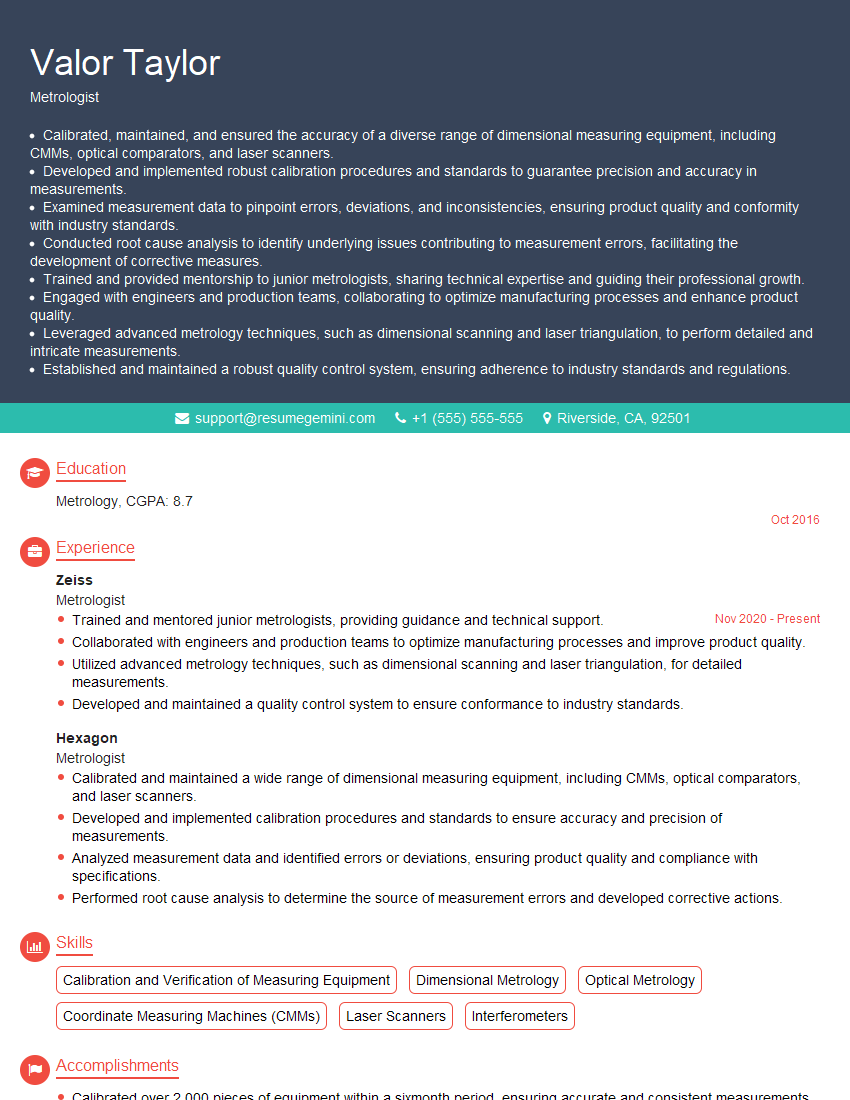
Metrologist Resume Sample
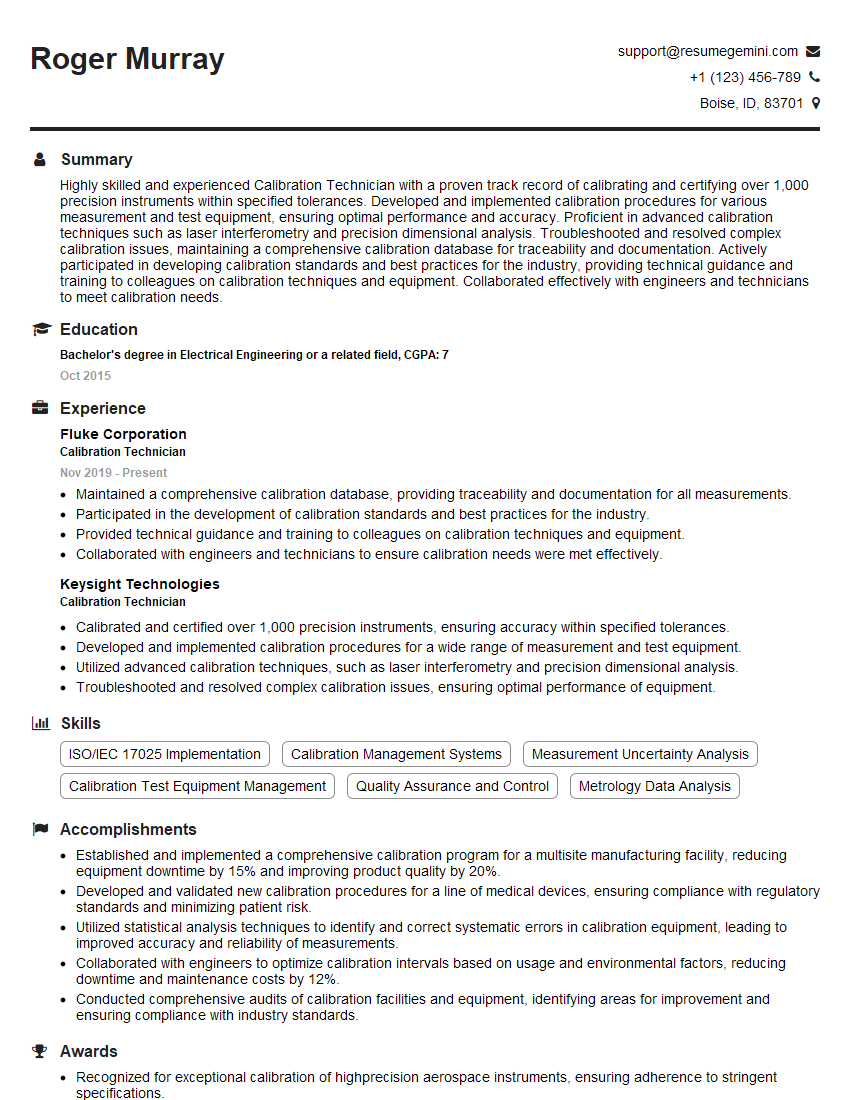
Calibration Technician Resume Sample
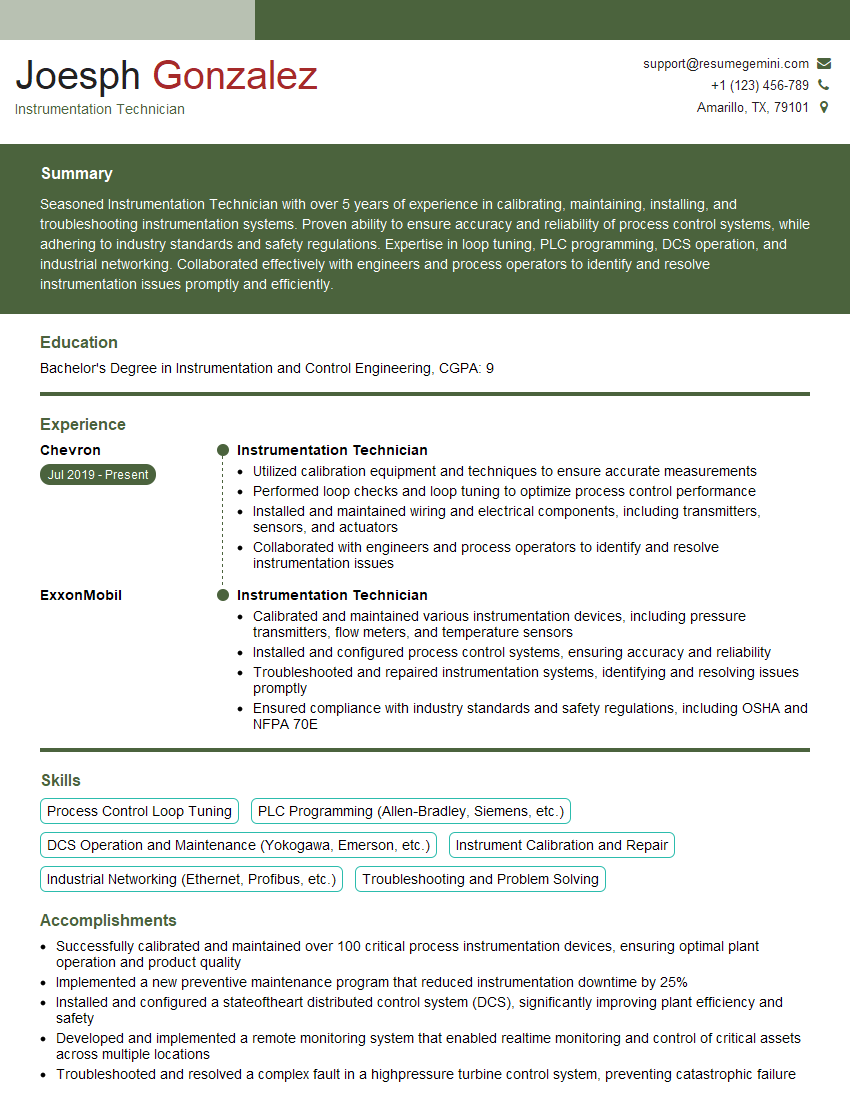
Instrumentation Technician Resume Sample
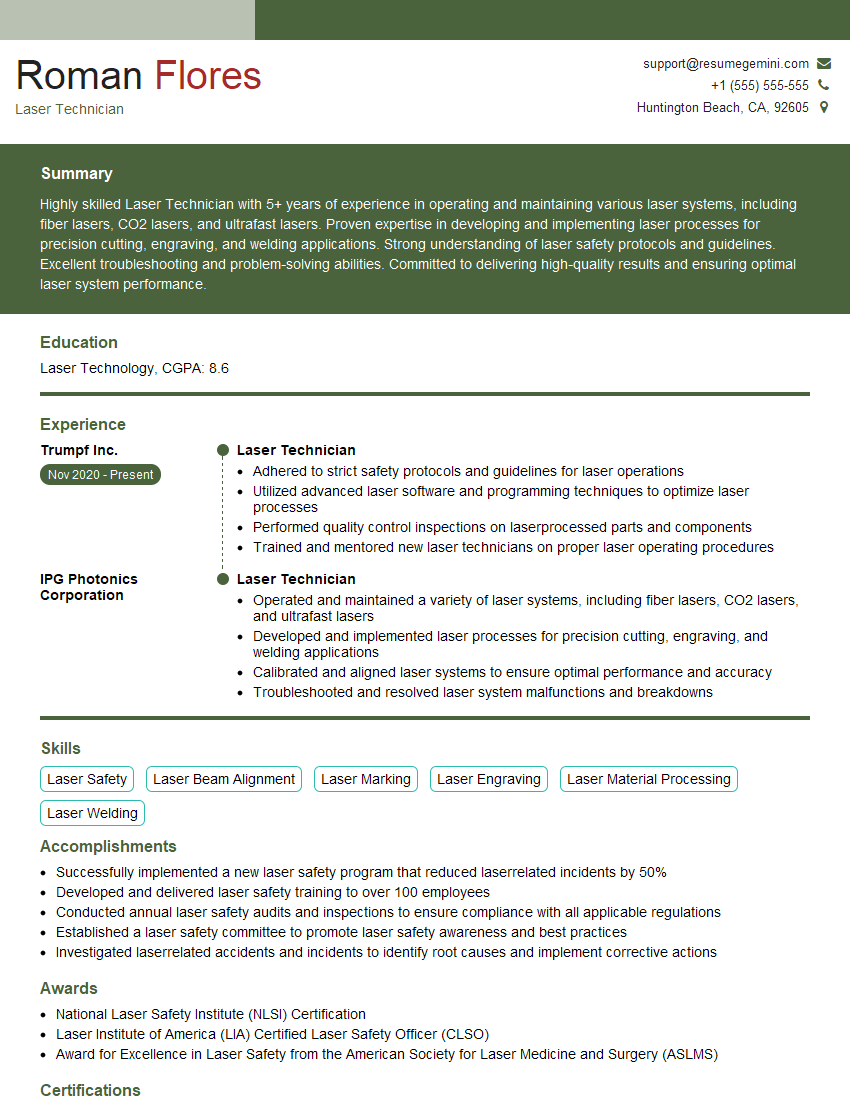
Laser Technician Resume Sample
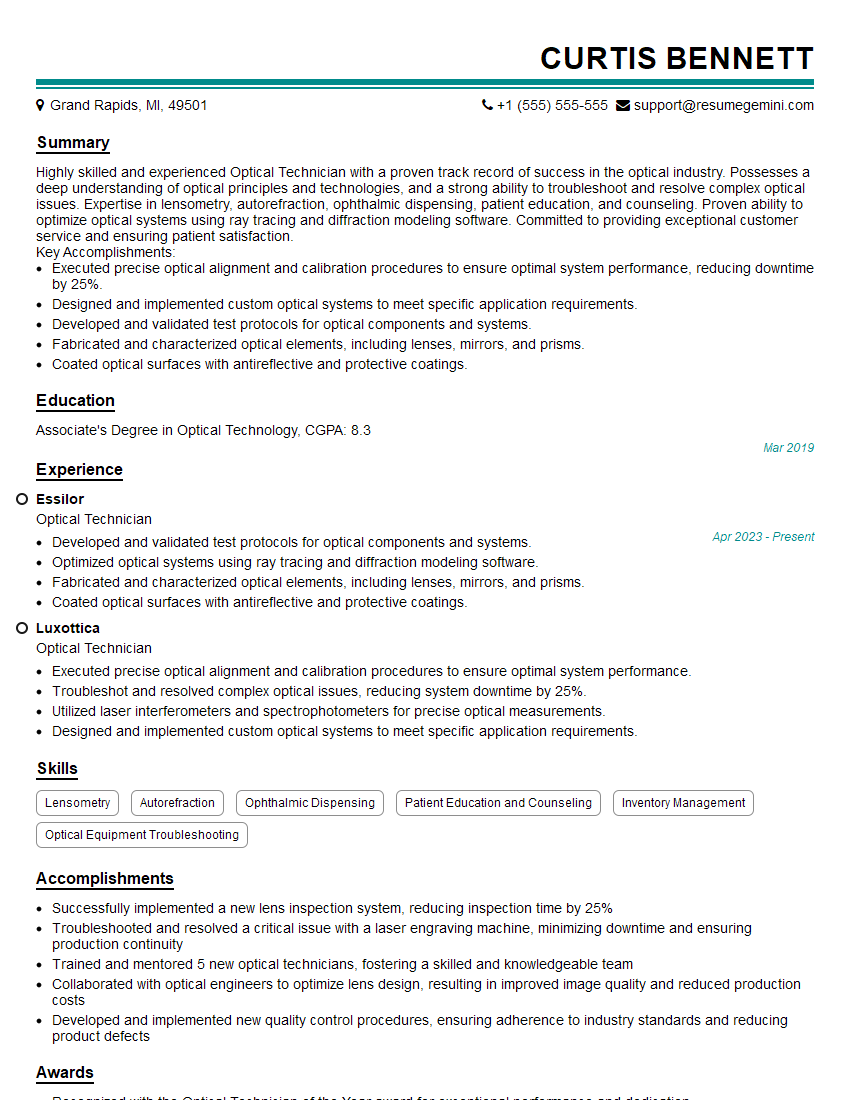
Optical Technician Resume Sample
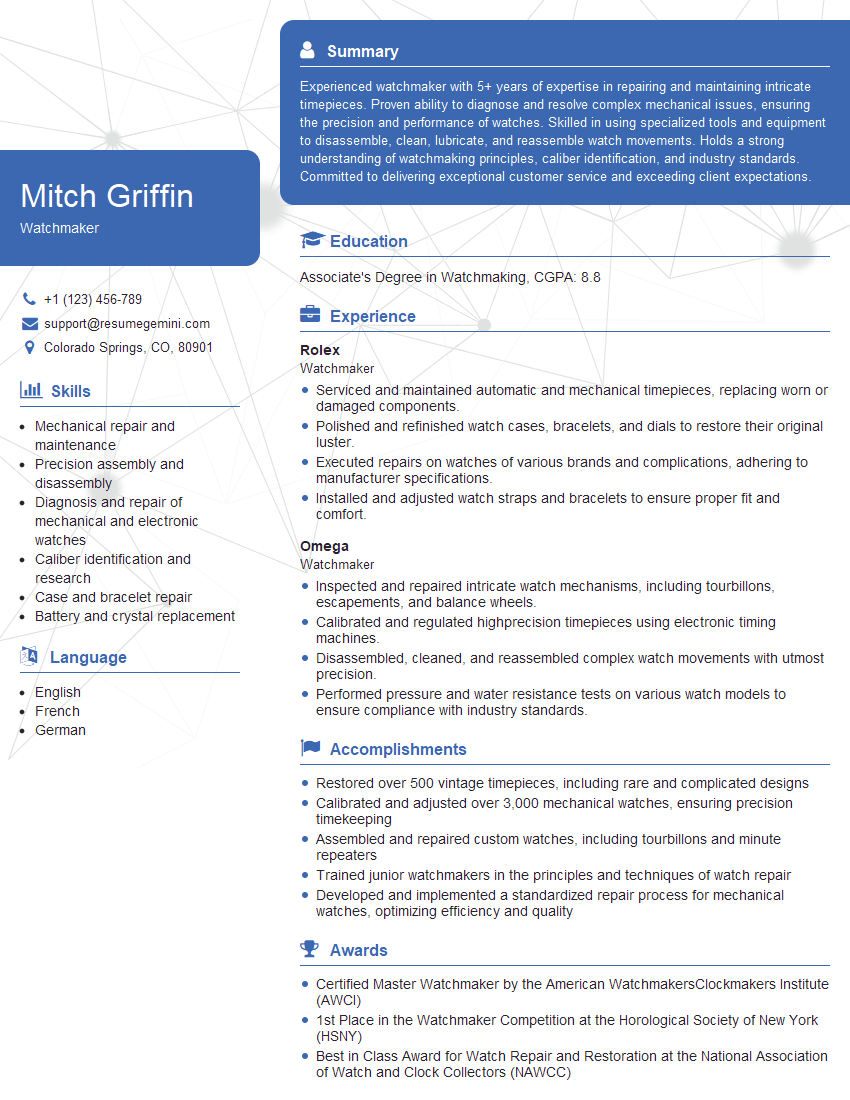
Watchmaker Resume Sample
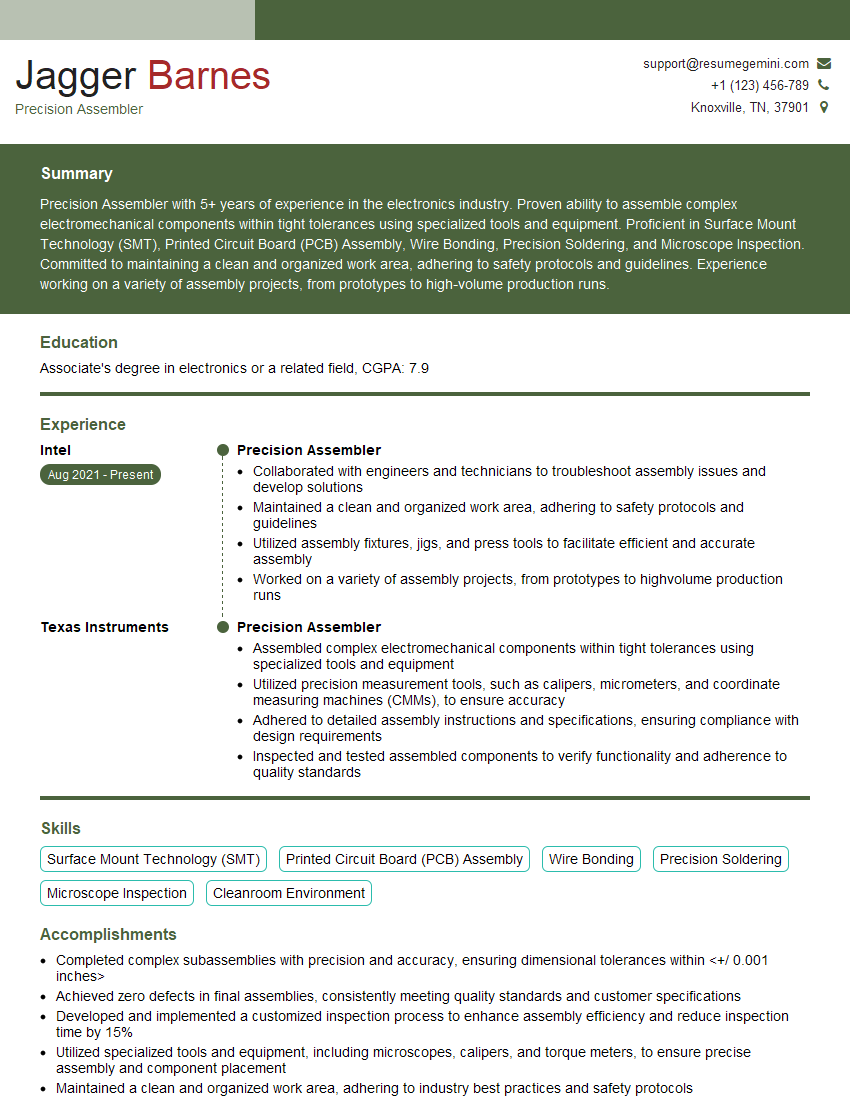
Precision Assembler Resume Sample
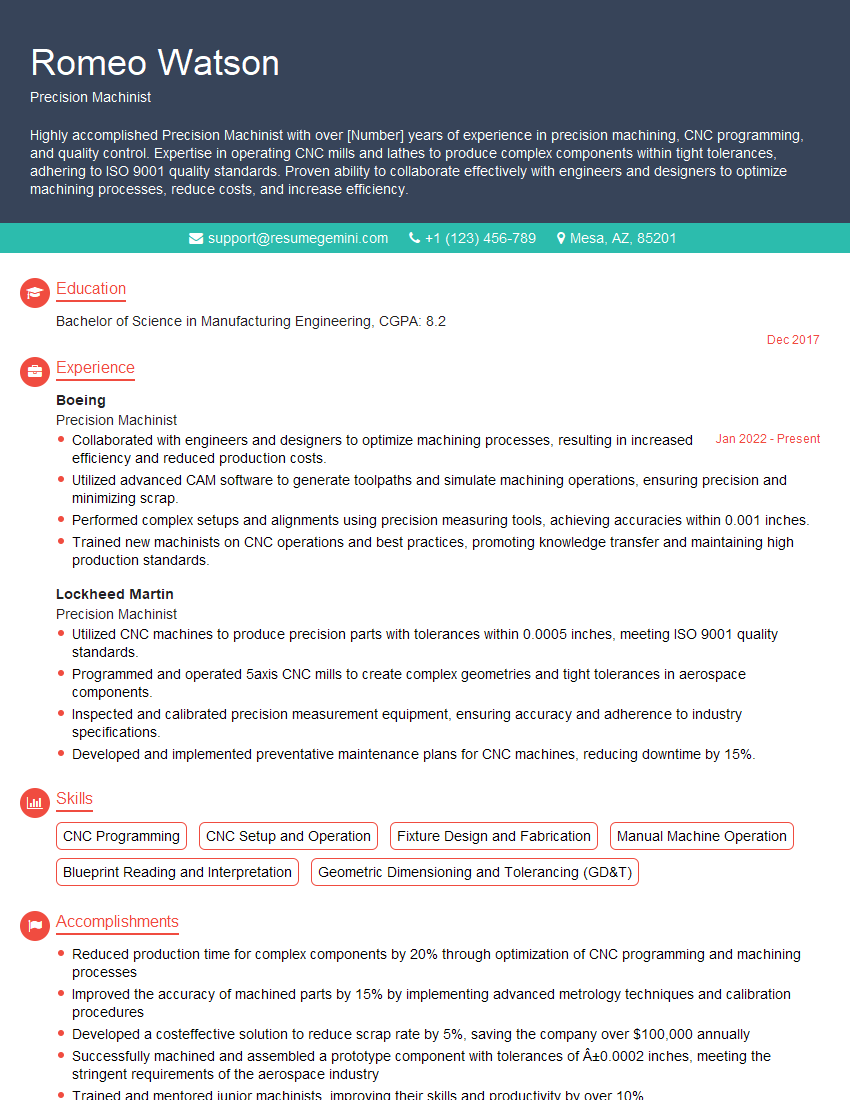
Precision Machinist Resume Sample
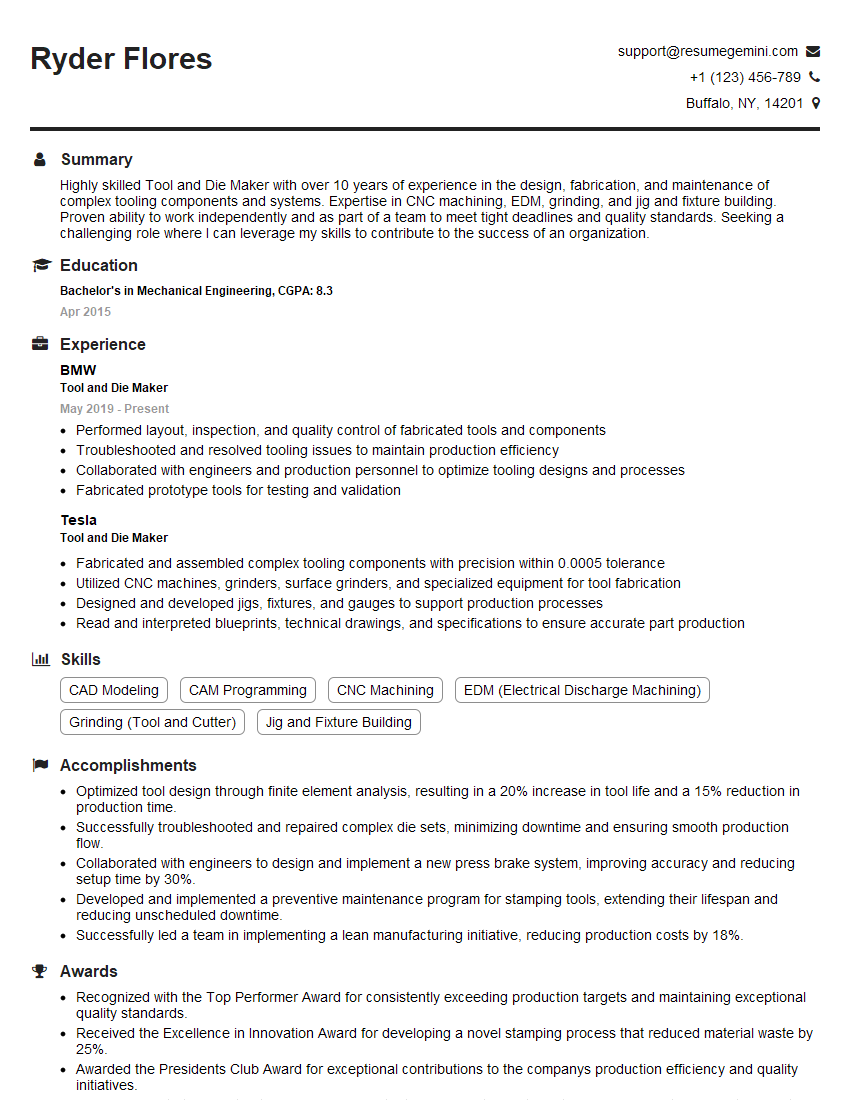
Tool and Die Maker Resume Sample
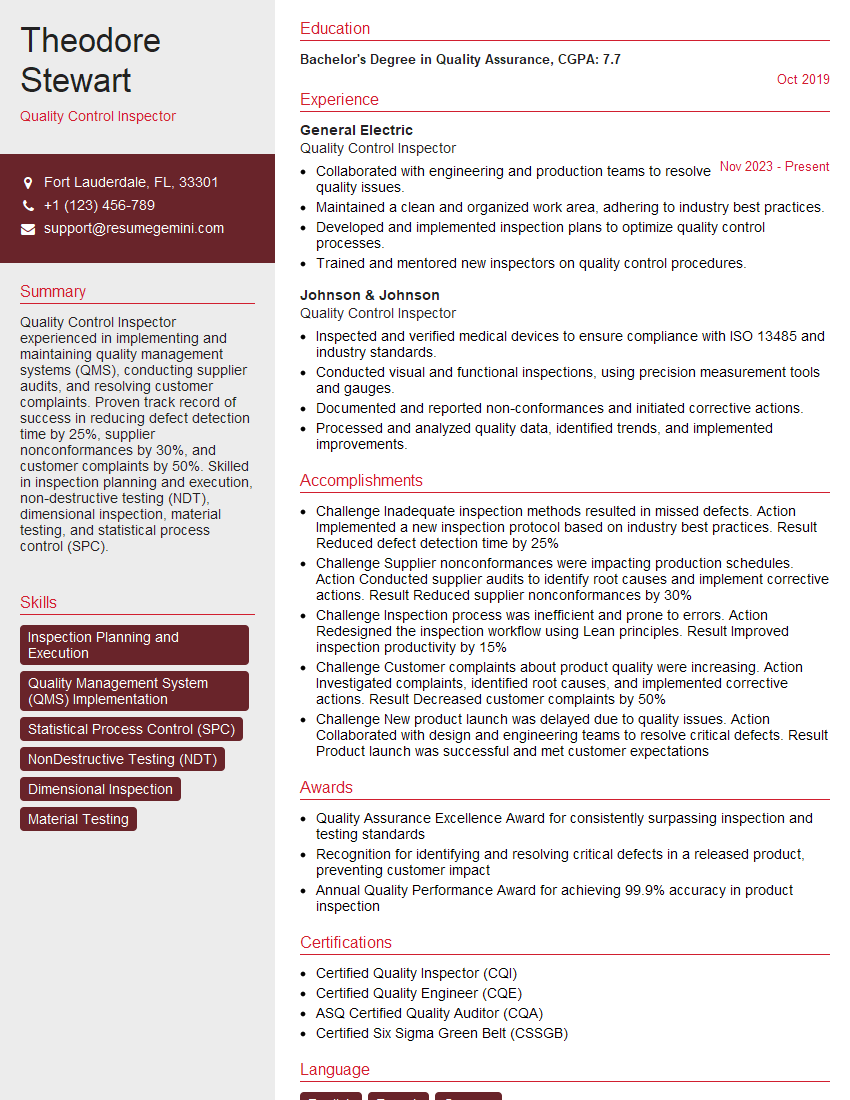
Quality Control Inspector Resume Sample
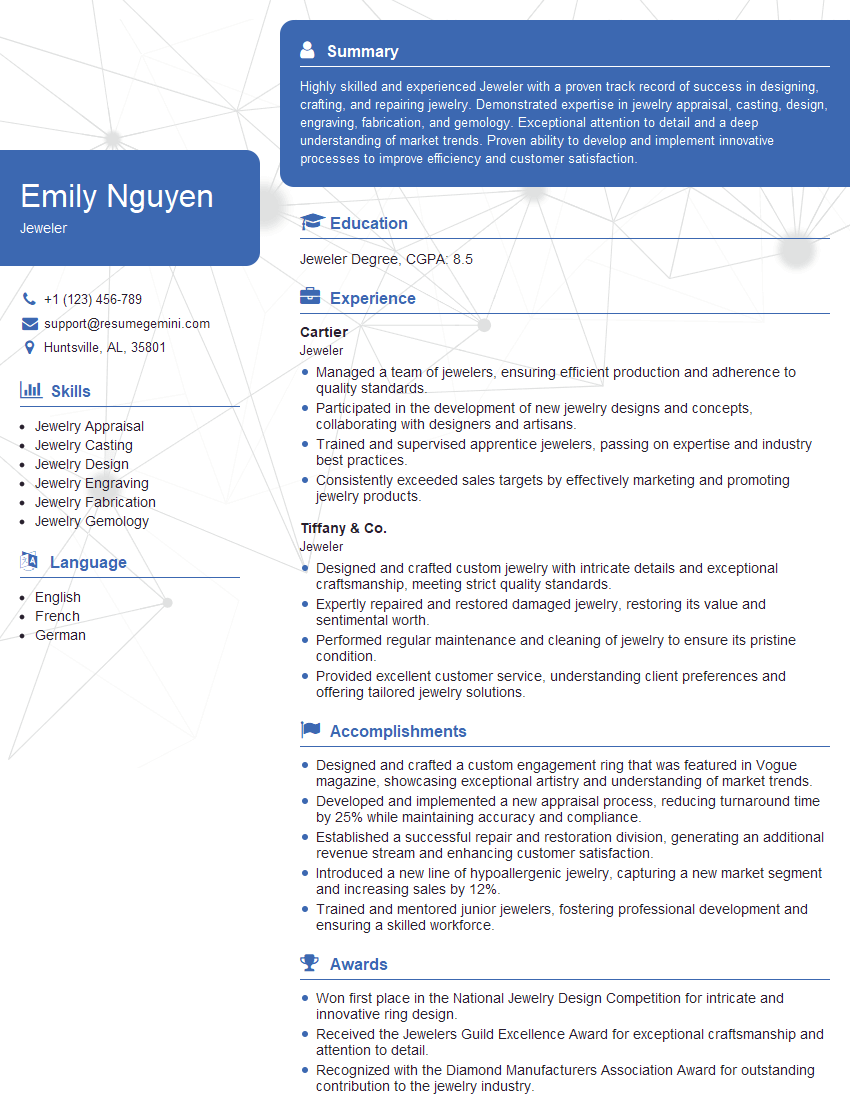
Jeweler Resume Sample
Explore more articles
Users Rating of Our Blogs
Share Your Experience
We value your feedback! Please rate our content and share your thoughts (optional).
What Readers Say About Our Blog
Very informative content, great job.
good