Cracking a skill-specific interview, like one for PreProduction planning, requires understanding the nuances of the role. In this blog, we present the questions you’re most likely to encounter, along with insights into how to answer them effectively. Let’s ensure you’re ready to make a strong impression.
Questions Asked in PreProduction planning Interview
Q 1. Describe your experience in creating detailed pre-production schedules.
Creating a detailed pre-production schedule is crucial for a smooth production. It’s essentially a roadmap that outlines every task, its duration, dependencies, and assigned personnel. My approach begins with a thorough breakdown of the script, identifying key scenes and their complexities. This allows me to estimate the time needed for each phase, from location scouting to set construction. Then, I utilize scheduling software (more on that later) to create a Gantt chart, visually representing the timeline and dependencies between tasks. I build in buffer time – crucial for unforeseen delays – and constantly review and adjust the schedule based on feedback and emerging realities. For example, on a recent documentary, we initially allocated three days for filming a particular location. However, after initial scouting, we realized we needed an additional day due to logistical challenges, and I adjusted the schedule accordingly, communicating the change immediately to the team. The final schedule is a detailed, dynamic document, regularly updated and shared with all key personnel.
Q 2. How do you manage risks and contingencies during the pre-production phase?
Risk management in pre-production is proactive, not reactive. I start by identifying potential risks through brainstorming sessions with the team. These could include weather issues, casting problems, equipment malfunctions, or budget overruns. For each risk, we develop contingency plans. For example, if a key location becomes unavailable, we have an alternative location scouted and ready. If a critical crew member falls ill, we have a backup person identified and their contact details readily available. We also build buffer time into the schedule to absorb minor delays. This proactive approach minimizes the impact of unexpected events. A risk register, documenting each identified risk, its likelihood, potential impact, and the mitigation plan, is continuously updated and shared with the team.
Q 3. Explain your process for budgeting a film or video project in pre-production.
Budgeting is a meticulous process, starting with a thorough script breakdown. Each scene is analyzed for its resource requirements – crew, equipment, location fees, talent costs, catering, etc. I use specialized budgeting software to create a detailed line-item budget. This involves meticulously estimating the cost of each element, factoring in potential inflation and unforeseen expenses. I then categorize the budget into key areas, such as above-the-line (talent, director, etc.) and below-the-line (crew, equipment, etc.) costs. Contingency funds, usually 5-10% of the total budget, are allocated to cover unexpected expenses. Regular budget tracking is crucial, comparing actual costs against the budget. On a short film, for instance, I identified a potential cost overrun in the props budget and by negotiating with the prop master, we found alternative, cost-effective solutions, staying within budget.
Q 4. What software or tools do you utilize for pre-production planning and scheduling?
I rely heavily on a suite of software tools to streamline pre-production. For scheduling, I use ShotGun or StudioBinder, both of which offer powerful features for creating Gantt charts, tracking tasks, and managing dependencies. For budgeting, I often employ Final Draft for script breakdown and Celtx for comprehensive budgeting and scheduling. Google Sheets and Microsoft Excel are invaluable for data management and collaboration. Cloud-based solutions facilitate easy sharing and real-time collaboration amongst the team.
Q 5. How do you handle scope creep during pre-production?
Scope creep – the uncontrolled expansion of project requirements – is a major threat. My strategy is proactive communication and strict adherence to the approved script and budget. Before any changes are considered, a thorough evaluation of their impact on the schedule and budget is conducted. This involves discussions with stakeholders to assess the value and feasibility of proposed additions or modifications. If changes are deemed necessary, a change order is issued, outlining the revised scope, budget, and schedule. This documented process ensures transparency and maintains control over the project. In one instance, a client wanted to add a major scene halfway through pre-production. We carefully analyzed the implications, revising the budget and schedule accordingly and ensuring all stakeholders agreed to the revised plans before proceeding.
Q 6. What is your approach to collaborating with various departments during pre-production?
Collaboration is paramount. I establish regular communication channels, using a mix of meetings, email, and project management software. I hold weekly meetings with key department heads – director, producer, cinematographer, production designer – to discuss progress, address challenges, and ensure alignment on goals. Detailed communication protocols are in place to ensure everyone is informed about changes and updates. For example, a dedicated online platform is used for sharing documents, schedules, and budget updates. Open and honest communication helps resolve conflicts quickly and fosters a collaborative environment. This is especially useful when dealing with creative differences, as it allows for constructive dialogue and compromise.
Q 7. How do you ensure the accuracy of pre-production budgets and schedules?
Accuracy is essential. I utilize a multi-layered approach: meticulous planning, regular review, and cross-checking. The budget and schedule are meticulously reviewed and cross-referenced by multiple team members. Each line item in the budget is justified and supported by documentation. Regular progress updates are compared against the baseline plan, identifying any deviations early. Variance reports highlight discrepancies between planned and actual costs. If significant deviations arise, corrective actions are promptly initiated. On a large project, I implemented a detailed tracking system, coupled with weekly progress reports, allowing for early identification and resolution of any potential inaccuracies or overruns.
Q 8. Describe your experience in creating shot lists and storyboards.
Creating detailed shot lists and storyboards is fundamental to visualizing the final product before a single camera rolls. A shot list meticulously details each shot, specifying camera angle, lens, movement, and desired action. Storyboards translate this further into visual representations, often resembling comic strips, that map out the scene’s progression.
In my experience, I begin by carefully analyzing the script, identifying key moments and emotional beats. This informs the initial shot list, which I then refine in collaboration with the director. We discuss the storytelling objectives of each scene and choose shots that best convey the narrative and emotional impact. For example, a dramatic confrontation might utilize close-ups to emphasize facial expressions, while a wide shot might establish the environment. Simultaneously, I create storyboards, ensuring they match the shot list while adding visual details, such as character positioning and set design elements. I frequently use digital software like Storyboarder or Adobe Photoshop to create professional-looking storyboards. The process is iterative, with revisions based on feedback and evolving creative decisions.
For instance, in a recent project, we had a scene requiring a character to discover a hidden clue. Initially, the shot list focused on the character’s reaction. However, after storyboarding, we realized a preceding shot revealing the clue’s subtle placement would add layers of suspense, improving the scene’s impact. This highlights the collaborative and iterative nature of shot list and storyboard creation.
Q 9. How do you track and manage pre-production expenses?
Tracking pre-production expenses requires a meticulous and organized approach. I utilize spreadsheet software, such as Google Sheets or Microsoft Excel, to create detailed budgets and track spending. This involves breaking down costs into different categories (e.g., location permits, casting fees, art department, equipment rental). Each expense entry includes a description, date, vendor, and the amount. I often use a specific code system to categorize expenses for easy reporting and analysis. This helps me maintain transparency and control over spending, ensuring we stay within the allocated budget.
To prevent overspending, I regularly monitor the budget against actual expenses and create progress reports. This allows for timely adjustments if needed. For example, if location scouting reveals unforeseen costs, we might explore alternative locations that align with our budget. I also proactively communicate potential cost overruns to the production team and stakeholders to make informed decisions. Employing a robust accounting system and adhering to a disciplined budgeting process are crucial to successfully manage pre-production expenses.
Q 10. Explain your method for casting actors or selecting voice talent.
Casting actors or selecting voice talent depends significantly on the project’s needs. For on-camera roles, I usually begin by reviewing the script to understand the character’s personality, background, and required skills. Then, I develop a casting brief outlining these requirements for our casting director. This might involve holding open auditions, reviewing headshots and reels from talent agencies, or using online casting platforms. For voice-over work, a similar process is followed, often focusing on vocal range, tone, and experience with similar projects.
I prioritize finding actors who not only fit the character’s description but also possess the necessary acting skills and chemistry. During the audition process, I evaluate their ability to deliver the lines with emotion, their understanding of the character, and their overall performance. For voice-over artists, I typically evaluate voice samples and assess their vocal quality and ability to convey emotions effectively. Following auditions, a collaborative decision is made with the director and producers. Background checks and contract negotiations follow successful casting.
In one project, we needed a voice actor to narrate a documentary. While we found many candidates with strong voices, one stood out due to their ability to subtly shift their tone to match the documentary’s emotional shifts – something we hadn’t explicitly required but greatly enhanced the final result. This emphasizes the importance of considering an actor’s interpretation and overall presentation.
Q 11. How do you handle communication and coordination amongst the pre-production team?
Effective communication and coordination are crucial in pre-production. I rely heavily on project management software such as Asana, Trello, or Monday.com to centralize communication and track progress. These tools facilitate task assignments, deadlines, and file sharing. Regular team meetings, both in person and virtually, keep everyone informed. Meeting agendas, minutes, and action items are documented and circulated. This ensures that everyone is aligned with goals, responsibilities, and deadlines.
Clear and concise communication is paramount. I prefer a proactive approach, providing regular updates and addressing concerns promptly. I use email for formal communication, instant messaging for quick updates, and video conferencing for detailed discussions. Maintaining a collaborative and transparent atmosphere promotes open communication and proactive problem-solving. The key is to adapt communication methods to the team’s preferences while ensuring information is efficiently disseminated. This also involves setting clear communication protocols, so everyone knows how and when to reach specific team members, especially during crunch time. For example, a dedicated Slack channel or email list for urgent matters enhances the efficiency of communication.
Q 12. How familiar are you with different production methodologies (e.g., Agile, Waterfall)?
I’m familiar with various production methodologies, including Agile and Waterfall. Waterfall follows a linear, sequential approach, with each phase (pre-production, production, post-production) completed before moving to the next. This method is suitable for projects with clearly defined scopes and minimal anticipated changes. Agile, on the other hand, embraces iterative development and flexibility. It involves breaking down the project into smaller, manageable tasks (sprints) allowing for adaptation based on feedback and changing requirements. This is beneficial for projects with dynamic scopes or evolving creative visions.
My preference often depends on the project. For smaller, straightforward projects, a Waterfall approach might be sufficient. However, for complex productions with evolving creative ideas or significant potential for change, Agile’s iterative nature is more suitable. This approach lets us adapt to unforeseen challenges or creative breakthroughs smoothly without jeopardizing the overall schedule or budget. I can effectively tailor my approach and utilize elements from both methodologies based on project-specific needs, choosing the most effective approach based on the project scale, complexity and the clients needs.
Q 13. Describe your experience in securing locations and permits.
Securing locations and permits involves thorough planning and attention to detail. I start by identifying potential locations that align with the script’s needs, considering factors like accessibility, aesthetics, and cost. This frequently involves location scouting, utilizing online resources, and contacting location managers. Once suitable locations are found, I prepare and submit permit applications to the relevant authorities, providing all necessary information such as production dates, planned activities, and insurance details. It’s crucial to understand the specific requirements and regulations for each location and to adhere to them meticulously. This process can be time-consuming, requiring careful preparation and communication with local authorities.
I build strong relationships with location managers and government agencies to facilitate a smoother process. This often involves attending pre-production meetings to address any concerns and ensure compliance with regulations. For instance, for an outdoor shoot, obtaining necessary permissions from park authorities, managing access for equipment and crew, and minimizing the environmental impact might all be important steps. Proactive communication and meticulous documentation are essential to securing necessary permissions and ensuring a legally sound and respectful production process. This also often involves understanding and navigating potential insurance liability associated with the chosen locations.
Q 14. What are some common challenges you’ve encountered in pre-production and how did you overcome them?
Pre-production often presents unique challenges. One common issue is unexpected delays in securing locations or permits, which can disrupt the entire schedule. To mitigate this, I proactively start the location and permitting process early, building in buffer time to accommodate potential delays. Another common challenge is budget constraints. To overcome this, I develop detailed budgets early on, closely monitoring expenses throughout the pre-production phase, and actively seeking cost-effective solutions without compromising quality. Creative collaboration and strategic planning are essential to address these issues.
On one project, we encountered a last-minute change in the lead actor’s availability. We immediately engaged our casting director, re-auditioned candidates, and within two days, had a suitable replacement ready. This necessitated a small reshoot of some promotional materials but averted a significant production delay. The key takeaway from such experiences is the importance of contingency planning, proactive communication, and a flexible approach. The ability to adapt quickly and effectively to unexpected hurdles is crucial to successful pre-production management. Maintaining an open and collaborative atmosphere on the team allows for swift and creative problem-solving to address such challenges.
Q 15. How do you use pre-production to mitigate potential on-set problems?
Pre-production is the critical phase where meticulous planning minimizes on-set surprises. Think of it as building a robust foundation for a house – the stronger the foundation, the less likely you are to encounter problems during construction (production).
- Detailed Script Breakdown: A thorough breakdown identifies potential challenges early on. For example, a scene requiring a specific type of stunt might reveal a need for specialized equipment or permits that can be secured in advance.
- Location Scouting and Risk Assessment: Visiting potential shooting locations allows us to identify and address potential issues such as access limitations, weather vulnerability, or noise restrictions. We’d assess risks and create contingency plans – for instance, having a backup location ready if the primary site proves unsuitable.
- Casting and Crew Selection: Careful casting ensures actors are capable of handling the required roles, while a skilled crew minimizes technical errors. A problematic cast member identified in pre-production is much easier to address than dealing with conflict during filming.
- Equipment Check and Testing: Testing equipment before the shoot prevents costly delays and ensures everything is functioning correctly. Imagine the disaster of discovering a faulty camera on your first day of shooting!
By proactively addressing these potential pitfalls, pre-production significantly reduces on-set issues and keeps the production running smoothly.
Career Expert Tips:
- Ace those interviews! Prepare effectively by reviewing the Top 50 Most Common Interview Questions on ResumeGemini.
- Navigate your job search with confidence! Explore a wide range of Career Tips on ResumeGemini. Learn about common challenges and recommendations to overcome them.
- Craft the perfect resume! Master the Art of Resume Writing with ResumeGemini’s guide. Showcase your unique qualifications and achievements effectively.
- Don’t miss out on holiday savings! Build your dream resume with ResumeGemini’s ATS optimized templates.
Q 16. How do you prioritize tasks during pre-production to meet deadlines?
Prioritizing pre-production tasks requires a structured approach. I typically use a combination of techniques such as Gantt charts and critical path analysis to visualize dependencies and deadlines.
- Gantt Charts: These visual tools illustrate tasks, their duration, and dependencies. This allows me to see which tasks are critical and require immediate attention.
- Critical Path Analysis: This method identifies the longest sequence of tasks that determines the shortest possible project duration. Focusing on these critical tasks ensures we stay on schedule.
- Dependency Mapping: I carefully map out the dependencies between tasks to avoid bottlenecks. For example, casting needs to be completed before costume fittings can begin.
- Regular Check-ins and Meetings: Frequent meetings with the team allow for proactive adjustments and address any emerging issues, preventing small problems from becoming large ones.
For example, on a recent project, using this approach allowed us to identify a potential delay in securing a key location. By addressing this early, we were able to find an alternative and avoid a significant production schedule disruption.
Q 17. How do you handle changes in the production plan during pre-production?
Change is inevitable in filmmaking. Handling these changes gracefully requires flexibility, clear communication, and a well-defined change management process.
- Formal Change Request System: We utilize a documented system where all change requests are formally submitted, reviewed, and approved. This ensures transparency and accountability.
- Impact Assessment: Each change is assessed for its impact on schedule, budget, and overall production goals. This helps make informed decisions about whether to proceed with a change and what adjustments might be needed.
- Revised Schedules and Budgets: If a change necessitates alterations, the schedule and budget are immediately updated to reflect these changes. This ensures everyone remains informed and aligned.
- Team Communication: Changes are communicated clearly and proactively to the entire team to minimize confusion and maintain momentum.
For example, if a key actor became unavailable, we would quickly assess the impact, explore alternatives (recasting, script adjustments), and immediately communicate the revised plan to the team. This ensures everyone is on board and can adapt effectively.
Q 18. Explain your experience with creating and managing production contracts.
I have extensive experience drafting and managing production contracts, ensuring they protect the interests of all parties involved.
- Understanding Legal Language: My background includes a thorough understanding of contract law, specifically as it pertains to the entertainment industry.
- Negotiation and Agreement: I’m adept at negotiating contracts with talent, crew, vendors, and locations, ensuring fair compensation and outlining responsibilities clearly.
- Risk Mitigation: Contracts incorporate clauses that address potential issues, such as liability, intellectual property rights, and payment schedules, protecting all parties involved.
- Contract Management: I diligently manage contracts, tracking payment schedules, managing revisions, and addressing any disputes professionally and efficiently.
I’ve successfully negotiated contracts for projects ranging from independent films to large-scale commercials, ensuring each contract reflects the specific needs and goals of the production.
Q 19. Describe your familiarity with various production insurance policies.
My familiarity with production insurance is comprehensive, encompassing various policies designed to mitigate financial risk.
- General Liability Insurance: This covers claims of bodily injury or property damage resulting from the production’s activities.
- Errors and Omissions Insurance (E&O): This protects against claims of negligence or mistakes in the production process.
- Workers’ Compensation Insurance: This covers medical expenses and lost wages for crew members injured on the set.
- Equipment Insurance: This protects against damage or loss of expensive equipment during production.
- Cast Insurance: This covers medical expenses and lost wages for actors injured or incapacitated during production.
I work closely with insurance brokers to secure appropriate coverage and ensure the production is adequately protected against unexpected events. This allows us to focus on the creative aspects without worrying about catastrophic financial repercussions.
Q 20. What is your experience with pre-visualization techniques?
Pre-visualization is a crucial step for me. I utilize various techniques to plan shots, visualize sequences, and communicate the creative vision to the team before shooting.
- Storyboards: I create detailed storyboards to visually map out each scene, including camera angles, actor positions, and action sequences. This serves as a roadmap for the entire production.
- Animatics: These are animated storyboards, adding movement and timing to the visual plan. This helps refine the pacing and flow of the scenes.
- 3D Pre-visualization: For complex projects, I utilize 3D software to create virtual sets and environments. This allows us to test camera angles, lighting, and even special effects before going on location.
Using these techniques greatly enhances the efficiency of the shoot, reduces on-set uncertainty, and allows for a more focused and productive production process. For example, a complex action scene meticulously planned with 3D pre-visualization significantly reduced the shooting time and minimized the need for costly reshoots.
Q 21. How do you ensure the pre-production process aligns with the overall production goals?
Aligning pre-production with overall production goals is paramount. It involves setting clear objectives, establishing a strong workflow, and implementing consistent communication.
- Defining Clear Goals: The pre-production phase begins by clearly defining the production’s overall objectives. These may include specific creative aims, budgetary constraints, and target audiences.
- Establishing a Workflow: We develop a comprehensive workflow that outlines all necessary tasks, deadlines, and responsibilities. This provides structure and clarity for the entire team.
- Consistent Communication: Open and consistent communication is maintained throughout the pre-production phase, ensuring everyone is informed and working towards the same goals. Regular meetings, shared documents, and clear reporting mechanisms are crucial.
- Regular Monitoring and Adjustment: We consistently monitor progress against the production goals and make necessary adjustments as needed. Flexibility and adaptability are key to ensuring a successful outcome.
By meticulously planning and executing the pre-production process, we lay a strong foundation that supports the efficient and effective execution of the production goals. This approach ultimately leads to a successful and cost-effective outcome.
Q 22. How do you maintain clear and consistent communication with stakeholders throughout pre-production?
Maintaining clear and consistent communication during pre-production is crucial for a smooth production. Think of it like building a house – everyone needs to be on the same page regarding the blueprints before construction begins. I employ a multi-pronged approach:
- Regular Meetings: Scheduled meetings with key stakeholders (director, producers, department heads, etc.) ensure everyone is informed and can contribute their input. These meetings have clear agendas and documented minutes to maintain accountability.
- Project Management Software: Utilizing tools like Asana, Trello, or Monday.com provides a central hub for communication, task assignments, and file sharing, ensuring everyone is accessing the latest information. This reduces reliance on email chains, which can easily become disorganized.
- Dedicated Communication Channels: Establishing specific communication channels for different groups (e.g., a Slack channel for the art department, email for formal updates to clients) keeps communication streamlined and avoids information overload.
- Progress Reports: Regular progress reports – both written and visual – provide a clear overview of the pre-production phase. This could involve using Gantt charts to show schedules and progress against milestones.
- Open Door Policy: Fostering a collaborative environment where everyone feels comfortable asking questions and voicing concerns is crucial. This ensures proactive problem-solving and prevents misunderstandings.
For example, on a recent documentary, I used Asana to track tasks, deadlines, and resource allocation, allowing everyone to see the progress in real-time and reducing the potential for delays.
Q 23. What is your experience with creating and managing a production binder?
The production binder is the bible of pre-production. It’s a centralized repository containing all essential documents needed throughout the production process. My experience encompasses creating and managing these binders both physically and digitally. I organize them using a logical and consistent structure. This typically includes:
- Script & Storyboards: The foundation – various versions with notes and revisions.
- Shot Lists & Storyboards: Detailed breakdown of each scene and its visual representation.
- Budget & Schedule: Precise breakdown of costs and timelines.
- Location Information: Permits, scouting reports, contact details.
- Cast & Crew Lists: Contact details, resumes, contracts.
- Legal Documents: Contracts, releases, insurance policies.
- Technical Specifications: Equipment lists, shooting ratios, technical details.
I ensure the binder remains constantly updated, and versions are clearly labeled. A digital version often complements a physical one for ease of access. On one feature film project, organizing the production binder into a cloud-based system allowed for simultaneous access by all departments and helped streamline the workflow immensely, reducing communication bottlenecks and preventing lost documents.
Q 24. Explain your familiarity with legal and contractual aspects of pre-production.
Legal and contractual aspects of pre-production are paramount to avoid future issues. My experience includes reviewing and understanding contracts with cast, crew, locations, and vendors. This involves:
- Contract Negotiation: I’m familiar with negotiating fair and reasonable terms for all parties involved. This includes understanding intellectual property rights, usage rights, and payment schedules.
- Risk Assessment: Identifying potential legal issues, such as liability for accidents on set or copyright infringement, and implementing measures to mitigate these risks (e.g., obtaining liability insurance).
- Compliance: Ensuring compliance with labor laws, union regulations (if applicable), and copyright laws.
- Insurance: Working with insurance brokers to secure the necessary coverage for the production.
- Permits and Licenses: Obtaining the necessary permits and licenses for filming locations and equipment.
In a recent commercial shoot, I meticulously reviewed the location agreements to ensure we were protected against potential issues, preventing costly legal battles down the road. For example, this included obtaining liability insurance and ensuring we had the correct permits to film in the chosen area.
Q 25. How do you measure the success of the pre-production process?
Measuring the success of pre-production is about assessing whether it has created a solid foundation for a smooth and efficient production. I use several key metrics:
- Staying on Schedule: Did we meet all deadlines for key deliverables (e.g., script lock, casting, location scouting)?
- Budget Adherence: Did we stay within the allocated budget for pre-production costs?
- Team Morale: Is the team motivated and well-informed about the project?
- Risk Mitigation: Have we identified and addressed potential problems before they impact production?
- Completeness of Materials: Is the production binder complete and organized?
A successful pre-production phase doesn’t just mean finishing on time and within budget; it also means creating a well-organized and enthusiastic team, prepared to execute a successful production.
Q 26. Describe your experience working within specific production budgets.
Working within production budgets is a core competency. My experience encompasses various budgets, from small independent films to larger-scale commercials. I apply a systematic approach:
- Detailed Budgeting: Creating a comprehensive budget that includes all anticipated expenses, broken down by department and task.
- Contingency Planning: Allocating funds for unforeseen expenses.
- Value Engineering: Identifying areas where costs can be reduced without compromising quality. For example, finding alternative locations that offer the same aesthetic but at a lower cost.
- Tracking Expenses: Monitoring expenses closely to ensure we are staying on track.
- Regular Reporting: Providing regular budget reports to the producers and stakeholders.
On a low-budget short film, I successfully managed the budget by negotiating lower rates with vendors, securing free equipment, and finding creative solutions for cost-effective set design.
Q 27. How do you balance creative vision with practical constraints during pre-production?
Balancing creative vision with practical constraints is a constant juggling act. Think of it like a sculptor working with a limited amount of clay – they need to be creative within their material limitations. My approach involves:
- Open Communication: Clearly communicating creative goals and potential constraints to the entire team from the outset.
- Collaboration: Working closely with the director and other creative leads to find innovative solutions that work within the budget and schedule.
- Prioritization: Identifying the most essential elements of the creative vision and focusing resources on them.
- Creative Problem-Solving: Brainstorming alternative approaches to achieve the desired creative outcome without exceeding constraints.
- Compromise: Sometimes, compromises need to be made to ensure the project remains feasible.
For instance, on a music video project with a limited budget, we substituted elaborate sets with creative use of lighting and effects, achieving a stunning visual impact without breaking the bank.
Q 28. What is your experience with using project management software for pre-production?
I am proficient in using various project management software for pre-production, including Asana, Trello, and Monday.com. These tools significantly streamline the process. My experience involves:
- Task Management: Assigning tasks, setting deadlines, and tracking progress.
- Communication: Facilitating communication and collaboration among team members.
- File Sharing: Centralized storage and sharing of documents and other relevant files.
- Reporting: Generating reports to track progress and identify potential issues.
- Integration: Integrating with other tools such as scheduling and budgeting software.
Using Asana on a recent commercial shoot, we were able to track all pre-production tasks, ensuring everyone stayed informed and on schedule, leading to a successful and efficient pre-production process.
Key Topics to Learn for PreProduction planning Interview
- Budgeting and Resource Allocation: Understanding how to effectively budget for a project, allocate resources (personnel, equipment, locations), and manage potential cost overruns. Practical application: Developing a realistic budget based on project scope and timelines, negotiating with vendors.
- Scheduling and Time Management: Mastering scheduling techniques (Gantt charts, critical path analysis) to create realistic production schedules and manage timelines effectively. Practical application: Creating a detailed production schedule, identifying potential scheduling conflicts and developing contingency plans.
- Location Scouting and Logistics: The process of finding and securing suitable locations, managing permits, and handling logistical aspects like transportation and accommodation. Practical application: Researching and evaluating potential locations based on project needs, negotiating location agreements.
- Crew Assembly and Management: Understanding the roles and responsibilities of various crew members, assembling a skilled team, and fostering effective communication and collaboration. Practical application: Developing a crew organizational chart, conducting interviews and selecting crew members.
- Risk Assessment and Mitigation: Identifying potential risks and challenges during pre-production and developing strategies to mitigate them. Practical application: Creating a risk assessment matrix, developing contingency plans for various scenarios.
- Pre-Production Documentation: Creating and maintaining comprehensive documentation such as shot lists, storyboards, call sheets, and production reports. Practical application: Developing a clear and concise production bible, ensuring all documentation is readily accessible to the crew.
- Communication and Collaboration: Effective communication with the production team, clients, and other stakeholders. Practical application: Utilizing project management software, holding regular team meetings, and actively seeking feedback.
Next Steps
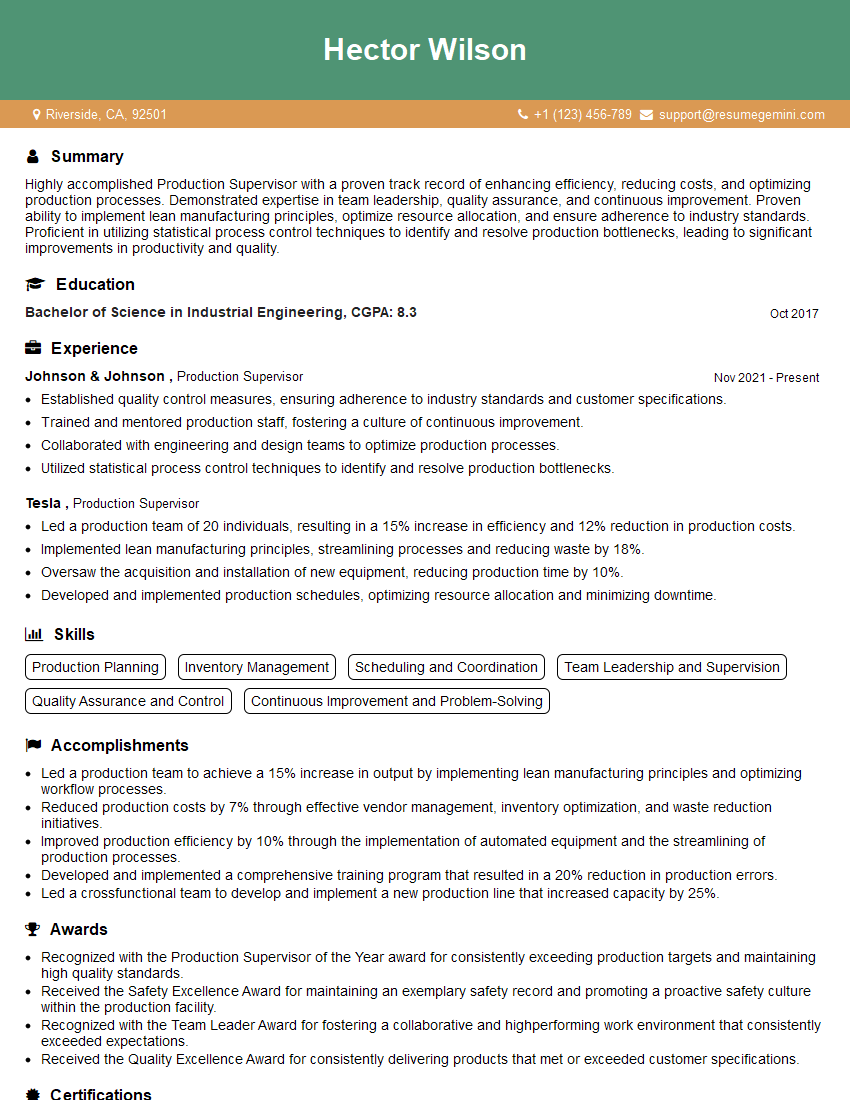
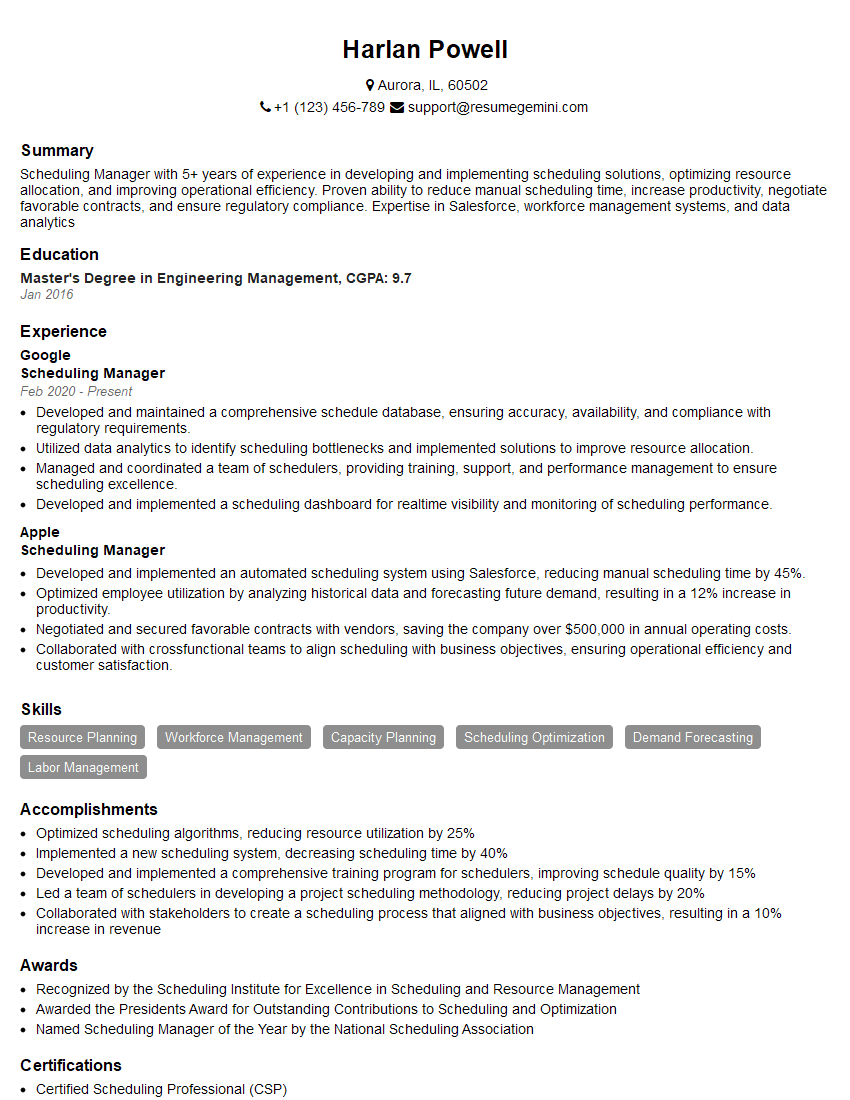
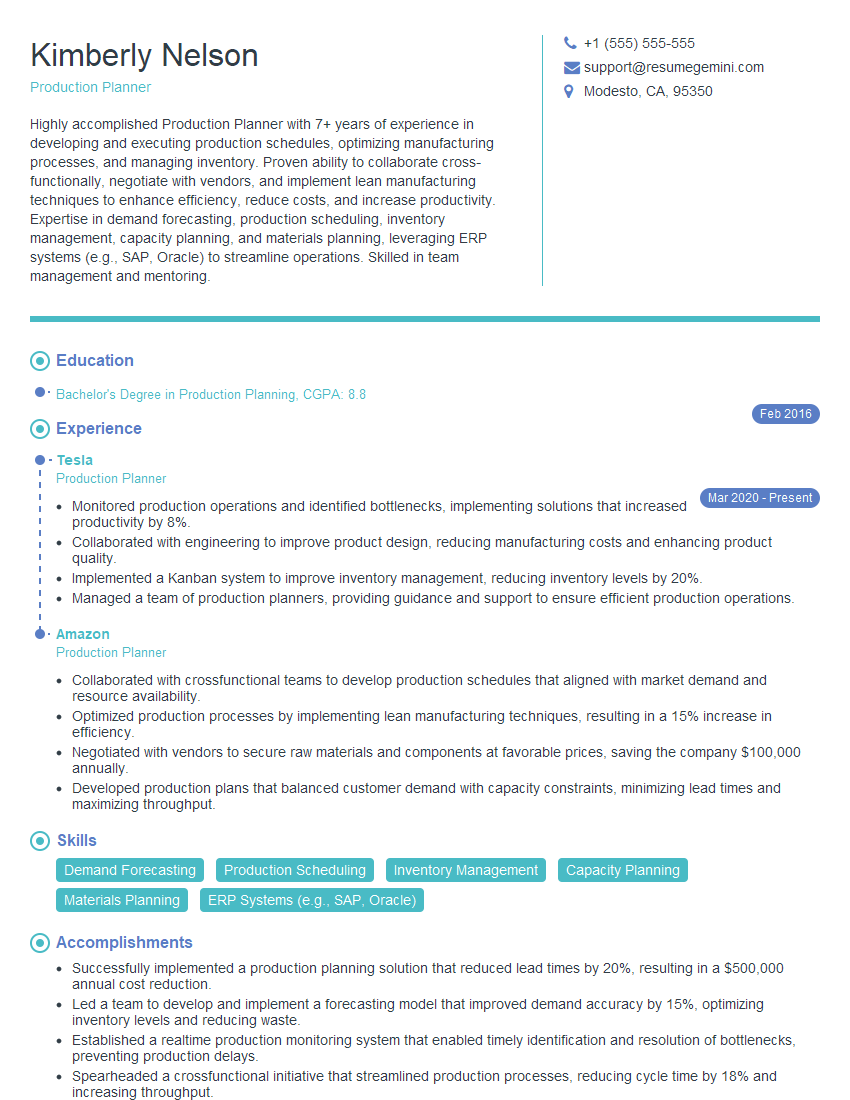
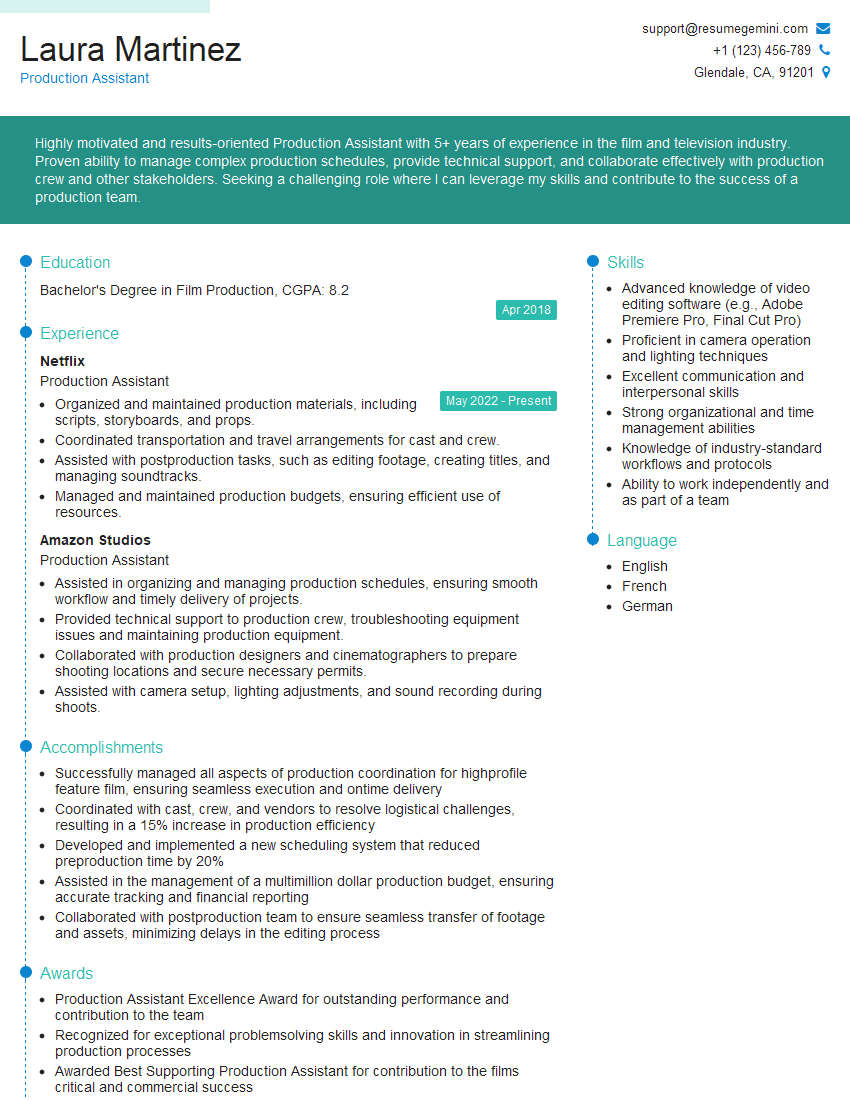
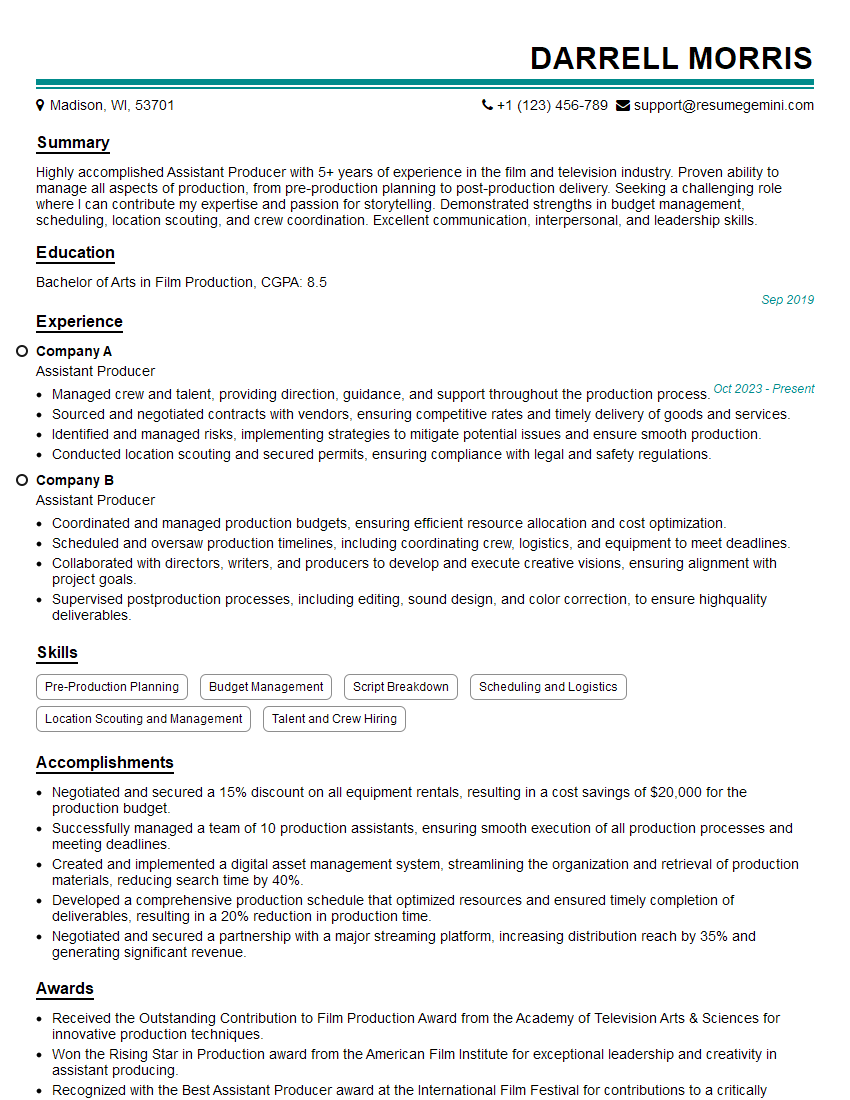
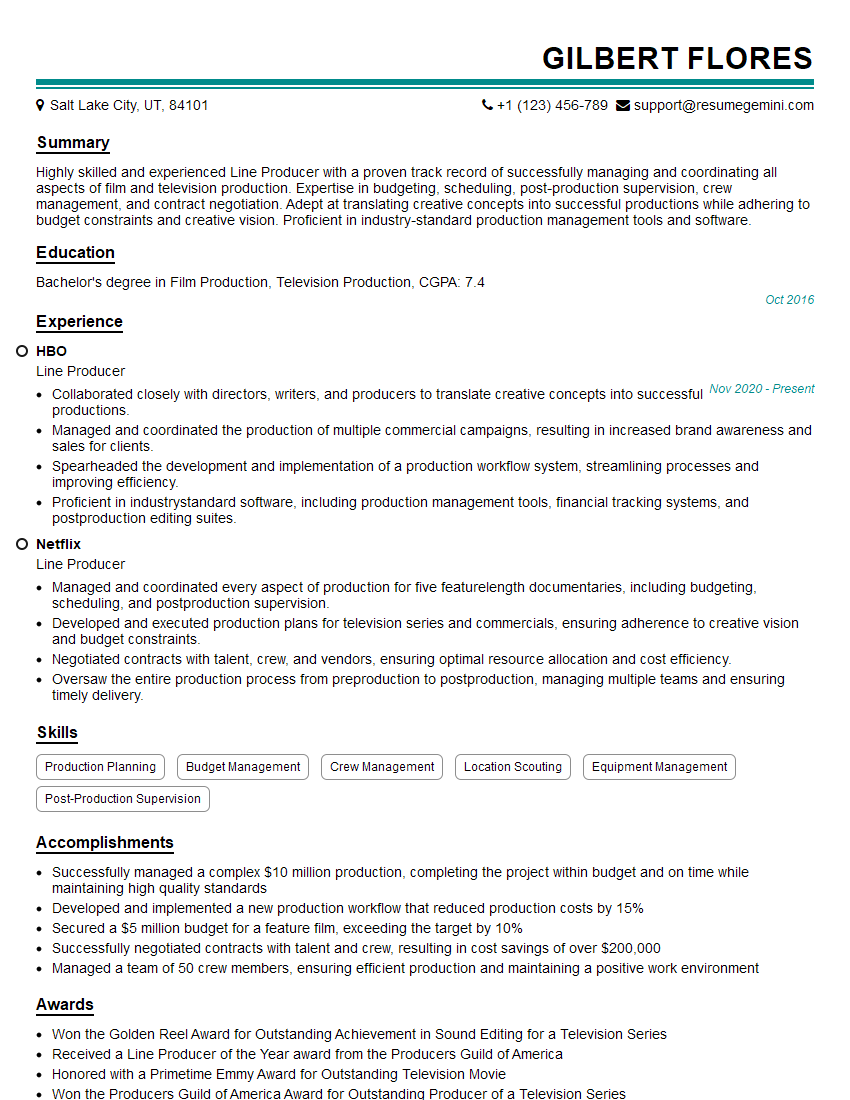
Mastering PreProduction planning is crucial for career advancement in the film, television, and other creative industries. A strong understanding of these processes demonstrates your ability to manage complex projects, work effectively within teams, and deliver successful productions. To increase your job prospects, focus on building an ATS-friendly resume that highlights your skills and experience in PreProduction planning. ResumeGemini is a trusted resource that can help you create a professional and impactful resume. Examples of resumes tailored to PreProduction planning are available, showcasing how to effectively present your qualifications to potential employers.

Explore more articles
Users Rating of Our Blogs
Share Your Experience
We value your feedback! Please rate our content and share your thoughts (optional).
What Readers Say About Our Blog
Very informative content, great job.
good