The right preparation can turn an interview into an opportunity to showcase your expertise. This guide to Press Operation in Different Printing Modes (e.g., CMYK, PMS, Spot Colors) interview questions is your ultimate resource, providing key insights and tips to help you ace your responses and stand out as a top candidate.
Questions Asked in Press Operation in Different Printing Modes (e.g., CMYK, PMS, Spot Colors) Interview
Q 1. Explain the difference between CMYK and PMS color systems.
CMYK and PMS are two distinct color models used in printing, each with its own strengths and weaknesses. CMYK, or Cyan, Magenta, Yellow, and Key (black), is a subtractive color model. This means that colors are created by subtracting light from white. Think of it like mixing paints – the more colors you add, the darker the result. It’s the standard for four-color process printing, where different percentages of cyan, magenta, yellow, and black inks are layered to create a wide range of colors. This is cost-effective but can’t reproduce every color perfectly.
PMS, or Pantone Matching System, is a spot color system. It uses premixed inks with specific formulations, identified by their unique Pantone numbers. Each Pantone color is consistent across different printers and print runs, ensuring accuracy and vibrancy. Unlike CMYK, which approximates colors, PMS provides precise color matching. This is ideal for branding, where consistent color representation is critical, such as for logos or corporate identities. However, using PMS colors increases printing costs due to the extra ink setup required.
Think of it this way: CMYK is like baking a cake from scratch – you have many options but the result might vary slightly. PMS is like using a pre-made cake mix – you get a consistent result every time but have less flexibility.
Q 2. Describe the process of setting up a press for a job requiring spot colors.
Setting up a press for a job with spot colors involves several crucial steps. First, the press operator must accurately identify the Pantone numbers specified in the design. These are crucial for consistent color reproduction. Next, the correct PMS inks are selected and loaded into the appropriate ink fountains on the printing press. This might involve adjusting ink viscosity and ensuring the ink is thoroughly mixed to prevent inconsistencies.
Color bars are then printed to check the registration and color accuracy. This involves making fine adjustments to the ink flow, ensuring that each color is printed precisely where it should be. After this careful setup, a test run is typically conducted to assess the accuracy of color reproduction. Any necessary adjustments are made before proceeding with the full print job. For complex designs, the process may also involve using color management software to precisely define the PMS colors used and calibrate the press for those specific inks.
Q 3. How do you ensure color accuracy when printing with CMYK?
Ensuring color accuracy in CMYK printing requires a multi-pronged approach, starting with the prepress stage. Color profiles are essential; these act like a translator, ensuring the image on the screen closely matches the printed output. Accurate color profiles for both the monitor and the printing press are key. Next, careful calibration of the printing press is required. This includes ink density adjustments, ensuring the correct amount of each CMYK color is applied during printing. It also includes register adjustment; aligning the four color plates perfectly prevents muddy colors or color shifts. Finally, regular monitoring of color during the printing process, using color bars and test prints, helps ensure consistency throughout the run. Any deviations are immediately addressed.
Q 4. What are the challenges of matching PMS colors consistently across different printing runs?
Matching PMS colors consistently across different printing runs can be challenging due to several factors. The primary challenge is variation in ink and paper stock. Different batches of the same PMS ink might have slightly different properties, and paper variations can also significantly affect color perception. The press itself can contribute to variations; its condition and calibration settings play a vital role. Environmental factors such as temperature and humidity also affect ink drying and color appearance. To mitigate these inconsistencies, using a calibrated densitometer (measures ink density) for each run and maintaining precise press settings is vital. Working closely with the ink supplier to ensure consistent ink quality is also essential.
Q 5. How do you troubleshoot a common press malfunction?
Troubleshooting press malfunctions requires a systematic approach. First, identify the nature of the problem. Is it a color issue, a registration problem, or a mechanical fault? Then, check the basics. This might include checking for power supply issues, jammed paper, or ink flow problems. If it’s a color issue, examine the ink keys, density settings, and the color bars. If registration is off, check the plate cylinders and their alignment. For more complex issues, consult the press’s service manual, and contact a qualified technician.
For example, if the printed colors are muddy, the issue could be an incorrect ink density, misregistration, or incorrect color settings. A systematic approach involving checking each of these aspects can pinpoint the problem quickly.
Q 6. Explain the importance of maintaining accurate ink densities.
Maintaining accurate ink densities is crucial for several reasons. First, it directly affects color accuracy. Inconsistent ink densities lead to uneven color distribution and color shifts, making the print look faded or blotchy. Second, accurate densities impact the overall visual appeal of the printed product, affecting its quality and marketability. Third, incorrect densities impact cost. Using too much ink leads to higher printing costs, and too little ink can result in substandard print quality that might necessitate reprints.
Q 7. How do you handle a situation where the printed colors are off-spec?
If the printed colors are off-spec, the first step is to determine the extent of the discrepancy. Use a densitometer to measure the ink densities and compare them to the target values. Check if the issue is consistent across the whole print run or only in specific areas. Next, examine the possible causes. This could include ink issues, press setup errors, or incorrect color profiles. The solution depends on the cause. It might involve adjusting ink densities, recalibrating the press, or even re-running the job with corrected settings. Involving the prepress team to review the color profiles and the design files might be necessary. The goal is to identify the root cause and implement a solution that prevents similar issues in future runs.
Q 8. Describe your experience with different types of printing presses (offset, digital, etc.).
My experience spans a wide range of printing presses, encompassing both offset and digital technologies. Offset printing, the workhorse of large-scale projects, relies on transferring ink from a plate to a rubber blanket and then to the substrate (paper, cardstock, etc.). I’m proficient in operating and maintaining various offset presses, from perfecting presses capable of printing on both sides simultaneously, to sheet-fed presses for smaller runs or specialized stocks. I’ve worked extensively with different formats, handling everything from business cards to large-format posters. Digital printing, on the other hand, offers a much faster turnaround time and is ideal for personalized or short-run projects. My expertise in digital printing includes working with various inkjet and toner-based systems. I’m familiar with their strengths and weaknesses, and I can select the appropriate technology depending on the project’s requirements. For example, for a high-volume, full-color brochure, offset is preferred, while a personalized direct mail campaign may best utilize a high-speed digital press.
Q 9. How do you manage ink and paper waste?
Managing ink and paper waste is crucial for both environmental responsibility and cost-effectiveness. We employ several strategies. For ink, we meticulously calibrate the press to minimize waste during makeready (the initial setup) and production. We utilize color management systems to ensure accurate color reproduction, reducing the need for reprints due to color discrepancies. Regular press maintenance prevents ink leaks and ensures optimal ink transfer. Regarding paper, careful pre-flighting of files eliminates errors that lead to waste during the printing process. We also implement efficient cutting and stacking procedures to minimize trim waste. Furthermore, we actively seek ways to reuse and recycle leftover materials. We partner with responsible recycling facilities and often utilize paper scraps in internal projects, showcasing our commitment to sustainability.
Q 10. What are your experience with color calibration and proofing?
Color calibration and proofing are critical for ensuring color accuracy. My experience includes using spectrophotometers and colorimeters to measure and profile color accurately. I’m proficient in using various color management software (e.g., Adobe Acrobat, GMG ColorProof) to create accurate color profiles and soft proofs that faithfully represent the final printed product. I’ve worked with different color spaces, including CMYK, RGB, and PMS (Pantone Matching System), understanding their implications in different printing processes. For instance, achieving accurate spot color reproduction using PMS requires careful ink selection and monitoring of the printing process. We regularly conduct test prints and compare them to the approved proof to maintain consistency throughout the production run. This rigorous process minimizes costly re-runs and ensures client satisfaction.
Q 11. Describe your experience with pre-press procedures.
Pre-press procedures are essential for a successful print job. My experience covers all aspects, from file preparation and trapping to platemaking and imposition. I meticulously check files for resolution, color modes, bleeds, and fonts to ensure they are print-ready. I am familiar with different trapping techniques and can select the optimal method to prevent white gaps between colors, particularly important during high-resolution printing. I understand the process of creating imposition sheets that dictate how pages are arranged on a printing sheet to maximize efficiency and minimize waste. I’m also experienced with various platemaking techniques, ensuring that plates are created with appropriate settings to yield optimal print quality and longevity. Thorough pre-press ensures that errors are caught before printing, saving time and resources.
Q 12. How do you ensure the quality of printed materials throughout the printing process?
Ensuring quality throughout the printing process requires a multi-faceted approach. We begin with rigorous pre-press checks to identify and correct any potential issues before printing. During the printing process, regular quality control checks are conducted, involving visual inspections and color measurements. We use color bars and control strips in each sheet to monitor consistency. Any discrepancies are addressed promptly to prevent defects from propagating throughout the run. Post-press quality checks, including visual inspections for any imperfections, color accuracy, and proper finishing (binding, folding, etc.), are carried out before the final product is released. Implementing a robust quality control system, coupled with regular staff training and the use of appropriate technology, helps maintain high standards throughout the production process. This commitment to quality minimizes waste, saves time, and ensures that our clients receive high-quality print materials.
Q 13. What is your understanding of different paper types and their suitability for different printing techniques?
Understanding paper types and their suitability for different printing techniques is crucial. Offset printing works best with coated papers due to their smooth surface, enabling sharp image reproduction. Uncoated papers, with their natural texture, are frequently used for digital printing and techniques like letterpress, where the texture adds to the aesthetic appeal. The paper’s weight (gsm – grams per square meter) also plays a significant role, determining its rigidity and suitability for different finishing techniques. For example, heavier stocks are preferred for business cards, while thinner papers are better for brochures. Different paper types also absorb ink differently, affecting color saturation and drying time. I carefully consider the paper choice based on the printing method, final product design, and client expectations, ensuring optimal print quality and aesthetics.
Q 14. How do you manage time effectively during a busy production run?
Managing time effectively during a busy production run is critical. We employ meticulous planning, starting with a detailed production schedule that prioritizes tasks based on deadlines and resource availability. This includes careful estimation of makeready time, printing time, and post-press operations. We utilize efficient workflow systems, and clear communication among team members is crucial. We often use a Kanban board or similar system to track the progress of individual jobs. Furthermore, regular meetings to discuss potential bottlenecks or challenges help us proactively adjust schedules and prevent delays. By adopting a structured and proactive approach, we can maximize efficiency and meet deadlines even during peak production periods.
Q 15. Describe your experience with job ticketing and scheduling.
Job ticketing and scheduling is the backbone of efficient press operation. It involves meticulously tracking each printing job from its initial order to its final delivery. This includes assigning unique job numbers, recording specifications like color mode (CMYK, PMS, Spot), substrate type, quantity, and finishing requirements. I utilize sophisticated scheduling software to optimize press time, minimizing setup changes and maximizing throughput. For example, I’d prioritize jobs with similar color profiles to reduce wash-up time, and schedule jobs with demanding finishing needs towards the end of the day if they require extended setup.
My experience includes working with various job ticketing systems, both proprietary and off-the-shelf. I’m adept at creating efficient workflows that integrate with pre-press and post-press operations, ensuring smooth data flow and minimal bottlenecks. I also proactively communicate potential scheduling conflicts to clients, allowing for adjustments and preventing delays.
Career Expert Tips:
- Ace those interviews! Prepare effectively by reviewing the Top 50 Most Common Interview Questions on ResumeGemini.
- Navigate your job search with confidence! Explore a wide range of Career Tips on ResumeGemini. Learn about common challenges and recommendations to overcome them.
- Craft the perfect resume! Master the Art of Resume Writing with ResumeGemini’s guide. Showcase your unique qualifications and achievements effectively.
- Don’t miss out on holiday savings! Build your dream resume with ResumeGemini’s ATS optimized templates.
Q 16. Explain your knowledge of press maintenance and safety procedures.
Press maintenance is crucial for consistent print quality and safety. My routine includes daily inspections of all press components, including rollers, blankets, and dampening systems. I follow a preventative maintenance schedule, which includes regular cleaning, lubrication, and replacement of worn parts. This is akin to regularly servicing a car—preventative maintenance prevents costly breakdowns later.
Safety is paramount. I adhere strictly to all safety regulations, including using proper Personal Protective Equipment (PPE) such as safety glasses and gloves. I conduct regular safety checks of the press, ensuring emergency shut-off switches are functional, guards are in place, and the workspace is free from hazards. I’m also trained in lockout/tagout procedures to ensure the safety of myself and my colleagues during maintenance activities. This preventative approach ensures a safe and productive working environment.
Q 17. How do you handle customer complaints about print quality?
Handling customer complaints about print quality requires a methodical approach. First, I carefully review the complaint, paying attention to the specifics – areas of concern, type of defect (e.g., color mismatches, banding, dot gain), and the number of affected pieces. This helps in identifying the root cause. Then, I thoroughly examine the press sheets and the original print specifications. For instance, if a color appears off, I examine the color profile used (CMYK vs. PMS), the proof provided, and the press logs to see if anything went wrong.
I communicate clearly and transparently with the customer. I explain the possible causes (ink density, substrate issues, press settings) and propose solutions, which might include reprinting the affected sheets, adjusting the press settings for subsequent runs, or providing a credit. My goal is not only to rectify the issue but also to maintain a strong customer relationship. Sometimes, a simple explanation of how a slight variation in ink density can impact the perceived color can alleviate concerns.
Q 18. What is your experience with different types of printing substrates?
My experience encompasses a wide range of printing substrates, including various types of paper (coated, uncoated, gloss, matte), card stock, and synthetics. Each substrate demands different press settings to achieve optimal print quality. For instance, coated paper requires different ink settings compared to uncoated paper due to differences in ink absorption. Similarly, working with thicker substrates requires adjustments in the press feed mechanism to avoid jams.
Understanding substrate properties is critical for accurate color reproduction and efficient printing. I am proficient in identifying the characteristics of various substrates and adapting the press accordingly, always striving for quality prints even with diverse materials. For example, I’d select different inks for synthetics to ensure proper adhesion and avoid smudging.
Q 19. How do you identify and solve problems related to color registration?
Color registration issues arise when the different color plates (cyan, magenta, yellow, black, and spot colors) don’t align perfectly, resulting in blurry images or misaligned colors. Identifying the problem requires a systematic approach. I first visually inspect the printed sheets, noting the misalignment in each color. I then check the press settings, particularly the plate registration marks, to see if there’s any mechanical issue like improper plate mounting or roller alignment.
Solving registration issues depends on the root cause. If it’s a mechanical issue, adjustments might involve fine-tuning the press controls to realign the plates. If it’s a plate-related problem, it may require replacing or remaking the plates. Sometimes, minor adjustments to the feed system or blanket cylinder can address registration problems. Each issue requires careful evaluation and a specific solution to maintain accurate color alignment.
Q 20. What are your skills with different finishing techniques (cutting, folding, binding)?
My skills in finishing techniques are essential for delivering a complete product. I’m proficient in operating various cutting, folding, and binding equipment. I know how to adjust cutting dies for different shapes and sizes, ensuring clean and precise cuts. Folding involves understanding various folding patterns (half-fold, letter fold, gate fold) and choosing the appropriate machine settings to avoid creasing or misalignment.
Binding encompasses various methods like saddle stitching, perfect binding, and wire-o binding. Each requires specific equipment and techniques. For example, perfect binding requires precisely trimming the edges and applying adhesive to create a neat and durable book. My experience enables me to choose the most appropriate finishing method to match the job specifications and deliver a high-quality final product.
Q 21. How do you maintain a clean and organized workspace in the pressroom?
Maintaining a clean and organized workspace is essential for safety and efficiency. I follow a daily cleaning routine that involves removing ink and paper scraps, cleaning rollers and other press components, and organizing tools and supplies. A cluttered workspace increases the risk of accidents and slows down production.
Organization involves a systematic approach. I use designated storage areas for different materials and tools, ensuring everything is readily accessible and in its proper place. This allows for efficient workflow and reduces search time. Regular cleaning and organized storage not only improve safety but also create a more productive and pleasant work environment.
Q 22. What is your experience with different types of printing inks?
My experience encompasses a wide range of printing inks, from the ubiquitous CMYK (Cyan, Magenta, Yellow, Key/Black) process colors used in most digital and offset printing to the vibrant and precise Pantone Matching System (PMS) spot colors, and various specialty inks. CMYK inks are subtractive; mixing them creates a range of colors, but the final result isn’t always as bright as desired. PMS colors, on the other hand, are pre-mixed and offer consistent, accurate color reproduction, crucial for brand consistency and specialty effects. I’ve also worked with metallic inks, fluorescent inks, and even food-safe inks, each requiring specific handling and press adjustments for optimal results.
For example, in one project, we needed to reproduce a client’s logo which featured a specific, highly saturated shade of blue. Using CMYK alone resulted in a dull, washed-out color. Switching to the corresponding PMS color ensured the logo appeared exactly as the client intended, maintaining brand integrity. Understanding the nuances of each ink type, including their drying times, viscosity, and compatibility with various substrates, is essential for achieving high-quality prints.
Q 23. How do you use color management software?
Color management software is indispensable for ensuring accurate color reproduction throughout the printing process. My proficiency lies in using software like Adobe Acrobat Pro, GMG ColorProof, and other industry-standard applications. I understand the importance of color profiles (ICC profiles) in mapping color from the digital source to the final printed output. I use these tools to convert color spaces, check for color inconsistencies, and create soft proofs to preview the final print.
For instance, if a client provides a design file in sRGB, a common digital color space, I would use the color management software to convert it to the appropriate color space for the press—often a specific CMYK profile tailored to the printer and paper stock. This ensures that the colors viewed on screen closely match the final printed product, minimizing costly reprints and client dissatisfaction.
Q 24. Describe your experience with pressroom safety regulations and protocols.
Pressroom safety is paramount. My experience includes strict adherence to all relevant OSHA regulations and company-specific safety protocols. This encompasses proper use of personal protective equipment (PPE), including safety glasses, gloves, and hearing protection; understanding the hazards associated with chemicals, such as ink and solvents; and following lockout/tagout procedures when maintaining or repairing printing equipment. I’m also trained in emergency procedures, such as handling chemical spills and responding to equipment malfunctions safely.
For example, before operating any press, I perform a thorough safety check, verifying the proper functioning of safety guards and emergency stop mechanisms. Regular training on safe practices and hazard awareness ensures a safe working environment for myself and my colleagues.
Q 25. How do you prioritize tasks in a high-pressure environment?
In a high-pressure environment, effective task prioritization is crucial. I use a combination of techniques, including identifying the most time-sensitive jobs, those with the tightest deadlines, and assessing their impact on overall production schedules. I leverage project management tools to track progress and allocate resources effectively. Communication is key—I maintain open lines of communication with clients and team members to keep everyone informed and manage expectations.
I often employ the Eisenhower Matrix (urgent/important) to categorize tasks and prioritize accordingly. This helps me focus on the most critical tasks and delegate or delay less urgent ones, preventing bottlenecks and ensuring timely completion of projects. In a busy pressroom, this organized approach minimizes stress and optimizes productivity.
Q 26. What is your understanding of different printing methods and their applications?
My understanding of printing methods includes offset lithography (the most common method for high-volume printing), digital printing (ideal for short runs and personalized materials), screen printing (versatile for various substrates and effects), and flexographic printing (often used for packaging). Each method has unique applications. Offset lithography excels in high-quality, large-scale projects; digital printing is suitable for personalized marketing materials and quick turnaround times; screen printing is great for specialized effects and non-traditional substrates; and flexographic printing is efficient for repetitive packaging designs.
For example, a large-scale book printing project would best utilize offset lithography for its cost-effectiveness and high print quality. On the other hand, printing customized invitations would be more suitable for digital printing, allowing for personalization without the high setup costs of offset.
Q 27. Describe your experience with troubleshooting and resolving issues with different printing devices.
Troubleshooting printing devices requires a systematic approach. I start by identifying the problem, analyzing the error messages (if any), and examining the print output for visual cues (banding, streaking, color mismatches). I then check consumables such as ink, plates (in offset), and paper for any issues. Depending on the issue, I might adjust press settings, such as ink density, registration, or pressure, or perform preventative maintenance tasks, like cleaning rollers or replacing worn parts.
For instance, if I encounter banding in an offset print, I would systematically check the ink flow, dampening system, and the condition of the rollers. If the problem persists, I might need to replace the plate or investigate potential problems with the press itself. A methodical approach, combined with a strong understanding of the printing process and equipment, is crucial for effective troubleshooting.
Q 28. How do you calculate the cost of a printing job?
Calculating the cost of a printing job involves several factors. Direct costs include materials (paper, ink, plates), labor (press operators, prepress staff), and utilities. Indirect costs can include depreciation of equipment, maintenance, and overhead. The pricing model often uses a combination of methods: cost-plus pricing (calculating costs and adding a markup), competitive pricing (matching or undercutting competitors’ prices), and value-based pricing (charging based on perceived value to the client).
A detailed breakdown is often necessary. For example, for a 1000-piece flyer project, we would calculate costs based on the paper type and quantity, ink usage, labor hours for setup and press operation, and post-press finishing (cutting, folding, etc.). Adding a markup for profit and overhead then generates the final price quoted to the client. Accurate cost estimation is crucial for profitability and transparent client communication.
Key Topics to Learn for Press Operation in Different Printing Modes (e.g., CMYK, PMS, Spot Colors) Interview
- Understanding Color Models: A thorough grasp of CMYK, PMS, and spot color systems; their differences and applications in various printing processes.
- Color Separation and Reproduction: How color is separated and reproduced accurately in different printing modes. Understanding the challenges and techniques involved in achieving color consistency.
- Press Setup and Configuration: Knowledge of how to configure printing presses for different color modes, including ink selection, density adjustments, and color profiles.
- Ink Management: Understanding ink viscosity, mixing, and maintenance; troubleshooting ink-related issues during the printing process.
- Troubleshooting Color Issues: Identifying and resolving common color discrepancies (e.g., misregistration, banding, moiré patterns) in CMYK, PMS, and spot color printing.
- Quality Control and Inspection: Techniques for inspecting printed materials for color accuracy, registration, and overall quality. Understanding the importance of color standards and proofing methods.
- Pre-press Considerations: The impact of file preparation (e.g., resolution, color space, trapping) on the final printed output in various color modes.
- Different Printing Processes: Familiarity with various printing methods (offset, digital, screen printing) and their suitability for different color modes.
- Health and Safety: Understanding and adhering to safety protocols and best practices related to ink handling, press operation, and waste management.
Next Steps
Mastering press operation in different printing modes is crucial for career advancement in the printing industry. A strong understanding of color theory and practical printing techniques will significantly enhance your job prospects and open doors to more challenging and rewarding roles. To maximize your chances, create an ATS-friendly resume that highlights your skills and experience effectively. ResumeGemini is a trusted resource that can help you build a professional and impactful resume tailored to the specific requirements of the job market. Examples of resumes tailored to Press Operation in Different Printing Modes (e.g., CMYK, PMS, Spot Colors) are available to help you get started.

Print Production Manager Resume Sample

Print Buyer Resume Sample
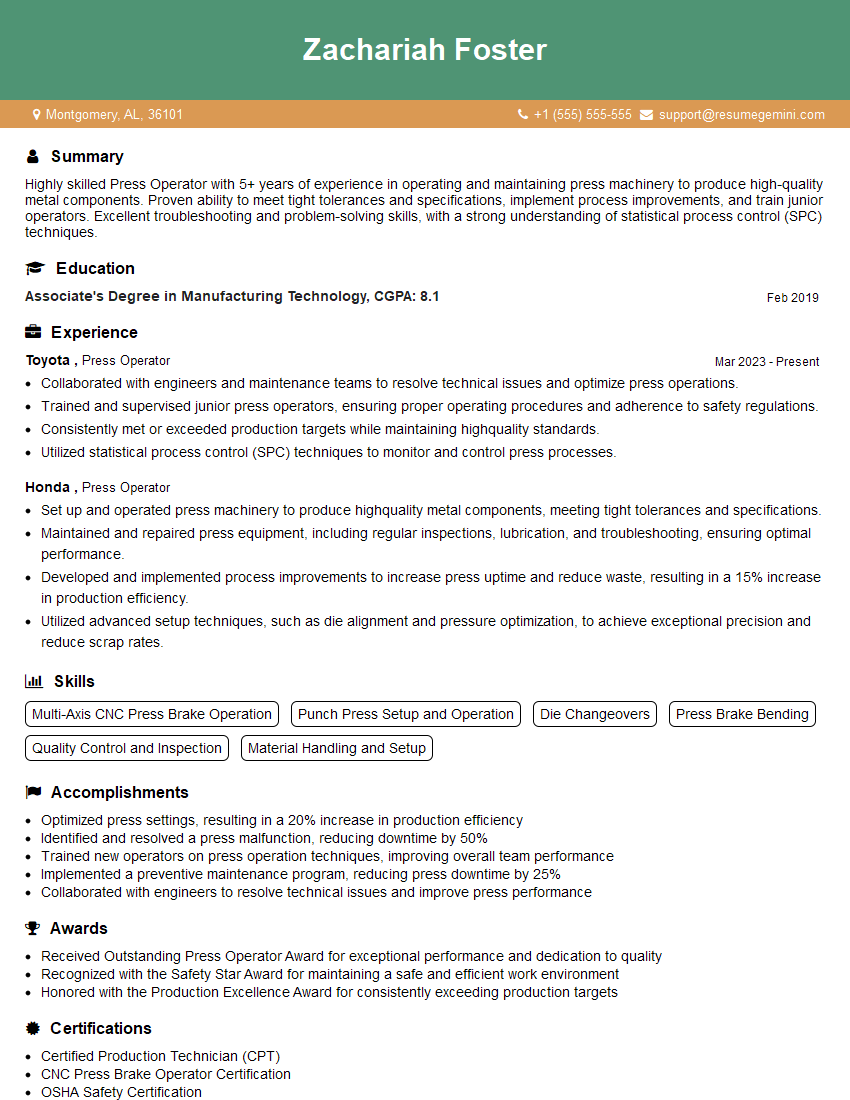
Press Operator Resume Sample

Pressroom Supervisor Resume Sample
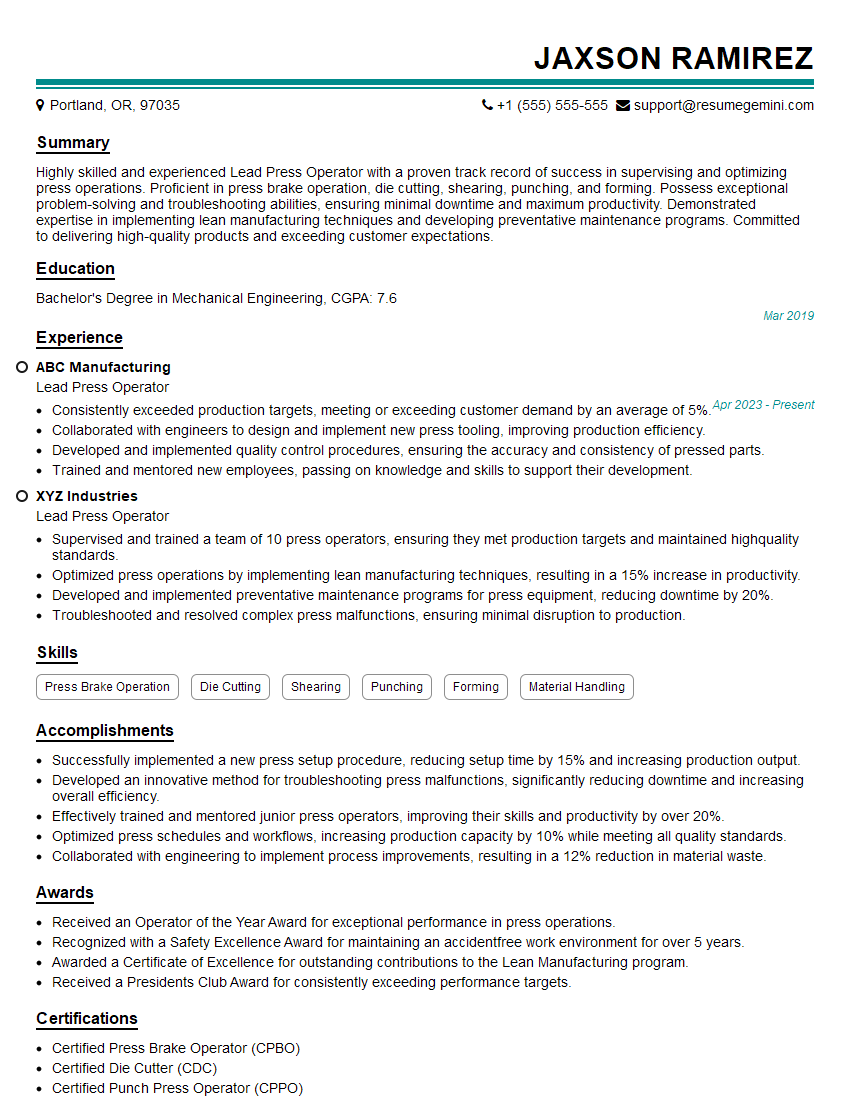
Lead Press Operator Resume Sample
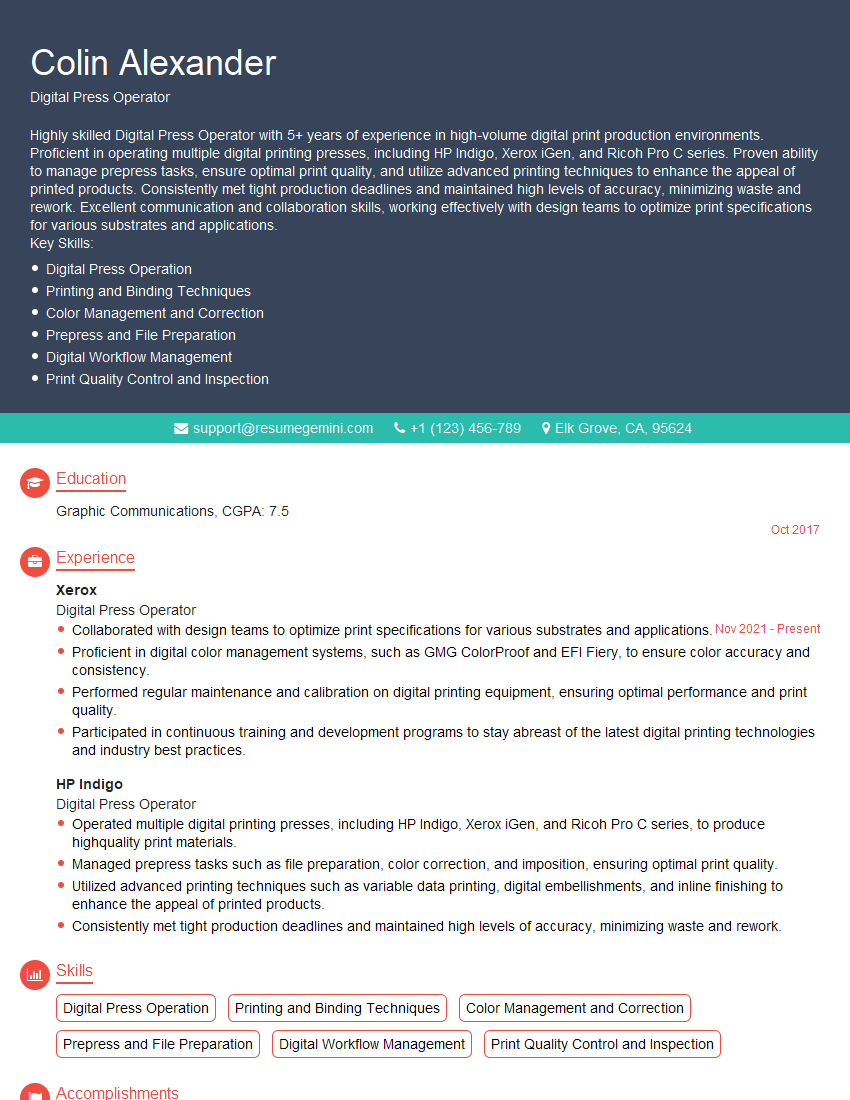
Digital Press Operator Resume Sample

Prepress Technician Resume Sample
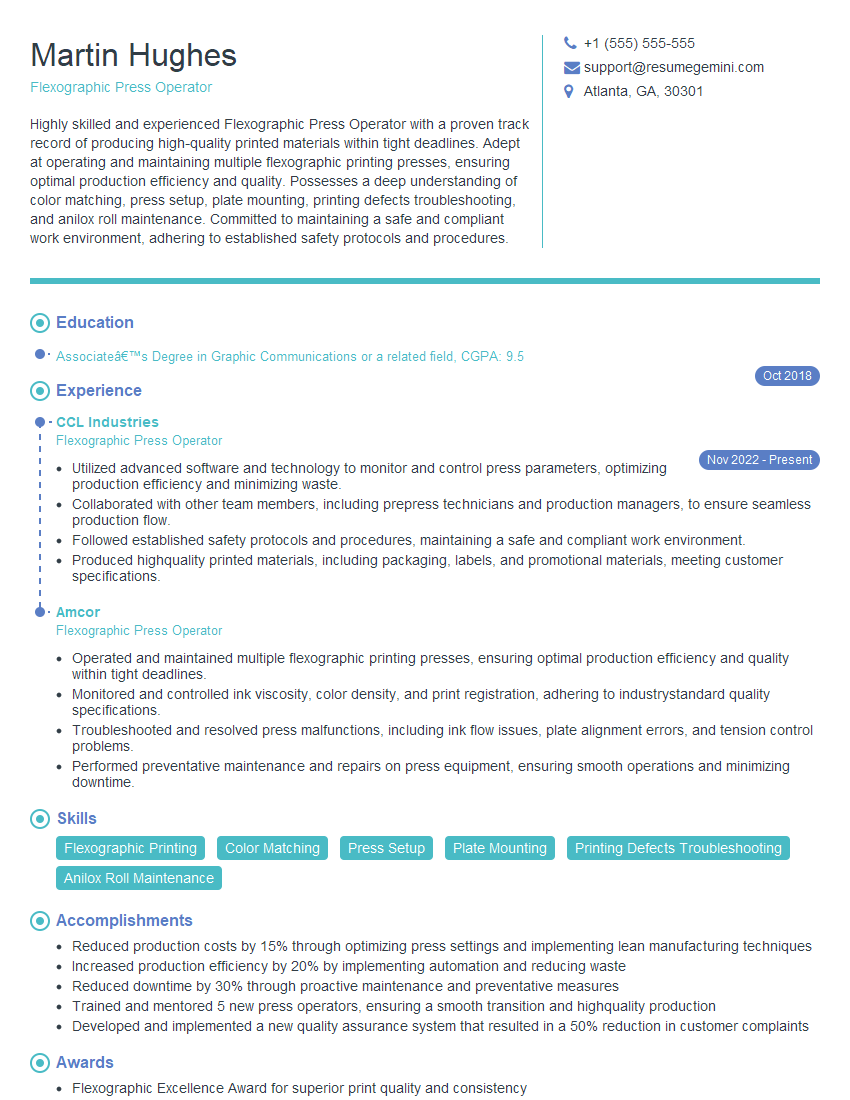
Flexographic Press Operator Resume Sample
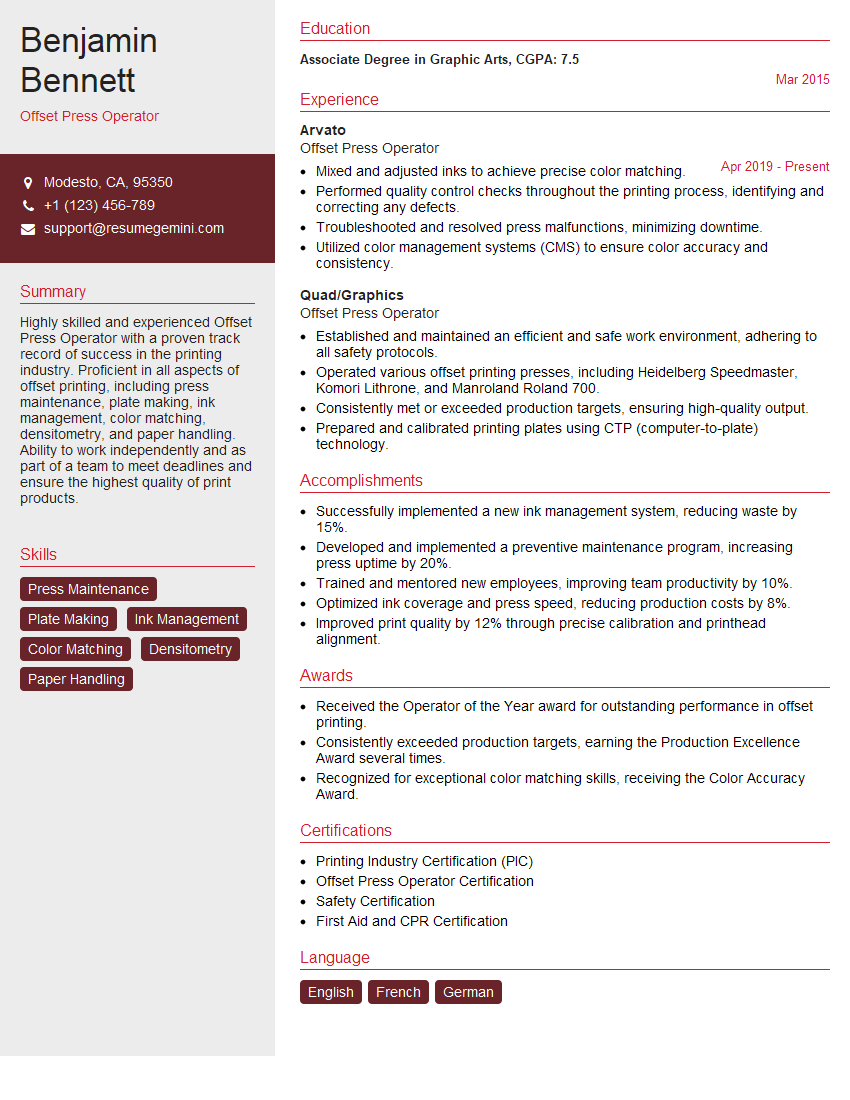
Offset Press Operator Resume Sample
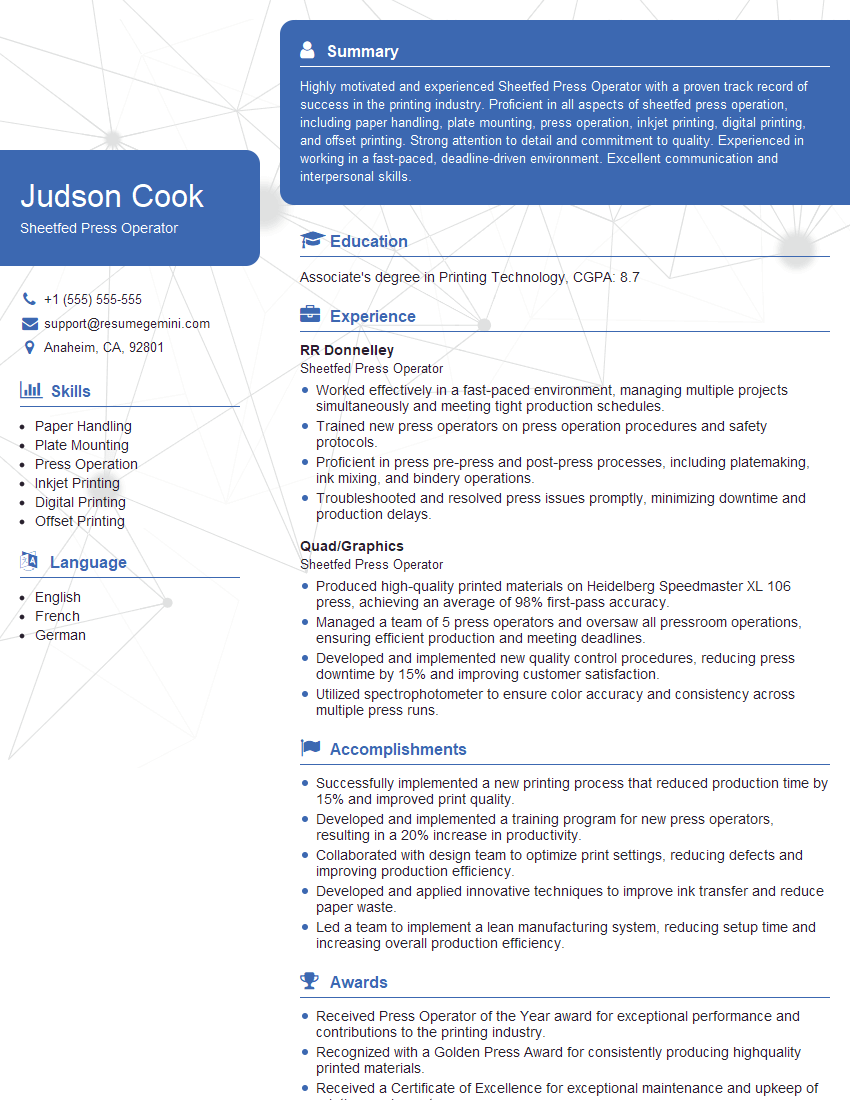
Sheetfed Press Operator Resume Sample
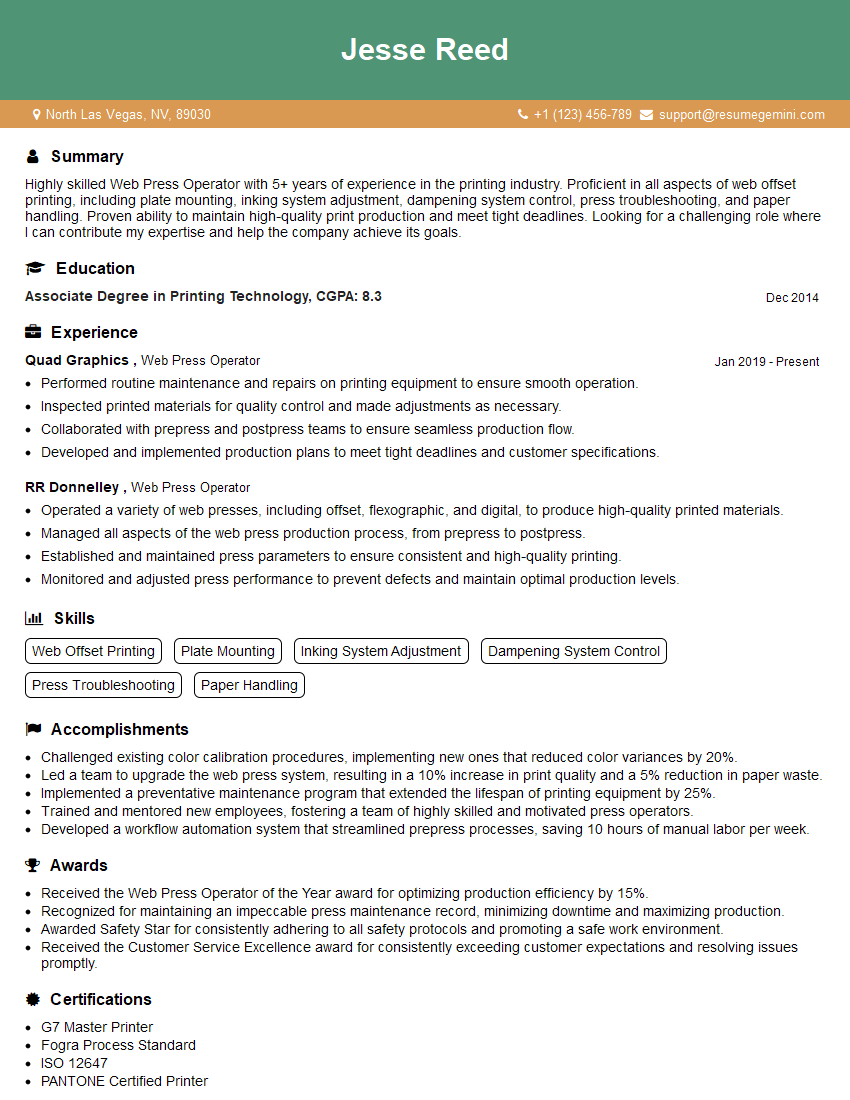
Web Press Operator Resume Sample
Explore more articles
Users Rating of Our Blogs
Share Your Experience
We value your feedback! Please rate our content and share your thoughts (optional).
What Readers Say About Our Blog
Very informative content, great job.
good