Unlock your full potential by mastering the most common Press Setup and Adjustment interview questions. This blog offers a deep dive into the critical topics, ensuring you’re not only prepared to answer but to excel. With these insights, you’ll approach your interview with clarity and confidence.
Questions Asked in Press Setup and Adjustment Interview
Q 1. Describe your experience with different types of printing presses.
My experience encompasses a wide range of printing presses, including sheetfed offset presses (both small format and large format), web offset presses, and digital presses. I’ve worked extensively with Heidelberg, Komori, and MAN Roland offset presses, gaining proficiency in their unique operational characteristics. For example, I’ve mastered the intricacies of perfecting presses – those that print on both sides of the sheet simultaneously – requiring precise adjustments for color consistency and registration across both sides. My experience with digital presses includes working with Xerox and HP Indigo models, understanding their workflow differences from traditional offset printing and the specific setup requirements for variable data printing.
Each press type presents its own challenges. Sheetfed presses demand meticulous attention to paper handling and feeding mechanisms, while web offset presses require a deeper understanding of web tension and dryer systems. Digital presses, while often simpler to set up for individual jobs, require proficiency in managing print queues and optimizing print parameters for different substrates.
Q 2. Explain the process of setting up a printing press for a new job.
Setting up a printing press for a new job is a methodical process that involves several key steps. It begins with a thorough review of the job specifications, including the number of colors, paper stock, and desired print quality. I then prepare the press by installing the correct printing plates, ensuring they’re accurately positioned and firmly clamped. This is often followed by adjusting the inking system to achieve the appropriate ink density for the desired colors. This involves checking the ink rollers, fountains, and dampening system.
Next, I perform a makeready, which involves a series of test prints to adjust the press parameters. This might include fine-tuning the paper feed, adjusting impression pressure, and fine-tuning the color balance using color bars and test strips. I also check for proper registration using registration marks. This iterative process continues until I achieve a satisfactory print sample matching the client’s specifications. Finally, I verify the press speed and initiate a production run, continuously monitoring the quality throughout the process.
Q 3. How do you ensure accurate color registration on a printing press?
Accurate color registration is paramount for high-quality printing. It’s achieved through a combination of careful pre-press preparation and precise press adjustments. In pre-press, ensuring accurate imposition and platemaking is crucial. On the press, I use registration marks (printed on the plates) to align the color plates precisely. These marks act as guides for adjustments to the lateral and circumferential position of each printing unit.
Throughout the makeready process, I constantly monitor and adjust the registration using a magnifying glass and fine-tuning controls on the press. Minor adjustments are made iteratively based on test prints. For example, if one color is slightly off-register, I’ll systematically adjust the relevant printing unit’s lateral or circumferential position using the press’s controls, making small adjustments until the registration is accurate. In situations involving severe misregistration, I might re-examine the plate mounting, checking for any warping or misalignment.
Q 4. What are the common causes of print defects and how do you troubleshoot them?
Common print defects can stem from various sources, from pre-press issues to press problems. Examples include: Mottle (uneven ink distribution), hickies (small specks of debris), set-off (ink transferring to the back of the next sheet), double imaging (two images faintly overlaid), and slur (fuzzy or blurred images).
Troubleshooting these defects involves a systematic approach. I’d first examine the pre-press components, like the plates, for any imperfections. Then, I’d move to the press, checking the inking system for uneven ink distribution, cleaning rollers and the fountain solution system. Set-off usually requires adjustments to the drying system or paper choice. Double imaging often suggests problems with impression or plate slippage. Slur might indicate issues with the blanket or dampening. Detailed observation of the defect and its pattern is key to determining the root cause.
Q 5. How do you maintain and adjust the ink feed system on a printing press?
Maintaining and adjusting the ink feed system is essential for consistent print quality. This involves regular cleaning of ink rollers, ductor rollers, and ink fountains to remove dried ink and debris. Ink viscosity is crucial, so I regularly check and adjust it using appropriate thinners. The ink keys on each printing unit control the ink flow and require precise adjustment during makeready and throughout the run to maintain consistent ink density across the entire print area. This adjustment is often done through the press’s control console.
I also monitor ink levels throughout the production run and refill the ink fountains as needed, while ensuring consistent ink supply. Any inconsistencies in ink flow might indicate a problem with the ductor rollers, ink pumps, or the ink fountain itself. I’m proficient in diagnosing these issues and making the necessary repairs or adjustments.
Q 6. Describe your experience with pre-press processes and how they impact press setup.
Pre-press processes are fundamentally linked to press setup. High-quality pre-press work significantly reduces press setup time and ensures accurate results. I collaborate closely with pre-press personnel, verifying file preparation, color profiles, and proofing accuracy. Correct color separation and appropriate trapping ensure smooth color transitions on press. Accurate platemaking is vital; poorly made plates can lead to misregistration and color inconsistencies, significantly increasing makeready time and effort.
My experience highlights the importance of thorough file checks, color management systems, and high-resolution proofing. For instance, a misaligned PDF or improper color profile can cause hours of wasted press time trying to correct color balance and registration. A well-prepared pre-press package allows for a streamlined press setup, enabling more efficient production and reduced costs.
Q 7. What safety procedures do you follow when operating and maintaining a printing press?
Safety is paramount in my work. Before operating any printing press, I ensure all safety guards are in place and functional. I follow lockout/tagout procedures whenever performing maintenance or repairs to prevent accidental start-up. I wear appropriate personal protective equipment (PPE) such as safety glasses, gloves, and hearing protection, especially when working with chemicals or during maintenance tasks. I am familiar with the emergency shutdown procedures for the press and the location of safety equipment, including fire extinguishers.
I regularly inspect the press for any potential hazards, including loose parts, frayed wires, or leaking fluids. I also receive and adhere to all company safety training and guidelines. Regular maintenance and awareness of potential hazards are key to maintaining a safe working environment.
Q 8. How do you handle paper jams and other press malfunctions?
Handling paper jams and malfunctions requires a systematic approach. First, I always prioritize safety, ensuring the press is completely shut down before attempting any intervention. Then, I identify the source of the jam, which could be anything from misfed sheets to a problem with the rollers or feeders. I use the press’s operational manual as a guide, as each machine has its own specific procedures. For example, some presses have easily accessible jam-release levers, while others might require more intricate steps. I meticulously follow the manufacturer’s instructions, avoiding force that might damage the press or the paper.
If a jam is particularly stubborn, or if the problem persists after trying the standard troubleshooting steps, I systematically check all the moving parts, looking for obstructions, misalignments, or damage. I might use compressed air (carefully!) to clear any small debris. If the problem is beyond my expertise, I immediately contact the press’s maintenance team or the manufacturer’s support service. Regular preventative maintenance, which I’ll discuss later, significantly reduces the frequency and severity of these malfunctions.
For other malfunctions, like inconsistent ink density or print quality issues, I follow a similar diagnostic process. I systematically check ink levels, the condition of the printing plates, and the press settings. I might need to adjust the pressure settings, the ink rollers, or even recalibrate the entire system. Careful record-keeping is crucial; logging every issue and its resolution aids in identifying patterns and prevents future problems.
Q 9. Explain your understanding of different types of inks and their application.
The choice of ink depends on the substrate (the material being printed on), the printing process, and the desired print quality. There’s a wide variety, including:
- Solvent-based inks: These are known for their vibrancy and durability, often used for outdoor signage or packaging that needs to withstand harsh conditions. However, they have a strong odor and require specific ventilation systems.
- UV (Ultraviolet) inks: Cured instantly by UV light, these inks offer rapid drying times and excellent scratch resistance. They are ideal for high-speed printing applications.
- Water-based inks: Eco-friendly and low-odor, these are excellent for applications where environmental considerations are paramount. They’re frequently used in food packaging and textiles.
- Vegetable-based inks: Derived from plants, these are sustainable and biodegradable, catering to environmentally conscious clients.
Ink application involves controlling the amount of ink transferred to the printing plates and then to the substrate. This is usually done through adjustments to the ink rollers, dampening system (for offset printing), and the overall ink key settings on the press. I meticulously monitor the ink’s consistency and make fine-tuning adjustments during the printing process to achieve consistent color density and avoid issues like mottle or banding.
Q 10. How do you calibrate a printing press for optimal print quality?
Calibrating a printing press for optimal print quality is a multi-step process requiring precision and attention to detail. It often involves adjusting several aspects of the machine simultaneously. First, I ensure the press is properly warmed up to reduce the chance of inconsistent results. Next, I carefully align the printing plates and cylinders to guarantee accurate image registration. This step involves using precision tools to minimize any shift or misalignment between colors. It’s like aligning the pieces of a puzzle – each piece (color) needs to perfectly match the others.
Then, I focus on color calibration, often using color targets and densitometers to measure and adjust color values. The goal is to achieve the desired color density and consistency across the entire print run. This involves making adjustments to the ink key, dot gain, and other settings. I might use a spectrophotometer to ensure accurate color reproduction against a provided color standard. I also need to carefully adjust the ink-water balance (for offset printing) to prevent issues like poor ink transfer or mottling. Finally, a test print is essential to assess the quality, and fine-tuning continues based on the results. A precise calibration is a crucial aspect of ensuring consistent and high-quality prints throughout the entire job.
Q 11. How do you manage and monitor press speed and efficiency?
Managing press speed and efficiency involves balancing the need for high output with the maintenance of print quality. I closely monitor the press’s performance using built-in sensors and counters that provide real-time data on speed, waste, and downtime. I aim for a consistent speed that avoids compromising quality; rushing the process often leads to more waste and reprinting. Regular maintenance and proactive problem-solving are essential for minimizing downtime and maximizing efficiency.
We utilize sophisticated software programs that monitor press performance and identify potential bottlenecks. For instance, if the paper feeder is consistently causing delays, we might investigate the paper handling process to identify and correct the problem. Optimization strategies involve regularly reviewing press settings, operator training, and efficient job scheduling. Accurate job estimation is vital, ensuring we schedule jobs efficiently and avoid overburdening the press. Data analysis of production metrics helps us identify areas for improvement and track progress toward greater efficiency.
Q 12. What is your experience with different types of printing plates?
My experience encompasses several types of printing plates, each with its own strengths and weaknesses:
- Metal plates (offset printing): These plates, typically aluminum, are etched or chemically treated to create the image. They are durable and offer high-quality prints, but require specialized processing equipment and are not environmentally friendly.
- Polymer plates (flexographic printing): These photopolymer plates are flexible and suitable for a range of substrates. They offer faster turnaround times and are easier to handle than metal plates.
- Digital plates (various printing methods): These are created directly from digital files using various technologies, such as CTP (Computer-to-Plate). They offer greater efficiency and flexibility, reducing waste and setup time.
The selection of plates depends on the printing process, the volume of prints required, and the type of substrate being used. For example, flexographic printing, common for packaging, often uses polymer plates for their flexibility. Offset printing often employs metal plates, offering higher print quality for longer print runs. The proper handling and storage of these plates are crucial to preserving their quality and longevity. I always maintain strict procedures for handling and cleaning them to maximize their lifespan and print quality.
Q 13. How do you calculate the necessary amount of ink for a specific job?
Calculating the necessary ink amount for a specific job involves several factors. The most crucial is the substrate size, the number of copies, the ink coverage (percentage of the page covered in ink), and the ink viscosity. It’s not simply a matter of filling the ink tanks; precise measurements are vital. We use print-specific software to calculate the ink needed, taking into consideration the color profile and desired density. This software often utilizes algorithms that predict the ink usage based on the job specifications.
For example, a large-format poster with heavy ink coverage will naturally require significantly more ink than a small-format brochure with light coverage. Accurate ink calculations prevent waste, reduce production costs, and ensure consistent color throughout the job. Experience plays a key role; through years of working on diverse print projects, I’ve developed a strong sense for the appropriate ink quantities for various jobs and substrates. However, the software’s prediction is always double-checked, as unforeseen variations can impact the final ink requirement.
Q 14. How do you perform routine maintenance on a printing press?
Routine maintenance is paramount for extending the life of the press and ensuring consistent print quality. My routine encompasses daily, weekly, and monthly checks and cleaning procedures. Daily tasks include inspecting the rollers for debris, cleaning ink fountains, and checking paper feeding mechanisms. Weekly maintenance might involve more thorough cleaning of rollers and dampening systems, lubricating moving parts, and inspecting the entire system for loose parts or damage.
Monthly checks are more extensive, including examining the printing plates for wear and tear, checking the accuracy of the color registration system, and performing more detailed cleaning and lubrication procedures. I also meticulously document all maintenance tasks, including dates, procedures performed, and any findings. This documentation aids in tracking maintenance cycles and identifying potential future issues. Preventive maintenance saves time and money in the long run by avoiding costly breakdowns and production delays. It’s like regular car servicing; consistent maintenance prevents major problems and ensures optimal performance.
Q 15. Describe your experience with different types of printing substrates.
My experience encompasses a wide range of printing substrates, from the common to the more specialized. I’m proficient in handling various paper stocks, including coated and uncoated papers, ranging in weight from lightweight brochures to heavy card stock for business cards and packaging. I’ve also worked extensively with specialty substrates like synthetic materials (for example, PVC or polypropylene for durable applications), textured papers (offering unique visual appeal), and even metallic substrates for premium products. Understanding the unique properties of each substrate – its absorbency, surface texture, and thickness – is crucial for achieving optimal print quality and avoiding issues like paper jams or uneven ink distribution. For example, a heavier stock requires different press adjustments than a lighter one to avoid creasing or slippage. Similarly, the smoothness of coated paper necessitates different ink settings than rough textured stock, to prevent mottle or uneven coverage.
- Coated Paper: Offers excellent print quality and vibrant color reproduction due to its smooth surface.
- Uncoated Paper: Provides a more natural, textured look and feel but may absorb ink differently leading to potentially less vibrant colours.
- Synthetic Substrates: Offer durability and water resistance, ideal for outdoor signage or packaging.
Career Expert Tips:
- Ace those interviews! Prepare effectively by reviewing the Top 50 Most Common Interview Questions on ResumeGemini.
- Navigate your job search with confidence! Explore a wide range of Career Tips on ResumeGemini. Learn about common challenges and recommendations to overcome them.
- Craft the perfect resume! Master the Art of Resume Writing with ResumeGemini’s guide. Showcase your unique qualifications and achievements effectively.
- Don’t miss out on holiday savings! Build your dream resume with ResumeGemini’s ATS optimized templates.
Q 16. What is your experience with quality control procedures for printed materials?
Quality control is paramount in printing. My experience involves a multi-stage process, starting from pre-press checks of the digital files for resolution, color accuracy and proper bleeds, through to the ongoing monitoring of the printing process itself and finally, thorough post-press inspection. During printing, I regularly check color consistency using a densitometer, monitor the register (alignment of colors and images) and look out for defects like hickeys (small spots of debris), scratches, or uneven ink coverage. We utilize standardized color charts and visual checks against the original design file to ensure that what is printed matches the specifications. Post-press, we check for proper folding, cutting, and binding, ensuring everything aligns with the job specifications and meets our quality standards. In case of inconsistencies or defects, we have a detailed process for identification and remediation, which might involve adjusting the press settings, replacing defective materials, or even reprinting sections as needed. We meticulously document all quality control measures.
Q 17. How do you interpret and follow job tickets and specifications?
Job tickets are the roadmap for every print job. I meticulously interpret these tickets, paying close attention to details such as the quantity, type of substrate, color specifications (often using color profiles like Pantone or CMYK), finishing requirements (cutting, folding, binding), and any special instructions. I also cross-reference the job ticket with the provided digital files and artwork to confirm that everything matches. For instance, a job ticket might specify a Pantone color for a logo, which means I need to use specific ink settings on the press to ensure accurate reproduction. Any discrepancies are immediately flagged and clarified with the relevant team members before the printing begins. I maintain accurate records of all job tickets and related documentation for traceability and efficient problem-solving. We use a standardized system for handling job tickets that minimize errors and ensures clear communication throughout the process.
Q 18. Describe your experience with press automation and control systems.
I have extensive experience with various press automation and control systems, including computerized presetting, automatic blanket washing systems, and automated ink and dampening control. I’m proficient in using the control panels to adjust and monitor settings like ink density, register, and speed, ensuring consistent print quality throughout the run. For example, I understand how to utilize closed-loop feedback systems that automatically adjust ink flow based on real-time color measurements. This automation significantly improves efficiency and consistency, minimizes waste, and allows us to achieve higher precision and speed in production, reducing downtime. Experience with troubleshooting and maintaining these automated systems is also crucial, which includes preventative maintenance to avoid costly disruptions.
Q 19. How do you identify and solve problems related to print quality?
Identifying and solving print quality problems is a core part of my role. I use a systematic approach, starting with a careful visual inspection of the printed output, paying close attention to details such as color accuracy, sharpness, registration, and the presence of defects. For example, if I notice banding (uneven ink distribution) I’ll start by checking ink viscosity, the fountain rollers, and the ink ducts. If the problem is with color consistency, I will use a densitometer to measure the density and compare against the target values specified in the job ticket. Once the problem is identified, I carefully adjust press settings, such as ink keys, dampening rollers, and impression settings to resolve the issue. If the problem persists, I might check the quality of the plates or even examine the press components for any malfunctions. I diligently document all troubleshooting steps and the solutions applied for future reference.
Q 20. How do you work effectively within a team environment in a pressroom?
In a pressroom environment, teamwork is essential. I thrive in collaborative settings where effective communication and mutual support are valued. I actively participate in team meetings, contribute to problem-solving discussions, and readily assist colleagues when needed. For instance, I might help with tasks like plate changes or paper handling, ensuring that the press runs smoothly and efficiently. Open and honest communication is paramount. If I encounter a problem, I immediately inform my supervisor and the team to find a collective solution, minimizing downtime and maintaining the quality of the output. A positive and collaborative environment improves overall morale and productivity and ensures the production of high-quality printing.
Q 21. What is your experience with different types of press blankets?
My experience includes working with various types of press blankets, each suited for different printing applications and substrates. I understand the differences between rubber blankets, silicone blankets, and other specialized blankets. Rubber blankets are common and relatively inexpensive, but their durability and performance might not be ideal for all applications. Silicone blankets offer superior ink transfer and are often used for high-quality printing or with specialty substrates. I’m familiar with the importance of proper blanket care, which involves regular cleaning and conditioning to maintain optimal performance and extend their lifespan. A worn or damaged blanket can significantly impact print quality, leading to issues like poor ink transfer or uneven impressions. Therefore, the proper selection and maintenance of press blankets are crucial aspects of maintaining high print quality and efficiency. Knowing the appropriate blanket to use for different jobs is essential for achieving the desired results. This knowledge includes knowing how different blankets affect ink lay-down, dot gain, and overall image quality.
Q 22. How do you handle makeready waste efficiently?
Makeready waste, the material used during setup before a printing run begins, is a significant cost factor. Efficient handling involves a multi-pronged approach. First, meticulous pre-press planning is crucial. This includes careful job estimation, ensuring accurate plate creation, and optimizing the imposition layout to minimize material waste. Secondly, I prioritize using efficient makeready techniques. For instance, employing fast-setting inks and pre-inked plates significantly reduces the number of sheets required for color adjustments. Third, I meticulously track makeready waste for each job, analyzing this data to identify areas for improvement. This data-driven approach allows me to refine my processes and continually reduce waste. For example, on one project with a complex color layout, we decreased makeready waste by 15% simply by optimizing the plate arrangement and using a new plate cleaning technique. Finally, responsible disposal and recycling of makeready waste is key. This ensures environmental responsibility and, depending on the recycling program, may even offer cost savings.
Q 23. What are your strategies for minimizing press downtime?
Minimizing press downtime is paramount for productivity. My strategies focus on proactive maintenance, operator training, and efficient problem-solving. Proactive maintenance includes regular inspections, preventative servicing, and prompt attention to any early warning signs. I treat my press like a finely tuned instrument, paying close attention to the slightest inconsistencies. Thorough operator training is another crucial aspect. Well-trained operators can quickly identify potential problems and use the correct procedures to resolve them, minimizing disruption. Finally, I emphasize a systematic approach to troubleshooting. We have a well-defined process for identifying the root cause of press issues and implementing the correct repair. This system combines practical experience with manufacturer recommendations and industry best practices. For example, during one production run, we noticed a gradual decrease in print quality. Using my diagnostics experience, we were able to isolate the issue to a worn-out ink roller. Quick replacement and minimal press downtime avoided a major production setback.
Q 24. Describe your knowledge of different printing press components and their functions.
My understanding of printing press components is comprehensive. I am proficient with all aspects, from the feeder and its intricate mechanisms for accurate sheet delivery, to the impression cylinder which ensures consistent pressure for sharp images, to the delivery system responsible for neatly stacking the printed sheets. I understand the nuances of the inking system, from ink fountains and rollers to the doctor blades that maintain precise ink distribution. Furthermore, I’m intimately familiar with the dampening system which controls the water balance on the plate for optimal print quality, and the plate cylinder that holds the printing plate. I’m equally comfortable working with the various control panels and software interfaces used to monitor and adjust press parameters in real-time. Each component is crucial, and a problem in one area can significantly impact the others. For instance, a misaligned impression cylinder can result in uneven pressure, leading to inconsistent print density and poor image quality. My knowledge allows me to quickly identify these types of interconnected issues.
Q 25. How do you ensure consistent print quality throughout a long run?
Maintaining consistent print quality throughout a long run is a testament to good planning and execution. It starts with rigorous pre-press preparation, ensuring accurate color profiles and consistent ink density. During the run, I constantly monitor the press using colorimetric measurements. This includes regular checks of color density and dot gain using a densitometer. We also frequently perform test prints to check for any variation in registration, ink balance, or print quality. Adjustments to ink keys, dampening, and pressure are made as needed to maintain consistency. Environmental factors such as temperature and humidity are also monitored, as they can subtly impact print quality. We use closed-loop color management systems to automatically adjust ink and water flows to maintain accurate color reproduction. Through careful attention to detail and consistent quality control, we ensure the output consistently meets the specifications throughout even the longest production runs.
Q 26. How do you adapt to changes in production schedules and priorities?
Adapting to changes in production schedules and priorities is a critical skill. I approach these changes with a flexible and organized mindset. First, I prioritize tasks based on urgency and impact. We use a Kanban system to visualize workflows and adjust priorities easily. Secondly, I communicate effectively with the team, ensuring everyone understands the updated schedule and their roles within it. Thirdly, I am comfortable with making adjustments on the fly. We maintain a certain degree of flexibility in our daily routines, allowing us to rapidly respond to unexpected changes. We also use advanced planning software to help simulate the impact of potential changes on the production schedule. During a recent instance, we experienced a sudden rush order with a tight deadline. By prioritizing this job and working collaboratively with the team, we managed to successfully complete the order without compromising quality or affecting other scheduled projects.
Q 27. What is your experience with troubleshooting and repairing printing press problems?
Troubleshooting and repairing printing press problems is a significant part of my role. My approach is systematic and data-driven. I start by carefully analyzing the problem, gathering data on the nature of the issue, its frequency, and any related circumstances. I then use my knowledge of the press’s components and their functions to isolate the potential cause. This often involves checking for obvious issues like ink roller wear, paper jams, or misaligned components. I utilize diagnostic tools, including specialized software and measuring instruments, to pinpoint the problem accurately. Once the problem is identified, I proceed with the necessary repairs or adjustments, following manufacturer guidelines and safety procedures. For example, I once diagnosed a recurring paper jam caused by a slightly misaligned feeder guide. By making the precise adjustment, we resolved the issue permanently. Documentation of each troubleshooting session is critical, allowing us to learn from past issues and improve our preventative maintenance strategies.
Q 28. How do you stay current with the latest printing technology and techniques?
Staying current with the latest printing technology and techniques is crucial in this rapidly evolving industry. I actively participate in industry conferences and training workshops to stay abreast of new developments. I regularly read trade publications and online resources to keep my knowledge up-to-date. I also actively seek opportunities to learn about new printing processes and technologies from vendors and industry experts. Furthermore, I encourage experimentation and exploration within our team. We actively test new inks, substrates, and printing techniques to optimize our processes and improve our offerings. Finally, I believe in continuous learning and professional development. I actively pursue certifications and training opportunities to broaden my knowledge and skillset. By maintaining a proactive stance towards professional development, I ensure our team remains at the forefront of this ever-changing field.
Key Topics to Learn for Press Setup and Adjustment Interview
- Understanding Press Mechanics: Grasping the fundamental principles of how printing presses operate, including different press types (offset, digital, etc.) and their unique mechanisms.
- Color Management and Calibration: Learn the practical application of color theory, profiling, and calibration techniques to achieve consistent and accurate color reproduction across different print jobs.
- Paper Handling and Feed Systems: Explore the intricacies of paper handling, including paper types, adjustments to feed systems, and troubleshooting common paper jams and misfeeds.
- Ink and Coating Systems: Develop a strong understanding of ink properties, mixing techniques, and the application of coatings to achieve desired print quality and finish. Practical experience with different ink types is invaluable.
- Plate Mounting and Cylinder Adjustment: Master the process of accurately mounting printing plates and adjusting cylinders for proper registration and image quality. This includes understanding different plate types and their handling.
- Troubleshooting and Problem-Solving: Practice diagnosing and resolving common press malfunctions, including identifying the root causes of print defects and implementing effective solutions. Develop your systematic troubleshooting skills.
- Press Maintenance and Cleaning: Understand routine maintenance procedures and cleaning protocols to optimize press performance and longevity. This shows attention to detail and a commitment to quality.
- Safety Procedures and Regulations: Familiarize yourself with all relevant safety regulations and procedures related to operating and maintaining printing presses. Safety is paramount.
- Quality Control and Inspection: Learn the methods and techniques for inspecting print quality, identifying defects, and implementing corrective actions to ensure consistent output. This includes understanding different quality metrics.
Next Steps
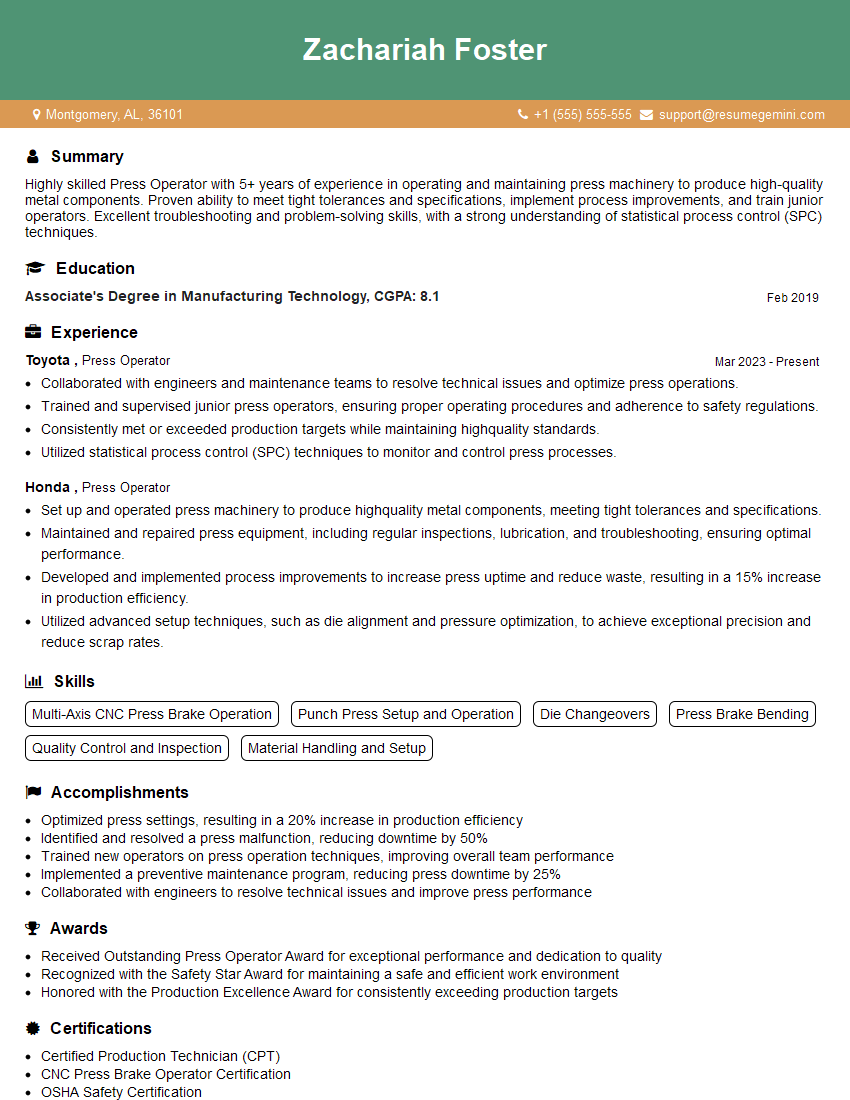
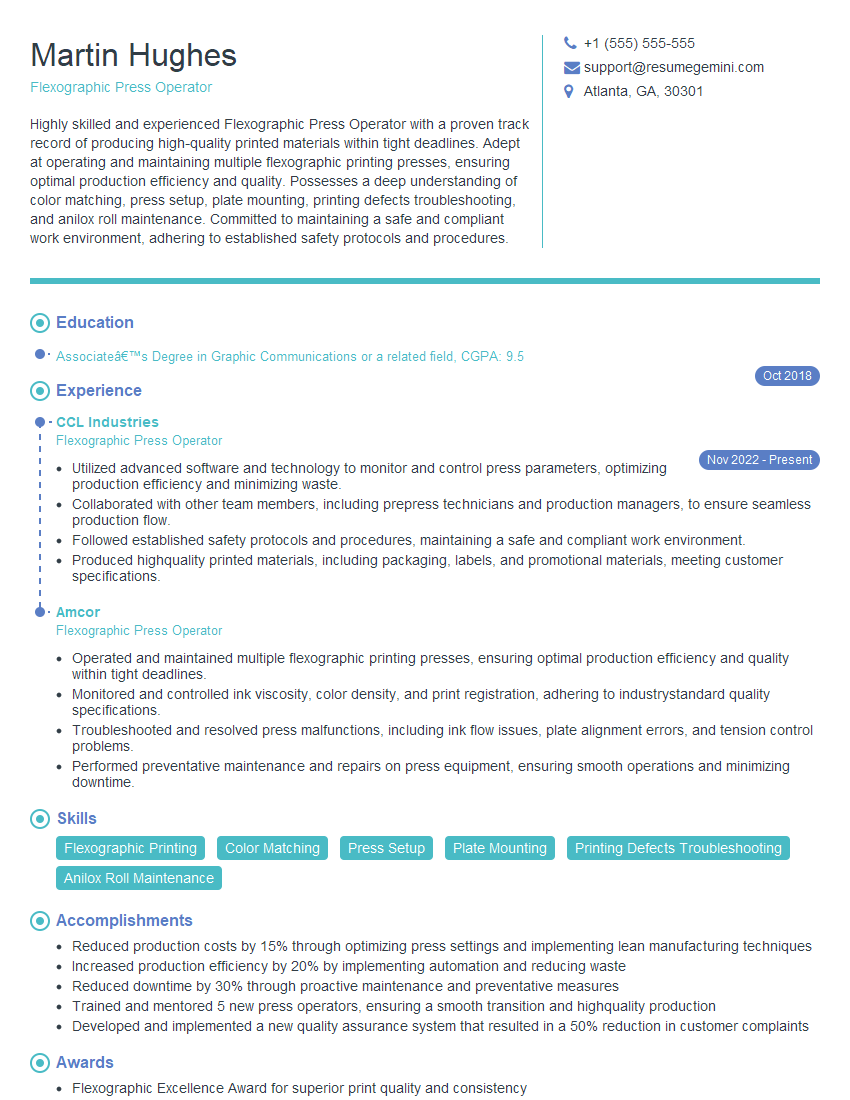
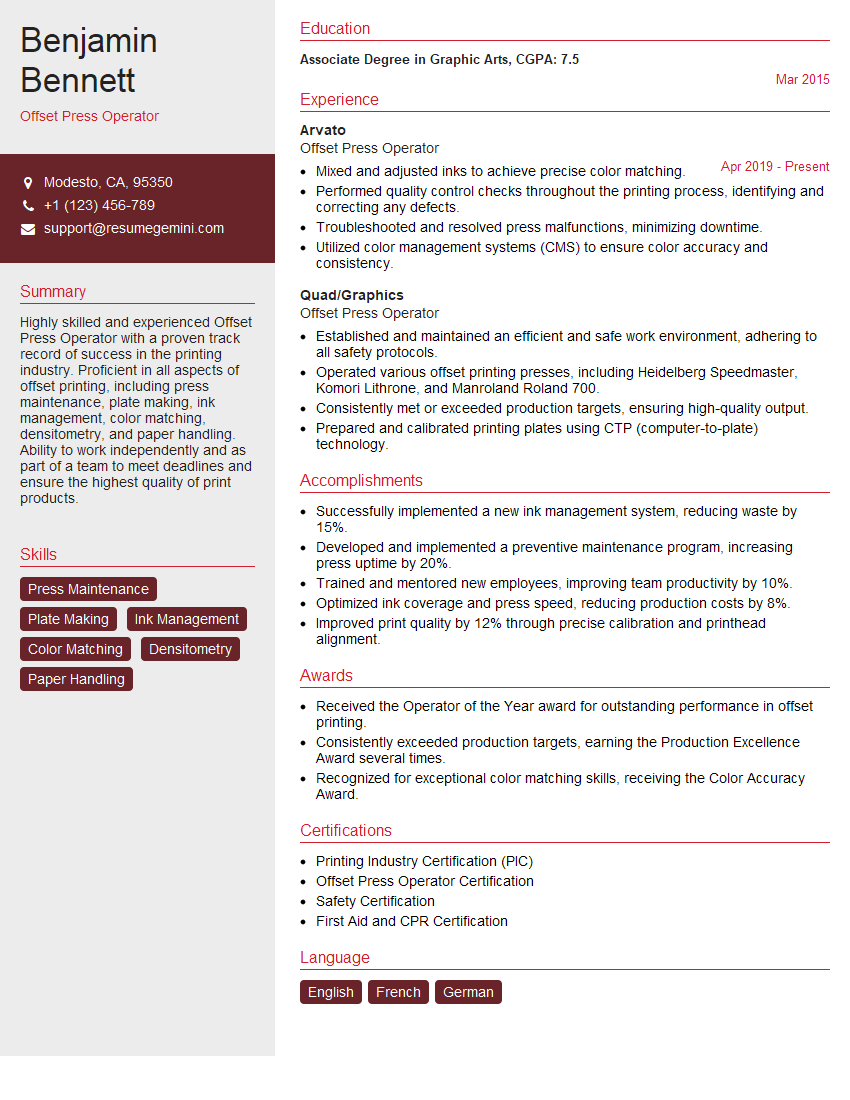
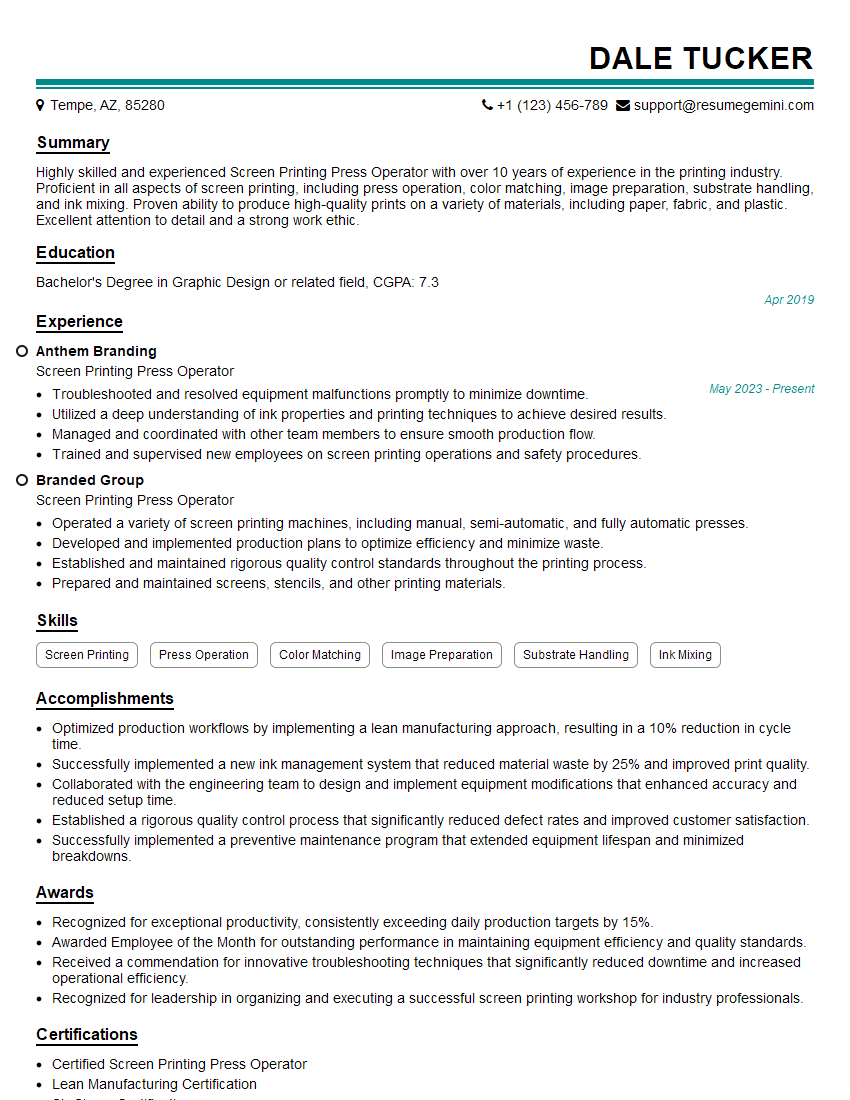
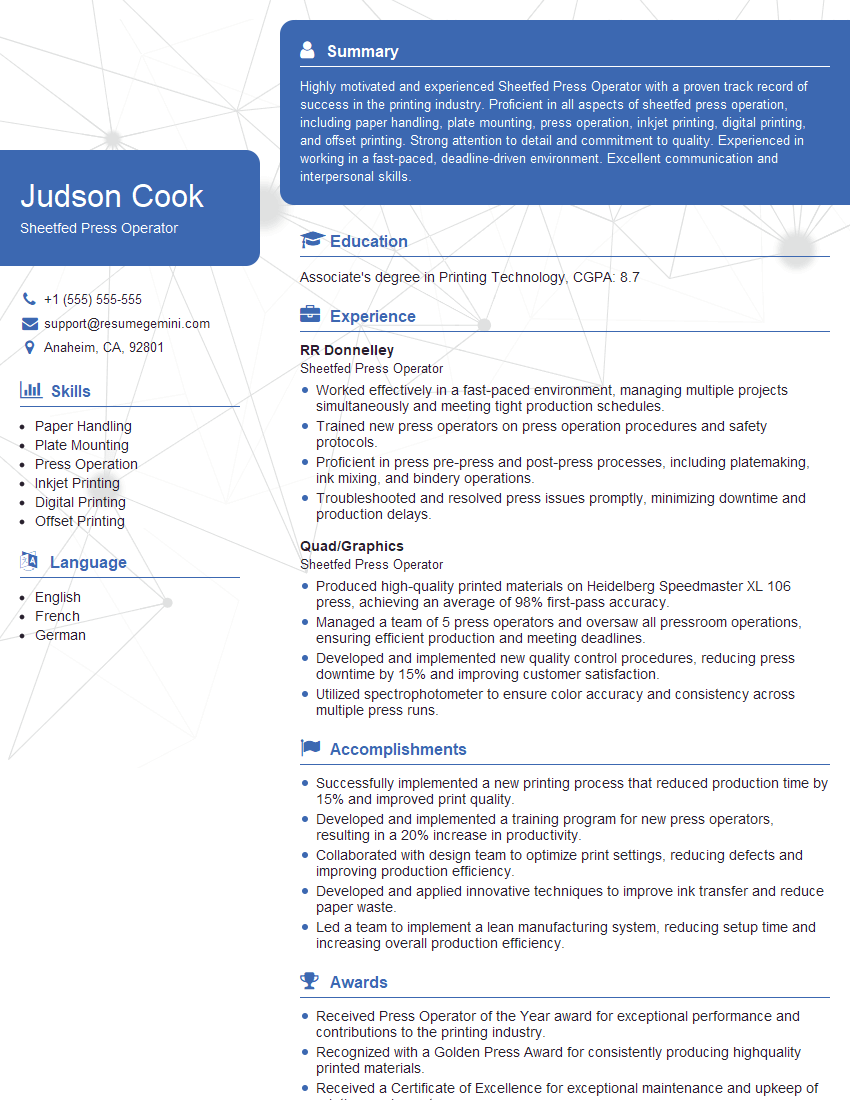
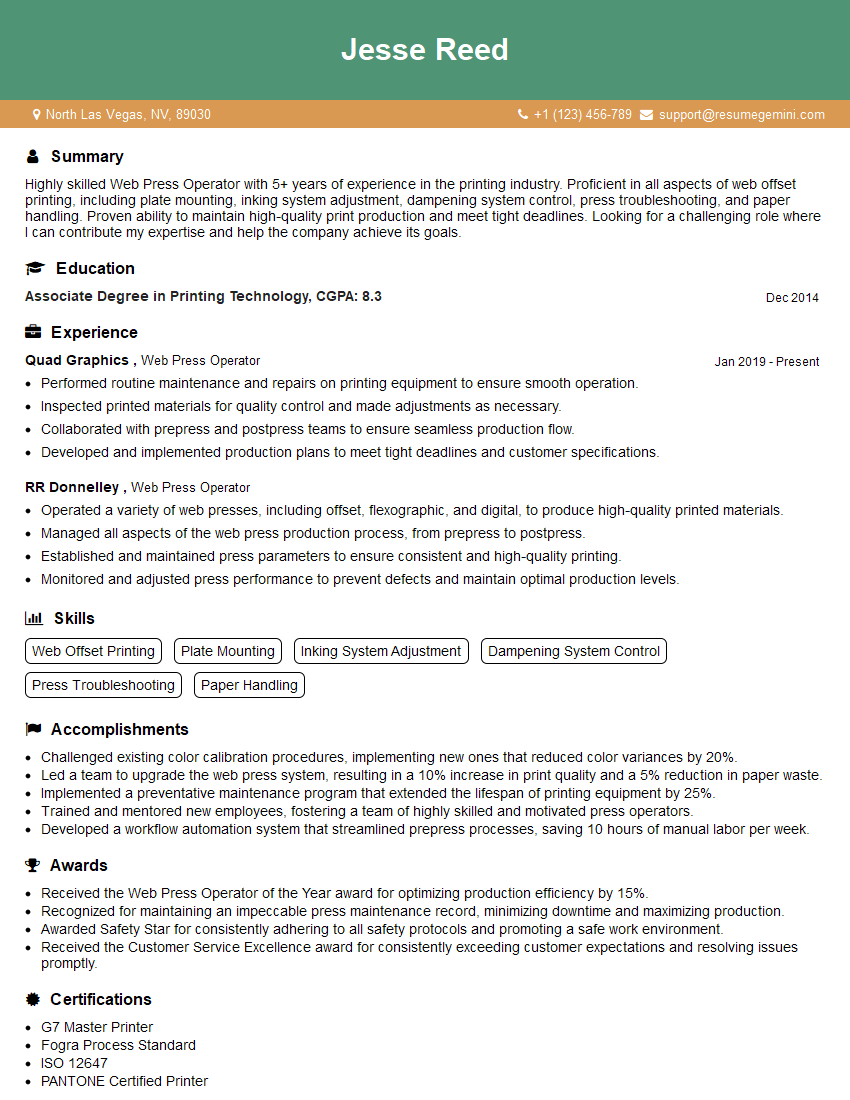
Mastering Press Setup and Adjustment is crucial for career advancement in the printing industry, opening doors to higher-paying roles with increased responsibility and leadership opportunities. A well-crafted resume is essential for showcasing your skills and experience to potential employers. Creating an ATS-friendly resume increases your chances of getting your application noticed. To help you build a compelling and effective resume, we recommend using ResumeGemini, a trusted resource that simplifies the resume creation process. ResumeGemini provides examples of resumes tailored to Press Setup and Adjustment roles, allowing you to create a document that accurately highlights your expertise and catches the eye of recruiters.

Explore more articles
Users Rating of Our Blogs
Share Your Experience
We value your feedback! Please rate our content and share your thoughts (optional).
What Readers Say About Our Blog
Very informative content, great job.
good