Are you ready to stand out in your next interview? Understanding and preparing for Preventative Maintenance and Troubleshooting interview questions is a game-changer. In this blog, we’ve compiled key questions and expert advice to help you showcase your skills with confidence and precision. Let’s get started on your journey to acing the interview.
Questions Asked in Preventative Maintenance and Troubleshooting Interview
Q 1. Describe your experience with developing and implementing preventative maintenance schedules.
Developing and implementing preventative maintenance schedules is crucial for maximizing equipment lifespan and minimizing downtime. My approach involves a structured process starting with a thorough assessment of all equipment. This includes identifying critical components, understanding their operating parameters, and consulting manufacturer recommendations for maintenance intervals.
For instance, in a previous role managing a food processing plant, I analyzed each machine – from conveyors to packaging lines – to determine its unique maintenance needs. I then categorized equipment based on criticality (e.g., critical, essential, non-essential) to prioritize maintenance tasks. This assessment informs the creation of a comprehensive schedule, incorporating both routine checks (e.g., lubrication, cleaning) and more involved procedures (e.g., component replacements, system calibrations).
The schedule is then broken down into manageable tasks, assigned to responsible technicians, and documented using a CMMS (Computerized Maintenance Management System) for tracking and reporting. Regular review and updates of the schedule are vital to reflect changes in operating conditions, equipment performance, or new maintenance best practices. I leverage data analysis from past maintenance activities to identify trends and potential improvements in the schedule’s efficiency.
Q 2. How do you prioritize maintenance tasks in a high-pressure environment?
Prioritizing maintenance in a high-pressure environment demands a structured approach that blends urgency and strategic planning. I use a risk-based prioritization system, assigning a risk score to each task based on factors like the potential impact of failure (e.g., safety hazards, production downtime, financial losses) and the likelihood of failure.
Think of it like a hospital’s triage system – immediate threats to safety or production get top priority. For example, a malfunctioning safety interlock on a critical machine takes precedence over a minor lubrication task on a less crucial piece of equipment. I also factor in the potential cost of repair or replacement when assigning priority. A small repair that prevents a costly catastrophic failure will always be prioritized.
Tools such as Pareto charts and risk matrices help visualize and communicate these priorities. Transparent communication with all stakeholders is key to ensure everyone understands the rationale behind the prioritization decisions. Finally, flexibility is crucial; sometimes, unexpected events require a dynamic adjustment of priorities.
Q 3. Explain your approach to troubleshooting complex equipment malfunctions.
Troubleshooting complex equipment malfunctions requires a systematic and methodical approach. My approach starts with gathering information: What are the observed symptoms? When did the malfunction start? What were the operating conditions at the time?
I then move to a structured diagnostic process:
- Visual Inspection: A thorough visual check for obvious signs of damage, leaks, or loose connections.
- Data Analysis: Reviewing historical data, log files, or sensor readings to identify patterns or anomalies.
- Testing and Isolation: Performing tests to isolate the faulty component by systematically eliminating possibilities. This often involves using specialized testing equipment (e.g., multimeters, oscilloscopes).
- Component Replacement: If the faulty component is identified, I carefully replace it ensuring all safety procedures are followed.
- System Verification: Once the repair is completed, I conduct thorough testing to ensure the system is functioning correctly.
A recent example involved a complex robotic arm malfunction in a manufacturing plant. Using the systematic approach outlined above, I was able to trace the issue down to a faulty encoder within the arm’s control system. Replacing the encoder solved the problem and prevented significant production downtime.
Q 4. What are the key performance indicators (KPIs) you use to measure the effectiveness of a preventative maintenance program?
Key Performance Indicators (KPIs) are vital for measuring the effectiveness of a preventative maintenance program. The KPIs I use are designed to assess both the efficiency and effectiveness of the program.
- Mean Time Between Failures (MTBF): This KPI measures the average time between equipment failures. A higher MTBF indicates improved reliability and effectiveness of the PM program.
- Mean Time To Repair (MTTR): This KPI measures the average time taken to repair equipment after a failure. A lower MTTR demonstrates efficient repair processes and readily available spare parts.
- Maintenance Cost per Unit Produced: This tracks the cost of maintenance relative to production output, revealing the overall economic impact of the program.
- Downtime Percentage: This KPI measures the percentage of time that equipment is unavailable due to failures or maintenance. Lower downtime indicates a successful preventative maintenance strategy.
- Safety Incident Rate: This KPI tracks the number of safety incidents related to maintenance activities. A low rate indicates a safe and well-managed maintenance program.
Regular monitoring and analysis of these KPIs provide insights into the program’s success, allowing for necessary adjustments and improvements.
Q 5. How familiar are you with Computerized Maintenance Management Systems (CMMS)?
I am highly familiar with Computerized Maintenance Management Systems (CMMS). My experience includes using CMMS software to manage preventative maintenance schedules, track work orders, manage inventory, and generate reports. I am proficient in utilizing CMMS features such as:
- Work Order Management: Scheduling, assigning, and tracking maintenance tasks.
- Preventative Maintenance Scheduling: Creating, managing, and optimizing PM schedules based on equipment needs.
- Inventory Management: Tracking spare parts and ensuring adequate stock levels.
- Reporting and Analytics: Generating reports on maintenance costs, downtime, and other key metrics.
Specific CMMS software I have experience with includes [Mention specific software you are familiar with e.g., UpKeep, Fiix, and IBM Maximo]. My proficiency extends beyond basic data entry; I can customize reports, create custom dashboards, and leverage the data to optimize maintenance strategies.
Q 6. Describe a time you identified a potential equipment failure before it occurred.
In a previous role at a pharmaceutical manufacturing facility, I noticed a slight but consistent increase in the vibration levels of a critical centrifuge during routine inspections. Initially, the increase was small and didn’t trigger any alarm thresholds. However, my experience alerted me to a potential problem.
Instead of dismissing it as normal variation, I meticulously tracked the vibration levels over several weeks. The data clearly showed an upward trend. Based on my experience with centrifuge maintenance, I suspected a bearing failure was imminent. I immediately scheduled a preventative maintenance intervention, replacing the bearings before they catastrophically failed. This proactive approach avoided costly production downtime and potential damage to the centrifuge, thus preventing a potentially significant loss.
Q 7. How do you ensure compliance with safety regulations during maintenance activities?
Ensuring compliance with safety regulations during maintenance is paramount. My approach is proactive and multi-faceted:
- Lockout/Tagout (LOTO) Procedures: I rigorously adhere to LOTO procedures to isolate equipment from energy sources before performing any maintenance, preventing accidental energization and injuries. I ensure all team members are properly trained and certified in LOTO procedures.
- Personal Protective Equipment (PPE): I insist on the proper use of PPE, including safety glasses, gloves, hearing protection, and any other specialized equipment required for the task. Regular PPE inspections and training reinforce safe practices.
- Risk Assessments: Before initiating any maintenance activity, I conduct thorough risk assessments identifying potential hazards and implementing control measures (e.g., engineering controls, administrative controls, PPE).
- Training and Compliance: I ensure that all technicians receive regular training on relevant safety regulations and best practices. This includes training on specific equipment, hazard identification, and emergency response procedures.
- Regular Audits: I conduct regular safety audits to ensure compliance with regulations and identify areas for improvement.
Safety is never a compromise. My commitment to safety is evident in my actions and influences my team to adopt the same unwavering commitment.
Q 8. What methods do you use to document maintenance procedures and findings?
Documenting maintenance procedures and findings is crucial for ensuring consistent performance and traceability. My approach is multi-faceted and leverages both digital and physical methods for optimal efficiency and accessibility.
Computerized Maintenance Management Systems (CMMS): I utilize CMMS software to meticulously record all maintenance activities. This includes preventative maintenance schedules, work orders, parts used, labor hours, and detailed descriptions of any repairs or findings. The software allows for easy generation of reports, trend analysis, and overall improved maintenance tracking. For example, I’ve used software like IBM Maximo or Fiix to manage hundreds of work orders and track assets across large facilities.
Physical Documentation: While CMMS handles the bulk of documentation, I also maintain physical records for critical equipment. This includes equipment manuals, schematics, and annotated diagrams illustrating specific components or troubleshooting steps. This is particularly valuable when offline access is required or when dealing with older equipment without digital records.
Digital Photography and Video: I extensively use photos and videos to document before-and-after images of repairs, the condition of equipment before maintenance, and any unusual wear and tear. This visual record adds another layer of clarity and aids in future troubleshooting.
Checklists: Standardized checklists ensure consistency in performing preventative maintenance tasks. These checklists are often embedded within the CMMS but also printed for use when accessing the system is not feasible. They act as a safety net, preventing steps from being missed.
Q 9. How do you handle unexpected equipment failures outside of scheduled maintenance?
Unexpected equipment failures necessitate a rapid, systematic response. My approach prioritizes safety, minimizing downtime, and identifying the root cause to prevent recurrence.
Immediate Action: The first step is to secure the area and ensure the safety of personnel. If the failure poses an immediate hazard (e.g., a leaking gas line), emergency procedures are followed immediately.
Assessment and Diagnosis: I conduct a thorough assessment of the equipment, gathering data on the nature of the failure, any preceding events, and the extent of the damage. This might involve visual inspection, basic testing (e.g., checking voltage, amperage), and consulting relevant manuals and historical data.
Emergency Repair or Mitigation: If possible, I perform temporary repairs or implement measures to mitigate the immediate impact of the failure. This could involve replacing a blown fuse, temporarily bypassing a faulty component, or shutting down a less critical part of the system.
Reporting and Communication: I promptly report the failure to the appropriate personnel, detailing the issue, its impact, and any temporary solutions implemented. Clear and concise communication is critical to ensure timely support and resource allocation.
Root Cause Analysis: Once the immediate crisis is addressed, I initiate a root cause analysis (RCA) to understand why the failure occurred and implement preventative measures to avoid similar issues in the future. (See my answer to question 3 for more on RCA).
Q 10. Explain your experience with root cause analysis techniques.
Root cause analysis (RCA) is essential for preventing equipment failures. I’ve extensively used several techniques, tailoring my approach to the specific situation.
5 Whys: This simple but effective method involves repeatedly asking “why” to peel back the layers of an issue until the root cause is identified. For example, if a pump failed: Why did the pump fail? (Overheating). Why did it overheat? (Bearing failure). Why did the bearing fail? (Insufficient lubrication). Why was there insufficient lubrication? (Lack of preventative maintenance). Why was there a lack of preventative maintenance? (Scheduling oversight).
Fishbone Diagram (Ishikawa Diagram): This visual tool categorizes potential causes of a problem (e.g., manpower, materials, methods, machinery, environment, measurement). Each potential cause is explored to determine its contribution to the failure.
Fault Tree Analysis (FTA): FTA uses a top-down approach, starting with the undesired event (equipment failure) and working backward to identify the contributing factors. It uses Boolean logic to map out cause-and-effect relationships.
Regardless of the technique, a thorough RCA involves gathering data, interviewing relevant personnel, and reviewing maintenance logs to build a comprehensive understanding of the contributing factors. The goal is not just to fix the immediate problem but to prevent its recurrence through targeted improvements in maintenance procedures, equipment design, or operator training.
Q 11. Describe your experience with different types of lubrication and their applications.
Lubrication is crucial for equipment longevity. My experience encompasses various lubrication types and their applications:
Mineral Oils: These are widely used, cost-effective lubricants suitable for many applications. However, they have limitations in extreme temperatures or high-speed operations.
Synthetic Oils: Offer superior performance compared to mineral oils, withstanding extreme temperatures and pressures. They also have longer lifespans and provide better protection against wear and tear. I’ve used synthetic oils in high-performance machinery where reliability is paramount.
Grease: Used for lubricating bearings and other components requiring thick, long-lasting lubrication. Different greases are formulated for various applications, considering factors like temperature and load.
Specialty Lubricants: These include high-temperature greases, food-grade lubricants, and other specialized formulations designed for specific industrial applications. I’ve worked with food-grade lubricants in the pharmaceutical industry, where contamination is strictly controlled.
Selecting the appropriate lubricant is critical and depends on factors such as the type of equipment, operating conditions (temperature, pressure, speed), and the materials being lubricated. I always consult manufacturer recommendations and relevant industry standards to ensure optimal lubrication and equipment performance.
Q 12. How do you determine the appropriate frequency for preventative maintenance tasks?
Determining the appropriate frequency for preventative maintenance (PM) tasks is not arbitrary. It’s a critical decision impacting equipment reliability, safety, and cost.
Manufacturer Recommendations: Manufacturer’s recommendations are the starting point. Equipment manuals usually provide guidelines on recommended maintenance intervals and specific tasks.
Equipment Criticality: Critical equipment with potential for catastrophic failure requires more frequent PM. For example, a critical motor in a production line would warrant more frequent checks than a less crucial piece of equipment.
Operating Conditions: Harsh operating conditions (e.g., high temperatures, dust, vibrations) can accelerate equipment wear and necessitate more frequent PM.
Historical Data Analysis: Analyzing historical data on equipment failures, repairs, and maintenance activities provides valuable insights into optimal PM intervals. A CMMS is invaluable in identifying trends and patterns.
Risk-Based Approach: A risk-based approach considers the potential consequences of failure and assigns maintenance frequencies accordingly. High-risk equipment with significant consequences of failure warrants more frequent maintenance.
A well-defined PM schedule is dynamic and adjusted based on ongoing data analysis and operational changes. Regular review and optimization of the schedule are crucial for achieving optimal maintenance effectiveness.
Q 13. What are some common causes of equipment failure and how can they be prevented?
Equipment failures stem from a variety of causes, often preventable through proactive measures:
Lack of Lubrication: Insufficient or improper lubrication leads to excessive wear and tear, resulting in premature failure of bearings, gears, and other moving parts. Regular lubrication according to manufacturer’s recommendations is crucial.
Corrosion: Exposure to moisture, chemicals, or other corrosive agents can degrade equipment components. Protective coatings, proper storage, and environmental control can mitigate this.
Overloading: Operating equipment beyond its design capacity leads to stress and potential failure. Proper sizing of equipment and adherence to operating parameters are essential.
Improper Installation: Incorrect installation can cause misalignment, vibration, and premature wear. Careful installation following manufacturer’s guidelines is crucial.
Vibration: Excessive vibration can cause fatigue and failure in components. Proper balancing, vibration damping, and regular inspections can help mitigate this.
Operator Error: Incorrect operation or lack of training can lead to equipment damage. Proper training and clear operating instructions are essential.
Preventative maintenance, thorough inspections, and operator training are key to reducing these failure modes. Regular monitoring of equipment performance using sensors and data analysis can also provide early warning of potential issues.
Q 14. How do you stay current with advancements in preventative maintenance technologies?
Staying current in the field of preventative maintenance requires continuous learning and engagement with the latest advancements. My approach is multi-pronged:
Industry Publications and Conferences: I regularly read industry publications, journals, and attend conferences to stay informed on new technologies, best practices, and emerging trends. This includes attending seminars and workshops focused on predictive maintenance technologies.
Online Courses and Webinars: Online platforms offer a vast array of resources on preventative maintenance, including courses on CMMS software, advanced diagnostic techniques, and predictive maintenance strategies. I actively participate in online communities and forums to share knowledge and learn from others.
Vendor Training and Workshops: Manufacturers often offer training programs on their equipment and associated maintenance procedures. I participate in these to gain deeper understanding and access to the latest technical information.
Networking with Peers: Networking with colleagues in the field through professional organizations and online forums provides opportunities for sharing experiences, discussing challenges, and learning from each other’s best practices. This peer-to-peer learning is invaluable.
Hands-on Experience: The most effective way to learn is through practical application. I actively seek opportunities to work with new technologies and apply what I learn in real-world settings.
Continuous professional development ensures I remain at the forefront of preventative maintenance strategies and technologies, enabling me to maximize equipment uptime and minimize operational costs.
Q 15. Describe your experience with predictive maintenance techniques.
Predictive maintenance uses data analysis to anticipate equipment failures before they occur, preventing costly downtime and improving operational efficiency. It’s like getting a health check-up before you experience symptoms – identifying potential problems early allows for proactive interventions.
My experience includes implementing vibration analysis on critical rotating equipment like pumps and motors. We used sensors to collect data on vibration levels, frequency, and amplitude. This data was then analyzed using specialized software to identify patterns indicating potential bearing failures or imbalances. For instance, a sudden increase in high-frequency vibration could signal impending bearing failure, prompting us to schedule maintenance before catastrophic failure.
I’ve also worked with oil analysis, examining lubricant samples for contaminants or changes in viscosity. This helps detect wear and tear within the machinery, providing early warning signs of potential problems. For example, the presence of metallic particles in the oil might indicate excessive wear on internal components, prompting a closer examination and preventative maintenance.
Furthermore, I have experience with thermal imaging, identifying heat signatures that can indicate electrical problems, insulation issues, or impending mechanical failures. A hot motor winding, for instance, can be detected through infrared imaging, enabling a timely repair to avoid a complete motor burnout.
Career Expert Tips:
- Ace those interviews! Prepare effectively by reviewing the Top 50 Most Common Interview Questions on ResumeGemini.
- Navigate your job search with confidence! Explore a wide range of Career Tips on ResumeGemini. Learn about common challenges and recommendations to overcome them.
- Craft the perfect resume! Master the Art of Resume Writing with ResumeGemini’s guide. Showcase your unique qualifications and achievements effectively.
- Don’t miss out on holiday savings! Build your dream resume with ResumeGemini’s ATS optimized templates.
Q 16. How do you manage and track spare parts inventory?
Managing spare parts inventory is crucial for minimizing downtime. My approach involves a combination of techniques to ensure the right parts are available when needed, without excessive storage costs.
- Inventory Management System: We use a computerized system to track parts, their location, usage history, and reorder points. This system provides real-time visibility into our inventory levels, allowing for proactive ordering.
- ABC Analysis: This method categorizes parts based on their value and consumption rate. High-value, frequently used parts (A-items) receive close monitoring and dedicated storage. Less critical parts (C-items) receive less frequent monitoring.
- Vendor Relationships: Maintaining strong relationships with vendors allows for quicker delivery of parts and potential negotiation of favorable terms, especially for critical A-items.
- Regular Audits: Periodic physical inventory checks verify the accuracy of our system and identify any discrepancies.
For example, we might use a Kanban system for high-demand parts, visually indicating when a reorder is necessary. This ensures a steady supply without overstocking.
Q 17. What is your experience with various diagnostic tools and equipment?
My experience spans a wide range of diagnostic tools, including:
- Vibration Analyzers: Used to detect imbalances, misalignments, and bearing wear in rotating equipment.
- Thermal Imagers: Identify excessive heat, indicating potential electrical or mechanical problems.
- Ultrasonic Detectors: Detect air leaks, partial discharges, and bearing wear.
- Oil Analyzers: Analyze lubricant samples for contaminants and wear particles.
- Multimeters: Measure voltage, current, and resistance in electrical systems.
- Motor Current Analyzers: Detect motor faults by analyzing current waveforms.
I’m proficient in using both handheld and sophisticated computer-aided diagnostic tools, and I’m always eager to learn about new technologies to enhance our diagnostic capabilities.
Q 18. Describe a time you had to work with a vendor or contractor to resolve a maintenance issue.
We experienced a major failure in our main compressor, resulting in significant production downtime. After initial troubleshooting, it became clear that specialized expertise was required to repair the internal components of the compressor. We contacted a vendor specializing in compressor repair.
Collaboration and Communication: I worked closely with the vendor’s engineers to diagnose the root cause of the failure. We shared diagnostic data, and they provided expert insights. This involved clear, frequent communication – daily updates and conference calls to ensure that everyone was aligned and that the repair plan was effective. We needed to ensure the downtime was minimal.
Problem Solving: The vendor identified a rare component failure and provided a detailed repair plan, including timelines and costs. This detailed plan was crucial to keep our stakeholders informed. We agreed upon a plan and closely monitored their progress, holding regular update meetings. Ultimately, the vendor completed the repair within the agreed timeline, and the compressor was back online with minimal disruption.
Q 19. How do you communicate maintenance needs and updates to stakeholders?
Effective communication is vital in preventative maintenance. I utilize various methods to keep stakeholders informed:
- Regular Reports: I generate weekly or monthly reports summarizing maintenance activities, planned work, and any significant issues encountered.
- Dashboards: Utilizing real-time dashboards to visualize key performance indicators (KPIs) such as equipment uptime, maintenance costs, and the number of work orders completed. This allows for immediate insights and early identification of issues.
- Meetings: Regular meetings with relevant stakeholders (production managers, operations teams, etc.) to discuss maintenance plans, progress, and upcoming challenges.
- Email Updates: For urgent or critical updates, I use email to quickly inform the relevant personnel.
For example, if a piece of equipment requires unscheduled maintenance that will impact production, I’ll promptly notify the production manager and provide an estimated time for completion.
Q 20. How do you handle conflicting priorities within a maintenance schedule?
Prioritization is key when dealing with conflicting maintenance priorities. I use a combination of techniques to manage this effectively:
- Criticality Assessment: I assess the criticality of each task based on its impact on production, safety, and cost. This involves understanding the consequences of delaying or failing to complete a task.
- Risk Assessment: I evaluate the potential risks associated with each task, including the probability of failure and the severity of its consequences.
- Prioritization Matrix: I use a prioritization matrix (e.g., a risk-urgency matrix) to rank tasks based on their criticality and urgency.
- Communication and Negotiation: I communicate the prioritized tasks to stakeholders and negotiate adjustments if necessary. This often requires explaining the rationale behind the prioritization decisions.
For example, a critical machine failure might take precedence over a less urgent preventative maintenance task, despite both being scheduled.
Q 21. What is your experience with different types of maintenance strategies (e.g., run-to-failure, preventative, predictive)?
I’m experienced with various maintenance strategies, each suited to different situations:
- Run-to-Failure (RTF): This involves operating equipment until it fails, then performing repairs. While cost-effective in the short term, it carries significant risks, including unexpected downtime and potential damage to other equipment. It’s only suitable for low-cost, low-risk equipment.
- Preventative Maintenance (PM): This involves scheduled maintenance at predetermined intervals, regardless of the equipment’s condition. This reduces the likelihood of failures but can be costly if performed too frequently. It’s a good option for equipment with predictable wear and tear patterns.
- Predictive Maintenance (PdM): This data-driven approach anticipates equipment failures using technologies like vibration analysis and oil analysis. It optimizes maintenance schedules and minimizes downtime. It’s ideal for critical equipment where downtime is costly.
My approach often involves a combination of these strategies, tailoring the approach to the specific equipment and its operational context. For instance, I might use PM for simpler equipment and PdM for critical assets, and reserve RTF only for non-critical components where the risk of failure is minimal.
Q 22. Explain your understanding of Mean Time Between Failures (MTBF) and Mean Time To Repair (MTTR).
Mean Time Between Failures (MTBF) and Mean Time To Repair (MTTR) are crucial metrics in preventative maintenance. MTBF represents the average time a device or system operates before a failure occurs. A higher MTBF indicates greater reliability. MTTR, on the other hand, is the average time it takes to restore a failed system to operational status after a failure. A lower MTTR signifies faster and more efficient repair processes.
Think of it like this: MTBF is how long your car runs before it needs repair, while MTTR is how long it takes your mechanic to fix it. Both are vital for planning maintenance schedules and allocating resources effectively. For example, a system with a high MTBF (say, 10,000 hours) might only need preventative maintenance checks every 6 months, whereas a system with a low MTBF (say, 100 hours) requires more frequent inspections and potentially a more readily available spare part inventory.
Calculating these metrics requires accurate data collection on failures and repair times. Analyzing this data helps identify potential points of failure and optimize maintenance strategies. For instance, consistently low MTBF for a specific component might signal a need for improved component quality or redesign.
Q 23. How do you ensure the accuracy of maintenance records and data?
Accuracy in maintenance records is paramount. I ensure this through a multi-pronged approach. First, I use a computerized maintenance management system (CMMS). A CMMS provides a centralized database, reducing the likelihood of errors associated with manual record-keeping. Second, I implement a strict protocol for data entry, including regular audits to verify accuracy and completeness. This includes cross-referencing data from various sources, such as work orders, technician reports, and equipment logs. Third, I encourage a culture of meticulous record-keeping among the maintenance team through training and regular feedback. This ensures everyone understands the importance of accurate data and the impact it has on overall system reliability and efficiency. Finally, clear, standardized reporting templates are used to minimize ambiguity. For instance, a specific format for reporting failure modes and causes ensures consistency across reports, facilitating accurate analysis.
Q 24. Describe your experience with developing and implementing a maintenance budget.
Developing and implementing a maintenance budget involves a thorough understanding of current and projected needs. I begin by analyzing historical maintenance data, including costs associated with repairs, preventative maintenance tasks, parts, and labor. This data helps to establish a baseline. Next, I forecast future maintenance needs based on factors such as equipment age, anticipated usage, and technological advancements. This might involve predicting the need for major overhauls or replacements. I also factor in inflation and potential changes in part costs. The budget is then presented with a detailed breakdown of anticipated expenses, categorized by equipment type, maintenance task, and labor costs. This allows for easy tracking and identification of areas where cost optimization might be possible. For example, proactive maintenance can sometimes result in long-term cost savings by preventing major equipment failures. Continuous monitoring of the budget throughout the year is essential to ensure it remains aligned with actual expenses, adjusting allocations as needed.
Q 25. How do you handle conflicts with other departments regarding maintenance needs?
Conflicts with other departments regarding maintenance are often due to differing priorities and resource constraints. I address such situations through open communication and collaborative problem-solving. I begin by actively listening to the concerns of other departments, understanding their operational requirements and constraints. Then, I present the maintenance needs in the context of overall operational efficiency and potential risks associated with neglecting maintenance. For example, if a production department prioritizes maximum output, I might demonstrate how preventative maintenance minimizes downtime and improves long-term productivity. Sometimes, compromises need to be made. This involves prioritizing maintenance tasks based on risk assessments, focusing on critical systems first, and scheduling non-critical tasks during periods of low production. Ultimately, clear and proactive communication, coupled with a data-driven approach demonstrating the value of preventative maintenance, is key to resolving these conflicts.
Q 26. Describe a time you had to make a critical decision regarding maintenance under pressure.
In a previous role, a critical piece of production equipment malfunctioned just before a major product launch. This created immense pressure to get it running quickly. Initial assessments pointed to a complex internal failure, requiring a potentially lengthy repair process. Under pressure, I didn’t immediately opt for the most complex and time-consuming fix. Instead, I systematically troubleshot the problem, starting with the most likely causes. This involved using diagnostic tools and consulting engineering documentation. We eventually pinpointed a minor but critical wiring issue that was easily resolved. This quick fix prevented significant production delays and project cost overruns. This experience highlighted the importance of methodical troubleshooting and critical thinking, even under extreme pressure. Rushing to complex solutions without thorough diagnosis can waste time and resources. A systematic approach, combined with a solid understanding of the equipment, proved crucial.
Q 27. What are your strengths and weaknesses as a preventative maintenance and troubleshooting professional?
My strengths lie in my systematic approach to troubleshooting, strong analytical skills, and proactive approach to preventative maintenance. I excel at identifying potential problems before they escalate, and I’m adept at working effectively under pressure. I am a strong communicator and team player, able to effectively collaborate with other departments. My weakness, if I had to identify one, is delegating tasks. While I’m confident in my ability to handle a wide range of maintenance issues, I am learning to better delegate certain tasks to free up time for more complex problems and strategic planning. I’m actively working on improving this through structured delegation methods and providing clear guidelines to my team.
Q 28. Where do you see yourself in five years regarding your career in maintenance?
In five years, I envision myself in a leadership role within the maintenance field, possibly as a maintenance manager or supervisor. I aim to expand my expertise in predictive maintenance technologies, such as sensor-based monitoring and data analytics, to further enhance the efficiency and effectiveness of maintenance operations. I’m also interested in exploring opportunities for process improvement and training development to mentor and guide others in this field. My goal is to contribute to a safer and more efficient work environment, continually improving the reliability of equipment and processes.
Key Topics to Learn for Preventative Maintenance and Troubleshooting Interview
- Understanding Preventative Maintenance Schedules: Learn to interpret and implement various maintenance schedules (e.g., PM plans, routine checks). Consider the impact of different scheduling methods on equipment lifespan and operational efficiency.
- Root Cause Analysis Techniques: Master methods like the 5 Whys, fault tree analysis, and fishbone diagrams to effectively diagnose and solve equipment malfunctions. Practice applying these techniques to common scenarios.
- Safety Procedures and Regulations: Demonstrate a thorough understanding of relevant safety protocols, lockout/tagout procedures, and industry regulations pertaining to preventative maintenance and troubleshooting. Be prepared to discuss specific examples.
- Diagnostic Tools and Techniques: Become proficient in using various diagnostic tools (e.g., multimeters, thermal cameras, diagnostic software) and describe your experience interpreting their readings to identify problems.
- Record Keeping and Documentation: Discuss the importance of accurate and complete maintenance logs, including details on repairs, parts used, and preventative measures taken. Explain how this contributes to overall equipment reliability.
- Cost-Benefit Analysis of Maintenance Strategies: Understand how to evaluate the economic impact of different maintenance approaches and justify choices based on cost-effectiveness and risk mitigation.
- Predictive Maintenance Technologies: Familiarize yourself with emerging technologies like vibration analysis, oil analysis, and condition monitoring, and how they enhance preventative maintenance strategies.
- Troubleshooting Common Equipment Malfunctions: Prepare to discuss your experience troubleshooting specific equipment malfunctions (e.g., hydraulic systems, electrical circuits, mechanical components) and the steps you took to resolve them.
Next Steps
Mastering Preventative Maintenance and Troubleshooting is crucial for career advancement in many industries. It demonstrates your technical skills, problem-solving abilities, and commitment to safety and efficiency. To maximize your job prospects, creating a strong, ATS-friendly resume is essential. ResumeGemini can help you build a professional resume that highlights your skills and experience effectively. We provide examples of resumes tailored to Preventative Maintenance and Troubleshooting to guide you in crafting the perfect application. Take the next step towards your dream job – build a compelling resume with ResumeGemini today!
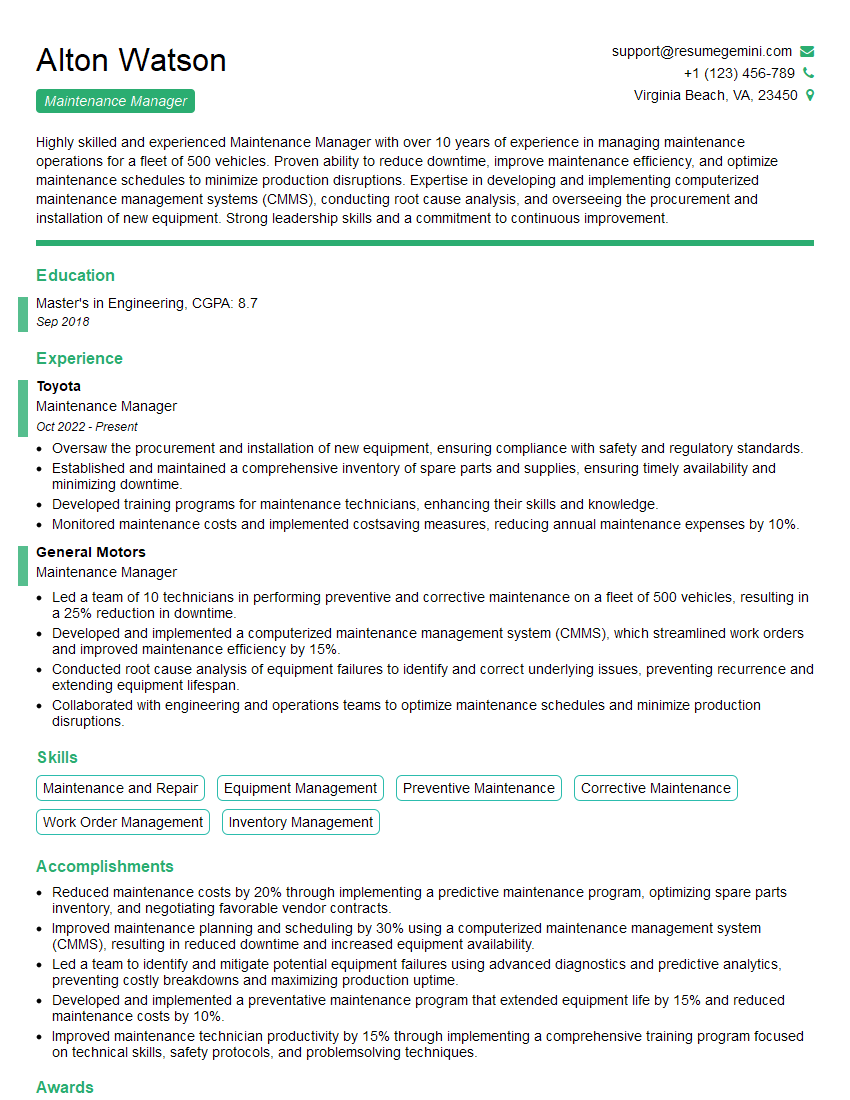
Maintenance Manager Resume Sample
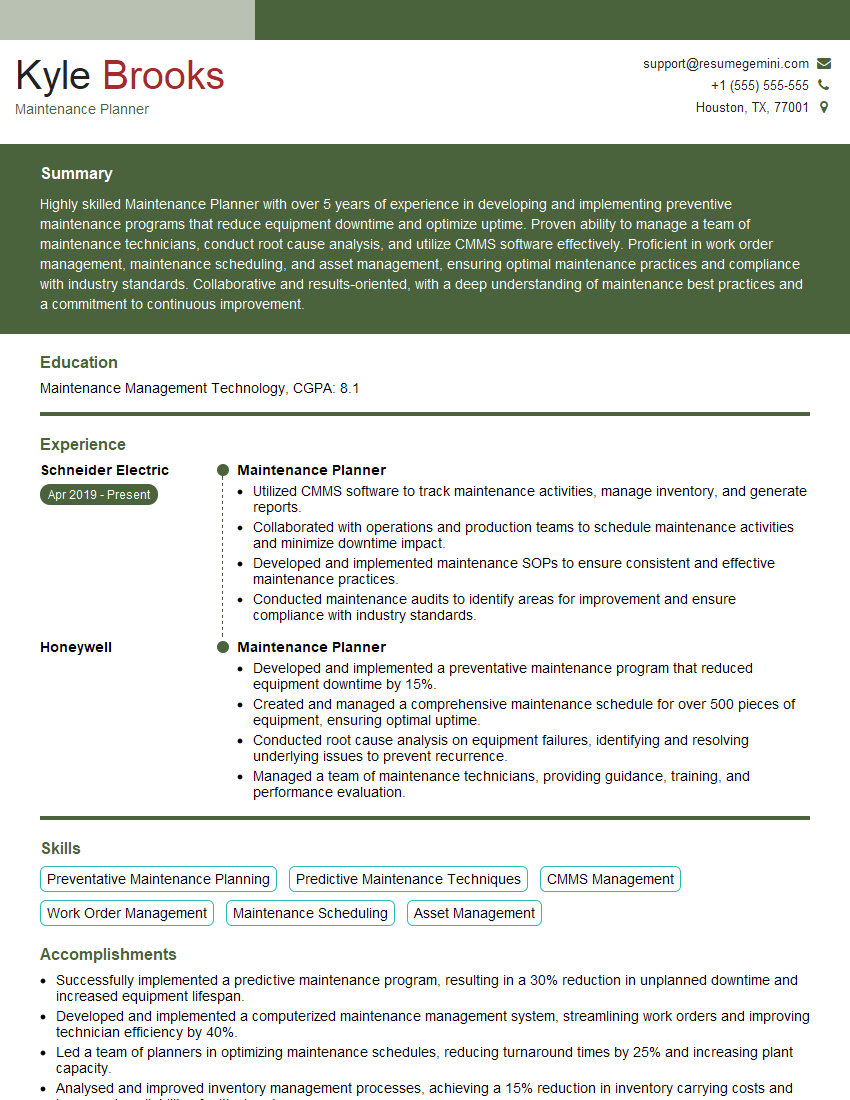
Maintenance Planner Resume Sample
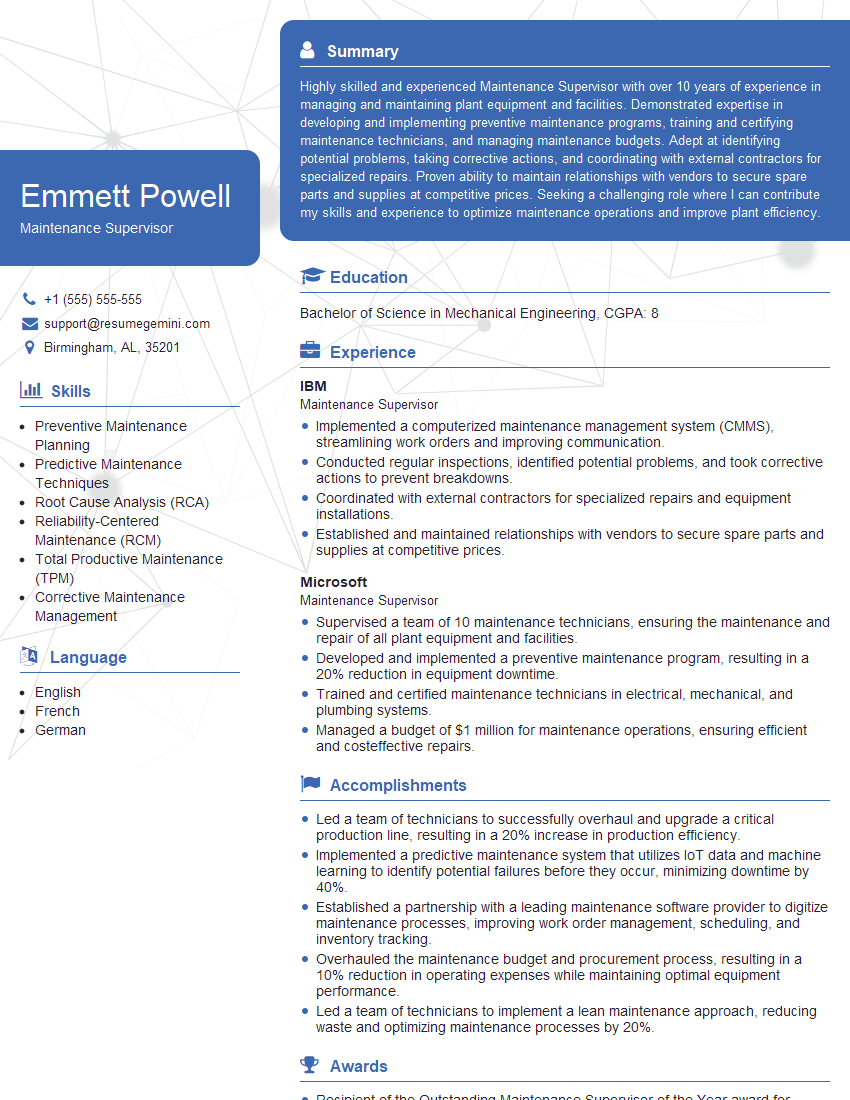
Maintenance Supervisor Resume Sample
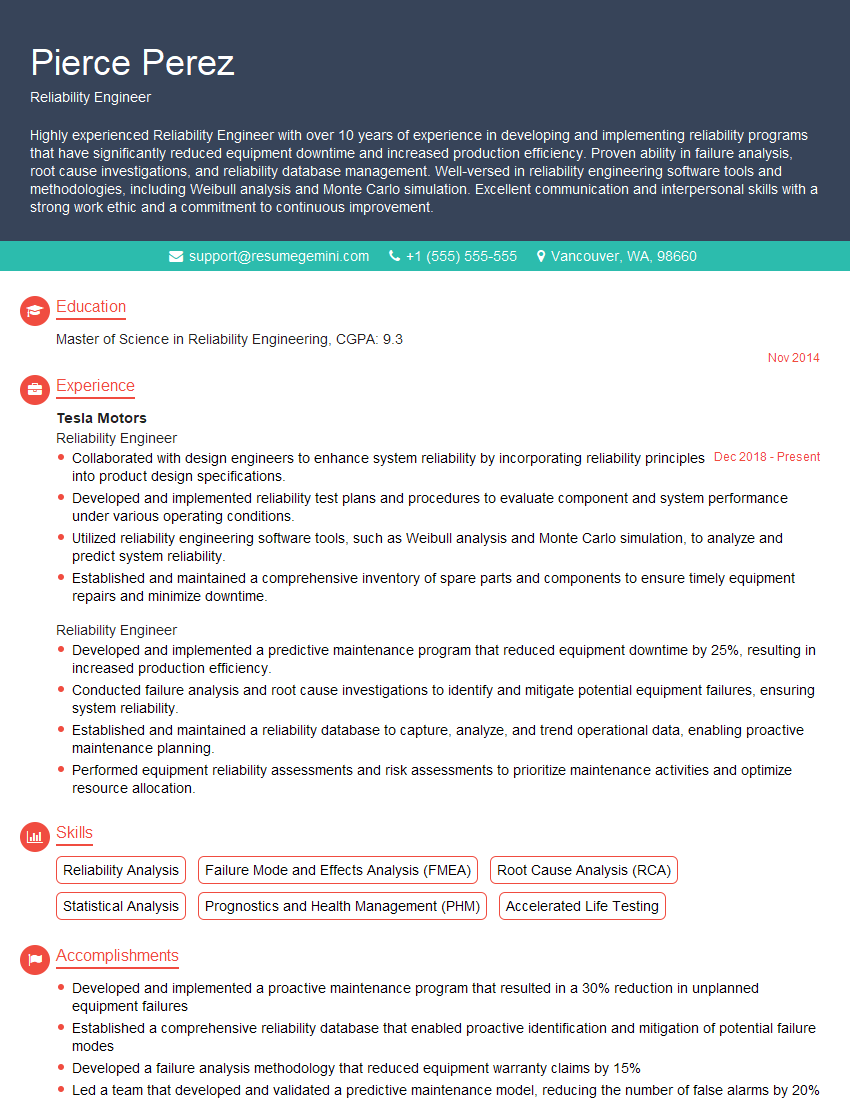
Reliability Engineer Resume Sample
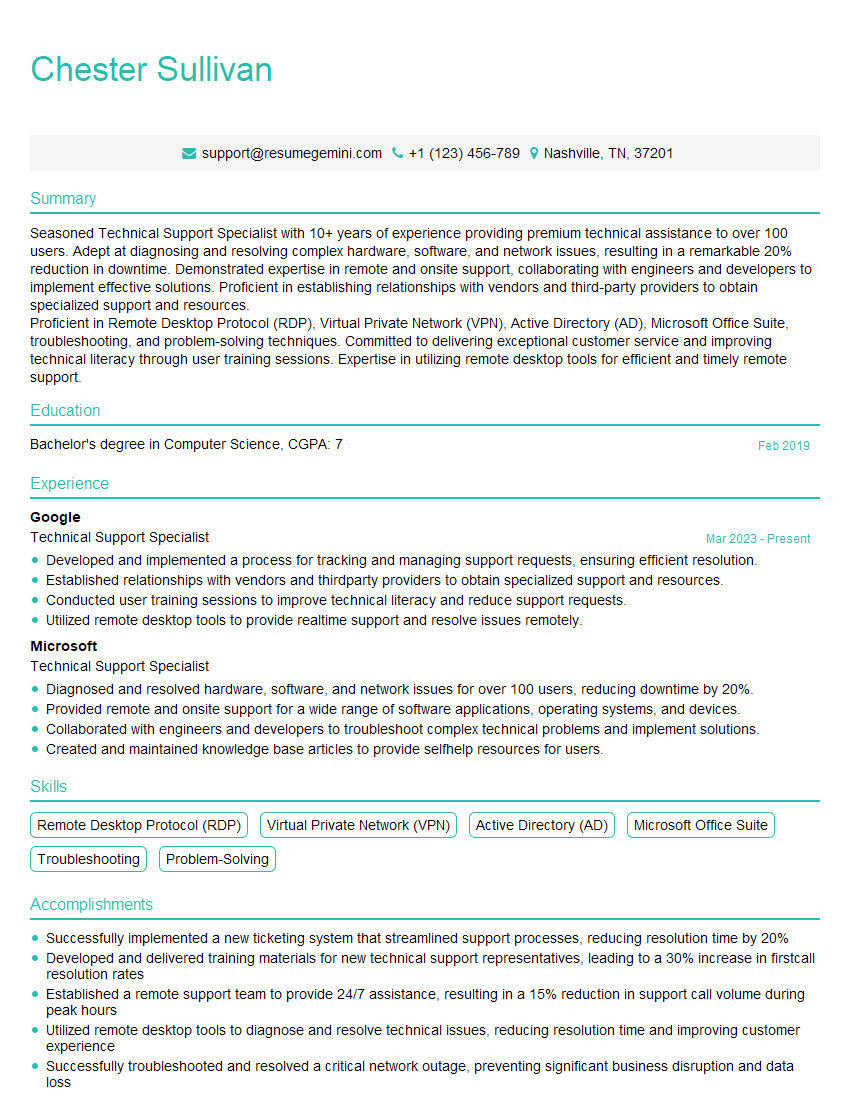
Technical Support Specialist Resume Sample
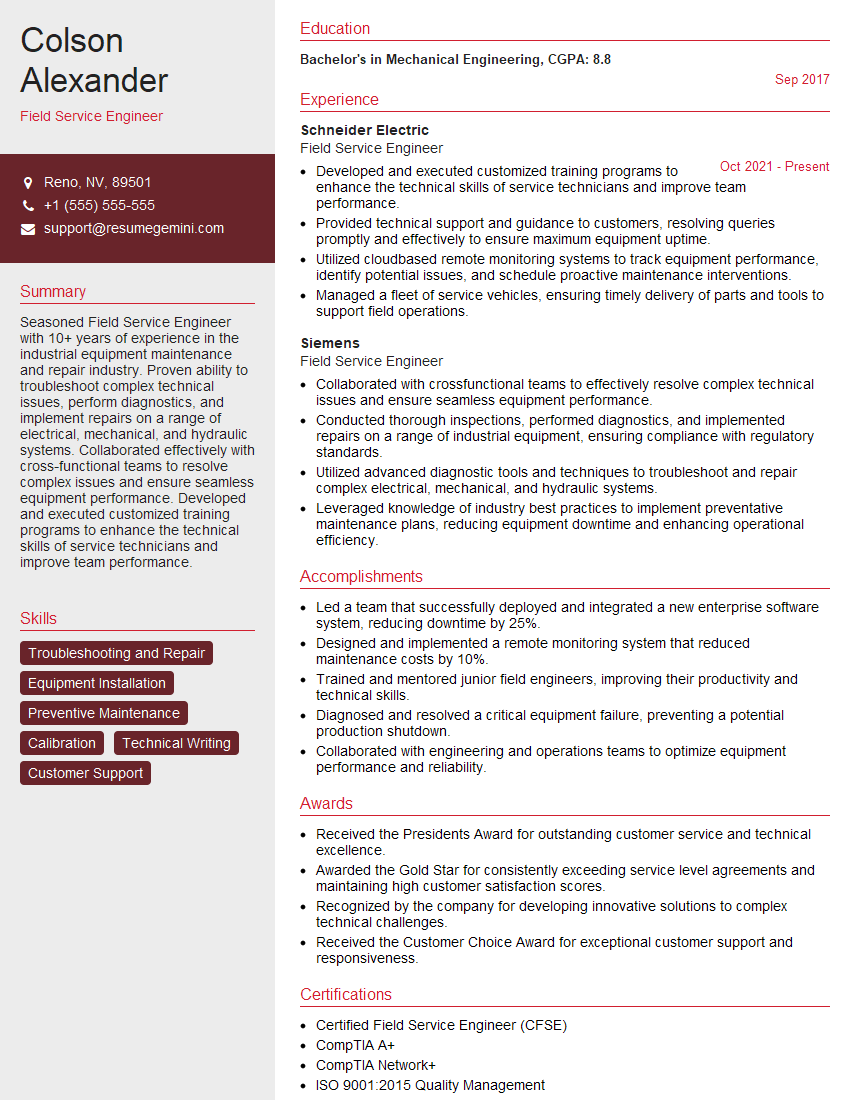
Field Service Engineer Resume Sample
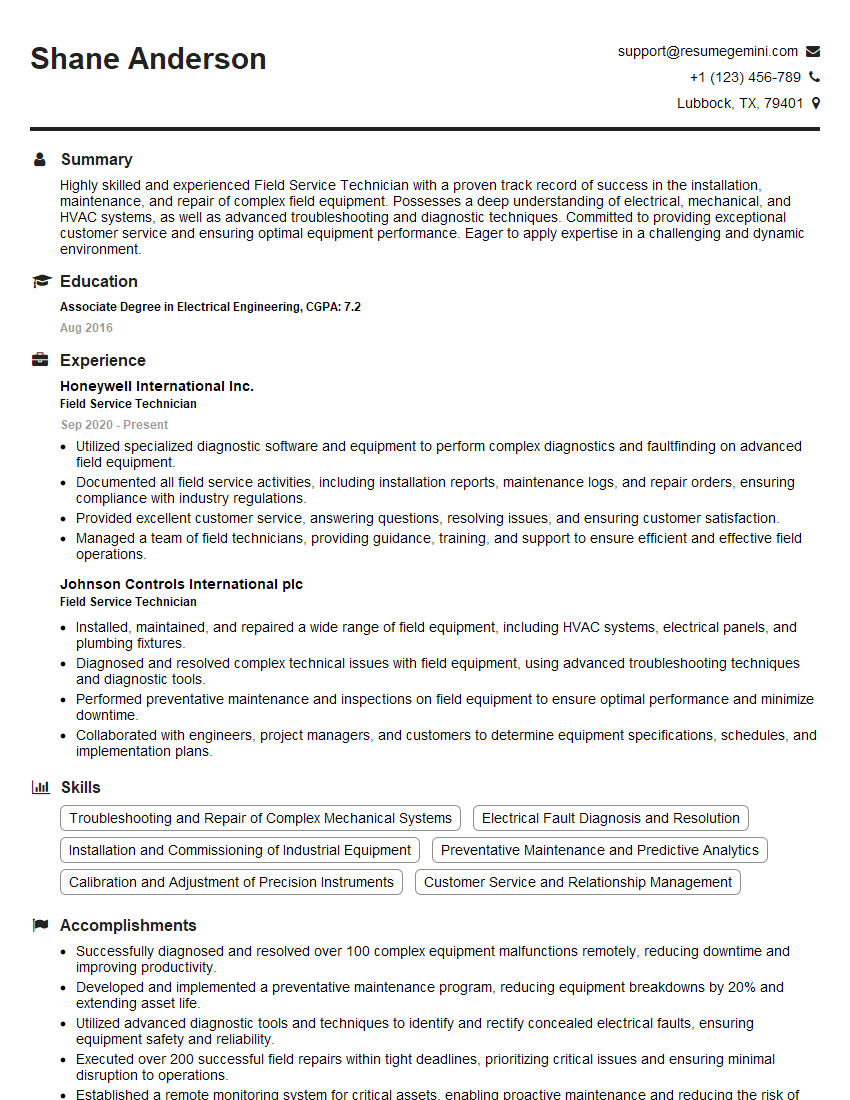
Field Service Technician Resume Sample
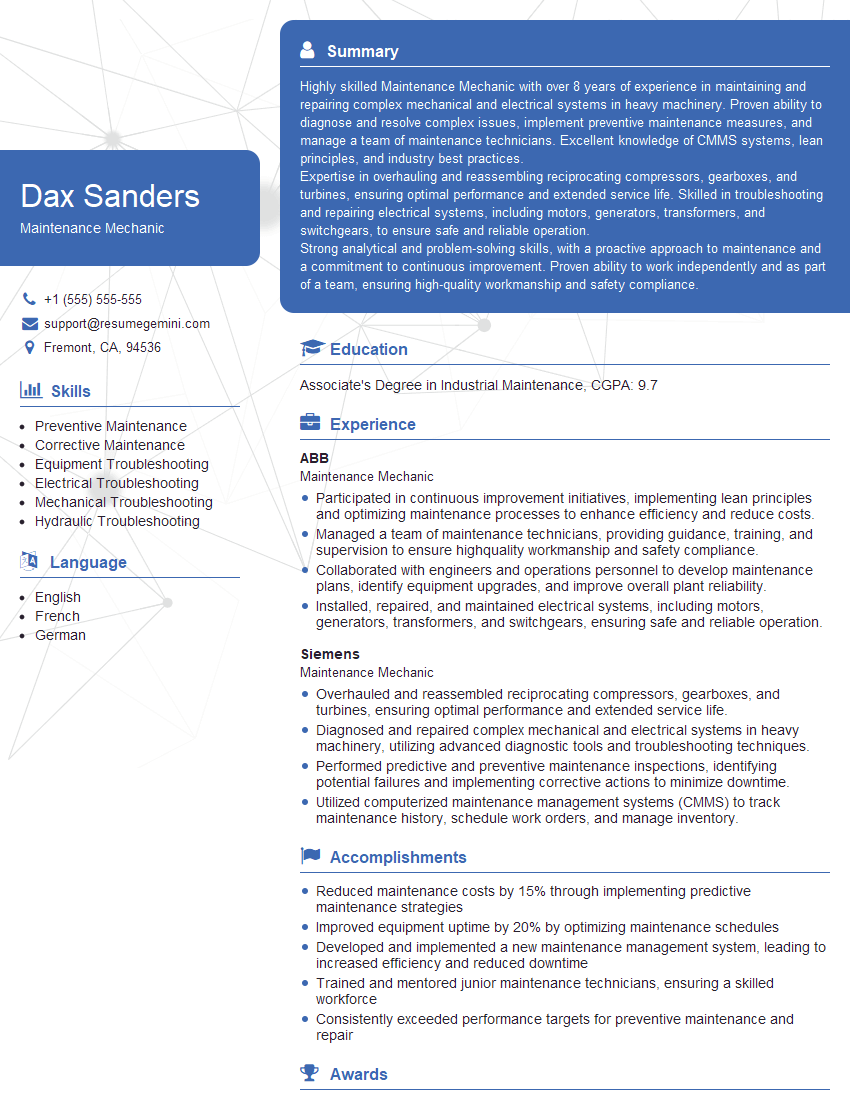
Maintenance Mechanic Resume Sample
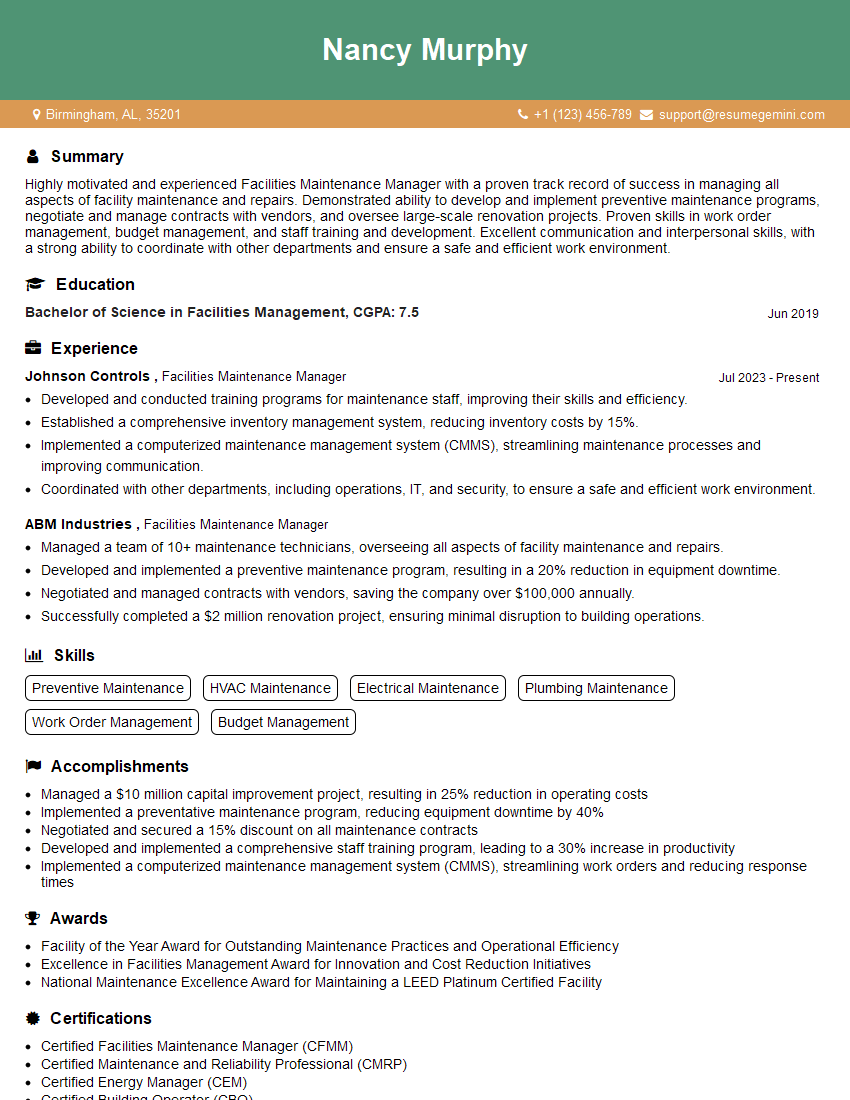
Facilities Maintenance Manager Resume Sample
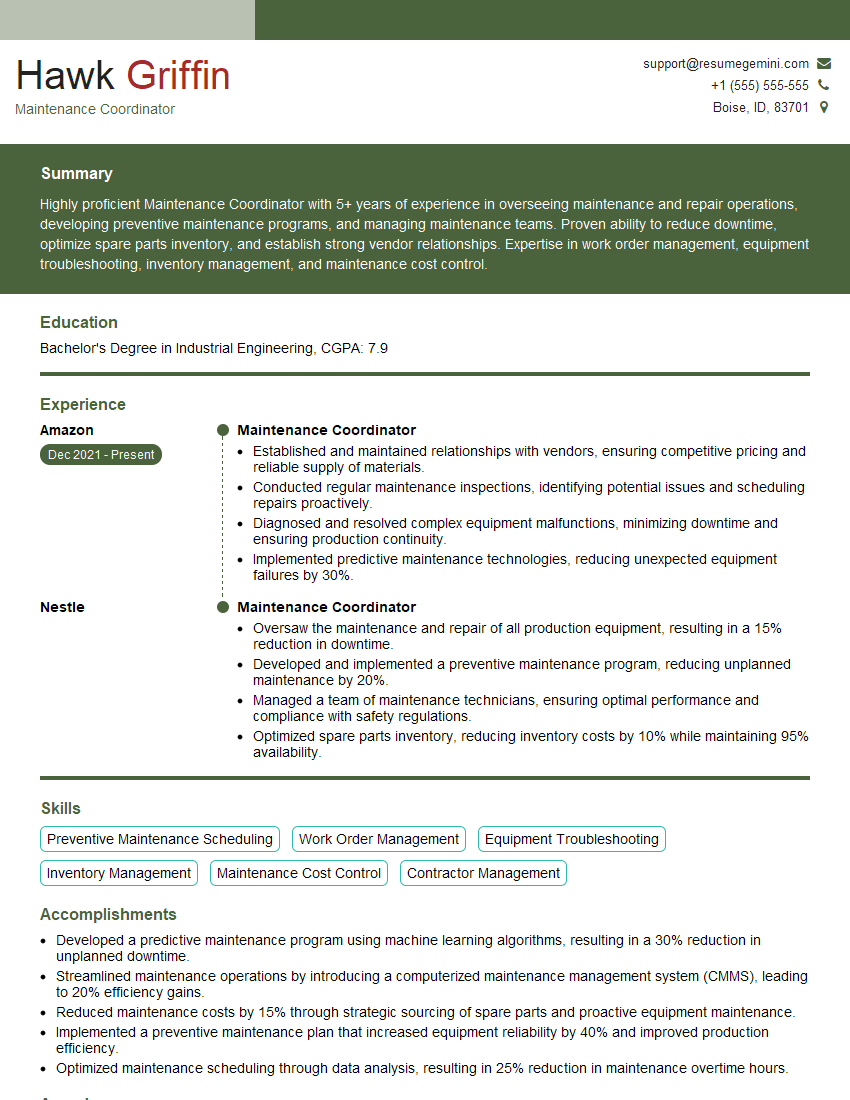
Maintenance Coordinator Resume Sample
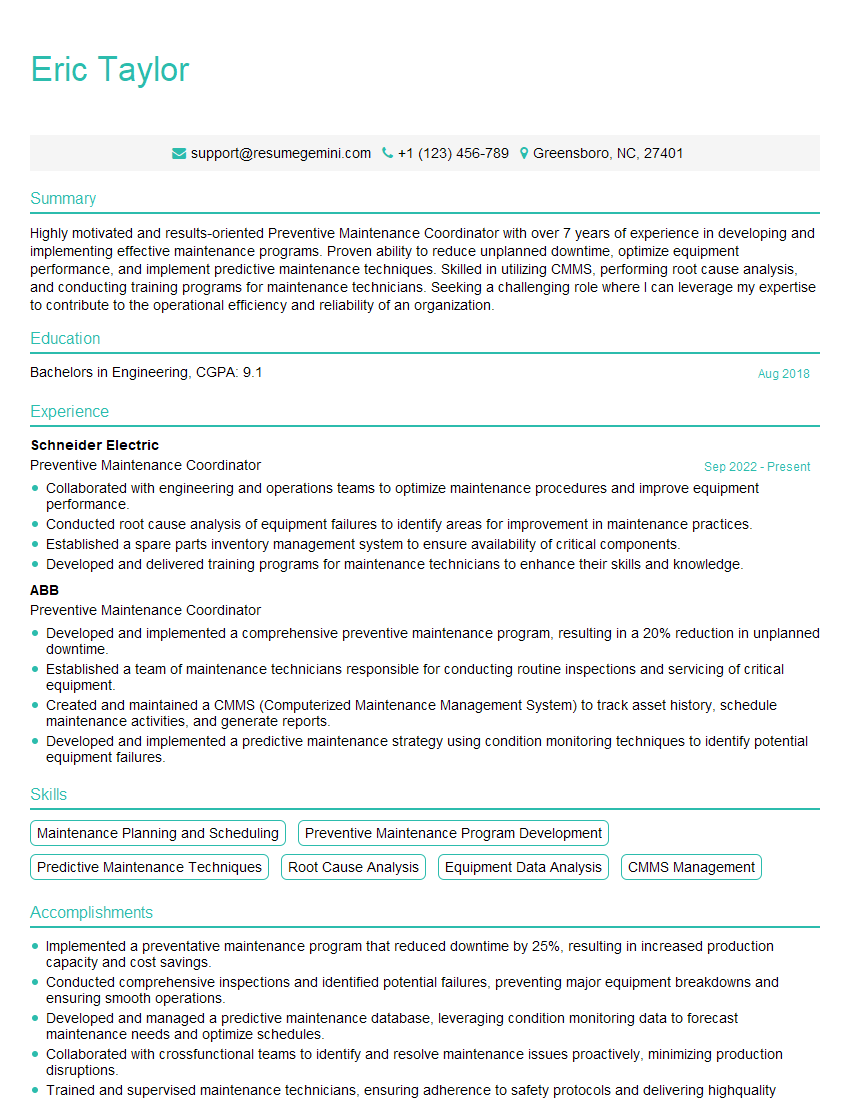
Preventive Maintenance Coordinator Resume Sample

Electrical Maintenance Technician Resume Sample
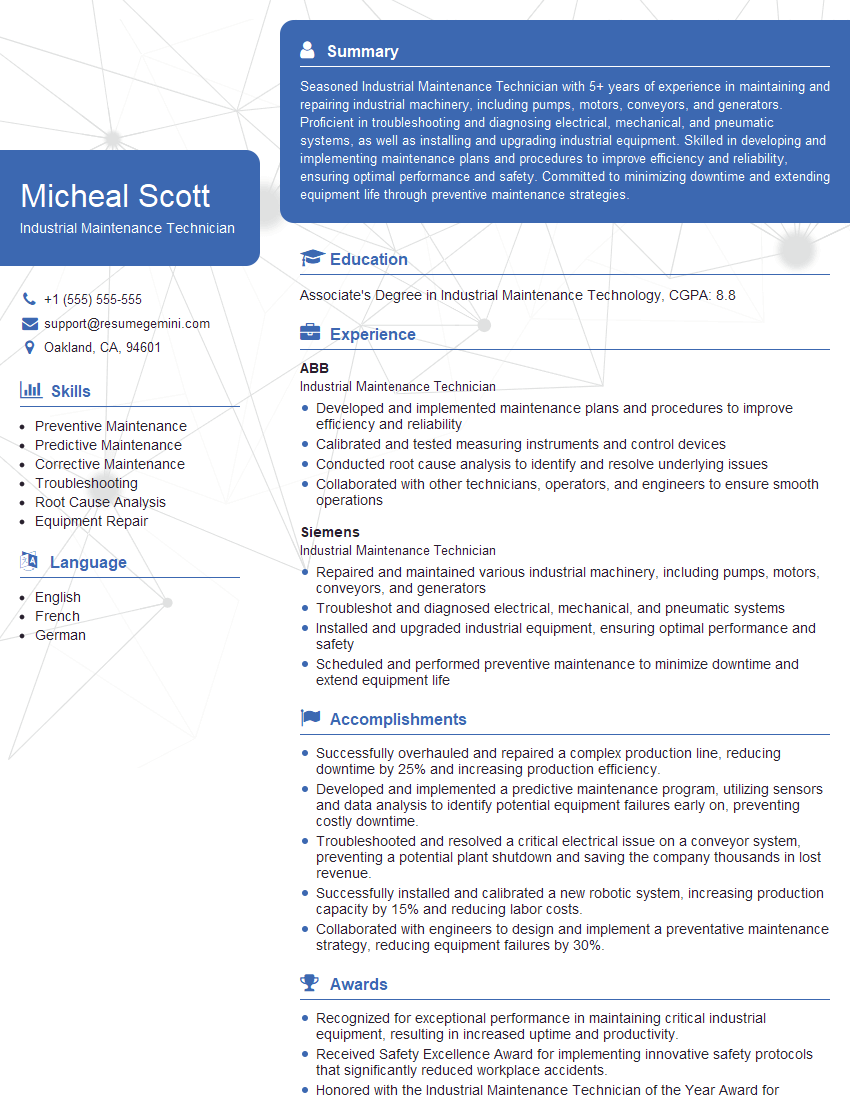
Industrial Maintenance Technician Resume Sample
- Maintenance Manager
- Maintenance Planner
- Maintenance Supervisor
- Reliability Engineer
- Technical Support Specialist
- Field Service Engineer
- Field Service Technician
- Maintenance Mechanic
- Facilities Maintenance Manager
- Maintenance Coordinator
- Preventive Maintenance Coordinator
- Electrical Maintenance Technician
- Industrial Maintenance Technician
Explore more articles
Users Rating of Our Blogs
Share Your Experience
We value your feedback! Please rate our content and share your thoughts (optional).
What Readers Say About Our Blog
Very informative content, great job.
good