Are you ready to stand out in your next interview? Understanding and preparing for Preventive Maintenance and Upkeep interview questions is a game-changer. In this blog, we’ve compiled key questions and expert advice to help you showcase your skills with confidence and precision. Let’s get started on your journey to acing the interview.
Questions Asked in Preventive Maintenance and Upkeep Interview
Q 1. Explain the difference between preventive and corrective maintenance.
Preventive maintenance (PM) and corrective maintenance (CM) are two fundamentally different approaches to equipment upkeep. Think of it like this: PM is like regular checkups at the doctor – preventing problems before they arise. CM, on the other hand, is like going to the ER after you’ve already gotten sick.
- Preventive Maintenance (PM): This involves scheduled inspections, lubrication, cleaning, and minor repairs to equipment before a failure occurs. The goal is to extend equipment lifespan, increase efficiency, and reduce downtime. Examples include changing oil in a vehicle regularly, lubricating conveyor belts, and inspecting electrical connections for wear.
- Corrective Maintenance (CM): This is reactive maintenance performed after a failure has occurred. It involves repairing or replacing broken components. Examples include fixing a broken motor, repairing a leaking pipe, or replacing a faulty sensor. CM is often more costly and disruptive than PM because it requires emergency intervention and potentially extensive repairs.
The key difference lies in the proactive nature of PM versus the reactive nature of CM. A well-structured PM program significantly reduces the need for CM, leading to substantial cost savings and increased operational efficiency.
Q 2. Describe your experience with CMMS (Computerized Maintenance Management System) software.
I have extensive experience using CMMS software, primarily in managing and optimizing preventive maintenance programs. I’ve worked with several systems, including [mention specific software names if comfortable, e.g., Fiix, UpKeep, or IBM Maximo]. My experience encompasses all aspects of CMMS implementation and usage, from initial data entry and asset registration to work order scheduling, inventory management, and generating insightful reports.
For example, in my previous role, I successfully implemented a new CMMS system that streamlined our maintenance processes. This involved creating a comprehensive asset register, developing preventive maintenance schedules based on manufacturer recommendations and historical data, and training maintenance technicians on the system’s use. The result was a 20% reduction in downtime and a 15% improvement in maintenance efficiency. We also utilized the system’s reporting features to track key performance indicators and identify areas for further optimization.
I’m proficient in utilizing CMMS software for generating customized reports that allow for data-driven decision-making related to maintenance strategies. I am adept at using reporting features to track equipment reliability and highlight potential maintenance issues before they escalate.
Q 3. How do you prioritize maintenance tasks?
Prioritizing maintenance tasks requires a multi-faceted approach. I typically use a combination of methods, including:
- Criticality Analysis: This involves assessing the impact of equipment failure on production, safety, and overall operations. Equipment with a higher impact on these factors receives higher priority.
- Risk Assessment: This identifies potential risks associated with equipment failure, considering factors such as the likelihood of failure and the severity of consequences. High-risk equipment needs prompt attention.
- Maintenance History: Analyzing past maintenance records helps to predict future failures and prioritize equipment that has shown a higher frequency of breakdowns or requires more frequent maintenance.
- Cost-Benefit Analysis: This weighs the cost of preventative maintenance against the potential cost of equipment failure. PM interventions that prevent costly failures are prioritized.
Often, I use a matrix combining these factors to assign priorities. For instance, a piece of critical equipment with a high likelihood of failure and severe consequences would be assigned the highest priority, regardless of its current condition. This systematic approach ensures that resources are allocated effectively to maximize operational uptime and minimize risks.
Q 4. What are the key performance indicators (KPIs) you use to measure maintenance effectiveness?
Key Performance Indicators (KPIs) are crucial for evaluating the effectiveness of a maintenance program. I typically focus on a range of KPIs, including:
- Mean Time Between Failures (MTBF): Measures the average time between equipment failures, indicating equipment reliability.
- Mean Time To Repair (MTTR): Measures the average time it takes to repair failed equipment, reflecting the efficiency of the maintenance team.
- Overall Equipment Effectiveness (OEE): A holistic measure that combines availability, performance, and quality rates of equipment. A high OEE suggests effective maintenance practices.
- Maintenance Cost per Unit Produced: Tracks the maintenance costs relative to production output, reflecting the cost-effectiveness of the maintenance program.
- Downtime Percentage: Indicates the percentage of time that equipment is not operational due to failures or maintenance activities. A lower percentage suggests more efficient operations.
Regular monitoring of these KPIs allows for timely adjustments to the maintenance strategy, ensuring the program remains efficient and effective in achieving its goals.
Q 5. Explain your approach to troubleshooting equipment malfunctions.
My approach to troubleshooting equipment malfunctions is systematic and data-driven. It involves several steps:
- Gather Information: Begin by collecting all available information about the malfunction, including error messages, operator observations, and any relevant historical data.
- Visual Inspection: Conduct a thorough visual inspection of the equipment to identify any obvious signs of damage or malfunction.
- Check Sensors and Gauges: Verify sensor readings and gauge levels to identify deviations from normal operating parameters.
- Test Components: Systematically test individual components to isolate the source of the problem.
- Consult Documentation: Refer to equipment manuals, schematics, and troubleshooting guides for assistance.
- Utilize Diagnostic Tools: Employ diagnostic tools, such as multimeters, oscilloscopes, or specialized diagnostic software, to identify specific problems.
Throughout this process, I meticulously document all findings and actions taken to facilitate future troubleshooting and analysis. The systematic approach helps to quickly and accurately identify the root cause of the problem, ensuring efficient repairs and minimizing downtime.
Q 6. How do you ensure compliance with safety regulations during maintenance procedures?
Ensuring compliance with safety regulations during maintenance procedures is paramount. My approach involves:
- Lockout/Tagout (LOTO) Procedures: Strict adherence to LOTO procedures to isolate energy sources and prevent accidental energization during maintenance.
- Risk Assessments: Conducting thorough risk assessments before commencing any maintenance task to identify potential hazards and implement appropriate control measures.
- Personal Protective Equipment (PPE): Ensuring that maintenance personnel wear appropriate PPE, such as safety glasses, gloves, and protective clothing, to mitigate potential risks.
- Training and Competency: Providing comprehensive training to maintenance personnel on safety procedures, equipment operation, and the use of PPE.
- Regular Safety Audits: Conducting regular safety audits to identify and address potential hazards and ensure compliance with safety regulations.
- Documentation: Maintaining accurate records of all safety procedures, risk assessments, and training activities.
By implementing these measures, we create a safe working environment, minimize the risk of accidents, and ensure compliance with all relevant safety regulations.
Q 7. Describe your experience with root cause analysis.
Root cause analysis (RCA) is a critical tool for identifying the underlying causes of equipment failures and preventing recurrence. My approach typically involves using a structured methodology, such as the “5 Whys” or a fishbone diagram (Ishikawa diagram).
5 Whys: This iterative technique involves repeatedly asking “why” to drill down to the root cause. For example, if a pump fails:
1. Why did the pump fail? (Bearing seized)
2. Why did the bearing seize? (Lack of lubrication)
3. Why was there a lack of lubrication? (Lubrication system malfunctioned)
4. Why did the lubrication system malfunction? (Sensor failure)
5. Why did the sensor fail? (Sensor was beyond its useful life)
Fishbone Diagram: This visual tool helps to organize potential causes of a problem, categorized into factors such as people, methods, materials, equipment, and environment. I use this to brainstorm potential causes and identify the most likely root cause.
Following RCA, corrective actions are implemented to address the root cause, preventing future failures and improving overall equipment reliability. This systematic analysis not only resolves immediate issues but also prevents future problems and enhances the overall efficiency of the maintenance program.
Q 8. How do you handle unexpected equipment failures?
Unexpected equipment failures are, unfortunately, a reality in any operation. My approach involves a structured, multi-step process starting with immediate action to mitigate the problem and then moving to root cause analysis to prevent recurrence.
Firstly, I prioritize safety. Securing the area and ensuring personnel are safe is paramount. Then, I focus on damage control: Is there a risk of further damage or a safety hazard? I quickly assess the situation, gathering information about the failure – what exactly malfunctioned, what were the conditions leading up to it, and are there any immediate visible causes? This often involves consulting maintenance logs and speaking with operators.
Once the immediate issue is addressed (e.g., powering down equipment, preventing leaks), I initiate a thorough investigation. This includes collecting data – reviewing operational logs, inspecting the failed component, and interviewing personnel – to pinpoint the root cause. This is often not a simple task and may require advanced diagnostic tools. Was it a manufacturing defect? Was it due to insufficient lubrication or wear and tear? Was the preventive maintenance schedule adequate?
Finally, corrective actions are implemented to prevent future occurrences. This might involve replacing components, modifying operating procedures, or enhancing the preventive maintenance schedule to detect similar issues earlier. The entire process is documented thoroughly to inform future maintenance strategies.
Q 9. What are some common preventive maintenance tasks for [specific equipment type, e.g., pumps, motors]?
Let’s consider preventive maintenance for centrifugal pumps, a common piece of equipment in many industries. Regular maintenance is crucial for maximizing efficiency, extending lifespan, and minimizing downtime.
- Visual Inspection: Regular checks for leaks, wear and tear on seals, belts, couplings, and piping. Looking for corrosion or any unusual vibrations.
- Lubrication: Proper lubrication of bearings and other moving parts is critical. This involves using the correct type and quantity of lubricant and following a defined lubrication schedule.
- Bearing Inspection: Checking bearing temperature and play (radial and axial). Excessive heat or play indicates potential failure and requires immediate attention.
- Vibration Analysis: Monitoring vibrations can identify imbalances, misalignment, or bearing problems before they lead to catastrophic failure. Vibration analysis tools can quantify vibration levels and provide early warning signs.
- Motor Inspection: Checking the motor for overheating, unusual noises, and ensuring proper ventilation. This often includes measuring motor current draw.
- Seal Inspection: Regular inspection of pump seals for leaks or damage. These are crucial for preventing fluid loss and ensuring efficient operation.
- Performance Monitoring: Monitoring parameters like flow rate, pressure, and power consumption can detect gradual performance degradation before it leads to a major problem.
The frequency of these tasks depends on factors like pump type, operating conditions, and fluid handled, but a well-defined preventive maintenance schedule is essential.
Q 10. Explain the concept of Total Productive Maintenance (TPM).
Total Productive Maintenance (TPM) is a philosophy that goes beyond reactive and even preventive maintenance. It aims to maximize equipment effectiveness by engaging all employees in maintaining equipment and improving processes. It’s not just about fixing things when they break, but about preventing breakdowns entirely and continuously improving the equipment’s performance and overall efficiency.
Think of it like this: In traditional maintenance, the maintenance team is separate from the operations team. In TPM, everyone from the plant manager to the operator is involved in maintaining the equipment. Operators are trained to conduct basic checks and identify potential problems early on.
Key elements of TPM include:
- Autonomous Maintenance: Operators perform basic maintenance tasks (e.g., cleaning, lubrication) daily.
- Planned Maintenance: Regular scheduled maintenance activities to prevent major breakdowns.
- Early Detection of Malfunctions: Implementing monitoring systems to detect problems before they escalate.
- Continuous Improvement: Continuously seeking ways to improve equipment reliability and efficiency.
- Training and Education: Training all employees on TPM principles and techniques.
TPM leads to significant improvements in equipment availability, reduced maintenance costs, and improved product quality. It fosters a culture of ownership and responsibility for equipment among all employees.
Q 11. How do you develop and implement a preventive maintenance schedule?
Developing a preventive maintenance schedule requires a systematic approach. It starts with a comprehensive assessment of your equipment.
- Equipment Inventory: Create a detailed inventory of all equipment, including specifications, age, and operating conditions.
- Failure Modes and Effects Analysis (FMEA): Identify potential failure modes for each equipment item and their consequences. This helps prioritize critical equipment requiring more frequent maintenance.
- Manufacturer’s Recommendations: Consult equipment manuals for recommended maintenance intervals and tasks. This provides a solid baseline for your schedule.
- Historical Data: Review historical maintenance records to identify patterns and common failure points. This data-driven approach helps optimize the schedule.
- Prioritization: Prioritize equipment based on criticality, failure frequency, and repair costs. Critical equipment requiring more frequent attention.
- Schedule Creation: Develop a schedule specifying tasks, frequencies (daily, weekly, monthly, yearly), and assigned personnel for each piece of equipment.
- Software Implementation: Employ CMMS (Computerized Maintenance Management System) software to manage the schedule, track work orders, and monitor maintenance performance. This streamlines maintenance operations and improves efficiency.
- Regular Review and Optimization: Regularly review the schedule’s effectiveness and adjust it based on performance data and operational changes. This ensures the schedule remains relevant and effective.
A well-structured schedule contributes significantly to reducing downtime, minimizing repair costs and improving overall equipment effectiveness.
Q 12. What are your strategies for improving maintenance efficiency?
Improving maintenance efficiency involves a combination of strategies focusing on both the technical and organizational aspects.
- Preventive Maintenance Optimization: Regularly review and optimize the preventive maintenance schedule based on performance data and equipment usage. Eliminating unnecessary tasks and focusing on high-impact ones significantly improves efficiency.
- Predictive Maintenance Implementation: Moving towards predictive maintenance by using sensors and data analytics allows for proactive maintenance and reduces reactive repair time. Implementing condition-based monitoring provides early warning signals for potential failures.
- Streamlined Work Processes: Improving work order management, inventory control, and parts procurement minimizes delays and improves technician productivity. This often involves utilizing CMMS software effectively.
- Technician Training and Skill Development: Investing in training for maintenance technicians enhances their skills and efficiency in troubleshooting and repairs, improving problem resolution time and reducing errors.
- Centralized Parts Management: Implementing a centralized inventory management system minimizes downtime due to parts shortages and improves procurement efficiency.
- Technology Integration: Employing mobile devices, IoT sensors, and advanced diagnostics tools streamlines data collection, enhances technician communication, and improves overall efficiency.
- Performance Measurement and Reporting: Regularly track key performance indicators (KPIs) like maintenance cost per unit, downtime, and equipment availability to identify areas for improvement and assess the effectiveness of maintenance strategies.
Implementing these strategies in a structured approach significantly increases the effectiveness of the maintenance operation and reduces overall cost.
Q 13. How do you manage maintenance budgets and resources?
Managing maintenance budgets and resources effectively requires a balanced approach combining planning, control, and continuous improvement.
I begin by developing a detailed budget that aligns with the overall organizational goals and anticipated maintenance needs. This involves forecasting maintenance costs based on historical data, equipment age, and anticipated repairs. This budget includes allocations for labor, materials, parts, and contract services.
Regular monitoring of expenditures against the budget is crucial. I use performance metrics such as mean time between failures (MTBF), mean time to repair (MTTR), and maintenance cost per unit to track progress and identify potential overruns.
Resource allocation involves optimizing the use of personnel, tools, and spare parts. This includes prioritizing maintenance tasks based on equipment criticality and potential impact on production. Efficient inventory management is critical to avoid unnecessary storage costs while ensuring timely access to essential parts.
Continuous improvement involves regularly evaluating the maintenance process for opportunities to reduce costs and enhance efficiency. This might involve exploring alternative repair methods, negotiating better deals with suppliers, or implementing preventive maintenance strategies to avoid costly repairs.
Q 14. Describe your experience with different types of lubrication techniques.
My experience encompasses various lubrication techniques, each suited to specific applications and equipment needs. The choice of lubrication technique is critical for optimal equipment performance and longevity.
- Grease Lubrication: This method uses grease, a semi-solid lubricant, which provides excellent adhesion and protection against contamination and moisture. It is suitable for applications with slow-moving parts, such as bearings operating under heavy loads. Different grease consistencies (NLGI grades) are selected based on operating conditions.
- Oil Lubrication: This involves using fluid oil, which provides good lubrication and heat dissipation. It is frequently used in high-speed applications like gearboxes, engines, and hydraulic systems. Oil lubrication systems can be simple drip feed systems or sophisticated circulatory systems.
- Oil Mist Lubrication: This technique uses a fine mist of oil, typically for high-speed and lightly loaded bearings. It is efficient and prevents oil leaks. It is often used in high-temperature applications.
- Automatic Lubrication Systems: These systems automatically deliver the right amount of lubricant at predetermined intervals, reducing the need for manual lubrication and ensuring consistent lubrication. They are crucial for inaccessible or hard-to-reach areas. These can range from simple centralized systems to sophisticated automated systems employing sensors and controls.
Choosing the appropriate lubrication technique depends on factors like the type of equipment, the operating conditions, and the lubricant’s properties. Proper lubrication is essential to minimizing friction, wear, and equipment failure. I always ensure that the chosen lubricant meets the manufacturer’s specifications and that lubrication practices adhere to safety standards.
Q 15. How do you ensure accurate record-keeping of maintenance activities?
Accurate record-keeping is the backbone of effective preventive maintenance. It ensures accountability, allows for trend analysis to predict future needs, and provides a historical record for troubleshooting. I utilize a Computerized Maintenance Management System (CMMS) – think of it as a highly organized digital filing cabinet for all maintenance activities. This system allows for detailed logging of each task, including:
- Date and time of service: Precise timestamps for tracking response times and scheduling.
- Equipment ID: Unique identifiers for easy location and tracking of specific assets.
- Type of maintenance performed: Categorization of tasks (e.g., preventive, corrective, predictive).
- Parts used: Tracking inventory and costs associated with repairs.
- Technician responsible: Accountability and performance tracking.
- Maintenance notes and findings: Detailed descriptions of the work done, problems encountered, and recommendations for future maintenance.
Regular audits of the CMMS ensure data integrity, and I also utilize visual aids like photos or videos to document the condition of equipment before and after maintenance, providing extra context and evidence.
Career Expert Tips:
- Ace those interviews! Prepare effectively by reviewing the Top 50 Most Common Interview Questions on ResumeGemini.
- Navigate your job search with confidence! Explore a wide range of Career Tips on ResumeGemini. Learn about common challenges and recommendations to overcome them.
- Craft the perfect resume! Master the Art of Resume Writing with ResumeGemini’s guide. Showcase your unique qualifications and achievements effectively.
- Don’t miss out on holiday savings! Build your dream resume with ResumeGemini’s ATS optimized templates.
Q 16. How do you communicate effectively with other departments regarding maintenance issues?
Effective communication is crucial. I believe in proactive, multi-channel communication. For routine updates, I use email and scheduled meetings with relevant departments. For urgent issues, I prioritize direct phone calls or even on-site visits to ensure immediate action. For example, if a production line stops due to equipment malfunction, I would immediately notify the production manager via phone, then follow up with an email containing a detailed report and proposed solution. I also use the CMMS to create work orders and send automated notifications to relevant teams, maintaining transparency and accountability throughout the process. Finally, regular departmental meetings help anticipate potential conflicts and foster collaborative problem-solving.
Q 17. How do you identify potential maintenance needs before they become major problems?
Predictive maintenance is key to preventing major problems. This involves proactive monitoring of equipment to anticipate potential failures *before* they occur. I use several methods:
- Regular inspections: Visual checks for wear and tear, leaks, or unusual noises. Think of it like a doctor’s checkup – regular check-ups catch small problems before they become major health issues.
- Data analysis: Monitoring key performance indicators (KPIs) collected from sensors and the CMMS. For example, tracking vibration levels in a motor can predict bearing failure well in advance.
- Condition monitoring: Utilizing technologies like infrared thermography to detect overheating, or oil analysis to identify wear particles that indicate impending failure.
- Run-to-failure analysis: Understanding the typical lifespan and failure modes of equipment to better anticipate when maintenance might be needed. This involves analyzing historical data.
By combining these methods, I can build a comprehensive picture of an asset’s health and schedule maintenance accordingly, minimizing downtime and maximizing efficiency.
Q 18. Describe your experience working with different types of maintenance documentation.
My experience encompasses a variety of maintenance documentation. This includes:
- Manufacturer’s manuals and specifications: These provide critical information about the equipment’s design, operation, and recommended maintenance schedules.
- Equipment history records: These documents track past maintenance activities, repairs, and modifications. This is invaluable for troubleshooting and predicting future needs.
- Preventative maintenance schedules (PM schedules): These outline the regular maintenance tasks and their frequency. I’m proficient in creating and optimizing these schedules for various equipment types.
- Work orders: Formal documentation of maintenance tasks, including parts used, labor hours, and costs. The CMMS helps manage these effectively.
- Technical drawings and schematics: Understanding these is critical for complex repairs and maintenance.
Proficiency in interpreting and utilizing these diverse documents is essential for effective and compliant maintenance practices.
Q 19. How do you train or mentor junior maintenance personnel?
Mentoring junior personnel is a rewarding aspect of my role. I employ a hands-on, experiential approach. This involves:
- Shadowing and on-the-job training: I pair junior technicians with experienced ones, allowing them to learn by observation and participation.
- Formal training programs: I provide instruction on safety procedures, maintenance techniques, and the use of CMMS and diagnostic tools.
- Mentorship and feedback: Regular feedback sessions ensure proper technique and knowledge retention. I encourage questions and foster a culture of continuous learning.
- Practical exercises and case studies: Simulating real-world scenarios helps build confidence and problem-solving skills.
My goal is to cultivate a skilled and confident maintenance team capable of handling any challenge.
Q 20. What are your strengths and weaknesses related to preventive maintenance?
Strengths: My greatest strengths lie in my proactive approach to preventive maintenance, my analytical skills in using data to predict equipment failures, and my ability to train and mentor others. I’m adept at streamlining processes to optimize maintenance efficiency and reduce downtime. I also possess strong problem-solving abilities, enabling me to quickly diagnose and resolve unexpected maintenance issues.
Weaknesses: While I’m highly proficient, I’m always striving to improve my knowledge of the newest technologies. The rapid pace of technological advancement in the field requires constant learning and adaptation. I actively mitigate this by dedicating time to professional development and continuous learning (as described in the following answer).
Q 21. How do you stay up-to-date with the latest maintenance technologies and best practices?
Staying current is vital in this ever-evolving field. I utilize several methods:
- Industry publications and journals: I regularly read publications dedicated to maintenance best practices and new technologies.
- Professional development courses and workshops: Attending industry conferences and workshops keeps me abreast of the latest advancements.
- Online resources and webinars: Many reputable organizations offer online training and resources.
- Networking with peers: Participating in industry groups allows for knowledge exchange and sharing of best practices.
- Manufacturer training programs: Direct training from equipment manufacturers often provides valuable insights into the latest technology and maintenance procedures.
This multifaceted approach allows me to seamlessly integrate new technologies and best practices into my work, continually improving the efficiency and effectiveness of our maintenance program.
Q 22. Describe a time you had to make a difficult maintenance decision. What was the outcome?
One challenging decision involved a critical compressor in a petrochemical plant. It was nearing the end of its recommended operational lifespan, showing some minor signs of wear but still within operational parameters. Replacing it would mean significant downtime and expense, while continuing operation risked catastrophic failure with even larger consequences – potential environmental damage, production halts, and safety hazards.
My approach involved a multi-pronged strategy. First, we conducted a thorough root cause analysis of the existing wear, identifying the primary contributing factors. This allowed us to develop a tailored maintenance plan focusing on those specific areas, improving lubrication, and implementing vibration monitoring. Second, we engaged in a rigorous cost-benefit analysis, comparing the projected cost of continued operation with the risks versus the cost of replacement including downtime. Third, we created a detailed risk assessment matrix outlining potential failure scenarios and their respective impact. This enabled us to make an informed decision, choosing to implement the enhanced maintenance plan with a tight monitoring schedule for a predetermined time frame, giving us the data to justify a replacement before a critical failure. The outcome was successful; the compressor operated reliably beyond its initially projected lifespan and we secured necessary funding for replacement based on the data-driven justification.
Q 23. How do you handle conflicting priorities in a fast-paced maintenance environment?
Prioritization in a fast-paced environment is paramount. I use a system combining urgency and importance. I employ a matrix classifying tasks as:
- Urgent and Important: These require immediate action – safety issues, critical equipment failures.
- Important but Not Urgent: Preventive maintenance, planned overhauls; these are scheduled proactively.
- Urgent but Not Important: Often minor issues that may disrupt workflow but don’t pose significant risk. These are delegated or addressed when time permits.
- Neither Urgent nor Important: These tasks are deferred or eliminated if possible.
I utilize a digital task management system, allowing for clear visibility, task assignment, and progress tracking. Regular team meetings ensure everyone is aligned and any conflicts are addressed collaboratively, prioritizing based on the matrix and the overall business goals. Think of it like a firefighter – putting out the biggest fire first, while still ensuring preventative measures (like clearing brush around buildings) are addressed to prevent future large fires.
Q 24. Describe your experience with predictive maintenance techniques.
Predictive maintenance uses data analysis to predict potential equipment failures before they occur. This proactive approach minimizes downtime and reduces maintenance costs significantly. My experience encompasses several techniques, including:
- Vibration analysis: Detecting anomalies in equipment vibrations to predict bearing failure, imbalance, or misalignment.
- Oil analysis: Examining oil samples for contaminants and degradation products indicative of wear or impending failure.
- Infrared thermography: Identifying overheating components prone to failure.
- Data analytics: Using historical data, machine learning, and sensor data to identify patterns and predict failures.
For example, in a previous role, using vibration data collected from rotating machinery, we were able to detect a bearing defect well in advance, scheduling a planned replacement before it caused a catastrophic breakdown. This saved the company thousands of dollars in lost production and repair costs.
Q 25. What is your experience with vibration analysis and its application in predictive maintenance?
Vibration analysis is a cornerstone of predictive maintenance. It involves measuring the vibrations produced by machinery to identify imbalances, misalignments, looseness, and bearing defects. Different vibration frequencies correspond to different types of problems.
I’m experienced in using both handheld vibration analyzers and sophisticated data acquisition systems connected to permanent sensor networks. The data is analyzed using specialized software to identify frequency patterns indicative of specific faults. For example, a high-frequency vibration might indicate a bearing defect, while a low-frequency vibration could be due to misalignment. The software generates reports that assist in diagnosis and determining the urgency of repairs. Understanding these frequencies and their relation to potential problems is key to preventing serious equipment damage and costly downtime.
Q 26. How familiar are you with the use of infrared thermography?
I’m highly familiar with infrared thermography, a non-destructive testing technique that uses infrared cameras to detect temperature variations on the surface of equipment. This is invaluable in identifying potential problems such as overheating electrical connections, loose bearings, insulation defects, and fluid leaks, all of which can lead to equipment failure.
Infrared cameras detect variations in thermal energy, creating thermal images. These images allow us to visually identify ‘hot spots’ which are often early indicators of problems. In practice, I use infrared thermography regularly to inspect electrical panels, motors, and other critical components. The technique is highly effective for preventative maintenance as it allows early detection of problems before they escalate, reducing the risk of significant damage and costly repairs.
Q 27. Explain your approach to conducting a thorough equipment inspection.
My approach to equipment inspection is systematic and thorough, following a pre-defined checklist tailored to the specific equipment. This ensures consistency and reduces the likelihood of overlooking critical issues.
The process begins with a visual inspection, checking for obvious signs of wear, damage, leaks, corrosion, or loose parts. This is followed by functional testing, verifying that the equipment operates as intended and checking performance indicators. Depending on the equipment, this may include measuring vibration, temperature, pressure, and lubrication levels. Specialized testing such as infrared thermography or oil analysis may be employed for a more in-depth diagnosis. All findings are meticulously documented, including photographs and measurements, and a detailed report is generated, outlining any necessary repairs or maintenance tasks. This approach ensures comprehensive assessment and proactive identification of potential problems, minimizing downtime and improving overall equipment reliability. I think of it as a thorough doctor’s check-up for the machinery – visual examination, testing key functions, and blood work (oil analysis) where needed.
Key Topics to Learn for Preventive Maintenance and Upkeep Interview
- Understanding Preventive Maintenance Schedules: Learn to interpret and implement various PM schedules, including calendar-based, run-time-based, and condition-based maintenance.
- Root Cause Analysis (RCA): Master techniques for identifying the underlying causes of equipment failures to prevent recurrence. Practice applying methods like the 5 Whys and fishbone diagrams.
- Predictive Maintenance Techniques: Explore the use of vibration analysis, oil analysis, and thermal imaging to anticipate potential problems before they occur. Understand the data interpretation involved.
- Inventory Management for PM: Learn how to effectively manage spare parts and consumables to ensure timely repairs and minimize downtime. This includes understanding inventory control systems and forecasting.
- Safety Procedures and Regulations: Demonstrate a thorough understanding of relevant safety protocols, lockout/tagout procedures, and compliance regulations related to maintenance activities.
- Maintenance Documentation and Reporting: Become proficient in accurately recording maintenance activities, generating reports, and using Computerized Maintenance Management Systems (CMMS).
- Cost-Benefit Analysis of PM Strategies: Understand how to evaluate the effectiveness of different PM approaches by comparing costs and benefits, including reduced downtime and increased equipment lifespan.
- Troubleshooting and Problem-Solving: Practice diagnosing and resolving common equipment malfunctions using systematic troubleshooting methods. Develop your ability to explain your process clearly.
- Communication and Teamwork: Highlight your skills in collaborating effectively with technicians, engineers, and management to ensure efficient and safe maintenance operations.
Next Steps
Mastering Preventive Maintenance and Upkeep is crucial for career advancement in many industries. It demonstrates your commitment to efficiency, safety, and cost-effectiveness. To stand out, create an ATS-friendly resume that highlights your skills and experience. ResumeGemini is a trusted resource that can help you build a professional and impactful resume. They offer examples of resumes tailored to Preventive Maintenance and Upkeep roles to help you get started. Invest in crafting a strong resume – it’s your first impression with potential employers.
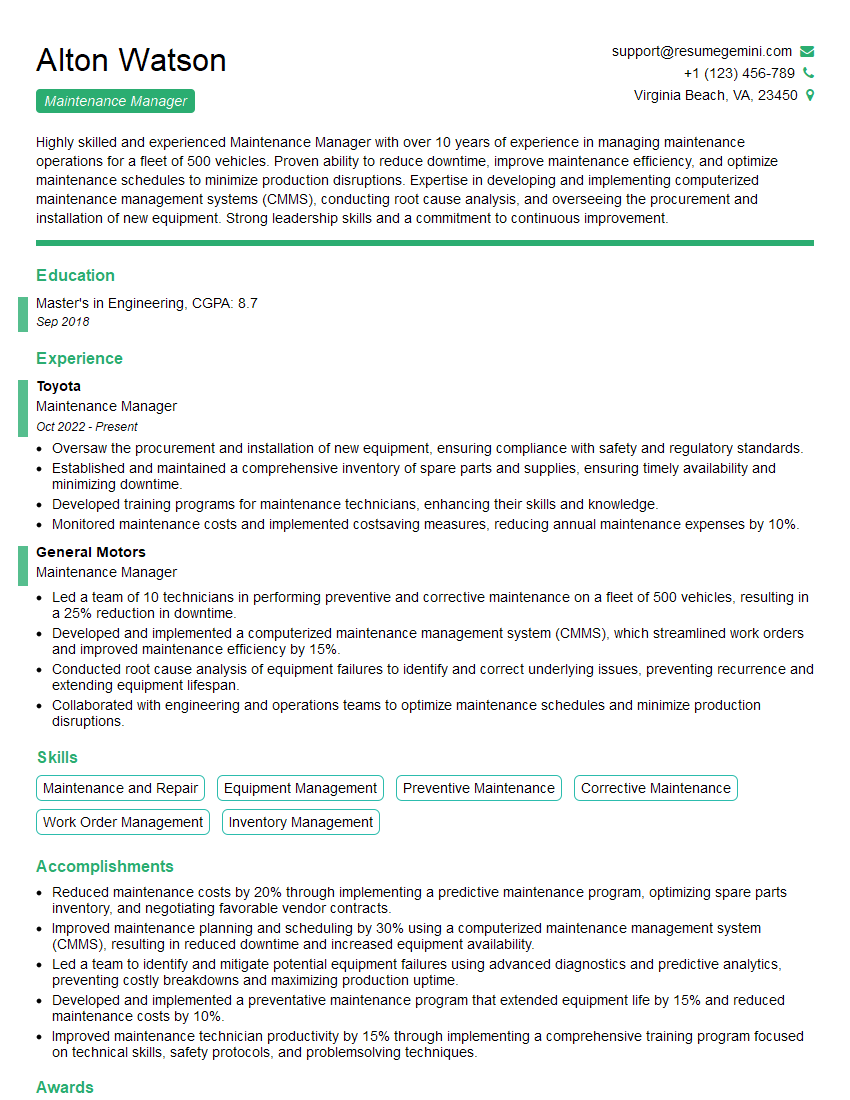
Maintenance Manager Resume Sample
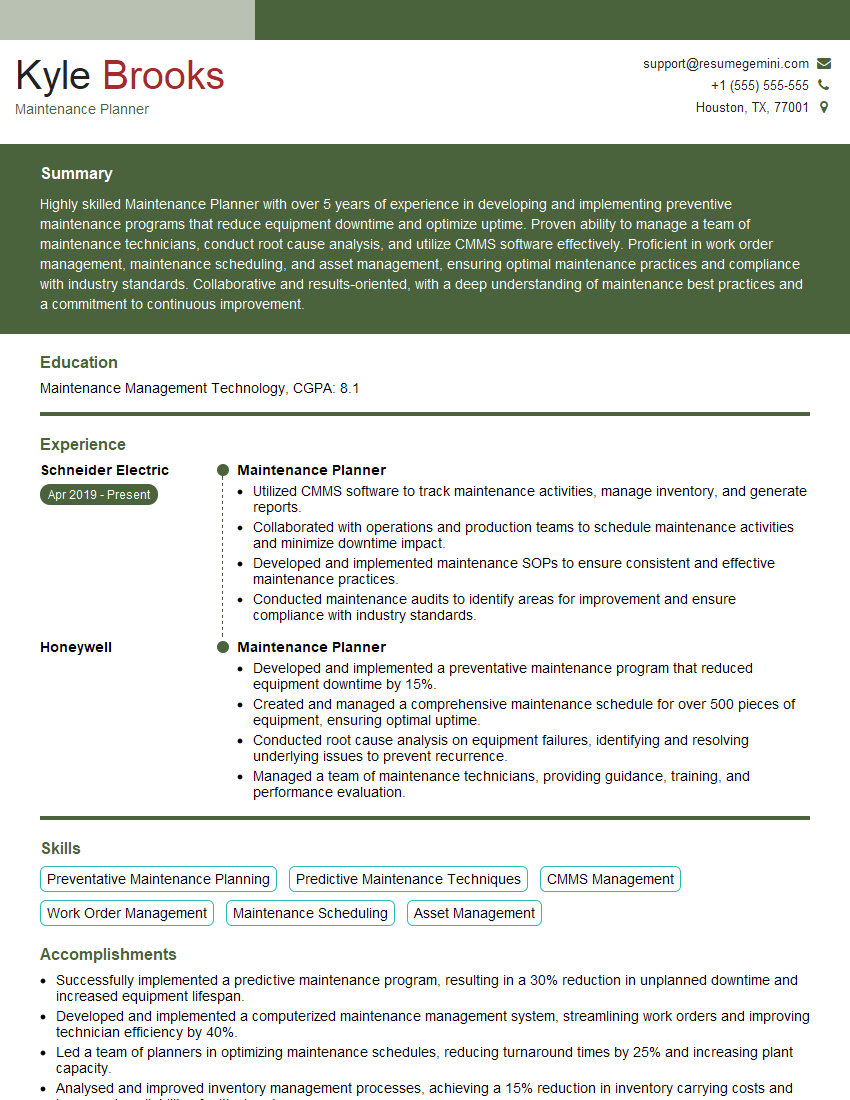
Maintenance Planner Resume Sample
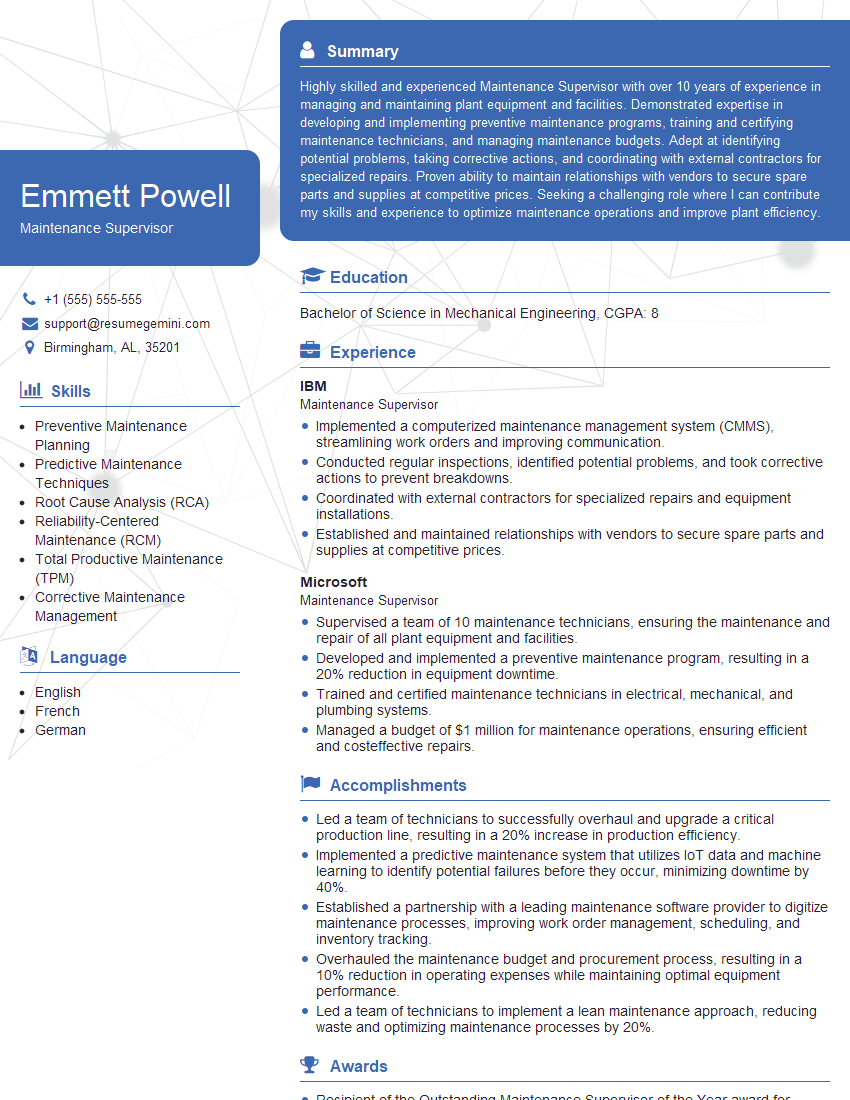
Maintenance Supervisor Resume Sample
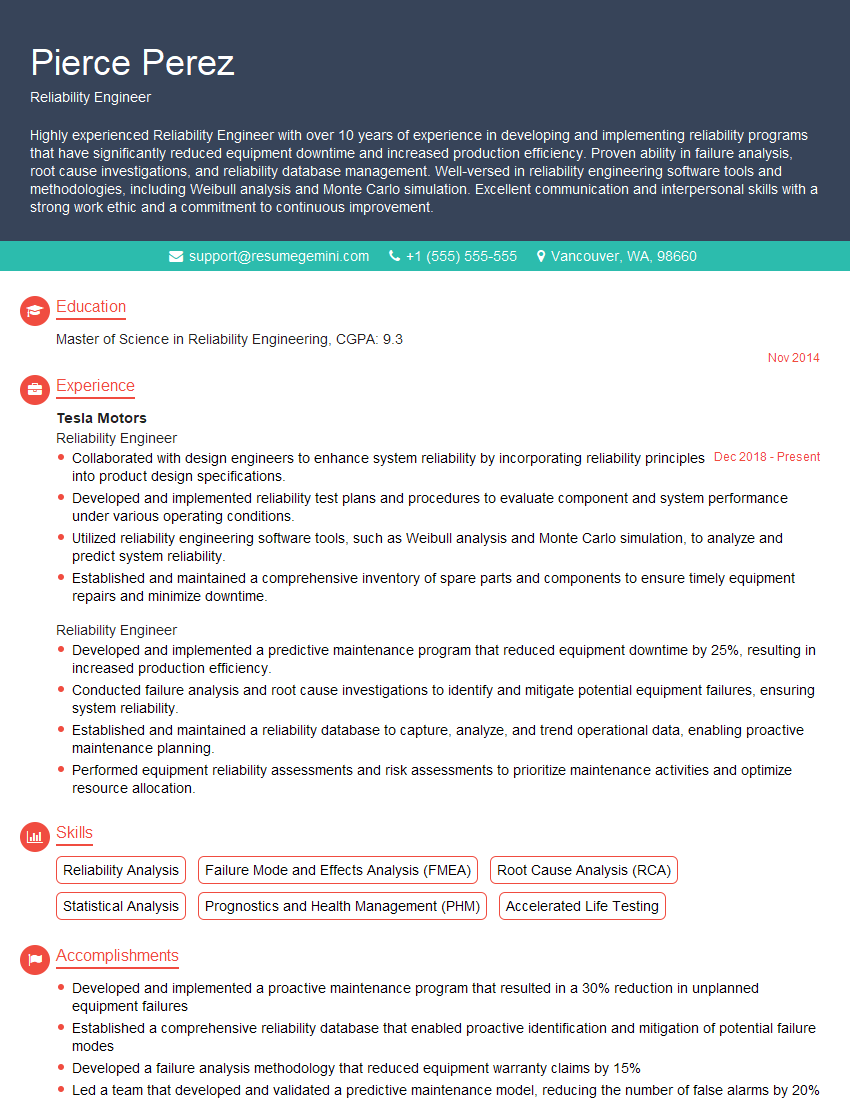
Reliability Engineer Resume Sample
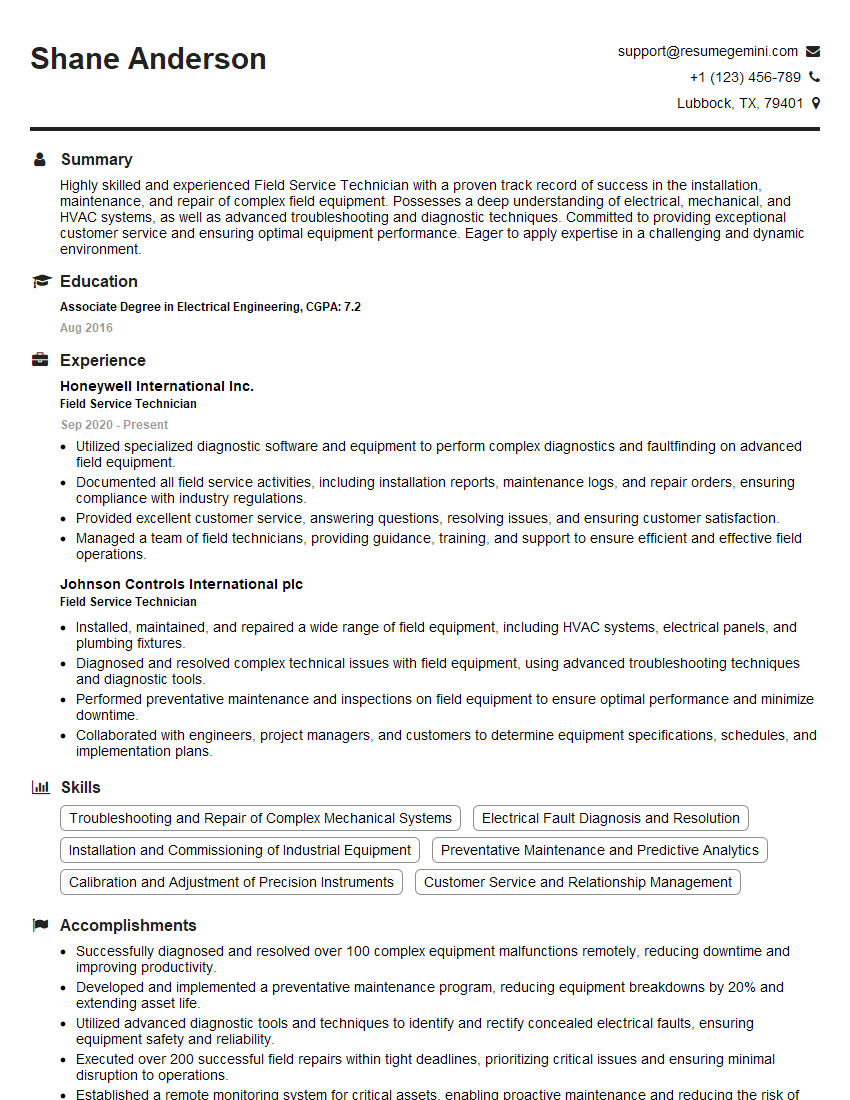
Field Service Technician Resume Sample
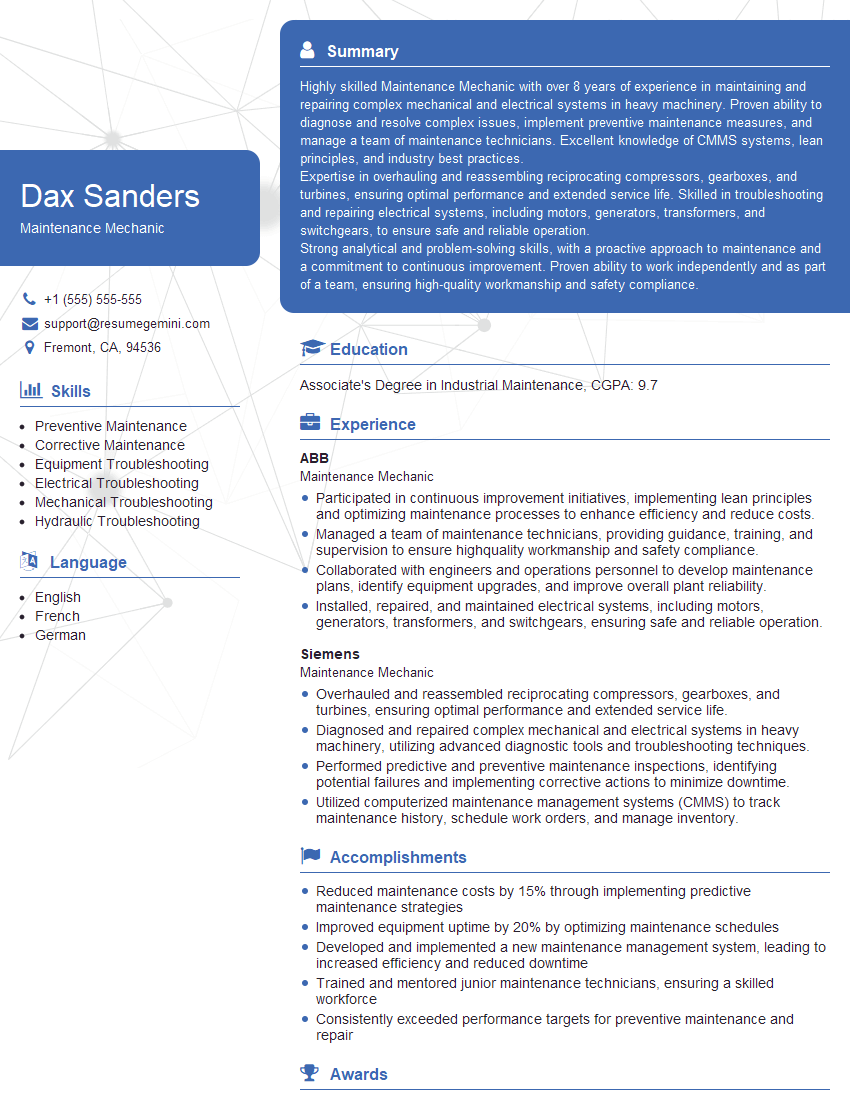
Maintenance Mechanic Resume Sample
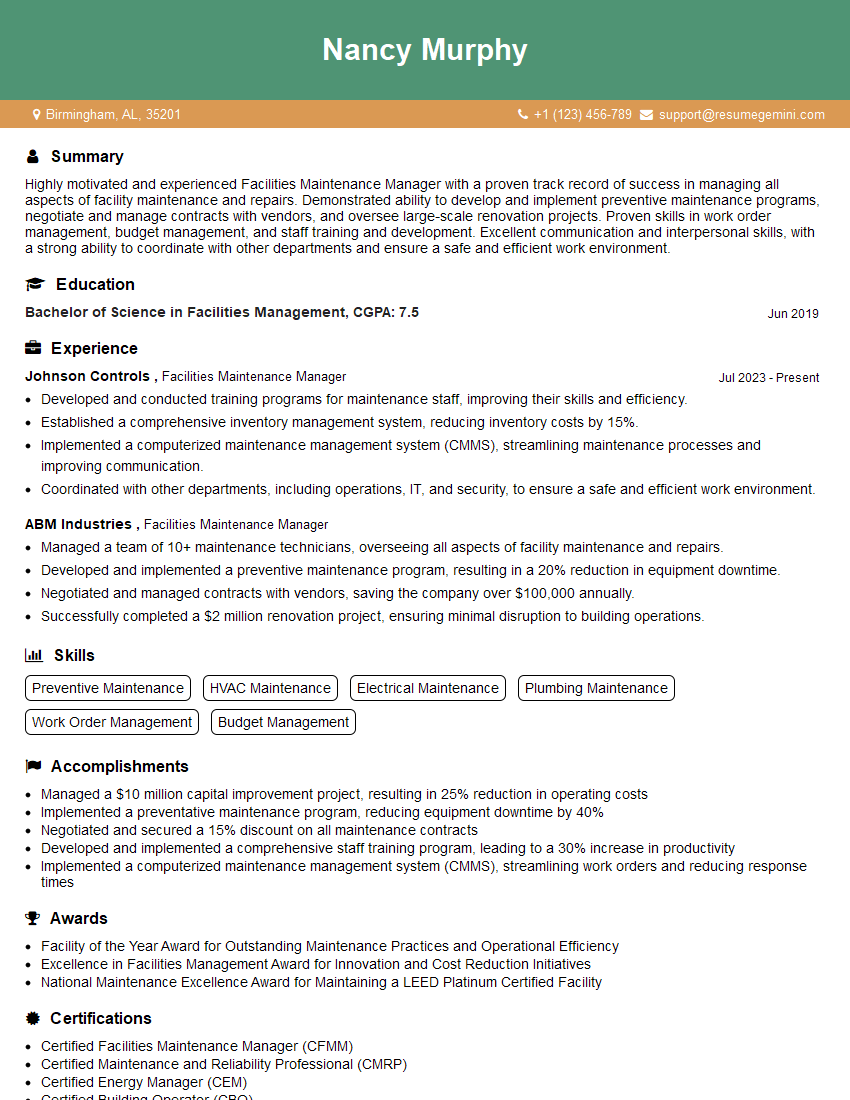
Facilities Maintenance Manager Resume Sample
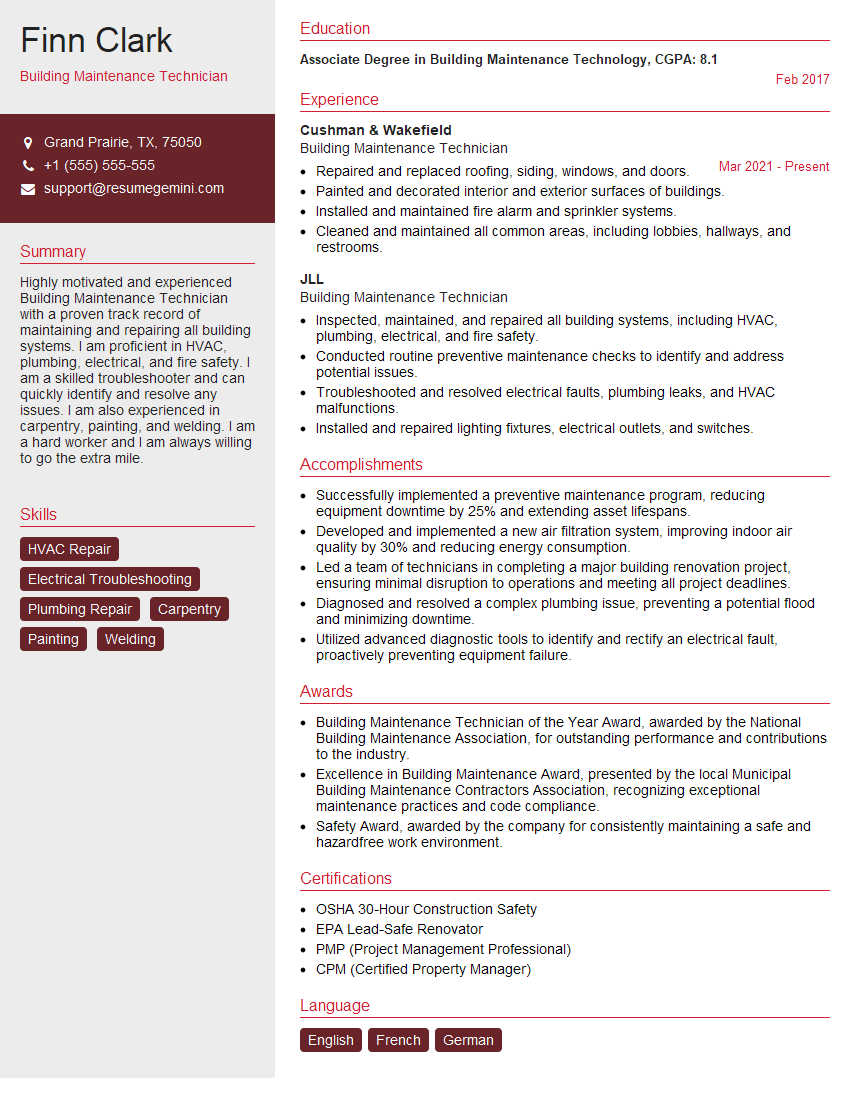
Building Maintenance Technician Resume Sample
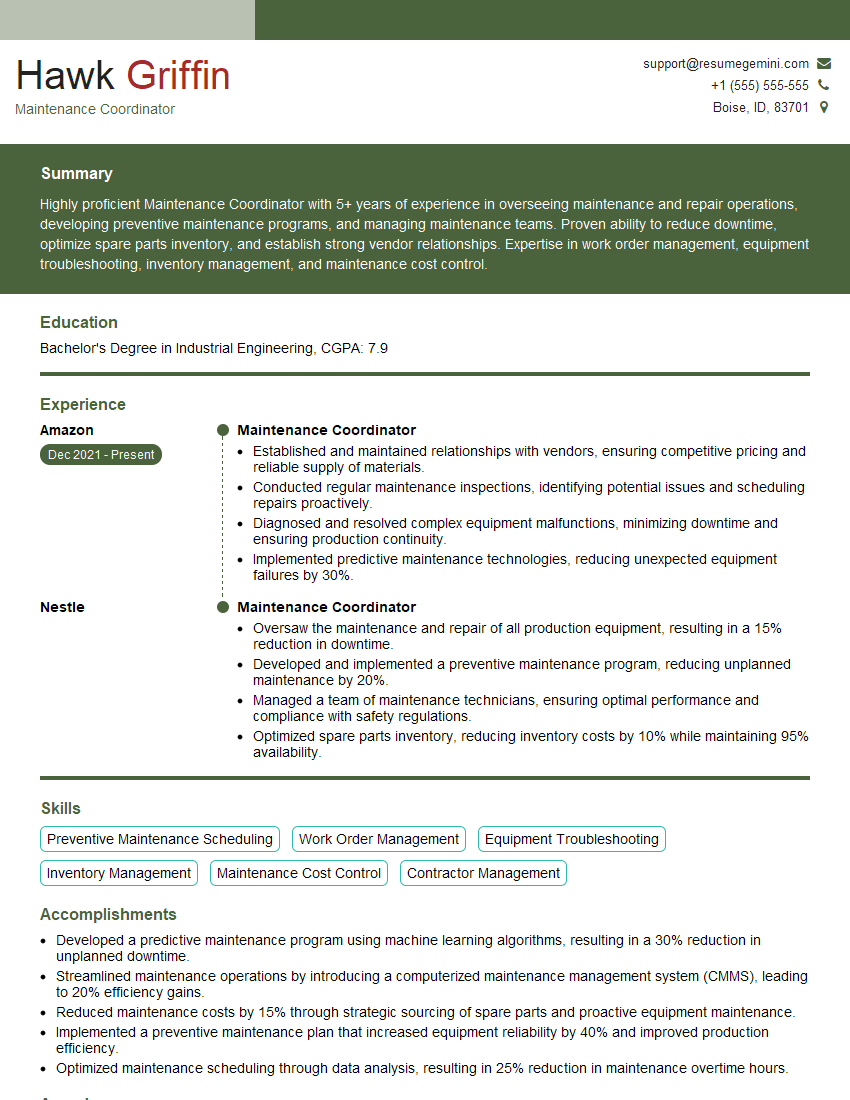
Maintenance Coordinator Resume Sample

Electrical Maintenance Technician Resume Sample
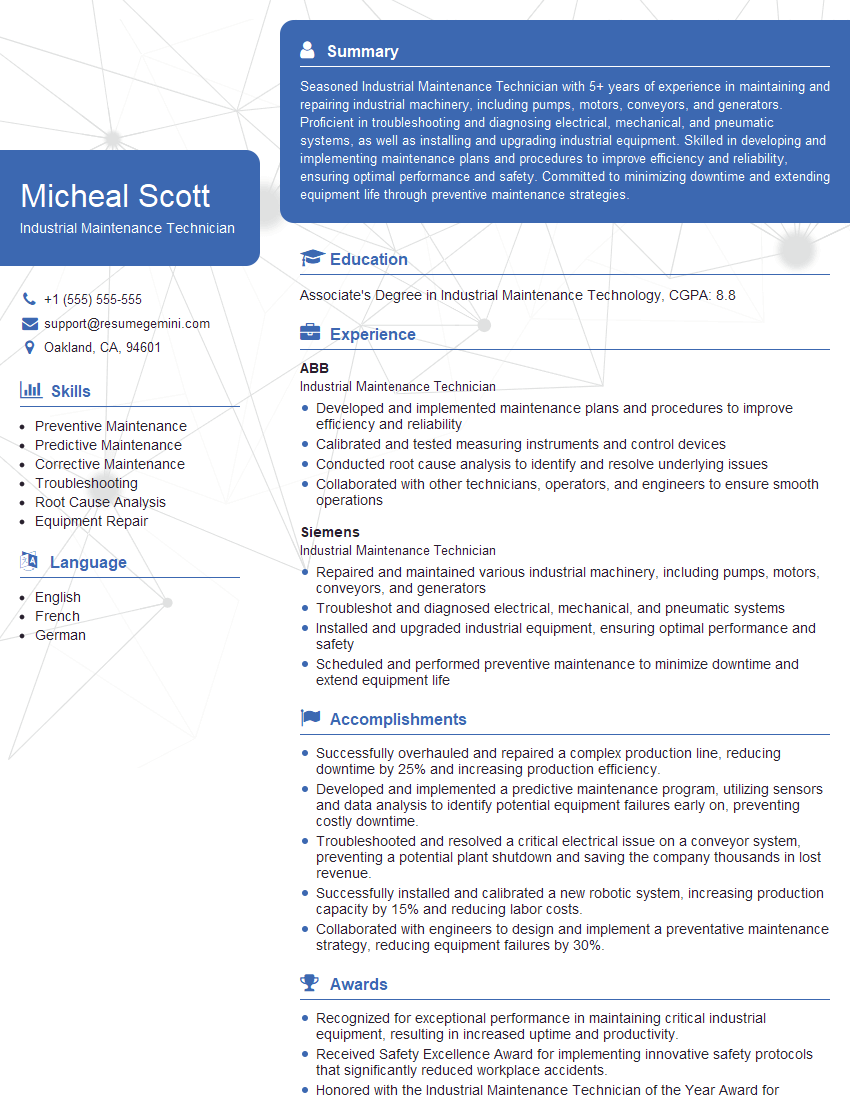
Industrial Maintenance Technician Resume Sample
Explore more articles
Users Rating of Our Blogs
Share Your Experience
We value your feedback! Please rate our content and share your thoughts (optional).
What Readers Say About Our Blog
Very informative content, great job.
good