Interviews are more than just a Q&A session—they’re a chance to prove your worth. This blog dives into essential PreventiveMaintenance interview questions and expert tips to help you align your answers with what hiring managers are looking for. Start preparing to shine!
Questions Asked in PreventiveMaintenance Interview
Q 1. Explain the difference between preventive and corrective maintenance.
Preventive maintenance (PM) and corrective maintenance (CM) are two fundamental approaches to maintaining equipment and infrastructure. Think of it like this: PM is like regular check-ups at the doctor – preventing problems before they arise. CM, on the other hand, is like rushing to the emergency room after you’ve already fallen ill – fixing a problem *after* it has occurred.
- Preventive Maintenance (PM): This involves scheduled inspections, lubrication, cleaning, and part replacements to prevent equipment failures and extend its lifespan. It’s proactive and aims to minimize downtime and reduce long-term costs. Examples include regularly changing the oil in a car engine or scheduling routine inspections of industrial machinery.
- Corrective Maintenance (CM): This is reactive maintenance performed only after equipment has malfunctioned. It’s typically more expensive and disruptive than PM, as it involves emergency repairs, potential production losses, and expedited parts procurement. An example would be repairing a broken conveyor belt after it has stopped production.
The key difference lies in their approach: PM is proactive, aiming to prevent failures, while CM is reactive, addressing failures only after they occur. A balanced approach incorporating both is ideal, though the optimal ratio varies based on the criticality and cost of failure for different assets.
Q 2. Describe your experience with a Computerized Maintenance Management System (CMMS).
I have extensive experience utilizing Computerized Maintenance Management Systems (CMMS). In my previous role, we implemented and managed a CMMS to streamline our preventive maintenance program for a large manufacturing facility. We used the system to schedule and track maintenance tasks, manage inventory, generate reports, and analyze equipment performance. Specifically, we used [CMMS Software Name - e.g., UpKeep, Fiix].
The system allowed us to:
- Centralize maintenance data: Moving from paper-based records to a digital platform greatly improved data accessibility and accuracy.
- Improve scheduling efficiency: The CMMS enabled optimized scheduling of PM tasks, reducing downtime and improving overall equipment effectiveness (OEE).
- Track maintenance costs: We were able to accurately track the cost of PM and CM, which helped us to justify maintenance investments and identify areas for cost reduction.
- Generate insightful reports: The system provided valuable reports on equipment reliability, maintenance costs, and technician performance, facilitating data-driven decision-making.
My experience with CMMS software includes system implementation, user training, data migration, and ongoing system optimization. I am proficient in configuring work orders, creating preventative maintenance schedules, and generating customized reports.
Q 3. What key performance indicators (KPIs) do you use to measure the effectiveness of a preventive maintenance program?
Several key performance indicators (KPIs) are crucial for measuring the effectiveness of a preventive maintenance program. These metrics provide quantifiable data to assess the program’s success and identify areas for improvement.
- Mean Time Between Failures (MTBF): This measures the average time between equipment failures. A higher MTBF indicates improved reliability and the effectiveness of the PM program.
- Mean Time To Repair (MTTR): This metric measures the average time taken to repair failed equipment. Reducing MTTR is crucial for minimizing downtime.
- Overall Equipment Effectiveness (OEE): This comprehensive KPI considers availability, performance, and quality to provide a holistic measure of equipment effectiveness. An increase in OEE strongly suggests a successful PM program.
- Maintenance Costs as a Percentage of Total Production Costs: Monitoring this ratio helps assess the cost-effectiveness of the PM program. While some increase in maintenance costs is acceptable to prevent major failures, excessive costs indicate potential inefficiencies.
- Number of Preventative Maintenance Tasks Completed on Time: This simple metric ensures that planned tasks are executed as scheduled, highlighting adherence to the PM plan.
By tracking and analyzing these KPIs, we can accurately evaluate the return on investment (ROI) of our PM program and make data-driven adjustments to optimize its effectiveness.
Q 4. How do you prioritize preventive maintenance tasks?
Prioritizing preventive maintenance tasks requires a strategic approach that considers several factors. I typically utilize a risk-based prioritization method, combining criticality and urgency assessments.
1. Criticality Assessment: This involves evaluating the impact of equipment failure on production, safety, and overall operations. Critical equipment with significant consequences of failure gets higher priority.
2. Urgency Assessment: This involves considering the equipment’s current condition, age, and predicted lifespan. Equipment nearing the end of its life or showing signs of wear and tear gets prioritized.
3. Cost-Benefit Analysis: A cost-benefit analysis is essential for determining the economic viability of the PM tasks. The tasks offering the highest return on investment (ROI) will generally receive higher priority.
4. Risk Matrix: A risk matrix is a useful tool. It plots tasks based on their likelihood of failure and the severity of the potential consequences. High-risk tasks (high likelihood and severe consequences) receive top priority.
For example, a critical piece of equipment in a continuous production line might receive higher priority than a less critical piece of equipment even if both require similar maintenance.
Q 5. What are the common causes of equipment failure and how can preventive maintenance mitigate them?
Equipment failure stems from numerous causes, but preventive maintenance can effectively mitigate many of them. Understanding the common causes is crucial for designing a robust PM program.
- Wear and Tear: Normal use causes wear and tear on components, leading to eventual failure. PM addresses this through scheduled inspections, lubrication, and timely replacements of worn parts.
- Corrosion: Environmental factors can cause corrosion, weakening equipment. Protective coatings, regular cleaning, and environmental controls are crucial in PM strategies.
- Lubrication Failure: Insufficient or improper lubrication leads to friction and premature wear. PM mandates regular lubrication based on manufacturer guidelines.
- Vibration: Excessive vibration can cause fatigue and failure. PM includes vibration analysis to detect and address problems early.
- Overload: Operating equipment beyond its capacity can lead to premature failure. PM includes regular monitoring of operating parameters to prevent overload conditions.
- Improper Installation: Faulty installation creates weak points leading to early failure. PM involves rigorous installation checks and verification.
By implementing a comprehensive PM program that addresses these common causes, we can significantly reduce equipment failures, prolong lifespan, and enhance overall productivity.
Q 6. Explain your experience with root cause analysis in a maintenance context.
Root cause analysis (RCA) is essential for improving equipment reliability. It’s a systematic approach to identifying the underlying causes of equipment failures, going beyond just treating the symptoms. I’ve used several RCA techniques, most commonly the ‘5 Whys’ and Fishbone diagrams.
5 Whys: This involves repeatedly asking ‘Why?’ to uncover the root cause of a failure. For example: Equipment malfunctioned – Why? (Lack of lubrication) – Why? (Lubrication schedule not followed) – Why? (Maintenance personnel shortage) – Why? (Lack of training and insufficient staffing). The final ‘Why’ often reveals a deeper systemic issue.
Fishbone Diagram (Ishikawa Diagram): This visual tool helps brainstorm potential causes categorized into groups (materials, methods, manpower, machinery, measurement, environment). It helps to systematically identify potential root causes and their interrelationships.
In my previous role, a recurring pump failure prompted a root cause analysis using the Fishbone diagram. We discovered that insufficient cooling (environment) combined with inadequate lubrication (materials) led to the failures. This led us to modify the pump’s location and implement a stricter lubrication schedule, effectively resolving the issue.
RCA is not just about identifying causes; it’s about implementing corrective actions to prevent recurrence. It is a crucial part of continuous improvement in maintenance management.
Q 7. Describe your experience developing or implementing a preventive maintenance schedule.
Developing and implementing a preventive maintenance schedule is a multifaceted process requiring careful planning and execution. The process starts with a comprehensive equipment inventory and assessment, and then moves to creating and implementing the schedule itself.
- Equipment Inventory and Assessment: The first step is creating a comprehensive inventory of all equipment, including details like make, model, age, and operating conditions. An assessment of each piece of equipment’s criticality and failure modes is crucial to determine maintenance needs.
- Manufacturer Recommendations: Manufacturer’s recommendations for maintenance intervals and procedures are essential. These recommendations provide a baseline for the schedule.
- Historical Data Analysis: Analyzing historical maintenance data, including past failures, repair times, and maintenance costs helps refine the schedule and predict future needs.
- Schedule Development: Based on the assessment, recommendations, and historical data, a detailed schedule outlining tasks, frequencies, and responsible personnel is developed. This often involves using a CMMS to organize and manage the schedule.
- Implementation and Monitoring: The schedule is implemented, and regular monitoring ensures that tasks are completed on time and that the schedule is effective in preventing equipment failures.
- Continuous Improvement: Regular review and adjustments based on performance data and emerging needs help optimize the PM schedule to maximize effectiveness and minimize costs.
In one project, I developed a preventive maintenance schedule for a large-scale food processing facility. This involved creating a detailed schedule for dozens of machines, integrating it with their CMMS, and training maintenance personnel on the new procedures. Regular monitoring and adjustments led to a 15% reduction in downtime within the first year.
Q 8. How do you handle unexpected equipment downtime?
Unexpected equipment downtime is a major disruption, impacting productivity and potentially costing significant money. My approach involves a multi-pronged strategy focusing on rapid response, root cause analysis, and preventative measures to avoid recurrence.
Firstly, we establish a clear escalation protocol. A well-defined system ensures that the right personnel are notified immediately, leading to a swift response. We use a computerized maintenance management system (CMMS) to track downtime, enabling us to identify trends and common failure points.
Secondly, thorough root cause analysis (RCA) is crucial. This involves a systematic investigation to identify the underlying cause of the failure, not just the immediate symptom. Techniques like the ‘5 Whys’ can be invaluable in this process. For example, if a pump fails, asking ‘why’ repeatedly might reveal a problem with insufficient lubrication, leading to bearing failure, which was caused by a faulty lubrication system. Addressing the root cause prevents future failures.
Finally, preventative actions are essential. Based on the RCA, we implement corrective maintenance and adjust our preventive maintenance schedule to mitigate similar incidents. This might involve improved lubrication practices, more frequent inspections, or even replacing a component prone to failure with a more robust alternative.
Q 9. How do you ensure compliance with safety regulations during preventive maintenance?
Safety is paramount in preventive maintenance. We adhere strictly to all relevant OSHA (or equivalent) regulations and company safety policies. This involves a comprehensive approach covering training, procedures, and equipment.
Before any maintenance task, a thorough risk assessment is conducted, identifying potential hazards and outlining control measures. This might include lock-out/tag-out procedures for electrical equipment, using appropriate personal protective equipment (PPE) such as safety glasses, gloves, and hearing protection, and implementing confined space entry protocols when necessary.
Training is crucial. All maintenance personnel undergo regular safety training, covering topics such as hazard recognition, safe work practices, and the proper use of PPE. We use a combination of classroom instruction and hands-on training to ensure competence. Regular toolbox talks reinforce safety awareness and address specific hazards related to ongoing projects.
Finally, we maintain meticulous records of all safety incidents, near misses, and corrective actions. This data is analyzed to identify trends and areas for improvement in our safety procedures. A culture of safety is fostered, where reporting safety concerns is encouraged without fear of retribution.
Q 10. What is your experience with different types of lubrication techniques?
My experience encompasses a range of lubrication techniques, from simple manual lubrication to automated systems. The choice of technique depends heavily on the equipment, the environment, and the lubricant used.
- Manual Lubrication: This involves applying grease or oil using grease guns, oil cans, or brushes. It’s suitable for simple machinery and infrequent lubrication schedules but can be time-consuming and prone to inconsistencies.
- Grease Guns: These are commonly used for applying grease to bearings and other components requiring thick lubrication. Different types exist for various grease viscosities and application requirements.
- Automatic Lubrication Systems: These systems provide precise, scheduled lubrication, minimizing downtime and ensuring consistent lubrication. They can significantly improve equipment reliability and reduce maintenance costs. I have experience with both centralized and individual-point lubrication systems.
- Oil-Mist Lubrication: This method uses a fine mist of oil to lubricate components, particularly effective in high-speed applications. It’s excellent for reducing friction and wear but requires careful control to avoid over-lubrication.
Selecting the right lubrication technique and lubricant is critical. We use lubricant analysis to assess the condition of the lubricant and adjust the lubrication schedule as needed. This helps to prevent premature wear and extend equipment life.
Q 11. Explain your understanding of reliability-centered maintenance (RCM).
Reliability-centered maintenance (RCM) is a systematic approach to maintenance that focuses on preserving the functions of equipment, rather than just maintaining its components. It prioritizes maintaining the functionality of assets, leading to more efficient maintenance strategies.
The RCM process typically involves:
- Function Analysis: Defining the critical functions of the equipment and identifying the consequences of failure.
- Failure Modes and Effects Analysis (FMEA): Identifying potential failure modes and their effects on the equipment’s function.
- Failure Consequences Analysis: Determining the severity of the consequences of each failure mode.
- Maintenance Task Selection: Selecting the most effective maintenance tasks to prevent or mitigate the identified failure modes.
For example, in a manufacturing plant, an RCM analysis might reveal that a particular conveyor belt is crucial for the production process. A failure would lead to significant production downtime. RCM would then prioritize preventative maintenance tasks, such as regular inspections, lubrication, and belt replacement before it reaches the end of its useful life, to minimize the risk of failure.
RCM differs from traditional preventive maintenance by focusing on functional needs rather than adhering to a fixed schedule. This tailored approach increases efficiency and reduces unnecessary maintenance tasks.
Q 12. How do you manage spare parts inventory for preventive maintenance?
Effective spare parts inventory management is vital for efficient preventive maintenance. Overstocking ties up capital and risks obsolescence, while understocking leads to costly downtime. I use a combination of techniques for effective management:
- ABC Analysis: Categorizing parts based on their usage and criticality. ‘A’ items are high-value, critical parts that require close monitoring and high stock levels. ‘B’ items are moderately important, and ‘C’ items are low-value, readily available parts.
- Minimum-Maximum Stock Levels: Setting minimum and maximum stock levels for each part, triggered by usage rates and lead times from suppliers. This prevents stockouts while avoiding excessive inventory.
- Vendor Managed Inventory (VMI): Working with suppliers to manage inventory levels. They monitor usage and replenish stock automatically, reducing our administrative burden.
- CMMS Integration: Integrating the spare parts inventory into the CMMS system provides real-time visibility into stock levels, enabling proactive ordering and preventing stockouts.
Regular inventory audits are crucial for accuracy and identifying obsolete or excess stock. Data analysis helps to optimize ordering quantities and lead times, reducing costs and improving efficiency. Implementing a robust system enhances the efficiency and reliability of preventive maintenance.
Q 13. Describe your experience with predictive maintenance techniques.
Predictive maintenance utilizes data and advanced technologies to predict potential equipment failures before they occur. This approach shifts from time-based maintenance to condition-based maintenance, optimizing resource allocation.
I have extensive experience with various predictive maintenance techniques, including:
- Vibration Analysis: Monitoring equipment vibrations to detect imbalances, misalignments, or bearing wear. Changes in vibration patterns can indicate impending failures.
- Infrared Thermography: Using infrared cameras to identify overheating components, which can be an early indicator of problems like loose connections or bearing failure.
- Oil Analysis: Analyzing oil samples for contaminants, wear particles, and changes in viscosity to assess the condition of the machinery.
- Ultrasonic Testing: Detecting leaks, partial discharges, and other anomalies using ultrasonic waves.
The data collected from these techniques is analyzed to assess the equipment’s condition and predict potential failures. This allows for proactive maintenance, preventing unexpected downtime and maximizing equipment lifespan. For example, detecting a gradual increase in vibration levels in a motor can prompt timely maintenance, preventing a catastrophic failure.
Q 14. How do you train and supervise maintenance personnel?
Training and supervision of maintenance personnel is critical for efficient and safe operations. My approach emphasizes both theoretical knowledge and practical skills, using a multifaceted strategy.
Initial training covers the basics of preventive maintenance, including safety procedures, equipment operation, and troubleshooting techniques. We use a combination of classroom instruction, online modules, and hands-on training using actual equipment. Mentorship programs pair experienced technicians with newer employees, providing ongoing support and guidance.
Ongoing training keeps the team updated on new technologies and best practices. We participate in industry conferences and workshops, and utilize online resources to enhance knowledge. Regular performance reviews assess skills and identify areas needing improvement, ensuring that everyone receives tailored training.
Supervision involves regular on-site observation of maintenance tasks, ensuring compliance with safety regulations and procedures. We utilize a CMMS system to track work orders, monitor task completion, and analyze performance metrics. This data drives improvements in work processes and enhances team performance. Open communication and regular feedback sessions foster a collaborative environment where employees feel empowered to contribute and improve their skills. A strong team relies on clear guidance and open communication for efficient and successful operations.
Q 15. How do you document preventive maintenance activities?
Effective documentation of preventive maintenance (PM) activities is crucial for maintaining equipment reliability and optimizing maintenance efforts. I utilize a comprehensive system combining both digital and physical records. This ensures traceability and readily available information for analysis and future planning.
Computerized Maintenance Management System (CMMS): We leverage a CMMS, like [mention a specific CMMS e.g., UpKeep, Fiix], to track PM schedules, record completed tasks with details like date, time, technician, parts used, and any observations. The system generates reports on PM compliance, highlighting potential issues early.
Work Orders: Each PM task generates a work order detailing the specific procedures to be followed. This ensures consistency and prevents omissions. Completed work orders are then digitally filed within the CMMS, creating a clear audit trail.
Physical Records: Although we primarily rely on digital records, we maintain physical copies of critical documents such as equipment manuals, drawings, and historical maintenance records in a secure, organized filing system. This acts as a backup and is readily accessible in case of digital system failures.
Photographs and Videos: Where applicable, we document PM activities with photographs or videos. This can be especially useful for complex procedures or to illustrate the condition of equipment before and after maintenance.
This multi-layered approach ensures data integrity, simplifies reporting, and allows for easy identification of trends and areas for improvement in our PM strategy.
Career Expert Tips:
- Ace those interviews! Prepare effectively by reviewing the Top 50 Most Common Interview Questions on ResumeGemini.
- Navigate your job search with confidence! Explore a wide range of Career Tips on ResumeGemini. Learn about common challenges and recommendations to overcome them.
- Craft the perfect resume! Master the Art of Resume Writing with ResumeGemini’s guide. Showcase your unique qualifications and achievements effectively.
- Don’t miss out on holiday savings! Build your dream resume with ResumeGemini’s ATS optimized templates.
Q 16. What are some common challenges in implementing a preventive maintenance program, and how have you overcome them?
Implementing a successful preventive maintenance program comes with its challenges. One common hurdle is resistance to change from personnel accustomed to reactive maintenance. Another is inadequate resource allocation, both in terms of budget and personnel. Finally, accurate data collection and analysis can be challenging, especially with older equipment or legacy systems.
Overcoming Resistance: I address resistance to change by highlighting the long-term benefits of PM – reduced downtime, improved equipment lifespan, and lower overall maintenance costs. I also actively involve the maintenance team in the process, seeking their input and feedback to ensure buy-in.
Resource Allocation: I demonstrate the return on investment (ROI) of PM through detailed cost-benefit analyses, showing how reduced downtime and extended equipment life justify the initial investment. I also advocate for training programs to upskill the maintenance team.
Data Management: To overcome challenges with data collection and analysis, I’ve successfully implemented a CMMS and trained personnel on its proper usage. This ensures accurate, centralized data that allows for meaningful analysis and informed decision-making.
Through proactive communication, data-driven decision-making, and continuous improvement initiatives, I have consistently overcome these challenges to create highly effective PM programs.
Q 17. Describe your experience using diagnostic tools for troubleshooting equipment problems.
My experience with diagnostic tools is extensive. I’m proficient in using a range of tools depending on the equipment type and the nature of the problem. This includes both simple tools and sophisticated diagnostic systems.
Basic Tools: I regularly utilize multimeters, thermal cameras, and vibration analyzers for initial troubleshooting. For instance, a thermal camera can quickly identify overheating components in electrical panels, preventing potential fires or equipment failure.
Advanced Diagnostics: For more complex machinery (e.g., CNC machines, industrial robots), I have experience using manufacturer-specific diagnostic software and hardware. This allows for deep analysis of system parameters, error codes, and sensor data to pinpoint problems rapidly and accurately.
Predictive Maintenance Tools: I’m familiar with using predictive maintenance tools like vibration sensors and oil analysis kits. These tools allow for early detection of potential failures by monitoring key parameters such as vibration levels, oil contamination, and temperature trends.
I’m always keeping up-to-date with the latest diagnostic technologies, ensuring I can quickly and effectively diagnose and resolve equipment problems to minimize downtime and maintain optimal performance.
Q 18. How do you manage maintenance costs effectively?
Effective management of maintenance costs requires a multi-pronged approach focusing on both preventative measures and efficient resource utilization. My strategies include:
Preventive Maintenance Optimization: By implementing a robust PM program, we prevent costly breakdowns and extend the lifespan of equipment, resulting in significant long-term cost savings. This includes optimizing PM schedules based on equipment usage and risk assessment.
Inventory Management: Efficient inventory management ensures we only purchase necessary parts and supplies in the optimal quantities, reducing storage costs and preventing waste. I use a CMMS to track inventory levels and automatically generate purchase orders.
Outsourcing Strategies: I strategically outsource certain maintenance tasks to specialized contractors when it proves more cost-effective than employing in-house personnel, particularly for specialized equipment or infrequent repairs.
Performance Monitoring and Analysis: Regularly reviewing maintenance costs and identifying areas for improvement is essential. The CMMS allows for analysis of maintenance data, highlighting areas where costs can be reduced without compromising equipment reliability.
Through data-driven decision-making and careful resource allocation, I ensure maintenance costs are kept under control while maintaining optimal equipment performance.
Q 19. What is your experience with different types of maintenance strategies (e.g., run-to-failure, preventive, predictive)?
My experience encompasses various maintenance strategies, each with its own strengths and weaknesses. Understanding these is critical for selecting the optimal approach based on equipment criticality, cost, and risk tolerance.
Run-to-Failure (RTF): This strategy involves letting equipment run until failure, then performing repair. It’s the least expensive upfront, but can lead to significant downtime, high repair costs, and potential safety hazards. I have utilized RTF for low-criticality equipment where the cost of downtime is relatively low.
Preventive Maintenance (PM): This is my preferred strategy for most equipment. It involves scheduled maintenance to prevent failures before they occur. The CMMS helps schedule and track PM activities. This reduces downtime and extends equipment life but requires upfront investment in time and resources.
Predictive Maintenance (PdM): This sophisticated approach uses data-driven insights to predict potential failures before they occur. It involves using sensors, data analytics, and predictive modeling to optimize maintenance schedules. While more costly to implement, PdM maximizes uptime and minimizes maintenance costs in the long run. I have implemented PdM successfully in critical equipment where unplanned downtime is particularly costly.
The most effective approach often involves a blended strategy, using PM for most equipment and PdM for critical assets to achieve optimal results.
Q 20. How do you ensure the accuracy and completeness of maintenance records?
Ensuring accuracy and completeness of maintenance records is paramount. It’s the foundation of efficient maintenance management and allows for informed decision-making. My approach focuses on several key areas:
CMMS Implementation: A robust CMMS forms the backbone of our record-keeping. It provides centralized, accessible, and auditable records of all maintenance activities. Data entry is standardized to reduce errors and ensure consistency.
Data Validation and Verification: I regularly review maintenance records for accuracy and completeness, ensuring that all necessary information is captured and properly documented. This includes verifying the accuracy of parts used, labor hours, and other relevant data.
Regular Audits: Periodic audits of maintenance records are conducted to identify any discrepancies or inconsistencies, verifying the integrity of the system and ensuring compliance with regulatory requirements.
Training and Standard Operating Procedures (SOPs): Thorough training of maintenance personnel on the correct procedures for documenting maintenance activities and proper use of the CMMS is essential. Clear SOPs further standardize processes and minimize errors.
Through meticulous data management and a robust system of checks and balances, I ensure the accuracy and completeness of maintenance records, forming a reliable basis for all maintenance decisions.
Q 21. Describe your experience with contract negotiations for maintenance services.
My experience with contract negotiations for maintenance services is extensive. I approach negotiations strategically, focusing on achieving the best value for our organization while ensuring a reliable service provider.
Needs Assessment: Before initiating negotiations, I conduct a thorough needs assessment to define our requirements clearly. This includes specifying the scope of work, performance metrics, and service level agreements (SLAs).
Vendor Selection: I carefully evaluate potential vendors based on their experience, qualifications, reputation, and pricing. This involves obtaining references and conducting due diligence.
Negotiation Strategies: During negotiations, I focus on achieving a balance between cost and quality. I leverage my knowledge of maintenance best practices and market rates to negotiate favorable terms, including SLAs, payment schedules, and penalty clauses for non-compliance.
Contract Review and Management: Once a contract is finalized, I ensure it aligns with our requirements and is legally sound. I also monitor performance against the contract terms, addressing any issues promptly and proactively.
My approach to contract negotiations prioritizes securing a reliable, cost-effective maintenance solution that aligns with our organizational goals and ensures continuous operational excellence.
Q 22. How do you measure the return on investment (ROI) of a preventive maintenance program?
Measuring the ROI of a preventive maintenance (PM) program requires a comprehensive approach, going beyond simply tracking maintenance costs. We need to compare the costs of PM against the costs of corrective maintenance (CM) and the potential losses due to equipment downtime.
Here’s a breakdown of how I approach ROI calculation:
- Calculate PM costs: This includes labor, parts, materials, and any specialized services.
- Calculate CM costs: This includes emergency repairs, parts, overtime labor, lost production, and potential damage from equipment failure.
- Quantify avoided losses: Estimate the cost of production downtime due to unexpected equipment failures. This might involve lost revenue, penalties for missed deadlines, and the cost of expedited repairs.
- Compare total costs: Subtract the total PM costs from the sum of CM costs and avoided losses. This difference represents the potential cost savings attributable to the PM program.
- Calculate ROI: Divide the cost savings by the total investment in the PM program (including initial setup costs, training, and ongoing expenses). The result is expressed as a percentage or a ratio.
Example: Let’s say our PM program costs $10,000 annually. Without the PM program, we estimate $25,000 in CM costs and $50,000 in lost production due to downtime. The cost savings are $65,000 ($25,000 + $50,000 – $10,000). If the initial investment in the PM program was $5,000, the ROI would be ($65,000 – $5,000) / $5,000 = 1200%, indicating a significant return on investment.
It’s crucial to use accurate data and consistently track key performance indicators (KPIs) like Mean Time Between Failures (MTBF) and Mean Time To Repair (MTTR) to accurately assess the program’s effectiveness over time.
Q 23. What is your experience with different types of equipment and their maintenance requirements?
My experience encompasses a wide range of equipment, including industrial machinery (e.g., conveyors, CNC machines, robotic arms), HVAC systems, electrical distribution systems, and building management systems. I’m proficient in both preventative and corrective maintenance procedures for these systems.
For each type of equipment, I understand the unique maintenance requirements, including:
- Routine inspections and lubrication: This involves regularly checking for wear and tear, ensuring proper lubrication, and tightening loose bolts or connections. The frequency varies based on the equipment’s usage and manufacturer recommendations.
- Preventive replacements: This involves replacing parts at pre-defined intervals before they fail, such as filters, belts, or seals. Predictive maintenance techniques, such as vibration analysis and oil analysis, can help determine optimal replacement schedules.
- Calibration and testing: Some equipment requires regular calibration to maintain accuracy and functionality, such as scales, temperature sensors, or pressure gauges. Functional tests are performed to confirm that the equipment is operating within specified parameters.
- Specialized procedures: Some equipment may require specialized procedures, such as software updates, firmware upgrades, or cleaning with specific solvents.
I’m comfortable consulting manufacturer documentation, utilizing Computerized Maintenance Management Systems (CMMS), and working collaboratively with specialized technicians when required.
Q 24. How do you handle conflicts or disagreements with other departments regarding maintenance issues?
Handling conflicts with other departments regarding maintenance issues requires strong communication and collaboration skills. I focus on finding solutions that benefit the entire organization.
My approach involves:
- Active listening: Understanding the concerns and priorities of other departments is crucial. I strive to listen empathetically and ask clarifying questions.
- Data-driven approach: Presenting data and evidence to support my recommendations is important. This could include downtime statistics, maintenance costs, and safety concerns.
- Collaborative problem-solving: I involve all stakeholders in the problem-solving process. This may include joint meetings to find mutually agreeable solutions.
- Escalation procedure: If an agreement cannot be reached, I have a defined escalation procedure to involve management or other decision-makers.
- Documentation: Maintaining clear and thorough documentation of all communication and decisions helps prevent misunderstandings and ensures accountability.
Example: If production demands immediate equipment repair that conflicts with scheduled PM, I would collaborate with production to determine a compromise, possibly performing essential PM tasks during planned downtime or prioritizing repairs based on risk assessment.
Q 25. Describe a time when you had to troubleshoot a complex equipment problem. What was your approach?
During my time at [Previous Company Name], we experienced a critical failure in our main packaging line. The system was experiencing erratic shutdowns with no clear error message. My approach involved a systematic troubleshooting process.
My steps were:
- Gather information: I started by interviewing operators and technicians to collect data on the timing, frequency, and any observed anomalies during the shutdowns.
- Review historical data: I analyzed CMMS records for past maintenance activities, previous failures, and any patterns that may have been overlooked.
- Visual inspection: I conducted a thorough visual inspection of all components of the packaging line, checking for loose connections, worn parts, and any signs of damage.
- Systematic testing: I conducted controlled tests, isolating different sections of the system to pinpoint the source of the problem. This was achieved by temporarily bypassing sections to check for their independent operation.
- Expert consultation: When I couldn’t pinpoint the issue, I consulted with the equipment manufacturer’s technical support team.
It turned out to be a faulty sensor that was intermittently reporting incorrect data. The sensor was replaced, and the problem was resolved. The entire process reinforced the importance of thorough data gathering and systematic troubleshooting.
Q 26. How do you stay up-to-date with the latest maintenance technologies and best practices?
Staying current with maintenance technologies and best practices is crucial. I employ several strategies:
- Professional organizations: I actively participate in professional organizations such as [Mention relevant professional organizations e.g., Society for Maintenance & Reliability Professionals (SMRP)] to network with peers and access their resources and publications.
- Industry publications and journals: I regularly read industry publications and journals to stay informed about the latest advancements and best practices. This keeps my knowledge fresh.
- Online courses and webinars: I frequently take online courses and attend webinars to enhance my skills in areas such as predictive maintenance, CMMS software, and specific equipment maintenance techniques.
- Vendor training: I attend training sessions provided by equipment vendors to learn about new technologies and best practices for specific equipment.
- Conferences and workshops: Attending industry conferences and workshops provides opportunities to network and learn from experts in the field.
This multi-faceted approach ensures that my knowledge remains relevant and that I can incorporate the latest innovations into our maintenance programs.
Q 27. Describe your experience with implementing a new maintenance software or system.
I led the implementation of a new CMMS (Computerized Maintenance Management System) at [Previous Company Name]. The process involved several key phases:
- Needs assessment: We first defined our needs and goals for the new system. This involved identifying key performance indicators (KPIs) and functionalities required to improve maintenance operations.
- Software selection: We evaluated several CMMS software options based on functionality, cost, scalability, and user-friendliness. A thorough demonstration and trial of the selected system were performed before purchasing.
- Data migration: We migrated historical maintenance data from the old system to the new system, ensuring data accuracy and consistency.
- System configuration and customization: We customized the new CMMS to meet our specific needs, including defining work orders, parts inventory, and reporting preferences.
- Training and rollout: We provided comprehensive training to all maintenance personnel to ensure proficiency in using the new CMMS. We then rolled out the system in phases.
- Post-implementation support: We provided ongoing support and troubleshooting after the implementation to resolve any issues and ensure smooth operation.
The successful implementation resulted in improved maintenance planning, reduced downtime, better inventory management, and enhanced reporting capabilities. The experience strengthened my project management and technical skills.
Key Topics to Learn for Preventive Maintenance Interview
- Understanding Preventive Maintenance Strategies: Explore different preventive maintenance approaches (e.g., time-based, condition-based, predictive), their advantages, disadvantages, and suitability for various equipment types.
- Developing a Preventive Maintenance Plan: Learn to analyze equipment criticality, identify potential failure points, schedule inspections and maintenance tasks, and manage resources effectively. This includes understanding the cost-benefit analysis of implementing a PM plan.
- Implementing and Monitoring a PM Program: Gain practical knowledge of tracking maintenance activities, analyzing data to identify trends and areas for improvement, and using CMMS (Computerized Maintenance Management System) software for optimization.
- Root Cause Analysis and Corrective Actions: Understand techniques for identifying the underlying causes of equipment failures, implementing corrective actions to prevent recurrence, and using data analysis to inform decision making.
- Reliability-Centered Maintenance (RCM): Learn about the principles of RCM, its application in minimizing downtime and optimizing maintenance strategies, and its integration with other maintenance philosophies.
- Safety and Regulatory Compliance: Understand relevant safety regulations, procedures, and best practices for performing preventive maintenance, ensuring compliance, and mitigating risks.
- Economic Justification of PM: Learn to quantify the benefits of preventive maintenance in terms of reduced downtime, increased equipment lifespan, and overall cost savings. Develop skills in creating persuasive presentations supporting PM investments.
Next Steps
Mastering preventive maintenance is crucial for career advancement in many industries, opening doors to higher-paying roles and leadership opportunities. A strong resume is your key to unlocking these prospects. Make sure your resume is ATS-friendly to ensure it gets seen by hiring managers. To help you create a compelling and effective resume tailored to the preventive maintenance field, we recommend using ResumeGemini. ResumeGemini offers a user-friendly platform and provides examples of resumes specifically designed for preventive maintenance professionals, helping you showcase your skills and experience effectively.
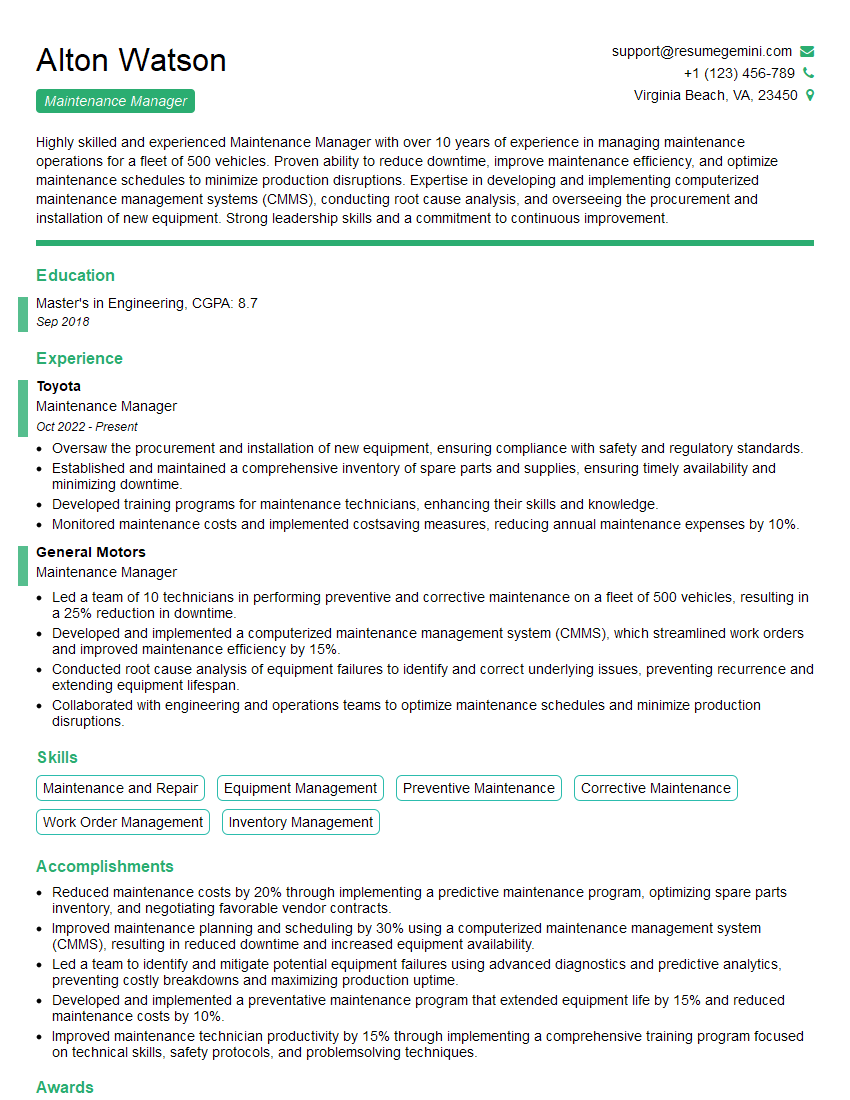
Maintenance Manager Resume Sample
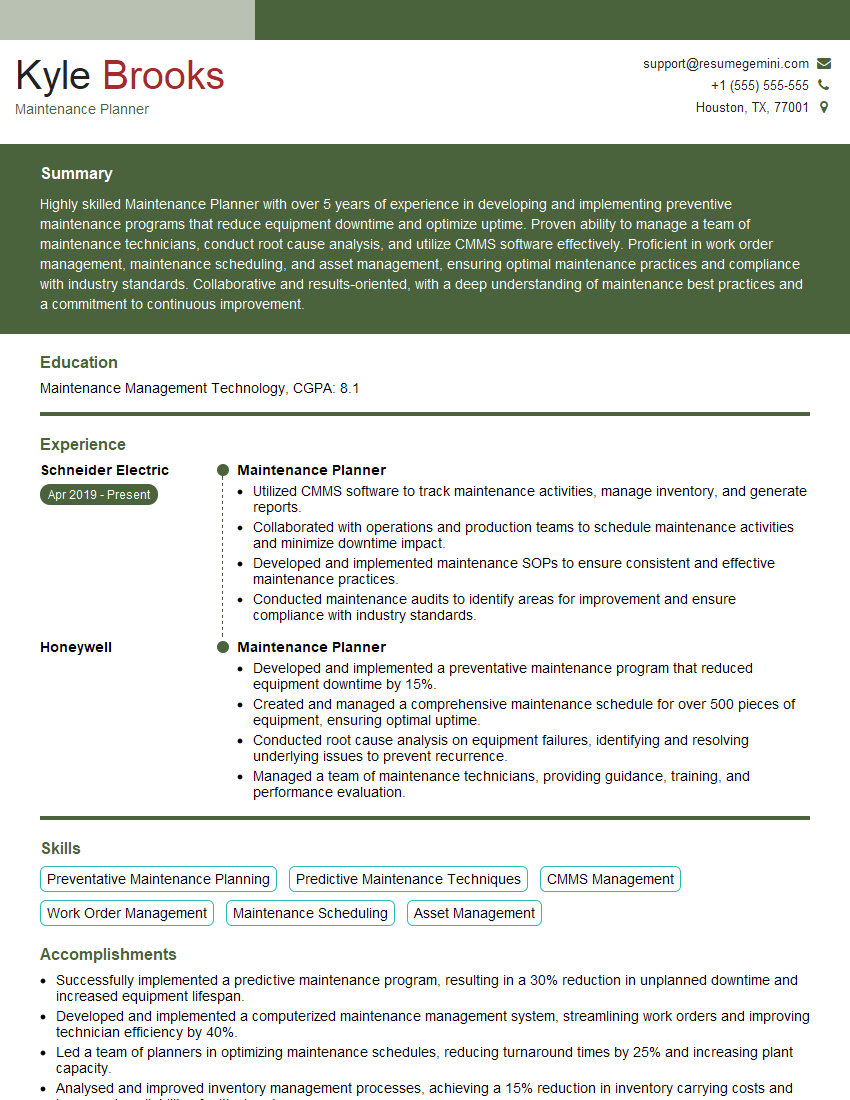
Maintenance Planner Resume Sample
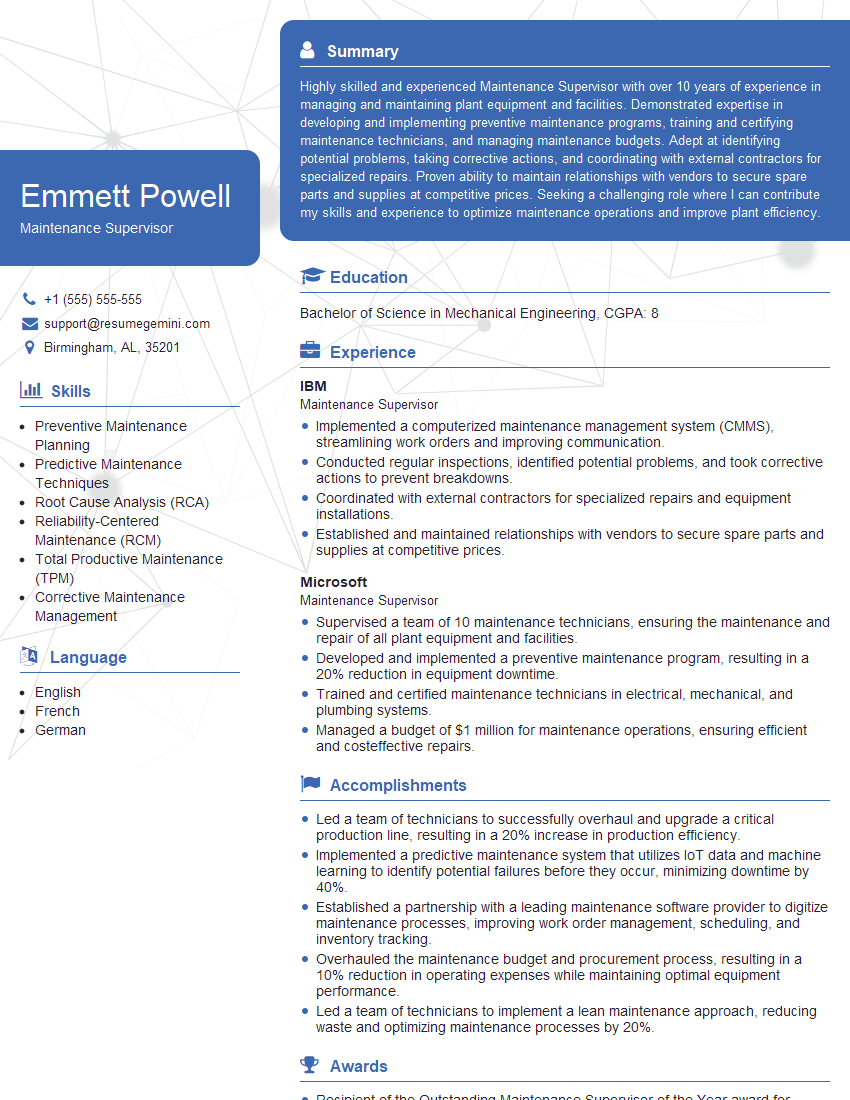
Maintenance Supervisor Resume Sample
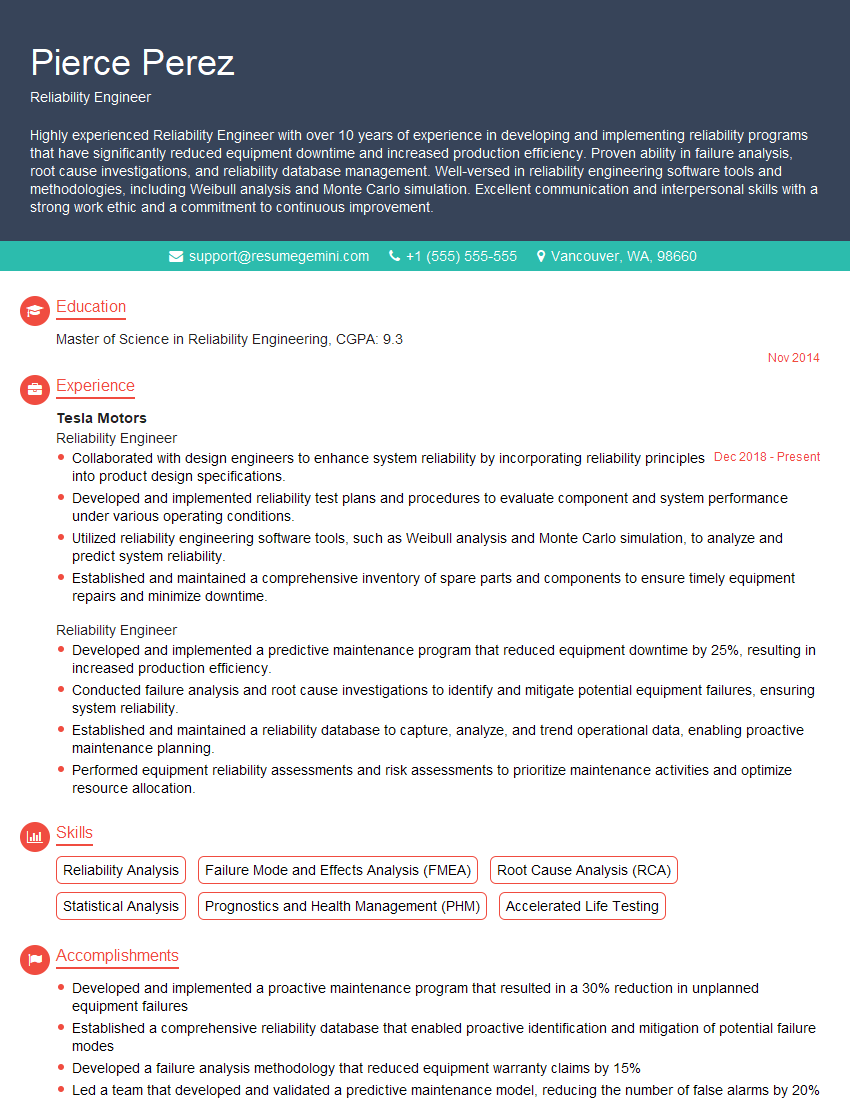
Reliability Engineer Resume Sample
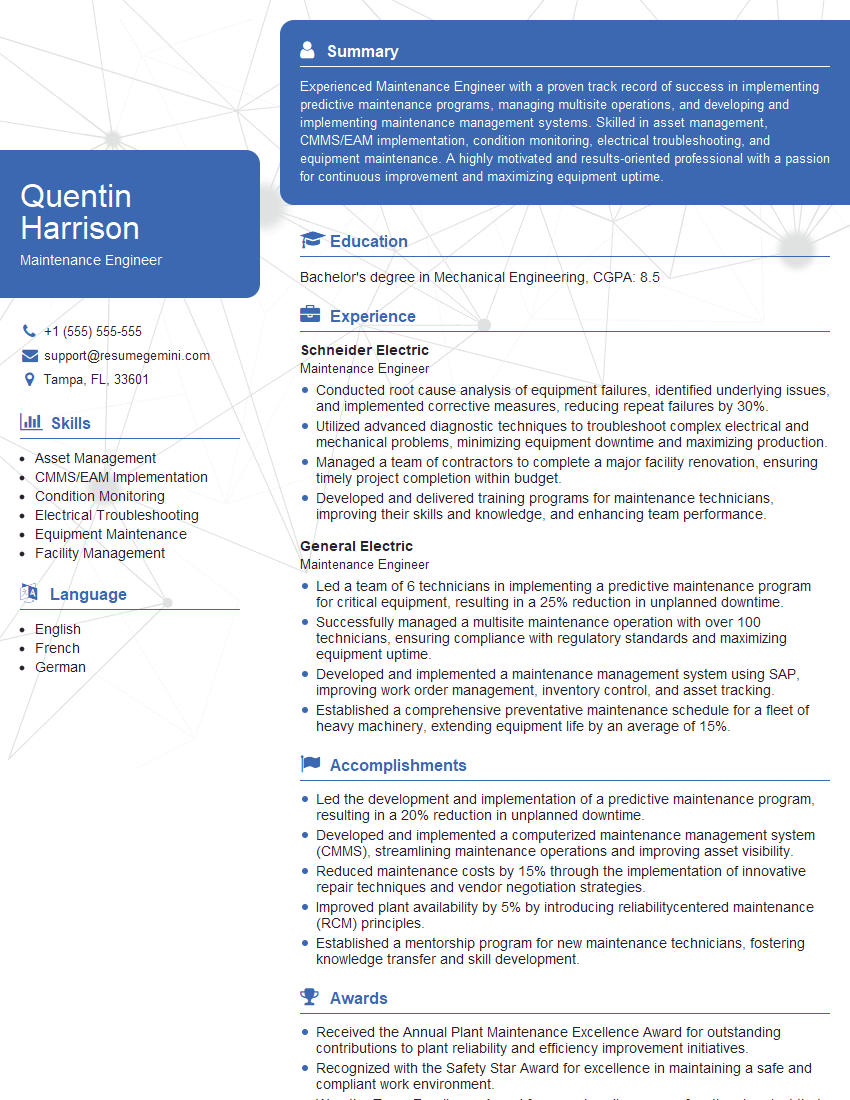
Maintenance Engineer Resume Sample
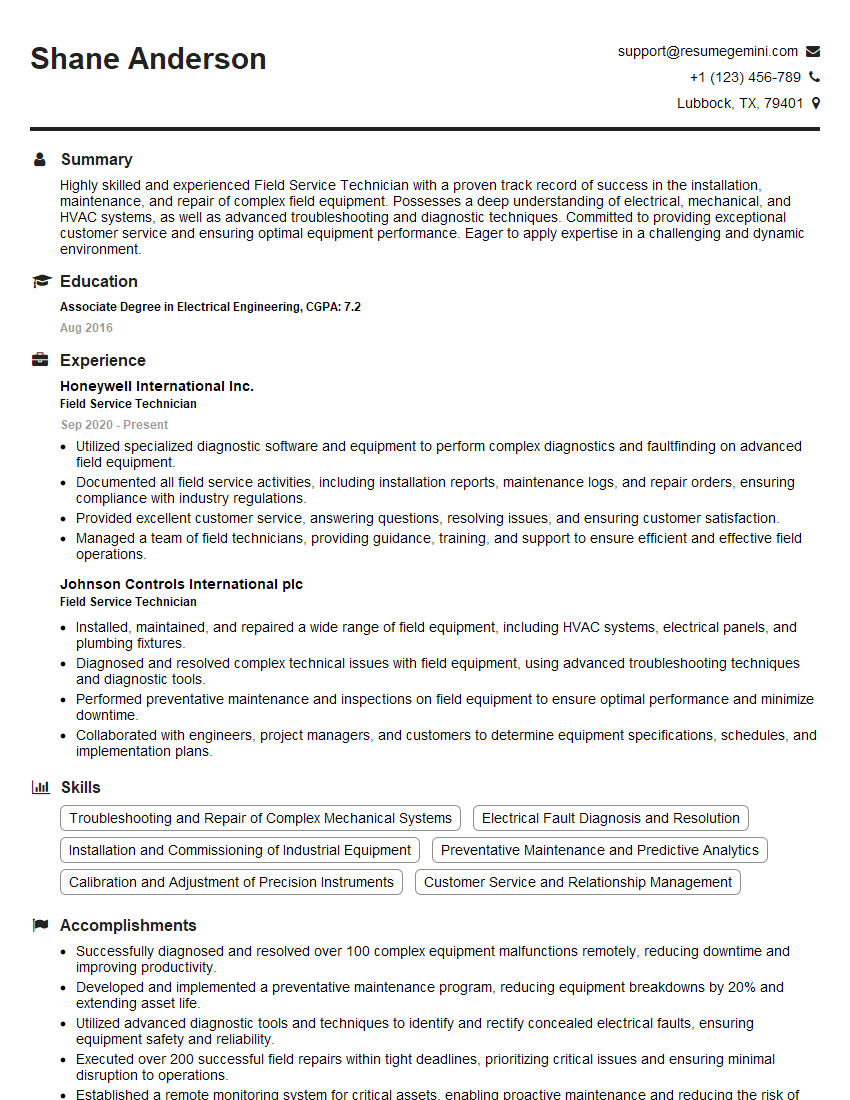
Field Service Technician Resume Sample
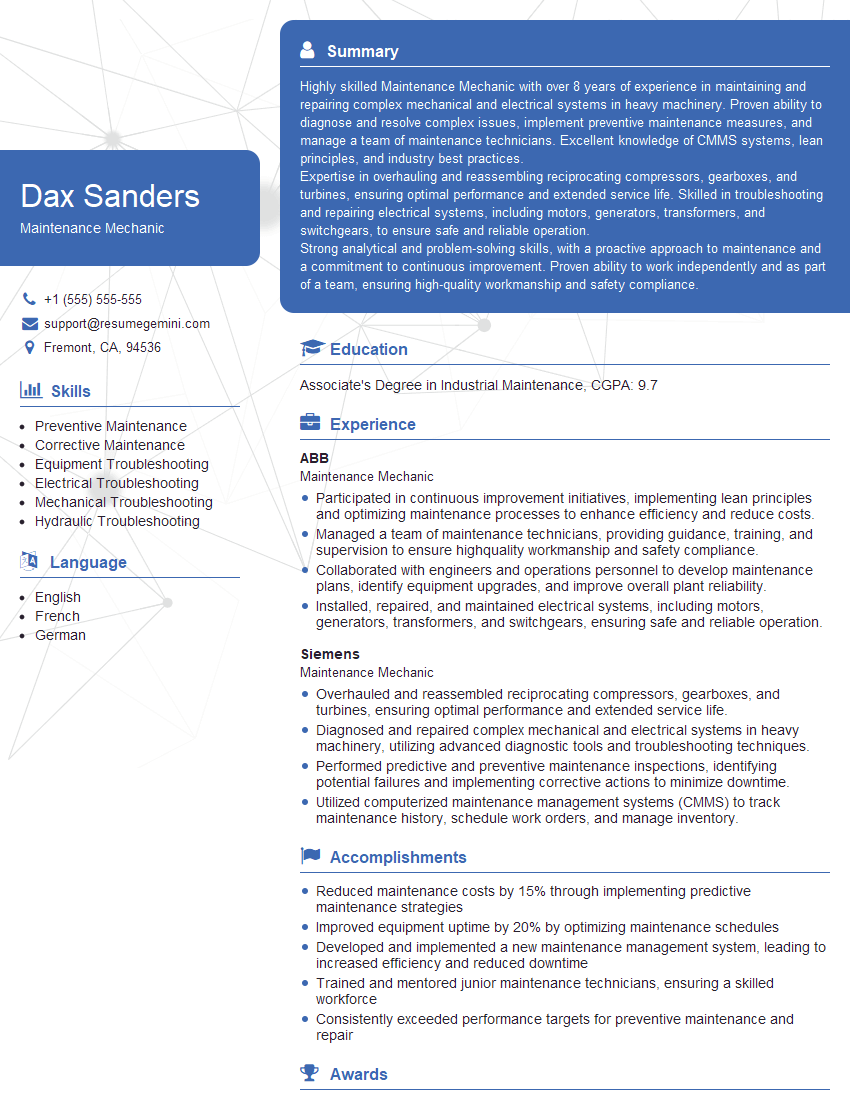
Maintenance Mechanic Resume Sample
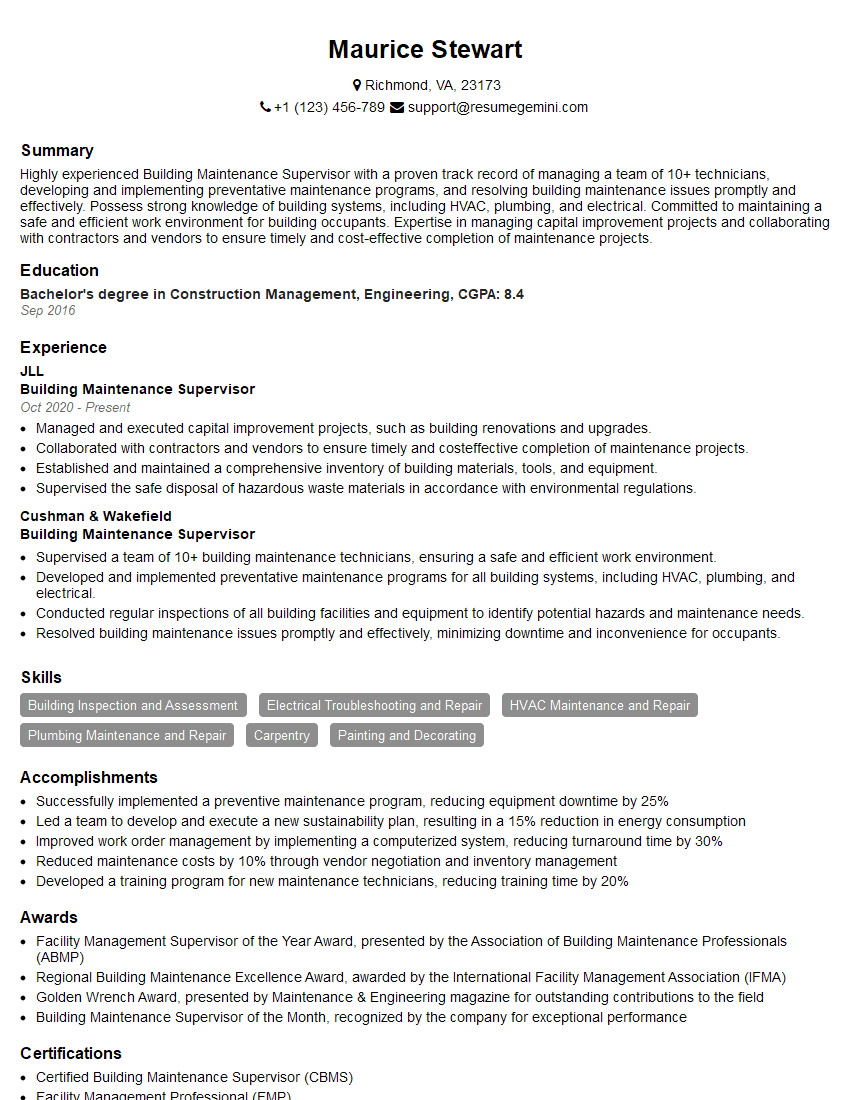
Building Maintenance Supervisor Resume Sample
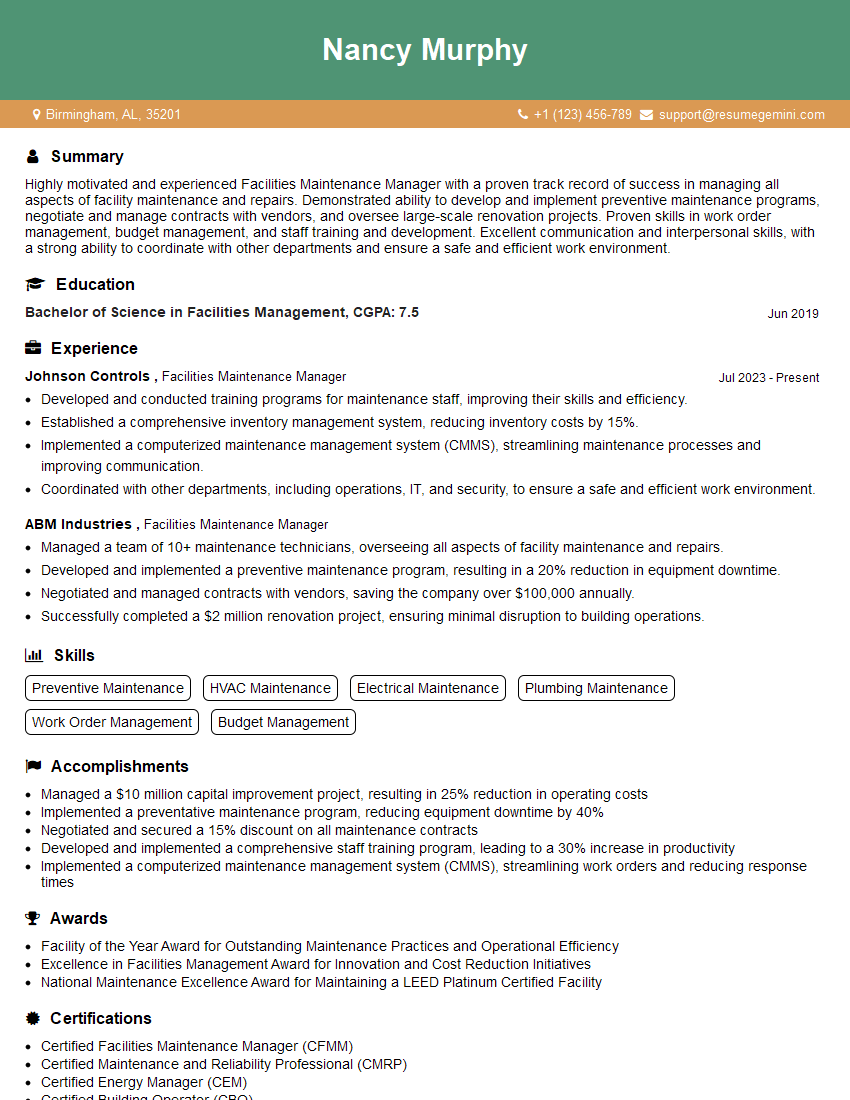
Facilities Maintenance Manager Resume Sample
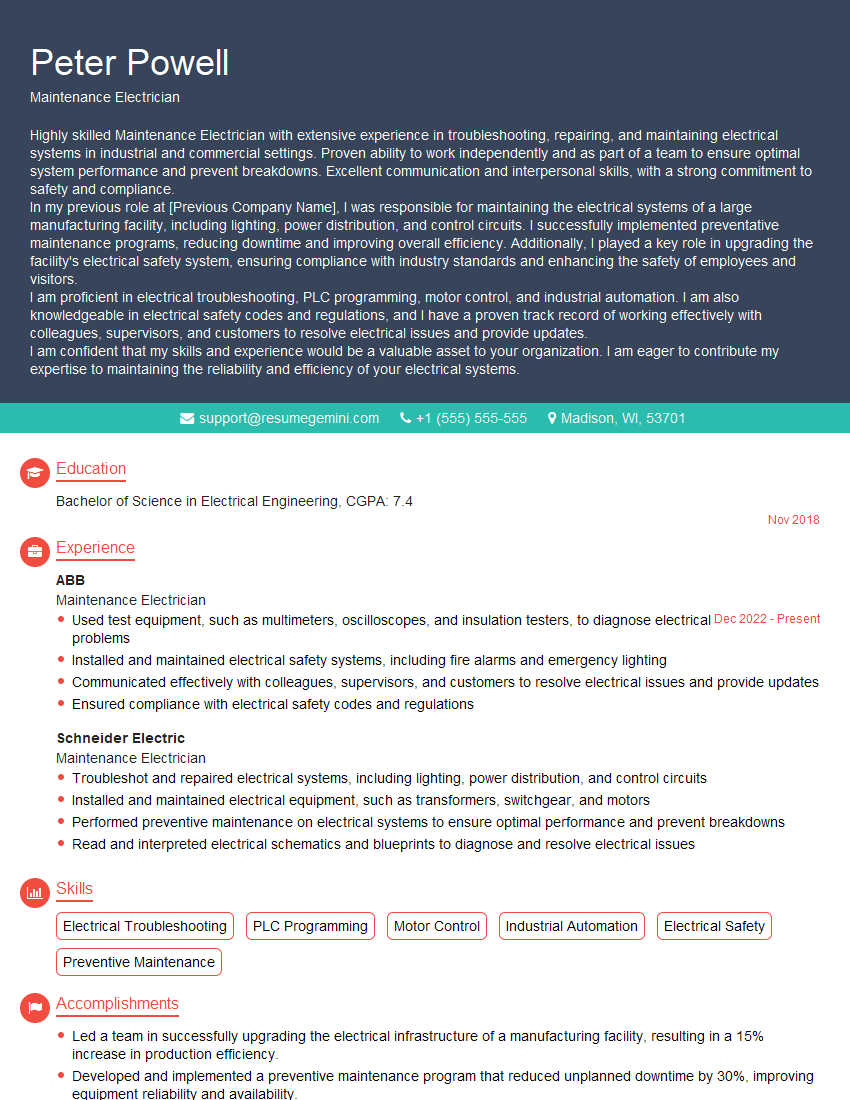
Maintenance Electrician Resume Sample
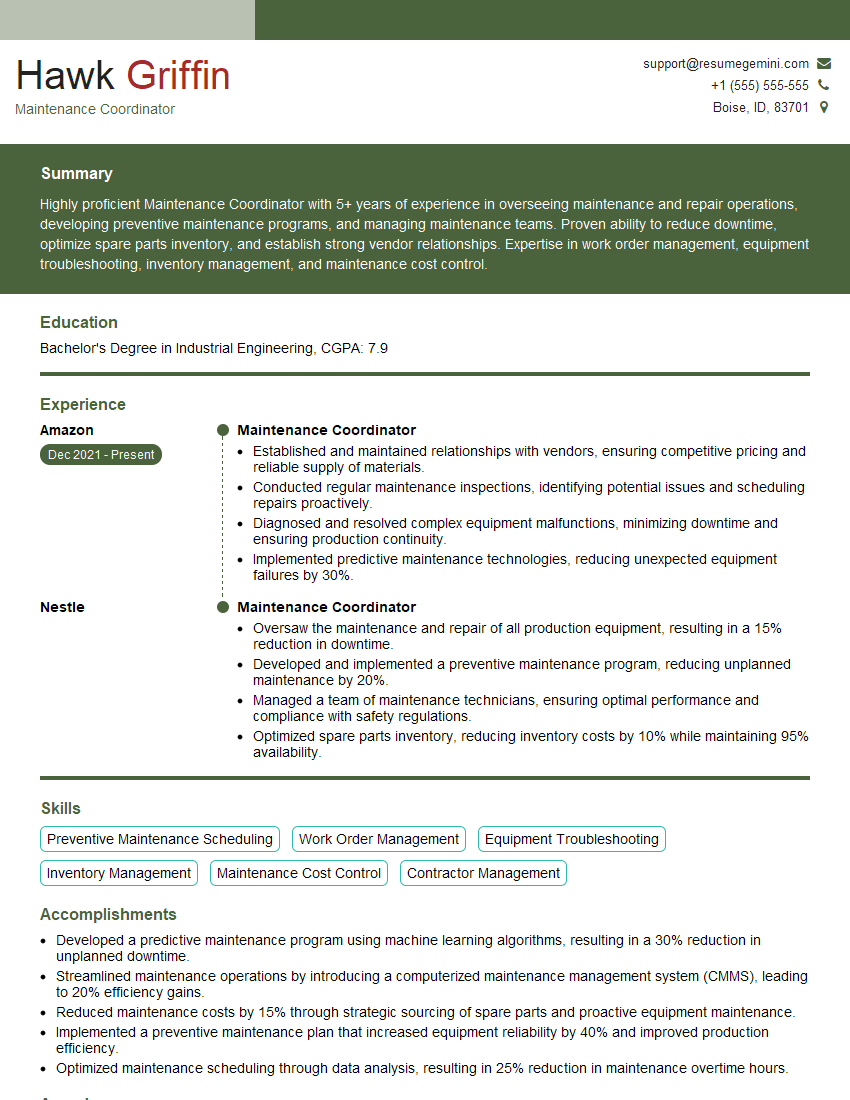
Maintenance Coordinator Resume Sample
Explore more articles
Users Rating of Our Blogs
Share Your Experience
We value your feedback! Please rate our content and share your thoughts (optional).
What Readers Say About Our Blog
Very informative content, great job.
good