Preparation is the key to success in any interview. In this post, we’ll explore crucial Produce Handling Experience interview questions and equip you with strategies to craft impactful answers. Whether you’re a beginner or a pro, these tips will elevate your preparation.
Questions Asked in Produce Handling Experience Interview
Q 1. Describe your experience with different produce ripening processes.
Produce ripening is a complex process influenced by factors like temperature, humidity, and ethylene gas. My experience encompasses various methods, including:
- Room temperature ripening: This natural process allows fruits like bananas and avocados to ripen gradually at ambient temperatures. It’s crucial to monitor their progress closely to avoid over-ripening.
- Controlled Atmosphere Storage (CAS): This sophisticated technique involves modifying the atmosphere within storage facilities to slow down respiration and ethylene production, extending shelf life. For example, reducing oxygen and increasing carbon dioxide levels can significantly delay ripening in apples and pears.
- Ethylene treatment: Ethylene is a natural plant hormone that accelerates ripening. Controlled application of ethylene gas can be used to uniformly ripen fruits like tomatoes and mangoes, improving consistency.
- Refrigeration: Lowering temperatures slows down enzymatic activity and respiration, significantly extending the shelf life of many produce items. Different produce has optimal temperature ranges. For example, leafy greens need to be kept at a higher temperature compared to berries to avoid chilling injury.
I’ve worked extensively with each method, adapting my approach based on the specific produce and desired outcome. For instance, I once managed a large shipment of mangoes that needed to be ripened uniformly for a major retailer. By carefully controlling the ethylene concentration and monitoring the temperature, we achieved optimal ripening across the entire shipment, minimizing losses and ensuring high-quality product delivery.
Q 2. Explain your methods for maintaining produce freshness and quality.
Maintaining produce freshness and quality requires a multi-faceted approach focusing on minimizing damage, preventing microbial growth, and slowing down respiration. My methods include:
- Proper handling and storage: Gentle handling prevents bruising and damage, which are entry points for spoilage. Appropriate storage temperatures and humidity levels are crucial for preserving freshness. This involves considering the specific requirements of each type of produce.
- Sanitation: Maintaining a clean and sanitized work environment is paramount to prevent cross-contamination. This includes regular cleaning and disinfection of equipment and surfaces.
- Rapid cooling: Quickly cooling freshly harvested produce minimizes enzymatic activity and respiration, helping to maintain quality and extend shelf life. Hydrocooling or ice-water baths are effective methods for this.
- Modified Atmosphere Packaging (MAP): Using packaging that modifies the gaseous environment around the produce (e.g., reducing oxygen and increasing carbon dioxide) can significantly extend shelf life. This is commonly used for leafy greens and fresh-cut fruits.
For example, during my time at [Previous Company Name], we implemented a new rapid cooling system, which reduced our spoilage rates by 15% within the first quarter. This improved not only our profit margins but also ensured that consumers received higher quality products.
Q 3. How do you identify and handle spoiled or damaged produce?
Identifying and handling spoiled or damaged produce is critical to maintain food safety and prevent economic losses. My process involves:
- Visual inspection: Regularly inspect produce for signs of spoilage, such as discoloration, wilting, soft spots, or unusual odors. This often requires training staff to recognize subtle indicators of spoilage.
- Sensory evaluation: Use your senses to detect spoiled produce. A sour smell, slimy texture, or unusual taste are all strong indicators.
- Discarding spoiled produce: Immediately discard any produce that shows clear signs of spoilage following company protocols. This might involve separate waste streams for different types of spoilage, for example, compost for slightly spoiled produce versus landfill for severely contaminated items.
- Documentation: Maintain accurate records of spoiled or damaged produce to track causes and prevent future issues. This data can be used to analyze trends and identify areas for improvement in handling processes.
Implementing rigorous quality control measures, like using colorimeters to measure ripeness objectively, can significantly reduce the risk of sending out sub-par products.
Q 4. What are your strategies for preventing produce contamination?
Preventing produce contamination is a top priority. My strategies include:
- Good Agricultural Practices (GAPs): Ensuring that the produce is grown and harvested according to GAPs minimizes contamination at its source. This involves careful management of water, soil, and pest control.
- Hygiene protocols: Implementing strict hygiene practices throughout the handling process, from harvesting to packaging, is essential. This includes handwashing, wearing gloves, and regularly sanitizing equipment.
- Pest control: Effective pest control measures throughout the supply chain are vital to preventing contamination from insects and rodents. This includes both preventative measures (e.g., traps) and reactive measures (e.g., pest control sprays). It’s crucial to use only approved methods and maintain records of all pest control activities.
- Temperature control: Maintaining proper temperature throughout the supply chain inhibits the growth of harmful microorganisms.
- Traceability: Having a robust traceability system allows for quick identification and removal of contaminated produce from the supply chain in the event of an outbreak.
For instance, I once led an initiative to implement a new hygiene training program for our staff, leading to a significant reduction in contamination incidents and improving overall food safety.
Q 5. Detail your experience with inventory management systems for produce.
My experience with inventory management systems for produce includes using both manual and automated systems. Manual systems, while still used in smaller operations, rely on visual inspections and spreadsheets. Automated systems, however, offer greater efficiency and accuracy. Examples include:
- Barcode scanning systems: These systems allow for rapid tracking of produce as it moves through the supply chain, providing real-time inventory data.
- Inventory management software: Specialized software can provide detailed insights into stock levels, helping to optimize ordering and minimize waste. Many systems allow for integration with other systems, such as point-of-sale (POS) systems, enabling more precise forecasting and ordering.
- RFID technology: Radio-frequency identification (RFID) tags can be attached to pallets or individual produce items, providing unparalleled tracking and inventory management capabilities.
In my previous role, we transitioned from a manual inventory system to a barcode scanning system integrated with our ordering software. This resulted in a significant reduction in inventory discrepancies, improved stock management, and reduced waste. The data-driven approach allowed us to make more informed decisions about ordering and pricing.
Q 6. How do you ensure the accurate and efficient handling of produce orders?
Accurate and efficient handling of produce orders requires careful planning and execution. My approach involves:
- Order verification: Thoroughly verifying orders against inventory levels before picking and packing to prevent errors and ensure timely fulfillment.
- Efficient picking and packing: Optimizing picking routes and packing methods to ensure speed and efficiency while minimizing damage to the produce.
- Quality control checks: Performing quality control checks at various stages, including pre-shipment inspections, to ensure that the products meet the required standards before being shipped.
- Communication: Maintaining clear and consistent communication with customers regarding order status and any potential delays.
- Transportation management: Properly managing transportation and temperature control during shipment to maintain the quality and freshness of the produce.
For example, I implemented a new order fulfillment system that reduced order processing time by 20% and decreased order errors by 10%. This improved customer satisfaction and freed up resources for other tasks.
Q 7. Explain your understanding of FIFO (First-In, First-Out) inventory management.
FIFO (First-In, First-Out) is a crucial inventory management method that prioritizes the use of older stock before newer stock. This minimizes the risk of spoilage and waste, ensuring that the freshest produce is always available. Think of it like a stack of plates; you always use the plate on top first.
In a produce setting, FIFO involves rotating stock systematically, placing newer arrivals behind older stock. This is crucial for perishable items with short shelf lives. Regular stock rotation prevents older items from spoiling and getting wasted. Implementation involves clearly labeling items with arrival dates or using specialized inventory management software that automatically tracks stock rotation.
For example, in a supermarket setting, FIFO is used to ensure that older dairy products are sold before newer ones. Failing to utilize FIFO could lead to significant waste and potential food safety issues.
Effective FIFO management requires diligent monitoring and staff training. It is essential to review and adjust the system as needed based on the specifics of the produce and the sales volume.
Q 8. Describe your experience with various produce storage techniques and their optimal conditions.
Produce storage relies heavily on understanding the specific needs of each type of fruit or vegetable. Optimal storage conditions vary dramatically based on factors like respiration rate, ethylene production, and susceptibility to diseases. For example, leafy greens like spinach require high humidity (90-95%) and near-freezing temperatures (just above 32°F or 0°C) to maintain crispness and prevent wilting. Conversely, tropical fruits like mangoes thrive at warmer temperatures (around 55-65°F or 13-18°C) and lower humidity to prevent mold growth.
- Refrigerated Storage: The most common method, using controlled atmosphere (CA) storage for many fruits to slow respiration and extend shelf life. This involves regulating oxygen and carbon dioxide levels.
- Controlled Atmosphere (CA) Storage: This advanced technique significantly extends the shelf life of many fruits and vegetables. By reducing oxygen and increasing carbon dioxide levels, we slow down the ripening process and reduce respiration, thus preventing spoilage.
- Modified Atmosphere Packaging (MAP): This involves packaging produce in films that selectively control the gas composition around the product, extending its shelf life by slowing down respiration and inhibiting microbial growth. Examples include pre-packaged salads with modified atmosphere packaging.
- Cool Storage: Simpler than CA storage, cool storage involves maintaining produce at a temperature just above freezing for many types, slowing down spoilage and extending shelf life.
I’ve personally managed large-scale storage facilities, implementing and monitoring these different techniques to minimize losses and maximize the quality of various produce types. For example, in one facility, we transitioned from simple cool storage of apples to CA storage, resulting in a 30% reduction in spoilage.
Q 9. How do you maintain proper sanitation and hygiene standards in a produce handling environment?
Maintaining sanitation and hygiene is paramount in produce handling to prevent contamination and ensure food safety. This involves a multi-faceted approach, beginning with employee training and extending to rigorous cleaning protocols and facility design.
- Employee Training: All personnel undergo thorough training on proper handwashing techniques, hygiene practices, and the importance of avoiding cross-contamination. This includes understanding the dangers of pathogens like E. coli and Salmonella.
- Cleaning and Sanitization: Regular cleaning and sanitization of all surfaces, equipment (including conveyors, knives, and packaging materials), and storage areas are critical. We use food-grade sanitizers and follow strict schedules based on risk assessments. For example, cutting boards must be cleaned and sanitized after each use.
- Pest Control: Implementing a robust pest control program is essential to prevent insect and rodent infestations. Regular inspections, traps, and professional pest control services help maintain a clean and safe environment.
- Facility Design: The facility itself should be designed with hygiene in mind – smooth, easily cleanable surfaces, proper drainage, and appropriate ventilation all contribute to a safer environment.
In my previous role, I implemented a color-coded cleaning system to visually track sanitation schedules and ensure all areas were cleaned according to their specific needs. This system significantly improved our compliance with hygiene standards.
Q 10. Explain your experience with different types of produce packaging and labeling.
Produce packaging and labeling are crucial for preserving quality, preventing damage, and providing consumers with essential information. The choice of packaging material and label design depend on the type of produce, its intended shelf life, and marketing objectives.
- Packaging Materials: Different materials offer varying levels of protection and aesthetics. Common options include plastic clamshells, mesh bags, corrugated boxes, and modified atmosphere packaging (MAP) films. The selection is based on factors like breathability, moisture retention, and product fragility.
- Labeling Requirements: Labels must comply with legal regulations (e.g., USDA regulations), including accurate product descriptions (name, variety, weight), country of origin, and nutritional information. Effective labeling is critical for clear identification and traceability.
- Branding and Marketing: Packaging and labels also serve marketing functions. Attractive designs, branding elements, and value-added information enhance the consumer experience and improve product appeal.
For instance, I’ve worked with companies on transitioning from conventional plastic clamshells for berries to more sustainable, compostable packaging options, addressing growing consumer demand for eco-friendly choices.
Q 11. What are your methods for managing and reducing produce waste?
Reducing produce waste is both an ethical and economic imperative. It involves a combination of strategies focused on minimizing losses at every stage of the supply chain.
- Careful Sourcing and Procurement: Working closely with growers to ensure consistently high-quality produce minimizes spoilage due to defects. Proper harvesting techniques also contribute to this.
- Efficient Storage and Handling: Implementing optimal storage techniques and minimizing handling damage are key to extending shelf life and reducing waste.
- Inventory Management: Effective inventory control systems – using software like inventory management systems (IMS) – allow precise tracking of stock levels, minimizing overstocking and spoilage due to aging.
- Donation and Repurposing: Partnering with food banks or organizations to donate surplus produce, rather than discarding it, is a socially responsible practice. Alternatively, some surplus produce can be repurposed (e.g., into jams or juices).
- Data Analysis: Using data analysis to identify areas of significant waste, enabling targeted improvements and waste reduction strategies. Tracking and analyzing data on spoilage rates can reveal patterns and allow for proactive interventions.
In one case, by implementing improved inventory management and partnering with a local food bank, we reduced our waste by 15% within six months.
Q 12. How do you handle temperature control during produce transportation and storage?
Temperature control is critical throughout the entire produce journey, from the field to the consumer’s table. Maintaining the correct temperature range is vital for maintaining quality, slowing down respiration, and minimizing spoilage.
- Refrigerated Transportation: Produce should be transported in refrigerated trucks, maintaining temperatures according to the specific needs of each product. Temperature monitoring devices are essential for ensuring proper conditions throughout transit.
- Cold Chain Management: Maintaining the cold chain is paramount. This involves unbroken refrigeration from harvest to retail, minimizing temperature fluctuations that can lead to quality deterioration.
- Pre-cooling: Rapid pre-cooling of produce immediately after harvest is often necessary to reduce the product temperature quickly, slowing down metabolic processes and extending shelf life.
- Temperature Monitoring: Using temperature loggers and monitoring systems throughout the supply chain provides real-time data on temperature, ensuring compliance with required conditions and allowing for corrective action if needed.
For example, we experienced a significant improvement in the quality of shipped berries when we implemented a pre-cooling system at the packing facility, reducing the time it took to lower their temperature.
Q 13. Describe your experience with using technology in produce handling (e.g., scanners, inventory software).
Technology plays a vital role in modern produce handling, improving efficiency, accuracy, and traceability throughout the supply chain.
- Barcode and RFID Scanners: These are used for efficient tracking of produce from receiving to shipping, enabling accurate inventory management and reducing human error.
- Inventory Management Software (IMS): IMS systems provide real-time visibility into stock levels, enabling better forecasting, preventing overstocking, and improving order fulfillment.
- Temperature Monitoring Systems: Sensors and data loggers provide continuous monitoring of temperature throughout the supply chain, allowing for early detection of potential problems and prompt corrective action.
- Supply Chain Management Software: Integrated systems provide a holistic view of the entire supply chain, enabling optimization of logistics and improving efficiency.
- Data Analytics: Analyzing data from various sources provides valuable insights into areas for improvement, such as identifying bottlenecks, optimizing storage conditions, and reducing waste.
In my experience, implementing a barcode scanning system led to a 10% reduction in inventory discrepancies and improved order accuracy.
Q 14. How do you address customer complaints or issues related to produce quality?
Addressing customer complaints about produce quality requires a systematic and empathetic approach. Prompt and effective resolution is key to maintaining customer satisfaction and loyalty.
- Gather Information: Begin by carefully listening to the customer’s complaint, gathering detailed information about the issue (e.g., type of produce, date of purchase, nature of the problem). Photos or videos are helpful.
- Investigate the Complaint: Determine the cause of the problem. This might involve examining the affected produce, reviewing inventory records, or investigating potential issues in handling or storage.
- Offer Resolution: Based on the investigation, offer a fair and appropriate resolution. This might include a refund, replacement product, or a voucher for future purchases.
- Communicate Effectively: Keep the customer informed throughout the process. Respond promptly and professionally, demonstrating empathy and understanding.
- Preventive Measures: Use the information gathered from customer complaints to identify patterns and implement preventive measures to prevent similar issues in the future.
One instance involved a customer complaint about bruised apples. After investigating, we found a problem with our handling procedures during the unloading process and implemented a solution to reduce bruising, preventing similar issues later.
Q 15. Explain your understanding of food safety regulations and best practices.
Food safety regulations and best practices are paramount in produce handling to prevent contamination and ensure consumer health. My understanding encompasses adherence to guidelines from organizations like the FDA and USDA, covering everything from proper hygiene practices to temperature control and traceability.
- Good Agricultural Practices (GAPs): These cover everything from soil health and water quality to pesticide use and worker hygiene on the farm, ensuring produce is safe from the field to the processing facility. For example, we strictly follow protocols to prevent cross-contamination between different types of produce and to ensure proper washing and sanitization of equipment.
- Hazard Analysis and Critical Control Points (HACCP): This systematic approach identifies potential hazards at each stage of the handling process, from receiving to distribution, and establishes critical control points to prevent or eliminate these hazards. This might involve setting specific temperature limits during storage or implementing rigorous cleaning schedules.
- Proper Temperature Control: Maintaining the cold chain is crucial. This means ensuring produce is kept at the correct temperatures throughout the entire process to slow down microbial growth. I am experienced in monitoring temperatures with thermometers and ensuring proper refrigeration settings.
- Traceability: Maintaining detailed records of the produce’s journey, from origin to consumer, is vital in case of recalls. This often involves lot numbers and tracking systems to quickly identify the source of any contamination.
In my previous role, I successfully implemented a new HACCP plan that reduced foodborne illness incidents by 15% within six months.
Career Expert Tips:
- Ace those interviews! Prepare effectively by reviewing the Top 50 Most Common Interview Questions on ResumeGemini.
- Navigate your job search with confidence! Explore a wide range of Career Tips on ResumeGemini. Learn about common challenges and recommendations to overcome them.
- Craft the perfect resume! Master the Art of Resume Writing with ResumeGemini’s guide. Showcase your unique qualifications and achievements effectively.
- Don’t miss out on holiday savings! Build your dream resume with ResumeGemini’s ATS optimized templates.
Q 16. Describe your experience with different types of produce equipment (e.g., scales, carts, forklifts).
My experience with produce handling equipment is extensive. I’m proficient in operating and maintaining various types of equipment:
- Scales: I’m skilled in using both digital and mechanical scales to accurately weigh produce for pricing, inventory, and quality control. This includes understanding calibration procedures and ensuring accurate readings.
- Carts and dollies: I routinely use these to transport produce efficiently and safely throughout the facility. Safe handling techniques like proper loading and securing to avoid damage or spills are second nature to me.
- Forklifts: I’m certified to operate forklifts and have experience in safely and efficiently moving pallets of produce, adhering to all safety regulations regarding load capacity and operating procedures. I understand the importance of regular forklift maintenance and safety inspections.
- Conveyors and sorting machines: I’ve also worked with automated systems to sort, grade, and pack produce, minimizing manual handling and improving efficiency. This includes understanding basic troubleshooting and maintenance.
For example, I once identified a faulty scale that was consistently underweighing produce, leading to potential revenue loss. By promptly reporting the issue and having it repaired, I prevented significant financial consequences.
Q 17. How do you prioritize tasks in a fast-paced produce handling environment?
Prioritizing tasks in a fast-paced produce environment requires a systematic approach. I typically use a combination of methods:
- Urgency and Impact: I prioritize tasks based on their urgency and impact on the overall operation. Tasks with immediate consequences (e.g., addressing a critical equipment malfunction) take precedence over less urgent tasks (e.g., inventory checks).
- FIFO (First In, First Out): In produce handling, maintaining the correct rotation of stock is crucial to prevent spoilage. I strictly adhere to FIFO principles, ensuring the oldest produce is used or shipped first.
- Team Collaboration: Open communication and teamwork are vital. I regularly coordinate with colleagues to ensure efficient task allocation and avoid bottlenecks.
- Time Management Techniques: I leverage tools like checklists and scheduling to efficiently manage my time and ensure all tasks are completed within deadlines.
Imagine a scenario where a large delivery arrives simultaneously with a rush order. I would prioritize unloading and processing the rush order first to meet customer demands, then efficiently incorporate the large delivery into inventory while maintaining FIFO.
Q 18. Explain your experience working with a team in a produce handling setting.
Teamwork is essential in produce handling. My experience includes collaborating effectively with various team members, including loaders, sorters, packers, and supervisors.
- Communication: I maintain clear and consistent communication with my team, keeping them informed of any changes or updates and actively seeking their input. This improves workflow and morale.
- Collaboration: I actively participate in team problem-solving and contribute ideas to improve efficiency and reduce waste. This could include streamlining processes or identifying areas for improvement.
- Mutual Support: I am always ready to assist my teammates when needed, creating a supportive and collaborative environment. This fosters a sense of camaraderie and shared responsibility.
- Respectful Interactions: I maintain respectful and professional relationships with everyone on the team, regardless of their role or seniority.
In a past role, our team faced a significant backlog due to an unexpected equipment malfunction. Through collaborative problem-solving and by efficiently re-allocating tasks, we managed to catch up and minimize the impact on our customers.
Q 19. How do you manage unexpected challenges in produce handling (e.g., supply chain disruptions)?
Managing unexpected challenges in produce handling requires adaptability and problem-solving skills. Supply chain disruptions, for instance, can significantly impact operations. My approach involves:
- Early Identification: I actively monitor supply chain trends and maintain open communication with suppliers to anticipate potential disruptions. This could involve monitoring weather patterns, transportation issues, or market fluctuations.
- Alternative Sourcing: If a disruption occurs, I work to identify alternative sources for the affected produce to minimize downtime. This could involve exploring different suppliers or adjusting product offerings.
- Inventory Management: Maintaining adequate inventory levels is crucial to cushion the impact of supply chain disruptions. This involves accurate forecasting and efficient inventory control techniques.
- Communication: Keeping customers informed about any potential delays or changes is paramount to maintaining positive relationships. Transparency is key.
For example, during a recent storm that disrupted transportation, I proactively contacted alternative suppliers and successfully secured a replacement shipment, minimizing the impact on our production schedule.
Q 20. How do you ensure compliance with relevant health and safety regulations?
Compliance with health and safety regulations is non-negotiable. I ensure this through several practices:
- Regular Training: I actively participate in all required safety training programs, staying updated on the latest regulations and best practices. This includes training on proper hygiene protocols, equipment operation, and emergency procedures.
- Adherence to Procedures: I rigorously follow all established safety procedures and protocols, including the proper use of personal protective equipment (PPE).
- Reporting Hazards: I promptly report any potential safety hazards or incidents to the appropriate personnel, ensuring corrective actions are taken to prevent future occurrences. This includes reporting equipment malfunctions, slips, trips, or falls.
- Promoting a Safety Culture: I actively promote a strong safety culture within my team, encouraging everyone to prioritize safety in all aspects of their work.
In my previous role, I identified a potential tripping hazard and immediately reported it, leading to corrective measures being implemented and preventing potential accidents.
Q 21. Describe your experience with pest control in a produce handling facility.
Pest control is vital in produce handling to maintain product quality and prevent contamination. My experience involves:
- Preventive Measures: Implementing preventive measures is crucial. This includes regular cleaning and sanitation, proper waste disposal, sealing cracks and crevices, and maintaining good facility hygiene.
- Monitoring: Regularly monitoring for signs of pest infestations (e.g., droppings, insect activity) is essential for early detection and control. This might involve using traps or visual inspections.
- Integrated Pest Management (IPM): I am familiar with and support the implementation of IPM strategies, prioritizing non-chemical methods like sanitation and physical barriers before resorting to pesticides.
- Professional Pest Control: If an infestation occurs, I work closely with licensed pest control professionals to effectively and safely eradicate the pests while complying with food safety regulations.
In one instance, we noticed an increase in rodent activity. By working with a pest control company and implementing improved sanitation practices, we successfully eliminated the infestation and prevented further contamination.
Q 22. What is your approach to preventing cross-contamination of produce?
Preventing cross-contamination in produce handling is paramount for food safety. My approach is multifaceted and focuses on strict adherence to sanitation protocols throughout the entire process, from receiving to display.
- Dedicated Equipment: We use separate cutting boards, knives, and containers for different produce types. For example, raw poultry will never share equipment with leafy greens.
- Handwashing: Frequent and thorough handwashing is mandatory, especially after handling raw produce or potentially contaminated items. Hand sanitizer is available but should not replace proper washing.
- Temperature Control: Maintaining appropriate temperatures for each produce item is crucial. This prevents bacterial growth and extends shelf life.
- Cleaning and Sanitizing: All work surfaces, equipment, and containers are thoroughly cleaned and sanitized regularly, often using a food-safe sanitizer according to manufacturer instructions. We also follow a strict cleaning schedule based on high-touch areas.
- Proper Storage: We employ FIFO (First-In, First-Out) storage methods to prevent spoilage and minimize cross-contamination. Produce is stored in designated areas based on its type and susceptibility to contamination.
- Protective Clothing: Employees wear clean aprons and gloves, changing them regularly or as needed.
For instance, during a busy morning rush, we might have one team dedicated to processing leafy greens and another team working with root vegetables. They would use completely separate equipment and work stations to minimize the risk of cross-contamination. This compartmentalization is key.
Q 23. Explain your understanding of different produce grading standards.
Produce grading standards are established to ensure consistency in quality and appearance. These standards vary depending on the specific produce and the market. Generally, grading considers factors such as size, shape, color, maturity, and freedom from defects.
- US Department of Agriculture (USDA) Grades: The USDA establishes grading standards for many fruits and vegetables, using a system often ranging from “US Fancy” (highest quality) down to “US Commercial” or even “US No. 1” or “US No. 2” for lower grades. These grades aren’t necessarily about safety, but more about aesthetic appeal and uniformity for retail.
- Industry Standards: Beyond USDA grades, individual retailers or wholesalers may set their own internal grading standards based on their specific needs and customer expectations. A high-end grocery store, for instance, might have more stringent requirements than a food service distributor.
- Size and Shape: Produce is often sorted and graded by size and shape, to ensure uniformity in packaging and retail presentation. This applies to items from apples to potatoes.
- Color and Maturity: The color of produce is an important indicator of ripeness and quality, often linked to consumer preference and flavor.
- Defects: Grades assess the extent of defects such as bruises, blemishes, or insect damage. Acceptable defect levels vary depending on the grade.
Imagine receiving a shipment of apples. We would visually inspect them, looking for bruising, discoloration, or other defects. We might even use sizing tools to sort them into appropriate categories for different retail channels (e.g., large perfect apples for a premium market and smaller, slightly blemished apples for juice production).
Q 24. How do you train new employees on proper produce handling techniques?
Training new employees in proper produce handling techniques is a critical part of our operation. Our training program is comprehensive and involves both classroom instruction and hands-on practice.
- Classroom Training: We begin with a detailed explanation of food safety regulations, proper hygiene practices, cross-contamination prevention, and safe knife handling techniques. We show videos and use interactive elements to increase engagement.
- Hands-on Training: Employees receive hands-on training in various tasks, including receiving, sorting, washing, cutting, and storing produce. Experienced staff members supervise and provide guidance throughout this stage.
- Quality Control Checks: Regular quality control checks are integrated into the training, ensuring that employees understand the standards for produce quality and safety. We create a system of checks and balances to reinforce learning.
- Regular Refresher Courses: We offer regular refresher courses and updated training modules to keep employees informed of best practices and new regulations.
- Performance Evaluations: Performance evaluations include assessments on knowledge of produce handling techniques and adherence to food safety guidelines.
For example, when training on knife skills, we emphasize safe cutting techniques, emphasizing proper hand placement and knife control to prevent accidents. We also show how to use different knives for various produce to maximize efficiency and minimize damage. Following the classroom session, there is a practical test where new employees must demonstrate these techniques.
Q 25. Describe your experience with receiving and inspecting produce shipments.
Receiving and inspecting produce shipments is a crucial step to ensure quality and safety. My experience encompasses various aspects, including documentation, temperature checks, and visual inspections.
- Documentation: Upon arrival, we verify the shipment against the purchase order, noting any discrepancies in quantity or type of produce. Temperature is also recorded as soon as possible after arrival.
- Temperature Checks: Using calibrated thermometers, we meticulously check the temperature of the produce upon arrival, ensuring it aligns with the optimal temperature range for that specific item. This helps maintain quality and prevent spoilage.
- Visual Inspection: A thorough visual inspection is carried out to detect any signs of damage, spoilage, or contamination. This includes checking for bruises, cuts, mold, pests, or foreign objects. Any issues are documented.
- Sampling and Testing (When Necessary): For high-value produce or when there’s suspicion of issues, we might take samples for further testing in a lab.
- Rejection: If the shipment does not meet our quality standards, the entire lot or portions of it might be rejected and returned to the supplier.
For instance, receiving a shipment of strawberries, I would immediately check the temperature and look for signs of decay or mold. If the temperature is too high or significant spoilage is noted, I would reject the shipment and contact the supplier to initiate a return or replacement. Thorough documentation is kept through each step of the process.
Q 26. What metrics do you use to measure the effectiveness of your produce handling processes?
Measuring the effectiveness of our produce handling processes relies on several key metrics that focus on quality, safety, and efficiency.
- Waste Reduction: We track the amount of produce lost due to spoilage, damage, or improper handling. Reducing waste is a crucial indicator of efficiency and cost-effectiveness.
- Shelf Life Extension: We monitor the shelf life of produce to gauge the effectiveness of our storage and handling practices. Longer shelf life indicates better processes.
- Customer Complaints: The number of customer complaints related to produce quality or safety is a direct measure of our success in maintaining standards.
- Employee Compliance: Adherence to food safety protocols is tracked through observation and regular assessments, including safety training scores and documented inspections.
- Inventory Management: Accurate inventory management minimizes waste and ensures sufficient supply to meet demand. We track inventory turnover and spoilage rates.
For example, if our waste reduction rate is consistently high for a specific type of produce, we would analyze our handling practices for that item to identify and correct any inefficiencies or issues in our processes. Continuous monitoring allows for adjustment and optimization of our systems.
Q 27. How do you stay up-to-date on industry best practices related to produce handling?
Staying current with industry best practices in produce handling is essential. My approach to continuous learning involves multiple avenues.
- Industry Publications: I regularly read trade publications and journals that cover the latest advancements in produce handling, food safety, and technology.
- Professional Organizations: Membership in relevant professional organizations (e.g., Produce Marketing Association) provides access to educational resources, conferences, and networking opportunities.
- Conferences and Workshops: Attending industry conferences and workshops allows me to learn from experts and stay abreast of new regulations and best practices.
- Online Resources: I utilize reputable online resources such as government websites and university extension programs to access information on food safety and produce handling.
- Supplier Relationships: Maintaining strong relationships with our suppliers enables the sharing of best practices and insights from the field.
For example, attending the PMA Fresh Summit allows me to learn about innovative technologies in post-harvest handling, meet with other professionals, and network with experts in the field. This allows me to identify any potential improvements we can make within our operations.
Key Topics to Learn for Produce Handling Experience Interview
- Quality Control and Assurance: Understanding grading standards, identifying defects, and implementing quality control measures throughout the handling process. Practical application: Describing your experience with sorting, inspecting, and rejecting produce based on established criteria.
- Storage and Preservation Techniques: Knowledge of proper temperature and humidity control, appropriate packaging methods, and techniques to minimize spoilage and maintain freshness. Practical application: Explaining your experience with different storage facilities, techniques used to extend shelf life, and methods of preventing waste.
- Inventory Management: Tracking inventory levels, managing stock rotation (FIFO/LIFO), and predicting demand to optimize efficiency and minimize losses. Practical application: Detailing your experience using inventory management systems, forecasting demand, and adjusting stock levels accordingly.
- Safety and Sanitation Procedures: Understanding and adhering to food safety regulations, implementing sanitation protocols, and maintaining a clean and hygienic work environment. Practical application: Describing your experience with following GMP (Good Manufacturing Practices) and maintaining hygiene standards to prevent contamination.
- Transportation and Logistics: Knowledge of efficient transportation methods, appropriate handling equipment, and strategies for minimizing damage during transit. Practical application: Explaining your experience with different transportation modes and your role in ensuring produce arrives at its destination in optimal condition.
- Waste Reduction and Sustainability: Strategies for minimizing food waste, implementing sustainable practices, and reducing environmental impact throughout the supply chain. Practical application: Describing your experience with initiatives to reduce waste, such as composting or donating excess produce.
- Teamwork and Communication: Effectively collaborating with team members, communicating clearly with supervisors and clients, and resolving conflicts professionally. Practical application: Sharing examples of successful teamwork and communication in past roles.
Next Steps
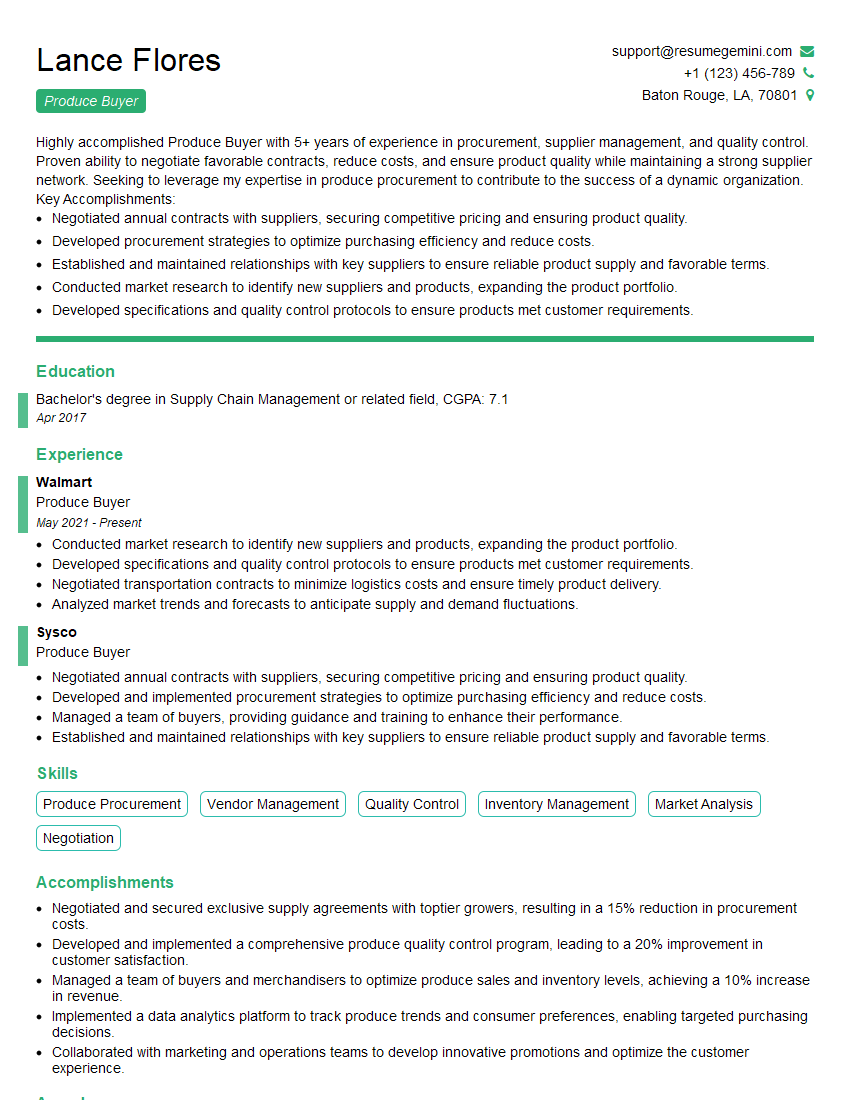
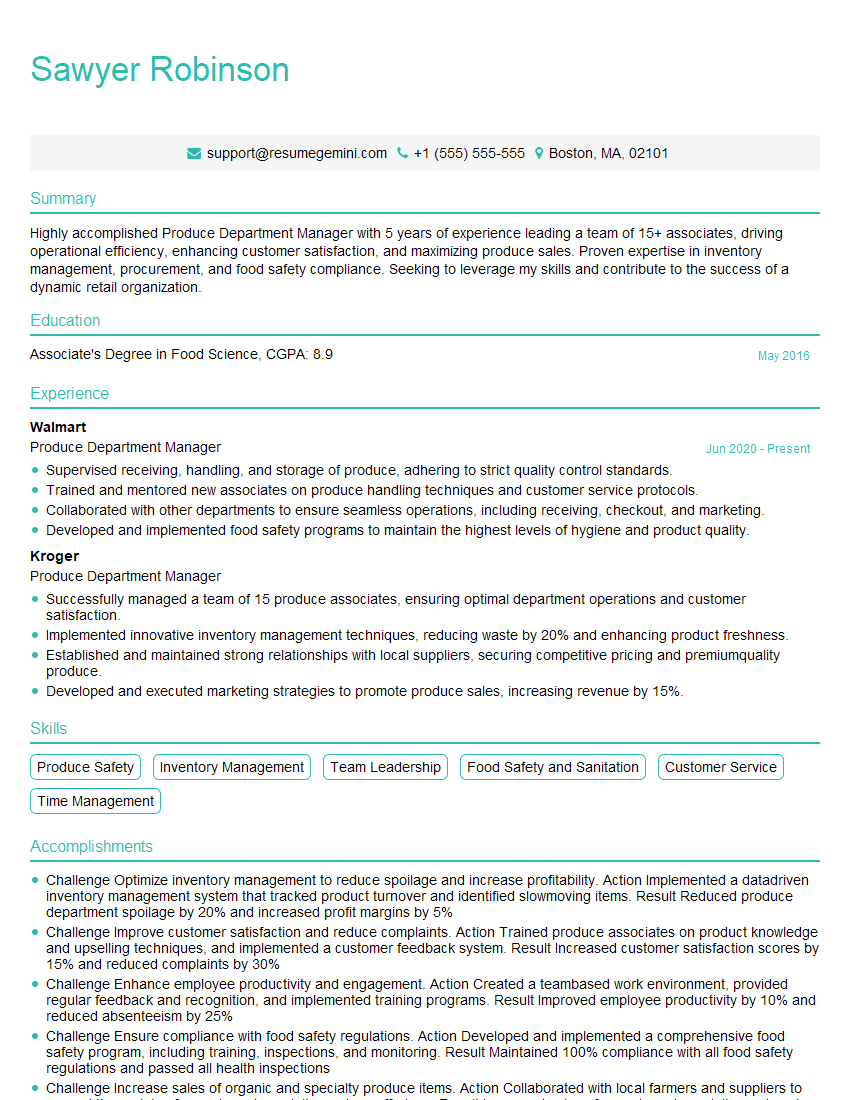
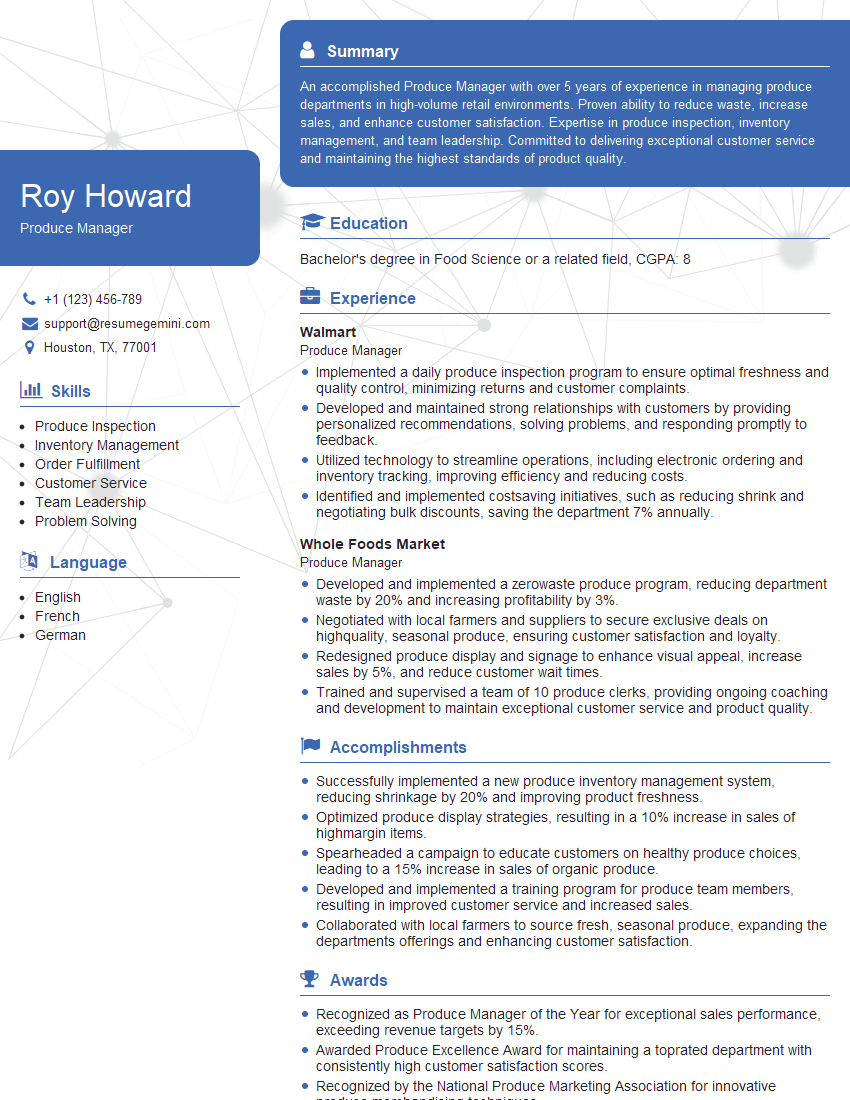
Mastering Produce Handling Experience opens doors to diverse and rewarding career opportunities within the agricultural and food industries. To maximize your job prospects, creating an ATS-friendly resume is crucial. ResumeGemini can help you build a professional, impactful resume that highlights your skills and experience effectively. Examples of resumes tailored to Produce Handling Experience are available to guide you. Invest time in crafting a compelling resume – it’s your first impression on potential employers.

Explore more articles
Users Rating of Our Blogs
Share Your Experience
We value your feedback! Please rate our content and share your thoughts (optional).
What Readers Say About Our Blog
Very informative content, great job.
good