The right preparation can turn an interview into an opportunity to showcase your expertise. This guide to Produce Sorting interview questions is your ultimate resource, providing key insights and tips to help you ace your responses and stand out as a top candidate.
Questions Asked in Produce Sorting Interview
Q 1. Explain the different methods used for sorting produce.
Produce sorting methods are diverse, adapting to the specific characteristics of each fruit or vegetable. They generally fall into two broad categories: manual and automated.
- Manual Sorting: This involves human inspectors visually assessing produce for size, color, shape, defects, and ripeness. It’s common for smaller operations or for final quality checks. Think of a farmer carefully selecting the best apples for a farmers’ market.
- Automated Sorting: This utilizes sophisticated machinery to perform the same tasks much faster and more consistently. These systems use various technologies including:
- Optical Sorters: These use cameras and sensors to capture images of produce, analyzing them for color, size, shape, and surface defects. They can then automatically direct the produce to different bins based on pre-programmed parameters. For example, an optical sorter might reject apples with bruises or blemishes, separating them from those meeting quality standards.
- Size Graders: These machines use rollers, belts, or other mechanisms to separate produce based on size. A common example is sorting potatoes into different sizes for various applications, like retail sale (larger potatoes) and processing (smaller potatoes).
- Weight Sorters: These separate produce based on weight, ensuring uniformity in packaging or processing. This is particularly useful for fruits like avocados where consistency in size and weight is important for retail display.
The choice of method often depends on factors like volume, budget, produce type, and required quality standards.
Q 2. Describe your experience with various produce sorting equipment.
My experience encompasses a wide range of produce sorting equipment, from simple manual conveyor belts to highly advanced optical sorters. I’ve worked extensively with:
- Tomra sorters: These are industry-leading optical sorters known for their precise color and defect detection capabilities. I’ve used them successfully for sorting apples, potatoes, and citrus fruits, achieving significantly improved efficiency and quality control.
- Bühler sorters: These offer a similar level of sophistication, with strong capabilities in size and shape analysis. I’ve found them particularly effective for sorting irregularly shaped produce like peppers and cucumbers.
- Manual sorting tables and conveyor belts: While seemingly simple, effective manual sorting is critical for final quality control and handling delicate produce where automated systems may cause damage. Proper setup and training of personnel are crucial for maximizing productivity and minimizing errors.
In each case, I’ve focused on optimizing the equipment settings to meet specific quality standards and maximize throughput while minimizing waste.
Q 3. How do you identify and handle damaged or spoiled produce?
Identifying and handling damaged or spoiled produce requires a keen eye and a systematic approach. Visual inspection is key, looking for:
- Bruises and cuts: These are often easily spotted, but sometimes subtle bruising needs careful examination.
- Discoloration: Changes in color can indicate decay or disease.
- Soft spots: These suggest internal damage or rot.
- Mold growth: Visible mold is an immediate indicator of spoilage.
- Pest infestation: Look for insect holes or evidence of infestation.
Once identified, spoiled produce needs immediate removal to prevent contamination. Standard operating procedures (SOPs) should detail how to handle rejected produce, including proper disposal or segregation for different types of waste (e.g., compostable vs. landfill). Training staff on proper identification and handling is critical to maintaining product safety and quality.
Q 4. What are the key quality standards for sorting different types of produce (e.g., apples, bananas, lettuce)?
Quality standards vary significantly depending on the produce type and intended market. For example:
- Apples: Size, color uniformity (e.g., consistent red for Red Delicious), absence of bruises, blemishes, or insect damage. Specific gravity may also be measured to assess ripeness.
- Bananas: Color (depending on ripeness stage), absence of bruises or damage, proper size and shape. Uniform yellow for retail is a common standard.
- Lettuce: Freshness, crispness, absence of wilting, discoloration, or pest damage. Uniform leaf size and shape are also considered.
These standards are often defined by industry guidelines, customer specifications, and internal quality control procedures. Traceability is critical, documenting each step of the sorting process to ensure compliance and facilitate quick response to any quality issues.
Q 5. How do you ensure the efficiency and accuracy of the sorting process?
Ensuring efficiency and accuracy in produce sorting requires a multi-faceted approach:
- Proper equipment calibration and maintenance: Regularly calibrating automated sorters ensures consistent performance and accurate sorting parameters. Regular maintenance prevents breakdowns and ensures optimal functioning.
- Well-trained personnel: For both manual and automated systems, properly trained personnel are crucial. Training should cover identification of defects, use of equipment, and adherence to safety and hygiene protocols.
- Effective quality control procedures: This involves random sampling and inspection throughout the sorting process to verify the accuracy of automated systems and the consistency of manual sorting. Data collection and analysis should be in place to identify and address any deviations from the quality standards.
- Process optimization: Continuously assessing and improving the sorting process is vital. This may involve adjustments to equipment settings, improvements in workflows, or implementation of new technologies to increase efficiency and minimize waste.
By combining these strategies, it’s possible to create a streamlined, high-accuracy sorting process that meets the required quality standards and maximizes productivity.
Q 6. What are the common defects found in different produce types?
Common defects vary considerably depending on the produce type. Some examples include:
- Apples: Bruises, blemishes, insect damage, superficial scarring, internal browning, and stem-end disorders.
- Bananas: Bruising, discoloration, splitting, chilling injury (resulting in discoloration and decay), and pest damage.
- Lettuce: Wilting, discoloration, tip burn (brown edges), insect damage, fungal diseases, and mechanical damage.
- Potatoes: Bruising, cuts, sprouting, discoloration, skin defects, and fungal or bacterial diseases.
Understanding these common defects is crucial for effective sorting and quality control. Knowledge of the cause of the defect can help identify potential problems further up the supply chain.
Q 7. How do you maintain hygiene and sanitation standards during produce sorting?
Maintaining hygiene and sanitation is paramount in produce sorting to prevent contamination and maintain food safety. This includes:
- Regular cleaning and sanitization of equipment: All surfaces, including conveyor belts, sorting machines, and bins, need regular cleaning and sanitization using food-grade detergents and sanitizers. This should be done according to a strict schedule and documented for traceability.
- Proper hand hygiene: Personnel should wash their hands frequently with soap and water, especially before and after handling produce. Gloves might be necessary depending on the specific tasks and risk level.
- Pest control: Implementing effective pest control measures to prevent insect infestation or rodent contamination is essential. Regular inspections and appropriate treatments are required.
- Waste management: Rejected or spoiled produce must be disposed of properly to prevent contamination. Different types of waste (e.g., compostable vs. non-compostable) should be segregated appropriately.
- Personal protective equipment (PPE): Appropriate PPE such as gloves, hairnets, and protective clothing should be worn by personnel to prevent contamination of the produce.
Adherence to these sanitation standards is crucial for maintaining the quality and safety of the produce throughout the sorting process, preventing foodborne illnesses and protecting the reputation of the operation.
Q 8. Explain your understanding of different produce grading systems.
Produce grading systems are crucial for ensuring consistent quality and meeting market demands. They typically categorize produce based on factors like size, shape, color, ripeness, and the absence of defects. Different countries and organizations have their own standards, but common elements include:
- Size Grading: Produce is sorted into various size ranges (e.g., small, medium, large) using calibrated sizing equipment. This is particularly important for fruits and vegetables sold by weight or count.
- Quality Grading: This involves assessing the appearance, texture, and overall condition of the produce. Grading standards often define acceptable levels of blemishes, bruises, and other imperfections. For example, a ‘US No. 1’ grade for apples signifies high quality with minimal defects.
- Color Grading: Color is a key indicator of ripeness and quality. Electronic color sorters are commonly used to objectively assess color and classify produce accordingly. Think about how uniformly red a batch of tomatoes needs to be for a specific market.
- Defect Grading: This focuses on identifying and sorting out produce with significant damage, disease, or pests. Manual inspection often complements machine sorting in this area.
Understanding these systems ensures efficient market access and minimizes losses due to inconsistent quality. I have extensive experience applying various grading standards, adapting them to specific customer requirements, and training staff on accurate grading practices.
Q 9. Describe your experience with using sorting machines and technologies.
My experience with sorting machines spans various technologies, including optical sorters, size graders, and weight sorters. Optical sorters use cameras and sensors to identify defects and variations in color and shape, automatically rejecting substandard produce. I’ve worked extensively with these systems, optimizing their settings to achieve the desired accuracy and throughput. For example, I fine-tuned the settings on an optical sorter for a client producing organic carrots, minimizing false rejects while ensuring only the highest-quality carrots were selected. Size graders, on the other hand, utilize rollers and other mechanisms to sort produce by size. I have experience calibrating these machines to precisely meet specific size requirements for different markets. Similarly, weight sorters are used for ensuring consistent weight per package; here, meticulous calibration and regular maintenance are paramount, as I have regularly ensured in my previous roles.
Q 10. How do you handle discrepancies in produce weight or size?
Discrepancies in produce weight or size are addressed through a multi-step process. First, the cause of the discrepancy is identified – is it due to inconsistent harvesting, processing, or machine malfunction? Next, the affected produce is separated and categorized. Produce that is slightly underweight or smaller might be sorted into a lower-grade category or sold at a discounted price. Significantly undersized or underweight produce, especially if the issue is widespread, may require an investigation into the upstream processes. For example, if consistently undersized apples are detected, it could indicate a problem with the orchard’s management practices or irrigation. Finally, documentation of the discrepancies, corrective actions, and the disposition of the affected produce are meticulously recorded.
Q 11. How do you manage a high-volume produce sorting operation?
Managing high-volume produce sorting necessitates efficient planning and coordination. This involves:
- Optimized Equipment Layout: Strategically arranging sorting machines and conveyor belts to minimize bottlenecks and maximize throughput. Think of it like a well-orchestrated assembly line.
- Staff Training and Cross-Training: Well-trained staff are crucial. Cross-training allows for flexibility in handling unexpected fluctuations in volume or product type.
- Data-Driven Decision Making: Tracking key metrics such as sorting speed, defect rates, and yield helps identify areas for improvement and provides insights into the overall efficiency of the operation.
- Preventive Maintenance: Regular maintenance of sorting equipment minimizes downtime and ensures consistent performance.
- Quality Control Checks: Regular checks at various stages of the sorting process help catch errors and ensure quality.
By implementing these strategies, I have consistently managed high-volume operations with minimal disruptions and maximum efficiency.
Q 12. What are your strategies for optimizing the speed and accuracy of the sorting process?
Optimizing speed and accuracy is a continuous effort involving:
- Calibration and Adjustment: Regularly calibrating sorting machines to ensure accurate size, weight, and color sorting. Slight adjustments to machine settings can significantly improve accuracy.
- Technology Upgrades: Staying updated on the latest sorting technologies and exploring their application to improve efficiency and accuracy. Advanced image processing algorithms in optical sorters, for instance, can dramatically improve defect detection.
- Process Streamlining: Analyzing the workflow to identify and eliminate bottlenecks and inefficiencies. This could involve redesigning the layout, adjusting conveyor speeds, or implementing better sorting strategies.
- Employee Training and Empowerment: Well-trained staff can identify and address minor issues proactively, preventing larger problems. Empowering employees to make decisions within their scope of responsibility increases efficiency.
For example, in one project, by implementing a new image-processing algorithm and recalibrating the optical sorter, we increased the sorting speed by 15% and reduced the defect rate by 8%.
Q 13. Describe your experience with inventory management in a produce environment.
Inventory management in a produce environment is particularly challenging due to the perishable nature of the products. Effective inventory management involves:
- FIFO (First-In, First-Out) System: This ensures that the oldest produce is used or sold first, minimizing spoilage.
- Real-time Tracking: Utilizing technology to track inventory levels in real time, predicting demand, and optimizing ordering. This often involves using specialized software or integrated systems.
- Temperature Monitoring: Maintaining proper storage temperatures to preserve the quality and extend the shelf life of produce.
- Regular Stock Rotation: Regularly inspecting and rotating stock to prevent spoilage and maintain quality. This involves checking for ripeness, damage, and signs of spoilage.
- Demand Forecasting: Accurately predicting demand based on historical data, seasonal trends, and market conditions. This helps optimize inventory levels and minimize waste.
I have extensive experience implementing and optimizing inventory management systems, leading to reduced waste and improved profitability.
Q 14. How do you handle complaints or issues regarding produce quality?
Handling complaints regarding produce quality involves a systematic approach:
- Thorough Investigation: Carefully investigating each complaint to determine the cause of the issue. This may involve examining the affected produce, reviewing sorting records, and investigating the entire supply chain.
- Objective Assessment: Objectively assessing the validity of the complaint. Photographs or videos can be valuable in this process.
- Appropriate Response: Responding promptly and professionally to the complainant. This might involve offering a refund, replacement, or other appropriate compensation.
- Corrective Action: Implementing corrective actions to prevent similar issues from occurring in the future. This might involve retraining staff, adjusting sorting machine settings, or improving storage conditions.
- Documentation: Meticulously documenting all complaints, investigations, and corrective actions taken. This helps identify patterns and trends, informing continuous improvements in quality control.
By addressing complaints effectively, I’ve built strong relationships with customers and maintained a reputation for high-quality produce.
Q 15. How do you ensure proper labeling and packaging of sorted produce?
Proper labeling and packaging are crucial for maintaining produce quality and preventing spoilage. It ensures traceability throughout the supply chain and provides vital information to consumers.
- Accurate labeling: Each package needs a clear label indicating the type of produce, grade (e.g., extra fancy, fancy, etc.), weight or count, growing region (if relevant), and packing date. We often use standardized codes for internal tracking, but consumer-facing labels are always clear and easy to understand.
- Appropriate packaging: The packaging itself must protect the produce from damage during transportation and storage. This means selecting materials that are suitable for the product; for instance, sturdy boxes for heavier items like melons, breathable bags for leafy greens to prevent condensation, and clamshells for delicate berries.
- Quality control checks: Before shipment, we perform thorough checks to ensure labels match the contents and the packaging is free of damage. This involves both visual inspection and occasionally random weight checks.
For example, during a recent harvest, we discovered a batch of apples had been mislabeled. We immediately corrected the labels, preventing potentially costly returns and reputational damage. This highlights the importance of meticulous labeling and regular quality checks.
Career Expert Tips:
- Ace those interviews! Prepare effectively by reviewing the Top 50 Most Common Interview Questions on ResumeGemini.
- Navigate your job search with confidence! Explore a wide range of Career Tips on ResumeGemini. Learn about common challenges and recommendations to overcome them.
- Craft the perfect resume! Master the Art of Resume Writing with ResumeGemini’s guide. Showcase your unique qualifications and achievements effectively.
- Don’t miss out on holiday savings! Build your dream resume with ResumeGemini’s ATS optimized templates.
Q 16. What safety measures do you follow while sorting produce?
Safety is paramount in produce sorting. We maintain a strict adherence to food safety regulations and best practices to prevent contamination and injuries.
- Personal Protective Equipment (PPE): Workers are required to wear appropriate PPE, including gloves, aprons, and hairnets to minimize the risk of cross-contamination.
- Hygiene practices: Regular handwashing is mandatory, and we provide hand sanitizing stations throughout the sorting area. We also maintain stringent cleaning protocols for equipment and work surfaces to prevent bacterial growth.
- Ergonomics and injury prevention: We’ve invested in ergonomic equipment to reduce strain and prevent repetitive strain injuries. Regular training is conducted on proper lifting techniques and safe work practices.
- Foreign object detection: We use metal detectors and other technology to identify and remove any foreign objects that could contaminate the produce.
Imagine a scenario where a worker cuts themselves while handling a knife. Following our strict safety protocols, they would immediately receive first aid, and the incident would be reported and investigated to prevent similar occurrences.
Q 17. How do you manage waste and reduce losses during produce sorting?
Waste management is a critical aspect of efficient produce sorting. Minimizing waste directly impacts profitability and environmental sustainability.
- Careful selection and grading: Implementing strict quality standards at the beginning of the process reduces waste by eliminating produce unsuitable for sale. We train sorters to identify subtle signs of spoilage or damage.
- Donation and repurposing: Produce that doesn’t meet market standards for fresh consumption might be suitable for juicing, canning, or donation to food banks. We have established partnerships with local organizations to minimize food waste.
- Composting: Organic waste like stems, leaves, and peels are composted to create nutrient-rich soil for agriculture, minimizing landfill waste.
- Data analysis and process improvement: We track waste rates and analyze data to identify areas for improvement. For instance, if we see a surge in waste for a particular type of fruit, we investigate factors like harvesting practices and transportation conditions.
We recently implemented a new grading system that reduced our waste by 15% by better classifying produce that could be used for other purposes. This exemplifies our dedication to reducing losses and enhancing efficiency.
Q 18. Describe your experience working in a fast-paced environment.
I thrive in fast-paced environments. My experience in produce sorting has exposed me to the demands of high-volume processing during peak seasons. I’m adept at prioritizing tasks, managing time effectively, and working efficiently under pressure.
During the summer harvest, we process many tons of produce daily. The ability to maintain accuracy and efficiency under these circumstances is essential. I’ve developed a strong ability to remain calm and focused amidst the chaos, ensuring tasks are completed to the highest standards.
I also collaborate effectively with team members, ensuring everyone is working efficiently and assisting where needed. Communication is key in a high-pressure environment, and I’m adept at clear and concise communication to prevent bottlenecks and errors.
Q 19. What are your problem-solving skills related to sorting discrepancies?
Sorting discrepancies, such as mislabeling or inaccurate grading, are addressed systematically. My problem-solving approach involves a combination of immediate action, root cause analysis, and preventative measures.
- Immediate action: The first step is to identify and isolate the affected produce to prevent it from entering the supply chain.
- Root cause analysis: We investigate the source of the discrepancy, focusing on potential issues in harvesting, handling, sorting, or labeling processes.
- Corrective actions: Depending on the root cause, corrective measures might include retraining staff, improving equipment, or adjusting procedures.
- Preventative measures: We implement changes to prevent similar discrepancies from occurring in the future. This could involve new quality control checks, improved data tracking, or enhanced training programs.
For example, if we discover a consistent error in weight measurements, we’d calibrate the scales and retrain staff on proper weighing procedures, preventing future inaccuracies.
Q 20. How familiar are you with different types of produce and their specific handling requirements?
I possess extensive knowledge of various types of produce and their specific handling requirements. This understanding is crucial for maintaining quality and preventing damage or spoilage.
- Different produce types: I’m familiar with the characteristics of a wide range of fruits and vegetables, including their optimal ripening stages, sensitivity to bruising, and storage conditions.
- Handling requirements: I understand the delicate nature of certain fruits like berries and the need for careful handling to avoid damage. Conversely, I know how to handle tougher produce like root vegetables without causing unnecessary damage.
- Specific needs: I am knowledgeable about specific requirements like proper temperature control for different types of produce, humidity levels for preventing moisture loss, and the importance of preventing cross-contamination between different fruits and vegetables.
For instance, I know that bananas are highly susceptible to chilling injury at low temperatures, while apples require controlled atmosphere storage to maintain freshness. This specialized knowledge helps me to ensure each type of produce is handled appropriately throughout the sorting process.
Q 21. What is your experience with temperature control and storage of produce?
Temperature control and proper storage are crucial for preserving the quality and extending the shelf life of produce. My experience encompasses all aspects of maintaining optimal temperature conditions.
- Understanding temperature requirements: I’m proficient in understanding the optimal temperature ranges for different types of produce, recognizing that maintaining the cold chain is critical from harvest to retail.
- Refrigeration systems: I’m familiar with the operation and maintenance of various refrigeration systems, including pre-cooling techniques to rapidly reduce the temperature of harvested produce.
- Monitoring and control: I understand the importance of continuous temperature monitoring and have experience using temperature loggers and other monitoring systems to ensure consistent temperature throughout storage and transportation.
- Storage techniques: I have practical experience implementing various storage techniques, such as controlled atmosphere storage and modified atmosphere packaging, to slow down respiration and extend shelf life.
In my previous role, I was instrumental in optimizing our refrigeration system, resulting in a significant reduction in spoilage and improved product quality. My understanding of temperature control ensures the produce reaches consumers in the best possible condition.
Q 22. Describe your understanding of food safety regulations and procedures.
Food safety is paramount in produce sorting. My understanding encompasses a wide range of regulations and procedures, from adhering to Good Agricultural Practices (GAPs) to following Hazard Analysis and Critical Control Points (HACCP) principles. This includes understanding and implementing measures to prevent contamination at every stage, from the field to the sorting facility and beyond.
Specifically, this means being intimately familiar with regulations concerning temperature control (maintaining the cold chain), sanitation (regular cleaning and disinfection of equipment and facilities), pest control, and preventing cross-contamination between different produce types. We also have strict protocols for handling potentially hazardous materials like pesticides and cleaning chemicals, including proper storage, usage, and disposal. All personnel are thoroughly trained in these procedures and regularly assessed on their compliance. For example, we conduct regular audits and inspections to ensure adherence to these stringent guidelines and maintain detailed records of all activities for traceability purposes. Failure to meet these standards can lead to serious consequences, including product recalls and legal repercussions.
Q 23. How do you ensure traceability of produce throughout the sorting process?
Traceability is crucial for ensuring product quality and safety. We utilize a lot-based tracking system, starting from the field where each batch of produce receives a unique identification number. This number is then carried through every stage of the sorting process, recorded on labels attached to containers and digitally logged in our inventory management system. This system allows us to precisely trace the origin of any given batch, including details such as the grower, the harvest date, and any treatments applied. The data is stored securely and readily available for inspections or recall situations. For instance, if a problem is identified in a specific batch, we can quickly pinpoint the source and isolate potentially affected items, preventing further issues. We also use barcode and RFID technologies to automatically track produce as it moves through the different sorting lines.
Q 24. How do you collaborate with other team members in a produce sorting environment?
Collaboration is key in a fast-paced environment like produce sorting. We work in a team-oriented manner, with clear roles and responsibilities but with a high degree of flexibility. Effective communication is paramount – we frequently use briefings and daily huddle meetings to discuss workflow, identify potential challenges, and coordinate efforts. This often involves sharing information on quality issues, equipment maintenance, and workload adjustments. We use a collaborative problem-solving approach where everyone’s ideas and suggestions are valued. For example, if a line experiences a bottleneck, we might reorganize tasks or reassign personnel to improve efficiency. Open and honest communication facilitates this fluidity and prevents misunderstandings.
Q 25. What are your strategies for managing peak seasons and increased workload?
Managing peak seasons requires strategic planning and efficient resource allocation. We start by forecasting demand based on historical data and market trends. This enables us to proactively adjust staffing levels, optimizing our workforce by hiring temporary workers or assigning overtime to existing staff. We also implement flexible work schedules to manage fluctuations in demand. Further improvements in efficiency are achieved by optimizing our sorting lines, potentially through investing in automation or improving our sorting techniques. Efficient inventory management is critical to prevent spoilage and waste during these high-volume periods. For example, we might prioritize specific types of produce or implement more rigorous quality control checks to ensure that only the highest quality products are shipped during peak demand.
Q 26. How do you stay updated with new technologies and methods in produce sorting?
Staying updated in the dynamic field of produce sorting requires continuous learning. I regularly attend industry conferences and workshops, participate in online courses and webinars, and read trade publications to remain informed about advancements in technology and best practices. I actively engage with industry experts and professionals through networking events and online forums. I’m particularly interested in the development and application of automated sorting systems using computer vision and machine learning techniques. These systems have the potential to significantly improve sorting accuracy, efficiency, and reduce labor costs while maintaining product quality. Furthermore, I consistently evaluate new technologies to determine their applicability to improve our operational efficiency and optimize our sorting processes.
Q 27. What is your experience in training new employees in produce sorting procedures?
I have extensive experience training new employees. My approach involves a combination of classroom instruction and hands-on training. We start with a comprehensive overview of food safety regulations, quality standards, and company procedures. Then, trainees receive step-by-step instruction on operating sorting equipment and performing quality checks. We utilize practical demonstrations, real-time scenario-based training, and mentorship from experienced sorters. Regular assessments and feedback sessions are incorporated to monitor their progress and address any knowledge gaps. We emphasize the importance of following safety protocols and maintaining a high level of attention to detail to ensure consistent product quality. Successful completion of the training program includes a demonstration of proficiency in all aspects of the sorting process.
Q 28. Describe a situation where you had to resolve a conflict related to produce quality.
In one instance, a dispute arose regarding the quality of a batch of apples. One sorter deemed them acceptable for shipment while another flagged them as sub-standard due to minor blemishes. To resolve the conflict, I first reviewed the apples against our established quality standards, using objective criteria like size, color, and the presence of bruises or defects. I then consulted the relevant quality specifications provided by the buyer. After a thorough assessment, it became clear that while the blemishes were present, they didn’t violate the buyer’s specifications or compromise the overall quality of the fruit. We were able to reach a consensus by clarifying the grading criteria and emphasizing the importance of consistency in applying the standards. This situation highlighted the need for clear communication, a well-defined quality control system, and a collaborative approach to resolving disagreements.
Key Topics to Learn for Produce Sorting Interview
- Produce Identification & Classification: Understanding different types of fruits and vegetables, their varieties, and grading standards (e.g., size, color, ripeness). Practical application: Accurately sorting produce based on pre-defined quality criteria.
- Quality Control & Inspection Techniques: Identifying defects, blemishes, and signs of spoilage. Practical application: Efficiently removing damaged or substandard produce to maintain quality standards.
- Sorting Equipment & Technology: Familiarity with various sorting machines, conveyor belts, and automated systems used in the industry. Practical application: Operating and troubleshooting equipment effectively, maximizing efficiency and minimizing downtime.
- Hygiene and Food Safety Protocols: Understanding and adhering to food safety regulations, sanitation procedures, and best practices. Practical application: Maintaining a clean and safe work environment to prevent contamination and ensure product quality.
- Efficiency and Productivity Strategies: Optimizing sorting processes, minimizing waste, and working effectively within a team. Practical application: Contributing to a high-throughput, efficient sorting operation.
- Problem-Solving & Troubleshooting: Identifying and resolving issues related to equipment malfunction, product quality discrepancies, or workflow bottlenecks. Practical application: Proactively identifying and resolving problems to maintain operational efficiency.
Next Steps
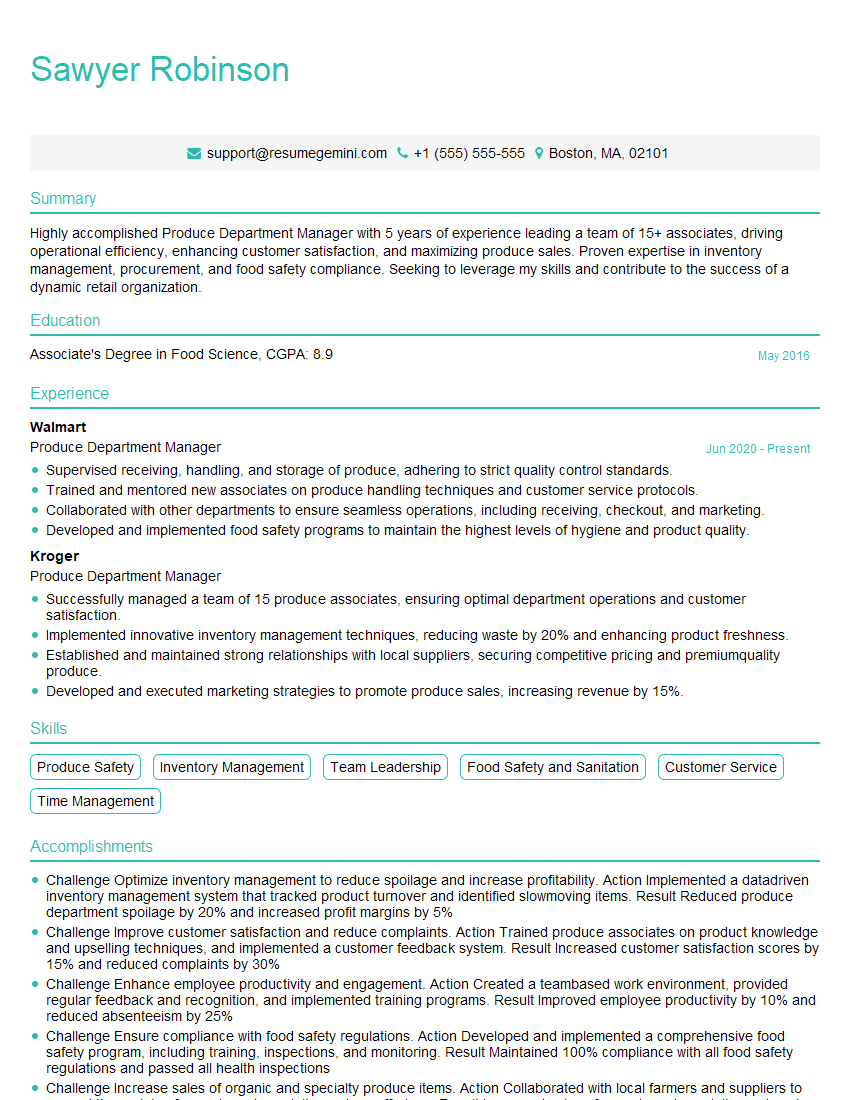
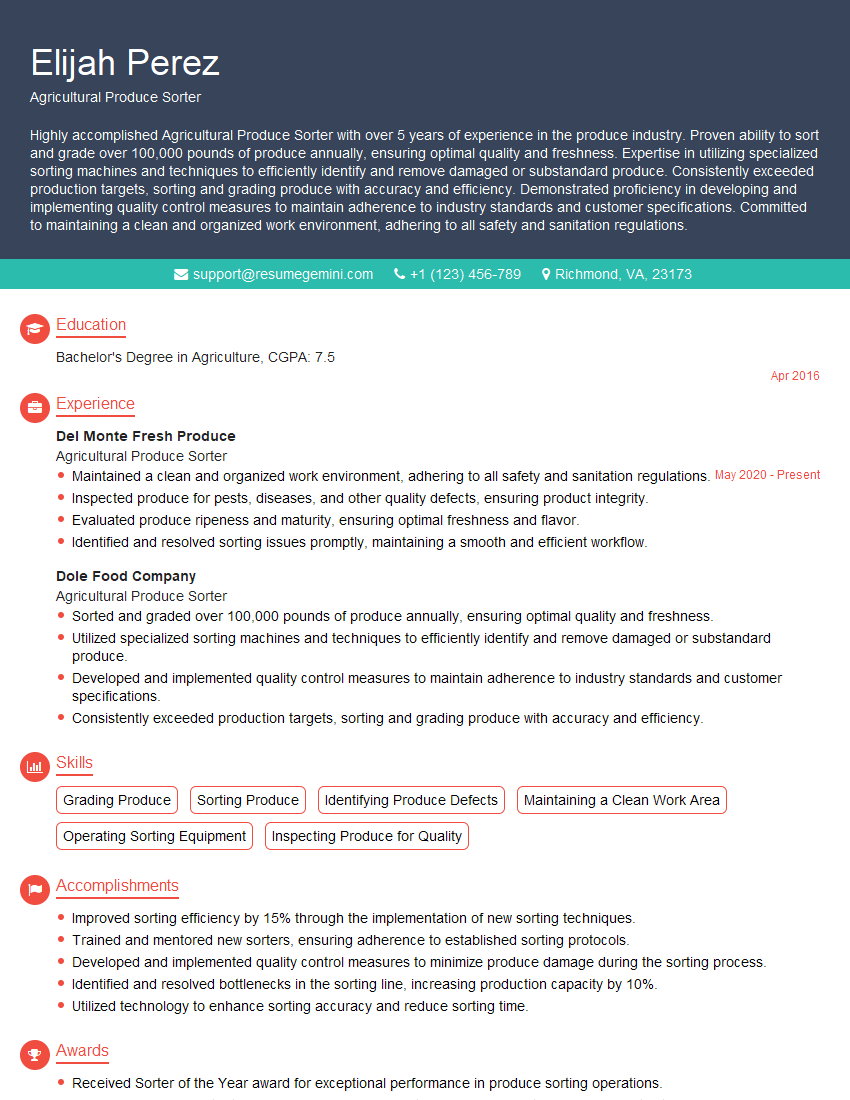
Mastering produce sorting skills opens doors to various opportunities within the food industry, offering potential for career advancement and specialization. A strong, ATS-friendly resume is crucial for showcasing your abilities to potential employers. To significantly boost your job prospects, consider using ResumeGemini to craft a compelling and effective resume that highlights your relevant skills and experience. Examples of resumes tailored specifically to the Produce Sorting field are available to help you get started.

Explore more articles
Users Rating of Our Blogs
Share Your Experience
We value your feedback! Please rate our content and share your thoughts (optional).
What Readers Say About Our Blog
Very informative content, great job.
good