Feeling uncertain about what to expect in your upcoming interview? We’ve got you covered! This blog highlights the most important Produce Storage and Preservation interview questions and provides actionable advice to help you stand out as the ideal candidate. Let’s pave the way for your success.
Questions Asked in Produce Storage and Preservation Interview
Q 1. Explain the importance of maintaining proper temperature and humidity levels in produce storage.
Maintaining optimal temperature and humidity is paramount in produce storage because it directly impacts the respiration rate of fruits and vegetables. Respiration is the process where produce uses its stored energy, releasing heat, water, and carbon dioxide. Higher temperatures accelerate respiration, leading to faster spoilage, nutrient loss, and quality deterioration. Similarly, humidity affects water loss (transpiration) from produce. Too low humidity leads to wilting and shriveling, while excessively high humidity can promote fungal growth and bacterial spoilage.
For example, imagine storing bananas at room temperature versus in a refrigerator. The room temperature bananas will ripen and spoil much faster due to increased respiration. Conversely, appropriate temperature and humidity conditions slow down these processes, extending the shelf life and maintaining quality.
In professional settings, precise temperature and humidity control are crucial. Cold storage facilities utilize sophisticated monitoring systems and climate control equipment to maintain optimal conditions tailored to the specific type of produce stored.
Q 2. Describe different methods for extending the shelf life of perishable produce.
Extending the shelf life of perishable produce involves a multi-pronged approach encompassing pre-harvest practices, proper handling, and storage techniques.
- Pre-harvest techniques: Selecting mature but not overripe produce, careful harvesting practices, and minimizing damage during harvest all contribute to initial quality and extended shelf life.
- Proper Handling: Gentle handling minimizes physical damage, a common entry point for spoilage organisms. Rapid cooling after harvest prevents enzymatic activity and microbial growth.
- Modified Atmosphere Packaging (MAP): This technique alters the gas composition within packaging to slow respiration and reduce spoilage. (More detail below in answer 6.)
- Controlled Atmosphere Storage (CAS): This is a more sophisticated method used in large-scale storage facilities, which precisely controls the atmosphere (oxygen, carbon dioxide, nitrogen) within the storage environment to dramatically extend shelf life.
- Irradiation: A method of using ionizing radiation to kill microorganisms, thus extending shelf life. This is subject to regulatory considerations and consumer acceptance.
- 1-MCP treatment: 1-Methylcyclopropene (1-MCP) is a gas that inhibits ethylene production, slowing down ripening and extending shelf life particularly in climacteric fruits (fruits that ripen after harvest like apples, bananas).
For instance, proper handling during transportation, ensuring that produce doesn’t get bruised or crushed, will drastically reduce the rate of spoilage. Similarly, quick cooling post-harvest is vital in preventing rapid deterioration.
Q 3. What are the key factors to consider when designing a produce storage facility?
Designing an efficient and effective produce storage facility demands careful consideration of numerous factors.
- Location: Proximity to transportation hubs is key for efficient delivery. The building should be well-insulated to reduce energy consumption.
- Size and Layout: The size should meet the anticipated storage volume. An efficient layout ensures smooth workflow and minimizes handling of the produce.
- Temperature and Humidity Control: Accurate and reliable systems are essential, often involving refrigeration units, humidifiers, and dehumidifiers, along with sensors and monitoring systems. The specific requirements vary with the type of produce.
- Airflow: Proper air circulation is vital to maintain uniform temperature and humidity throughout the facility, which helps prevent condensation and localized spoilage.
- Hygiene and Sanitation: The facility should be easily cleanable and disinfected to minimize contamination risks.
- Pest Control: Effective measures should be in place to prevent infestation by insects and rodents. This may involve structural design, traps, and the use of approved pest control methods.
- Energy Efficiency: Design should prioritize energy efficiency through insulation, efficient equipment, and potentially renewable energy sources.
For example, a well-designed facility might incorporate zones with different temperature and humidity levels to accommodate a variety of produce. The layout might prioritize the flow of goods, from receiving to storage to dispatch, optimizing efficiency and minimizing handling.
Q 4. How do you prevent cross-contamination in a produce storage environment?
Preventing cross-contamination is crucial for maintaining the quality and safety of stored produce. This involves a combination of strategies:
- Strict Hygiene Protocols: Regular cleaning and disinfection of all surfaces, equipment, and storage containers are essential. Personnel should follow strict hygiene practices, including handwashing and the use of protective clothing.
- Proper Storage Practices: Storing different types of produce separately, particularly those with different susceptibility to spoilage or disease, helps prevent contamination. Damaged or diseased produce should be segregated and removed immediately.
- FIFO (First In, First Out) System: This method ensures that older produce is used or shipped before newer produce, reducing the risk of prolonged storage and spoilage.
- Pest Control: Preventing pest infestations is a key part of preventing cross-contamination, as pests can carry pathogens and contaminate produce.
- Airflow Management: Good airflow can help minimize the spread of airborne pathogens.
For example, a facility might have designated areas for different types of produce, with separate equipment and cleaning protocols for each area. A clear FIFO system ensures that produce doesn’t sit too long, thereby reducing the chance of spoilage and cross-contamination.
Q 5. What are the common spoilage mechanisms in fruits and vegetables?
Fruits and vegetables spoil through various mechanisms, often interacting with each other:
- Microbial Spoilage: Bacteria, yeasts, and molds are the primary culprits. They invade damaged tissues, proliferate, and release enzymes that break down the produce, causing rot, discoloration, and off-flavors. This is often accelerated by high humidity and temperature.
- Enzymatic Degradation: Enzymes naturally present in the produce initiate breakdown processes that affect texture, color, and flavor. This is accelerated by physical damage and improper storage conditions.
- Physiological Disorders: These are non-infectious conditions arising from internal processes or environmental stresses, leading to discoloration, wilting, chilling injury (damage due to low temperatures), or physiological breakdown.
- Respiration: As mentioned before, respiration leads to depletion of stored energy and the production of heat, water vapor, and carbon dioxide. Excessive respiration accelerates senescence and decay.
- Water Loss: Transpiration or water loss from the produce can lead to shriveling and wilting, making the produce unappealing and susceptible to microbial attack.
For instance, a bruise on an apple provides an entry point for bacteria and fungi, leading to rapid spoilage. Chilling injury in certain tropical fruits can cause internal damage and quality loss.
Q 6. Explain the principles of modified atmosphere packaging (MAP) for produce preservation.
Modified Atmosphere Packaging (MAP) modifies the gaseous environment within packaging to slow down respiration and microbial growth, thereby extending shelf life. It typically involves reducing oxygen levels and increasing carbon dioxide levels, while sometimes adding nitrogen to displace oxygen. The specific gas composition varies depending on the type of produce.
Principles:
- Reduced Oxygen: Low oxygen levels slow down aerobic respiration, which is the primary energy source for most microorganisms. This inhibits microbial growth and slows down enzymatic activity.
- Increased Carbon Dioxide: Elevated carbon dioxide levels have antimicrobial effects and can also slow down respiration.
- Nitrogen: Nitrogen is often used to displace oxygen and create a modified atmosphere that is less favorable to microbial growth. It is an inert gas and does not directly affect respiration.
Example: Packaging fresh-cut produce with a high carbon dioxide and low oxygen atmosphere will significantly extend its shelf life compared to packaging it in air. The precise gas mixture is carefully determined based on the type of produce and its sensitivity to different gas compositions.
MAP is widely used in the food industry, particularly for extending the shelf life of many fresh produce items.
Q 7. What are the different types of refrigeration systems used in produce storage?
Various refrigeration systems are used in produce storage, each with its advantages and disadvantages:
- Vapor-Compression Refrigeration: This is the most common system, utilizing a refrigerant that absorbs heat from the storage area and releases it outside. It is energy-efficient and relatively easy to maintain. It can be used for both cold storage rooms and refrigerated display cases.
- Air Cooling: Cold air is circulated within the storage area, maintaining a uniform temperature. It is relatively simple and cost-effective, but airflow needs to be carefully managed to avoid temperature gradients.
- Hydrocooling: Produce is immersed in chilled water to rapidly cool it down. This is effective for cooling produce quickly after harvest but requires specialized equipment.
- Vacuum Cooling: A process using a vacuum to rapidly evaporate water from the produce’s surface, leading to rapid cooling. It’s effective for leafy vegetables and other delicate produce, minimizing damage.
- Controlled Atmosphere Storage (CAS) Refrigeration: This integrates refrigeration with precise control of atmospheric gases (oxygen, carbon dioxide, nitrogen), significantly extending shelf life for certain types of produce.
The choice of refrigeration system depends on factors such as the type of produce, the scale of the operation, and budget considerations. For example, hydrocooling might be ideal for processing leafy greens immediately after harvest, while large-scale storage facilities often utilize vapor-compression refrigeration with sophisticated temperature and humidity controls.
Q 8. How do you manage inventory in a produce storage facility to minimize waste?
Minimizing waste in produce storage hinges on a robust inventory management system that combines accurate forecasting, FIFO (First-In, First-Out) principles, and real-time monitoring. We use a combination of barcode scanning and dedicated inventory management software. This allows us to track stock levels precisely, identifying produce nearing its shelf life.
For example, if we notice a large quantity of bananas nearing their optimal ripeness, we can prioritize them for immediate processing or sale, perhaps offering discounts to stimulate demand. We also leverage data analysis to predict demand fluctuations, adjusting our ordering and storage strategies accordingly. This prevents overstocking, which leads to spoilage, and ensures we have enough to meet customer needs. Regularly reviewing stock, discarding spoiled items promptly, and employing proper temperature control are critical components.
Think of it like a well-oiled machine: each part—from accurate tracking to smart purchasing decisions—contributes to efficient waste reduction.
Q 9. What are the key indicators of produce quality that you would monitor?
Monitoring produce quality involves a multi-sensory approach. We assess several key indicators:
- Visual Inspection: Checking for color, firmness, blemishes, and signs of decay or disease. For instance, a bruise on an apple indicates potential spoilage.
- Tactile Assessment: Evaluating the texture and firmness. A perfectly ripe avocado will yield slightly to gentle pressure, while an overripe one will feel soft and mushy.
- Olfactory Examination: Detecting any off-odors indicative of spoilage or microbial growth. A sour or fermented smell is a clear sign of problems.
- Temperature Monitoring: Maintaining optimal temperatures throughout storage using sensors and logging systems is crucial. This is especially important for highly perishable items like leafy greens.
- Moisture Content: Excessive moisture can accelerate decay. Measuring moisture levels helps to prevent wilting and maintain quality.
Data from these inspections is recorded, allowing us to identify trends and adjust storage conditions to maximize the shelf life and quality of our produce.
Q 10. Describe your experience with implementing and maintaining food safety protocols in produce handling.
Food safety is paramount. Our protocols are built around HACCP (Hazard Analysis and Critical Control Points) principles. This involves identifying potential hazards at every stage, from receiving to distribution, and implementing controls to mitigate those risks.
We maintain stringent hygiene standards, including regular sanitation of equipment and facilities using approved cleaning agents. Employees are rigorously trained on proper handwashing techniques, safe food handling practices, and the importance of personal protective equipment (PPE). We meticulously track temperatures throughout the supply chain, ensuring our cold storage maintains optimal conditions and documenting each step. We conduct regular internal audits to evaluate our effectiveness and ensure compliance with all relevant food safety regulations. Any deviation from our standards triggers an immediate investigation and corrective actions.
For example, our traceability system, using batch numbers and timestamps, allows us to swiftly trace the origin of any contaminated produce, facilitating swift and effective recall processes if necessary.
Q 11. How do you handle and resolve issues related to pest infestation in produce storage?
Pest infestation is a serious threat. Our strategy is multi-pronged:
- Prevention: This involves maintaining a clean and pest-free environment, regular inspections, and using physical barriers such as screens and sealed containers.
- Early Detection: Traps and regular monitoring systems are used to identify infestations early.
- Integrated Pest Management (IPM): We prefer non-chemical pest control methods where possible, such as biological control agents. Chemical control is used only as a last resort and always in accordance with regulations.
- Infestation Response: In case of an infestation, we immediately isolate the affected area, dispose of contaminated produce properly, and thoroughly clean and sanitize the area. Professional pest control services are engaged as needed.
Documentation of all pest control activities, including treatments and their effectiveness, is crucial for regulatory compliance and traceability.
Q 12. Explain the role of ethylene in produce ripening and storage.
Ethylene is a plant hormone that plays a vital role in ripening. It’s a colorless gas produced by many fruits and vegetables, accelerating the ripening process. High concentrations of ethylene can lead to premature ripening, spoilage, and undesirable changes in flavor and texture.
In storage, we control ethylene levels through various methods:
- Controlled Atmosphere Storage (CAS): Reduces ethylene levels by lowering oxygen and increasing carbon dioxide.
- Ethylene Scrubbers: These devices chemically remove ethylene from the storage environment.
- Proper Ventilation: Ensures that ethylene doesn’t accumulate to harmful levels.
- Segregation of Produce: Separating ethylene-producing fruits (like bananas and apples) from ethylene-sensitive ones (like leafy greens) prevents premature ripening of the latter.
Understanding ethylene’s effects is essential for optimizing storage conditions and extending the shelf life of produce.
Q 13. What are the best practices for receiving, inspecting, and storing incoming produce?
Receiving, inspecting, and storing incoming produce follows a standardized procedure:
- Receiving: We verify the quantity and quality against purchase orders, checking for damage during transportation.
- Inspection: A thorough visual inspection is conducted to identify any signs of spoilage, pest infestation, or damage. Temperature is also checked immediately.
- Sorting: Produce is sorted based on quality and ripeness, separating damaged items from those suitable for storage.
- Storage: Items are stored according to their specific requirements, considering temperature, humidity, and ethylene sensitivity. FIFO is strictly adhered to.
Proper documentation of each stage is maintained, ensuring traceability and accountability.
Q 14. How do you ensure proper sanitation and hygiene in a produce storage facility?
Sanitation and hygiene are maintained through a comprehensive program:
- Regular Cleaning: Daily cleaning of floors, walls, and equipment using appropriate cleaning agents.
- Scheduled Sanitization: Regular sanitization of all surfaces using approved sanitizers to eliminate microbial contamination.
- Pest Control: Implementing preventative measures and addressing any infestations promptly.
- Waste Management: Proper disposal of waste materials to prevent attracting pests.
- Employee Training: Regular training for employees on hygiene protocols and food safety guidelines.
- Personal Protective Equipment (PPE): Providing and ensuring use of appropriate PPE, including gloves, aprons, and hairnets.
A well-maintained sanitation program is essential to prevent contamination, extend shelf life, and ensure food safety.
Q 15. What are the common challenges in maintaining the cold chain for perishable produce?
Maintaining the cold chain for perishable produce is crucial for preserving quality and safety. The biggest challenges often stem from temperature fluctuations throughout the supply chain. Imagine a delicate strawberry – even a short period above its optimal temperature can lead to rapid deterioration. This can occur during harvesting, transportation, storage, and display.
- Temperature inconsistencies: Equipment malfunctions in refrigerated trucks or storage facilities can cause significant temperature swings, leading to spoilage. For example, a faulty refrigeration unit in a truck transporting lettuce across long distances could cause the produce to reach unsafe temperatures, resulting in bacterial growth.
- Poor insulation: Inadequate insulation in transport vehicles or storage spaces reduces temperature control and increases energy consumption, significantly impacting quality.
- Inefficient handling: Improper loading and unloading procedures, or even leaving produce exposed to ambient air for extended periods, can lead to rapid temperature increases.
- Power outages: Unexpected power outages in storage facilities can cause catastrophic temperature rises, potentially ruining entire batches of produce. Having backup power systems is therefore essential.
Addressing these challenges requires a multi-pronged approach: investing in high-quality refrigeration equipment, implementing robust monitoring systems, providing regular staff training, and adhering to strict temperature protocols throughout the supply chain.
Career Expert Tips:
- Ace those interviews! Prepare effectively by reviewing the Top 50 Most Common Interview Questions on ResumeGemini.
- Navigate your job search with confidence! Explore a wide range of Career Tips on ResumeGemini. Learn about common challenges and recommendations to overcome them.
- Craft the perfect resume! Master the Art of Resume Writing with ResumeGemini’s guide. Showcase your unique qualifications and achievements effectively.
- Don’t miss out on holiday savings! Build your dream resume with ResumeGemini’s ATS optimized templates.
Q 16. Describe your experience with using different types of packaging for produce preservation.
My experience encompasses a wide range of produce packaging, each designed to optimize preservation based on the produce type and its journey through the supply chain. For instance, modified atmosphere packaging (MAP) significantly extends the shelf life of many fruits and vegetables by altering the gaseous environment around them. Think of pre-packaged salads – the modified atmosphere, usually a reduced oxygen and increased carbon dioxide environment, slows down respiration and microbial growth.
- Modified Atmosphere Packaging (MAP): I’ve extensively used MAP for items like leafy greens, berries, and mushrooms. This involves packaging produce in films that allow for precise control over the internal gas composition.
- Ethylene-absorbing packaging: Ethylene is a natural plant hormone that accelerates ripening and senescence. Packaging materials that absorb ethylene are invaluable for extending the shelf life of ethylene-sensitive produce like apples and bananas. We’ve seen considerable success with these films, particularly in extending the transportation time of these fruits.
- Reusable containers: To increase sustainability and reduce waste, we’ve successfully implemented reusable plastic containers (RPCs) for certain produce items, allowing for improved cold chain management during transport and storage.
- Traditional packaging: Simple materials such as cardboard boxes with appropriate ventilation and cushioning continue to play an important role, especially for items less sensitive to atmospheric changes.
The key to effective packaging lies in understanding the specific needs of each produce item and optimizing packaging for the entire journey, from harvest to retail display.
Q 17. How do you manage and track the temperature and humidity of different storage areas?
Precise temperature and humidity control is critical. We utilize a combination of technologies and procedures to ensure optimal storage conditions for our diverse range of produce.
- Data loggers: These devices record temperature and humidity levels continuously within different storage areas. We can then download this data for analysis and quality control purposes. This is particularly helpful for identifying any temperature excursions and tracing their cause.
- Remote monitoring systems: We employ systems that allow us to remotely monitor the temperature and humidity of our cold storage facilities in real-time. This enables prompt response to any deviations from our setpoints, minimizing potential losses.
- Calibration and maintenance: Regular calibration of our monitoring equipment is crucial to ensure accuracy. Routine maintenance of refrigeration systems, including regular cleaning of coils and filters, is also essential for efficiency and consistent temperature control. A simple example is checking the evaporator fans regularly – if they’re not working efficiently, the whole cold room will become less effective.
- Visual inspections: While technology is vital, regular visual checks by trained staff complement our automated systems. This allows for immediate detection of any issues that might not be immediately flagged by our sensors, such as a blocked air vent.
Combining these methods provides a comprehensive approach to temperature and humidity management, crucial for maintaining produce quality and minimizing spoilage.
Q 18. What are the regulatory requirements for storing and handling produce?
Regulatory requirements for storing and handling produce are stringent and vary depending on the specific produce item and jurisdiction. However, some common aspects include:
- Food safety regulations: These regulations, such as those set by the FDA (in the US) or EFSA (in Europe), dictate requirements for hygiene, sanitation, pest control, and temperature management throughout the supply chain. They aim to minimize risks associated with foodborne illnesses.
- Traceability: Maintaining accurate records of produce origin, handling, and storage conditions is crucial for traceability in case of recalls or quality issues. This often involves lot numbering and detailed documentation.
- Labeling requirements: Accurate and informative labeling is essential, including details like origin, best-before dates, and storage instructions. Incorrect labeling can lead to severe repercussions.
- Pest control: Strict protocols for preventing and controlling pest infestations in storage areas are mandatory. Regular inspections and adherence to approved pest control methods are essential.
- Temperature recording: Maintaining detailed records of temperatures throughout the storage and handling process is critical. These records need to be easily accessible for audits.
Compliance with these regulations is paramount and requires continuous monitoring and training of personnel.
Q 19. How do you handle and investigate incidents of produce spoilage or quality issues?
Handling and investigating spoilage or quality issues starts with prompt identification and isolation of affected produce to prevent cross-contamination. We then implement a structured investigation, often following a root cause analysis methodology.
- Visual Inspection: A thorough visual inspection of the affected produce and the surrounding environment is crucial. This helps to establish the nature and extent of the spoilage.
- Temperature Data Review: Examination of temperature records from data loggers and monitoring systems is vital to identify any deviations that might have contributed to the spoilage. Were there power outages? Temperature fluctuations?
- Sampling and Testing: Samples of the spoiled produce are often sent for microbiological testing to identify the causative agents. This helps to determine whether the cause is bacterial, fungal, or linked to another factor.
- Packaging Inspection: Careful inspection of the packaging is carried out to detect any defects that might have allowed microbial ingress or affected gas exchange.
- Supply Chain Review: We thoroughly review the entire supply chain process, from harvesting to storage, to identify potential points of failure. This might involve contacting suppliers, reviewing transportation logs, and checking storage conditions.
Following the investigation, corrective actions are implemented to prevent recurrence. This might involve adjusting storage conditions, improving handling procedures, or changing suppliers.
Q 20. Describe your experience with implementing and maintaining a first-in, first-out (FIFO) system.
Implementing and maintaining a First-In, First-Out (FIFO) system is fundamental for minimizing waste and maximizing the shelf life of our produce. FIFO ensures that the oldest items are used or sold first, thereby preventing spoilage of older stock.
- Clear labeling and dating: Each batch of produce is clearly labeled with its arrival date, allowing for easy identification of the oldest stock. We use a combination of physical labels and digital inventory systems.
- Organized storage: Produce is arranged within storage areas following a systematic FIFO approach, with the newest items placed furthest back and the oldest at the front. Visual cues and clear signage help guide workers.
- Regular stock rotation: Regular stock rotation is crucial to ensuring the system’s efficacy. This involves checking stock levels and moving older items to the front. We conduct regular inventory checks and adjust storage based on the anticipated sales and usage.
- Inventory management systems: We utilize inventory management software that tracks stock levels, expiry dates, and location, which helps us to proactively manage our inventory and prevent older stock from being overlooked.
- Staff training: Thorough training of staff members on the importance of FIFO and the correct procedures for stock rotation is crucial to ensuring its effective implementation. Regular refresher courses reinforce adherence to procedures.
Maintaining a robust FIFO system is crucial for minimizing losses, reducing waste, and ensuring the freshness of our produce. It’s not just a system; it’s a daily practice built into our workflow.
Q 21. What are the different methods for controlling atmospheric gases in produce storage?
Controlling atmospheric gases in produce storage is a key strategy for extending shelf life and maintaining quality. This is achieved by modifying the composition of the air within the storage environment.
- Modified Atmosphere Packaging (MAP): As mentioned earlier, MAP involves altering the gas composition within the packaging itself, often reducing oxygen and increasing carbon dioxide levels to slow respiration and microbial growth.
- Controlled Atmosphere Storage (CAS): CAS involves controlling the atmosphere within a larger storage room or facility. This often involves reducing oxygen levels, increasing carbon dioxide levels, and sometimes introducing nitrogen to further reduce oxygen and slow down respiration. This is commonly used for long-term storage of apples and pears.
- Ethylene scrubbing: Ethylene gas, a natural plant hormone, accelerates ripening and senescence. Ethylene scrubbers remove this gas from the storage atmosphere, which significantly extends the shelf life of ethylene-sensitive produce. These filters often contain potassium permanganate which reacts with ethylene.
- Vacuum cooling: This technique removes heat from produce by evaporating water under vacuum conditions. This rapid cooling process slows down respiration and extends shelf life. It’s particularly useful for leafy greens.
The choice of method depends on the type of produce, storage duration, and available resources. Implementing these technologies requires specialized equipment and knowledge, but the benefits in terms of reduced spoilage and extended shelf life are substantial.
Q 22. Explain the importance of proper ventilation in a produce storage facility.
Proper ventilation in a produce storage facility is crucial for maintaining optimal quality and extending the shelf life of produce. Think of it like this: produce, like people, needs to breathe. It respires, releasing heat and ethylene gas, a natural plant hormone that accelerates ripening and decay.
Without adequate ventilation, these gases build up, creating a warm, humid environment that encourages the growth of mold and bacteria. This leads to rapid spoilage and significant financial losses. Effective ventilation systems remove excess heat, moisture, and ethylene, maintaining a cool, dry, and well-circulated atmosphere that helps preserve freshness.
- Types of ventilation: This can involve various systems, from simple passive ventilation (using strategically placed vents and openings) to more complex, actively controlled systems that use fans and climate control units.
- Importance of air circulation: Even distribution of fresh air is critical. Stagnant air pockets can lead to localized spoilage.
- Temperature and humidity control: Ventilation is linked to maintaining optimal temperature and humidity levels, which vary greatly depending on the type of produce being stored.
For example, in a large-scale cold storage facility, I’ve overseen the implementation of a sophisticated ventilation system that dynamically adjusts air flow based on real-time temperature and humidity readings and ethylene gas levels. This precision control helped us significantly reduce spoilage rates and improve product quality.
Q 23. How do you handle and dispose of produce waste in an environmentally responsible manner?
Environmentally responsible produce waste handling and disposal is paramount. Instead of simply discarding waste, we aim for a circular economy approach, maximizing resource utilization and minimizing environmental impact.
- Composting: A significant portion of produce waste is suitable for composting. This creates nutrient-rich soil amendment, reducing the need for synthetic fertilizers and diverting waste from landfills.
- Anaerobic digestion: For larger facilities, anaerobic digestion is a viable option. This process breaks down organic matter in the absence of oxygen, generating biogas (a renewable energy source) and digestate (a fertilizer).
- Food banks and charities: We prioritize donating edible but unmarketable produce (due to cosmetic imperfections, for example) to local food banks and charities to minimize food waste and address food insecurity.
- Waste-to-energy: In some cases, unavoidable waste can be used for waste-to-energy technologies, further reducing landfill dependence.
In my experience at a large processing plant, we implemented a comprehensive waste management program that combined composting, donation to local charities, and anaerobic digestion. This resulted in a 70% reduction in landfill waste and generated a valuable source of biogas for our facility’s energy needs.
Q 24. What are the common signs of produce deterioration?
Recognizing the signs of produce deterioration is crucial for timely intervention and minimizing losses. The signs can vary considerably depending on the type of produce, but some common indicators include:
- Visual Changes: Discoloration, wilting, bruising, mold growth, and changes in texture are readily apparent signs.
- Odor Changes: Off-odors, sourness, or fermentation smells indicate microbial spoilage.
- Texture Changes: Softening, mushiness, or excessive dryness can signal decay.
- Physiological Changes: Loss of turgor (firmness), leakage of fluids, and excessive shriveling are other signs.
For example, a slight browning of cut apples is a clear visual sign of enzymatic browning, while a slimy texture on a lettuce leaf is a strong indication of bacterial growth. Early detection and removal of affected produce is essential to prevent contamination of the surrounding stock.
Q 25. Describe your experience with using technology to enhance produce storage and preservation.
Technology plays a transformative role in enhancing produce storage and preservation. I’ve extensively used various technologies to optimize processes and improve outcomes.
- Temperature and humidity sensors: Real-time monitoring of environmental conditions allows for proactive adjustments to maintain optimal storage parameters. Data logging provides valuable information for trend analysis and process optimization.
- Ethylene gas detection and control systems: These systems identify ethylene levels and trigger interventions, such as ventilation adjustments, to mitigate its negative effects on produce quality.
- Modified Atmosphere Packaging (MAP): This involves altering the gaseous environment within packaging to extend shelf life by slowing respiration and reducing spoilage. We’ve successfully implemented MAP for various delicate produce items, significantly extending shelf life.
- Automated storage and retrieval systems: These systems streamline inventory management, optimize space utilization, and reduce manual handling, minimizing the risk of damage.
In one project, we integrated all these technologies into a centralized control system, enabling remote monitoring and automated adjustments, leading to a 20% reduction in spoilage and improved efficiency.
Q 26. What are the economic factors that influence produce storage and preservation decisions?
Economic factors heavily influence produce storage and preservation decisions. The goal is to balance cost with the need to maintain quality and minimize losses.
- Storage costs: This encompasses facility rental, energy consumption (cooling, ventilation), labor, and maintenance.
- Spoilage costs: The cost of spoiled produce is a major factor, representing lost revenue and disposal costs.
- Market prices and demand: Fluctuating market prices determine storage duration; storing produce longer can be beneficial if prices are expected to rise, but risky if prices fall.
- Transportation costs: The cost of transporting produce to storage and then to market significantly impacts profitability.
- Technology investment: Implementing new technologies requires initial investment, but can lead to long-term cost savings by reducing spoilage and improving efficiency.
For instance, the decision to invest in a new cold storage facility or upgrade existing systems involves a careful analysis of projected costs, market conditions, and potential return on investment. A cost-benefit analysis is essential in making such decisions.
Q 27. How do you ensure traceability of produce throughout the storage and distribution process?
Produce traceability is essential for ensuring food safety, managing supply chains, and responding quickly to potential contamination issues. We use a combination of methods to achieve comprehensive traceability:
- Barcodes and RFID tags: These technologies allow for precise tracking of produce batches from the farm to the consumer. Each unit is uniquely identified, allowing for seamless tracking of its journey.
- Database management systems: Centralized databases store comprehensive information about each batch, including origin, harvesting date, storage conditions, and distribution history. This data is readily accessible for tracking and analysis.
- Blockchain technology: In some cases, blockchain’s decentralized and tamper-proof nature enhances the security and transparency of the traceability system.
- Lot number tracking: Every batch of produce receives a unique lot number that is tracked throughout the entire process, enabling swift identification and recall in case of contamination or quality issues.
For example, if a contamination issue arises, the ability to quickly trace the affected produce to its origin allows for immediate recall of the contaminated batch, preventing wider distribution and minimizing health risks.
Q 28. What are your strategies for minimizing energy consumption in a produce storage facility?
Minimizing energy consumption in a produce storage facility is critical for both economic and environmental reasons. Strategies include:
- High-efficiency refrigeration systems: Utilizing modern, energy-efficient refrigeration technologies significantly reduces energy consumption without compromising temperature control.
- Improved insulation: Proper insulation reduces heat transfer, minimizing the workload of the refrigeration system.
- Optimized air circulation: Efficient ventilation systems reduce energy use by preventing the buildup of heat and humidity, reducing the load on cooling systems.
- Energy-efficient lighting: Switching to LED lighting considerably reduces energy consumption compared to traditional lighting solutions.
- Regular maintenance: Regular maintenance of refrigeration systems, ventilation systems, and other equipment ensures peak efficiency and prevents energy waste.
- Smart control systems: Utilizing smart sensors and control systems to monitor conditions and automate adjustments can fine-tune energy use based on real-time needs.
In one facility, we implemented a comprehensive energy-efficiency program incorporating all these strategies. This resulted in a 35% reduction in energy consumption, leading to significant cost savings and a reduced carbon footprint.
Key Topics to Learn for Produce Storage and Preservation Interview
- Physiological Principles of Produce: Understanding respiration rates, ethylene production, and senescence in various fruits and vegetables. Practical application: Optimizing storage conditions to extend shelf life.
- Controlled Atmosphere Storage (CAS): Learning the principles of modifying atmospheric gases (O2, CO2, N2) to slow down respiration and maintain quality. Practical application: Calculating optimal gas mixtures for different produce types.
- Refrigeration and Cooling Technologies: Understanding different refrigeration systems, temperature control, and humidity management in storage facilities. Practical application: Troubleshooting refrigeration issues and optimizing energy efficiency.
- Pre-Harvest and Post-Harvest Handling: Best practices for handling produce from the field to the storage facility, minimizing damage and physiological stress. Practical application: Designing efficient handling and transportation systems.
- Quality Assessment and Monitoring: Methods for evaluating produce quality (sensory, physical, and chemical) throughout storage. Practical application: Implementing quality control procedures and identifying spoilage indicators.
- Pest and Disease Management: Strategies for preventing and controlling pests and diseases in storage. Practical application: Implementing integrated pest management (IPM) strategies.
- Packaging and Transportation: Selecting appropriate packaging materials and transportation methods to maintain produce quality during transit. Practical application: Evaluating different packaging options for their impact on shelf life and cost.
- Food Safety and Hygiene: Implementing food safety protocols to prevent contamination and ensure the safety of stored produce. Practical application: Understanding and adhering to relevant food safety regulations (e.g., HACCP).
- Waste Reduction and Sustainability: Strategies for minimizing waste and improving the sustainability of produce storage and preservation practices. Practical application: Implementing innovative technologies to reduce energy consumption and food loss.
Next Steps
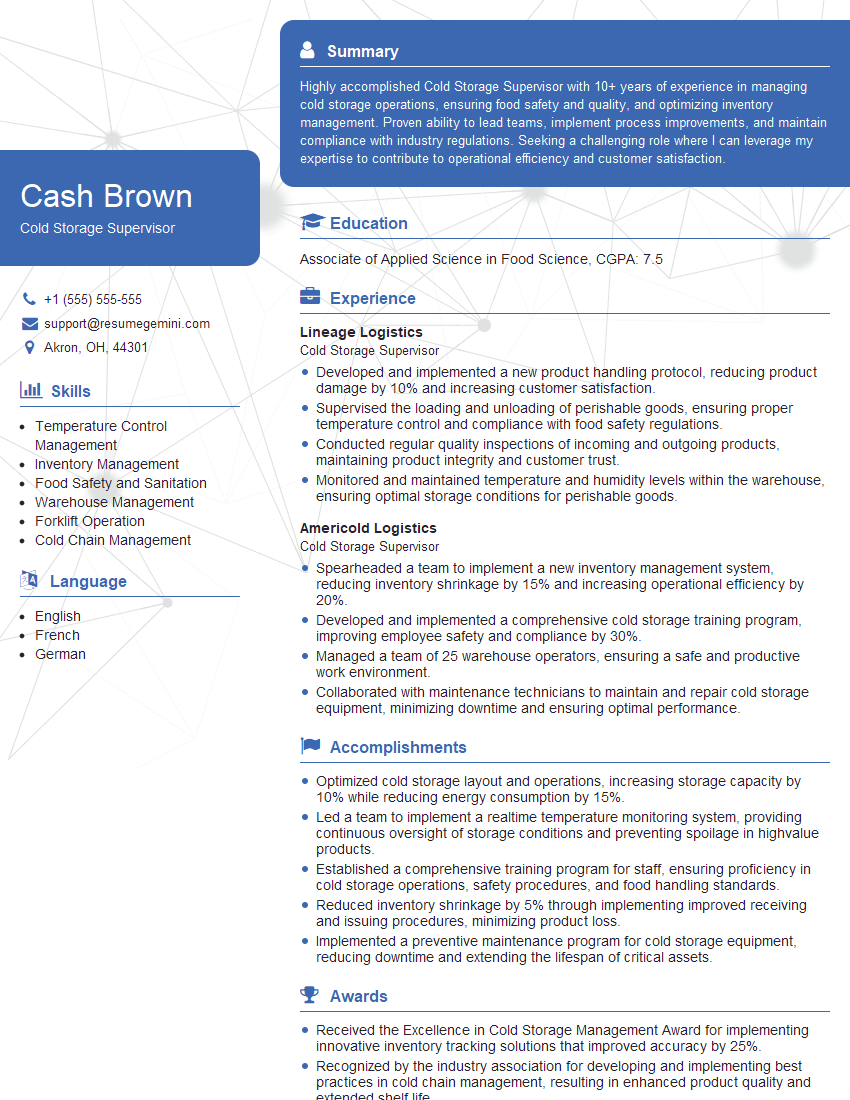
Mastering Produce Storage and Preservation opens doors to exciting career opportunities in the food industry, offering growth potential in management, research, and technical roles. To maximize your job prospects, creating a strong, ATS-friendly resume is crucial. ResumeGemini is a trusted resource to help you build a professional and effective resume that highlights your skills and experience. Examples of resumes tailored specifically to Produce Storage and Preservation are available to guide you, ensuring your application stands out from the competition. Invest time in crafting a compelling resume – it’s your first impression with potential employers.
Explore more articles
Users Rating of Our Blogs
Share Your Experience
We value your feedback! Please rate our content and share your thoughts (optional).
What Readers Say About Our Blog
Very informative content, great job.
good