Interviews are more than just a Q&A session—they’re a chance to prove your worth. This blog dives into essential Product Handling and Storage interview questions and expert tips to help you align your answers with what hiring managers are looking for. Start preparing to shine!
Questions Asked in Product Handling and Storage Interview
Q 1. Describe your experience with different inventory management systems (e.g., FIFO, LIFO).
Inventory management systems are crucial for efficient product handling. Two common methods are FIFO (First-In, First-Out) and LIFO (Last-In, First-Out). FIFO assumes the oldest products are used or sold first, minimizing the risk of spoilage or obsolescence. Think of a bakery – the oldest bread is sold first to avoid staleness. LIFO, conversely, prioritizes the newest products. This is sometimes used for non-perishable goods where pricing might be impacted by fluctuating market costs. For example, a hardware store might use LIFO for lumber if prices are constantly rising; they’d sell the most recently purchased lumber first, leading to higher profit margins. My experience spans both. I’ve implemented FIFO in perishable goods warehouses, tracking expiration dates meticulously using barcode scanners and WMS software to ensure timely rotation. In non-perishable settings, we’ve successfully utilized LIFO, adjusting our accounting practices to reflect this inventory flow. The choice between FIFO and LIFO depends heavily on product type, shelf life, and business objectives.
Q 2. Explain your understanding of warehouse safety regulations and procedures.
Warehouse safety is paramount. My understanding encompasses OSHA regulations and best practices. This includes proper forklift operation training and certification for all operators, clearly marked aisles and emergency exits, regular equipment inspections, and the implementation of strict safety protocols, such as lockout/tagout procedures during maintenance. We also prioritize personal protective equipment (PPE), including safety shoes, high-visibility vests, and hard hats, ensuring all employees use them correctly. Regular safety training and drills are essential to keeping everyone informed about potential hazards and emergency procedures. For example, we conducted monthly fire drills and annually updated our emergency response plan, involving fire marshal inspections and employee feedback. A proactive approach to safety, through clear communication, consistent training, and thorough inspections, is crucial for maintaining a safe working environment.
Q 3. How do you ensure the accuracy of inventory counts?
Accurate inventory counts are vital for operational efficiency and financial reporting. We employ a multi-pronged approach. Regular cycle counting, where a small portion of the inventory is counted daily or weekly, provides a continuous check and helps identify discrepancies early. This is far more efficient than a full physical inventory count. We also leverage barcode scanning technology integrated with our WMS, allowing for real-time updates on stock levels as goods move in and out. Regular reconciliation between physical counts and system records helps pinpoint and resolve any discrepancies. Discrepancies can often be explained (e.g., damaged goods, misplaced items), but we carefully investigate each one to ensure process improvements. Annual full physical inventory counts are also conducted to verify the overall accuracy of our system. Using a combination of these methods ensures a high degree of accuracy and minimizes inventory-related errors.
Q 4. What methods do you use to optimize warehouse space and layout?
Optimizing warehouse space and layout involves maximizing storage capacity and minimizing travel time. This includes using slotting optimization techniques, strategically placing frequently accessed items in easily accessible locations. We use both narrow-aisle racking and high-bay racking to efficiently use vertical space. Cross-docking, where incoming goods are directly transferred to outgoing shipments, minimizes storage time and improves throughput. Implementing a well-defined warehouse layout with clear markings for aisles and storage locations reduces confusion and improves efficiency. We also utilize warehouse management software (WMS) to simulate various layouts and optimize for workflow before implementation. Visual management tools, like color-coded zones, simplify location identification and promote organizational efficiency. Regular reviews of space utilization help identify areas for improvement and adjust the layout as needed, optimizing the flow of goods and personnel to ensure the most efficient possible operation.
Q 5. Describe your experience with warehouse management software (WMS).
My experience with Warehouse Management Software (WMS) includes implementing, configuring, and managing systems such as SAP WM and NetSuite WMS. A WMS is essential for tracking inventory, managing orders, and optimizing warehouse operations. I’ve used WMS systems to improve accuracy in inventory counts, streamline picking and packing processes, and manage labor resources effectively. For instance, we integrated our WMS with our transportation management system (TMS) to automate order fulfillment from receipt of order to shipment, significantly improving order turnaround times and reducing manual data entry errors. We also utilized the WMS’s reporting capabilities to track key performance indicators (KPIs) like order fulfillment rate and inventory turnover, enabling data-driven decision-making and continuous improvement. Successful WMS implementation requires careful planning, user training, and ongoing system maintenance.
Q 6. How do you handle damaged or obsolete products?
Handling damaged or obsolete products involves a structured process. Damaged goods are inspected to determine the extent of damage. Salvageable items might be repaired or sold at a discount. Items beyond repair are disposed of according to environmental regulations, often through recycling programs or authorized disposal facilities. Obsolete products, those no longer in demand, are evaluated for potential repurposing, liquidation, or donation. Proper documentation is essential throughout this process, tracking the disposition of each item and ensuring compliance with relevant regulations. For example, we implemented a system for clearly marking and segregating damaged products, allowing us to quickly identify and process them appropriately and prevent accidental shipment of damaged goods. Clear procedures and strict adherence to them are vital in this process to minimize losses and maintain regulatory compliance.
Q 7. Explain your experience with different types of material handling equipment (e.g., forklifts, pallet jacks).
My experience with material handling equipment encompasses a range of technologies including forklifts (both sit-down and stand-up), pallet jacks, conveyors, and automated guided vehicles (AGVs). Safe and efficient operation of this equipment is crucial for warehouse safety and productivity. This includes regular maintenance checks, operator training and certification, and adherence to safety regulations. For example, we implemented a preventative maintenance schedule for all forklifts to minimize downtime and ensure equipment reliability. Operator training included both classroom instruction and hands-on practice, emphasizing safe operating procedures and hazard recognition. The selection of equipment is also tailored to the specific needs of the warehouse, considering factors such as the size and weight of products, storage layout, and throughput requirements. For instance, we upgraded to narrow-aisle forklifts to improve space utilization in a high-density storage facility.
Q 8. How do you prioritize tasks in a fast-paced warehouse environment?
Prioritizing tasks in a fast-paced warehouse demands a structured approach. I typically employ a combination of methods, starting with a clear understanding of the day’s priorities, often derived from a daily production plan or order fulfillment schedule. This plan usually highlights urgent orders, deadlines, and high-value items requiring immediate attention.
Then, I use a prioritization matrix, often visual, to rank tasks based on urgency and importance. Urgent and important tasks (like fulfilling an order for a time-sensitive shipment) take precedence over less urgent tasks (like inventory cycle counting). I employ techniques like Kanban boards or similar visual management systems to keep track of task progress and re-prioritize as needed. This provides a dynamic approach that adapts to the ever-changing demands of a busy warehouse.
For instance, during peak season, we might prioritize processing rush orders and replenishing fast-moving inventory before tackling less immediate tasks like organizing the storage area. Effective communication with the team is crucial; daily briefings ensure everyone understands the priorities and can contribute effectively.
Q 9. What is your experience with receiving and shipping procedures?
My experience with receiving and shipping procedures is extensive, encompassing all aspects from initial order verification to final shipment tracking. Receiving involves verifying incoming shipments against purchase orders, checking for damages, quantity discrepancies, and ensuring proper documentation. I’m proficient in using various warehouse management systems (WMS) to record these details, which often involves scanning barcodes or entering data manually.
Shipping procedures include picking and packing orders accurately, generating shipping labels, and coordinating with carriers for timely pickup. I’m familiar with various shipping methods – from standard ground shipping to expedited services – and choose the most cost-effective and reliable option for each order. I’m also experienced in handling various documentation requirements, including commercial invoices and customs forms for international shipments.
In a previous role, I implemented a new system for receiving perishable goods, which reduced spoilage by 15% by prioritizing inspection and immediate storage in temperature-controlled areas. This demonstrated my ability to improve existing processes and enhance efficiency.
Q 10. How do you track and manage product movement within a warehouse?
Tracking and managing product movement within a warehouse is paramount for efficiency and accuracy. This typically involves utilizing a WMS or ERP system that provides real-time visibility into inventory location and movement. Barcodes and RFID tags are essential for accurate tracking, enabling immediate identification of each product as it moves through various stages of the warehouse process – from receiving to storage, picking, packing, and shipping.
I’m experienced in using both handheld scanners and stationary barcode readers to update inventory locations and track order fulfillment progress. Regular inventory cycle counting is also essential to ensure the accuracy of the system against physical stock. Any discrepancies are investigated and corrected promptly. Data analysis from the WMS helps identify bottlenecks and optimize storage layouts, picking routes, and overall warehouse flow.
For example, I successfully implemented a system of zone picking in a previous warehouse, which significantly reduced picking time and improved order fulfillment accuracy by 10%. This involved strategically organizing inventory based on picking frequency.
Q 11. Describe your experience with order fulfillment processes.
Order fulfillment is a core part of my expertise. It encompasses all the steps from receiving an order to its delivery to the customer. This involves several key processes:
- Order processing: Verifying order details, confirming inventory availability, and selecting the optimal picking and packing strategy.
- Picking: Retrieving the items from their storage locations, ensuring accuracy and minimizing picking errors.
- Packing: Properly packaging the items to prevent damage during transit and including necessary documentation and inserts.
- Shipping: Generating shipping labels, scheduling pickups with carriers, and updating order status throughout the process.
My experience spans various order fulfillment methods, including batch picking, zone picking, and wave picking, enabling me to optimize the process according to the specific needs of the operation. In a past role, I streamlined the order fulfillment process by implementing a new packing procedure, resulting in a 20% reduction in shipping damage claims.
Q 12. How do you ensure the timely delivery of products?
Ensuring timely delivery hinges on several interconnected factors. Accurate order processing, efficient picking and packing, and timely coordination with carriers are critical. This begins with clear communication with the customer regarding delivery expectations and managing customer service effectively to address any issues promptly.
Using a robust WMS with real-time tracking capabilities is vital for monitoring shipment progress. This system should integrate with carrier tracking systems, providing up-to-the-minute status updates. Proactive communication with carriers is essential to resolve any potential delays, such as weather disruptions or unforeseen logistical challenges. Furthermore, maintaining strong relationships with reliable carriers ensures consistent and on-time deliveries.
In one instance, I successfully navigated a major snowstorm by proactively contacting our carriers and rerouting shipments to minimize delays and ensure on-time delivery for priority customers. This demonstrated my ability to be proactive and responsive in high-pressure situations.
Q 13. What are your strategies for preventing warehouse theft and damage?
Preventing warehouse theft and damage requires a multi-pronged approach combining robust security measures with efficient operational practices.
- Physical security: This includes secure entry points, surveillance cameras (CCTV), alarm systems, and regular security patrols.
- Access control: Restricting access to authorized personnel only, using key card systems or biometric identification.
- Inventory management: Implementing strict inventory control procedures, regular stock audits, and reconciliation with the WMS.
- Employee training: Educating employees about security protocols and reporting procedures.
- Damage prevention: Proper storage procedures, adequate handling equipment, and training on safe handling techniques.
Regular security audits and reviews of security procedures are crucial to identify weaknesses and improve the overall security posture. For example, in a previous role, I implemented a new security protocol that involved a two-person verification system for high-value items, leading to a significant reduction in theft incidents.
Q 14. How do you maintain accurate records of inventory transactions?
Maintaining accurate inventory records is crucial for operational efficiency, financial accuracy, and customer satisfaction. This primarily involves using a WMS or ERP system that automatically updates inventory levels with each transaction. This includes receiving, picking, shipping, and any adjustments due to damage or discrepancies.
Regular cycle counting and physical inventory checks are essential to reconcile the system data with the physical inventory. Discrepancies are investigated and corrected immediately. Data analysis from the WMS helps to identify trends, such as slow-moving or obsolete inventory, which can help inform purchasing decisions and optimize inventory levels. Proper documentation of all inventory transactions, including receipts, transfer slips, and shipment records, is essential for auditing and traceability.
I’ve implemented a system of barcode scanning and real-time data updates which improved inventory accuracy by 95% compared to manual methods. This ensured accurate information for sales forecasting and improved order fulfillment rates significantly.
Q 15. Describe your experience with cycle counting and inventory audits.
Cycle counting is a process of regularly counting a smaller subset of inventory rather than conducting a full inventory audit. This helps maintain inventory accuracy on an ongoing basis, preventing large discrepancies from accumulating. Inventory audits, on the other hand, are comprehensive counts of all inventory, often done annually or less frequently, and are generally more time-consuming.
In my previous role, I implemented a cycle counting system that prioritized high-value or fast-moving items. We used a stratified sampling approach, assigning different counting frequencies to items based on their importance. For instance, A-items (high-value, high-volume) were counted weekly, B-items (medium value, medium volume) bi-weekly, and C-items (low value, low volume) monthly. This targeted approach maximized accuracy while minimizing disruption to warehouse operations. We also integrated cycle counting data with our inventory management system, allowing for real-time updates and better decision-making. Full inventory audits were conducted annually to verify the accuracy of the cycle counting process and identify any systemic errors.
Career Expert Tips:
- Ace those interviews! Prepare effectively by reviewing the Top 50 Most Common Interview Questions on ResumeGemini.
- Navigate your job search with confidence! Explore a wide range of Career Tips on ResumeGemini. Learn about common challenges and recommendations to overcome them.
- Craft the perfect resume! Master the Art of Resume Writing with ResumeGemini’s guide. Showcase your unique qualifications and achievements effectively.
- Don’t miss out on holiday savings! Build your dream resume with ResumeGemini’s ATS optimized templates.
Q 16. How do you handle discrepancies in inventory counts?
Handling inventory discrepancies requires a systematic approach. The first step involves investigating the root cause. Were the discrepancies due to human error (e.g., incorrect counting, mislabeling), system errors (e.g., data entry mistakes in the inventory management system), or theft?
- Human Error: Retraining staff on proper counting and data entry procedures is key. Implementing double-checking procedures or using barcode scanners can also reduce errors.
- System Errors: This might require reviewing and updating the inventory management system, ensuring data integrity, and possibly implementing data validation checks.
- Theft: This requires a more in-depth investigation, potentially involving security measures like improved surveillance and access control.
Once the cause is identified, corrective actions are implemented. Documentation of the discrepancy, investigation, and resolution is crucial. We often use a discrepancy report form that includes details of the item, the difference in count, the identified cause, and the corrective actions taken. This ensures accountability and helps prevent similar issues in the future. For example, in one instance, we discovered a systematic error in our warehouse management system that led to consistent undercounting of a particular product. Addressing this software bug eliminated a significant source of discrepancies.
Q 17. Explain your understanding of different storage methods (e.g., racking, shelving).
Different storage methods cater to varying warehouse needs and product characteristics.
- Racking: This offers high-density storage and is ideal for palletized goods or items requiring easy access. Types include selective racking (easy access to each pallet), drive-in racking (high density, but FIFO might be challenging), and push-back racking (also high density, good for LIFO).
- Shelving: This is versatile and suitable for smaller items or those needing individual access. It’s less dense than racking, but easier to manage for smaller warehouses or diverse product types. Shelving can include adjustable shelves for better customization.
- Bulk Storage: This involves stacking goods directly on the floor, suitable for less sensitive, heavy, and large items where access frequency is lower. This is less efficient in terms of space utilization compared to racking and shelving.
- Mezzanine Floors: These are raised platforms within a warehouse, effectively doubling the storage space. They are particularly useful in high-ceiling warehouses where vertical space can be utilized.
The choice of storage method depends on factors such as product size, weight, volume, turnover rate, and warehouse layout. For example, a warehouse storing fast-moving consumer goods would likely utilize selective racking for quick accessibility, whereas a warehouse storing large, less frequently accessed items might opt for bulk storage or drive-in racking.
Q 18. How do you manage the flow of goods within a warehouse?
Managing the flow of goods within a warehouse requires careful planning and execution. This involves optimizing the receiving, storage, picking, packing, and shipping processes. Key principles include:
- Efficient Layout: Organizing the warehouse to minimize travel distances for workers is crucial. High-turnover items should be placed in easily accessible locations.
- Inventory Management System (IMS): An IMS is essential for tracking goods, managing storage locations, and optimizing picking routes. This can often integrate with barcode scanners and other technologies to improve accuracy and speed.
- Warehouse Management System (WMS): A WMS provides advanced capabilities for managing all aspects of warehouse operations. This includes order management, inventory control, labor management, and reporting.
- Slotting Optimization: Strategically assigning locations for products in the warehouse to minimize travel time and maximize space utilization.
- Cross-Docking: This involves unloading goods from incoming shipments and immediately loading them onto outgoing shipments, minimizing storage time.
Imagine a warehouse using a WMS that directs workers to specific pick locations using a handheld scanner, creating optimal routes to minimize travel time. This directly impacts efficiency by reducing labor costs and speeding up order fulfillment.
Q 19. Describe your experience with barcode scanning and RFID technology.
Barcode scanning and RFID (Radio-Frequency Identification) are crucial technologies for improving warehouse efficiency and accuracy.
- Barcode Scanning: This is a mature technology that uses barcodes to identify products and track their movement. It’s relatively inexpensive and widely used for tracking inventory, managing shipments, and automating processes.
- RFID: This technology uses radio waves to identify and track tags attached to products. It offers advantages over barcode scanning because it can track multiple items simultaneously without line-of-sight, enabling real-time inventory tracking and location monitoring.
I’ve extensively used both technologies. In one project, we implemented RFID tags for high-value items, allowing us to track their movement within the warehouse in real-time, improving inventory accuracy and security. This resulted in a significant reduction in inventory discrepancies and improved stock control. Barcode scanners were used for general inventory management and order picking, providing a cost-effective solution for high-volume transactions. The combination of both technologies provided a comprehensive tracking system.
Q 20. How do you train new employees on warehouse procedures?
Training new employees is crucial for maintaining warehouse efficiency and safety. We use a multi-faceted approach:
- On-the-Job Training: This involves hands-on training with experienced workers, gradually introducing new employees to various tasks and procedures.
- Classroom Training: This covers safety procedures, warehouse layout, inventory management systems, and equipment operation.
- Mentorship Program: Pairing new employees with experienced workers for ongoing support and guidance.
- Interactive Simulations: This is especially helpful for mastering complex procedures, such as operating forklifts or using the warehouse management system.
- Regular Feedback and Assessments: Continuous feedback and performance reviews to identify areas for improvement and reinforce training.
The training program is documented with checklists, training manuals, and performance evaluations to ensure consistency and accountability. We also use a training matrix to track the progress of each employee and identify any skill gaps.
Q 21. What are your strategies for improving warehouse efficiency?
Improving warehouse efficiency is an ongoing process. My strategies focus on several key areas:
- Process Optimization: Analyzing existing workflows to identify bottlenecks and inefficiencies. Techniques like Lean manufacturing principles (eliminating waste) and Six Sigma (reducing variation) can significantly improve processes.
- Technology Implementation: Implementing and leveraging technology like WMS, RFID, barcode scanners, and automated guided vehicles (AGVs) to streamline operations and improve accuracy.
- Inventory Optimization: Managing inventory levels effectively to minimize storage costs and reduce stockouts. Techniques like ABC analysis and demand forecasting are valuable tools.
- Layout Optimization: Analyzing and improving the warehouse layout to minimize travel times, optimize storage space, and improve workflow.
- Employee Engagement and Training: Investing in employee training and creating a positive work environment improves productivity and reduces error rates.
For example, in one case, we implemented a new slotting optimization system that reduced pick times by 15% and improved space utilization by 10%. This shows that a targeted focus on specific areas can result in significant improvements in overall warehouse efficiency.
Q 22. How do you handle peak seasons or high-volume orders?
Handling peak seasons requires a proactive, multi-faceted approach. It’s not just about throwing more bodies at the problem; it’s about optimizing processes and anticipating demand. We start by forecasting – analyzing historical data to predict order volume and product demand. This allows us to adjust staffing levels accordingly, potentially hiring temporary workers or leveraging overtime options.
Next, we optimize warehouse layout. Fast-moving items are strategically placed closer to shipping docks for quicker retrieval. We also implement efficient picking and packing strategies, such as wave picking (grouping orders with similar destinations for batch processing) or zone picking (dividing the warehouse into zones and assigning pickers to each).
Finally, we ensure robust communication. Real-time tracking systems keep everyone informed about order status and potential bottlenecks. Clear communication channels with clients manage expectations and prevent misunderstandings. For example, during last year’s holiday rush, we implemented a new order management system that reduced order fulfillment time by 15% by optimizing picking routes.
Q 23. Describe your experience with managing warehouse staff.
Managing warehouse staff is all about building a motivated and efficient team. I focus on clear communication, providing regular training, and fostering a positive work environment. This includes conducting regular team meetings to discuss challenges, celebrate successes, and address any concerns. I delegate tasks based on individual skills and strengths. For instance, I might assign experienced staff to more complex tasks, like handling fragile items, and newer staff to simpler tasks, allowing for skill development.
Performance management is also crucial. I use a combination of regular performance reviews, ongoing feedback, and performance-based incentives to motivate the team and maintain high standards. I’ve successfully implemented a cross-training program in my previous role, resulting in a more adaptable workforce and improved overall productivity.
Safety is paramount. I enforce strict safety protocols and provide regular safety training, including the proper use of equipment and safe lifting techniques. This not only protects my team but also contributes to a more efficient workflow.
Q 24. How do you ensure compliance with relevant health and safety regulations?
Compliance with health and safety regulations is not optional; it’s a non-negotiable. We adhere strictly to OSHA guidelines (or relevant local regulations) in all aspects of our operations. This includes regular safety inspections to identify and rectify potential hazards, such as damaged flooring, faulty equipment, or inadequate lighting. We maintain comprehensive documentation of all safety training, inspections, and incident reports.
We provide our staff with the necessary personal protective equipment (PPE), like safety shoes, gloves, and high-visibility vests, and ensure that they understand and follow proper procedures for using equipment and handling materials. For example, we conduct regular training on forklift operation and hazardous materials handling. We also conduct regular fire drills and emergency preparedness exercises. Proactive safety measures are always cheaper than reacting to accidents.
Q 25. What is your experience with different packaging methods?
My experience spans a wide range of packaging methods, from simple corrugated cardboard boxes to specialized packaging for fragile or temperature-sensitive goods. I’m familiar with various materials, including bubble wrap, foam inserts, air pillows, and void fill, each suited to different product types and shipping conditions. I understand the importance of choosing packaging that provides adequate protection while minimizing costs and environmental impact.
I’ve worked with various automated packaging systems, which improve efficiency and consistency. For example, in my previous role, we implemented an automated box-erecting and taping machine, significantly increasing our packaging speed and reducing labor costs. Selection of packaging also takes into account customer experience – attractive and easy-to-open packaging enhances the customer’s perception of the product and brand.
Q 26. How do you manage returns and damaged goods?
Managing returns and damaged goods requires a structured process to minimize losses and maintain customer satisfaction. We have a dedicated returns department that follows a clear procedure for inspecting returned items, determining the reason for return (e.g., damage, defect, incorrect order), and processing refunds or replacements.
Damaged goods are assessed to determine if they can be salvaged, repaired, or if they need to be disposed of responsibly according to relevant environmental regulations. We maintain detailed records of all returns and damaged goods, allowing us to identify trends and areas for improvement. For example, if we see a high rate of damaged goods related to a particular product or shipping method, we can adjust our packaging or shipping procedures accordingly.
Q 27. Describe your experience with cross-docking and other specialized warehousing techniques.
Cross-docking is a highly efficient warehousing technique where goods are unloaded from incoming shipments and immediately loaded onto outgoing shipments, minimizing storage time. I have extensive experience implementing cross-docking strategies, significantly reducing storage costs and improving delivery times. This requires careful coordination between inbound and outbound logistics, including precise scheduling and real-time tracking of goods.
Beyond cross-docking, I’m familiar with other specialized techniques such as value-added services (VAS), which might include kitting, labeling, or light assembly, and specialized storage solutions for temperature-sensitive products (refrigerated or frozen storage) or hazardous materials. The choice of technique depends entirely on the nature of the products and the client’s requirements.
Q 28. How do you stay updated on industry best practices in product handling and storage?
Staying current in this dynamic industry is crucial. I regularly attend industry conferences and webinars, read industry publications (both print and online), and actively participate in professional organizations such as the Material Handling Industry of America (MHIA).
I also leverage online resources, such as industry-specific websites and blogs, to keep abreast of the latest technologies, best practices, and regulations. Networking with colleagues and attending training courses are also vital to maintaining my expertise and ensuring I’m applying the most effective strategies in my work.
Key Topics to Learn for Product Handling and Storage Interview
- Inventory Management: Understanding inventory control systems, cycle counting, and stock rotation techniques. Practical application: Explain how you would optimize warehouse space and minimize product damage during storage.
- Warehouse Operations: Familiarity with warehouse layout, receiving, putaway, picking, packing, and shipping processes. Practical application: Describe your experience with different warehouse management systems (WMS) and their impact on efficiency.
- Health and Safety Regulations: Knowledge of OSHA regulations, hazardous materials handling, and safety procedures in warehouse environments. Practical application: Detail how you would ensure a safe working environment and mitigate risks associated with handling various products.
- Supply Chain Management Principles: Understanding the flow of goods from origin to consumer, including procurement, logistics, and distribution. Practical application: Explain how you would improve the efficiency of a supply chain by optimizing product handling and storage.
- Product Damage Prevention and Control: Implementing strategies to minimize product damage during handling, storage, and transportation. Practical application: Describe a situation where you identified and solved a problem related to product damage.
- Technology in Product Handling and Storage: Familiarity with automated systems, RFID tracking, and warehouse management software. Practical application: Discuss your experience with any warehouse technologies and their benefits.
Next Steps
Mastering Product Handling and Storage opens doors to exciting career opportunities in logistics, supply chain management, and warehousing. A strong understanding of these concepts is highly valued by employers. To significantly boost your job prospects, focus on creating an ATS-friendly resume that highlights your skills and experience effectively. ResumeGemini is a trusted resource that can help you build a professional and impactful resume. We provide examples of resumes tailored to Product Handling and Storage to guide you. Take the next step towards your dream career – build a winning resume with ResumeGemini today!
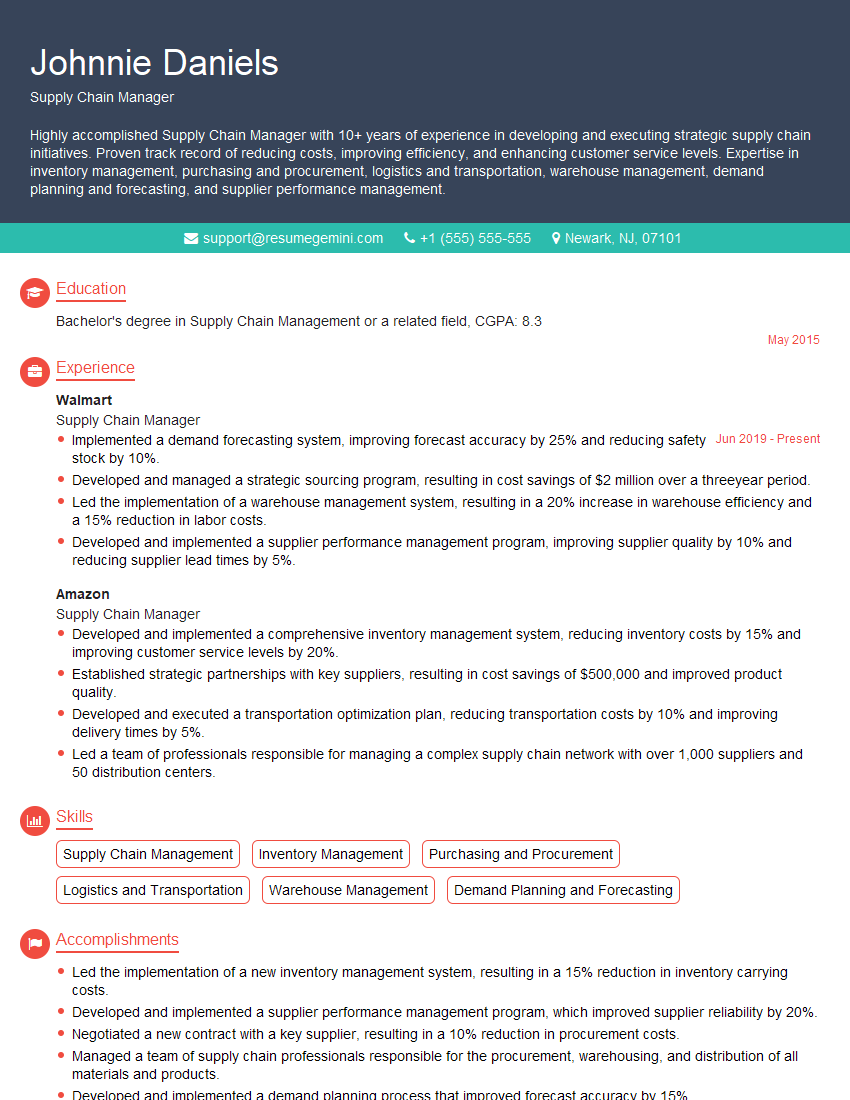
Supply Chain Manager Resume Sample
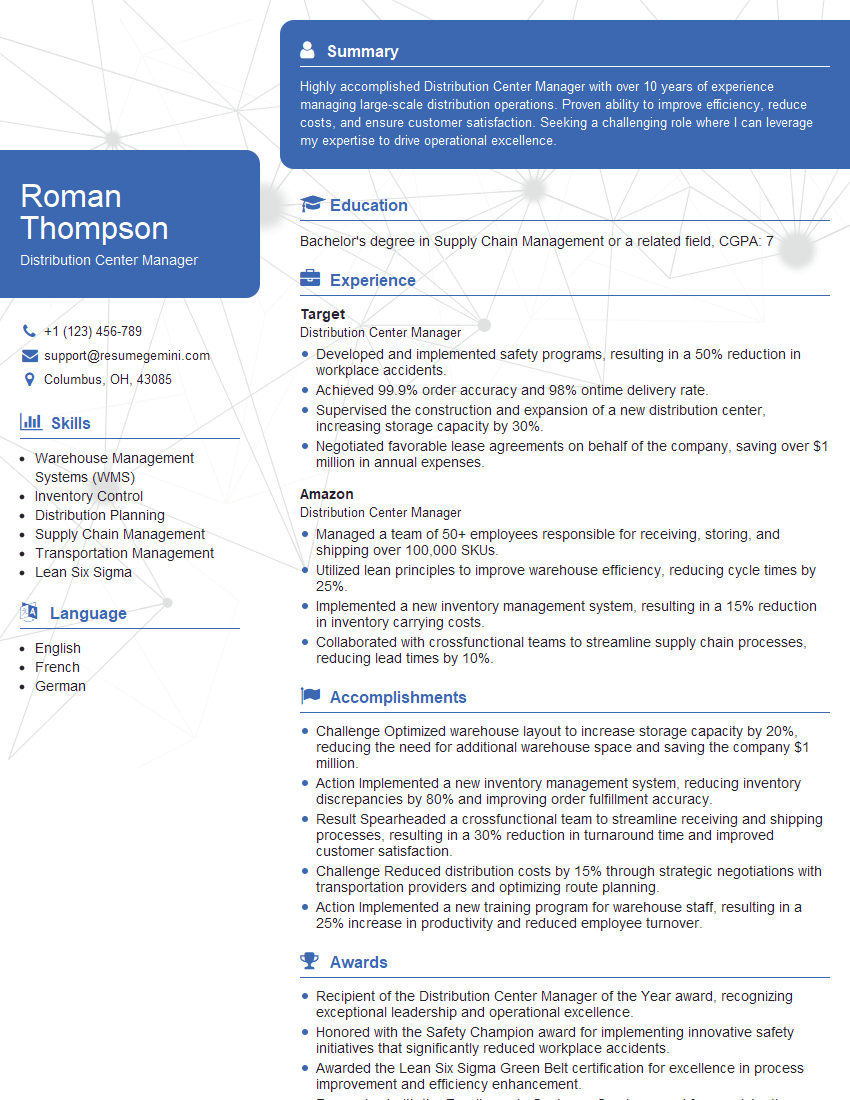
Distribution Center Manager Resume Sample
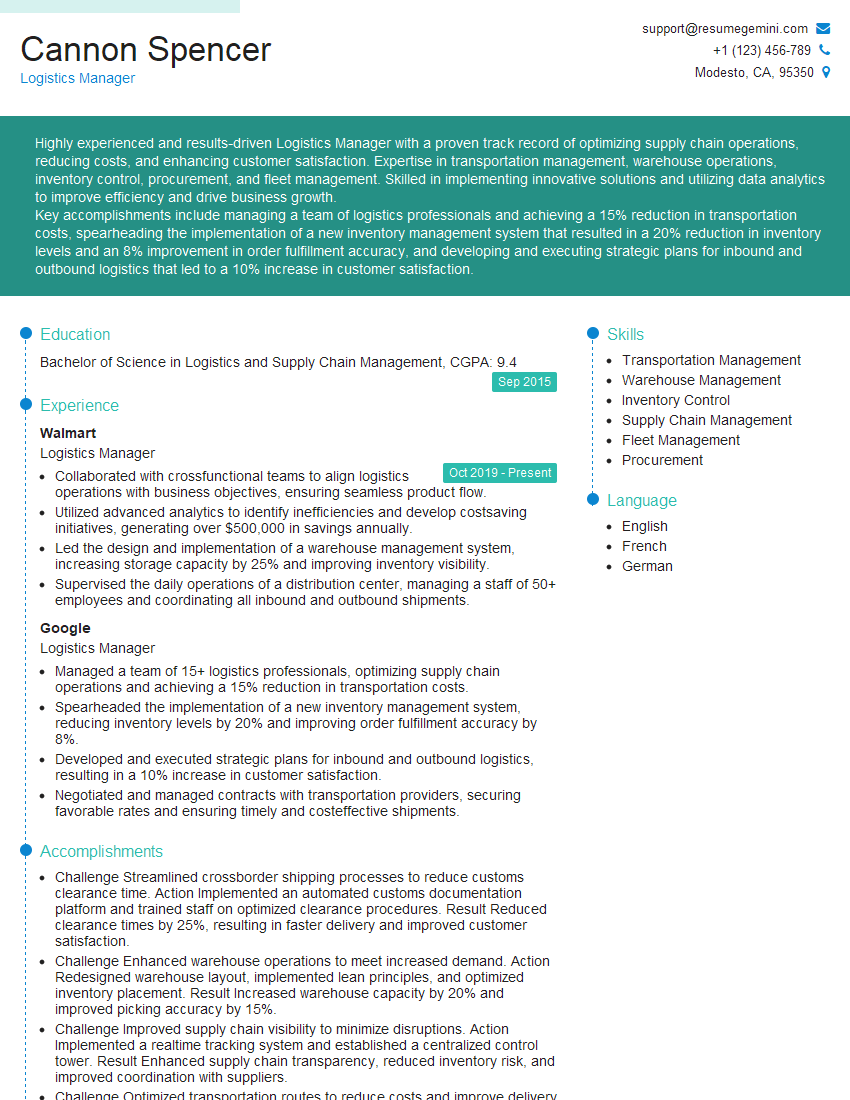
Logistics Manager Resume Sample
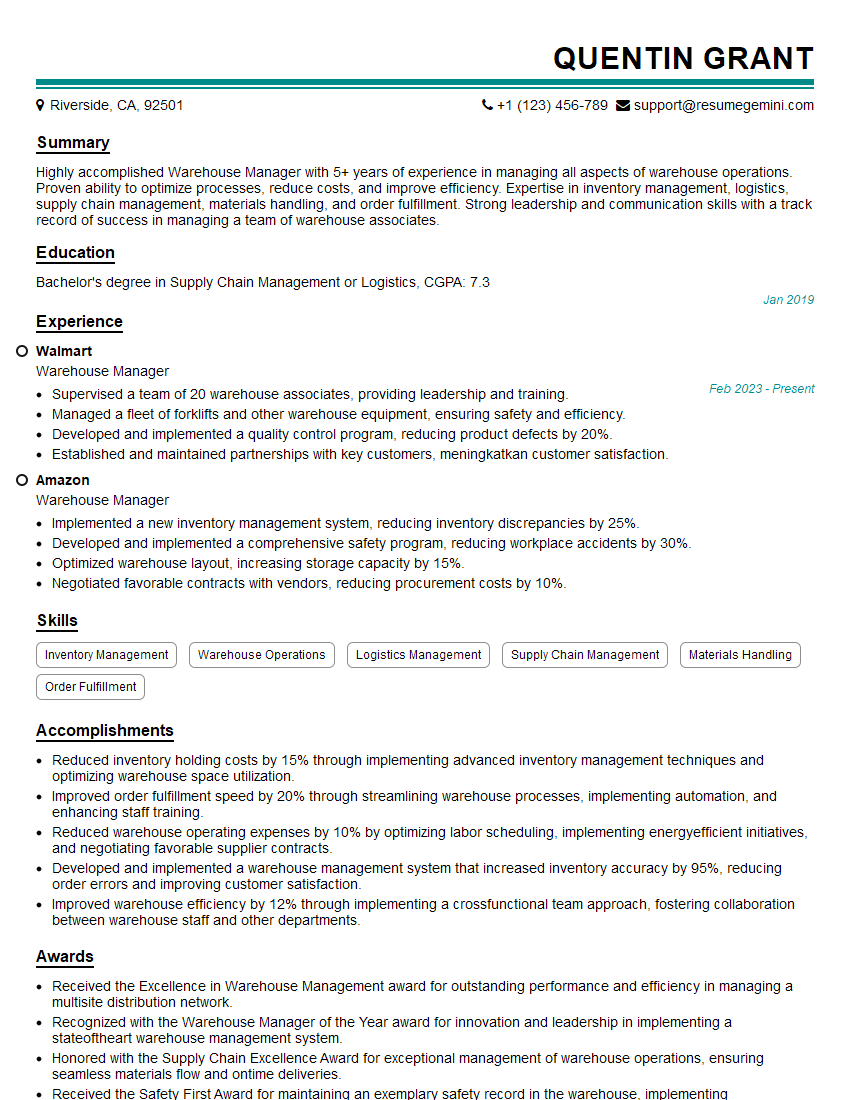
Warehouse Manager Resume Sample
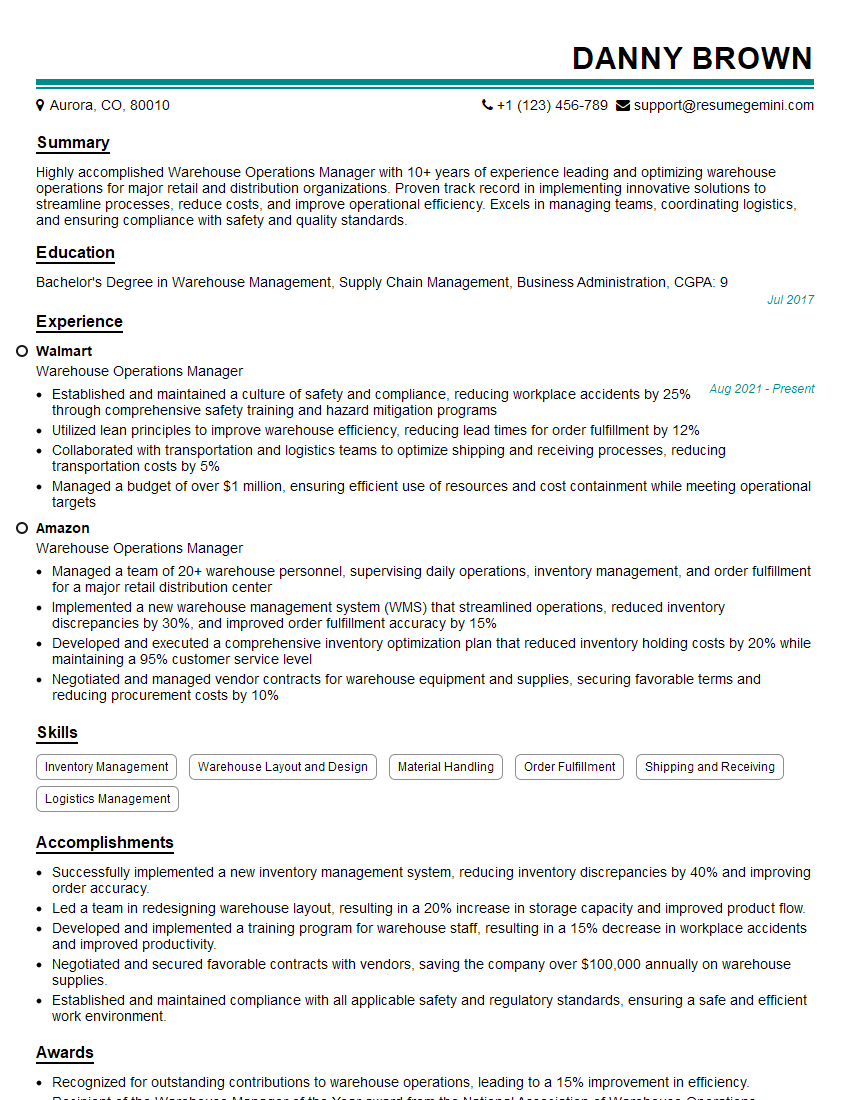
Warehouse Operations Manager Resume Sample
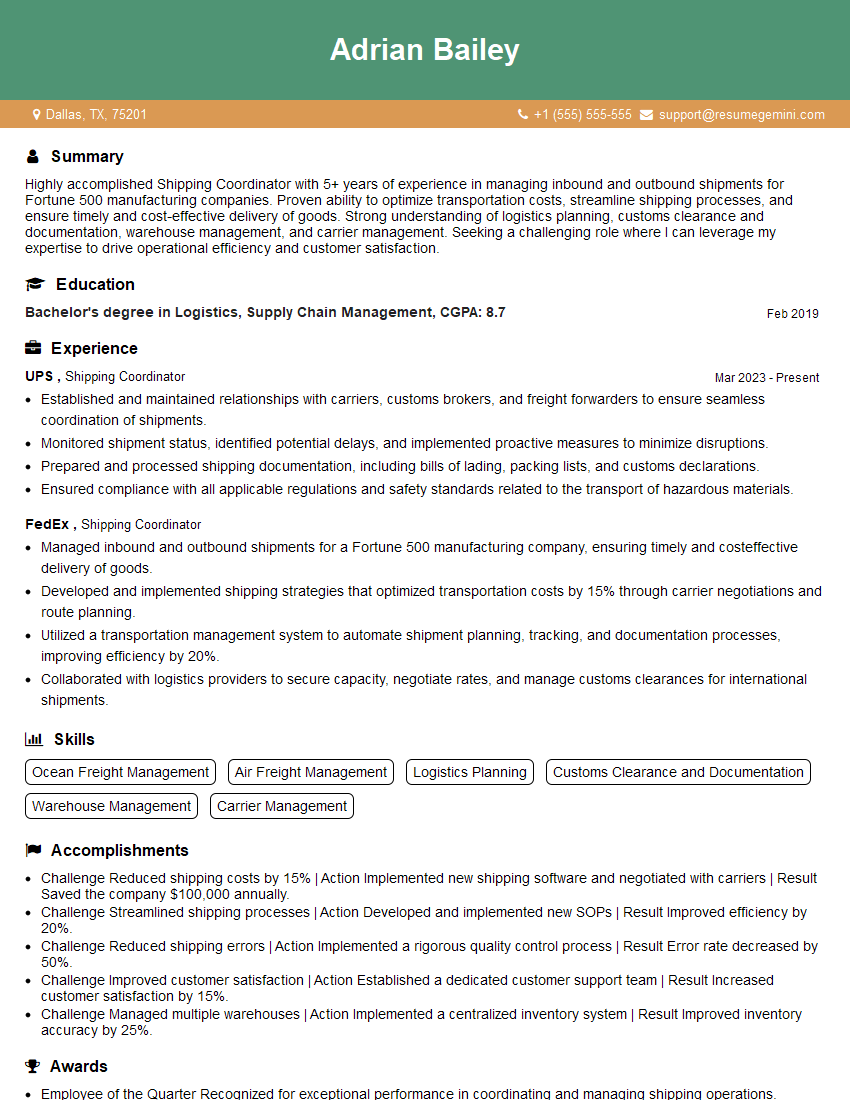
Shipping Coordinator Resume Sample
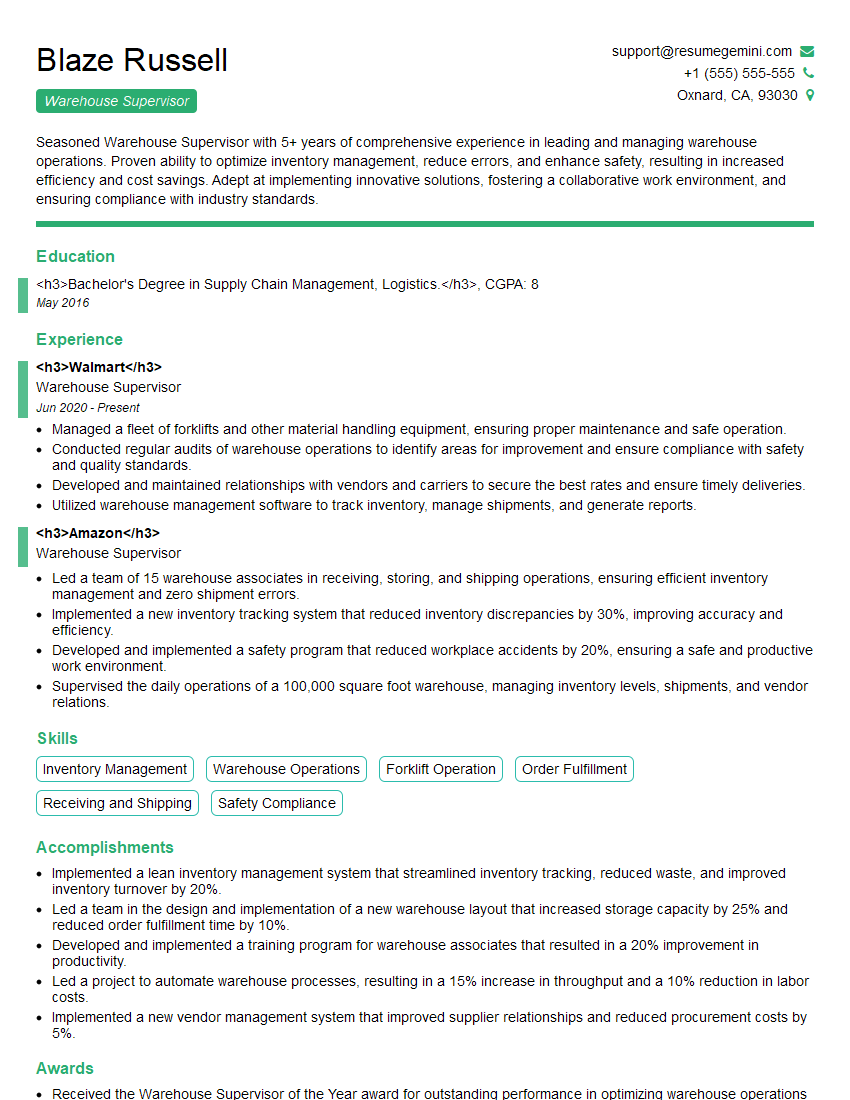
Warehouse Supervisor Resume Sample
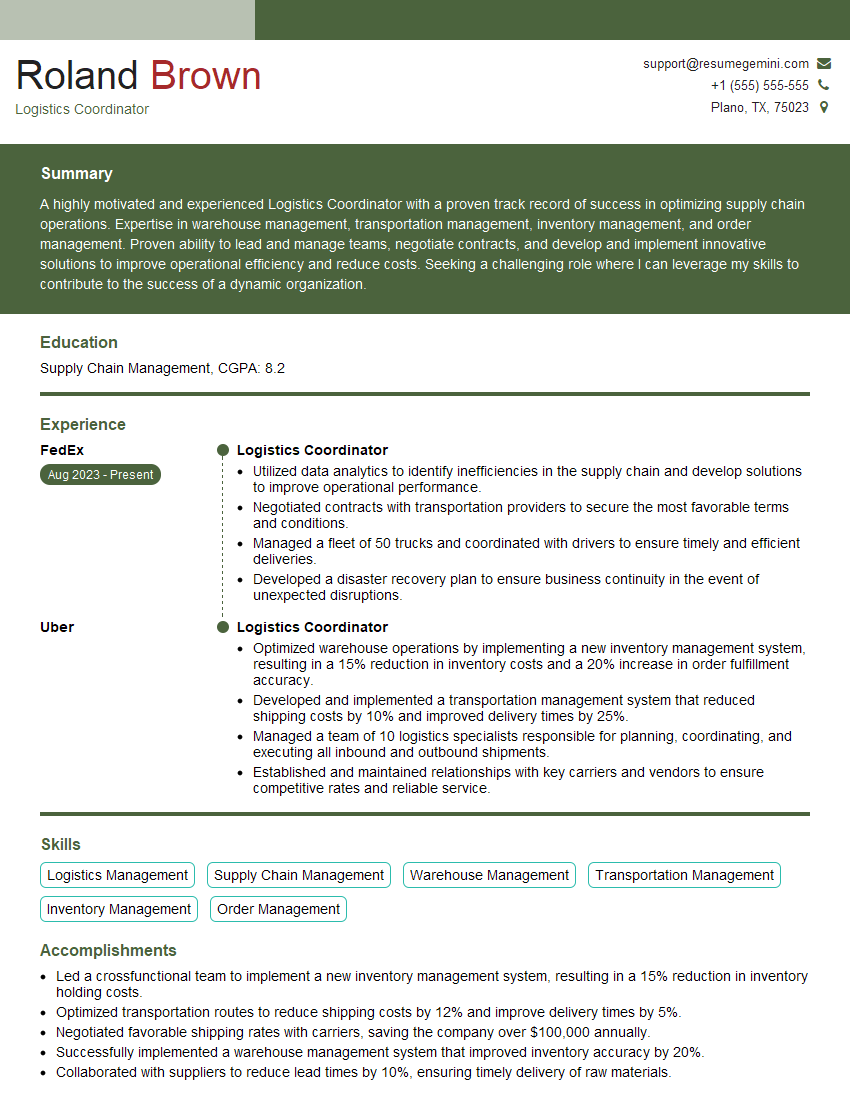
Logistics Coordinator Resume Sample
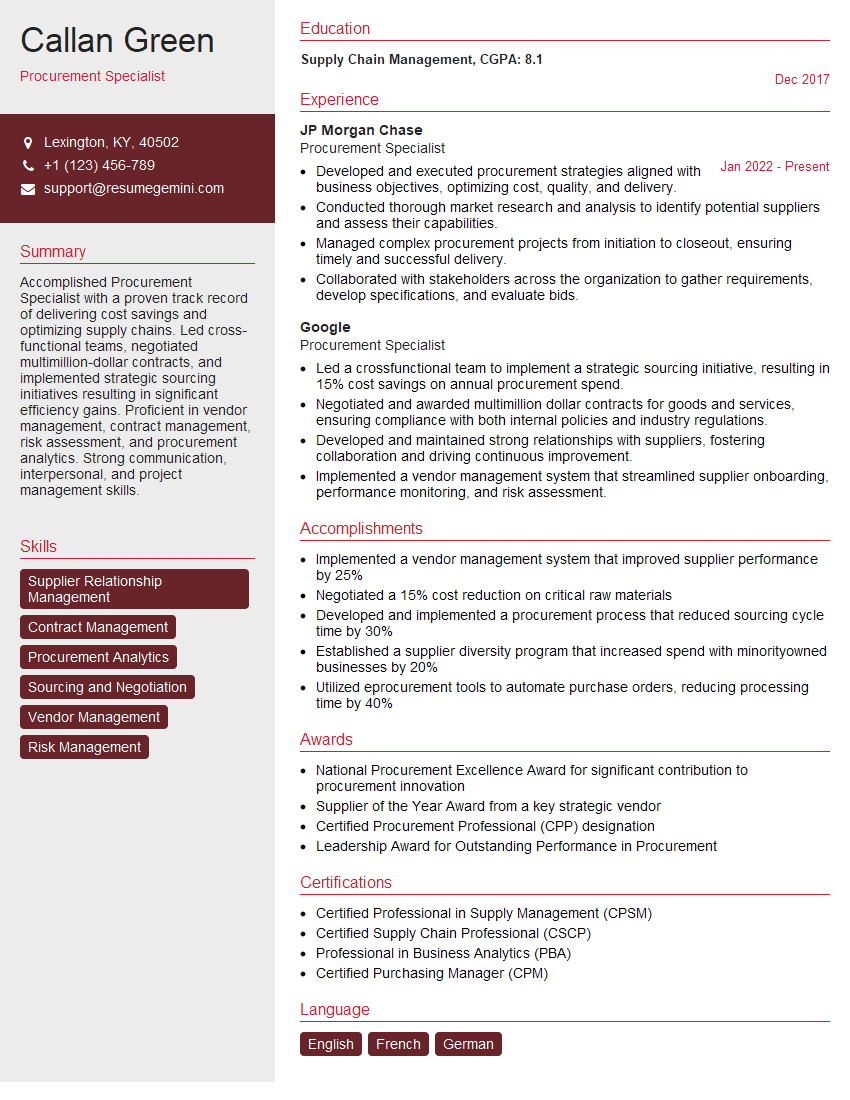
Procurement Specialist Resume Sample
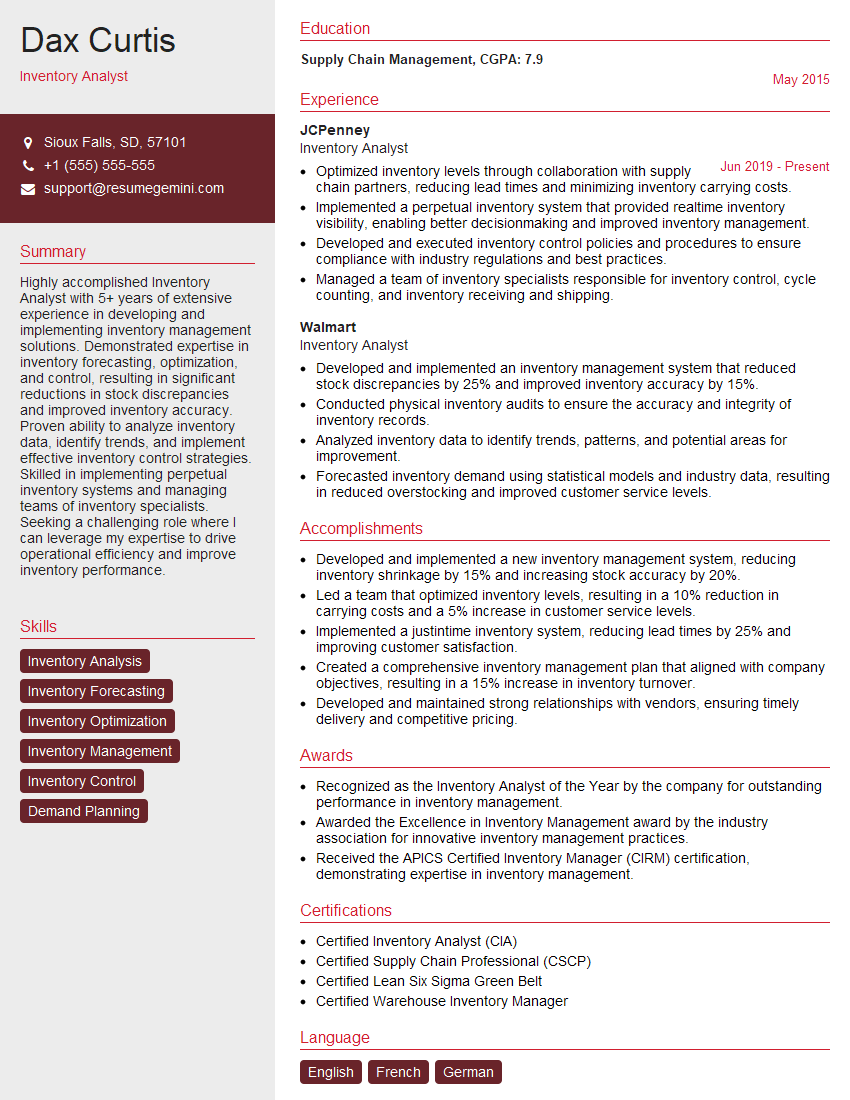
Inventory Analyst Resume Sample
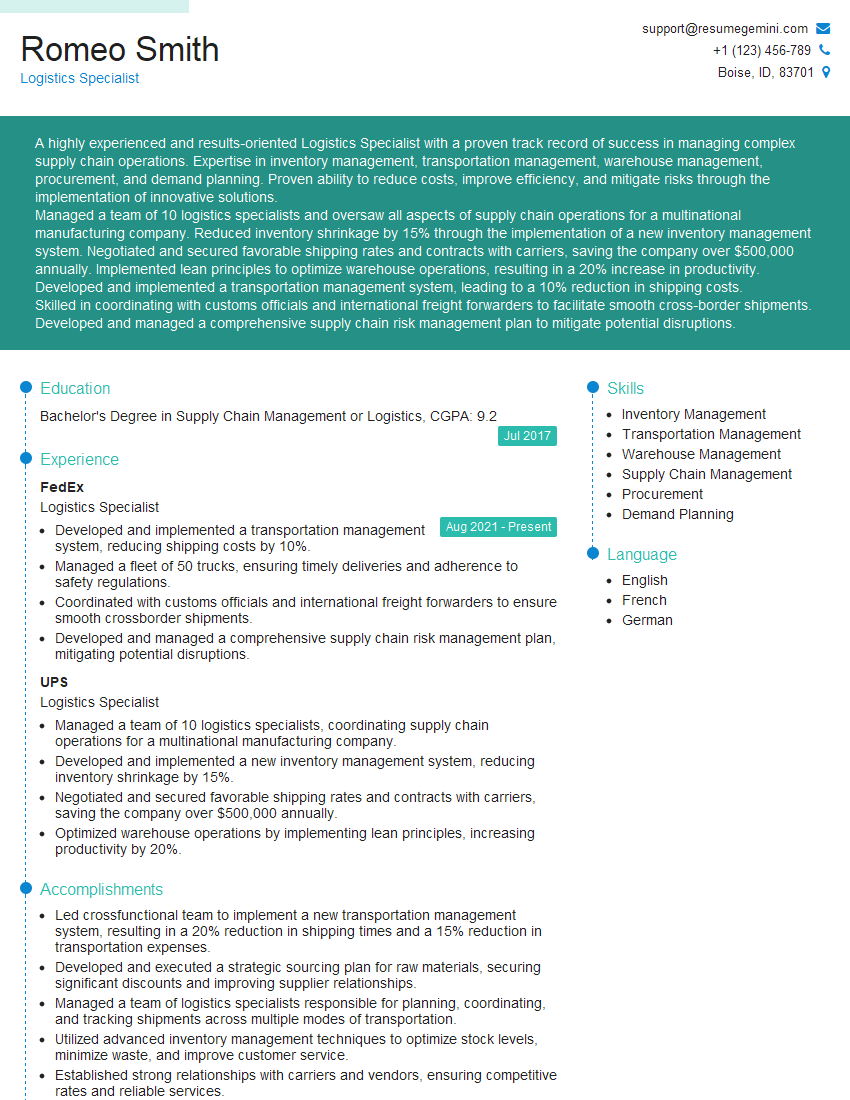
Logistics Specialist Resume Sample
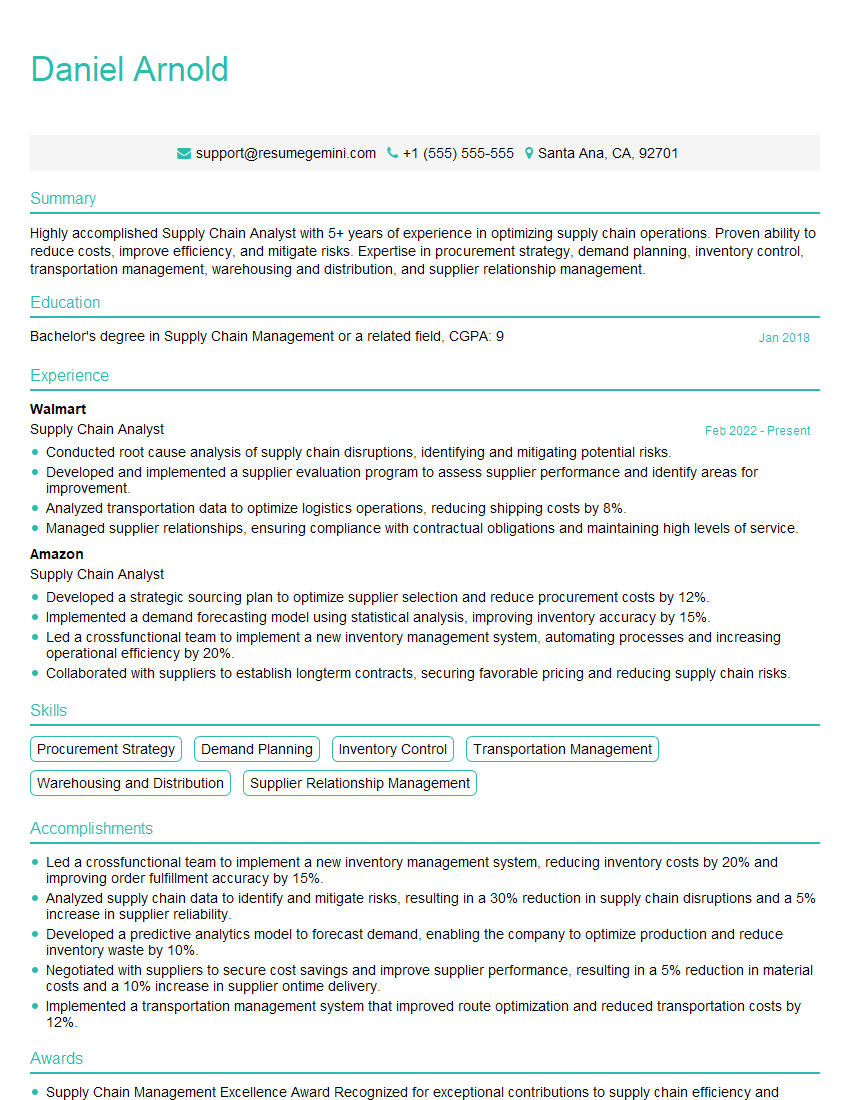
Supply Chain Analyst Resume Sample
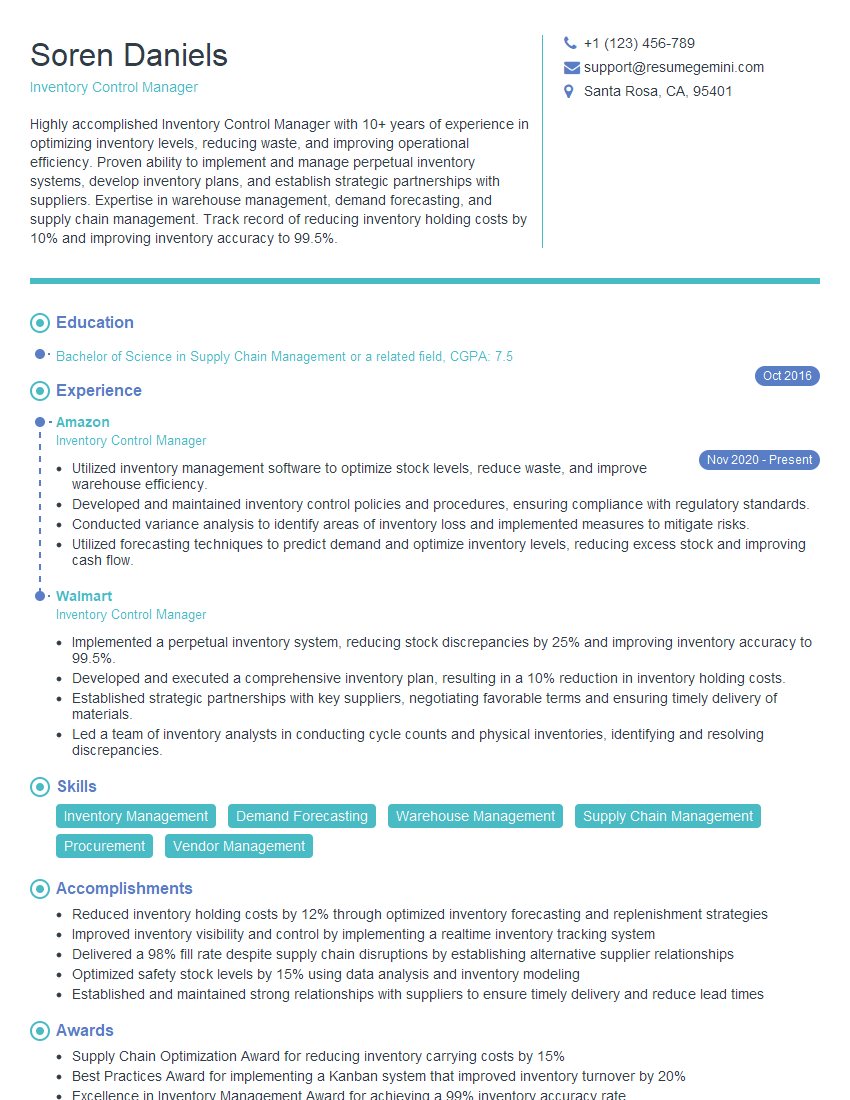
Inventory Control Manager Resume Sample
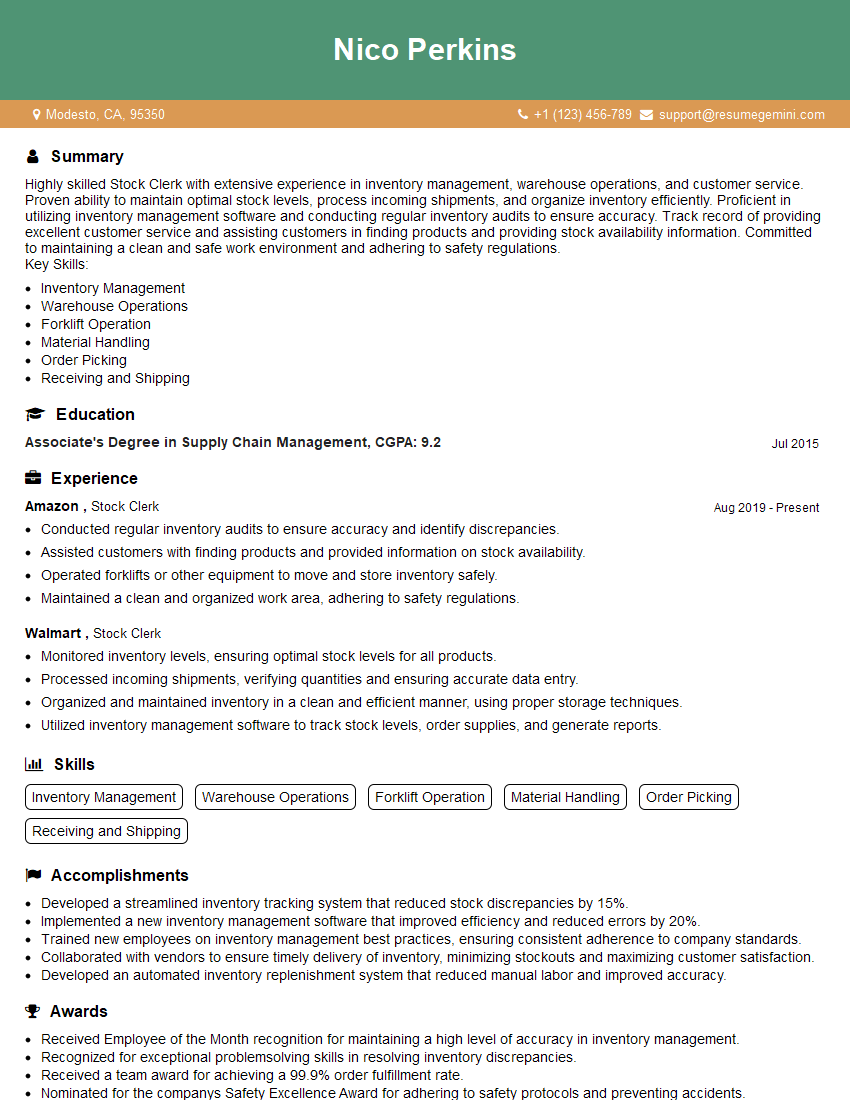
Stock Clerk Resume Sample
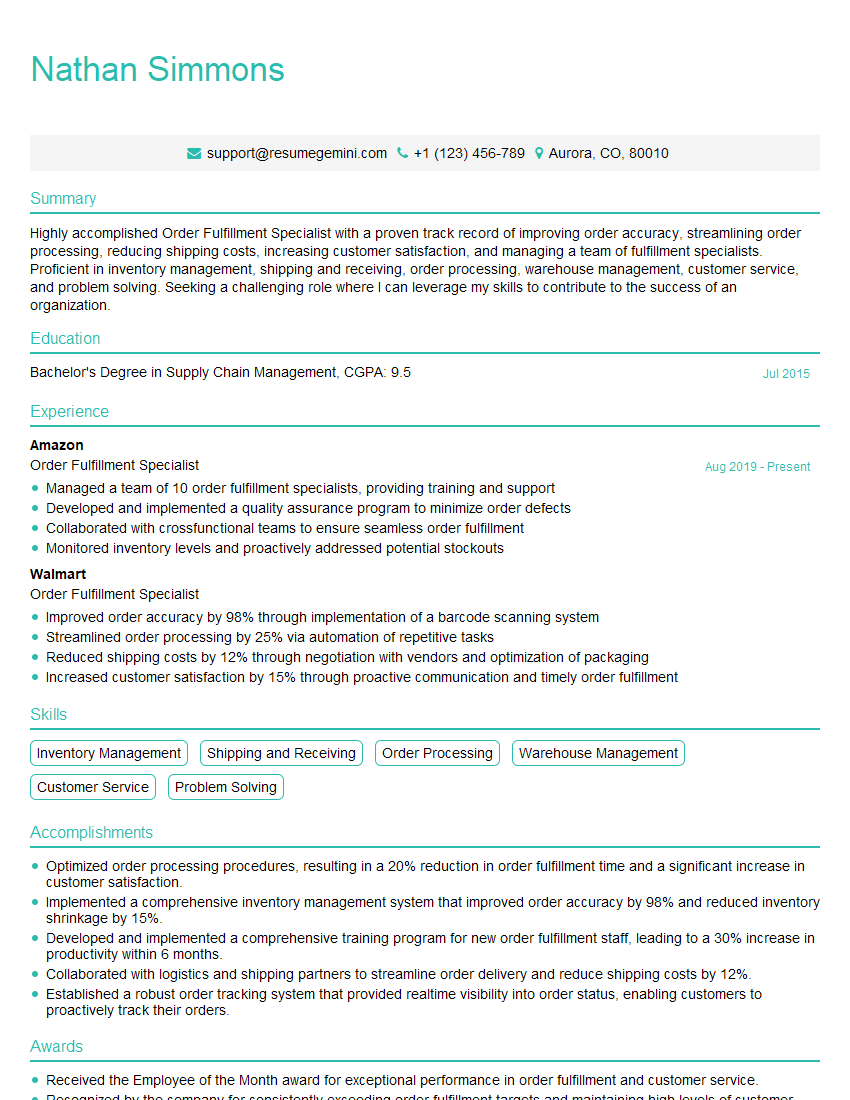
Order Fulfillment Specialist Resume Sample
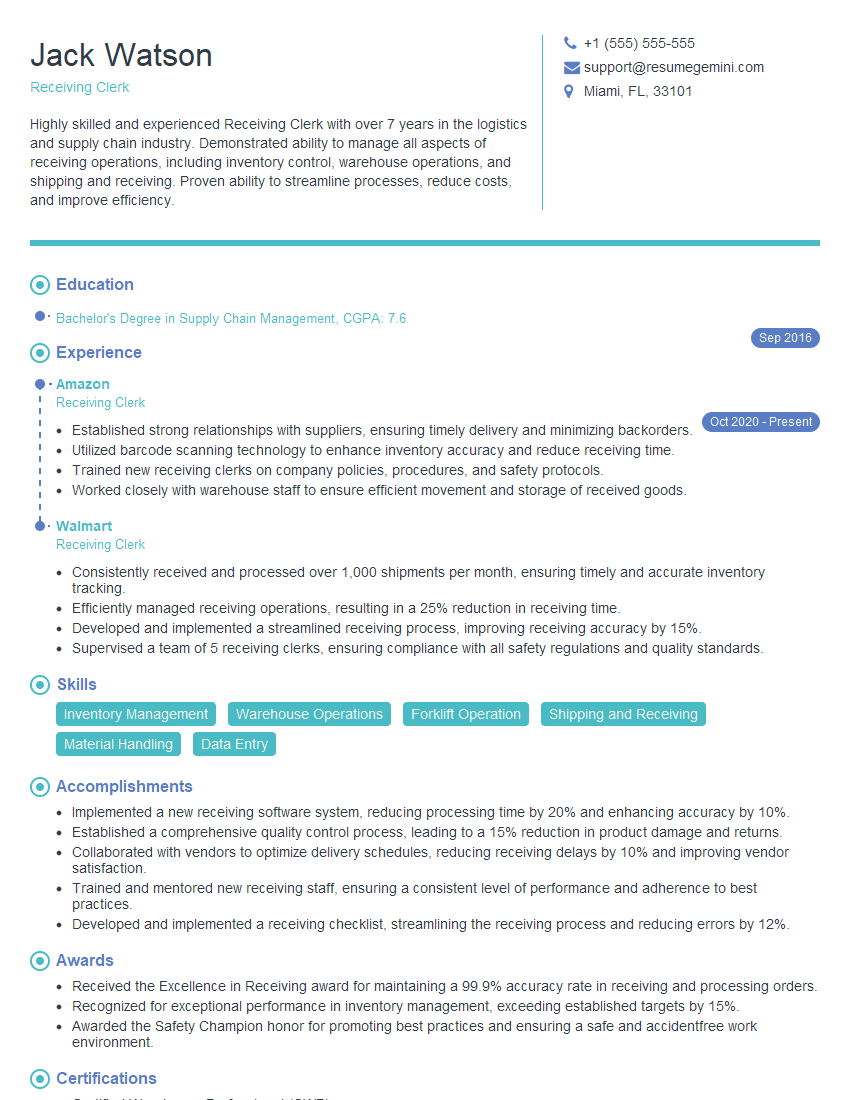
Receiving Clerk Resume Sample

Shipping and Receiving Clerk Resume Sample
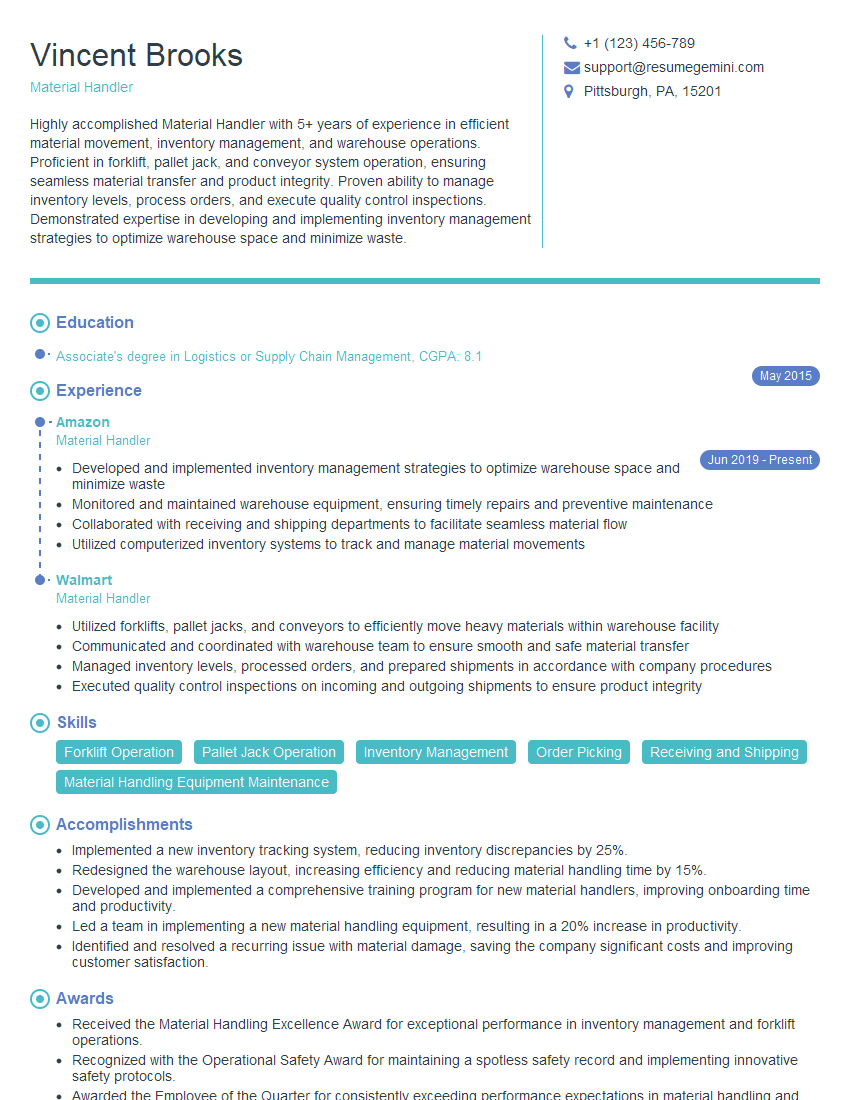
Material Handler Resume Sample
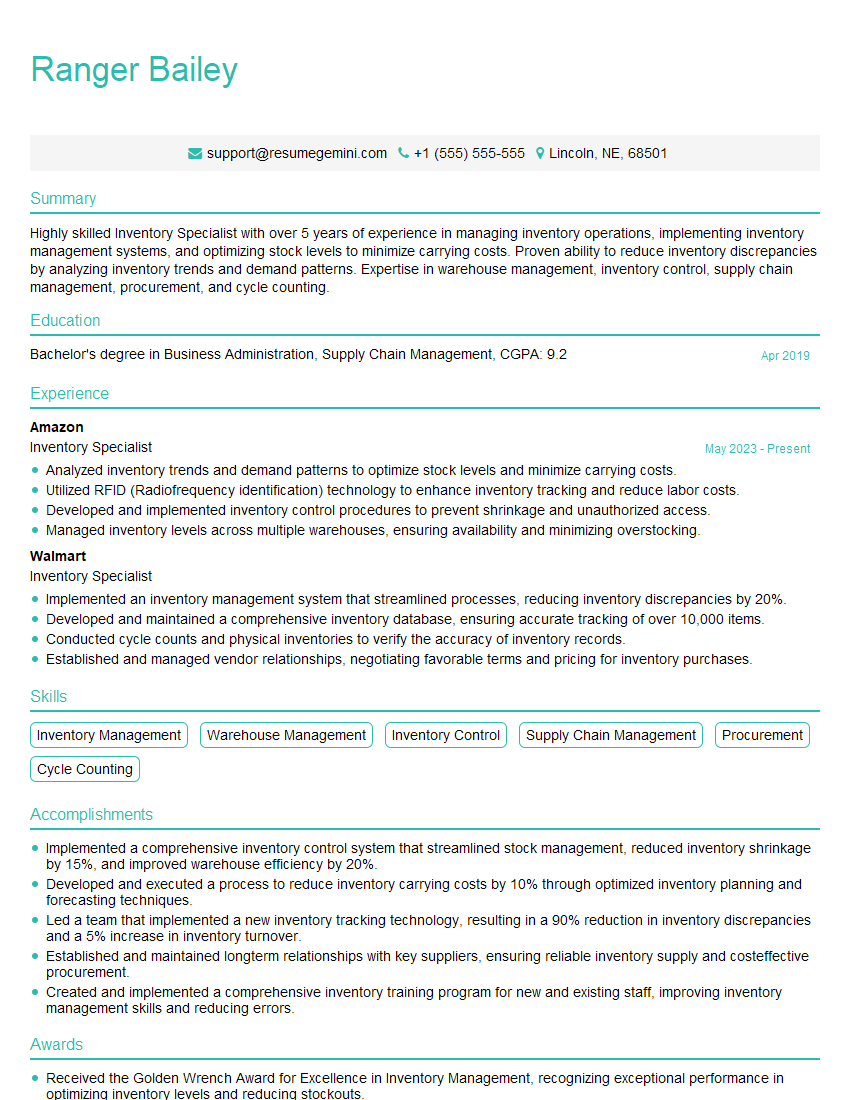
Inventory Specialist Resume Sample
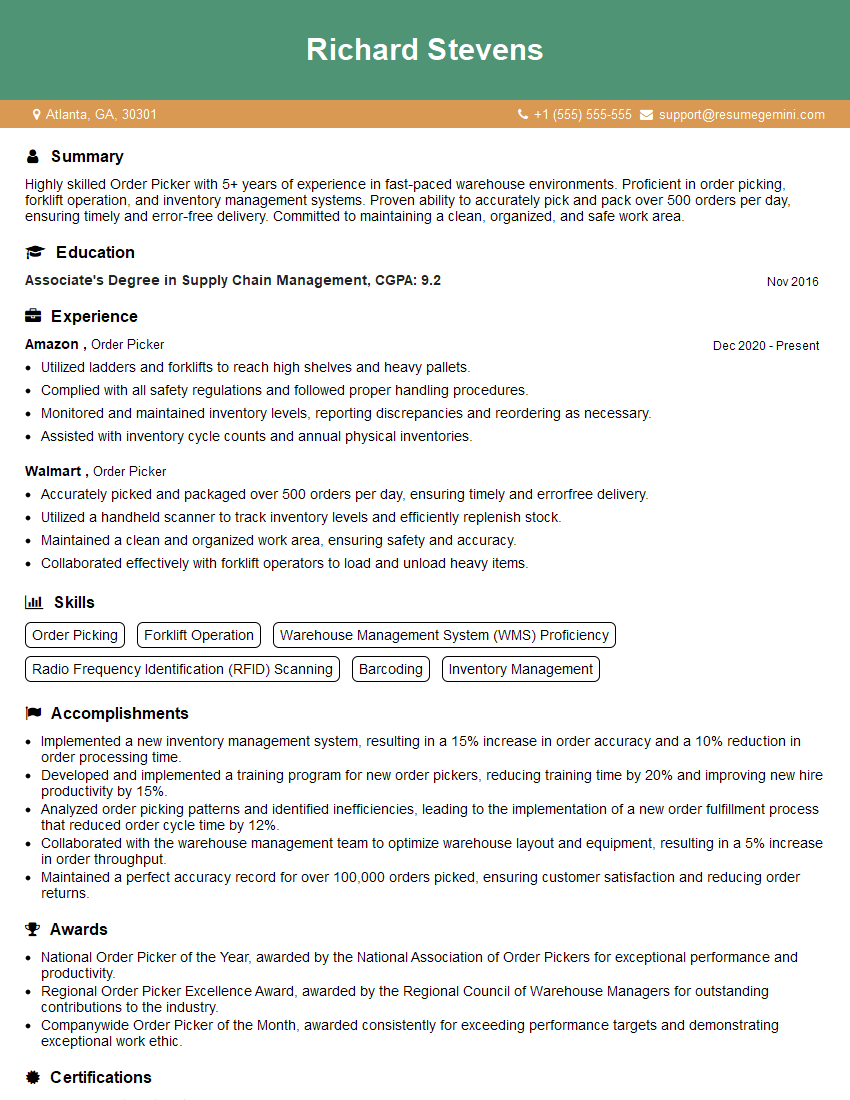
Order Picker Resume Sample
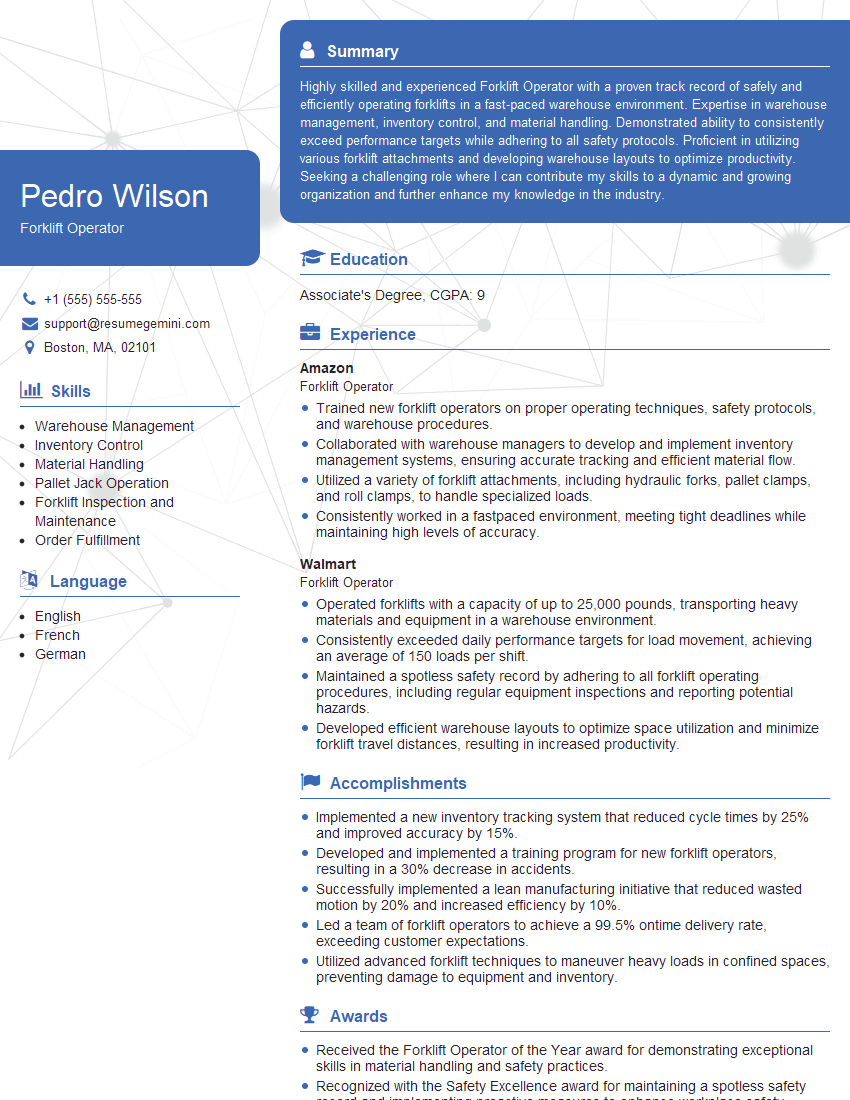
Forklift Operator Resume Sample

Packager Resume Sample
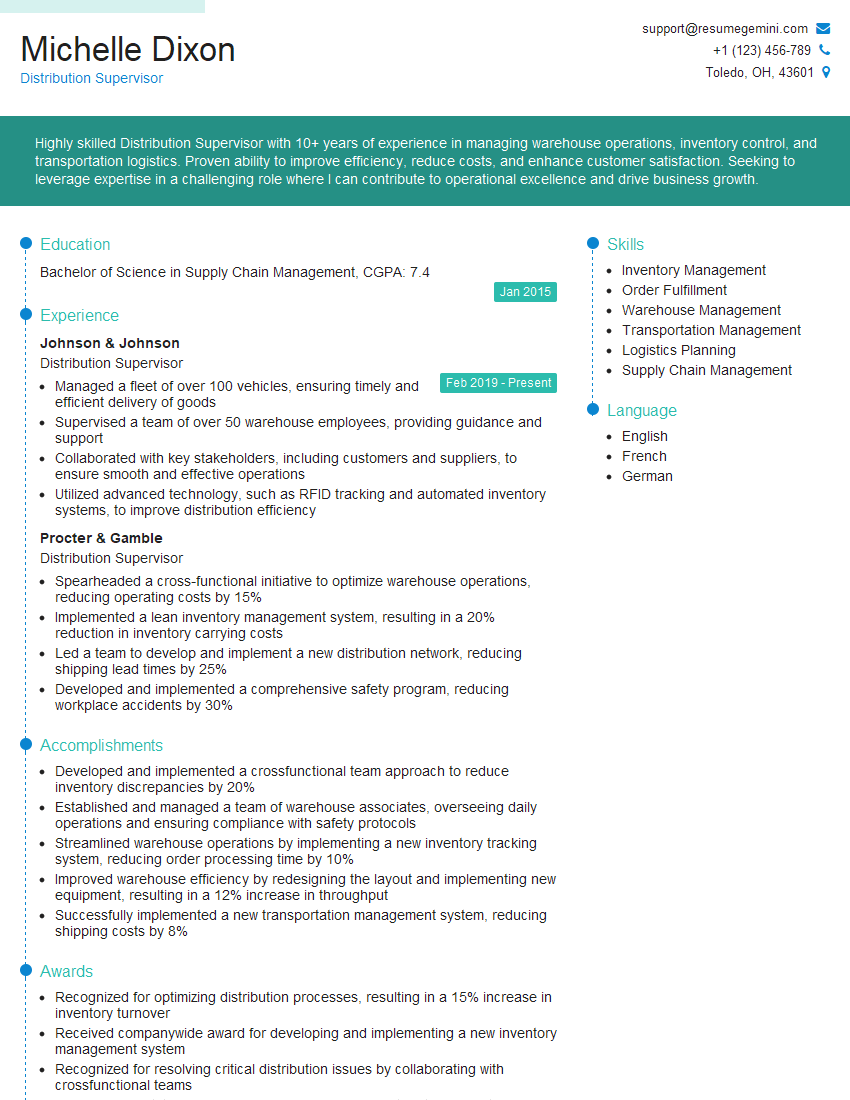
Distribution Supervisor Resume Sample
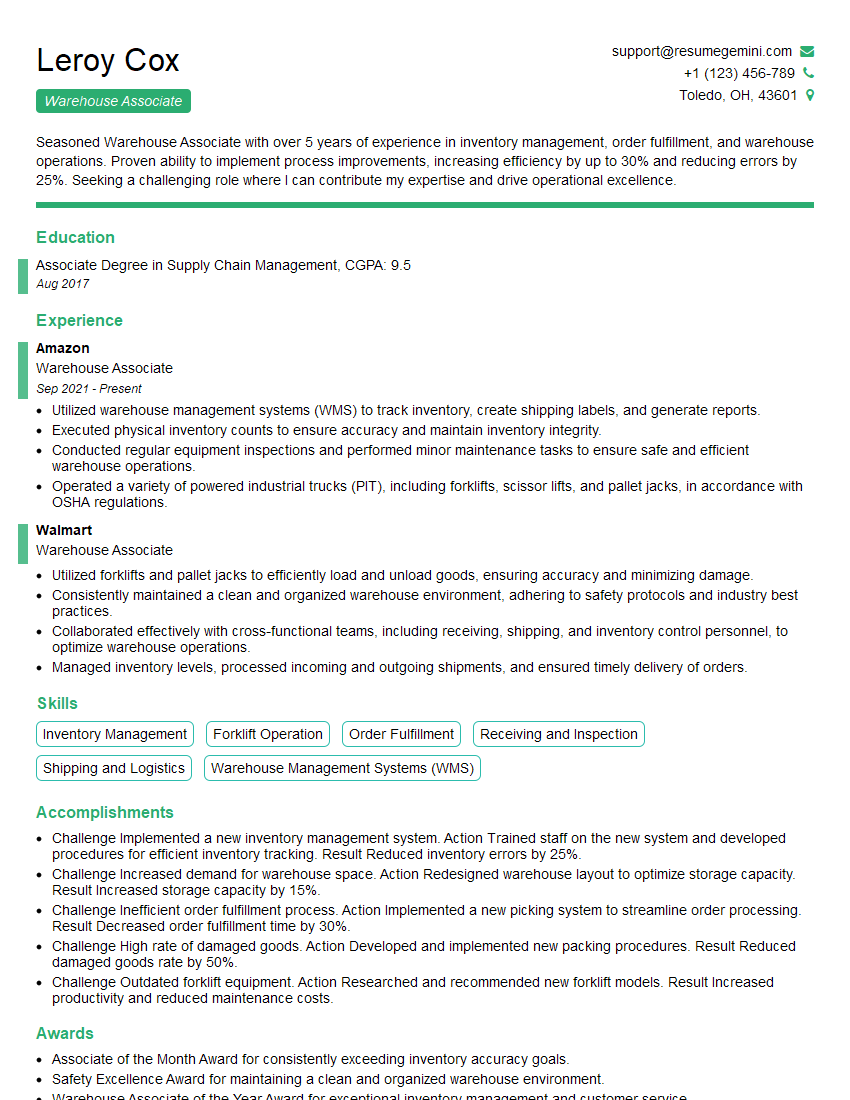
Warehouse Associate Resume Sample
- Supply Chain Manager
- Distribution Center Manager
- Logistics Manager
- Warehouse Manager
- Warehouse Operations Manager
- Shipping Coordinator
- Warehouse Supervisor
- Logistics Coordinator
- Procurement Specialist
- Inventory Analyst
- Logistics Specialist
- Supply Chain Analyst
- Inventory Control Manager
- Stock Clerk
- Order Fulfillment Specialist
- Receiving Clerk
- Shipping and Receiving Clerk
- Material Handler
- Inventory Specialist
- Order Picker
- Forklift Operator
- Packager
- Distribution Supervisor
- Warehouse Associate
Explore more articles
Users Rating of Our Blogs
Share Your Experience
We value your feedback! Please rate our content and share your thoughts (optional).
What Readers Say About Our Blog
Very informative content, great job.
good