Unlock your full potential by mastering the most common Product Safety Management Systems interview questions. This blog offers a deep dive into the critical topics, ensuring you’re not only prepared to answer but to excel. With these insights, you’ll approach your interview with clarity and confidence.
Questions Asked in Product Safety Management Systems Interview
Q 1. Describe your experience implementing a Product Safety Management System (PSMS).
Implementing a Product Safety Management System (PSMS) involves a structured approach that ensures product safety throughout its lifecycle. My experience spans several industries, including medical devices and consumer electronics. In one project, I led the implementation of a PSMS for a new line of medical infusion pumps. This involved several key phases: First, we established a safety policy and assigned responsibilities. We then conducted a thorough gap analysis against relevant standards like ISO 14971. This analysis identified shortcomings in existing processes and enabled us to prioritize improvement areas. We implemented new processes for hazard analysis and risk assessment, including the use of Failure Mode and Effects Analysis (FMEA) and fault tree analysis. This led to design modifications to mitigate identified risks and the development of robust testing protocols. Finally, we established procedures for post-market surveillance, including complaint handling and recall management. Regular audits and management reviews ensured the PSMS effectiveness and continuous improvement. The result was a significantly enhanced safety culture, reduced product risks, and demonstrable regulatory compliance.
Q 2. Explain the role of hazard analysis in product safety.
Hazard analysis is the cornerstone of product safety. It’s a systematic process of identifying potential hazards associated with a product throughout its lifecycle. Think of it as a proactive investigation to find anything that could potentially cause harm – from electric shock to allergic reactions to falls. This process involves brainstorming, reviewing past incidents, considering potential misuse, and leveraging engineering expertise. The output of hazard analysis is a comprehensive list of potential hazards. This list serves as the input for the subsequent risk assessment, where the likelihood and severity of each hazard are evaluated. Without a thorough hazard analysis, you’re essentially flying blind, potentially leaving dangerous flaws in your products undiscovered.
Q 3. How do you conduct a risk assessment for a new product?
Conducting a risk assessment for a new product is a multi-stage process. We typically begin with a detailed hazard analysis, as discussed earlier. Then, for each identified hazard, we estimate the likelihood of occurrence and the severity of the potential harm. This often uses a risk matrix, a visual tool that combines likelihood and severity scores to assign a risk level (e.g., low, medium, high). Consider a new children’s toy: a hazard could be small parts that a child might choke on. We’d assess the likelihood of a child accessing and swallowing a small part and the severity of choking. If the risk is high, we implement risk control measures such as redesigning the toy to eliminate small parts, adding warnings, or modifying the material properties. We document all these findings in a risk assessment report which is regularly reviewed and updated throughout the product’s life cycle. The goal is to reduce all risks to an acceptable level – ALARP (As Low As Reasonably Practicable).
Q 4. What are the key components of a robust PSMS?
A robust PSMS has several key components working in concert. These include:
- Safety Policy and Objectives: A clear statement of commitment to product safety.
- Hazard Analysis and Risk Assessment: The systematic identification and evaluation of potential hazards.
- Risk Control Measures: Implementing design modifications, warnings, instructions, or other measures to reduce or eliminate risks.
- Design Controls: A rigorous process for designing safe products from the outset.
- Verification and Validation: Testing and inspection procedures to verify design requirements and validate that risks have been adequately mitigated.
- Post-Market Surveillance: Monitoring product performance after launch to identify and address any emerging safety issues.
- Complaint Handling and Corrective Actions: A system for promptly investigating and addressing customer complaints and resolving safety-related issues.
- Record Keeping and Documentation: Maintaining detailed records of all aspects of the PSMS.
- Management Review: Regular reviews to assess the effectiveness of the PSMS and make necessary improvements.
Q 5. Describe your experience with regulatory compliance (e.g., ISO 14971, FDA regulations).
My experience with regulatory compliance is extensive. I’ve worked extensively with ISO 14971 (Medical Devices Risk Management) and have a deep understanding of FDA regulations for medical devices and food products. Compliance isn’t just about ticking boxes; it’s about building a culture of safety. For ISO 14971, I’ve overseen the implementation of risk management processes, ensuring traceability of risk assessments and risk control measures throughout the product lifecycle. This involves documenting evidence of hazard identification, risk analysis, risk evaluation, and risk control. With FDA regulations, I’ve managed submissions for product approvals, including preparation of technical documentation to demonstrate compliance with relevant regulations. I understand the requirements for design controls, manufacturing processes, and post-market surveillance. Proactive compliance prevents costly delays and potential legal ramifications. It’s about continuously monitoring changes in regulations and adapting the PSMS to remain compliant.
Q 6. How do you manage product recalls effectively?
Effective product recall management is critical. It’s not just about retrieving defective products; it’s about minimizing harm to consumers and mitigating reputational damage. My approach involves a structured process, starting with a rapid and thorough investigation to determine the root cause of the problem and the extent of the affected product population. Next, we develop a comprehensive recall plan, including communication strategies for notifying customers and distributors. We leverage multiple communication channels (e.g., website, social media, direct mail, media releases) to ensure broad reach. Then, we establish a system for collecting the recalled products and providing replacement or refunds to customers. A key component is tracking and documenting the entire recall process to learn from the experience and prevent future incidents. We conduct post-recall analyses to evaluate the effectiveness of our response and identify areas for improvement in our PSMS. Think of a recall as a high-stakes crisis management situation demanding clear communication and decisive action.
Q 7. How do you ensure traceability throughout the product lifecycle?
Ensuring traceability throughout the product lifecycle is vital for maintaining control and accountability. We implement a robust system of unique identification numbers (e.g., serial numbers, lot numbers) assigned to each product during manufacturing. This allows us to track each product from raw materials to the end user. We use electronic databases and software systems to manage this information, ensuring easy access for audit trails and recall management. This includes traceability for components, materials and manufacturing processes. Good traceability supports effective post-market surveillance, as you can quickly isolate and manage any potential problems linked to specific batches of products. In essence, it provides a detailed ‘history’ for each product, which is invaluable for managing risks and responding to safety incidents.
Q 8. Explain your understanding of risk matrices and their application in product safety.
A risk matrix is a visual tool used to prioritize risks based on their likelihood and severity. It’s a crucial component of any Product Safety Management System (PSMS). Think of it as a heatmap for potential dangers. We plot each identified hazard on the matrix, assigning it a likelihood (e.g., low, medium, high) and a severity (e.g., minor injury, major injury, fatality). The intersection of these factors determines the risk level, which guides our mitigation efforts.
For example, a risk matrix might show a ‘high likelihood, high severity’ risk for a sharp edge on a children’s toy, prompting immediate design changes and additional safety testing. Conversely, a ‘low likelihood, low severity’ risk, like a minor cosmetic defect, might require less urgent attention. This allows us to focus resources where they are most needed, ensuring we prioritize the most serious potential hazards.
Different scales and classifications can be used to tailor the matrix to the specific product and its associated risks. This could include using numerical scales or using descriptive categories with associated actions.
Q 9. How do you handle conflicting safety requirements from different regulatory bodies?
Conflicting safety requirements from different regulatory bodies are a common challenge. My approach involves a methodical, documented process. First, I thoroughly research and understand the requirements of each applicable regulatory body. This often involves cross-referencing documents, attending industry conferences, and consulting with legal experts. Next, I meticulously compare and contrast these requirements, identifying areas of overlap and conflict.
If a direct conflict exists, I develop a documented justification for the chosen approach. This justification details the rationale behind selecting one set of regulations over another, considering factors such as the relative stringency, the potential impact on product design and functionality, and the feasibility of compliance. This justification is essential for internal auditing and for demonstrating our due diligence to regulatory bodies. We will always err on the side of caution, selecting the most stringent regulation where there’s a genuine conflict. Clear and complete documentation is key to managing these scenarios.
Q 10. Describe your experience with Failure Mode and Effects Analysis (FMEA).
Failure Mode and Effects Analysis (FMEA) is a systematic, proactive method for identifying potential failure modes within a product or process and assessing their effects. I have extensive experience conducting FMEA studies, from planning and execution to reporting and follow-up. We typically use a structured format that includes identifying potential failure modes, their causes, their effects on the product and user, the severity, occurrence, and detection of these failures. This results in a Risk Priority Number (RPN).
For instance, in analyzing a power tool, we might identify a potential failure mode as the battery overheating. We’d then trace this back to potential causes (poor ventilation, defective cells) and assess the effects (burns, fire). The RPN helps prioritize corrective actions, with higher RPNs indicating failures requiring immediate attention. This data then informs design modifications, improved manufacturing processes, or enhanced warning labels to mitigate the identified risks. The FMEA process also incorporates a review and update mechanism, enabling continuous improvement of product safety.
Q 11. How do you communicate safety risks and mitigation strategies to stakeholders?
Communicating safety risks and mitigation strategies effectively is paramount. My approach involves tailoring the communication to the specific audience and the nature of the risk. For example, communicating with engineers might involve detailed technical reports and FMEA results, while communicating with consumers requires clear, concise language and visually engaging materials.
For internal stakeholders, I frequently utilize presentations, reports, and meetings to explain risk assessments and mitigation plans. For external stakeholders, such as regulatory bodies or customers, I use formal reports, product documentation, and safety data sheets (SDSs). We also leverage multiple communication channels to ensure the information reaches the right audience effectively. Transparency and readily available information build trust.
Q 12. What are your preferred methods for documenting safety procedures and findings?
We employ a combination of methods for documenting safety procedures and findings, ensuring that information is readily accessible, auditable, and consistently formatted. This includes using a combination of digital and physical records. Our digital documentation leverages a centralized document management system which provides version control, making it easy to track changes and ensure everyone works from the latest versions.
Physical records, such as signed-off test reports and inspection checklists, are maintained as well, in compliance with relevant regulatory requirements. All documentation is formatted according to established standards and templates to maintain consistency and facilitate review. We strictly adhere to data integrity and confidentiality protocols throughout the documentation process.
Q 13. How do you ensure the effectiveness of your PSMS through internal audits?
Internal audits are crucial for ensuring the effectiveness of our PSMS. We conduct regular internal audits according to a pre-defined schedule and using documented audit procedures. Audits are often conducted by individuals independent from the processes being audited, to ensure objectivity and unbiased findings. These audits examine the effectiveness of our controls and procedures, including reviewing documentation, observing processes, and interviewing personnel.
The audit findings are documented in a formal report, detailing any gaps or areas for improvement identified. A Corrective and Preventive Action (CAPA) plan is then developed to address the findings, and the effectiveness of this plan is verified through follow-up audits. This continuous improvement loop ensures that our PSMS remains robust and effective in managing product safety.
Q 14. Describe your experience with corrective and preventive actions (CAPA).
Corrective and Preventive Actions (CAPA) are vital to a robust PSMS. My experience involves leading and participating in CAPA investigations, from identifying the root cause of a problem to implementing and verifying corrective actions and implementing preventive measures to stop similar issues from recurring. We use a structured approach to CAPA that includes a thorough investigation of the incident, identification of the root cause, development of corrective actions, implementation of the corrective actions, and verification of the effectiveness of those actions.
For example, if a product defect leads to a customer injury, we wouldn’t simply fix that individual product. Instead, we’d conduct a thorough investigation, potentially involving FMEA, to identify the root cause of the defect (e.g., a faulty component, a flaw in the manufacturing process). The CAPA process would then encompass actions to correct the immediate problem (e.g., recall affected products), to prevent similar defects in the future (e.g., improved quality control procedures), and to communicate the corrective actions to stakeholders. All CAPA activities are thoroughly documented and regularly reviewed.
Q 15. How do you identify and mitigate potential safety hazards in the supply chain?
Identifying and mitigating safety hazards in the supply chain requires a proactive and multi-faceted approach. It’s not enough to just test the final product; we need to ensure safety throughout the entire journey from raw materials to the end consumer.
My strategy involves several key steps:
- Supplier Audits: Regular audits of our suppliers are crucial. These audits assess their manufacturing processes, quality control measures, and adherence to safety standards. We look for things like proper handling of hazardous materials, employee training, and documented quality control procedures. For example, a supplier of lithium-ion batteries needs to demonstrate rigorous safety protocols to prevent fires or explosions.
- Material Traceability: Maintaining complete traceability of materials is essential. This allows us to quickly identify the source of any faulty or unsafe component and implement corrective actions. Think of it like a detective tracking down the source of a contamination – we need clear records to pinpoint the problem.
- Risk Assessments: We conduct thorough risk assessments at each stage of the supply chain. This involves identifying potential hazards (e.g., transportation accidents, material degradation, manufacturing defects) and evaluating their likelihood and potential severity. This allows us to prioritize mitigation efforts.
- Contractual Obligations: Safety clauses are incorporated into all supplier contracts. These clauses clearly define safety expectations, responsibilities, and consequences of non-compliance. This ensures everyone is on the same page.
- Continuous Improvement: The process is iterative. Regular reviews and analyses of safety incidents, near misses, and audit findings help us identify areas for improvement and refine our procedures over time.
By implementing these measures, we build a robust system to proactively identify and mitigate safety risks throughout the entire supply chain, creating a safer product for our customers.
Career Expert Tips:
- Ace those interviews! Prepare effectively by reviewing the Top 50 Most Common Interview Questions on ResumeGemini.
- Navigate your job search with confidence! Explore a wide range of Career Tips on ResumeGemini. Learn about common challenges and recommendations to overcome them.
- Craft the perfect resume! Master the Art of Resume Writing with ResumeGemini’s guide. Showcase your unique qualifications and achievements effectively.
- Don’t miss out on holiday savings! Build your dream resume with ResumeGemini’s ATS optimized templates.
Q 16. Explain your experience with safety testing and certification processes.
My experience encompasses a wide range of safety testing and certification processes, from initial design reviews to final product certification. I’m familiar with various industry standards and regulations, such as ISO 9001, ISO 14001, and specific product-related standards.
For instance, in a previous role, we manufactured medical devices. We followed rigorous testing protocols, including biocompatibility testing, electrical safety testing, and mechanical stress testing, to ensure compliance with FDA regulations. We meticulously documented all testing procedures and results, ultimately securing necessary certifications for market approval. This involved working closely with third-party testing laboratories to ensure objectivity and compliance. Another project involved working with a certification body to secure CE marking for a line of consumer electronics in the EU, which required thorough documentation of our product’s compliance with all relevant directives.
Beyond the technical aspects, I’m experienced in managing the entire certification process, which includes interacting with certification bodies, preparing documentation, managing schedules, and addressing any audit findings.
Q 17. How do you stay up-to-date with evolving safety regulations and best practices?
Keeping abreast of evolving safety regulations and best practices is paramount in this field. It’s a dynamic landscape constantly shaped by technological advancements and evolving societal awareness of potential risks.
My approach is multi-pronged:
- Subscription to Regulatory Updates: I subscribe to relevant regulatory bodies’ newsletters and publications (e.g., the FDA, ANSI, etc.) to stay informed about new legislation, interpretations, and guidance documents.
- Industry Conferences and Webinars: Attending industry conferences and webinars provides opportunities to learn about emerging trends, new technologies, and best practices from leading experts.
- Professional Networks: I actively engage in professional networks and online forums to discuss current challenges and share best practices with other professionals. This provides valuable insights and allows for the exchange of knowledge.
- Internal Knowledge Sharing: I contribute to internal knowledge-sharing sessions and training programs to disseminate information to my colleagues and maintain a high level of awareness within the organization.
- Continuous Learning: I dedicate time to continuous professional development through online courses and workshops to enhance my understanding of the latest safety standards and technologies.
This proactive approach ensures our product safety management system remains current and aligned with the latest regulations and best practices, minimizing risks and maximizing compliance.
Q 18. Describe a time you had to make a difficult decision regarding product safety.
In a previous role, we discovered a potential safety concern in a newly launched product – a minor design flaw that could, under specific circumstances, lead to overheating. The product had already been shipped to retailers, and a recall would have been incredibly costly and damaging to our reputation.
The decision was difficult because we needed to weigh the financial impact of a recall against the potential risk to consumers. After careful analysis of the risk factors (probability of the fault occurring and the severity of the potential consequences), we decided on a phased approach. We immediately issued a safety alert to consumers via our website and social media, providing instructions on how to mitigate the risk. Simultaneously, we initiated a voluntary repair program, offering customers a free modification to eliminate the flaw. This allowed us to address the safety concern proactively without the drastic, and often more disruptive, measure of a full recall. The phased approach proved successful. We successfully mitigated the risk, maintained customer trust, and minimized financial losses.
Q 19. How do you balance product safety with time-to-market pressures?
Balancing product safety with time-to-market pressures is a constant challenge. Cutting corners on safety to meet deadlines is never an acceptable compromise. Instead, a proactive and well-planned approach is necessary.
This involves:
- Early Safety Integration: Integrating safety considerations into the product development process from the very beginning is crucial. This prevents safety becoming an afterthought and minimizes the need for costly and time-consuming redesigns later on.
- Efficient Testing Strategies: Employing efficient and effective testing methods is crucial to minimize testing time without compromising safety. This could involve using advanced simulation techniques or targeted testing strategies.
- Parallel Processes: Where possible, design, testing, and manufacturing can be run in parallel to compress the overall timeline without compromising safety checks at each stage.
- Clear Communication and Collaboration: Effective communication and collaboration between the engineering, safety, and marketing teams is essential to ensure that all parties understand and prioritize safety considerations within the project timeline.
Essentially, a structured and collaborative approach, with safety prioritized throughout, enables the efficient delivery of safe products without sacrificing time-to-market unreasonably.
Q 20. What is your experience with root cause analysis techniques?
I have extensive experience applying various root cause analysis (RCA) techniques, including the ‘5 Whys,’ fault tree analysis (FTA), and fishbone diagrams (Ishikawa diagrams).
The ‘5 Whys’ is a simple yet effective method, particularly useful for simpler problems. For instance, if a product failed due to a broken component, the 5 Whys would systematically investigate the reasons behind the failure: Why did the component break? (Poor material); Why was the material poor? (Faulty supplier); Why did we use this supplier? (Lower cost); Why did cost matter more than quality? (Tight budget); Why was the budget so tight? (Aggressive market competition). This process reveals underlying causes and helps prevent recurrence.
For more complex issues, FTA and fishbone diagrams are invaluable. FTA systematically maps out potential causes and their combinations that lead to a failure, allowing for a comprehensive understanding of the system’s vulnerabilities. The fishbone diagram helps visually organize potential causes categorized by factors like materials, methods, machinery, and manpower.
Regardless of the specific technique used, a thorough RCA always involves a detailed investigation, data collection, witness statements, and ultimately, the implementation of corrective and preventative actions to prevent similar incidents from happening again.
Q 21. Describe your experience with developing safety training programs.
Developing effective safety training programs is crucial for ensuring a safety-conscious culture within any organization. My experience includes designing and delivering training programs for various audiences, from shop-floor workers to senior management.
My approach prioritizes a combination of theoretical knowledge and practical application. Programs include:
- Needs Assessment: First, a needs assessment identifies the specific knowledge and skills gaps within the workforce. This ensures the training is targeted and relevant.
- Modular Design: The training is typically modular, allowing for flexible delivery tailored to different roles and responsibilities. This ensures that employees receive only the training relevant to their specific work. For example, a warehouse worker’s training might focus on safe lifting techniques, while an engineer’s training might focus on hazard identification and risk assessment.
- Interactive Methods: Interactive methods such as case studies, simulations, and hands-on exercises are incorporated to enhance engagement and knowledge retention. This makes the training more engaging and memorable than simple lectures.
- Regular Updates: The training programs are regularly updated to reflect the latest safety regulations, best practices, and technological advancements. This is particularly important in rapidly changing technological fields.
- Assessment and Feedback: Post-training assessments are conducted to gauge the effectiveness of the program and identify areas for improvement. Regular feedback is collected from participants to continuously improve the program.
Effective safety training programs are not a one-off event; they are an ongoing process of education and reinforcement, ensuring a safety-first mindset across the organization.
Q 22. How do you handle customer complaints related to product safety?
Handling customer complaints related to product safety is paramount. It’s not just about resolving the immediate issue; it’s about learning from it and preventing future incidents. My approach is multi-faceted and follows a structured process:
- Acknowledgement and Investigation: I acknowledge the complaint promptly, assuring the customer of our commitment to their safety. A thorough investigation then ensues, gathering all relevant information: product details, usage circumstances, injury details (if any), photos, and any other supporting evidence. This often involves interviewing the customer.
- Root Cause Analysis: This is critical. We use techniques like the 5 Whys to delve into the root cause of the problem, going beyond surface-level observations. This helps identify systemic issues in design, manufacturing, or instructions.
- Corrective and Preventive Actions (CAPA): Based on the root cause analysis, we implement corrective actions to address the immediate complaint, such as a product recall or repair. We also develop preventive actions to eliminate the root cause and stop it from happening again. This might include design modifications, improved testing procedures, or enhanced training for our staff.
- Customer Communication and Resolution: Throughout the process, I maintain open communication with the customer, keeping them informed of the progress and addressing their concerns. The goal is to offer a fair and satisfactory resolution, which might involve a refund, replacement, or compensation.
- Data Analysis and Reporting: Finally, we meticulously record the complaint, the investigation findings, and the CAPA implemented. This data is analyzed to identify trends and patterns that can help further improve our product safety management system.
For example, if a customer reported a faulty latch on a child’s toy, we wouldn’t just replace the toy. We’d investigate the batch the toy came from, review the latch design and manufacturing process, implement stricter quality checks, and potentially revise the design to prevent similar failures in the future.
Q 23. How do you ensure the proper labeling and packaging of products to meet safety standards?
Ensuring proper labeling and packaging is crucial for product safety. It’s about clear communication of essential information to protect the end-user. This involves several key aspects:
- Compliance with Regulations: We meticulously follow all relevant regulations, both national and international, ensuring that all necessary warnings, instructions, and safety information are included on labels and packaging. This includes compliance with symbols, font sizes, and language requirements.
- Clear and Concise Information: Labels and packaging should be easy to understand, using clear and concise language, avoiding technical jargon where possible. We often conduct usability testing to ensure the information is readily accessible to the intended audience. This includes considering visual impairments and various language proficiencies.
- Accurate Information: All information provided on labels and packaging must be accurate, complete, and up-to-date. This includes the product name, manufacturer’s details, handling instructions, warnings about potential hazards, and any necessary disposal information.
- Durable and Appropriate Packaging: Packaging should be robust enough to protect the product during transport and handling and should be designed to prevent accidental damage or injury during use. Child-resistant packaging is used where necessary.
- Regular Reviews: We regularly review our labels and packaging to ensure they remain compliant with updated regulations and industry best practices.
For instance, a children’s toy might require a label clearly indicating the recommended age range and a warning about small parts that could be choking hazards. The packaging must be child-resistant to prevent accidental opening.
Q 24. What is your experience with different types of safety standards (e.g., UL, CE)?
My experience spans various safety standards, including UL (Underwriters Laboratories), CE (Conformité Européenne), and others specific to different product categories and regions. Understanding these standards is essential for ensuring product compliance and market access.
- UL Standards: Primarily focused on North America, UL standards cover a vast array of products, providing safety certifications for electrical appliances, components, and materials. I have experience working with UL 60950-1 (Information technology equipment – Safety) and UL 1642 (Toys and children’s products).
- CE Marking: The CE marking indicates a product’s compliance with EU health, safety, and environmental protection legislation. My experience involves navigating the complex requirements of the various directives associated with the CE mark, including the Low Voltage Directive (LVD), the Electromagnetic Compatibility Directive (EMC), and the Radio Equipment Directive (RED), depending on the product category.
- Other Standards: Depending on the product, other relevant standards are frequently applied, such as ISO standards related to specific product quality management systems, or industry-specific standards.
Knowing how these standards interact is vital. For example, a product intended for sale in both the EU and North America would require both CE marking and UL certification, necessitating parallel testing and documentation.
Q 25. How do you manage safety incidents and investigations effectively?
Managing safety incidents and investigations is a critical part of product safety management. My approach is structured and thorough:
- Immediate Response: When a safety incident is reported, the first step is an immediate response to contain the situation and prevent further harm. This may involve stopping production, issuing warnings, or implementing temporary product recalls.
- Incident Investigation: A detailed investigation is launched using a structured methodology (e.g., fault tree analysis) to determine the root cause of the incident. This often involves gathering evidence from multiple sources, including product samples, manufacturing records, and witness statements.
- Corrective and Preventive Actions (CAPA): Based on the investigation findings, we implement CAPA to mitigate the risks identified. These actions could include design modifications, process improvements, or additional testing.
- Reporting and Documentation: All incidents and investigation findings are thoroughly documented and reported to the relevant authorities, if legally required. This data is used for continuous improvement of our safety management system.
- Communication and Follow-Up: We maintain open communication with all stakeholders, including customers, regulatory bodies, and internal teams. We conduct follow-up activities to ensure the effectiveness of the corrective and preventive actions implemented.
For example, if a product malfunction resulted in injury, we would not only investigate the product but also review the entire supply chain, our testing procedures, and our customer instructions to prevent recurrence.
Q 26. Describe your understanding of legal liability related to product safety.
Understanding legal liability related to product safety is crucial. Manufacturers and distributors can face significant legal repercussions for unsafe products. Liability can stem from various legal avenues including:
- Negligence: Failure to exercise reasonable care in the design, manufacture, or distribution of a product that leads to injury or damage.
- Strict Liability: Manufacturers can be held liable for product defects even if they were not negligent. This focuses on the defect itself, not on the manufacturer’s actions.
- Breach of Warranty: If a product fails to meet the expressed or implied warranties, the manufacturer can be held liable for resulting damages.
- Consumer Protection Laws: Various consumer protection laws exist to protect consumers from unsafe products and allow for legal recourse.
To mitigate liability risks, companies need robust product safety management systems, compliance with all applicable regulations, and comprehensive product liability insurance. Proactive measures like thorough testing, labeling, and clear warnings significantly reduce the likelihood of legal issues.
Understanding the specific legal landscape in different jurisdictions is crucial. Legal counsel plays a vital role in ensuring compliance and managing potential legal challenges.
Q 27. Explain your experience with implementing and maintaining safety databases.
My experience with implementing and maintaining safety databases is extensive. These databases are essential for tracking product information, incidents, and compliance efforts. An effective database should:
- Centralized Information: Provide a single source of truth for all product-related safety information, including design specifications, testing results, incident reports, and regulatory compliance documents.
- Data Tracking and Analysis: Allow for tracking of key performance indicators (KPIs) related to product safety, such as incident rates, recall effectiveness, and compliance status. This facilitates data-driven decision-making and continuous improvement.
- Reporting Capabilities: Enable generation of reports for internal use and external regulatory agencies, as required. This includes incident reports, CAPA summaries, and compliance certifications.
- Searchability and Accessibility: Offer efficient search and retrieval of relevant data to ensure quick access to critical information when needed.
- Data Security and Integrity: Maintain data security and integrity, ensuring that information is protected from unauthorized access and modification.
I have experience with various database platforms, from relational databases (like SQL Server or Oracle) to specialized product lifecycle management (PLM) systems that incorporate safety data management. The choice of platform depends on the scale and complexity of the organization and its specific needs.
Q 28. How do you ensure that product safety is integrated into the overall product development process?
Integrating product safety into the product development process is crucial for preventing safety issues from arising in the first place. This involves a proactive, integrated approach, not an afterthought.
- Safety by Design: Incorporating safety considerations from the earliest stages of design, ensuring that safety is a core design principle, not an add-on. This could involve using Failure Mode and Effects Analysis (FMEA) or Hazard and Operability Studies (HAZOP).
- Safety Testing and Validation: Implementing a rigorous testing and validation program to verify that the product meets all safety standards and requirements throughout the development lifecycle.
- Risk Assessment and Management: Conducting regular risk assessments to identify potential hazards and implement appropriate mitigation strategies. This can be done using tools such as risk matrices.
- Cross-Functional Collaboration: Ensuring that the product development team includes representatives from various functions, such as engineering, manufacturing, quality assurance, and legal, to ensure that safety considerations are integrated across all areas.
- Continuous Improvement: Regularly reviewing the product safety management system to identify areas for improvement and to adapt to evolving regulations and best practices.
For example, instead of designing a product and then testing for safety afterward, safety would be a core consideration from the initial concept. This might involve using materials that are less prone to breaking, designing for ease of use to prevent misuse, and incorporating multiple safety mechanisms to reduce the risk of hazards.
Key Topics to Learn for Product Safety Management Systems Interview
- Hazard Identification and Risk Assessment: Understanding methodologies like FMEA (Failure Mode and Effects Analysis) and HAZOP (Hazard and Operability Study) to proactively identify potential hazards and assess their risks.
- Risk Mitigation Strategies: Developing and implementing practical solutions to control and mitigate identified risks, including design changes, safety warnings, and operational procedures. This includes understanding the difference between inherent, designed-in and residual risk.
- Regulatory Compliance: Familiarity with relevant safety standards and regulations (e.g., ISO 14971, IEC 60601) and the processes for ensuring compliance throughout the product lifecycle.
- Safety Testing and Verification: Understanding different testing methodologies used to validate the effectiveness of safety measures and ensuring products meet regulatory requirements.
- Incident Reporting and Investigation: Processes for reporting and investigating product safety incidents, conducting root cause analysis, and implementing corrective actions to prevent recurrence.
- Product Recall Management: Procedures for managing product recalls, including communication, logistics, and customer support.
- Documentation and Traceability: Maintaining comprehensive documentation of safety-related activities throughout the product lifecycle, ensuring traceability and auditability.
- Continuous Improvement: Implementing mechanisms for continuous improvement of the Product Safety Management System through regular reviews, audits, and performance monitoring.
- Safety Culture and Training: Understanding the importance of fostering a strong safety culture within an organization and providing adequate training to employees on safety procedures and responsibilities.
Next Steps
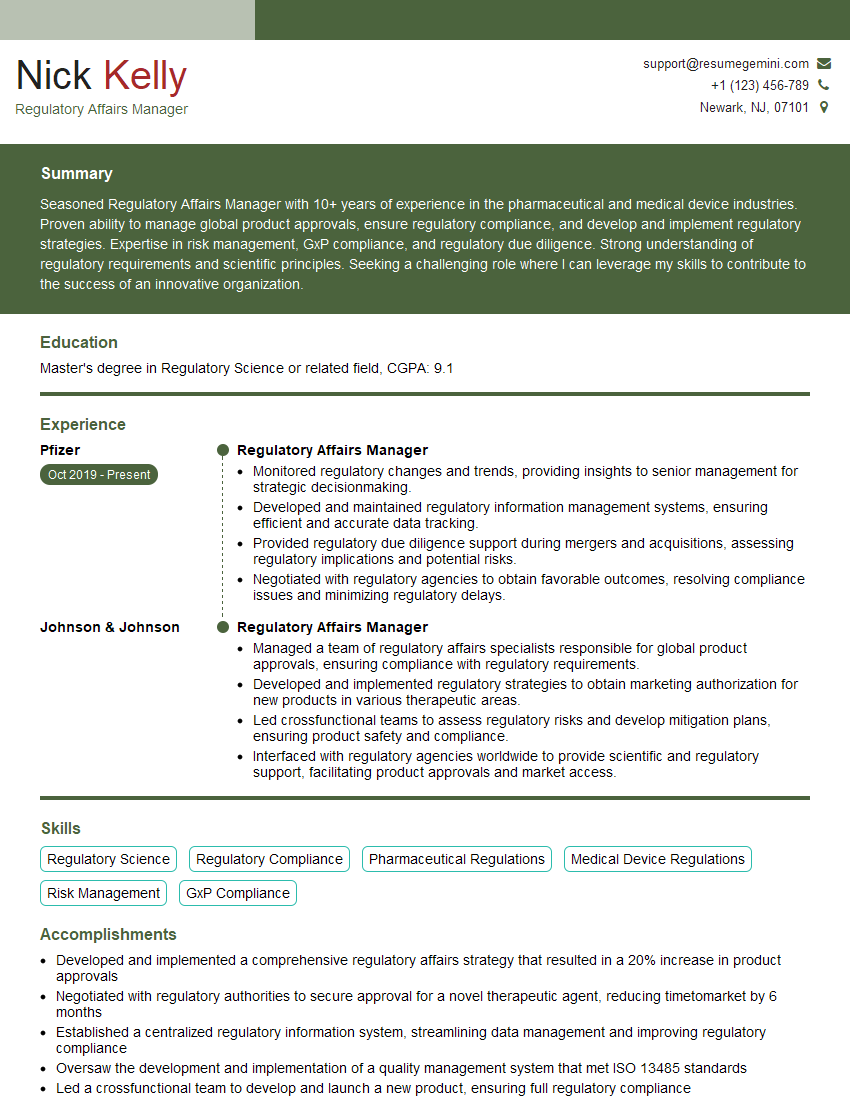
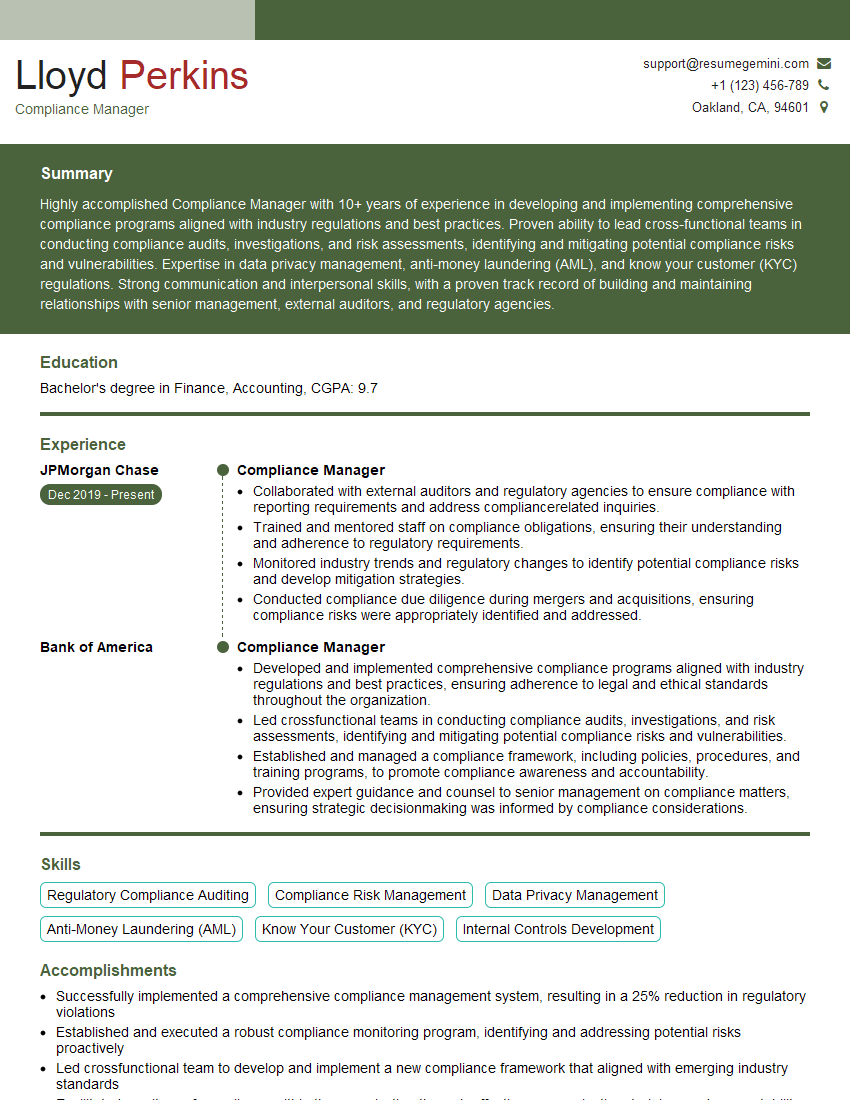
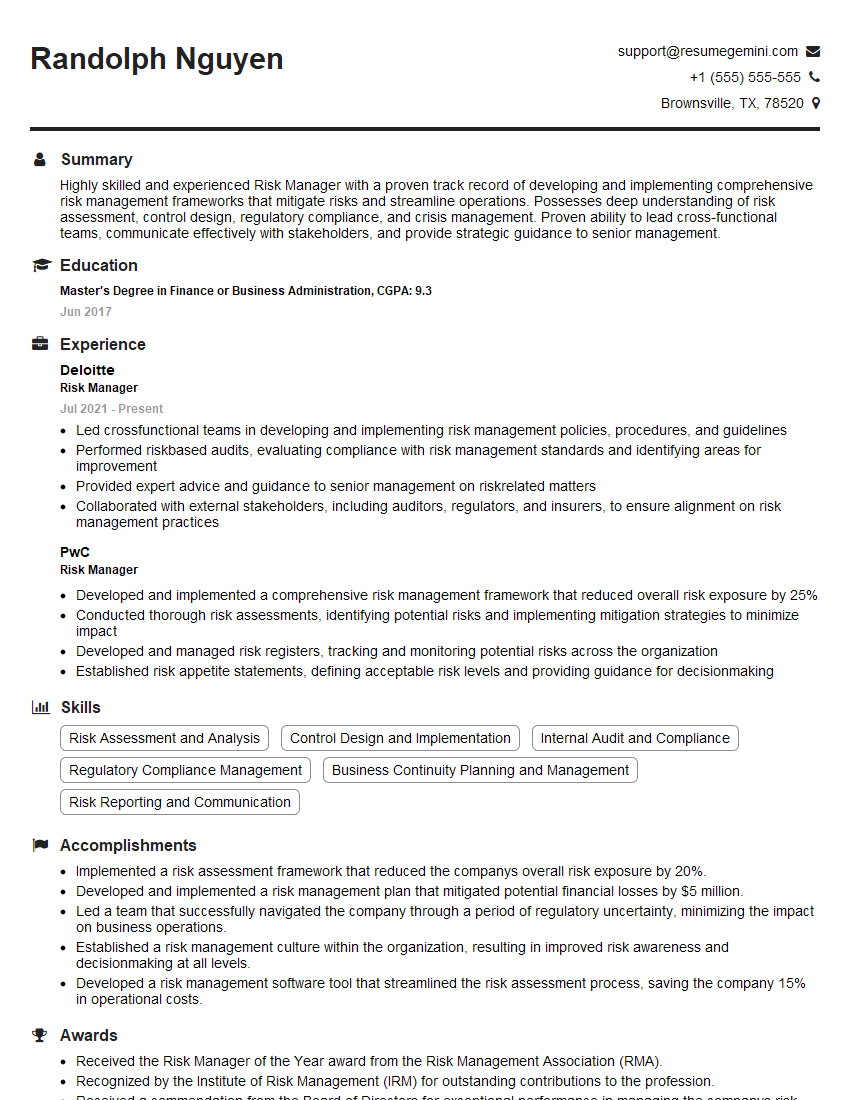
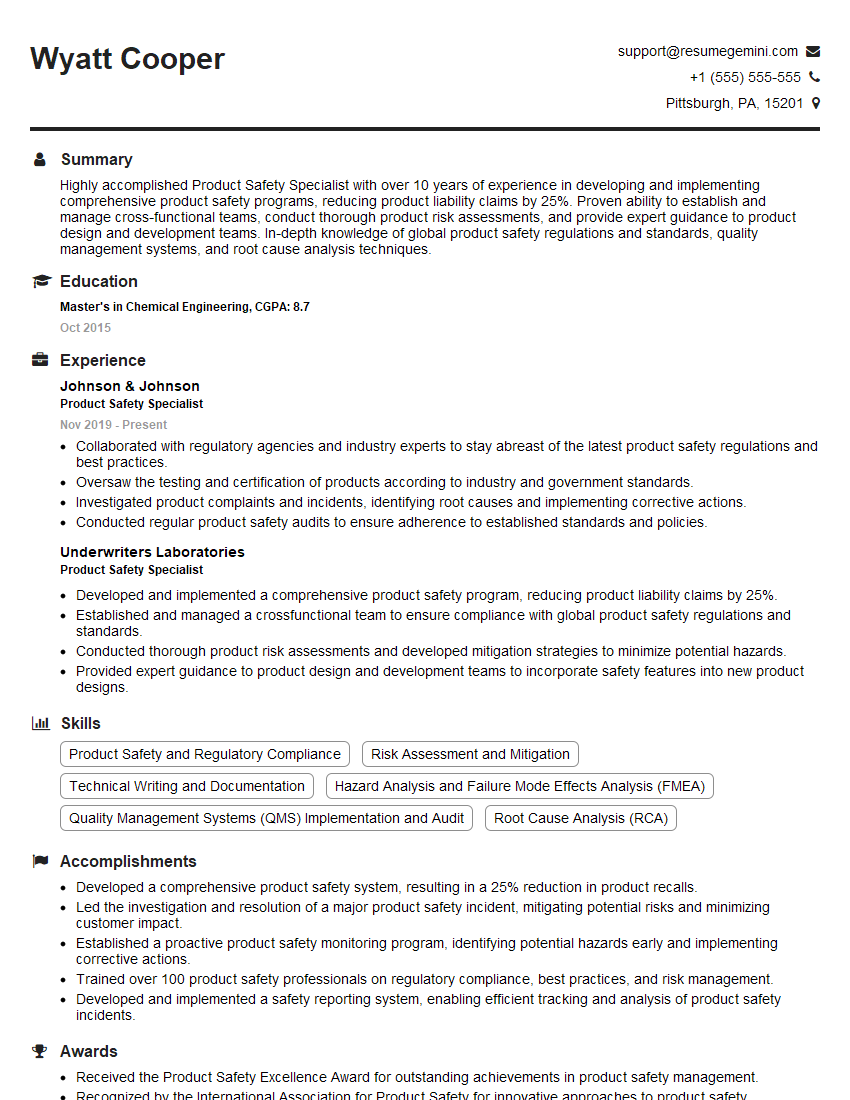
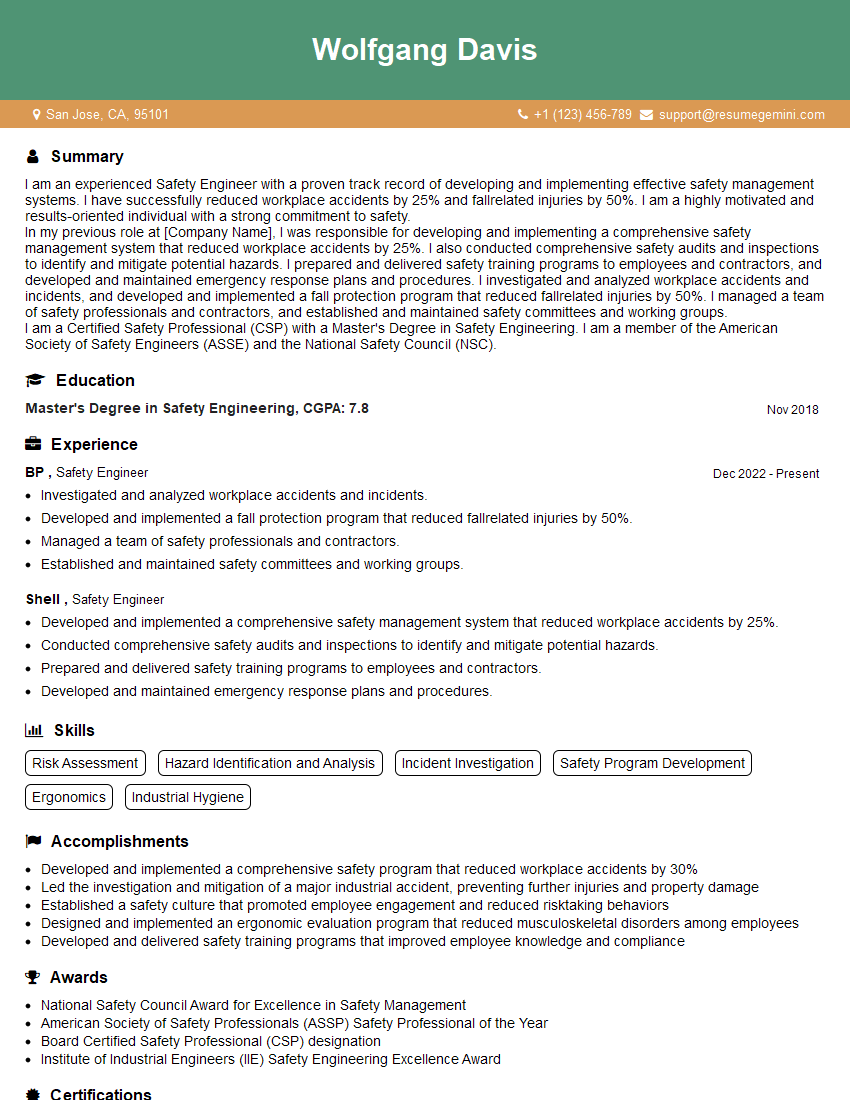
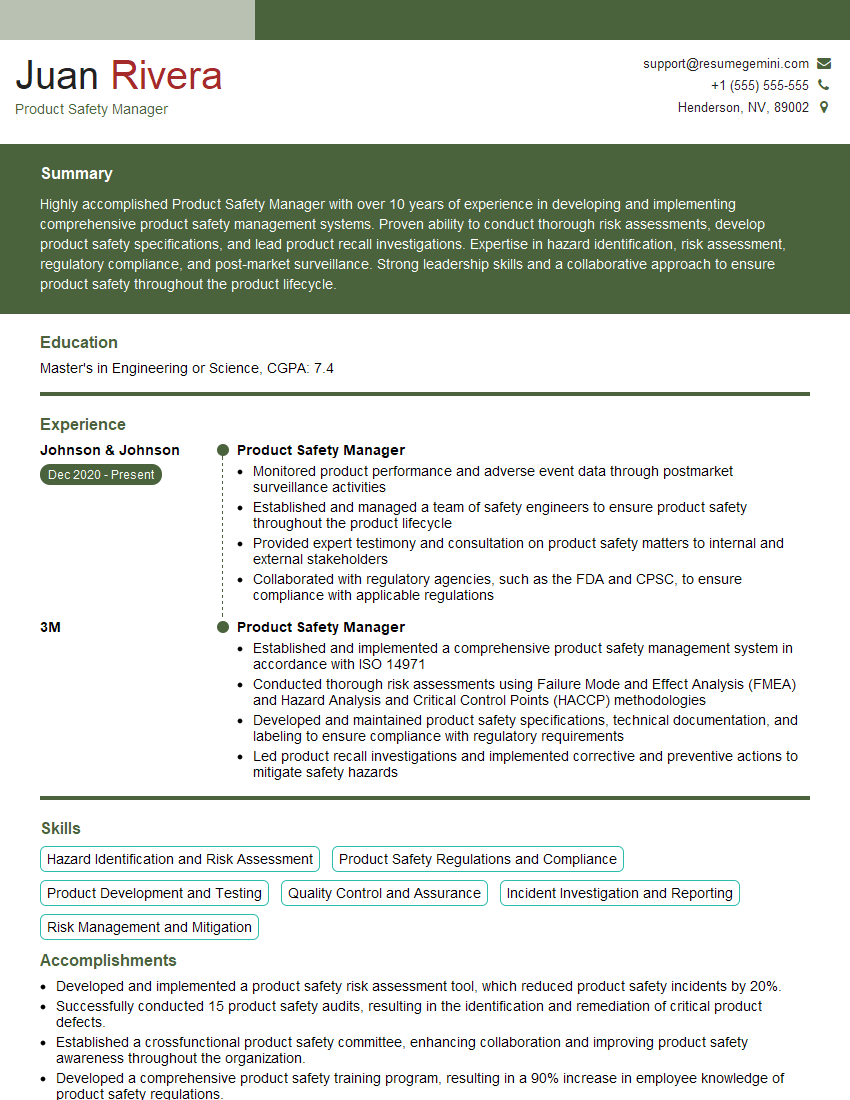
Mastering Product Safety Management Systems is crucial for career advancement in this vital field. A strong understanding of these concepts will significantly enhance your interview performance and open doors to exciting opportunities. To maximize your job prospects, it’s essential to create an ATS-friendly resume that highlights your skills and experience effectively. Use ResumeGemini as a trusted resource to build a professional and impactful resume tailored to the Product Safety Management Systems industry. Examples of resumes tailored to this field are available to guide you. Invest the time in crafting a compelling resume – it’s your first impression with potential employers.
Explore more articles
Users Rating of Our Blogs
Share Your Experience
We value your feedback! Please rate our content and share your thoughts (optional).
What Readers Say About Our Blog
Very informative content, great job.
good