Feeling uncertain about what to expect in your upcoming interview? We’ve got you covered! This blog highlights the most important Product Safety Program Development and Implementation interview questions and provides actionable advice to help you stand out as the ideal candidate. Let’s pave the way for your success.
Questions Asked in Product Safety Program Development and Implementation Interview
Q 1. Describe your experience developing and implementing a product safety program.
Developing and implementing a product safety program is a multifaceted process that ensures a product’s safety throughout its lifecycle. It starts with a thorough understanding of potential hazards associated with the product, its intended use, and foreseeable misuse. Then, a comprehensive program is designed incorporating hazard analysis, risk assessment, control measures, testing, and ongoing monitoring.
In my previous role at Acme Corp, we developed a program for a new line of children’s toys. This involved a detailed hazard analysis focusing on choking hazards (small parts), sharp edges, and potential chemical exposure from paints. We implemented controls such as material selection, rigorous design reviews, and third-party testing to ensure compliance with relevant safety standards like ASTM F963. The program also included a robust process for managing potential recalls, including communication protocols with regulatory bodies and consumers.
The program’s effectiveness was tracked through periodic audits, incident reporting, and continuous improvement initiatives. This iterative approach ensured that the program remained effective even as the product line expanded.
Q 2. How do you conduct a hazard analysis and risk assessment?
A hazard analysis and risk assessment (HARA) is a systematic process to identify potential hazards associated with a product and evaluate the associated risks. The goal is to prioritize hazards based on their likelihood and severity, and then implement appropriate control measures to mitigate those risks.
My approach typically involves these steps:
- Hazard Identification: Brainstorming sessions involving engineers, designers, and manufacturing personnel to identify potential hazards. Techniques like Failure Mode and Effects Analysis (FMEA) and fault tree analysis are employed.
- Risk Assessment: Evaluating the likelihood and severity of each hazard. This often involves assigning numerical scores or using qualitative descriptors (e.g., low, medium, high). The severity might consider injury types like minor cuts vs. serious injury.
- Risk Control: Implementing control measures to reduce or eliminate the risks. This could involve design modifications, warnings, instructions, or administrative controls.
- Risk Evaluation: Re-evaluating the risk after implementing control measures to ensure the risk level is acceptable.
For example, in analyzing a power tool, we might identify hazards like electric shock, cutting injuries, and noise exposure. The risk assessment might reveal electric shock as the most severe and likely hazard, requiring specific control measures like insulation testing, grounding, and double insulation. This is documented and reviewed regularly.
Q 3. Explain your understanding of ISO 14971 (Medical Devices) or a relevant safety standard.
ISO 14971:2019 is an internationally recognized standard for applying risk management to medical devices. It provides a framework for identifying, analyzing, evaluating, controlling, and monitoring risks associated with a medical device throughout its lifecycle.
The standard emphasizes a systematic approach to risk management, starting with defining the intended use and foreseeable misuse of the device. Key elements include:
- Hazard analysis: Identifying potential hazards associated with the device.
- Risk analysis: Evaluating the likelihood and severity of each hazard.
- Risk evaluation: Determining if the risks are acceptable.
- Risk control: Implementing measures to mitigate the risks.
- Risk monitoring: Continuously monitoring the effectiveness of the risk controls.
My understanding of ISO 14971 extends beyond the theoretical framework. I have practical experience in applying its principles in the development and approval of various medical devices, including creating risk management files, conducting regular risk reviews, and updating documentation based on post-market surveillance data. It is crucial to understand that complying with ISO 14971 isn’t just about ticking boxes; it’s about building a safety culture.
Q 4. How do you manage product recalls and corrective actions?
Managing product recalls and corrective actions is a critical aspect of any product safety program. It requires a well-defined process, clear communication, and a strong commitment to customer safety.
My approach involves:
- Rapid Response: Quickly identifying and investigating the root cause of the problem that necessitated a recall.
- Communication Plan: Establishing effective communication channels with regulatory bodies (e.g., FDA, CPSC), distributors, retailers, and consumers. Transparency is key.
- Recall Strategy: Implementing a robust recall strategy, including methods for identifying and contacting affected customers, providing replacements or refunds, and disposing of unsafe products.
- Corrective Actions: Identifying and implementing corrective actions to prevent future occurrences. This often involves design modifications, improved manufacturing processes, and enhanced quality control measures. We always document everything thoroughly.
- Post-Recall Analysis: Conducting a thorough post-recall analysis to learn from the experience and improve the product safety program.
A real-world example involves a recall of a faulty component in a medical device. We implemented a phased recall, starting with the most critical units and working our way down. We coordinated closely with regulatory authorities, ensuring open communication throughout the process. Post-recall analysis revealed a gap in our quality control process, leading to the implementation of more stringent inspections.
Q 5. What is your experience with regulatory compliance (e.g., FDA, CPSC, etc.)?
Regulatory compliance is paramount in product safety. My experience spans various regulatory bodies, including the FDA (Food and Drug Administration), CPSC (Consumer Product Safety Commission), and several international standards organizations. I understand the specific requirements and regulations that govern the safety of various product categories.
For example, in working with medical devices subject to FDA regulations, I’ve been involved in:
- Preparing and submitting premarket submissions (510(k)s or PMAs).
- Ensuring compliance with GMP (Good Manufacturing Practices).
- Managing post-market surveillance activities.
- Responding to FDA inquiries and inspections.
With consumer products under CPSC jurisdiction, I have experience in:
- Conducting hazard assessments and risk assessments according to their guidelines.
- Ensuring compliance with relevant safety standards (e.g., ASTM).
- Implementing and maintaining record-keeping systems to demonstrate compliance.
My approach focuses on proactive compliance – anticipating and addressing potential regulatory issues before they escalate into problems.
Q 6. Describe your proficiency in safety testing methodologies.
Proficiency in safety testing methodologies is essential for ensuring product safety. My expertise encompasses a wide range of testing techniques, tailored to the specific characteristics of different products and relevant safety standards.
These methods include:
- Mechanical testing: Tensile strength, impact resistance, fatigue testing (relevant for many products)
- Electrical testing: Insulation resistance, dielectric strength, surge protection (critical for electrical and electronic products).
- Chemical testing: Flammability, toxicity, leaching, material composition analysis (relevant to material safety).
- Environmental testing: Temperature cycling, humidity, vibration, shock (determines product durability and performance under various conditions).
- Biological testing: Biocompatibility, sterility (critical for medical devices).
I’m also familiar with various testing standards, such as those published by ASTM International, UL, and IEC. The choice of specific testing methods depends on the nature of the product and the potential hazards identified during the hazard analysis and risk assessment. For instance, a children’s toy would require different testing than a high-voltage appliance.
Q 7. How do you ensure the accuracy and completeness of Safety Data Sheets (SDS)?
Safety Data Sheets (SDSs) are crucial documents that provide comprehensive information on the hazards associated with a chemical product and how to handle it safely. Ensuring their accuracy and completeness is vital for worker safety and regulatory compliance.
My approach to ensuring accuracy and completeness includes:
- Data Source Verification: Verifying all data sources used in creating or updating the SDS. This may include material safety data sheets from suppliers, test results, and relevant regulations.
- Compliance with Standards: Ensuring the SDS is compliant with the Globally Harmonized System of Classification and Labelling of Chemicals (GHS) and relevant regional requirements.
- Regular Review and Updates: Regularly reviewing and updating the SDS as new information becomes available or when product formulations change. This prevents out-of-date information from being disseminated.
- Expert Review: Having the SDS reviewed by a qualified safety professional to ensure accuracy and completeness before distribution.
- Version Control: Implementing a version control system to track changes and revisions to the SDS. This allows tracing back the changes made over time.
Failure to maintain accurate and complete SDSs can have severe consequences, including worker injuries, regulatory fines, and legal liabilities. Therefore, a systematic approach is necessary to ensure that the SDS is always up-to-date and reflects the current hazard profile of the product.
Q 8. Explain your approach to risk mitigation and control.
My approach to risk mitigation and control is systematic and proactive, employing a multi-layered strategy. It begins with a thorough hazard identification process, where we meticulously examine every aspect of the product and its intended use, anticipating potential hazards. We utilize techniques like Failure Mode and Effects Analysis (FMEA) and Hazard and Operability Studies (HAZOP) to identify potential failure points and their consequences.
Once hazards are identified, we assess their risks using a risk matrix that considers the likelihood and severity of potential harm. This allows us to prioritize mitigation efforts. Mitigation strategies can range from design modifications (e.g., incorporating safety features), procedural changes (e.g., enhanced warnings and instructions), to administrative controls (e.g., enhanced training programs for users).
Finally, we implement and monitor the controls, regularly reviewing their effectiveness. This is an iterative process; we continuously evaluate the system and adjust controls as needed. For example, if a particular hazard was initially deemed low risk but subsequent data shows an increase in incidents, we will re-assess and implement more stringent controls. It’s a continuous improvement cycle aimed at minimizing risk throughout the product lifecycle.
Q 9. How do you communicate safety information to various stakeholders?
Communicating safety information effectively requires a multi-faceted approach tailored to the specific audience. For consumers, we use clear, concise language in user manuals, warning labels, and online resources. We employ visuals like icons and diagrams to enhance understanding, particularly for complex instructions. For example, a child’s toy might employ simple, universally understood icons to communicate safety warnings.
Internal stakeholders, such as engineers and production staff, require more technical information. We use internal reports, training sessions, and regular safety meetings to communicate critical information. We might use detailed technical specifications or FMEA reports to ensure everyone understands the potential hazards and the mitigation strategies in place. Regulatory bodies require formal documentation and reports, conforming to specific legal and industry standards. We maintain meticulous records and submit reports promptly and accurately, to comply with all requirements. The key is to choose the right channel and format for the right audience to ensure clear and effective communication.
Q 10. How do you incorporate safety into the product development lifecycle?
Safety is not an afterthought; it’s integral to every phase of our product development lifecycle. We incorporate safety considerations from the initial concept and design stages. This involves conducting thorough hazard analyses early in the process. For example, during the design review phase of a new appliance, we would evaluate the risk of electrical shock, burns, or mechanical injuries. This proactive approach prevents the costly and time-consuming process of correcting safety issues later in the development cycle.
During prototyping and testing, we conduct rigorous safety testing to verify the effectiveness of our design and mitigation strategies. This could include simulations, physical testing, and user trials. Manufacturing processes are also designed with safety in mind, ensuring proper safeguards are in place to protect workers. Post-launch, we continue to monitor product performance, collect user feedback, and promptly address any safety concerns that arise. By integrating safety into every stage, we create a culture of safety that results in safer products.
Q 11. What are your methods for tracking and monitoring product safety performance?
Tracking and monitoring product safety performance involves a combination of methods. We maintain a comprehensive database of all reported incidents, including near misses. This data allows us to identify trends and patterns. We use Key Performance Indicators (KPIs) such as incident rates, complaint rates, and recall rates to measure our effectiveness. We use data analysis tools to identify correlations and potential root causes of incidents, allowing for proactive intervention.
Regular internal audits ensure compliance with safety standards and procedures. We also conduct post-incident investigations to determine the root causes and implement corrective actions. This could involve reviewing design documentation, manufacturing records, and user feedback. Finally, we actively participate in industry initiatives and collaborate with regulatory bodies to share information and best practices. This continuous monitoring and improvement cycle helps us to identify and address potential safety issues proactively.
Q 12. Explain your experience with root cause analysis techniques.
I’m proficient in several root cause analysis techniques, including the ‘5 Whys,’ Fishbone diagrams (Ishikawa diagrams), Fault Tree Analysis (FTA), and Failure Mode and Effects Analysis (FMEA). The ‘5 Whys’ is a simple yet effective method for progressively drilling down to the root cause of a problem by repeatedly asking ‘why’ until the fundamental issue is uncovered. For instance, if a product malfunctioned, we might ask: Why did it malfunction? (Answer: faulty component). Why was the component faulty? (Answer: supplier defect). Why was there a supplier defect? (Answer: inadequate quality control). And so on.
Fishbone diagrams help visualize the potential causes of a problem, categorizing them by factors like materials, methods, manpower, and machines. FTA and FMEA are more advanced techniques used to systematically analyze potential failures and their consequences. These methods require more structured approaches and often involve dedicated software tools. The choice of technique depends on the complexity of the problem and the available resources. The critical aspect is a thorough and unbiased investigation to pinpoint the true root cause, preventing recurrence.
Q 13. Describe a time you had to make a difficult decision regarding product safety.
In a previous role, we discovered a potential safety hazard in one of our products after it had already been launched. The risk was initially assessed as low, but field reports indicated a higher-than-expected incidence of a minor injury related to a specific product feature. This posed a difficult decision: recall the product incurring significant financial costs and reputational damage, or continue selling it with the risk of further incidents, potentially leading to more serious consequences.
After a thorough risk assessment, considering the potential severity of the injuries and the probability of occurrence, we decided to issue a voluntary recall. While costly, it was the ethically and legally sound decision. We communicated transparently with customers, offered a replacement product, and implemented corrective actions to prevent recurrence. This experience underscored the importance of rigorous post-launch monitoring and the commitment to prioritising product safety above all else.
Q 14. How do you stay updated on changes in product safety regulations?
Staying updated on changes in product safety regulations is crucial. I actively monitor relevant government agencies and regulatory bodies, such as the CPSC (Consumer Product Safety Commission) in the US, and equivalent organizations in other regions. I subscribe to industry publications, newsletters, and attend relevant conferences and seminars to stay abreast of emerging safety standards and best practices.
I leverage online resources and databases to access regulatory updates and compliance information. Maintaining a strong professional network within the product safety community also helps to exchange information and insights. Regular internal training programs ensure our team is fully compliant with the latest regulations. By employing these multiple approaches, we ensure our products consistently meet the highest safety standards, minimizing potential risks to consumers.
Q 15. How do you work with cross-functional teams to ensure product safety?
Effective product safety relies heavily on collaborative efforts. My approach to working with cross-functional teams involves establishing clear communication channels and shared responsibilities from the outset. I initiate this by creating a Product Safety Team Charter, outlining roles, responsibilities, and decision-making processes. This ensures everyone understands their contribution to the overall safety goal.
For instance, in developing a new toy, the team might include engineers (design and manufacturing), marketing (packaging and instructions), legal (compliance), and quality assurance. Regular meetings, using tools like project management software, are crucial for transparent communication, tracking progress, and addressing potential safety concerns proactively. I facilitate these meetings, ensuring that all voices are heard and that we’re using data-driven decision making, rather than relying on opinions. Open dialogue and a culture of safety are paramount. A key part of this is establishing a system for reporting and escalating concerns—even small ones.
- Regular cross-functional meetings: To review progress, address roadblocks, and ensure alignment on safety priorities.
- Shared documentation platform: Centralized access to safety-related documents like test results, risk assessments, and design specifications.
- Clear escalation paths: A defined process for reporting and addressing safety concerns, ensuring timely intervention.
Career Expert Tips:
- Ace those interviews! Prepare effectively by reviewing the Top 50 Most Common Interview Questions on ResumeGemini.
- Navigate your job search with confidence! Explore a wide range of Career Tips on ResumeGemini. Learn about common challenges and recommendations to overcome them.
- Craft the perfect resume! Master the Art of Resume Writing with ResumeGemini’s guide. Showcase your unique qualifications and achievements effectively.
- Don’t miss out on holiday savings! Build your dream resume with ResumeGemini’s ATS optimized templates.
Q 16. What are your experience with product liability and insurance?
My experience with product liability and insurance is extensive, encompassing both the proactive and reactive sides of risk management. I understand that product liability insurance is crucial to mitigate financial risks associated with product defects or injuries caused by a product. I’ve been involved in several instances where a thorough product safety program was instrumental in avoiding costly lawsuits. Conversely, I’ve also worked through incidents requiring the engagement of legal counsel and insurance providers, from initial claims to settlements.
For example, I helped a client navigate a product recall after a minor design flaw caused a few incidents. By collaborating with the legal and insurance teams early on, and through transparent communication with regulators, we managed to minimize financial and reputational damage. The key is a thorough understanding of the company’s insurance policy, proactive risk mitigation, meticulous record-keeping, and a clear communication plan in case of an incident. This includes knowing what constitutes a reportable incident and how to handle it to protect both the company and consumers. Knowing when to seek independent legal counsel is also important.
Q 17. Explain your understanding of different safety certification standards.
Understanding various safety certification standards is fundamental to ensuring global compliance. These standards, such as ISO 9001 (quality management), ISO 14001 (environmental management), and many industry-specific standards (like UL for electrical products or CE marking for products sold in the European Union), provide a framework for designing, manufacturing, and testing products to meet specific safety requirements. Each standard has its own specific testing and documentation requirements. The selection of appropriate standards depends on the product, its intended use, and the target markets.
For instance, a medical device will require more stringent certifications and testing than a simple consumer good. My experience involves interpreting and implementing these standards, coordinating necessary testing with accredited labs, and maintaining thorough documentation to demonstrate compliance. I understand that a lack of compliance can result in significant penalties, product recalls, and reputational damage. Therefore, a deep understanding of all applicable standards for a given product is vital.
- UL (Underwriters Laboratories): A widely recognized safety testing organization for electrical products.
- CE Marking: Indicates conformity with European Union health, safety, and environmental protection legislation.
- FDA (Food and Drug Administration): Regulates medical devices and food products in the United States.
Q 18. How do you handle incidents and near misses related to product safety?
Handling incidents and near misses is crucial for continuous improvement in product safety. My approach follows a structured process, starting with immediate investigation to determine the root cause. This involves gathering data from various sources, conducting interviews, and analyzing product design, manufacturing processes, and usage patterns.
For example, if a near-miss involves a product malfunction that could have caused injury, I would immediately initiate a root cause analysis using techniques like the 5 Whys or Fishbone diagrams. The findings are then used to implement corrective and preventive actions (CAPA). This might involve design modifications, improved manufacturing processes, revised user instructions, or additional safety features. All incidents, even near misses, are documented thoroughly and tracked. This data informs future product design, manufacturing, and risk assessment. It’s essential to learn from every incident to prevent future occurrences.
- Immediate investigation: Gather data and analyze the incident to identify the root cause.
- Root cause analysis: Utilize techniques like 5 Whys or Fishbone diagrams to pinpoint the underlying issue.
- Corrective and preventive actions (CAPA): Implement changes to mitigate risk and prevent recurrence.
- Documentation and tracking: Maintain records of incidents, near misses, and implemented CAPA for continuous improvement.
Q 19. How do you ensure compliance with global product safety regulations?
Ensuring global compliance requires a comprehensive understanding of diverse and often complex product safety regulations. This involves meticulous research to identify all applicable regulations for each target market. My approach includes staying updated on regulatory changes, utilizing resources like government websites and industry associations, and often working with specialized legal counsel to ensure complete compliance.
For example, selling a product in the EU requires adherence to the CE marking directives, while the United States may have different FDA requirements. In addition to regulations, cultural factors, and consumer expectations must also be considered. We may use a combination of internal expertise and consulting resources from specific countries. A robust global compliance program includes regular reviews, and a process for updating documentation to reflect any changes in regulations. We implement systems to monitor products for compliance and handle non-compliances effectively.
- Regulatory research: Identify and monitor all applicable regulations for each target market.
- Documentation management: Maintain up-to-date records of compliance efforts.
- Regular audits and reviews: Assess compliance and identify areas for improvement.
- Collaboration with legal counsel: Seek expert advice on complex regulatory issues.
Q 20. What are your experience with audits and inspections related to product safety?
My experience with audits and inspections related to product safety involves both internal and external audits. I’ve overseen the preparation and execution of internal audits to assess our compliance against internal standards and external regulations. We use checklists and standardized procedures to ensure thoroughness and objectivity. Furthermore, I’ve collaborated with external auditors and regulatory agencies during their inspections of our facilities and processes. This collaboration ensures transparency and a positive audit outcome.
Preparing for an audit involves ensuring all required documentation is readily available, our processes are well-defined, and our employees are trained on safety protocols. Open communication and a proactive approach are critical. I view audits not just as a compliance exercise, but as an opportunity for continuous improvement. Identifying areas for improvement from audits and implementing them reduces risks and strengthens the company’s product safety performance. It also increases confidence amongst stakeholders that the company is dedicated to safety.
Q 21. How do you measure the effectiveness of your product safety program?
Measuring the effectiveness of a product safety program is an ongoing process, not a single event. I utilize a multi-faceted approach to assess its success. Key performance indicators (KPIs) play a vital role. These could include the number of reported incidents, the rate of product recalls, the time taken to resolve safety concerns, the number of successful audits, and customer satisfaction scores related to product safety. I use data analysis tools to track these metrics over time, identify trends, and measure improvements.
Beyond KPIs, I also regularly conduct internal audits and reviews, gathering feedback from employees and stakeholders. This qualitative data complements the quantitative data from KPIs, providing a more holistic understanding of the program’s effectiveness. Regular review of these metrics allows for adjustments to be made, further ensuring that our product safety measures are not only meeting requirements but actively improving. It’s an iterative process to ensure continuous improvement in our product safety program.
Q 22. Describe your experience with using safety management software.
My experience with safety management software spans several years and various platforms. I’ve worked extensively with systems designed to track incidents, manage corrective actions, control documents, and facilitate risk assessments. For instance, I’ve used software like [Software Name A] for incident reporting and investigation, which allows for detailed documentation, automated workflow management, and data analysis to identify trends and prevent future incidents. Another system, [Software Name B], was crucial for managing our supplier audits, tracking compliance data, and generating reports for regulatory compliance. I’m proficient in using these systems to their full potential, from data entry and analysis to report generation and data visualization. A key element in my approach is understanding the specific needs of the organization and selecting the software that best aligns with those requirements. I also focus on integrating software solutions seamlessly with existing workflows to maximize efficiency and minimize disruption.
Q 23. What is your approach to training employees on product safety procedures?
My approach to employee training on product safety procedures is multi-faceted and focuses on continuous learning and reinforcement. I believe effective training must be tailored to different roles and responsibilities within the organization. For example, line workers receive hands-on training on specific equipment and safety protocols, while managers receive training on risk assessment and incident investigation procedures. We use a blended learning approach, combining online modules, interactive workshops, and on-the-job mentoring. This allows for a flexible and engaging learning experience. Online modules provide a foundational understanding, while workshops foster collaborative learning and problem-solving skills. On-the-job mentoring ensures that employees gain practical experience under the supervision of experienced professionals. Regular refresher courses and updated training materials keep employees abreast of changes in regulations and best practices. We also employ various assessment methods such as quizzes and practical demonstrations to ensure understanding and competency. It’s crucial to foster a safety culture where employees feel comfortable asking questions and reporting potential hazards.
Q 24. Explain your experience with supplier audits and management related to safety.
Supplier audits and management are crucial to maintaining product safety. My approach involves a rigorous process that starts with pre-qualification of suppliers, evaluating their capabilities and commitment to safety standards. Once selected, I conduct regular audits, both on-site and remotely, to assess their adherence to our requirements, including safety protocols, quality control measures, and documentation practices. These audits use pre-defined checklists and involve a detailed review of their processes and facilities. For instance, at one company, we found a supplier lacking in proper personal protective equipment (PPE) usage, leading us to implement a corrective action plan with them, including training and improved PPE provision. We also use a supplier performance rating system to track and evaluate supplier performance, factoring in audit results, on-time delivery, and quality metrics. Continuous monitoring and communication are critical throughout the process. Poorly performing suppliers are placed on a performance improvement plan, and if improvement is not seen, we may need to change suppliers to ensure consistently high safety standards.
Q 25. How do you handle conflicts between product design and safety requirements?
Conflicts between product design and safety requirements are inevitable, but effectively managing these conflicts is essential. My approach prioritizes safety. When conflicts arise, I initiate a collaborative process involving design engineers, safety engineers, and other stakeholders. We use a risk assessment matrix to systematically evaluate the potential hazards associated with different design choices. This matrix helps us prioritize risks and determine the most effective mitigation strategies. For example, if a design feature poses a significant safety risk, we explore alternative designs that meet both functional and safety requirements. This might involve compromises, such as accepting a slightly less optimal design if it dramatically improves safety. Clear documentation of the decision-making process, including risk assessments and mitigation strategies, is crucial for traceability and accountability.
Q 26. Describe your experience with conducting safety investigations.
Conducting thorough safety investigations is critical for learning from incidents and preventing recurrences. My approach is based on a systematic methodology, starting with securing the scene (if applicable), gathering evidence, and interviewing witnesses. I follow a structured process, documenting each step meticulously. The investigation utilizes the ‘5 Whys’ technique to understand the root cause of the incident. For example, if a machine malfunctioned, we wouldn’t just stop at identifying the broken component, but delve into why it failed, why the maintenance wasn’t done correctly, and so on until the fundamental issue is identified. The findings of the investigation are documented in a comprehensive report that includes recommendations for corrective and preventive actions. This report is then shared with relevant stakeholders to implement necessary changes and prevent similar incidents. I use data analysis tools to identify trends and patterns in incident reports, which assists in predicting potential future risks and taking preventive measures.
Q 27. How do you manage safety documentation and records?
Managing safety documentation and records requires a robust system that ensures accessibility, accuracy, and compliance with regulations. I typically use a document management system (DMS) that allows for version control, secure storage, and easy retrieval of information. This system tracks every document related to product safety, including design specifications, test results, incident reports, and training materials. Access controls restrict access to sensitive information to authorized personnel only. A key element is using a consistent naming convention and a clear filing system to easily find documents. Regular audits of the system ensure data integrity and compliance with regulatory requirements. We utilize document retention policies that adhere to legal and industry best practices, and we have a process for securely disposing of outdated or obsolete documents.
Q 28. What is your understanding of the principles of proactive risk management?
Proactive risk management is a fundamental principle in product safety. It shifts the focus from reacting to incidents to preventing them. This involves identifying potential hazards before they cause harm. My approach utilizes several key techniques, including Hazard and Operability studies (HAZOPs), Failure Modes and Effects Analysis (FMEA), and fault tree analysis. These methods systematically identify potential hazards and evaluate their likelihood and severity. I then develop mitigation strategies to reduce the risk to an acceptable level. A crucial part of proactive risk management is incorporating safety considerations early in the product development lifecycle, even during the design phase. This prevents costly and time-consuming modifications later. Regularly reviewing and updating risk assessments based on new information and changes is crucial. For example, monitoring customer feedback and incident reports helps identify emerging risks and implement necessary preventive actions. A strong safety culture where employees are encouraged to report potential hazards is also essential for a successful proactive risk management program. This includes promoting open communication and providing the necessary resources and training for employees to participate effectively.
Key Topics to Learn for Product Safety Program Development and Implementation Interview
- Hazard Identification and Risk Assessment: Understanding methodologies like FMEA (Failure Mode and Effects Analysis) and HAZOP (Hazard and Operability Study) to proactively identify potential hazards in product design and manufacturing.
- Regulatory Compliance: Familiarity with relevant safety standards (e.g., ISO, IEC, FDA, etc.) and their practical application in product development and testing. This includes understanding how to navigate evolving regulations and maintain compliance throughout the product lifecycle.
- Safety Engineering Principles: Applying engineering controls, administrative controls, and personal protective equipment (PPE) to mitigate identified risks. This involves designing safety into products from the outset.
- Testing and Validation: Understanding various testing methodologies to verify product safety and performance, including destructive and non-destructive testing. Interpreting test results and making data-driven decisions.
- Incident Investigation and Reporting: Developing and implementing procedures for investigating product-related incidents, identifying root causes, and implementing corrective actions to prevent recurrence.
- Program Development and Implementation: Creating and implementing comprehensive product safety programs, including defining roles, responsibilities, and processes. This includes budget planning and resource allocation for safety initiatives.
- Documentation and Record Keeping: Maintaining thorough and accurate documentation of all safety-related activities, ensuring traceability and compliance with auditing requirements.
- Communication and Training: Effectively communicating safety information to stakeholders, including employees, customers, and regulatory agencies. Developing and delivering safety training programs.
- Continuous Improvement: Implementing systems for ongoing monitoring, review, and improvement of the product safety program. This includes using data to identify areas for enhancement and proactively addressing potential risks.
Next Steps
Mastering Product Safety Program Development and Implementation is crucial for career advancement in a variety of industries. Demonstrating expertise in this area positions you as a valuable asset, capable of ensuring product safety and mitigating potential liabilities. To maximize your job prospects, invest time in creating an ATS-friendly resume that effectively showcases your skills and experience. ResumeGemini is a trusted resource for building professional resumes that stand out. They offer examples of resumes tailored to Product Safety Program Development and Implementation roles, helping you craft a compelling application that catches the eye of potential employers. Take advantage of these resources and confidently present yourself as the ideal candidate.
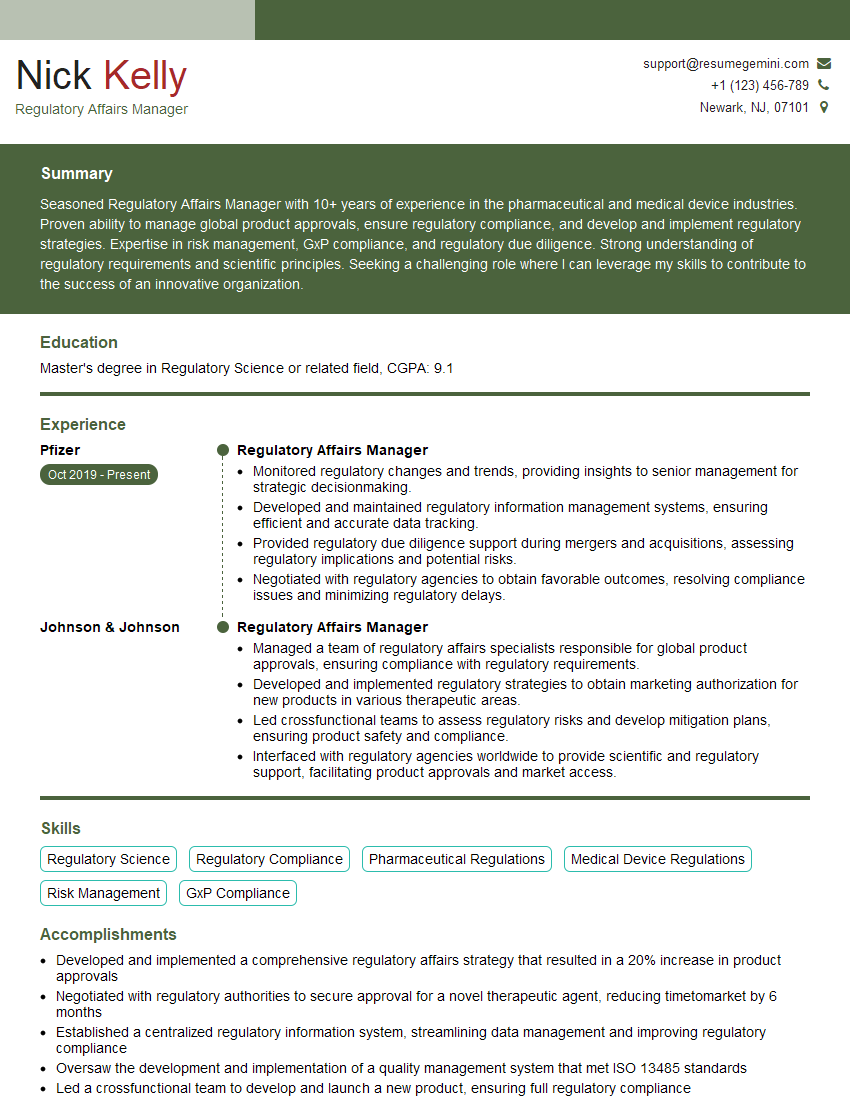
Regulatory Affairs Manager Resume Sample
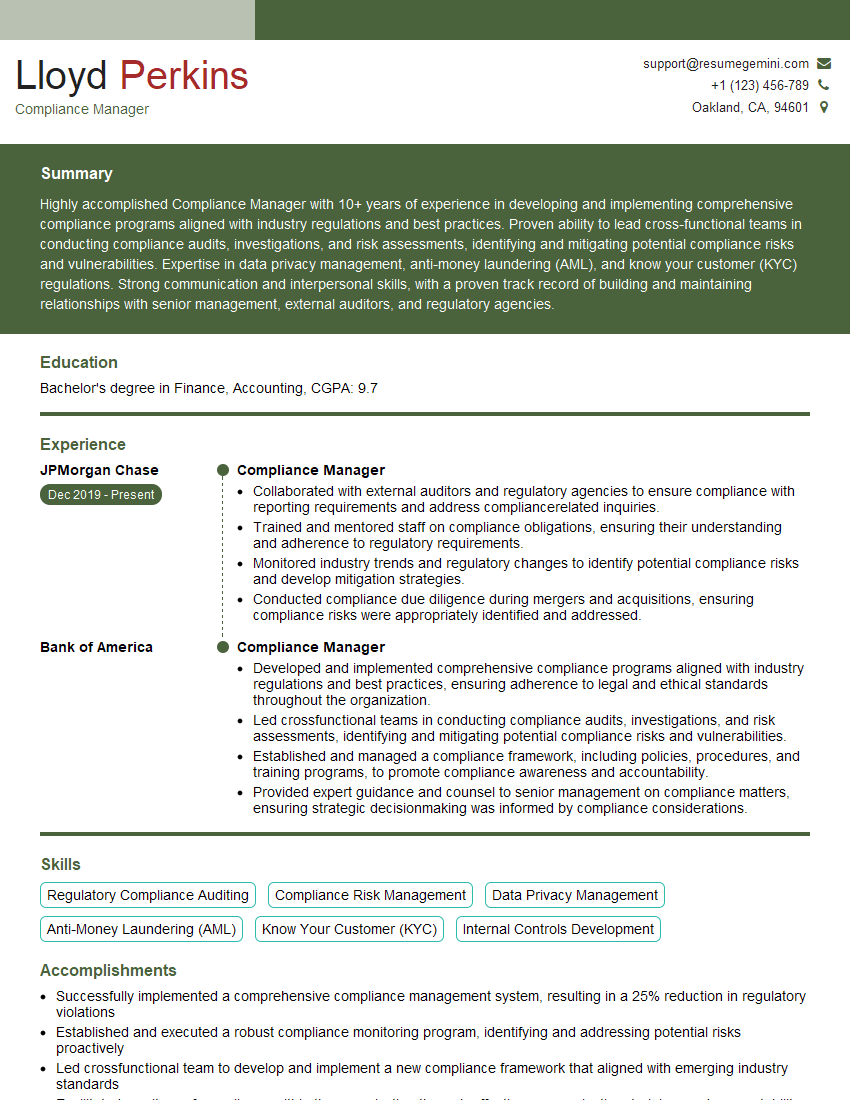
Compliance Manager Resume Sample
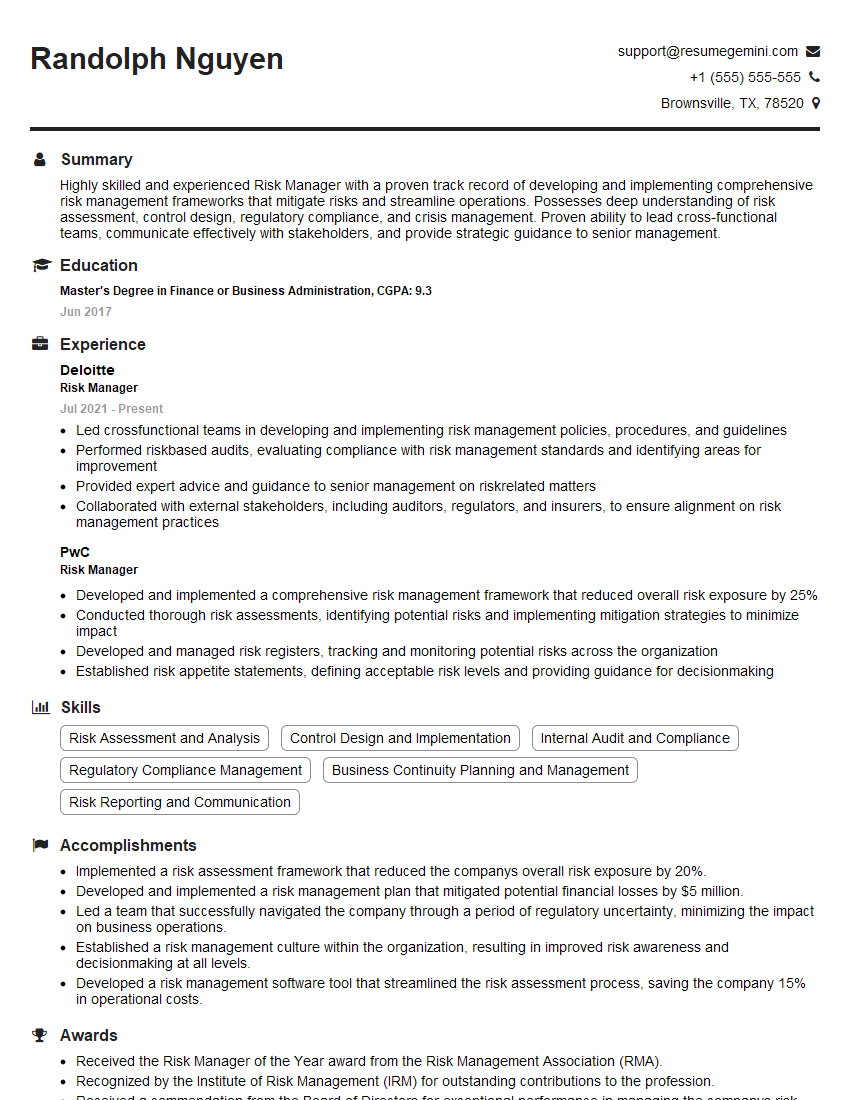
Risk Manager Resume Sample
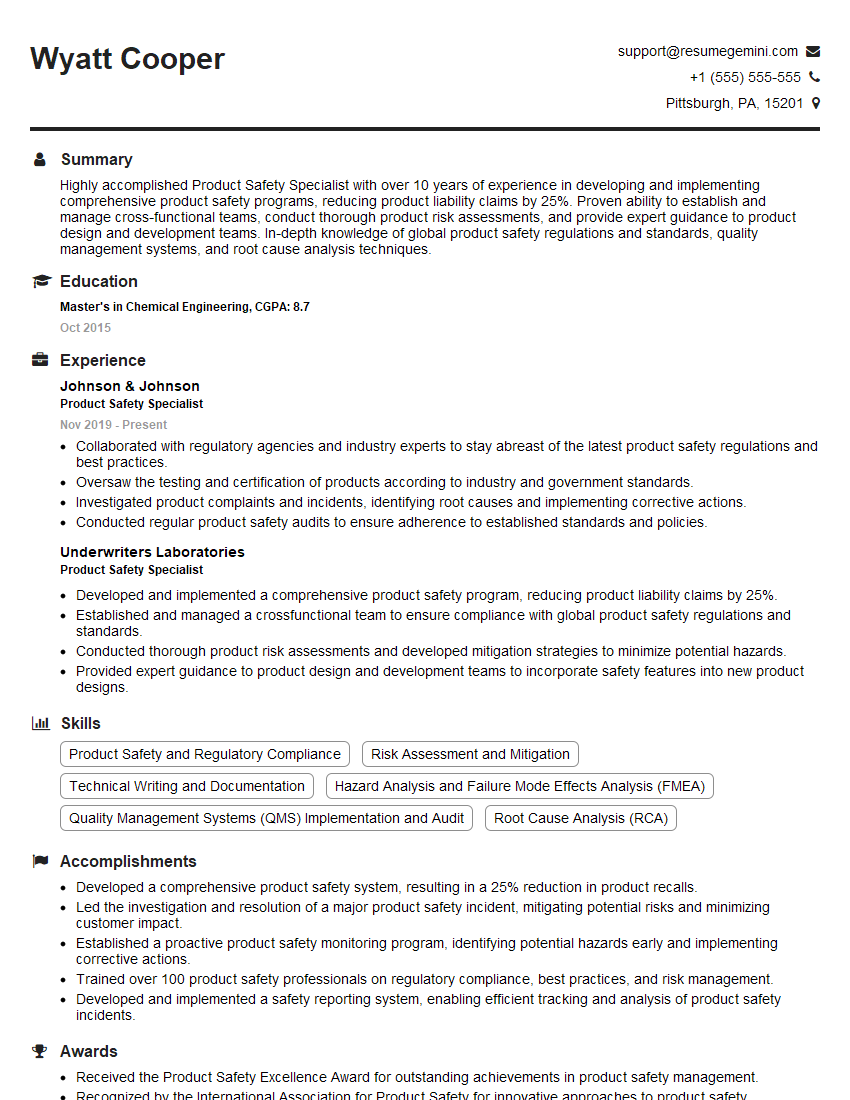
Product Safety Specialist Resume Sample
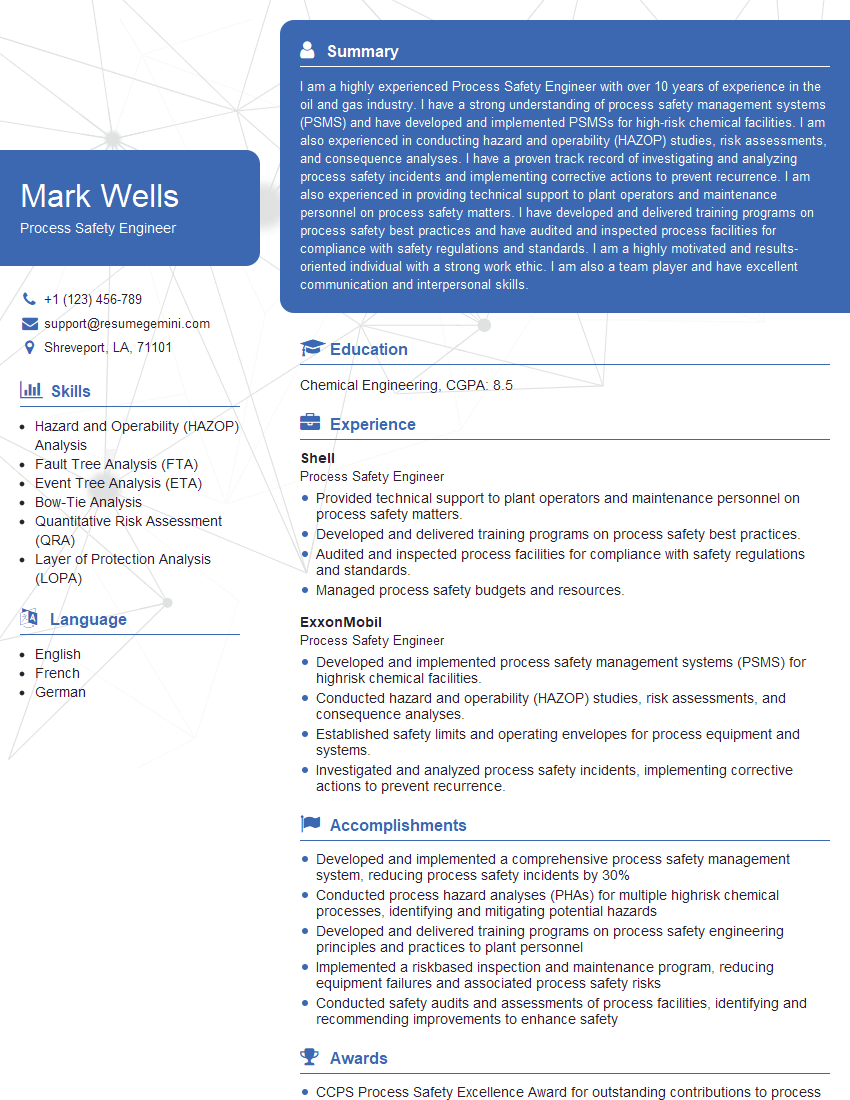
Process Safety Engineer Resume Sample
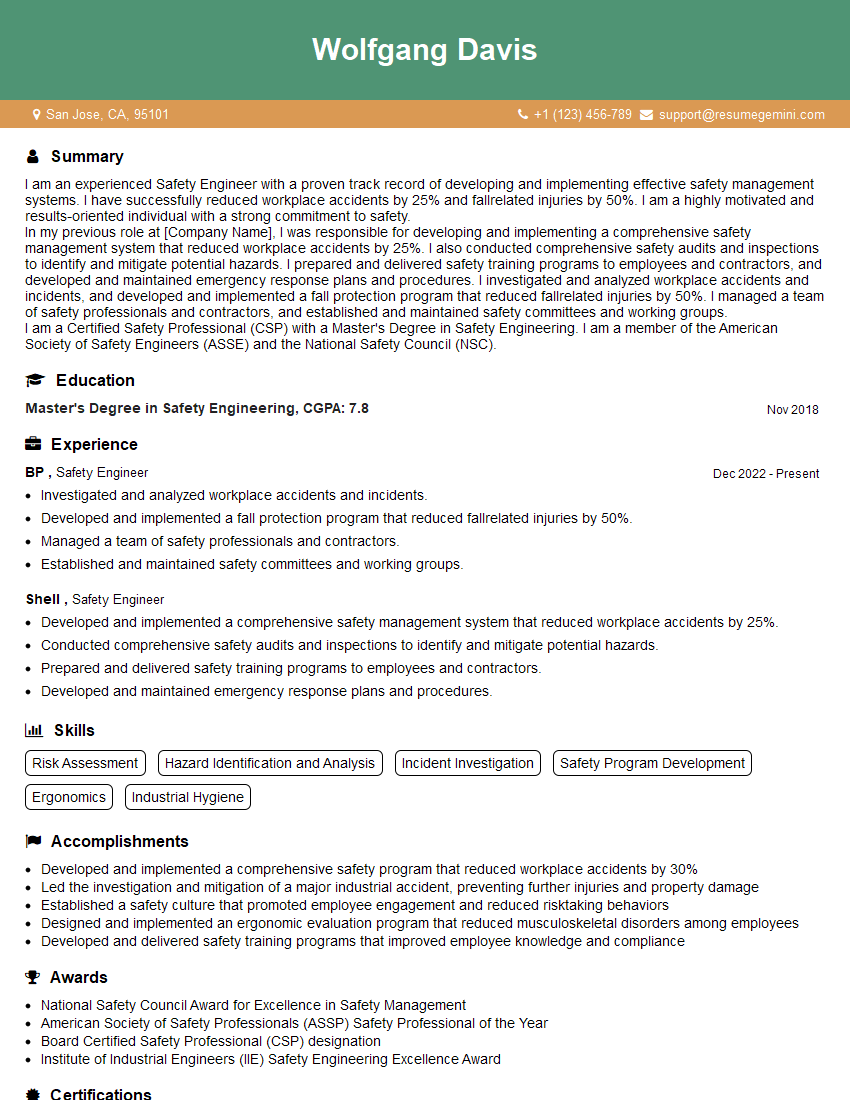
Safety Engineer Resume Sample
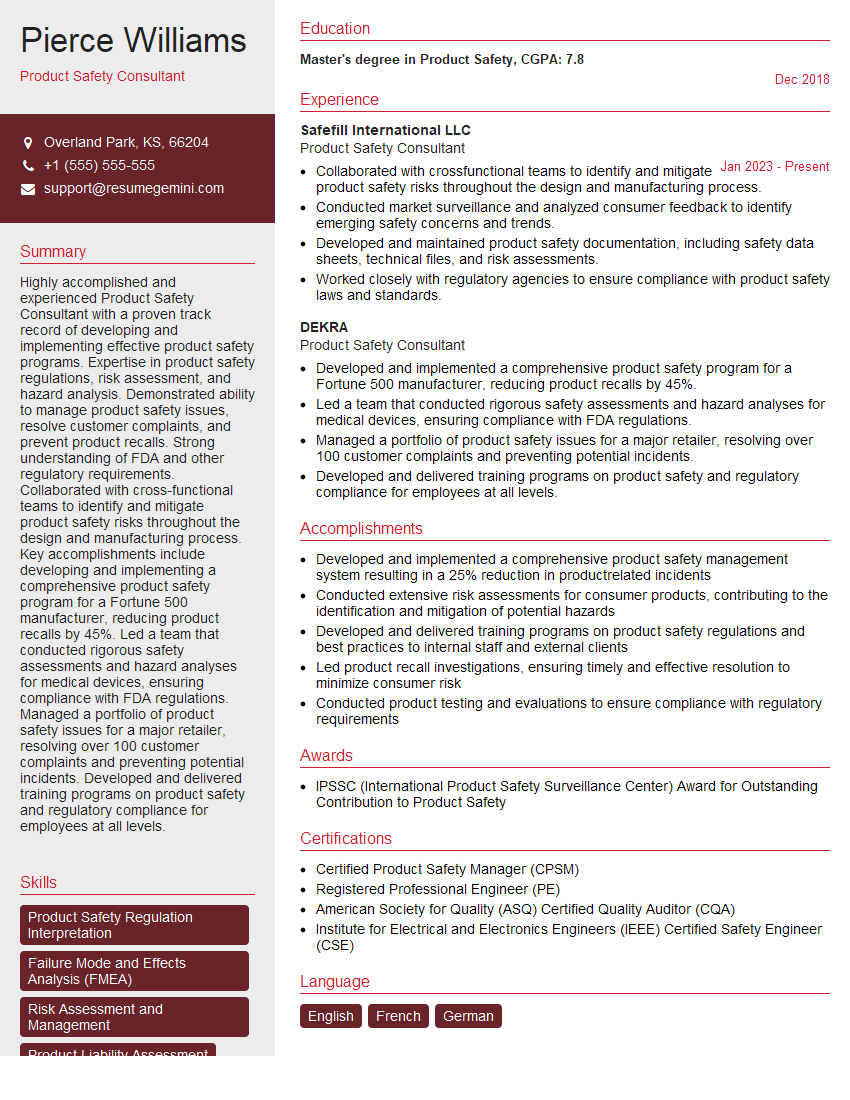
Product Safety Consultant Resume Sample
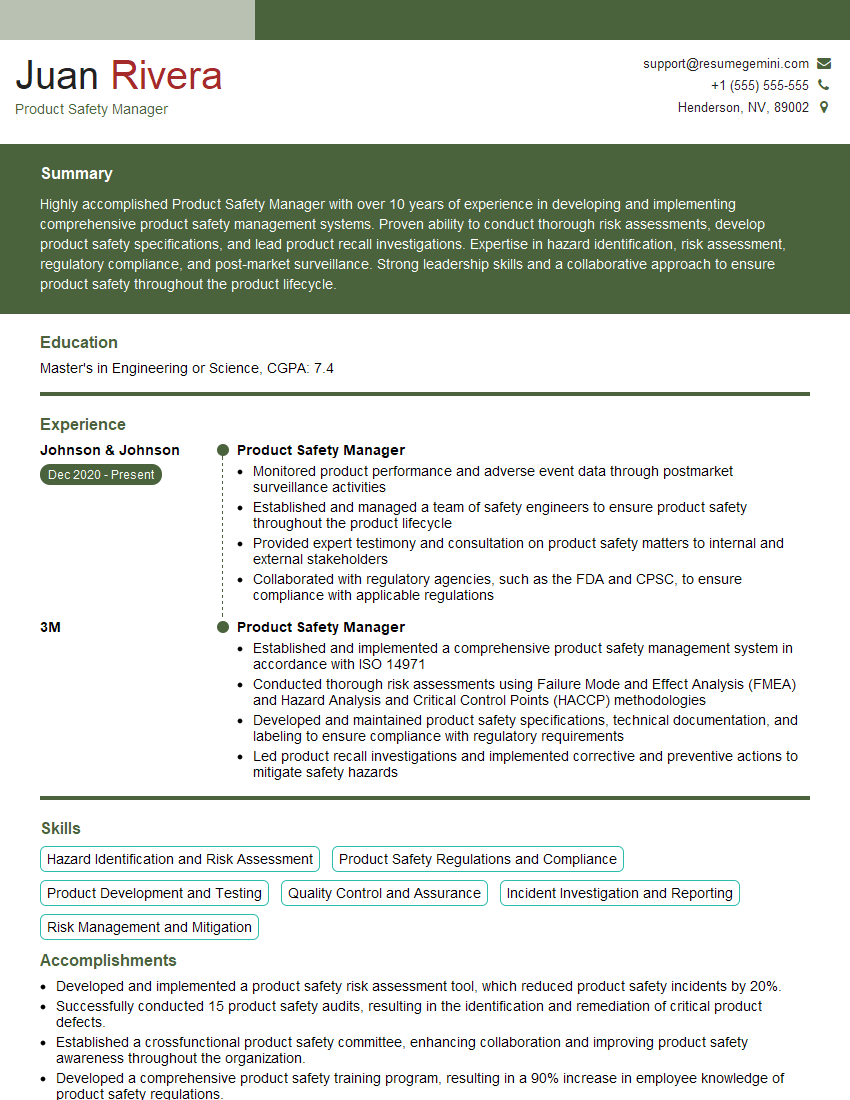
Product Safety Manager Resume Sample
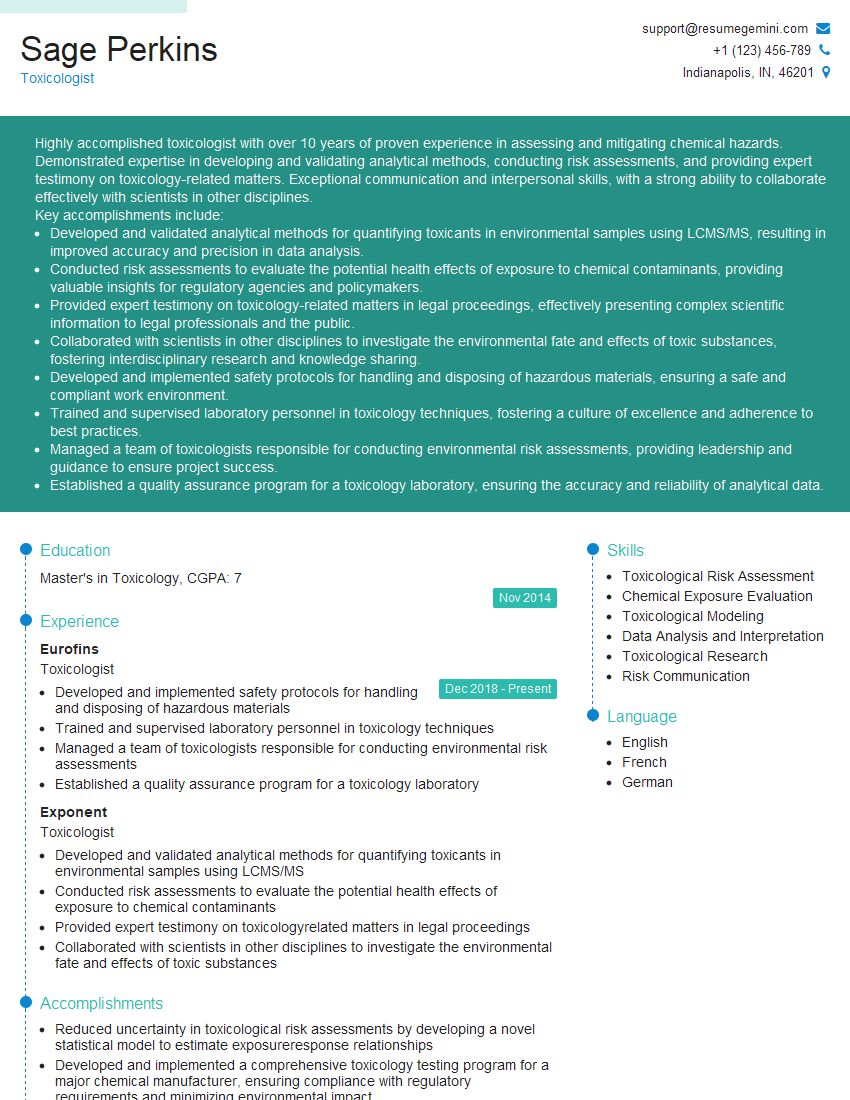
Toxicologist Resume Sample
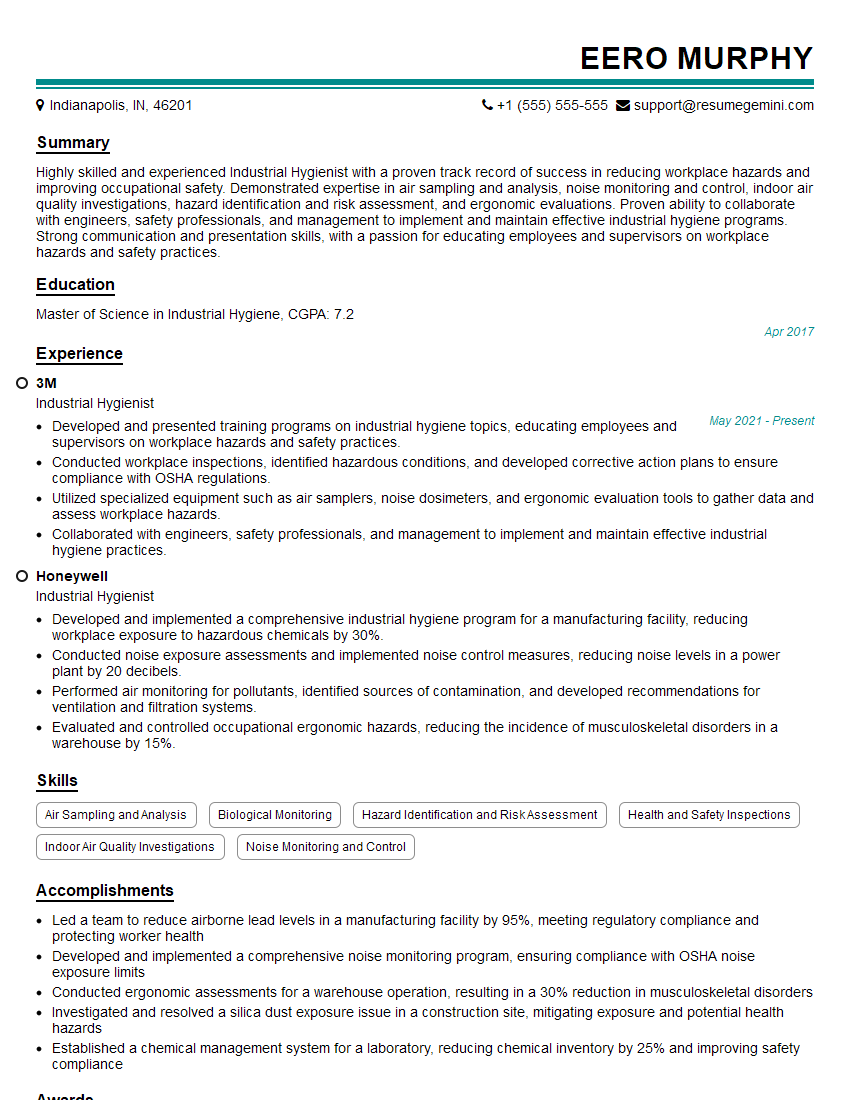
Industrial Hygienist Resume Sample
Explore more articles
Users Rating of Our Blogs
Share Your Experience
We value your feedback! Please rate our content and share your thoughts (optional).
What Readers Say About Our Blog
Hello,
we currently offer a complimentary backlink and URL indexing test for search engine optimization professionals.
You can get complimentary indexing credits to test how link discovery works in practice.
No credit card is required and there is no recurring fee.
You can find details here:
https://wikipedia-backlinks.com/indexing/
Regards
NICE RESPONSE TO Q & A
hi
The aim of this message is regarding an unclaimed deposit of a deceased nationale that bears the same name as you. You are not relate to him as there are millions of people answering the names across around the world. But i will use my position to influence the release of the deposit to you for our mutual benefit.
Respond for full details and how to claim the deposit. This is 100% risk free. Send hello to my email id: [email protected]
Luka Chachibaialuka
Hey interviewgemini.com, just wanted to follow up on my last email.
We just launched Call the Monster, an parenting app that lets you summon friendly ‘monsters’ kids actually listen to.
We’re also running a giveaway for everyone who downloads the app. Since it’s brand new, there aren’t many users yet, which means you’ve got a much better chance of winning some great prizes.
You can check it out here: https://bit.ly/callamonsterapp
Or follow us on Instagram: https://www.instagram.com/callamonsterapp
Thanks,
Ryan
CEO – Call the Monster App
Hey interviewgemini.com, I saw your website and love your approach.
I just want this to look like spam email, but want to share something important to you. We just launched Call the Monster, a parenting app that lets you summon friendly ‘monsters’ kids actually listen to.
Parents are loving it for calming chaos before bedtime. Thought you might want to try it: https://bit.ly/callamonsterapp or just follow our fun monster lore on Instagram: https://www.instagram.com/callamonsterapp
Thanks,
Ryan
CEO – Call A Monster APP
To the interviewgemini.com Owner.
Dear interviewgemini.com Webmaster!
Hi interviewgemini.com Webmaster!
Dear interviewgemini.com Webmaster!
excellent
Hello,
We found issues with your domain’s email setup that may be sending your messages to spam or blocking them completely. InboxShield Mini shows you how to fix it in minutes — no tech skills required.
Scan your domain now for details: https://inboxshield-mini.com/
— Adam @ InboxShield Mini
Reply STOP to unsubscribe
Hi, are you owner of interviewgemini.com? What if I told you I could help you find extra time in your schedule, reconnect with leads you didn’t even realize you missed, and bring in more “I want to work with you” conversations, without increasing your ad spend or hiring a full-time employee?
All with a flexible, budget-friendly service that could easily pay for itself. Sounds good?
Would it be nice to jump on a quick 10-minute call so I can show you exactly how we make this work?
Best,
Hapei
Marketing Director
Hey, I know you’re the owner of interviewgemini.com. I’ll be quick.
Fundraising for your business is tough and time-consuming. We make it easier by guaranteeing two private investor meetings each month, for six months. No demos, no pitch events – just direct introductions to active investors matched to your startup.
If youR17;re raising, this could help you build real momentum. Want me to send more info?
Hi, I represent an SEO company that specialises in getting you AI citations and higher rankings on Google. I’d like to offer you a 100% free SEO audit for your website. Would you be interested?
Hi, I represent an SEO company that specialises in getting you AI citations and higher rankings on Google. I’d like to offer you a 100% free SEO audit for your website. Would you be interested?
good