Preparation is the key to success in any interview. In this post, we’ll explore crucial Professional Development Skills interview questions and equip you with strategies to craft impactful answers. Whether you’re a beginner or a pro, these tips will elevate your preparation.
Questions Asked in Professional Development Skills Interview
Q 1. Describe your experience designing and delivering training programs.
Designing and delivering training programs is a multifaceted process that requires careful planning, execution, and evaluation. It begins with a thorough needs analysis to identify skill gaps and learning objectives. I then develop a curriculum that aligns with these objectives, incorporating various learning methodologies to cater to diverse learning styles. This involves selecting appropriate training materials, developing engaging activities, and creating a supportive learning environment. Finally, I deliver the training, utilizing appropriate technology and techniques to ensure effective knowledge transfer.
For example, I once designed a training program on project management for a team of software engineers. I started by conducting interviews and surveys to understand their current skills and identify areas needing improvement. Based on this, I developed a comprehensive program covering project initiation, planning, execution, monitoring, and closure. The training incorporated interactive workshops, case studies, simulations, and group projects to ensure active learning. The program was delivered in a blended format, combining online modules with in-person workshops, allowing for flexibility and personalized learning.
In another instance, I developed a leadership training program for middle managers. This involved designing role-playing exercises to improve communication skills, providing frameworks for conflict resolution and coaching skills, and offering group mentoring sessions for continued professional development post-training.
Q 2. How do you assess the effectiveness of a training program?
Assessing the effectiveness of a training program is crucial to ensure its impact and return on investment. I utilize a multi-pronged approach, combining quantitative and qualitative methods. Quantitative methods include pre- and post-training assessments to measure knowledge gain, participant satisfaction surveys, and tracking key performance indicators (KPIs) post-training to assess the impact on the participants’ work performance.
Qualitative methods include conducting focus groups, gathering feedback through informal conversations, and observing participants during training sessions to gauge engagement and understanding. By combining these approaches, I gain a holistic view of the training’s effectiveness and identify areas for improvement. For example, if post-training assessments show low knowledge retention, it may indicate the need for revised training materials or more engaging activities. Similarly, low participant satisfaction scores might highlight areas where the training delivery could be improved.
Q 3. What methods do you use to identify training needs within an organization?
Identifying training needs is the foundation of any effective training program. I use a variety of methods to achieve this, including:
- Performance reviews: Analyzing performance appraisals to identify skill gaps and areas needing improvement.
- Surveys and questionnaires: Collecting feedback from employees to understand their perceived training needs and preferences.
- Interviews: Conducting individual interviews with employees and managers to gain a deeper understanding of specific training requirements.
- Observations: Observing employees in their work environment to identify areas where training could improve their performance.
- Focus groups: Gathering feedback from groups of employees to discuss training needs and priorities.
- Analysis of organizational data: Examining data such as customer feedback, sales figures, and accident rates to identify areas where training may be needed.
For instance, a high number of customer complaints related to a specific product might indicate a need for additional training on that product’s features and functionality for the customer service team.
Q 4. Explain your experience with different training delivery methods (e.g., online, in-person, blended).
I have extensive experience using various training delivery methods, adapting my approach to the specific needs of the training and the learners. These include:
- In-person training: This method allows for face-to-face interaction, fostering a collaborative and engaging learning environment. It is particularly effective for training that requires hands-on activities or complex discussions.
- Online training: This method offers flexibility and accessibility, enabling learners to access training materials at their own pace and convenience. I use various online platforms, incorporating interactive elements such as quizzes and videos to maintain engagement.
- Blended learning: This combines the best features of both in-person and online training. It provides flexibility while also allowing for valuable face-to-face interaction and networking opportunities. For example, I might deliver the theoretical aspects of a training program online and follow it up with an in-person workshop to practice practical skills and facilitate group discussions.
The choice of method depends on factors such as budget, learner preferences, content complexity, and geographical constraints. For example, a highly technical training program may benefit from a blended learning approach, while a quick refresher training on a new software may be easily and efficiently delivered online.
Q 5. How do you adapt training materials to meet the diverse learning styles of participants?
Recognizing that learners have different preferences and styles is paramount to successful training delivery. I adapt training materials to cater to diverse learning styles by incorporating a variety of methods, ensuring something resonates with every participant. I leverage:
- Visual aids: Charts, graphs, diagrams, and images to cater to visual learners.
- Hands-on activities: Role-playing, simulations, and group exercises to engage kinesthetic learners.
- Discussions and group work: Opportunities for collaboration and peer-to-peer learning.
- Audio materials: Podcasts, audio clips, and narrations to cater to auditory learners.
- Varied delivery methods: A combination of lectures, presentations, videos, and interactive exercises to accommodate different learning preferences.
- Personalized learning paths: If feasible, allowing learners to choose activities or modules based on their learning style and specific needs.
For example, when training on software use, I would provide both video tutorials and written instructions, allowing visual and reading learners to engage most effectively.
Q 6. Describe a time you had to troubleshoot a technical issue during a training session.
During a recent online training session on a new CRM software, the platform experienced a sudden outage just as we were beginning a crucial hands-on exercise. My immediate response was to remain calm and reassure the participants that I was addressing the issue. I contacted the platform’s support team to determine the cause and estimated resolution time. While waiting, I engaged participants in a related discussion about the software’s underlying principles, using the downtime as an opportunity to reinforce key concepts. Once the platform was restored, we resumed the session with minimal disruption.
This experience highlighted the importance of having a backup plan and the ability to adapt quickly to unexpected technical challenges. It also showcased the value of clear and proactive communication with participants during unexpected situations.
Q 7. How do you handle participant questions and concerns during training?
Handling participant questions and concerns is vital for creating a positive and productive learning environment. My approach involves:
- Encouraging questions: Creating a safe and supportive environment where participants feel comfortable asking questions.
- Active listening: Carefully listening to questions to fully understand the participant’s concerns.
- Clear and concise answers: Providing clear, concise, and accurate answers to questions, using simple language and avoiding technical jargon whenever possible.
- Addressing concerns promptly: Addressing concerns promptly and professionally, taking appropriate action to resolve the issue.
- Utilizing various communication channels: Utilizing various communication channels such as email, instant messaging, or forums to address questions outside of formal training sessions.
- Seeking assistance when needed: Seeking assistance from subject matter experts if necessary to provide accurate and complete answers.
If a question reveals a gap in the training material, I acknowledge the insight and make a note to address it in future iterations of the program.
Q 8. What are some common challenges in professional development, and how do you overcome them?
Common challenges in professional development often revolve around time constraints, lack of resources, ineffective training methods, and resistance to change. Overcoming these requires a multifaceted approach.
Time Constraints: I address this by designing short, impactful training modules that can be easily integrated into busy schedules, often utilizing microlearning techniques – short bursts of focused learning.
Lack of Resources: I leverage free or low-cost resources like online courses, webinars, and open educational resources (OER). I also explore creative methods to maximize existing resources, perhaps repurposing existing materials or collaborating with other departments.
Ineffective Training Methods: I focus on adult learning principles, incorporating active learning techniques like simulations, group discussions, and hands-on activities to avoid passive lectures. Regular assessments help ensure knowledge retention and adjustment of methods.
Resistance to Change: I foster a culture of continuous learning through clear communication of the benefits of professional development, highlighting success stories and involving employees in the design and delivery of training programs. Addressing individual concerns and anxieties is crucial.
Q 9. How do you measure the ROI of a training program?
Measuring the ROI of a training program goes beyond simply assessing immediate reactions. It requires a multi-stage approach, focusing on quantifiable metrics aligned with business goals.
Kirkpatrick’s Four Levels: This model is invaluable. Level 1 assesses reaction (trainee satisfaction); Level 2 measures learning (knowledge gained); Level 3 focuses on behavior change (application of new skills on the job); and Level 4 examines results (impact on business metrics).
Metrics: Examples include improved employee performance (measured through performance reviews), increased productivity (tracked through output), reduced error rates, enhanced customer satisfaction scores, and ultimately, increased profitability. Specific Key Performance Indicators (KPIs) should be identified before the training commences.
Cost-Benefit Analysis: A crucial step involves calculating the total cost of the training program (materials, instructor fees, employee time) and comparing it to the financial benefits achieved. This allows for a clear understanding of the program’s return on investment.
For example, if a sales training program results in a 10% increase in sales revenue, exceeding the training costs, the ROI is demonstrably positive.
Q 10. Explain your experience with learning management systems (LMS).
My experience with Learning Management Systems (LMS) is extensive. I’ve used various platforms, including Moodle, Canvas, and Cornerstone, to design, deliver, and track online training programs.
Course Design & Delivery: I’m proficient in creating engaging online courses, using various multimedia elements (videos, interactive exercises, quizzes) to enhance the learning experience. I’ve also used LMS features to manage course enrollments, deadlines, and communication.
Assessment & Tracking: I leverage LMS analytics to monitor learner progress, identify knowledge gaps, and assess the effectiveness of training materials. This data is crucial for iterative improvements to course content and delivery.
Reporting & Analysis: I can generate reports on learner completion rates, quiz scores, and other relevant metrics to demonstrate the effectiveness of the training and justify resource allocation.
For example, in a recent project, I used Moodle to create a blended learning program, incorporating both online modules and in-person workshops. The LMS allowed for seamless tracking of learner progress across both formats, enabling data-driven adjustments to the program.
Q 11. Describe your experience with adult learning principles.
Adult learning principles guide my approach to professional development. Understanding these principles ensures training is engaging, relevant, and effective.
Andragogy vs. Pedagogy: I differentiate between teaching children (pedagogy) and adults (andragogy). Adults are self-directed, experience-rich, and problem-centered. Therefore, my training design emphasizes active participation, relevance to real-world problems, and collaborative learning.
Experiential Learning: I incorporate case studies, simulations, and role-playing to allow participants to apply concepts directly, fostering deeper understanding and retention. This is far more impactful than passive listening.
Self-Directed Learning: I provide resources and support to allow learners to control the pace and style of their learning. This fosters a sense of ownership and increases engagement.
Relevance and Application: I connect training content to participants’ immediate needs and job responsibilities, ensuring practical application and value.
For instance, instead of lecturing on a new software, I’d design a hands-on workshop where participants use the software to solve real-world problems relevant to their roles.
Q 12. How do you ensure training content is engaging and relevant?
Ensuring training content is engaging and relevant requires careful planning and execution.
Needs Assessment: I begin with a thorough needs assessment to understand the learning objectives, audience needs, and existing knowledge gaps. This ensures alignment with business goals and participant expectations.
Storytelling & Real-World Examples: I weave narratives and real-world examples into the training content, making it relatable and memorable. Abstract concepts become more easily digestible when grounded in practical scenarios.
Interactive Elements: I incorporate interactive exercises, games, quizzes, and discussions to keep learners actively engaged. Passive listening is ineffective for adult learners.
Variety of Media: I leverage different media formats – videos, infographics, presentations, and simulations – to cater to diverse learning styles and maintain engagement.
Regular Feedback: I solicit continuous feedback to ensure the content remains relevant and engaging throughout the training process.
For instance, when teaching project management, I use a real-life case study of a successful project, highlighting the strategies employed and their impact. This is far more engaging than a theoretical lecture.
Q 13. What strategies do you use to encourage participant interaction and engagement?
Encouraging participant interaction and engagement is vital for effective training. I employ a range of strategies.
Icebreakers & Team-Building Activities: Beginning with icebreakers helps create a comfortable and collaborative atmosphere. Team-building activities promote interaction and shared learning.
Group Discussions & Brainstorming Sessions: I facilitate discussions and brainstorming sessions to encourage active participation and knowledge sharing among participants.
Interactive Exercises & Games: I incorporate interactive exercises and games to make learning fun and engaging. This breaks up monotony and encourages active participation.
Polling & Q&A Sessions: Regular polling and Q&A sessions allow me to gauge understanding, address concerns, and encourage active participation.
Collaborative Projects: I assign collaborative projects to promote teamwork, communication, and knowledge application.
For example, during a communication skills training, I might use a role-playing exercise where participants practice active listening and giving constructive feedback.
Q 14. How do you incorporate feedback into the design and delivery of training programs?
Feedback is crucial for continuous improvement. I incorporate feedback throughout the design and delivery process.
Pre-Training Needs Assessment: Gathering feedback before training helps tailor content to specific needs and expectations.
Mid-Training Feedback: I solicit feedback during the training through informal polls, quick surveys, or informal discussions to make adjustments in real-time.
Post-Training Evaluation: Post-training surveys and assessments gather feedback on the overall effectiveness of the training, allowing for improvements in future iterations.
Observations & Informal Feedback: I observe participants’ interactions and gather informal feedback to gauge their understanding and engagement level.
Follow-up: Post-training follow-up allows for continued engagement and gathering of longer-term feedback on the impact of the training.
For example, if post-training evaluations reveal a lack of clarity on a specific module, I’ll revise that module for future sessions, possibly incorporating additional examples or different teaching methods.
Q 15. Describe your experience with needs analysis.
Needs analysis is the systematic process of identifying and understanding the learning gaps or performance deficiencies within an organization. It’s the crucial first step in designing any effective professional development program. Think of it like diagnosing a patient before prescribing medicine; you can’t create a successful training program without first understanding what needs to be addressed.
My approach typically involves a multi-faceted strategy. This includes:
- Surveys: Collecting data on employee skills, knowledge, and attitudes through questionnaires or online surveys.
- Interviews: Conducting one-on-one interviews with employees, managers, and stakeholders to gain in-depth insights into performance challenges and training needs.
- Focus Groups: Facilitating group discussions to gather diverse perspectives and identify common themes.
- Performance Data Analysis: Reviewing performance metrics, such as sales figures, customer satisfaction scores, or error rates, to pinpoint areas for improvement.
- Observation: Directly observing employees in their work environments to identify skill gaps and potential training needs.
For example, in my previous role at Company X, we conducted a needs analysis to improve customer service skills. Through surveys and interviews, we identified a lack of knowledge regarding new product features and inefficient complaint handling procedures. This analysis informed the design of a targeted training program focusing specifically on these areas, resulting in a significant improvement in customer satisfaction scores.
Career Expert Tips:
- Ace those interviews! Prepare effectively by reviewing the Top 50 Most Common Interview Questions on ResumeGemini.
- Navigate your job search with confidence! Explore a wide range of Career Tips on ResumeGemini. Learn about common challenges and recommendations to overcome them.
- Craft the perfect resume! Master the Art of Resume Writing with ResumeGemini’s guide. Showcase your unique qualifications and achievements effectively.
- Don’t miss out on holiday savings! Build your dream resume with ResumeGemini’s ATS optimized templates.
Q 16. What are your preferred methods for evaluating employee performance?
Evaluating employee performance is a critical aspect of professional development, as it provides valuable feedback for growth. I believe in a multi-faceted approach that combines quantitative and qualitative methods for a holistic assessment.
- 360-degree feedback: This method gathers feedback from multiple sources, including the employee themselves, their manager, peers, and subordinates, providing a comprehensive picture of their performance.
- Goal setting and performance reviews: Establishing clear, measurable, achievable, relevant, and time-bound (SMART) goals at the beginning of a performance cycle and then conducting formal reviews to assess progress and provide feedback.
- Behavioral observation: Directly observing employees in their work environment to assess their skills and behaviours in real-time. This is particularly useful for assessing practical skills.
- Project-based assessment: Evaluating employees’ performance on specific projects or tasks to assess their ability to apply their knowledge and skills in a practical setting.
I emphasize constructive feedback, focusing on both strengths and areas for improvement. Instead of simply assigning numerical ratings, I prefer to engage in open dialogue with employees to understand their perspectives and identify mutually agreed upon development goals. For instance, in one case, an employee consistently received low scores on teamwork metrics. Instead of simply reprimanding them, we engaged in open communication to understand the root cause, ultimately leading to their successful integration into team projects after they participated in a training on communication and collaboration.
Q 17. How do you stay current with the latest trends and best practices in professional development?
Staying current in the rapidly evolving field of professional development requires continuous learning and engagement. My approach involves a multi-pronged strategy:
- Professional Organizations: Active membership in organizations like ATD (Association for Talent Development) provides access to resources, conferences, and networking opportunities.
- Conferences and Workshops: Attending industry conferences and workshops allows me to learn about the latest trends, best practices, and innovative approaches in professional development.
- Industry Publications and Journals: Regularly reading reputable journals and industry publications keeps me abreast of emerging research and thought leadership.
- Online Learning Platforms: Utilizing online platforms like Coursera, edX, and LinkedIn Learning to access a wide range of courses and webinars.
- Networking: Building and maintaining a strong professional network allows for the exchange of ideas and best practices with colleagues and experts in the field.
For example, attending the ATD conference last year exposed me to the latest advancements in microlearning and virtual reality training, which I subsequently incorporated into our training programs at Company Y. This resulted in increased engagement and knowledge retention among our employees.
Q 18. How do you develop and maintain positive relationships with stakeholders?
Maintaining positive relationships with stakeholders is paramount for the success of any professional development initiative. My approach centers on:
- Open Communication: Regular and transparent communication with stakeholders – including employees, managers, and senior leadership – to ensure alignment on goals, expectations, and progress.
- Active Listening: Carefully listening to stakeholders’ concerns, perspectives, and feedback, and demonstrating empathy and understanding.
- Collaboration and Partnership: Working collaboratively with stakeholders to develop and implement professional development programs that meet their needs and expectations.
- Building Trust: Demonstrating competence, integrity, and reliability in my work to build and maintain trust with stakeholders.
- Proactive Engagement: Regularly seeking input from stakeholders and keeping them informed of progress and challenges.
For example, in one project, I faced resistance from a department manager who was skeptical about the value of a proposed training program. By actively listening to their concerns, addressing them through data and demonstrating the program’s potential ROI, I was able to build consensus and secure their support.
Q 19. Describe your experience with creating training budgets and managing resources.
Creating and managing training budgets requires careful planning and resource allocation. My experience involves:
- Needs Analysis: Budget allocation starts with a thorough needs analysis to identify the specific training needs and prioritize them based on their impact on business objectives.
- Cost Estimation: Accurately estimating the costs associated with each training program, including instructor fees, materials, technology, and administrative expenses.
- Resource Allocation: Strategically allocating resources to maximize the impact of training investments, balancing cost-effectiveness with program effectiveness.
- Budget Tracking: Regularly monitoring and tracking budget expenditures to ensure that the training program stays within the allocated budget.
- Return on Investment (ROI) Measurement: Tracking and measuring the ROI of training programs to demonstrate the value of the investment and justify future budget requests.
In a previous role, I was responsible for managing a $500,000 training budget. By using a detailed budget tracking system and prioritizing programs based on ROI potential, I was able to successfully deliver all planned training initiatives while remaining within budget. We even identified areas for cost savings without compromising program quality.
Q 20. How do you handle conflicts or disagreements among training participants?
Handling conflicts or disagreements among training participants requires tact, diplomacy, and effective conflict resolution skills. My approach involves:
- Creating a Safe and Respectful Environment: Establishing clear ground rules for respectful communication and collaboration from the outset.
- Active Listening and Empathy: Actively listening to all perspectives and demonstrating empathy and understanding for different viewpoints.
- Facilitation and Mediation: Facilitating constructive dialogue and mediating disagreements to help participants find common ground.
- Conflict Resolution Techniques: Utilizing conflict resolution techniques, such as compromise, negotiation, and collaborative problem-solving, to address the root causes of the conflict.
- Addressing Underlying Issues: Identifying and addressing any underlying issues or power dynamics that may be contributing to the conflict.
For example, during a leadership training program, a heated discussion arose between two participants with differing management styles. By actively listening to both sides, facilitating a respectful dialogue, and highlighting the value of diverse perspectives, I helped them find common ground and ultimately strengthen their working relationship.
Q 21. What is your approach to creating inclusive and accessible training programs?
Creating inclusive and accessible training programs is essential for ensuring that all employees have equal opportunities to learn and grow. My approach emphasizes:
- Universal Design for Learning (UDL): Applying UDL principles to create training materials and activities that cater to diverse learning styles and abilities.
- Accessibility Considerations: Ensuring that all training materials and activities are accessible to employees with disabilities, adhering to WCAG (Web Content Accessibility Guidelines) standards.
- Cultural Sensitivity: Designing training programs that are culturally sensitive and relevant to the diverse backgrounds of participants.
- Inclusive Language: Using inclusive language that avoids gender bias, ageism, and other forms of discrimination.
- Diverse Learning Materials: Incorporating diverse learning materials, such as videos, audio, and interactive activities, to engage learners with different preferences.
For example, in designing a training program on diversity and inclusion, I incorporated various learning modalities, including videos featuring diverse voices, interactive case studies reflecting different cultural contexts, and accessible materials like transcripts and alternative text for images. This ensured that all participants felt included and valued.
Q 22. Describe your experience with using technology to enhance learning.
Technology has revolutionized how we approach learning, making it more accessible, engaging, and effective. My experience spans various platforms and tools, focusing on maximizing their potential for knowledge transfer and skill development.
Learning Management Systems (LMS): I’ve extensively used platforms like Moodle and Canvas to create and deliver online courses, track learner progress, and facilitate interactive learning experiences. For example, I developed a comprehensive LMS-based training program on project management, incorporating video lectures, quizzes, and discussion forums to encourage active participation.
Interactive Simulations and Virtual Reality (VR): I’ve integrated simulations into training programs to provide learners with risk-free environments to practice real-world scenarios. For instance, I used a VR simulation to train customer service representatives on handling difficult customer interactions, allowing them to practice their responses without real-world consequences.
Microlearning and Mobile Apps: Recognizing the demands of busy professionals, I’ve designed and delivered microlearning modules accessible through mobile apps. This approach allows for short, focused learning sessions tailored to specific needs. A successful example was a series of short videos on effective communication skills delivered via a mobile learning app, improving employee engagement and knowledge retention.
Q 23. How do you incorporate gamification or other innovative techniques into training?
Gamification and innovative techniques significantly boost learner engagement and knowledge retention. They transform passive learning into an active, rewarding experience.
Points and Badges: I often incorporate point systems and badges to reward learners for completing modules, achieving high scores on quizzes, and participating in discussions. This creates a sense of accomplishment and healthy competition.
Leaderboards and Challenges: Introducing leaderboards and friendly challenges encourages collaboration and motivates learners to strive for excellence. For instance, I used a leaderboard to track progress in a sales training program, fostering a competitive yet supportive learning environment.
Storytelling and Scenarios: I believe in integrating narratives and realistic scenarios into training modules. This makes the learning experience more relatable and memorable. I designed a training program on conflict resolution using case studies and interactive simulations where participants actively engaged in resolving conflicts.
Interactive Exercises and Quizzes: Instead of relying solely on lectures, I use interactive exercises, simulations, and quizzes to check for understanding and reinforce key concepts. This ensures active learning and immediate feedback.
Q 24. What are your strengths and weaknesses as a professional development specialist?
As a professional development specialist, my greatest strength lies in my ability to connect with learners on a personal level and tailor training to their unique needs and learning styles. I excel at creating engaging and effective learning experiences that translate theoretical knowledge into practical skills.
However, my weakness is sometimes over-committing myself, striving for perfection across multiple projects. I actively work to improve this through better time management and delegation, leveraging project management tools to prioritize tasks effectively.
Q 25. Describe your experience with coaching and mentoring.
Coaching and mentoring are integral parts of my approach to professional development. I’ve had extensive experience guiding individuals and teams through career transitions, skill development, and performance improvement.
Individual Coaching: I work closely with individuals to identify their career goals, address performance gaps, and develop personalized action plans. For example, I coached a junior manager struggling with delegation, providing guidance and support as they developed and implemented improved delegation strategies.
Group Mentoring: I’ve facilitated group mentoring programs where experienced professionals guide and support newer team members. This fosters a collaborative environment and allows for peer learning and knowledge sharing. I mentored a group of new hires, helping them navigate their roles and build professional networks.
Feedback and Performance Improvement: I provide constructive feedback to facilitate performance improvement. I utilize a growth mindset approach, focusing on strengths and areas for development to motivate progress.
Q 26. How do you build a strong training curriculum?
Building a strong training curriculum involves a systematic approach ensuring alignment with organizational goals and learner needs. I follow these key steps:
Needs Assessment: Identify the knowledge and skill gaps within the organization, aligning them with strategic business objectives. This often involves surveys, interviews, and performance data analysis.
Learning Objectives: Define clear, measurable, achievable, relevant, and time-bound (SMART) learning objectives. These objectives guide the content creation and assessment process.
Content Development: Create engaging and relevant content using diverse formats including videos, presentations, interactive exercises, and simulations, choosing methods best suited to the learning objectives and learner preferences.
Assessment Strategy: Develop assessments that accurately measure learner comprehension and skill acquisition, including pre-tests, post-tests, quizzes, and performance evaluations.
Delivery Method: Select the appropriate delivery method – instructor-led, online, blended learning – based on learner needs, budget, and content complexity.
Evaluation and Revision: Continuously evaluate the effectiveness of the training program through feedback surveys, performance data, and Kirkpatrick’s model. This ensures continuous improvement and relevance.
Q 27. What is your experience with performance support tools?
Performance support tools are crucial for providing learners with readily available assistance when they need it, in their workflow. My experience encompasses various tools such as:
Job Aids and Quick Reference Guides: I’ve developed concise, easily accessible guides providing step-by-step instructions and troubleshooting tips for specific tasks, improving efficiency and reducing errors. For example, I created a quick reference guide for using a new software system.
Knowledge Bases and Wikis: I’ve contributed to and managed internal knowledge bases and wikis, providing a centralized repository of information for employees to access whenever needed. This fostered a culture of knowledge sharing and self-sufficiency.
Online Help Systems and Tutorials: I’ve integrated online help systems and interactive tutorials into software applications and training platforms, providing contextual support within the user’s workflow. I developed interactive tutorials for a new CRM system.
Q 28. How do you ensure the alignment of training programs with organizational goals?
Ensuring alignment between training programs and organizational goals is critical for maximizing ROI. My approach involves:
Strategic Alignment: Collaborate with organizational leaders to identify strategic priorities and ensure training programs directly support the achievement of key business objectives. This involves a detailed analysis of the organization’s strategic plan.
Needs Analysis: Conduct thorough needs assessments to identify specific skills and knowledge gaps hindering the attainment of organizational goals. This may involve conducting interviews, surveys and analyzing performance data.
Performance Measurement: Define key performance indicators (KPIs) to measure the effectiveness of training programs in achieving organizational goals. KPIs should be tracked and analyzed regularly.
Continuous Improvement: Regularly evaluate the effectiveness of training programs, making adjustments as needed based on feedback, performance data, and changing organizational needs. This includes using a feedback loop to constantly refine the training programs.
Key Topics to Learn for Professional Development Skills Interview
- Self-Reflection & Goal Setting: Understanding your strengths, weaknesses, and career aspirations. Practical application: Articulating a clear career path and demonstrating how you’ve actively worked towards your goals.
- Time Management & Prioritization: Efficiently managing multiple tasks and deadlines. Practical application: Providing examples of successful project completion under pressure, showcasing your organizational skills.
- Communication & Collaboration: Effectively conveying information and working effectively in teams. Practical application: Describing situations where you successfully navigated disagreements or collaborated to achieve a shared objective.
- Problem-Solving & Critical Thinking: Analyzing complex situations, identifying root causes, and developing effective solutions. Practical application: Presenting a case study where you used analytical skills to solve a challenging problem.
- Adaptability & Resilience: Navigating change and overcoming setbacks. Practical application: Sharing examples of how you’ve adapted to new challenges or bounced back from difficult situations.
- Learning Agility & Continuous Improvement: Demonstrating a commitment to lifelong learning and professional growth. Practical application: Highlighting instances where you proactively sought out new skills or knowledge to enhance your performance.
- Leadership & Mentorship (if applicable): Demonstrating leadership qualities and experience in guiding others. Practical application: Sharing examples of mentoring junior colleagues or leading successful projects.
Next Steps
Mastering Professional Development Skills is crucial for career advancement. It demonstrates your commitment to continuous growth and your ability to contribute effectively to any organization. To significantly boost your job prospects, create an ATS-friendly resume that highlights these skills. ResumeGemini is a trusted resource to help you build a compelling and effective resume that showcases your accomplishments. We provide examples of resumes tailored to Professional Development Skills to guide you. Take advantage of these resources to present yourself as the ideal candidate.
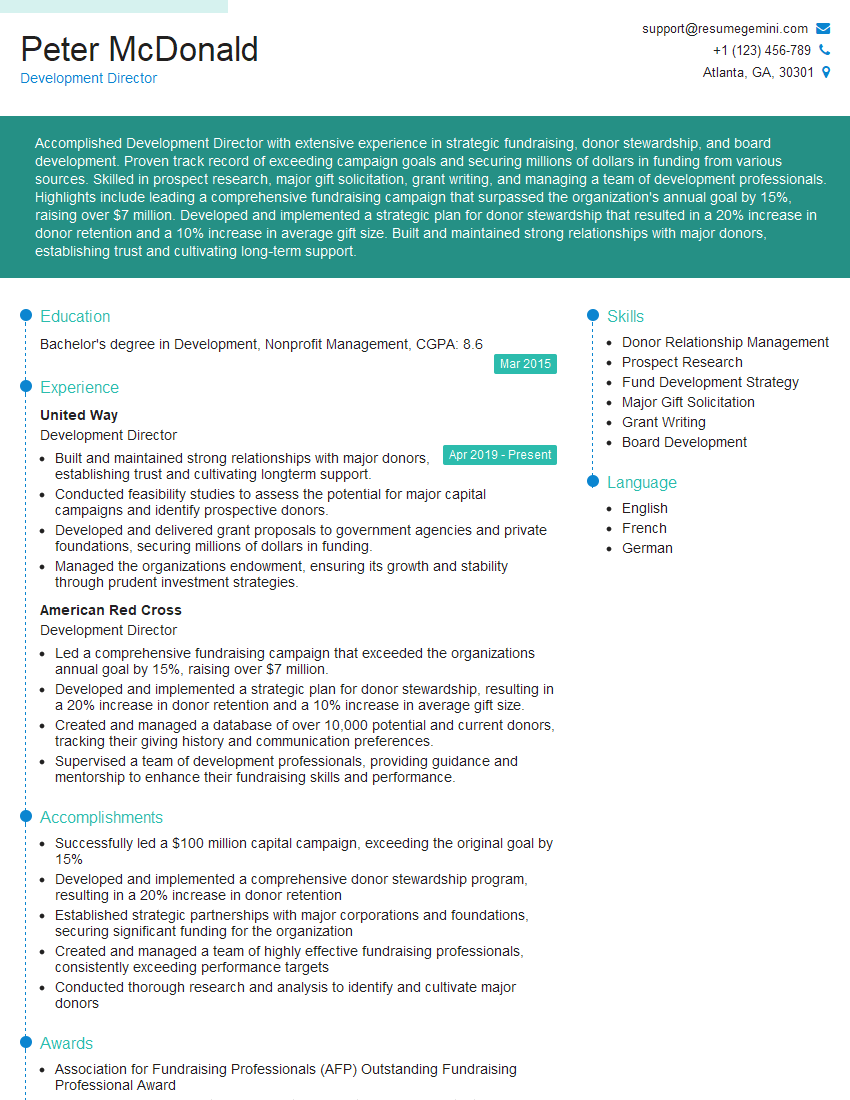
Development Director Resume Sample
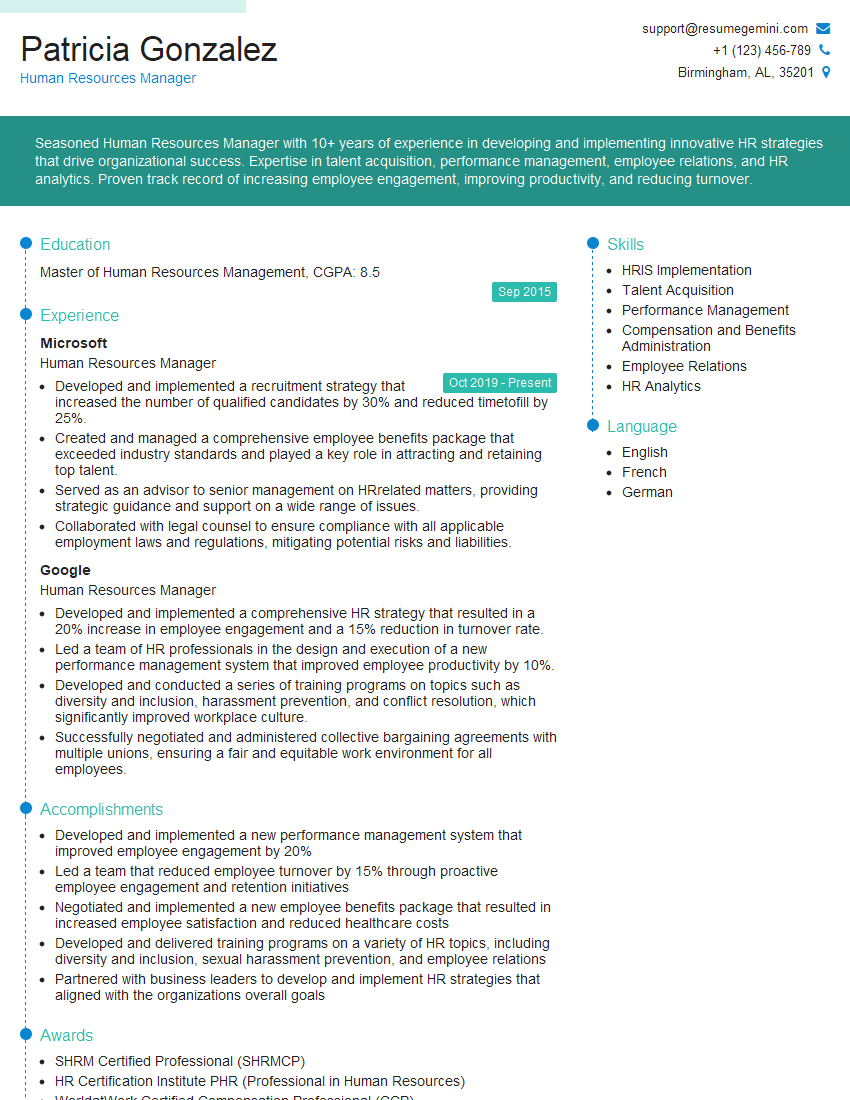
Human Resources Manager Resume Sample
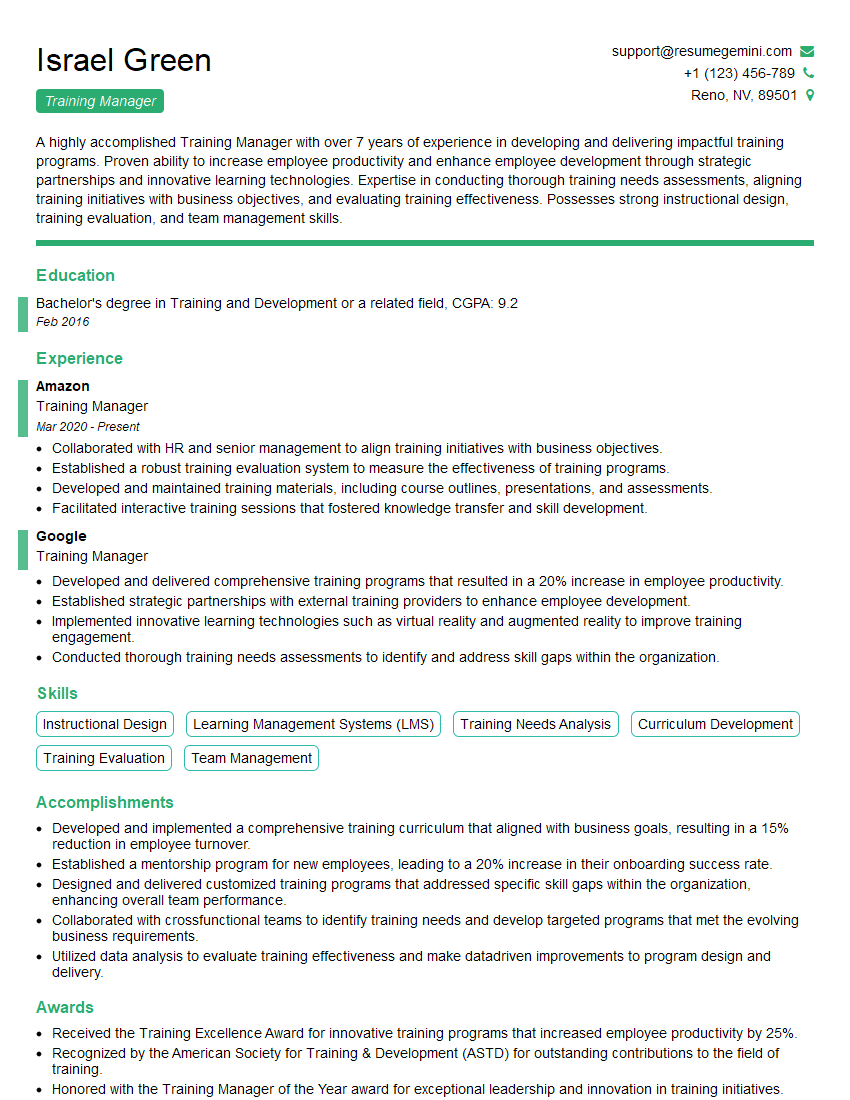
Training Manager Resume Sample
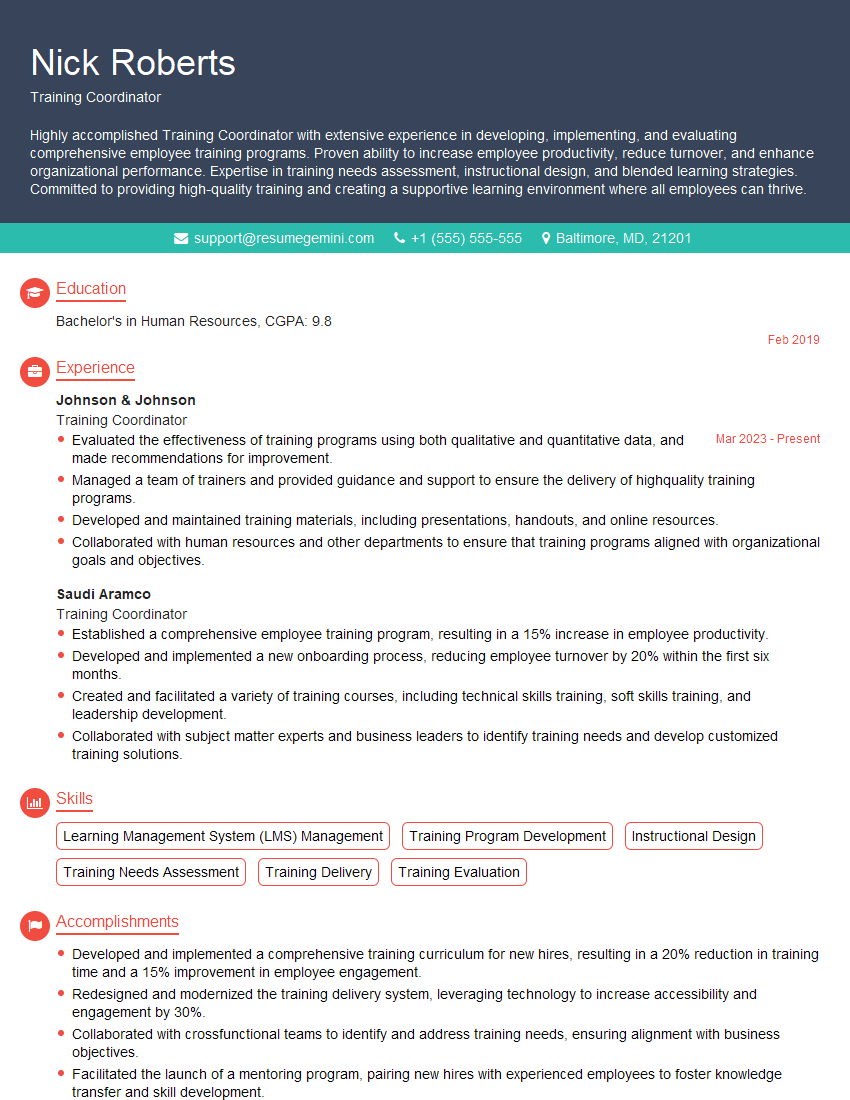
Training Coordinator Resume Sample
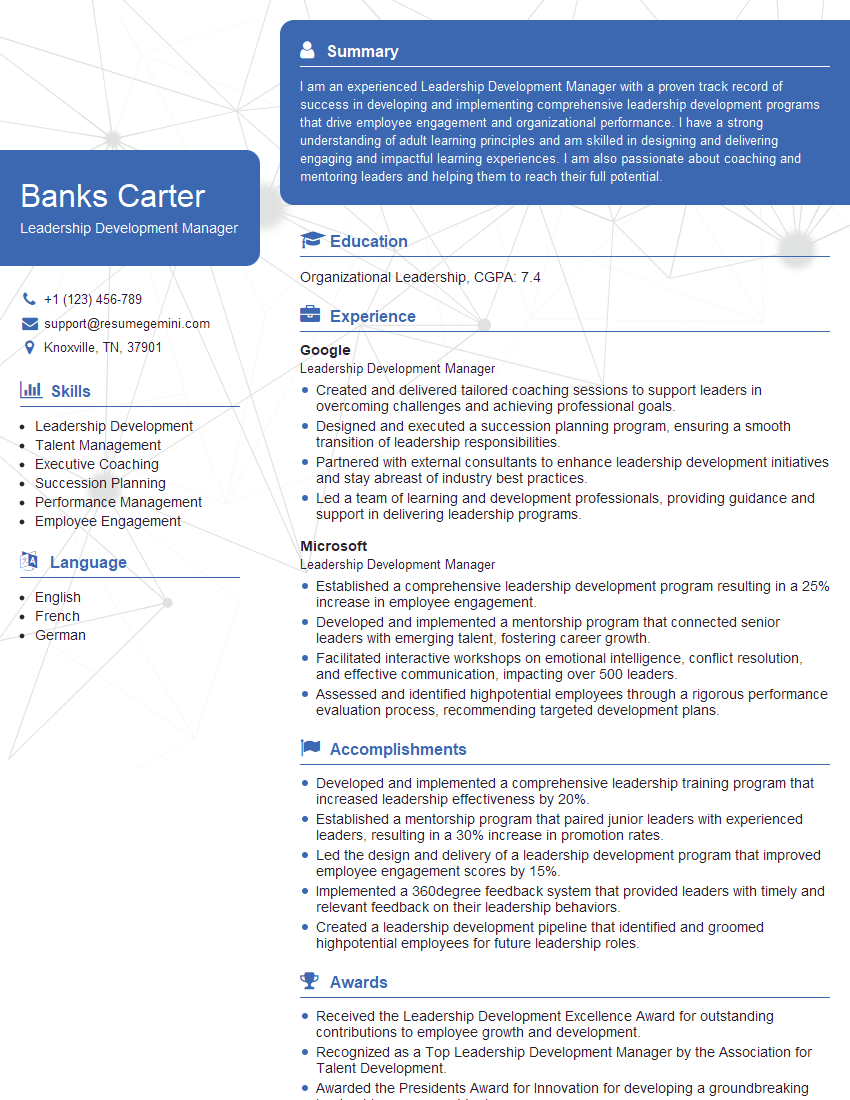
Leadership Development Manager Resume Sample
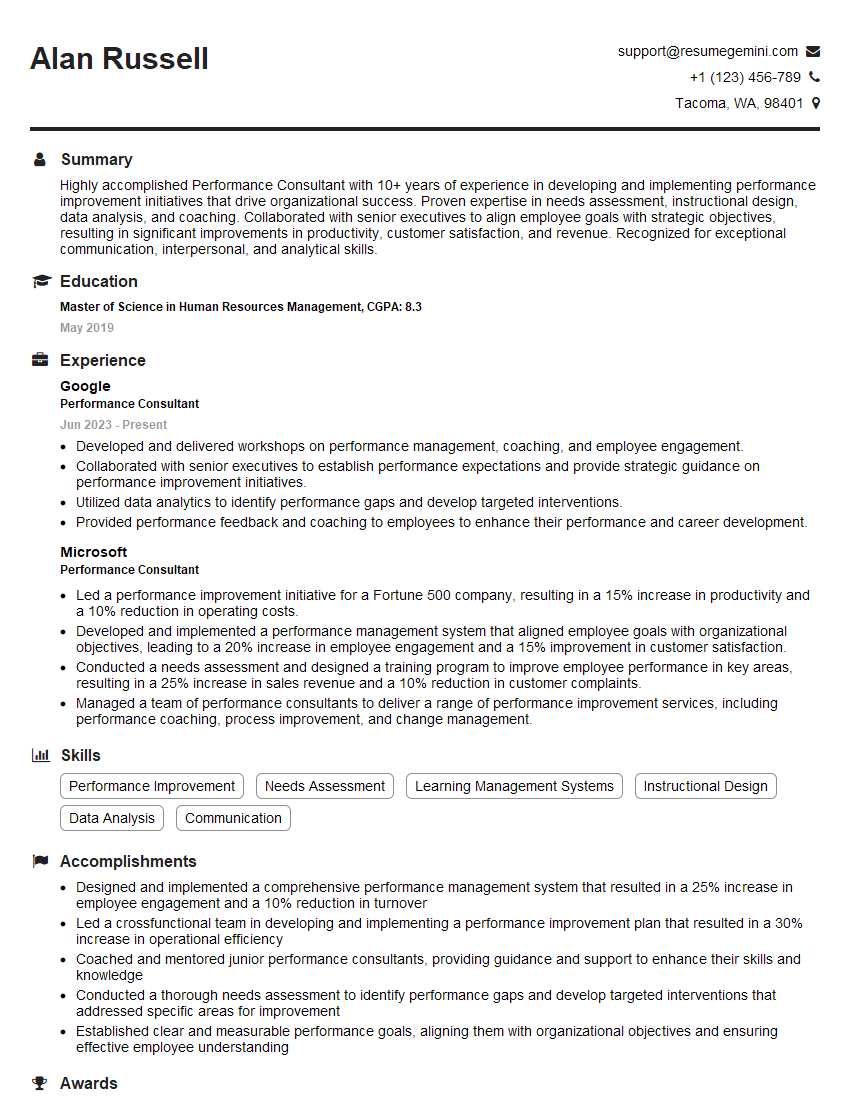
Performance Consultant Resume Sample
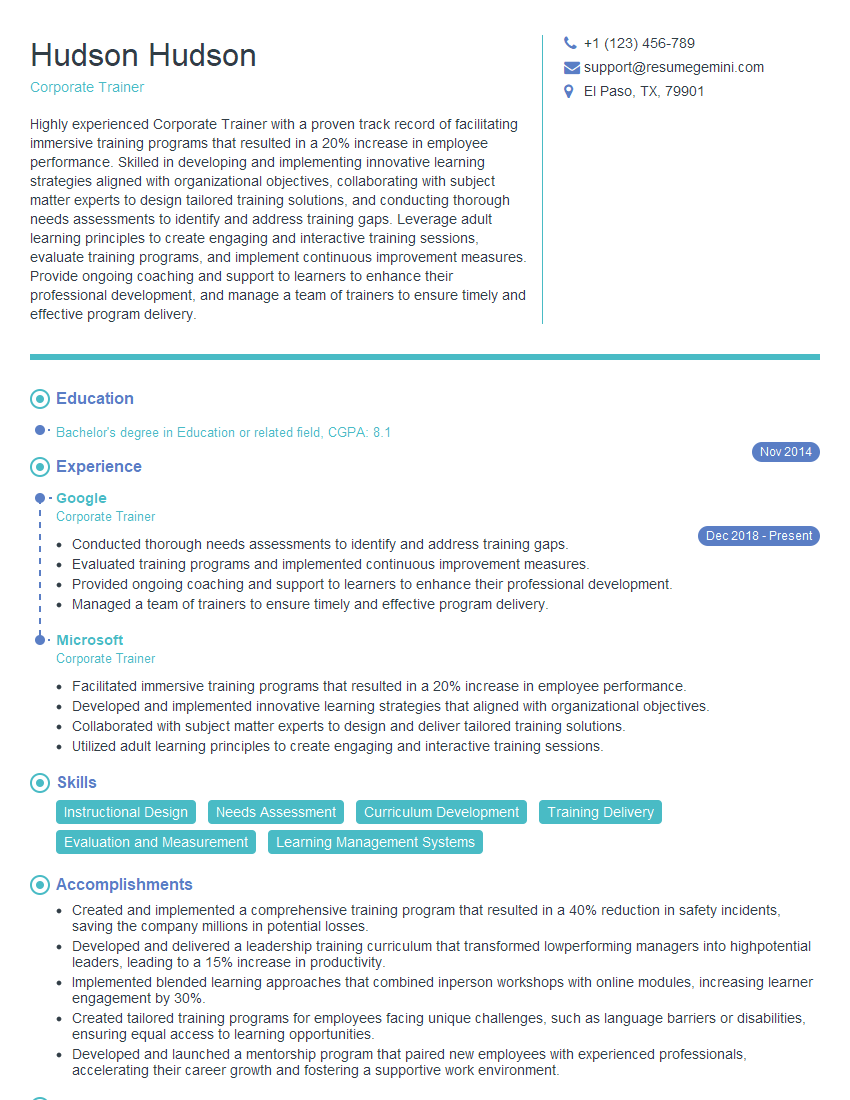
Corporate Trainer Resume Sample

Curriculum Developer Resume Sample

Training Specialist Resume Sample
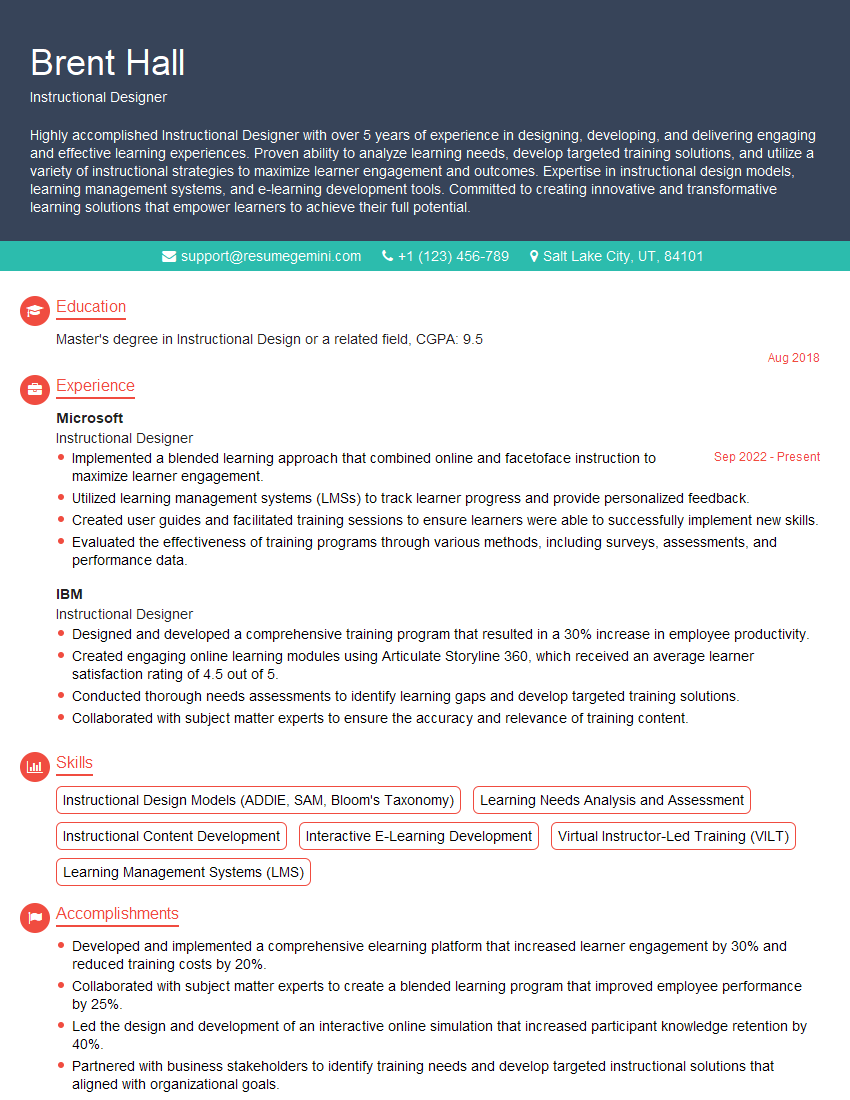
Instructional Designer Resume Sample
Explore more articles
Users Rating of Our Blogs
Share Your Experience
We value your feedback! Please rate our content and share your thoughts (optional).
What Readers Say About Our Blog
Very informative content, great job.
good