Preparation is the key to success in any interview. In this post, we’ll explore crucial Proficiency in power and hand tools interview questions and equip you with strategies to craft impactful answers. Whether you’re a beginner or a pro, these tips will elevate your preparation.
Questions Asked in Proficiency in power and hand tools Interview
Q 1. What safety precautions do you take when operating power tools?
Safety is paramount when using power tools. My approach is built on a layered system encompassing PPE (Personal Protective Equipment), proper tool setup, and mindful operation.
- PPE: This is the first line of defense. I always wear safety glasses, hearing protection (earplugs or muffs), and appropriate respiratory protection (dust mask or respirator) depending on the task. For tasks involving rotating parts, I’ll also use work gloves and potentially a face shield for added protection.
- Proper Tool Setup: Before even turning on a power tool, I meticulously inspect it for damage, ensuring blades are sharp and securely fastened, guards are in place and functioning correctly, and all clamps and vices are properly secured. I also ensure the work area is well-lit, free from clutter, and provides sufficient space to maneuver safely.
- Mindful Operation: I maintain a firm grip on the tool, avoiding distractions, and never rushing the job. I use the correct speed and feed settings for the material being worked on and always keep my fingers clear of the cutting edge or rotating parts. I understand the tool’s limitations and never push it beyond its capacity.
- Emergency Preparedness: I know the location of the nearest first aid kit and am familiar with emergency procedures in case of an accident. I work with others in mind, ensuring they’re aware of my activities and potential hazards.
For instance, when using a circular saw, I always engage the blade guard before starting the cut and maintain a firm grip, ensuring the blade doesn’t bind and kick back.
Q 2. Describe your experience with various types of saws (circular, miter, reciprocating).
I’ve extensive experience with various types of saws. My proficiency ensures I select the right tool for the job, maximizing efficiency and safety.
- Circular Saw: Ideal for straight cuts in wood, plywood, and other sheet materials. I’m adept at making both rip cuts (along the grain) and crosscuts (across the grain) and know how to adjust blade depth and bevel settings for precise results. I’ve used various blade types, from fine-tooth blades for cleaner cuts to coarser blades for rougher work.
- Miter Saw: Perfect for making accurate angle cuts, especially miter cuts (45-degree angles) required for framing, trim work, and cabinetry. I understand the importance of aligning the workpiece correctly to the fence and using the appropriate blade for the material being cut. Experience with compound miter saws (allowing for both bevel and miter angles) is also a strength.
- Reciprocating Saw (Sawzall): A versatile tool for demolition, cutting curves, and making plunge cuts in various materials like wood, metal, and PVC. I’m comfortable with different blade types—wood blades, metal-cutting blades, and even demolition blades for more aggressive applications. Understanding the proper blade selection and speed settings is crucial for efficient and safe cutting.
Q 3. How do you maintain and care for your power tools?
Regular maintenance is key to extending the lifespan of power tools and ensuring safe operation. My routine involves several key steps:
- Cleaning: After each use, I thoroughly clean the tool, removing sawdust, metal shavings, or other debris. Compressed air is helpful for reaching tight areas.
- Lubrication: Many power tools require lubrication of moving parts, such as gears and bearings. I refer to the manufacturer’s instructions for the correct type and frequency of lubrication.
- Blade/Bit Inspection and Replacement: I regularly inspect blades and bits for wear and tear and replace them when necessary. Dull blades lead to inaccurate cuts and increase the risk of kickback.
- Storage: I store tools in a dry, clean environment to prevent rust and corrosion. I keep them in a well-organized manner, making it easy to find the right tool when needed.
- Inspection Before Use: Before each use, I check the cords for damage, inspect the tool for loose parts or cracks, and verify that all safety guards are properly in place.
Neglecting maintenance can lead to premature wear and potentially dangerous malfunctions. For example, a dull circular saw blade can bind, resulting in a kickback that could cause injury.
Q 4. Explain the proper use of a drill press.
The drill press is a powerful and precise tool for drilling holes in various materials. Proper use involves careful setup and operation:
- Workpiece Securing: Always securely clamp the workpiece to the drill press table. This prevents movement during drilling, ensuring accurate hole placement and preventing injury.
- Bit Selection: Choose the correct drill bit size and type for the material being drilled. (I’ll elaborate on bit selection in a later response)
- Speed Selection: Select the appropriate speed for the material and drill bit. Faster speeds are generally used for softer materials, while slower speeds are better for harder materials.
- Depth Stop: Use the drill press’s depth stop to control the depth of the hole. This ensures consistency across multiple holes.
- Feed Rate: Apply steady, even pressure during drilling, avoiding excessive force. Forcing the bit can lead to breakage or damage to the workpiece.
- Safety Measures: Always wear safety glasses and hearing protection. Ensure that the chuck is tightly secured, and keep your hands clear of the rotating bit.
For instance, when drilling through hardwood, I would use a slower speed and apply a steady feed rate to avoid burning the wood and ensuring a clean hole.
Q 5. What are the different types of hammers and their applications?
Hammers are fundamental hand tools, and their types are differentiated by head shape and weight, influencing their specific applications.
- Claw Hammer: The most common type, ideal for general carpentry tasks like driving nails and removing them using the claw.
- Ball-Peen Hammer: Used in metalworking, its rounded peen (head) is ideal for shaping and riveting metal.
- Sledgehammer: Heavier and used for demolition, breaking up concrete or driving large stakes.
- Mallet: Has a soft head (rubber, wood, or plastic) and is used to avoid damaging delicate surfaces when striking.
- Brick Hammer: With a flat face and a pointed end, it’s designed for masonry work, such as breaking bricks and shaping mortar.
For example, I’d use a claw hammer for building a wooden frame, while a sledgehammer would be needed for breaking up a concrete slab. A mallet would be the correct choice for assembling furniture where I’d want to protect the wood.
Q 6. How do you choose the right drill bit for a specific material?
Selecting the right drill bit is crucial for achieving clean, accurate holes and avoiding damage to both the bit and the material.
- Material: Different materials require different bit types. For wood, I use twist bits; for metal, I use high-speed steel (HSS) bits; for masonry, I use masonry bits with carbide tips; for softer materials like plastic, I might use a standard twist bit.
- Bit Size: The bit size is determined by the desired hole diameter. Always use the appropriate size for the job, avoiding oversized bits that could weaken the material.
- Bit Length: Select the appropriate bit length to ensure it’s long enough to penetrate the material completely without bending or breaking.
- Point Type: Some drill bits have different point styles depending on the material. Some bits will have different angles and shapes for optimal performance in various applications.
For example, drilling a large hole in a piece of hardwood would require a twist drill bit slightly smaller than the hole size to avoid splitting the wood.
Q 7. Describe your experience with various types of screwdrivers.
Screwdrivers are precision tools, and having the correct type is essential for efficient and safe work. Various types exist depending on the screw head and application.
- Phillips Head: Features a cross-shaped tip. These are common for wood and some metal applications.
- Slotted Head: Features a single slot. While still used, they are less common than other types.
- Torx: Uses a six-point star shape; these are common in electronics and automotive work.
- Hex/Allen Wrench: Uses a hexagonal shaped driver, common in furniture and equipment.
- Square Drive: Employs a square-shaped driver; often found in applications needing superior torque control.
- Impact Driver Bits: Designed for use with impact drivers to drive screws at high speed and torque.
Beyond the head type, there are also different sizes and shaft lengths. For example, when assembling electronics, I’d use a small precision Phillips head screwdriver; for heavier-duty work like construction, a larger Phillips or impact driver would be more appropriate.
Q 8. How do you measure and cut materials accurately using hand tools?
Accurate measurement and cutting with hand tools relies on a combination of precision instruments and careful technique. Think of it like baking a cake – precise measurements are crucial for a perfect result. For example, when cutting wood with a hand saw, I’d first use a measuring tape or ruler to mark the exact length needed on the wood. I’d then use a marking gauge or a pencil to create a clear, straight line along the marked measurement. Finally, I would use a saw guide or clamp the wood securely, ensuring a perpendicular cut with the saw, paying close attention to maintaining a steady and controlled sawing motion. For curved cuts, a coping saw or bow saw, along with careful marking and precise sawing techniques, are used.
With metal, I’d typically use a metal ruler and scriber to make precise markings. A hacksaw, carefully guided along the scribe line, ensures accuracy, and the use of a vice to secure the material before cutting is essential for both safety and precision.
Q 9. Explain the process of using a level for accurate measurements.
A level is a simple yet invaluable tool for ensuring surfaces are perfectly horizontal or vertical. Imagine building a wall; even a slight deviation can lead to structural problems. Using a level involves placing it on the surface to be checked. The bubble inside the level’s vial should sit exactly between the two lines. If it’s not, the surface needs adjusting until the bubble is centered. I use this process repeatedly during construction or installation, checking for level at every stage, from laying foundations to hanging pictures. Different levels exist: spirit levels, which use a bubble in liquid, and laser levels, projecting a precise horizontal or vertical line. The choice of level depends on the task and the required precision. For instance, installing cabinets requires a high degree of accuracy, so I would generally use a high-quality spirit level or a laser level to ensure perfect alignment.
Q 10. How do you troubleshoot common power tool malfunctions?
Troubleshooting power tool malfunctions requires a systematic approach. My first step is always safety – disconnecting the power source. Next, I visually inspect the tool for obvious problems like loose screws, damaged cords, or blockages. If I find a problem, I address it. If not, I then check the power supply. Is the outlet working? Is the battery charged? If the power is fine, the issue might be internal. With drills, it might be a worn-out chuck or faulty motor brushes. Circular saws often develop problems with the blade or motor. I’m familiar with diagnosing these common problems. If the problem is beyond a simple fix, I’d refer to the manufacturer’s instructions, use online resources, or contact a qualified repair technician. There’s no shame in seeking expert help, and doing so often saves time and prevents further damage. Remember, working on power tools without the proper training is dangerous.
Q 11. What are the safety regulations for using power tools in a workplace?
Safety is paramount when using power tools. The first rule is always to wear appropriate personal protective equipment (PPE), including safety glasses, hearing protection, and work gloves. Long hair should be tied back to prevent entanglement. The workplace should be well-lit and free of obstructions. Power cords should be inspected for damage, and never overloaded or run across walkways. Tools should be maintained in good working order, and blades and bits should be replaced as needed. Before starting any project, I always ensure the proper guarding is in place, as intended by the manufacturer. Always follow the manufacturer’s instructions carefully and know how to use the emergency stop on all the machinery. Never operate a power tool when tired or under the influence of drugs or alcohol. Regular safety training is also critical for maintaining a safe working environment.
Q 12. Describe your experience with different types of wood and their properties.
My experience with wood encompasses a variety of species, each with unique properties. Hardwoods, like oak and maple, are dense and strong, ideal for furniture and flooring but more challenging to work with. Softwoods, like pine and fir, are easier to cut and shape but less durable. I’ve worked with exotic hardwoods like mahogany and cherry, prized for their beauty and unique grain patterns. Understanding these properties is crucial for selecting the right wood for a particular project. For example, a delicate carving would benefit from softer wood, while a sturdy table leg requires a strong hardwood. I also consider factors like grain direction and moisture content. Dealing with warped or cracked wood requires careful planning and may involve additional techniques to create a usable piece.
Q 13. How do you handle different types of metals when working with hand tools?
Working with different metals requires understanding their properties and selecting the appropriate tools. Soft metals like aluminum are relatively easy to cut and shape with hand tools, whereas harder metals like steel require more specialized tools and techniques. I might use a hacksaw for softer metals and a specialized metal cutting saw for harder metals. Proper clamping is essential to avoid slippage, and the correct type of lubricant helps reduce friction and prevents tool damage. Certain metals may require specialized safety precautions, such as the use of dust masks, depending on the working environment and metal type. I have experience working with a variety of metals including mild steel, stainless steel, brass, and copper, and always tailor my approach to the specific characteristics of the metal I’m working with. Safety always comes first.
Q 14. What is your experience with using measuring tapes, rulers, and squares?
Measuring tapes, rulers, and squares are fundamental tools in my arsenal. A measuring tape is invaluable for measuring longer distances, while rulers provide greater accuracy for shorter measurements. Squares, including try squares and speed squares, help ensure precise angles, particularly when working with wood. I’m proficient in using all three, often employing them together to achieve high accuracy. For instance, I would use a measuring tape to determine overall dimensions, a ruler for precise marking, and a square to check angles. My experience extends to using digital calipers for extremely precise measurements in certain applications. Accuracy is crucial in any project; a few millimeters off can make a significant difference in the final outcome. Thoroughness and attention to detail are key to successful measurements.
Q 15. Explain your knowledge of different types of fasteners (nails, screws, bolts).
Fasteners are crucial for joining materials, and my experience encompasses a wide range, from simple nails to complex bolted assemblies. Nails are driven in with a hammer, offering a quick and relatively inexpensive fastening solution, ideal for light-duty applications like framing or attaching trim. They come in various sizes, lengths, and materials (e.g., galvanized for outdoor use) each impacting holding power and application. Screws, offering greater holding strength and adjustability than nails, are driven using a screwdriver or drill. Different screw types cater to different needs: wood screws for timber, sheet metal screws for metal, and machine screws for more precise applications. Each type is designed with specific threads that engage the material for a strong grip. Finally, bolts are generally used for heavier-duty applications. They require a nut to complete the fastening process and often incorporate washers to distribute load and prevent damage. Bolts can be tightened to specific torques, providing repeatable strength and ensuring safety, crucial for machine assembly or structural work.
- Nails: Think about quickly securing temporary structures or attaching baseboards. The type of nail (finish nail vs. common nail) would impact the overall look.
- Screws: Assembling furniture is a perfect example. Using the correct screw type – a wood screw for the legs – ensures strength and prevents splitting the wood.
- Bolts: Imagine assembling a motor. Here, the precision and strength offered by bolts and the ability to control torque are paramount.
Career Expert Tips:
- Ace those interviews! Prepare effectively by reviewing the Top 50 Most Common Interview Questions on ResumeGemini.
- Navigate your job search with confidence! Explore a wide range of Career Tips on ResumeGemini. Learn about common challenges and recommendations to overcome them.
- Craft the perfect resume! Master the Art of Resume Writing with ResumeGemini’s guide. Showcase your unique qualifications and achievements effectively.
- Don’t miss out on holiday savings! Build your dream resume with ResumeGemini’s ATS optimized templates.
Q 16. How do you ensure the accuracy and precision of your work?
Accuracy and precision are paramount in my work. I utilize a combination of techniques to achieve this. Precise measurements are always taken using accurate measuring tools, like calipers, steel rulers, and tape measures; the choice depends on the job and materials. I always double-check measurements before starting any work, especially when dealing with complex cuts or intricate designs. Using jigs, templates, and clamping techniques ensures consistent results and reduces human error. For example, when drilling holes, I use drill guides or jigs to ensure perfectly aligned holes every time. After completion, a thorough quality check, including visual inspection and verification against plans, is crucial. I use tools like levels, squares, and plumb bobs to ensure everything is aligned and square.
My eye for detail helps identify any minor imperfections early on, allowing for timely correction. This systematic approach minimizes mistakes and ensures a consistently high standard of workmanship.
Q 17. Describe your experience working with various types of adhesives.
My experience with adhesives is broad, encompassing various types for different applications. I’m familiar with construction adhesives like polyurethane and epoxy, which excel in high-strength bonding of heavy materials and in gap-filling. I also use wood glues for intricate woodworking projects; these require precise application and clamping to ensure proper bonding. I am proficient in using cyanoacrylate (super glue) for quick-setting applications, but I recognize the limitations of its fragility. For more specific projects, I might choose specialized adhesives designed for plastics, metals, or specific temperature ranges. Choosing the right adhesive depends critically on the materials being joined, the required bond strength, and the environmental conditions.
For example, when building a cabinet, wood glue is ideal for joint strength. However, for attaching a decorative element, a less aggressive adhesive might be used to allow for easier removal or correction.
Q 18. How do you manage your time effectively when working on multiple tasks?
Effective time management when juggling multiple tasks involves careful planning and prioritization. I begin by breaking down large projects into smaller, manageable tasks. This allows for better tracking of progress and identification of potential bottlenecks. I use task management tools or simply prioritized lists to arrange tasks by urgency and importance. I allocate specific time blocks for each task, factoring in potential delays. Multitasking is sometimes necessary but I focus on one critical task at a time for optimal efficiency. Regular breaks throughout the day help maintain focus and prevent burnout. Regularly reviewing my progress against the schedule allows me to adjust accordingly, and if necessary, I seek help from my colleagues if a particular task is beyond my capacity in the timeframe.
Q 19. How do you handle unexpected problems or challenges on a project?
Unexpected problems are inevitable in any project. My approach involves a systematic problem-solving process. First, I identify the problem clearly, gathering all the relevant information. This might involve consulting blueprints, specifications, or seeking advice from colleagues. I brainstorm potential solutions, evaluating each based on feasibility, cost, and time constraints. Once the best solution is selected, I implement it carefully, documenting each step. If the solution doesn’t resolve the issue, I repeat the process, exploring alternative solutions. I firmly believe in learning from mistakes. After resolving the issue, I analyze what went wrong to prevent similar problems in future projects.
For example, if I discover a material defect during construction, I would immediately assess the impact and decide if a replacement is necessary, documenting the issue and the corrective actions taken.
Q 20. Describe your experience with using pneumatic tools.
I have extensive experience operating various pneumatic tools, including nail guns, staple guns, impact wrenches, and air ratchets. These tools significantly improve efficiency and productivity on various tasks. Safety is paramount when using pneumatic tools. I always inspect the equipment before use, ensuring proper air pressure and that all safety features are functioning correctly. I understand the importance of using the appropriate safety gear, such as eye protection, hearing protection, and dust masks. I am familiar with the maintenance requirements of these tools, including regular lubrication and cleaning to prevent malfunctions and ensure longevity.
For instance, using a nail gun for framing drastically speeds up the process compared to manual nailing, resulting in a significant gain in efficiency and reduced fatigue.
Q 21. What is your experience with using specialized tools for specific tasks?
My experience includes using a range of specialized tools for specific tasks. Examples include hole saws for cutting precise holes in various materials, specialized screwdrivers for different screw types, torque wrenches for ensuring precise bolt tightening, and various types of saws (circular saws, miter saws, jigsaws) to make different cuts. I’m also proficient with specialized measuring tools such as digital calipers for high-precision measurements and laser levels for accurate leveling. Selection of tools is always based on the specific job requirements and the material being worked on. Understanding the capabilities and limitations of each tool is crucial for safe and effective use. For example, I wouldn’t use a wood chisel for metal work, nor would I use a standard drill bit to cut through very hard materials. Appropriate tool selection prevents damage to the material and ensures the safety of the user.
Q 22. Explain your understanding of different types of woodworking joints.
Woodworking joints are the methods used to connect pieces of wood. Choosing the right joint is crucial for both the strength and aesthetic appeal of a project. They range from simple to incredibly complex, each suited to different applications and stress loads.
- Butt Joint: The simplest, where two pieces meet end-to-end. It’s weak on its own but can be strengthened with glue, screws, or dowels. Think of the simple joints in a picture frame.
- Lap Joint: Overlapping pieces for increased strength. Variations include half-lap, where half the thickness of each piece is removed, and through-lap, where one piece is entirely recessed into the other. These are great for shelving or drawer construction.
- Miter Joint: Two pieces angled and joined at 45 or other angles. Requires precise cuts and is often used in picture frames or decorative moldings. It relies heavily on glue and sometimes reinforcing techniques.
- Dovetail Joint: Interlocking ‘tails’ and ‘pins’ create an extremely strong and visually appealing joint. Common in high-quality drawers and furniture, showcasing masterful craftsmanship.
- Mortise and Tenon Joint: A strong joint where a tenon (projection) is inserted into a mortise (hole). Variations exist, like blind mortise and tenon (where the tenon doesn’t go all the way through). This is a classic joint for chair legs or table frames.
The choice of joint depends on factors such as the type of wood, the load it will bear, and the desired aesthetic. For instance, a simple butt joint might suffice for a small shelf, while a robust dovetail joint is essential for a high-stress application like a drawer.
Q 23. How do you select the appropriate personal protective equipment (PPE)?
Selecting the right PPE is paramount to safety. It depends entirely on the task at hand. My approach involves a risk assessment first. I identify all potential hazards before starting any project.
- Eye Protection: Safety glasses are a minimum; I often use face shields for added protection, especially when working with power tools or chemicals.
- Hearing Protection: Earplugs or earmuffs are essential when using loud power tools like routers or saws. Prolonged exposure to loud noises can cause permanent hearing damage.
- Respiratory Protection: Dust masks are crucial when working with wood dust, which can cause respiratory problems. For more hazardous materials, respirators are necessary.
- Hand Protection: Work gloves protect hands from cuts, splinters, and abrasions. Different gloves are used for different tasks; I’d use leather gloves for rough work and nitrile gloves when handling adhesives or finishes.
- Foot Protection: Steel-toed boots are a must for protecting feet from falling objects or dropped tools.
The key is to use appropriate PPE for every situation, and to ensure it’s in good condition and fits correctly. Neglecting this can lead to serious injuries.
Q 24. Describe a time you had to troubleshoot a complex tool malfunction.
I once encountered a malfunction with a router. It was making an unusual grinding noise and the bit wasn’t spinning smoothly. Initially, I suspected a worn bit, but replacing it didn’t solve the problem. I systematically investigated the issue, following these steps:
- Safety First: Unplugged the router and ensured it was completely powered down.
- Visual Inspection: Carefully examined the router for any obvious damage or loose parts. I noticed the collet (the chuck that holds the bit) seemed slightly loose.
- Component Checks: Checked the tightness of all the screws and components. I found one small screw was slightly loose in the collet assembly.
- Testing: Tightened the screw, plugged the router back in, and carefully tested it with a new bit. The grinding noise disappeared, and it ran smoothly.
This experience highlighted the importance of a methodical approach to troubleshooting. Rushing to conclusions can lead to further damage or injury. It’s always better to start with a thorough visual inspection, then move systematically through potential causes.
Q 25. How do you stay updated on the latest advancements in power and hand tools?
Staying updated in this field requires consistent effort. I utilize several methods:
- Trade Magazines and Publications: I subscribe to woodworking magazines which feature new tools and techniques.
- Online Forums and Communities: Engaging with online forums allows me to learn from other professionals and stay abreast of new products and innovations.
- Manufacturer Websites: Checking manufacturers’ websites for new tool releases and updates on existing products is crucial.
- Workshops and Training: Attending workshops and training sessions allows for hands-on experience with new tools and techniques.
- Industry Events and Trade Shows: These provide a valuable opportunity to see the latest tools and network with other professionals in the field.
Continuous learning is vital in this ever-evolving field; new tools and techniques are constantly emerging, and staying current ensures I can deliver high-quality work.
Q 26. How do you ensure the quality and durability of your work?
Ensuring quality and durability involves attention to detail at every stage of the process.
- Material Selection: I select high-quality wood, ensuring it’s properly dried and free from defects. The right wood for the right job is crucial.
- Precise Cuts and Joints: Accurate cuts and properly executed joints are foundational to strong and durable pieces. I always double-check my measurements and use appropriate jigs and tools to ensure precision.
- Proper Glue and Fastener Selection: Choosing the right glue and fasteners is crucial for strength and longevity. I always select materials appropriate for the wood type and application.
- Careful Finishing: A quality finish protects the wood from moisture and wear, extending its lifespan. Proper sanding and the application of multiple coats of finish are key steps.
- Quality Control Checks: Throughout the process, I conduct regular quality control checks to identify and correct any defects before they become major issues. Attention to detail is key.
My goal is to create pieces that not only look great but also stand the test of time. This commitment to quality is reflected in every project I undertake.
Q 27. Describe your experience working in a team environment using power and hand tools.
Teamwork is essential in many woodworking projects. I have extensive experience collaborating effectively in team settings. Effective communication and clear roles are key.
- Clear Communication: Open and consistent communication among team members is paramount to avoid misunderstandings and ensure everyone is on the same page. This involves regular briefings and check-ins to address any emerging issues.
- Defined Roles: Each team member should have clearly defined roles and responsibilities to avoid duplication and confusion. This allows everyone to focus on their strengths and contribute effectively.
- Safety First: When working with power tools in a team environment, safety is paramount. I always ensure that all team members are following appropriate safety procedures and using necessary PPE.
- Mutual Respect: Respecting each member’s skills and experience fosters a positive and productive environment. Teamwork thrives on mutual respect and trust.
- Problem-Solving: Collaboratively addressing challenges that arise during the project demonstrates effective teamwork. Brainstorming and shared problem-solving create a better outcome.
One particular project involved building a large custom bookshelf. We had a carpenter specializing in fine joinery, a skilled finisher, and myself, focusing on the structural aspects. Clear communication and assigned roles ensured we completed the project efficiently and safely, resulting in a high-quality outcome.
Key Topics to Learn for Proficiency in Power and Hand Tools Interview
- Safe Operation of Power Tools: Understanding safety protocols, proper usage, and maintenance procedures for various power tools (drills, saws, sanders, etc.). This includes recognizing potential hazards and implementing preventative measures.
- Hand Tool Proficiency: Demonstrating expertise in using a variety of hand tools (measuring tools, wrenches, screwdrivers, hammers, chisels etc.) accurately and efficiently for different tasks.
- Material Selection and Application: Knowledge of different materials (wood, metal, plastic) and selecting the appropriate tools and techniques for working with each. Understanding material properties and their impact on tool selection is crucial.
- Project Planning and Execution: Ability to read blueprints or schematics, plan projects effectively, and execute them safely and efficiently. This includes understanding project timelines and resource allocation.
- Troubleshooting and Repair: Diagnosing and resolving common issues with power and hand tools. This includes basic maintenance and repair procedures.
- Understanding Tool Maintenance: Knowing how to properly maintain and care for tools to ensure longevity and safety, including cleaning, lubrication, and storage.
- Workplace Safety Regulations: Familiarity with relevant safety regulations and best practices for using power and hand tools in a professional environment.
Next Steps
Mastering proficiency in power and hand tools is essential for career advancement in many skilled trades and technical fields. It demonstrates a strong work ethic, attention to detail, and commitment to safety – qualities highly valued by employers. To significantly improve your job prospects, creating an ATS-friendly resume is crucial. This ensures your application is effectively screened by applicant tracking systems. ResumeGemini is a trusted resource to help you build a professional and impactful resume that highlights your skills and experience. We provide examples of resumes tailored to Proficiency in power and hand tools to help you get started.

Facilities Manager Resume Sample
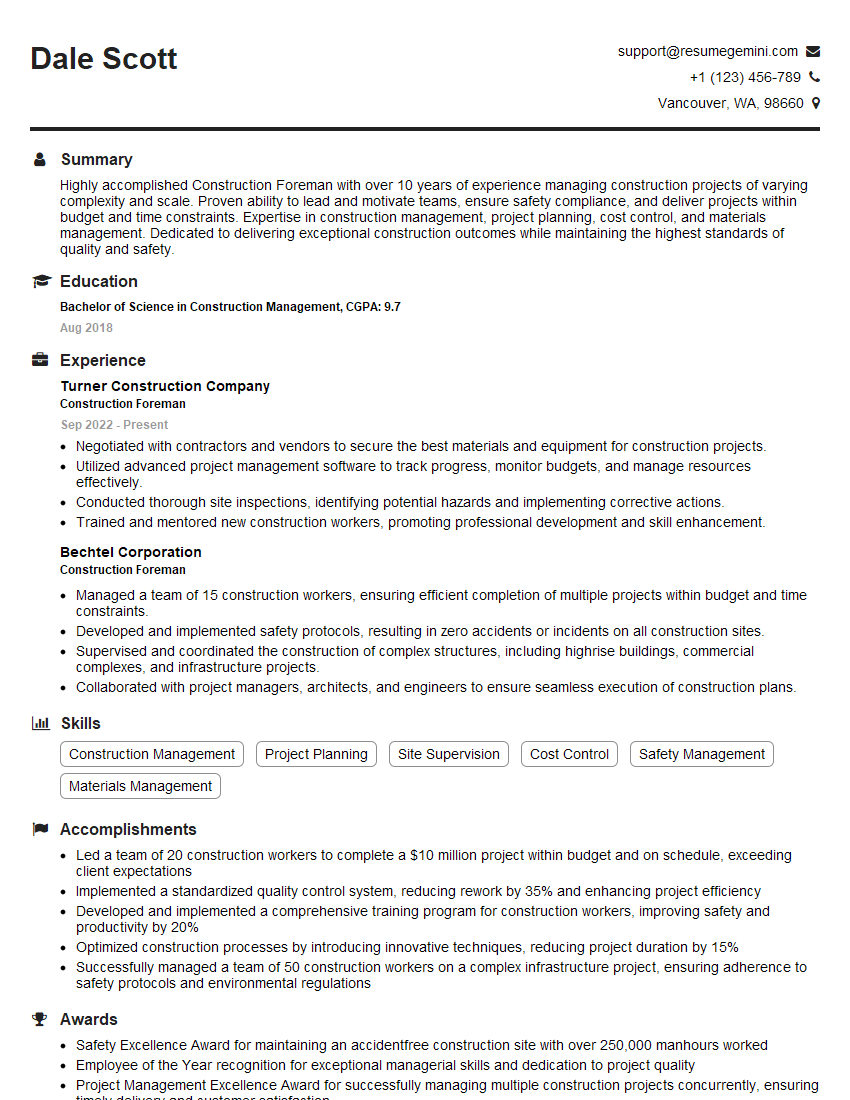
Construction Foreman Resume Sample

General Contractor Resume Sample
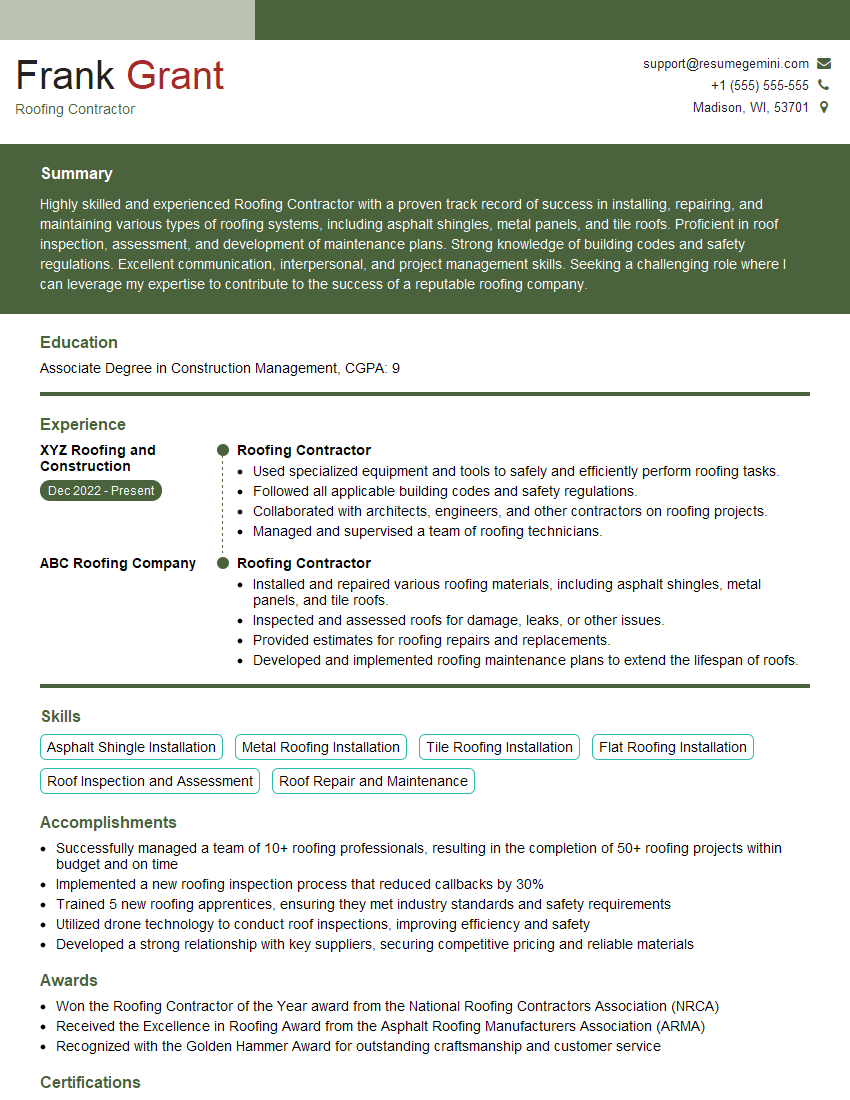
Roofing Contractor Resume Sample
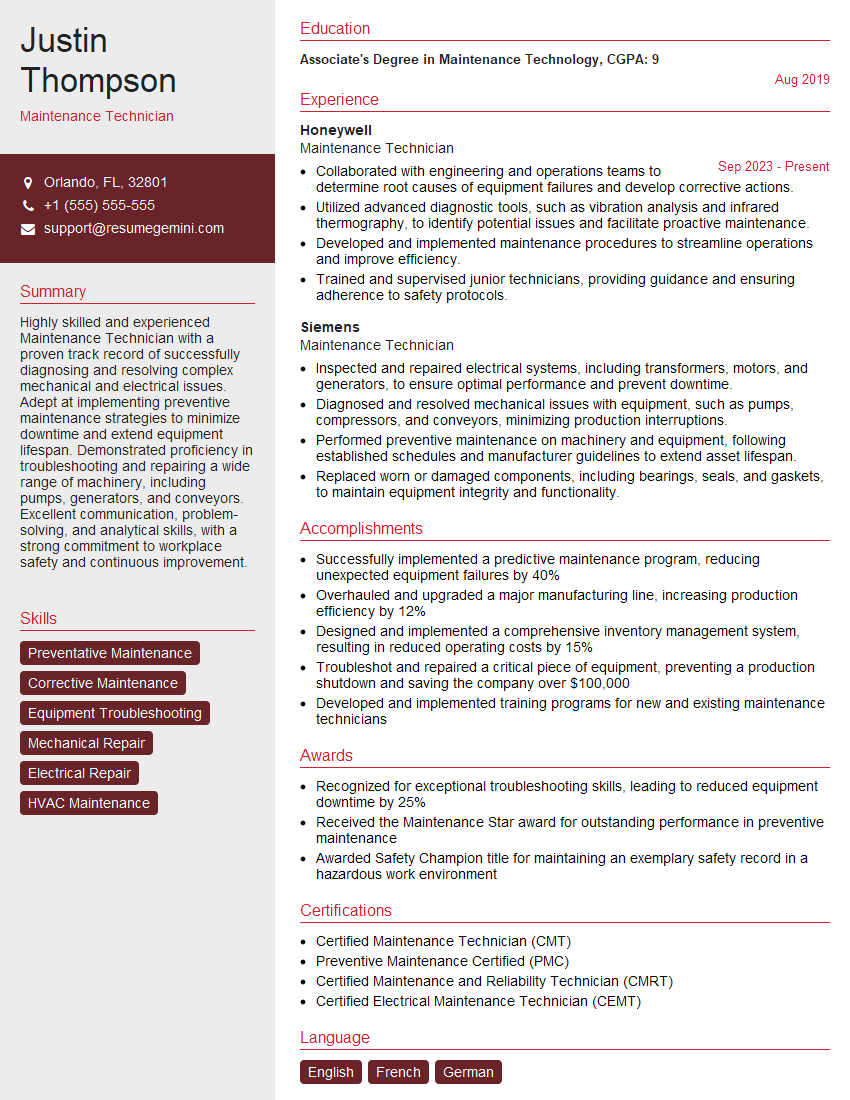
Maintenance Technician Resume Sample

Manufacturing Technician Resume Sample

Machinist Resume Sample
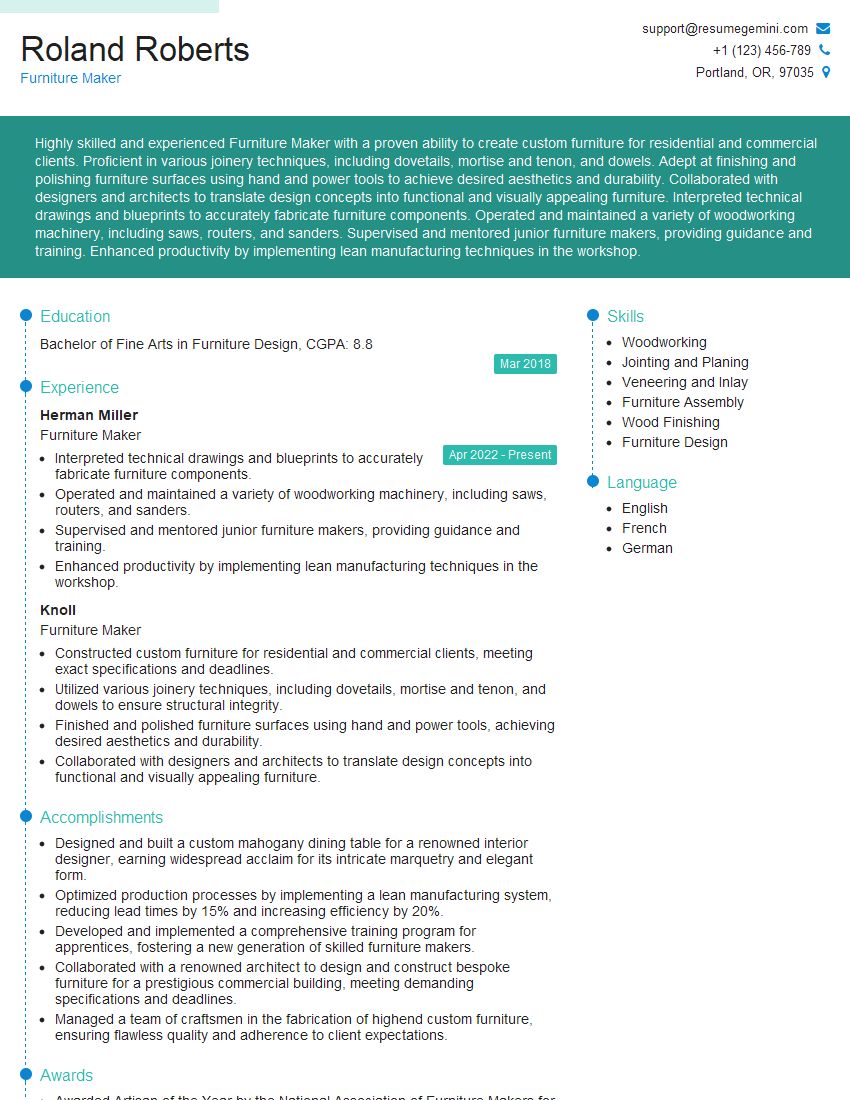
Furniture Maker Resume Sample
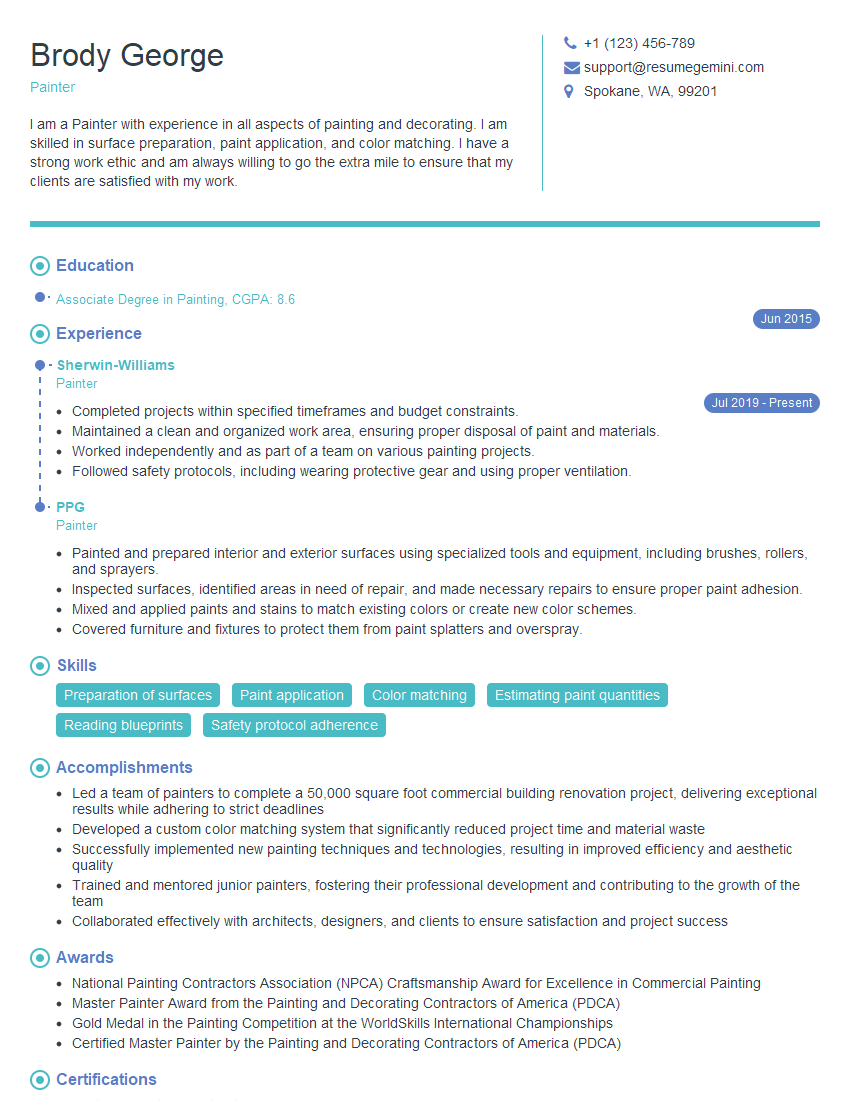
Painter Resume Sample
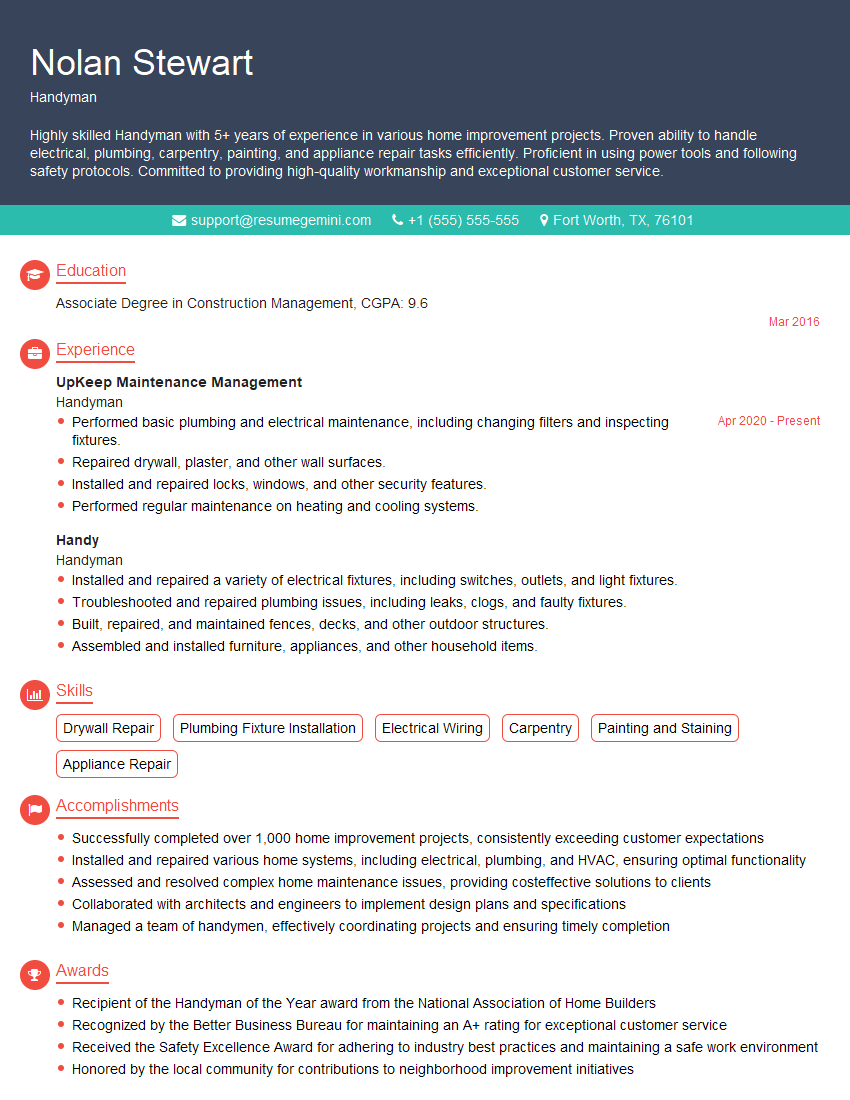
Handyman Resume Sample
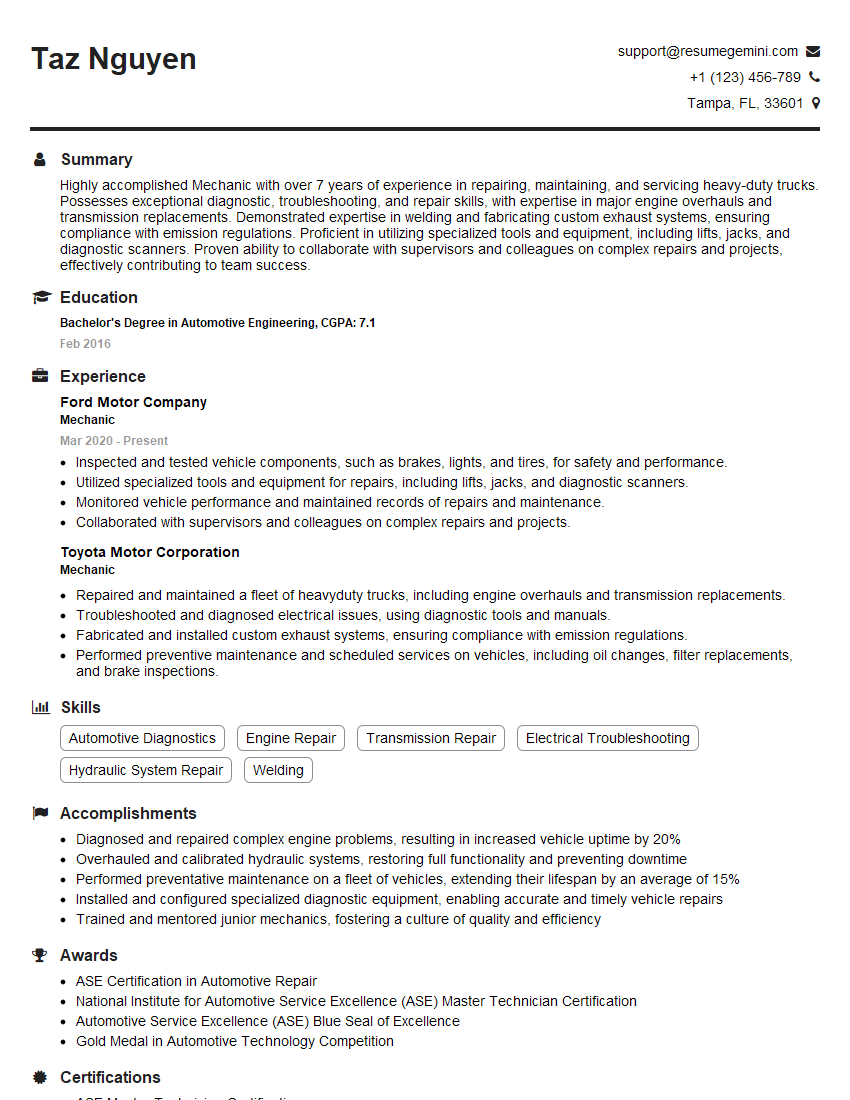
Mechanic Resume Sample

Finish Carpenter Resume Sample
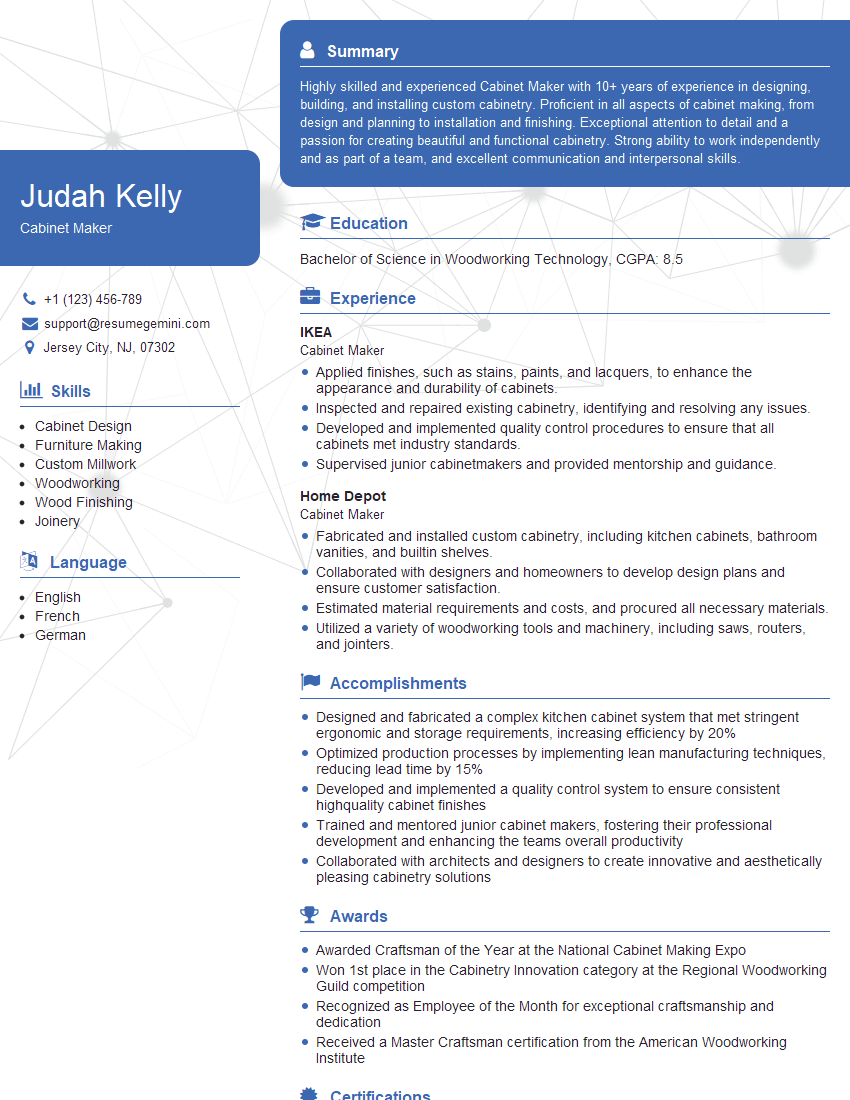
Cabinet Maker Resume Sample
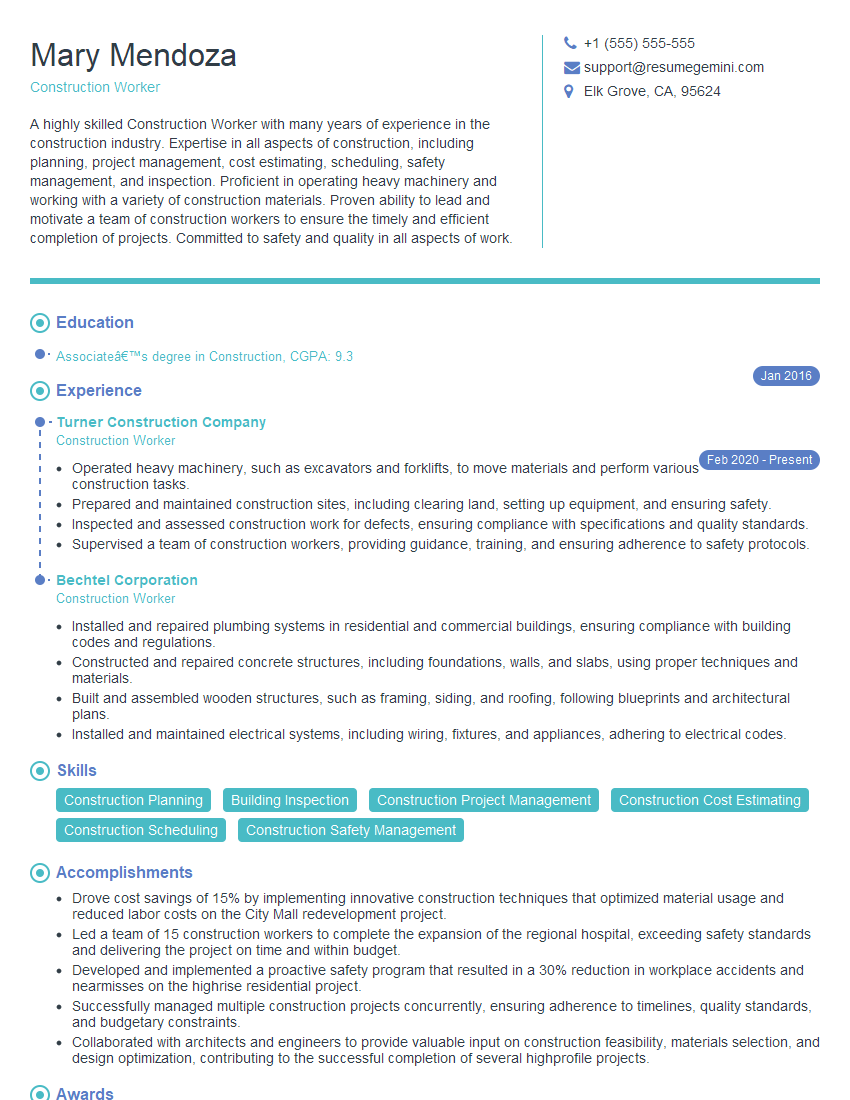
Construction Worker Resume Sample
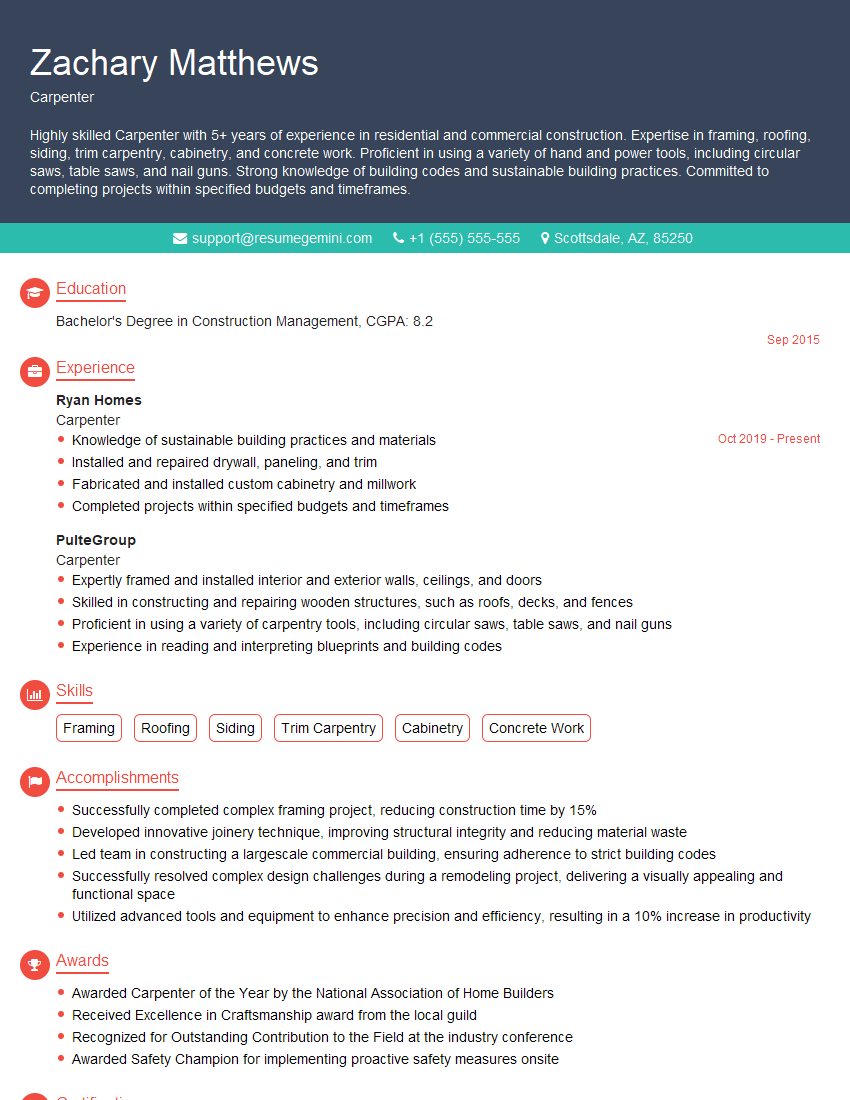
Carpenter Resume Sample
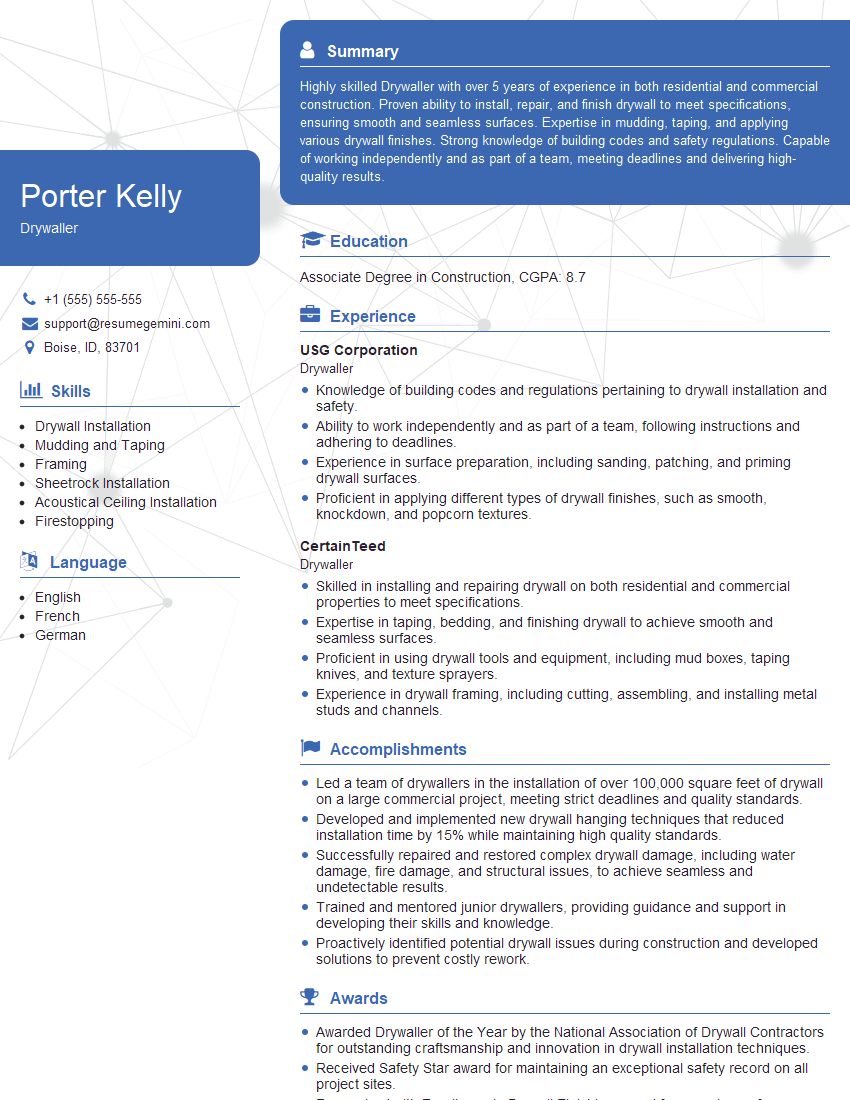
Drywaller Resume Sample
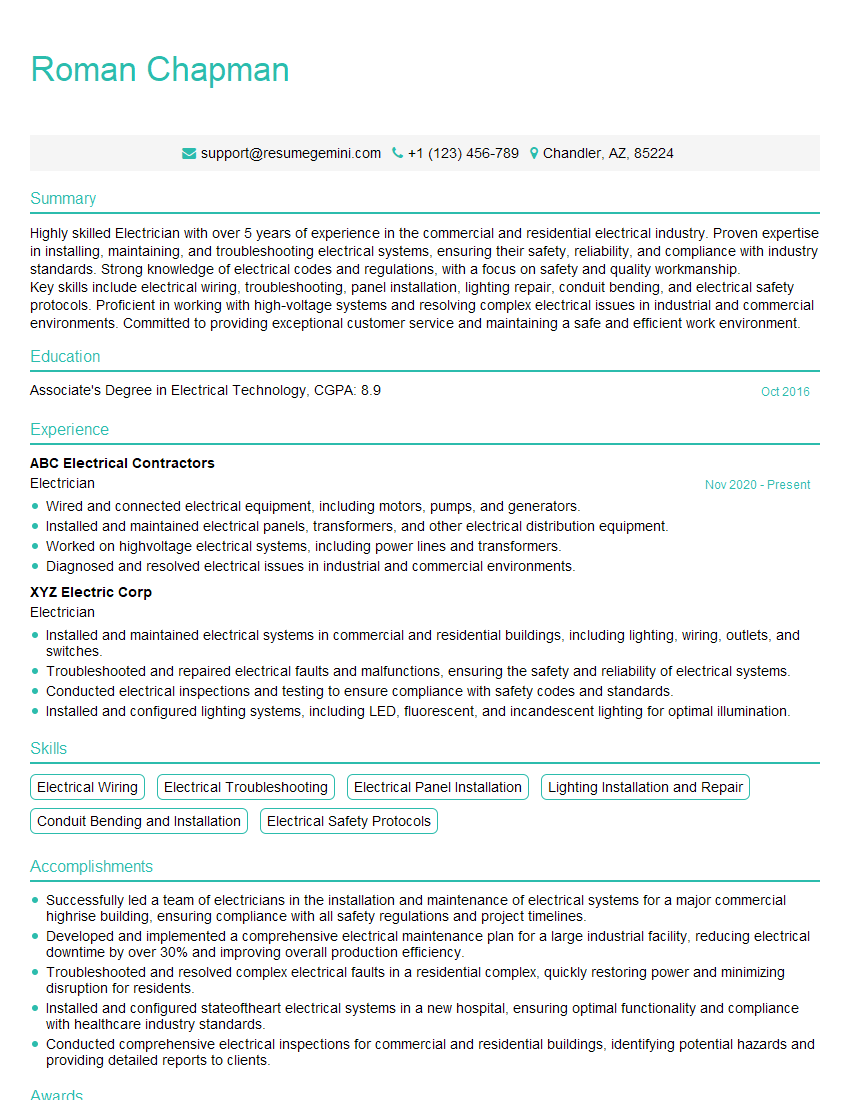
Electrician Resume Sample

Plumber Resume Sample
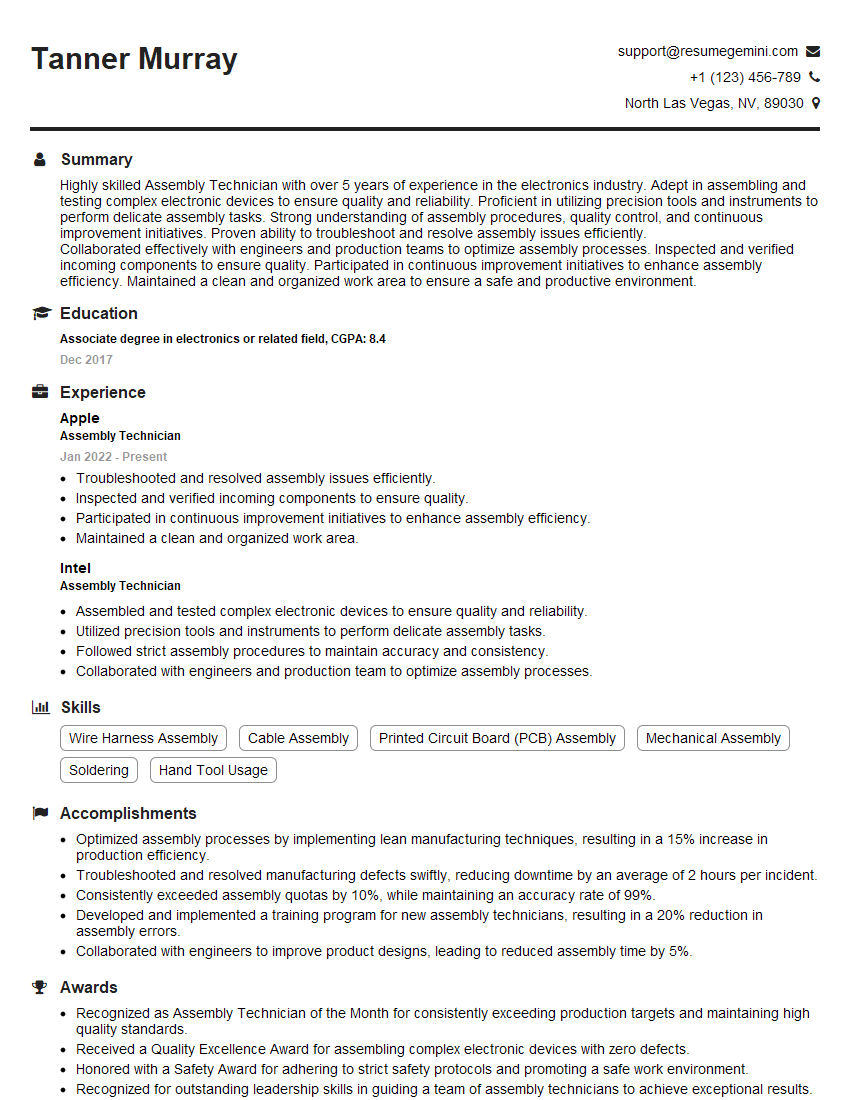
Assembly Technician Resume Sample

Repair Technician Resume Sample

Welder Resume Sample

Millwright Resume Sample
- Facilities Manager
- Construction Foreman
- General Contractor
- Roofing Contractor
- Maintenance Technician
- Manufacturing Technician
- Machinist
- Furniture Maker
- Painter
- Handyman
- Mechanic
- Finish Carpenter
- Cabinet Maker
- Construction Worker
- Carpenter
- Drywaller
- Electrician
- Plumber
- Assembly Technician
- Repair Technician
- Welder
- Millwright
Explore more articles
Users Rating of Our Blogs
Share Your Experience
We value your feedback! Please rate our content and share your thoughts (optional).
What Readers Say About Our Blog
good