Cracking a skill-specific interview, like one for Proficiency in Sewing Techniques andstitching methods, requires understanding the nuances of the role. In this blog, we present the questions you’re most likely to encounter, along with insights into how to answer them effectively. Let’s ensure you’re ready to make a strong impression.
Questions Asked in Proficiency in Sewing Techniques andstitching methods Interview
Q 1. Describe your experience with various sewing machine types.
My experience encompasses a wide range of sewing machine types, from basic mechanical machines to advanced computerized models. I’m proficient with both domestic and industrial machines. I’ve worked extensively with machines featuring various stitch functions, including straight stitch, zigzag, overlock, and blindstitch capabilities. My experience extends to understanding the nuances of different machine mechanisms, such as the bobbin system, feed dogs, and presser foot pressure adjustments, which are crucial for achieving quality results on diverse fabrics.
For instance, I’ve used industrial single-needle machines for mass production of items like shirts, requiring precise tension and speed control. With computerized machines, I’ve programmed custom stitches for intricate embroidery or specialized sewing tasks. Understanding each machine’s unique properties allows me to select the optimal tool for any project, maximizing efficiency and output.
Q 2. Explain the difference between a straight stitch and a zigzag stitch.
The straight stitch is a simple, continuous, straight line of stitching, ideal for seams that require strength and durability. Think of the seams on your jeans—mostly straight stitches for strength. The zigzag stitch, in contrast, creates a series of short, back-and-forth stitches that form a zigzag pattern. Its primary use is for finishing raw edges of fabric to prevent fraying (like preventing unraveling on a hem) and for decorative purposes.
The difference lies in their function: straight stitches prioritize strength and neatness in seams, while zigzag stitches prioritize edge finishing and decorative effects. The choice depends entirely on the project’s requirements.
Q 3. What types of needles are used for different fabrics?
Needle selection is paramount for achieving a clean, even stitch and preventing fabric damage. Different fabrics require different needle types. For instance:
- Universal needles: These are all-purpose needles suitable for most woven fabrics like cotton, linen, and blends.
- Ballpoint needles: Designed for knit fabrics like jersey and stretch fabrics, these needles curve around the fabric fibers instead of piercing them, preventing skipped stitches or runs.
- Microtex/Sharp needles: Ideal for fine fabrics like silk, chiffon, or rayon; they create almost invisible stitches.
- Jeans needles: Stronger needles with a reinforced point for sturdy fabrics like denim and canvas.
- Leather needles: These needles have a thick, triangular point to easily pierce thick materials like leather.
Choosing the incorrect needle can result in skipped stitches, broken needles, or damage to the fabric. Always consult a needle size chart to match the needle to your fabric weight and type.
Q 4. How do you select the appropriate thread for a specific fabric?
Thread selection is equally crucial. The thread’s weight, fiber content, and color should complement the fabric. Generally:
- Fabric weight: Heavier fabrics require heavier threads, while lighter fabrics require lighter threads. Matching thread weight prevents the fabric from being overwhelmed by the thread (looking bulky) or the thread from being too weak for the fabric.
- Fiber content: It’s best to use a thread with a similar fiber content to the fabric. Cotton thread works well with cotton fabrics, polyester thread with polyester fabrics, and so on. This ensures consistent properties and prevents issues like thread breakage or incompatibility.
- Color: Thread color should either blend with the fabric or create a desired contrast. The choice depends on the project’s aesthetic and functionality.
Incorrect thread selection can lead to poor stitch quality, fabric damage, or an unprofessional finish. I often test thread and fabric combinations on a scrap piece first to ensure compatibility.
Q 5. Describe your experience with different types of seams (e.g., French seam, flat-felled seam).
I have extensive experience with various seam types, each suited to different needs. A French seam encloses all raw edges, making it ideal for fine fabrics and lingerie where a clean, professional finish is vital. It’s created by stitching the seam allowances twice. A flat-felled seam is extremely durable and is commonly used in heavy-duty applications like jeans, workwear, or outerwear. It encloses one raw edge to prevent fraying but creates a very strong and flat seam.
Other seams I use frequently include the standard seam for simple applications and serged seams for stretch materials. The selection of seam type is largely determined by fabric type, intended garment, and desired durability.
Q 6. How do you adjust stitch length and tension for different fabrics?
Stitch length and tension adjustments are crucial for achieving quality results across different fabrics. Stitch length dictates how far apart the stitches are. Longer stitches are suitable for quick sewing or stretchy fabrics, while shorter stitches provide strength and precision for detailed work or heavy fabrics. Tension controls the balance between the upper and lower threads. Improper tension can lead to puckering, skipped stitches, or broken threads.
For instance, loosely woven fabrics like chiffon benefit from longer, looser stitches and slightly reduced tension to prevent puckering. Denser fabrics like denim require shorter stitches and might need slightly increased tension for durability. I usually test settings on a scrap of fabric before working on the final project to fine-tune the stitch length and tension for optimal results.
Q 7. Explain your process for preparing fabric before sewing.
Fabric preparation is a critical step that significantly impacts the final product. My process includes:
- Pre-washing: This prevents shrinkage after the garment is sewn. I always pre-wash fabrics, especially natural fibers like cotton and linen.
- Cutting: Precise cutting is essential. I use sharp shears and accurately measure and mark patterns before cutting.
- Notching and clipping: These techniques help ease curves and corners, creating a smoother, more professional finish in the garment, crucial for tight curves and seams.
- Pressing: Regular pressing throughout the sewing process is vital for creating neat seams and a professional look. It helps ensure pieces are aligned correctly and maintains the fabric’s shape.
Proper fabric preparation not only enhances the appearance of the final product but also improves its durability and longevity. Neglecting this step can lead to uneven seams, poor fit, and an unprofessional appearance.
Q 8. How do you handle pattern adjustments?
Pattern adjustments are crucial for achieving a perfect fit. It’s like tailoring a suit – you need to make it fit the individual perfectly. I approach pattern adjustments systematically, starting with assessing the discrepancy between the pattern and the body measurements. This involves carefully checking areas like bust, waist, hip, shoulder width, and sleeve length.
My process involves using a variety of techniques: For example, if the bust is too tight, I’ll add width to the pattern piece by making a small, careful slash and spreading the pattern apart to the desired size, smoothing the resulting curves for a natural look. Similarly, if the waist is too large, I’ll take in the side seams by adjusting the pattern piece. I often utilize slopers (basic pattern blocks) as a foundation to make adjustments more accurately and systematically.
For more complex adjustments like altering the shoulder slope or changing the overall garment shape, I often create a muslin mockup first. This is a test garment made from inexpensive fabric; it allows me to make adjustments to the pattern without wasting expensive materials. I’ll pin, adjust, and then take it apart to redraw the pattern pieces before cutting my final fabric.
Q 9. Describe your experience with different types of closures (e.g., zippers, buttons, snaps).
I’m experienced with a wide range of closures, each suited for different garments and aesthetics. Zippers, for example, are incredibly versatile. I’m proficient with both invisible and conventional zippers, understanding the nuanced techniques for each. Invisible zippers require precision and careful stitching to create a seamless finish, while conventional zippers are more straightforward but still demand attention to even stitching and clean finishes. I can also handle zipper installation in various applications, like center-back dresses, side seams in skirts, or even fly fronts in trousers.
Buttons and buttonholes are classic and elegant. I can sew on buttons securely using appropriate techniques for different sizes and materials. I’m skilled in creating various buttonhole types – machine-made and hand-sewn – adapting the methods to suit the fabric type and the design. Snaps, on the other hand, are faster and often better for less-visible closures. I’m confident in using both metal and plastic snaps, utilizing the proper tools for their installation and ensuring they are securely fastened.
Beyond these, I’ve also worked with hooks and eyes, and various other fasteners, always choosing the method most suitable for the project and desired outcome. I consider the durability, visibility, and overall aesthetic impact of each choice, ultimately matching the closure to the garment and its purpose.
Q 10. How do you troubleshoot common sewing machine problems?
Troubleshooting a sewing machine is part and parcel of being a sewer. It’s often a process of systematic elimination. My first step is always to check the obvious: is the machine plugged in? Is the needle inserted correctly and securely? Is there adequate thread in both the bobbin and the top spool? Are the tensions correctly adjusted?
If the problem persists, I’ll move on to checking more complex issues. If the stitching is skipping, I might need to replace the needle, clean the bobbin case, or check for any lint or thread build-up. Uneven stitching may indicate a tension issue, requiring adjustment of the dial. I would then systematically adjust the top and bottom tensions in small increments. If the machine is making loud noises or isn’t feeding the fabric correctly, it might require lubrication or a deeper inspection; in such cases, I might consult my machine’s manual or a qualified technician.
Years of experience have given me the intuition to diagnose many issues quickly. I’ve learned to recognize patterns: the telltale signs of a bent needle, a tangled bobbin, or a problem with the feed dogs. This allows me to prevent bigger problems and ensures I can get back to sewing as quickly as possible.
Q 11. Explain your experience with serging and overlocking.
Serging and overlocking are crucial for finishing seams and preventing fraying, especially in knit fabrics. Overlocking, using an overlock machine, cuts and sews the fabric edges simultaneously, creating a professional and durable finish. It’s like giving the raw edges a neat and protective enclosure. Serging is similar; it’s a type of overlocking that also uses a specialized machine to create a clean, finished edge, often with decorative stitches. My experience includes working with various overlock machines, from basic two-thread machines to advanced five-thread machines offering decorative stitches and rolled hemming capabilities.
I’m proficient in adjusting stitch settings for different fabric weights and types. For example, lighter weight fabrics require a looser stitch, whereas heavier fabrics require a denser, more robust stitch. I also select the correct number of threads based on the fabric and desired level of durability. Serging/Overlocking is particularly important when working with fabrics prone to fraying, such as knits or silks. It not only prevents the fabric from unraveling but also contributes significantly to the overall quality and longevity of the garment.
Q 12. How do you ensure accurate and consistent stitching?
Accurate and consistent stitching is paramount for creating high-quality garments. Several steps contribute to achieving this: Firstly, proper fabric preparation is key. This includes pre-washing the fabric to prevent shrinkage after the garment is completed, pressing all seams precisely, and making sure the fabric is smooth and free from wrinkles before it goes under the needle. Secondly, using a sharp needle appropriate for the fabric type is crucial; a dull needle will lead to skipped stitches and broken threads.
Maintaining consistent speed and even pressure on the foot pedal during sewing also avoids inconsistent stitching. Lastly, using accurate seam allowances by following the pattern guidelines or measuring meticulously, along with the use of seam guides, ensures accurate and consistent stitching throughout the project. Regular cleaning and maintenance of the sewing machine also contribute to the machine’s accuracy and prevents build-up that could alter the stitching quality. It’s like baking a cake – the precise measurements and consistent process lead to the best result.
Q 13. Describe your experience with various fabric types and their sewing characteristics.
My experience encompasses a broad spectrum of fabric types, each with unique sewing characteristics. For example, working with cotton is relatively straightforward; it’s easy to sew and durable. However, different types of cotton, like quilting cotton or poplin, have different weights and drape, requiring adjustments in stitch length and needle size. Linen, on the other hand, has a tendency to fray easily, so careful planning and precise seam finishing are essential.
Silk, a luxurious but delicate fabric, needs special attention. I use a fine needle and fine thread to avoid damaging the fibers. Knit fabrics, such as jersey or rib knit, require a special type of needle and stitch to prevent the fabric from stretching or curling. Synthetic fabrics, like polyester or nylon, often need a slightly different approach to avoid puckering or melting.
Understanding these fabric-specific traits is vital for tailoring the stitching approach to ensure successful results. Choosing the right needle, stitch type, and seam finish for each fabric type is a key part of ensuring a high-quality outcome.
Q 14. How do you measure and cut fabric accurately?
Accurate measuring and cutting are fundamental to successful sewing. I always start by carefully studying the pattern pieces and their markings, understanding the seam allowances and other crucial details. Then I use a flexible measuring tape to take accurate body measurements whenever necessary, cross-checking to ensure precision. For cutting, I utilize sharp fabric shears and a cutting mat for optimal control and accuracy.
For the actual cutting process, I employ several strategies: I use pins to secure the pattern pieces to the fabric, ensuring alignment and preventing shifting. I always cut along the pattern lines with smooth, steady movements, avoiding jerky cuts. I frequently check alignment during the process, ensuring that all fabric layers are even. After cutting, I accurately press all pieces with an iron to ensure clean, crisp edges. It’s like building a house – the foundation of precise measurements and cutting is crucial to success.
Q 15. Explain your process for creating a professional finish on a garment.
Achieving a professional finish on a garment involves meticulous attention to detail throughout the entire sewing process. It’s not just about the final stitch, but about consistent quality from start to finish.
Seam Finishing: Instead of leaving raw edges, I employ techniques like serging (using an overlock machine), zigzag stitching, or French seams to prevent fraying and create a neat, durable finish. French seams, for instance, completely enclose the raw edges, resulting in a beautifully finished, high-end look, perfect for tailored garments.
Pressing: Pressing is crucial at every stage. I use a tailor’s ham and point presser to shape curves and create crisp edges, avoiding creases and wrinkles that detract from the garment’s professional appearance. Proper pressing ensures that seams lie flat and the garment hangs correctly.
Accurate Cutting and Pattern Matching: Precise cutting and careful pattern matching are paramount. Paying attention to plaids, stripes, and prints ensures a visually appealing and polished final product. I always double-check my cutting lines and make sure the pattern pieces align perfectly before stitching.
Consistent Stitching: Maintaining even stitch length and tension throughout is essential for a clean, professional look. I carefully adjust my machine settings for different fabrics and seam types to ensure optimal results. Consistent stitching shows skill and care.
Finishing Touches: Details like hand-stitching buttonholes, attaching labels neatly, and properly finishing hems (e.g., blind hemming or rolled hems) elevate the garment to a professional standard. These small details make a big difference in the overall impression.
For example, when making a tailored jacket, I would use French seams for the main body seams, a blind hem for the sleeves and bottom, and hand-stitched buttonholes for a truly luxurious finish. This approach demonstrates a commitment to quality and reflects professional-level sewing practices.
Career Expert Tips:
- Ace those interviews! Prepare effectively by reviewing the Top 50 Most Common Interview Questions on ResumeGemini.
- Navigate your job search with confidence! Explore a wide range of Career Tips on ResumeGemini. Learn about common challenges and recommendations to overcome them.
- Craft the perfect resume! Master the Art of Resume Writing with ResumeGemini’s guide. Showcase your unique qualifications and achievements effectively.
- Don’t miss out on holiday savings! Build your dream resume with ResumeGemini’s ATS optimized templates.
Q 16. Describe your experience working with different sewing patterns.
I’ve worked extensively with various sewing patterns, from simple designs to complex, multi-patterned garments. My experience spans different pattern formats – paper patterns, digital patterns (PDF downloads), and even creating my own patterns from scratch.
Commercial Patterns: I’m proficient in using commercial patterns such as Butterick, Simplicity, and McCall’s. I understand how to adjust these patterns to fit different body types and make alterations to achieve a desired style.
Independent Designers’ Patterns: I’ve worked with independent designer patterns, which often include more detailed instructions and advanced techniques. This requires a deeper understanding of sewing construction and a willingness to learn new methods.
Draping and Pattern Making: I possess the skills to create patterns from scratch using draping techniques. This allows me to design unique garments and customize patterns to perfectly fit individual clients’ needs.
For instance, I recently adapted a vintage dress pattern, adjusting the neckline and sleeves to create a modern update. This involved careful study of the original pattern, alteration planning, and precise execution to preserve the integrity of the original design while incorporating my modifications.
Q 17. How do you maintain your sewing equipment?
Maintaining sewing equipment is crucial for ensuring its longevity and optimal performance. Regular cleaning and lubrication are essential, and I follow a strict maintenance routine.
Cleaning: After each use, I remove lint and fabric scraps from the machine’s bobbin area, feed dogs, and presser foot. I use a brush to remove dust and debris from the machine’s exterior.
Lubrication: I regularly lubricate my sewing machine with the appropriate sewing machine oil, according to the manufacturer’s instructions. This reduces friction and prevents wear and tear.
Needle Care: I replace sewing machine needles frequently, especially when working with heavy or abrasive fabrics. A bent or dull needle can cause skipped stitches or damage the fabric.
Storage: I store my sewing machine in a clean, dry place, covered with a protective dust cover when not in use.
Professional Servicing: I schedule regular professional servicing of my sewing machines to ensure optimal functionality and detect any potential problems early on.
For example, I always clean my serger after every project, ensuring the blades are free of lint and oiling the mechanisms, maintaining its sharp cutting action and smooth operation.
Q 18. What safety measures do you follow while using sewing machines?
Safety is my top priority when using sewing machines. I adhere to strict safety protocols to avoid accidents.
Finger Guards: I use finger guards when working with sharp needles or when sewing close to the needle plate to prevent accidental needle pricks.
Proper Machine Setup: I always ensure that the sewing machine is properly grounded and that the power cord is not frayed or damaged.
Loose Clothing and Jewelry: I never wear loose clothing or jewelry that could get caught in the moving parts of the machine.
Machine Maintenance: Regular maintenance, including cleaning and lubrication, helps prevent malfunctions and reduces the risk of injury.
Sharp Needles and Blades: I always use sharp needles and blades to avoid unnecessary force, which can lead to accidents.
For example, before starting any project, I check that my sewing machine’s needle is securely in place and that the bobbin is correctly wound, preventing any sudden jams or needle breakage.
Q 19. How do you interpret technical drawings or specifications?
Interpreting technical drawings and specifications is a key skill for a professional sewer. I’m adept at reading and understanding various forms of technical documentation.
Understanding Symbols and Notation: I am proficient in deciphering standard sewing symbols, stitch types, seam allowances, and other markings used in technical drawings. This allows me to accurately understand the construction details of a garment.
Scale and Measurements: I’m familiar with different scales used in technical drawings and can accurately translate those measurements to real-world dimensions when cutting fabric.
Fabric Selection: Technical drawings often specify fabric types and weights. I can understand these specifications and select the most appropriate fabric for a project.
Construction Details: I can interpret the construction details outlined in the technical drawings and translate them into a sewing plan for creating the garment.
For instance, when working with a pattern from a high-end designer, I can interpret complex technical drawings involving intricate seaming techniques, pattern matching for specific fabrics, and detailed finishing specifications. This ensures the final garment aligns precisely with the designer’s vision.
Q 20. Describe your experience with industrial sewing equipment.
I have experience operating various industrial sewing machines, including high-speed lockstitch machines, overlock (serger) machines, and coverstitch machines. This experience has equipped me with the skills to handle high-volume production sewing.
Machine Operation: I’m proficient in setting up, operating, and maintaining different industrial sewing machines, adjusting tensions, stitch lengths, and other settings for various fabrics and tasks.
Production Techniques: I understand production workflows and can efficiently sew garments in bulk, adhering to quality standards and maintaining high speed while ensuring accuracy.
Troubleshooting: I can troubleshoot common problems that arise during industrial sewing, such as thread jams, broken needles, or machine malfunctions. This minimizes downtime and maximizes productivity.
In a previous role, I operated a high-speed lockstitch machine for mass production of denim jeans. I was responsible for maintaining consistent stitch quality at high speed, ensuring all seams were securely stitched, and minimizing waste. This demonstrates my proficiency in handling industrial sewing equipment.
Q 21. How do you manage deadlines and prioritize tasks in a sewing production environment?
Managing deadlines and prioritizing tasks in a sewing production environment requires strong organizational and time-management skills. I use various strategies to ensure timely completion of projects.
Project Breakdown: I begin by breaking down large projects into smaller, manageable tasks with clearly defined timelines.
Prioritization: I prioritize tasks based on urgency and importance, focusing on critical steps to meet deadlines. I utilize project management techniques such as Kanban or similar to visualize workflow and progress.
Time Estimation: I accurately estimate the time required for each task, considering factors such as fabric type, complexity, and machine efficiency.
Communication: I maintain open communication with team members and supervisors to address any issues or delays promptly. This allows for proactive problem-solving.
Flexibility: I am flexible and adaptable to changing priorities and can adjust my schedule as needed to meet tight deadlines.
For example, during a rush order for a large batch of uniforms, I prioritized the sewing of the main body pieces before moving on to smaller details like pockets and buttons to ensure timely delivery.
Q 22. What are your preferred methods for handling challenging fabrics?
Handling challenging fabrics requires a nuanced approach. The key is understanding the fabric’s properties – its drape, weight, tendency to fray, and its reaction to different sewing techniques. For example, delicate silks require specialized needles and a slow, steady sewing speed to prevent breakage. Likewise, stretchy fabrics like jersey knit demand a stretch stitch and careful handling to avoid distortion.
- For slippery fabrics like silk or satin: I use a walking foot to ensure even feed and prevent slippage. I also often use tissue paper under the fabric to help it glide smoothly under the presser foot.
- For heavy fabrics like denim or canvas: I employ a stronger needle and potentially a heavier-duty sewing machine. I might use a special seam allowance to reduce bulk and prevent strain on the stitches.
- For fabrics prone to fraying: I use a serger or zigzag stitch along the raw edges before sewing the seams to prevent unraveling. Pinking shears can also be a useful tool here.
Ultimately, my approach is always about adapting my techniques to the unique characteristics of the fabric to achieve a clean, professional finish.
Q 23. Describe your problem-solving skills in a sewing context.
Problem-solving in sewing is an iterative process. It often starts with careful observation. If a seam is puckering, for example, I’ll first analyze the fabric, stitch tension, and needle size to pinpoint the cause. I’ll carefully inspect my work for inconsistencies in my seam allowance or any places where fabric layers were unevenly placed.
For instance, I once encountered a problem where a bias-cut silk garment was constantly stretching out of shape during construction. Through careful analysis I found the fault was in the pattern construction itself; certain design features were placing unnecessary stress on the fabric. The solution involved adjusting the pattern to redistribute the stress and provide better support for the fabric’s inherent bias.
My problem-solving strategy involves:
- Identify the problem: Carefully examine the garment for inconsistencies, distortions, or defects.
- Isolate the cause: Consider factors like fabric choice, pattern construction, machine settings, and sewing techniques.
- Develop a solution: Experiment with different techniques, adjustments, or alternative methods until a satisfactory result is achieved.
- Test and refine: Make minor adjustments as needed to optimize the solution.
This systematic approach helps me efficiently troubleshoot problems and create high-quality garments.
Q 24. How do you adapt to different sewing techniques or styles?
Adapting to different sewing techniques and styles requires a blend of curiosity and practical application. I stay current by reading industry publications, attending workshops, and studying diverse design styles. This allows me to broaden my skillset and understand the underlying principles of different sewing methods.
For example, I’ve transitioned from primarily working with traditional dressmaking techniques to incorporating elements of modern couture. This required learning new skills in advanced pattern cutting, draping, and specialized finishing techniques. I embrace this continuous learning process, as it expands my creativity and problem-solving abilities. It also allows me to cater to a wider range of client requests.
My ability to adapt is further demonstrated by my experience with different types of machines. I am comfortable working with both industrial and domestic machines, adjusting my approach based on the capabilities of each machine and the fabric’s requirements.
Q 25. Describe your experience with quality control in garment production.
Quality control in garment production is crucial for delivering a consistently high standard. My experience involves meticulous attention to detail throughout the entire process, from fabric selection to final inspection. This starts with careful pattern cutting to ensure accuracy and consistency in garment dimensions. I meticulously inspect each garment at every stage of production and use a checklist to ensure all aspects are reviewed.
I am adept at identifying imperfections like uneven stitching, incorrect seam allowances, fabric flaws, and loose threads. If a defect is found, I take corrective actions and document them to prevent recurrence. Furthermore, I am experienced in implementing quality control procedures to meet specific standards, whether it’s adhering to a client’s specific quality parameters or achieving standardized results in a production line setting.
Q 26. How do you ensure consistency in garment production?
Ensuring consistency in garment production relies heavily on standardization and meticulous record-keeping. This involves using consistent sewing techniques, maintaining consistent machine settings (stitch length, tension), and carefully selecting fabrics from the same dye lot. A detailed checklist for each production stage helps to minimize variations and provides a guideline for consistent workmanship.
Furthermore, I am familiar with techniques such as using pre-cut fabric pieces and standardized assembly lines that greatly improve consistency. A robust quality control system implemented throughout the process also helps prevent inconsistencies.
A practical example: When producing multiple identical garments, I make a ‘sample’ piece first. This acts as a benchmark against which subsequent garments are measured. Any deviations from the sample highlight areas for improvement in the production process and allow immediate adjustments to maintain quality and consistency.
Q 27. How familiar are you with different types of embroidery techniques?
My familiarity with embroidery techniques extends to several different types, including:
- Hand embroidery: I’m proficient in various stitches like satin stitch, cross-stitch, French knots, and chain stitch. I can adapt these stitches to create different textures and effects, from delicate floral patterns to bold geometric designs.
- Machine embroidery: I have experience with both domestic and industrial embroidery machines and can use various embroidery designs, fonts, and embellishments to create personalized and customized elements on garments.
- Free-motion embroidery: This technique allows for more artistic expression and offers considerable flexibility in creating intricate designs.
I understand the different thread types, stabilizers, and techniques required for each embroidery style and can select the appropriate method based on the project requirements. My experience includes both creating designs from scratch and utilizing pre-existing digital embroidery patterns.
Q 28. Describe your experience with pattern grading and marker making.
Pattern grading and marker making are integral parts of garment production, especially in larger-scale projects. Pattern grading involves adjusting a base pattern to create different sizes. This requires a deep understanding of body measurements and how they translate to pattern adjustments.
Marker making involves efficiently arranging pattern pieces on fabric to minimize waste and optimize material usage. It involves careful consideration of fabric width, grainlines, and pattern placement to ensure efficient fabric usage. This is crucial in large-scale production for cost-effectiveness.
I have extensive experience in both manual and computer-aided methods for pattern grading and marker making. I understand the importance of accuracy in grading to ensure consistency in sizing across different sizes. Similarly, I am adept at utilizing software to create efficient markers that maximize fabric yield while ensuring accurate pattern placement. I use both traditional methods and utilize specialized software for both pattern grading and marker making to achieve efficient and precise results.
Key Topics to Learn for Proficiency in Sewing Techniques and Stitching Methods Interview
- Basic Stitches: Understanding and demonstrating proficiency in various hand stitches (e.g., running stitch, backstitch, whip stitch, slip stitch) and their applications in different fabrics.
- Machine Stitching: Knowledge of various machine stitches (e.g., straight stitch, zigzag stitch, overlock stitch) and their appropriate uses for different projects and fabrics. Troubleshooting common machine problems.
- Fabric Selection and Manipulation: Identifying different fabric types, understanding their properties, and choosing the correct stitching methods for each. Techniques for handling delicate fabrics and heavier materials.
- Seam Construction: Mastering different seam finishes (e.g., serging, pinking, French seams) to ensure durability and a professional finish. Understanding seam allowances and their importance.
- Pattern Interpretation and Alterations: Ability to read and interpret sewing patterns, making necessary adjustments for fit and style. Understanding grading and pattern markings.
- Finishing Techniques: Proficiency in various finishing techniques, such as buttonholes, zippers, hems, and closures. Understanding appropriate techniques for different garment types.
- Troubleshooting and Problem-Solving: Identifying and resolving common sewing problems, such as skipped stitches, broken needles, and fabric puckering. Demonstrating a methodical approach to problem-solving.
- Safety Procedures: Understanding and adhering to all relevant safety procedures when using sewing machines and other tools. Proper needle disposal and machine maintenance.
Next Steps
Mastering proficiency in sewing techniques and stitching methods is crucial for career advancement in the fashion, textile, or tailoring industries. A strong understanding of these skills demonstrates your dedication and expertise, opening doors to higher-paying positions and more fulfilling opportunities. To enhance your job prospects, create an ATS-friendly resume that highlights your skills and experience effectively. ResumeGemini is a trusted resource to help you build a professional and impactful resume. Examples of resumes tailored to showcasing proficiency in sewing techniques and stitching methods are available to help guide you.

Textile Designer Resume Sample
Costume Designer Resume Sample
Fashion Designer Resume Sample

Draper Resume Sample

Seamstress Resume Sample

Sewing Machine Operator Resume Sample
Pattern Maker Resume Sample
Sample Maker Resume Sample
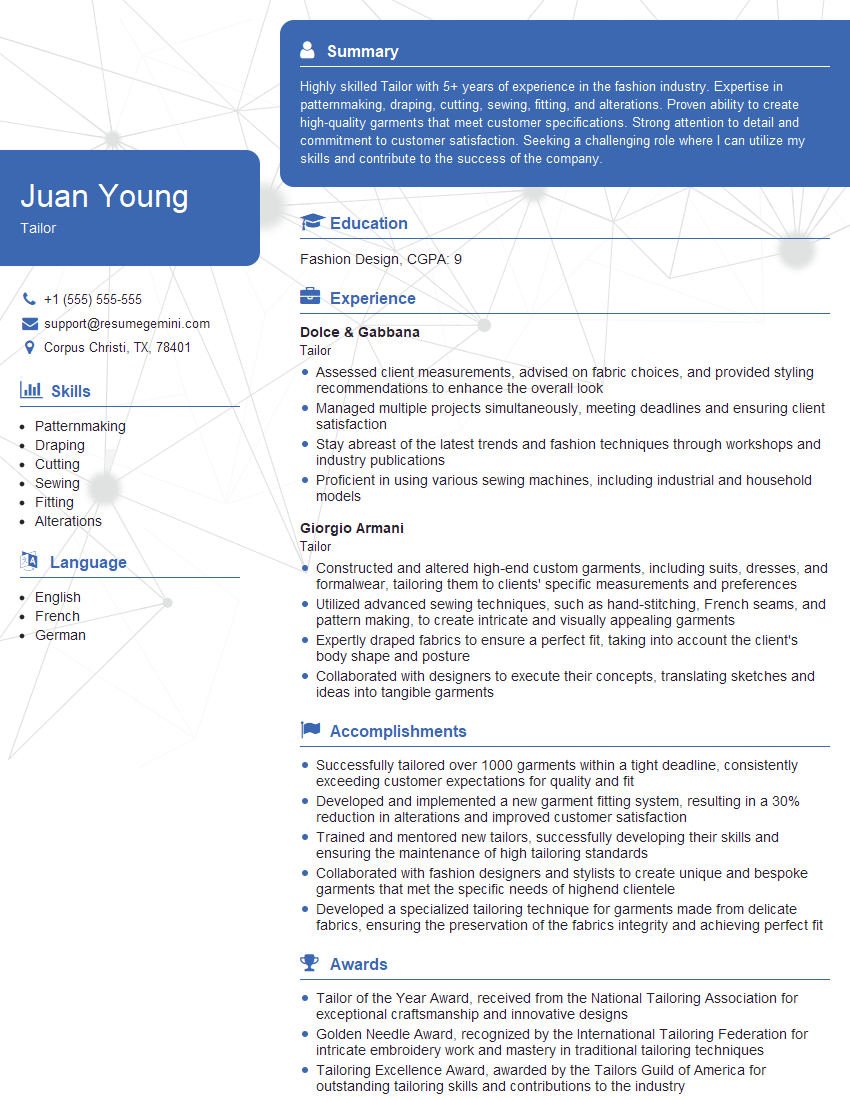
Tailor Resume Sample
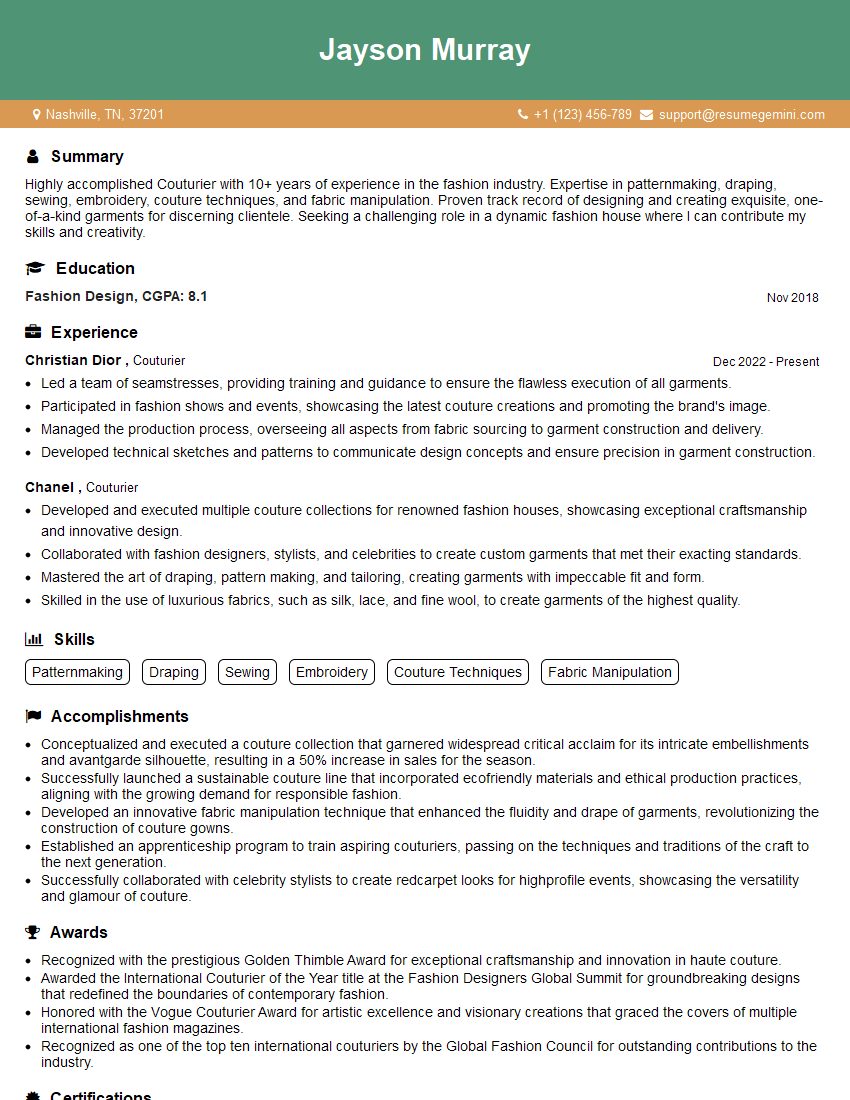
Couturier Resume Sample

Embroidery Specialist Resume Sample
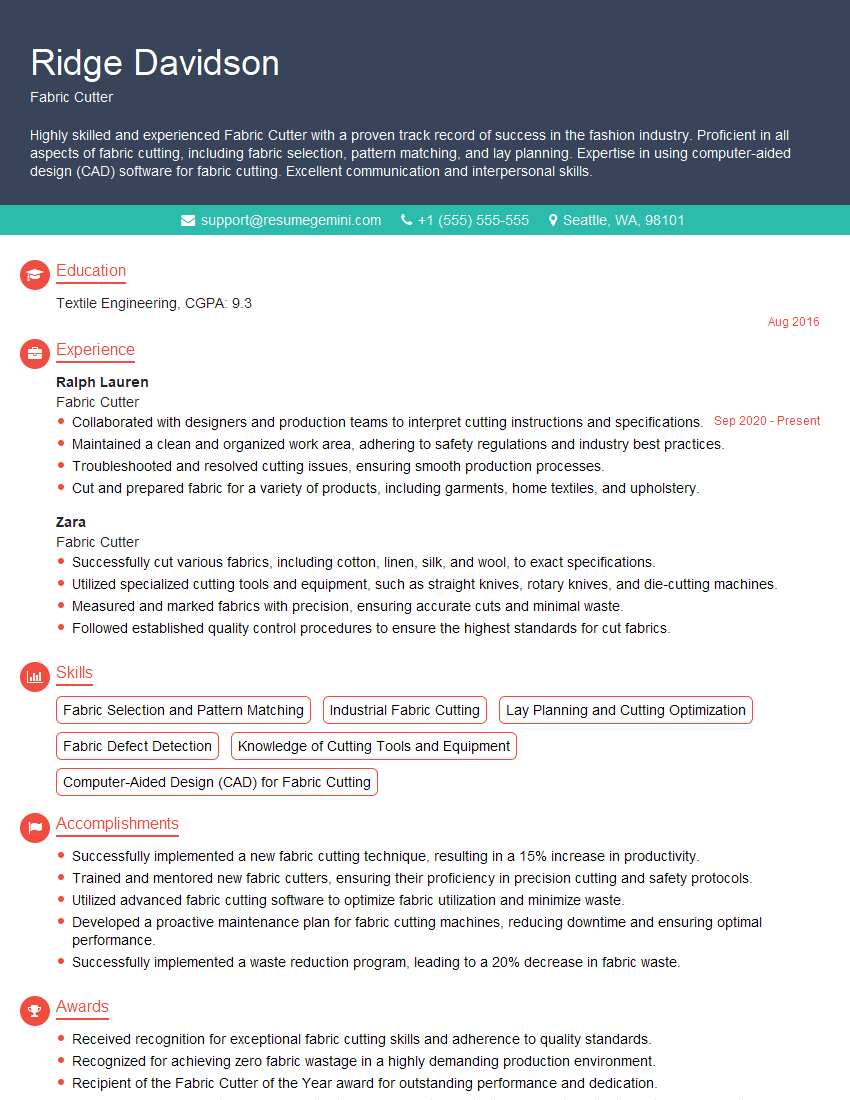
Fabric Cutter Resume Sample
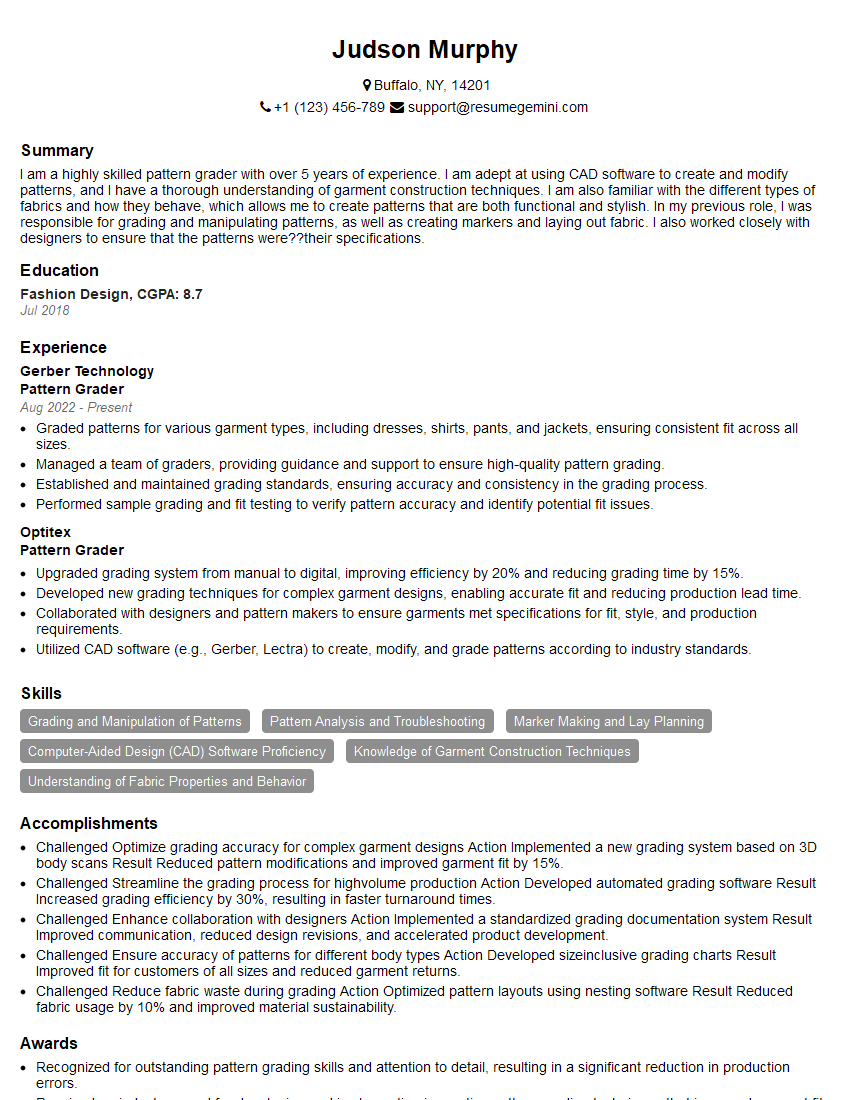
Pattern Grader Resume Sample

Upholsterer Resume Sample
Explore more articles
Users Rating of Our Blogs
Share Your Experience
We value your feedback! Please rate our content and share your thoughts (optional).
What Readers Say About Our Blog
Very informative content, great job.
good