Interviews are opportunities to demonstrate your expertise, and this guide is here to help you shine. Explore the essential Proficiency in Test Equipment and Instrumentation interview questions that employers frequently ask, paired with strategies for crafting responses that set you apart from the competition.
Questions Asked in Proficiency in Test Equipment and Instrumentation Interview
Q 1. Explain the difference between accuracy and precision in measurement.
Accuracy and precision are two crucial aspects of measurement, often confused but distinct. Accuracy refers to how close a measurement is to the true or accepted value. Think of it like hitting the bullseye on a dartboard – a high accuracy measurement is one that’s very close to the center. Precision, on the other hand, describes the repeatability of a measurement. It’s how close multiple measurements are to each other, regardless of how close they are to the true value. Imagine throwing darts that all cluster tightly together, but far from the bullseye; that’s high precision but low accuracy. Conversely, darts scattered widely across the board demonstrate low precision and likely low accuracy.
Example: Let’s say the true voltage of a power supply is 10.00V. A measurement of 10.02V is more accurate than a measurement of 9.80V. However, if you take multiple measurements and get values like 10.02V, 10.01V, and 10.03V, you have high precision. If you get readings like 10.02V, 9.95V, and 10.11V, you have lower precision.
Q 2. Describe your experience with different types of oscilloscopes (e.g., digital, analog).
I’ve extensive experience with both analog and digital oscilloscopes, using them in various testing and debugging scenarios. Analog oscilloscopes, while simpler, offer a direct visual representation of the signal using a cathode ray tube (CRT). Their strengths lie in observing fast transients and subtle signal details, but their accuracy is limited. I often used them in older systems or when needing a quick, visual overview of a waveform.
Digital oscilloscopes, on the other hand, provide significantly improved accuracy, measurement capabilities, and features like data storage, digital signal processing, and advanced triggering. These are my primary tools for most tasks, particularly in modern embedded systems and high-speed digital designs. I’m proficient with various features including auto-ranging, cursors for precise measurement, mathematical functions for signal analysis (like FFTs), and various trigger modes for capturing specific events.
Example: When debugging a microcontroller’s communication protocol, the digital oscilloscope’s ability to capture and analyze serial data, measure timings, and trigger on specific bit patterns is indispensable. In contrast, an analog scope was helpful for rapidly assessing the integrity of a power supply’s waveform in an older equipment piece, identifying any significant noise or ripple.
Q 3. How do you troubleshoot a faulty signal generator?
Troubleshooting a faulty signal generator follows a structured approach. First, I check the obvious – power connection, output cable, and settings. Is the device powered correctly? Are the output amplitude, frequency, and waveform set as expected? Are there any visible signs of damage or loose connections? A simple visual inspection often reveals simple issues.
Next, I’d use a known-good oscilloscope to check the output signal. Does the output match the specified settings? Is the waveform clean or are there distortions or noise present? The oscilloscope helps verify the internal generation process and identify issues like amplitude inaccuracies, frequency instability, or harmonic distortion.
If the problem persists, more advanced steps might involve using a multimeter to check the internal DC voltages, confirming correct internal functioning. Finally, if the problem cannot be isolated, documentation and internal diagnostic tools (if available) should be consulted, or manufacturer support might be required.
Example: I once had a signal generator that produced a distorted sine wave. Initial checks ruled out cabling issues. Using an oscilloscope, I identified high-frequency noise superimposed on the sine wave. Further investigation revealed a faulty internal component responsible for filtering the high-frequency noise.
Q 4. What are the common sources of error in measurement systems?
Measurement errors are unavoidable, stemming from several sources. These sources can be broadly categorized into:
- Systematic Errors: These errors are consistent and predictable, often related to the equipment or measurement method itself. Examples include calibration errors (equipment not properly calibrated), zero offset errors (instrument not zeroed correctly), and loading effects (measurement instrument affecting the circuit under test).
- Random Errors: These are unpredictable and fluctuate randomly. They’re often due to environmental factors (temperature variations, vibrations), observer errors (parallax error in reading an analog meter), or inherent noise in the system.
- Environmental Errors: Fluctuations in temperature, humidity, electromagnetic interference (EMI), and vibrations can all impact measurements.
- Human Errors: Incorrectly setting parameters, misreading displays, or even inappropriate handling of the test equipment are also significant contributors.
Minimizing errors requires careful attention to the experimental setup, proper calibration of equipment, using appropriate measurement techniques, and employing statistical methods to analyze data and account for random error.
Q 5. Explain the concept of calibration and its importance.
Calibration is the process of comparing a measurement instrument’s readings to a known standard to ensure accuracy and traceability. It involves adjusting the instrument to minimize systematic errors. The importance of calibration is paramount for ensuring reliable and trustworthy measurements. Uncalibrated equipment can lead to inaccurate results, which might have significant consequences, ranging from minor inconveniences to catastrophic failures in critical applications.
Example: In manufacturing, a poorly calibrated scale used to weigh components can result in products that are underweight or overweight, leading to quality control issues and potential safety hazards. In a laboratory setting, inaccurate measurements from uncalibrated equipment can invalidate research results and compromise scientific integrity.
Calibration is typically performed at regular intervals, depending on the instrument’s sensitivity and the criticality of the measurements. Calibration certificates are essential for maintaining a chain of traceability to national standards, providing validation for measurements.
Q 6. How do you select the appropriate test equipment for a specific task?
Selecting the right test equipment depends heavily on the specific task. I consider several factors:
- Parameter to Measure: What needs to be measured? Voltage, current, frequency, impedance, temperature, etc.? This dictates the type of instrument needed (multimeter, oscilloscope, power meter, etc.).
- Measurement Range and Resolution: The required accuracy and precision determine the instrument’s specifications. A high-precision measurement needs a high-resolution instrument.
- Signal Characteristics: Frequency, amplitude, waveform shape, and impedance of the signal are key considerations for choosing an appropriate oscilloscope or signal analyzer.
- Environmental Conditions: Temperature, humidity, and EMI can affect instrument performance; choosing an instrument with suitable specifications is vital.
- Safety: The safety of both the equipment and the operator needs careful consideration; choosing appropriate safety ratings and following safe operating procedures are essential.
Example: To measure the low-level signals in a sensitive sensor circuit, a high-input impedance multimeter and shielded cables are necessary to avoid loading errors. For high-speed digital signal analysis, a high-bandwidth digital oscilloscope is required.
Q 7. Describe your experience with data acquisition systems.
Data acquisition (DAQ) systems are crucial for collecting and analyzing large amounts of data from various sensors and instruments. My experience involves using DAQ systems for various applications, including monitoring environmental conditions, testing industrial processes, and conducting scientific experiments. I’m familiar with both hardware and software aspects, from selecting appropriate sensors and conditioning circuits to using software for data logging, processing, and analysis. This often involves programming skills in languages such as LabVIEW or Python to interface with the DAQ hardware and process collected data.
Example: In one project, I used a DAQ system to monitor the temperature and pressure of a reaction chamber during a chemical experiment. The DAQ system logged data at high frequency, allowing for precise analysis of the reaction kinetics and optimization of the process parameters. The data was then processed using custom software to generate reports and graphs.
Q 8. What are your experiences with different types of sensors (e.g., temperature, pressure, displacement)?
My experience with sensors spans a wide range, encompassing various types used in diverse applications. I’ve worked extensively with temperature sensors like thermocouples (Type K, Type J, etc.), RTDs (platinum resistance thermometers), and thermistors, each with its unique characteristics and application suitability. For instance, thermocouples are great for high-temperature measurements but less precise than RTDs. Thermistors excel in precise temperature sensing within a limited range.
Pressure sensors have been another area of focus. I’ve used various technologies including piezoresistive, capacitive, and strain gauge based sensors, applying them in tasks ranging from simple pressure monitoring to complex fluid flow analysis. Understanding the sensor’s operating principle, accuracy, and linearity is critical for accurate readings. For example, choosing a sensor with sufficient pressure range and accuracy is crucial when measuring high-pressure systems to avoid damage or erroneous data.
Finally, I have significant experience with displacement sensors, including LVDTs (Linear Variable Differential Transformers), potentiometers, and optical encoders. LVDTs are excellent for precise non-contact displacement measurements, while potentiometers are simpler and less expensive but more susceptible to wear. Optical encoders offer high resolution and durability in rotational motion sensing applications. The selection depends heavily on the application’s required accuracy, resolution, and environmental conditions.
Q 9. How do you ensure the safety of yourself and others while using test equipment?
Safety is paramount when working with test equipment. My approach is always based on a layered safety protocol. This begins with a thorough understanding of the equipment’s safety guidelines as outlined in the manufacturer’s documentation. Before use, I always check for any visible damage to the equipment, ensuring the power cords are undamaged and the grounding is correct.
I consistently use appropriate personal protective equipment (PPE), including safety glasses, gloves, and lab coats, as needed. When dealing with high voltages or potentially hazardous conditions, I employ additional safety measures like safety mats, insulated tools, and lockout/tagout procedures to prevent accidental energization.
Furthermore, I always prioritize a clean and organized workspace. This minimizes the risk of tripping hazards or accidental contact with live wires. I ensure proper ventilation in environments with potentially harmful gases or fumes. In team settings, I actively communicate potential risks and safety protocols to colleagues, ensuring everyone is aware of and follows established safety practices. A proactive and cautious approach is essential to maintaining a safe environment for all involved.
Q 10. Explain your understanding of signal integrity and its importance in testing.
Signal integrity refers to the accuracy and quality of a signal as it travels from its source to its destination. Maintaining signal integrity is crucial in testing because any distortion or degradation can lead to inaccurate measurements or incorrect conclusions. Several factors affect signal integrity, including:
- Noise: External electromagnetic interference (EMI) or radio frequency interference (RFI) can corrupt signals.
- Impedance Mismatch: A mismatch between the source and load impedance can cause signal reflections and attenuation.
- Grounding: Poor grounding can lead to ground loops and noise issues.
- Cable Length and Type: Long cables or cables of inappropriate type can introduce attenuation and distortion.
In testing, maintaining signal integrity is achieved through careful consideration of these factors. This includes using shielded cables, proper grounding techniques, appropriate termination impedances, and using signal filtering where necessary. For example, in high-speed digital testing, proper termination is crucial to prevent signal reflections that can cause timing errors and data corruption. Failure to address signal integrity issues can lead to misleading test results and potentially faulty product design or deployment.
Q 11. Describe your experience with automated test equipment (ATE).
I have extensive experience with Automated Test Equipment (ATE), primarily using systems from [mention specific ATE vendors if comfortable – e.g., Teradyne, NI]. My experience encompasses both programming and operating ATE systems for functional testing, in-circuit testing (ICT), and boundary-scan testing.
I am proficient in using various test languages, including [mention specific languages – e.g., NI TestStand, LabVIEW, Python with relevant libraries]. My tasks have involved developing test programs, integrating different test instruments, analyzing test results, and troubleshooting ATE system issues. For example, I developed a test program for a complex integrated circuit that involved multiple instruments (e.g., digital multimeter, oscilloscope, function generator), ensuring efficient and accurate testing while minimizing test time.
I’m adept at debugging test programs, identifying and resolving issues related to hardware, software, and signal integrity. The ability to troubleshoot and optimize ATE systems is vital to ensure high throughput and consistent test accuracy. Furthermore, I have experience in setting up and maintaining ATE systems, including calibration and preventative maintenance procedures, to guarantee reliable operation.
Q 12. How do you interpret and analyze test results?
Interpreting and analyzing test results is a crucial step in the testing process. My approach involves a systematic procedure: First, I ensure that the test data is complete and reliable, verifying that all necessary measurements have been taken and the data is free from obvious errors. This may involve checking for outliers or unexpected values that could indicate measurement inaccuracies.
Next, I compare the test results against pre-defined acceptance criteria. This could involve comparing measurements against specifications or tolerance limits. I then use statistical analysis techniques (e.g., histograms, mean, standard deviation) to assess the overall performance of the device under test. Statistical process control (SPC) charts are often used to monitor trends and identify potential issues.
Finally, I document my findings, including any deviations from the expected results, and present them clearly and concisely. The interpretation of the results depends significantly on the type of testing performed. For instance, in functional testing, I would assess whether the device meets its specified functional requirements. In reliability testing, I would analyze failure rates and estimate mean time between failures (MTBF).
Q 13. How do you document your test procedures and results?
Documentation of test procedures and results is crucial for traceability, repeatability, and regulatory compliance. I follow a structured approach to ensure clear and concise documentation. Test procedures are documented using a standard format, typically including the following information:
- Test Purpose: A clear statement of the objective of the test.
- Equipment List: A detailed list of all equipment used, including model numbers and calibration information.
- Test Setup: A description of the test setup, including diagrams if necessary.
- Test Procedure: Step-by-step instructions for conducting the test.
- Acceptance Criteria: Clear definitions of the criteria that determine whether a test passes or fails.
Test results are documented in a similar manner, including all relevant measurements, data plots, and analysis. This often involves using spreadsheets or specialized test management software. The documentation is reviewed and approved by relevant stakeholders before being archived. This rigorous approach ensures that all test data is readily available and auditable, adhering to industry best practices and regulatory compliance requirements.
Q 14. Explain your experience with different types of multimeters.
My experience with multimeters encompasses various types, each suited to different tasks. I’ve used analog multimeters, known for their simplicity and visual representation of signal changes, useful for quickly assessing voltage levels or detecting variations. However, their accuracy is lower than digital counterparts.
Digital multimeters (DMMs) form the core of my everyday toolkit, offering greater precision and a wider range of measurements. I am proficient in using DMMs with various functions: voltage (AC/DC), current (AC/DC), resistance, capacitance, and diode testing. I understand the importance of selecting appropriate measurement ranges and understanding potential measurement errors, like input impedance effects.
Furthermore, I have experience with specialized multimeters, including those with data logging capabilities, allowing for automated data collection and analysis, or those with true RMS (Root Mean Square) measurements critical for accurately measuring non-sinusoidal waveforms. Selecting the right type of multimeter depends entirely on the nature of the measurement and the accuracy requirements. Understanding the limitations and capabilities of each type is essential for obtaining reliable and accurate readings.
Q 15. What are the different types of signal conditioning techniques?
Signal conditioning is the process of modifying a signal to make it more suitable for measurement or processing. This often involves amplifying weak signals, filtering out noise, converting signals from one type to another (e.g., analog-to-digital), and isolating the signal from interference. There are several key techniques:
- Amplification: Weak signals, like those from a thermocouple, require amplification to be accurately measured. Operational amplifiers (op-amps) are commonly used for this purpose. For example, a sensor might output a millivolt signal which needs to be amplified to a usable voltage level (e.g., several volts) for an ADC.
- Filtering: Filters remove unwanted frequencies from a signal. A low-pass filter removes high-frequency noise, while a high-pass filter removes low-frequency drift. Imagine measuring a vibration signal; a high-pass filter could remove slow, background vibrations leaving only the signal of interest.
- Isolation: Isolation techniques prevent unwanted interference from affecting the measurement. This can be achieved using techniques like opto-isolation or transformers. This is crucial in industrial environments with significant electrical noise.
- Linearization: Many sensors don’t have a linear relationship between input and output. Linearization techniques, like using look-up tables or curve fitting, are applied to convert the non-linear response into a linear one for easier data analysis.
- Analog-to-Digital Conversion (ADC): This crucial step converts an analog signal into a digital representation that can be processed by a computer. The resolution and sampling rate of the ADC are critical factors influencing the accuracy of the measurements.
The choice of signal conditioning techniques depends on the specific application and the characteristics of the signal being measured. A poorly chosen technique can lead to inaccurate or unreliable results.
Career Expert Tips:
- Ace those interviews! Prepare effectively by reviewing the Top 50 Most Common Interview Questions on ResumeGemini.
- Navigate your job search with confidence! Explore a wide range of Career Tips on ResumeGemini. Learn about common challenges and recommendations to overcome them.
- Craft the perfect resume! Master the Art of Resume Writing with ResumeGemini’s guide. Showcase your unique qualifications and achievements effectively.
- Don’t miss out on holiday savings! Build your dream resume with ResumeGemini’s ATS optimized templates.
Q 16. Describe your experience with LabVIEW or similar software.
I have extensive experience with LabVIEW, having used it for over eight years in various projects, from automated test systems to data acquisition and analysis. I’m proficient in programming various data acquisition hardware, designing user interfaces, and implementing complex algorithms for data processing. For instance, I once developed a LabVIEW application to control a robotic arm for automated testing of printed circuit boards, integrating vision systems for fault detection and reporting. This involved using LabVIEW’s built-in libraries for instrument control, image processing, and data logging. My expertise also extends to using advanced features like state machines and parallel processing to improve efficiency and robustness. I’m comfortable working with various data formats and can create custom solutions tailored to specific needs.
Example Code Snippet (Illustrative): DAQmx Read.viIn this example, a virtual instrument (VI) utilizes the DAQmx Read function to obtain data from a data acquisition device. This raw data then undergoes filtering and signal processing, which are custom developed for data normalization and representation before being exported in a .csv format for further analysis
Q 17. How do you handle unexpected results during testing?
Handling unexpected results requires a systematic approach. My first step is to meticulously review the test setup, ensuring all connections are secure and the equipment is functioning correctly. I carefully check the calibration status of instruments involved. I then scrutinize the test procedure for any overlooked steps or potential errors in the methodology. If the problem persists, I analyze the data for patterns or anomalies, checking for outliers or inconsistencies. It might be useful to compare my results against previous successful test runs. I also consider environmental factors that may have affected the results. If the issue can’t be resolved through these steps, a thorough investigation into the system under test itself might be necessary. Ultimately, thorough documentation of the problem and the troubleshooting steps taken are vital, contributing to a repository of lessons learned.
For example, while testing a power supply’s output voltage, I once encountered readings consistently lower than expected. After systematically checking each step, I discovered a loose connection within the power supply itself, which was causing a voltage drop. This incident highlighted the importance of thorough checking of physical connections.
Q 18. What are your experiences with different types of power supplies?
My experience encompasses various power supply types, including linear, switching, and programmable DC power supplies, as well as AC power sources. I’m familiar with their specifications such as voltage and current ratings, ripple, and noise. I understand the trade-offs between different types, such as the higher efficiency of switching supplies compared to the lower noise of linear supplies. I’ve worked with various manufacturers’ equipment, learning how to properly configure and operate each type for different test scenarios. For example, in one project, I needed to provide a precisely controlled voltage and current to a sensitive electronic component during testing. A programmable DC power supply was essential for ensuring the correct parameters were applied, reducing the risk of damage to the device. My experience also includes troubleshooting power supply issues, identifying faults, and replacing components.
Q 19. Explain your experience with network analyzers.
Network analyzers are essential tools for characterizing the transmission and reflection properties of networks, particularly in RF and microwave engineering. My experience includes using network analyzers to measure S-parameters (scattering parameters), which describe how a network responds to incident signals. This involves configuring the analyzer to the appropriate frequency range and impedance, and carefully calibrating the instrument to ensure accurate measurements. I’m also proficient in analyzing the measured S-parameters to determine crucial network characteristics such as return loss, insertion loss, and impedance matching. I’ve used network analyzers in various applications, from antenna testing to characterizing passive components like filters and attenuators. For example, I was once involved in a project that required optimizing the design of a high-frequency filter. The network analyzer was instrumental in measuring its frequency response and fine-tuning its parameters to meet the specific requirements.
Q 20. How do you perform a calibration on a digital multimeter?
Calibrating a digital multimeter (DMM) ensures accurate measurements. The process typically involves using a known standard, such as a calibrated voltage source or resistance box. Most DMMs have built-in calibration routines; however, this is generally a simple zero adjustment for the DC voltage and current and resistance. It is vital to follow the manufacturer’s instructions carefully. However, for higher accuracy, external calibration is necessary using a precision standard. The process involves applying a known voltage or current to the DMM and adjusting the instrument’s internal settings to match the standard. This is usually performed by a specialized calibration laboratory equipped with traceable standards. After calibration, a calibration certificate should be issued, confirming the accuracy of the instrument within specified tolerances.
Q 21. Describe your experience with spectrum analyzers.
Spectrum analyzers are indispensable tools for measuring the frequency content of signals. My experience includes using them to analyze various signals, from RF signals to audio signals. This involves setting the analyzer’s frequency span, resolution bandwidth, and sweep time to obtain a clear spectral representation. I’m skilled in identifying different signal components, analyzing their characteristics (frequency, amplitude, and modulation), and troubleshooting signal interference. I’ve used spectrum analyzers for applications such as identifying signal harmonics and spurious emissions, characterizing wireless communication systems, and measuring signal-to-noise ratio. For example, during a project involving the design of a wireless communication system, the spectrum analyzer was crucial in verifying that the system operated within its allocated frequency band and met the required emission standards.
Q 22. How do you troubleshoot a faulty function generator?
Troubleshooting a faulty function generator involves a systematic approach, combining visual inspection with methodical testing. First, I’d visually inspect the unit for any obvious issues like loose connections, damaged cables, or burnt components. Then, I’d check the power supply, ensuring it’s correctly connected and providing the appropriate voltage. Next, I’d use a multimeter to verify the output signal, checking for correct amplitude, frequency, and waveform.
If the issue isn’t immediately apparent, I’d consult the function generator’s service manual. This manual provides detailed schematics, troubleshooting guides, and component specifications. For example, if the output waveform is distorted, I might need to adjust the internal calibration or check for issues within the signal generation circuitry. Often, a simple recalibration can resolve the problem. If the problem persists, I might use an oscilloscope to analyze the output signal in more detail, looking for anomalies such as excessive noise or harmonic distortion. Finally, if the problem remains, I’d consider replacing faulty components based on my analysis and the service manual’s guidance.
For example, I once encountered a function generator that produced a severely distorted sine wave. By carefully following the troubleshooting steps, I identified a faulty capacitor in the signal path. Replacing this component instantly restored the correct output waveform.
Q 23. What is your experience with statistical process control (SPC)?
Statistical Process Control (SPC) is crucial for ensuring consistent product quality and identifying potential process variations. My experience includes implementing and interpreting control charts, such as X-bar and R charts, and CUSUM charts, to monitor key process parameters. I’m proficient in analyzing control charts to detect patterns indicating shifts in the mean, increases in variability, or the presence of special causes of variation.
I’ve used SPC in various settings, including the testing of electronic components. For instance, I worked on a project where we monitored the output voltage of a power supply during production. By using control charts, we were able to quickly identify a change in the manufacturing process that was causing an increase in the variability of the output voltage. This allowed us to address the issue promptly, preventing the production of faulty units and minimizing scrap.
My experience extends beyond basic chart interpretation. I can also perform capability analysis (Cp, Cpk) to assess the ability of a process to meet specified tolerances. This allows for data-driven decisions on process improvement initiatives.
Q 24. Explain your experience with environmental test chambers.
I have extensive experience working with environmental test chambers, specifically those used for temperature cycling, humidity testing, and thermal shock. My experience involves not only operating these chambers but also ensuring their proper calibration and maintenance. This includes regularly verifying the accuracy of temperature and humidity sensors using calibrated reference instruments and performing preventative maintenance according to manufacturer recommendations.
Beyond basic operation, I’m familiar with the various safety protocols associated with high-temperature and low-temperature testing. I understand the importance of proper sample preparation and the need for robust data logging systems. For example, in one project, I oversaw the environmental testing of a new satellite component. The chamber’s ability to accurately simulate the harsh temperature variations experienced in space was critical, and I made sure the chamber was operating correctly throughout the testing phase.
I’ve also had experience troubleshooting environmental chambers. Issues such as malfunctioning compressors, faulty sensors, or software glitches can impact the test results. Using diagnostic tools and understanding the chamber’s architecture, I’ve successfully resolved various malfunctions, minimizing downtime and ensuring the integrity of testing processes.
Q 25. How do you ensure data integrity during testing?
Data integrity is paramount in testing. To ensure it, I implement a multi-layered approach. This begins with properly calibrated equipment that is regularly serviced and maintained. Next, I always use traceable calibration certificates and log all calibration information meticulously. Furthermore, I employ a robust data acquisition system, typically involving software that automatically logs data with timestamps and unique identifiers.
Beyond equipment, I’m careful about proper data handling. This includes clearly labeling all data files, implementing version control, and backing up data to multiple locations. I maintain a comprehensive audit trail, documenting all modifications and changes made to the data. In addition, I use checksums or hash functions to verify data integrity and detect accidental or malicious alterations.
For example, when testing a new microprocessor, I meticulously documented every step, including the calibration of all instruments used, the test conditions, and the recorded data. This thorough record-keeping not only preserved data integrity but also enabled repeatability and traceability.
Q 26. Describe your experience with different types of communication protocols (e.g., RS232, USB, Ethernet).
I have practical experience with various communication protocols, including RS232, USB, and Ethernet. RS232 is a serial communication standard primarily used for shorter distances and lower data rates. I’ve used it to interface with older test equipment and data acquisition devices. USB offers faster data rates and a simpler plug-and-play interface; I often employ this for modern instruments and controlling automated test systems.
Ethernet provides the highest bandwidth and allows for network connectivity. I use this for complex test setups where multiple instruments need to communicate with a central computer. I’m also familiar with the software and hardware aspects of implementing these protocols. This includes configuring communication parameters, such as baud rate for RS232, and understanding data packet structures. For example, I’ve written scripts to automate data acquisition from multiple instruments via Ethernet, significantly reducing testing time and manual effort.
I am also aware of newer protocols like CAN and I2C, which are essential for interfacing with embedded systems. Understanding the strengths and limitations of each protocol is crucial for selecting the most appropriate method for a given task.
Q 27. What is your experience with designing and implementing test fixtures?
Designing and implementing test fixtures is a key skill in my field. This involves understanding the requirements of the device under test (DUT) and creating a custom jig or fixture to hold and connect it to the test equipment. The design must ensure proper mechanical stability, secure electrical connections, and repeatability. I use CAD software to design fixtures, ensuring all dimensions and tolerances are accurately specified.
My design approach takes into account factors such as the DUT’s physical size and shape, required access points for probes, and environmental considerations. I’m also conscious of material selection to minimize interference and ensure the durability of the fixture. I’ve used various materials including plastics, metals, and specialized insulating materials based on the specific testing requirements.
For instance, I designed a test fixture for a miniature sensor that required precise alignment and stable contact with multiple probes. This involved creating a precision-machined fixture with micro-adjustments to ensure accurate positioning and reliable connections, ultimately leading to consistent and reliable test results.
Key Topics to Learn for Proficiency in Test Equipment and Instrumentation Interview
- Fundamentals of Measurement Systems: Understanding accuracy, precision, resolution, sensitivity, and uncertainty in measurements. Practical application: Analyzing measurement errors and their impact on test results.
- Oscilloscope Operation and Interpretation: Mastering waveform analysis, triggering techniques, and various measurement modes. Practical application: Troubleshooting electronic circuits using oscilloscope readings.
- Digital Multimeter (DMM) Usage: Proficiency in using various DMM functions (voltage, current, resistance, capacitance, etc.) and understanding their limitations. Practical application: Performing basic circuit testing and component verification.
- Signal Generators and Function Generators: Generating various waveforms (sine, square, triangle, etc.) and understanding their applications in testing circuits. Practical application: Testing amplifier frequency response and linearity.
- Network Analyzers: Understanding S-parameters, impedance matching, and their use in characterizing RF and microwave components. Practical application: Analyzing the performance of antennas and transmission lines.
- Data Acquisition Systems (DAQ): Understanding the principles of data acquisition, sensor interfacing, and data processing techniques. Practical application: Implementing automated testing procedures and data logging.
- Calibration and Maintenance Procedures: Understanding the importance of calibration and performing routine maintenance on test equipment. Practical application: Ensuring the accuracy and reliability of test results.
- Troubleshooting and Problem-Solving Techniques: Developing systematic approaches to identify and resolve issues related to test equipment and instrumentation. Practical application: Effectively debugging faulty equipment and experimental setups.
- Safety Procedures in Test Environments: Understanding and adhering to safety protocols when working with electrical and electronic equipment. Practical application: Ensuring a safe working environment and preventing accidents.
Next Steps
Mastering Proficiency in Test Equipment and Instrumentation is crucial for career advancement in engineering, manufacturing, and research. A strong understanding of these concepts significantly enhances your problem-solving abilities and opens doors to exciting opportunities. To increase your job prospects, it’s essential to create an ATS-friendly resume that effectively highlights your skills and experience. ResumeGemini is a trusted resource that can help you build a professional and impactful resume. We provide examples of resumes tailored to Proficiency in Test Equipment and Instrumentation to guide you in crafting your own compelling application.

Reliability Engineer Resume Sample
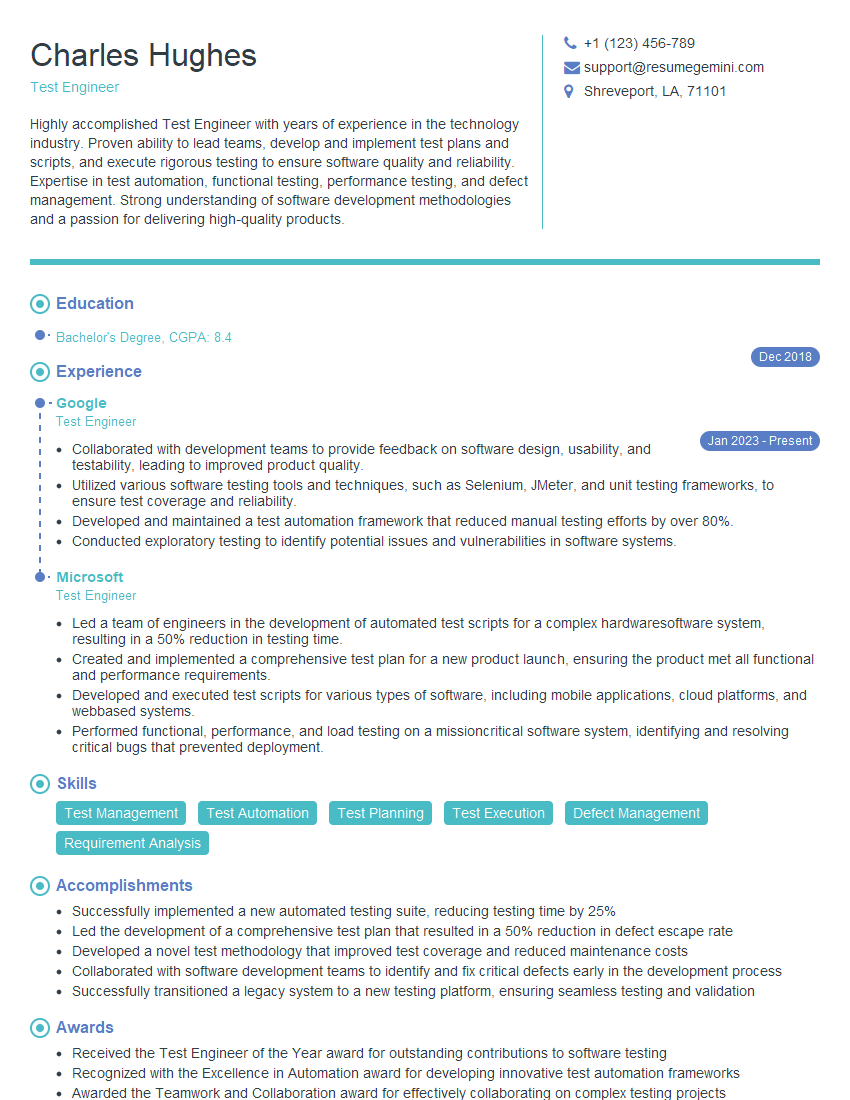
Test Engineer Resume Sample
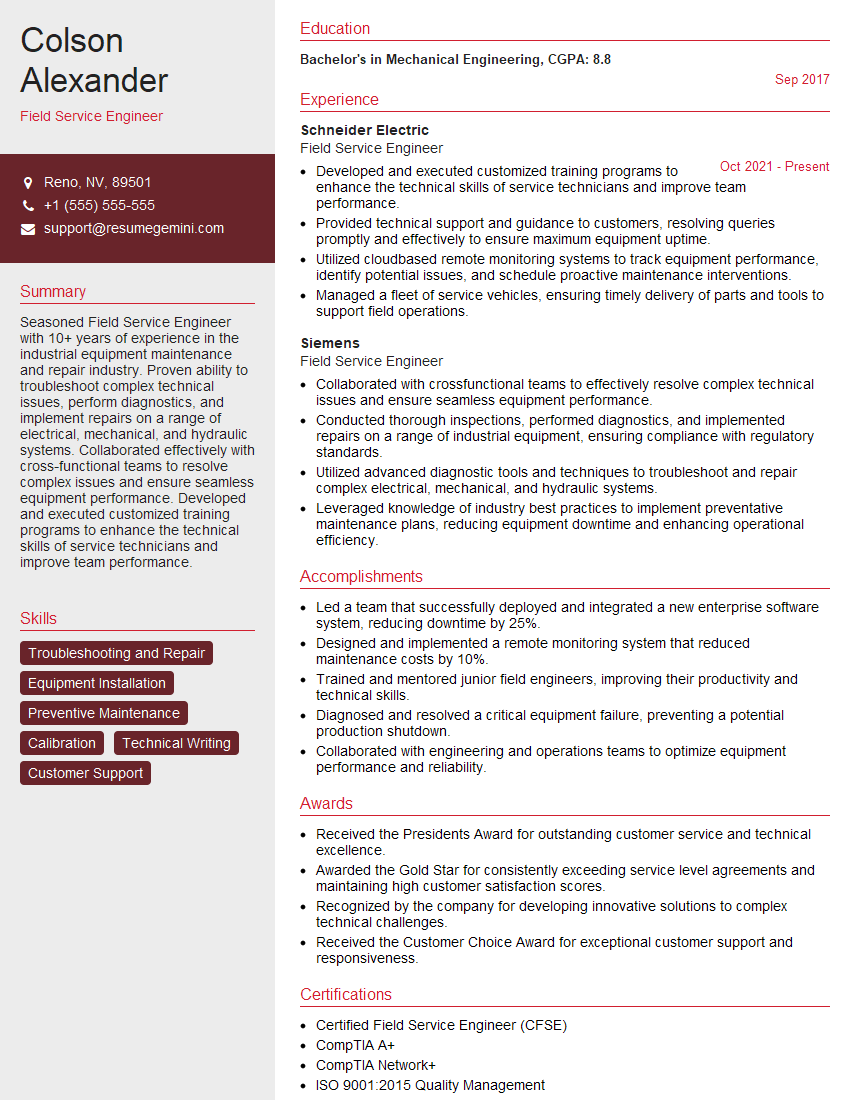
Field Service Engineer Resume Sample
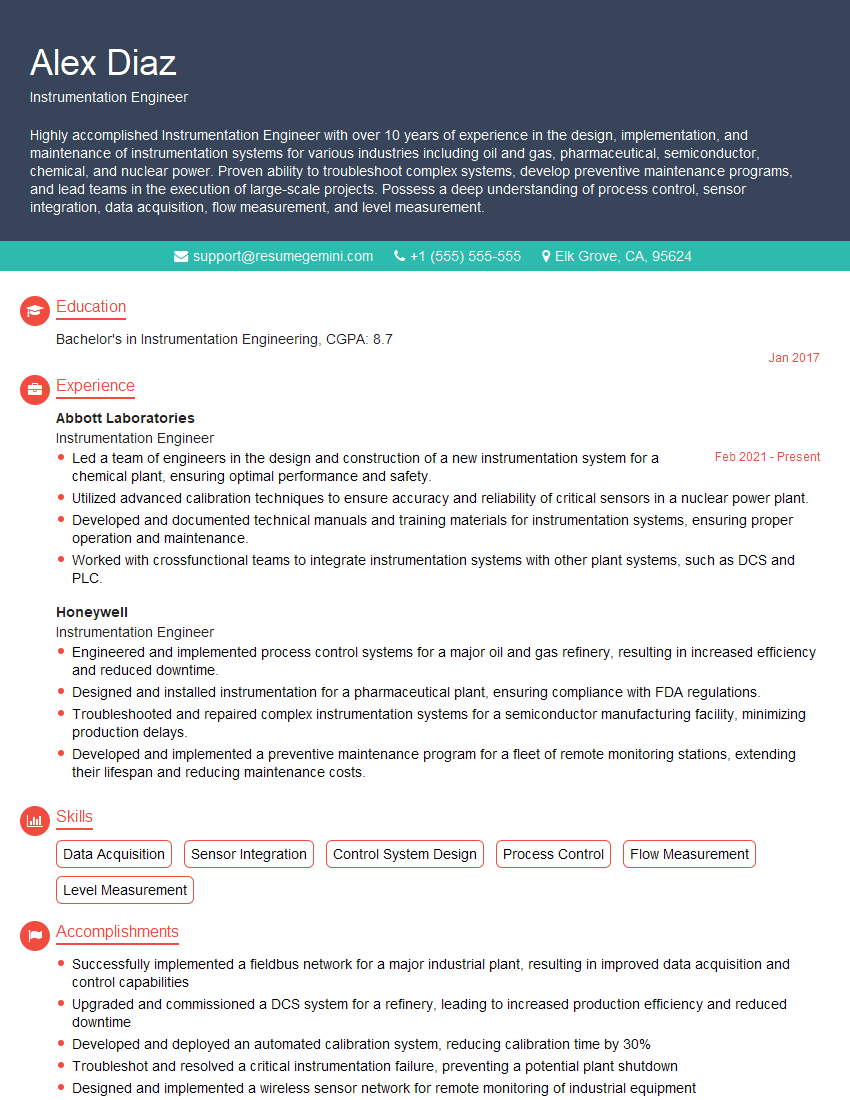
Instrumentation Engineer Resume Sample
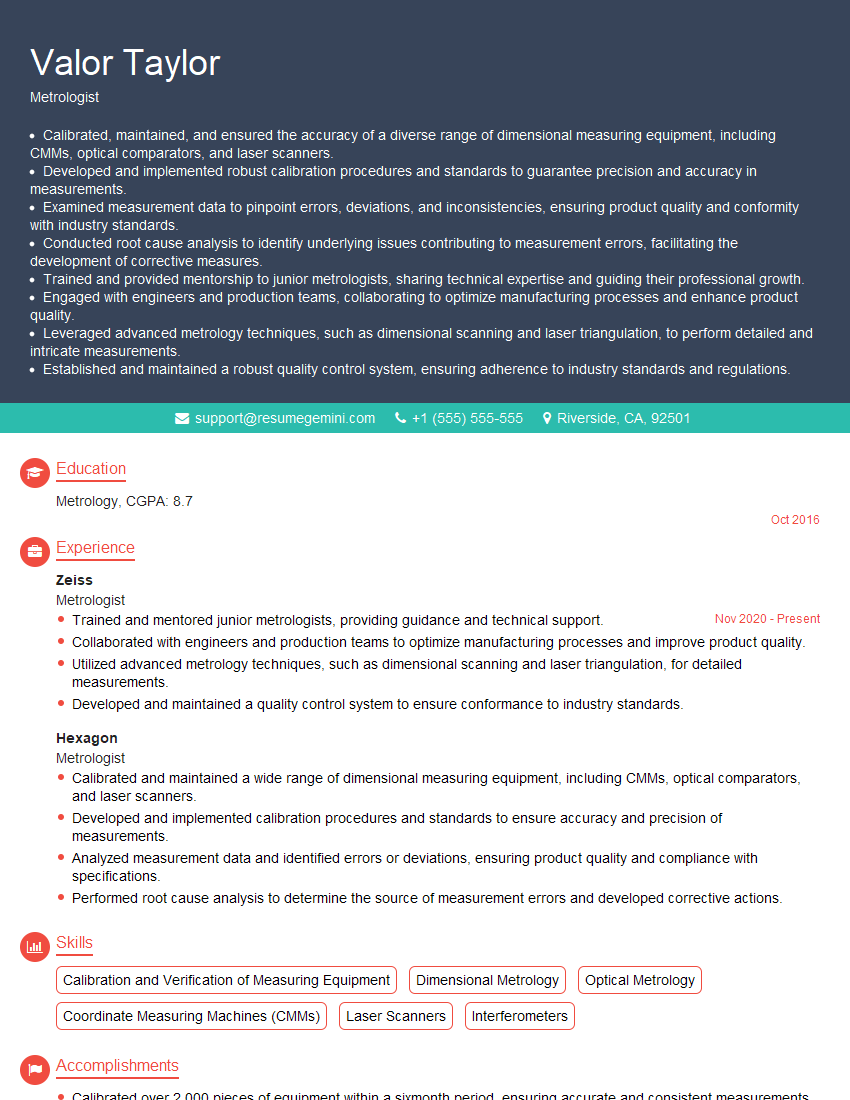
Metrologist Resume Sample
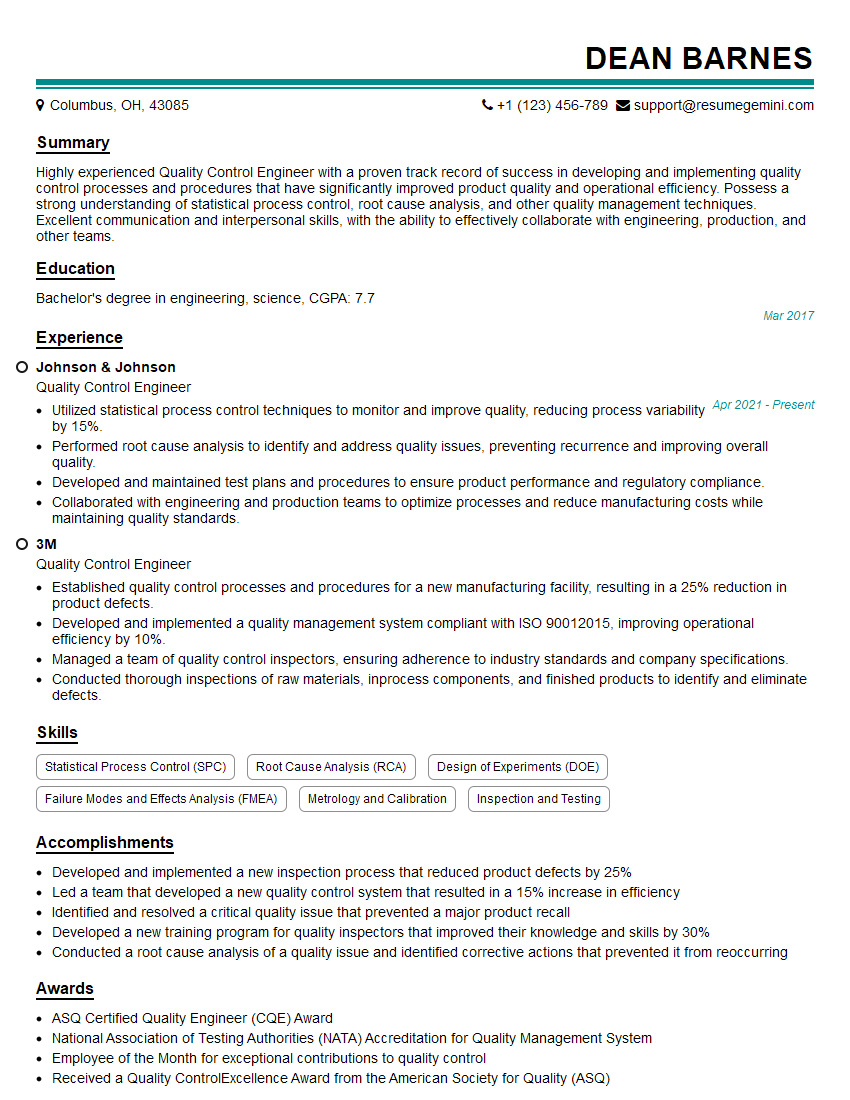
Quality Control Engineer Resume Sample

Quality Assurance Engineer Resume Sample
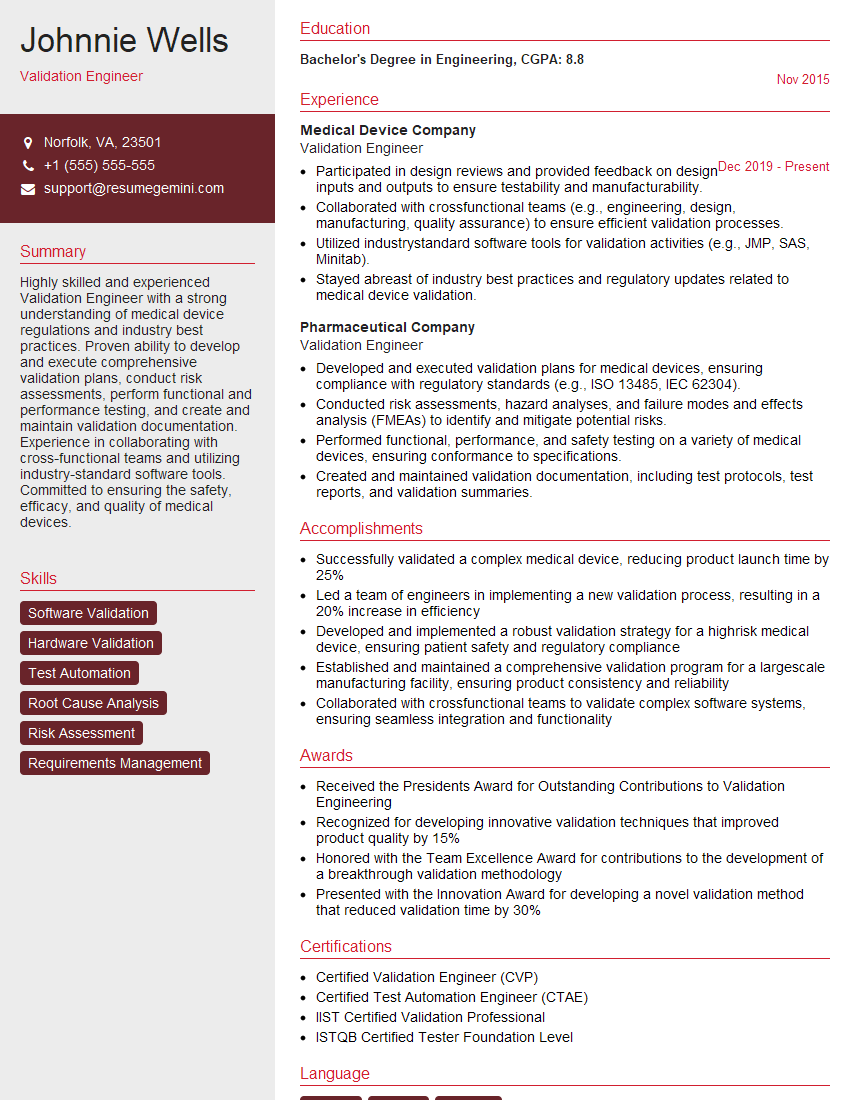
Validation Engineer Resume Sample
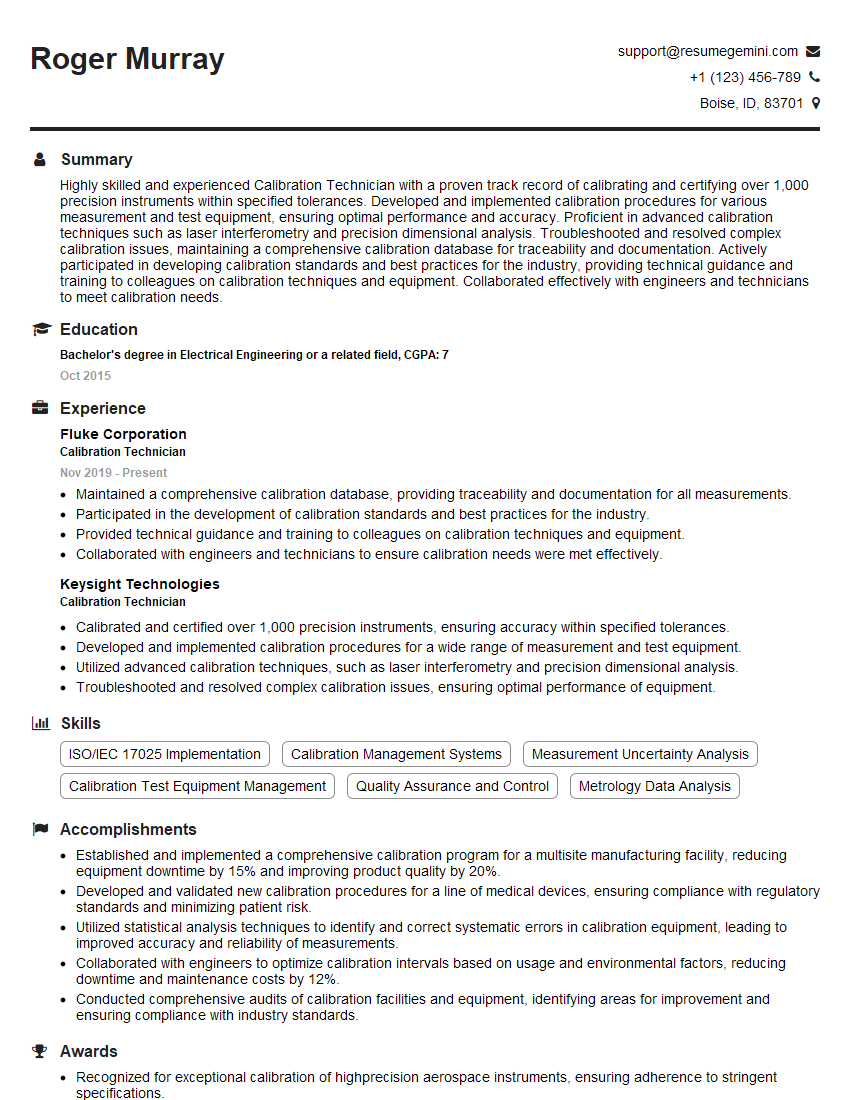
Calibration Technician Resume Sample
Explore more articles
Users Rating of Our Blogs
Share Your Experience
We value your feedback! Please rate our content and share your thoughts (optional).
What Readers Say About Our Blog
good