The thought of an interview can be nerve-wracking, but the right preparation can make all the difference. Explore this comprehensive guide to Proficient in Energy-Based Bodywork interview questions and gain the confidence you need to showcase your abilities and secure the role.
Questions Asked in Proficient in Energy-Based Bodywork Interview
Q 1. Explain the principles of energy flow within the human body.
The human body isn’t just a physical structure; it’s a complex network of energy pathways, often visualized as meridians in traditional Chinese medicine or nadis in yogic traditions. These pathways carry vital energy, often called Qi or Prana, which is essential for our physical, emotional, and mental well-being. Think of it like a river system: a healthy flow ensures nourishment and vitality to all parts of the body. Blockages or disruptions in this flow can manifest as pain, stiffness, illness, or emotional imbalances. The principles of energy flow emphasize maintaining a smooth, balanced circulation of this energy throughout the body to promote optimal health.
For example, consider the impact of stress. Chronic stress can constrict energy flow, leading to tension headaches, digestive problems, or even burnout. Energy-based bodywork aims to identify and address these blockages, restoring the natural flow and promoting healing.
Q 2. Describe your experience with different energy-based modalities.
My experience spans several energy-based modalities, including Craniosacral Therapy, Visceral Manipulation, and various forms of energy healing like Reiki. Craniosacral Therapy, for instance, focuses on the subtle rhythms of the cerebrospinal fluid and its effects on the cranial bones and sacrum. I’ve found it particularly effective in addressing headaches, TMJ disorders, and trauma-related issues. Visceral Manipulation helps restore the mobility and optimal function of internal organs, addressing digestive issues or pain stemming from organ restrictions. My work with Reiki involves channeling universal life force energy to promote relaxation, reduce pain, and accelerate healing processes. Each modality offers a unique approach to working with the body’s energy field, and I integrate them based on the client’s individual needs.
Q 3. How do you assess a client’s energy field?
Assessing a client’s energy field involves a multi-sensory approach. I begin with a careful intake, exploring their medical history, lifestyle, and presenting symptoms. Then, I use subtle palpation—a very light touch—to sense the temperature, texture, and density of their tissues. I also pay close attention to their breathing patterns, posture, and overall demeanor, as these can reflect energy imbalances. Sometimes, I might even sense a subtle energy field around the body, feeling areas of congestion or stagnation. This is a highly intuitive process honed through years of practice and training. For instance, a client with chronic back pain might exhibit a noticeable coldness or tightness in the lower back area, indicating an energy blockage that needs attention.
Q 4. What techniques do you use to balance a client’s energy?
The techniques I employ to balance a client’s energy are tailored to their specific needs and the modalities I’m using. In Craniosacral Therapy, I might gently work with the cranial bones to release restrictions and improve cerebrospinal fluid flow. Visceral Manipulation involves gentle, specific mobilizations to restore organ mobility. Reiki uses hand placements to channel energy and encourage healing. Other techniques may include breathwork, guided imagery, or sound therapy to support the energetic balancing process. For example, if a client presents with anxiety, I might combine breathwork techniques with Reiki to help calm their nervous system and restore a sense of inner peace.
Q 5. Explain the concept of subtle energy.
Subtle energy refers to the vital life force that animates the body beyond the physical. It’s not something that can be easily measured with conventional instruments, yet its effects are palpable. Think of it as the underlying energetic blueprint that governs the body’s physiological functions, emotional responses, and mental clarity. Many traditions describe this energy in different terms (Qi, Prana, Biofield) but the underlying concept remains the same—a dynamic, interconnected energy system that impacts our overall well-being. Disruptions in this subtle energy field can manifest as various health problems, highlighting the importance of maintaining its balance.
For example, a feeling of being ‘drained’ after a stressful interaction might indicate a depletion of subtle energy. Energy-based bodywork aims to replenish and harmonize this field, promoting a sense of vitality and well-being.
Q 6. Describe your approach to client assessment and treatment planning.
My approach to client assessment and treatment planning is holistic and individualized. It begins with a thorough intake, gathering information about their medical history, lifestyle, and presenting complaints. This is followed by a physical assessment to identify areas of tension, restriction, or energetic imbalance. I then develop a personalized treatment plan that may incorporate different energy-based modalities, tailoring the approach to address the root cause of the client’s concerns. Throughout the process, communication and collaboration with the client are essential to ensure they feel comfortable and empowered in their healing journey. I regularly reassess the client’s progress and adjust the treatment plan as needed.
Q 7. How do you identify contraindications for energy-based bodywork?
Identifying contraindications for energy-based bodywork is crucial. Conditions such as acute infections, uncontrolled bleeding, severe heart conditions, or certain types of mental illness may require caution or may make energy work unsuitable. Clients who are pregnant or have a history of psychosis may require a modified approach. It’s vital to obtain a comprehensive medical history before starting treatment. If I am unsure about a client’s suitability for energy-based bodywork, I will always recommend consulting with their physician or other healthcare professional. Open communication with the client about any potential risks or limitations is paramount.
Q 8. How do you handle challenging or difficult clients?
Handling challenging clients in energy-based bodywork requires a blend of empathy, clear communication, and professional boundaries. It’s crucial to remember that emotional or physical discomfort can manifest as resistance or negativity.
- Active Listening: I begin by actively listening to the client’s concerns, validating their feelings without judgment. This helps build rapport and trust.
- Setting Boundaries: It’s vital to establish professional boundaries from the outset. This includes clear communication about the scope of the session, treatment expectations, and the importance of mutual respect.
- Modifying the Approach: If a client expresses discomfort with a specific technique, I’m prepared to modify my approach. This might involve adjusting the pressure, slowing the pace, or substituting a different technique altogether. For example, if someone is sensitive to direct touch, I might use more indirect methods, such as working with their energy field from a distance.
- Referral: In cases where I feel unable to adequately meet a client’s needs, I don’t hesitate to refer them to another practitioner who may be better suited to their specific situation.
For example, I once worked with a client who experienced significant emotional release during a session. By holding a safe and supportive space, allowing them to express their feelings, and offering gentle guidance, we were able to navigate the challenging experience constructively. The subsequent sessions were significantly more productive.
Q 9. Describe your experience with different energy-based assessment tools.
My experience with energy-based assessment tools is extensive. I utilize several methods to gain a comprehensive understanding of a client’s energetic state. These tools aren’t mutually exclusive and often complement each other.
- Muscle Testing: I use kinesiology muscle testing to assess energetic imbalances in the body. It’s a simple yet powerful way to identify areas of weakness or stress in the energy system.
- Intuitive Sensing: Developed through years of practice, my intuitive sensing allows me to perceive subtle energy shifts and blockages. I feel the quality of the client’s energy field, identifying areas of density, stagnation, or heightened energy.
- Pendulum Dowsing: I sometimes use a pendulum to get a more specific reading on energy points, chakras, or meridian pathways. This helps pinpoint areas that require focused attention.
- Aura Viewing: While not always a primary assessment tool, the ability to perceive a client’s aura provides valuable information about their overall energetic state. I can observe imbalances or distortions in the aura, which may indicate underlying physical or emotional issues.
The combination of these tools provides a multi-layered assessment that allows me to tailor my treatment plan to the individual’s specific needs. For example, muscle testing might reveal a weakness in the solar plexus chakra, confirming my intuitive sensing of low self-esteem. This allows me to focus my energy work on supporting and strengthening that area.
Q 10. How do you maintain your own energy levels during treatments?
Maintaining my own energy levels is paramount for providing effective and sustainable treatments. Energy depletion can significantly impact my ability to connect with clients and perform at my best.
- Grounding Techniques: I regularly employ grounding techniques, such as deep breathing exercises, walking barefoot on the earth, or connecting with nature. This helps me center myself and prevent energy drain.
- Mindfulness and Meditation: Daily meditation and mindfulness practices are essential for maintaining emotional and energetic balance. They allow me to clear mental clutter and connect with a deeper sense of inner peace.
- Healthy Lifestyle: A healthy diet, regular exercise, and adequate sleep are fundamental for optimal energy levels. I prioritize these aspects of my well-being.
- Energy Protection Techniques: Before and after each session, I use energy protection techniques, visualizing a protective field around myself to prevent energy depletion from clients’ energetic imbalances.
- Self-Care: Taking time for self-care is crucial. This might include activities such as spending time in nature, listening to relaxing music, or engaging in hobbies I enjoy.
For example, after a series of emotionally intensive sessions, I make it a point to spend time in nature, taking a long walk in the woods or practicing yoga outdoors. This helps replenish my energy and return to a balanced state.
Q 11. What are the ethical considerations in energy-based bodywork?
Ethical considerations are central to my practice. Maintaining the highest ethical standards ensures client safety, trust, and well-being.
- Informed Consent: Clients must be fully informed about the nature of energy-based bodywork, its potential benefits and limitations, and any potential risks involved. Obtaining their informed consent is non-negotiable.
- Confidentiality: Maintaining client confidentiality is essential. I never disclose personal information shared during sessions.
- Boundaries: Establishing and maintaining clear professional boundaries is crucial. This includes avoiding dual relationships with clients and maintaining a respectful, professional demeanor at all times.
- Competence: I only provide services within my scope of competence. If a client presents with a condition outside my area of expertise, I refer them to a qualified professional.
- Continuing Education: I regularly engage in continuing education to enhance my skills and knowledge, ensuring I provide the best possible care to my clients.
For instance, it is unethical to make claims that energy work can cure diseases. While it can be a valuable supportive therapy, it’s important to be clear about its limitations and to encourage clients to seek appropriate medical care when necessary.
Q 12. How do you incorporate energy-based techniques with other therapeutic modalities?
Energy-based techniques beautifully integrate with various other therapeutic modalities. The synergistic effects can greatly enhance treatment outcomes.
- Massage Therapy: Combining energy work with massage can deepen the relaxation response and improve the flow of energy throughout the body. For example, while performing a massage, I can simultaneously work with the client’s energy meridians to enhance the therapeutic effect.
- Acupuncture: Energy-based bodywork complements acupuncture by addressing both the physical and energetic aspects of health. It can help enhance the effectiveness of acupuncture by clearing energy blockages along meridians.
- Craniosacral Therapy: The gentle nature of craniosacral therapy aligns well with energy work. Both focus on the subtle rhythms and energies of the body, enhancing the release of tension and promoting a sense of deep relaxation.
- Yoga and Meditation: Energy-based techniques can be integrated into yoga and meditation practice to enhance awareness of one’s energy body and promote deeper relaxation.
For example, I frequently use energy work in conjunction with massage therapy. By addressing both the physical tension in the muscles and the underlying energetic imbalances, clients often experience a more profound sense of release and well-being.
Q 13. Describe your understanding of the energetic anatomy.
Energetic anatomy refers to the subtle energy system of the body, distinct from the physical anatomy but intimately connected to it. It’s a complex system of energy pathways, centers, and fields.
- Chakras: These are energy centers located along the spine, each associated with specific aspects of physical, emotional, and spiritual well-being. Imbalances in the chakras can manifest as physical or emotional symptoms.
- Meridians: These are energy pathways that run throughout the body, similar to the concept of meridians in traditional Chinese medicine. Blockages in the meridians can disrupt the flow of energy, leading to pain or illness.
- Aura: The aura is an electromagnetic field that surrounds the body. Its color, density, and shape can reveal information about a person’s physical, emotional, and spiritual state.
- Nadid: These are subtle energy channels which are believed to connect the chakras and various energy centers within the body.
Understanding energetic anatomy allows me to assess and treat imbalances in the energy system, promoting holistic healing. For example, if a client experiences digestive issues, I might focus on balancing their sacral chakra, which is associated with digestion and emotional stability.
Q 14. Explain the relationship between energy and physical health.
Energy and physical health are inextricably linked. The body’s physical functioning is directly influenced by the flow of energy within its energetic system.
- Energy Blockages: Blockages or imbalances in the energy system can lead to physical symptoms, such as pain, inflammation, or illness. The body’s inability to efficiently process energy manifests physically.
- Cellular Function: Energy is essential for cellular function. When the flow of energy is disrupted, cellular processes can become impaired, potentially leading to disease. Energy is the life force that sustains our cells.
- Immune System: A healthy energy flow is vital for a strong immune system. When the energy system is balanced, the body is better equipped to fight off illness and infection. Energy supports the immune system’s function and resilience.
- Emotional Well-being: Emotions have a profound impact on energy flow. Chronic stress, anxiety, or trauma can lead to energy blockages and negatively affect physical health. The mind and body are interconnected energetically.
For example, chronic back pain might be caused by a blockage in the energy flow along the spine, affecting the physical structure and manifesting as pain. Addressing the energy blockage could alleviate the physical pain.
Q 15. How do you address client concerns or anxieties about energy work?
Addressing client concerns about energy work begins with open communication and establishing trust. I always start with a thorough consultation, explaining the process in simple terms, avoiding jargon. I emphasize that energy work is a gentle and supportive modality, not a replacement for medical care. If a client expresses skepticism, I validate their feelings and share testimonials or resources demonstrating the efficacy of the technique. For example, I might explain that energy work aims to balance the body’s natural energy flow, helping to alleviate symptoms stemming from energy blockages. I reassure them that they remain in control throughout the session and can stop at any time. I also offer the option of a shorter introductory session to ease them into the experience.
For those with anxieties, creating a safe and comfortable environment is crucial. This includes a quiet space, soft lighting, and calming music. Deep breathing exercises can also help alleviate anxiety before and during the session. I consistently check in with the client to monitor their comfort level and address any emerging concerns.
Career Expert Tips:
- Ace those interviews! Prepare effectively by reviewing the Top 50 Most Common Interview Questions on ResumeGemini.
- Navigate your job search with confidence! Explore a wide range of Career Tips on ResumeGemini. Learn about common challenges and recommendations to overcome them.
- Craft the perfect resume! Master the Art of Resume Writing with ResumeGemini’s guide. Showcase your unique qualifications and achievements effectively.
- Don’t miss out on holiday savings! Build your dream resume with ResumeGemini’s ATS optimized templates.
Q 16. Describe a successful treatment experience using energy-based bodywork.
A particularly successful treatment involved a client experiencing chronic lower back pain stemming from a sports injury. Traditional physical therapy had provided limited relief. During the initial consultation, we discussed their pain, lifestyle, and overall well-being. During the energy-based bodywork session, I detected a significant energy blockage in their sacral chakra, associated with grounding and stability. Using gentle touch and energy balancing techniques, I focused on releasing the stagnant energy. The client reported immediate relief from the intense pain and a sense of relaxation that spread through their lower back and legs. Following the treatment, their pain lessened significantly and we continued sessions to address the root cause and promote long-term healing. By the end of four sessions, the client reported a significant reduction in pain, improved mobility, and a boost in their overall sense of well-being.
Q 17. What are the limitations of energy-based bodywork?
Energy-based bodywork, while effective for many, has limitations. It’s not a cure-all and shouldn’t replace conventional medical treatment. It’s not suitable for individuals with certain conditions, such as acute infections or unstable mental health conditions. The effects can be subtle and subjective, and results vary from person to person. The efficacy is also difficult to measure objectively using standard scientific methods, although anecdotal evidence and client feedback are overwhelmingly positive. Finally, the practitioner’s skill and intuition significantly influence the outcome, and finding a qualified practitioner is essential for a positive experience.
Q 18. How do you ensure client safety during treatments?
Client safety is my paramount concern. I begin each session with a thorough intake process, discussing medical history, current medications, and any contraindications. I create a safe and comfortable environment, ensuring privacy and respecting client boundaries. I always obtain informed consent before starting any treatment. During sessions, I maintain professional boundaries and communicate clearly throughout the process. I am trained in recognizing and addressing any adverse reactions, and know when to refer clients to other healthcare professionals as needed.
I utilize gentle, non-invasive techniques, adapting my approach to meet each client’s unique needs. I regularly review and update my knowledge of safety protocols and best practices within the field of energy-based bodywork.
Q 19. What is your approach to continuing education in energy-based bodywork?
Continuing education is essential for maintaining excellence in energy-based bodywork. I regularly attend workshops, conferences, and seminars focusing on advanced techniques, new research, and best practices. I also engage in self-study, reading relevant literature and exploring new modalities related to energy healing. Participation in peer supervision groups allows me to review cases, receive feedback, and refine my skills. Staying current allows me to offer clients the most effective and safe treatment options available. This commitment to ongoing learning ensures I remain at the forefront of my profession and can adapt my practices to meet evolving client needs.
Q 20. Describe your understanding of the chakra system.
The chakra system, in my understanding, is a model depicting seven energy centers along the spine, each associated with specific physical, emotional, and spiritual functions. These centers, or chakras, are believed to influence the flow of life force energy (often called prana or chi) throughout the body. An imbalance in one or more chakras can manifest as physical or emotional symptoms. The seven chakras, from the base of the spine to the crown of the head, are typically described as follows:
- Root Chakra (Muladhara): Grounding, security, stability.
- Sacral Chakra (Svadhisthana): Creativity, pleasure, emotions.
- Solar Plexus Chakra (Manipura): Personal power, self-esteem, confidence.
- Heart Chakra (Anahata): Love, compassion, connection.
- Throat Chakra (Vishuddha): Communication, self-expression, truth.
- Third Eye Chakra (Ajna): Intuition, wisdom, insight.
- Crown Chakra (Sahasrara): Spirituality, connection to the divine, enlightenment.
In my practice, I assess the energy flow within these chakras to identify imbalances and address them through appropriate techniques.
Q 21. How do you integrate energy work with traditional medical approaches?
Integrating energy work with traditional medical approaches involves a collaborative and respectful relationship. I always emphasize that energy work is a complementary therapy, not a replacement for conventional medicine. I encourage clients to continue with their medical treatments as prescribed by their doctors. I view my role as supporting their overall well-being by addressing energetic imbalances that may contribute to their condition. For example, I might work with a client undergoing cancer treatment to help manage stress, fatigue, and pain, while ensuring that their oncologist is aware of my involvement. Clear communication with the client and their medical team is essential to ensure holistic and effective care.
Q 22. Describe your experience with energy clearing techniques.
Energy clearing techniques are essential in Energy-Based Bodywork for removing stagnant or negative energy from the body’s energy field. This promotes a free flow of energy, vital for physical and emotional well-being. My experience encompasses a range of techniques, including:
- Aura clearing: I utilize gentle hand movements and visualization to identify and dissolve energetic blockages in the aura, the energy field surrounding the body. For example, I might visualize a cleansing light dissolving dense, dark areas.
- Chakra balancing: I work with the seven main energy centers (chakras) to restore their natural balance and vibrational frequency. Techniques include light touch, breathwork, and specific energy transmissions to clear blockages and restore harmony. A client experiencing anxiety might have an imbalanced heart chakra, which I would address with specific techniques.
- Cord cutting: This technique removes energetic attachments that drain a client’s energy. These attachments can stem from past relationships or traumatic experiences. I work intuitively, identifying and severing these energetic links with focused intention and visualization.
The effectiveness of these techniques relies on a combination of skilled energy sensing, intention, and the client’s willingness to participate in the healing process.
Q 23. What are the common misconceptions about energy-based bodywork?
Several misconceptions surround energy-based bodywork. One common misunderstanding is that it’s purely ‘woo-woo’ or lacks scientific basis. While the energetic field isn’t directly visible with conventional instruments, the effects are demonstrable through changes in the client’s physical and emotional state. Another misconception is that it’s a quick fix. Like any therapeutic modality, consistent work is needed for lasting change.
- Misconception 1: It’s all in the client’s head (placebo effect). While the mind-body connection is crucial, the experienced practitioner can detect distinct energy patterns and imbalances, regardless of the client’s belief system.
- Misconception 2: It’s only for people who believe in energy. The benefits can be felt even by skeptics, as the physical effects are real, regardless of belief. Improved circulation, reduced muscle tension, and emotional release are all tangible outcomes.
- Misconception 3: It’s a replacement for conventional medicine. Energy work is complementary; it doesn’t replace medical treatment but can enhance it, easing symptoms and promoting overall well-being alongside conventional care.
Q 24. How do you adapt your techniques to clients with varying needs and conditions?
Adaptability is key in energy-based bodywork. I tailor my approach based on a client’s individual needs, considering their physical condition, emotional state, and personal preferences. For instance:
- Physical limitations: For clients with injuries or mobility issues, I modify techniques to avoid causing pain or discomfort, using lighter touch, focusing on areas without restrictions, and adjusting the session duration.
- Emotional sensitivity: Some clients are highly sensitive emotionally. I might start with gentler techniques like grounding and centering before progressing to more intense energy clearing. I always prioritize creating a safe and comfortable space.
- Specific conditions: Clients with chronic pain or anxiety may benefit from specific energy techniques, such as addressing energy blockages related to the affected area or promoting relaxation and emotional balance. For example, I might incorporate specific chakra balancing for anxiety or meridian work for pain management.
I actively listen to my clients, paying attention to their feedback throughout the session to ensure they receive the most appropriate and effective treatment.
Q 25. Describe your understanding of grounding and centering techniques.
Grounding and centering are fundamental practices in energy-based bodywork. They establish a stable energetic foundation, improving the practitioner’s and client’s ability to work with energy effectively. Grounding connects us to the earth’s energy, providing stability and safety, while centering brings our attention to the present moment, fostering focus and clarity.
- Grounding techniques: I often guide clients to visualize roots growing from their feet, anchoring them to the earth. Other methods include deep breathing, mindful walking, and connecting to nature.
- Centering techniques: This involves focusing on the body’s core, often the abdomen, to bring attention inward. Meditation, visualization, and breathwork are commonly used to achieve a centered state. I might guide a client to visualize a calming light in their heart center.
These practices are essential for both the practitioner and the client, preventing energy depletion and enhancing the overall effectiveness of the session. It helps me stay grounded and balanced while working with clients’ energy, preventing energy drain.
Q 26. What are the key differences between various energy-based modalities?
Many energy-based modalities exist, each with unique approaches and techniques. The key differences often lie in the theoretical framework, the specific energy systems addressed, and the methods used for energy manipulation.
- Reiki: Focuses on channeling universal life force energy to promote healing and well-being. It uses gentle hand placements to direct energy flow.
- Craniosacral Therapy: Addresses the subtle rhythms of the cerebrospinal fluid to release restrictions in the craniosacral system, impacting the nervous system and overall health.
- Acupressure/Acupuncture: Based on Traditional Chinese Medicine, these use pressure or needles at specific points (meridians) along the body to stimulate energy flow and balance.
- Therapeutic Touch: Uses intentional, non-invasive hand movements to assess and influence a person’s energy field.
While distinct, these modalities share the common goal of restoring balance and promoting healing through the body’s energy system. The choice of modality depends on the client’s needs and the practitioner’s expertise.
Q 27. How do you maintain accurate records of client treatments?
Maintaining accurate client records is crucial for ethical and professional practice. I use a secure, HIPAA-compliant electronic health record (EHR) system to document each session.
- Client information: I record basic demographics, health history, and any relevant medical conditions.
- Treatment details: This includes the techniques used, the client’s presentation before and after the session, and any specific observations.
- Client feedback: I note the client’s feedback about their experience, progress, and any changes they’ve observed.
- Consent forms: All clients sign informed consent forms outlining the process and potential risks.
These records are essential for tracking client progress, ensuring consistency in treatment, and complying with professional standards.
Q 28. How do you explain the benefits of energy-based bodywork to potential clients?
Explaining the benefits of energy-based bodywork to potential clients requires clarity and empathy. I emphasize that it’s a holistic approach that addresses the interconnectedness of mind, body, and spirit.
- Focus on benefits: I highlight the potential for stress reduction, pain relief, improved sleep, enhanced emotional well-being, and increased energy levels.
- Address concerns: I address common misconceptions and answer questions openly and honestly, ensuring clients feel comfortable and informed.
- Share testimonials: Positive client experiences can be powerful in demonstrating the effectiveness of the therapy.
- Offer a complimentary consultation: This allows clients to ask questions, feel the practitioner’s energy, and determine if it’s the right fit.
I frame energy-based bodywork as a supportive therapy that can complement existing medical treatments, fostering a sense of empowerment and self-care.
Key Topics to Learn for Proficient in Energy-Based Bodywork Interview
- Energy Field Anatomy: Understanding the theoretical framework of energy flow within the body, including chakras, meridians, and auras. Consider the various models and their applications.
- Palpation and Assessment Techniques: Developing proficiency in subtle energy sensing and identifying energy imbalances through various palpation methods. Practice describing your assessment process clearly and concisely.
- Modalities and Techniques: Mastering a range of energy-based bodywork techniques, such as Reiki, Craniosacral Therapy, or Polarity Therapy. Be prepared to discuss the nuances and benefits of each.
- Client Communication and Rapport Building: Highlighting the importance of establishing trust and clear communication with clients to create a safe and effective therapeutic environment. Develop examples of successful client interactions.
- Ethical Considerations and Boundaries: Demonstrating a strong understanding of professional ethics, including client confidentiality, scope of practice, and appropriate boundaries.
- Case Studies and Problem Solving: Prepare to discuss specific case studies, analyzing challenges encountered and outlining your problem-solving approaches to address energy imbalances and client needs.
- Contraindications and Safety Precautions: Thoroughly understanding the contraindications and safety precautions associated with different energy-based bodywork modalities. Be prepared to discuss these with a focus on client well-being.
- Integration with Other Therapies: Exploring the potential integration of energy-based bodywork with other complementary therapies, such as massage therapy or acupuncture. This demonstrates a holistic perspective.
Next Steps
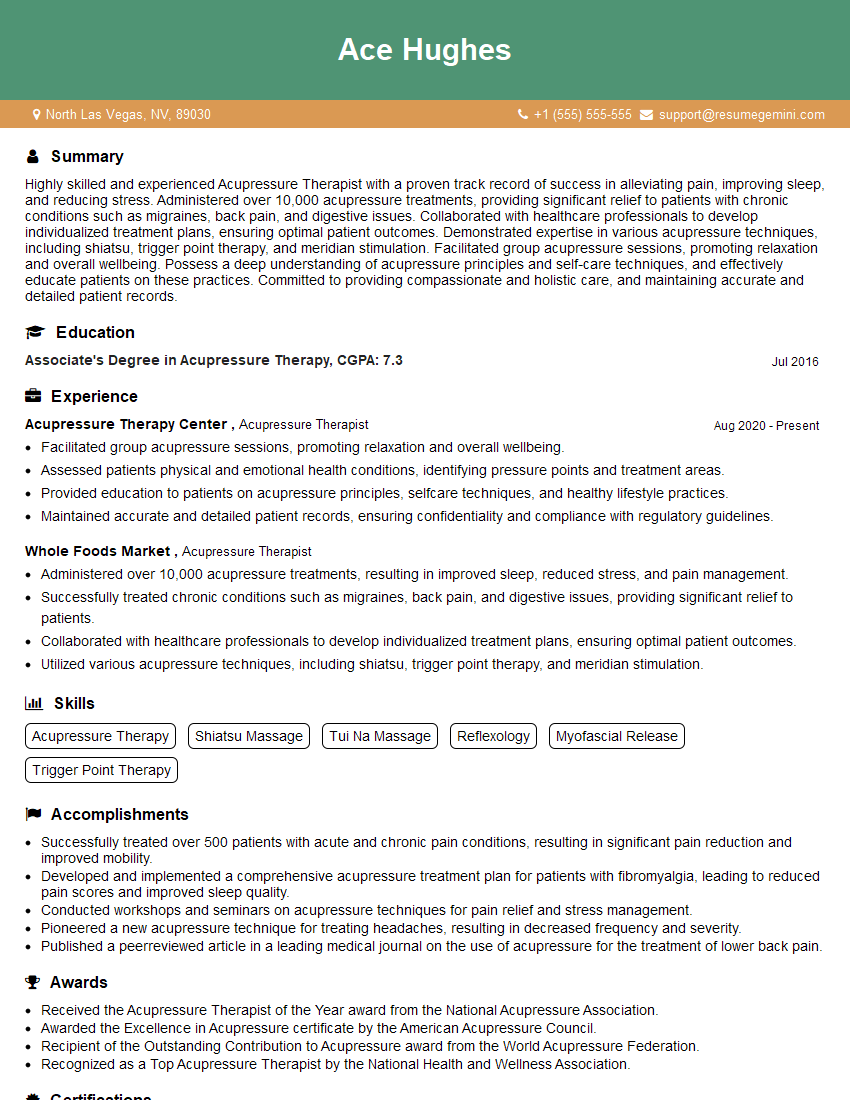
Mastering Proficient in Energy-Based Bodywork opens doors to rewarding and fulfilling careers. To maximize your job prospects, crafting a strong, ATS-friendly resume is crucial. ResumeGemini is a trusted resource that can significantly enhance your resume-building experience, helping you present your skills and experience effectively to potential employers. Examples of resumes tailored to Proficient in Energy-Based Bodywork are available to guide you. Invest the time to build a resume that reflects your expertise and allows your qualifications to shine. Your future success depends on it.
Explore more articles
Users Rating of Our Blogs
Share Your Experience
We value your feedback! Please rate our content and share your thoughts (optional).
What Readers Say About Our Blog
Very informative content, great job.
good