Every successful interview starts with knowing what to expect. In this blog, we’ll take you through the top Proficient in the Use of Glass Handling Equipment interview questions, breaking them down with expert tips to help you deliver impactful answers. Step into your next interview fully prepared and ready to succeed.
Questions Asked in Proficient in the Use of Glass Handling Equipment Interview
Q 1. Describe your experience with different types of glass handling equipment.
My experience with glass handling equipment encompasses a wide range, from manual handling tools to sophisticated automated systems. I’m proficient with vacuum lifters, both manual and powered, which are crucial for safely moving large and delicate glass sheets. I’ve also extensively used various types of suction cups, choosing the appropriate type based on the glass type and size. My experience includes working with glass handling robots, conveyor belts designed for glass transport, and specialized cranes equipped with glass-handling attachments. I am familiar with the operation and maintenance of these systems. For instance, I’ve used a robotic arm with a custom suction cup system to automate the loading and unloading of tempered glass panels in a high-volume production line. This automated system significantly improved efficiency and reduced the risk of damage compared to manual handling.
I’m also experienced with simpler tools like glass sheet separators, hand trucks with specialized cradles for glass, and protective packaging materials like cardboard and foam. The selection of the appropriate tool depends largely on the glass type, size, fragility, and the specific handling task.
Q 2. What safety procedures do you follow when handling glass?
Safety is paramount when handling glass. My safety procedures always begin with a thorough risk assessment of the task, considering the glass type, size, weight, and the environment. This includes checking for any potential hazards like sharp edges, cracks, or slippery surfaces. I always wear appropriate Personal Protective Equipment (PPE), which includes safety glasses, gloves, steel-toe boots, and sometimes a full-body harness when working at heights. When lifting glass, I use proper lifting techniques, maintaining a straight back and bending at the knees to avoid injury. I utilize the appropriate glass handling equipment, ensuring it’s in good working order before commencing work. Communication is key; I always inform colleagues about my activities, especially when working with large or heavy glass sheets to prevent collisions and accidents. Moreover, I meticulously follow all company safety protocols and immediately report any incidents or near misses.
Q 3. How do you identify and address potential hazards during glass handling?
Identifying and addressing potential hazards during glass handling requires a proactive approach. I regularly inspect the work area for obstacles, uneven surfaces, and any potential slipping hazards. I check the condition of the glass itself for cracks or chips, which could lead to breakage during handling. The equipment used, such as vacuum lifters or suction cups, is also thoroughly inspected for any damage or wear that might compromise safety. Environmental factors like temperature and humidity can also affect glass, so I consider these elements in my risk assessment. For instance, extreme temperature changes can lead to stress fractures in glass. If I identify a potential hazard, I immediately take corrective action – this could range from removing an obstacle, replacing damaged equipment, or pausing the operation to mitigate the risk. Proper documentation of these hazards and corrective actions is crucial.
Q 4. Explain the process of safely lifting and transporting large glass sheets.
Lifting and transporting large glass sheets requires a methodical and team-based approach. First, a proper risk assessment is performed, considering the sheet’s dimensions and weight. Appropriate equipment, such as a vacuum lifter with a sufficient suction capacity and a sturdy, appropriately sized transport cart, is selected. The team ensures the glass is securely attached to the lifter using appropriate suction cups and straps. The glass is lifted smoothly and slowly, avoiding sudden movements or jerking. During transportation, the glass is carefully maneuvered to avoid any collisions or impacts. The team maintains clear communication throughout the process to ensure synchronized movements. The final placement of the glass is performed with equal care, using controlled lowering and support mechanisms to prevent breakage. In real-world applications, I’ve often worked in teams of three to four people to safely move large glass sheets weighing hundreds of pounds, carefully guiding the sheet every step of the way to ensure the safe delivery of the glass.
Q 5. What are the different types of glass and their handling requirements?
Different types of glass have varying handling requirements due to differences in their physical properties and fragility. Annealed glass, the most common type, is relatively easy to handle but is more susceptible to breakage than other types. Tempered glass, which is heat-treated for increased strength, requires careful handling to prevent stress fractures, particularly at the edges. Laminated glass, consisting of multiple layers bonded together, is more resistant to impact and breakage but still needs careful handling. Specialty glass, such as curved or patterned glass, requires even more attention to detail because of its shape and potentially delicate surface finish. The handling procedures must adapt to each glass type; for example, tempered glass requires special attention to edge protection to avoid chipping during handling. I always refer to the manufacturer’s specifications and safety data sheets for specific handling instructions.
Q 6. How do you ensure the quality and integrity of glass during handling?
Ensuring the quality and integrity of glass during handling involves meticulous attention to detail throughout the process. This begins with careful inspection of the glass upon receiving it, checking for any existing damage. During handling, the use of appropriate equipment and techniques minimizes the risk of breakage or chipping. For instance, using the right suction cups prevents marks, while proper lifting techniques reduce the risk of stress on the glass. Throughout the process, I’m mindful of avoiding contact with sharp or abrasive materials that could scratch the glass. Cleanliness is also crucial; any dirt or debris could scratch the glass surface. After the glass is transported, I perform a final inspection to ensure it remains undamaged. Using protective materials like edge protectors and specialized packaging during transport further enhances the integrity of the glass. In case of any damage discovered after transport, I document it thoroughly and immediately report it.
Q 7. Describe your experience with automated glass handling systems.
My experience with automated glass handling systems includes working with robotic arms, automated conveyor systems, and integrated warehouse management software for tracking and optimization. I’ve been involved in the setup, operation, and maintenance of these systems, and I’m familiar with programming and troubleshooting automated processes. These systems offer significant advantages in terms of speed, efficiency, and safety, particularly in high-volume production environments. For instance, I worked on a project where we implemented a robotic arm system for loading and unloading glass sheets into a furnace. This system significantly reduced the risk of human error and workplace injuries compared to manual operation. My experience also encompasses troubleshooting automated systems; this involves diagnosing malfunctions, performing repairs, and ensuring optimal system performance to maintain consistent throughput and reduce downtime.
Q 8. How do you handle broken or damaged glass safely?
Handling broken glass requires utmost caution. Safety is paramount, so always wear appropriate personal protective equipment (PPE), including cut-resistant gloves, safety glasses, and closed-toe shoes. Never attempt to pick up shards with bare hands. Instead, use a dustpan and brush, or a specialized glass pickup tool to sweep up the larger pieces. For smaller fragments, damp paper towels are effective for collecting and disposing of them safely. Dispose of broken glass in a sturdy, clearly labeled container – ideally, one designed for sharps disposal. Remember, even small pieces can cause serious injury.
Example: Once, while working on a large-scale glass installation, a sheet of tempered glass shattered unexpectedly. Following protocol, I immediately secured the area, donned my PPE, and carefully swept up the fragments, ensuring no one else entered until the area was completely clear.
Q 9. What are the common causes of glass breakage during handling, and how can they be prevented?
Glass breakage during handling often stems from improper handling, storage, or transportation. Common causes include impacts (dropping or bumping the glass), excessive pressure or stress (bending or flexing beyond the glass’s capabilities), thermal shock (rapid temperature changes), and inherent flaws in the glass itself. Prevention involves careful handling, using appropriate lifting and moving techniques, adequate padding during transport, temperature control, and quality control in selecting the glass itself. For instance, using suction cups instead of manual lifting reduces the risk of accidental drops. Proper stacking and storage prevents pressure points which could lead to cracks.
Example: We once saw significant reduction in breakage by implementing a new system for transporting sheets of glass. The new system used specialized, cushioned cradles, minimizing friction and movement during transit.
Q 10. Describe your experience with different types of glass cutting tools and techniques.
My experience encompasses a variety of glass cutting tools and techniques. I’m proficient with both manual and automated methods. Manual cutting typically involves a glass cutter (a scoring tool with a hardened wheel) and a straight edge, along with snapping the glass along the score line. This requires precision and a steady hand. For intricate cuts, specialized tools like nibblers or diamond-tipped rotary tools offer greater flexibility. Automated cutting involves machines equipped with diamond saws or water jets, ideal for high-volume production or complex shapes. Each tool has its own advantages and disadvantages depending on the material, the required precision, and the project scale.
Example: When working on a recent custom glass project, the intricate design required the use of a diamond-tipped rotary tool for precise cuts and shaping of curves.
Q 11. How do you measure and cut glass accurately?
Accurate measurement and cutting are crucial. I utilize a combination of measuring tapes and straight edges for precise measurements. The glass cutter should be held at a consistent angle and pressure to ensure a clean score line. Once scored, applying even pressure to the glass along the score line usually ensures a clean break. For more complex shapes, specialized jigs and templates are essential for accurate and consistent cuts. Modern techniques sometimes involve using laser cutting for the most precise work.
Example: I recently cut a large glass panel for a shower enclosure requiring millimeter precision. Using a laser measure and a heavy-duty straight edge combined with a high-quality glass cutter, I was able to achieve the exact dimensions required, guaranteeing a perfect fit.
Q 12. Explain the process of preparing glass for installation.
Preparing glass for installation involves several steps, including cleaning the surface to remove any dirt, dust, or debris that could compromise the bond or affect the finished appearance. Edgework may be required to grind or polish the edges, smoothing any sharp points or irregularities to prevent chipping and improve safety. If needed, protective coatings or films are applied to enhance durability or aesthetics. Any necessary drilling or other modifications are performed before installation, taking care to prevent cracking or chipping.
Example: Before installing a glass tabletop, I carefully cleaned the surface with a glass cleaner, polished the edges to remove any sharp points, and applied a protective film to prevent scratches during the installation process.
Q 13. What are the best practices for storing and maintaining glass inventory?
Proper storage and maintenance of glass inventory is essential. Glass should be stored in a clean, dry environment, away from direct sunlight or extreme temperatures to prevent thermal stress. Sheets are carefully stacked using spacers or supports to prevent chipping or breakage. Larger pieces require special handling and potentially protective coverings or supports. Regularly inspecting the inventory for any signs of damage or deterioration is crucial for preventing costly losses.
Example: Our warehouse utilizes vertical racking systems with protective padding to store glass sheets, ensuring each sheet is supported independently and protected from damage.
Q 14. How do you maintain and troubleshoot glass handling equipment?
Regular maintenance of glass handling equipment is vital for safety and efficiency. This includes regular inspections for wear and tear, cleaning, and lubrication. Glass cutters should be sharpened regularly to ensure clean cuts. Suction cup lifters should be inspected for leaks and proper functioning. Automated cutting equipment requires periodic calibration and maintenance according to manufacturer specifications. Troubleshooting typically involves identifying the source of the problem, accessing service manuals or contacting technicians if necessary.
Example: When a suction cup lifter started losing its grip, I quickly identified a small leak in the vacuum system, which was easily repaired with a simple replacement of a seal.
Q 15. What is your experience with using personal protective equipment (PPE) while handling glass?
Safety is paramount in glass handling. My experience with personal protective equipment (PPE) is extensive and ingrained in my daily practice. This includes consistently wearing safety glasses or goggles, cut-resistant gloves (depending on the task and glass type), and appropriate clothing to prevent cuts or abrasions. For larger pieces or more hazardous operations, I’ve used full-body protection, including aprons and sleeves. I’m also well-versed in the proper use and maintenance of PPE, ensuring it’s in good condition and fits correctly. For instance, I always check for any damage to gloves before starting a task, and I understand the limitations of different types of safety glasses—knowing when specialized lenses are necessary for tasks involving lasers or intense UV light.
Beyond the standard PPE, I’m trained in the safe use of specialized equipment like vacuum lifters and robotic arms, which themselves often require specific safety protocols and added layers of protection.
Career Expert Tips:
- Ace those interviews! Prepare effectively by reviewing the Top 50 Most Common Interview Questions on ResumeGemini.
- Navigate your job search with confidence! Explore a wide range of Career Tips on ResumeGemini. Learn about common challenges and recommendations to overcome them.
- Craft the perfect resume! Master the Art of Resume Writing with ResumeGemini’s guide. Showcase your unique qualifications and achievements effectively.
- Don’t miss out on holiday savings! Build your dream resume with ResumeGemini’s ATS optimized templates.
Q 16. Describe a time you had to solve a problem related to glass handling.
During a large-scale window installation project, we encountered a problem with a batch of tempered glass sheets warping slightly during transportation. This created a significant risk of breakage during installation and compromised the aesthetic appeal of the finished product. My solution involved carefully inspecting each sheet to assess the degree of warping. We then developed a customized installation method using additional support brackets and shims to compensate for the imperfections, ensuring secure and proper installation. This involved a collaborative effort with the installation team, and we meticulously documented the process for future reference. Through careful planning and collaborative problem-solving, we successfully avoided costly delays and ensured the project’s success.
Q 17. How do you handle stressful situations that arise during glass handling operations?
Stressful situations in glass handling often involve time constraints, unexpected damage, or safety concerns. My approach is methodical and prioritizes safety. I start by assessing the situation calmly, identifying the immediate risks and determining the most critical tasks. Then I communicate clearly and concisely with my team, delegating responsibilities as needed and seeking assistance when necessary. For example, if a sheet of glass cracks during processing, I wouldn’t panic. Instead, I’d immediately secure the area, assess the extent of the damage, determine if anyone was injured, and then initiate the proper waste disposal protocols. Afterwards, I would analyze the situation to understand what went wrong and identify ways to prevent similar incidents in the future.
Q 18. What are your strengths and weaknesses related to glass handling?
My strengths include a keen eye for detail, a proactive approach to safety, and my ability to solve problems efficiently and collaboratively. I’m adept at handling various types of glass and proficient in operating all relevant equipment safely and effectively. A weakness I’m working on is delegating tasks more effectively in high-pressure situations. While I’m comfortable handling responsibilities independently, I’m learning to trust my team more readily and ensure efficient distribution of tasks to optimize workflow.
Q 19. What are the different types of glass laminates and their applications?
Glass laminates are composed of multiple layers of glass bonded together with a polymeric interlayer. Different types offer diverse properties and applications.
- PVB (Polyvinyl butyral) Laminate: The most common type, known for its excellent impact resistance and safety features. It’s widely used in automotive windshields, architectural glazing, and security applications. Upon impact, the interlayer holds the glass shards together, preventing them from scattering.
- SentryGlas® Laminate: A high-strength interlayer offering superior impact resistance and stiffness compared to PVB. Often used in demanding applications like hurricane-resistant windows and high-rise buildings.
- Ionoplast® Laminate: Provides exceptional clarity and UV protection, often chosen for museum displays and high-end architectural projects.
The choice of laminate depends on the specific requirements of the application, including strength, safety, optical clarity, and UV protection.
Q 20. Explain the process of cleaning and preparing glass surfaces for further processing.
Cleaning and preparing glass surfaces is crucial for ensuring the quality and adhesion of subsequent processes. The process typically involves several steps:
- Initial Cleaning: Removing loose debris and dirt using a soft brush, compressed air, or a vacuum cleaner.
- Washing: Thoroughly washing the glass surfaces with a suitable cleaning agent and deionized water to remove any remaining contaminants. This step often involves specialized cleaning tools to avoid leaving streaks or residue.
- Rinsing: Rinsing the glass thoroughly with deionized water to remove any traces of cleaning agent. This ensures that no residues interfere with subsequent processes.
- Drying: Carefully drying the glass surfaces using lint-free cloths or compressed air. Leaving water spots or streaks can compromise the quality of subsequent processes.
- Inspection: A final visual inspection is conducted to ensure the surface is completely clean and free from any defects before further processing.
The specific cleaning agents and techniques may vary depending on the type of glass, the intended application, and the subsequent processing steps. Contamination can significantly impact the quality of the end product, and this step is crucial to ensure long-term success and product quality.
Q 21. Describe your experience with different types of glass sealants and adhesives.
My experience encompasses a range of glass sealants and adhesives, each with its own properties and applications:
- Silicone Sealants: Widely used for their flexibility, durability, and resistance to weathering. They are ideal for applications where movement or expansion is expected, such as glazing in buildings or automotive applications. Different formulations are available for varying levels of adhesion and temperature resistance.
- Polyurethane Sealants: Offer excellent adhesion and strength, often preferred in applications requiring high structural integrity. They are commonly used in curtain wall systems and other high-performance glazing applications.
- Epoxy Adhesives: Known for their high strength and excellent bonding characteristics, particularly suitable for bonding different materials to glass, including metals or plastics. They’re frequently used in specialized glass manufacturing and repair.
- Structural Sealants: These are high-performance sealants designed to carry structural loads. They’re used in critical applications, such as skyscrapers, requiring exceptional durability and strength.
The selection of the appropriate sealant or adhesive depends critically on the specific application, environmental conditions, and the materials being bonded. Improper selection can lead to seal failure and compromise structural integrity.
Q 22. How do you ensure compliance with relevant safety regulations during glass handling?
Ensuring safety during glass handling is paramount. My approach is multifaceted and begins with a thorough understanding of all relevant OSHA (Occupational Safety and Health Administration) and local regulations pertaining to glass handling and materials. This includes understanding weight limits for manual handling, the proper use of personal protective equipment (PPE) such as safety glasses, gloves, and steel-toed boots, and the appropriate use of lifting equipment.
- Risk Assessment: Before any operation, I conduct a comprehensive risk assessment, identifying potential hazards like sharp edges, fragile glass, and the risk of breakage. This assessment informs the selection of the correct equipment and procedures.
- PPE Enforcement: I strictly enforce the use of PPE and regularly inspect its condition. I also ensure all team members are trained on the proper use and limitations of the PPE.
- Safe Lifting Techniques: Proper lifting techniques are crucial. I emphasize using mechanical aids whenever possible, such as suction cups or lifting frames, for heavier glass sheets. When manual handling is unavoidable, I always follow ergonomic principles to minimize strain and risk of injury.
- Regular Inspections: I regularly inspect the handling equipment for any damage or defects that could compromise safety. This includes visual checks of straps, suction cups, and lifting mechanisms.
- Emergency Procedures: Clear emergency procedures must be in place and everyone on the team must be thoroughly trained on them. This includes procedures for broken glass cleanup and handling injuries.
For example, during a recent project involving large, tempered glass panels, I implemented a system of color-coded warning labels indicating the weight and handling precautions required. This visual cue ensured everyone understood the risks associated with each panel. This proactive approach significantly minimized the potential for accidents and ensured a safe working environment.
Q 23. What is your understanding of the different types of glass tempering techniques?
Glass tempering is a heat treatment process that significantly increases the strength and durability of glass. There are primarily two methods: air tempering and heat tempering.
- Air Tempering: This involves exposing the glass to a high-velocity stream of air to cool it rapidly. It’s relatively fast, but generally produces less robust glass compared to heat tempering.
- Heat Tempering (Thermal Tempering): This is the most common method. The glass is heated to a high temperature (close to its softening point) and then rapidly cooled (quenched), usually by using jets of air. This process creates compressive stresses on the surface and tensile stresses in the core, making the glass much stronger and more resistant to impact and thermal shock. This is usually the preferred method for applications requiring high strength and safety, like automotive glass and shower doors.
Chemical tempering (ion exchange) is another less common technique where ions in the glass are exchanged to create compressive stress on the surface. It’s often used for thicker glass where heat tempering may lead to warping or breakage. Understanding these different techniques allows me to select the right tempering method based on the specific application and glass requirements.
Q 24. Explain the process of inspecting glass for defects.
Inspecting glass for defects is a critical step in quality control. My inspection process is thorough and utilizes multiple methods to ensure the glass meets the required standards. The intensity of the inspection depends on the glass type and its final application.
- Visual Inspection: This is the first and most important step, carefully examining the entire glass surface for scratches, chips, bubbles, inclusions (foreign particles within the glass), and any signs of distortion or waviness. I use bright, even lighting to highlight any imperfections.
- Polarized Light Inspection: This technique reveals internal stress within the glass. Internal stress can weaken the glass or lead to premature failure. Polarized light can highlight these stress patterns as visible variations.
- Thickness Measurement: Using a precise gauge, I verify that the glass thickness meets the specified requirements. Inconsistent thickness can weaken the glass and make it more susceptible to damage.
- Surface Flatness Check: For applications requiring precise surface flatness, I use specialized equipment, such as a straight edge or a laser level, to check for any deviations from a perfectly flat surface.
Any detected defects are carefully documented, with their location and nature recorded. The severity of the defect determines whether the glass is rejected, repaired (if possible), or accepted for use. For example, minor scratches on non-visible surfaces might be acceptable for some applications, whereas a single chip on a safety-critical panel would lead to automatic rejection.
Q 25. How do you handle different types of glass edges and bevels?
Handling different glass edges and bevels requires specialized techniques and tools to ensure safety and a clean finish. I have extensive experience working with various edge types, including:
- Penetration Edges: These have a sharp, unfinished edge. I handle these with extreme caution, using protective gloves and ensuring they are never exposed to human contact until the edges have been processed further.
- Seamed Edges: These are created by mechanically joining two pieces of glass. Proper cleaning and sealing are crucial to prevent leakage or further damage.
- Polished Edges: These have a smooth, polished finish and typically require careful handling to avoid scratching. I often use soft protective coverings during transport and storage.
- Beveled Edges: These are angled edges that enhance aesthetics. Specialized tools and machinery are used to create bevels, and careful handling is required to prevent chipping during processing.
For example, when installing glass shelves with beveled edges, I use protective padding at the corners to minimize the risk of damage during installation. I also ensure proper alignment and support to avoid uneven stress on the beveled edges. I would never attempt to manually grind or adjust a beveled edge; that work is done by specialized machinery to ensure a clean, accurate finish.
Q 26. What is your experience with glass fabrication techniques?
My experience with glass fabrication techniques is extensive, encompassing various methods depending on the project’s specifications. These include:
- Cutting: Using automated glass cutting machines equipped with diamond wheels to achieve precise cuts with minimal chipping or breakage. I’m proficient in selecting the appropriate blade and cutting parameters based on the glass type and thickness.
- Grinding and Polishing: Removing rough edges and achieving polished surfaces using specialized grinding and polishing machines. This involves selecting the appropriate abrasive materials and controlling the speed and pressure to avoid damaging the glass.
- Drilling: Creating holes of precise diameter and depth using diamond core drills. This requires careful control to prevent cracking or thermal stress.
- Laminating: Bonding multiple layers of glass with an interlayer (typically PVB or EVA) using a specialized autoclave to create laminated safety glass. This process requires precise temperature and pressure control to ensure proper bonding.
- Tempering: As described earlier, I understand the different tempering techniques and can select the appropriate one based on the specific needs of the project. This often involves working with high-temperature furnaces and specialized quenching systems.
For instance, in a recent project involving a custom-designed glass enclosure, I was responsible for all aspects of the fabrication process, from cutting and grinding to laminating and tempering. My ability to expertly execute each stage ensured the final product met the stringent quality and safety standards required.
Q 27. Describe your experience with the use of suction cups and other vacuum-based lifting devices.
Suction cups and vacuum-based lifting devices are essential tools in safe and efficient glass handling. My experience encompasses the use of various types of these devices, from small, handheld suction cups for smaller panes to large, powerful vacuum lifters for handling very large and heavy sheets. I am well versed in their safe operation and limitations.
- Proper Selection: I am adept at selecting the appropriate suction cup size and type based on the weight, shape, and size of the glass. This ensures a secure grip and minimizes the risk of slippage or breakage.
- Inspection and Maintenance: Regular inspection of suction cups is vital, checking for any leaks, damage, or wear and tear. I perform routine maintenance, including cleaning and replacing worn-out suction cups.
- Safe Lifting Procedures: I understand the importance of following safe lifting procedures, including using appropriate straps and supports to prevent warping or twisting of the glass during lifting and movement.
- Vacuum Pressure Monitoring: Many vacuum lifters have gauges indicating vacuum pressure. I closely monitor these gauges during the lift to ensure sufficient vacuum is maintained throughout the operation.
In one instance, we used a large vacuum lifter to install oversized glass panels in a high-rise building. Precise control and the constant monitoring of the vacuum pressure were crucial to ensure the safe and successful installation of those heavy and delicate panels. My experience ensures that I can handle various vacuum lifting situations safely and efficiently.
Q 28. What are your experience with specialized glass handling equipment, such as cranes or forklifts?
I have significant experience operating and overseeing the use of specialized glass handling equipment, including cranes and forklifts. Safety is always the top priority when working with such machinery.
- Crane Operation: I am familiar with operating various types of cranes, selecting the appropriate crane capacity for the specific load. I am well-versed in safety protocols, including proper rigging techniques, load balancing, and communication with crane operators.
- Forklift Operation: I understand the limitations of forklifts when handling glass. I ensure appropriate attachments, such as glass forks or carriers, are used, and I prioritize slow, careful movements to minimize the risk of damage or tipping.
- Load Securing: Regardless of the equipment used, I always prioritize proper load securing. This includes using straps, supports, and padding to prevent the glass from shifting or sliding during transportation or lifting.
- Pre-lift Inspections: Before every lift involving cranes or forklifts, I conduct a thorough inspection of the equipment, the glass, and the entire lifting procedure to identify and mitigate any potential hazards.
For example, during a large-scale project involving the installation of numerous large glass panels, I coordinated the use of a specialized crane equipped with a glass vacuum lifter. My expertise in this area ensured a safe and efficient lifting process, minimizing any delays or risks to the workers and the valuable glass panels themselves.
Key Topics to Learn for Proficient in the Use of Glass Handling Equipment Interview
- Safety Procedures and Regulations: Understanding and adhering to all relevant safety protocols, including personal protective equipment (PPE) usage and emergency procedures for glass breakage.
- Types of Glass Handling Equipment: Familiarity with various equipment such as suction cups, manual and automated lifters, conveyors, and specialized tools for different glass types and sizes. Understanding their limitations and appropriate applications.
- Proper Lifting Techniques: Mastering safe and efficient lifting techniques to prevent damage to the glass and injury to the operator. This includes understanding weight limits and center of gravity.
- Glass Properties and Handling Considerations: Knowledge of different glass types (tempered, laminated, etc.), their fragility, and the implications for handling procedures. Understanding potential hazards like sharp edges and breakage.
- Inspection and Quality Control: Developing skills in inspecting glass for defects before, during, and after handling. Understanding quality control standards and documentation procedures.
- Troubleshooting and Problem Solving: Developing the ability to identify and resolve common issues during glass handling, such as equipment malfunctions or unexpected breakage. Understanding preventative maintenance.
- Working with Different Glass Forms: Experience handling various forms of glass, including sheets, panes, tubes, and specialty shapes, and adapting techniques accordingly.
Next Steps
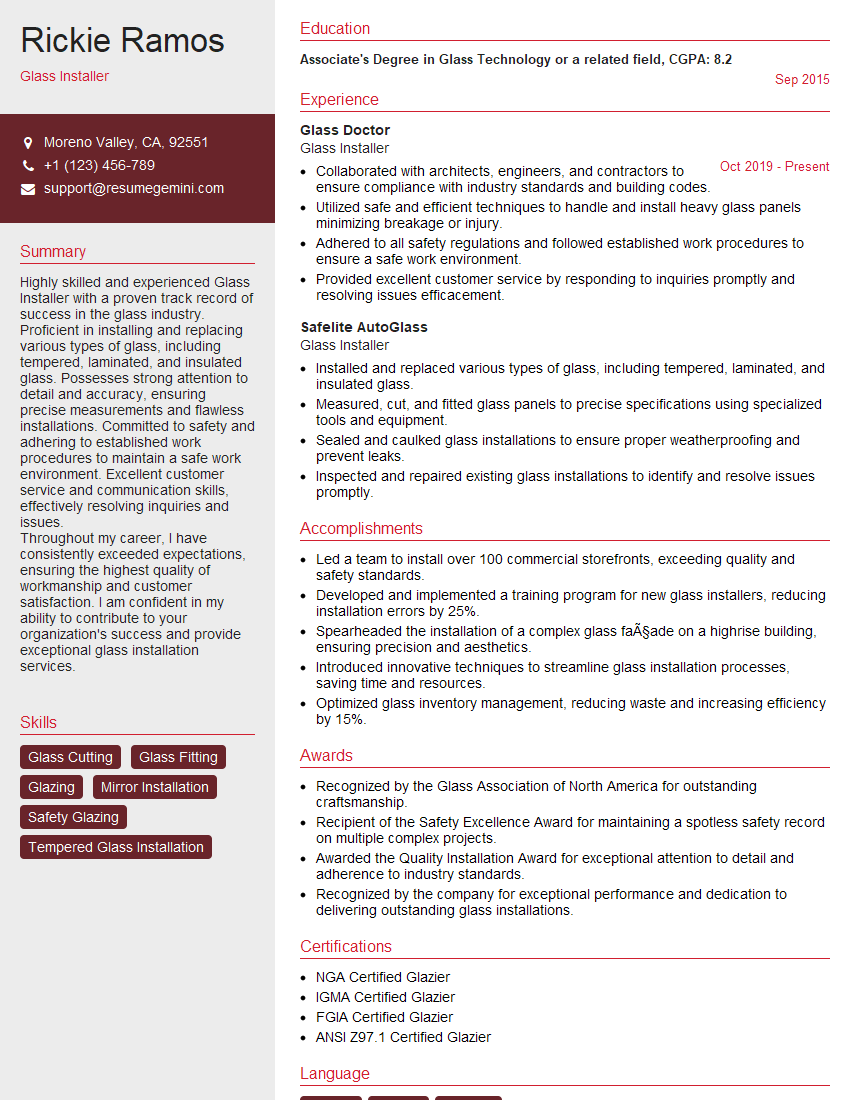
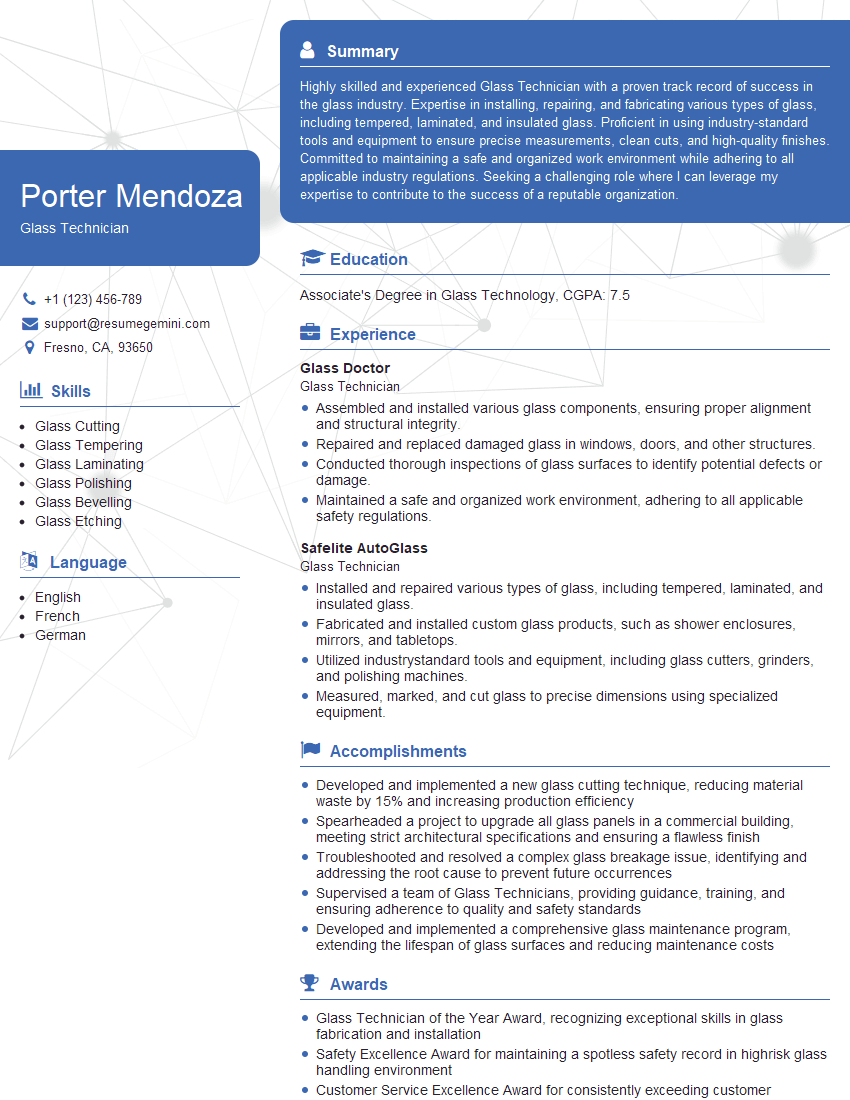
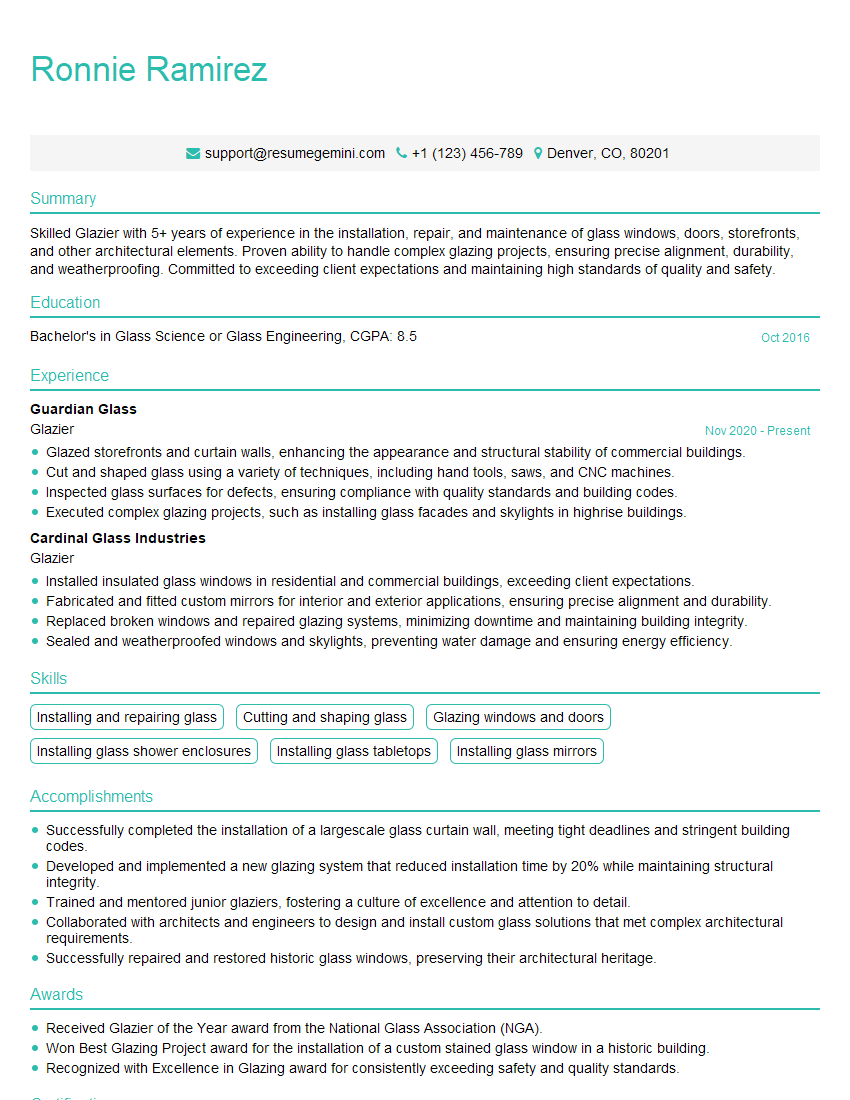
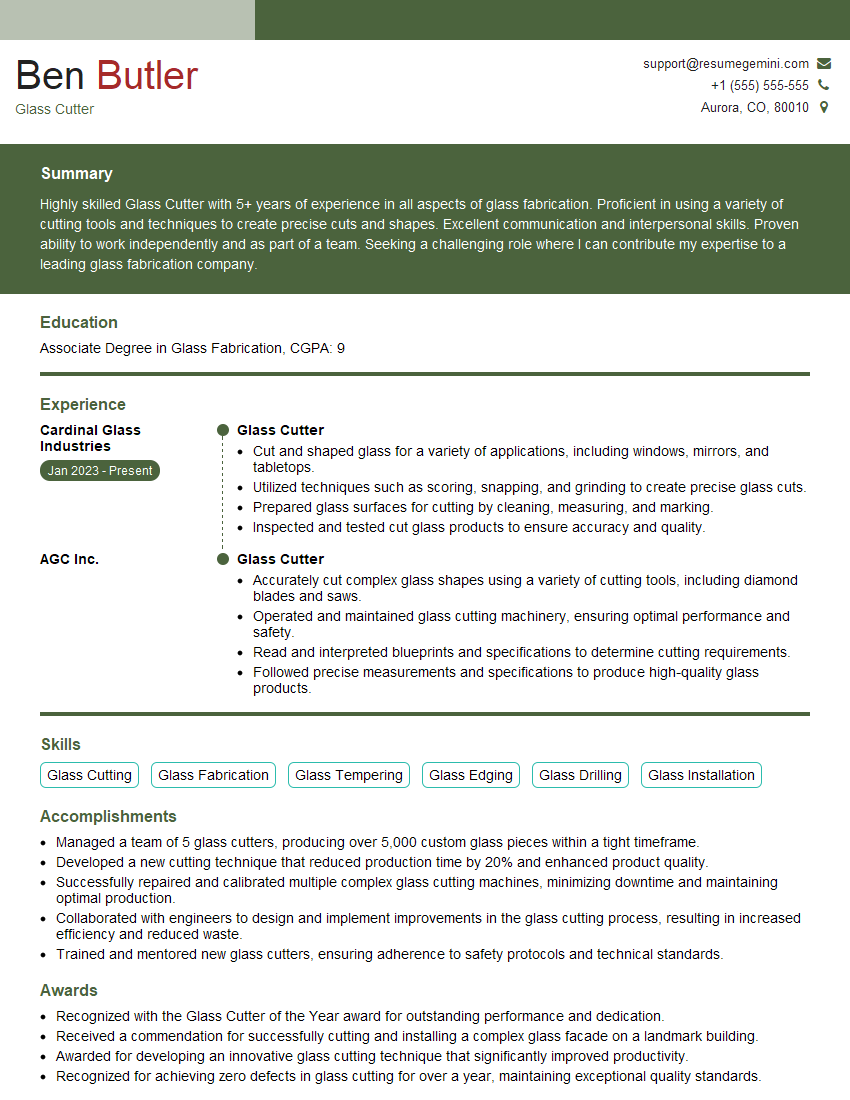
Mastering proficient use of glass handling equipment opens doors to exciting career opportunities in manufacturing, construction, and specialized industries. A strong understanding of these techniques significantly enhances your value to potential employers. To maximize your job prospects, crafting an ATS-friendly resume is crucial. ResumeGemini can help you build a professional, impactful resume that highlights your skills and experience effectively. Examples of resumes tailored to showcasing proficiency in glass handling equipment are available through ResumeGemini to help guide your process.




Explore more articles
Users Rating of Our Blogs
Share Your Experience
We value your feedback! Please rate our content and share your thoughts (optional).
What Readers Say About Our Blog
Very informative content, great job.
good