Are you ready to stand out in your next interview? Understanding and preparing for Proficient in using platemaking chemistry and equipment interview questions is a game-changer. In this blog, we’ve compiled key questions and expert advice to help you showcase your skills with confidence and precision. Let’s get started on your journey to acing the interview.
Questions Asked in Proficient in using platemaking chemistry and equipment Interview
Q 1. Explain the process of creating a printing plate using Computer-to-Plate (CTP) technology.
Computer-to-Plate (CTP) technology revolutionized platemaking by eliminating the need for film. It’s a digital workflow where the printing plate is directly imaged from a digital file. The process generally involves these steps:
Image Preparation: The print-ready digital file (e.g., PDF) is processed to ensure it meets the requirements of the CTP system. This might involve color correction, trapping, and imposition (arranging pages for printing on a single sheet).
Plate Loading: A photosensitive printing plate is loaded into the CTP imager. These plates are typically made of aluminum and coated with a photosensitive layer.
Imaging: The digital file is sent to the CTP imager, which uses a laser to expose the photosensitive layer on the plate. The laser burns away the non-image areas, creating a latent image. Different CTP technologies exist, including thermal, violet laser, and UV laser, each with its own chemistry and resolution capabilities.
Plate Processing: After exposure, the plate goes through a developing process. This usually involves washing away the unexposed areas of the photosensitive layer, leaving behind a raised image (relief) for letterpress or a recessed image (intaglio) for gravure, or a planographic image for offset, depending on the type of plate used. This step often involves automated processors for speed and consistency.
Plate Finishing (Optional): Plates may undergo post-processing steps like proofing, cleaning, and gumming to prepare them for printing.
Mounting (Optional): For certain presses, especially larger format printing, the plate needs to be mounted onto a cylinder before printing.
For example, in a typical offset CTP workflow, a violet laser exposes a photosensitive polymer coating on an aluminum plate. The exposed areas become insoluble, while the unexposed areas are washed away, leaving behind a precise image ready for printing. The accuracy and efficiency of CTP far surpasses traditional film-based methods.
Q 2. Describe the different types of printing plates (e.g., offset, flexo, gravure).
Printing plates are categorized by the printing process they’re used for. The three main types are:
Offset Plates: These are planographic plates, meaning the image and non-image areas are both on the same plane. They are used in offset lithography, a widely used process for high-volume printing of brochures, magazines, and books. Offset plates typically use a photosensitive layer that is made water-repellent where the ink is to be placed and water-accepting where no ink is needed. The ink adheres only to the image areas due to this difference in properties.
Flexographic Plates: These are relief plates, meaning the image areas are raised above the non-image areas. They’re used in flexographic printing, a versatile process ideal for printing on flexible substrates like plastic films, paper bags, and corrugated cardboard. Flexo plates are generally made of photopolymer and are known for their ability to print on various materials at high speed.
Gravure Plates: These are intaglio plates, with the image areas etched or engraved below the surface. Gravure printing is used for high-quality, high-volume printing of packaging, magazines, and currency. The ink is held in the recesses of the engraved image and transferred onto the substrate via a doctor blade. Gravure plates provide excellent tonal range and detail.
The choice of plate type depends entirely on the printing process, substrate, and required print quality. Each type has its own unique manufacturing process and material requirements.
Q 3. What are the key chemical components in platemaking and their functions?
Platemaking chemistry is critical for achieving high-quality prints. The specific chemicals vary depending on the plate type and the manufacturer, but some key components include:
Photosensitive Diazo Compounds (for some offset plates): These compounds break down upon exposure to UV light, initiating the hardening process of the photopolymer coating.
Photopolymers: These polymers undergo a chemical change upon exposure to light, becoming either soluble or insoluble, depending on the plate type and formulation. This forms the basis of the image on the plate.
Developing Solutions: These solutions are used to remove the unexposed or exposed areas of the photopolymer layer, depending on the plate type and processing method. They are carefully formulated to ensure effective removal of the unwanted material without damaging the image.
Gums and Silicones (for offset plates): These are used in post-processing to treat the non-image areas of offset plates, making them water-receptive and preventing ink from sticking to these regions. This helps maintain the critical ink-water balance crucial for clean prints.
Cleaning Solutions: These solutions are used for cleaning the plates and equipment, removing residual chemicals and ensuring a long lifespan for the plates.
The precise composition and concentration of these chemicals are meticulously controlled to ensure consistent results and optimal performance.
Q 4. How do you ensure proper plate exposure and processing time?
Proper exposure and processing time are essential for creating high-quality printing plates. These parameters are dictated by the type of plate, the CTP imager’s settings (laser power, speed), and the specific chemicals used. Several factors influence these times:
Plate Type and Sensitivity: Different plate types have different sensitivities to light. A less sensitive plate will require longer exposure times than a highly sensitive plate.
Laser Power and Speed: Higher laser power generally means shorter exposure times, but excessive power can damage the plate. Similarly, slower speeds usually lead to better resolution but require longer exposure times.
Developing Solution Temperature and Concentration: The temperature and concentration of the developing solution significantly impact the processing time. Optimal values are usually specified by the plate manufacturer.
Ensuring proper exposure and processing:
Plate manufacturers provide detailed instructions and recommended settings. Many CTP systems include software that helps you optimize these parameters, using test plates to determine the perfect balance. You can adjust the settings and re-process the plates as needed. This iterative approach ensures quality and consistency across multiple plates.
Improper exposure can lead to under-exposure (weak image) or over-exposure (hardened areas), while incorrect processing can leave unwanted residue or damage the plate surface.
Q 5. Explain the importance of maintaining consistent ink-water balance in platemaking.
Maintaining a consistent ink-water balance is paramount in offset lithography, the most widely used plate type. This balance is crucial for achieving crisp, clean prints without smearing or ghosting. The ink-water balance depends heavily on the plate’s ability to maintain the appropriate level of hydrophilicity (water-loving) in non-image areas and lipophilicity (ink-loving) in image areas. An imbalance leads to problems:
Too much water: Causes the ink to emulsify and lose its vibrancy leading to weak, pale prints and increased dot gain.
Too much ink: Results in dirty prints with ink smearing and increased possibility of set-off (ink transferring to the back of the printed sheet).
Maintaining Balance:
Plate preparation plays a significant role. Proper gumming (applying gum arabic to the non-image areas) and plate cleaning helps to maintain the ink-water balance. Press operators carefully adjust the ink and dampening systems to achieve optimal balance. The plate itself should be properly processed so that the balance between water-receptive and ink-receptive areas is created during the exposure and processing steps.
A consistent balance directly translates to print consistency. Regular monitoring of the ink and water levels, along with periodic plate cleaning, is essential to keep the balance within ideal ranges.
Q 6. Describe the troubleshooting steps for common platemaking issues (e.g., pinholes, scratches).
Troubleshooting platemaking issues requires systematic analysis and problem-solving skills. Here’s how to handle some common problems:
Pinholes: These tiny holes appear in the image area, resulting in unwanted ink bleed or loss of detail. Causes include dust, scratches on the plate during handling, or air bubbles during the coating process. Troubleshooting: Thoroughly clean the plate and imager before imaging. Check for air bubbles in the coating and adjust the processing parameters, specifically focusing on ensuring a uniform coating and complete removal of the unexposed layer.
Scratches: These are visible linear defects that often appear during handling or processing. They can cause ink buildup or image loss. Troubleshooting: Handle plates carefully, using clean gloves and avoiding sharp objects. Carefully inspect the plate before and after each processing step. A slight scratch may be tolerable, but deep scratches may require replacing the plate.
Insufficient Ink Density: This can be caused by inadequate exposure during CTP imaging or improper processing. Troubleshooting: Review and adjust the CTP imager settings. Increase the laser exposure time or power (if feasible), and confirm that the developing process is removing the correct amount of unexposed photopolymer.
Plate Scumming (Ink in Non-Image Areas): This usually results from insufficient gumming, poor ink-water balance, or contamination of the non-image areas. Troubleshooting: Carefully apply the appropriate gum arabic to the plate, ensuring complete coverage. Adjust the dampening roller system to balance the ink and water distribution.
Record-keeping is vital. Documenting plate processing details, such as exposure times, chemical concentrations, and cleaning procedures, allows for better analysis and troubleshooting of future issues. In many cases, a test plate can be used to diagnose and remedy these problems quickly and effectively.
Q 7. How do you identify and address issues related to plate registration?
Plate registration refers to the precise alignment of colors and images on the printed sheet. Improper registration leads to misaligned colors, blurred images, and unacceptable print quality. Issues with registration can stem from several sources:
Inaccurate imposition: Errors in the digital file’s layout prior to plate creation can cause misregistration.
Plate mounting errors: Improper mounting of the plate onto the printing cylinder can misalign the image.
Press inconsistencies: Problems with the printing press itself, such as misaligned rollers or faulty grippers, can cause misregistration during printing.
Addressing Registration Issues:
Careful attention to the pre-press stage is crucial. Software solutions often include automated imposition checks and tools that prevent registration errors. During plate mounting, visual confirmation and precision tools ensure correct alignment. Regular press maintenance and calibration will minimize press-related registration issues. Test prints are essential to detect and correct any misalignment before beginning a large print run.
Effective troubleshooting involves a methodical approach, systematically eliminating potential causes. For example, if misregistration is consistent across multiple plates, the press setup is likely the culprit. If it’s limited to one plate, then the plate creation or mounting process is suspect. The ability to systematically work through possible causes ensures prompt correction.
Q 8. What safety precautions are crucial while handling platemaking chemicals?
Safety is paramount in platemaking. We’re dealing with chemicals that can be corrosive, irritating, or even flammable. My approach always begins with a thorough understanding of the Safety Data Sheets (SDS) for each chemical used. This provides crucial information on hazards, handling, storage, and emergency procedures.
- Personal Protective Equipment (PPE): This includes gloves (nitrile or neoprene, depending on the chemical), eye protection (safety goggles or face shields), lab coats, and sometimes respirators, especially when dealing with fumes or powders. I always ensure PPE is correctly fitted and in good condition.
- Ventilation: Adequate ventilation is essential to prevent the buildup of harmful fumes. This often means working in a well-ventilated area or using a fume hood, especially for processes involving solvents or developers.
- Spill Response: We have designated spill kits readily available with absorbent materials and neutralizing agents specific to the chemicals used. Knowing how to safely clean up spills is crucial, preventing accidental exposure.
- Waste Disposal: Proper disposal of chemical waste is critical. We follow strict protocols and often use specialized waste containers to ensure compliance with environmental regulations. Improper disposal can have severe environmental and health consequences.
- Training: Regular safety training and refresher courses are mandatory. This ensures everyone working with platemaking chemicals understands the risks involved and knows how to handle them safely.
For example, during the process of using a gum arabic solution, which can be mildly irritating to skin, it is absolutely essential to always wear gloves to avoid any potential skin contact. This simple step helps prevent discomfort and potential allergic reactions.
Q 9. Explain the difference between thermal and UV CTP plates.
Thermal and UV Computer-to-Plate (CTP) plates differ fundamentally in how the image is exposed onto the plate.
- Thermal CTP: These plates use heat to expose the image. A laser heats the photosensitive layer of the plate, causing a chemical change that makes those areas either hydrophilic (water-loving) or hydrophobic (water-repelling). The process is relatively simple and requires less sophisticated equipment compared to UV.
- UV CTP: These plates use ultraviolet (UV) light to expose the image. A UV laser creates an image on the plate by altering the chemical properties of a photosensitive layer, similar to thermal plates but using a different light source. UV plates generally offer higher resolution, sharper images, and better fine-line reproduction. However, they need more advanced equipment and are generally more expensive.
Think of it like this: thermal plates are like baking a cookie; the heat changes the dough. UV plates are like using a UV lamp to cure a resin – the light changes its chemical structure. Both achieve the same result – creating an image on the plate – but through different mechanisms.
Q 10. What are the different types of plate cleaning solutions and their applications?
Plate cleaning solutions are vital for removing residue from the plate after printing or exposure and maintaining plate quality. The choice depends on the plate type and the type of ink used.
- Solvent-based cleaners: These are effective for removing oil-based inks and are frequently used for removing the unwanted image area in the platemaking process. However, they require careful handling due to their flammability and potential health hazards. Proper ventilation is crucial.
- Water-based cleaners: These are environmentally friendlier and safer to handle than solvent-based cleaners. They’re suitable for water-based inks and are often used for the post-press cleaning of plates. However, they might not be as effective at removing stubborn oil-based inks.
- Specialized cleaners: Certain plates require specialized cleaning solutions designed to remove specific types of ink or residue without damaging the plate’s photosensitive layer. These are often supplied by the plate manufacturer.
For instance, when working with a high-quality offset plate that has been exposed and processed, a specialized cleaner may be required to remove any remaining developer or gum arabic solution while ensuring the image remains intact. Incorrect cleaning could compromise the plate’s print quality.
Q 11. How do you manage plate storage to ensure optimal quality and longevity?
Proper plate storage is critical for maintaining image quality and extending plate life. Several factors affect the longevity and quality of stored plates.
- Cleanliness: Plates should be thoroughly cleaned and dried before storage. Any residual ink or cleaning solution can cause degradation over time.
- Environment: Plates should be stored in a cool, dry, and dark place to prevent exposure to light, moisture, and temperature fluctuations, which can affect the photosensitive layer and lead to image degradation.
- Protection: Using protective sleeves or wrapping can prevent dust accumulation and scratches that can affect the plate’s printing quality.
- Organization: A clear system for labeling and organizing plates ensures quick retrieval and prevents mixing plates for different jobs or presses.
- Stacking:Plates should be stored flat to prevent warping or damage.
Think of it like storing photographic film – light and heat are enemies. The same principle applies to plates; protecting them properly ensures their performance remains consistent, minimizing waste and preventing costly reprints.
Q 12. Explain the importance of proper plate handling and transportation.
Proper handling and transportation of plates are essential to prevent damage and maintain print quality. Even minor scratches or dents can affect the quality of the print, leading to print defects and potential waste.
- Packaging: Plates should be carefully packaged using protective materials like cardboard sleeves or anti-static bags to protect them from scratches and dust during transportation.
- Handling: Avoid dropping or bending the plates. Always handle plates with clean, dry hands or gloves. Never expose the image area to direct sunlight.
- Transportation: Use appropriate transportation methods to minimize the risk of damage during transit. For example, large orders are usually transported in specialized containers that provide adequate protection.
- Temperature and Humidity: During transportation, maintain a stable temperature and humidity level to prevent warping or degradation of the plates.
Imagine transporting a delicate piece of artwork. The same care and attention must be given to printing plates to ensure they reach their destination in perfect condition and ready for use.
Q 13. Describe the quality control checks performed on printing plates.
Quality control checks are essential to ensure the printing plates meet the required standards for consistent and high-quality printing. These checks happen at multiple stages.
- Visual Inspection: This involves checking the plate for any defects like scratches, dents, or blemishes that may impact the print quality. We usually use magnification to catch even tiny flaws.
- Densitometer Readings: A densitometer measures the density of the exposed and unexposed areas of the plate. This ensures the proper exposure and development of the image.
- Print Test: A small print test is often performed to evaluate the sharpness, resolution, and dot gain of the printed image. This helps to fine-tune the press settings and identify any potential problems.
- Microscopic Examination: A microscope can be used to examine the plate surface and analyze the quality of the image transfer at a microscopic level. This can reveal small defects not visible to the naked eye.
A simple visual inspection might reveal a small scratch that would otherwise cause a significant defect in the final print. By employing these QC measures we prevent costly reprints and ensure consistent print quality for the customer.
Q 14. How do you determine the optimal exposure settings for different plate types?
Determining the optimal exposure settings is crucial for achieving high-quality prints. Incorrect exposure can lead to problems like poor dot reproduction, image degradation, and ink issues.
- Plate Type: Different plate types have varying sensitivities to light or heat. Manufacturers provide exposure guides tailored to each plate.
- Exposure Equipment: The power and type of laser or light source used in the CTP process will influence the exposure time required. Calibrating the equipment regularly is essential.
- Ink Type: The type of ink used (oil-based or water-based) can slightly affect the optimal exposure time, as this relates to the development process.
- Test Strips: Creating test strips with varying exposure times allows for the determination of the optimal exposure setting. This empirical approach allows for fine-tuning to the specific plate, equipment, and ink combination.
- Software Settings: CTP software often has advanced settings that allow adjustment of exposure parameters. Correct software calibration plays a key role.
It’s like finding the ‘sweet spot’ in baking – too little exposure leads to a weak image, and too much exposure can cause overexposure and lead to image loss. Using test strips and calibrated equipment allows us to fine-tune the exposure to achieve perfect results every time.
Q 15. What are the environmental concerns associated with platemaking chemicals?
Environmental concerns in platemaking primarily revolve around the chemicals used in various stages, from plate preparation to processing and stripping. Many traditional platemaking processes utilize chemicals that can be hazardous to human health and the environment if not handled and disposed of correctly. Specific concerns include:
- Solvent emissions: Solvents used in cleaning and developing plates can release volatile organic compounds (VOCs) into the atmosphere, contributing to air pollution and smog.
- Water pollution: Improper disposal of processing chemicals can contaminate water sources, harming aquatic life and potentially entering the food chain.
- Hazardous waste generation: Spent chemicals, used plates, and cleaning solutions can contain heavy metals and other hazardous substances, requiring specialized disposal methods.
- Chromic acid: Historically used in some processes, chromic acid is highly toxic and carcinogenic, posing significant environmental and health risks.
The industry is actively moving toward more environmentally friendly alternatives, but awareness and responsible practices remain crucial.
Career Expert Tips:
- Ace those interviews! Prepare effectively by reviewing the Top 50 Most Common Interview Questions on ResumeGemini.
- Navigate your job search with confidence! Explore a wide range of Career Tips on ResumeGemini. Learn about common challenges and recommendations to overcome them.
- Craft the perfect resume! Master the Art of Resume Writing with ResumeGemini’s guide. Showcase your unique qualifications and achievements effectively.
- Don’t miss out on holiday savings! Build your dream resume with ResumeGemini’s ATS optimized templates.
Q 16. Explain the process of plate stripping and disposal.
Plate stripping is the process of removing the image from the printing plate, preparing it for recycling or disposal. The method depends on the type of plate (e.g., conventional, thermal, or UV offset plates). For conventional plates, this often involves a chemical stripping process using specialized solutions to dissolve the image area. Thermal and UV plates sometimes require different approaches, potentially involving specialized solvents or mechanical stripping methods. After stripping, the plates are rinsed thoroughly.
Disposal practices are critical. Spent stripping solutions are considered hazardous waste and must be collected separately and managed according to local and national environmental regulations. This often involves contracting with licensed hazardous waste disposal companies. The stripped plates themselves may be recyclable, depending on their composition and local recycling programs. Proper labeling and documentation are essential throughout the entire process to ensure compliance.
For example, in a previous role, we implemented a closed-loop system for stripping solutions, reducing waste significantly by reclaiming and reusing certain components. This not only lowered our environmental impact but also reduced operational costs.
Q 17. How do you maintain and troubleshoot platemaking equipment?
Maintaining and troubleshooting platemaking equipment requires a combination of preventative maintenance and prompt problem-solving. Preventative maintenance involves regular cleaning, lubrication, and calibration of the equipment according to the manufacturer’s recommendations. This includes checking chemical levels, ensuring proper ventilation, and inspecting rollers and other moving parts for wear and tear. Detailed logs of maintenance activities are crucial for traceability.
Troubleshooting often involves systematically identifying the source of the problem. For instance, if plates are not developing correctly, this could be due to issues with the chemistry (incorrect concentration, contamination, or expired chemicals), the processor’s temperature, the timing of processing steps, or even problems with the plate itself. A structured approach involves checking each variable systematically, beginning with the simplest explanations. If a problem persists, contacting the equipment manufacturer’s technical support is necessary.
I recall a situation where plates were exhibiting inconsistent image quality. By meticulously checking each step of the process, from plate preparation to final processing, we discovered a clogged nozzle in the developer unit, leading to uneven chemical distribution. Addressing this minor issue resolved the problem.
Q 18. What are the latest advancements in platemaking technology?
Recent advancements in platemaking technology focus heavily on sustainability and efficiency. Some key trends include:
- Processless plates: These eliminate the need for processing chemicals, significantly reducing environmental impact and simplifying the workflow. They often rely on UV curing or other technologies for image formation.
- Computer-to-plate (CTP) advancements: Higher resolutions, faster imaging speeds, and more efficient plate handling systems are continually being developed, reducing production time and waste.
- Water-wash plates: These plates use water instead of solvents for processing, minimizing VOC emissions and improving workplace safety.
- Automation and digital workflow integration: Improved software and automation systems enhance productivity, minimize errors, and provide better control over the entire platemaking process.
These advancements not only improve environmental performance but also enhance the efficiency and profitability of platemaking operations.
Q 19. Describe your experience with different types of plate processors.
My experience encompasses various plate processors, including automated processors, manual processors, and those using different chemistries (conventional, thermal, and UV). Automated processors offer significant advantages in terms of speed, consistency, and efficiency. They often incorporate features like automatic chemical replenishment, temperature control, and integrated cleaning cycles. Manual processors require more hands-on operation and careful attention to detail. The choice of processor depends on factors such as production volume, budget, and specific plate type.
I’ve worked extensively with both types. With automated processors, I focused on maintaining optimal performance through routine maintenance and troubleshooting minor issues. With manual processors, I emphasized precise timing and control of each processing step to maintain consistent results. Understanding the specific requirements of each processor and its chemistry is essential for optimal performance and quality.
Q 20. How do you manage waste and ensure compliance with environmental regulations?
Waste management in platemaking is crucial for environmental compliance. It involves several key steps:
- Segregation: Separating hazardous waste (spent chemicals, used plates) from non-hazardous waste (packaging, paper). Proper labeling is critical.
- Storage: Storing hazardous waste in designated containers, ensuring proper labeling and compliance with safety regulations.
- Tracking: Maintaining accurate records of waste generation, storage, and disposal.
- Disposal: Contracting with licensed hazardous waste disposal facilities, adhering to all applicable regulations, and obtaining necessary documentation.
- Recycling: Exploring recycling options for used plates and other materials where feasible.
Compliance is ensured through regular audits, training of personnel, and adherence to local, regional, and national environmental regulations. For example, in my previous role, we implemented a comprehensive waste management program, receiving certifications for environmental compliance, which not only minimized our environmental footprint but also enhanced our company’s reputation.
Q 21. Explain your understanding of color management in platemaking.
Color management in platemaking is essential for achieving accurate color reproduction in the final printed product. It involves a series of steps to ensure that the colors intended by the designer are accurately represented on the plate and subsequently printed. This begins with the digital file and involves:
- Profile creation: Creating accurate color profiles for all components of the workflow, including the monitor, scanner, RIP software, and printing press.
- Color space conversion: Converting colors between different color spaces (e.g., RGB to CMYK) with appropriate color management tools to minimize color shifts.
- Proofing: Using soft proofing and hard proofing methods to verify color accuracy before platemaking.
- Plate exposure and processing: Ensuring that the platemaking process does not introduce unwanted color changes.
- Press calibration: Calibrating the printing press to ensure consistent and accurate color reproduction.
Effective color management necessitates a thorough understanding of color theory, colorimetric principles, and the capabilities of the various equipment involved in the platemaking and printing process. Improper color management leads to inconsistencies and inaccuracies, resulting in costly reprints and dissatisfied clients.
Q 22. How do you ensure consistent plate quality across different printing runs?
Maintaining consistent plate quality across multiple printing runs is paramount for achieving consistent color reproduction and print quality. This involves meticulous control over every stage of the platemaking process, from imaging to processing.
- Precise Exposure: Using a calibrated imager and consistent exposure parameters ensures the image is transferred accurately to the plate each time. We regularly check our imager’s output using densitometers to verify the consistency of the exposure.
- Standardized Chemistry: Maintaining precise chemical concentrations and temperatures in the processor is critical. We use automated chemistry systems with regular monitoring and adjustments to maintain consistency. Deviation from optimal values can lead to variations in plate thickness and image quality.
- Consistent Plate Handling: Careful handling of plates throughout the process minimizes scratches, fingerprints, and other defects. Implementing standardized procedures for storage and handling ensures damage is avoided.
- Regular Maintenance: Preventative maintenance on all equipment, including the imager, processor, and plate cleaner, is vital. Regular checks and cleaning prevent unexpected malfunctions that can affect plate quality.
- Quality Control Checks: Regular quality control checks throughout the platemaking process, including visual inspections and densitometric measurements, help detect and correct inconsistencies early on. We employ standardized print tests to assess the resulting plate quality.
For example, I once identified a slight drift in the processor temperature, leading to inconsistent ink transfer and slightly lighter print results. By adjusting the temperature and implementing tighter monitoring, we quickly resolved the issue and restored print consistency.
Q 23. What is your experience with different types of plate materials?
My experience encompasses a wide range of plate materials, including thermal, UV, and CtP (Computer-to-Plate) plates. Each type has its own advantages and disadvantages depending on the printing application and press.
- Thermal Plates: These are relatively cost-effective and easy to use but typically offer lower resolution and durability compared to other options.
- UV Plates: Offering high resolution and durability, UV plates are ideal for high-volume printing and longer runs. They require specialized equipment for processing, but the resulting print quality is excellent.
- CtP Plates (various types): These include different types based on the imaging technology used (e.g., violet laser, UV laser, thermal inkjet). CtP plates are known for superior image quality, resolution and efficiency, and minimize the need for film output and handling. I have extensive experience with several different CtP plate types – from traditional silver halide-based plates to the latest generation of processless plates. This involves in-depth knowledge of each plate’s specific requirements for processing and imaging parameters.
Choosing the right plate material is crucial. For instance, a high-resolution job requiring fine details would necessitate a UV or high-resolution CtP plate, while a lower-resolution job with shorter runs might be suitable for thermal plates. I carefully consider the specific print job requirements and client needs to select the most appropriate plate material.
Q 24. Explain the impact of dot gain on the final print quality.
Dot gain is the increase in the size of a printed dot compared to the size of the dot on the plate. It’s a crucial factor influencing the final print quality, affecting both color accuracy and image sharpness.
- Impact on Color: Excessive dot gain leads to darker, richer colors than intended, while insufficient dot gain results in lighter colors. This can significantly impact color fidelity and the overall visual appearance of the printed output.
- Impact on Image Sharpness: Significant dot gain can cause the image to appear softer and less defined, resulting in a loss of detail. Conversely, insufficient dot gain can result in a harsh, slightly grainy appearance.
- Controlling Dot Gain: Factors influencing dot gain include ink type, paper, printing pressure, and the plate itself. Careful selection of these factors is essential for controlling dot gain and achieving the desired print quality. During the platemaking process, precise screening angles, appropriate exposure times, and optimized processing parameters help minimize unintended dot gain.
Think of it like this: the dots on the plate are like pixels on a screen. If they expand too much (high dot gain), the image becomes blurry. If they stay too small (low dot gain), the image looks pixelated. The ideal balance produces a crisp, accurately colored image.
Q 25. How do you address issues related to plate ghosting or slurring?
Plate ghosting and slurring are common issues in platemaking that result in undesirable artifacts on the final print. Ghosting refers to the appearance of a faint, blurry image alongside the main image. Slurring manifests as a smeared or blurred appearance, particularly along edges of images or text.
- Causes and Solutions for Ghosting: Ghosting often stems from improper exposure, unclean plates, or chemical contamination. Solutions involve verifying proper exposure parameters, meticulously cleaning plates before and after processing, and checking for contamination in the processing chemistry.
- Causes and Solutions for Slurring: Slurring can be caused by excessive ink, incorrect printing pressure, or damage to the plate during handling. Addressing this requires adjusting the printing pressure, optimizing ink viscosity, and carefully handling plates to avoid damage. In some cases, the problem might stem from the plate itself; for example, a damaged emulsion layer could contribute to slurring.
- Troubleshooting Steps: To address either issue, a systematic approach is crucial. This starts with a thorough inspection of the plate for physical defects and then involves analyzing the printing process itself. Checking the quality of the ink, the press settings, and the paper can help pinpoint the root cause. Finally, reviewing the platemaking process (exposure, processing) and checking the chemistry is important.
For instance, I once encountered severe ghosting on a large print job. Through careful investigation, we identified chemical contamination in the processor, which was promptly cleaned and replenished, resolving the ghosting immediately.
Q 26. What software or systems are you proficient with in relation to platemaking?
My proficiency spans several software and systems commonly used in platemaking.
- RIP Software (Raster Image Processor): I’m experienced with various RIP software packages, including
Esko Automation Engine,Creo, andAgfa Apogee. These software packages are crucial for prepress tasks, enabling accurate image processing and plate creation. - Platemaking Software: I’m familiar with the software that operates platemaking equipment from major manufacturers (e.g., Heidelberg, Kodak, FujiFilm).
- Color Management Software: I use color management software, such as
X-Rite i1Profiler, to ensure accurate color reproduction across the entire workflow, from design to final print. - Workflow Automation Software: I have hands-on experience with various workflow automation software, allowing integration and streamlined handling of jobs from design to final plate output.
Proficiency in these software and systems enables efficient job processing, accurate image reproduction, and overall optimization of the platemaking process.
Q 27. Describe a situation where you had to solve a complex platemaking issue. What steps did you take?
During a high-profile print job with a tight deadline, we encountered unexpected dot gain issues, leading to inconsistent color reproduction. The initial prints were significantly darker than expected.
- Problem Identification: We started by performing thorough print tests and evaluating the plates under a microscope. This helped isolate the problem to a specific aspect of the platemaking process.
- Root Cause Analysis: We discovered that the dot gain was caused by a combination of slightly elevated processor temperature and a recent change in the ink formulation used.
- Solution Implementation: We systematically adjusted the processor temperature, using precise measurements to ensure it was within the optimal range. Next, we performed a series of test prints using the adjusted temperature and the original ink formulation, then gradually incorporated the newer formulation. This allowed us to determine how the new ink affected the printing process.
- Monitoring and Fine-tuning: We carefully monitored the print results at each step. Through precise control of temperature and a controlled transition between ink formulations, we corrected the dot gain and achieved consistent, accurate color reproduction.
- Preventive Measures: After resolving the problem, we implemented stricter quality control checks for both temperature and ink formulation to prevent similar issues in future runs.
This experience highlighted the importance of a systematic troubleshooting approach and the value of meticulous monitoring and control of platemaking variables.
Q 28. How do you stay updated on the latest industry standards and best practices in platemaking?
Staying current in the rapidly evolving field of platemaking is vital. I employ several strategies to stay up-to-date on industry standards and best practices.
- Industry Publications and Trade Shows: I regularly read industry publications such as Print and WhatTheyThink and attend trade shows, such as drupa and other relevant industry conferences, to stay abreast of new technologies, equipment, and best practices.
- Manufacturer Training and Webinars: I participate in training programs and webinars provided by plate manufacturers (e.g., Kodak, FujiFilm, Agfa) to learn about new product offerings and advanced techniques. Many manufacturers offer online tutorials and resources which keeps me updated on software enhancements and optimized workflows.
- Networking and Professional Organizations: I actively engage with other professionals in the field through networking events and participation in organizations like the Printing Industries of America. This facilitates the exchange of information and insights, allowing me to learn from others’ experiences and challenges.
- Online Resources: I utilize online forums, articles, and case studies to find solutions to emerging issues and expand my understanding of platemaking technologies and techniques.
Continuous learning is essential to maintain a high level of expertise and ensure that I am always applying the most efficient and effective techniques in my work.
Key Topics to Learn for Proficient in using Platemaking Chemistry and Equipment Interview
- Platemaking Chemistry Fundamentals: Understanding the chemical reactions involved in platemaking processes, including photosensitive materials, developers, and etchants. This includes knowledge of different plate types and their chemical sensitivities.
- Equipment Operation and Maintenance: Demonstrate familiarity with various platemaking machines (e.g., CTP, film processors, plate processors). This includes understanding preventative maintenance procedures and troubleshooting common equipment malfunctions.
- Platemaking Workflow and Process Optimization: Explain the entire platemaking process from pre-press to final plate output. Discuss how to optimize processes for efficiency, quality control, and waste reduction.
- Quality Control and Troubleshooting: Describe methods for inspecting plates for defects (e.g., pinholes, scratches, scumming) and the ability to identify and resolve common platemaking issues. This includes understanding the impact of chemical variations and environmental factors.
- Safety Procedures and Regulations: Demonstrate understanding of relevant safety protocols, handling of chemicals (SDS knowledge), and adherence to environmental regulations related to platemaking.
- Color Management and Image Reproduction: Explain how platemaking contributes to accurate color reproduction in the final print. This involves understanding color profiles, dot gain, and other relevant concepts.
Next Steps
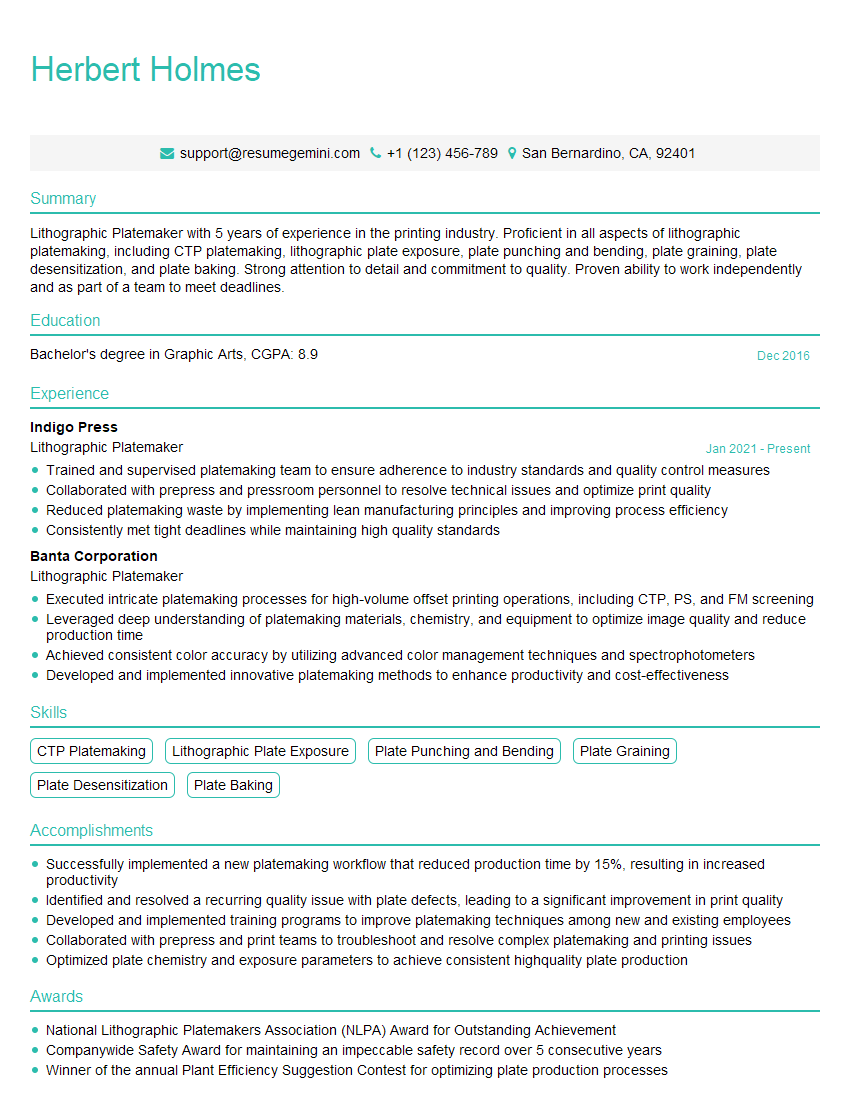
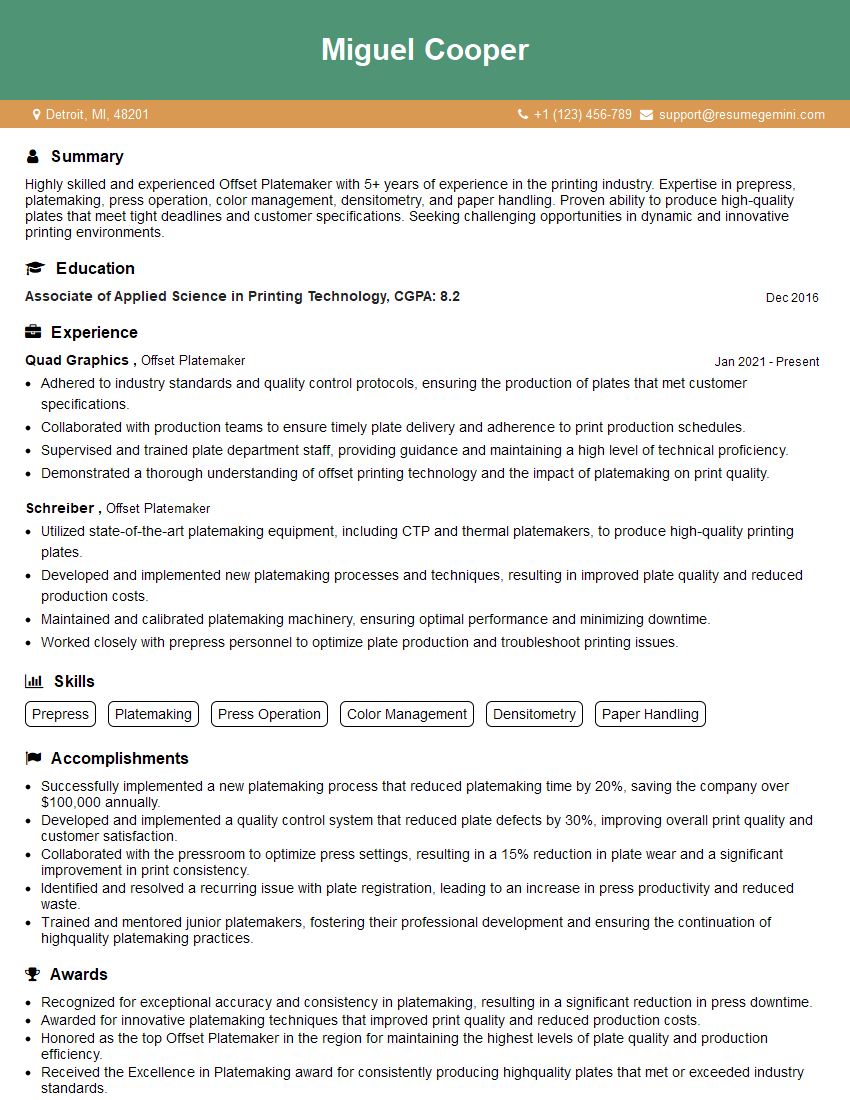
Mastering platemaking chemistry and equipment is crucial for career advancement in the printing industry, opening doors to specialized roles and higher earning potential. A well-crafted resume is your key to unlocking these opportunities. Ensure your resume is ATS-friendly to maximize visibility to potential employers. ResumeGemini can help you build a professional, impactful resume that showcases your expertise in platemaking. We provide examples of resumes tailored to highlight proficiency in platemaking chemistry and equipment to help you present your skills effectively.



Explore more articles
Users Rating of Our Blogs
Share Your Experience
We value your feedback! Please rate our content and share your thoughts (optional).
What Readers Say About Our Blog
Very informative content, great job.
good